Flexible Plum Spider Jaw Coupling — Precision Shaft Connection for CNC & Stepper Motor Builds
When shaft misalignment causes vibration, noise, or premature wear in your CNC router, 3D printer, or stepper motor drive system, the coupling is often the first component to fail. Engineers, makers, and machine builders who demand reliable torque transmission without rigid stress concentration need a coupling that flexibly compensates for angular, parallel, and axial misalignment — that's exactly what this flexible plum spider jaw coupling is designed to do.
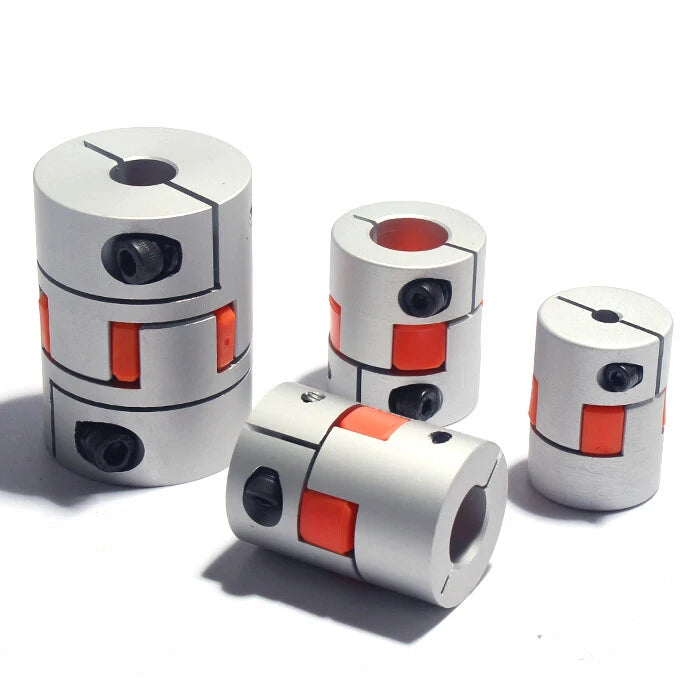
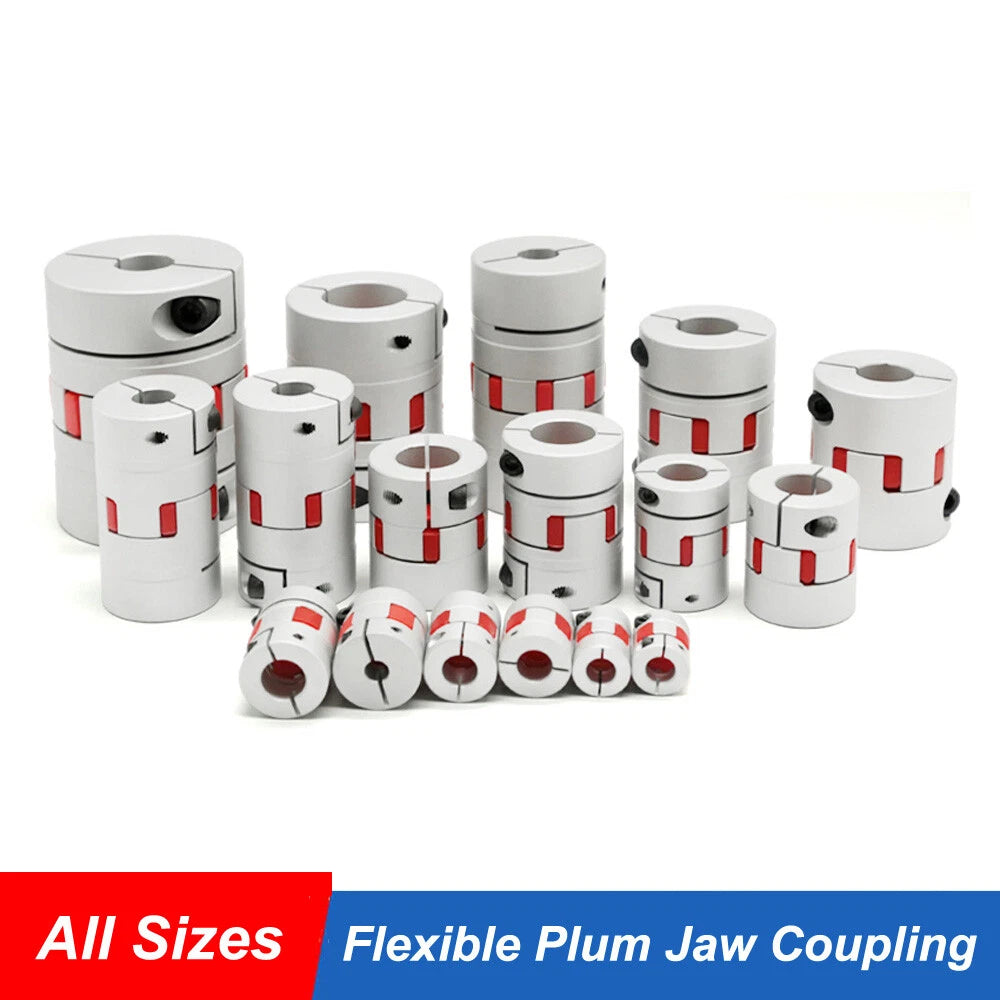
Each coupler consists of two precision-machined aluminum alloy hubs and a polyurethane spider insert (plum-shaped elastomer). The hubs are available in outer diameters from 20mm to 40mm (~0.79" to 1.57") and lengths from 25mm to 55mm (~0.98" to 2.17"). Bore combinations span 4mm through 19mm (~0.16" to 0.75") on each side, with same-bore and mixed-bore configurations available to match your exact shaft pairing.
Typical use cases include CNC axis drives requiring low-backlash shaft coupling, stepper motor to leadscrew connections in 3D printers and laser engravers, and servo motor coupling in light industrial automation where vibration damping is critical for positional accuracy.
⚙️
Compatibility: Fits stepper motors, servo motors, DC motors, and leadscrews with shaft diameters from 4mm to 19mm. Compatible with NEMA 17, NEMA 23, and similar frame motors. Verify your shaft diameters before selecting a variant.
✅ Key Features of These Flexible Plum Spider Jaw Couplings
🔩
Dual Aluminum Alloy Hubs
Machined aluminum hubs deliver a strong, lightweight grip on both shafts. Clamping screws secure each hub independently, allowing quick installation and removal without special tools.
🌀
Polyurethane Spider Insert
The elastomeric plum spider absorbs shock loads and dampens vibration between hubs, protecting motor bearings and reducing resonance in precision motion systems.
📐
Wide Bore Size Range
Available in mixed and matched bore combinations from 4mm to 19mm per side, covering the most common stepper and servo motor shaft diameters in a single product line.
🔄
Misalignment Compensation
Accommodates angular misalignment (typically up to 1°), parallel offset, and axial displacement — reducing stress on motor shafts and bearings during operation.
🛡️
Corrosion-Resistant Construction
Aluminum hubs with natural or anodized finish resist oxidation in workshop and light industrial environments. The polyurethane spider is oil- and grease-resistant for long service life.
⚡
Low Backlash Design
The jaw-and-spider engagement geometry minimizes rotational play, making these couplers suitable for CNC positioning axes and closed-loop stepper systems where accuracy matters.
📐 Technical Specifications — Plum Spider Jaw Shaft Coupler
| Coupler Type |
Flexible Jaw (Plum Spider / Oldham-style) |
| Hub Material |
Aluminum Alloy |
| Spider Insert Material |
Polyurethane (PU) Elastomer |
| Outer Diameter (OD) |
D20mm – D40mm (0.79" – 1.57") |
| Coupler Length |
L25mm – L55mm (0.98" – 2.17") |
| Bore Diameter Range |
4mm – 19mm per side (0.16" – 0.75") |
| Bore Configuration |
See variant options |
| Finish |
See variant options |
| Fastening Method |
Set screw (clamping) |
| Angular Misalignment Tolerance |
Typically up to 1° |
| Quantity per Order |
1 piece |
❓ Frequently Asked Questions
How do I choose the right coupler dimension and bore size?
Select the Coupler Dimension (OD × Length) based on the physical space available in your build — larger OD couplers handle higher torque. Then select the Shaft Diameter option that matches your motor shaft on one side and your leadscrew or driven shaft on the other. Both values must match your actual shaft diameters exactly for a secure fit.
Can this coupler connect two shafts of different diameters?
Yes. Many variants in this listing are specifically designed for mixed-bore configurations — for example, 4mm to 10mm or 6mm to 8mm. Select the Shaft Diameter option that lists your two shaft sizes. If you need a combination not shown, contact us to confirm availability.
How strong is the connection — will the coupler slip under load?
The aluminum hubs use set screws to clamp firmly onto each shaft. For added security, ensure the set screw seats against a flat on the motor shaft if one is present. The polyurethane spider transmits torque through jaw engagement, not friction alone, so the connection remains positive under normal CNC and stepper motor loads.
Is this coupler corrosion-resistant for use in humid or outdoor environments?
The aluminum alloy hubs resist oxidation well in typical workshop and indoor industrial conditions. The polyurethane spider is resistant to oils and greases. For prolonged outdoor or high-humidity exposure, consider applying a light protective coating to the hubs. This coupler is not rated for submersion or highly corrosive chemical environments.
Is this compatible with NEMA 17 and NEMA 23 stepper motors?
Yes. NEMA 17 motors typically have 5mm shafts and NEMA 23 motors commonly use 6.35mm or 8mm shafts — all of which are covered by available bore options in this listing. Select the Shaft Diameter variant that matches your motor's output shaft diameter on one side and your leadscrew or coupling target on the other.
What is the difference between a rigid coupling and this flexible jaw coupling?
A rigid coupling requires near-perfect shaft alignment and transmits all vibration and shock directly between components. This flexible jaw coupling uses a polyurethane spider insert to absorb misalignment (angular, parallel, and axial) and dampen vibration, protecting motor bearings and reducing noise — making it the preferred choice for most CNC and 3D printer builds.
Can I replace just the spider insert if it wears out?
The polyurethane spider insert is a separate component from the aluminum hubs. In many jaw coupling designs, the spider can be replaced independently without removing the hubs from the shafts. Contact us to confirm spider insert availability for your specific coupler size.
🛒 Select your Coupler Dimension and Shaft Diameter above, then add to cart.