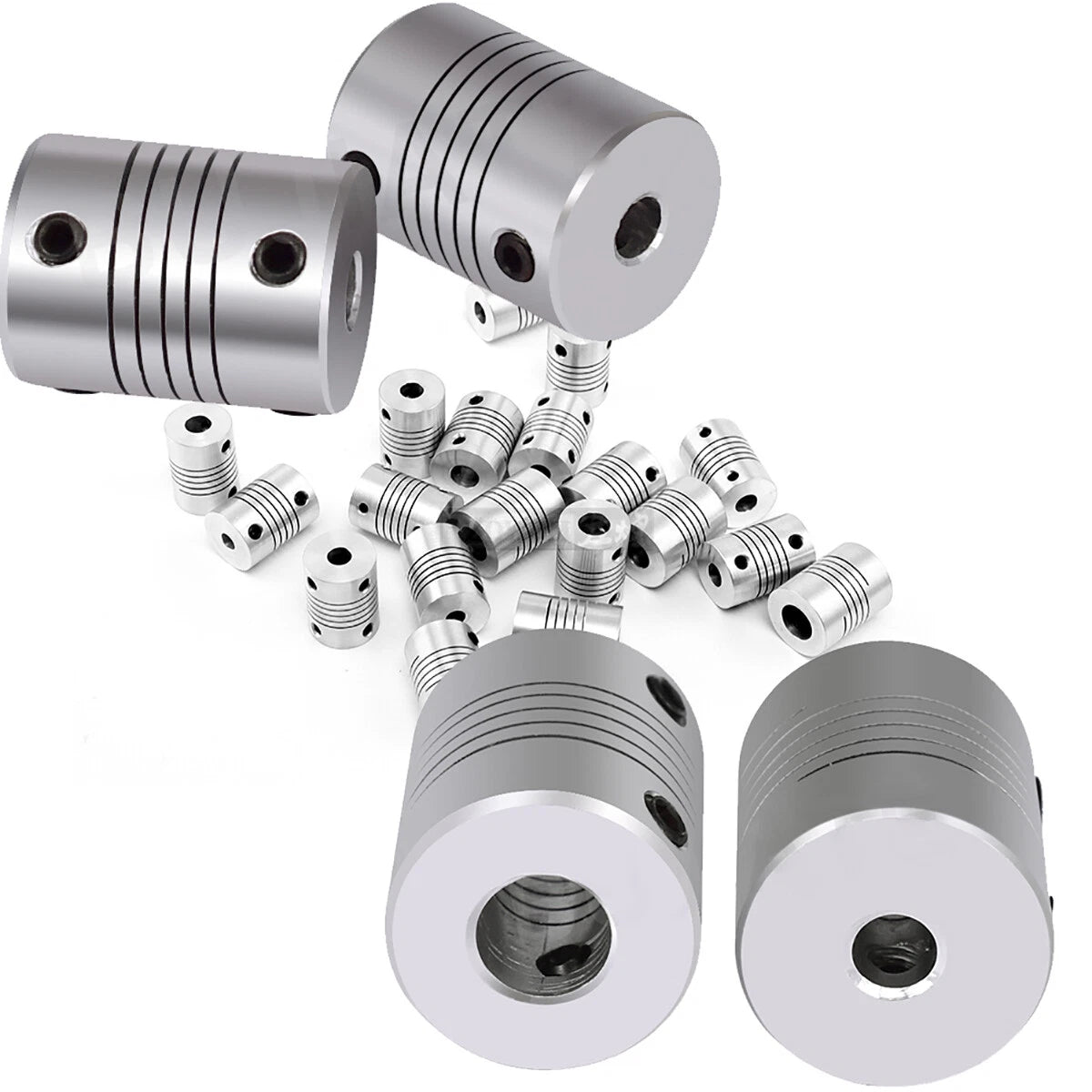
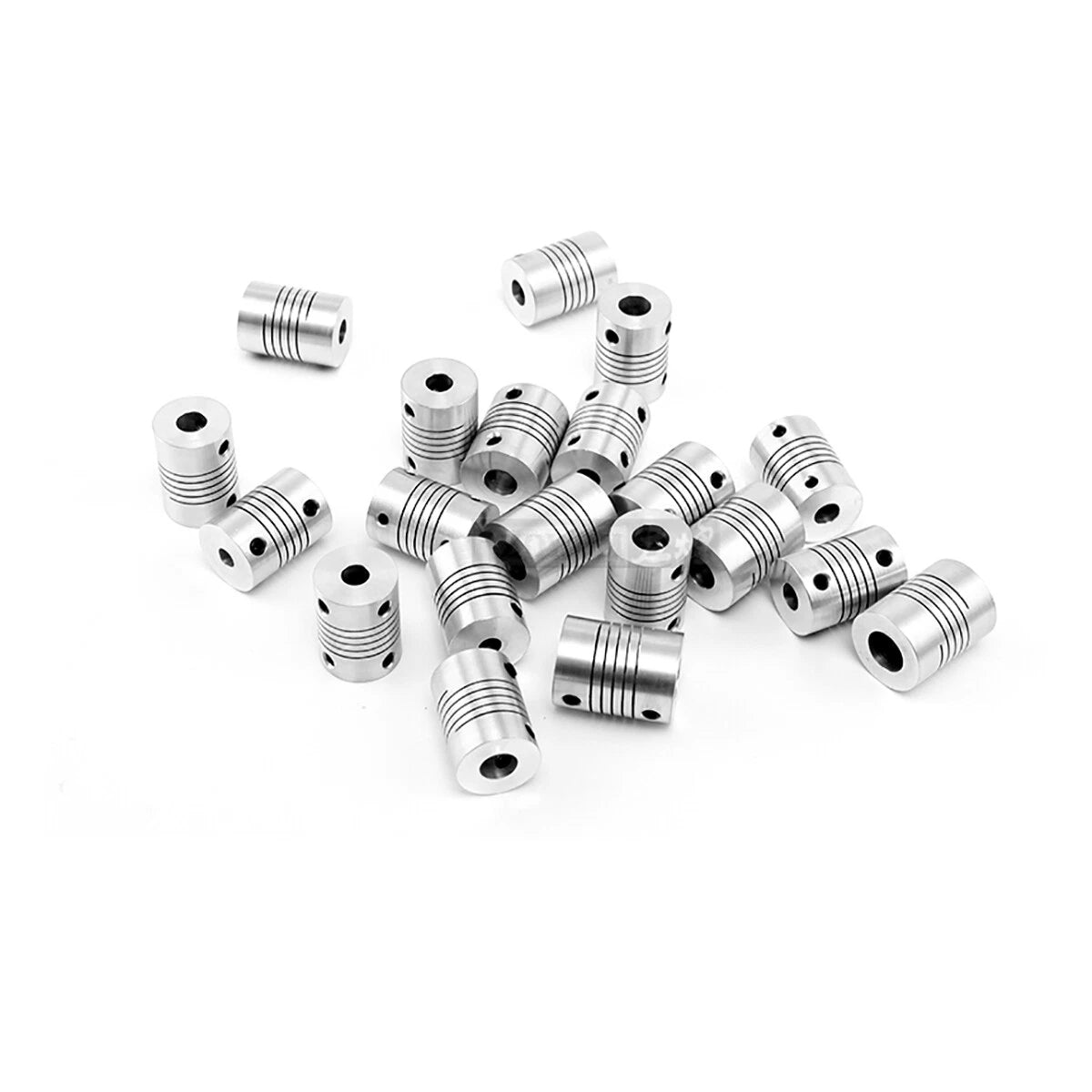
Flexible shaft Coupling D16 D18 D25 Step Servo Motor Encoder Coupler Joint Alu

No reviews

Price:
Sale price$12.97 USD
Stock:
In stock (500 units), ready to be shipped

Payment & Security

Ach Direct Debit Amazon American Express Apple Pay Bancontact BLIK Diners Club Discover EPS Google Pay iDEAL Wero JCB Maestro Mastercard Multibanco MobilePay PayPal Przelewy24 Shop Pay Twint Union Pay USDC Visa

Your payment information is processed securely. We do not store credit card details nor have access to your credit card information.

Limited Offer — Spend More, Save More
Spend $55+
Save $5
Spend $100+
Save $10
Spend $200+
Save $25
HomeDIYer DIY Expert Support

DIY Expert Support

Get fitment advice & recommendations

Mon–Fri  8:30 AM – 8:00 PM
24-Hour Fast Ship
Arrives in 3–14 Days
Worldwide Shipping
30-Day Returns
1 tree planted with every purchase

Description

Flexible Shaft Coupling for Stepper & Servo Motors — Reliable Torque Transmission

Misaligned motor shafts and encoder connections are a common frustration for CNC builders, robotics engineers, and 3D printer enthusiasts. When your coupling can't absorb angular or parallel offset, vibration transfers directly to your mechanics — causing positioning errors, premature bearing wear, and noisy operation. This flexible shaft coupling is engineered for DIYers and automation professionals who need a dependable, low-backlash connection between their stepper or servo motor and lead screw, encoder, or driven shaft.

Each coupling is machined from aluminum alloy with a helical-cut flexible body that accommodates angular misalignment (typically ±1°–3°) and parallel offset (typically 0.2–0.5 mm). Available in outer diameters of D16, D18, and D25 mm (approximately 0.63", 0.71", and 0.98"), with a range of bore combinations to suit common motor shaft and lead screw diameters. The clamping collar design ensures a secure, tool-accessible connection without permanent modification to your shafts.

Ideal for CNC router Z-axis and X/Y-axis lead screw connections, stepper motor to encoder shaft coupling in closed-loop systems, and 3D printer Z-axis flexible coupling upgrades where rigid couplers cause layer shifting. The helical slot design makes these couplings a go-to solution for flexible motor shaft coupler replacements in desktop CNC machines and DIY automation rigs.

🔧 Compatible with: NEMA 17 & NEMA 23 stepper motors, servo motors with standard shaft diameters, lead screws, encoders, and rotary shafts. Select your bore (φd1 × φd2) and outer diameter × length (D × L) from the variant options above.

✅ Key Features of These Flexible Shaft Couplings

⚙️ Helical-Cut Flexible Body

The precision helical slot allows the coupling to flex under angular and parallel misalignment, absorbing vibration before it reaches your mechanics and protecting bearings and encoders from shock loads.

🔩 Dual Clamping Collar Design

Each end features a split-clamp collar secured by set screws, providing a firm grip on both shafts without requiring adhesive or permanent modification — easy to install and re-adjust.

🏗️ Aluminum Alloy Construction

Machined from lightweight aluminum alloy, these couplings offer a strong strength-to-weight ratio suitable for moderate-torque applications in CNC, 3D printing, and light automation systems.

📐 Multiple Size Options

Available in outer diameters D16, D18, and D25 with a variety of bore combinations (φd1 × φd2), covering the most common stepper motor shaft and lead screw diameter pairings used in DIY CNC and robotics builds.

🔄 Low Backlash for Precision Motion

The one-piece helical design minimizes rotational backlash compared to jaw-type or Oldham couplings, making these suitable for positioning applications where accuracy matters.

🛠️ Tool-Accessible Installation

Set screws are accessible with a standard hex key (Allen wrench). No special tooling required — slide onto shaft, align, and tighten. Suitable for workshop and field installation.

📐 Technical Specifications — Flexible Shaft Coupling

Product Type Flexible Helical Shaft Coupling
Material Aluminum Alloy
Outer Diameter (D) D16 / D18 / D25 mm (see variant options)
Length (L) See variant options
Bore Diameter (φd1 × φd2) See variant options
Misalignment Tolerance (Angular) Typically ±1°–3°
Misalignment Tolerance (Parallel) Typically 0.2–0.5 mm
Fastening Method Dual clamping collar with set screws
Finish Natural anodized aluminum
Typical Application CNC, 3D printer, stepper/servo motor, encoder
Weight See variant options

❓ Frequently Asked Questions

How do I choose the right bore size (φd1 × φd2) for my motor and lead screw?

Measure the diameter of your motor shaft (φd1) and the shaft or lead screw you are connecting to (φd2) using a caliper. Common stepper motor shaft diameters are 5 mm and 6.35 mm; common lead screw diameters are 8 mm and 10 mm. Select the bore combination that matches both shafts exactly — a loose bore will cause slippage under load.

What is the difference between D16, D18, and D25 outer diameters?

The outer diameter (D) affects the coupling's torque capacity and physical clearance in your build. D16 (≈0.63") suits compact NEMA 17 setups with limited space. D18 (≈0.71") offers a balance of torque and size. D25 (≈0.98") is suited for NEMA 23 motors or higher-torque applications. Choose based on your motor frame size and available clearance around the coupling.

Can this coupling handle both angular and parallel shaft misalignment?

Yes. The helical-cut flexible body accommodates angular misalignment of typically ±1°–3° and parallel (radial) offset of approximately 0.2–0.5 mm. However, for best performance and longevity, align your shafts as closely as possible before tightening — the coupling is designed to absorb residual misalignment, not to compensate for large installation errors.

Is this coupling suitable for high-speed or high-torque applications?

These aluminum helical couplings are well-suited for moderate-torque, moderate-speed applications typical of CNC routers, 3D printers, and light automation. For very high torque or high-RPM industrial applications, please contact us to confirm suitability, as the helical slot design has inherent torque limits compared to solid rigid couplings.

Will this coupling corrode or degrade over time?

The aluminum alloy construction provides good resistance to oxidation in typical indoor workshop environments. The natural anodized finish adds a layer of surface protection. These couplings are not recommended for prolonged exposure to salt spray, strong acids, or highly humid outdoor environments without additional protective measures.

How do I install and secure the coupling on my motor shaft?

Slide each end of the coupling onto the respective shaft, ensuring the shaft reaches fully into the bore. Align the shafts as closely as possible. Tighten the set screws on each clamping collar using a hex key (Allen wrench) to the appropriate torque — do not overtighten, as this can deform the bore. Check alignment once more after tightening and re-adjust if needed.

Can I use this coupling to connect two shafts of different diameters?

Yes — that is one of the key advantages of the dual-bore design. Each end of the coupling can accept a different shaft diameter (φd1 ≠ φd2), making it straightforward to connect a motor shaft to a lead screw or encoder shaft of a different size. Simply select the variant with the bore combination that matches your two shaft diameters.

🛒 Select your Bore (φd1 × φd2) and Diameter × Length above, then add to cart.


You may also like

Recently viewed