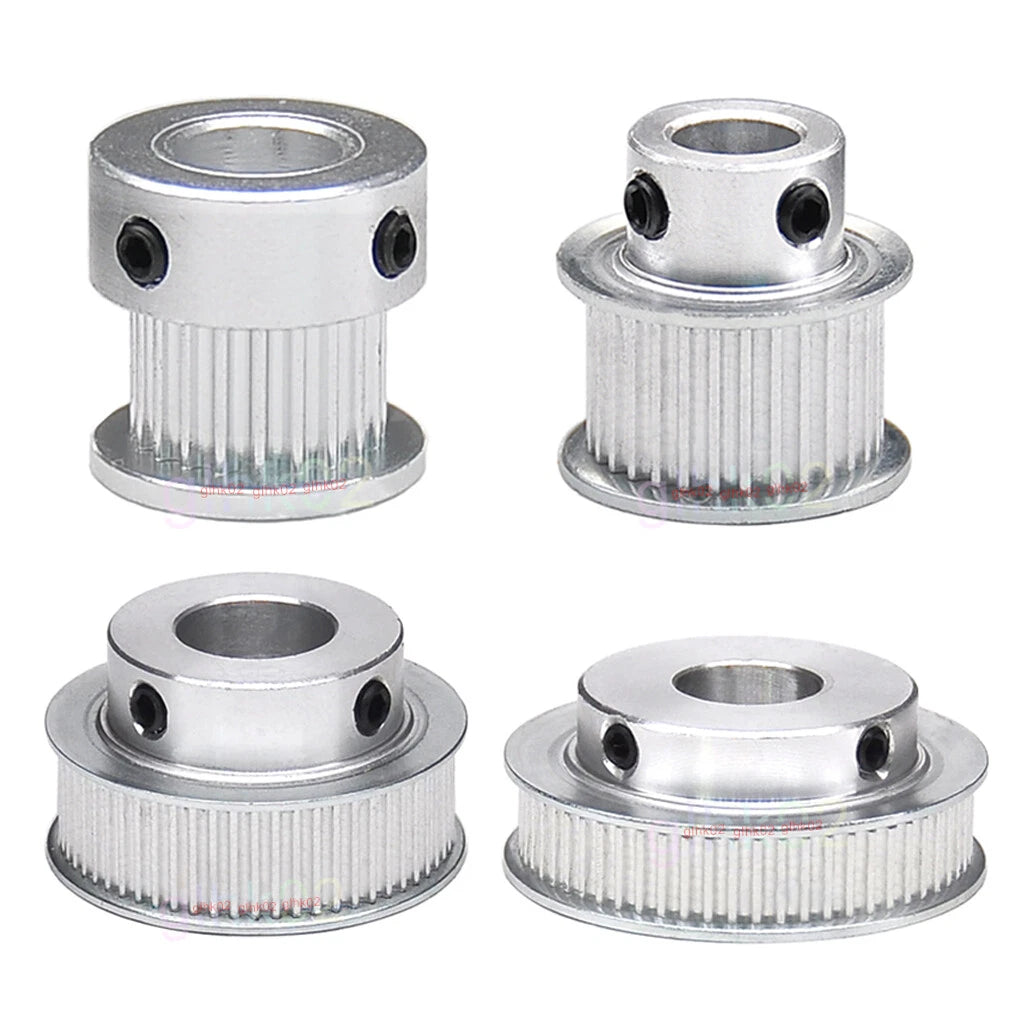
GT2 10mm Timing Belt Pulleys 16-120 Teeth 4-25mm Bore Synchronous Wheel Printer

No reviews

Price:
Sale price$2.71 USD
Stock:
In stock (500 units), ready to be shipped

Payment & Security

Ach Direct Debit Amazon American Express Apple Pay Bancontact BLIK Diners Club Discover EPS Google Pay iDEAL Wero JCB Maestro Mastercard Multibanco MobilePay PayPal Przelewy24 Shop Pay Twint Union Pay USDC Visa

Your payment information is processed securely. We do not store credit card details nor have access to your credit card information.

Limited Offer — Spend More, Save More
Spend $55+
Save $5
Spend $100+
Save $10
Spend $200+
Save $25
HomeDIYer DIY Expert Support

DIY Expert Support

Get fitment advice & recommendations

Mon–Fri  8:30 AM – 8:00 PM
24-Hour Fast Ship
Arrives in 3–14 Days
Worldwide Shipping
30-Day Returns
1 tree planted with every purchase

Description

GT2 10mm Timing Belt Pulleys — Precise Synchronous Drive for 3D Printers & CNC Machines

When a slipping or misaligned pulley throws off your print layers or CNC cut path, the entire job is ruined. Engineers, makers, and machine builders who rely on repeatable motion control need GT2 10mm timing belt pulleys that hold their position under load. These synchronous wheels are designed for anyone running GT2 belt-driven systems — from desktop 3D printers to full-scale CNC routers and robotic actuators.

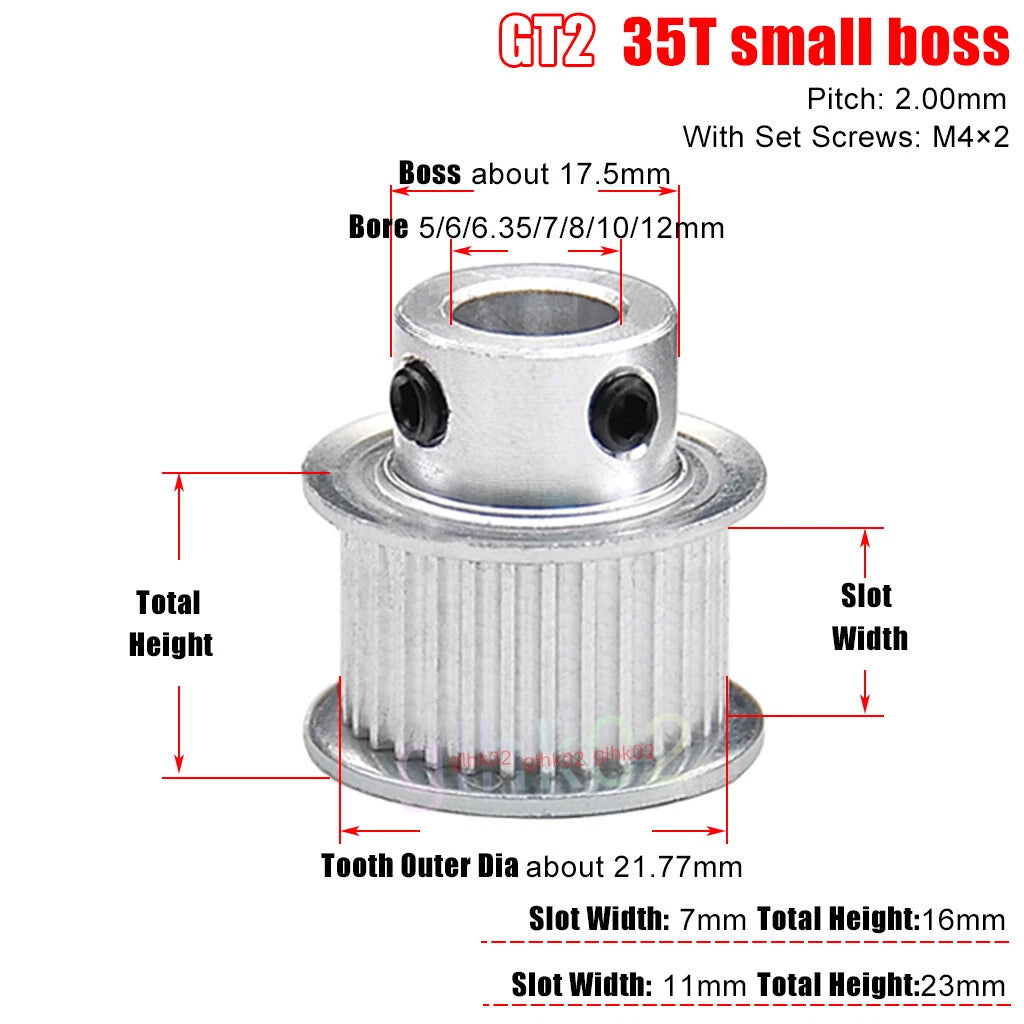
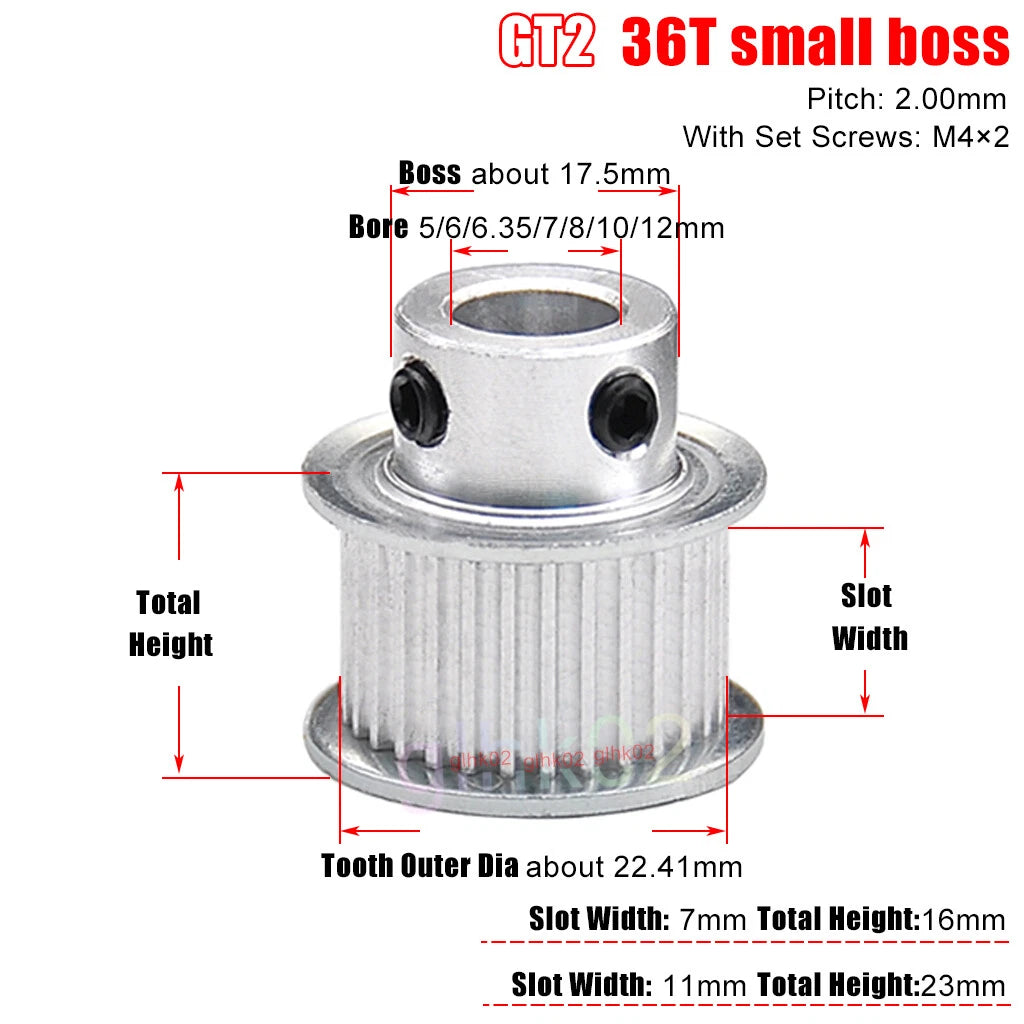
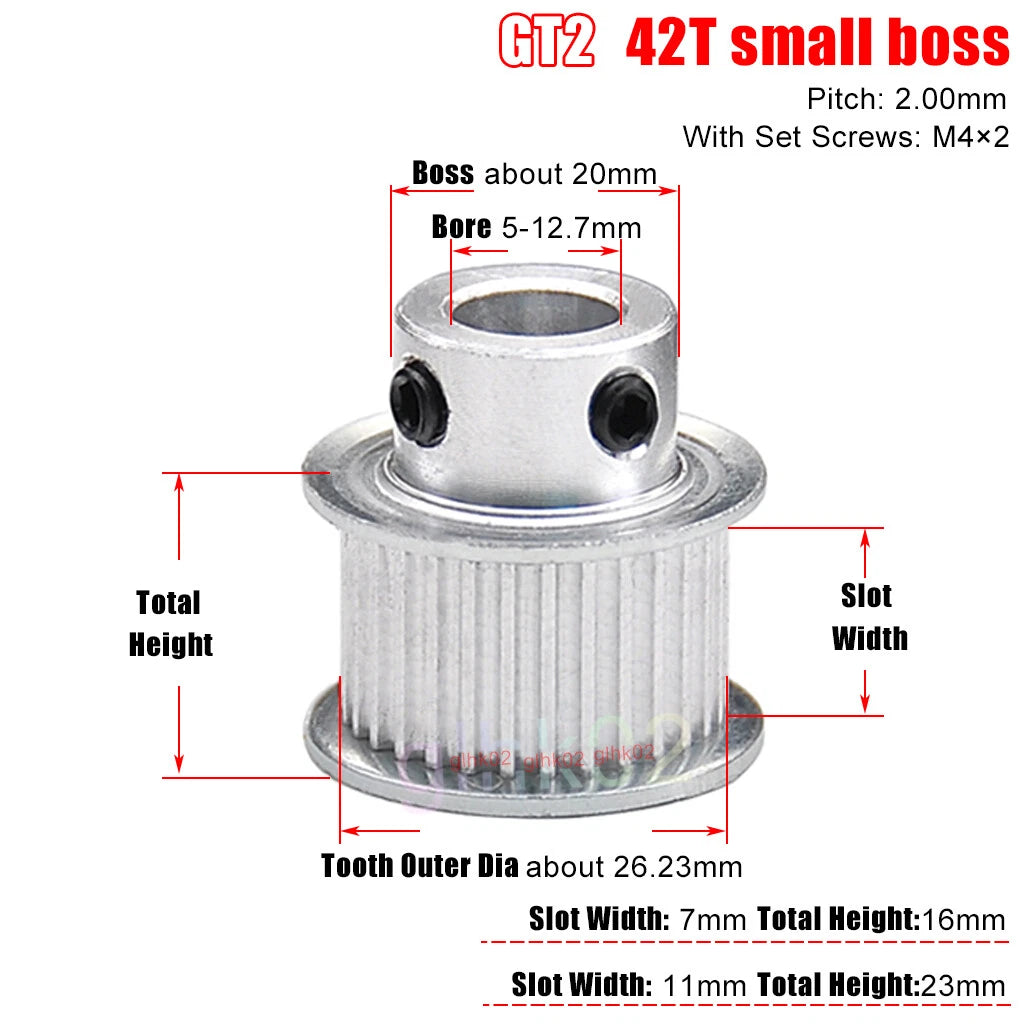
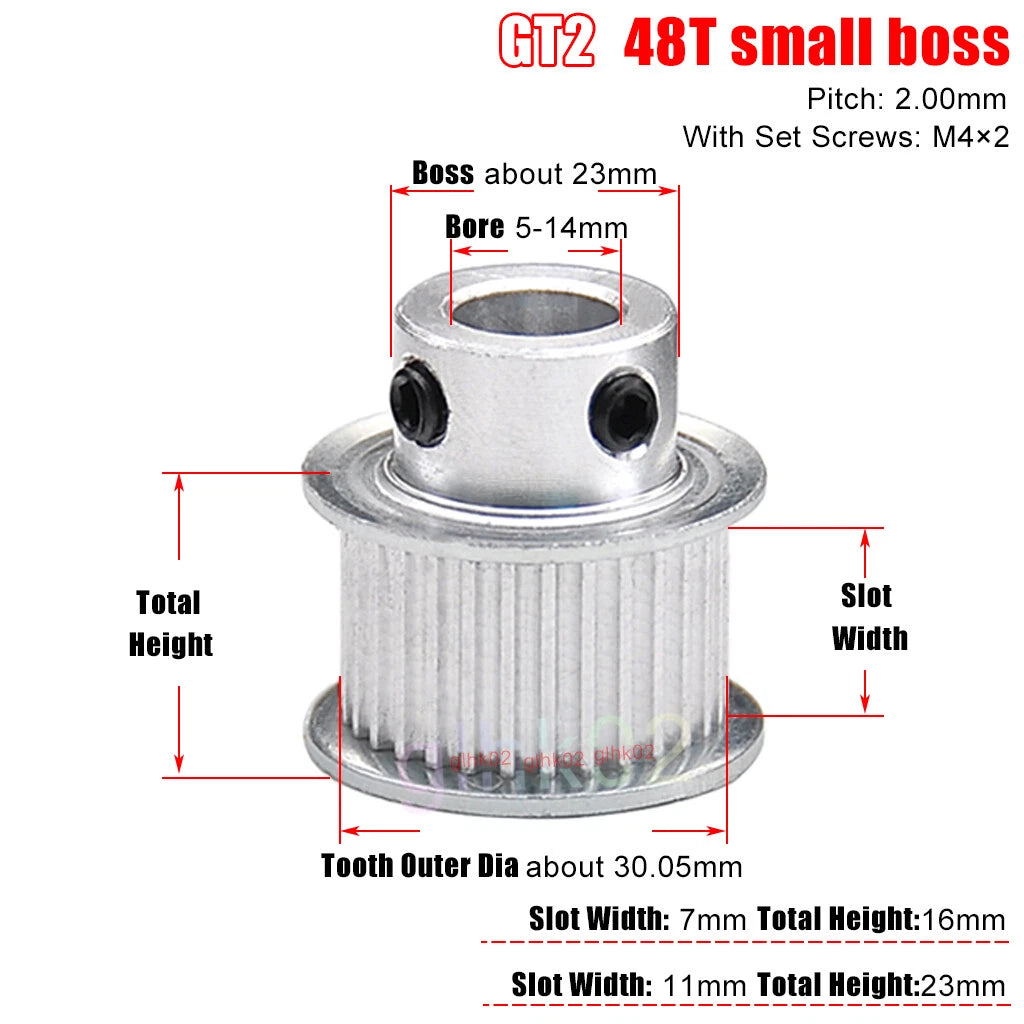
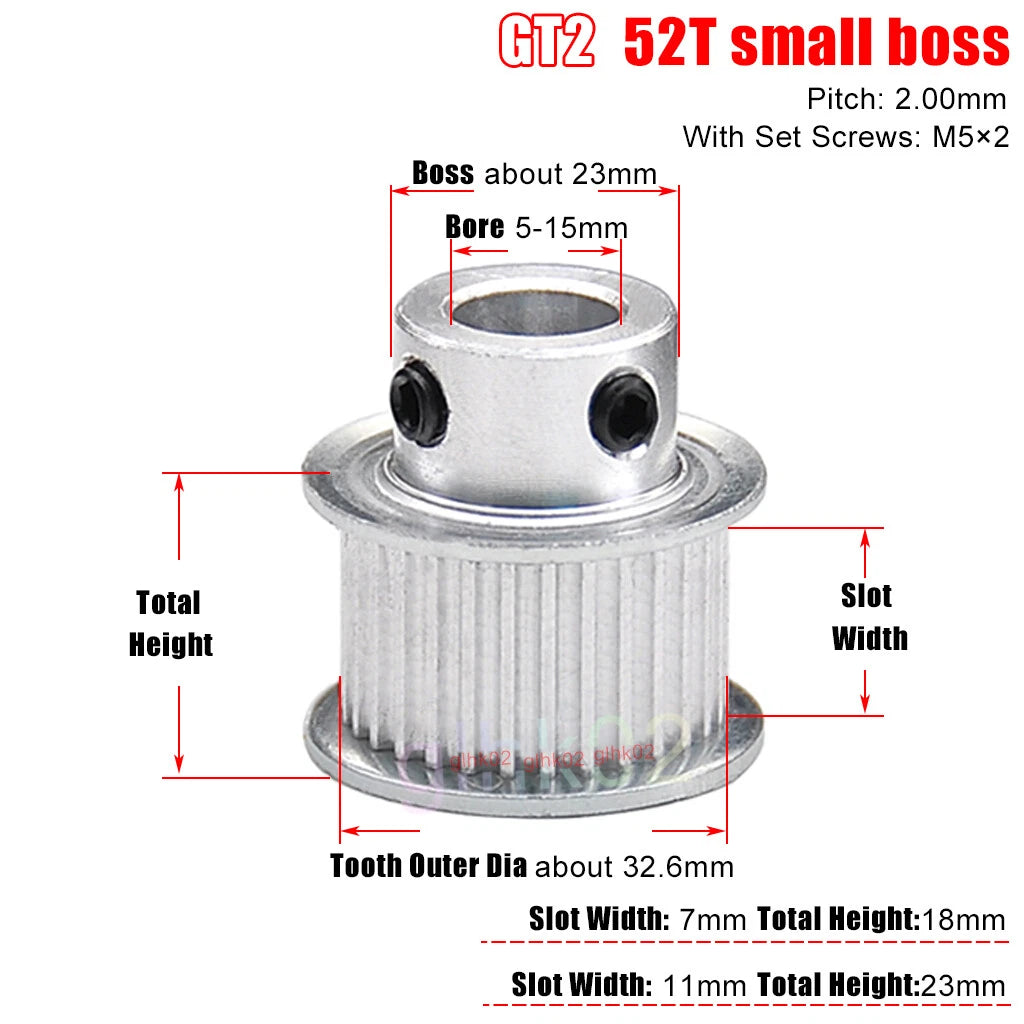
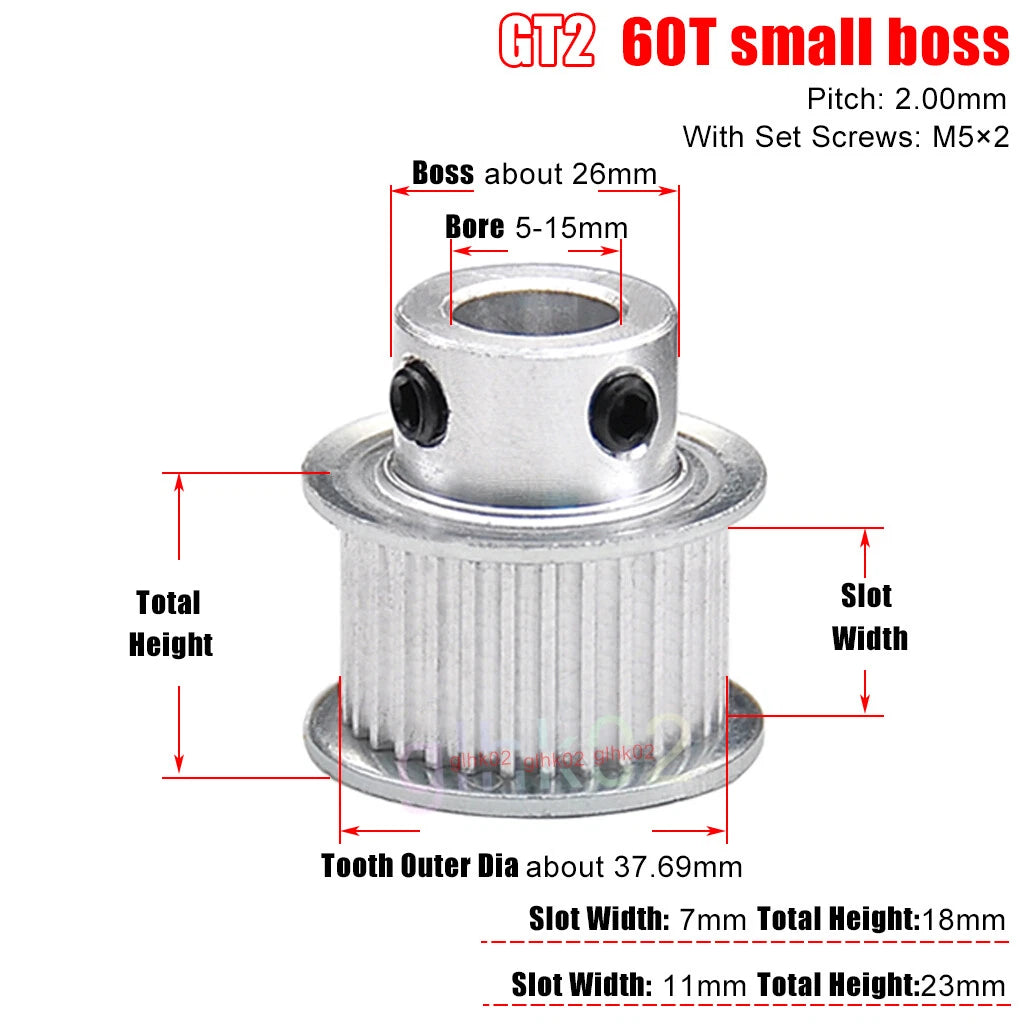
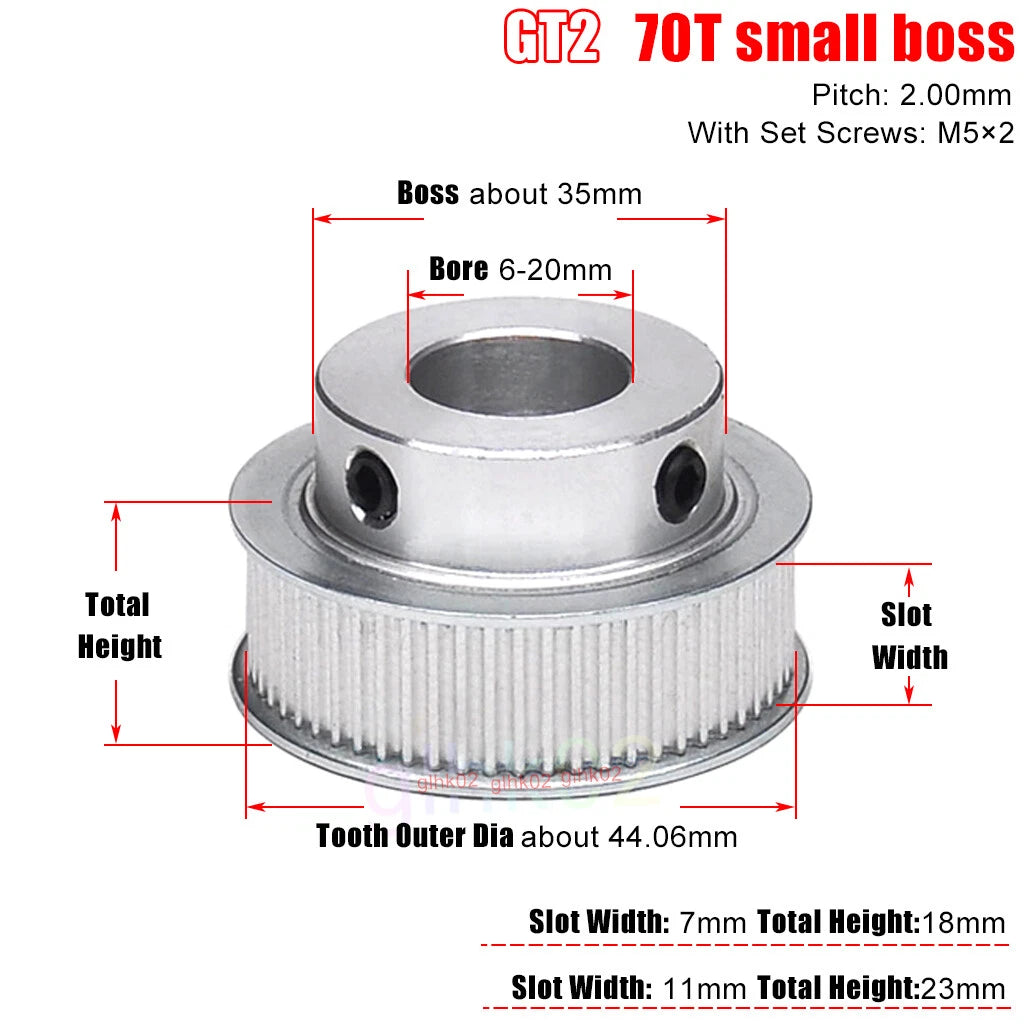
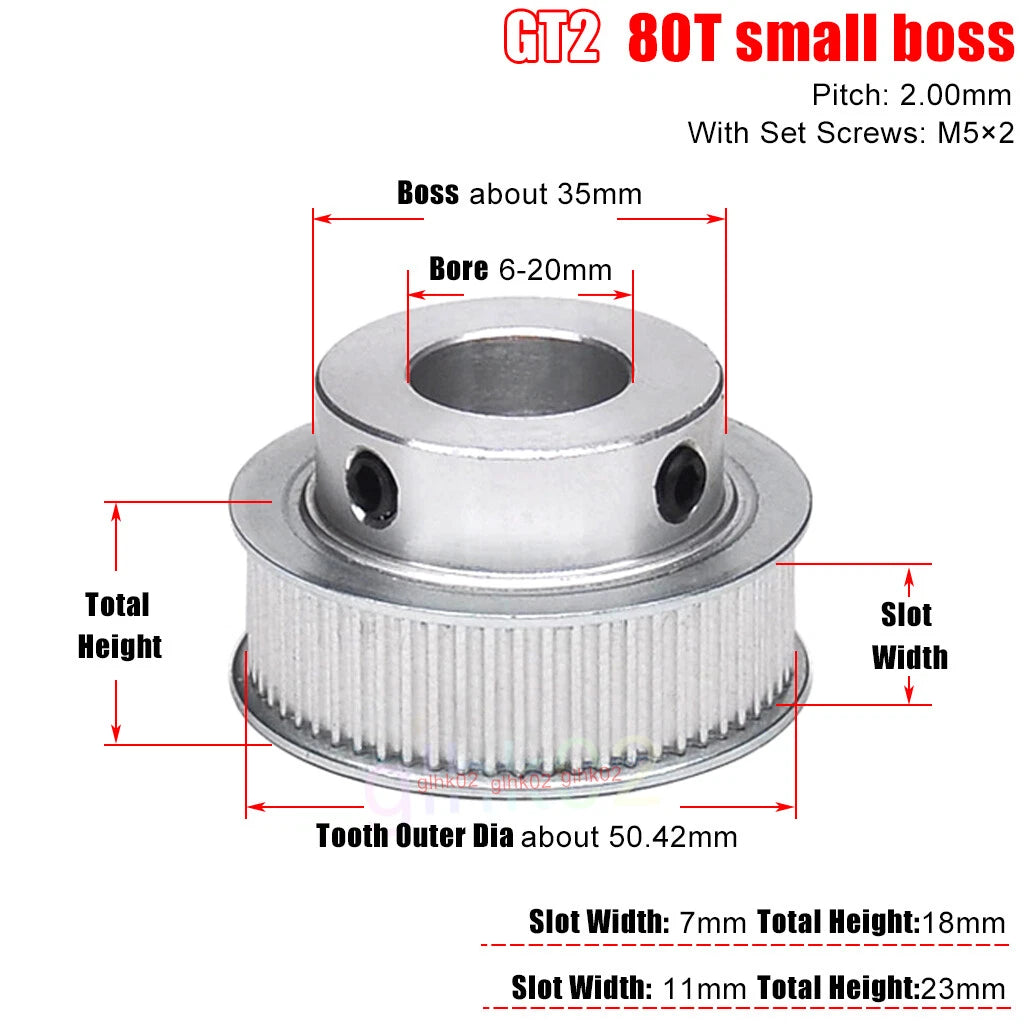
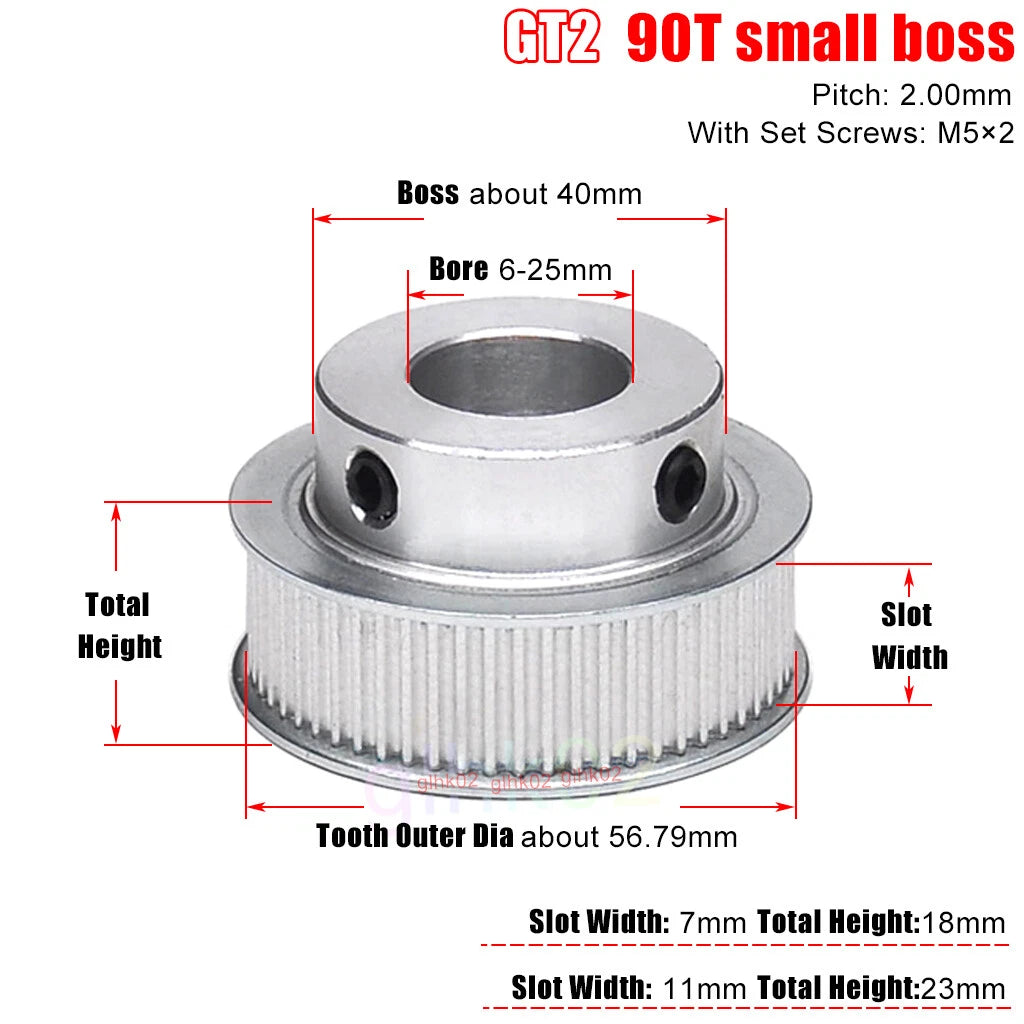
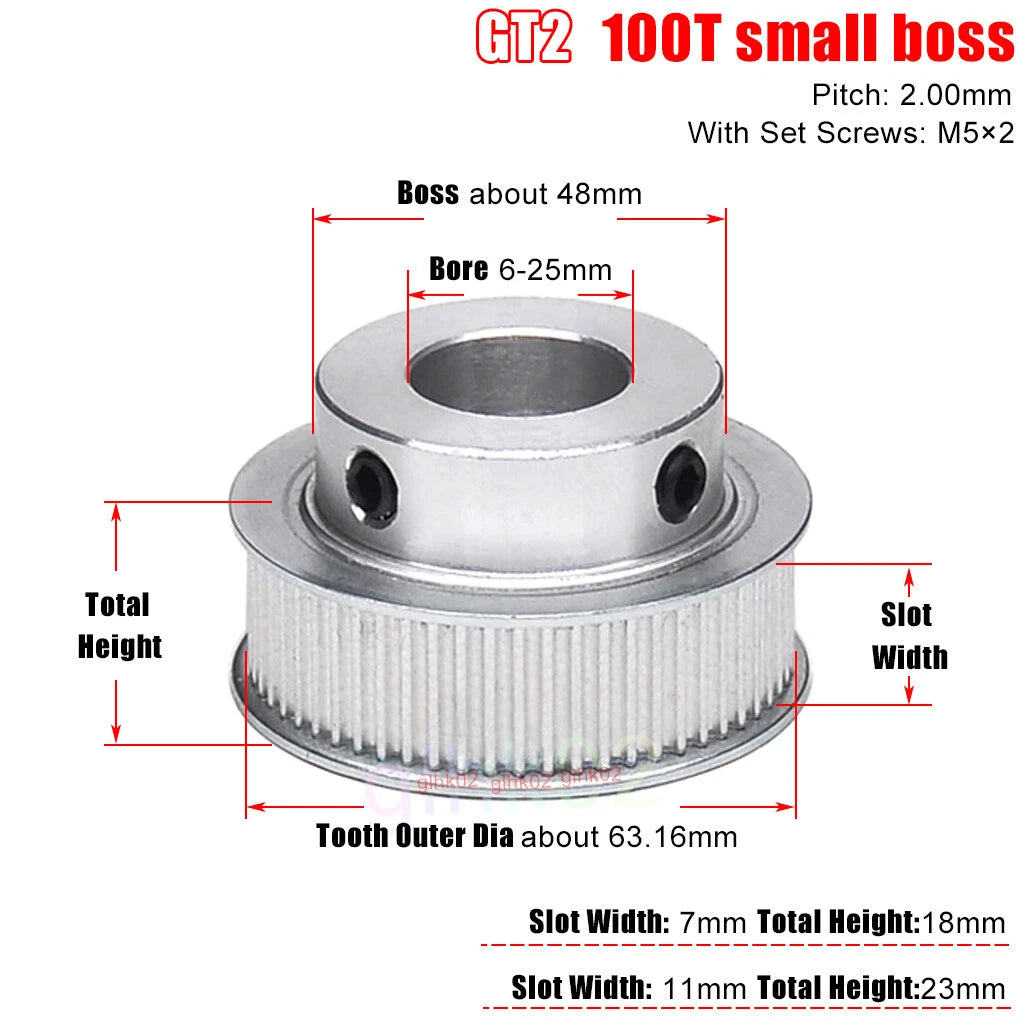
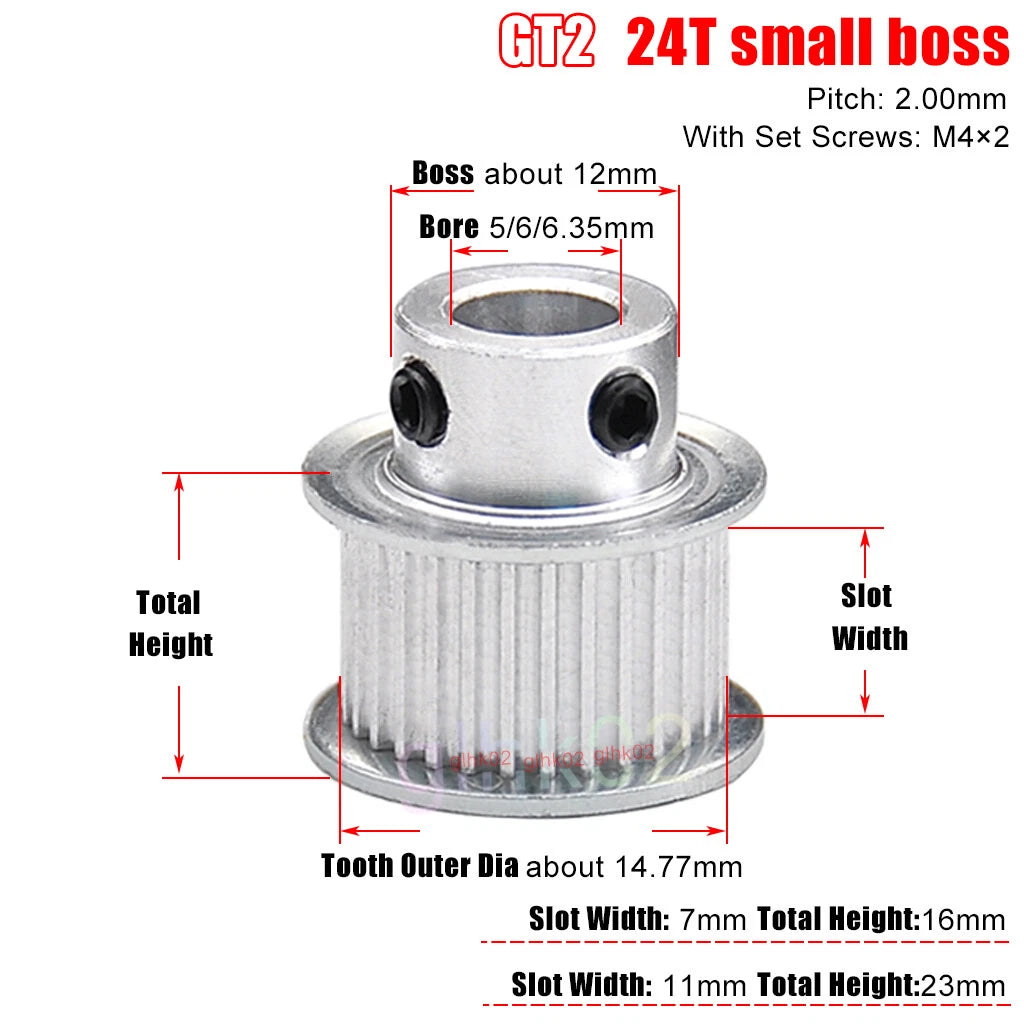
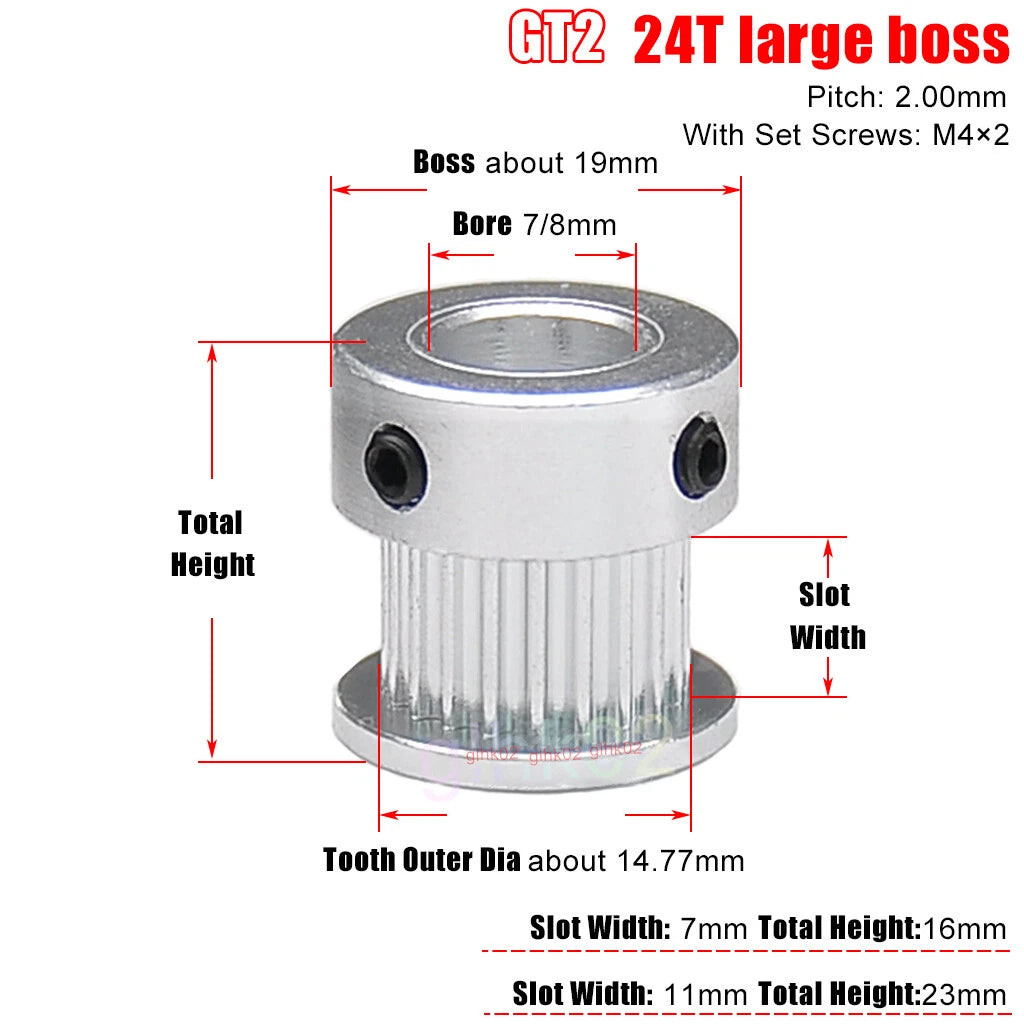
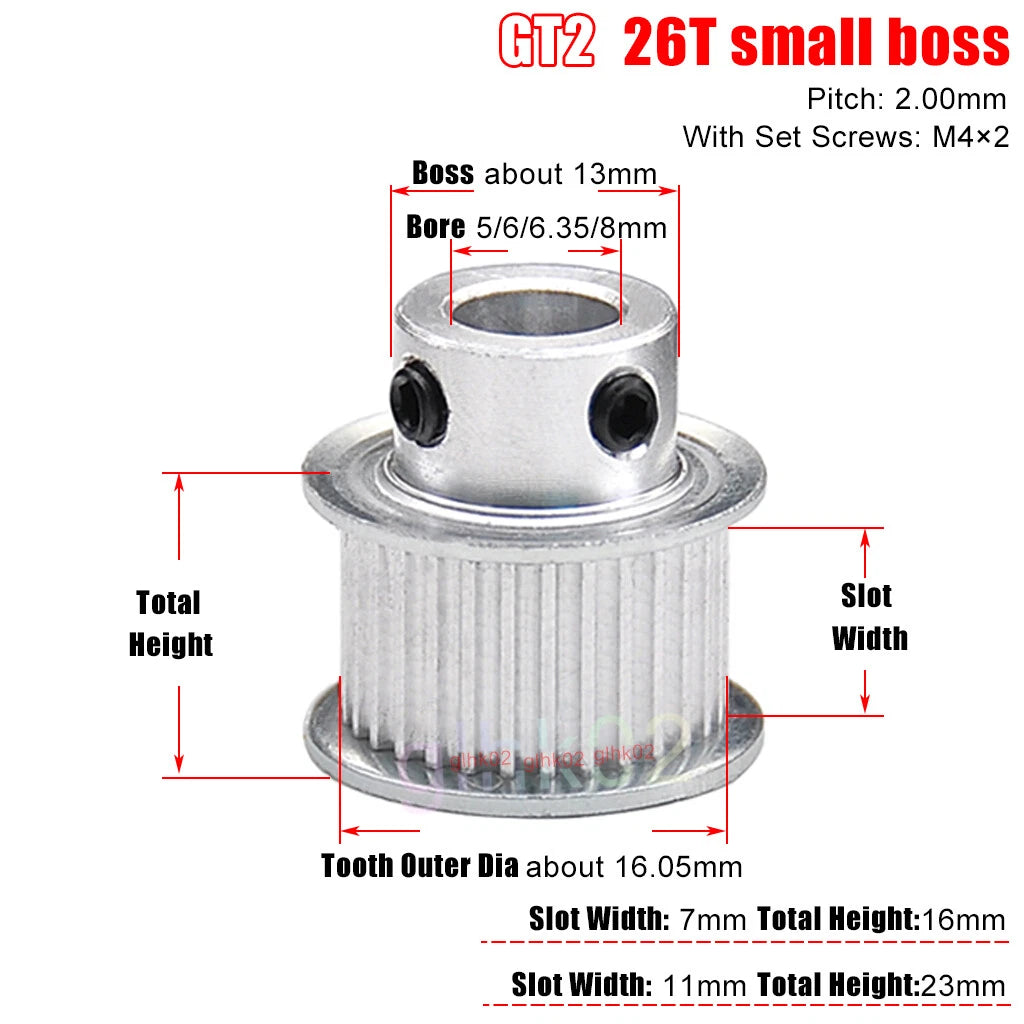
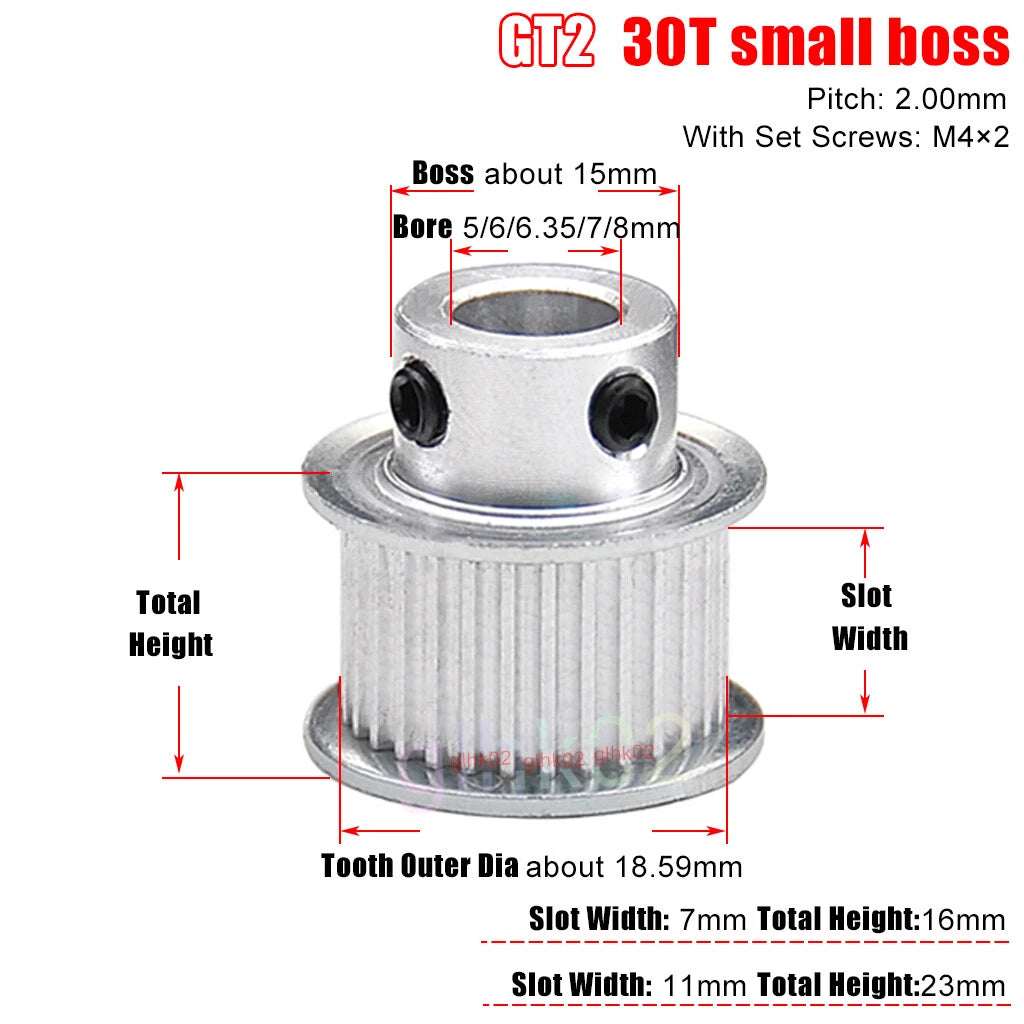
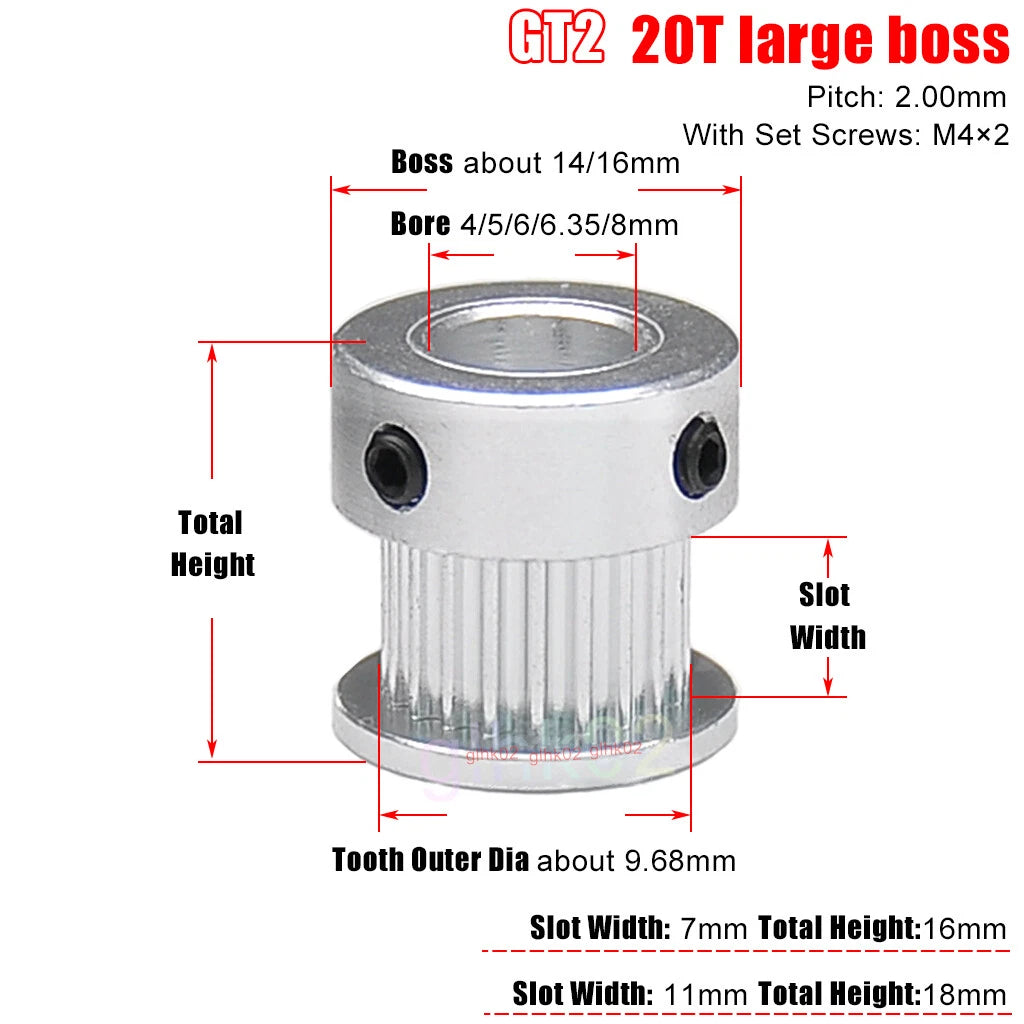
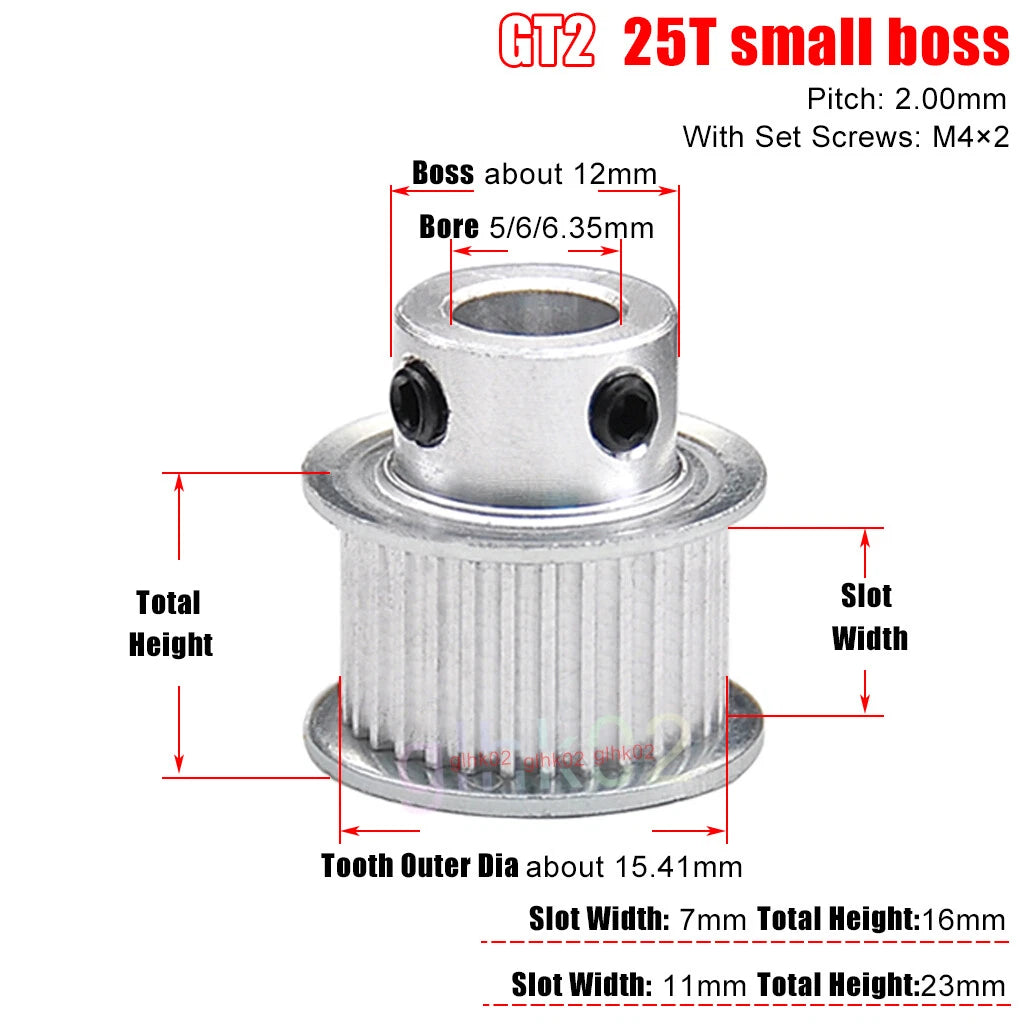
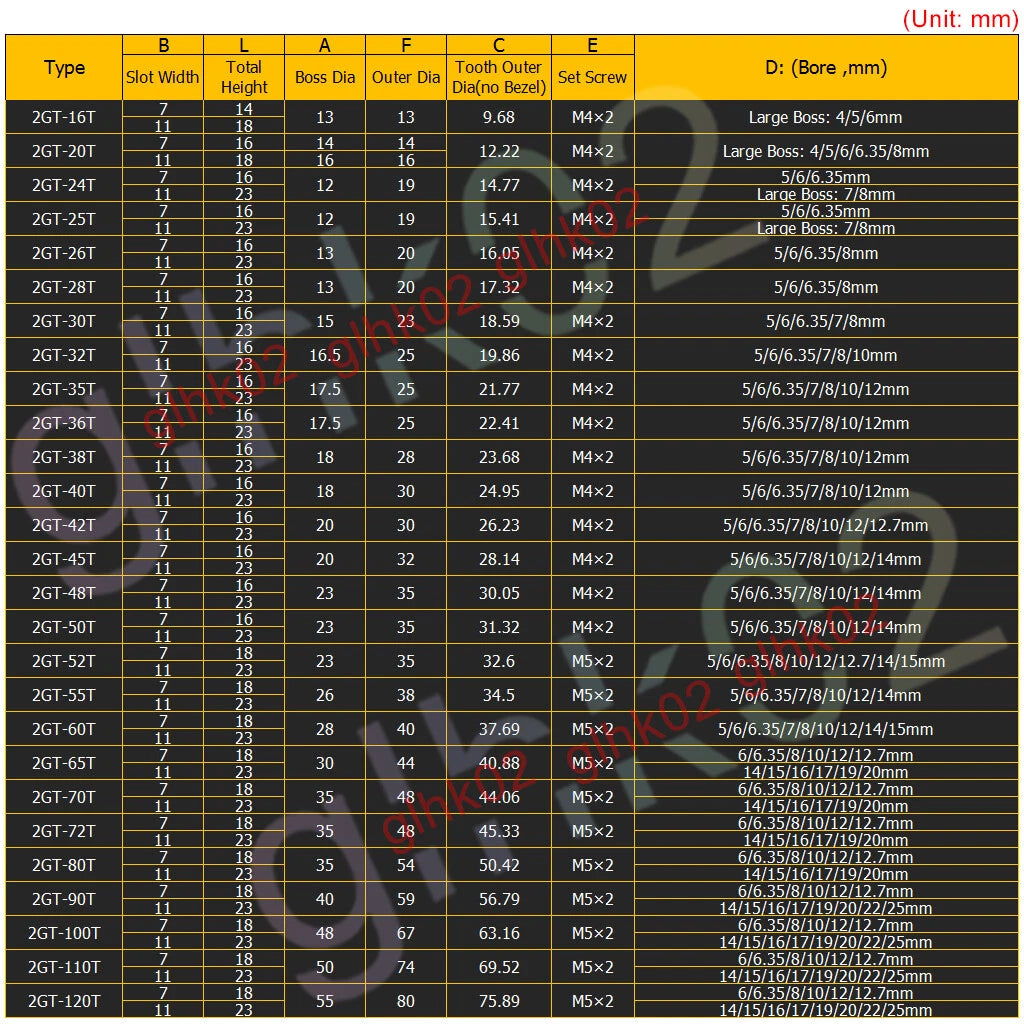
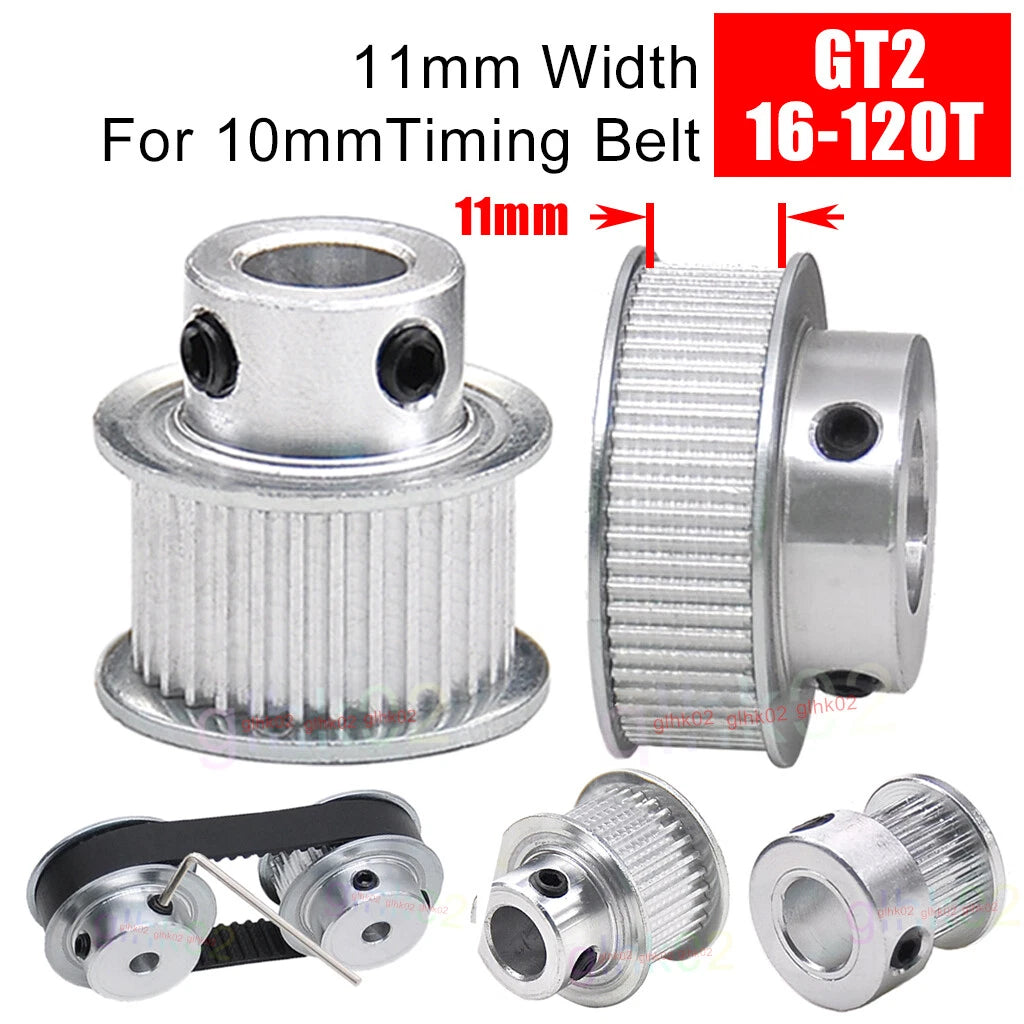
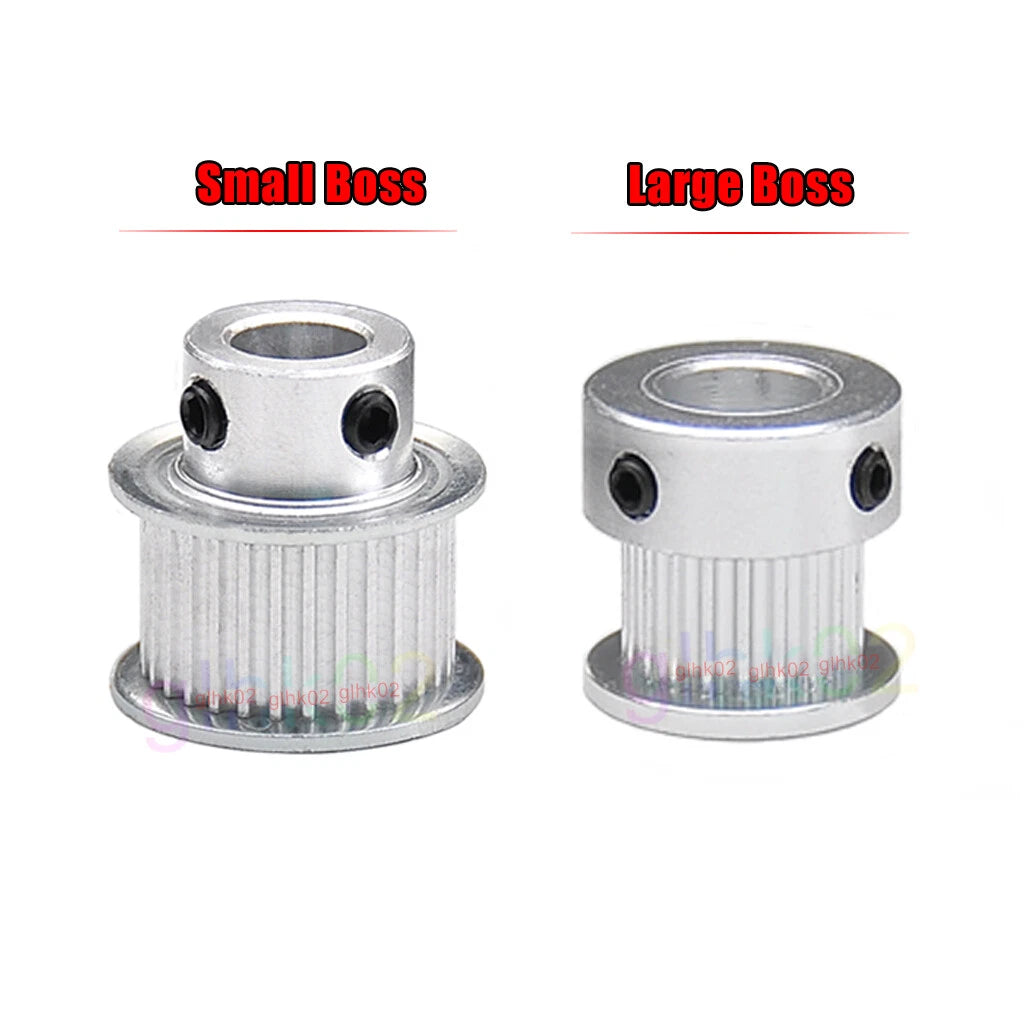
Each pulley is machined from aluminum alloy with a natural silver anodized finish. The belt-contact surface spans 10mm (0.39 in) in width, matching standard GT2 10mm open-loop and closed-loop belts. Tooth counts range from 16T to 120T (pitch diameter approximately 10.2mm–76.4mm / 0.40 in–3.01 in), and bore options span 4mm to 25mm (0.16 in–0.98 in) to suit a wide range of shaft diameters. Boss styles include Small Boss and Large Boss configurations depending on the tooth count selected.

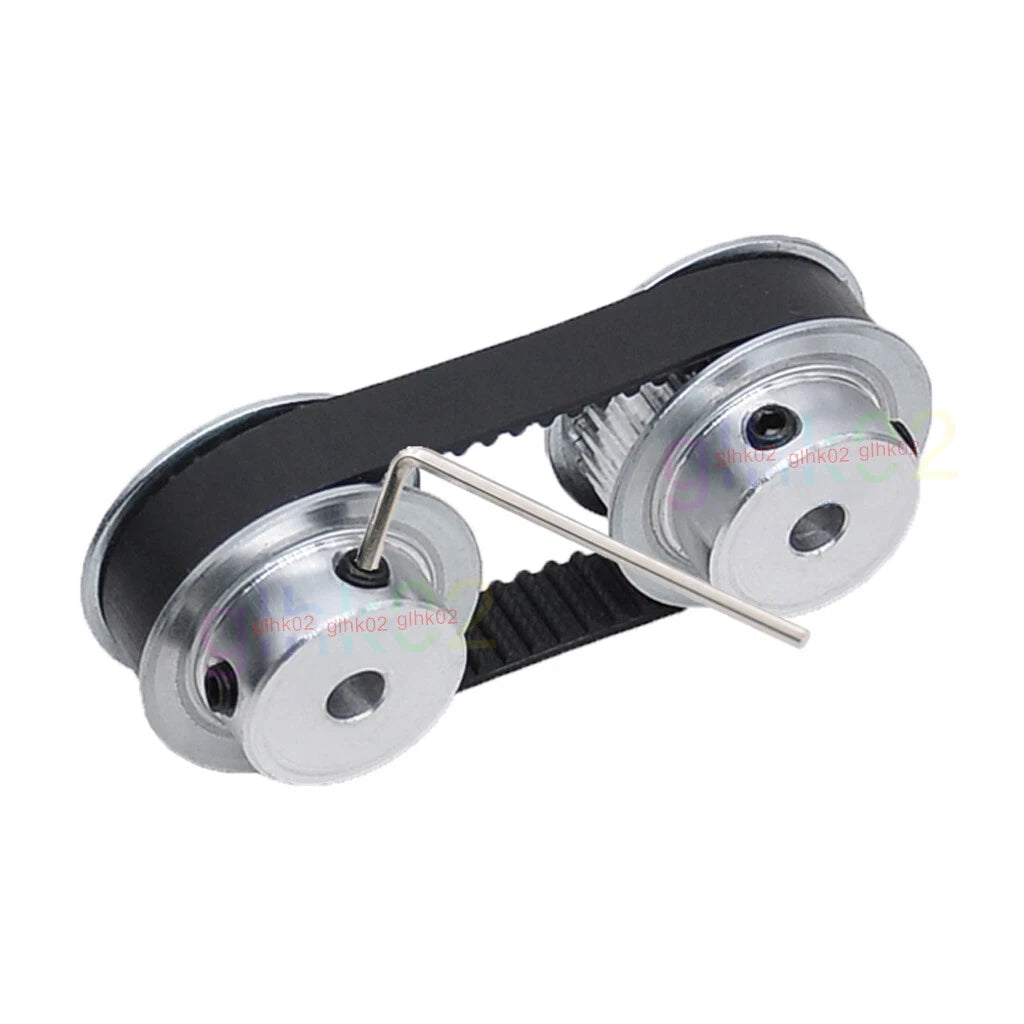
Typical use cases include GT2 belt-driven 3D printer X/Y axis drives, CNC router gantry synchronization, laser engraver carriage systems, and lightweight robotic joint actuators requiring low-backlash synchronous motion.

⚙️ Compatibility: Fits GT2 2mm pitch, 10mm wide timing belts. Verify your shaft diameter matches the selected bore size before ordering.

✅ Key Features of These GT2 10mm Timing Belt Pulleys

  • 🔩Wide Tooth Range (16T–120T) — Cover a broad gear-ratio spectrum in a single product line, from high-speed small-diameter drives to large reduction pulleys for torque-sensitive applications.
  • 📐Multiple Bore Sizes (4–25mm) — Available in 4, 5, 6, 6.35, 7, 8, 10, 12, 12.7, 14, 15, 16, 17, 19, 20, 22, and 25mm bores to match standard motor and shaft diameters without custom machining.
  • 🏗️Aluminum Alloy Construction — Lightweight yet rigid body resists deformation under belt tension, keeping tooth engagement consistent across the full operating cycle.
  • 🎯GT2 2mm Pitch Profile — Tooth geometry matches the GT2 standard for zero-backlash synchronous motion, critical for accurate positioning in 3D printing and CNC routing.
  • 🔧Small Boss & Large Boss Options — Boss style varies by tooth count, providing the correct hub depth for secure set-screw clamping on your shaft without interference with adjacent components.
  • 📦Sold Individually (1PCS) — Order exactly the quantity you need; mix tooth counts and bore sizes across variants to build or repair your drive system without buying unnecessary extras.

📐 Technical Specifications — GT2 Timing Belt Pulleys

Belt Type GT2, 2mm pitch
Belt Width 10mm (0.39 in)
Tooth Count Range 16T – 120T
Bore Diameter Range 4mm – 25mm (0.16 in – 0.98 in)
Boss Style See variant options
Material Aluminum alloy
Finish Natural anodized
Pitch Diameter See variant options
Quantity per Order 1 piece
Set Screw See variant options

❓ Frequently Asked Questions

How do I choose the right tooth count for my application?

The tooth count determines the pitch diameter and, combined with your motor pulley, sets the drive ratio. For 3D printer X/Y axes, 20T is the most common choice for a balanced speed-to-torque ratio. Larger tooth counts (e.g., 40T–120T) are used as driven pulleys to reduce speed and increase torque. Match your tooth count to the belt loop length and center distance of your system.

Which bore size should I select for my stepper motor shaft?

Most NEMA 17 stepper motors use a 5mm shaft, so the 5mm bore is the most common choice for 3D printers. NEMA 23 motors typically use 6.35mm (1/4 in) or 8mm shafts. Servo motors and DC motors vary widely — measure your shaft diameter with calipers before selecting. The bore must match your shaft exactly; a loose fit will cause slippage even with a set screw.

What is the difference between Small Boss and Large Boss?

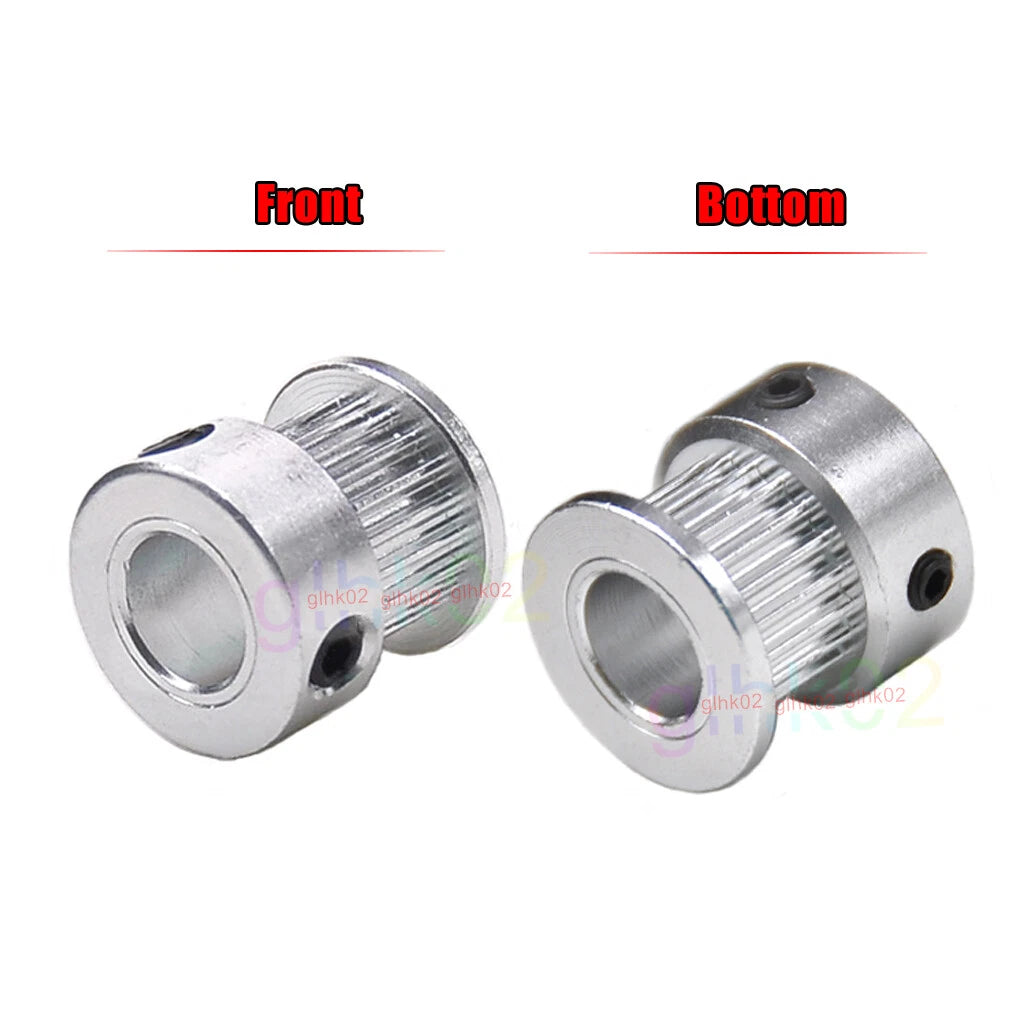
The boss refers to the hub section that extends beyond the pulley flange. A Large Boss provides a longer hub, giving more contact area for the set screw and better grip on the shaft — useful when axial forces are present or when the shaft engagement length is critical. A Small Boss is more compact and suits space-constrained installations. The available boss style is determined by the tooth count variant you select.

Are these pulleys compatible with GT2 belts from other brands?

Yes. GT2 is an open industry standard defined by a 2mm pitch and a specific tooth profile radius. These pulleys conform to the GT2 profile and will mesh correctly with any GT2-standard belt — open-loop or closed-loop — regardless of brand, as long as the belt width is 10mm.

How do I secure the pulley to the shaft?

These pulleys use a set screw (grub screw) to clamp onto the shaft. Align the set screw hole with a flat on the motor shaft if one is present, then tighten with the appropriate hex key. For shafts without a flat, apply thread-locking compound to the set screw to prevent loosening under vibration. Do not overtighten, as this can deform the bore on smaller pulleys.

Can I use these pulleys in a high-temperature environment?

Aluminum alloy maintains structural integrity up to approximately 150–200°C (300–390°F) under moderate load, making these pulleys suitable for most enclosed 3D printer chambers and light industrial environments. For sustained high-temperature or chemically aggressive environments, verify the specific alloy rating against your operating conditions.

What belt tension is recommended to avoid skipping teeth?

GT2 belts should be tensioned so they produce a clear, consistent tone when plucked — typically described as a low musical note rather than a slack thud or an overly tight twang. Excessive tension accelerates bearing wear on your motor; insufficient tension causes tooth skipping under acceleration. Refer to your machine's documentation for the specific tension value, as it varies by belt length and span.

🛒 Select your Tooth Count and Bore size above, then add to cart.


You may also like

Recently viewed