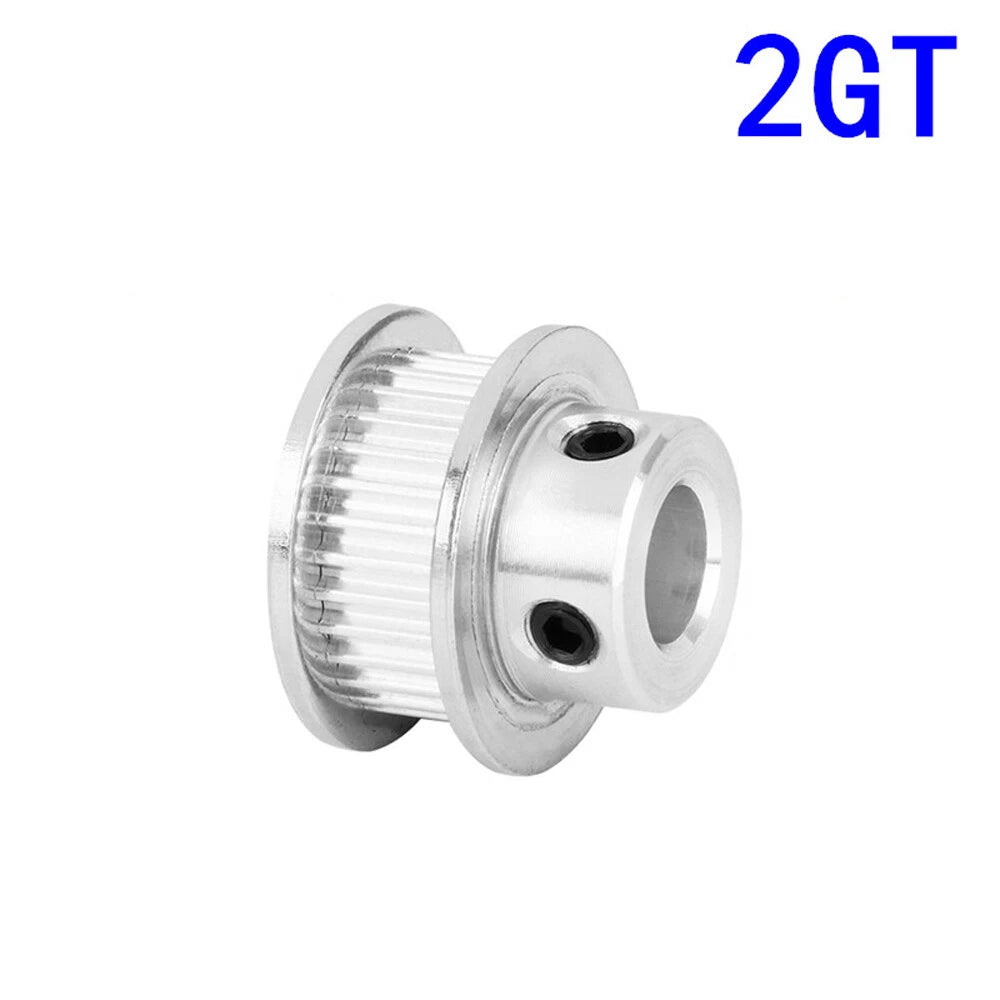
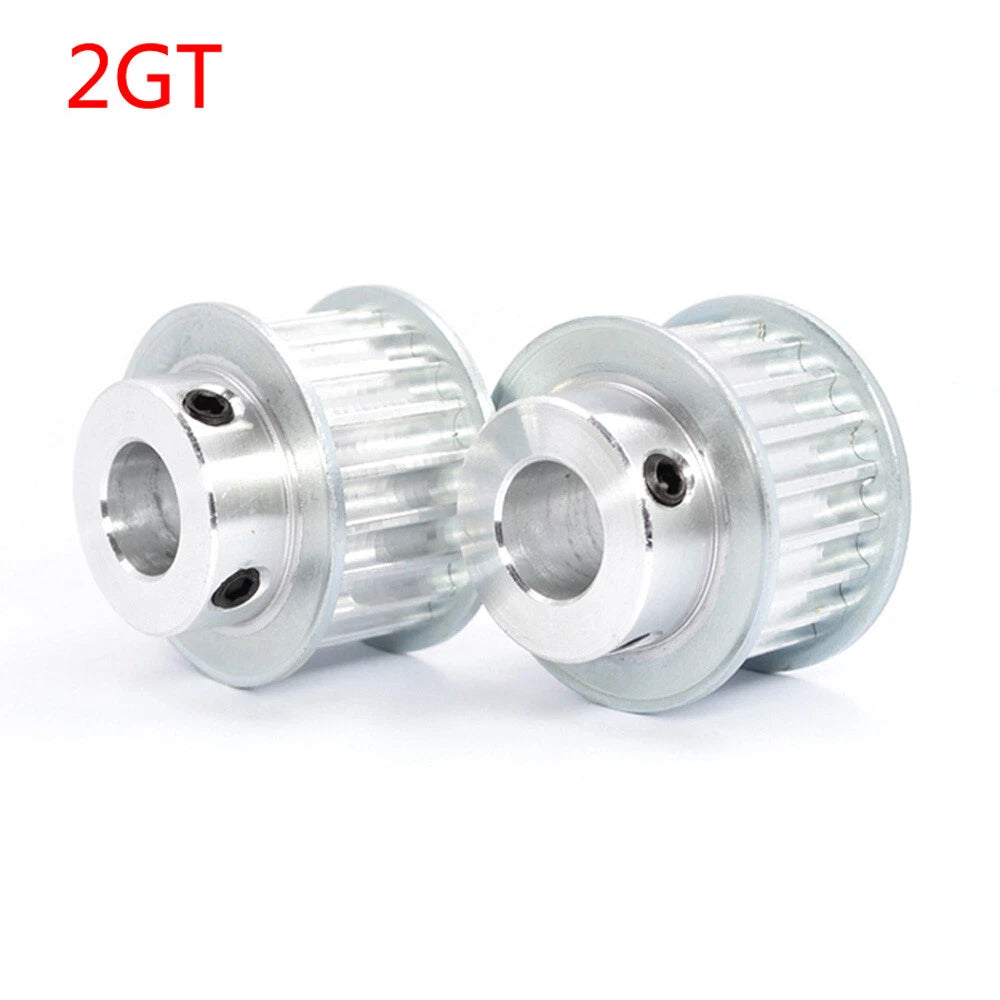
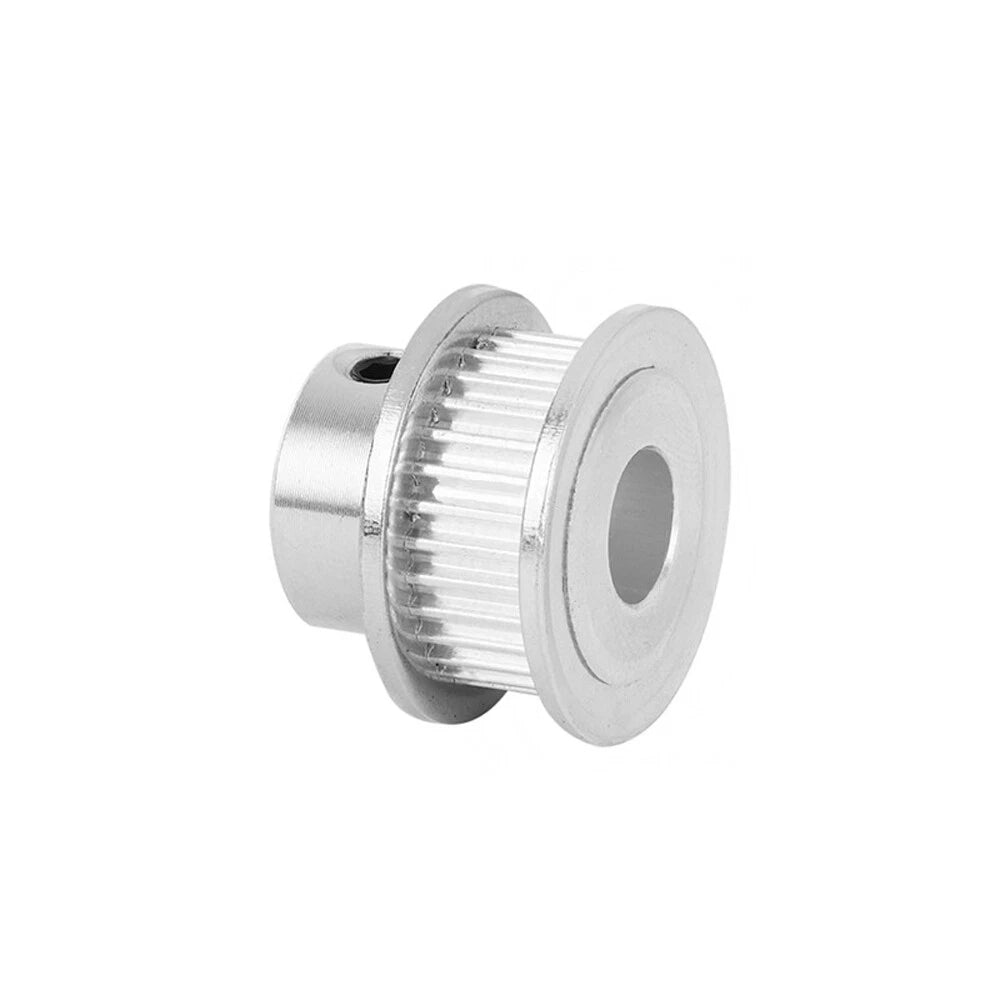
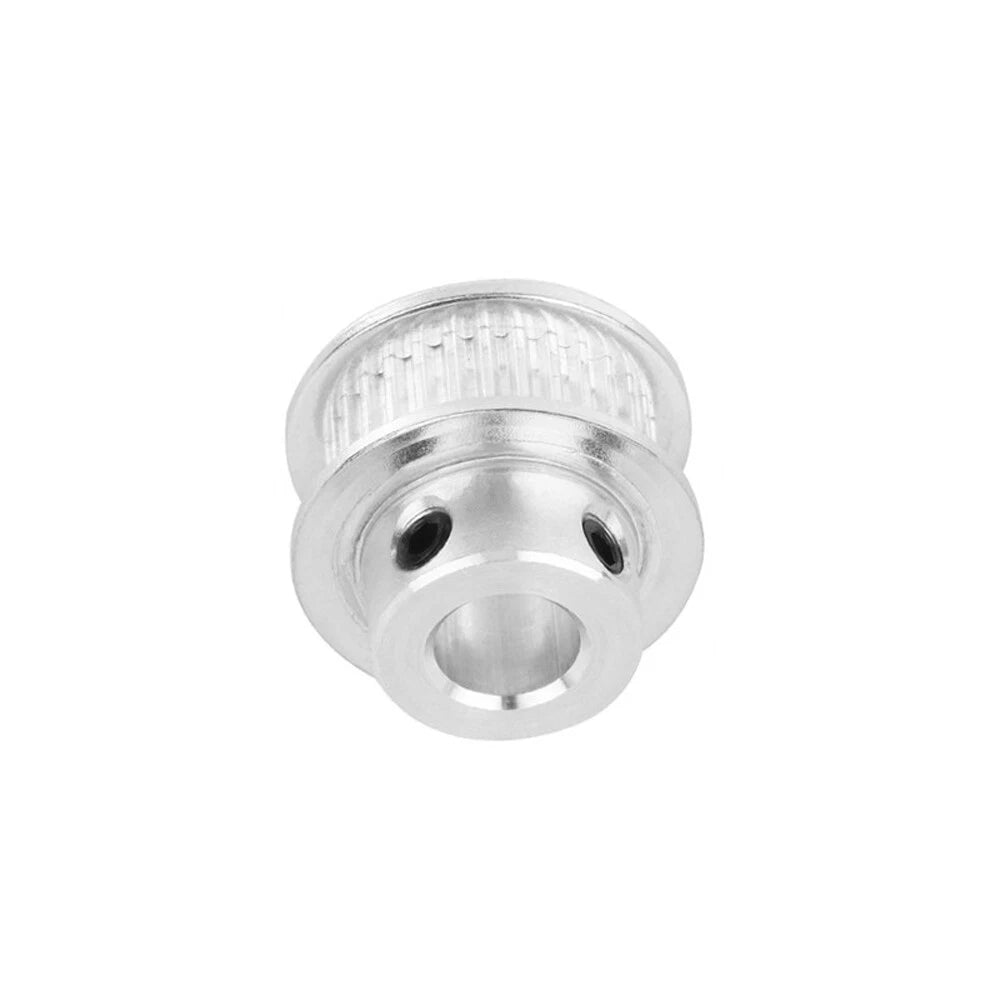
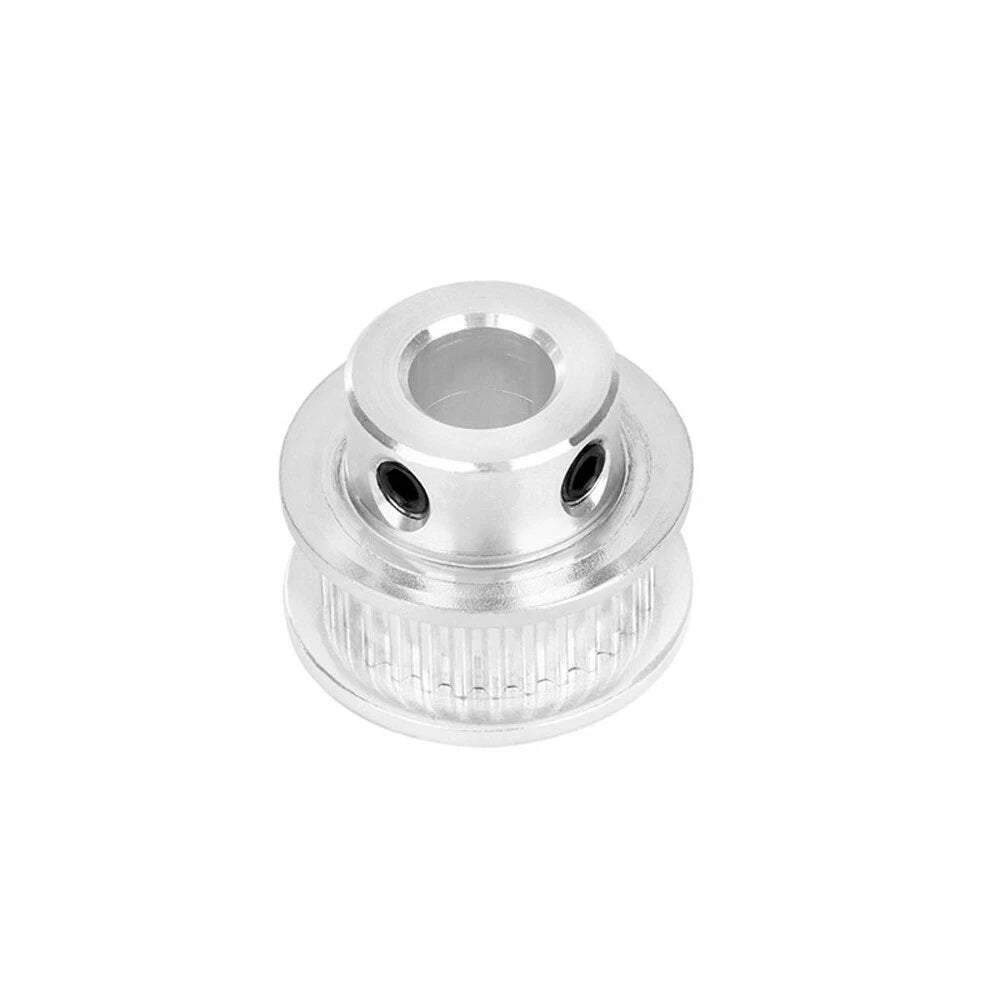
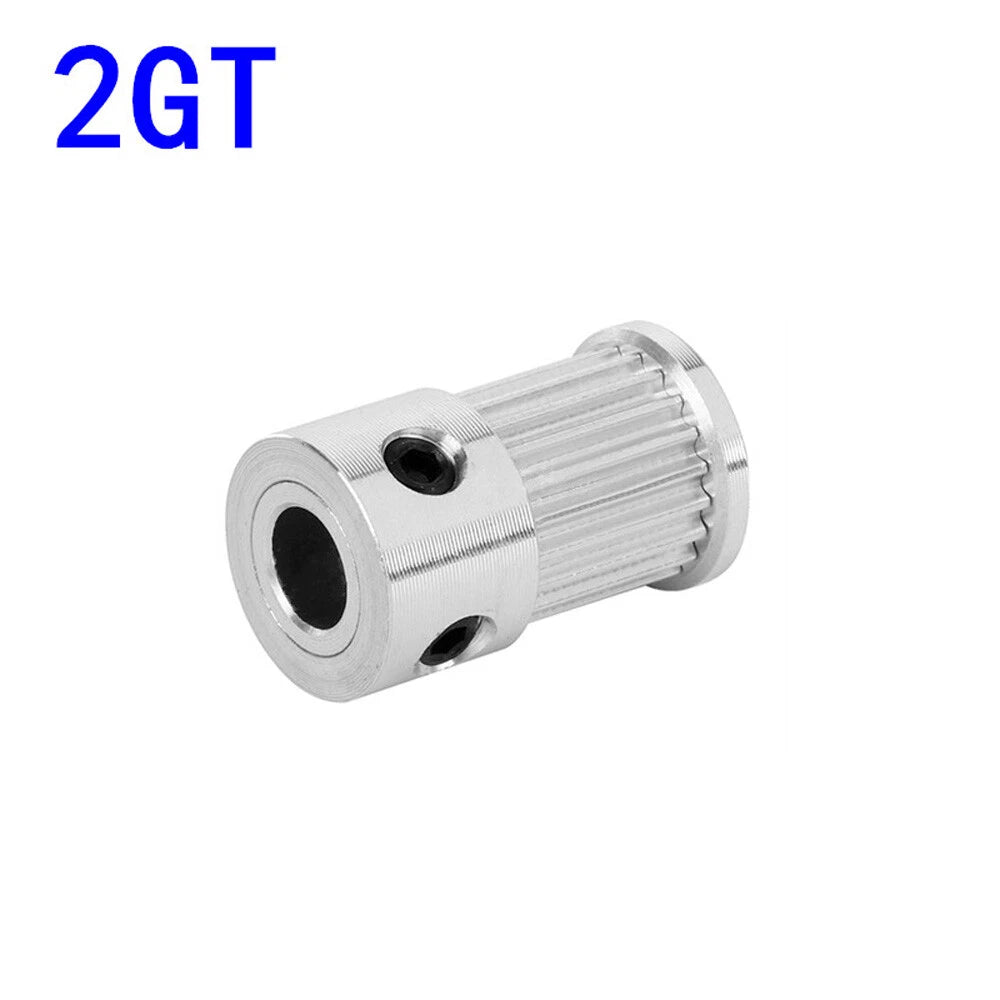
GT2 14-64 Zähne Zahnrad-Pulley Drucker Riemenscheibe ,Breite 11mm Zahnriemenrad

No reviews

Price:
Sale price$3.25 USD
Stock:
In stock (500 units), ready to be shipped

Payment & Security

Ach Direct Debit Amazon American Express Apple Pay Bancontact BLIK Diners Club Discover EPS Google Pay iDEAL Wero JCB Maestro Mastercard Multibanco MobilePay PayPal Przelewy24 Shop Pay Twint Union Pay USDC Visa

Your payment information is processed securely. We do not store credit card details nor have access to your credit card information.

Limited Offer — Spend More, Save More
Spend $55+
Save $5
Spend $100+
Save $10
Spend $200+
Save $25
HomeDIYer DIY Expert Support

DIY Expert Support

Get fitment advice & recommendations

Mon–Fri  8:30 AM – 8:00 PM
24-Hour Fast Ship
Arrives in 3–14 Days
Worldwide Shipping
30-Day Returns
1 tree planted with every purchase

Description

GT2 Timing Pulley 14–64 Teeth — Precision 2GT Belt Drive for 3D Printers, CNC & Robotics

When a slipping or misaligned pulley costs you a failed print or a ruined CNC pass, the root cause is almost always a component that was never machined to spec. Engineers, makers, and automation builders who depend on repeatable motion need a GT2 timing pulley that holds tooth pitch and bore concentricity across thousands of cycles — not just the first few.

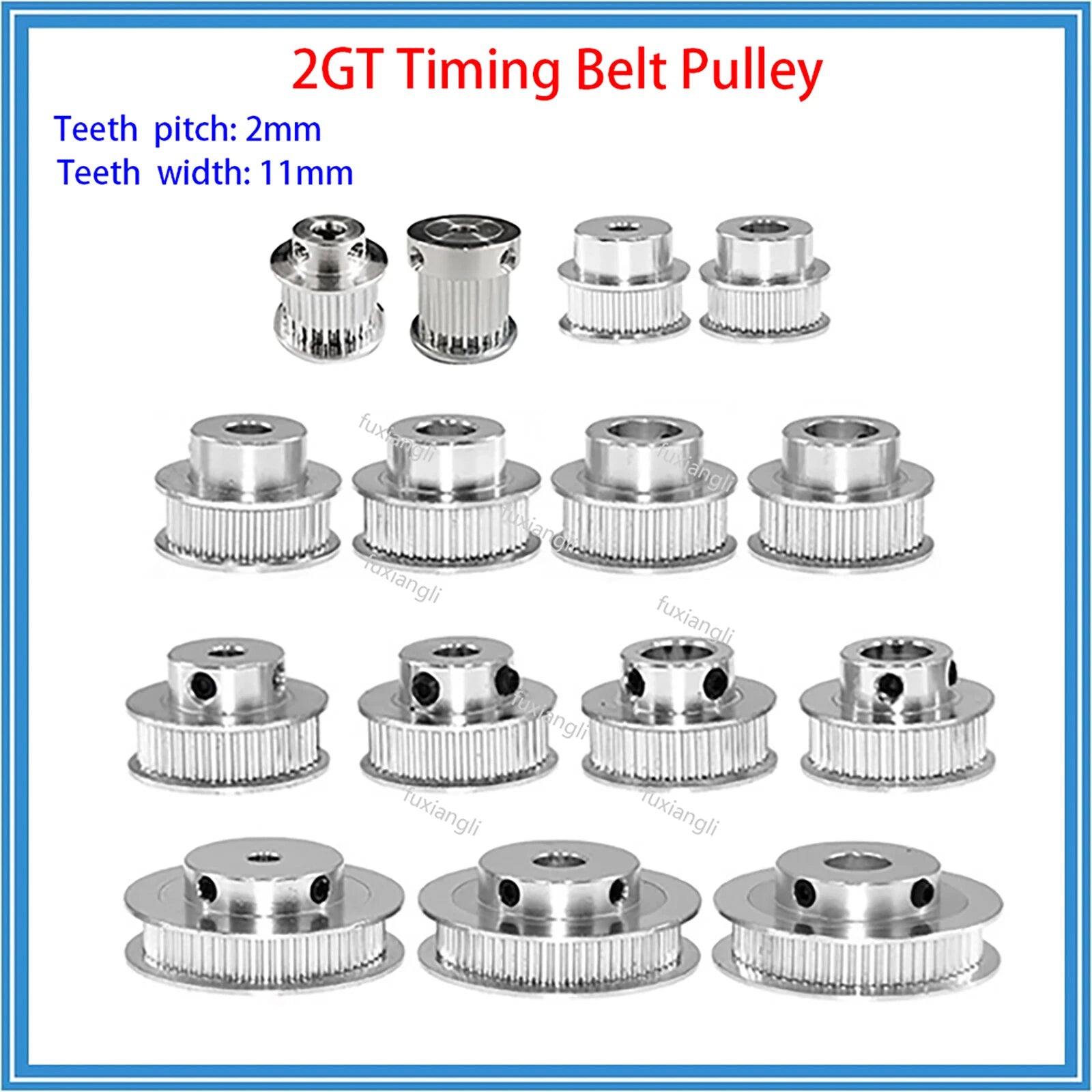
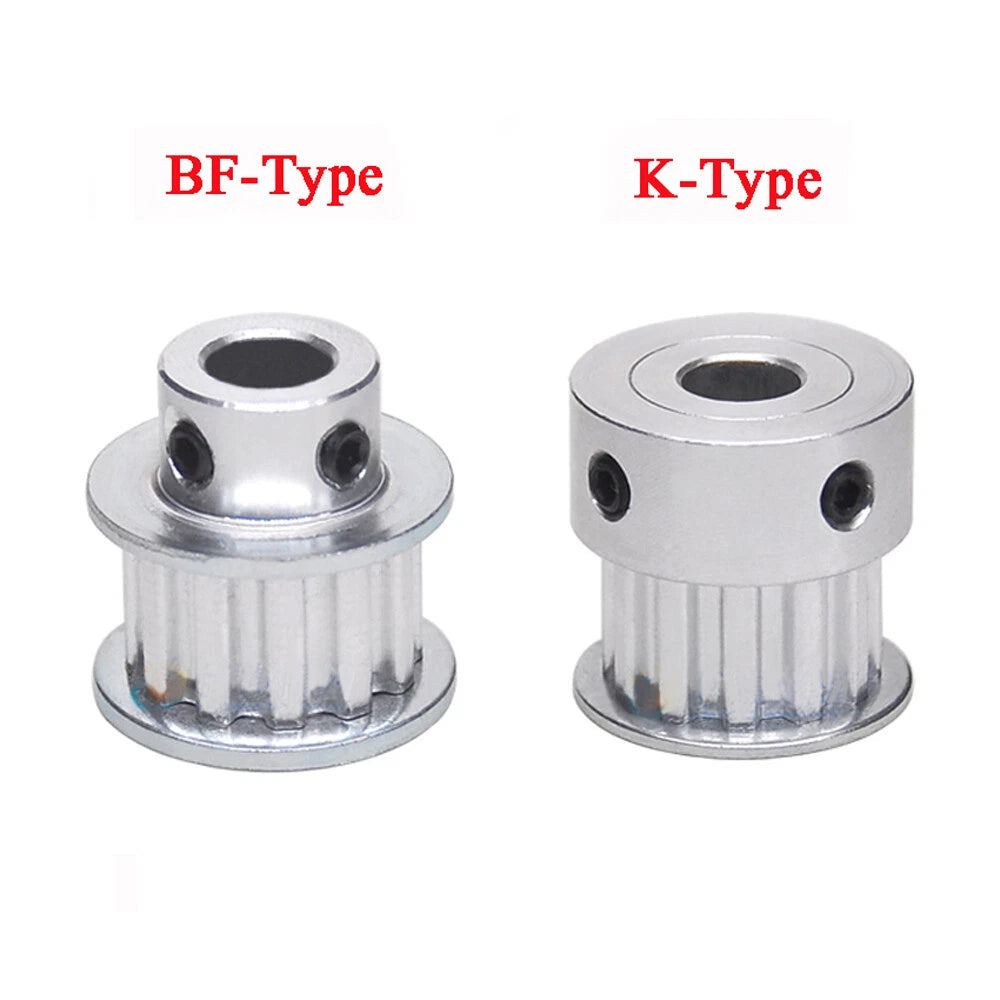
These GT2 timing pulleys are machined from aluminum alloy with a natural or anodized finish. The belt-contact surface spans 11 mm (approx. 0.43 in) in width, matching standard 2GT / GT2 open-loop and closed-loop belts. Tooth counts run from 14 T to 64 T, and bore diameters range from 3 mm to 25 mm (approx. 0.12 in – 0.98 in), covering the most common motor shaft sizes used in desktop motion systems. Two hub styles are available: K-type (set-screw collar) for quick shaft mounting, and BF-type (flanged hub) for applications requiring axial belt retention.

Typical use cases include 3D printer X/Y axis drives (GT2 14 T – 20 T pulleys on NEMA 17 shafts), CNC router gantry drives (GT2 20 T – 40 T on 6.35 mm or 8 mm shafts), and lightweight robotics joint drives where a GT2 timing pulley with a 60 T – 64 T reduction ratio replaces a gearbox. The 2GT tooth profile also suits laser engraver carriage drives and pick-and-place linear actuators.

⚙️ Belt Compatibility: Designed for standard 2GT / GT2 open-loop and closed-loop timing belts with 2 mm pitch and 6 mm or 10 mm width. Confirm belt width matches pulley flange before ordering.

✅ Key Features of These GT2 Timing Pulleys

🦷
Wide Tooth Range: 14 T – 64 T

Covers low-inertia high-speed drives (14 T) through high-reduction ratio applications (64 T) in a single product family.

📏
11 mm Belt Width

Matches standard 2GT belts in 6 mm and 10 mm widths; the 11 mm flange-to-flange span retains the belt under dynamic loads.

🔩
Bore Range: 3 mm – 25 mm

Fits NEMA 17 (5 mm), NEMA 23 (6.35 mm / 8 mm), and larger servo shafts without adapters or bushings.

🔄
K-type & BF-type Hub Styles

K-type uses a radial set screw for tool-free shaft changes; BF-type adds a flanged hub for positive axial belt retention in high-cycle applications.

🏗️
Aluminum Alloy Construction

Low rotating mass reduces motor load; corrosion-resistant surface suits enclosed and semi-open machine enclosures.

🎯
2GT Tooth Profile Accuracy

Machined tooth pitch matches the 2 mm GT2 standard, ensuring backlash-free meshing with compatible belts for repeatable positioning.

📐 Technical Specifications — GT2 Timing Pulley

Belt Profile 2GT (GT2), 2 mm pitch
Belt Width Compatibility 6 mm / 10 mm (11 mm flange span)
Tooth Count Range 14 T – 64 T
Bore Diameter Range 3 mm – 25 mm (0.12 in – 0.98 in)
Hub Style K-type (set screw) / BF-type (flanged)
Material Aluminum alloy
Pulley Width 11 mm (0.43 in)
Pitch Diameter (14 T) approx. 8.9 mm (0.35 in)
Pitch Diameter (60 T) approx. 38.2 mm (1.50 in)
Set Screw (K-type) See variant options
Quantity per Order 1 piece

❓ Frequently Asked Questions

How do I choose the right tooth count for my application?

Tooth count determines the pitch diameter and, combined with your motor pulley, sets the drive ratio. For 3D printer X/Y axes, 20 T is the most common choice on a NEMA 17 motor. For higher torque or slower linear speed, use a larger tooth count on the driven side. For faster travel with less torque, use a smaller tooth count. Match the tooth count to your belt loop length and center distance calculation.

Which bore size fits a NEMA 17 stepper motor shaft?

Standard NEMA 17 stepper motors have a 5 mm output shaft. Select the 5 mm bore variant. If your motor has a D-cut shaft, the K-type set screw will engage the flat. For NEMA 23 motors, the shaft is typically 6.35 mm (1/4 in) or 8 mm — select accordingly.

What is the difference between K-type and BF-type?

K-type pulleys have a cylindrical hub with one or two radial set screws that clamp directly onto the motor shaft. They are easy to install and remove. BF-type pulleys have a flanged hub that provides additional axial support, keeping the belt centered on the pulley under side-load or high-cycle conditions. Choose BF-type for applications with significant belt tension variation or where belt walk is a concern.

Are these pulleys compatible with standard GT2 belts?

Yes. These pulleys are machined to the 2GT / GT2 tooth profile with a 2 mm pitch. They are compatible with standard GT2 open-loop belts (sold by the meter) and closed-loop GT2 belts in common lengths. Confirm that your belt width (6 mm or 10 mm) fits within the 11 mm flange span of the pulley.

How strong are aluminum GT2 pulleys compared to plastic ones?

Aluminum alloy pulleys offer significantly higher stiffness and dimensional stability than injection-molded plastic pulleys. They resist deformation under belt tension, maintain tooth pitch accuracy at elevated temperatures, and do not creep over time. For any application running more than a few hours per day, aluminum is the recommended material.

Will these pulleys corrode in a humid or semi-outdoor environment?

Aluminum alloy naturally forms a thin oxide layer that provides moderate corrosion resistance in typical indoor and semi-enclosed environments. For high-humidity or salt-air exposure, consider applying a light machine oil or selecting an anodized variant if available. Avoid prolonged contact with alkaline cleaning agents.

Can I use a 14 T pulley with a 60 T pulley for a reduction drive?

Yes. A 14 T driver paired with a 60 T driven pulley gives a 4.3:1 reduction ratio, which multiplies torque by approximately 4.3× while reducing output speed by the same factor. Ensure your belt length and center distance accommodate the difference in pitch diameters. Both pulleys must use the same 2GT belt profile.

🛒 Select your tooth count, bore diameter, and hub type above, then add to cart.

You may also like

Recently viewed