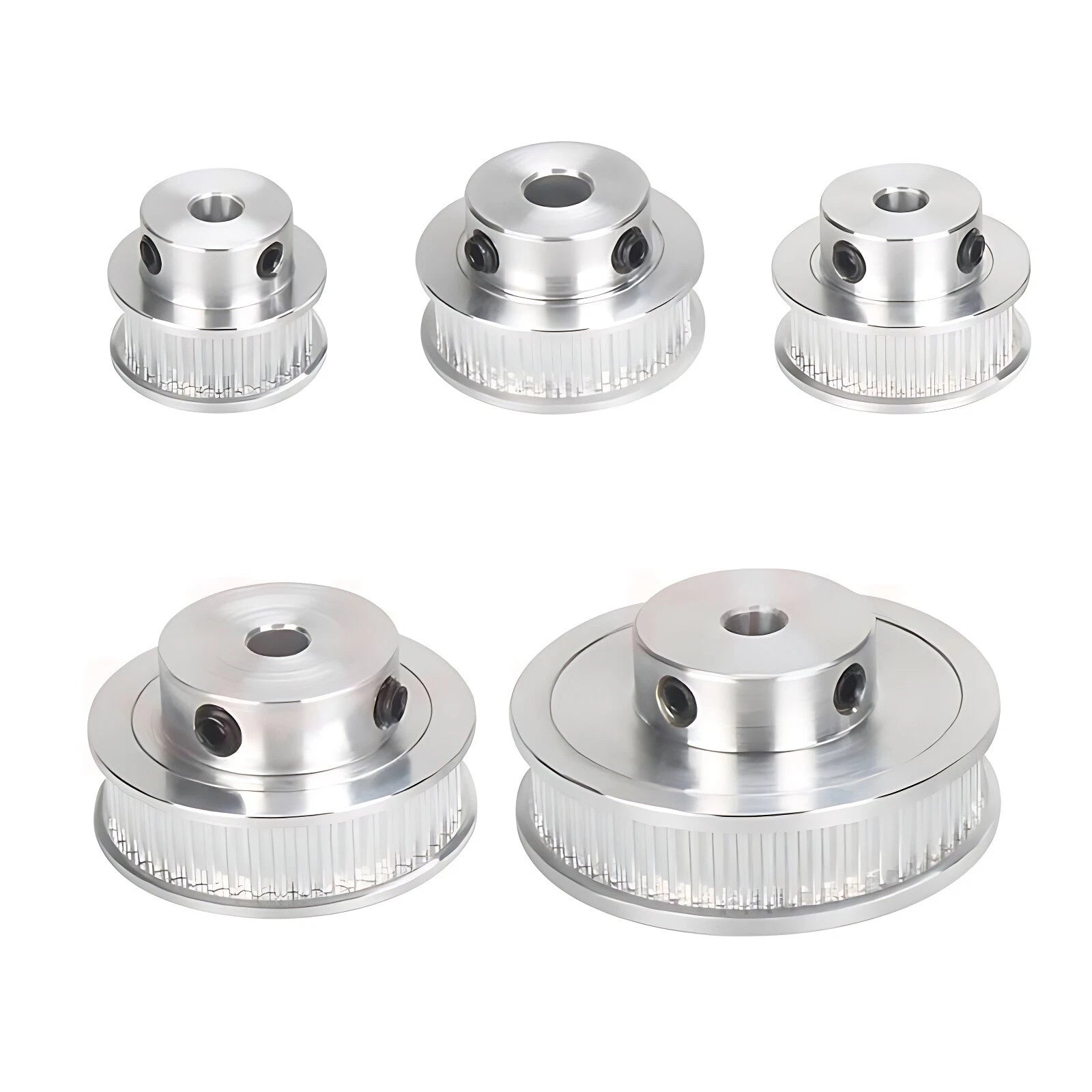
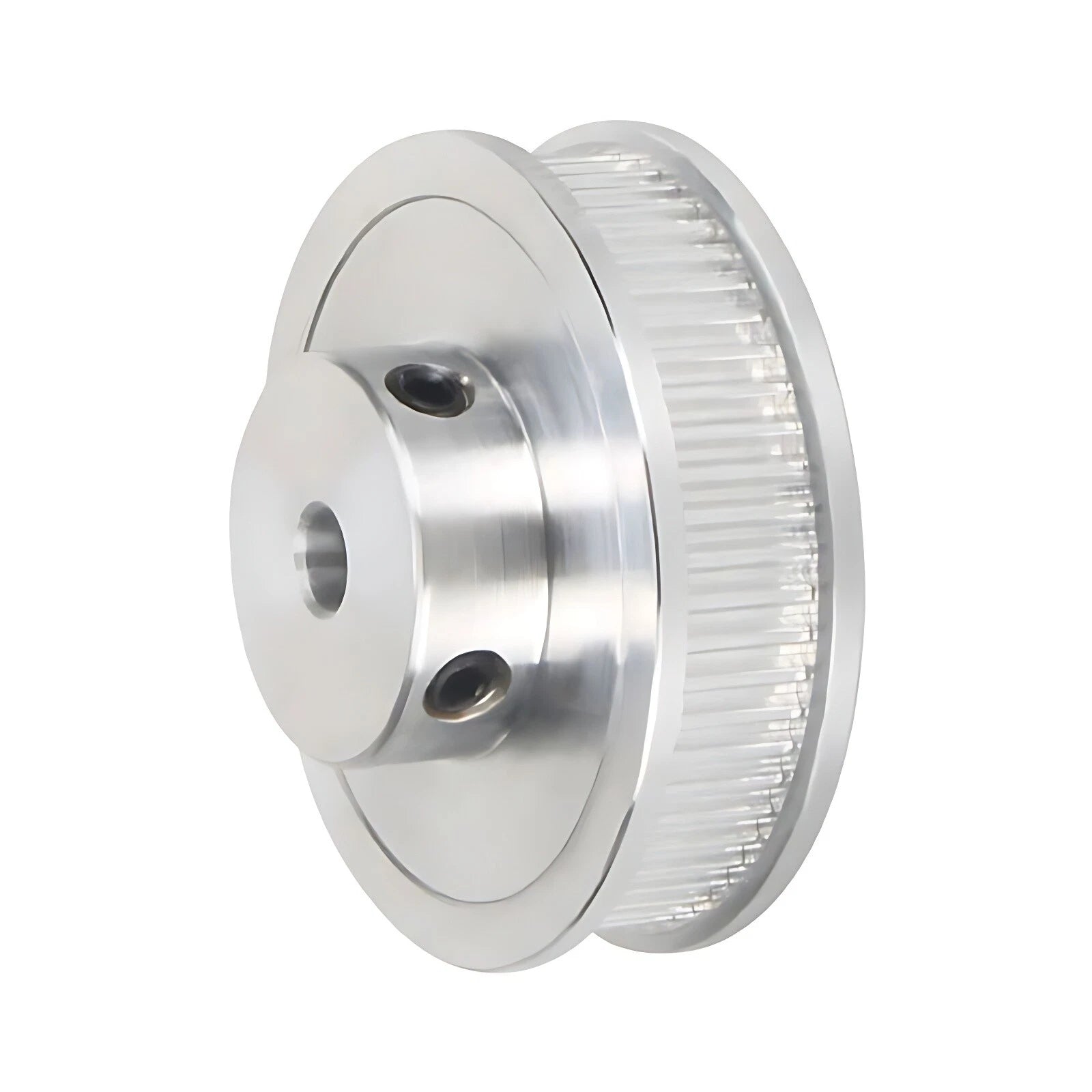
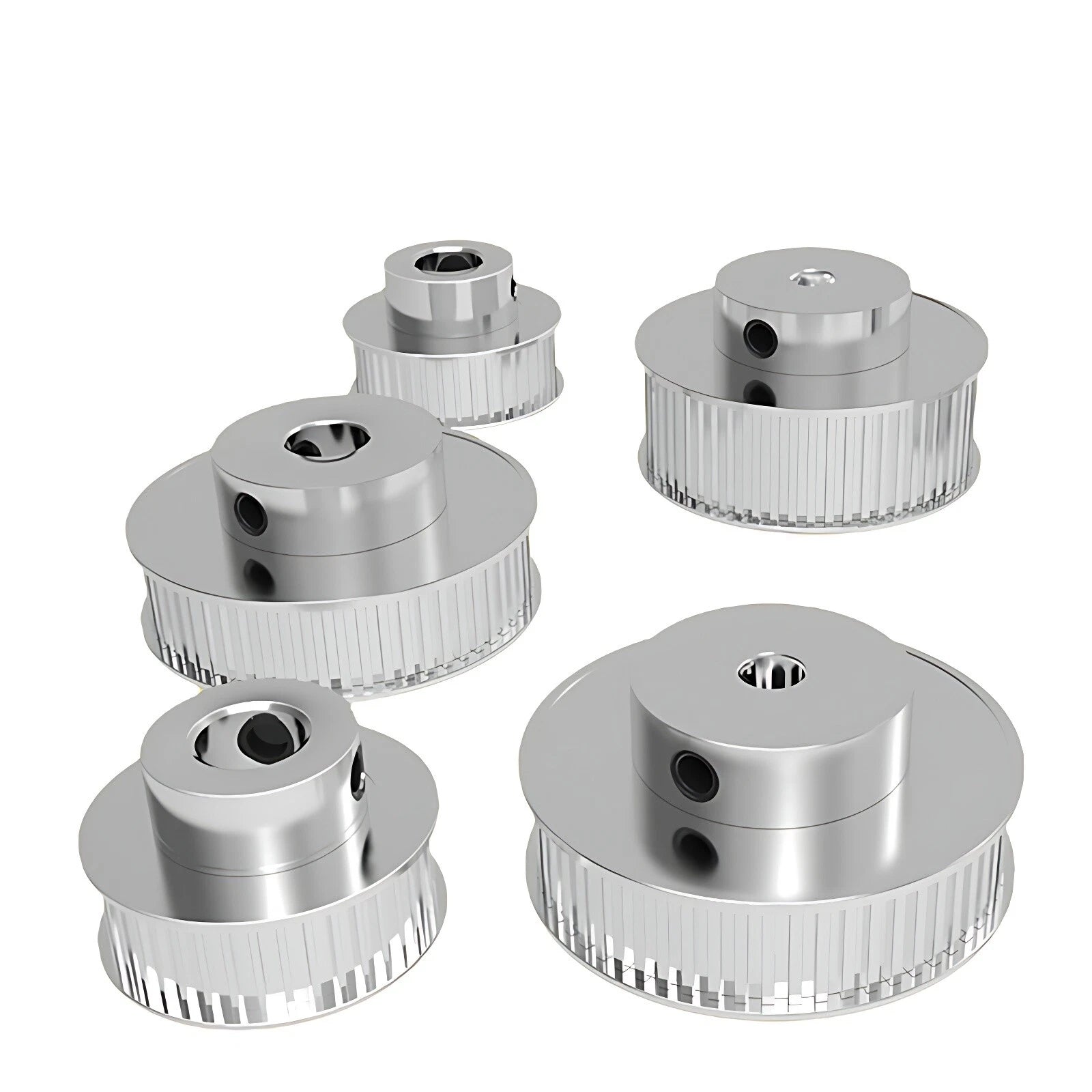
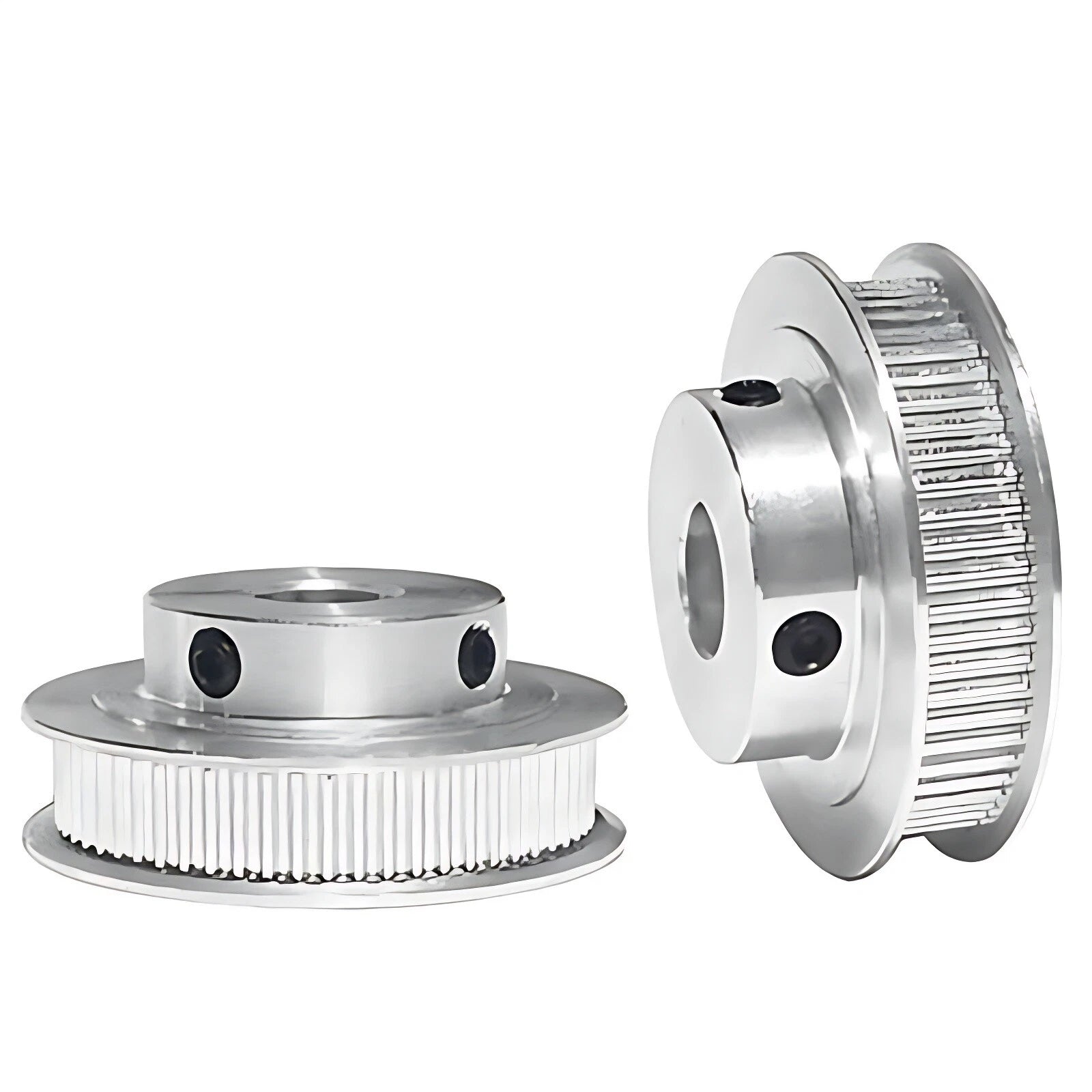
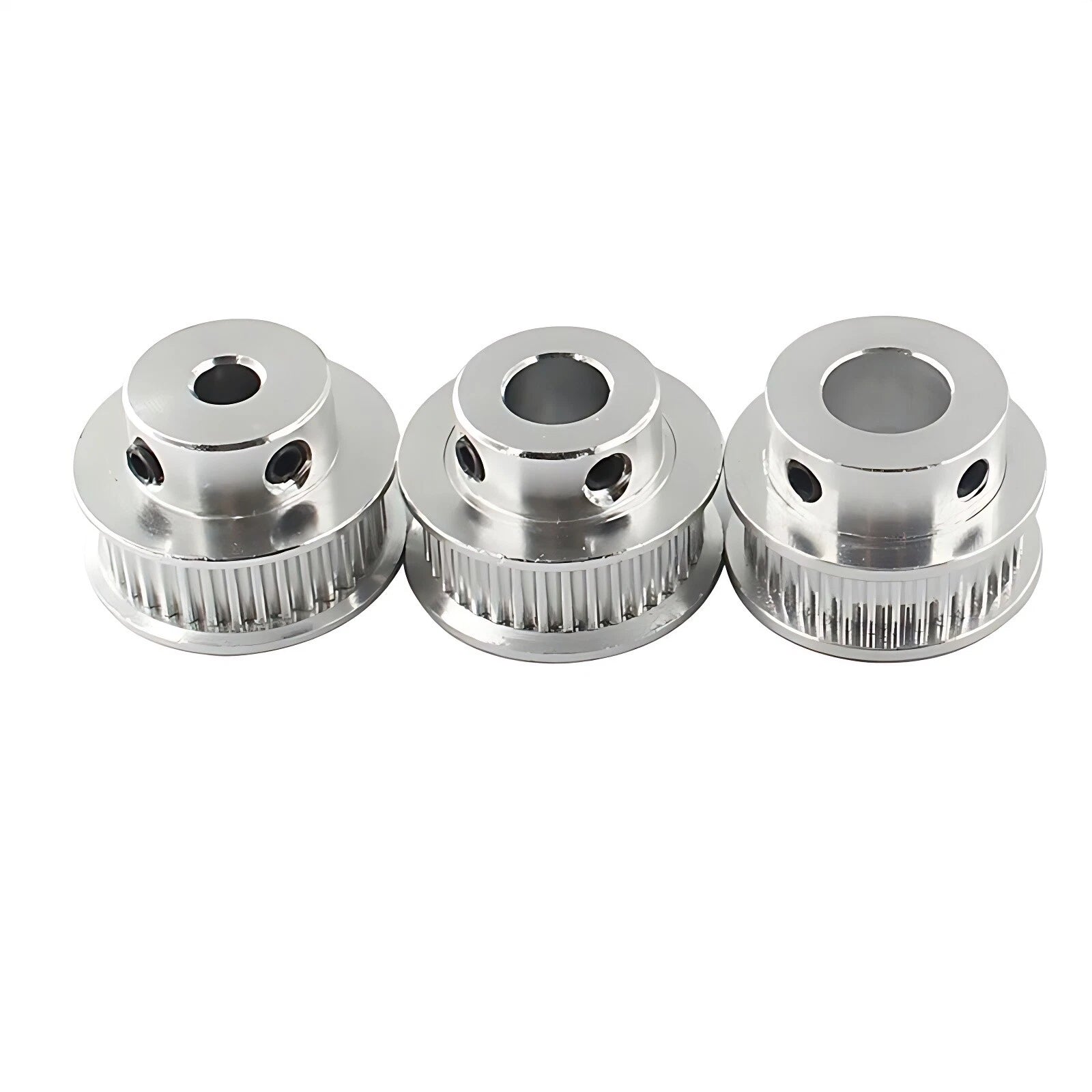
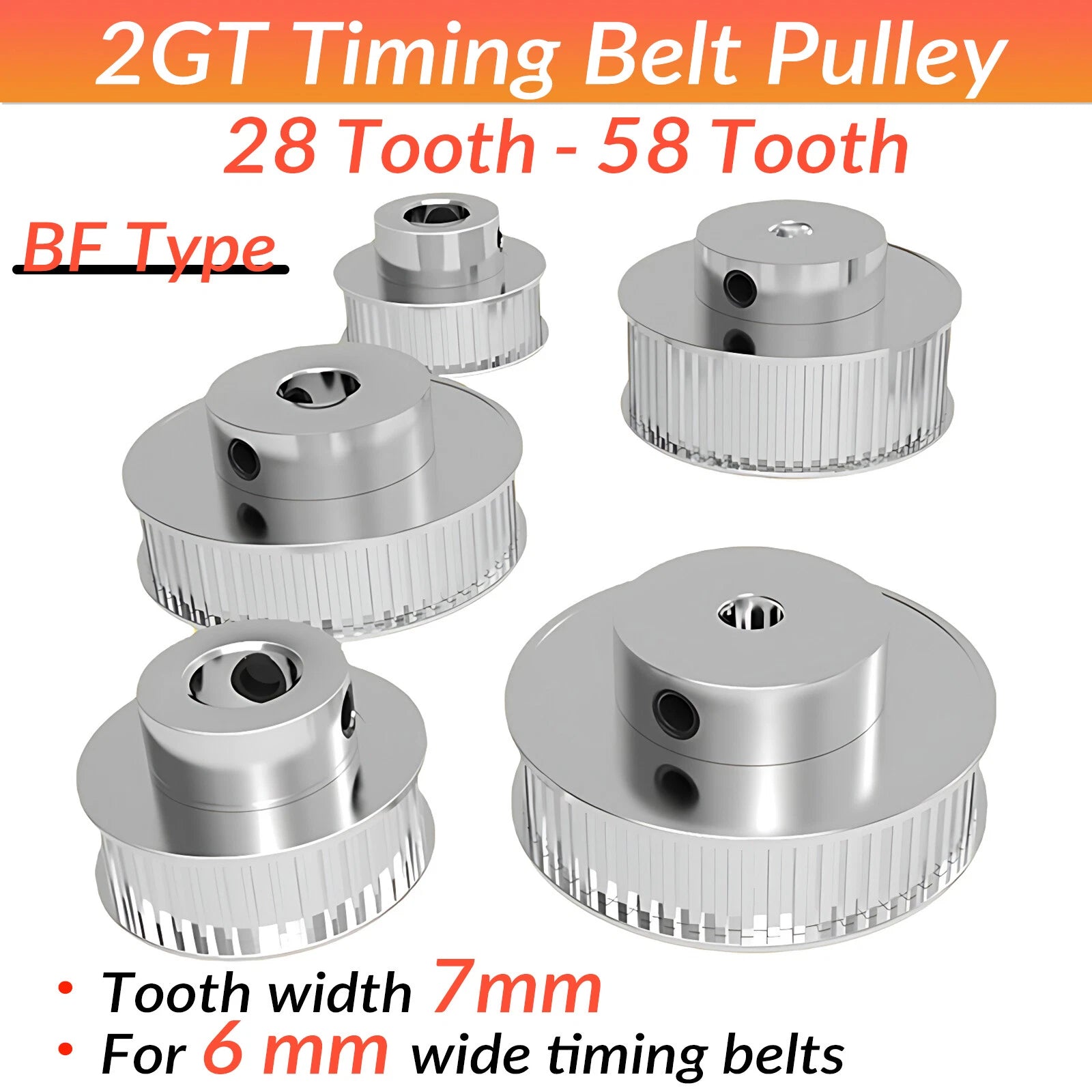
GT2 2GT 28T-58T Timing Belt Pulleys 4mm-15mm Bore with Steps for CNC 3D Printer

No reviews

Price:
Sale price$3.60 USD
Stock:
In stock (500 units), ready to be shipped

Payment & Security

Ach Direct Debit Amazon American Express Apple Pay Bancontact BLIK Diners Club Discover EPS Google Pay iDEAL Wero JCB Maestro Mastercard Multibanco MobilePay PayPal Przelewy24 Shop Pay Twint Union Pay USDC Visa

Your payment information is processed securely. We do not store credit card details nor have access to your credit card information.

Limited Offer — Spend More, Save More
Spend $55+
Save $5
Spend $100+
Save $10
Spend $200+
Save $25
HomeDIYer DIY Expert Support

DIY Expert Support

Get fitment advice & recommendations

Mon–Fri  8:30 AM – 8:00 PM
24-Hour Fast Ship
Arrives in 3–14 Days
Worldwide Shipping
30-Day Returns
1 tree planted with every purchase

Description

GT2 2GT Timing Belt Pulleys — Precision Motion Control for CNC & 3D Printers

When your CNC router skips steps or your 3D printer loses positional accuracy, the culprit is often a mismatched or worn timing pulley. Engineers, makers, and machine builders who demand repeatable, backlash-free motion need a pulley that fits precisely and holds up under continuous load. These GT2 2GT timing belt pulleys are designed for exactly that — delivering consistent tooth engagement across a wide range of tooth counts and bore sizes.

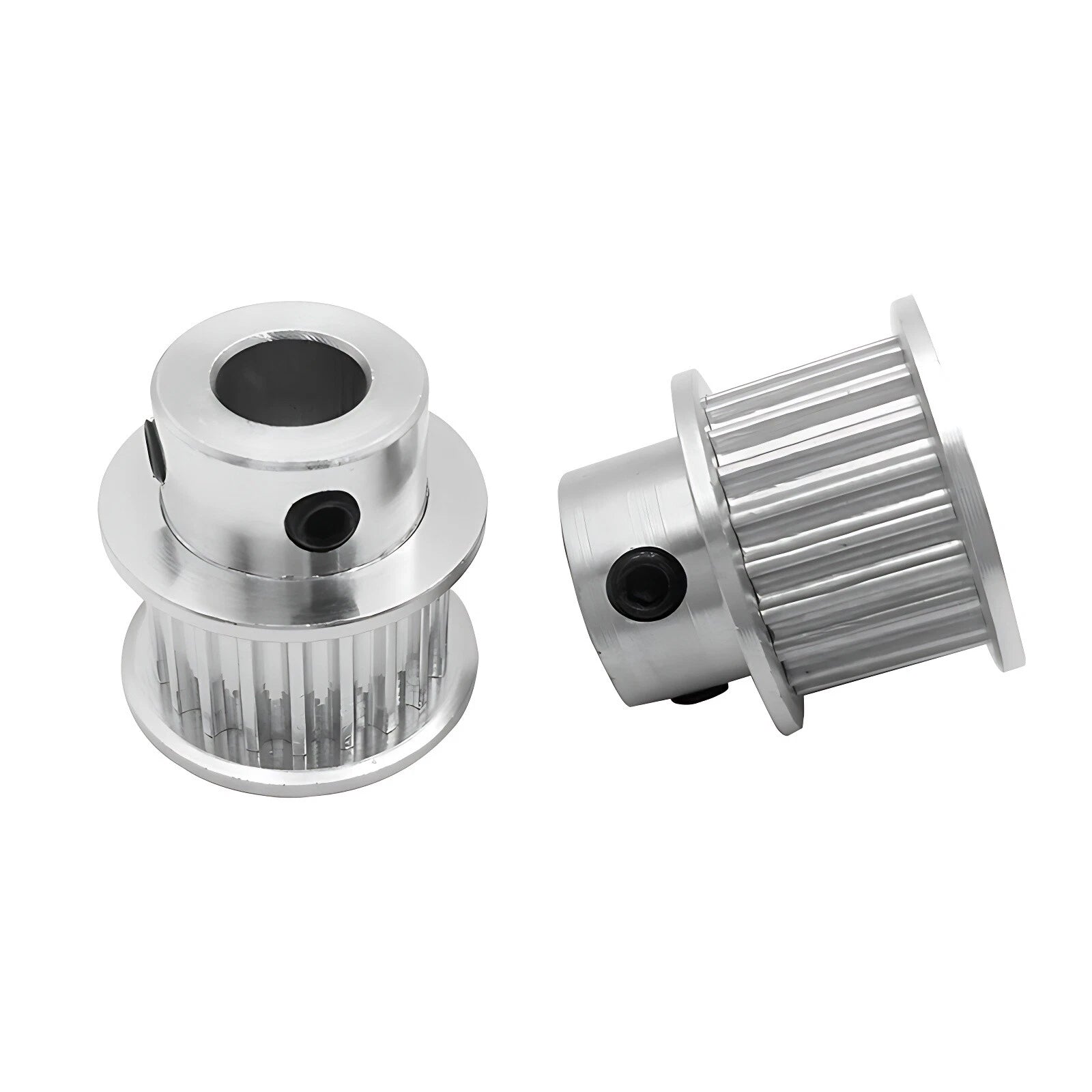
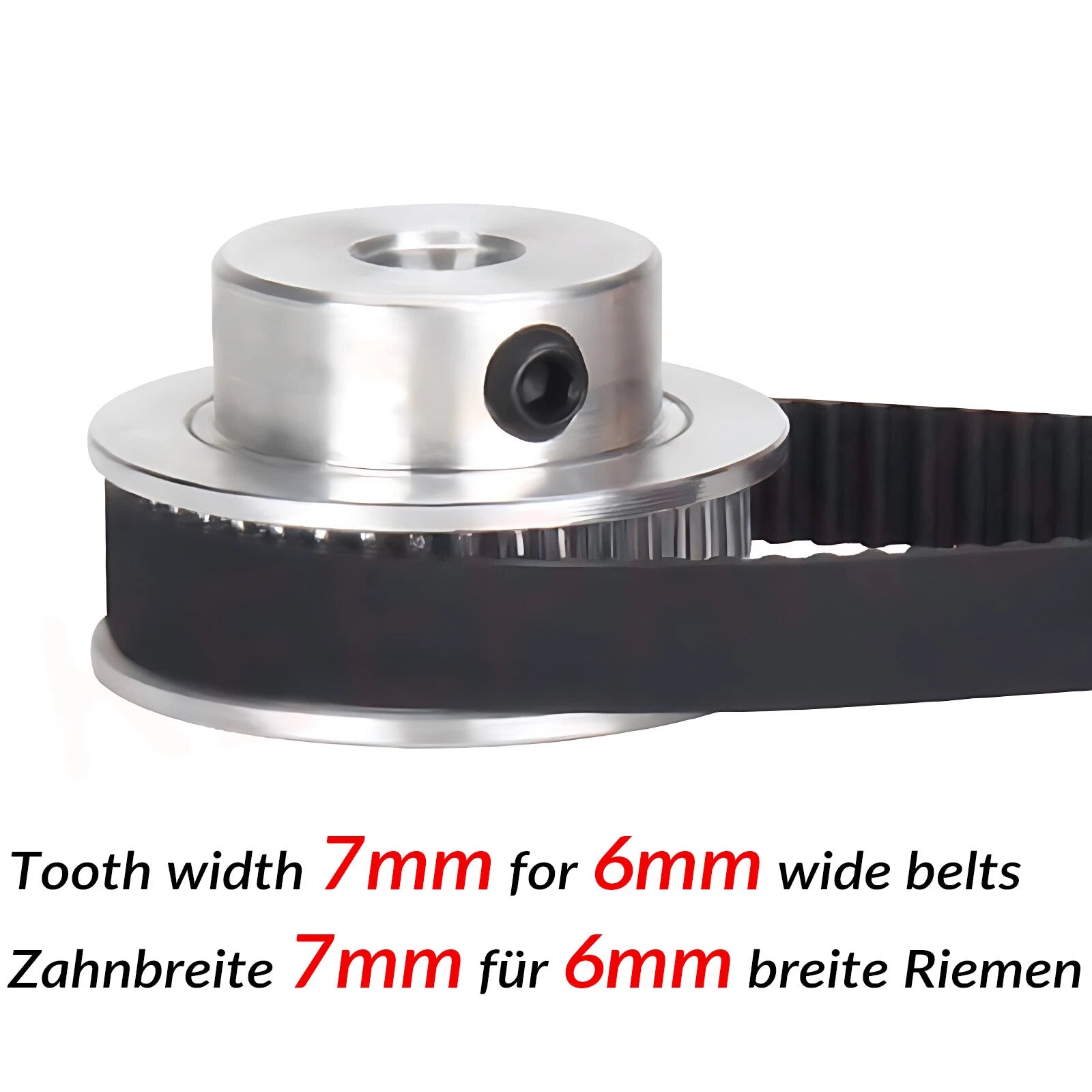
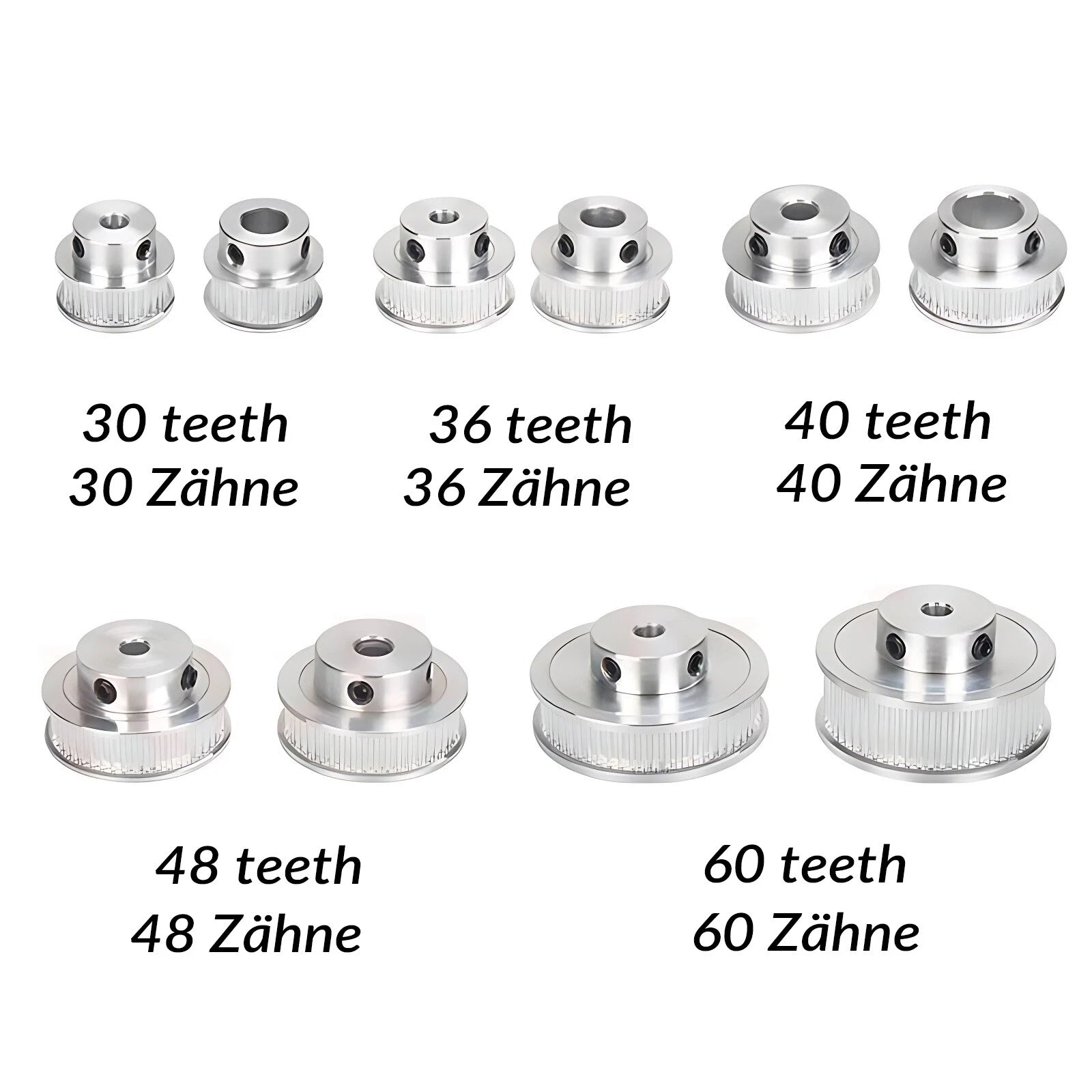
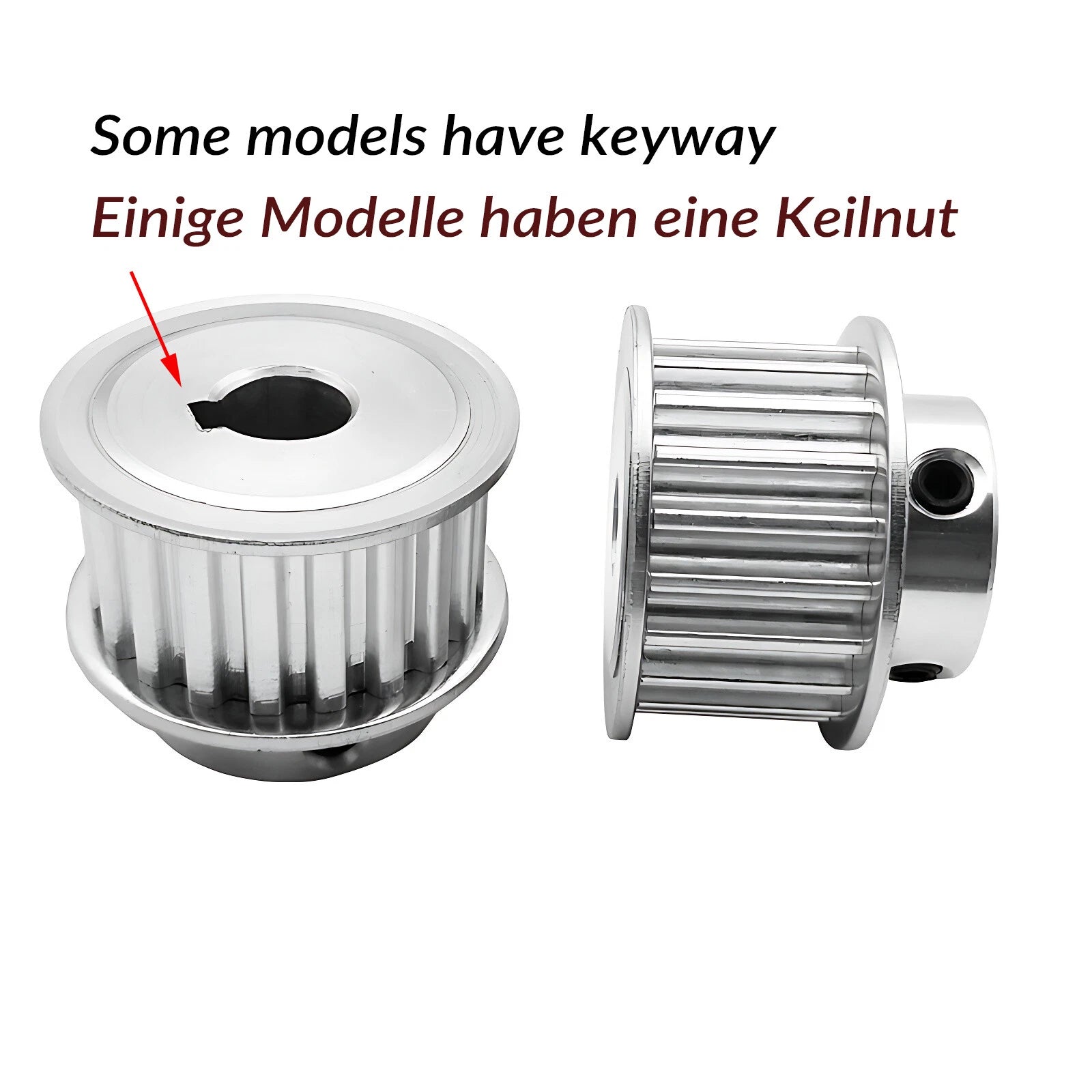
Each pulley features a GT2 2GT tooth profile machined from aluminum alloy, with a uniform belt width of 7mm (0.28 in). Tooth counts span from 28T to 58T, and through-hole bore diameters range from 4mm to 15mm (0.16–0.59 in), including 6.35mm (1/4 in) and 12.7mm (1/2 in) imperial options. Keyway variants (K 3mm, K 4mm, K 5mm) are available on select bore sizes for positive shaft locking without set-screw slippage.

Typical applications include open-loop CNC routing machines requiring precise X/Y axis drive, FDM 3D printer extruder and motion systems using GT2 belts, and lightweight robotic arm joints or linear actuator assemblies where low backlash timing pulleys are critical for repeatability.

⚙️ Compatibility: Designed for standard GT2 / 2GT timing belts with 2mm pitch and 6mm or 7mm belt width. Verify your belt width and shaft diameter before ordering.

✅ Key Features of These GT2 2GT Timing Belt Pulleys

🦷
Wide Tooth Count Range (28T–58T)
Choose from 18 tooth count options to match your drive ratio requirements for CNC, 3D printing, or robotics applications.
🔩
Multiple Bore Sizes (4mm–15mm)
Through-hole bores from 4mm to 15mm, including 6.35mm (1/4") and 12.7mm (1/2") imperial sizes, accommodate a broad range of motor and shaft diameters.
🔑
Keyway Variants Available
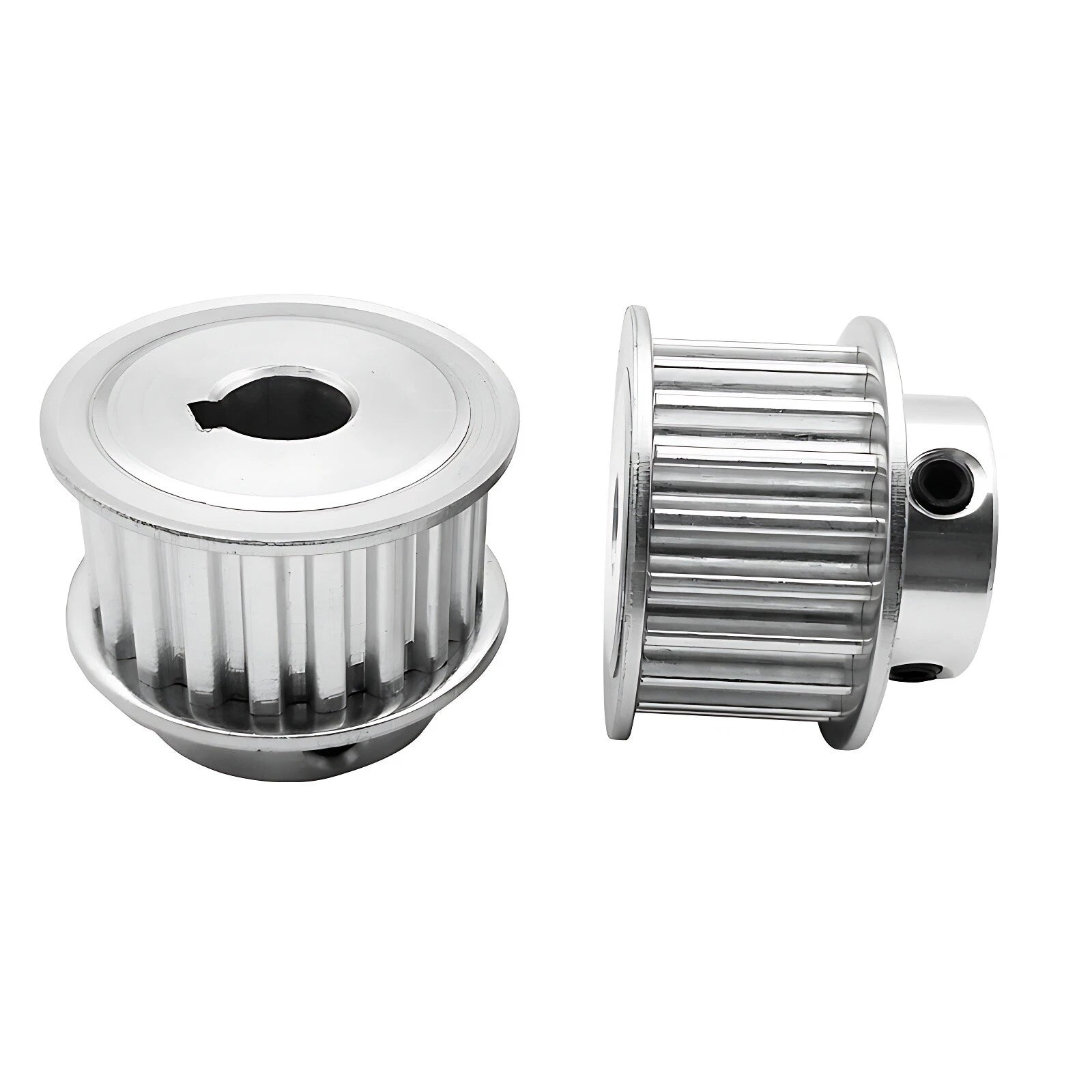
Select bore sizes include a precision-cut keyway (K 3mm, K 4mm, or K 5mm) for positive shaft engagement, eliminating rotational slippage under load.
📐
GT2 2GT Tooth Profile
The 2mm pitch GT2 profile ensures smooth, low-noise belt engagement with minimal backlash — the standard choice for motion control in desktop CNC and 3D printing.
⚖️
Aluminum Alloy Construction
Lightweight aluminum alloy body reduces rotational inertia while providing sufficient rigidity for continuous-duty motion control applications.
🛡️
Flanged Step Design
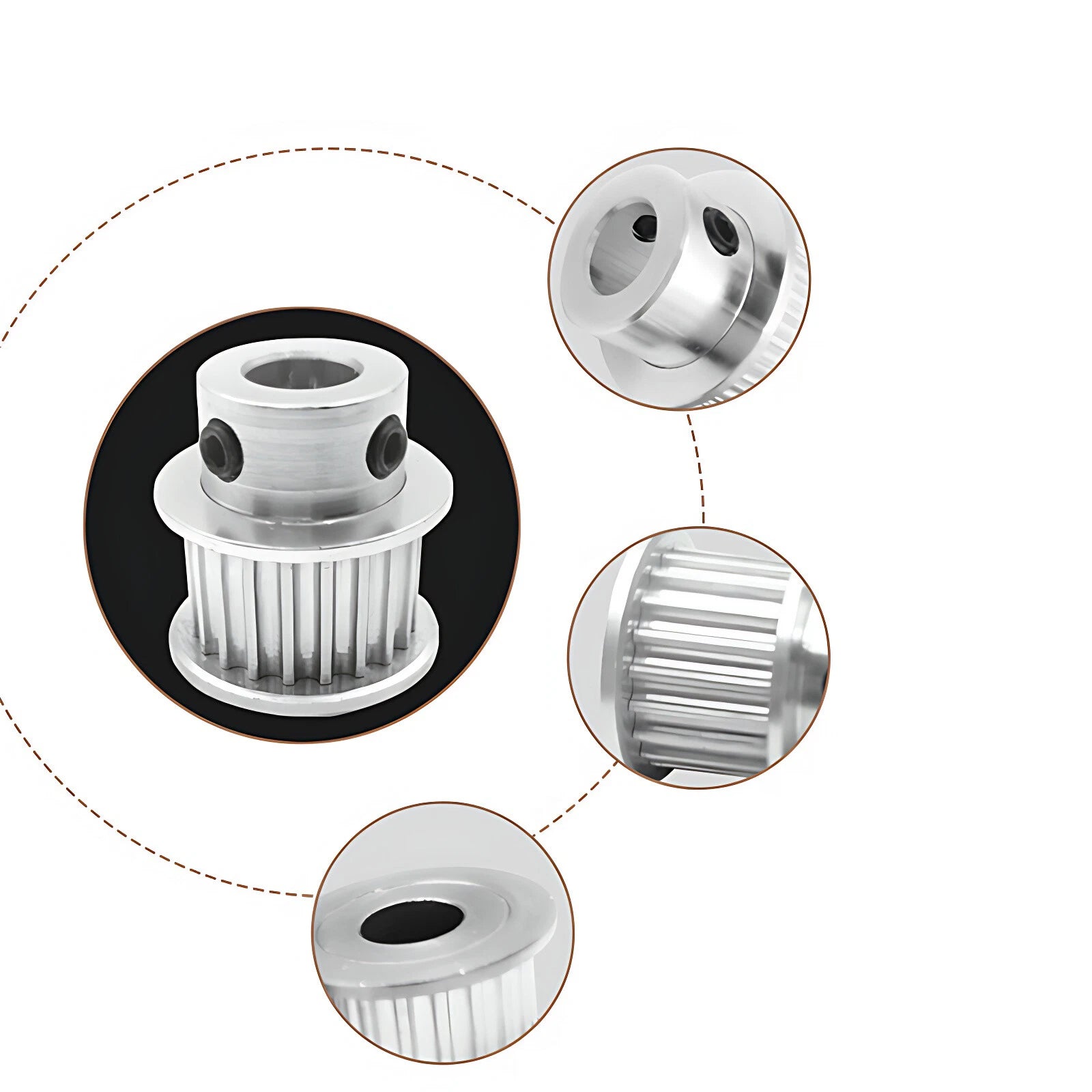
Integrated belt-retention flanges on both sides keep the GT2 belt tracking true, preventing lateral drift during high-speed or high-load operation.

📐 Technical Specifications — GT2 2GT Timing Belt Pulleys

Tooth Profile GT2 / 2GT
Pitch 2mm
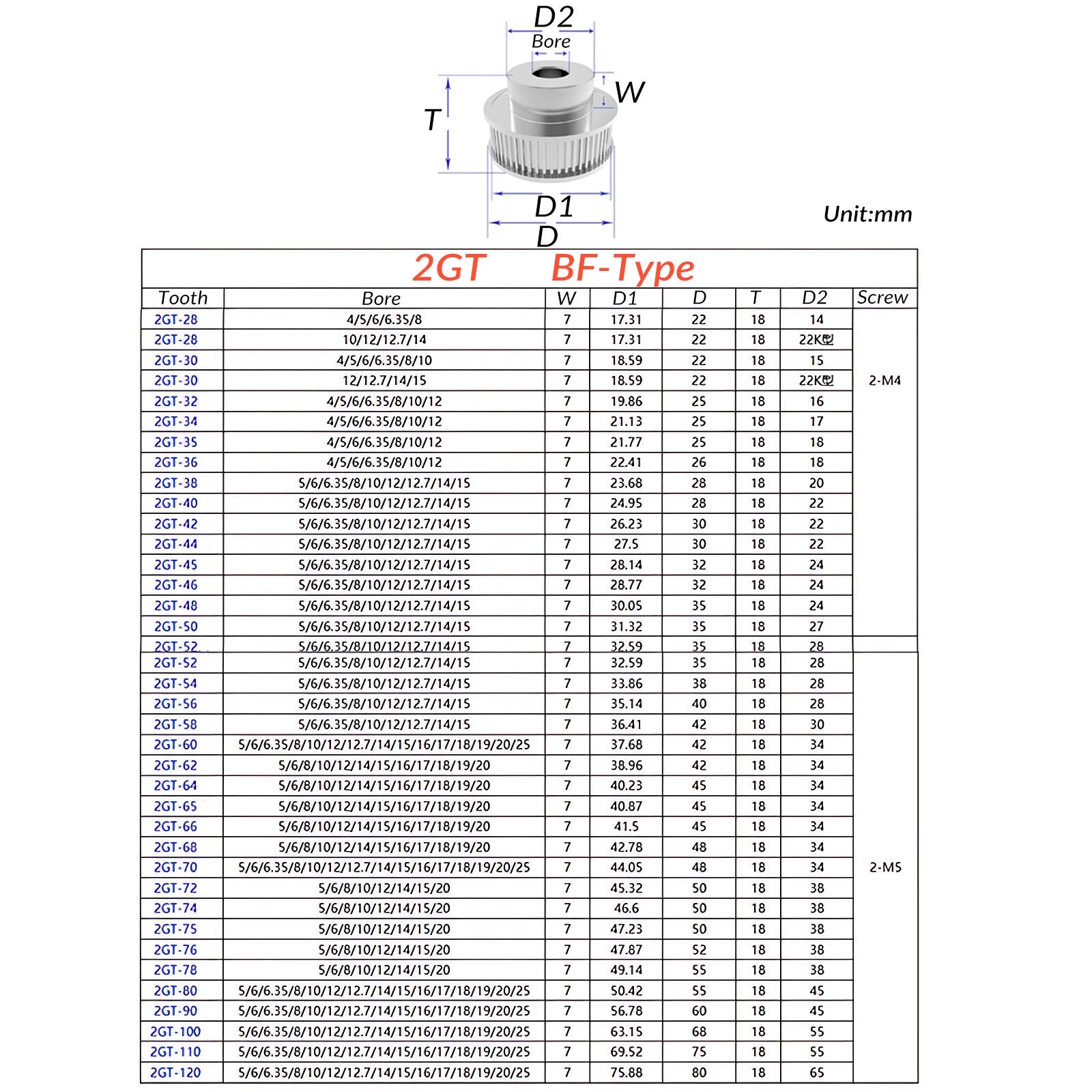
Belt Width 7mm (0.28 in)
Tooth Count 28T, 30T, 32T, 34T, 35T, 36T, 38T, 40T, 42T, 44T, 45T, 46T, 48T, 50T, 52T, 54T, 56T, 58T
Through-Hole Bore 4mm, 5mm, 6mm, 6.35mm, 8mm, 10mm, 12mm, 12.7mm, 14mm, 15mm
Keyway Options K 3mm, K 4mm, K 5mm (available on select bore sizes)
Material Aluminum alloy
Outer Diameter See variant options
Hub / Flange Flanged step design (belt retention)
Compatible Belt GT2 / 2GT, 2mm pitch, 6–7mm width
Quantity 1 piece per order

❓ Frequently Asked Questions

How do I choose the right tooth count for my application?

The tooth count determines your drive ratio. Divide the driven pulley teeth by the driving pulley teeth to get the ratio. For 1:1 motion (e.g., CoreXY 3D printers), use identical tooth counts on both ends. For speed reduction or torque multiplication in CNC applications, use a larger driven pulley. Common choices for 3D printers are 20T (not in this range) to 40T; this listing covers 28T–58T for larger-format or higher-torque setups.

What bore size should I select for my stepper motor shaft?

Most NEMA 17 stepper motors have a 5mm shaft diameter — select the 5mm bore. NEMA 23 motors typically use an 8mm or 6.35mm (1/4") shaft. Servo motors and DC motors vary widely; measure your shaft with calipers before ordering. If your shaft has a flat (D-cut), a keyway variant (e.g., 8mm – K 3mm) provides a more secure fit than a plain round bore with a set screw alone.

What is the difference between a plain bore and a keyway bore?

A plain through-hole bore relies on one or two set screws to grip the shaft. A keyway bore has a rectangular slot machined into the bore that accepts a matching key inserted into a keyway on the shaft. The key transmits torque mechanically, preventing rotational slippage under high load or reversing motion — important for CNC routers and servo-driven axes where set screws alone may loosen over time.

Are these pulleys compatible with 6mm wide GT2 belts?

These pulleys have a 7mm belt-contact width and flanged steps. They are designed for 6mm or 7mm wide GT2 belts. A 6mm belt will run within the flanges without issue. Do not use belts wider than 7mm, as they will contact the flanges and cause premature wear.

How strong are aluminum timing pulleys for CNC routing?

Aluminum alloy pulleys are suitable for the belt tension and torque loads typical of desktop and mid-size CNC routers using NEMA 17 or NEMA 23 stepper motors. For very heavy-duty industrial CNC applications with high belt tension, steel pulleys may be more appropriate. For 3D printers, laser cutters, and light-to-medium CNC routers, aluminum alloy provides an excellent balance of weight and rigidity.

Will these pulleys corrode or require lubrication?

Aluminum alloy naturally forms a thin oxide layer that provides moderate corrosion resistance in typical indoor workshop environments. No lubrication is required or recommended on the pulley teeth — GT2 timing belts are designed to run dry. Avoid exposing the pulleys to prolonged moisture, cutting fluids, or harsh chemicals that could degrade the aluminum surface over time.

Can I use these pulleys in a 3D printer that currently uses 20T pulleys?

Yes, but you will need to recalibrate your printer's steps-per-mm setting. Changing from a 20T to a 28T pulley (the smallest in this range) changes the linear distance per motor step. Recalculate using the formula: steps/mm = (motor steps × microstepping) ÷ (teeth × belt pitch). Update your firmware accordingly after swapping pulleys.

🛒 Select your tooth count and bore size above, then add to cart.


You may also like

Recently viewed