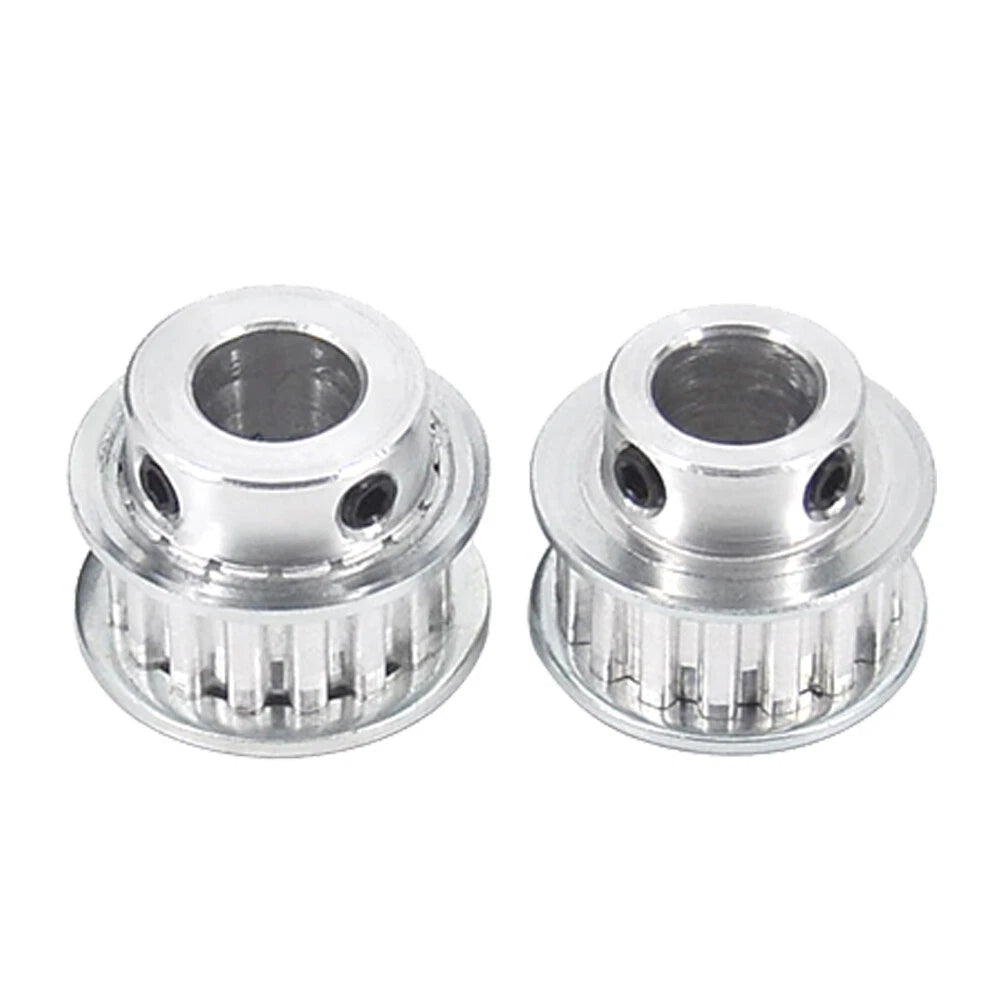
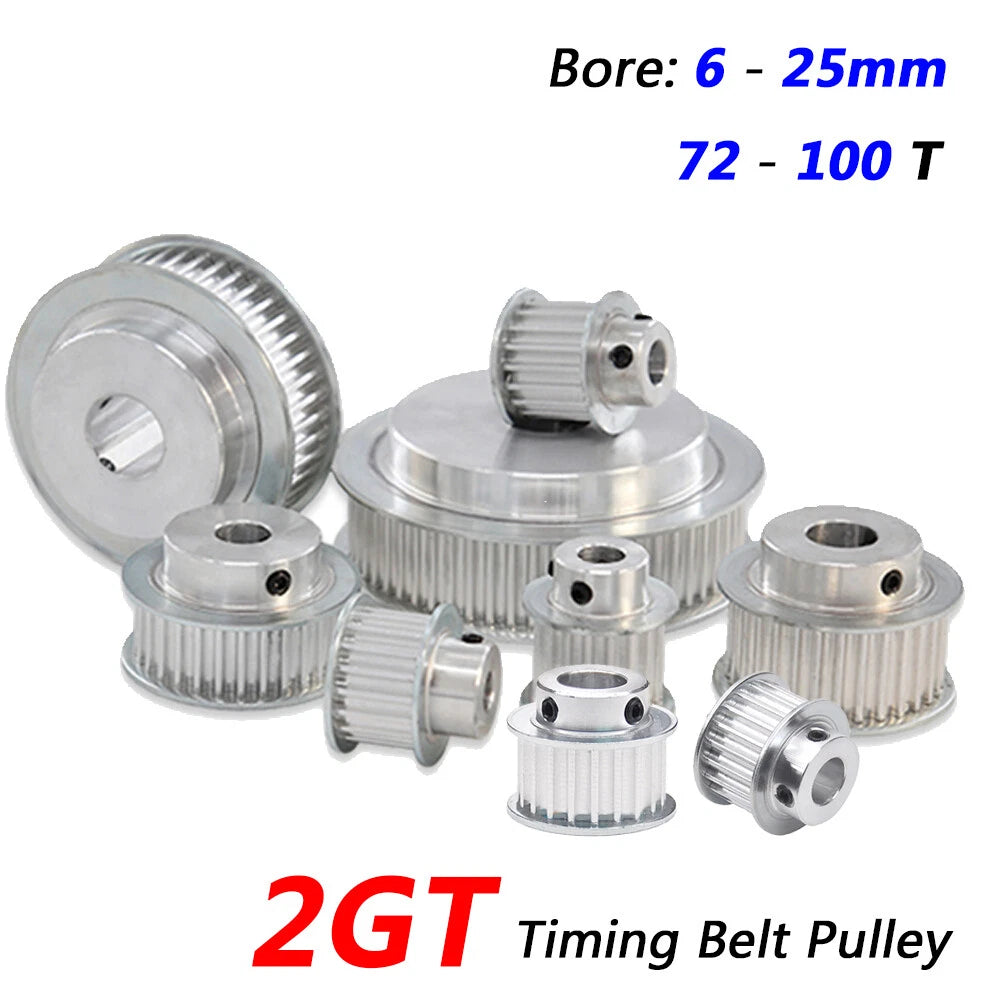
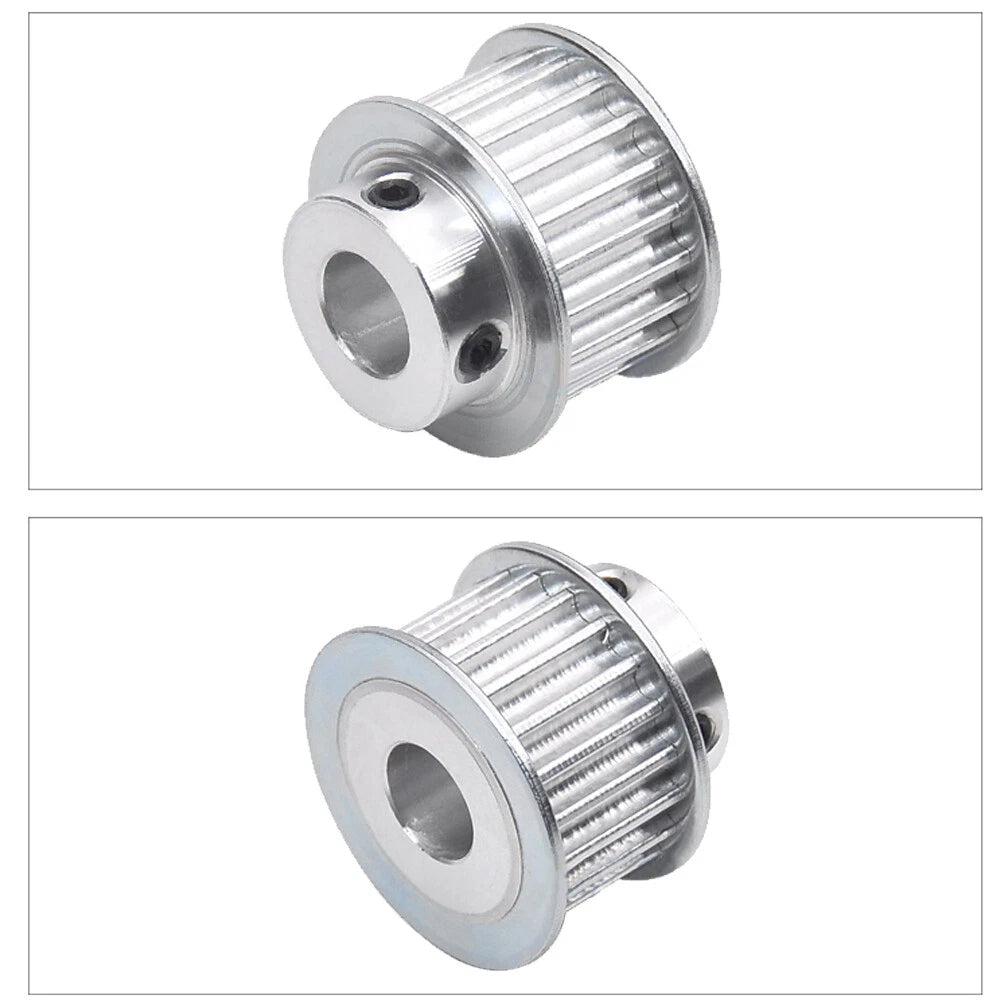
GT2 2GT Timing Belt Pulleys Bore 6mm-25mm with Steps 72T-100T for 3D Printer CNC

No reviews

Price:
Sale price$26.25 USD
Stock:
In stock (500 units), ready to be shipped

Payment & Security

Ach Direct Debit Amazon American Express Apple Pay Bancontact BLIK Diners Club Discover EPS Google Pay iDEAL Wero JCB Maestro Mastercard Multibanco MobilePay PayPal Przelewy24 Shop Pay Twint Union Pay USDC Visa

Your payment information is processed securely. We do not store credit card details nor have access to your credit card information.

Limited Offer — Spend More, Save More
Spend $55+
Save $5
Spend $100+
Save $10
Spend $200+
Save $25
HomeDIYer DIY Expert Support

DIY Expert Support

Get fitment advice & recommendations

Mon–Fri  8:30 AM – 8:00 PM
24-Hour Fast Ship
Arrives in 3–14 Days
Worldwide Shipping
30-Day Returns
1 tree planted with every purchase

Description

GT2 2GT Timing Belt Pulleys with Stepped Hub — Precision Drive for 3D Printers & CNC

When a motion system loses steps or skips under load, the culprit is often an undersized or poorly matched drive pulley. Makers, engineers, and CNC builders who need reliable, repeatable linear motion require GT2 2GT timing belt pulleys that hold tight tolerances across a wide range of shaft sizes and tooth counts — without forcing a custom machining order.

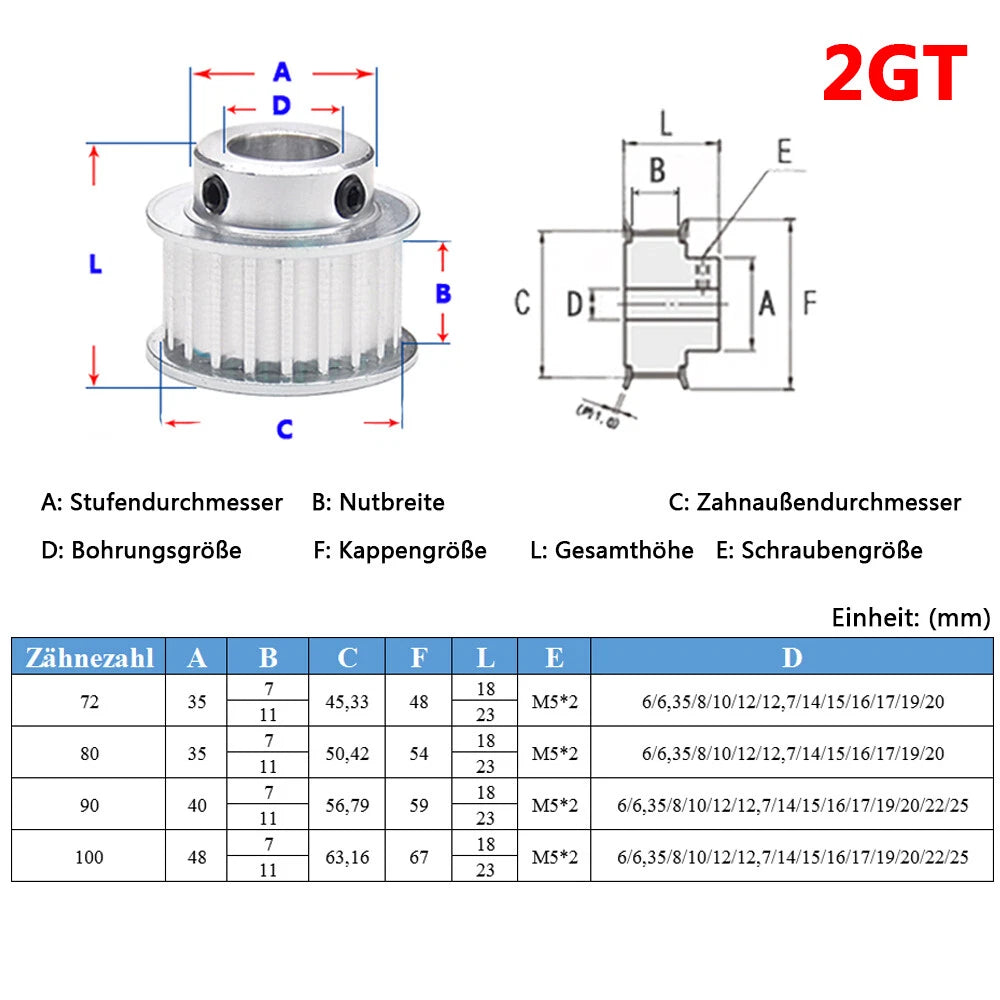
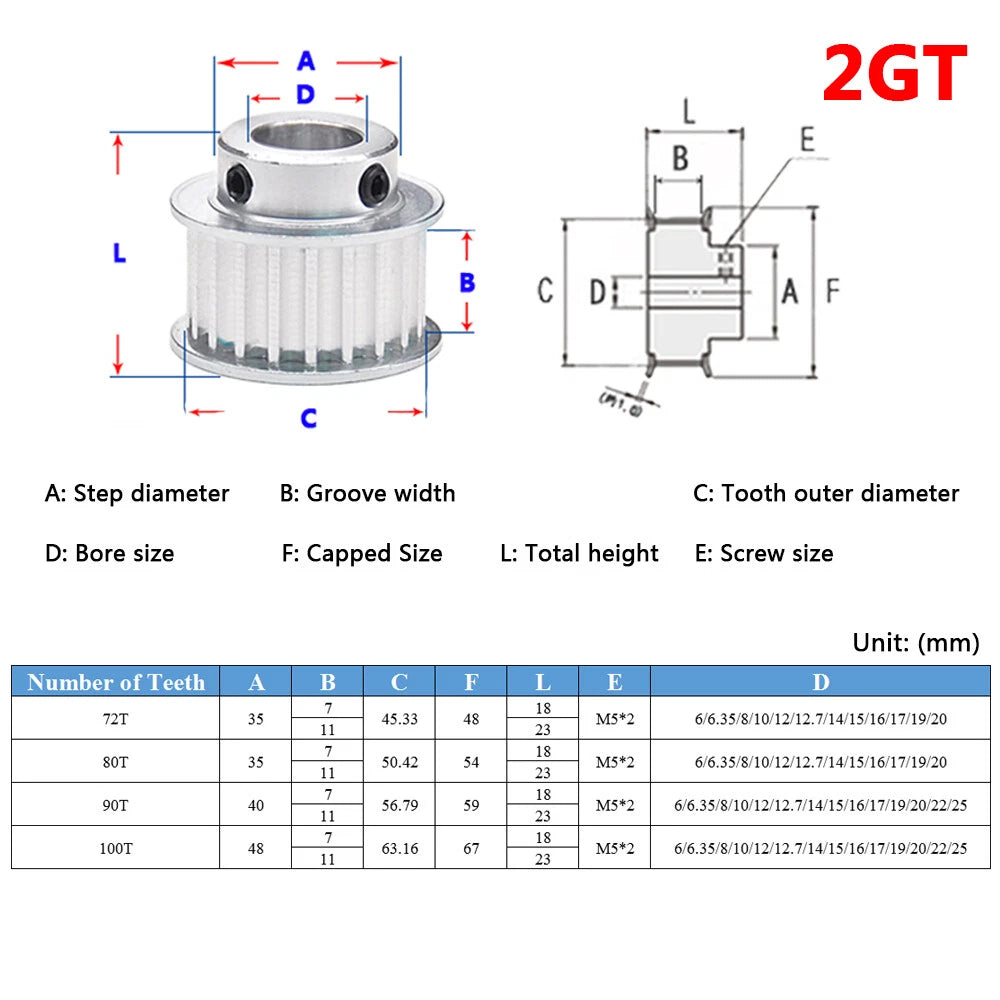
These GT2 2GT timing belt pulleys feature a stepped hub design machined from aluminum alloy, with a 2 mm pitch profile compatible with standard 2GT open-loop and closed-loop belts. Bore options span 6 mm to 25 mm (approximately 0.24 in to 0.98 in), and tooth counts range from 72T to 100T, covering pitch diameters from roughly 45.8 mm (1.80 in) for 72T up to approximately 63.7 mm (2.51 in) for 100T. Belt width compatibility covers both 6 mm and 10 mm (0.24 in and 0.39 in) belts depending on the variant selected.

Typical use cases include large-format 3D printer drive systems where high tooth count reduces belt wrap angle stress, CNC router axis drives requiring a larger reduction ratio without an additional idler stage, and automated conveyor or pick-and-place systems where consistent pitch engagement across a wide bore range simplifies shaft sourcing. Long-tail applications include GT2 pulley for CoreXY large format printer, 2GT 80T drive pulley CNC router, and stepped hub timing pulley 6mm belt 3D printer upgrade.

⚙️ Compatibility: Fits standard 2GT / GT2 open and closed timing belts — 6 mm or 10 mm width. Verify bore diameter and tooth count match your axis shaft and reduction ratio before ordering.

✅ Key Features of These GT2 2GT Timing Belt Pulleys

🔩 Wide Bore Range

Bore options from 6 mm to 25 mm (0.24–0.98 in) accommodate metric and imperial shafts including 6.35 mm (1/4 in) and 12.7 mm (1/2 in) sizes, reducing the need for adapters.

🦷 72T to 100T Tooth Count Selection

Four tooth count options — 72T, 80T, 90T, and 100T — let you dial in the exact pitch diameter and reduction ratio your drive system requires without custom machining.

📐 Stepped Hub Design

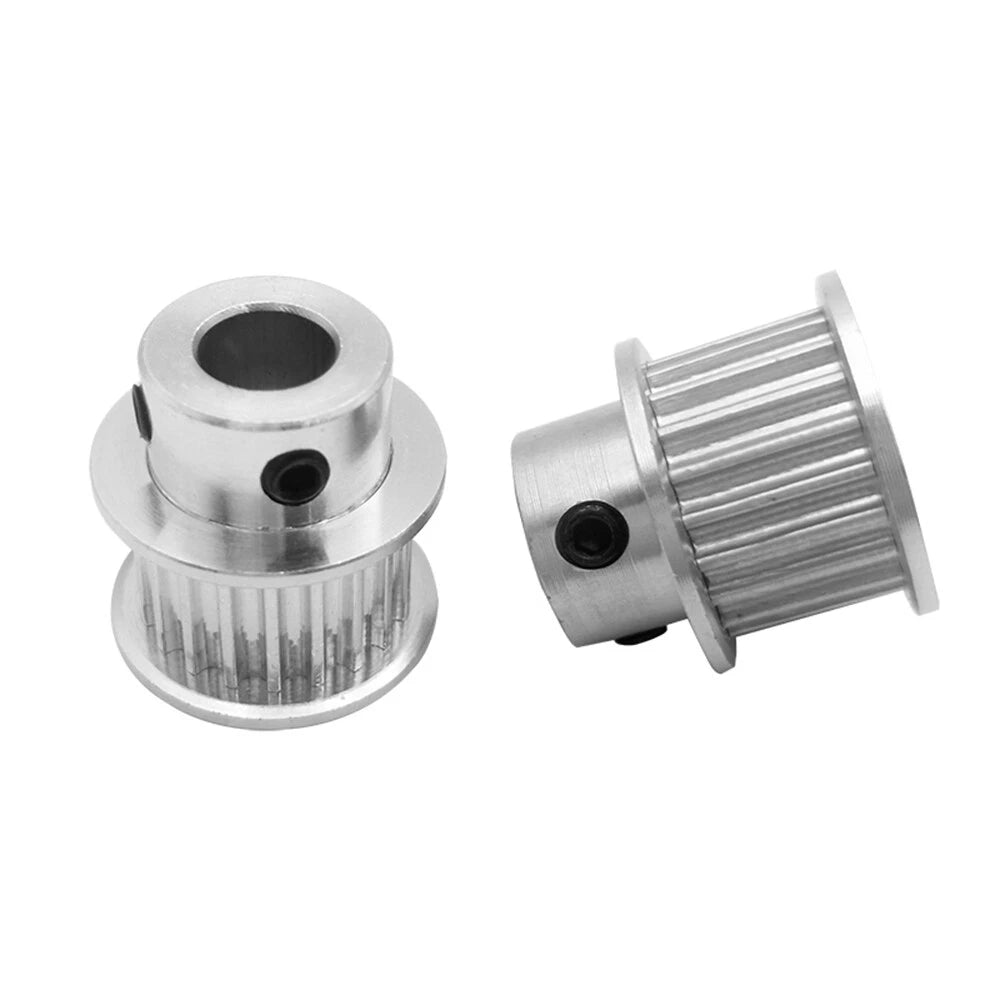
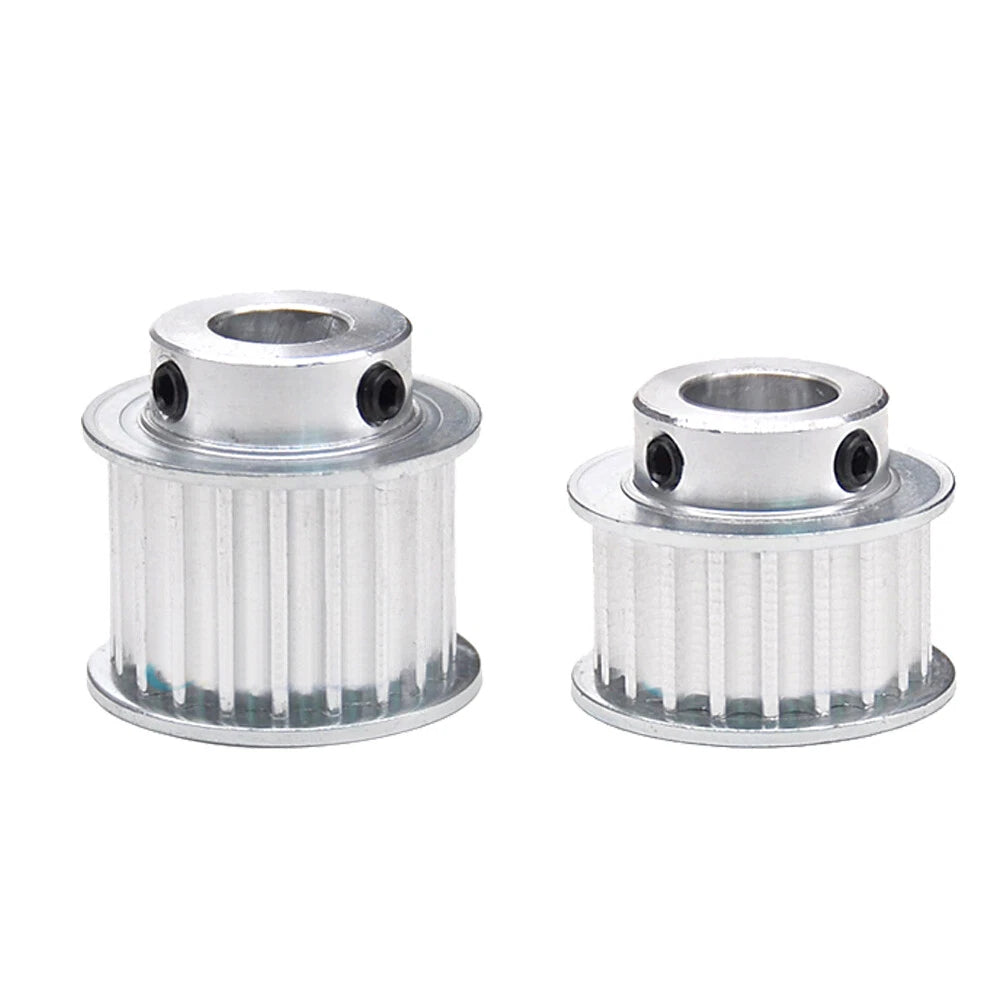
The integrated step on the hub provides a positive axial stop for the belt, keeping it tracking straight under dynamic loads and reducing edge wear on the belt.

2 mm GT2 Pitch Profile

Machined to the 2GT / GT2 tooth profile standard, ensuring smooth, low-backlash engagement with compatible belts across the full tooth count range.

🔧 Dual Belt Width Support

Available in configurations for both 6 mm and 10 mm belt widths within the same tooth count family, so you can match your existing belt stock without switching pulley families.

🏗️ Aluminum Alloy Construction

Machined from aluminum alloy for a balance of low rotational inertia and sufficient rigidity for continuous-duty motion applications in 3D printing, CNC, and light automation.

📐 Technical Specifications — GT2 2GT Timing Belt Pulleys

Belt Model 2GT / GT2
Belt Pitch 2 mm
Tooth Count Options 72T / 80T / 90T / 100T
Bore Diameter Range 6 mm – 25 mm (0.24 in – 0.98 in)
Applicable Belt Width 6 mm or 10 mm (see variant options)
Hub Style Stepped hub
Material Aluminum alloy
Pitch Diameter (72T) Approx. 45.8 mm (1.80 in)
Pitch Diameter (80T) Approx. 50.9 mm (2.00 in)
Pitch Diameter (90T) Approx. 57.3 mm (2.26 in)
Pitch Diameter (100T) Approx. 63.7 mm (2.51 in)
Bore & Belt Width See variant options
Quantity 1 piece per order

❓ Frequently Asked Questions

How do I choose the right tooth count for my application?

Tooth count determines the pitch diameter of the pulley, which directly affects your drive ratio and belt wrap angle. A higher tooth count (e.g., 100T) gives a larger pitch diameter, which is useful when you need a reduction ratio without a secondary stage, or when you want to reduce belt tension for a given torque. For most large-format 3D printer and CNC router builds, 72T–80T covers the majority of standard drive configurations. Check your motion system's design spec or belt loop length before selecting.

Which bore size should I select for a 1/4-inch shaft?

A 1/4-inch shaft measures 6.35 mm. Select the 6.35 mm bore variant to get a close fit. Avoid using a 6 mm bore on a 6.35 mm shaft as forcing an undersized bore can damage both the pulley and the shaft.

What is the difference between the 6 mm and 10 mm belt width variants?

The belt width dimension refers to the width of the timing belt the pulley is designed to guide. A 6 mm belt width variant has a narrower groove and flanges suited for 6 mm wide 2GT belts, while the 10 mm variant accommodates wider 10 mm 2GT belts. Wider belts generally carry higher tension loads, making 10 mm variants preferable for heavier gantry or high-torque CNC axis applications.

Are these pulleys compatible with GT2 and 2GT belts interchangeably?

Yes. The GT2 and 2GT designations refer to the same 2 mm pitch curvilinear tooth profile. These pulleys are compatible with belts labeled either GT2 or 2GT from standard suppliers. Always verify the belt pitch (2 mm) and width match your selected variant.

What does the stepped hub do, and do I need it?

The stepped hub creates a raised shoulder on one or both sides of the pulley body that acts as a belt guide flange. This keeps the belt from walking off the pulley laterally during operation, which is especially important on longer belt runs or when the belt is under varying tension. For most 3D printer and CNC applications, a stepped hub is recommended over a plain (no-flange) pulley for improved tracking reliability.

How do I secure the pulley to the shaft?

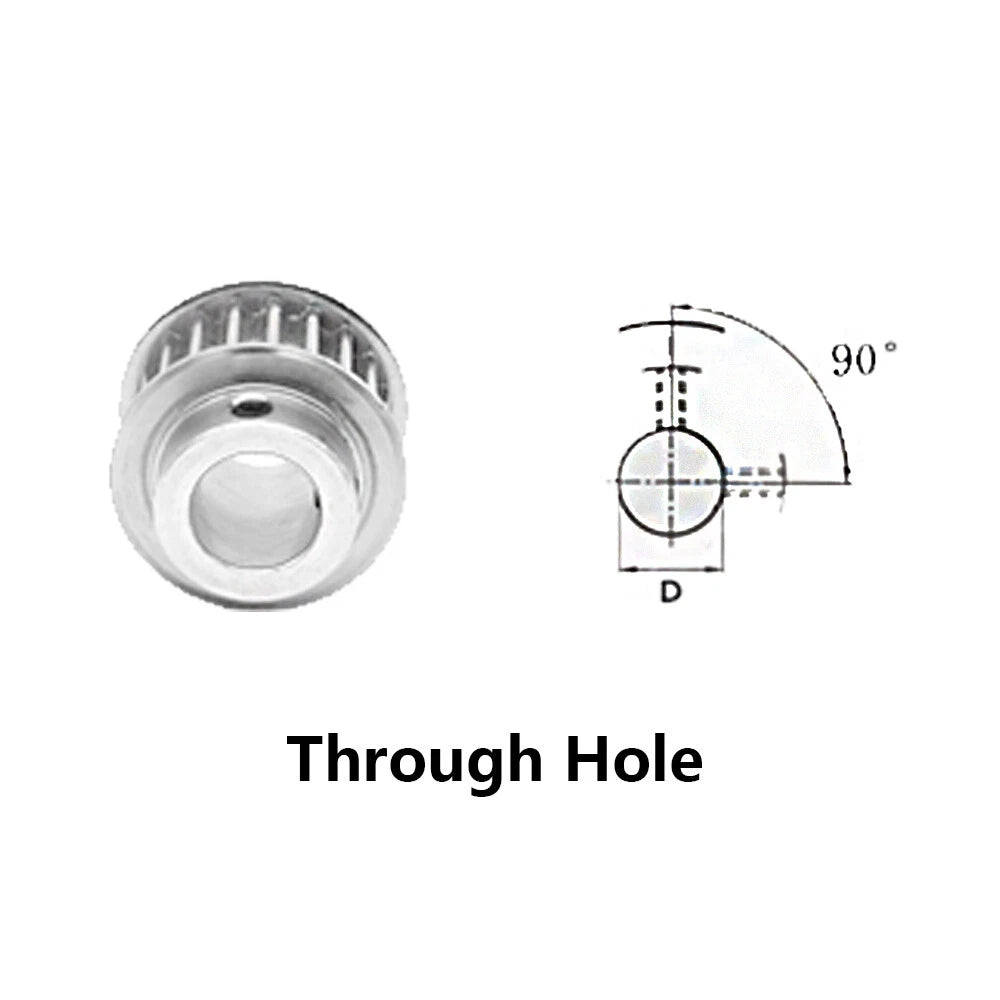
These pulleys are typically secured using one or two set screws threaded into the hub that clamp against the shaft. For best holding force, align one set screw over a flat on the shaft if available. Tighten set screws with the appropriate hex key to the recommended torque for the screw size — over-tightening can strip the threads in the aluminum hub.

Can these pulleys be used in corrosive or outdoor environments?

Aluminum alloy offers moderate natural corrosion resistance due to its oxide layer, but it is not rated for prolonged exposure to salt spray, strong acids, or high-humidity outdoor environments without additional surface treatment. For indoor 3D printing and CNC workshop use, no additional treatment is typically required. For outdoor or high-humidity applications, consider applying a light protective coating or selecting a stainless steel alternative.

How do I calculate the correct belt length when using a 72T–100T pulley?

Belt length depends on the center distance between your drive and driven pulleys plus the pitch circumferences of both pulleys. Use the formula: Belt Length ≈ 2 × Center Distance + π × (PD1 + PD2) / 2, where PD is the pitch diameter. For a 72T pulley, PD ≈ 45.8 mm; for 100T, PD ≈ 63.7 mm. Online belt length calculators for GT2/2GT profiles can simplify this calculation once you know your center distance.

🛒 Select your tooth count and bore & belt width above, then add to cart.


You may also like

Recently viewed