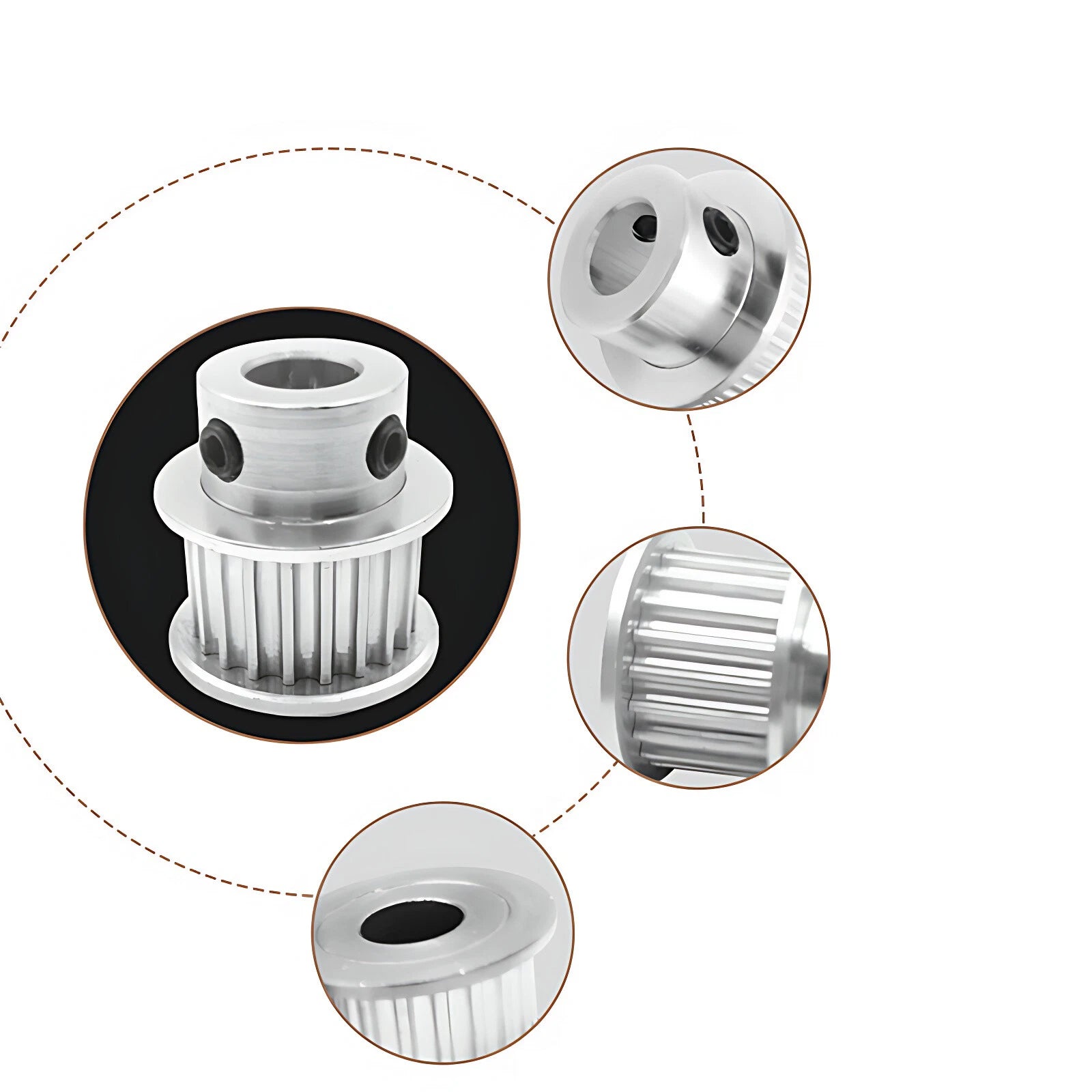
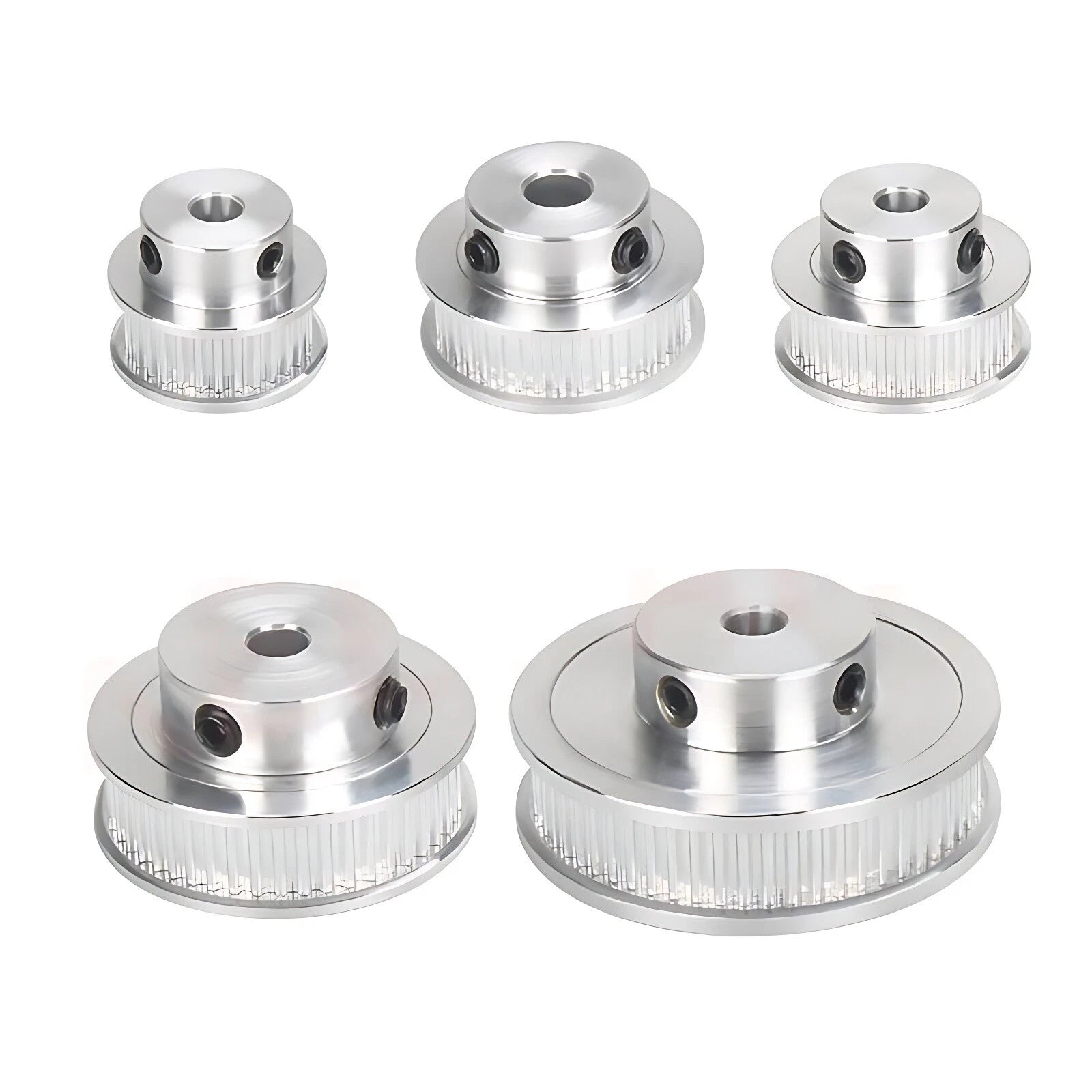
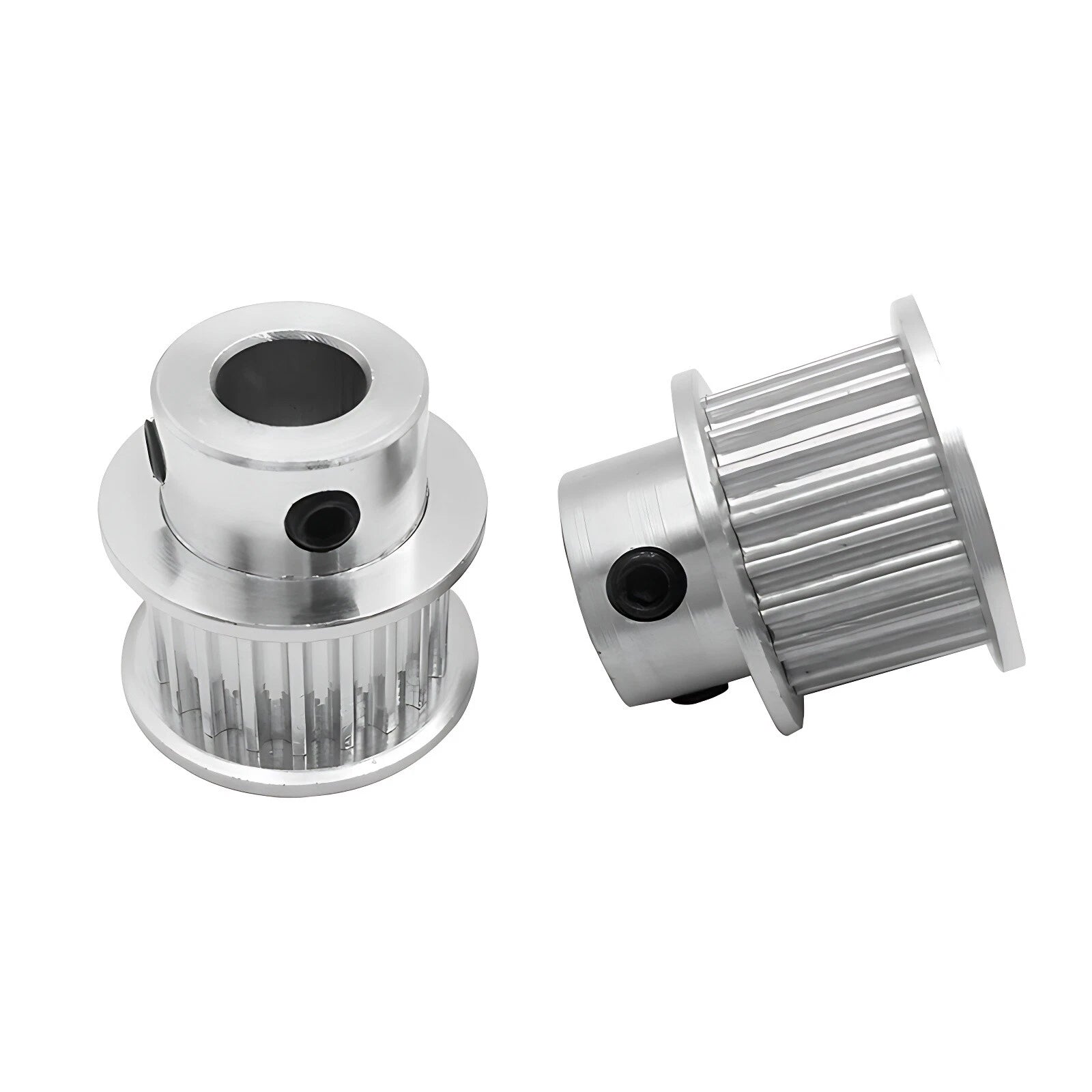
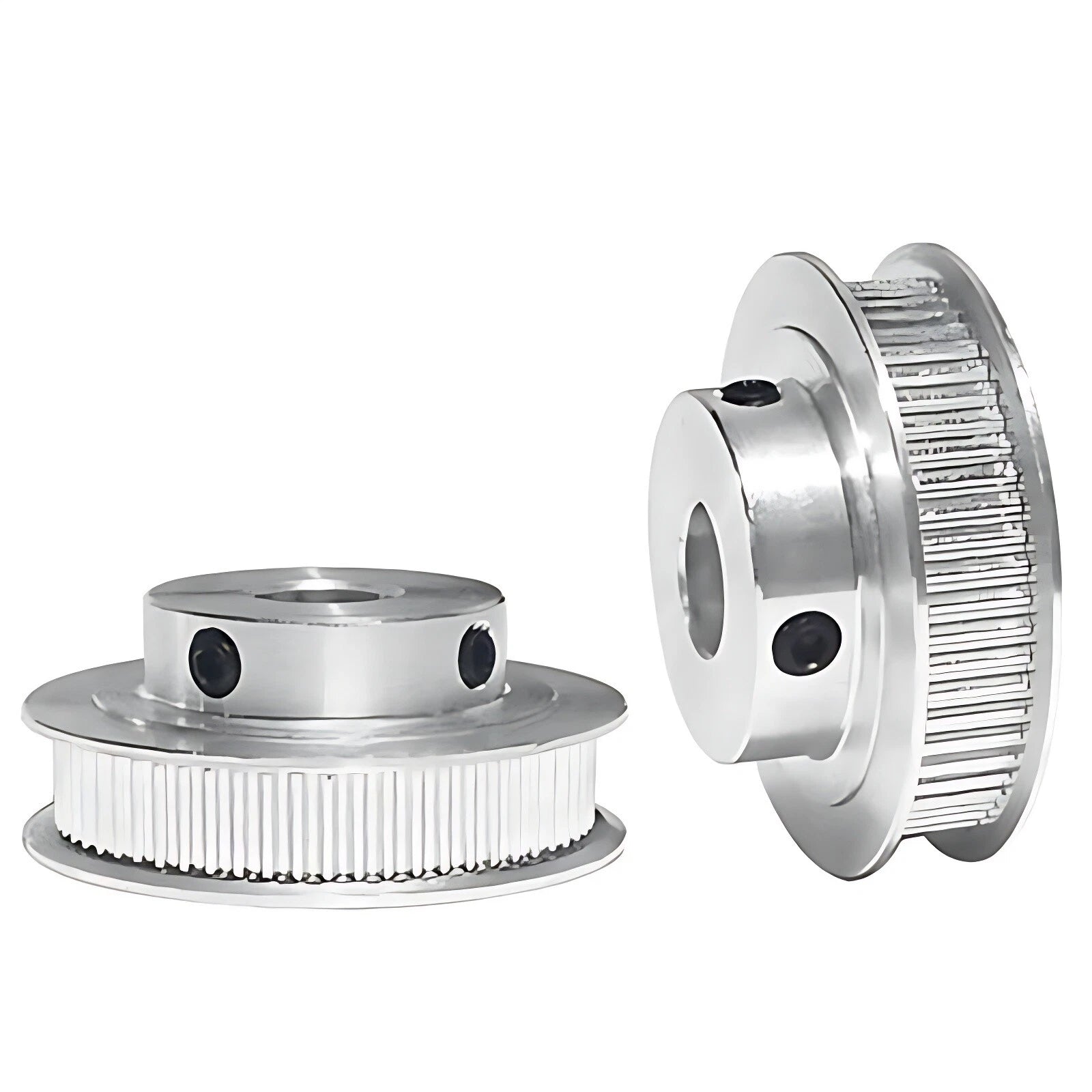
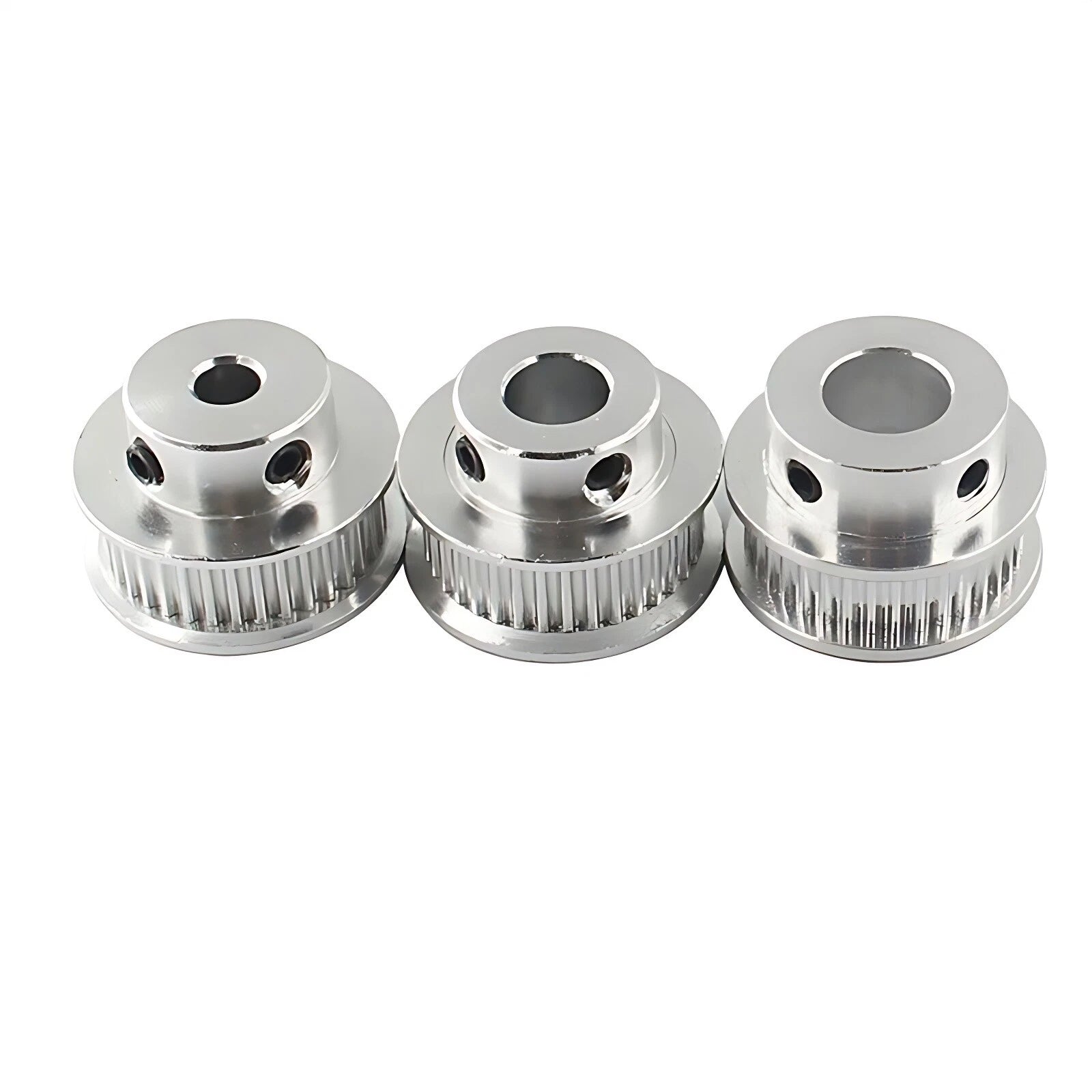
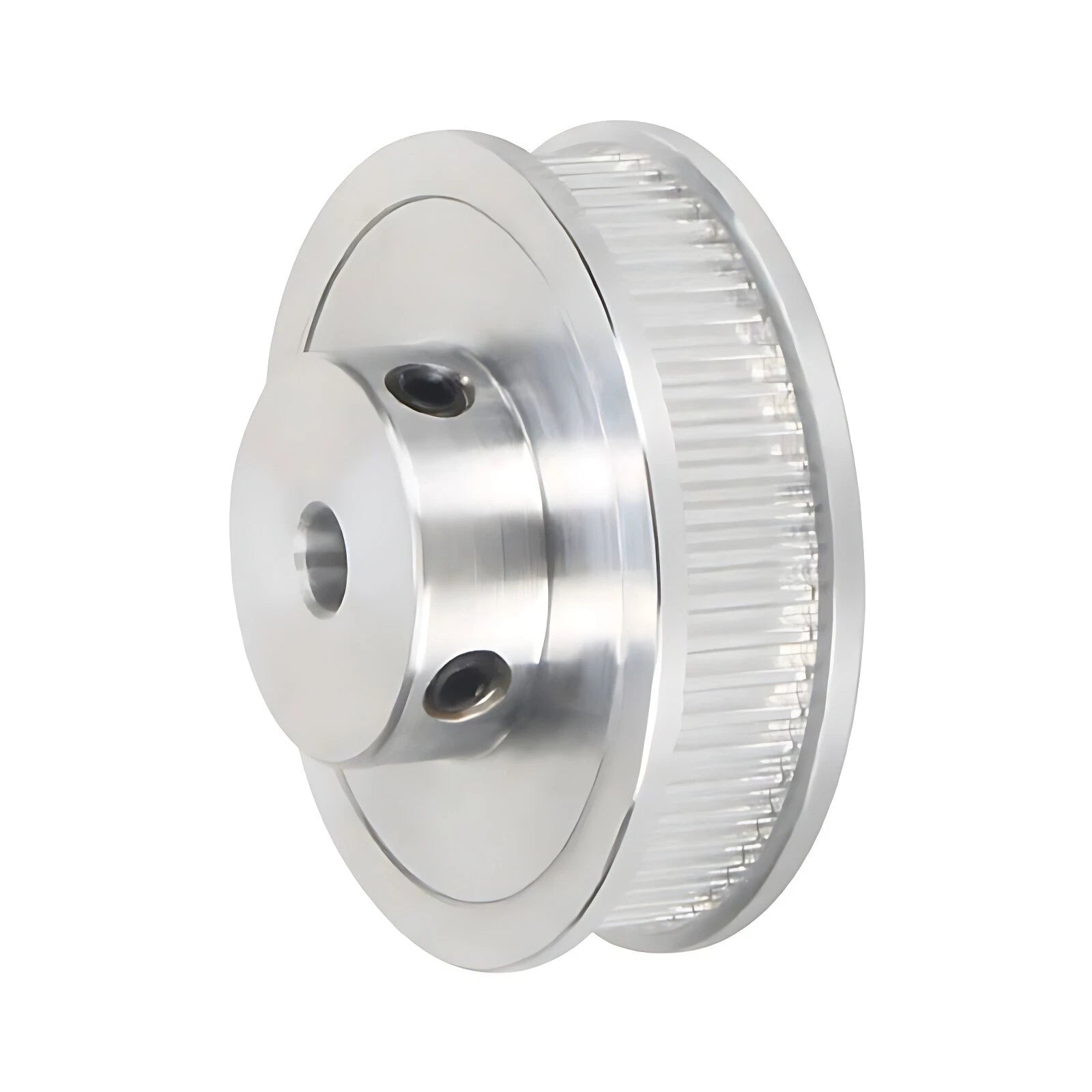
GT2 Zahnrad 2GT 80-120 Zähne Riemenscheibe Breite 7mm Pulley für CNC 3D-Drucker

No reviews

Price:
Sale price$13.72 USD
Stock:
In stock (500 units), ready to be shipped

Payment & Security

Ach Direct Debit Amazon American Express Apple Pay Bancontact BLIK Diners Club Discover EPS Google Pay iDEAL Wero JCB Maestro Mastercard Multibanco MobilePay PayPal Przelewy24 Shop Pay Twint Union Pay USDC Visa

Your payment information is processed securely. We do not store credit card details nor have access to your credit card information.

Limited Offer — Spend More, Save More
Spend $55+
Save $5
Spend $100+
Save $10
Spend $200+
Save $25
HomeDIYer DIY Expert Support

DIY Expert Support

Get fitment advice & recommendations

Mon–Fri  8:30 AM – 8:00 PM
24-Hour Fast Ship
Arrives in 3–14 Days
Worldwide Shipping
30-Day Returns
1 tree planted with every purchase

Description

GT2 2GT Timing Pulley 80–120 Teeth — Precision Drive for CNC and 3D Printing

When belt slip or inconsistent motion ruins a print or throws off a CNC cut, the root cause is often an undersized or poorly machined pulley. Engineers, makers, and small-batch manufacturers who demand repeatable, low-backlash motion need a timing pulley that holds tolerance run after run. These GT2 2GT pulleys are built for exactly that — delivering smooth, synchronized power transfer in demanding motion control applications.

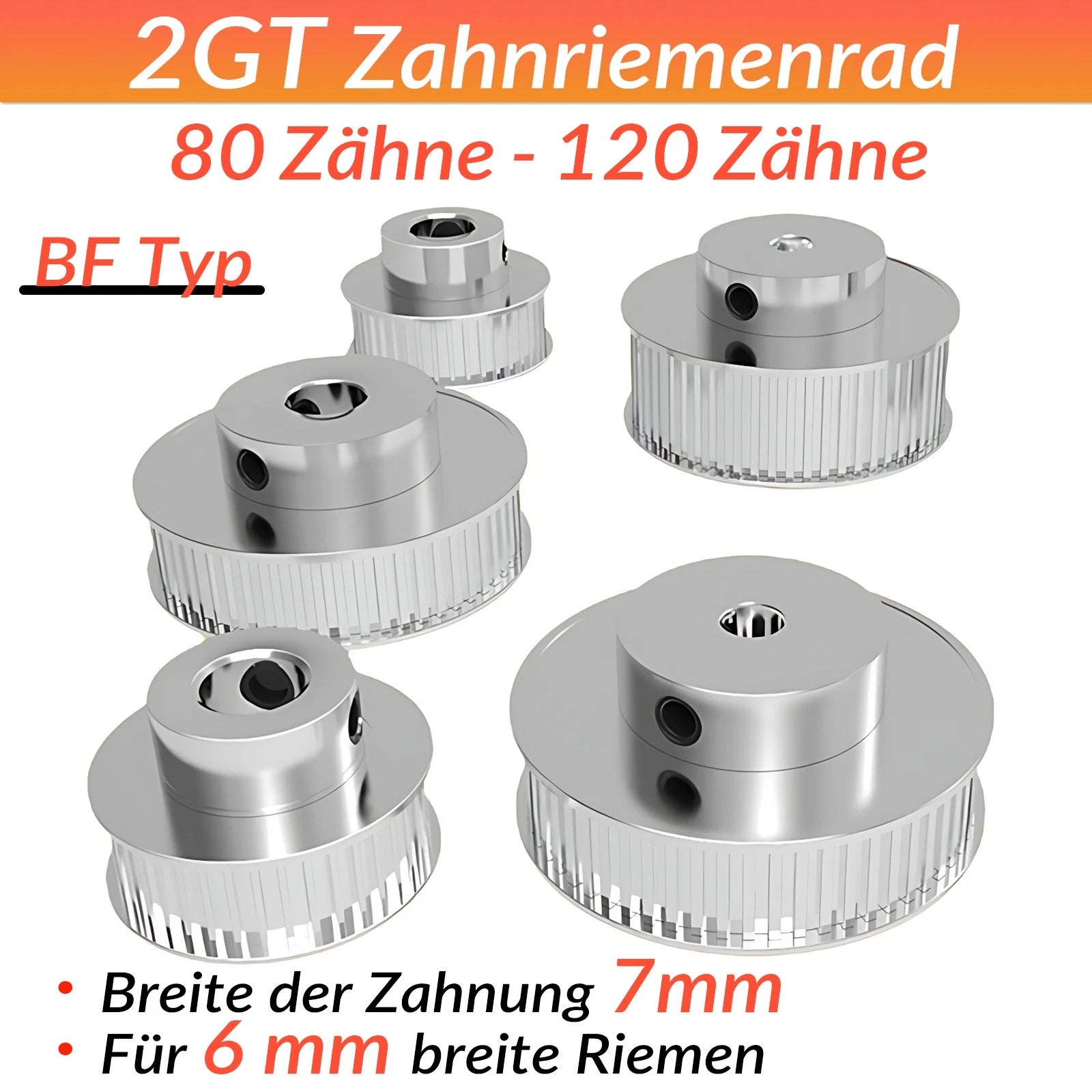
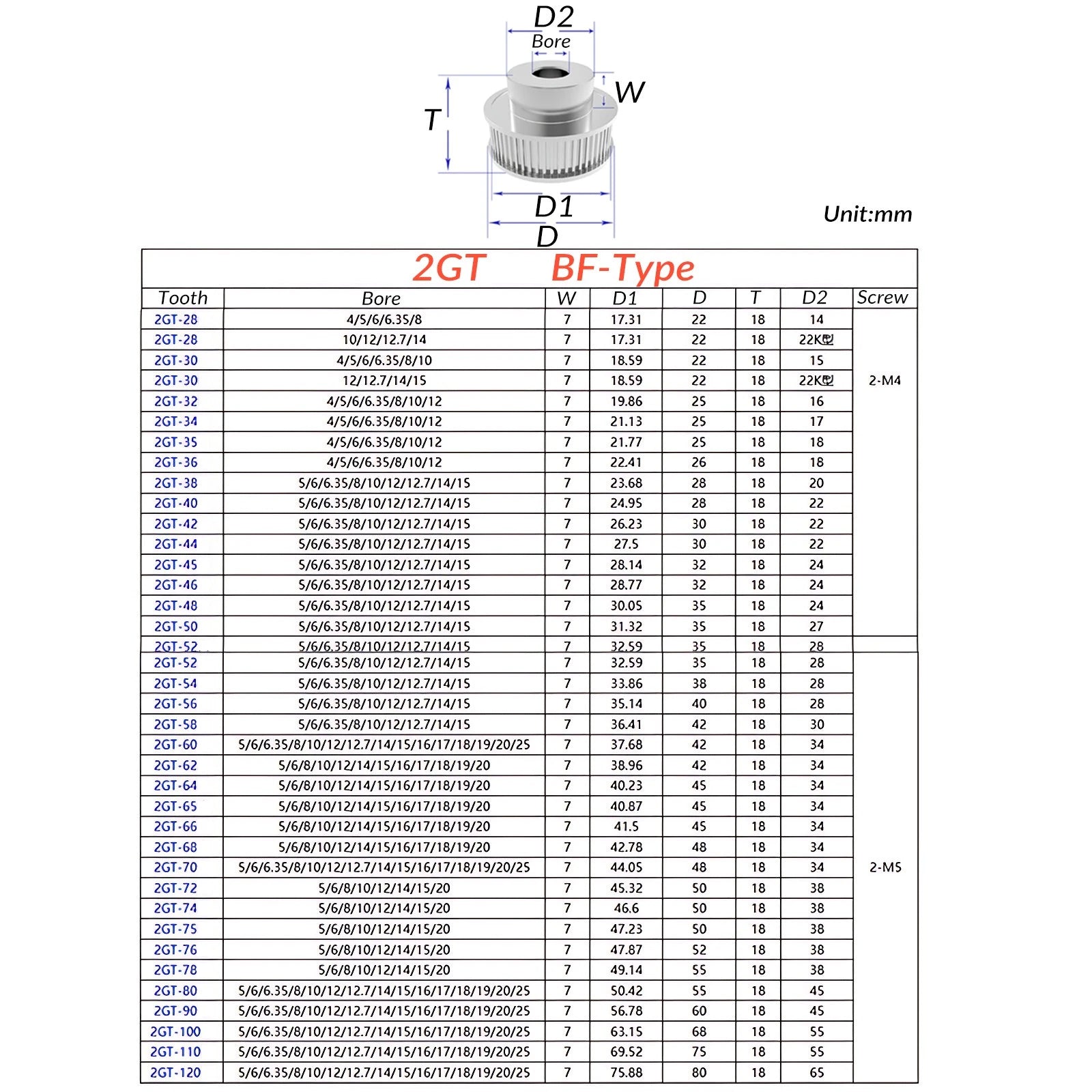
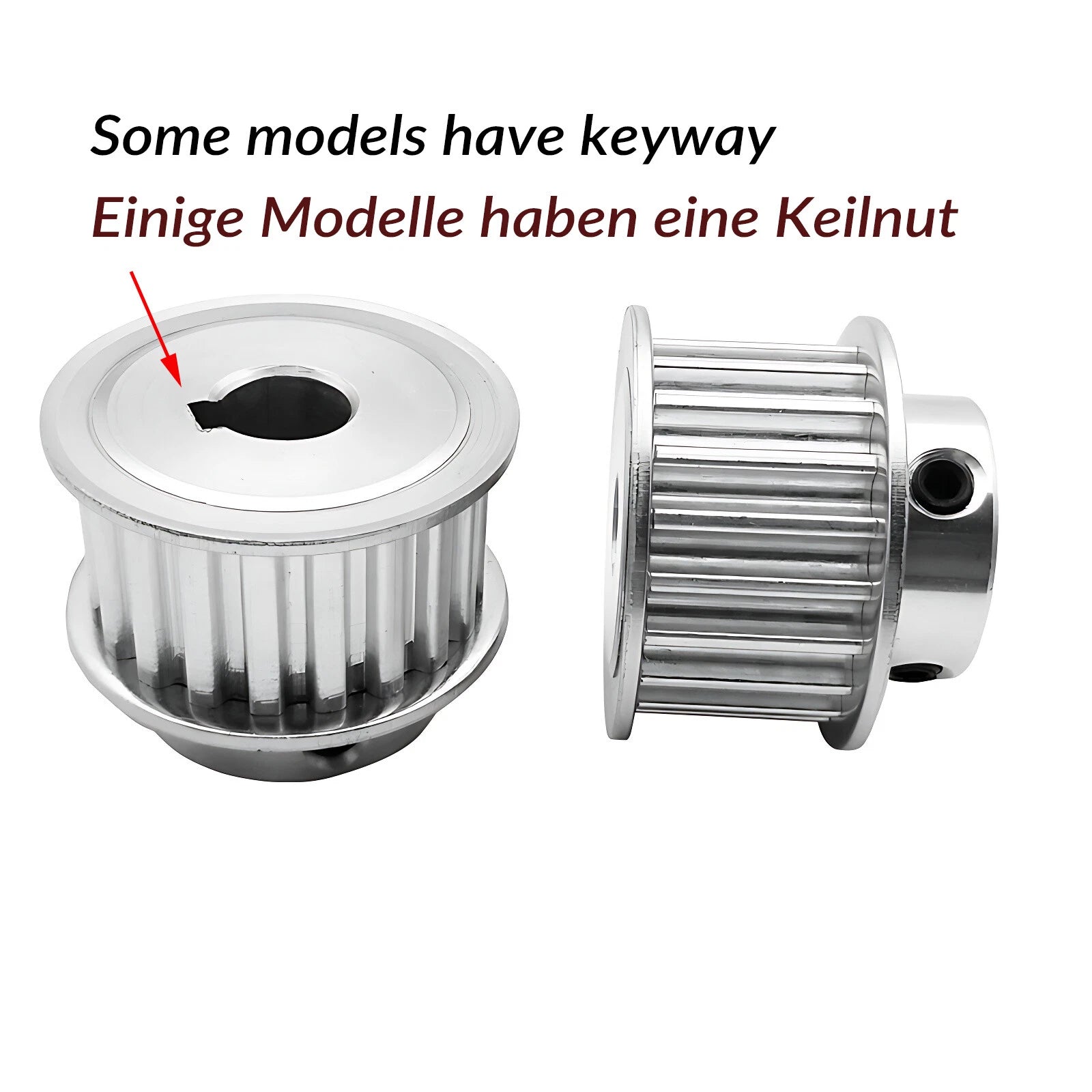
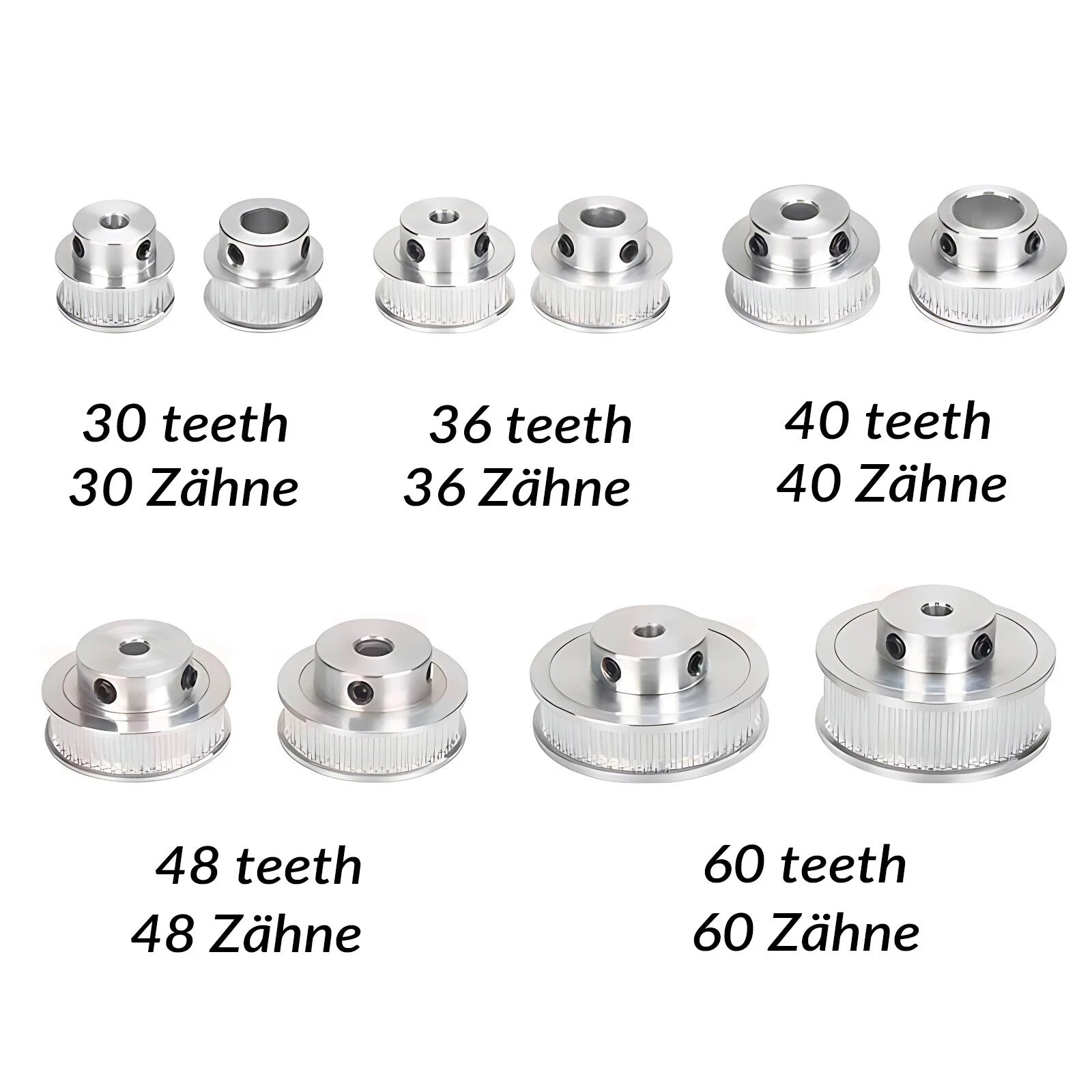
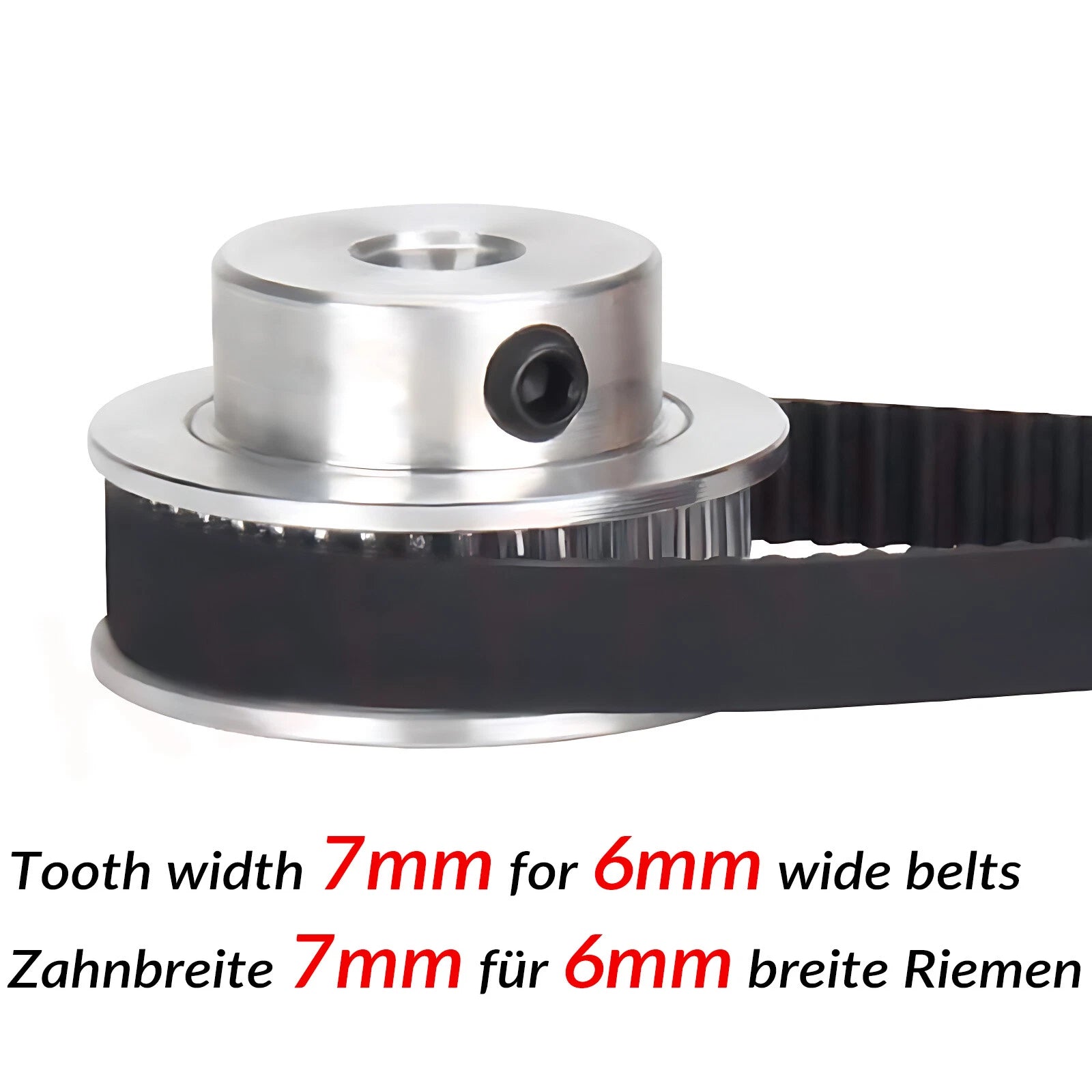
Each pulley features a 2GT tooth profile machined to mesh precisely with standard GT2 open-loop and closed-loop timing belts. The belt contact width is 7mm, and the bore diameter ranges from 5mm to 25mm (0.197" to 0.984"), with plain through-bore or keyway options available. Tooth counts span 80, 90, 100, 110, and 120 teeth, giving you a wide selection of gear ratios and pitch diameters for your drive system design.

Typical use cases include CoreXY and Cartesian 3D printer Z-axis or extruder drives, CNC router axis drives requiring high tooth engagement for reduced belt load, and robotics or automation systems where consistent indexing and low backlash are critical. The large tooth count range also makes these pulleys well-suited for low-speed, high-torque belt reduction stages.

🔗 Compatibility: Fits standard GT2 / 2GT timing belts with 7mm width and 2mm pitch. Bore options 5–25mm suit most stepper motor and servo shaft sizes used in CNC and 3D printing platforms.

✅ Key Features of These GT2 2GT Timing Pulleys

  • ⚙️2GT Tooth Profile
    Engineered to the GT2 / 2GT standard for accurate meshing with 2mm-pitch GT2 belts, minimizing backlash and tooth jump under load.
  • 📐Wide Tooth Count Range
    Available in 80, 90, 100, 110, and 120 teeth — enabling flexible gear ratio selection and larger pitch diameters for smoother belt wrap and reduced belt stress.
  • 🔩Plain Bore and Keyway Options
    Choose a plain through-bore (5–25mm) for set-screw mounting, or select a keyway variant (K 3–8mm) for positive torque transmission without shaft slip.
  • 📏7mm Belt Width
    Matched to 7mm-wide GT2 belts, balancing compact form factor with adequate load capacity for CNC and 3D printer drive trains.
  • 🏭Consistent Machining Tolerance
    Tooth geometry and bore concentricity are held to close tolerances, ensuring repeatable positioning accuracy across long print runs and CNC cycles.
  • 🔄Broad Bore Compatibility
    Bore sizes from 5mm to 25mm (0.197"–0.984") cover the shaft diameters of common NEMA 17, NEMA 23, and servo motors used in desktop and benchtop machines.

📐 Technical Specifications — GT2 2GT Timing Pulley

Tooth Profile GT2 / 2GT (2mm pitch)
Belt Width 7mm
Number of Teeth 80 / 90 / 100 / 110 / 120 (see variant options)
Bore Diameter 5 / 6 / 6.35 / 8 / 10 / 12 / 12.7 / 14 / 15 / 16 / 17 / 18 / 19 / 20 / 25mm (see variant options)
Keyway Available: K 3mm / K 4mm / K 5mm / K 6mm / K 8mm (see variant options)
Pitch Diameter (80T) approx. 50.9mm (2.00")
Pitch Diameter (120T) approx. 76.4mm (3.01")
Material See variant options
Finish See variant options
Compatible Belt GT2 / 2GT, 7mm width, 2mm pitch
Mounting Set screw (plain bore) or keyway
Quantity per Order 1 piece

❓ Frequently Asked Questions

How do I choose the right number of teeth for my application?

The tooth count determines the pitch diameter and, combined with your motor pulley tooth count, sets the drive ratio. Larger pulleys (100–120T) provide a higher reduction ratio when paired with a small motor pulley, reducing belt tension and increasing torque output. For direct-drive or 1:1 setups, match the tooth count on both pulleys. Use the formula: Pitch Diameter = (Teeth × Pitch) / π, where pitch = 2mm for GT2 belts.

Should I choose a plain bore or a keyway bore?

Plain bore pulleys rely on one or two set screws to grip the shaft. They are easier to install and reposition, and are suitable for moderate torque applications. Keyway variants (K 3–8mm) use a key to positively lock the pulley to the shaft, preventing rotational slip under high torque or shock loads. For CNC spindle drives or high-acceleration systems, keyway is recommended.

What bore size should I select for my stepper motor?

NEMA 17 stepper motors typically have a 5mm shaft. NEMA 23 motors commonly use 6.35mm (1/4") or 8mm shafts. Servo motors vary widely — check your motor datasheet for the exact shaft diameter before ordering. Select the bore that matches your shaft diameter; for keyway variants, also confirm the key width matches your shaft keyway.

Are these pulleys compatible with standard GT2 belts?

Yes. These pulleys are designed for GT2 / 2GT timing belts with a 2mm tooth pitch and 7mm belt width. They are compatible with both open-loop GT2 belts sold by the meter and closed-loop GT2 belt loops. Ensure your belt width is 7mm — using a 6mm or 9mm belt will result in poor tracking and reduced load capacity.

How strong are these pulleys under continuous load?

Load capacity depends on the number of teeth in mesh, belt tension, and operating speed. Larger pulleys (more teeth) distribute belt load across more tooth contacts, reducing per-tooth stress. For continuous-duty CNC or automation use, ensure your belt tension is set within the belt manufacturer's recommended range and that the pulley bore is properly secured to the shaft to prevent fretting.

Do these pulleys require any corrosion protection?

For indoor CNC and 3D printing environments, standard surface treatment is typically sufficient. If the pulley will be exposed to coolant mist, humidity, or outdoor conditions, consider applying a light machine oil or selecting a variant with an anodized or coated finish. Avoid prolonged exposure to water or aggressive chemicals without additional protection.

Can I use these pulleys in a 3D printer extruder or Z-axis drive?

Yes. The 80–120T range is well-suited for Z-axis lead screw belt drives and extruder gear reduction stages where a larger driven pulley is paired with a small motor pulley. The 7mm belt width provides adequate load capacity for these applications. Confirm that your printer's belt path geometry accommodates the larger pitch diameter of 80–120T pulleys before ordering.

🛒 Select your tooth count and bore diameter above, then add to cart.

You may also like

Recently viewed