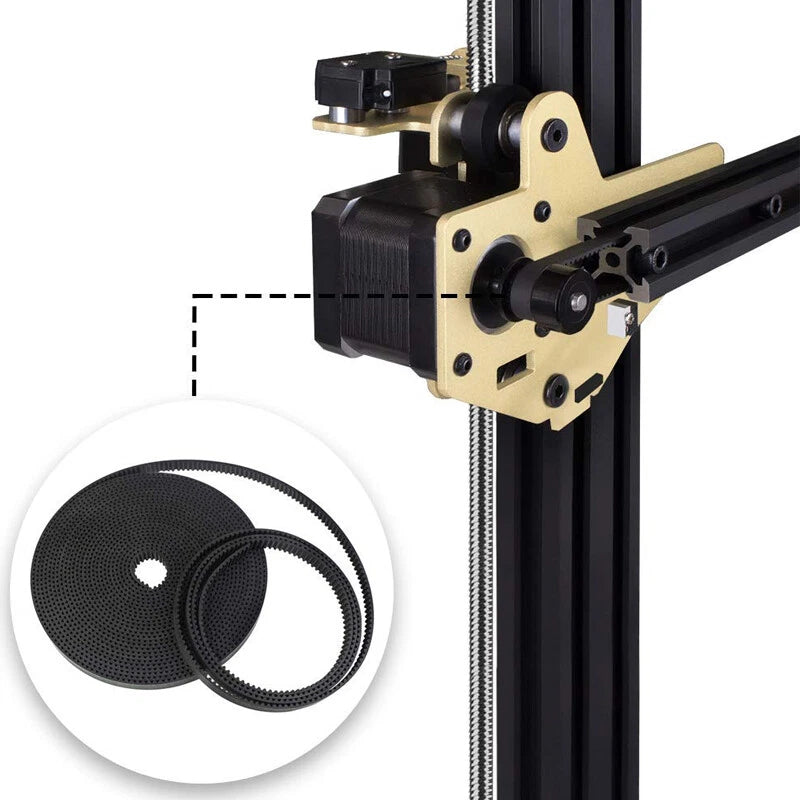
GT2 / 3M / MXL / XL / 5M Open-End Timing Belt — Reliable Synchronous Drive for 3D Printers, CNC & Automation
When a slipping or stretched drive belt causes your 3D printer to skip layers, your CNC router to lose position, or your automation system to fall out of sync, the fix starts with the right synchronous belt. This open-end timing belt is designed for makers, engineers, and machine builders who need a dependable, cut-to-length drive solution without overpaying for pre-cut loops.
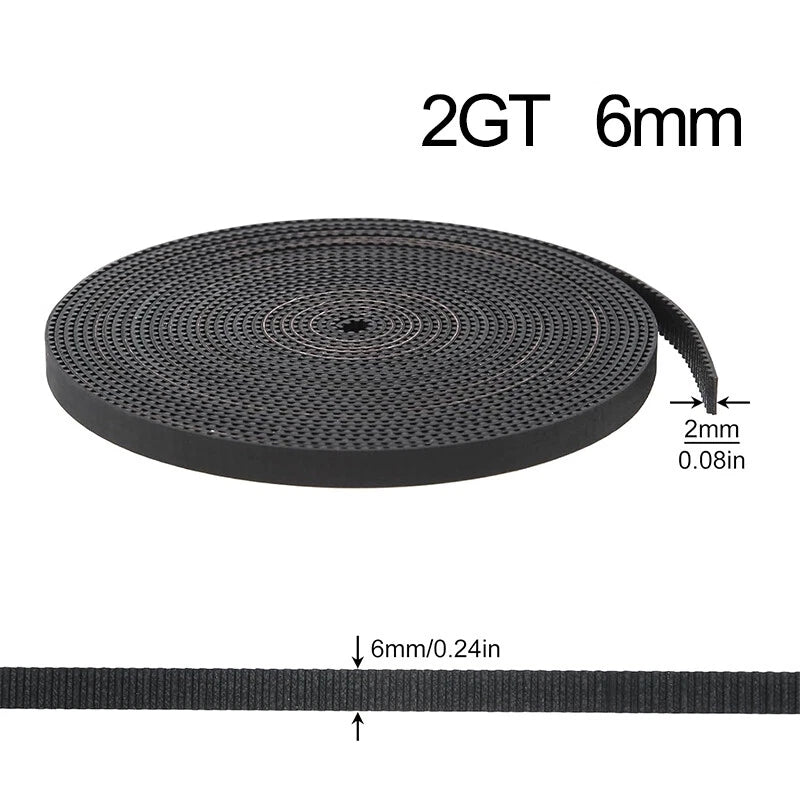
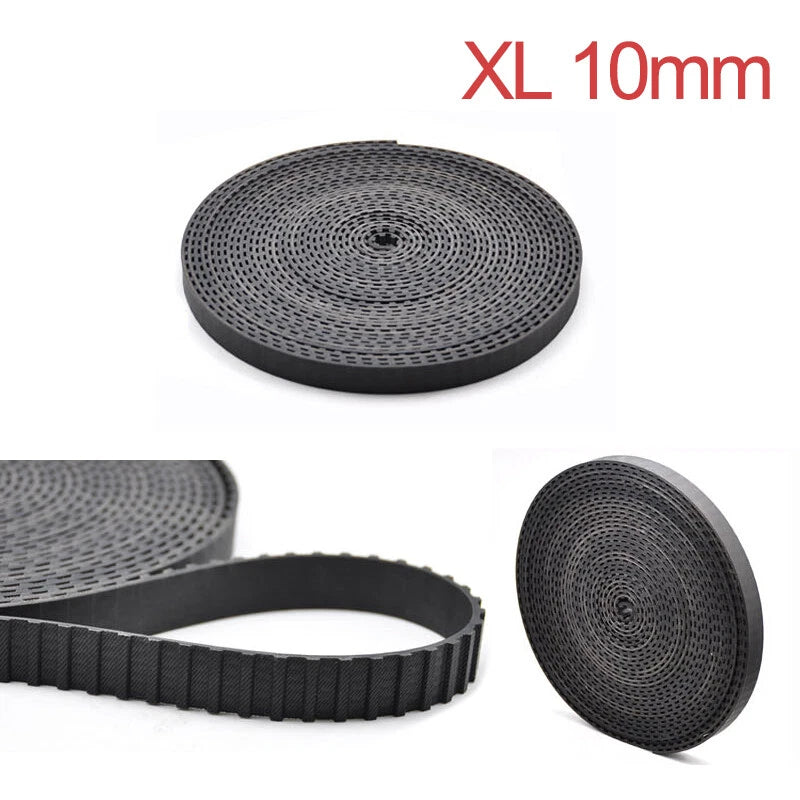
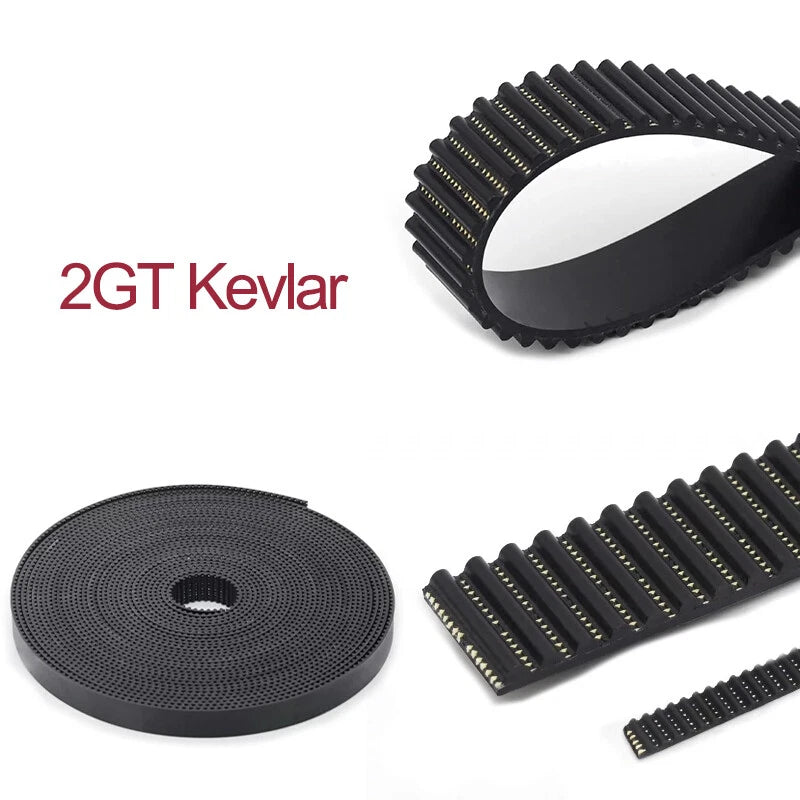
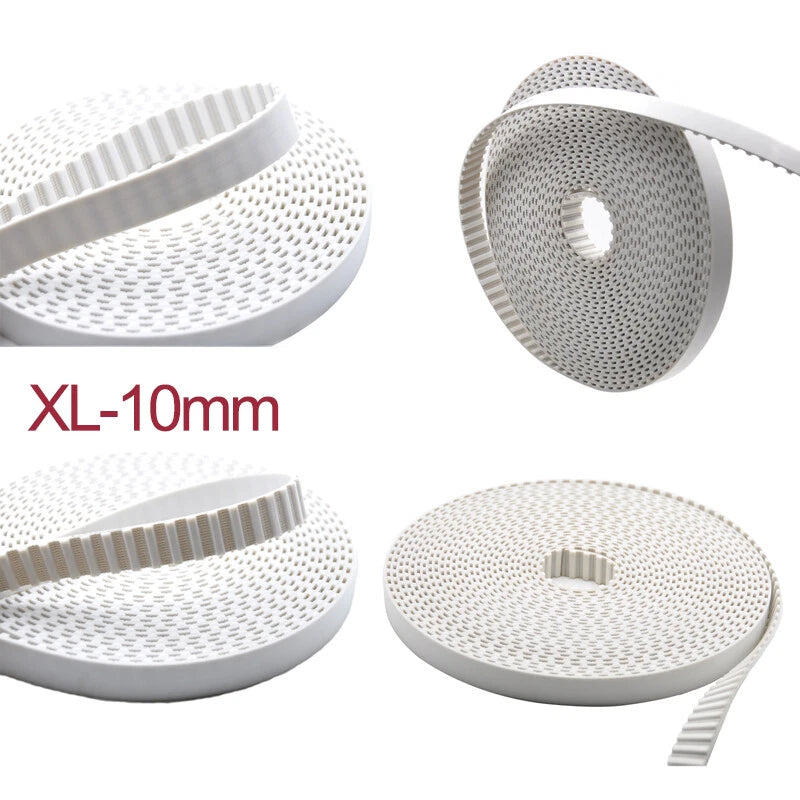
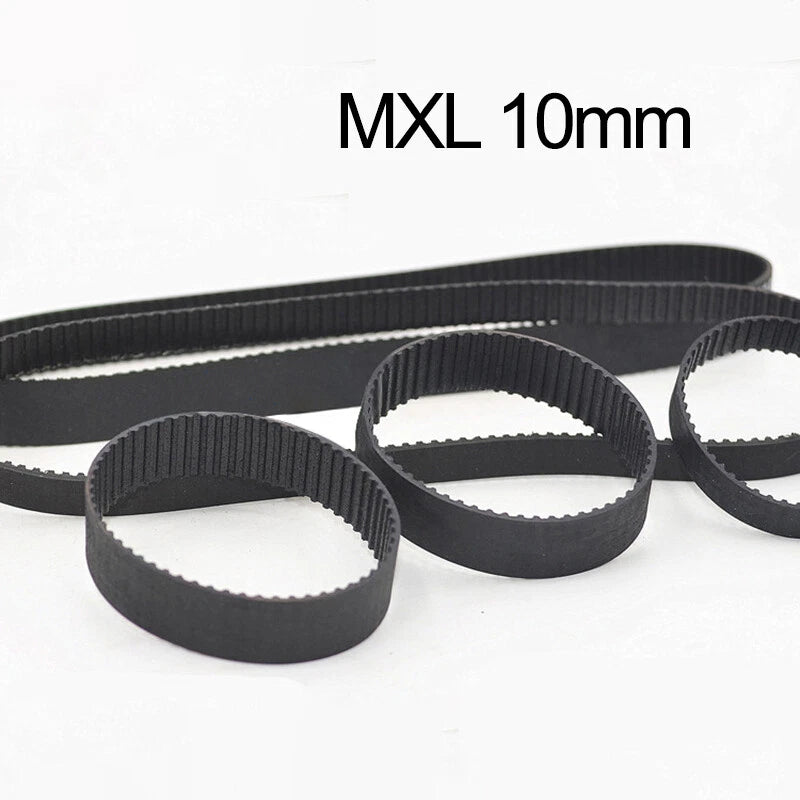
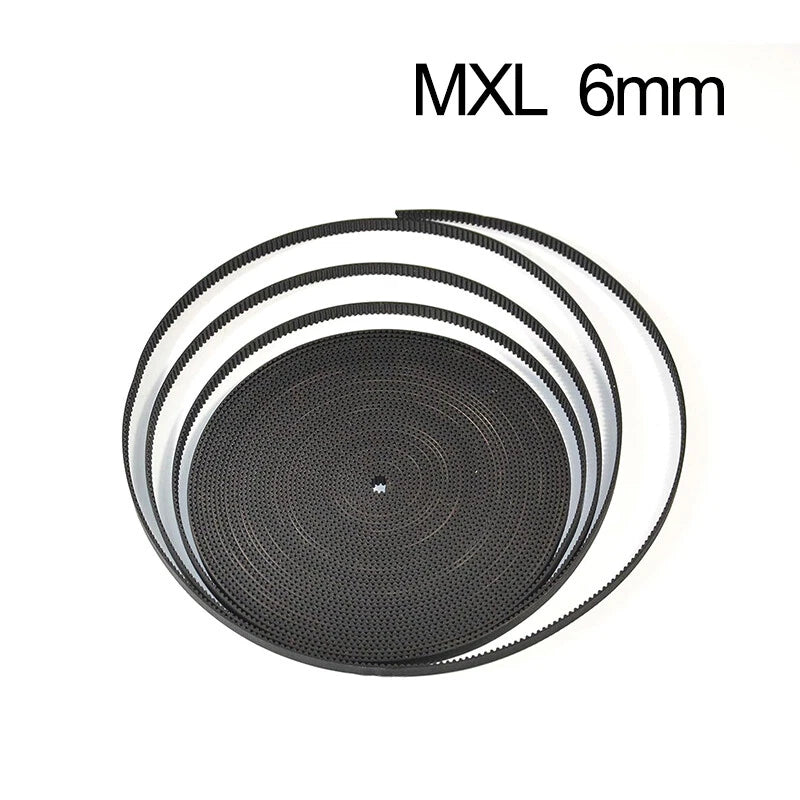
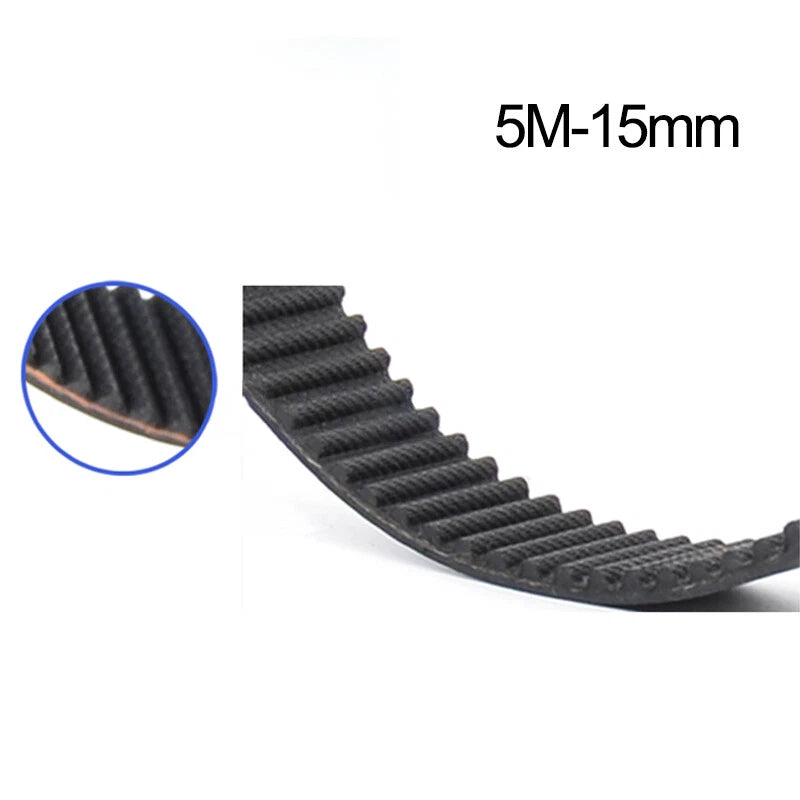
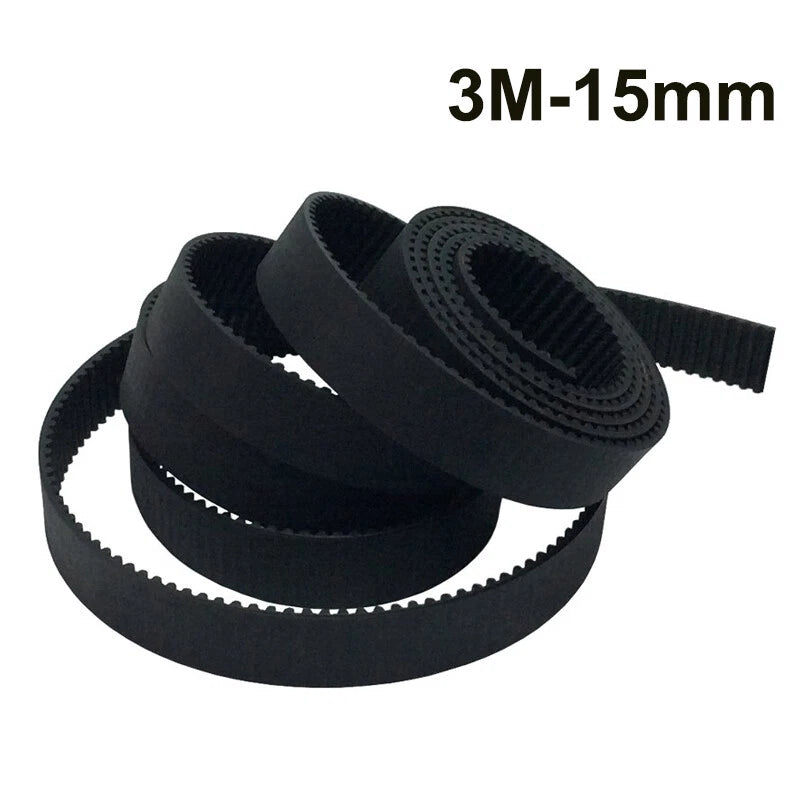
Each order covers one continuous open-end belt in your chosen profile and width, sold by the meter (1m, 2m, 3m, 5m, 10m, or 15m). Available profiles include GT2 / 2GT (2mm pitch, 6mm or 10mm wide), 3M (3mm pitch, 15mm wide), MXL (0.080" pitch, 6mm or 10mm wide), XL (0.200" pitch, 10mm wide), and 5M (5mm pitch, 15mm wide). Material options span Black Rubber, Black Polyurethane with steel wire reinforcement, White Polyurethane with steel wire reinforcement, TPU + Kevlar fiber, and White Polyurethane — each suited to different load, stretch, and environmental requirements.
Typical use cases include CoreXY and Cartesian 3D printer axis drives (GT2 6mm belt for 3D printer replacement), desktop CNC router and laser cutter gantry systems (XL or 3M timing belt for CNC), conveyor and pick-and-place automation (5M polyurethane timing belt for automation), and robotics joint drives where low backlash and consistent pitch are critical.
🔗 Compatibility: Designed to fit standard GT2, 2GT, 3M, MXL, XL, and 5M pulleys with matching tooth profiles. Always verify your pulley pitch and belt width before ordering. Open-end belts require clamps or carriage mounts — not suitable as drop-in closed-loop replacements without modification.
✅ Key Features of These Open-End Synchronous Timing Belts
-
📐Multiple Profiles in One Listing — GT2/2GT, 3M, MXL, XL, and 5M profiles available; select the pitch that matches your existing pulleys for zero-backlash synchronous drive.
-
🧵Three Core Material Options — Rubber for flexible, quiet operation on 3D printer timing belt applications; polyurethane with steel wire for reduced stretch on CNC and laser systems; TPU+Kevlar for high tensile strength with low elongation in demanding drive setups.
-
✂️Cut-to-Length Convenience — Sold by the meter (1m to 15m) so you order exactly what your build requires — no wasted closed-loop belt or awkward splicing.
-
📏Width Options from 6mm to 15mm — Narrower 6mm (≈1/4") belts suit lightweight 3D printer carriages; wider 10mm (≈3/8") and 15mm (≈19/32") belts handle heavier gantry loads on CNC routers and conveyor drives.
-
⚙️Consistent Tooth Geometry — Molded to standard pitch tolerances so each tooth engages cleanly with matching pulleys, maintaining accurate positioning for CNC machining and 3D printing layer registration.
-
🏭Broad Application Range — Suitable for 3D printers, laser engravers, CNC routers, pick-and-place machines, conveyor systems, and robotics — wherever a synchronous open-end drive belt is specified.
📐 Technical Specifications — Open-End Synchronous Timing Belt
| Belt Type |
Open-end synchronous timing belt (flat, toothed) |
| Available Profiles |
GT2 / 2GT (2mm pitch), 3M (3mm pitch), MXL (0.080" / 2.032mm pitch), XL (0.200" / 5.08mm pitch), 5M (5mm pitch) |
| Available Widths |
6mm (≈1/4"), 10mm (≈3/8"), 15mm (≈19/32") — varies by profile; see variant options |
| Length Options |
1m (≈39.4"), 2m (≈78.7"), 3m (≈118.1"), 5m (≈196.9"), 10m (≈393.7"), 15m (≈590.6") |
| Material Options |
Black Rubber; Black Polyurethane + steel wire; White Polyurethane + steel wire; TPU + Kevlar fiber; White Polyurethane |
| Tooth Profile |
Trapezoidal (MXL, XL) / Curvilinear (GT2, 3M, 5M) — see variant selection |
| Reinforcement |
Steel wire cord (Polyurethane variants); Kevlar fiber (TPU+Kevlar variant); none (Rubber and plain Polyurethane variants) |
| Color |
Black (Rubber, Polyurethane+steel wire, TPU+Kevlar); White (White Polyurethane variants) |
| Belt Configuration |
Open-end (cut-to-length); not a closed loop |
| Compatible Pulleys |
Standard GT2, 2GT, 3M, MXL, XL, 5M pulleys with matching pitch and width |
| Typical Applications |
3D printers, CNC routers, laser cutters, conveyors, robotics, automation equipment |
| Operating Temperature |
See variant options — generally -20°C to +80°C for rubber; contact us to confirm for polyurethane/TPU variants |
⚠️ Note: This is an open-end belt sold by the meter. It is not a pre-formed closed loop. Verify your required profile, pitch, width, and length before ordering. If you are unsure which profile matches your machine, contact us with your pulley specifications.
❓ Frequently Asked Questions
How do I choose the right belt length?
Measure the center-to-center distance between your two pulleys, then use the formula: Belt Length = 2 × C-to-C + (π × (D1 + D2) / 2). For open-end belts sold by the meter, simply order the length you need and cut to fit. As a general rule, add 10–15% extra to account for tensioner travel and trimming. For example, a 500mm (≈19.7") run typically needs about 1 meter of belt.
What is the load capacity of these timing belts?
Load capacity varies by belt profile and material. Generally, rubber belts handle light-to-medium loads suitable for 3D printers and small CNC machines. Polyurethane+steel wire belts offer higher tensile strength for more demanding applications. TPU+Kevlar belts typically provide the highest strength-to-weight ratio. Contact us to confirm specific load ratings for your application.
Can these belts be used outdoors or in wet environments?
Rubber belts are generally not recommended for prolonged outdoor or wet exposure, as moisture and UV can degrade the material over time. Polyurethane and TPU+Kevlar belts offer better resistance to moisture and mild chemicals, making them more suitable for semi-outdoor or washdown environments. For harsh outdoor use, confirm the specific material grade with us before ordering.
Are these belts compatible with standard GT2, 3M, MXL, XL, and 5M pulleys?
Yes. Each belt profile is manufactured to standard tooth geometry: GT2 (2mm pitch), 3M (3mm pitch), MXL (0.080" / 2.032mm pitch), XL (0.200" / 5.08mm pitch), and 5M (5mm pitch). They are designed to mesh with any standard pulley of the matching profile and pitch. Always verify the tooth profile and pitch of your existing pulleys before ordering.
Which belt material should I choose for my 3D printer or CNC machine?
For most 3D printers (e.g., Ender, Voron, CoreXY builds), Black Rubber GT2 or 2GT belts are the standard choice — they are flexible, quiet, and cost-effective. For CNC routers or laser cutters requiring higher rigidity and minimal stretch, Polyurethane+steel wire or TPU+Kevlar belts are generally preferred. For food-safe or white-colored conveyor applications, White Polyurethane is a common option.
How do I join or terminate an open-end timing belt?
Open-end timing belts can be cut to any length with scissors or a utility knife (cut between teeth for a clean edge). They are typically secured using belt clamps, tensioner brackets, or by looping through a carriage mount — the method depends on your machine design. Steel wire-reinforced and Kevlar belts may require a sharper cutting tool. We recommend confirming your termination method before cutting.
What widths are available and how do I choose?
Available widths are 6mm (≈1/4") and 10mm (≈3/8") for GT2/2GT, MXL, and XL profiles, and 15mm (≈19/32") for 3M and 5M profiles. Wider belts generally carry higher loads and resist lateral tracking issues. For most desktop 3D printers, 6mm is standard. For heavier gantry systems or CNC applications, 10mm or 15mm is typically recommended.
🛒 Select your profile, width, material, and length above, then add to cart — ships from our US warehouse.