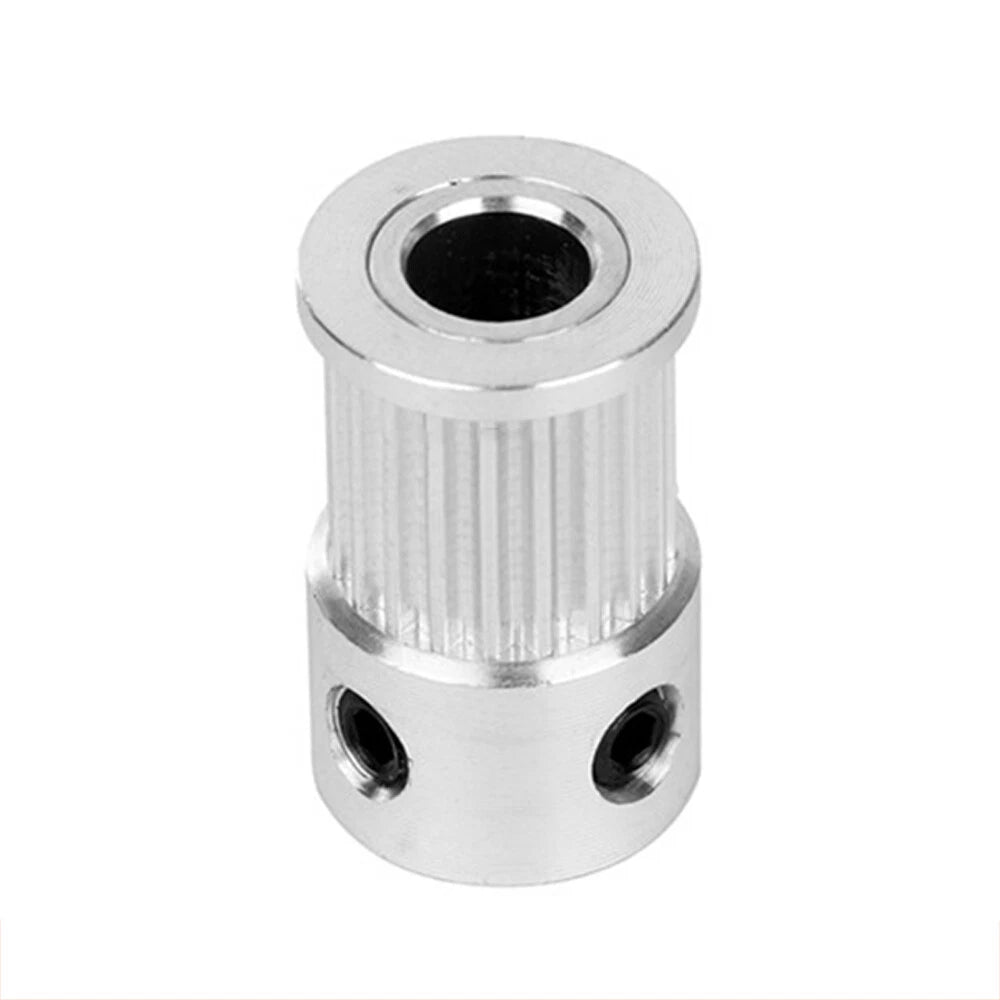
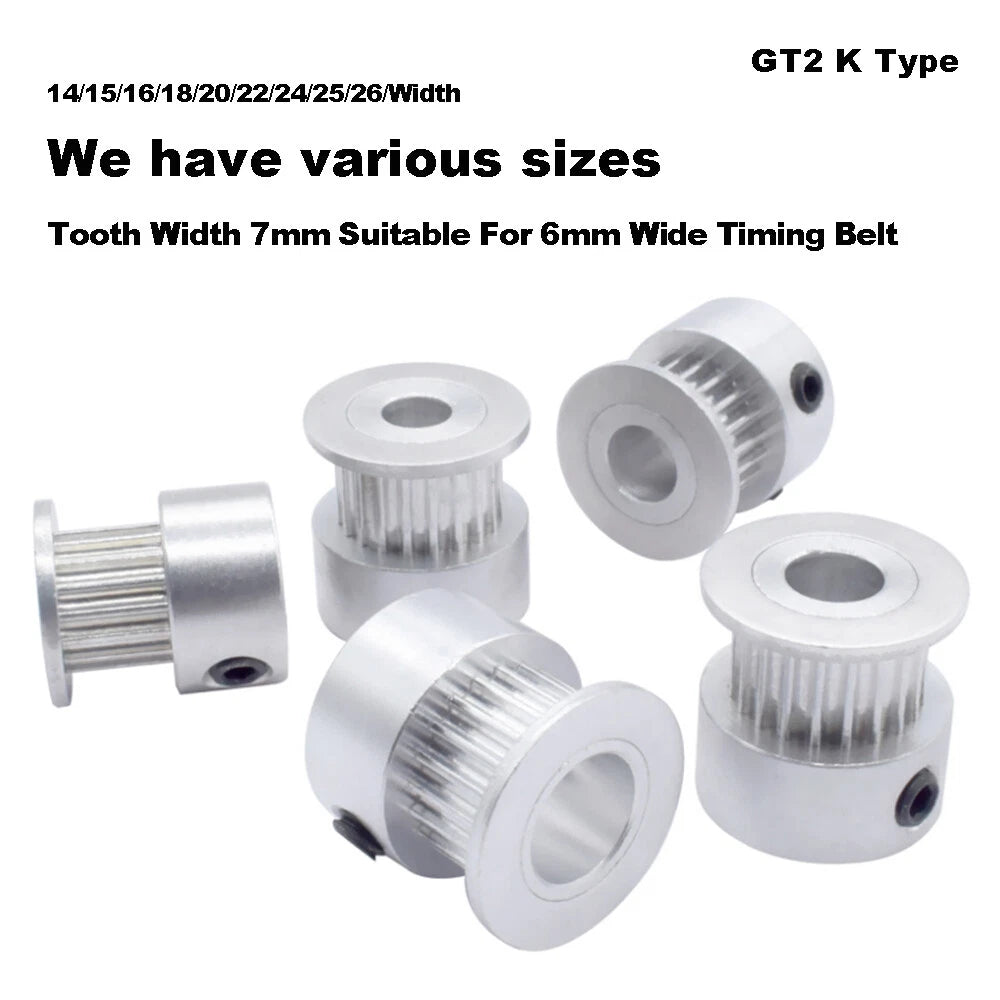
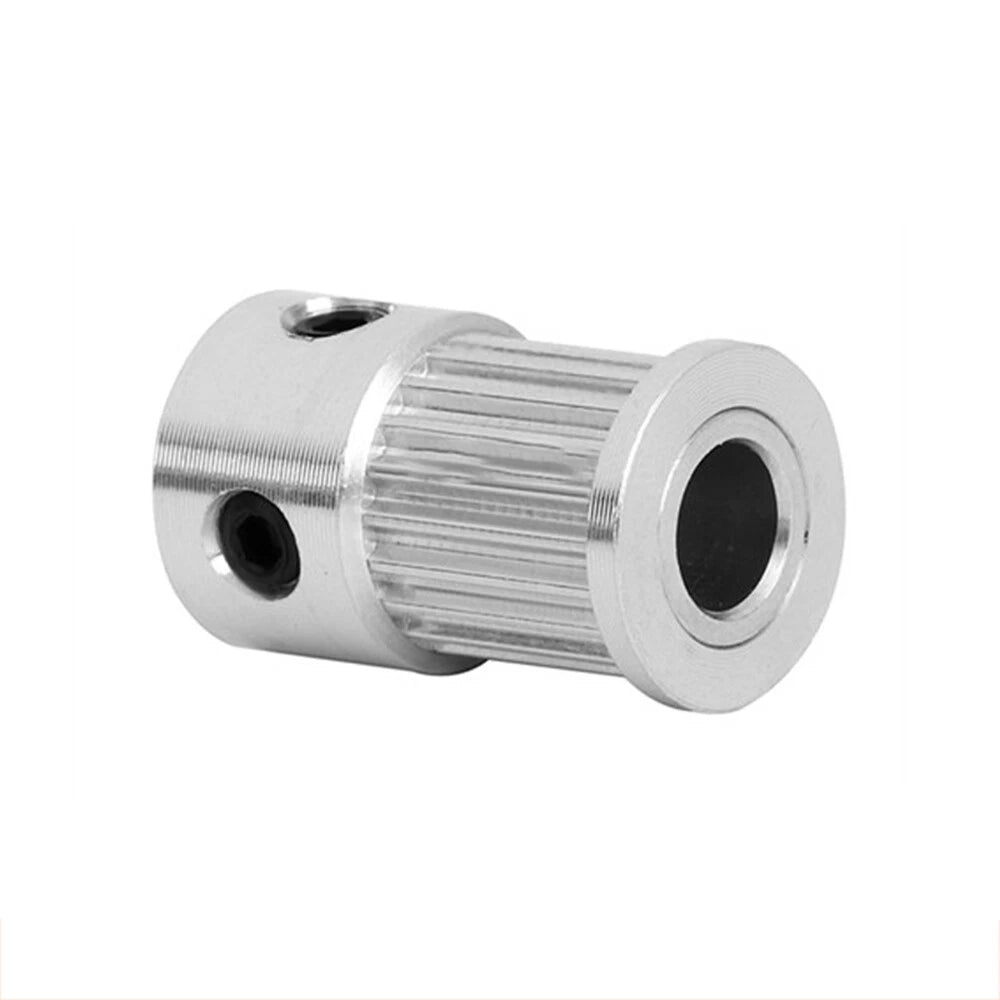
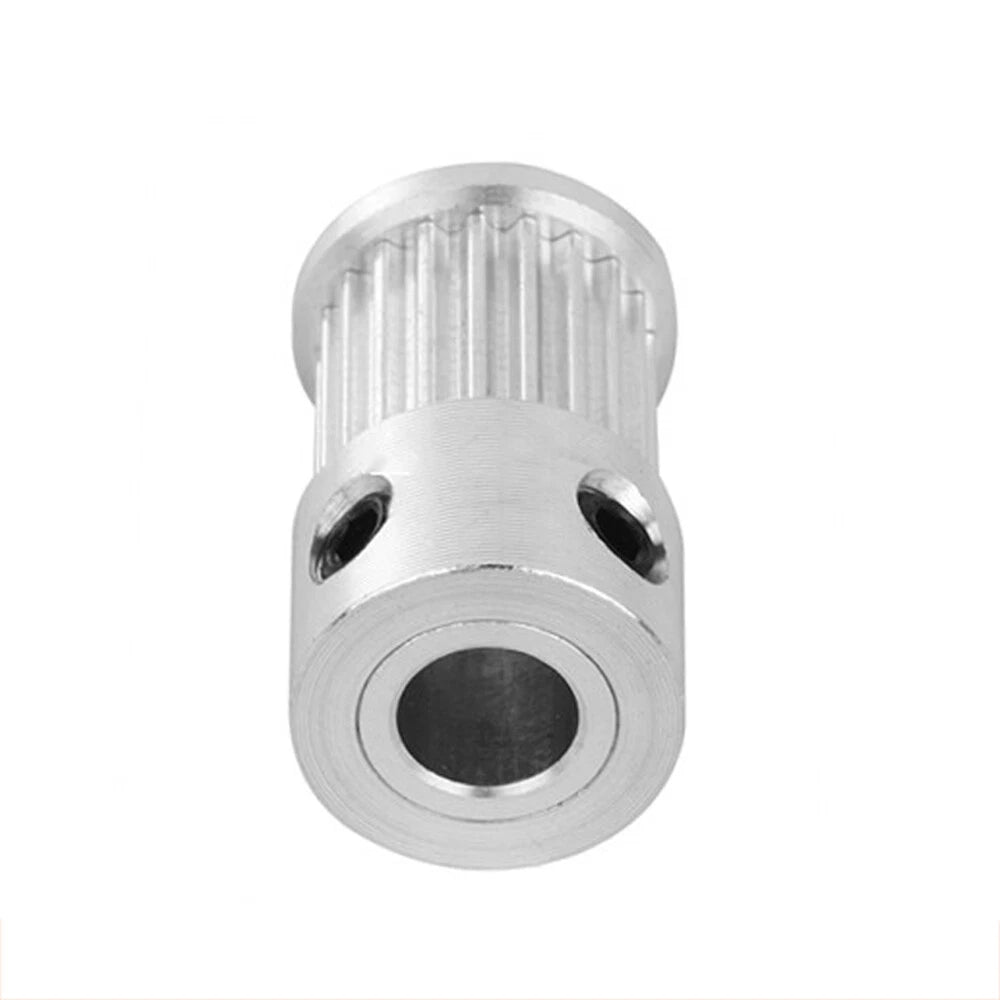
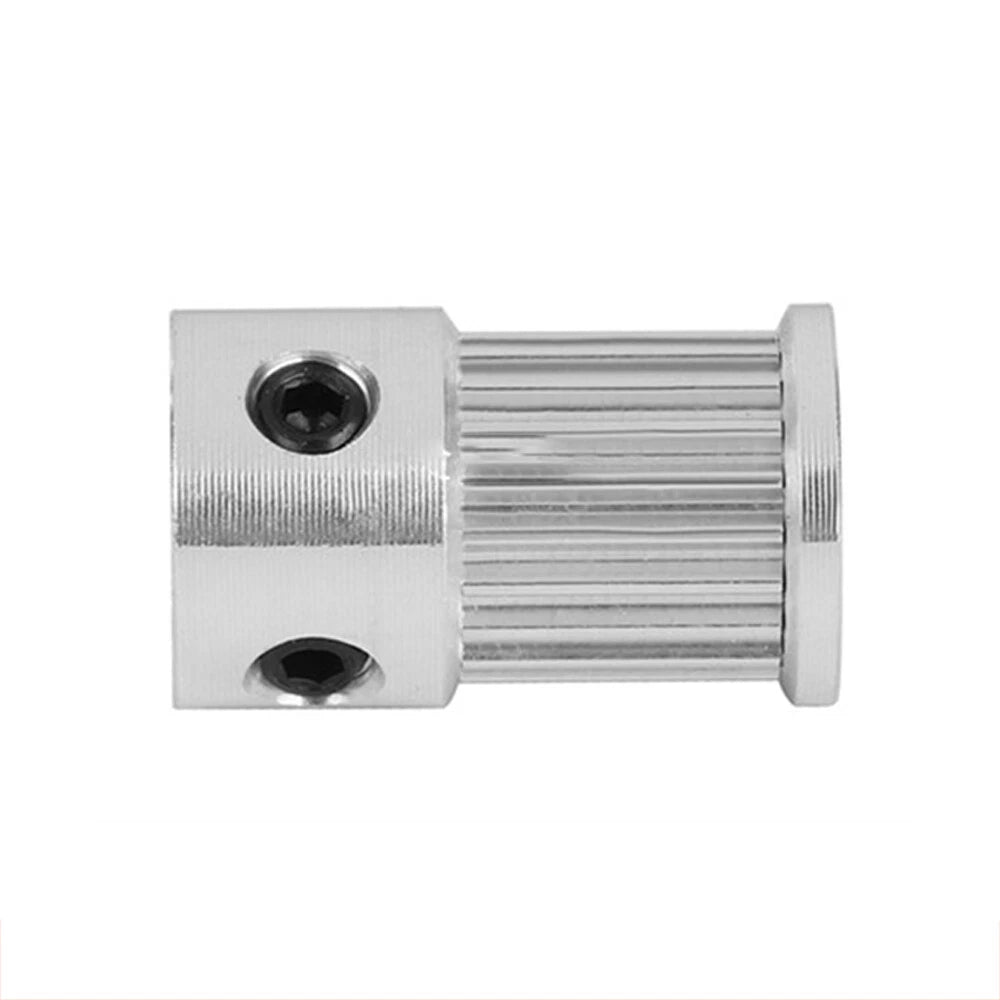
GT2 Idler Timing Drive Pulleys 14/15/16/18~26 Tooth,For 6mm Belt 3D Printer CNC

No reviews

Price:
Sale price$10.65 USD
Stock:
In stock (500 units), ready to be shipped

Payment & Security

Ach Direct Debit Amazon American Express Apple Pay Bancontact BLIK Diners Club Discover EPS Google Pay iDEAL Wero JCB Maestro Mastercard Multibanco MobilePay PayPal Przelewy24 Shop Pay Twint Union Pay USDC Visa

Your payment information is processed securely. We do not store credit card details nor have access to your credit card information.

Limited Offer — Spend More, Save More
Spend $55+
Save $5
Spend $100+
Save $10
Spend $200+
Save $25
HomeDIYer DIY Expert Support

DIY Expert Support

Get fitment advice & recommendations

Mon–Fri  8:30 AM – 8:00 PM
24-Hour Fast Ship
Arrives in 3–14 Days
Worldwide Shipping
30-Day Returns
1 tree planted with every purchase

Description

GT2 Idler Timing Drive Pulleys — Precise Motion Control for 3D Printers & CNC Machines

When your 3D printer or CNC router loses belt tension, print quality suffers and cuts go off-axis. Makers, hobbyists, and small-workshop engineers who demand repeatable, slip-free motion need idler pulleys they can trust. These GT2 idler timing drive pulleys are engineered to maintain consistent belt path geometry, reduce backlash, and keep your motion system running true — whether you're dialing in a first layer or routing a precision part.

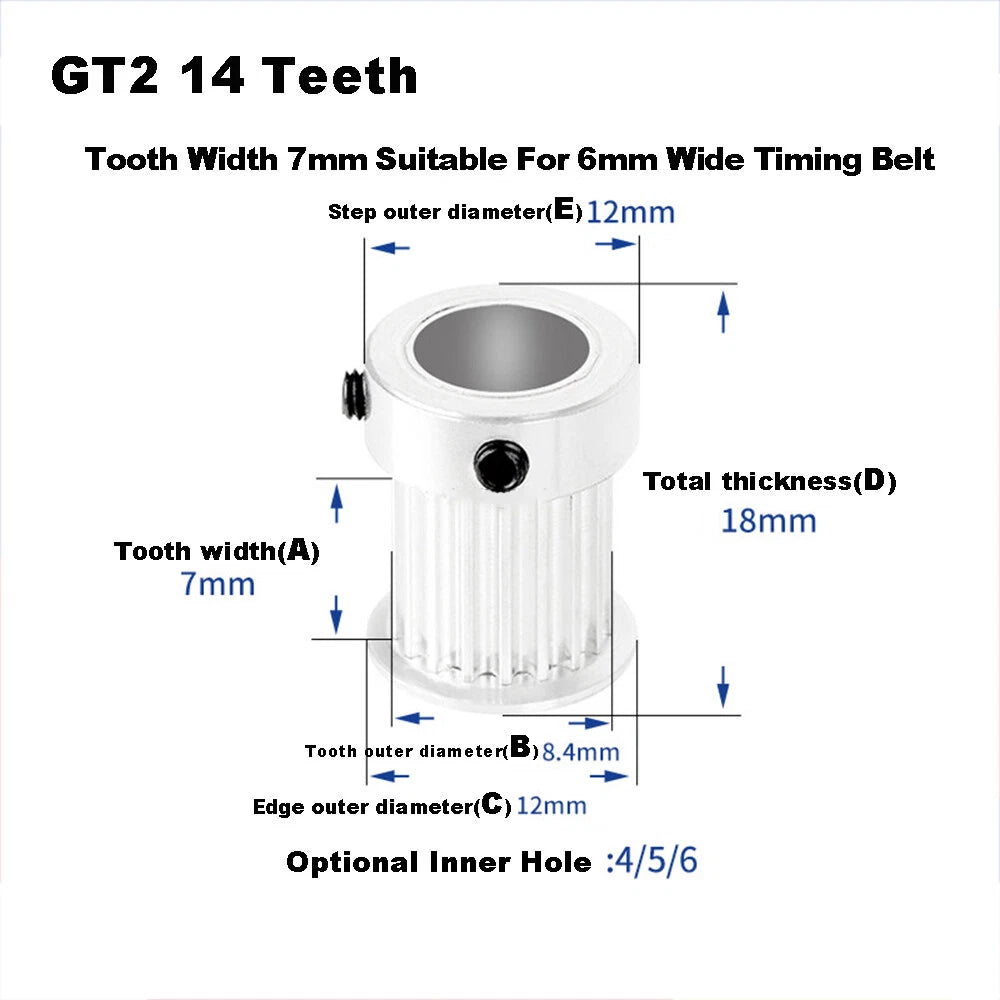
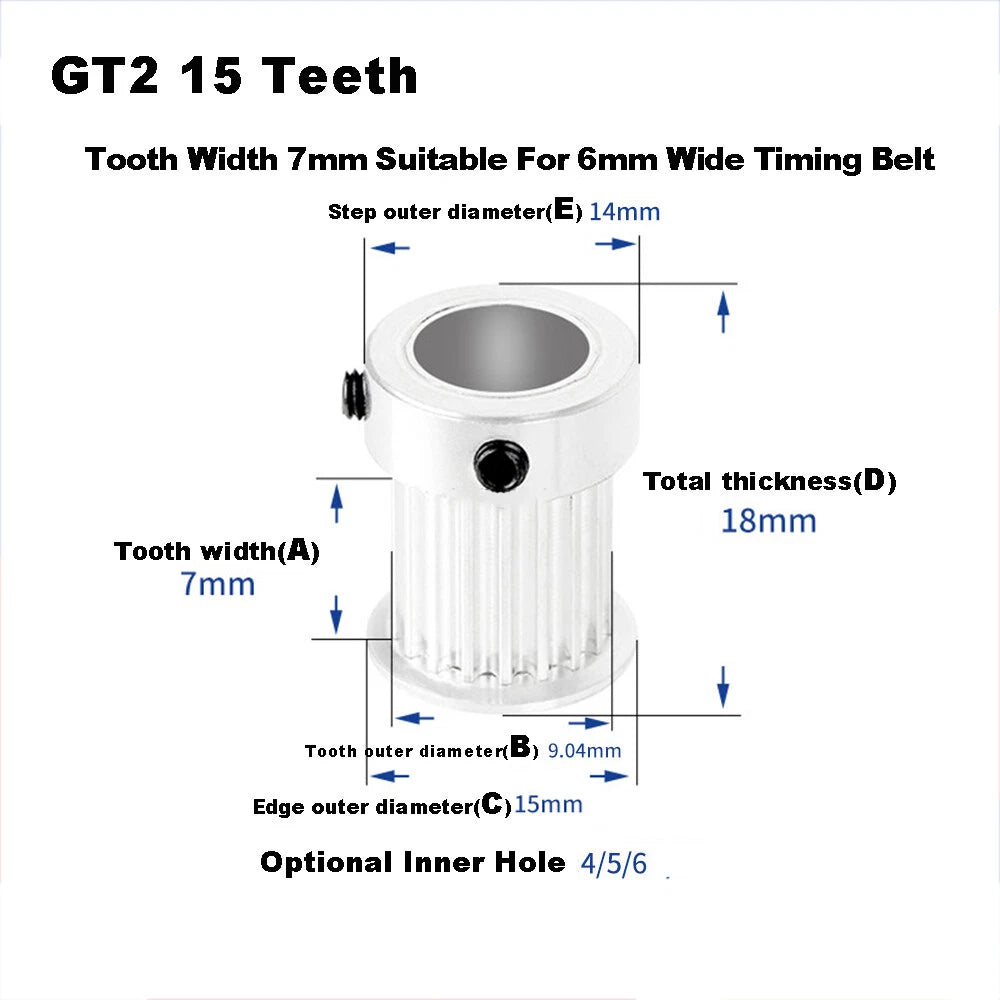
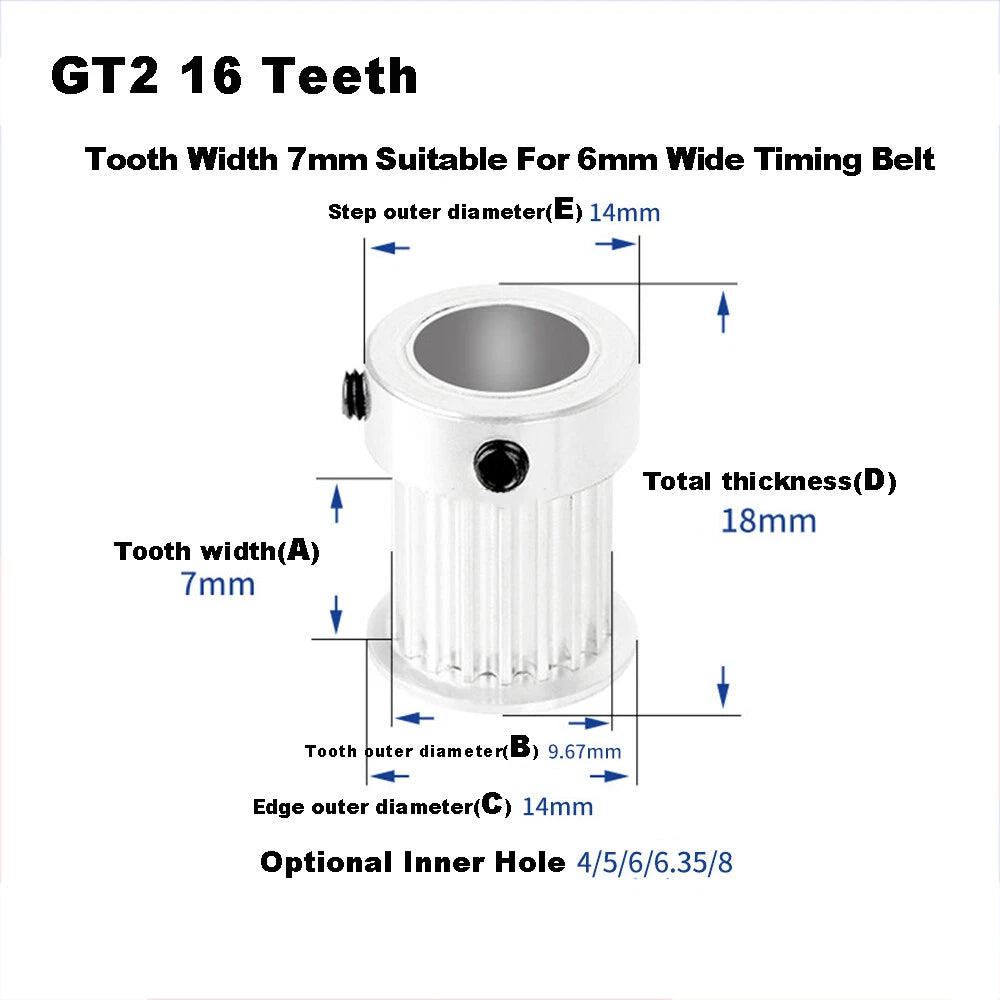
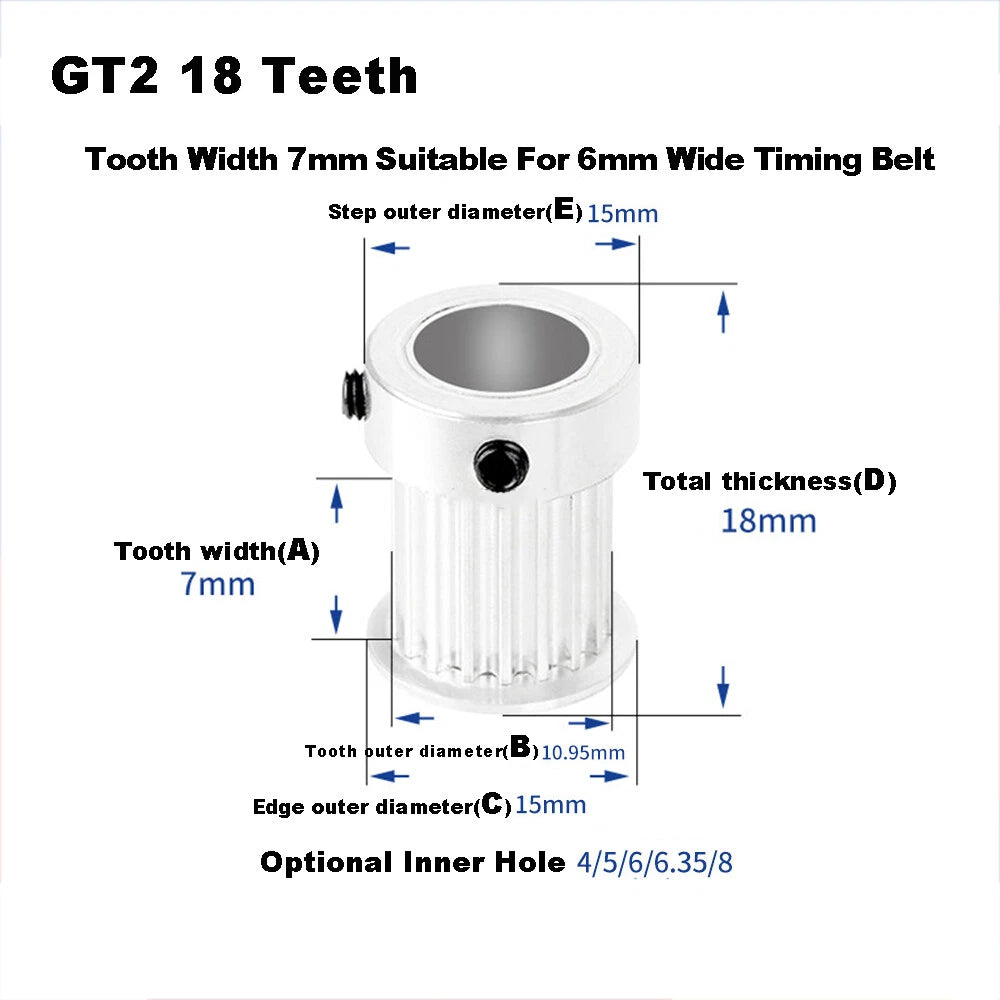
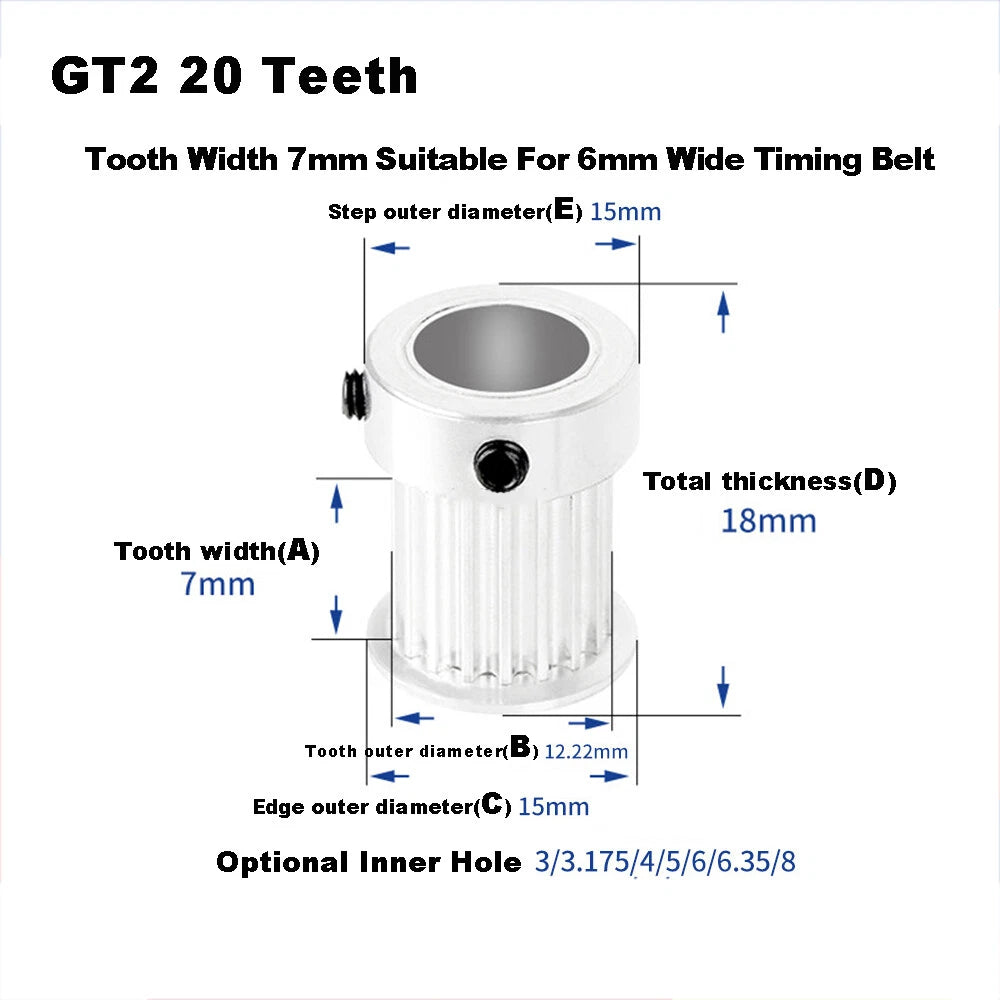
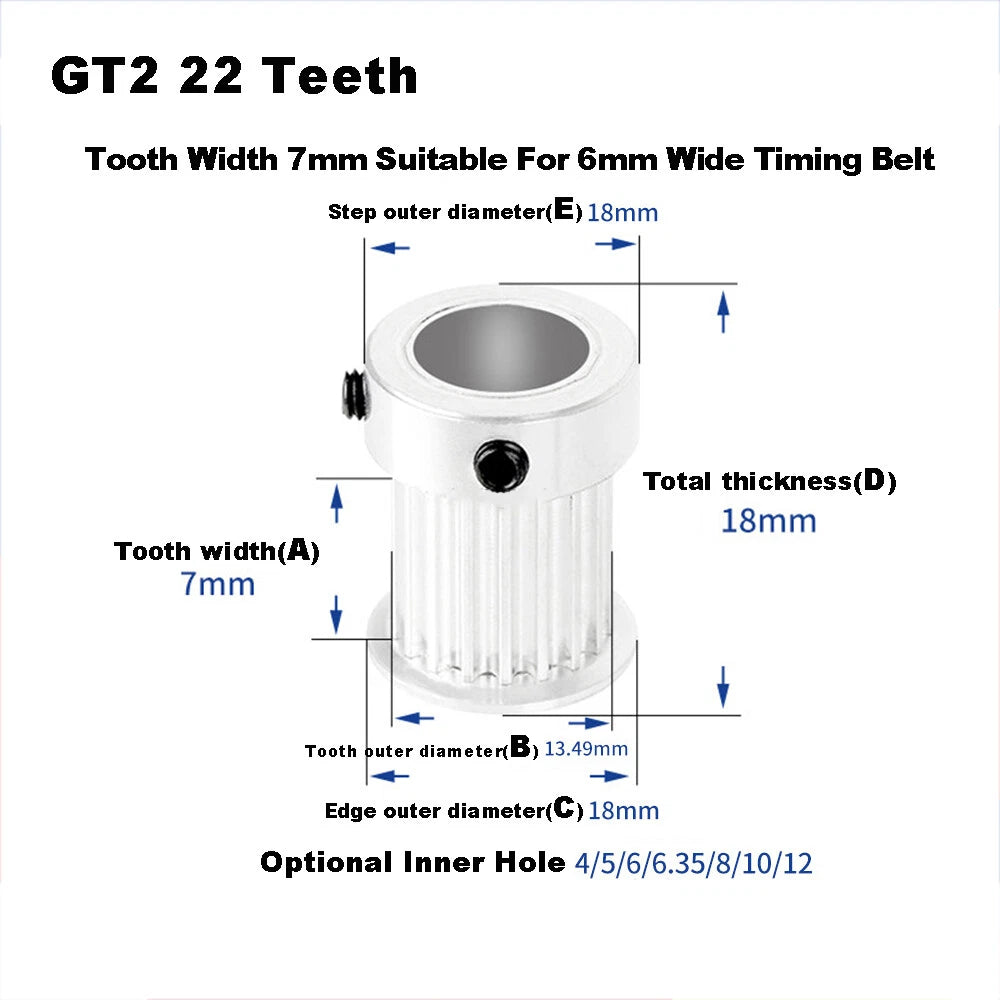
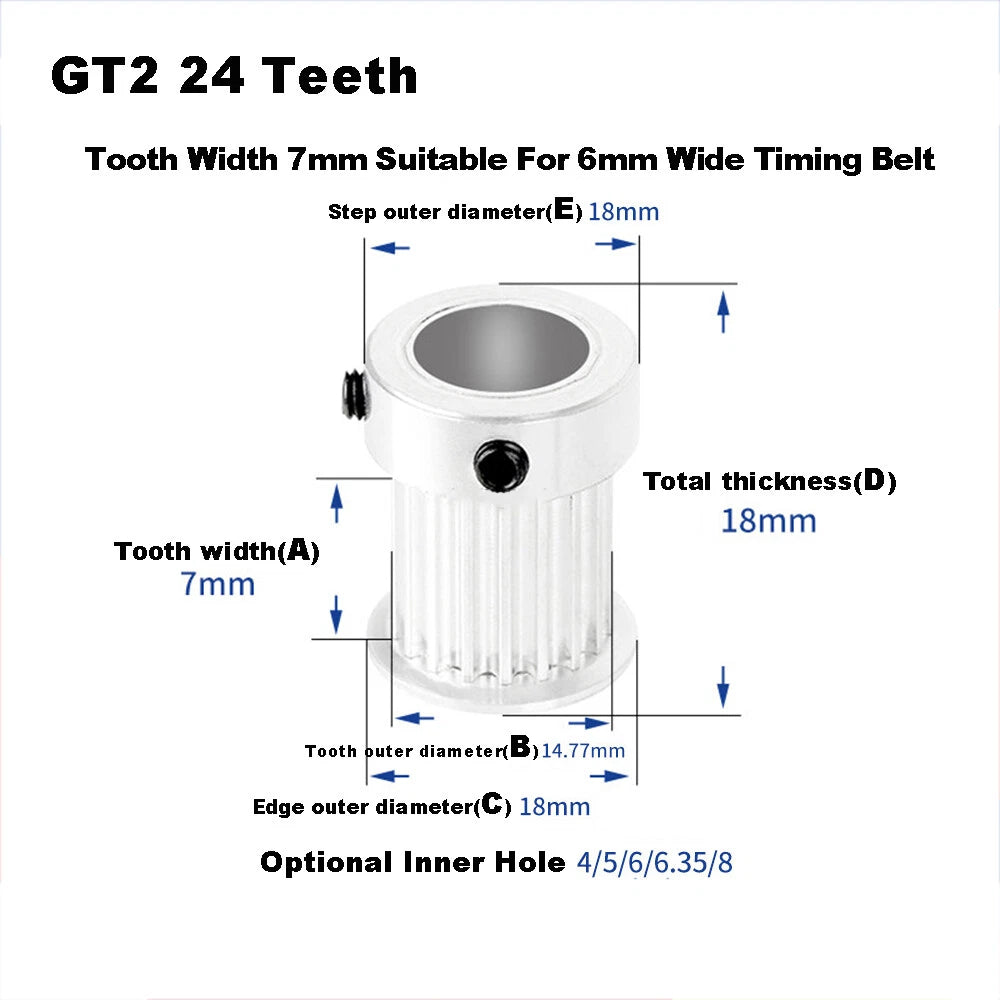
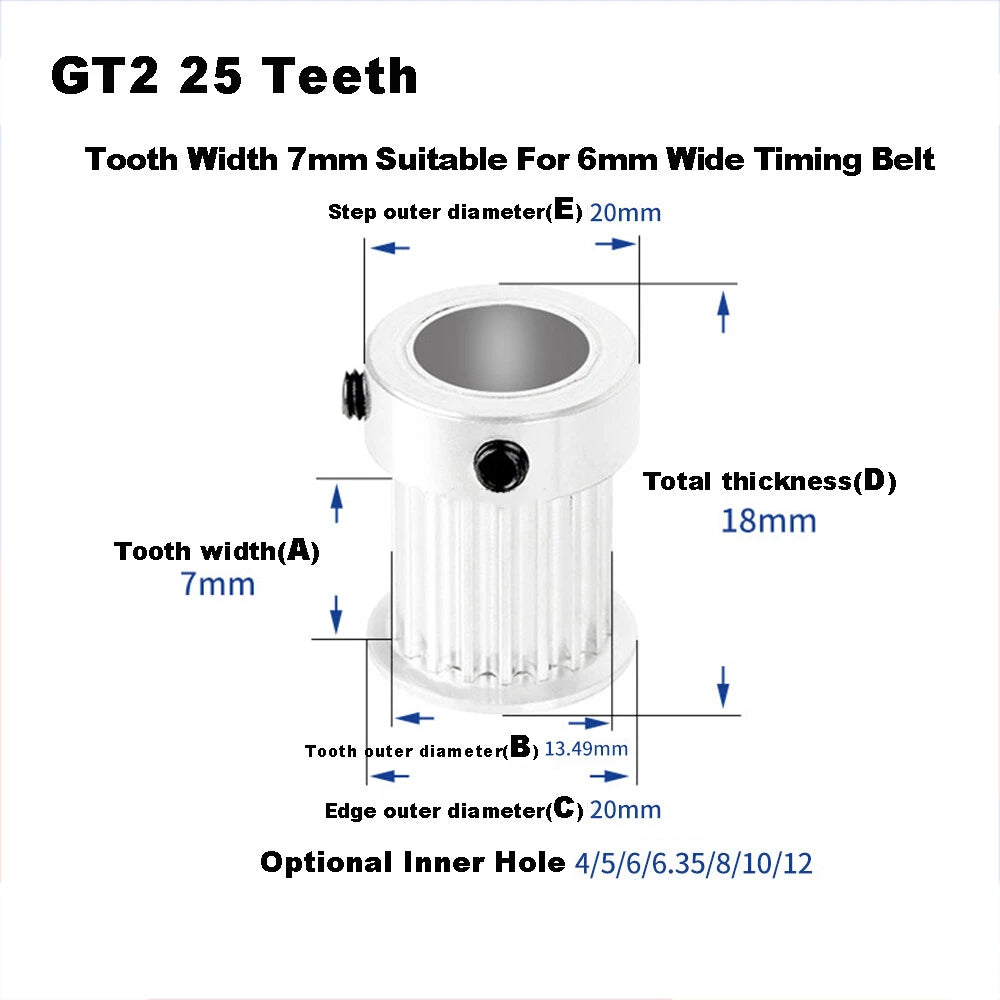
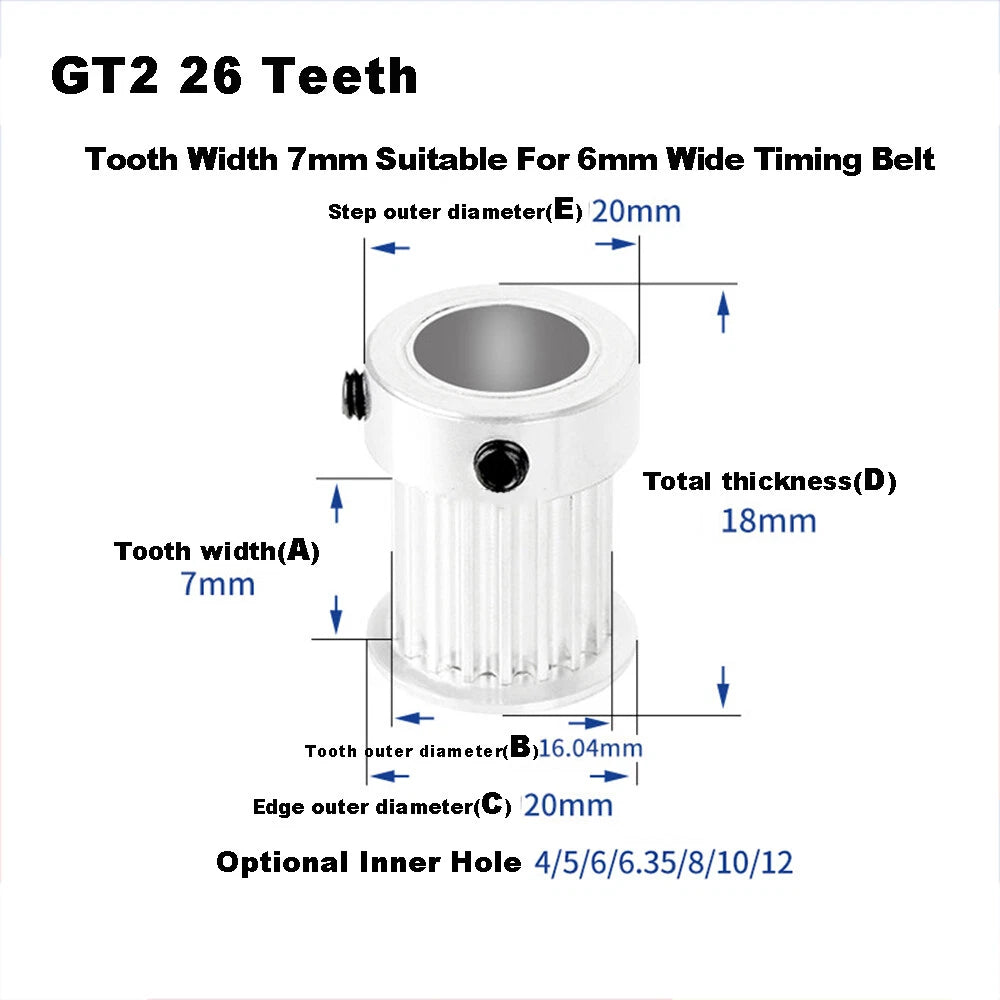
Each GT2 idler timing pulley features a 7mm belt-contact width (Width7) and is available in bore diameters ranging from Φ3mm to Φ12mm (~0.118" to ~0.472"), with tooth counts from 14T to 26T. Select variants include a K3 or K4 keyway bore for shaft-keyed installations. The pulleys are machined from aluminum alloy for a balance of light weight and dimensional stability.

Typical use cases include GT2 belt idler replacement on Ender, Prusa, and Voron-style 3D printers; belt-tensioning idler positions on desktop CNC routers and laser engravers; and custom DIY automation rigs where a compact, low-profile GT2 timing pulley idler is needed to redirect or tension a 6mm synchronous belt.

⚙️ Compatibility: Designed for standard GT2 (2mm pitch) open or closed-loop belts with 6mm width. Verify your shaft/bore diameter and tooth count before ordering. K3/K4 variants require a matching keyway on the shaft.

✅ Key Features of These GT2 Idler Timing Drive Pulleys

🦷 14–26 Tooth Range

Nine tooth-count options (14T, 15T, 16T, 18T, 20T, 22T, 24T, 25T, 26T) let you match the exact gear ratio or idler geometry your motion system requires.

🔩 Wide Bore Selection

Bore diameters from Φ3mm to Φ12mm cover the most common stepper motor shaft and idler pin sizes used in desktop 3D printers and CNC machines.

🔑 Keyway Variants Available

Select K3 and K4 keyway bore options provide positive shaft engagement, eliminating rotational slip on driven-pulley applications.

📐 7mm Belt-Contact Width

The Width7 profile is matched to standard 6mm GT2 belts, providing full tooth engagement across the belt width for reliable power transmission.

⚖️ Aluminum Alloy Construction

Machined aluminum keeps rotating mass low — important for high-acceleration motion axes — while maintaining the dimensional accuracy needed for repeatable positioning.

🔄 Drop-In Replacement Fit

Standard GT2 tooth profile and common bore sizes make these pulleys direct replacements for worn or undersized idlers on most open-source 3D printer and CNC platforms.

📐 Technical Specifications — GT2 Idler Timing Pulley

Belt Profile GT2 (2mm pitch)
Belt Width Compatibility 6mm
Pulley Width (Belt Contact) 7mm
Tooth Count Options 14T / 15T / 16T / 18T / 20T / 22T / 24T / 25T / 26T
Bore Diameter Options Φ3mm / Φ3.175mm / Φ4mm / Φ5mm / Φ6mm / Φ6.35mm / Φ8mm / Φ10mm / Φ12mm
Keyway Variants K3 (3mm keyway) and K4 (4mm keyway) available on select bore sizes
Material Aluminum alloy
Outer Diameter See variant options
Flange See variant options
Weight (per piece) See variant options
Typical Applications 3D printer belt idler, CNC router tensioner, DIY automation belt drive

❓ Frequently Asked Questions

How do I choose the right tooth count for my 3D printer or CNC machine?

Match the tooth count to your existing idler or driven pulley specification. For most Cartesian and CoreXY 3D printers, 20T is the standard drive pulley tooth count, while idler pulleys are often smooth or toothed at 16T–20T. Check your printer's BOM or motion system diagram to confirm. If you're replacing a worn idler, count the teeth on the original part before ordering.

What bore diameter should I select?

Measure your shaft or idler pin diameter with a caliper before ordering. Common stepper motor shaft diameters are 5mm; common idler pin/bolt diameters are M3 (3mm), M4 (4mm), and M5 (5mm). Choose a bore that matches your shaft with minimal clearance. For keyed shafts, select the corresponding K3 or K4 variant.

What is the difference between the standard bore and the K3/K4 keyway variants?

Standard bore pulleys rely on a set screw or press fit to secure the pulley to the shaft. K3 and K4 variants have a machined keyway slot (3mm or 4mm wide respectively) that accepts a matching key on the shaft, providing a positive mechanical lock that prevents rotational slip under load. Use keyway variants when the pulley is transmitting torque rather than acting as a free-spinning idler.

Are these pulleys compatible with GT2 closed-loop belts as well as open-loop belts?

Yes. The GT2 2mm-pitch tooth profile is identical for both open-loop (cut-to-length) and closed-loop (loop belt) GT2 belts with 6mm width. These pulleys will mesh correctly with either belt type as long as the belt width is 6mm.

How strong are aluminum timing pulleys compared to plastic ones?

Aluminum alloy pulleys offer significantly higher dimensional stability and load capacity than injection-molded plastic pulleys. They resist deformation under belt tension, maintain tooth geometry over time, and do not creep or warp from heat generated during extended operation — making them a reliable upgrade for machines that run long print or cutting jobs.

Will these pulleys corrode or require lubrication?

Aluminum alloy naturally forms a thin oxide layer that provides moderate corrosion resistance in typical indoor workshop environments. No lubrication is required or recommended on the belt-contact surface, as lubricants can attract debris and degrade belt performance. If operating in a humid or corrosive environment, consider anodized variants or apply a light protective coating to exposed surfaces.

Can I use these as both drive pulleys and idler pulleys?

Yes. Toothed variants can function as drive pulleys (when keyed or set-screw secured to a motor shaft) or as toothed idlers (when mounted on a fixed pin with a bearing). For free-spinning idler use, pair the pulley with an appropriately sized bearing inserted into the bore. Smooth-bore variants without keyways are most commonly used as idlers.

🛒 Select your Sizes (bore diameter) and Tooth number above, then add to cart.

You may also like

Recently viewed