20T Timing Belt Smooth Tooth Drive Pulley GT2 Closed Timing-Synchronous Belt

No reviews

Price:
Sale price$3.25 USD
Stock:
In stock (500 units), ready to be shipped

Payment & Security

Ach Direct Debit Amazon American Express Apple Pay Bancontact BLIK Diners Club Discover EPS Google Pay iDEAL Wero JCB Maestro Mastercard Multibanco MobilePay PayPal Przelewy24 Shop Pay Twint Union Pay USDC Visa

Your payment information is processed securely. We do not store credit card details nor have access to your credit card information.

Limited Offer — Spend More, Save More
Spend $55+
Save $5
Spend $100+
Save $10
Spend $200+
Save $25
HomeDIYer DIY Expert Support

DIY Expert Support

Get fitment advice & recommendations

Mon–Fri  8:30 AM – 8:00 PM
24-Hour Fast Ship
Arrives in 3–14 Days
Worldwide Shipping
30-Day Returns
1 tree planted with every purchase

Description

GT2 Timing Belt & 20-Tooth Drive Pulley — Reliable Synchronous Drive for Makers and Builders

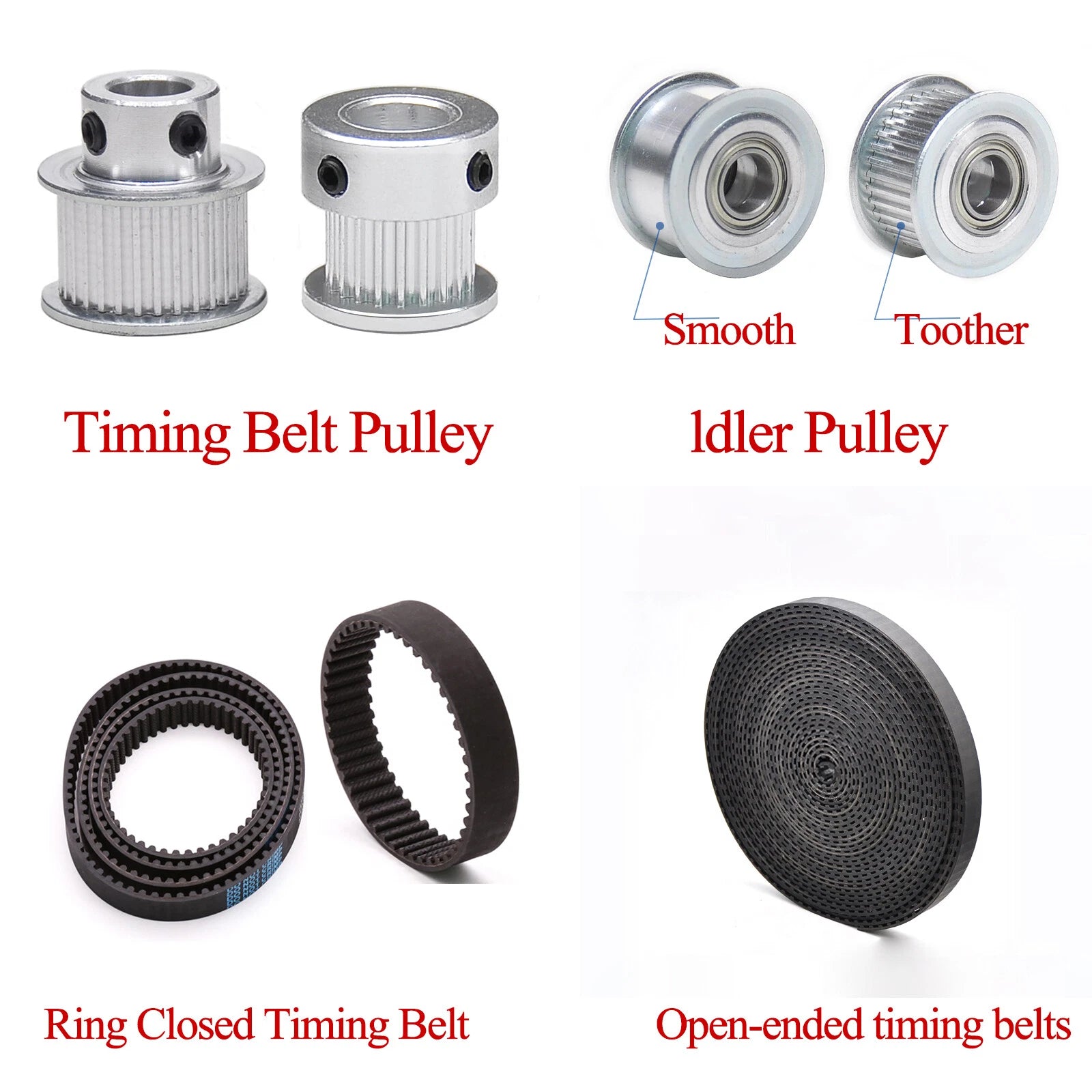
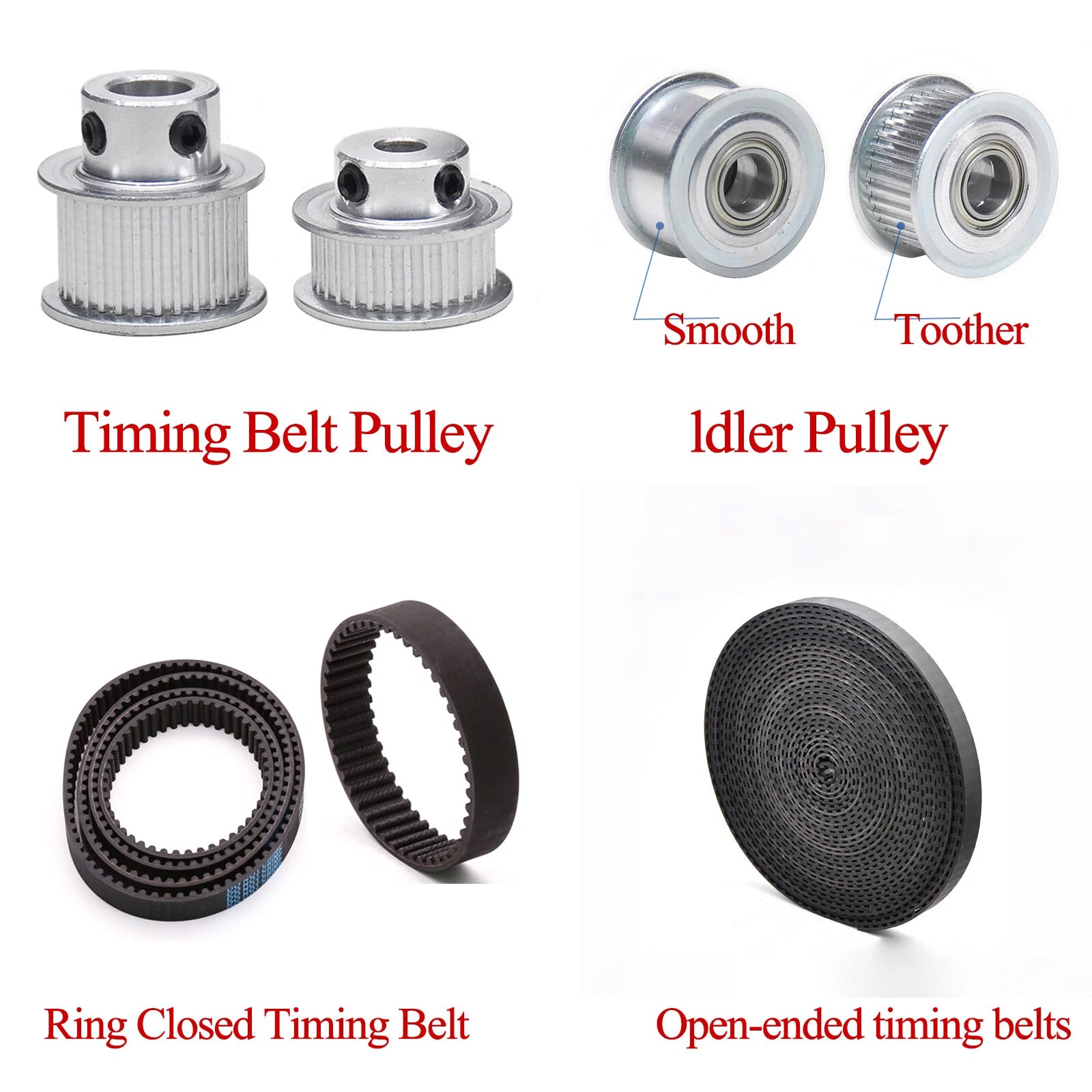
When your motion system slips or skips, every print layer, cut line, and axis position suffers. Hobbyists, engineers, and small-workshop builders who depend on repeatable, low-backlash linear motion need a GT2 timing belt and pulley combination they can trust. This listing covers three form factors in one place: GT2 20-tooth drive pulleys (with bore options from 3 mm to 8 mm), GT2 closed-loop timing belts (ring belts, circumferences from 98 mm to 1524 mm), and GT2 open-ended timing belt sold by the metre — all in 6 mm and 10 mm widths.

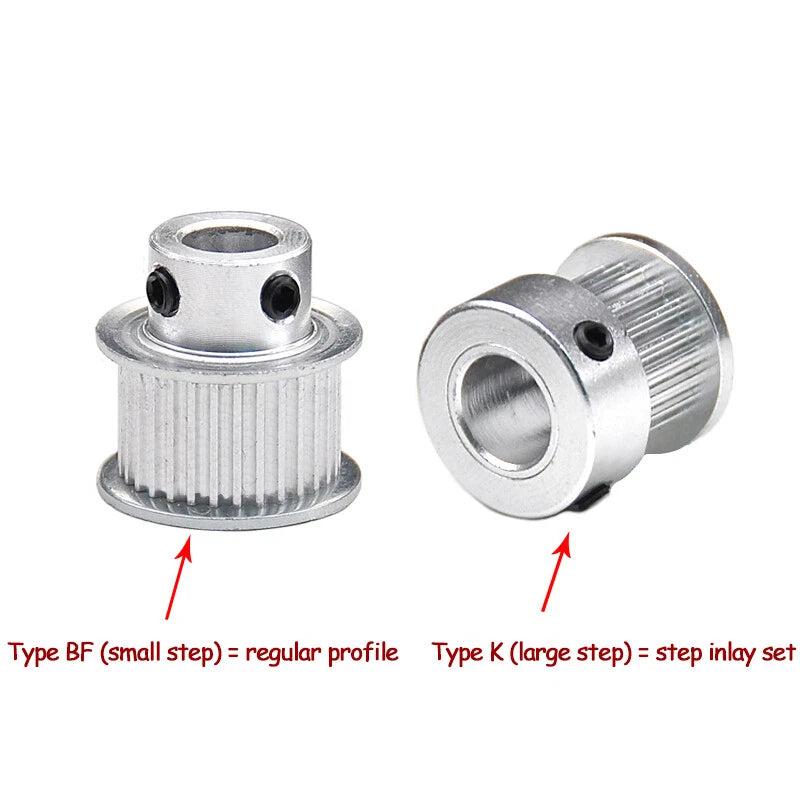
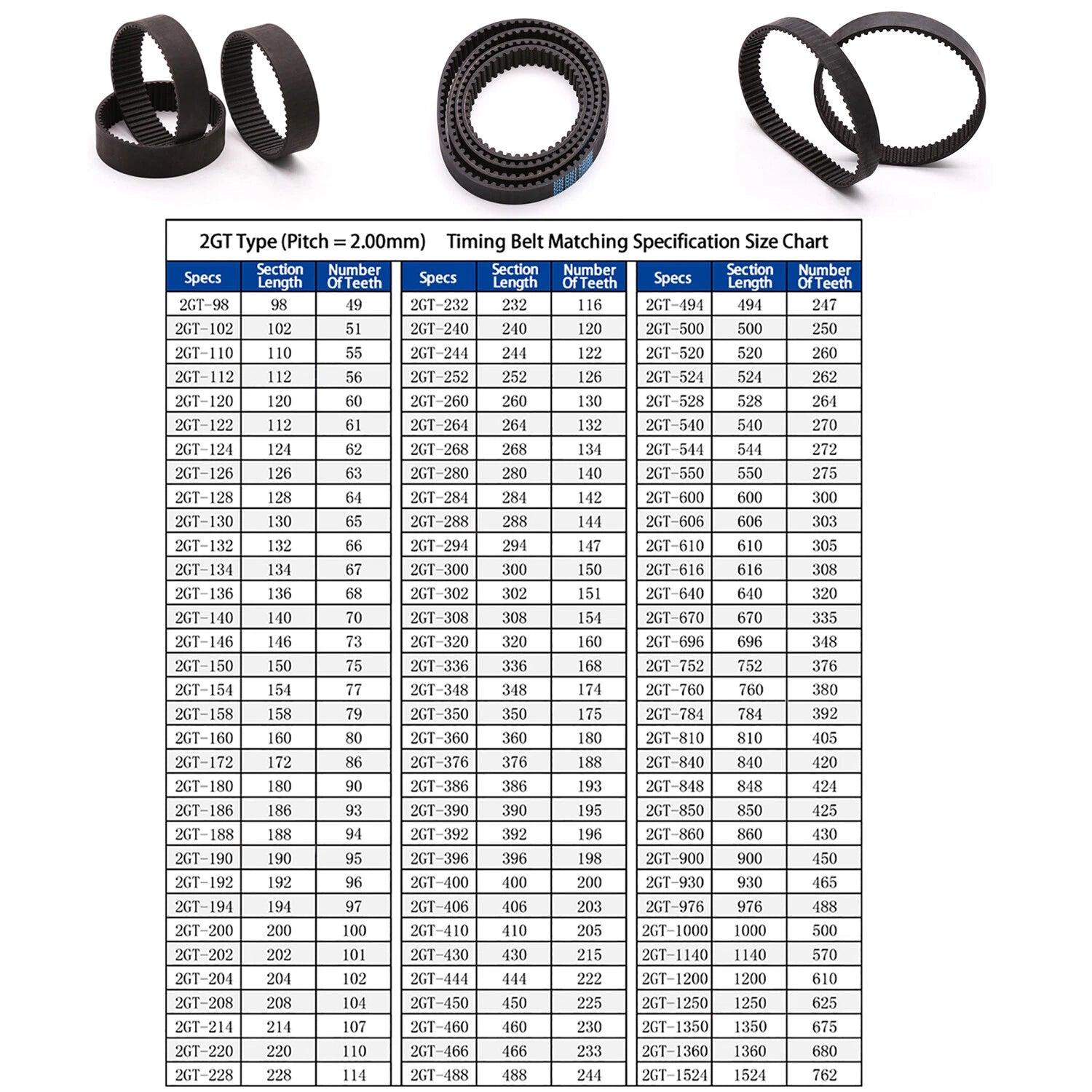
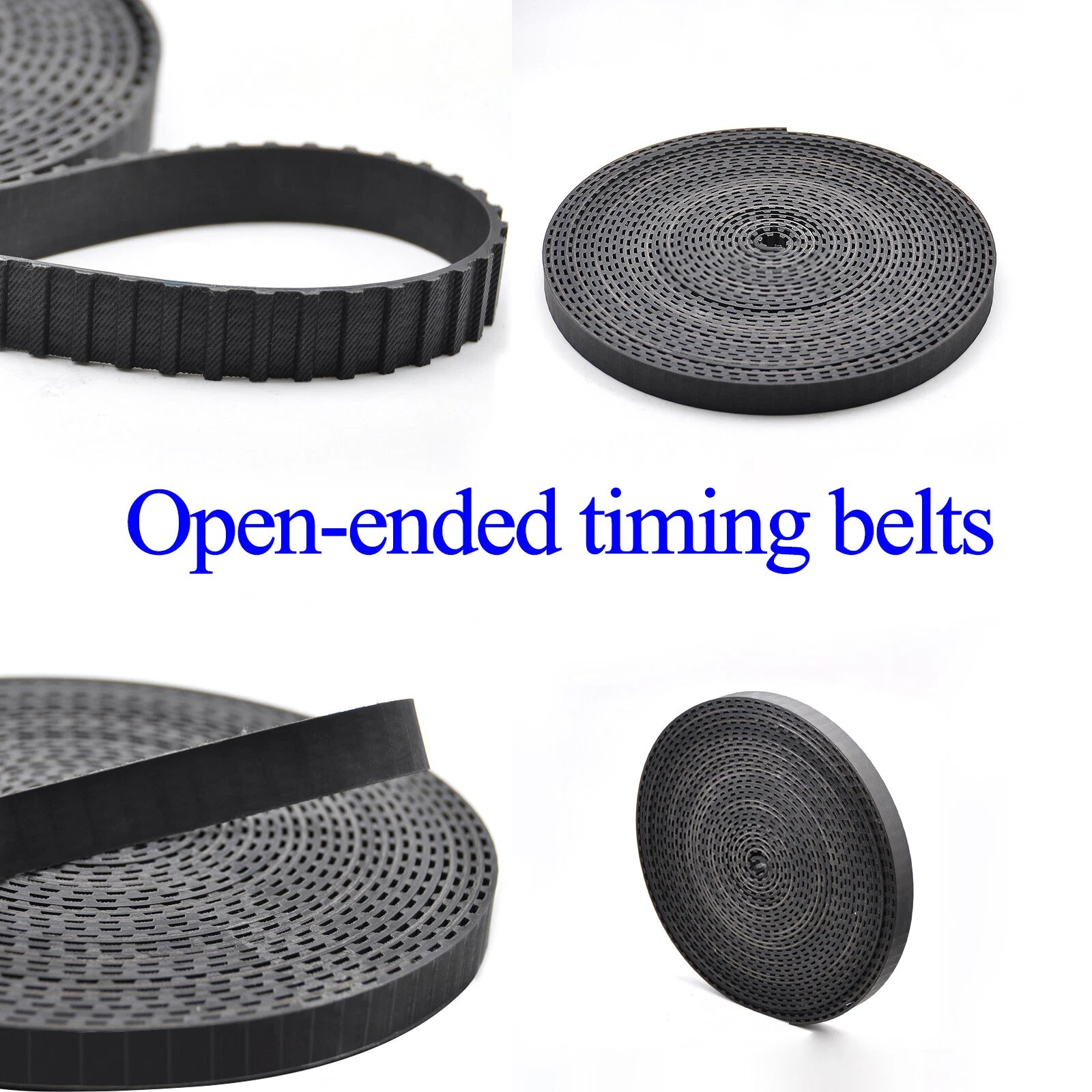
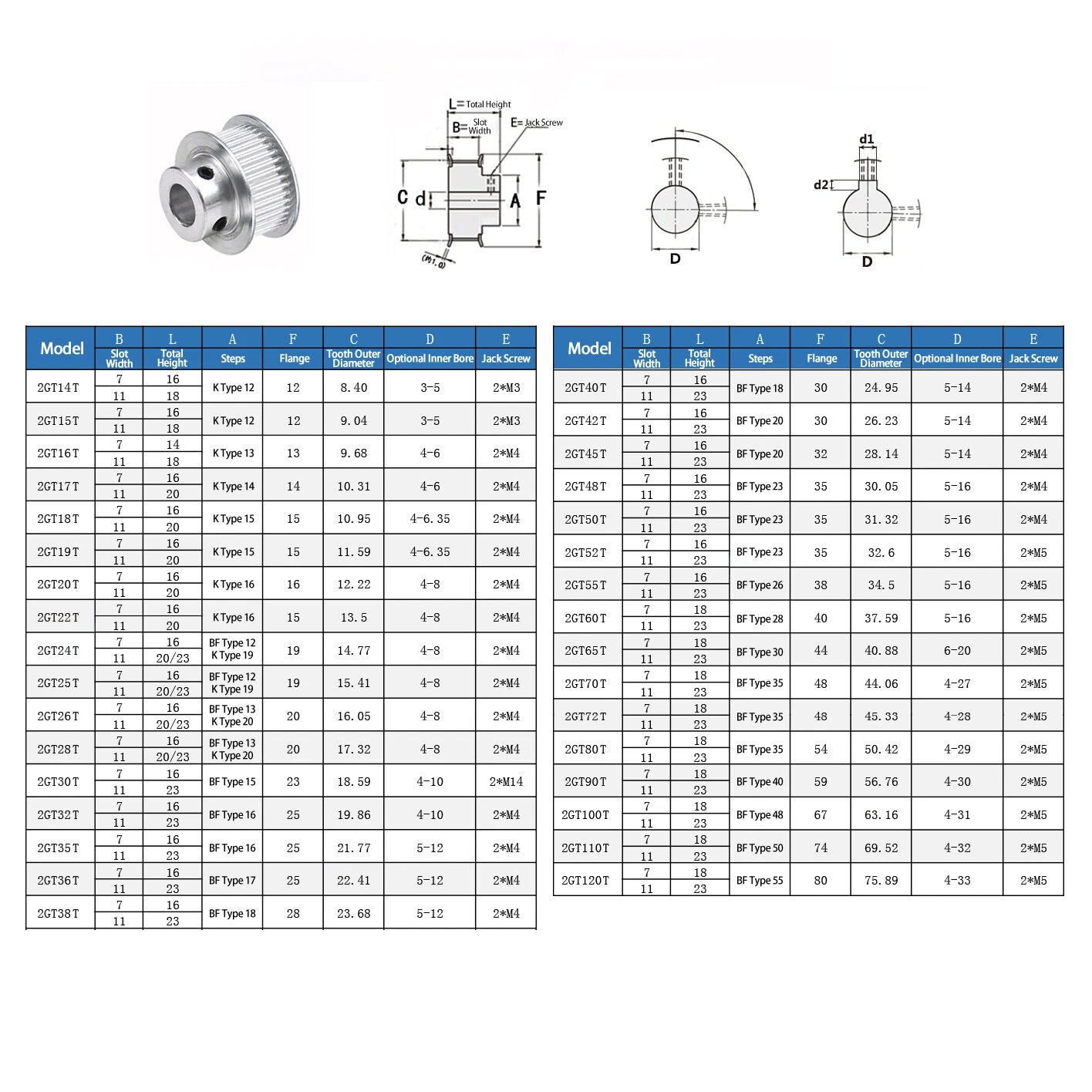
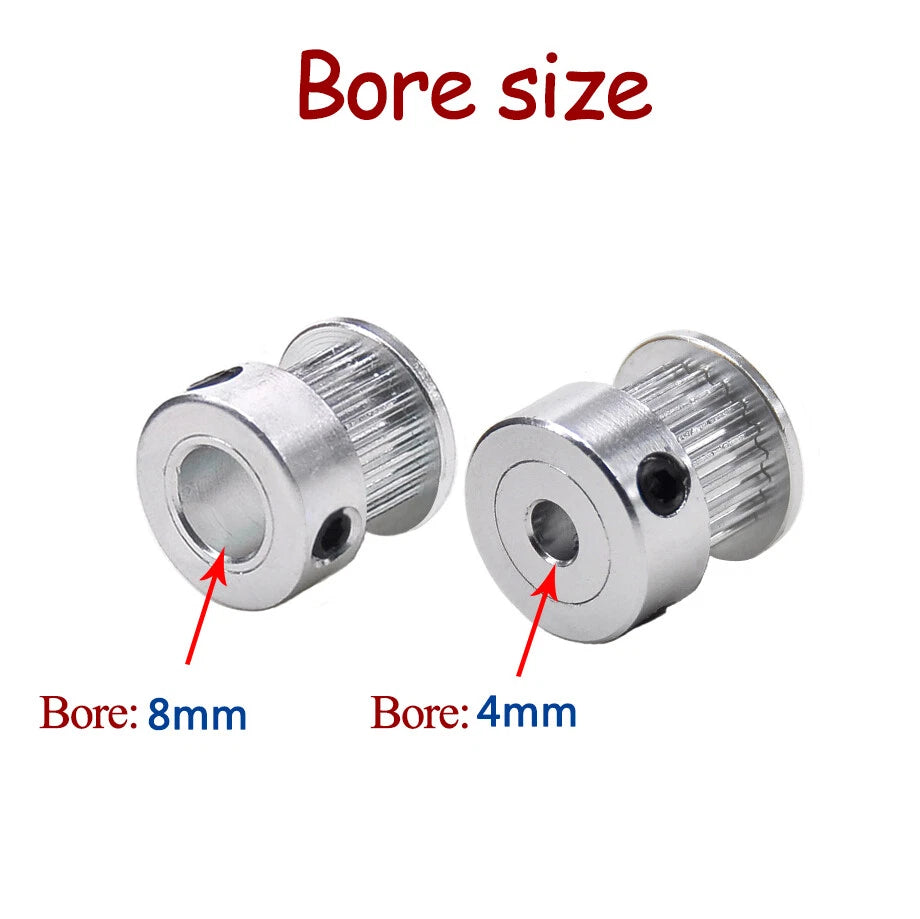
The GT2 20-tooth pulleys are machined from aluminium alloy with a smooth-tooth GT2 profile. Bore diameters range from 3 mm to 8 mm (including 3.175 mm / 0.125 in and 6.35 mm / 0.25 in imperial sizes), with an applicable belt width of 6 mm or 10 mm. Closed-loop belts are made from neoprene rubber reinforced with fibreglass cord, with a 2 mm pitch GT2 tooth profile; circumferences span 98 mm (≈ 3.86 in) to 1524 mm (≈ 60 in) in 6 mm and 10 mm widths. Open-ended belts are sold per metre in 6 mm and 10 mm widths, ideal for custom-length cuts.

Typical use cases include FDM 3D printer X/Y axis drives (GT2 belt + 20T pulley is the standard for most cartesian and CoreXY machines), desktop CNC router feed axes, laser engraver gantry systems, and lightweight robotic arm joints where a closed-loop synchronous belt eliminates the slip and stretch of V-belts or plain rubber bands.

⚙️ Compatibility: GT2 2 mm pitch profile. Pulleys fit stepper motor shafts from 3 mm to 8 mm. Belts are compatible with any GT2 20-tooth pulley of matching width (6 mm or 10 mm). Verify bore diameter and belt circumference against your machine's BOM before ordering.

✅ Key Features of These GT2 Timing Belts and 20-Tooth Drive Pulleys

🔩 Three Form Factors in One Listing

Choose GT2 20T aluminium pulleys, GT2 closed-loop ring belts, or GT2 open-ended belt by the metre — all with matching 2 mm pitch GT2 tooth geometry for interchangeable use across your build.

📐 Wide Bore Range for Pulleys

Bore options from 3 mm to 8 mm, including 3.175 mm (1/8 in) and 6.35 mm (1/4 in) imperial sizes, cover the most common NEMA 17 and NEMA 23 stepper motor shaft diameters without adapter sleeves.

📏 Extensive Belt Length Selection

Closed-loop belts span 98 mm to 1524 mm circumference (≈ 3.86 in to 60 in) in dozens of standard sizes, so you can match the exact loop length your printer or CNC frame requires.

↔️ 6 mm and 10 mm Width Options

Both pulleys and belts are available in 6 mm and 10 mm widths. The 10 mm width carries higher lateral load and suits wider gantry systems or applications where belt tracking stability matters.

🔄 Low-Backlash GT2 Tooth Profile

The rounded GT2 tooth form reduces engagement noise and backlash compared to older trapezoidal MXL or T2.5 profiles, making it the preferred choice for precision motion in 3D printing and CNC routing.

✂️ Open-Ended Belt Sold by the Metre

Need a non-standard length? The open-ended GT2 belt variant lets you cut to any length on-site, ideal for custom linear rail builds, conveyor prototypes, or replacement cuts where standard loop sizes do not fit.

📐 Technical Specifications — GT2 Timing Belt and Pulley

Belt Profile GT2 (2 mm pitch, rounded tooth)
Pulley Tooth Count 20 teeth
Pulley Material Aluminium alloy
Pulley Bore Diameter 3 mm / 3.175 mm / 4 mm / 5 mm / 6 mm / 6.35 mm / 7 mm / 8 mm (see variant options)
Applicable Belt Width (Pulley) 6 mm or 10 mm (see variant options)
Belt Material Neoprene rubber with fibreglass reinforcement cord
Belt Pitch 2 mm (GT2)
Belt Width 6 mm or 10 mm (see variant options)
Closed Belt Circumference Range 98 mm – 1524 mm (≈ 3.86 in – 60 in) (see variant options)
Open Belt Length 1 metre per unit (see variant options)
Colour / Finish Pulley: natural aluminium; Belt: black

❓ Frequently Asked Questions

How do I choose the right belt circumference for my 3D printer?

Measure the distance between your two pulley centres, then calculate: circumference ≈ 2 × centre distance + (π × pulley pitch diameter). For a GT2 20T pulley the pitch diameter is approximately 12.73 mm. Most cartesian printers use belts in the 200 mm – 400 mm range; CoreXY machines often need 800 mm – 1200 mm loops. If you are unsure, check your printer's official BOM or parts list for the exact belt length.

What bore size should I choose for a NEMA 17 stepper motor?

Standard NEMA 17 stepper motors have a 5 mm output shaft, so the 5 mm bore pulley is the most common choice. Some motors ship with a 4 mm or 6 mm shaft — check your motor's datasheet. If your shaft is imperial (e.g. 0.25 in / 6.35 mm), select the 6.35 mm bore variant to avoid the need for a shaft adapter.

Can I use a 6 mm belt with a 10 mm pulley or vice versa?

No. The belt width must match the pulley's applicable belt width. Mixing widths causes the belt to ride off-centre, leading to uneven tooth engagement, accelerated wear, and potential belt derailment. Always order matching width pairs.

How strong is the GT2 belt — will it stretch under load?

GT2 belts with fibreglass reinforcement cord have very low elongation under typical 3D printer and light CNC loads (typically < 0.1% at rated tension). They are not designed for heavy industrial torque transmission. For high-load applications (e.g. large CNC routers with significant cutting forces), consider upgrading to a wider belt (10 mm vs 6 mm) or a higher-rated belt series such as GT3 or HTD.

Is the GT2 profile compatible with HTD 3M or MXL belts and pulleys?

No. GT2, HTD 3M, and MXL are different tooth profiles and are not interchangeable. GT2 has a 2 mm pitch with a rounded tooth form; HTD 3M has a 3 mm pitch; MXL has a 2.032 mm pitch with a trapezoidal tooth. Always match belt and pulley by both pitch and tooth profile.

When should I choose the open-ended belt instead of a closed loop?

Choose the open-ended belt when your required length falls between standard closed-loop sizes, when you are building a custom linear rail or conveyor that needs a specific cut length, or when you want to keep spare belt stock for future repairs. The open-ended belt is sold per metre; order multiple units for longer runs and join or clamp as needed for your application.

How do I tension the belt correctly after installation?

A correctly tensioned GT2 belt should produce a clear, mid-range tone when plucked — not a dull thud (too loose) or a high-pitched ping (too tight). For 3D printers, many builders target approximately 40–60 Hz resonant frequency on a 150 mm free span, measured with a smartphone frequency app. Adjust your idler or motor mount until the belt deflects roughly 1–2 mm under light finger pressure at the midpoint of the longest free span.

🛒 Select your typology, bore size / belt length, and width above, then add to cart.


You may also like

Recently viewed