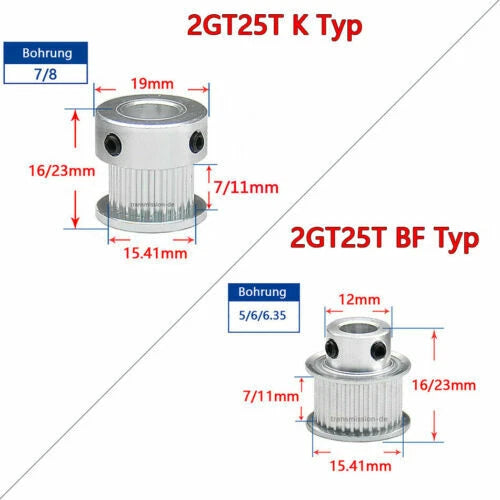
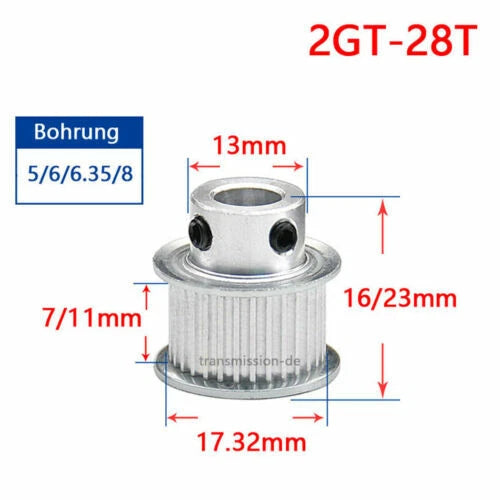
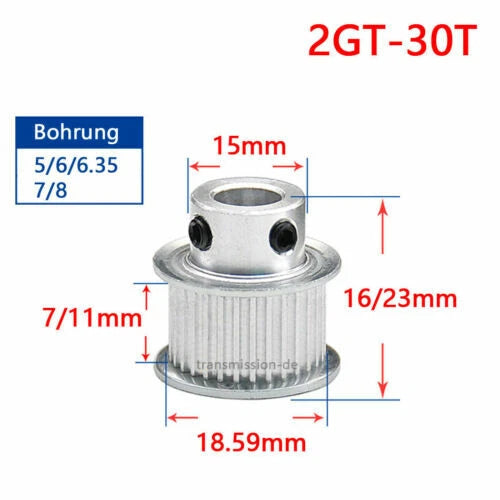
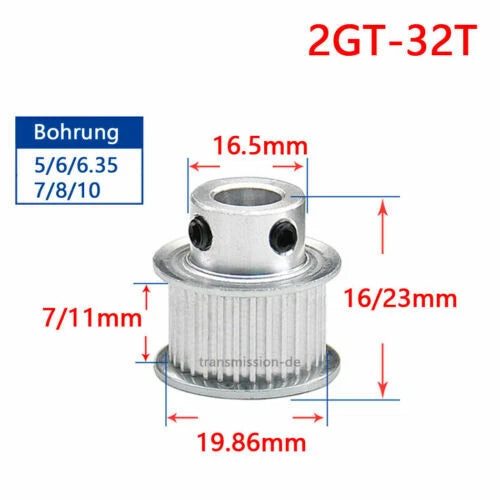
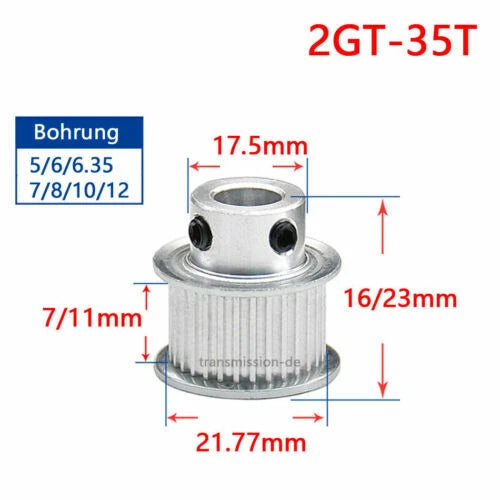
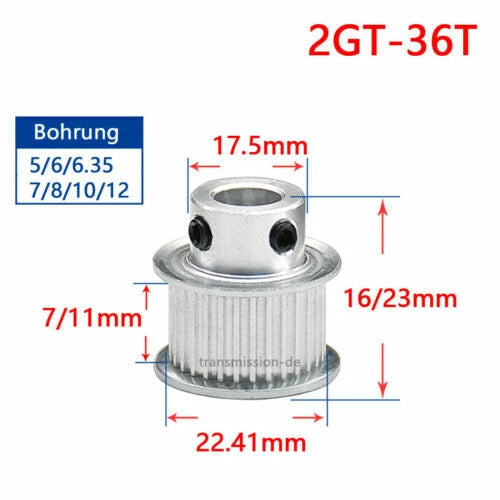
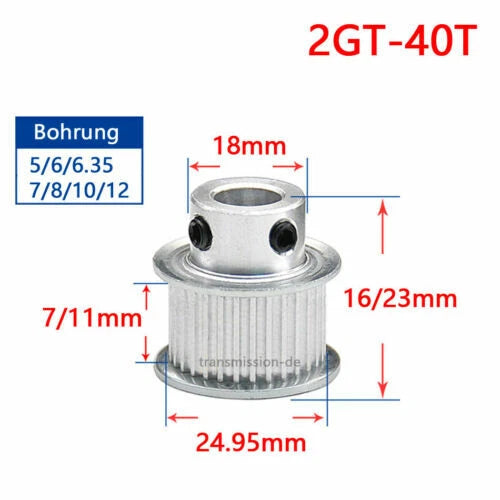
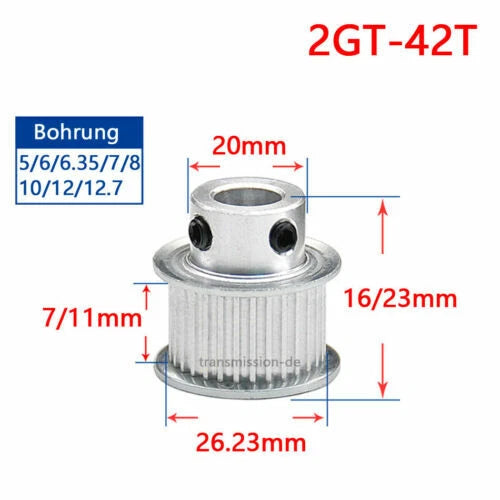
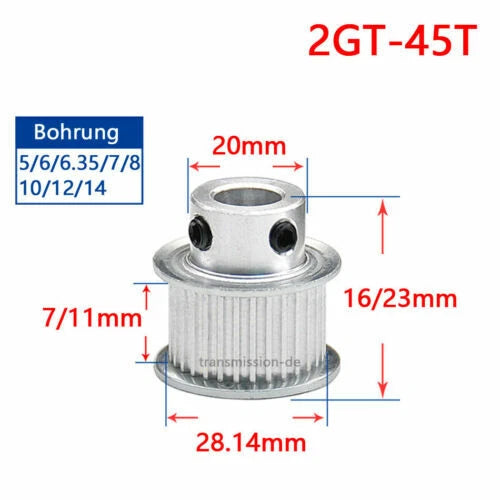
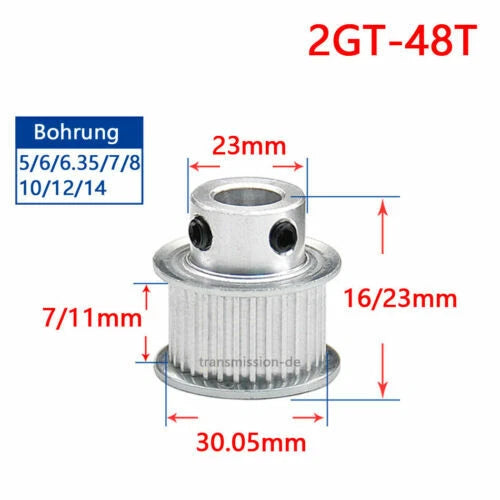
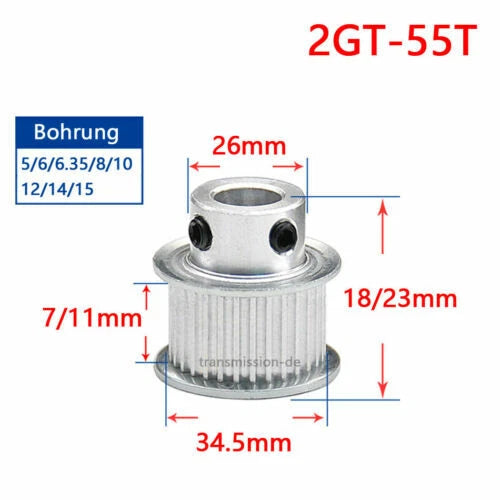
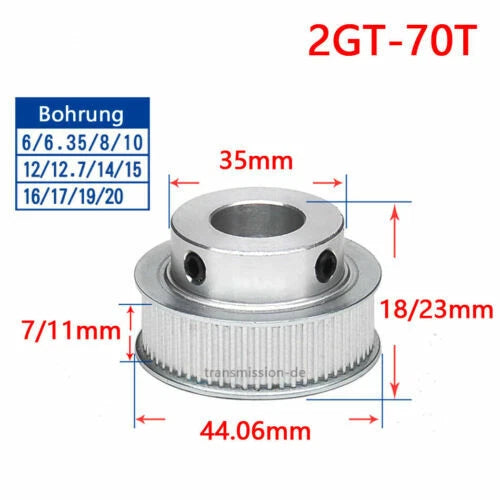
GT2 Timing Belt Pulley 16T - 100T Synchronous Wheel for 6 mm width Drive Belts

No reviews

Price:
Sale price$2.99 USD
Stock:
In stock (500 units), ready to be shipped

Payment & Security

Ach Direct Debit Amazon American Express Apple Pay Bancontact BLIK Diners Club Discover EPS Google Pay iDEAL Wero JCB Maestro Mastercard Multibanco MobilePay PayPal Przelewy24 Shop Pay Twint Union Pay USDC Visa

Your payment information is processed securely. We do not store credit card details nor have access to your credit card information.

Limited Offer — Spend More, Save More
Spend $55+
Save $5
Spend $100+
Save $10
Spend $200+
Save $25
HomeDIYer DIY Expert Support

DIY Expert Support

Get fitment advice & recommendations

Mon–Fri  8:30 AM – 8:00 PM
24-Hour Fast Ship
Arrives in 3–14 Days
Worldwide Shipping
30-Day Returns
1 tree planted with every purchase

Description

GT2 Timing Belt Pulley 16T–100T — Precise Synchronous Drive for 7 mm Belts

When a slipping or misaligned pulley throws off your motion system, every axis suffers. Engineers, makers, and automation builders who need repeatable, low-backlash power transmission rely on GT2 timing belt pulleys that hold their pitch under load. Whether you are tuning a 3D printer extruder, building a CNC gantry, or designing a custom robotics joint, the right pulley-to-belt match is non-negotiable.

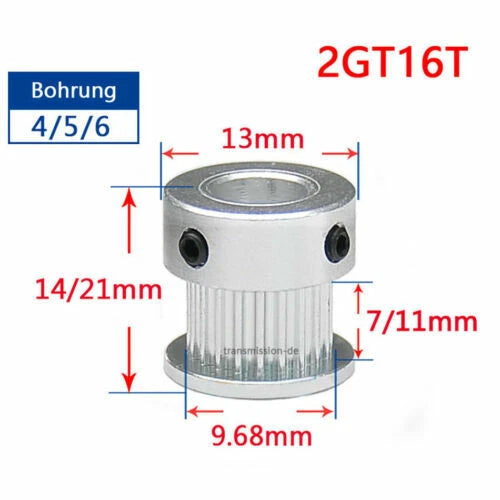
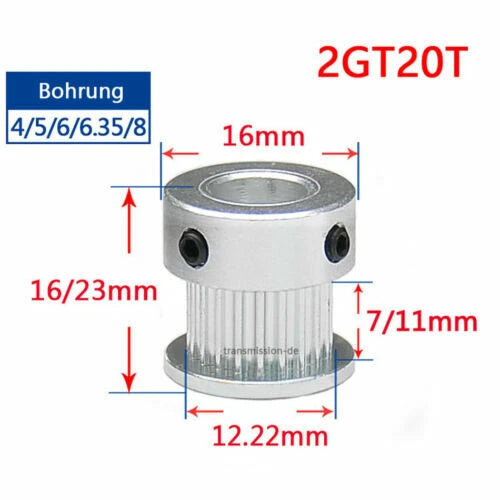
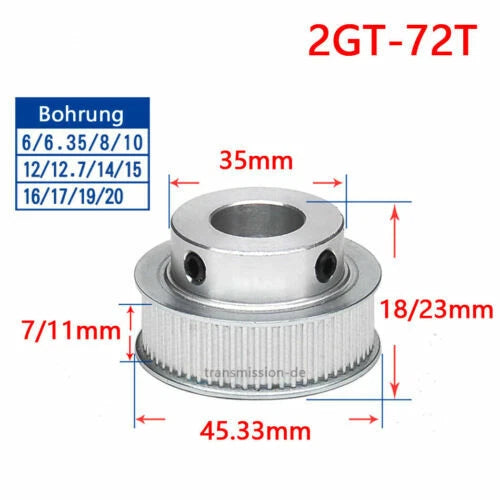
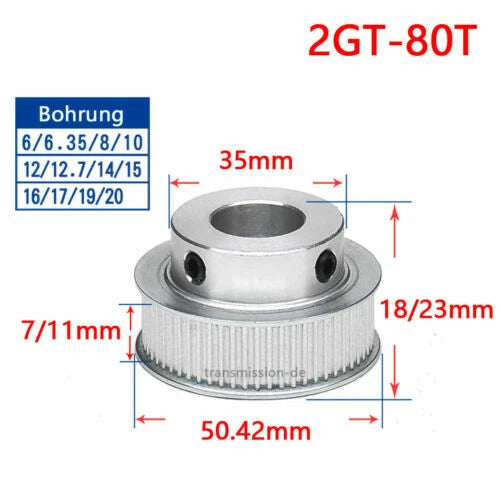
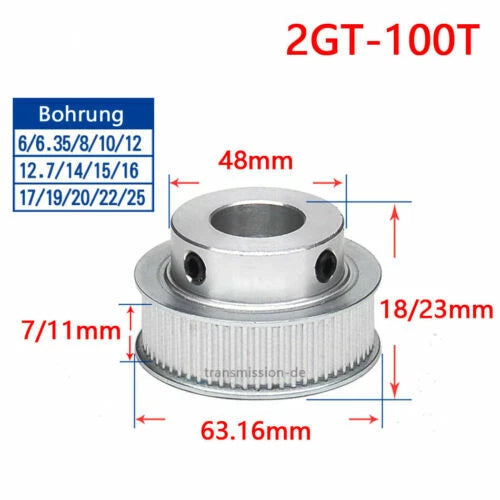
These GT2 synchronous wheels are machined from aluminum alloy and are available in tooth counts from 16T to 100T, all sized for 7 mm wide GT2 belts. Bore options span 4 mm to 25 mm in both K-type (set-screw clamping) and BF-type (flange-retained) configurations, covering shaft diameters typically found in NEMA 17/23 stepper and servo motor applications. Each pulley features a 2 mm GT2 tooth pitch and a 7 mm belt slot width.

Typical use cases include FDM 3D printer X/Y axis drives (GT2 16T–20T pulley for 3D printer), CNC router belt-drive gantries requiring GT2 40T–60T synchronous wheels, and lightweight robotic arm joints where a GT2 timing pulley with BF flange prevents axial belt walk.

⚙️ Compatible with: GT2 open-loop and closed-loop timing belts, 7 mm belt width — fits NEMA 17 / NEMA 23 motor shafts (bore options 4–25 mm). Not compatible with GT3, HTD, or MXL belt profiles.

✅ Key Features of These GT2 Timing Belt Pulleys

🦷
Wide Tooth Range: 16T to 100T

Choose from 23 tooth-count options to dial in your exact gear ratio, belt wrap angle, and drive speed — from compact 16T idler-style setups to large 100T reduction wheels.

🔩
Dual Bore Types: K-Type & BF-Type

K-type pulleys use radial set screws for quick shaft mounting; BF-type pulleys include integrated flanges that keep the belt tracking on the pulley face without additional guides.

📐
7 mm Belt Slot Width

Machined to accept standard 7 mm wide GT2 timing belts with consistent tooth engagement across the full belt width, reducing uneven wear and noise.

2 mm GT2 Tooth Pitch

The GT2 curvilinear tooth profile minimizes backlash and distributes belt load evenly, making these pulleys well-suited for position-critical motion control applications.

🏗️
Aluminum Alloy Construction

Lightweight yet rigid aluminum alloy body keeps rotational inertia low — an advantage in high-acceleration stepper and servo drive systems where mass matters.

🎯
Broad Bore Diameter Selection

Bore sizes from 4 mm to 25 mm (depending on tooth count) let you match the pulley directly to your motor or shaft without adapters, keeping your drive train compact and concentric.

📐 Technical Specifications — GT2 Timing Belt Pulley

Belt Profile GT2 (2 mm pitch, curvilinear)
Belt Width Compatibility 7 mm
Tooth Count Options 16T, 20T, 24T, 25T, 26T, 28T, 30T, 32T, 35T, 36T, 38T, 40T, 42T, 45T, 48T, 50T, 55T, 60T, 70T, 72T, 80T, 90T, 100T
Bore Type K-Type (set-screw) / BF-Type (flanged)
Bore Diameter Range 4 mm – 25 mm (see variant options)
Material Aluminum alloy
Outer Diameter See variant options
Flange Included on BF-Type; not included on K-Type
Surface Finish See variant options
Weight See variant options

❓ Frequently Asked Questions

How do I choose the right tooth count for my application?

Tooth count determines your drive ratio and belt wrap. For 3D printers, 16T–20T pulleys on the motor and a matching idler are standard. For CNC gantries or robotics requiring speed reduction, pair a small motor pulley (e.g., 20T) with a larger driven pulley (e.g., 40T–60T) to achieve a 2:1–3:1 reduction. Higher tooth counts also increase belt contact area, which improves load capacity.

What is the difference between K-Type and BF-Type pulleys?

K-Type pulleys have one or two radial set screws that clamp directly onto the shaft — easy to install and reposition. BF-Type pulleys include integrated side flanges that physically contain the belt on the pulley face, preventing axial drift without needing separate belt guides. BF-Type is preferred in applications where the belt may experience lateral forces or where precise belt tracking is critical.

Which bore size should I select for a NEMA 17 stepper motor?

Standard NEMA 17 stepper motors have a 5 mm output shaft diameter. Select the 5 mm bore option in either K-Type or BF-Type. If your motor has a flat (D-shaft), the K-Type set-screw variant provides a secure grip against the flat. For a round shaft, either type works, though K-Type with a set screw is the most common choice.

Are these pulleys compatible with GT3 or HTD belts?

No. These pulleys are machined specifically for the GT2 tooth profile (2 mm pitch, curvilinear). GT3, HTD-3M, HTD-5M, MXL, and T2.5 belts have different tooth geometries and pitches and will not mesh correctly with GT2 pulleys. Always match the pulley profile to your belt profile.

How strong are these aluminum pulleys under continuous load?

Aluminum alloy GT2 pulleys are well-suited for the tension loads typical in 3D printing, light CNC routing, and robotics — applications where belt tension is generally under 50–100 N. For heavy-duty industrial drives with sustained high tension, steel pulleys may be more appropriate. The aluminum construction keeps rotational inertia low, which benefits high-acceleration stepper systems.

Do these pulleys require any special tools to install?

K-Type pulleys require a hex key (Allen wrench) matching the set-screw size — typically M3 or M4 — to tighten the set screw against the shaft. BF-Type pulleys are pressed or slid onto the shaft and secured via the bore fit; some variants also include a set screw. No specialized machinery is needed for standard installations on stepper or servo motor shafts.

Can I use these pulleys as idler pulleys without a motor shaft?

Yes. K-Type pulleys can be mounted on a smooth idler shaft or bolt using a bearing insert (sold separately) to create a free-spinning idler. BF-Type pulleys with flanges are particularly useful as idlers because the flanges keep the belt centered without additional guides. Ensure the bore diameter matches your idler shaft or bearing outer diameter.

🛒 Select your Model-Teeth count and Bore & Type above, then add to cart.

You may also like

Recently viewed