GT2 Timing Belt Pulley 20-80 Teeth 6mm Teeth Width Bore 3mm-15mm For 3D

No reviews

Price:
Sale price$13.33 USD
Stock:
In stock (500 units), ready to be shipped

Payment & Security

Ach Direct Debit Amazon American Express Apple Pay Bancontact BLIK Diners Club Discover EPS Google Pay iDEAL Wero JCB Maestro Mastercard Multibanco MobilePay PayPal Przelewy24 Shop Pay Twint Union Pay USDC Visa

Your payment information is processed securely. We do not store credit card details nor have access to your credit card information.

Limited Offer — Spend More, Save More
Spend $55+
Save $5
Spend $100+
Save $10
Spend $200+
Save $25
HomeDIYer DIY Expert Support

DIY Expert Support

Get fitment advice & recommendations

Mon–Fri  8:30 AM – 8:00 PM
24-Hour Fast Ship
Arrives in 3–14 Days
Worldwide Shipping
30-Day Returns
1 tree planted with every purchase

Description

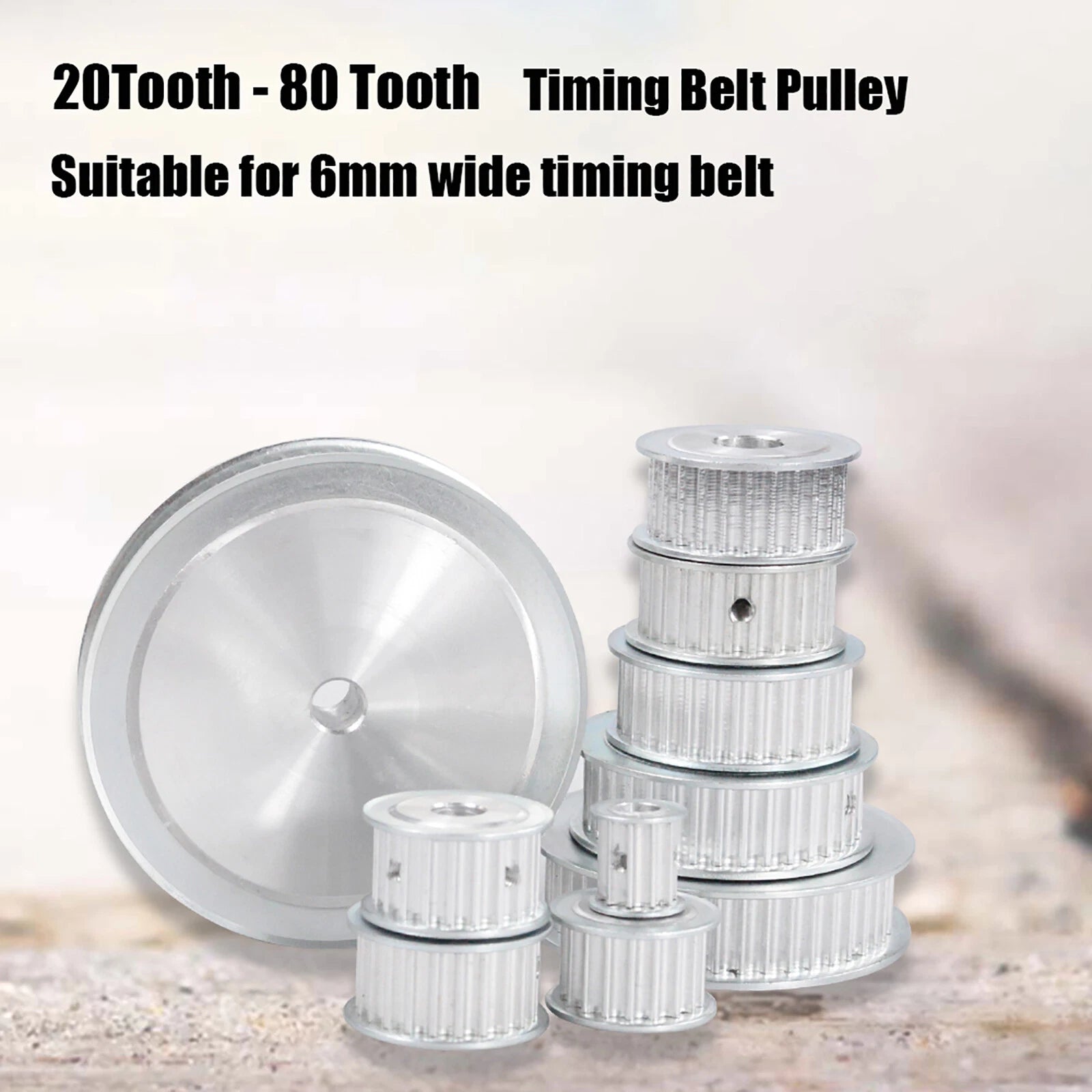
GT2 Timing Belt Pulley — Precise Motion Control for 3D Printers & CNC Builds

When your 3D printer skips steps or your CNC router loses position mid-cut, the culprit is often a worn or mismatched timing pulley. Makers, hobbyists, and small-workshop engineers who demand repeatable accuracy need a GT2 timing belt pulley they can count on — one that seats cleanly on the shaft, meshes reliably with the belt, and holds its geometry run after run.

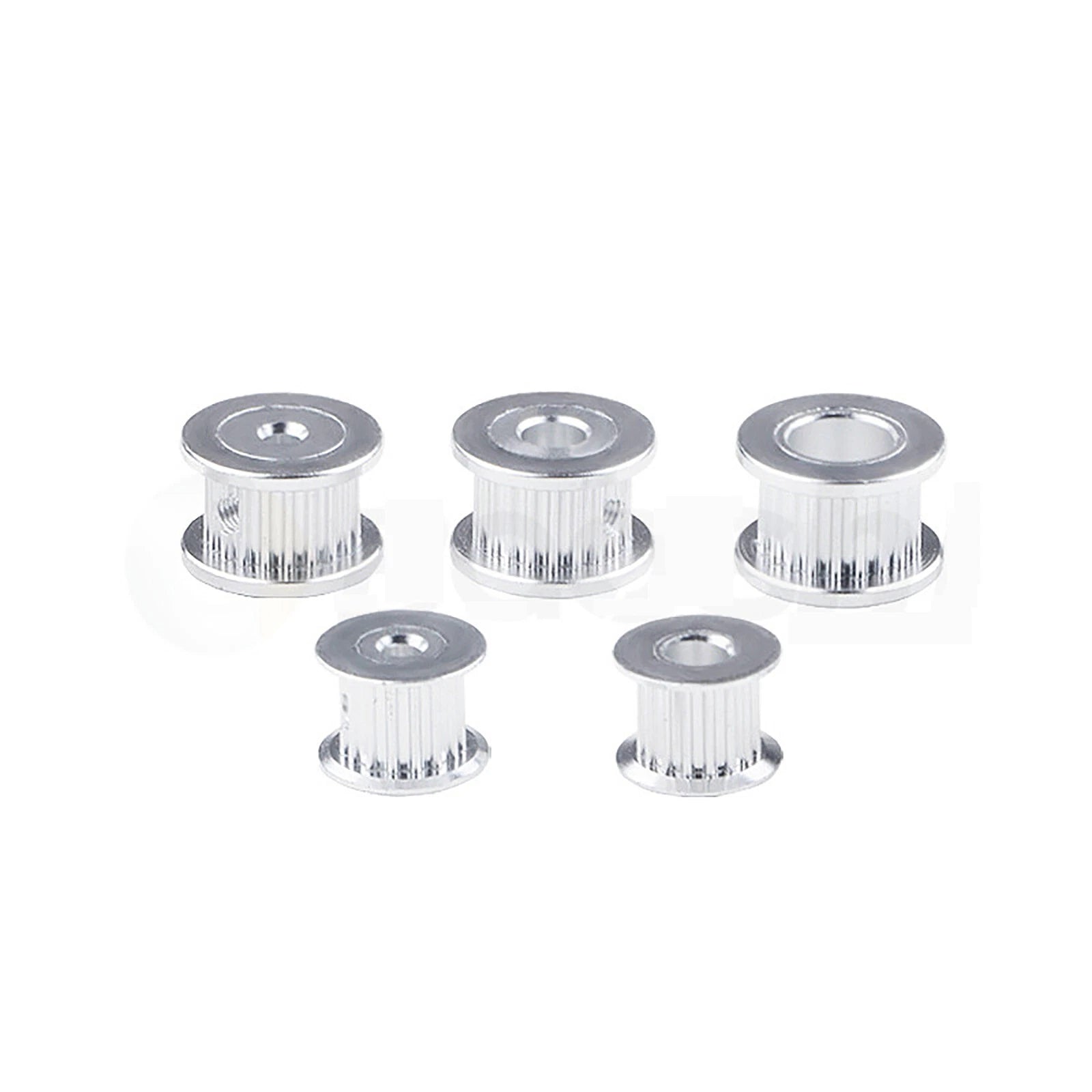
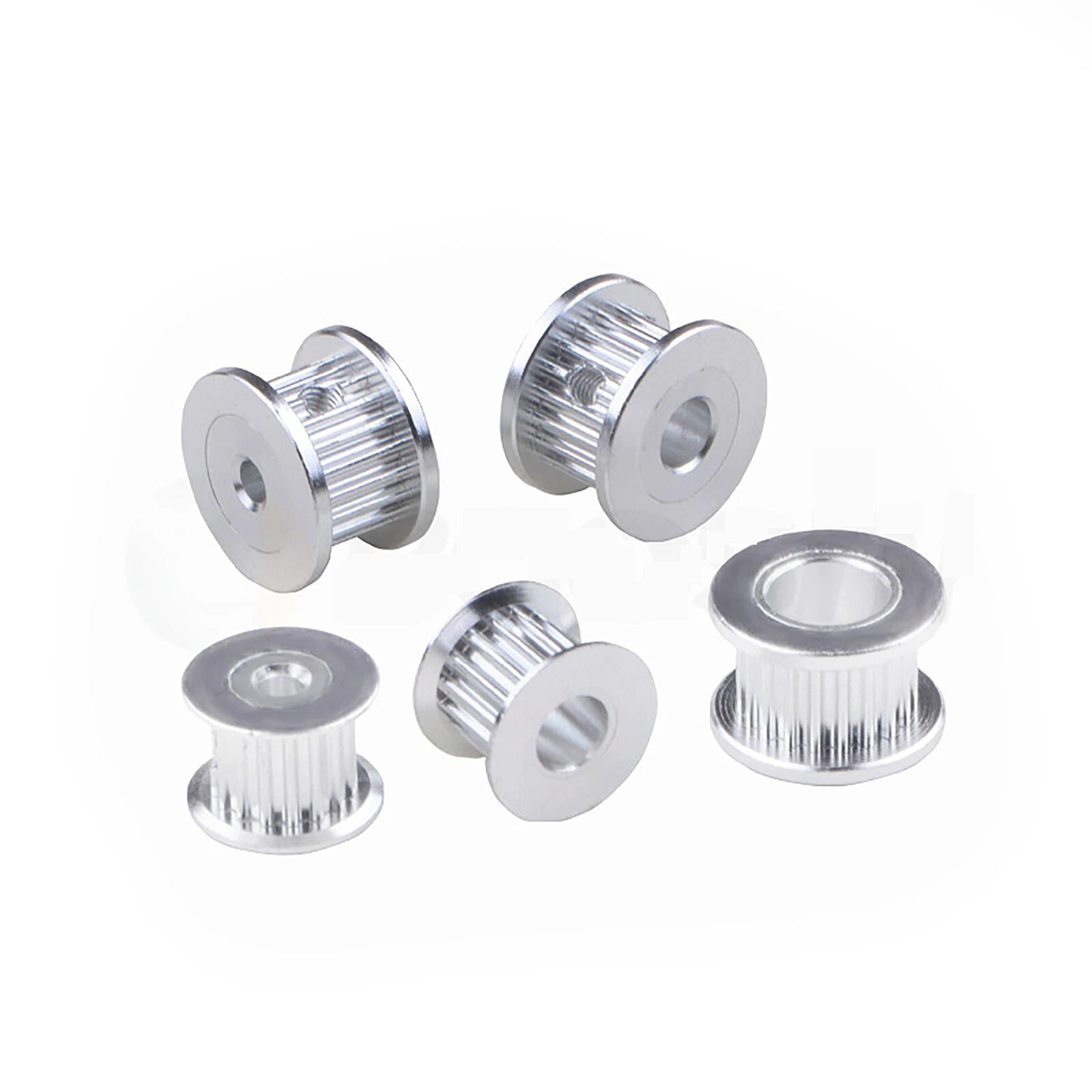
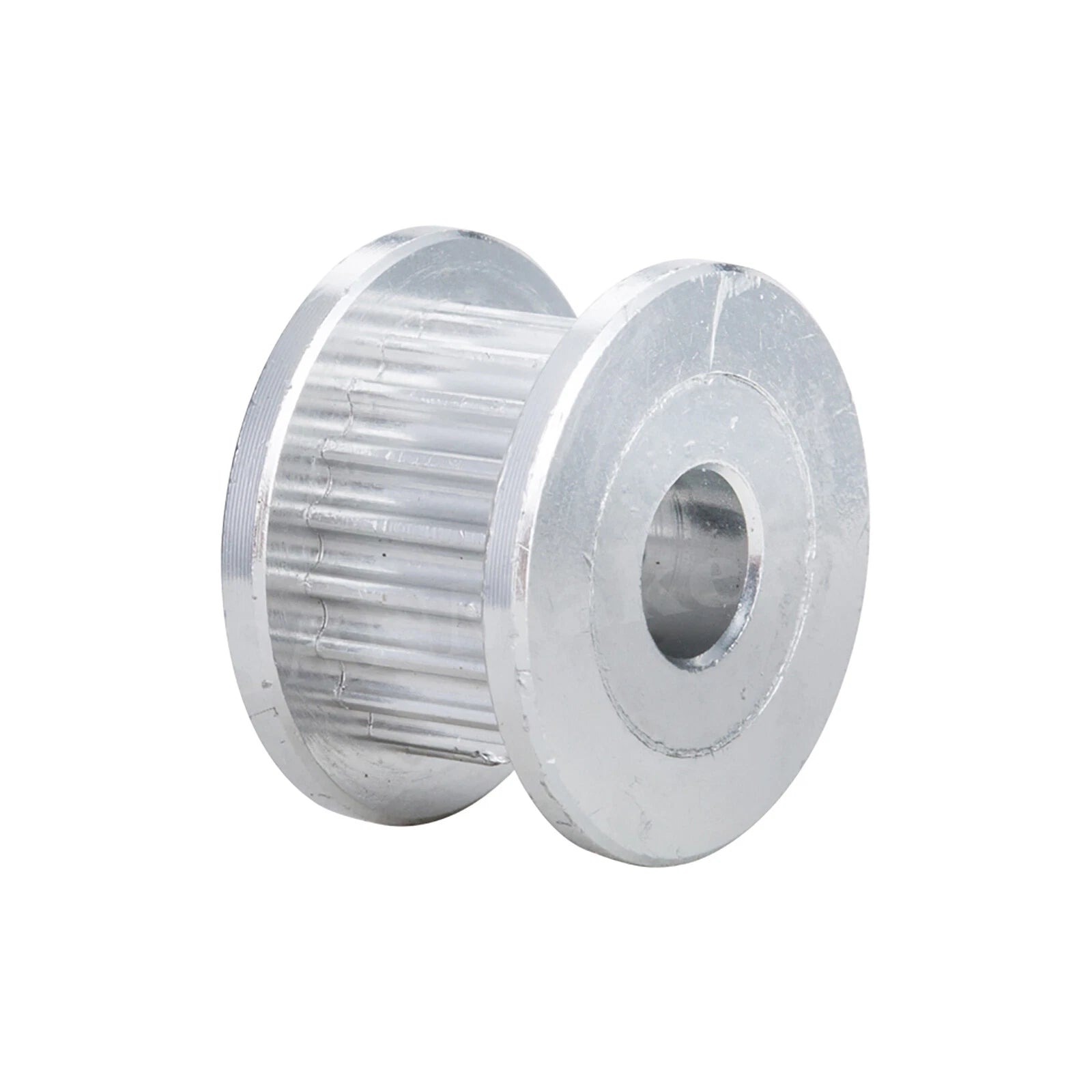
These GT2 timing belt pulleys are machined from aluminum alloy with a natural silver finish. The belt groove is sized for standard 6 mm wide GT2 open-loop or closed-loop belts. Tooth count ranges from 20 T to 80 T, and bore diameter options span 3 mm to 15 mm (approximately 0.12 in to 0.59 in), covering the most common stepper-motor and servo-motor shaft sizes used in desktop automation. Each pulley ships individually and includes a set-screw bore for shaft retention.

Typical use cases include Cartesian and CoreXY 3D printer X/Y axis drives, desktop CNC router gantry systems, laser engraver motion stages, and custom belt-driven linear actuators for educational robotics labs. Long-tail search terms that describe this part: GT2 20-tooth aluminum pulley 6mm belt, 30-tooth GT2 pulley bore 5mm, 60-tooth GT2 pulley CNC router, timing pulley for NEMA 17 stepper motor.

Compatible with standard GT2 (2 mm pitch) open and closed timing belts with 6 mm width. Fits shaft diameters from 3 mm to 15 mm depending on variant selected.

✅ Key Features of These GT2 Timing Belt Pulleys

⚙️ GT2 2 mm Pitch Profile — Matches the industry-standard GT2 tooth geometry for low-backlash, slip-free power transmission in precision motion systems.
📐 Wide Size Selection (20 T – 80 T) — Choose the exact tooth count to dial in your drive ratio. Smaller pulleys increase torque; larger pulleys increase speed — pick what your build demands.
🔩 Broad Bore Range (3 mm – 15 mm) — Covers NEMA 17 (5 mm), NEMA 23 (6.35 mm), and many servo shafts. Set-screw retention keeps the pulley locked under dynamic loads.
🏗️ Aluminum Alloy Construction — Lightweight yet rigid, aluminum resists deformation under belt tension and keeps rotational inertia low for responsive acceleration.
📏 6 mm Belt Width Groove — Precisely machined flanges guide the belt and prevent lateral walk, maintaining consistent tooth engagement across the full pulley face.
🔄 Drop-In Replacement Geometry — Standard GT2 dimensions mean these pulleys interchange directly with OEM parts on popular 3D printer frames (Ender, Voron, RatRig, and similar platforms).

📐 Technical Specifications — GT2 Timing Belt Pulley

Belt Profile GT2 (2 mm pitch)
Belt Width 6 mm (0.24 in)
Number of Teeth 20 T – 80 T (see variant options)
Bore Diameter 3 mm – 15 mm (see variant options)
Material Aluminum alloy
Finish Natural silver (uncoated)
Bore Retention Set screw (included)
Pulley Type Regular type (flanged)
Outer Diameter See variant options
Hub Length See variant options
Quantity 1 piece per order

❓ Frequently Asked Questions

How do I choose the right tooth count for my 3D printer?

The tooth count determines your drive ratio. Most Cartesian 3D printers (Ender 3, CR-10, etc.) use 20-tooth pulleys on the motor shaft paired with an idler. CoreXY machines often use 20 T as well. If you are building a custom geardown stage or a slower, higher-torque axis, a larger tooth count (e.g., 40 T or 60 T) on the drive side reduces speed and increases torque. Match the tooth count to your belt loop length and axis geometry.

Which bore size fits a NEMA 17 stepper motor?

Standard NEMA 17 stepper motors have a 5 mm output shaft. Select the variant with Bore 5 mm. If your motor has a D-cut shaft, the set screw will engage the flat to prevent rotation. For NEMA 23 motors, the shaft is typically 6.35 mm (1/4 inch) — choose the 6.35 mm bore variant.

Are these pulleys compatible with GT2 belts from other brands?

Yes. GT2 is an open industry standard defined by a 2 mm tooth pitch and a specific curvilinear tooth profile. Any GT2-profile belt with 6 mm width — regardless of brand — will mesh correctly with these pulleys. Confirm your belt is labeled GT2 (not T2.5, HTD 3M, or MXL) before ordering.

How strong is the set-screw retention? Will the pulley slip under load?

The set screw provides firm clamping on smooth shafts and positive locking on D-cut or flat-keyed shafts. For typical 3D printer and light CNC loads (belt tensions under ~30 N), set-screw retention is sufficient. For heavy-duty applications with high belt tension or shock loads, consider using a shaft with a flat or keyway to maximize grip. Always torque the set screw fully before operation.

Will aluminum pulleys wear out faster than steel ones?

For GT2 belt applications — where the belt is typically rubber or polyurethane with fiberglass or steel cord reinforcement — aluminum pulleys offer an excellent service life. The belt material is softer than the pulley, so wear occurs on the belt rather than the pulley teeth. Aluminum pulleys are the industry standard for desktop 3D printers and light CNC machines precisely because they balance durability with low rotational inertia.

Can I use these pulleys as idlers (without a motor shaft)?

These are drive pulleys designed to be fixed to a rotating shaft via set screw. They are not pre-fitted with bearings. To use a pulley as a freewheeling idler, you would need to press-fit or slip-fit an appropriate bearing (e.g., 625ZZ or 624ZZ) into the bore and mount it on a static bolt. Alternatively, dedicated idler pulleys with integrated bearings are a simpler solution for idler positions.

How do I calculate the pitch diameter and outer diameter for my build?

For a GT2 pulley, the pitch diameter (PD) = (Number of Teeth × Pitch) ÷ π = (T × 2) ÷ π. For example, a 20-tooth pulley has PD ≈ 12.73 mm. The outer diameter is slightly smaller than the pitch diameter due to the GT2 tooth geometry. Use the pitch diameter for belt-length calculations. If you need the exact outer diameter for a specific variant, please contact us to confirm before ordering.

🛒 Select your tooth count and bore diameter above, then add to cart.

You may also like

Recently viewed