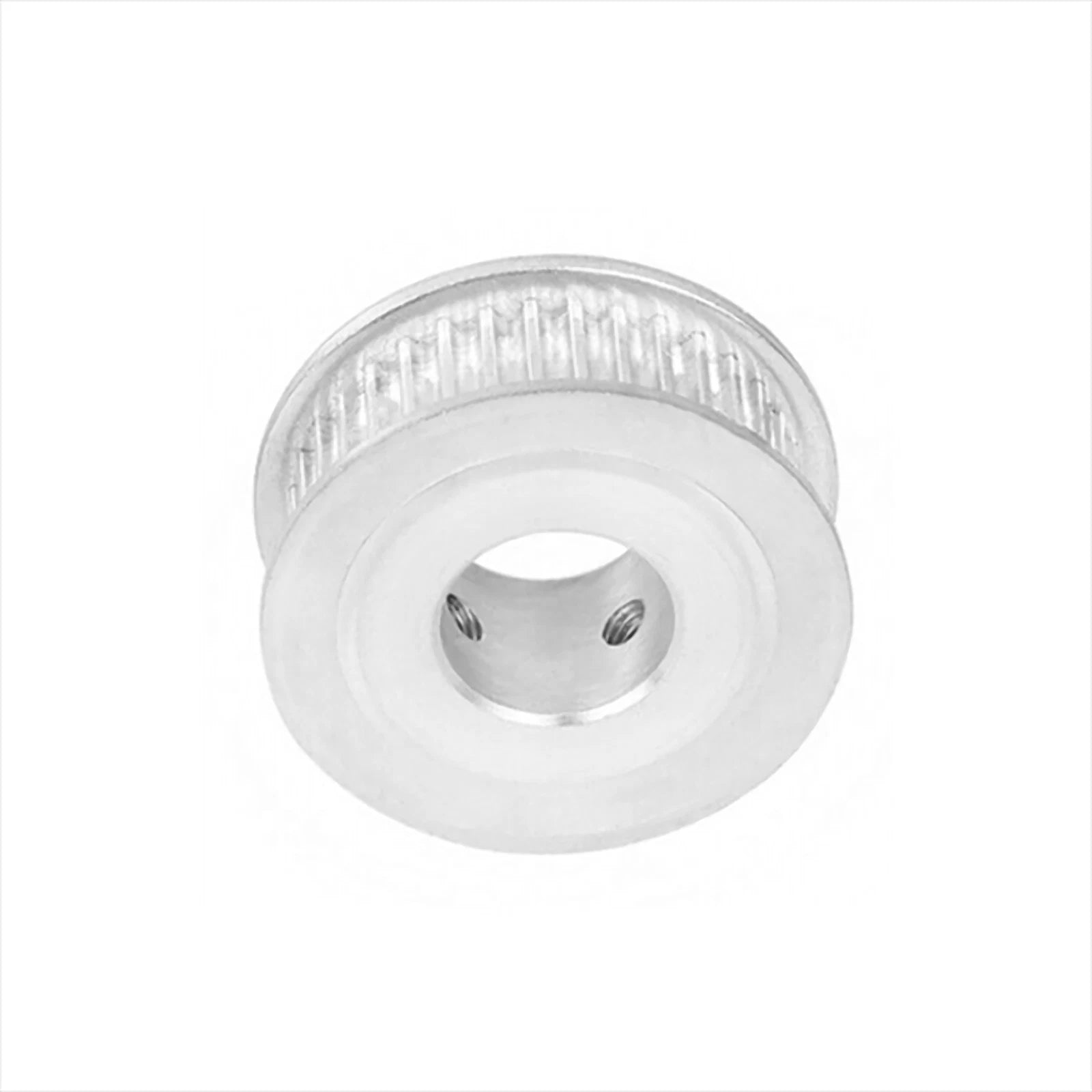
GT2 20-80 Zähne Zahnrad-Pulley Drucker Riemenscheibe ,Breite 7mm ,3D-Drucker

No reviews

Price:
Sale price$4.69 USD
Stock:
In stock (500 units), ready to be shipped

Payment & Security

Ach Direct Debit Amazon American Express Apple Pay Bancontact BLIK Diners Club Discover EPS Google Pay iDEAL Wero JCB Maestro Mastercard Multibanco MobilePay PayPal Przelewy24 Shop Pay Twint Union Pay USDC Visa

Your payment information is processed securely. We do not store credit card details nor have access to your credit card information.

Limited Offer — Spend More, Save More
Spend $55+
Save $5
Spend $100+
Save $10
Spend $200+
Save $25
HomeDIYer DIY Expert Support

DIY Expert Support

Get fitment advice & recommendations

Mon–Fri  8:30 AM – 8:00 PM
24-Hour Fast Ship
Arrives in 3–14 Days
Worldwide Shipping
30-Day Returns
1 tree planted with every purchase

Description

GT2 Timing Pulley 20–80 Teeth — Precise Drive for 3D Printers and CNC Machines

When your 3D printer or CNC router loses positional accuracy, a worn or mismatched timing pulley is often the culprit. Engineers, makers, and repair technicians who demand repeatable motion control need a pulley that holds tight tolerances across thousands of cycles. These GT2 timing pulleys are engineered for exactly that use case, covering a wide tooth count range from 20 to 80 teeth so you can match your existing drive system without compromise.

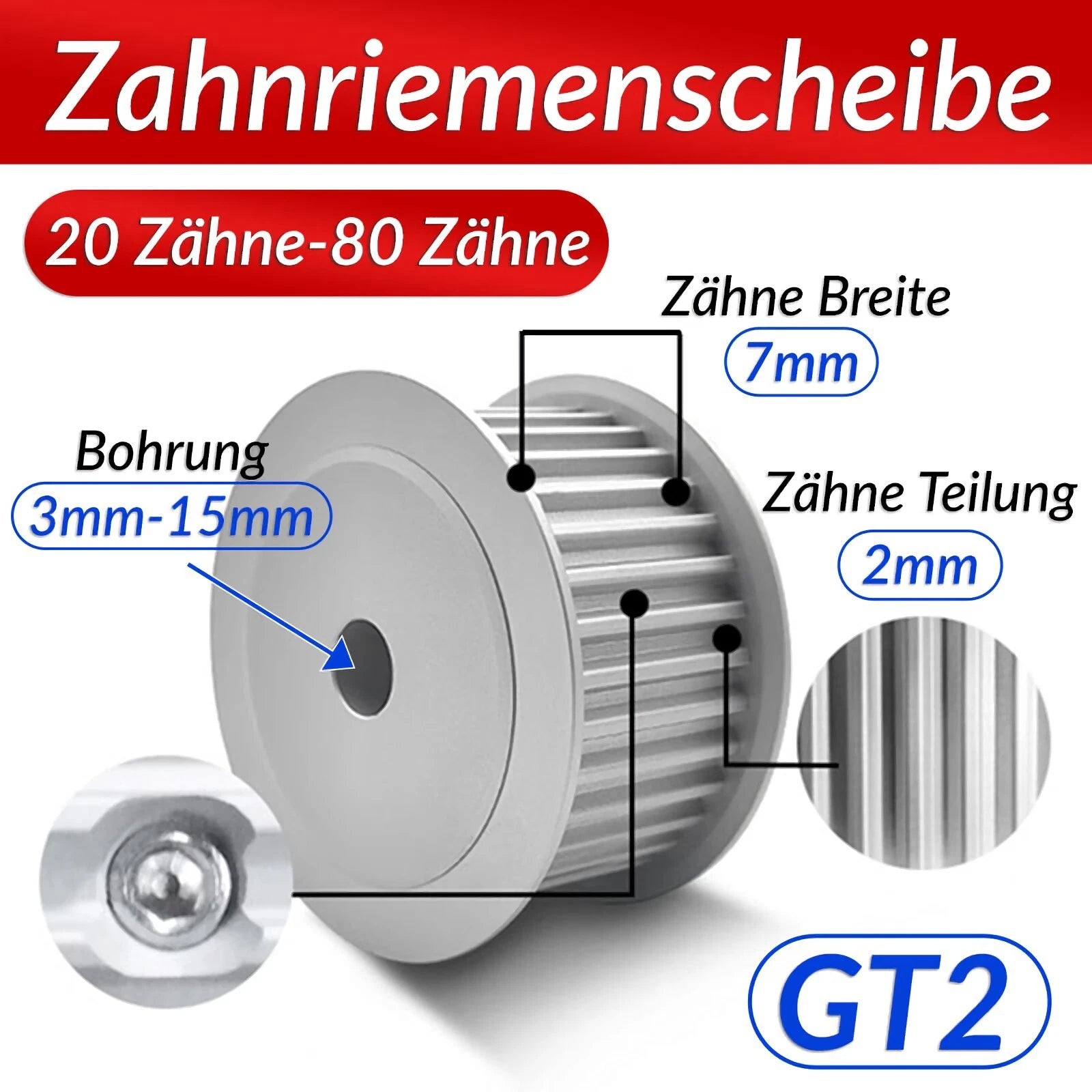
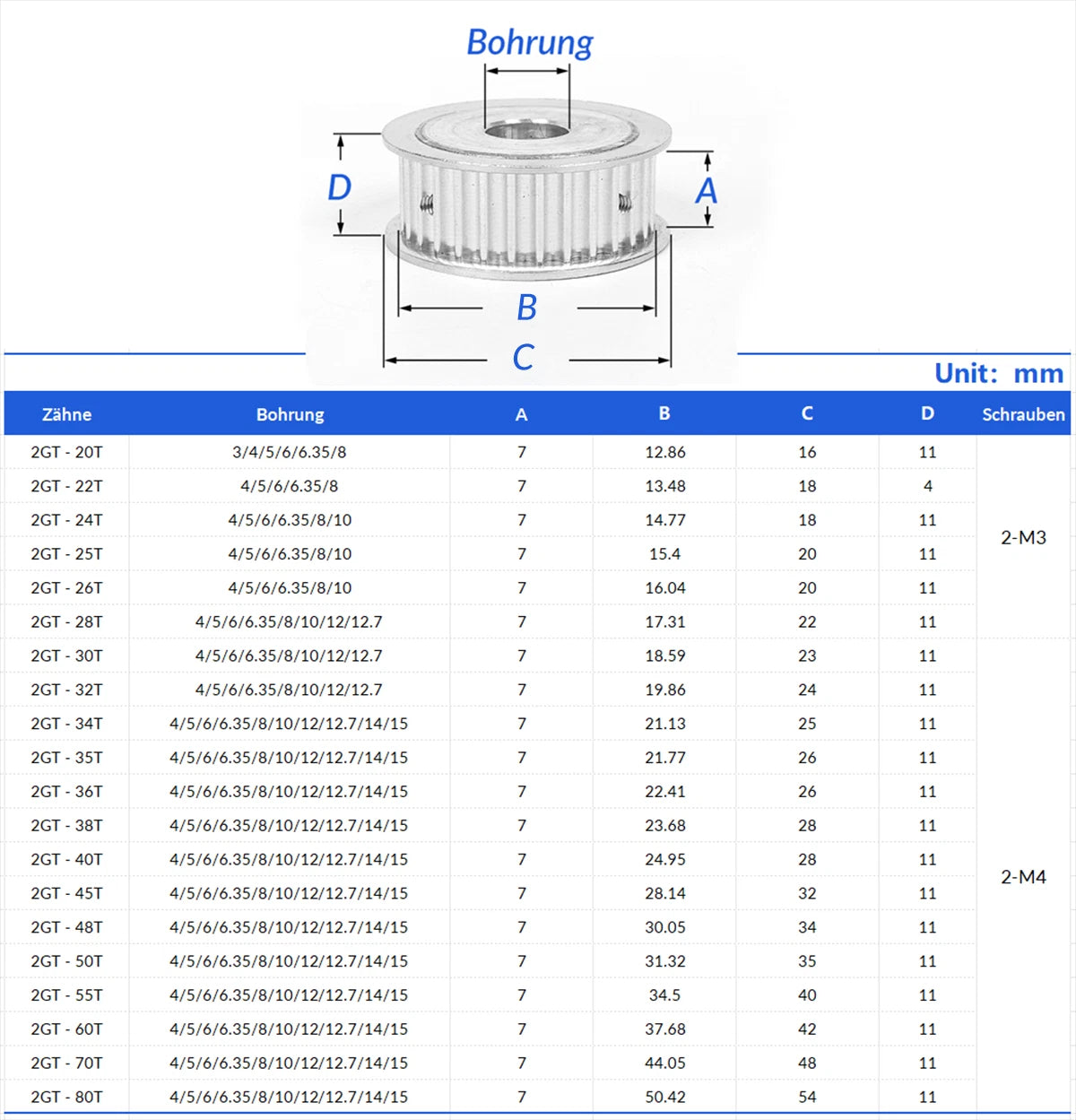
Each pulley is machined from aluminum alloy with a smooth anodized finish, keeping weight low while resisting corrosion in workshop environments. The belt contact width is 7mm, compatible with standard GT2 open-loop and closed-loop timing belts. Bore diameters range from 3mm to 15mm (approximately 0.12 in to 0.59 in), with a set-screw retention system for secure shaft mounting. Tooth counts span 20 to 80 (approximately 0.79 in to 3.15 in pitch diameter range), covering the most common motion-control configurations.

Typical applications include Cartesian and CoreXY 3D printer X/Y axis drives, desktop CNC router feed systems, laser engraver gantry assemblies, and lightweight robotics joint actuators. Whether you are replacing a stripped pulley on a Creality Ender or building a custom belt-driven linear stage, these GT2 pulleys deliver consistent tooth engagement and low backlash for reliable positioning.

⚙️ Compatible with standard GT2 2mm pitch timing belts, 7mm width — fits Creality, Prusa, Voron, and most open-source 3D printer platforms.

✅ Key Features of These GT2 Timing Pulleys

🦷 Wide Tooth Count Range

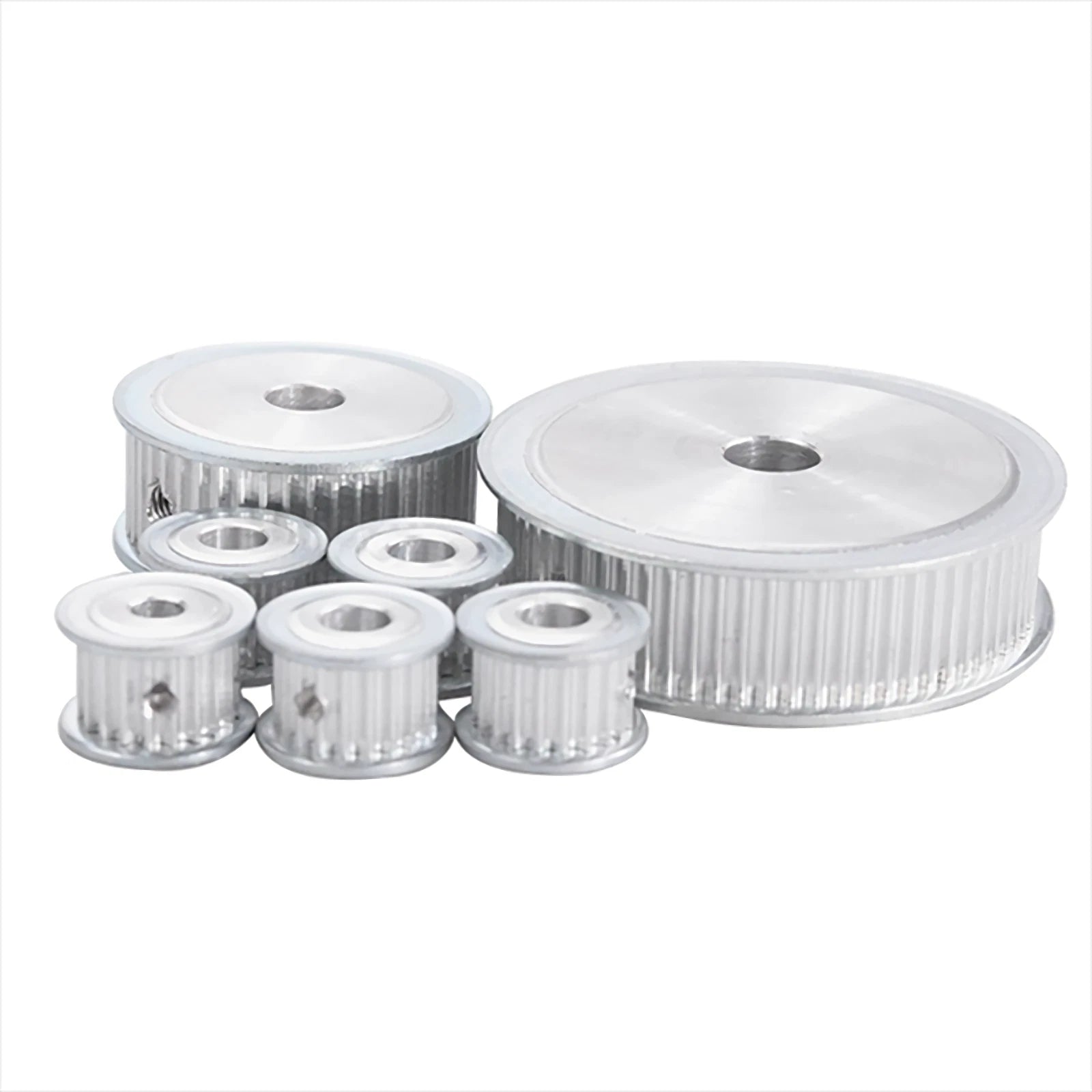
Available from 20 to 80 teeth, covering standard 3D printer drives as well as larger CNC and robotics reduction stages — all in one product listing.

📐 GT2 2mm Pitch Profile

Precision-cut GT2 tooth profile ensures smooth meshing with GT2 belts, minimizing vibration and backlash for accurate layer positioning in FDM printing.

🔩 Multiple Bore Options

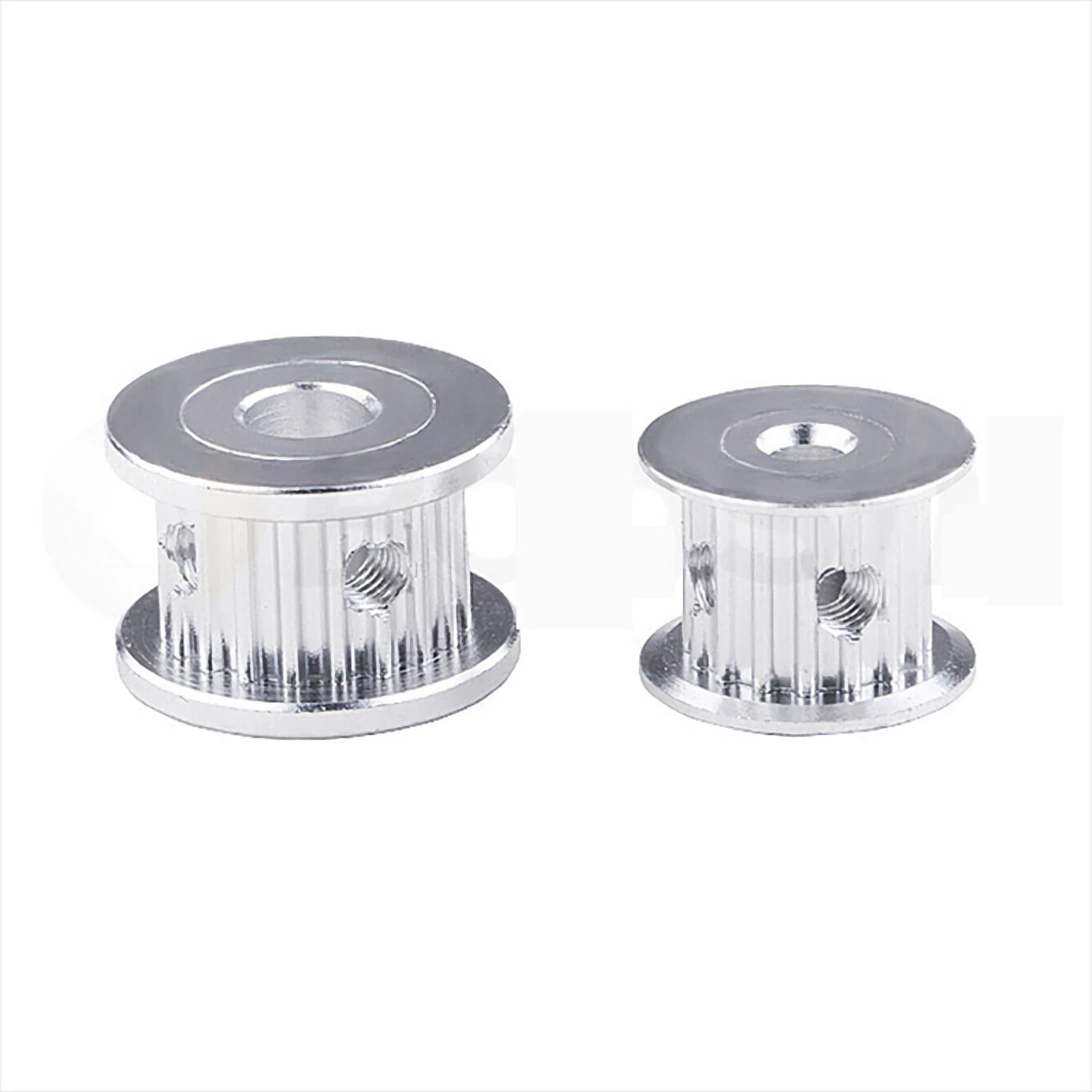
Bore diameters from 3mm to 15mm (including 6.35mm / 1/4 in for NEMA stepper shafts) with set-screw locking for tool-free shaft alignment adjustments.

🏗️ Aluminum Alloy Construction

Lightweight aluminum body with anodized surface treatment resists oxidation and wear, maintaining dimensional stability across extended print runs.

📏 7mm Belt Width

Designed for 7mm wide GT2 timing belts — the most widely used width in desktop 3D printers and compact CNC machines — ensuring direct drop-in compatibility.

🔄 Broad Drive System Compatibility

Works with Cartesian, CoreXY, and delta printer architectures, as well as laser engravers, pick-and-place machines, and custom belt-driven linear actuators.

📐 Technical Specifications — GT2 Timing Pulley

Belt Profile GT2 (2mm pitch)
Belt Width 7mm
Tooth Count 20 – 80 teeth (see variant options)
Bore Diameter 3 / 4 / 5 / 6 / 6.35 / 8 / 10 / 12 / 12.7 / 14 / 15mm (see variant options)
Material Aluminum alloy
Surface Finish Anodized
Shaft Retention Set screw
Pitch Diameter Range Approx. 12.7mm – 50.9mm (0.50 in – 2.00 in)
Flange See variant options
Weight See variant options

❓ Frequently Asked Questions

How do I choose the right tooth count for my 3D printer?

Most Cartesian and CoreXY 3D printers use 20-tooth pulleys on the stepper motor shafts for the X and Y axes. If you are replacing a worn pulley, match the tooth count of the original. If you are building a custom drive system, a 20-tooth pulley paired with a GT2 belt gives approximately 40mm of linear travel per motor revolution — a common baseline for desktop printers. Larger tooth counts (e.g., 36–80 teeth) are typically used as idler pulleys or in reduction stages for CNC and robotics applications.

Which bore size fits a standard NEMA 17 stepper motor shaft?

NEMA 17 stepper motors typically have a 5mm diameter output shaft. Select the 5mm bore variant for a direct fit. If your motor has a D-cut shaft, the set screw will lock against the flat to prevent rotation. For NEMA 23 motors, the shaft is commonly 6.35mm (1/4 inch) — select the 6.35mm bore variant accordingly.

Are these pulleys compatible with GT2 open-loop and closed-loop belts?

Yes. The GT2 2mm pitch tooth profile is identical for both open-loop (cut-to-length) and closed-loop (loop belt) GT2 timing belts. The 7mm belt width matches standard GT2 belts sold for 3D printers. Ensure the belt width of your replacement belt also matches 7mm for proper flange engagement.

How do I install the pulley onto the motor shaft?

Slide the pulley onto the motor shaft and align it with the belt path. Tighten the set screw(s) using a hex key (typically 1.5mm or 2mm) until the pulley is firmly locked. For D-cut shafts, rotate the pulley so the set screw contacts the flat before tightening. Avoid over-tightening, which can deform the bore. Check alignment with the belt and idler pulleys before running the motor.

Will these pulleys resist corrosion in a workshop environment?

The aluminum alloy body with anodized surface treatment provides good resistance to oxidation and light chemical exposure typical of workshop environments. Anodizing creates a hard oxide layer that protects the base metal from moisture and mild abrasion. For high-humidity or outdoor applications, periodic inspection is recommended to ensure the set screw and bore remain free of corrosion.

Can I use these pulleys as idler pulleys without a motor shaft?

Yes, larger tooth-count variants (e.g., 36–80 teeth) are commonly used as idler or tensioner pulleys in belt routing systems. In this case, you would typically mount the pulley on a smooth shaft or bolt using a bearing insert. Note that these pulleys are sold without bearings — if you need a bearing-mounted idler, you will need to source a compatible bearing separately and press-fit or slip-fit it into the bore.

What is the difference between a 20-tooth and a 40-tooth pulley for a CNC router?

The tooth count directly affects the linear travel per motor revolution. A 20-tooth GT2 pulley moves the belt approximately 40mm per revolution, while a 40-tooth pulley moves it approximately 80mm per revolution. A higher tooth count increases speed but reduces torque and positional resolution. For CNC routers requiring fine detail, a 20-tooth drive pulley is typical. For faster travel axes or larger machines, a higher tooth count may be appropriate.

🛒 Select your tooth count and bore diameter above, then add to cart.

You may also like

Recently viewed