GT2 Zahnrad - Pulley-Riemenscheibe-Zahnriemenrad 40T-100T- CNC-3D Drucker

No reviews

Price:
Sale price$5.70 USD
Stock:
In stock (500 units), ready to be shipped

Payment & Security

Ach Direct Debit Amazon American Express Apple Pay Bancontact BLIK Diners Club Discover EPS Google Pay iDEAL Wero JCB Maestro Mastercard Multibanco MobilePay PayPal Przelewy24 Shop Pay Twint Union Pay USDC Visa

Your payment information is processed securely. We do not store credit card details nor have access to your credit card information.

Limited Offer — Spend More, Save More
Spend $55+
Save $5
Spend $100+
Save $10
Spend $200+
Save $25
HomeDIYer DIY Expert Support

DIY Expert Support

Get fitment advice & recommendations

Mon–Fri  8:30 AM – 8:00 PM
24-Hour Fast Ship
Arrives in 3–14 Days
Worldwide Shipping
30-Day Returns
1 tree planted with every purchase

Description

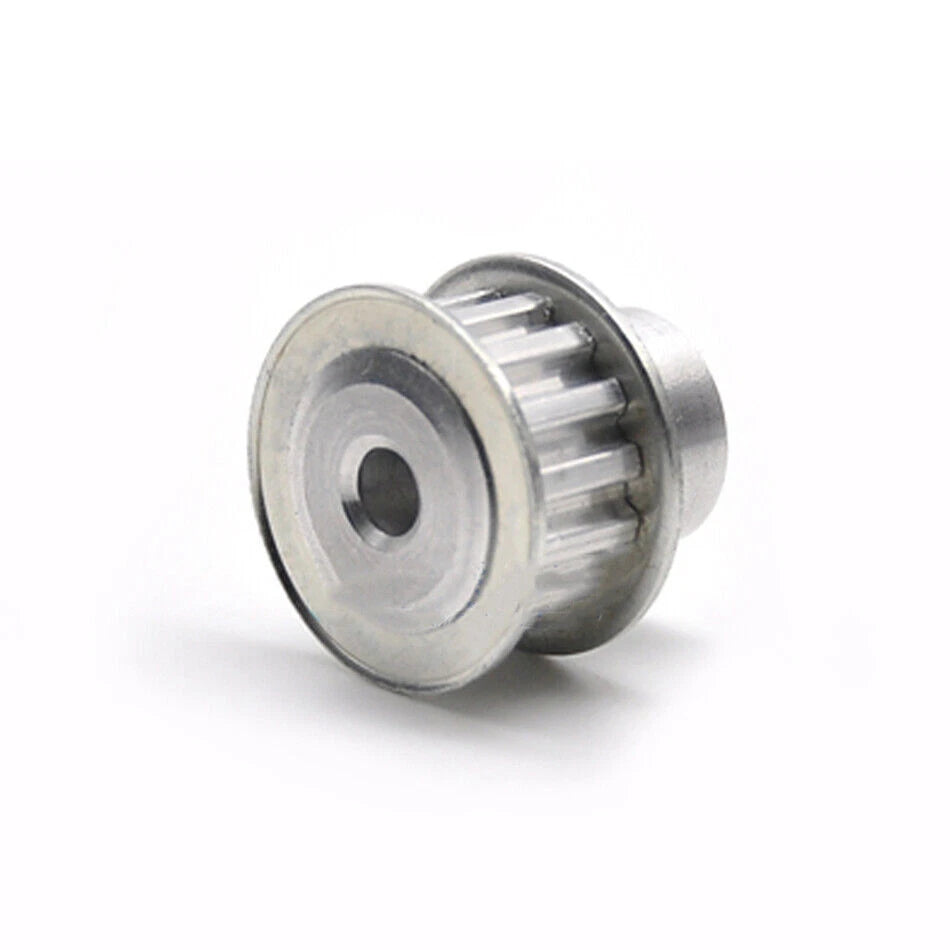
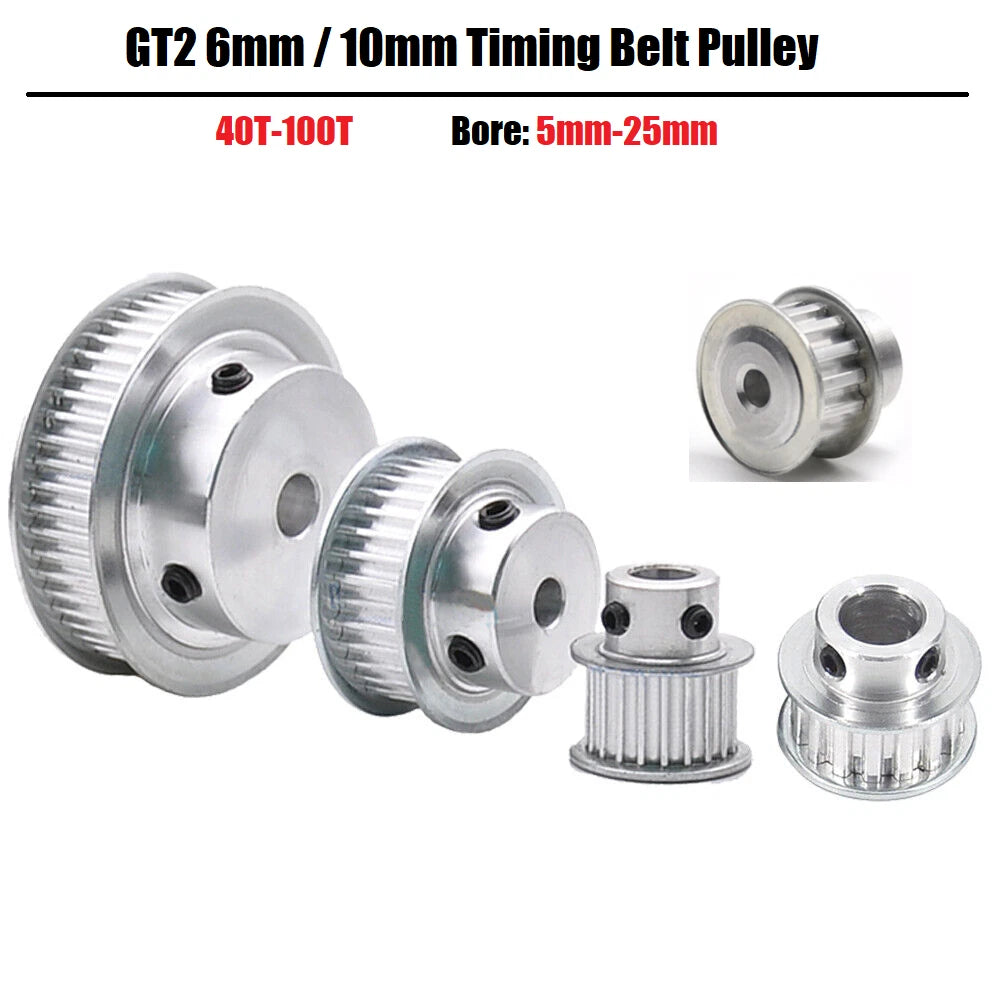
GT2 Timing Pulley 40T–100T — Precision Drive for CNC & 3D Printer Builds

When your CNC router skips steps or your 3D printer produces layer-shift artifacts, the culprit is often a loose or imprecise timing pulley. Makers, hobbyists, and small-workshop engineers who demand repeatable motion need a GT2 timing pulley that holds tight tolerances across every tooth — and that is exactly what this series delivers.

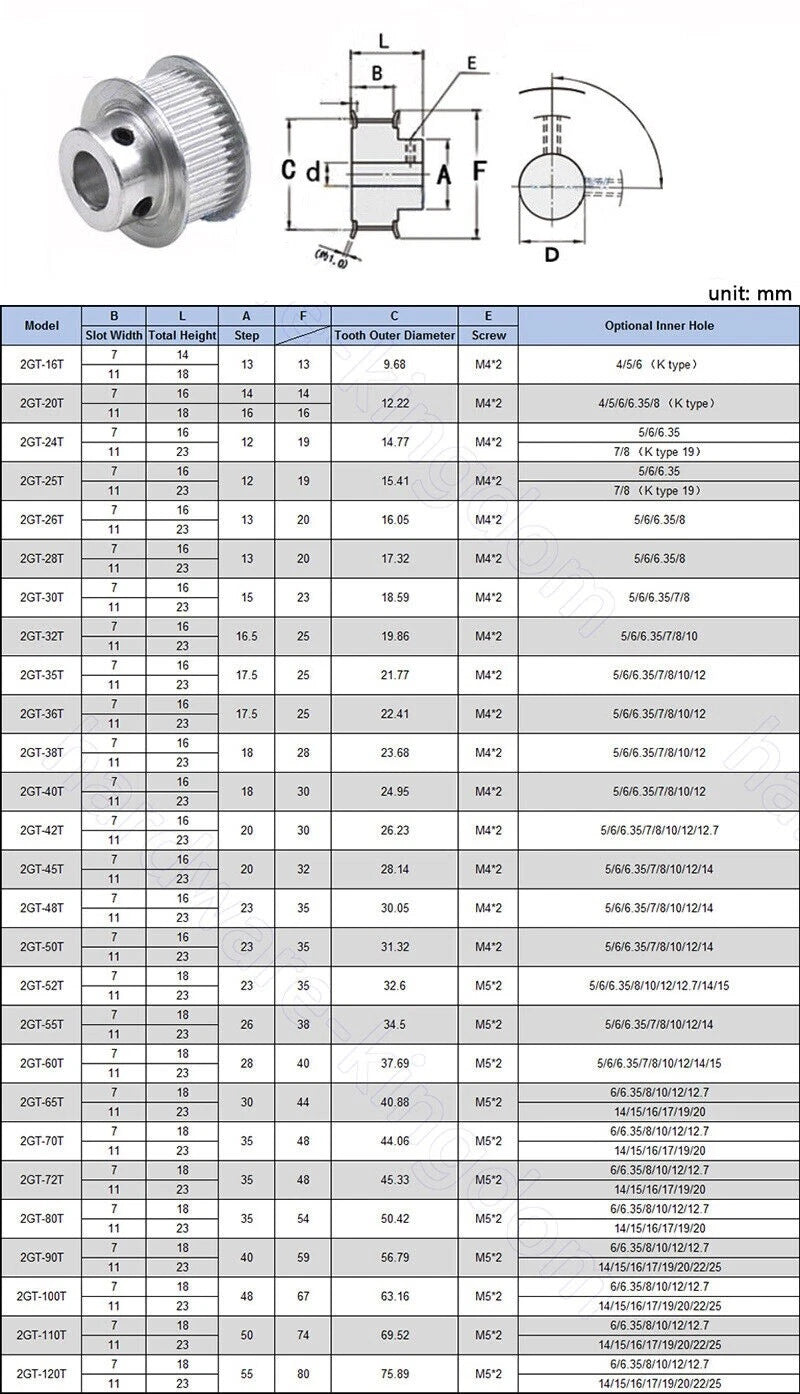
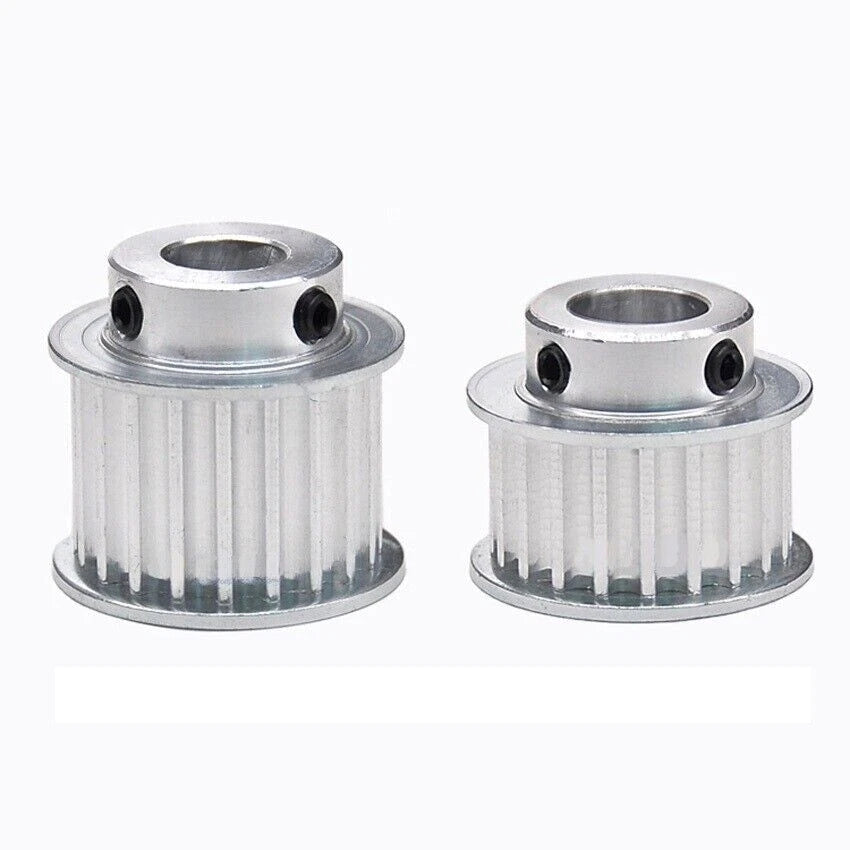
Each pulley is machined from aluminum alloy with a GT2 tooth profile (2 mm pitch). The range covers 40 to 100 teeth, belt widths of 6 mm and 10 mm, and bore diameters from 5 mm to 25 mm (approximately 0.20 in to 0.98 in). A set screw secures the pulley to the shaft. Outer diameter scales with tooth count, ranging from approximately 25 mm (0.98 in) for the 40T up to approximately 64 mm (2.52 in) for the 100T.

Typical use cases include GT2 belt-driven CNC router axis drives, RepRap and cartesian 3D printer X/Y motion systems, laser engraver gantry drives, and custom DIY linear-motion automation rigs where low backlash and consistent tooth engagement are critical.

⚙️ Compatible with standard GT2 2 mm pitch timing belts, 6 mm or 10 mm wide. Verify bore diameter matches your motor or idler shaft before ordering.

✅ Key Features of These GT2 Timing Pulleys

🔩 GT2 2 mm Pitch Tooth Profile — Matches standard GT2 belts for smooth, low-backlash power transmission in motion-control applications.
🏗️ Aluminum Alloy Construction — Lightweight yet rigid material keeps rotational inertia low while resisting deformation under belt tension.
📐 Wide Tooth Count Range (40T–100T) — Choose the gear ratio that suits your axis speed and torque requirements without swapping motor mounts.
🔄 Dual Belt Width Options (6 mm / 10 mm) — Match your existing belt width; 10 mm variants handle higher belt tension for heavier gantries.
🎯 Multiple Bore Sizes (5–25 mm) — Fits NEMA 17 (5 mm), NEMA 23 (6.35 mm), and larger stepper or servo motor shafts without adapters.
🔧 Set-Screw Shaft Retention — Included set screw locks the pulley securely to the shaft, preventing slippage during rapid direction changes.

📐 Technical Specifications — GT2 Timing Pulley

Belt Profile GT2 (2 mm pitch)
Tooth Count 40T / 42T / 45T / 48T / 50T / 55T / 60T / 70T / 72T / 80T / 90T / 100T
Belt Width 6 mm or 10 mm (see variant options)
Bore Diameter 5 / 6 / 6.35 / 7 / 8 / 10 / 12 / 12.7 / 14 / 15 / 16 / 17 / 19 / 20 / 22 / 25 mm (see variant options)
Material Aluminum alloy
Outer Diameter See variant options (scales with tooth count)
Shaft Retention Set screw (included)
Flange See variant options
Surface Finish Natural anodized / machined
Compatible Belt GT2 open or closed-loop timing belt, 6 mm or 10 mm wide

❓ Frequently Asked Questions

How do I choose the right tooth count for my build?

Tooth count determines the pulley's pitch diameter and, combined with your motor steps-per-revolution and microstepping setting, sets the linear resolution of your axis. A 40T pulley on a 2 mm pitch belt moves 80 mm of belt per revolution; a 80T pulley moves 160 mm. Lower tooth counts give finer resolution per motor step; higher tooth counts increase speed at the same RPM. Match the tooth count to your desired steps-per-mm target.

Which bore size fits a NEMA 17 stepper motor shaft?

Standard NEMA 17 stepper motors have a 5 mm output shaft. Select the 5 mm bore variant. If your motor has a D-cut shaft, the set screw will engage the flat and prevent rotation. NEMA 23 motors typically use a 6.35 mm (1/4 in) shaft — choose the 6.35 mm bore variant for those.

What is the difference between the 6 mm and 10 mm belt width variants?

The belt width affects load capacity. A 10 mm wide GT2 belt and matching pulley can transmit roughly 60–70% more tension than a 6 mm combination, making it better suited for heavier gantries, dual-drive setups, or applications where belt stretch under load is a concern. For lightweight 3D printer axes, 6 mm is typically sufficient; for CNC routers or laser cutters with heavier carriages, 10 mm is recommended.

Are these pulleys compatible with closed-loop GT2 belts?

Yes. The GT2 2 mm pitch tooth profile is identical whether you use open-ended or closed-loop belts. Ensure the belt's inner circumference is appropriate for your axis travel and that the belt width matches the pulley variant you select (6 mm or 10 mm).

How do I prevent the pulley from slipping on the shaft?

Each pulley includes a set screw. For best retention, align the set screw with the flat of a D-cut shaft if present, or tighten firmly against a round shaft. For high-torque or high-speed applications, consider applying a small amount of thread-locking compound to the set screw threads. Ensure the bore diameter matches your shaft diameter — an oversized bore will not clamp securely.

Can I use these pulleys for an idler (non-driven) application?

These pulleys are designed as drive pulleys with a set-screw bore. For idler use, you would typically mount the pulley on a bearing-equipped bolt or shaft. The pulley itself does not include a built-in bearing. If you need a smooth-spinning idler, pair this pulley with an appropriately sized bearing pressed into the bore or use a dedicated idler pulley with a flanged bearing.

What material are the pulleys made from, and will they corrode?

The pulleys are machined from aluminum alloy with a natural anodized or machined finish. Aluminum is inherently corrosion-resistant in typical indoor workshop and maker-lab environments. For outdoor or high-humidity applications, consider applying a light coat of dry lubricant or corrosion inhibitor to the exposed surfaces.

🛒 Select your tooth count, belt width, and bore diameter above, then add to cart.


You may also like

Recently viewed