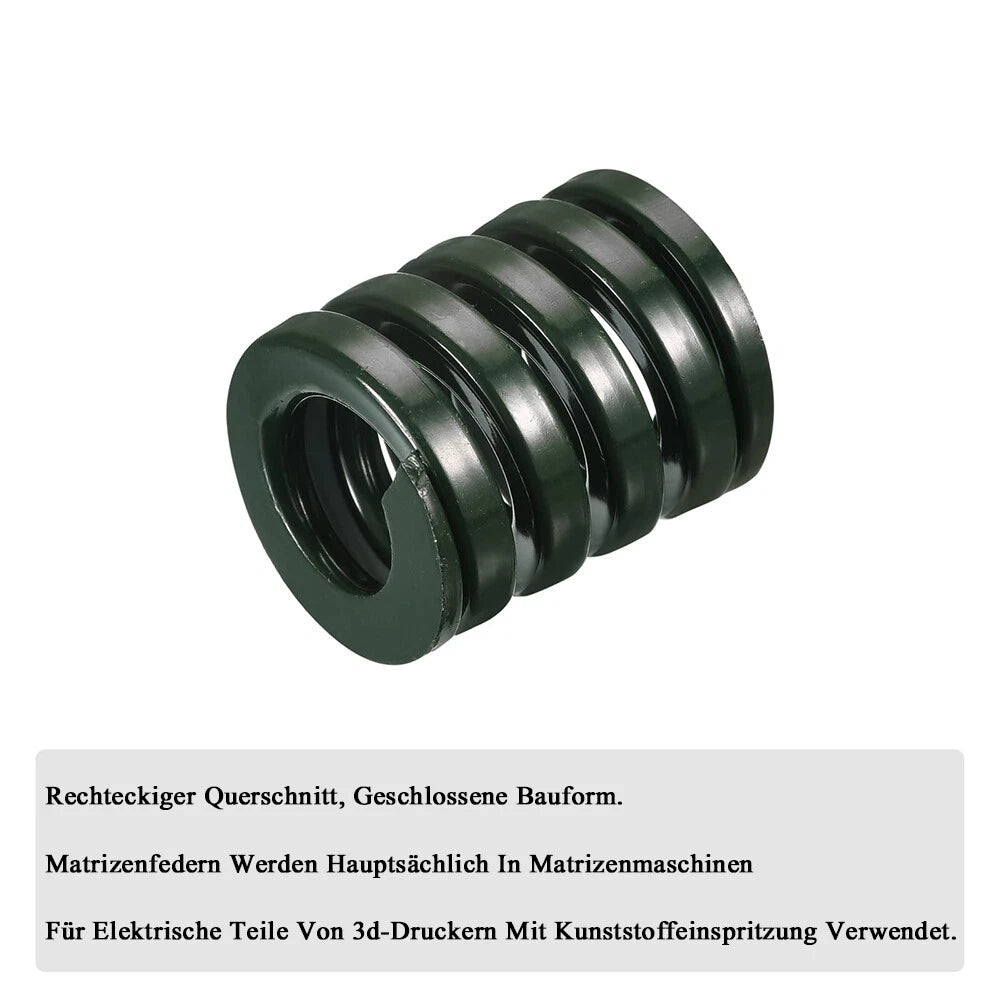
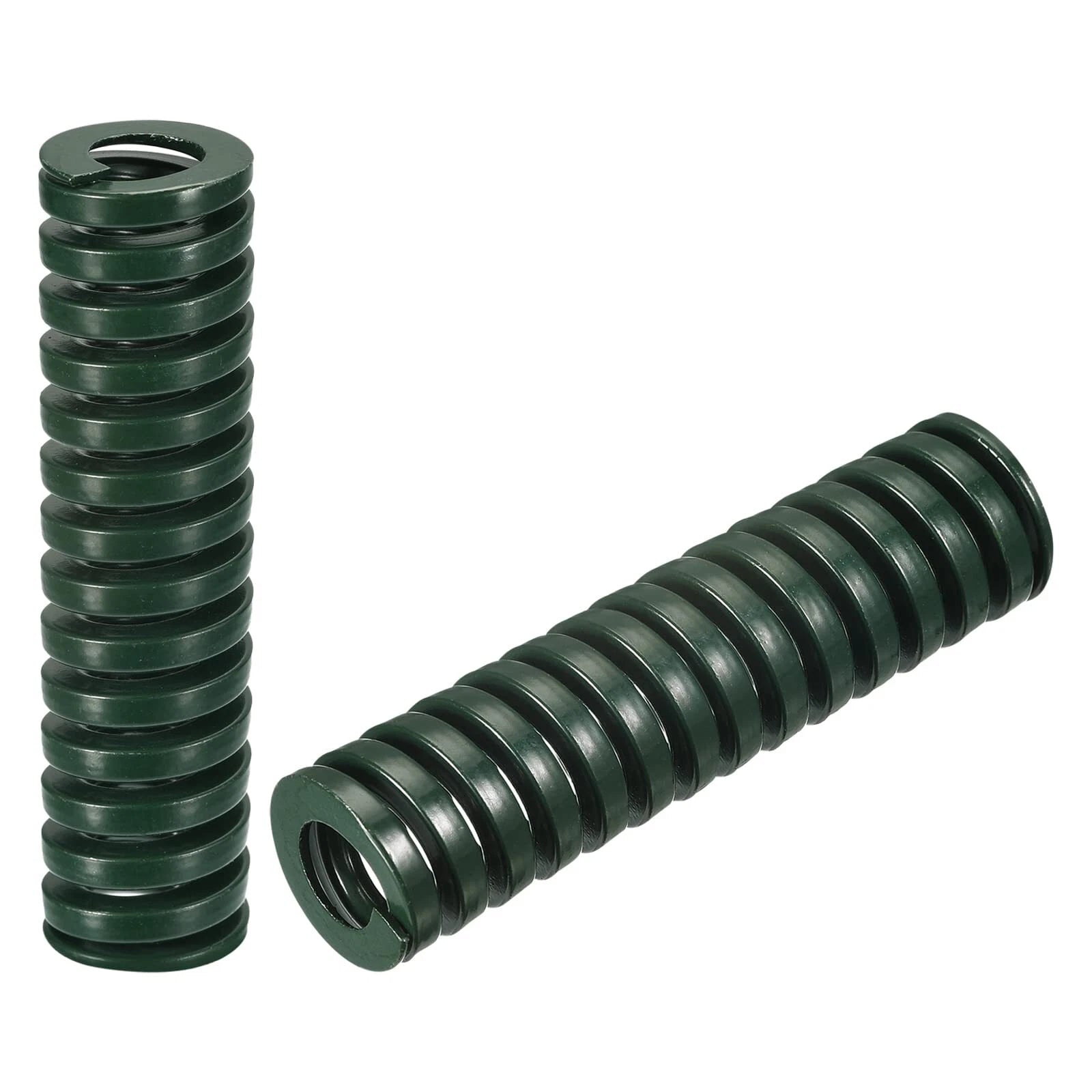
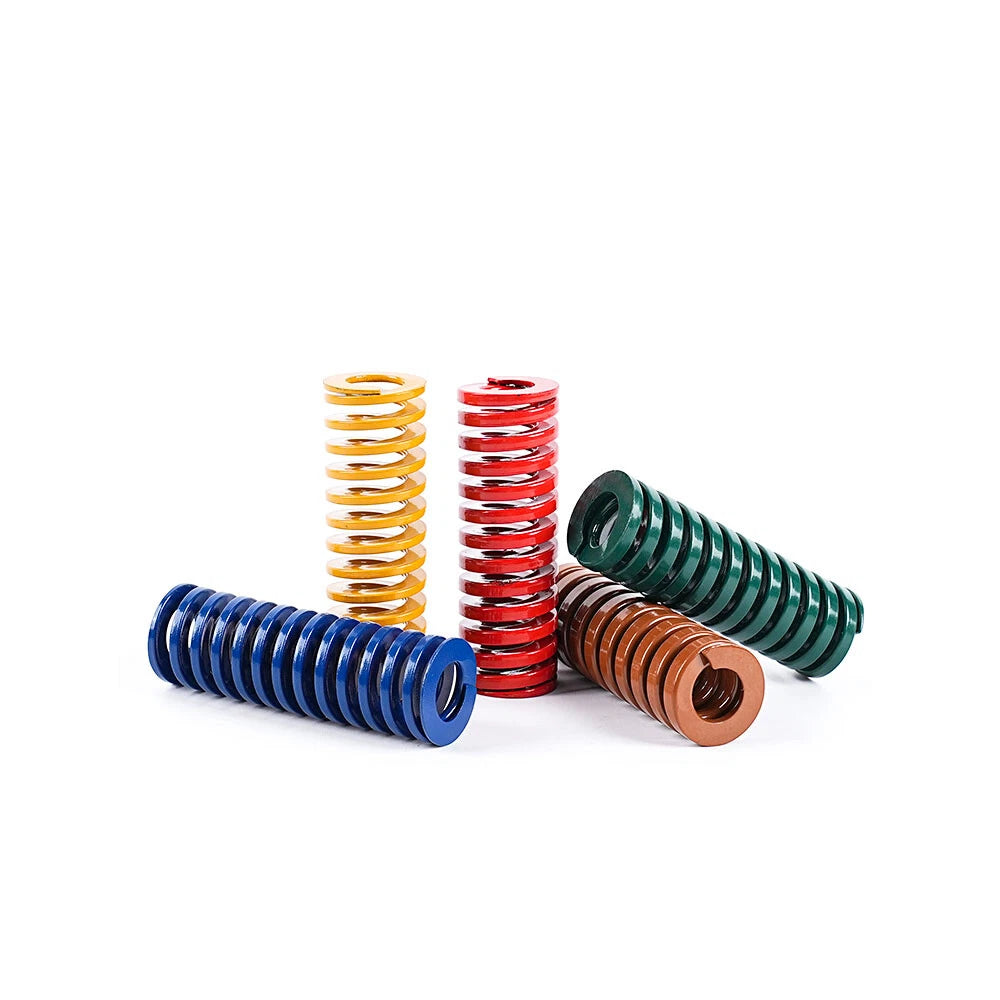
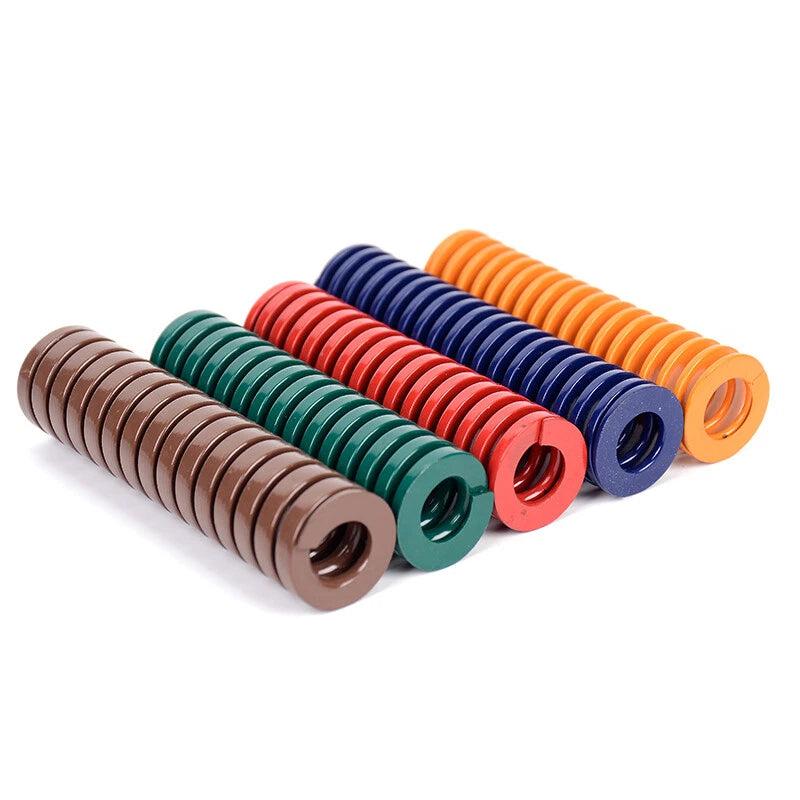
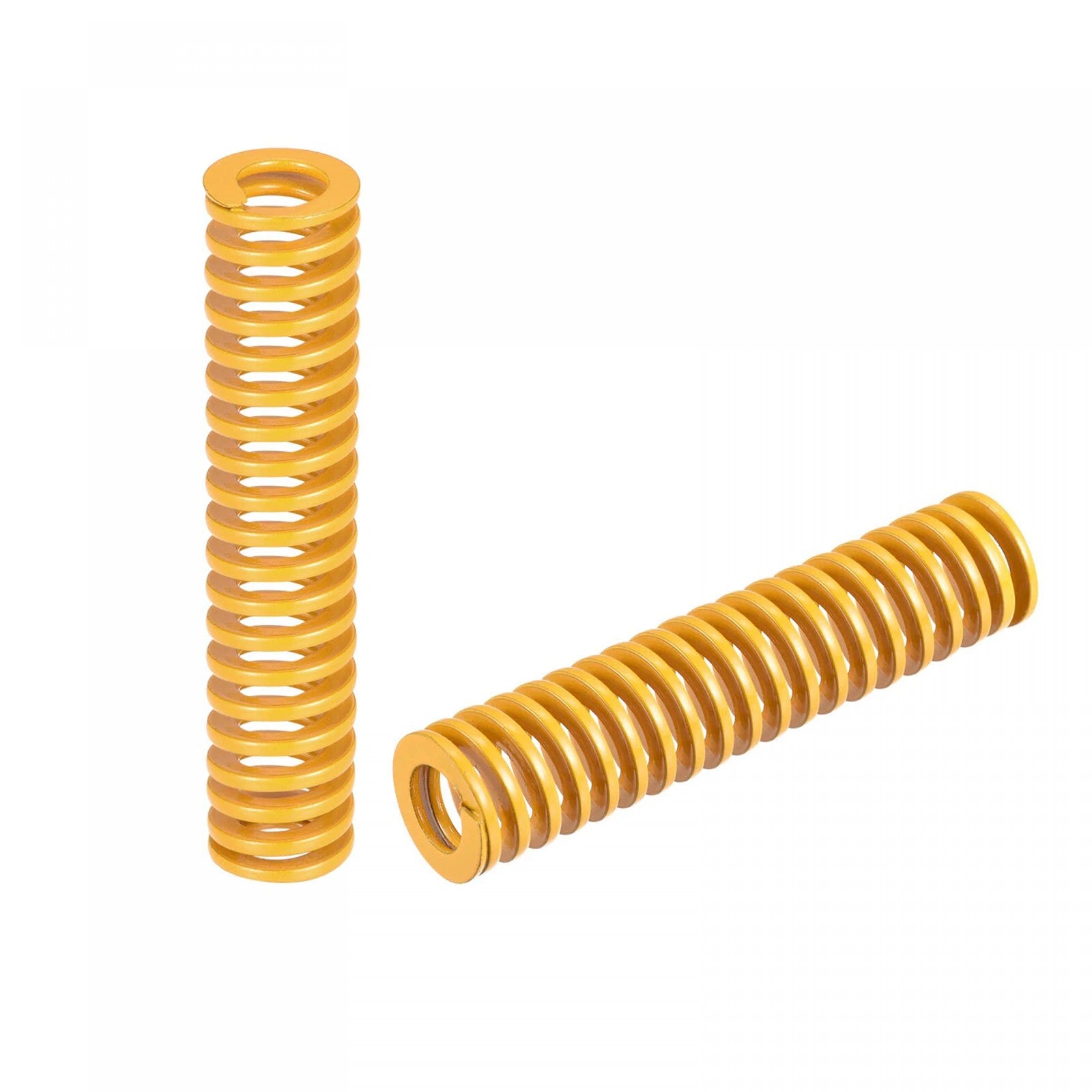
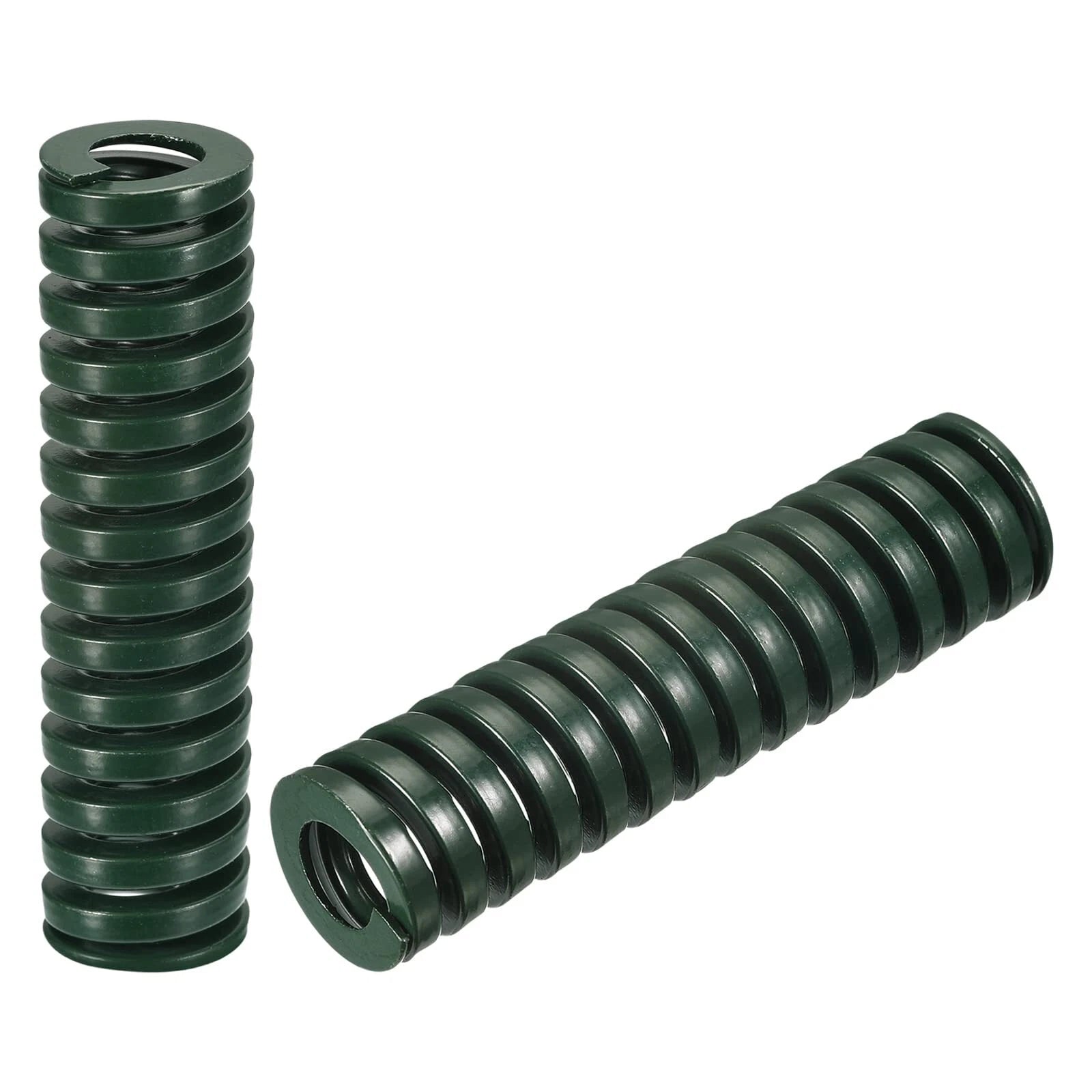

Heavy Load Duty Compression Die Spring 12mm Dia Spiral Stamping Mould Die Spring

No reviews

Price:
Sale price$2.88 USD
Stock:
In stock (500 units), ready to be shipped

Payment & Security

Ach Direct Debit Amazon American Express Apple Pay Bancontact BLIK Diners Club Discover EPS Google Pay iDEAL Wero JCB Maestro Mastercard Multibanco MobilePay PayPal Przelewy24 Shop Pay Twint Union Pay USDC Visa

Your payment information is processed securely. We do not store credit card details nor have access to your credit card information.

Limited Offer — Spend More, Save More
Spend $55+
Save $5
Spend $100+
Save $10
Spend $200+
Save $25
HomeDIYer DIY Expert Support

DIY Expert Support

Get fitment advice & recommendations

Mon–Fri  8:30 AM – 8:00 PM
24-Hour Fast Ship
Arrives in 3–14 Days
Worldwide Shipping
30-Day Returns
1 tree planted with every purchase

Description

Heavy Load Compression Die Spring 12mm OD — Reliable Force for Demanding Tooling

When your stamping mold, punch press, or CNC fixture demands consistent return force cycle after cycle, a weak spring is the first point of failure. Engineers and toolmakers who rely on precision machinery need a compression die spring that holds its rated load without fatigue, even under high-frequency cycling. These heavy-duty 12mm outer diameter die springs are engineered for exactly that environment.

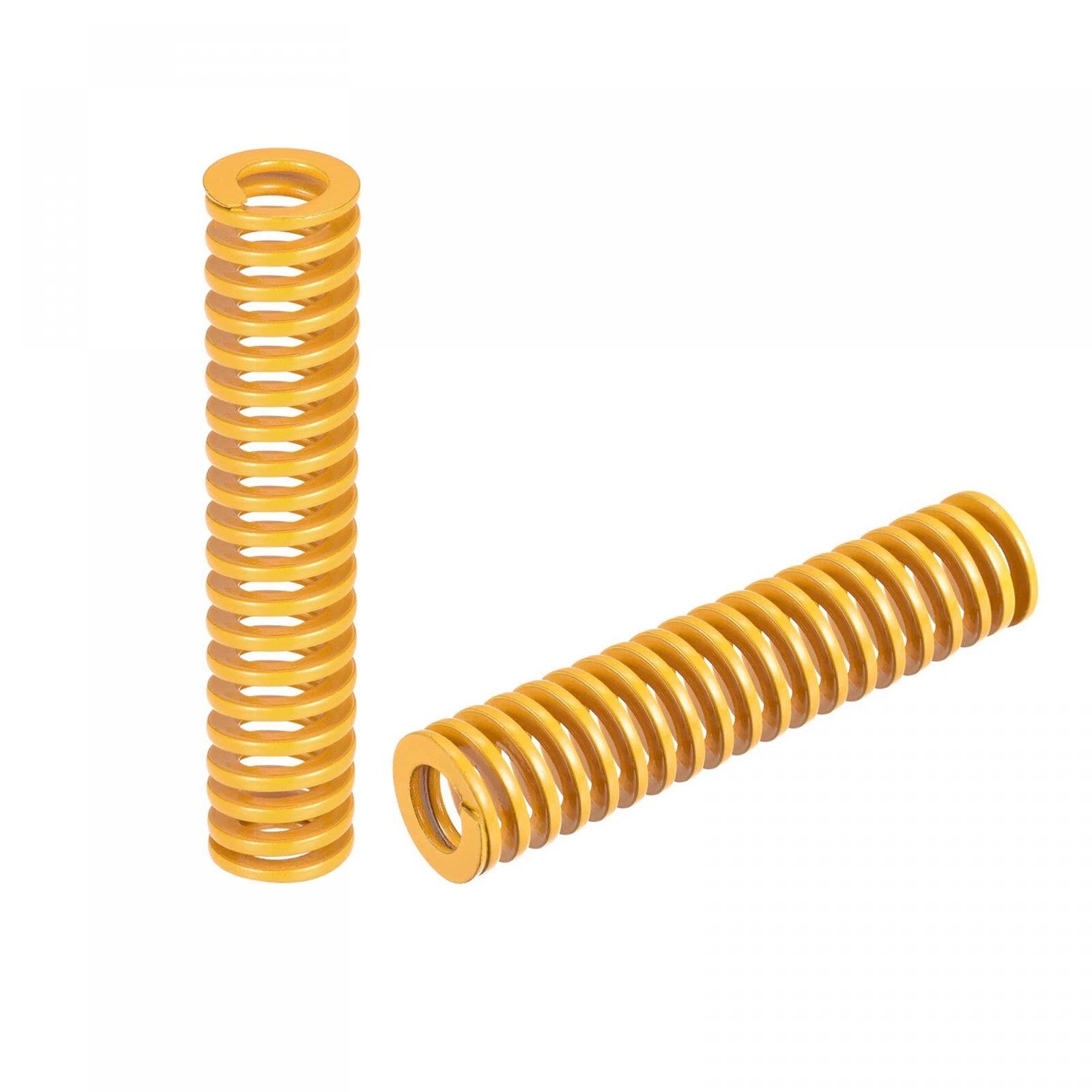
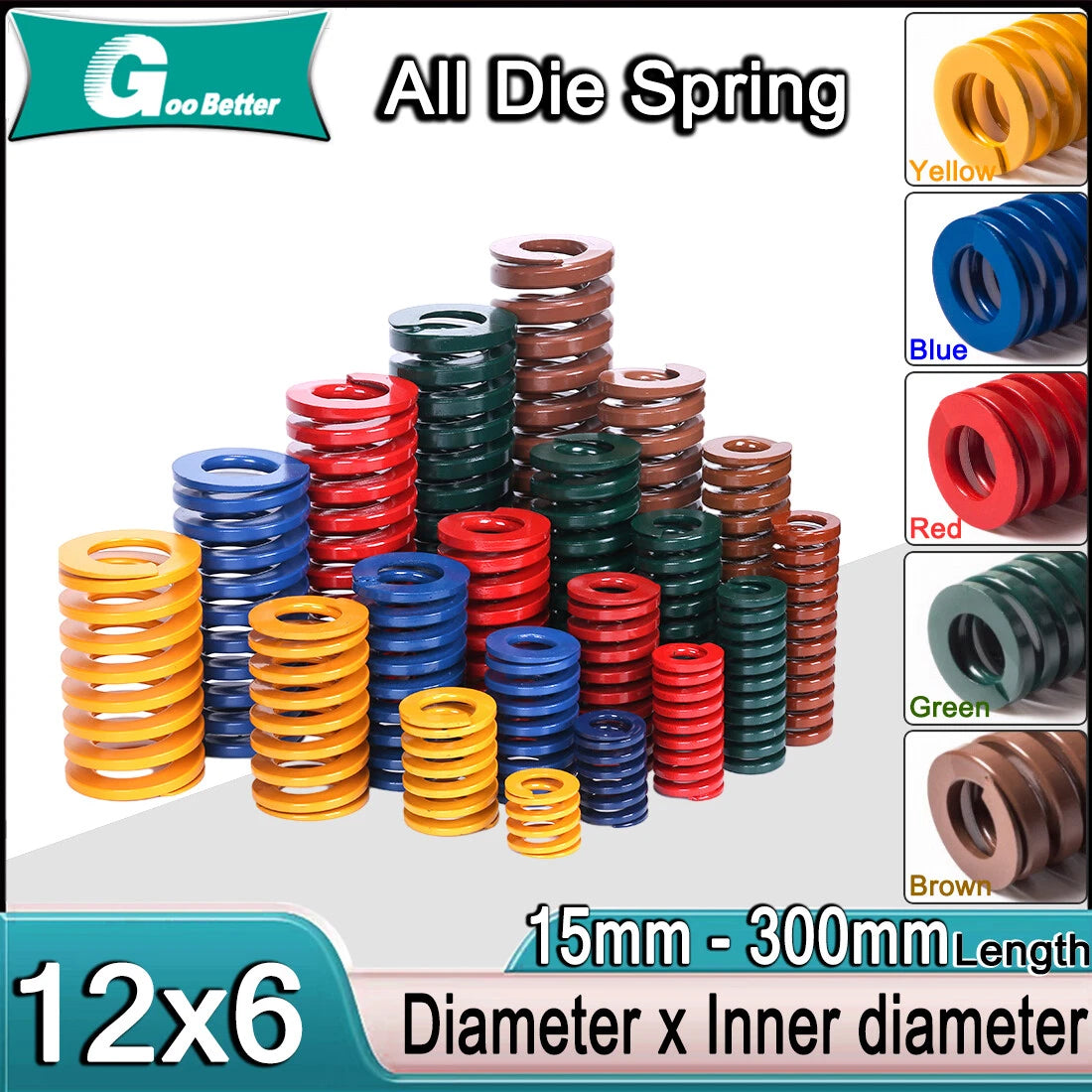
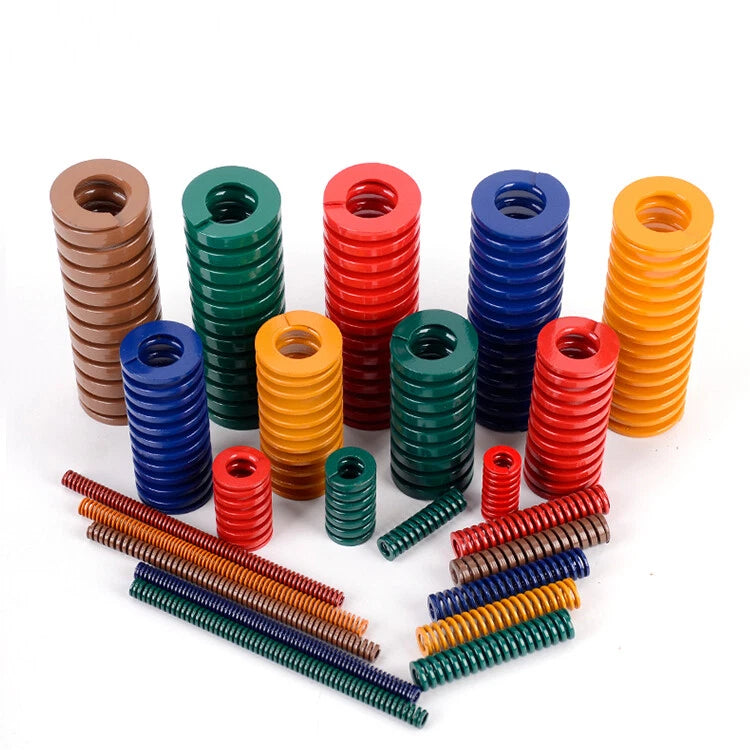
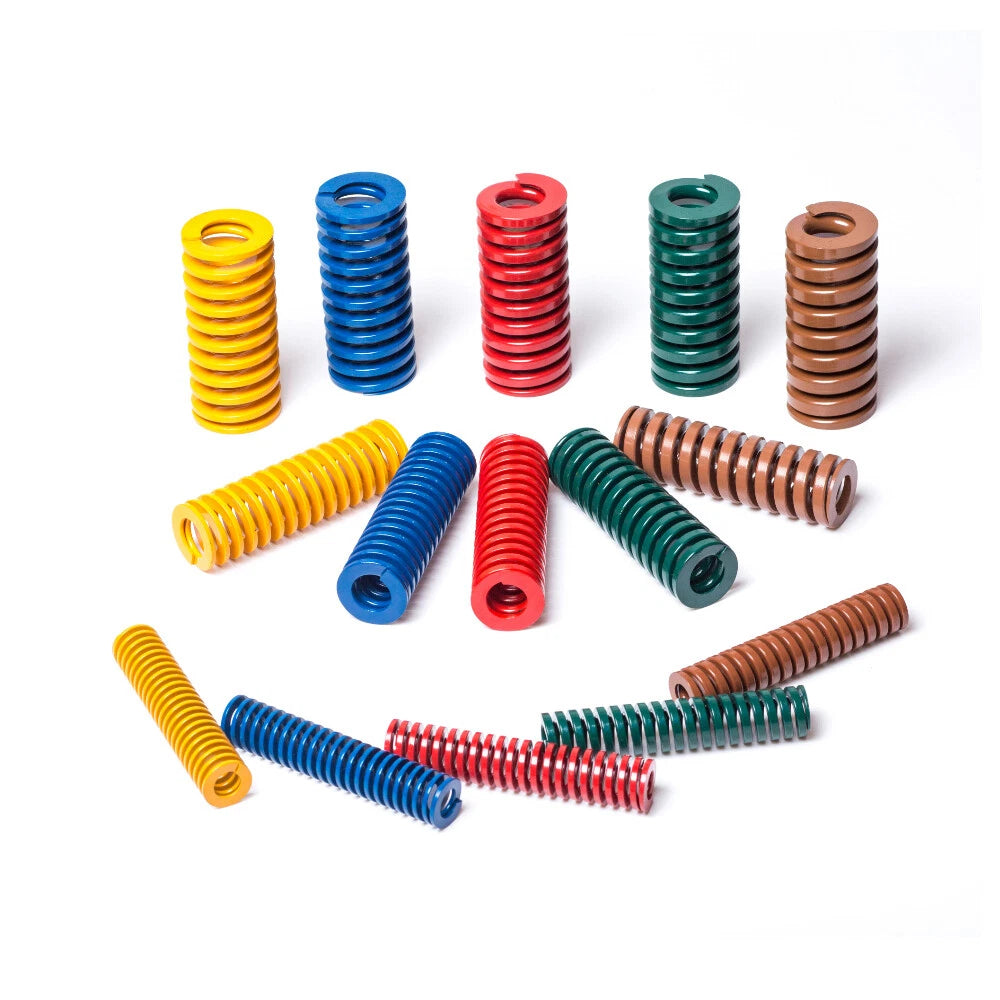
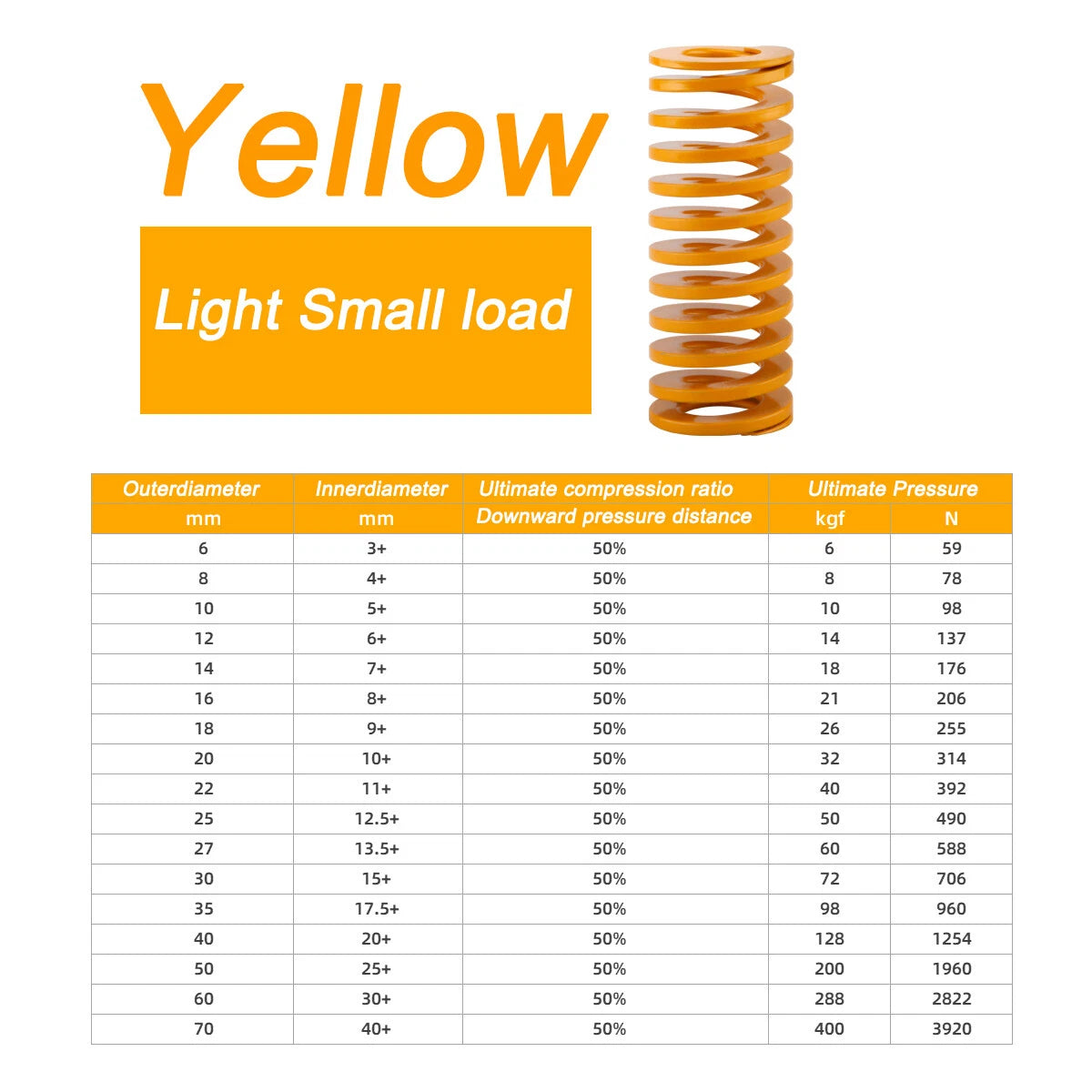
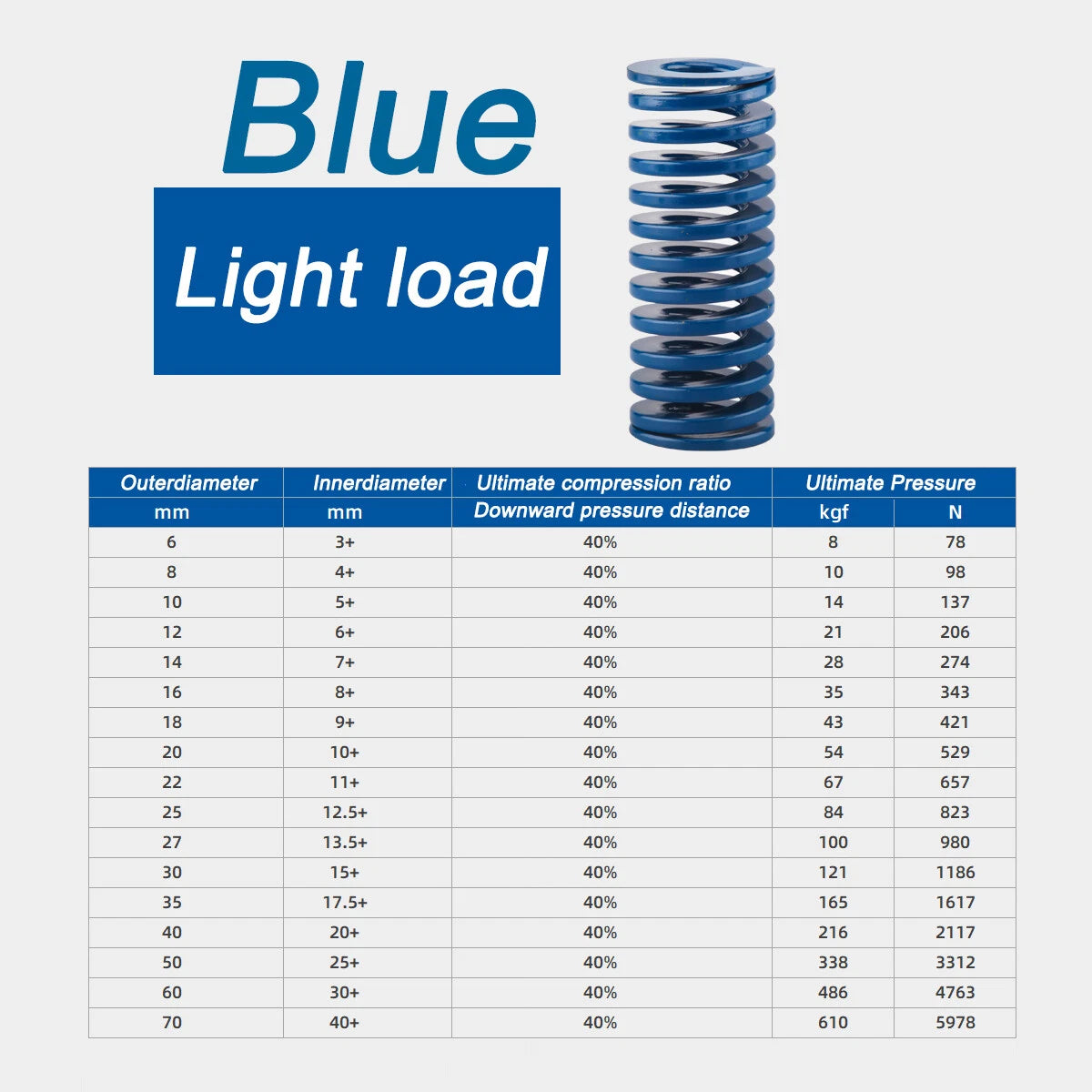
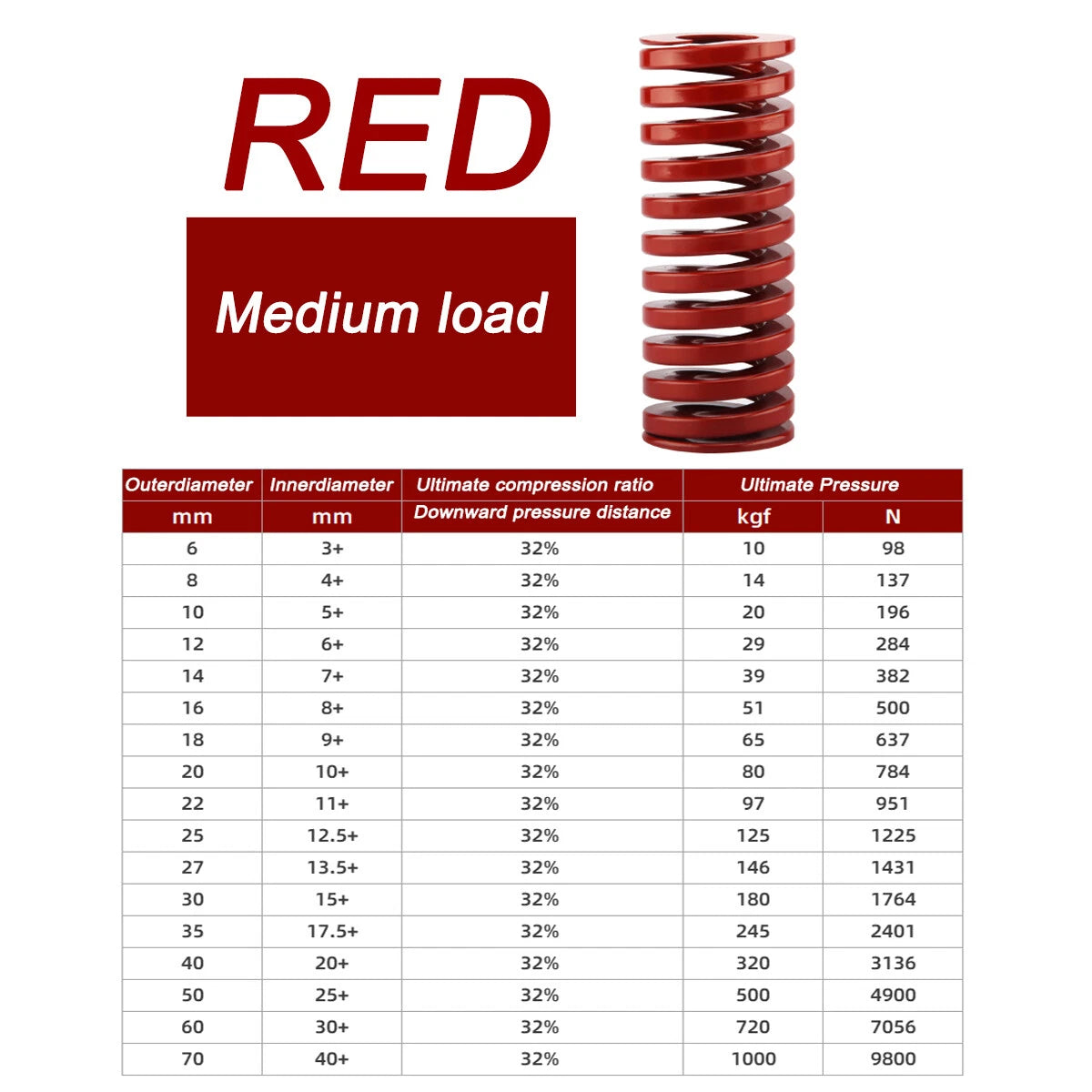
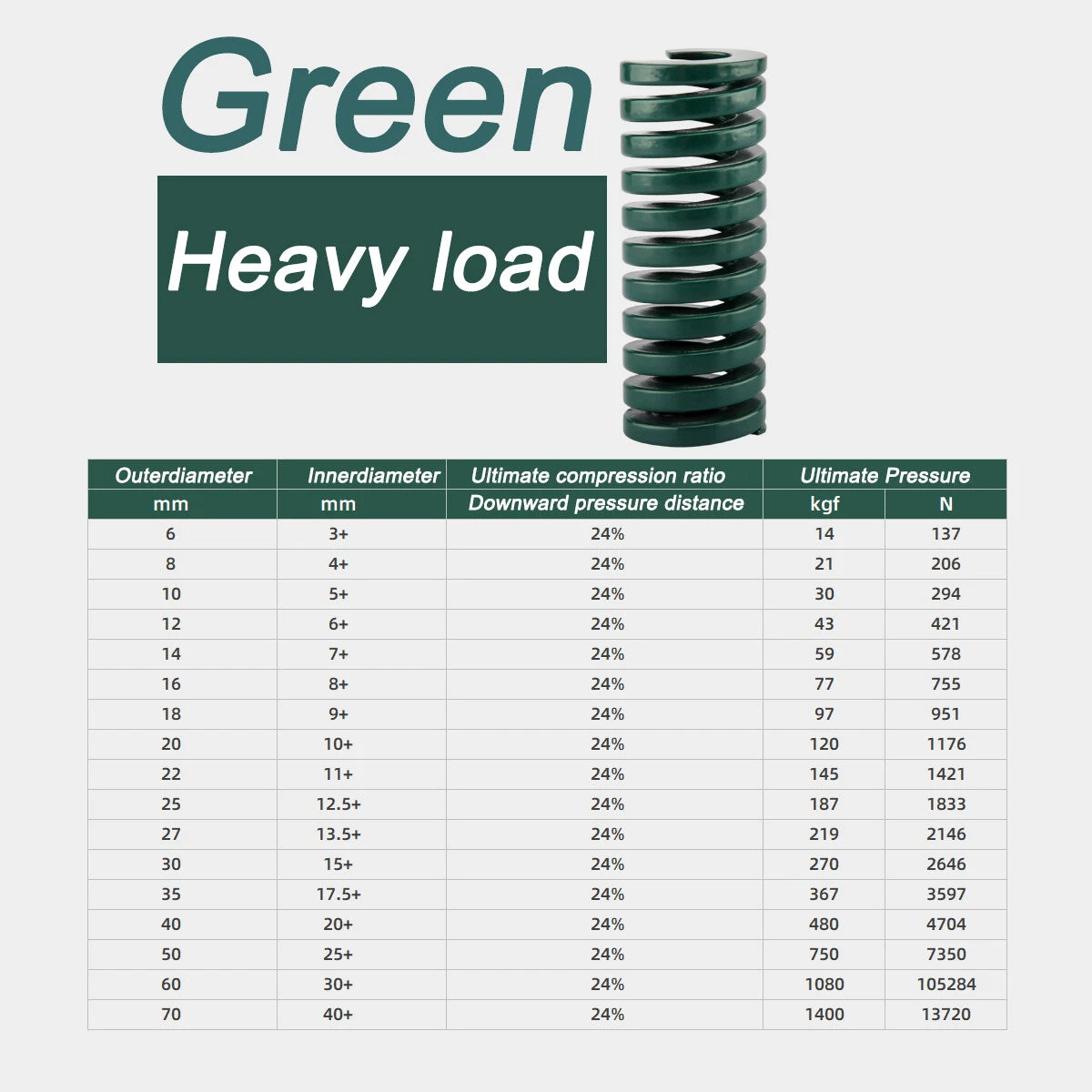
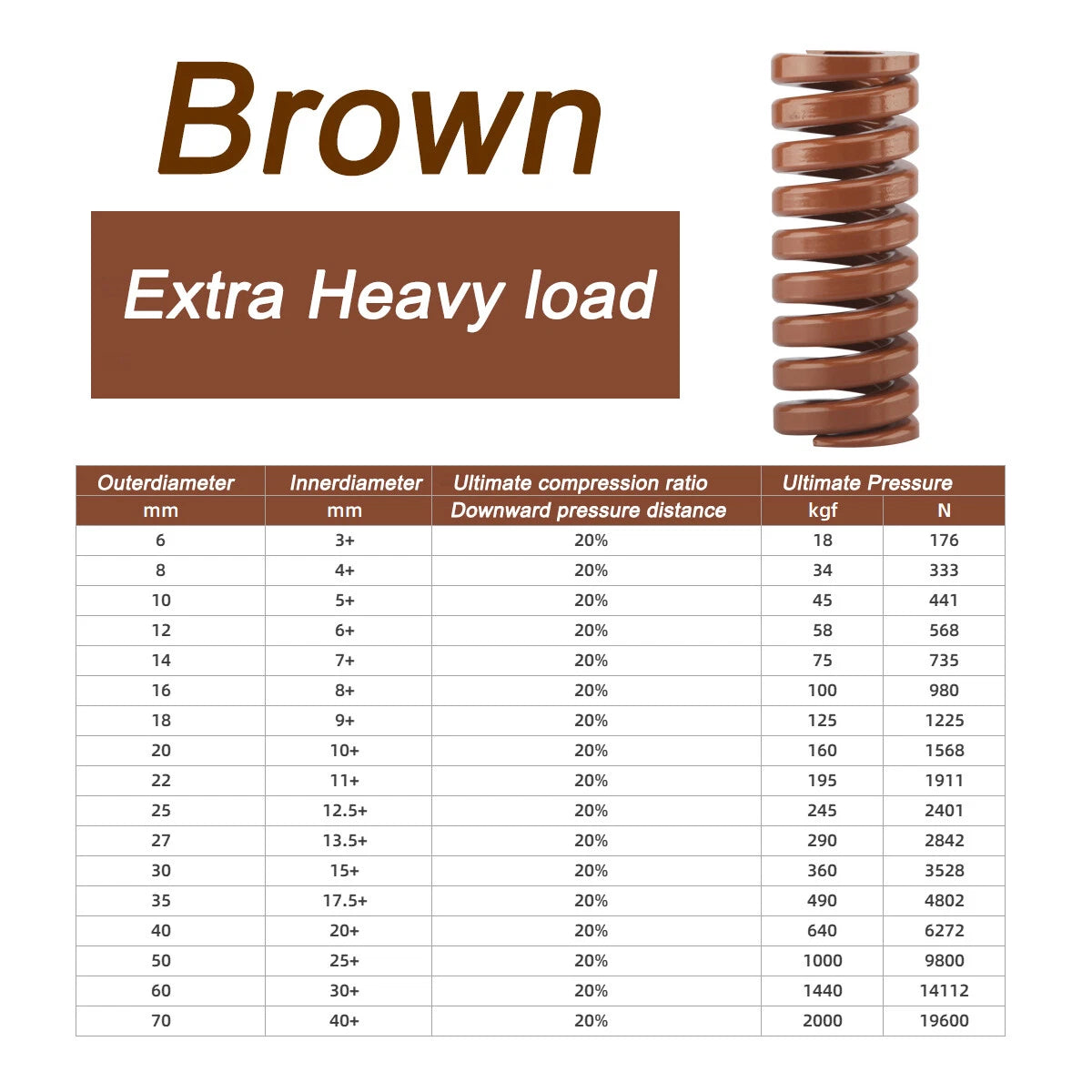
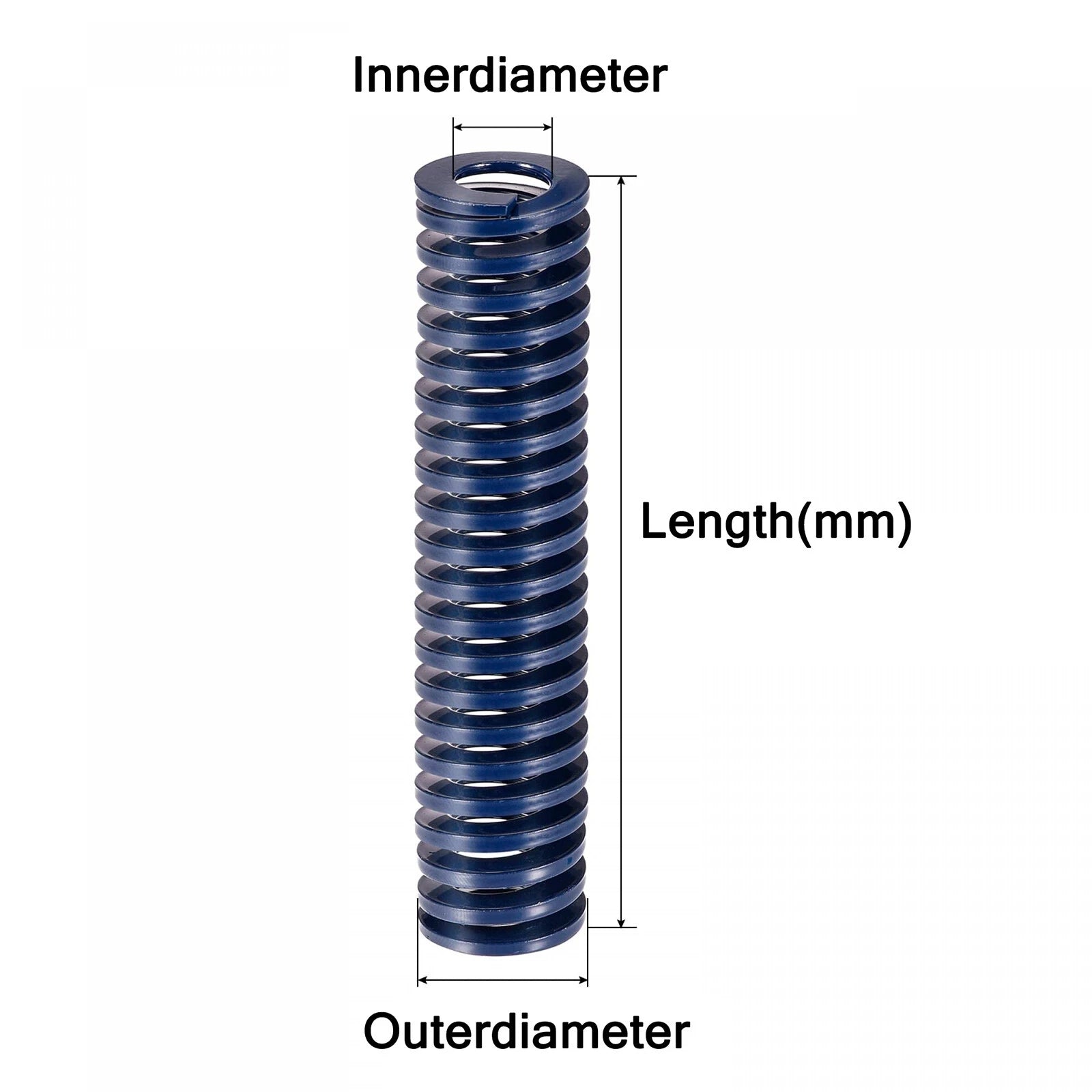
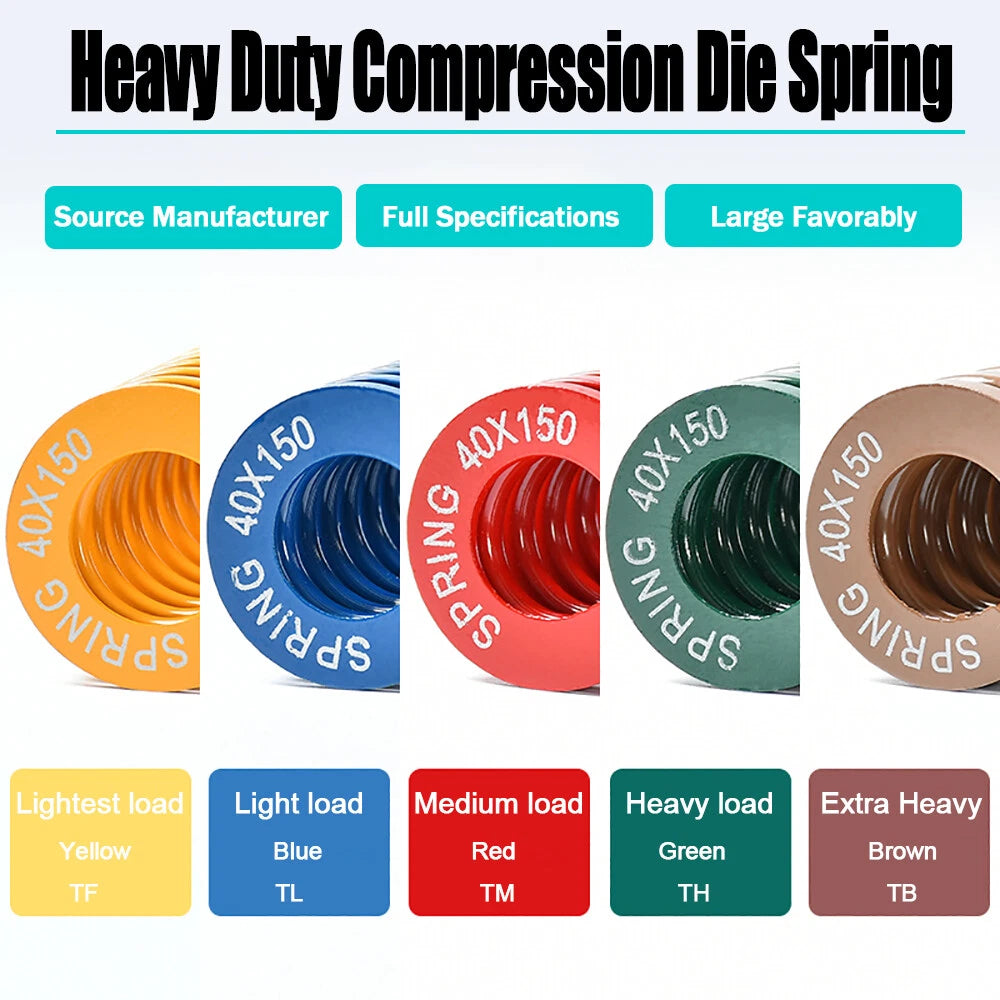
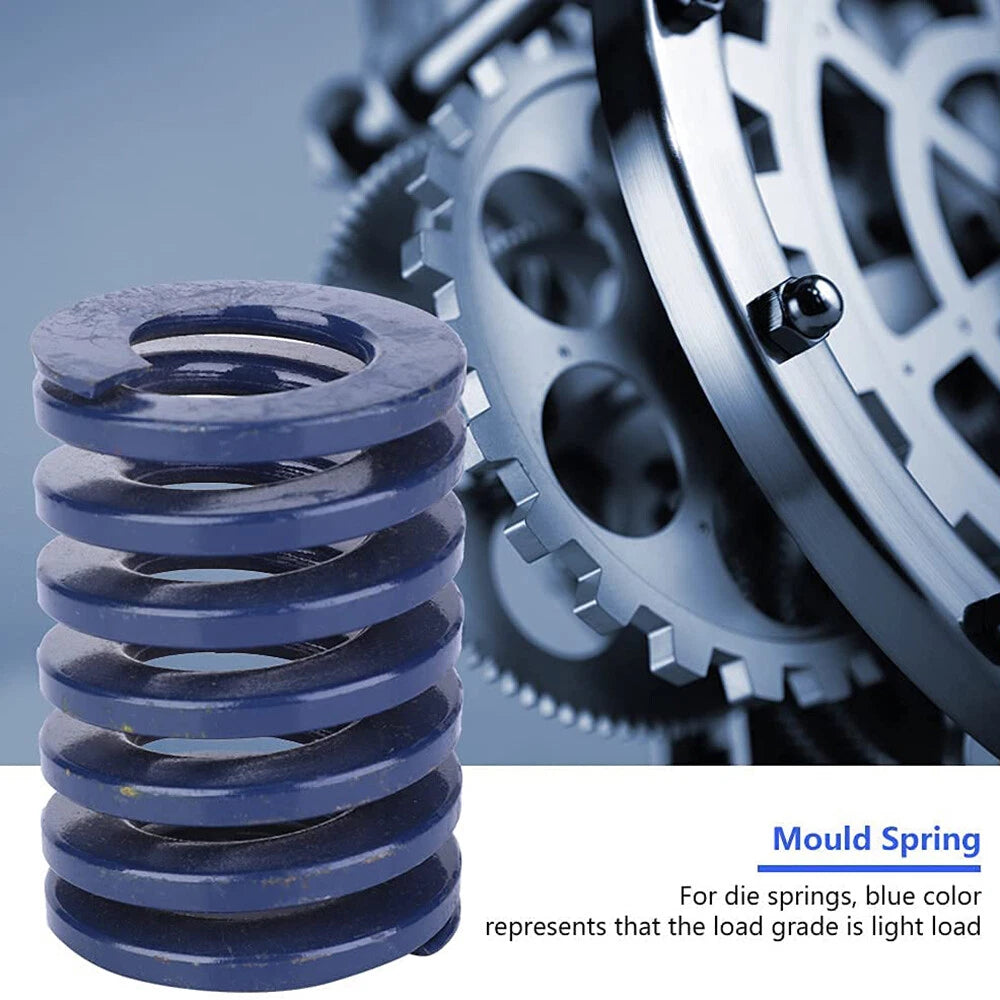
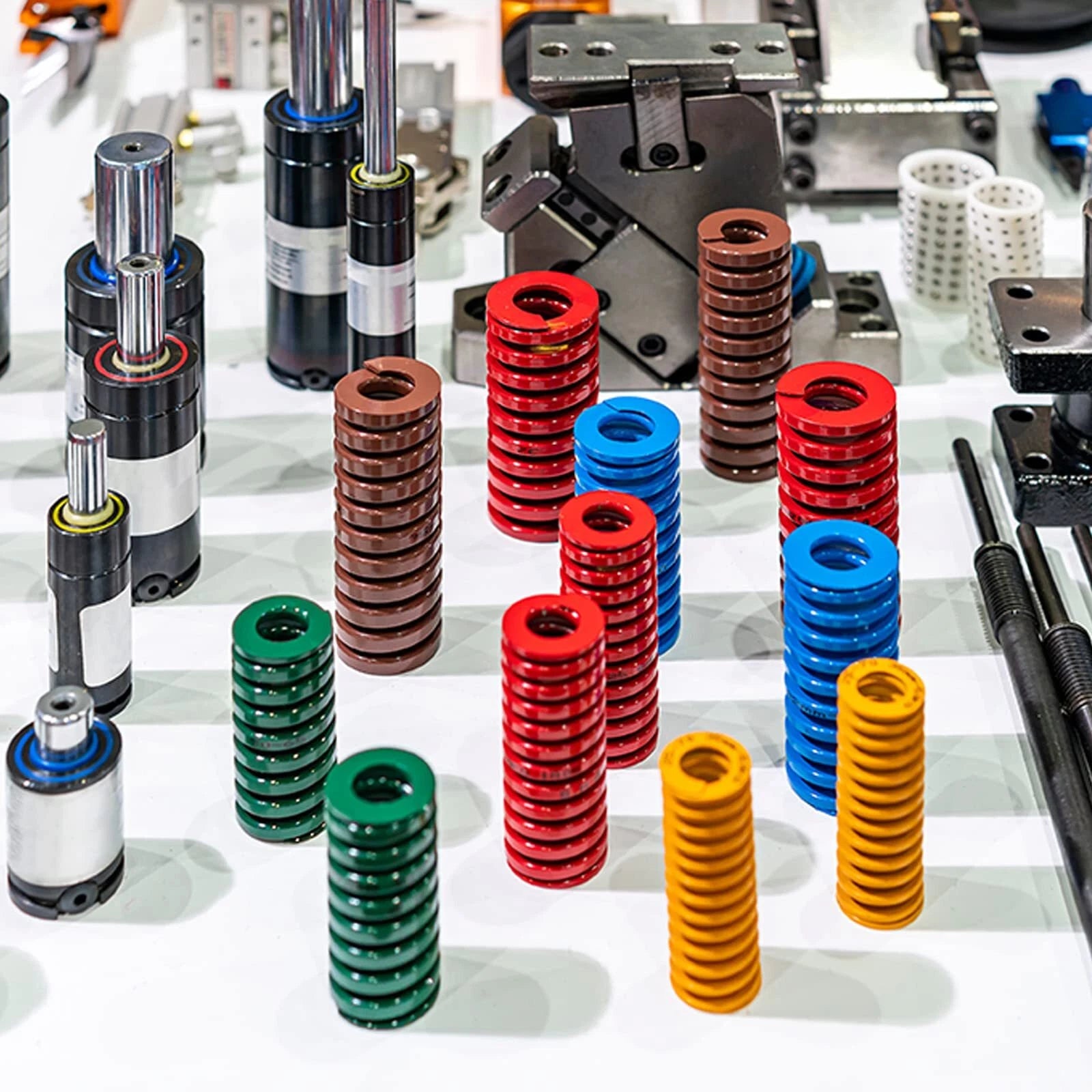
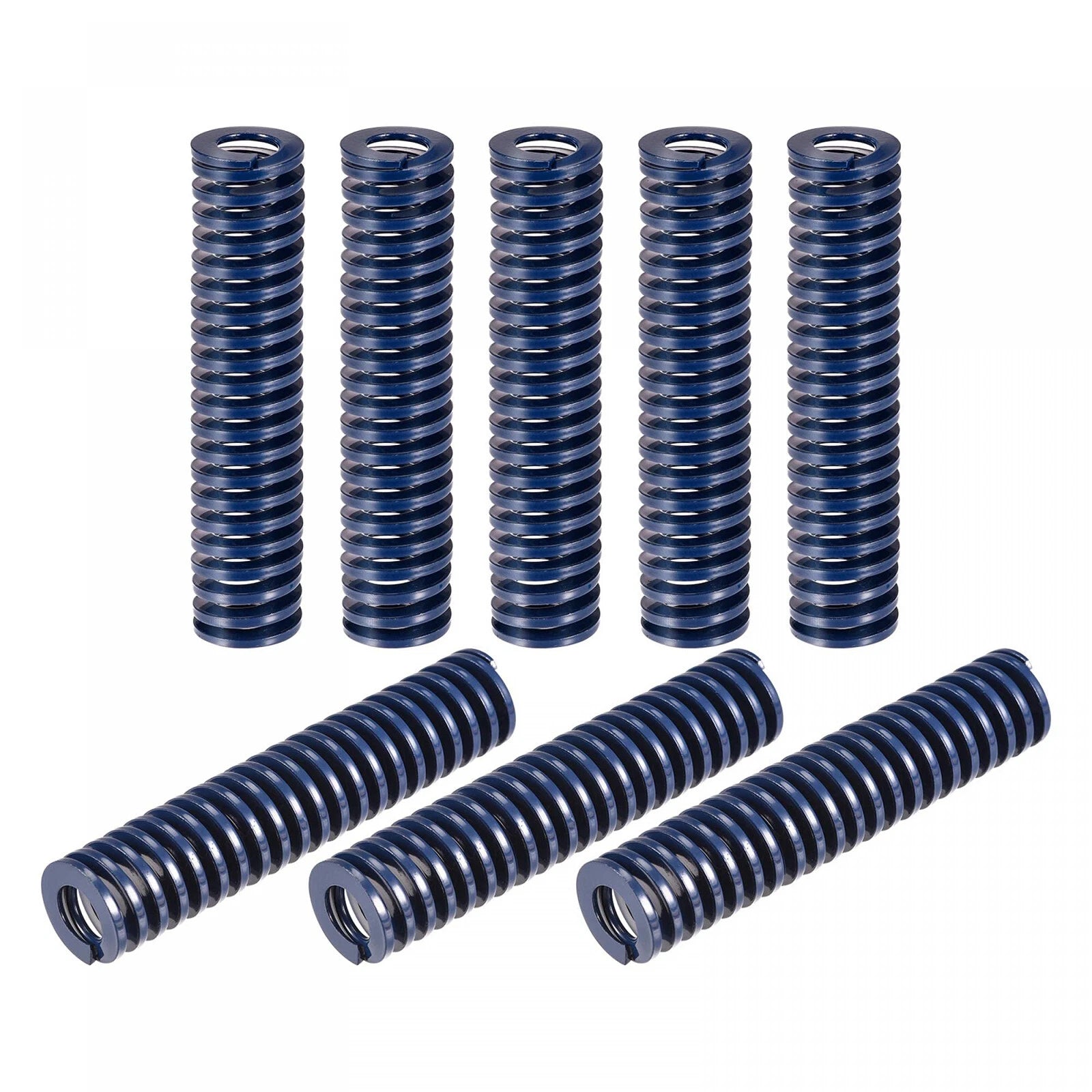
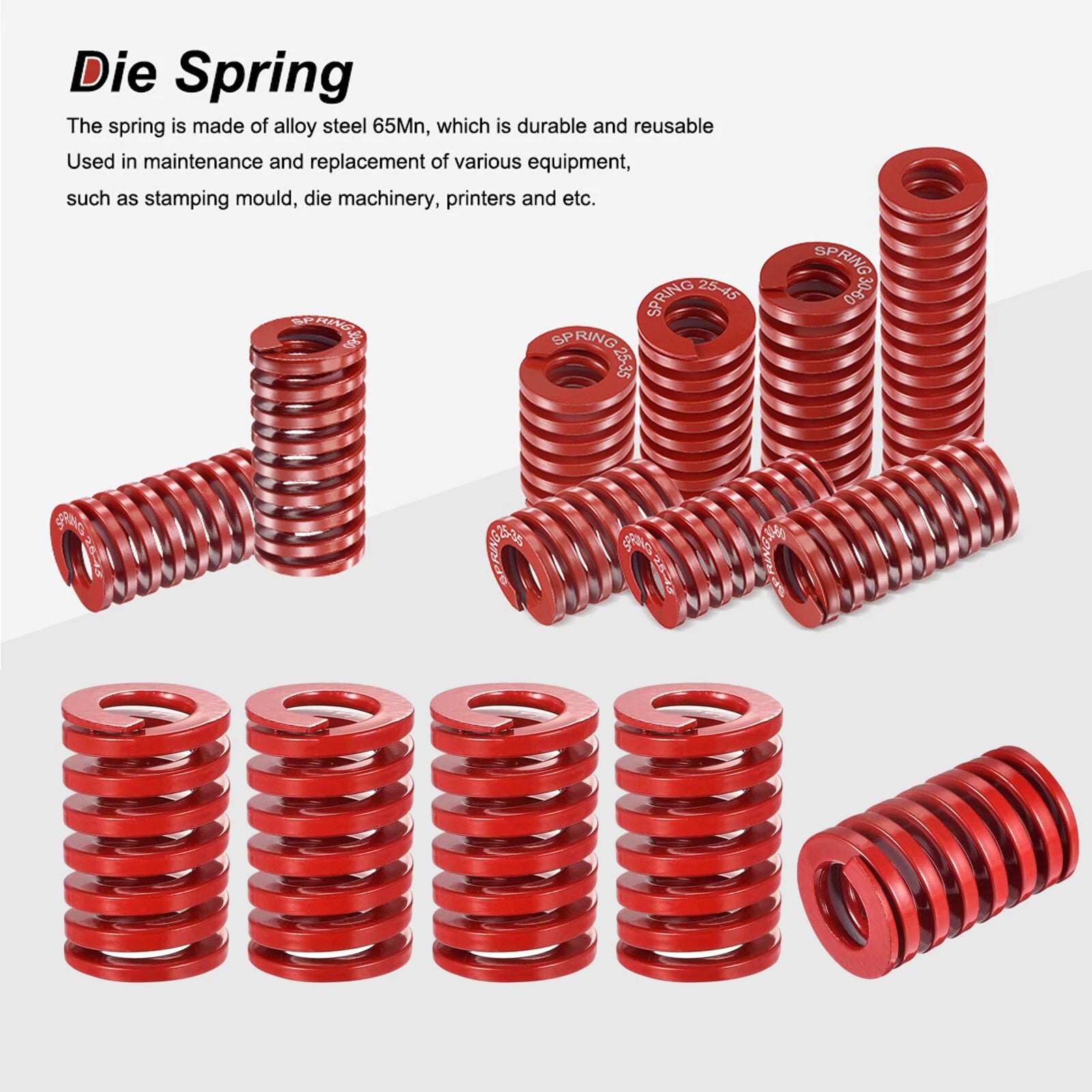
Each spring features an outer diameter of 12mm (approx. 0.47 in) and an inner diameter of 6mm (approx. 0.24 in), with lengths ranging from 15mm to 300mm (approx. 0.59 in to 11.81 in). Available in three material grades — Alloy Steel, SWOSC-V (oil-tempered silicon-chromium wire), and 65Mn spring steel — and five load ratings: TF-Yellow (light), TL-Blue (light-medium), TM-Red (medium), TH-Green (heavy), and TB-Brown (extra-heavy).

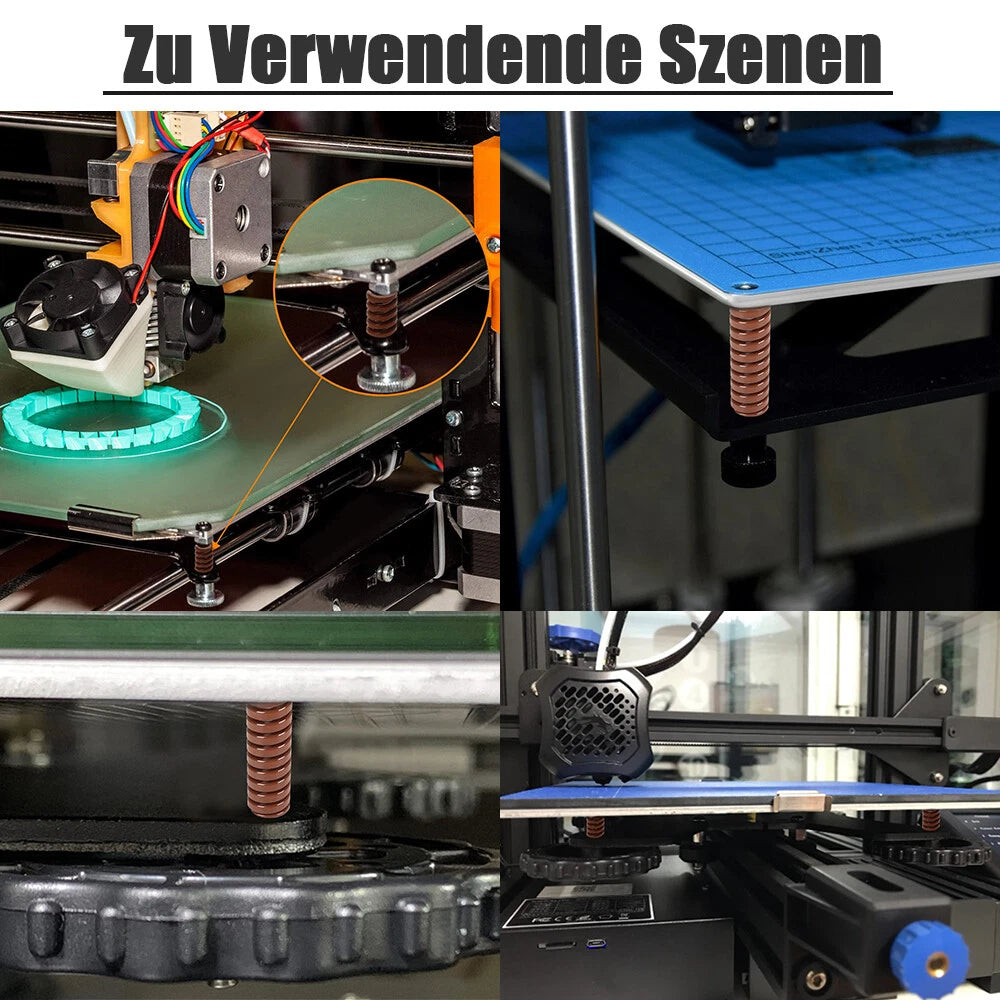
Typical applications include injection mold return mechanisms, progressive die stamping tooling, robotic end-of-arm tooling, and precision jig and fixture assemblies. Long-tail use cases include CNC router Z-axis preload springs, hydraulic press return springs, and automation gripper compliance elements.

⚙️ Compatibility: Designed to ISO 10243 / JIS B 5012 die spring standards. Fits standard 6mm guide pins. Verify free length and deflection range against your mold or fixture design before ordering.

✅ Key Features of These Heavy Load Compression Die Springs

📐
Precise 12mm OD / 6mm ID

Consistent outer and inner diameters ensure drop-in fit on standard 6mm guide pins and into 12mm spring pockets without modification.

🔩
Three Material Grades

Choose Alloy Steel for general tooling, SWOSC-V (oil-tempered Si-Cr wire) for extended fatigue life in high-cycle applications, or 65Mn for cost-effective medium-duty use.

🎨
Five Color-Coded Load Ratings

TF-Yellow (light), TL-Blue (light-medium), TM-Red (medium), TH-Green (heavy), and TB-Brown (extra-heavy) — color coding follows industry-standard die spring conventions for fast identification.

📏
Wide Length Range: 15–300mm

Available in lengths from 15mm (0.59 in) to 300mm (11.81 in), covering short-stroke punch returns to long-travel ejector pin applications.

🔄
High Fatigue Resistance

Rectangular wire cross-section maximizes contact area and distributes stress evenly, extending service life compared to round-wire compression springs under equivalent loads.

🏭
Broad Industrial Application

Suited for stamping dies, injection molds, progressive tooling, robotic fixtures, CNC machines, and automation equipment requiring repeatable spring-back force.

📐 Technical Specifications — Compression Die Springs

Outer Diameter (OD) 12 mm (0.47 in)
Inner Diameter (ID) 6 mm (0.24 in)
Free Length Range 15 mm – 300 mm (0.59 in – 11.81 in)
Wire Cross-Section Rectangular (die spring profile)
Material Options Alloy Steel / SWOSC-V / 65Mn
Load Rating Options TF-Yellow / TL-Blue / TM-Red / TH-Green / TB-Brown
Standard Reference ISO 10243 / JIS B 5012 (die spring)
Surface Finish See variant options
Max Deflection Rate See variant options
Spring Rate See variant options

❓ Frequently Asked Questions

How do I choose the right length for my application?

Select a free length that allows your required working deflection while staying within the spring's maximum deflection limit (typically 30–50% of free length for die springs). Measure the available pocket depth and the stroke of your punch or ejector pin, then add a preload allowance. If in doubt, choose a longer spring and trim the preload rather than over-deflecting a shorter one.

What is the difference between the five load colors?

The color coding follows the industry-standard die spring load classification: TF-Yellow is the lightest load rating, TL-Blue is light-medium, TM-Red is medium, TH-Green is heavy, and TB-Brown is extra-heavy. Higher load ratings produce greater force at the same deflection and are suited for heavier punches, larger ejector systems, or applications requiring high return force.

Which material grade should I choose — Alloy Steel, SWOSC-V, or 65Mn?

Alloy Steel is the standard choice for general-purpose stamping and molding tooling. SWOSC-V (oil-tempered silicon-chromium wire) offers superior fatigue resistance and is recommended for high-cycle applications exceeding 500,000 cycles. 65Mn spring steel is a cost-effective option for medium-duty or lower-cycle tooling where budget is a priority. For critical production tooling, SWOSC-V is the preferred grade.

Are these springs compatible with standard guide pins?

Yes. The 6mm inner diameter is designed to slide over standard 6mm guide pins used in ISO and JIS die sets. The 12mm outer diameter fits standard 12mm spring pockets. Always verify your specific mold or fixture dimensions before installation, as machining tolerances can vary.

How do I know when a die spring needs to be replaced?

Replace a die spring if you observe: (1) visible cracking or fracture, (2) a measurable reduction in free length of more than 3–5% from the original, (3) inconsistent part ejection or return force in your tooling, or (4) the spring has exceeded its rated cycle life. For SWOSC-V grade springs in high-cycle tooling, scheduled preventive replacement is recommended rather than waiting for failure.

Can these springs be used in corrosive or high-temperature environments?

Standard Alloy Steel and 65Mn springs are not designed for highly corrosive environments without additional surface treatment. SWOSC-V offers marginally better oxidation resistance. For applications involving coolant exposure, consider applying a rust-inhibiting coating or selecting springs with a surface treatment. For elevated-temperature applications above approximately 120°C (248°F), contact us to confirm suitability for your specific conditions.

What is the maximum deflection I should use in service?

Die springs are typically rated for a maximum working deflection of 30% of free length for heavy and extra-heavy loads, and up to 50% for lighter load ratings. Exceeding the rated deflection significantly reduces fatigue life and risks permanent set or fracture. Always design your tooling so the spring operates within its rated deflection range under maximum stroke conditions.

🛒 Select your Outer Diameter × Inner Diameter × Length, Load rating, and Material above, then add to cart.


You may also like

Recently viewed