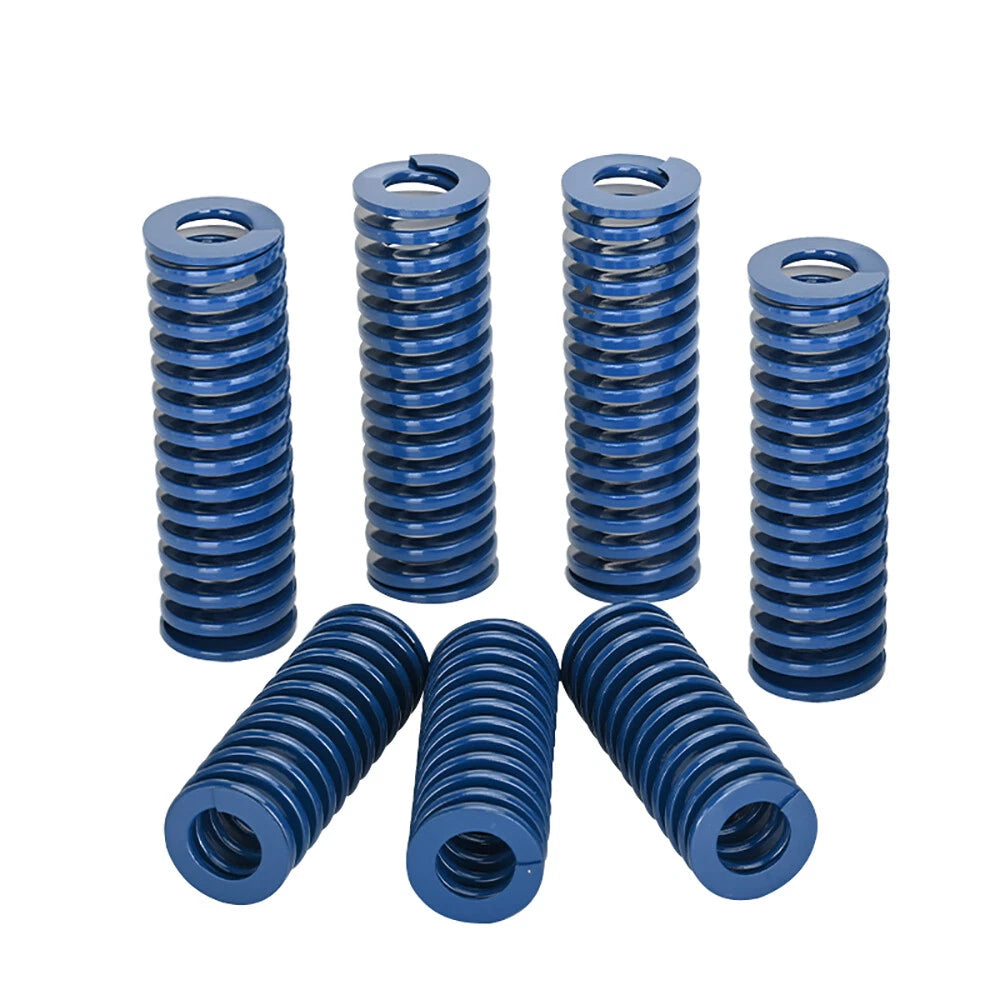
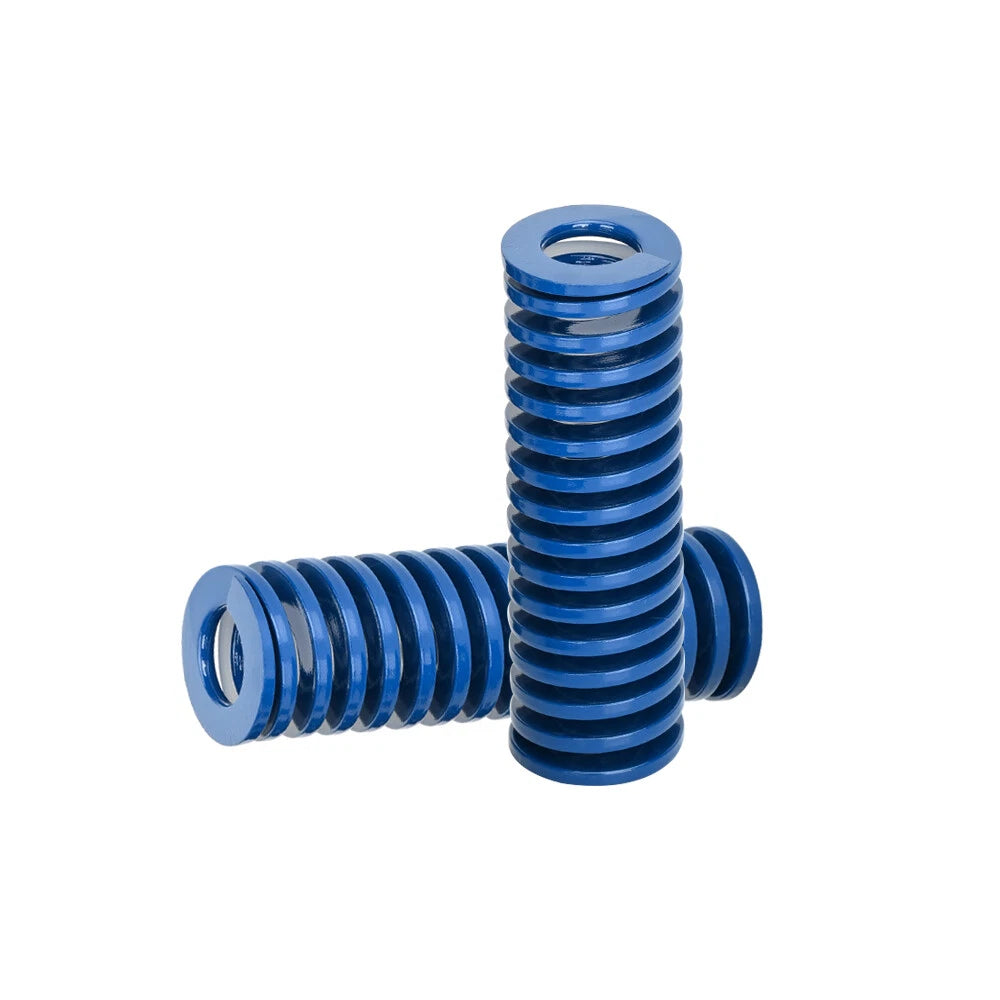
Heavy Load Duty Compression Die Spring, 6-40mm Diameter & Up To 300mm Long JIS

No reviews

Price:
Sale price$3.20 USD
Stock:
In stock (500 units), ready to be shipped

Payment & Security

Ach Direct Debit Amazon American Express Apple Pay Bancontact BLIK Diners Club Discover EPS Google Pay iDEAL Wero JCB Maestro Mastercard Multibanco MobilePay PayPal Przelewy24 Shop Pay Twint Union Pay USDC Visa

Your payment information is processed securely. We do not store credit card details nor have access to your credit card information.

Limited Offer — Spend More, Save More
Spend $55+
Save $5
Spend $100+
Save $10
Spend $200+
Save $25
HomeDIYer DIY Expert Support

DIY Expert Support

Get fitment advice & recommendations

Mon–Fri  8:30 AM – 8:00 PM
24-Hour Fast Ship
Arrives in 3–14 Days
Worldwide Shipping
30-Day Returns
1 tree planted with every purchase

Description

Heavy Load Compression Die Springs — Reliable Force for Demanding Industrial Applications

When your stamping die, injection mold, or press tooling demands consistent, repeatable force under heavy cycling, an undersized spring is a liability. Engineers and toolmakers who rely on JIS-standard heavy load compression die springs know that precise outer diameter, inner diameter, and free length tolerances are non-negotiable — one wrong spec means premature fatigue, uneven clamping, or costly downtime.

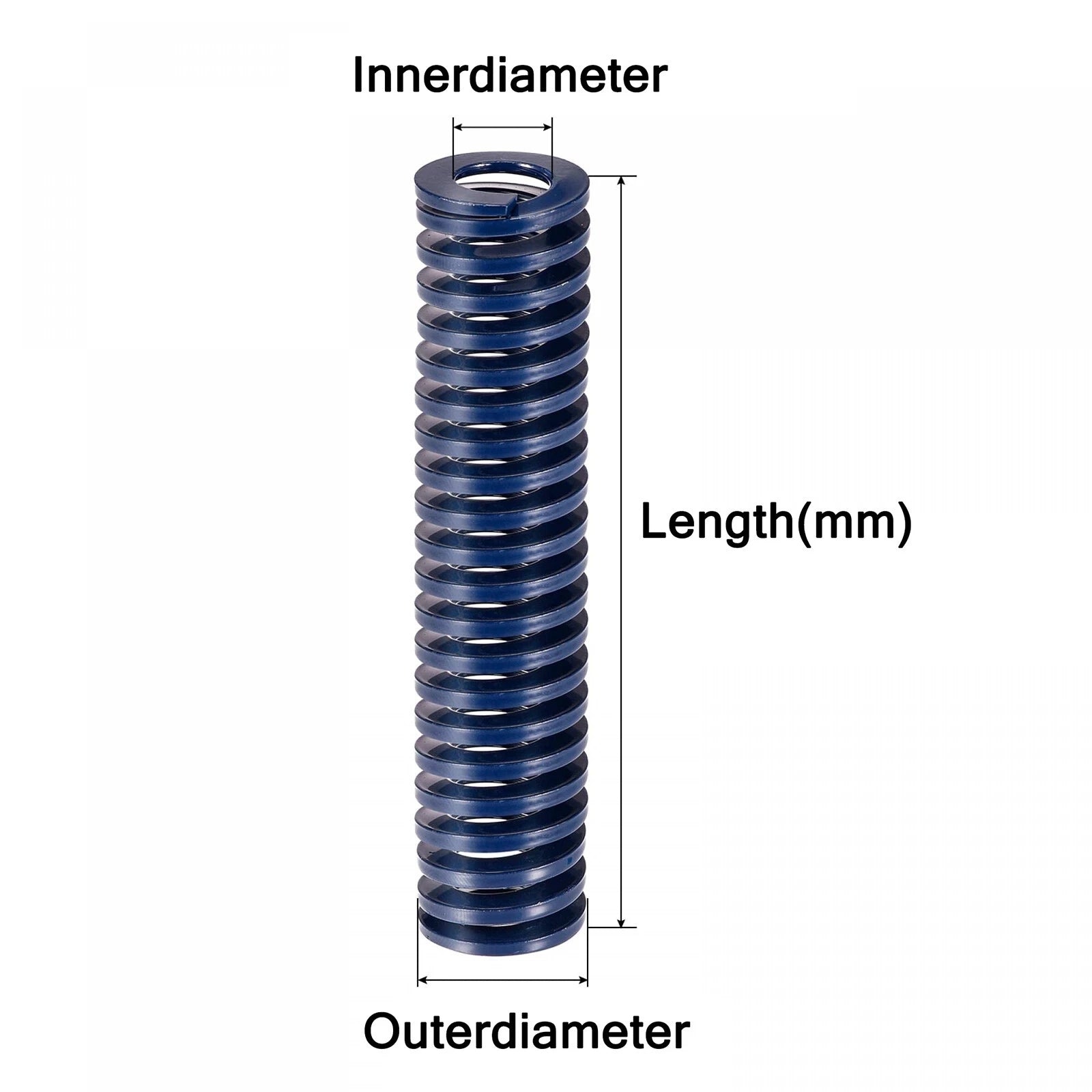
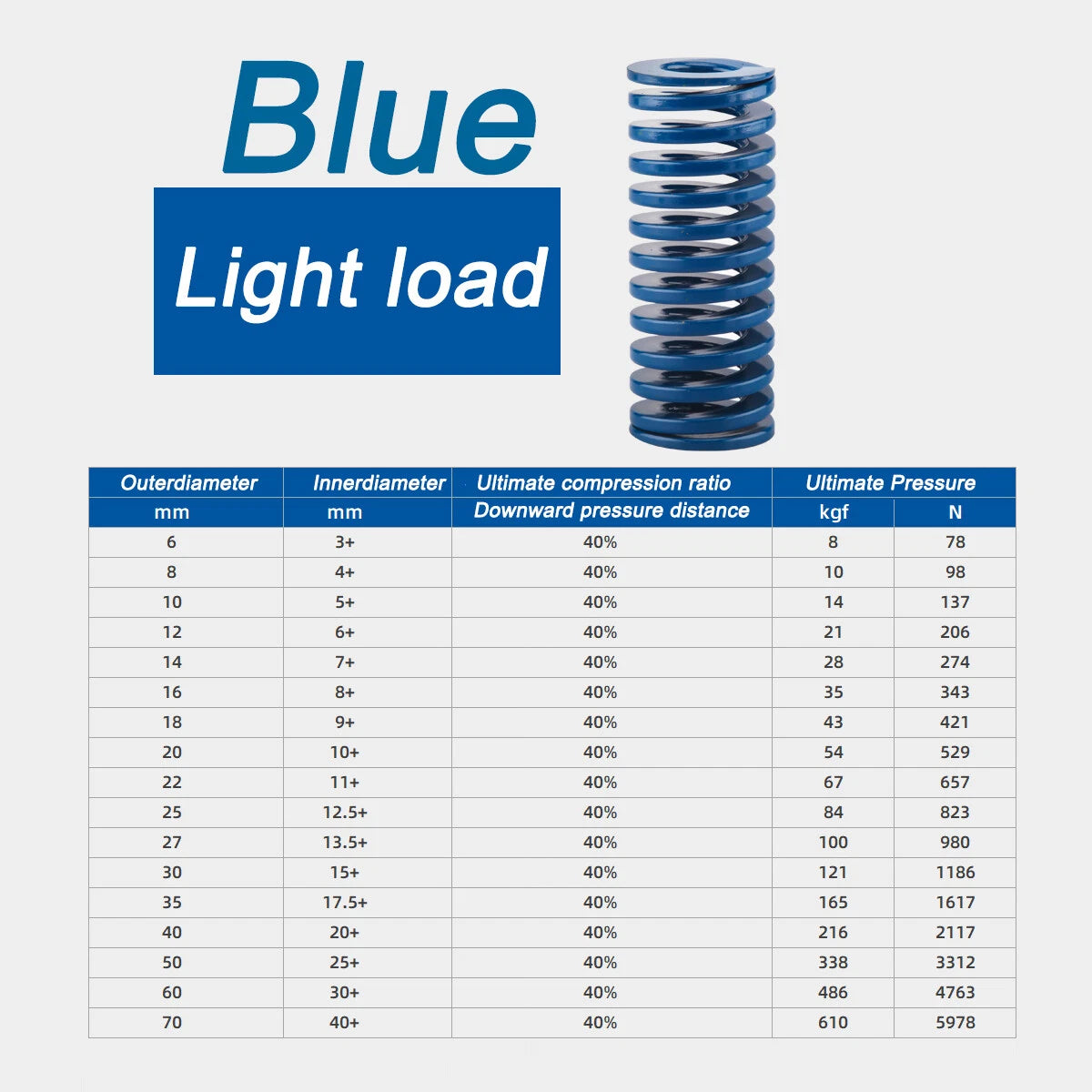
These heavy load compression die springs are manufactured to JIS B 5012 standards and are available in outer diameters from 6 mm (0.24 in) to 40 mm (1.57 in), with inner diameters sized to match standard guide pins, and free lengths ranging from 10 mm (0.39 in) up to 300 mm (11.81 in). The spring wire is wound from high-tensile chrome-silicon or chrome-vanadium alloy steel (material class varies by size; see variant options), with a color-coded finish indicating load class — red denotes the heavy load (HD) rating in the JIS classification system.

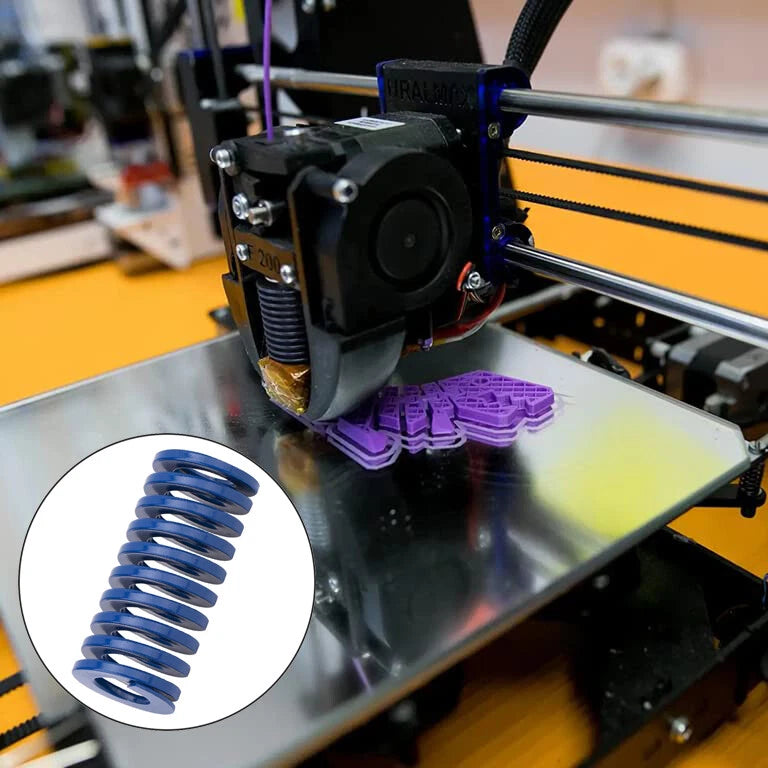
Typical applications include progressive stamping dies requiring strong stripping force, injection mold ejector return systems, hydraulic press cushioning, and fixture clamping in precision machining. The standardized dimensions make these springs direct drop-in replacements for worn tooling springs in existing die sets, reducing changeover time for maintenance teams and tool-and-die shops.

🔧 Compatibility: Designed for standard JIS die spring guide pins and pockets. Match outer diameter to your die pocket bore and inner diameter to your guide pin diameter. Confirm free length against your die shut height and required working deflection before ordering.

✅ Key Features of These Heavy Load Compression Die Springs

📐
Wide Size Range

Outer diameters from 6 mm to 40 mm; free lengths from 10 mm to 300 mm — covering the majority of standard JIS die spring pocket sizes in a single product line.

🔴
Heavy Load (Red) Rating

Color-coded red per JIS B 5012 heavy load classification, delivering higher spring rates than light or medium load grades for applications requiring strong stripping or ejection force.

⚙️
Alloy Steel Construction

Wound from high-tensile alloy steel (chrome-silicon or chrome-vanadium depending on size), providing fatigue resistance under repeated compression cycles typical of production tooling.

📏
JIS B 5012 Standard Dimensions

Outer diameter, inner diameter, and free length conform to JIS B 5012 tolerances, ensuring interchangeability with existing die sets and compatibility with standard guide pin diameters.

🛡️
Surface Treatment

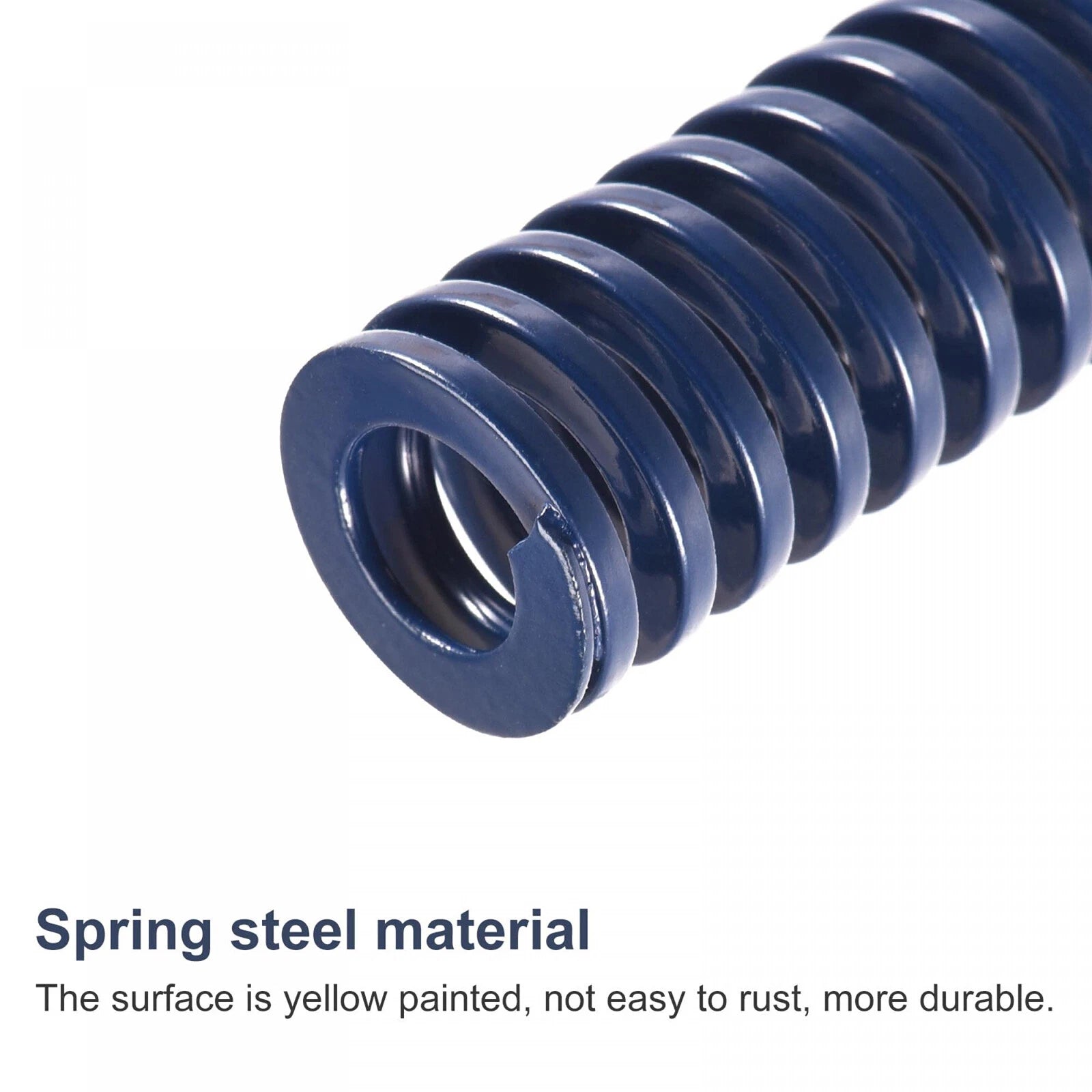
Springs receive a protective surface treatment (typically shot-peened and coated) to extend service life and resist corrosion in typical workshop and toolroom environments.

🔁
Direct Replacement Fit

Standardized JIS dimensions allow direct substitution for worn or broken die springs in progressive, compound, and transfer dies without modification to the die pocket or guide pin.

📐 Technical Specifications — Compression Die Spring

Standard JIS B 5012
Load Class Heavy Load (Red)
Outer Diameter (OD) 6 mm – 40 mm (0.24 in – 1.57 in)
Inner Diameter (ID) 3 mm – 20 mm (see variant options)
Free Length 10 mm – 300 mm (0.39 in – 11.81 in)
Material High-tensile alloy steel (chrome-silicon / chrome-vanadium)
Surface Finish Shot-peened with protective coating
Color Code Red (Heavy Load)
Spring Rate See variant options
Max. Deflection See variant options
End Type Closed and ground ends
Operating Temperature Up to approximately 120°C (248°F) typical for alloy steel die springs

❓ Frequently Asked Questions

How do I select the correct outer diameter and inner diameter for my die?

Measure your die pocket bore to determine the maximum outer diameter the spring must fit into — the spring OD should be slightly smaller than the pocket bore to allow free movement. Then measure your guide pin diameter; the spring inner diameter must be larger than the guide pin to slide over it freely. Use the variant selector above to match OD and ID to your measured dimensions.

What does the red color code mean, and how does it compare to other load classes?

Per JIS B 5012, die springs are color-coded by load class: light load (blue), medium load (red is sometimes used for medium in some standards — confirm your specific JIS edition), heavy load (red or green depending on revision), and extra heavy load (yellow). These springs are rated as Heavy Load. Always verify the spring rate and deflection data against your tooling requirements rather than relying solely on color.

How do I determine the correct free length for my application?

The free length should be chosen based on your die's shut height, the required working stroke (deflection), and the desired pre-load. A common rule of thumb is to select a free length so that the spring operates between 15% and 30% of its free length in deflection during normal cycling, and does not exceed the maximum allowable deflection (typically 30–40% of free length for heavy load springs) at full stroke.

Are these springs suitable for corrosive or high-humidity environments?

The protective surface coating provides basic corrosion resistance suitable for typical indoor toolroom and workshop conditions. For applications involving cutting fluids, coolants, or high-humidity environments, consider applying additional lubrication or a corrosion-inhibiting coating. These springs are not rated for immersion in aggressive chemicals or outdoor exposure without additional protection.

Can I use these springs in injection mold ejector return systems?

Yes. JIS heavy load compression die springs are widely used in injection mold ejector return applications. Select the OD and ID to match your mold's spring pocket and ejector pin diameter, and choose a free length that provides adequate return force at the required stroke. Confirm the spring rate is sufficient to return the ejector plate fully before the next shot cycle.

What is the expected service life of these die springs?

Service life depends on operating deflection, cycle rate, and environmental conditions. JIS-standard heavy load die springs are typically rated for a defined number of cycles at a specified deflection percentage (often 1 million cycles or more at 30% deflection). Operating at lower deflection percentages significantly extends service life. Replace springs showing visible fatigue, set, or cracking immediately to avoid die damage.

How do I know if I need a heavy load spring versus a medium or extra heavy load spring?

Choose the load class based on the force required at your working deflection. Calculate the required spring force (stripping force, ejection force, or clamping force) and divide by the expected deflection to get the required spring rate. If the heavy load spring rate in your chosen size meets this requirement within the allowable deflection range, it is the correct choice. If the required rate exceeds what heavy load provides, consider extra heavy load springs.

🛒 Select your Outer Diameter, Inner Diameter, and Length above, then add to cart.

You may also like

Recently viewed