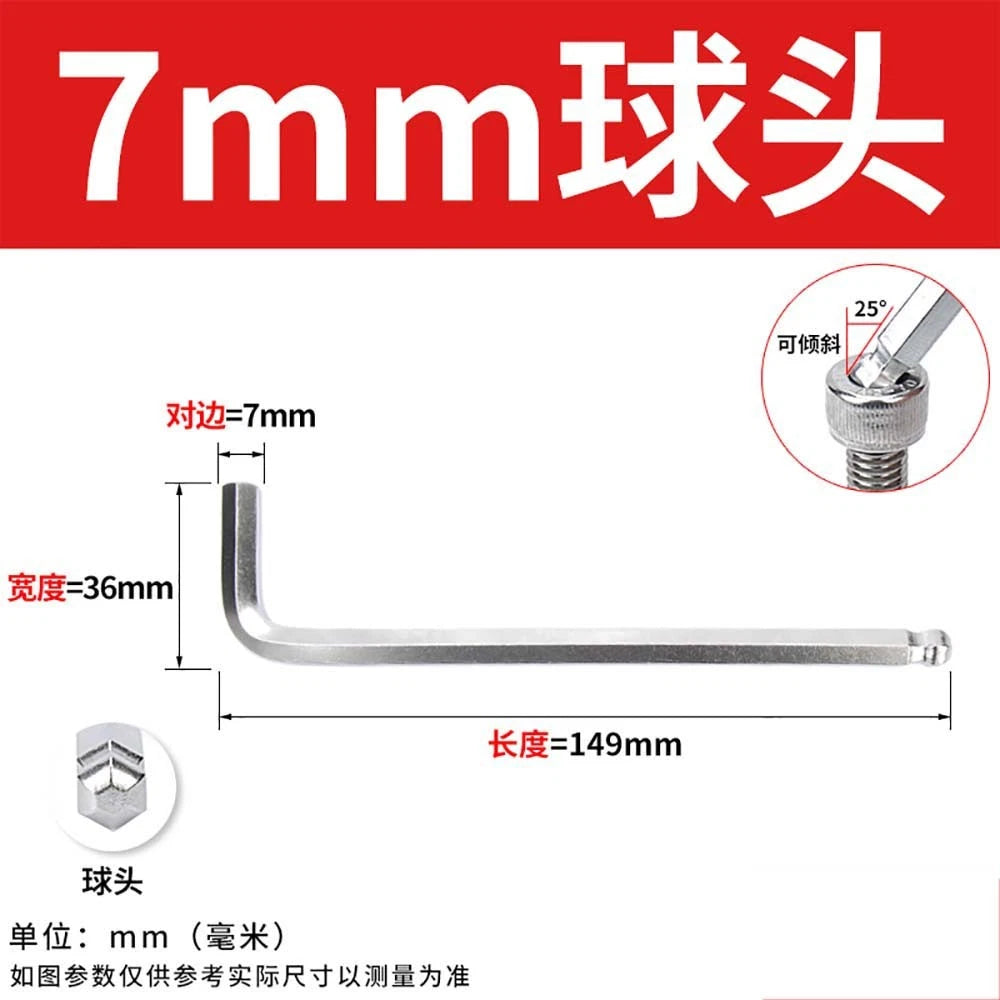
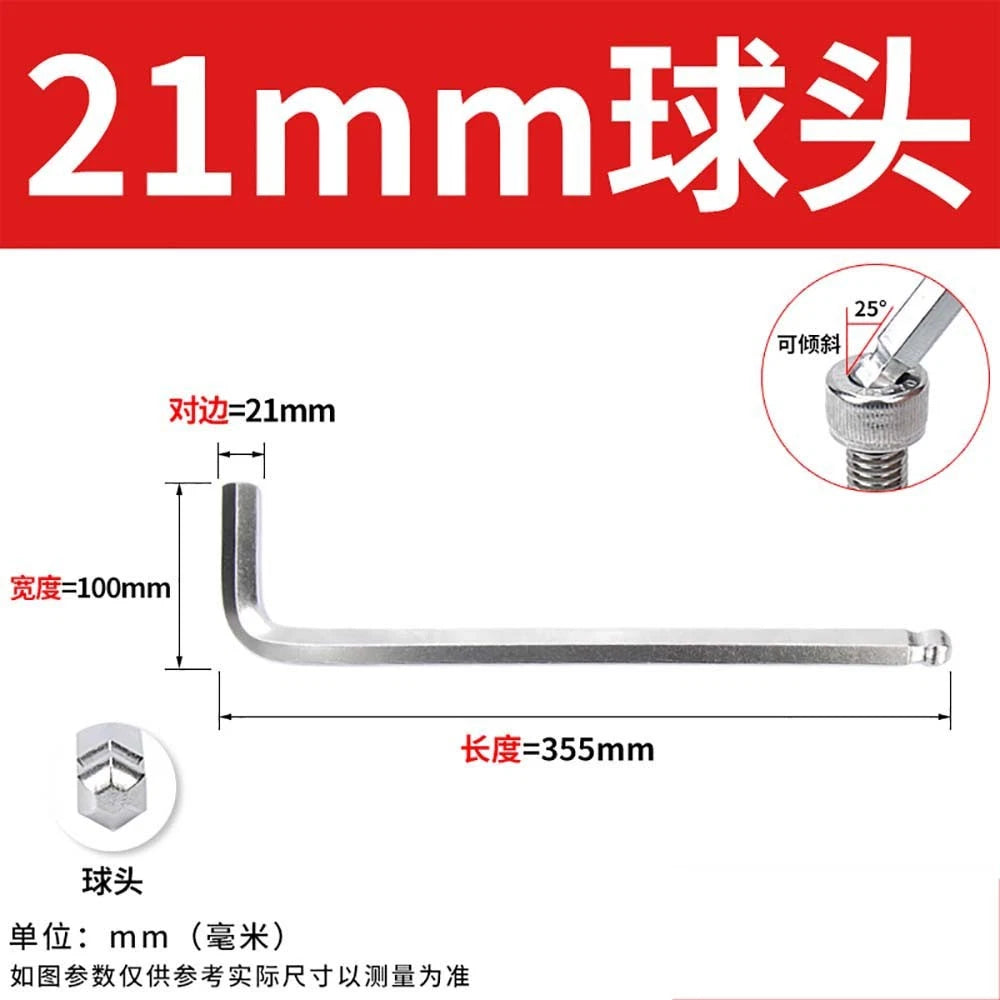
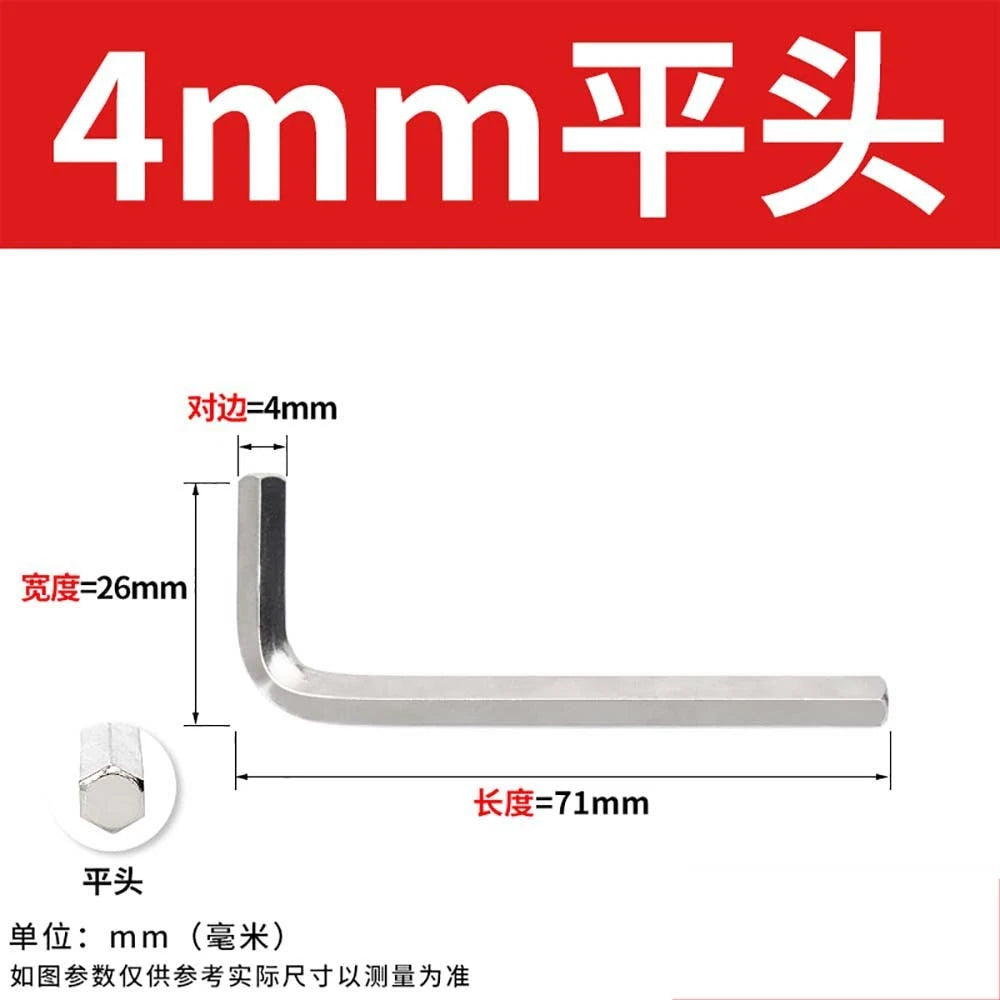
Hex Keys 1.5-2.2mm Allen Keys Ball/Flat End Hex Key Hex Wrenches Alloy Steel

No reviews

Price:
Sale price$53.57 USD
Stock:
In stock (500 units), ready to be shipped

Payment & Security

Ach Direct Debit Amazon American Express Apple Pay Bancontact Diners Club Discover Google Pay iDEAL Wero Mastercard PayPal Shop Pay USDC Visa

Your payment information is processed securely. We do not store credit card details nor have access to your credit card information.

Quantity Discount Promotion
🎯 BULK DISCOUNT: Buy More, Save More!
Buy 2 Items
5% OFF
Buy 4 Items
10% OFF
Buy 6 Items
15% OFF
Expert

DIY Expert Support

Get fitment advice & recommendations

Mon-Fri, 8:30AM-8PM
24-Hour Fast Ship
🚚
Arrives in 3-14 days
🌍
Global Reach
↩️
30-Day Returns
🌱 1 tree planted with every purchase

Description

Hex Keys & Allen Wrenches for Tight-Space Fastening — Ball-End & Flat-End, 1.5–22mm

When a bolt is recessed at an awkward angle and your standard wrench won't reach, the right hex key makes all the difference. Whether you're a furniture assembler, bicycle mechanic, or machine technician, stripped or inaccessible socket-head screws are a constant frustration. These alloy steel hex keys are engineered to give you the reach and torque you need without slipping or rounding out fasteners.

Available in ball-end (long-arm) and flat-end (short-arm) configurations, these hex wrenches are made from chrome vanadium steel or S2 steel — both alloy steel grades known for hardness and torsional strength. Sizes span 1.5 mm (approximately 1/16 in) to 22 mm (approximately 7/8 in), with 9-piece sets available in medium-length and extended-length arm options. Individual pieces are sold in quantities of 1, 2, 5, 10, or 20 depending on size.

Typical use cases include assembling flat-pack furniture with recessed hex bolts, adjusting derailleur limit screws and stem bolts on road or mountain bikes, and tightening socket-head cap screws on CNC fixtures or industrial machinery. The ball-end tip allows up to approximately 25–30° of angular engagement, making it ideal for hex key use in confined spaces where a straight-on approach is impossible.

🔧 Compatibility: Fits standard metric socket-head cap screws (ISO 4762 / DIN 912), set screws (DIN 913–916), and grub screws with hex drive. Not compatible with Torx, Phillips, or SAE/imperial hex fasteners.

✅ Key Features of These Alloy Steel Hex Keys & Allen Wrenches

⚙️ Two tip styles for every situation
Ball-end (long-arm) tips engage fasteners at angles up to ~30°, ideal for recessed or hard-to-reach bolts. Flat-end (short-arm) tips deliver maximum torque for fully seated, straight-on driving.
🔩 Wide size range: 1.5 mm to 22 mm
Covers the most common metric hex sizes used in furniture hardware, bicycle components, automotive accessories, and industrial machinery — from fine 1.5 mm grub screws to heavy-duty 22 mm socket heads.
🛡️ Chrome vanadium & S2 steel construction
Chrome vanadium alloy steel offers excellent toughness and fatigue resistance for everyday use. S2 steel provides higher hardness and impact resistance, suited for power-tool-assisted or high-torque applications.
📐 Medium-length and extended-length arm options
9-piece sets come in both medium-length (standard reach) and extended-length (extra reach into deep recesses) configurations, so you can match arm length to your workspace constraints.
🔄 Flexible quantity options
Order individual pieces (1, 2, 5, 10, or 20 pcs) to replace worn keys or stock specific sizes, or choose a 9-piece set for a ready-to-use metric assortment covering the most-used sizes.
✔️ Machined hex profile for precise fit
The hex cross-section is machined to close tolerances to minimize play inside the fastener socket, reducing the risk of cam-out and fastener rounding — especially important on smaller sizes like 1.5–3 mm.

📐 Technical Specifications — Hex Keys & Allen Wrenches

Product Type Hex Key / Allen Wrench
Drive Style Hex (Allen)
Tip Style Ball-end (long-arm) / Flat-end (short-arm)
Size Range 1.5 mm – 22 mm (approx. 1/16 in – 7/8 in)
Material Alloy Steel — Chrome Vanadium Steel or S2 Steel (see variant options)
Arm Length Medium-length / Extended-length (see variant options)
Thread Standard Metric (ISO 4762 / DIN 912 compatible)
Finish See variant options
Quantity per Order 1 Pcs / 2 Pcs / 5 Pcs / 10 Pcs / 20 Pcs / 1 Set (9 pcs)
Set Composition 9-piece metric set (sizes vary by set; see variant options)
Weight See variant options

❓ Frequently Asked Questions

What is the difference between ball-end and flat-end hex keys?

A ball-end hex key has a rounded, ball-shaped tip that allows you to engage a fastener at an angle — typically up to about 25–30° off-axis. This is useful when you cannot approach a bolt straight-on due to surrounding components or tight clearances. A flat-end (standard) hex key has a straight, fully-faceted tip that must be inserted straight into the socket. It cannot work at an angle, but it transfers torque more efficiently and is less likely to slip under high load. For most assembly tasks, flat-end keys are used for final tightening while ball-end keys are used for initial threading and adjustment in confined spaces.

What is the difference between chrome vanadium steel and S2 steel for hex keys?

Chrome vanadium (Cr-V) steel is a widely used alloy steel that offers a good balance of hardness, toughness, and fatigue resistance. It is well-suited for hand-tool applications where the key is turned manually. S2 steel is a shock-resistant tool steel with higher hardness and better impact resistance than standard Cr-V. S2 hex keys are commonly used with power screwdrivers or impact drivers, or in applications requiring repeated high-torque cycling. If you are using these keys by hand for general assembly, chrome vanadium is sufficient. If you are using them with power tools or in demanding industrial settings, S2 steel is the more durable choice.

How do I choose the right hex key size for my fastener?

The hex key size must match the across-flats (A/F) dimension of the socket in your fastener — not the bolt's thread diameter. For example, an M5 socket-head cap screw typically requires a 4 mm hex key, while an M8 bolt typically requires a 6 mm key. If you are unsure, check the fastener manufacturer's specification sheet or measure the socket opening with a caliper. Using an undersized key risks rounding the socket; using an oversized key will not fit. When in doubt, start with the next size down and work up until you find a snug fit with no play.

Can I use these hex keys with a power screwdriver or impact driver?

The S2 steel variants are designed to withstand the impact and torque loads associated with power tools. Chrome vanadium variants are intended for hand use and may be more susceptible to fracture under repeated impact loading. If you plan to use hex keys with a power tool, select the S2 steel option and ensure the key is properly seated in the fastener before applying power to avoid cam-out or tip breakage.

Are these hex keys compatible with SAE (imperial) fasteners?

No. These hex keys are sized in metric millimeters and are designed for metric socket-head fasteners (ISO 4762 / DIN 912 and related standards). While some metric sizes are close in dimension to certain SAE sizes — for example, 5 mm is close to 3/16 in — using a metric key on an SAE fastener (or vice versa) risks rounding the socket due to the slight dimensional mismatch. For SAE fasteners, use a dedicated SAE hex key set measured in fractional inches.

What is the advantage of extended-length hex keys over medium-length?

Extended-length (long-arm) hex keys provide greater reach into deep recesses, such as countersunk bolt holes in thick plates, engine components, or machinery housings where a standard-length key cannot reach the fastener. The longer arm also provides more leverage for loosening stubborn fasteners. The trade-off is that extended-length keys are more susceptible to flex under very high torque, so for final high-torque tightening in accessible locations, a medium-length key used on the short arm is often preferable.

How do I prevent rounding out a hex socket when using a ball-end key?

Ball-end keys should be used for initial threading and light adjustment only — not for final tightening. Because the ball tip contacts only a portion of the socket's faces, it concentrates stress on fewer contact points, which can round the socket if excessive torque is applied. For final tightening, switch to the flat-end (straight) tip, which engages all six faces of the socket fully. Also ensure the key is fully seated before applying torque, and avoid using a ball-end key at extreme angles (beyond ~25°) as this further reduces contact area.

🛒 Select your size and amount above, then add to cart.


You may also like

Recently viewed