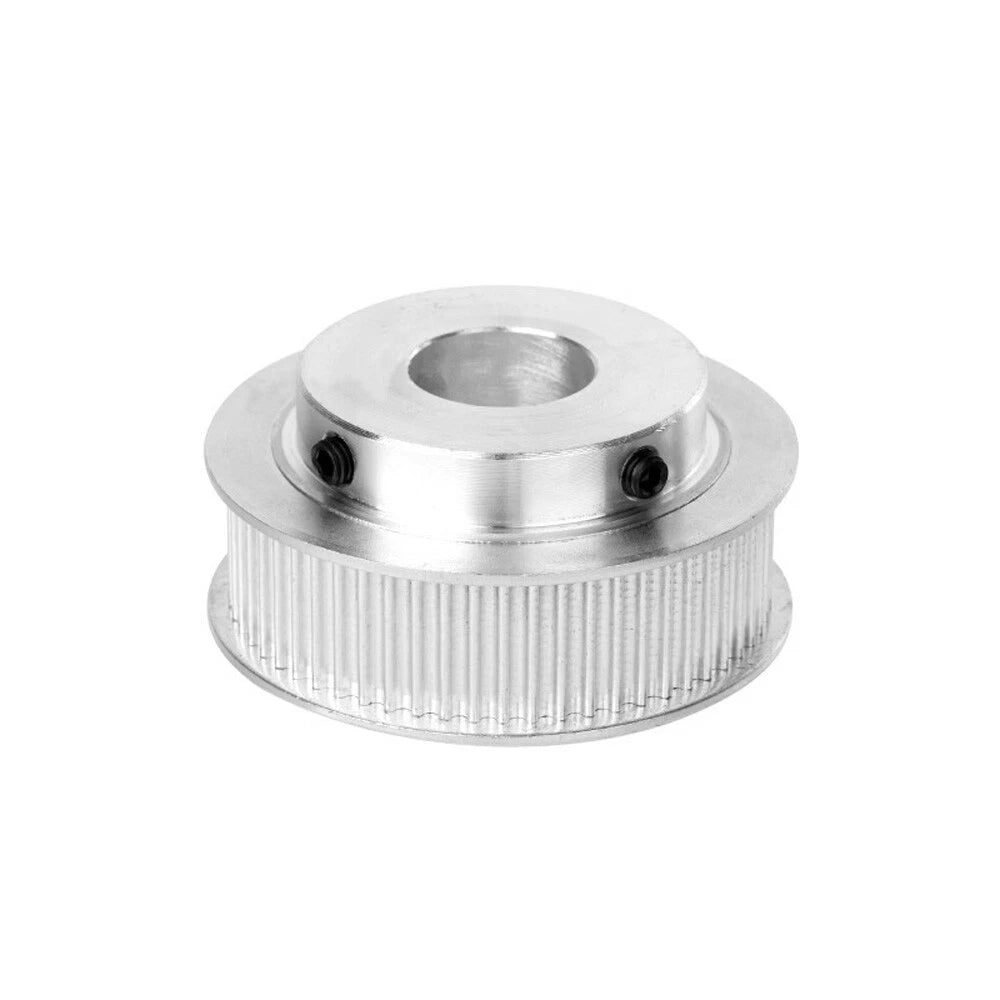
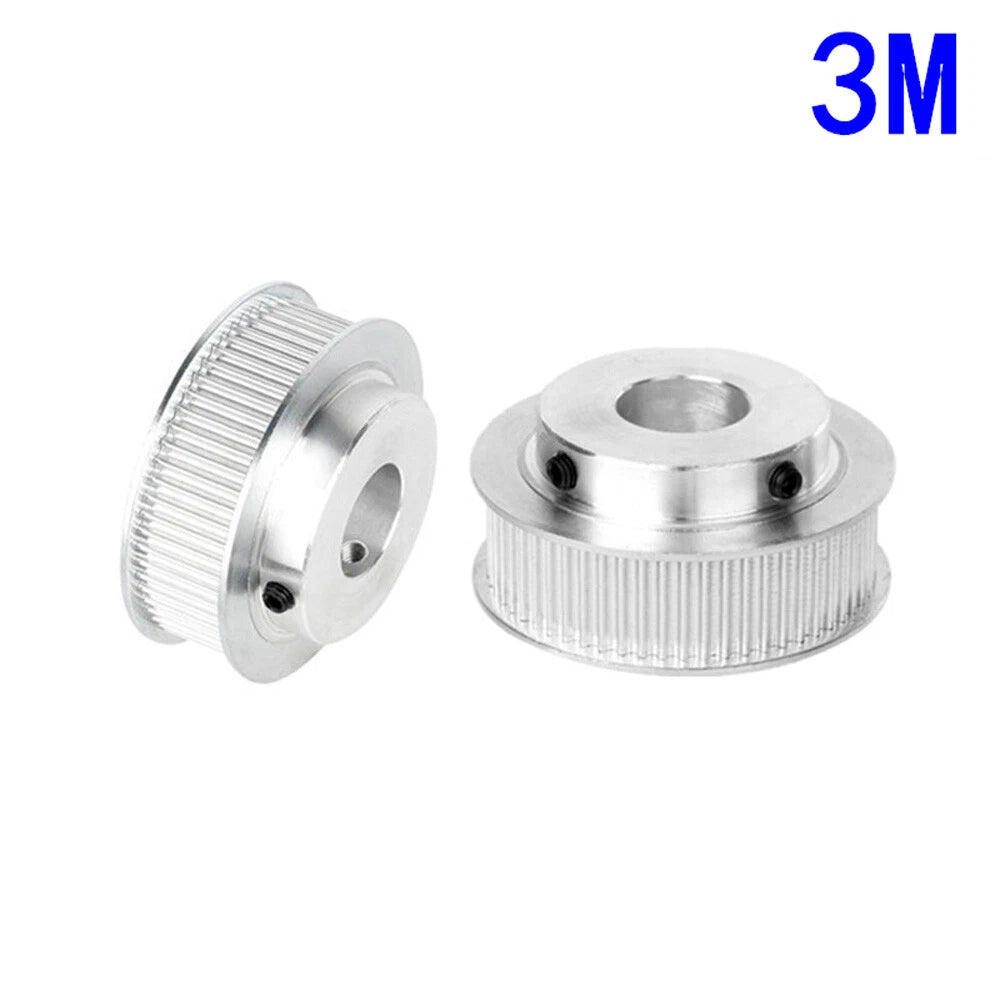
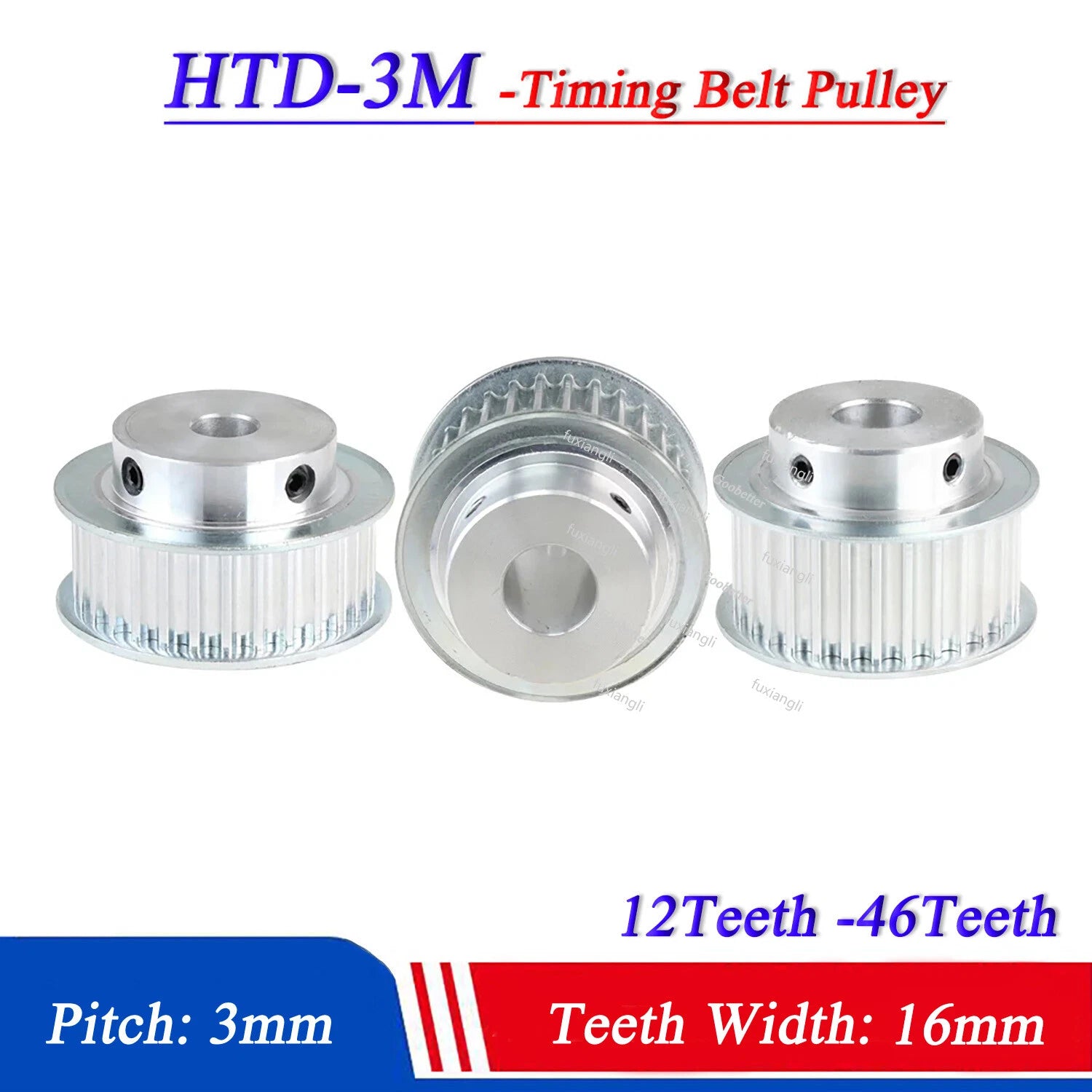
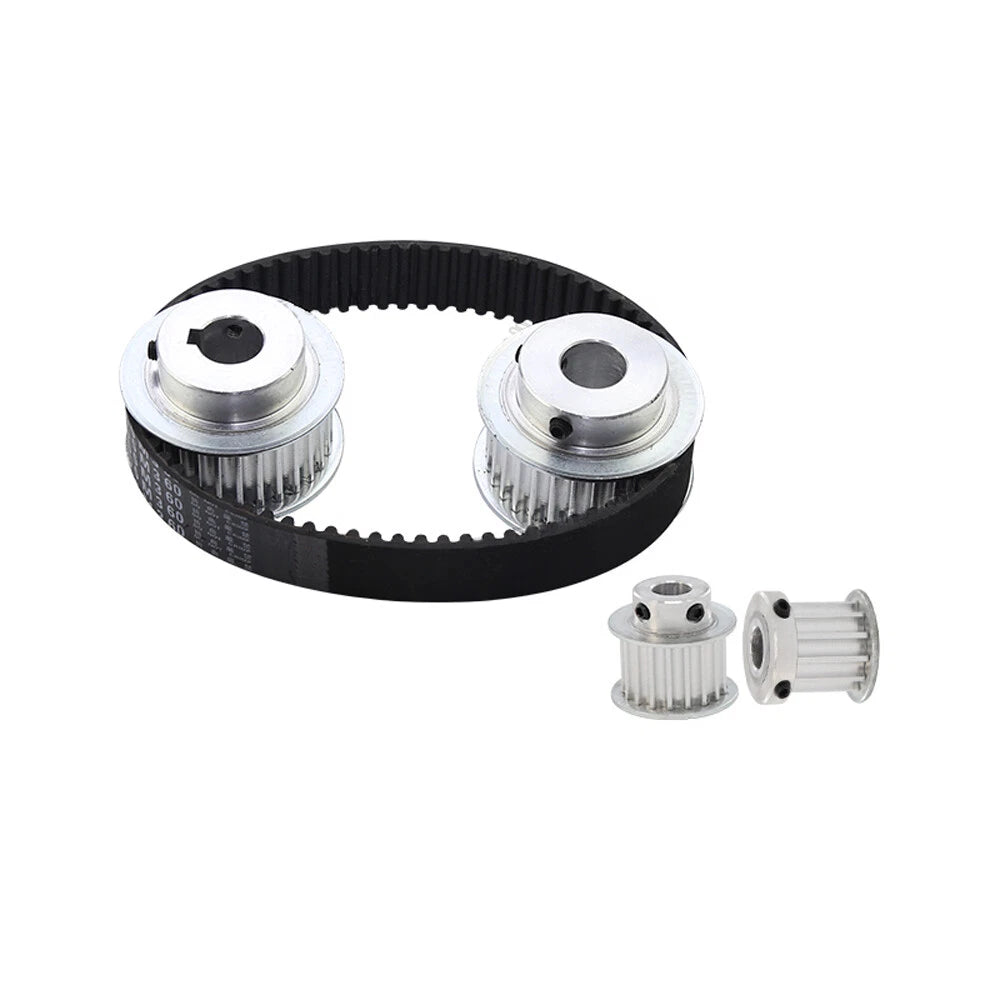
HTD-3M 12-46Teeth Timing Belt Pulleys Pitch 3mm CNC Synchronous Wheel Width 16mm

No reviews

Price:
Sale price$3.86 USD
Stock:
In stock (500 units), ready to be shipped

Payment & Security

Ach Direct Debit Amazon American Express Apple Pay Bancontact BLIK Diners Club Discover EPS Google Pay iDEAL Wero JCB Maestro Mastercard Multibanco MobilePay PayPal Przelewy24 Shop Pay Twint Union Pay USDC Visa

Your payment information is processed securely. We do not store credit card details nor have access to your credit card information.

Limited Offer — Spend More, Save More
Spend $55+
Save $5
Spend $100+
Save $10
Spend $200+
Save $25
HomeDIYer DIY Expert Support

DIY Expert Support

Get fitment advice & recommendations

Mon–Fri  8:30 AM – 8:00 PM
24-Hour Fast Ship
Arrives in 3–14 Days
Worldwide Shipping
30-Day Returns
1 tree planted with every purchase

Description

HTD-3M Timing Belt Pulleys — Precision 3mm Pitch Synchronous Wheels for CNC & Automation

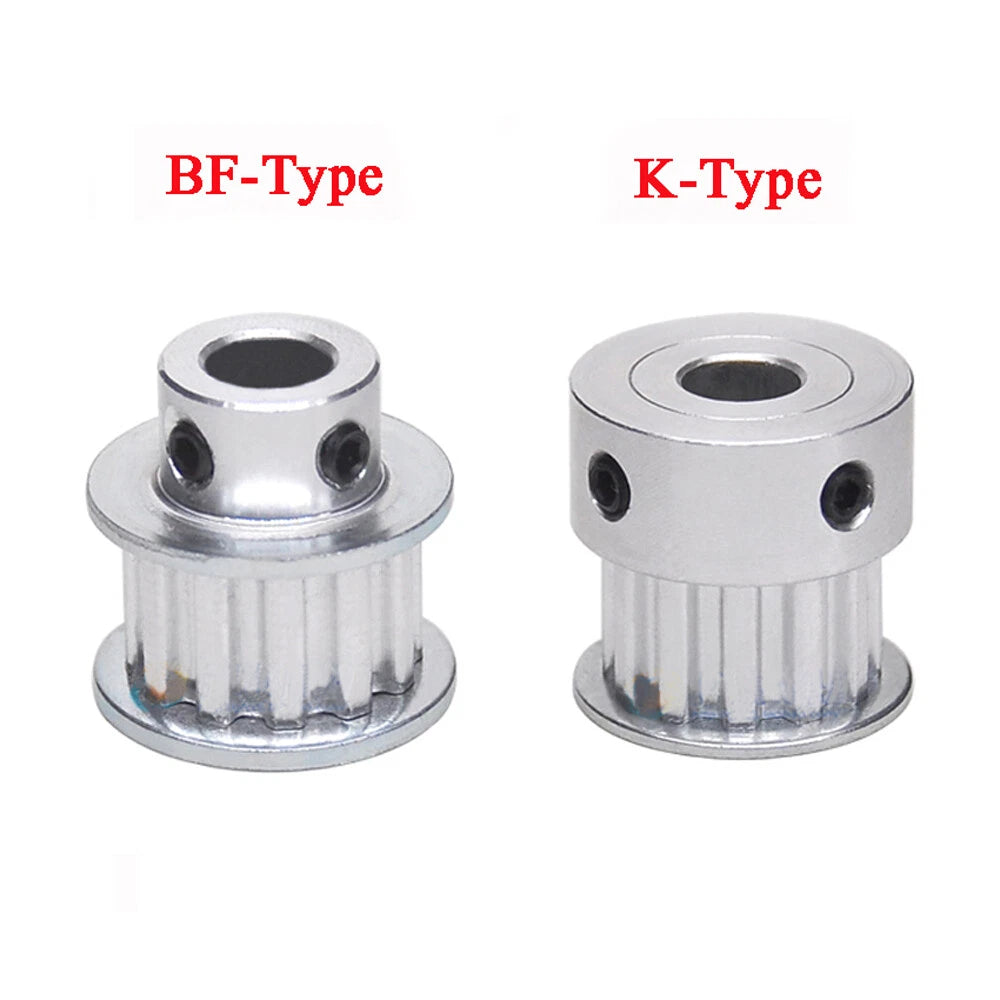
When a slipping or mismatched pulley throws off your CNC router, 3D printer, or linear actuator, every axis move becomes unreliable. Engineers, makers, and machine builders who need repeatable, zero-backlash motion depend on HTD-3M timing belt pulleys that hold tooth engagement under load. These 3mm-pitch synchronous wheels are designed for 16mm-wide HTD-3M belts and are available in K-type (keyway) and BF-type (flanged) configurations to match your shaft and belt retention requirements.

Each pulley is machined from aluminum alloy with an anodized finish for corrosion resistance and reduced rotating mass. Tooth count ranges from 12 to 46 teeth, with bore options spanning 5 mm (0.197 in) to 20 mm (0.787 in). Belt width compatibility is fixed at 16 mm (0.630 in), and pitch diameter scales with tooth count at the standard 3 mm HTD pitch.

Typical applications include CNC router X/Y/Z axis drives requiring precise step-to-distance ratios, desktop 3D printer extruder and motion systems using GT2/HTD belt standards, and custom automation conveyor or pick-and-place mechanisms where synchronous timing between shafts is critical.

⚙️ Compatibility: Designed for HTD-3M timing belts with 16 mm belt width. Verify bore diameter and tooth count match your shaft and drive ratio before ordering.

✅ Key Features of These HTD-3M Timing Belt Pulleys

🦷
Wide Tooth Count Range

Available from 12T to 46T, covering a broad range of drive ratios for speed reduction or 1:1 synchronous drives in CNC and automation systems.

🔩
K-Type & BF-Type Options

K-type pulleys feature a keyway slot for positive shaft locking; BF-type pulleys include integrated flanges to keep the belt tracked laterally on the pulley face.

📐
Multiple Bore Sizes

Bore options from 5 mm to 20 mm accommodate a wide range of motor shafts, lead screws, and drive axles without custom machining.

🏗️
Aluminum Alloy Construction

Machined aluminum body keeps rotating inertia low while providing sufficient strength for typical CNC and light industrial drive loads.

🛡️
Anodized Surface Finish

Anodized coating improves corrosion resistance and surface hardness, extending service life in workshop and light-industrial environments.

🎯
Standard HTD-3M Tooth Profile

Curvilinear HTD tooth profile distributes belt load across multiple teeth, reducing tooth shear stress and improving torque transmission compared to trapezoidal profiles.

📐 Technical Specifications — HTD-3M Timing Belt Pulleys

Belt Type HTD-3M (3mm pitch, curvilinear tooth)
Belt Width Compatibility 16 mm (0.630 in)
Tooth Count Range 12T – 46T (see variant options)
Bore Diameter Range 5 mm – 20 mm (see variant options)
Pulley Type K-type (keyway) / BF-type (flanged) — see variant options
Material Aluminum alloy
Surface Treatment Anodized
Pitch Diameter See variant options
Outer Diameter See variant options
Hub Length See variant options
Quantity per Order 1 piece

❓ Frequently Asked Questions

How do I choose the right tooth count for my application?

Tooth count determines your drive ratio. Divide the driven pulley tooth count by the driving pulley tooth count to get the speed reduction ratio. For a 1:1 ratio (same speed on both shafts), use identical tooth counts on both pulleys. For CNC axes, match the tooth count to your steps-per-mm calculation based on motor step angle, microstepping, and belt pitch.

What is the difference between K-type and BF-type pulleys?

K-type pulleys have a keyway slot machined into the bore, allowing a key to be inserted between the shaft and pulley for positive rotational locking — ideal when high torque or reversing loads are present. BF-type pulleys have flanges on both sides of the belt groove that physically retain the belt on the pulley, preventing lateral belt walk-off. BF-type pulleys are commonly used when only one pulley in a drive system has flanges.

How do I select the correct bore diameter?

Measure your motor or drive shaft diameter with a caliper. Select the bore size that matches your shaft exactly — a bore that is too large will cause runout and vibration. Common NEMA 17 stepper motor shafts are 5 mm; NEMA 23 shafts are typically 6.35 mm (1/4 in) or 8 mm. Verify your shaft diameter before ordering.

Are these pulleys compatible with GT2 belts?

No. These pulleys use the HTD-3M curvilinear tooth profile with a 3 mm pitch. GT2 belts also have a 2 mm pitch and a different tooth geometry. HTD-3M pulleys are not interchangeable with GT2 pulleys or belts. Always pair HTD-3M pulleys with HTD-3M belts of the correct width (16 mm for this series).

How strong are these pulleys under load?

Aluminum alloy construction provides adequate strength for CNC router axes, 3D printer motion systems, and light automation drives. Maximum torque capacity depends on tooth count, bore size, and belt tension — for heavy industrial or high-shock applications, consult the torque ratings for your specific belt and pulley combination. These pulleys are not rated for heavy industrial conveyor or press applications.

Will the anodized finish resist corrosion in a workshop environment?

The anodized aluminum surface provides good resistance to oxidation and mild chemical exposure typical of workshop environments (cutting fluid mist, humidity). Anodizing is not suitable for immersion in strong acids or alkalis. For outdoor or high-humidity enclosures, consider adding a light machine oil wipe to exposed surfaces periodically.

Can I use one flanged (BF-type) and one unflanged (K-type) pulley in the same drive?

Yes — this is a common and accepted practice. In a two-pulley drive, it is standard to flange one pulley (typically the smaller driving pulley) to guide the belt laterally, while the other pulley remains unflanged. This reduces belt edge wear while still preventing belt walk-off during operation.

🛒 Select your Number of Teeth, Bore, and Type above, then add to cart.


You may also like

Recently viewed