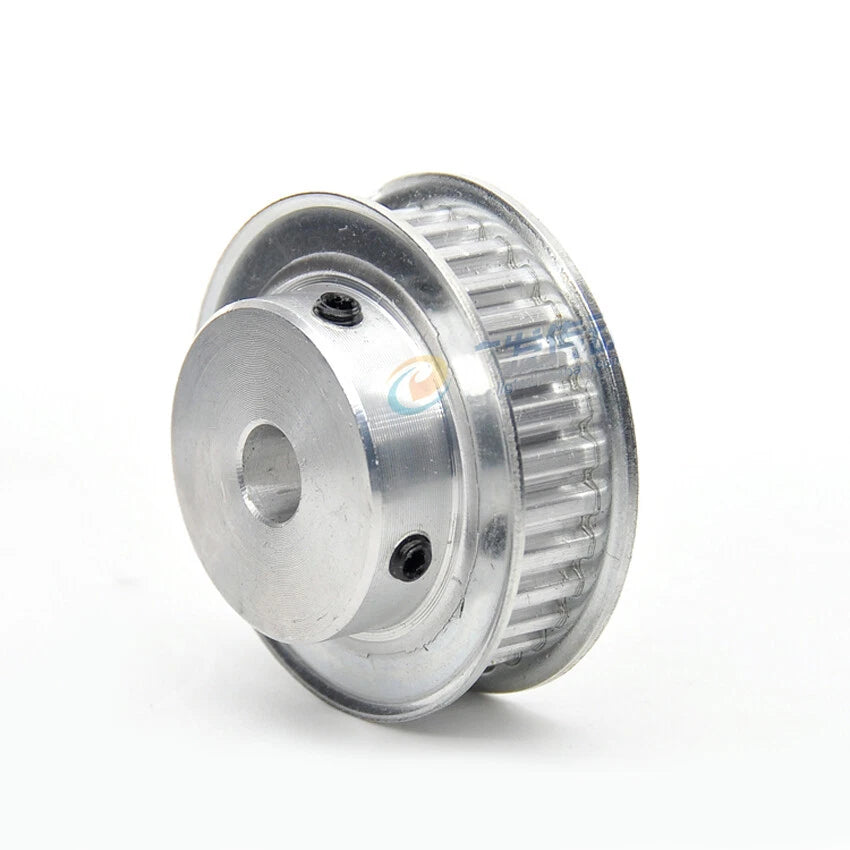
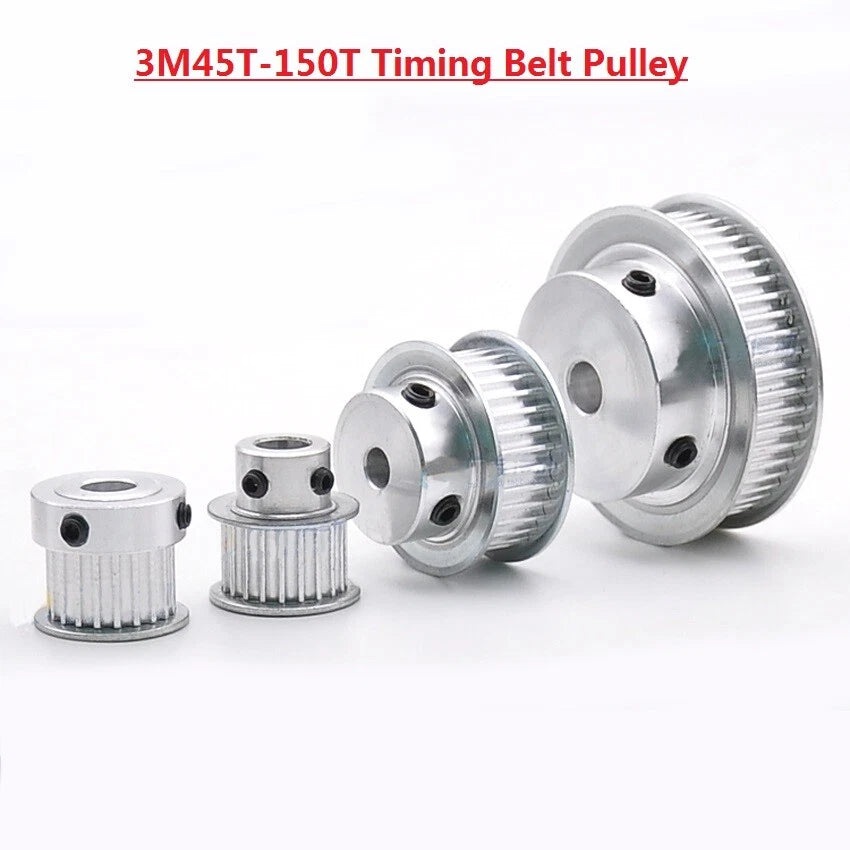
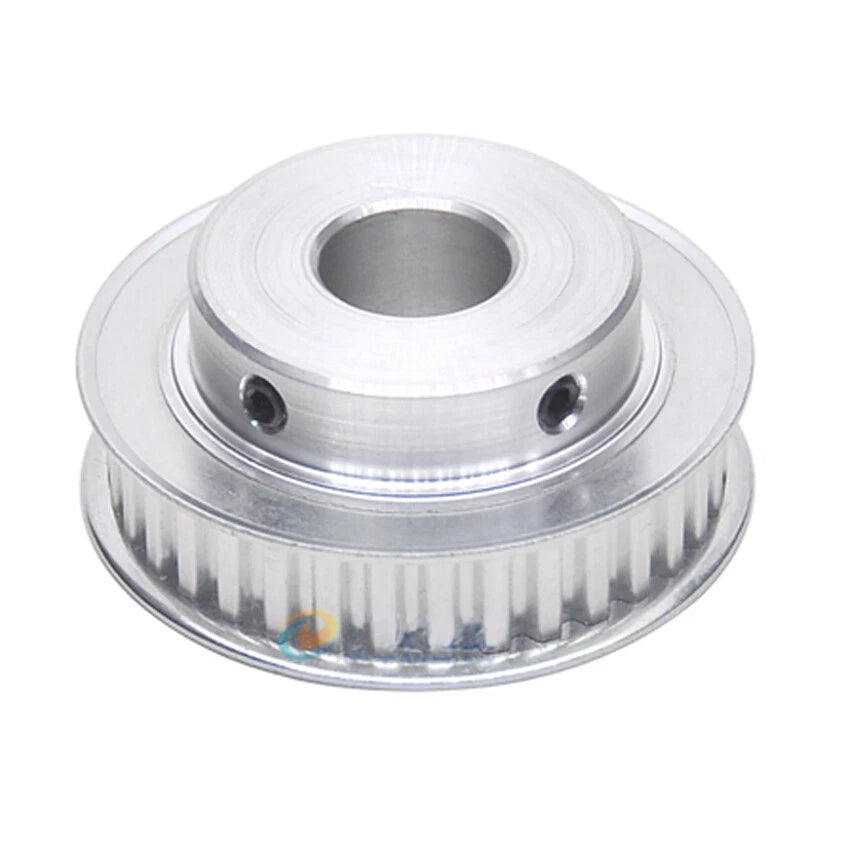
HTD-3M 45T-150T Timing Belt Pulley Pitch 3mmm With Step Drive Pulleys Width 11mm

No reviews

Price:
Sale price$5.78 USD
Stock:
In stock (500 units), ready to be shipped

Payment & Security

Ach Direct Debit Amazon American Express Apple Pay Bancontact BLIK Diners Club Discover EPS Google Pay iDEAL Wero JCB Maestro Mastercard Multibanco MobilePay PayPal Przelewy24 Shop Pay Twint Union Pay USDC Visa

Your payment information is processed securely. We do not store credit card details nor have access to your credit card information.

Limited Offer — Spend More, Save More
Spend $55+
Save $5
Spend $100+
Save $10
Spend $200+
Save $25
HomeDIYer DIY Expert Support

DIY Expert Support

Get fitment advice & recommendations

Mon–Fri  8:30 AM – 8:00 PM
24-Hour Fast Ship
Arrives in 3–14 Days
Worldwide Shipping
30-Day Returns
1 tree planted with every purchase

Description

HTD-3M Timing Belt Pulleys — Precise Power Transmission for DIY & CNC Drives

When your motion system slips, skips, or loses sync, the culprit is often an undersized or mismatched pulley. Engineers, makers, and CNC hobbyists who demand repeatable, backlash-free motion need a timing belt pulley that locks onto the shaft cleanly and meshes with the belt without play. The HTD-3M timing belt pulley series is engineered for exactly that — delivering consistent, slip-free power transfer across a wide range of gear ratios.

These HTD-3M pulleys feature a 3 mm pitch HTD tooth profile machined from aluminum alloy, with a stepped hub design and a belt-contact width of 11 mm. Tooth counts span from 45T to 150T, and bore options range from 5 mm to 25 mm (approximately 0.20 in to 0.98 in), covering the most common shaft diameters used in hobby and light-industrial motion systems. Each pulley includes a set-screw-ready hub for secure shaft retention.

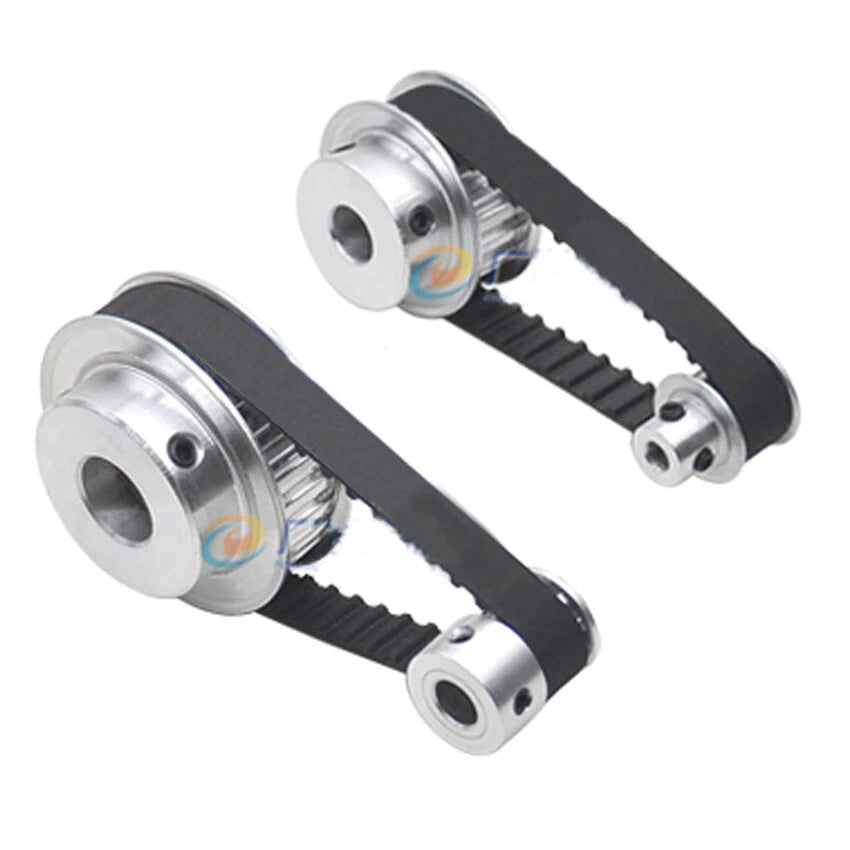
Typical use cases include CNC router X/Y axis drives, 3D printer extruder and motion systems, robotic arm joint actuators, and custom conveyor or indexing mechanisms — anywhere a synchronous belt drive with a 3 mm pitch HTD belt is required.

⚙️ Compatibility: Designed for use with HTD-3M synchronous timing belts (3 mm pitch, 11 mm width). Verify bore size matches your shaft diameter before ordering.

✅ Key Features of These HTD-3M Timing Belt Pulleys

🔩 Wide Tooth Count Range

Available from 45T to 150T, enabling flexible gear ratio selection for speed reduction or torque multiplication in your drive system.

📐 Multiple Bore Sizes

Bore options from 5 mm to 25 mm accommodate the most common shaft diameters used in CNC machines, 3D printers, and robotics platforms.

🏗️ Stepped Hub Design

The integrated step hub provides axial positioning reference and added shaft contact area for more stable, vibration-resistant mounting.

HTD Tooth Profile

The rounded HTD tooth form distributes belt load across a larger contact area, reducing tooth stress and extending belt life compared to trapezoidal profiles.

🔧 Set-Screw Hub Retention

Each pulley hub is pre-drilled and tapped for a set screw, allowing tool-free shaft locking and quick repositioning during prototyping or assembly.

📏 11 mm Belt Width

Matched to standard 11 mm wide HTD-3M belts, ensuring full tooth engagement across the belt width for consistent torque transmission without edge loading.

📐 Technical Specifications — HTD-3M Timing Belt Pulley

Belt Type HTD-3M (3 mm pitch, rounded tooth)
Tooth Count (Types) 45T, 46T, 48T, 50T, 55T, 60T, 65T, 70T, 72T, 75T, 80T, 90T, 100T, 120T, 140T, 150T
Belt Width Compatibility 11 mm
Bore Diameter Range 5 mm – 25 mm (see variant options)
Hub Style Stepped hub with set-screw
Material Aluminum alloy
Pitch Diameter Range See variant options
Outer Diameter Range See variant options
Quantity per Order 1 piece

❓ Frequently Asked Questions

How do I choose the right tooth count for my application?

Select the tooth count based on your desired gear ratio. Divide the driven pulley tooth count by the drive pulley tooth count to get the reduction ratio. For example, pairing a 45T drive pulley with a 90T driven pulley gives a 2:1 speed reduction. Larger tooth counts also increase the pulley's pitch diameter, which affects belt length requirements.

Which bore size should I order for my shaft?

Order the bore size that matches your shaft diameter exactly. Common shaft sizes for CNC and 3D printer applications include 5 mm, 6 mm, 6.35 mm (1/4 in), 8 mm, 10 mm, and 12 mm. If your shaft is metric, select the matching metric bore. For imperial shafts, 6.35 mm corresponds to 1/4 inch and 12.7 mm corresponds to 1/2 inch.

Are these pulleys compatible with standard HTD-3M timing belts?

Yes. These pulleys are designed to mesh with standard HTD-3M synchronous timing belts with a 3 mm pitch and 11 mm width. Ensure your belt width matches the 11 mm pulley groove width for full tooth engagement. Do not use with MXL, GT2, or other non-HTD belt profiles, as tooth geometry differs.

How strong is the set-screw connection — will it slip under load?

The set screw provides adequate retention for typical hobby and light-duty CNC loads when properly torqued against a flat or keyway on the shaft. For high-torque applications, we recommend using a shaft with a machined flat to prevent rotation. Adding a second set screw at 90° (if the hub allows) further improves retention under reversing or shock loads.

What material are these pulleys made from, and will they corrode?

These pulleys are machined from aluminum alloy, which offers a good strength-to-weight ratio and natural oxidation resistance suitable for indoor and dry-environment use. For humid or outdoor environments, consider applying a light coat of corrosion-inhibiting lubricant to the bore and hub surfaces. Aluminum is not recommended for highly corrosive chemical environments.

Can I use these pulleys in a 3D printer or CNC router?

Yes. HTD-3M pulleys are widely used in 3D printer motion systems (particularly CoreXY and Cartesian designs) and CNC router axis drives. Verify that your existing belt is HTD-3M profile and 11 mm wide before ordering. The stepped hub design also makes these suitable for robotic joint actuators and custom indexing tables.

How do I determine the correct belt length when changing pulley sizes?

Belt length depends on center distance and the pitch diameters of both pulleys. Use the formula: Belt Length ≈ 2C + π(D1+D2)/2 + (D2−D1)²/(4C), where C is center distance and D1/D2 are pitch diameters. Online HTD belt length calculators can simplify this. When switching to a larger tooth count pulley, you will typically need a longer belt.

🛒 Select your tooth count (Types) and bore size above, then add to cart.


You may also like

Recently viewed