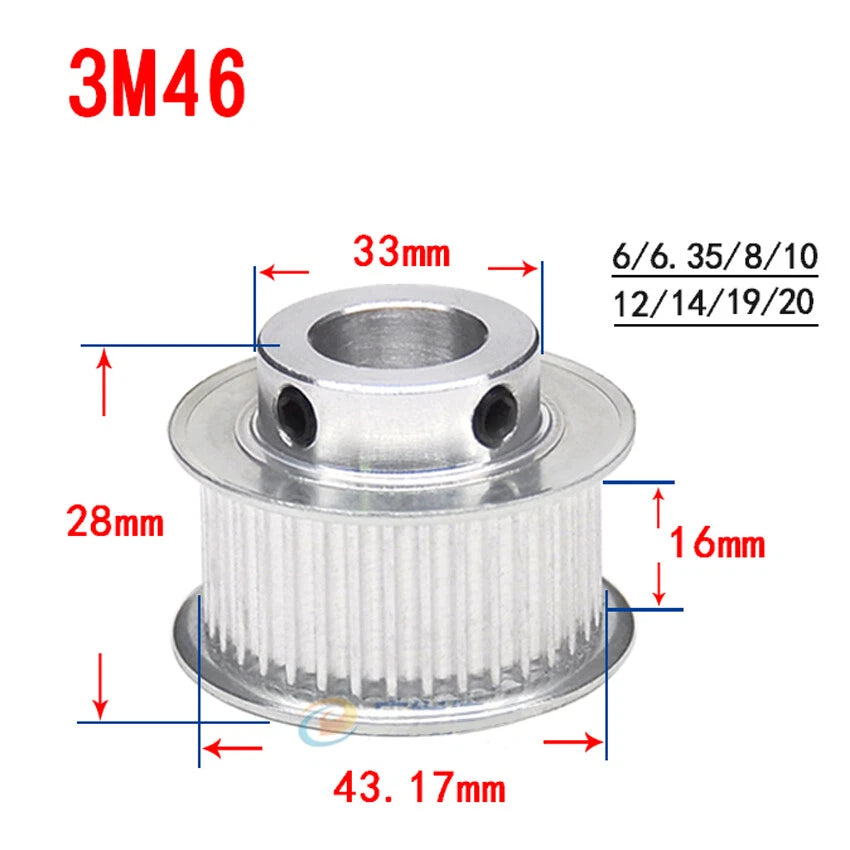
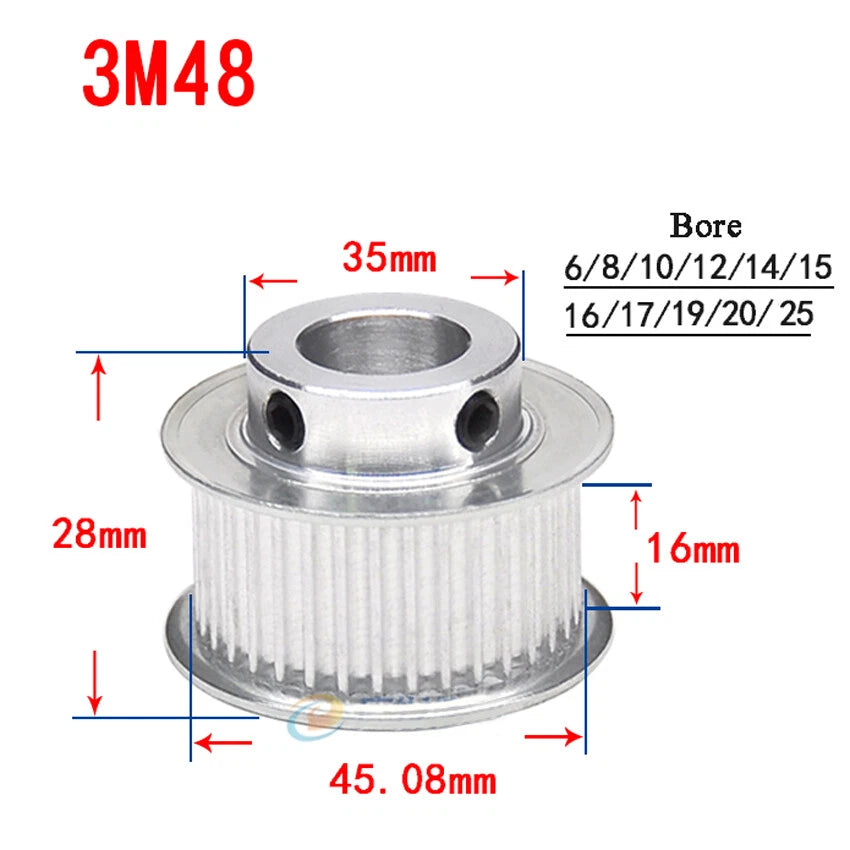
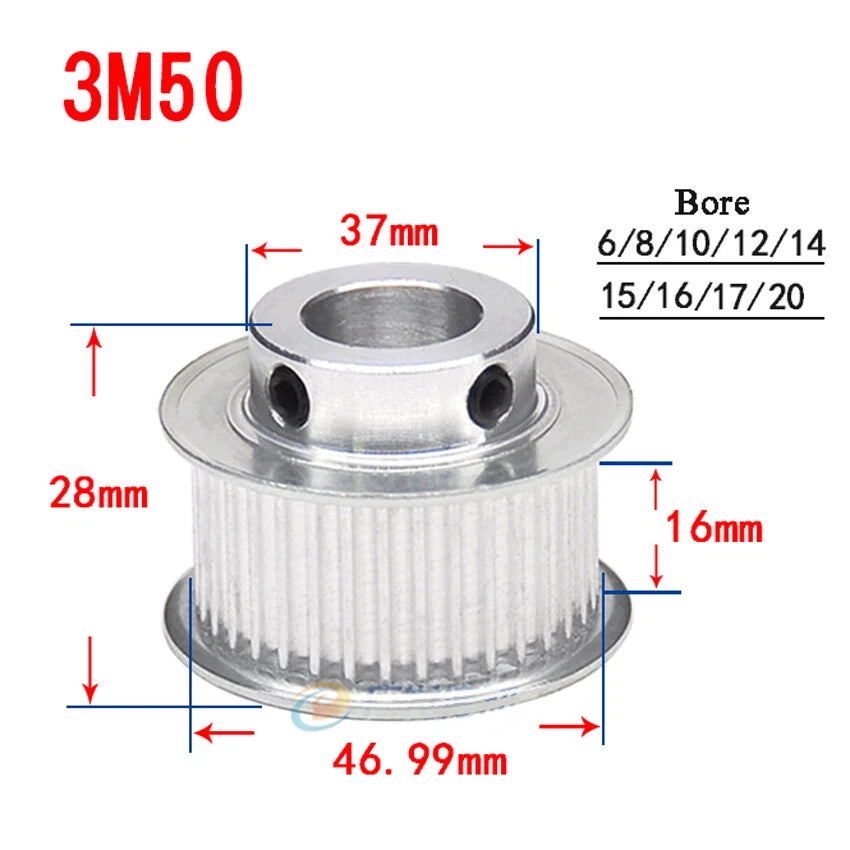
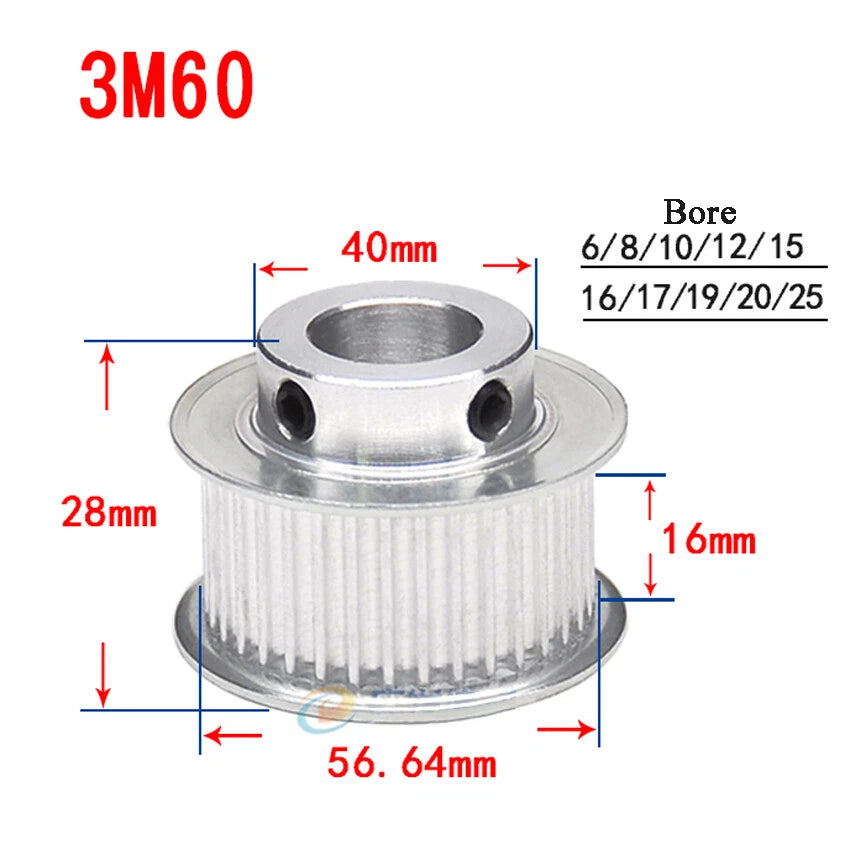
HTD-3M 12T-150T Timing Belt Pulley With Step Bore 8-25mm, For 15mm Width Belt

No reviews

Price:
Sale price$4.07 USD
Stock:
In stock (500 units), ready to be shipped

Payment & Security

Ach Direct Debit Amazon American Express Apple Pay Bancontact BLIK Diners Club Discover EPS Google Pay iDEAL Wero JCB Maestro Mastercard Multibanco MobilePay PayPal Przelewy24 Shop Pay Twint Union Pay USDC Visa

Your payment information is processed securely. We do not store credit card details nor have access to your credit card information.

Limited Offer — Spend More, Save More
Spend $55+
Save $5
Spend $100+
Save $10
Spend $200+
Save $25
HomeDIYer DIY Expert Support

DIY Expert Support

Get fitment advice & recommendations

Mon–Fri  8:30 AM – 8:00 PM
24-Hour Fast Ship
Arrives in 3–14 Days
Worldwide Shipping
30-Day Returns
1 tree planted with every purchase

Description

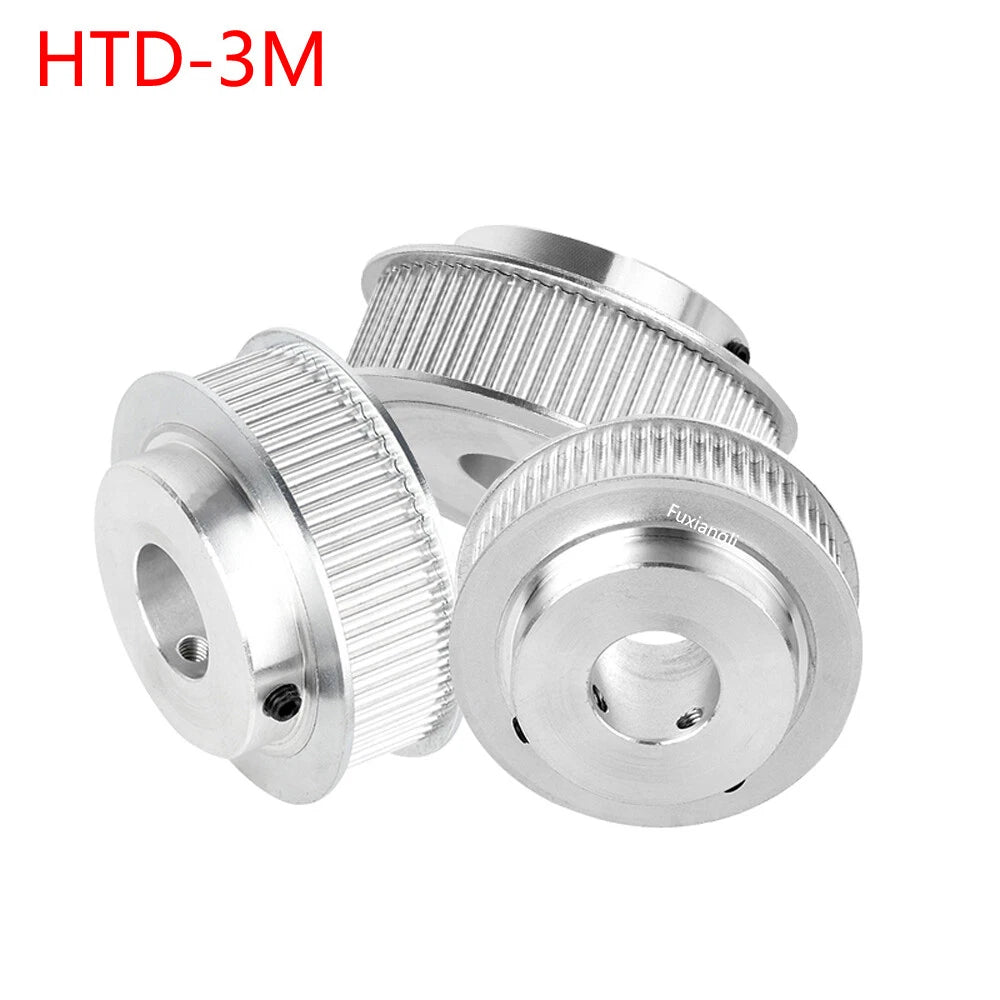
HTD-3M Timing Belt Pulleys — Precise Drive Control for CNC, Robotics & Maker Builds

When your motion system demands repeatable, slip-free power transfer, a mismatched or worn pulley becomes the weakest link in the chain. Engineers, hobbyists, and machine builders working on CNC routers, 3D printers, robotics arms, and automation rigs need HTD-3M timing belt pulleys that hold tight tolerances without adding unnecessary bulk. These HTD-3M timing belt pulleys are machined from aluminum alloy and are designed to pair with standard 15mm-wide HTD-3M synchronous belts.

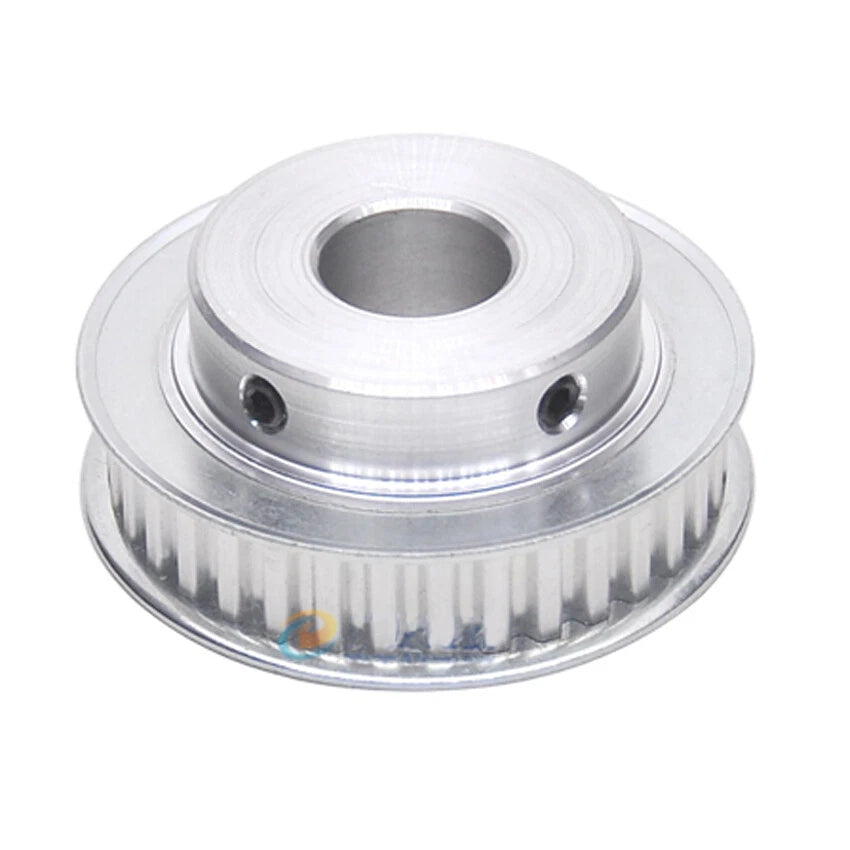
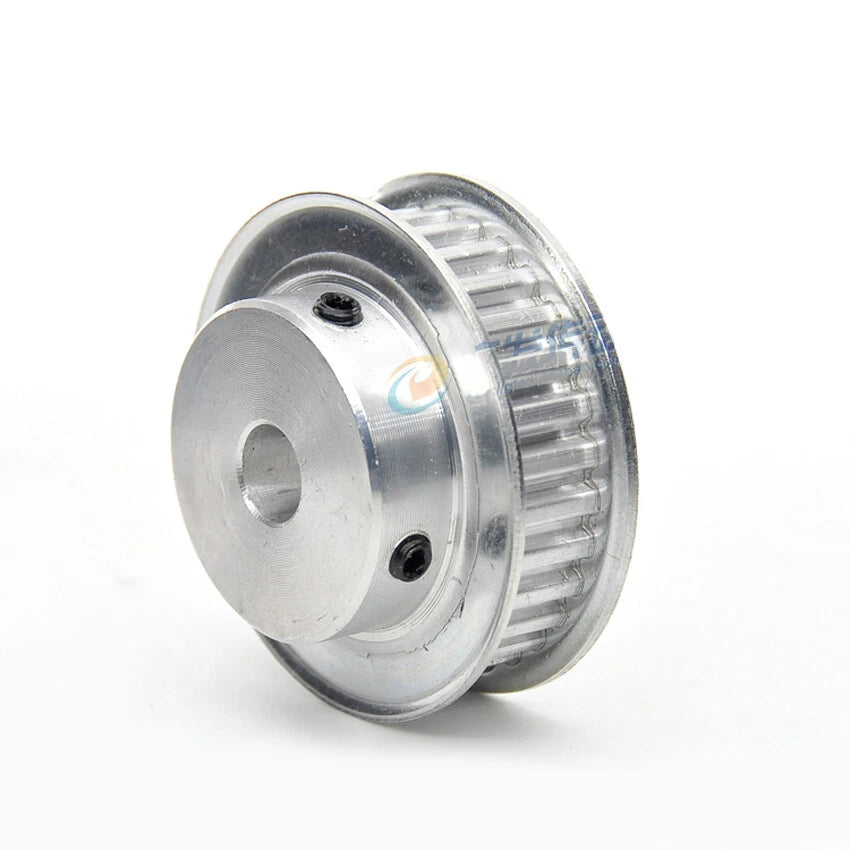
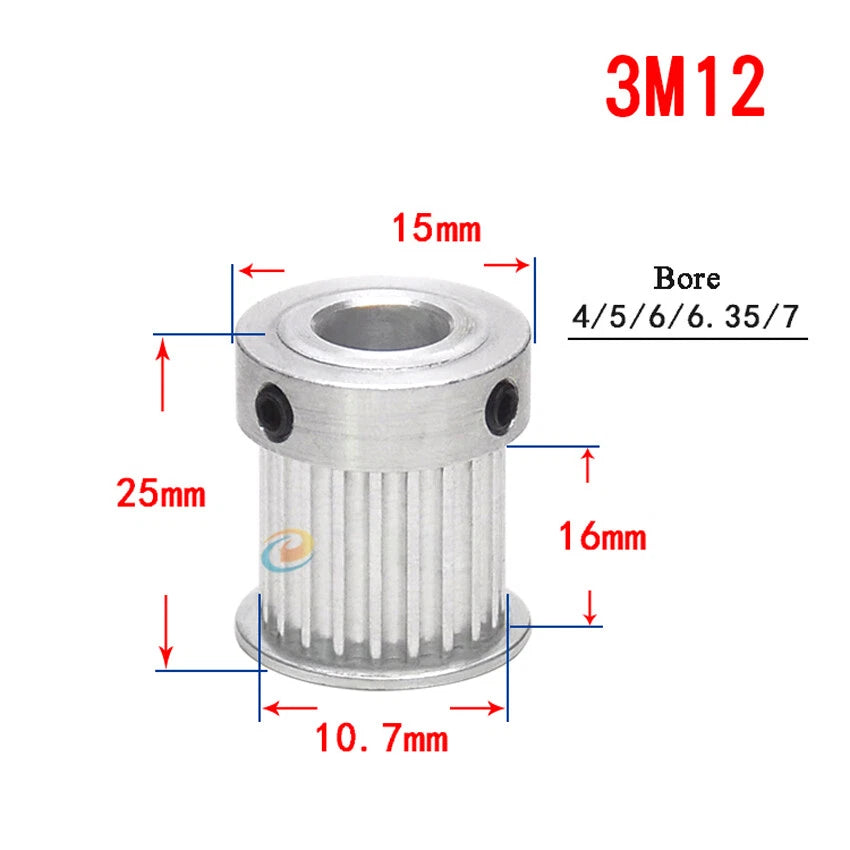
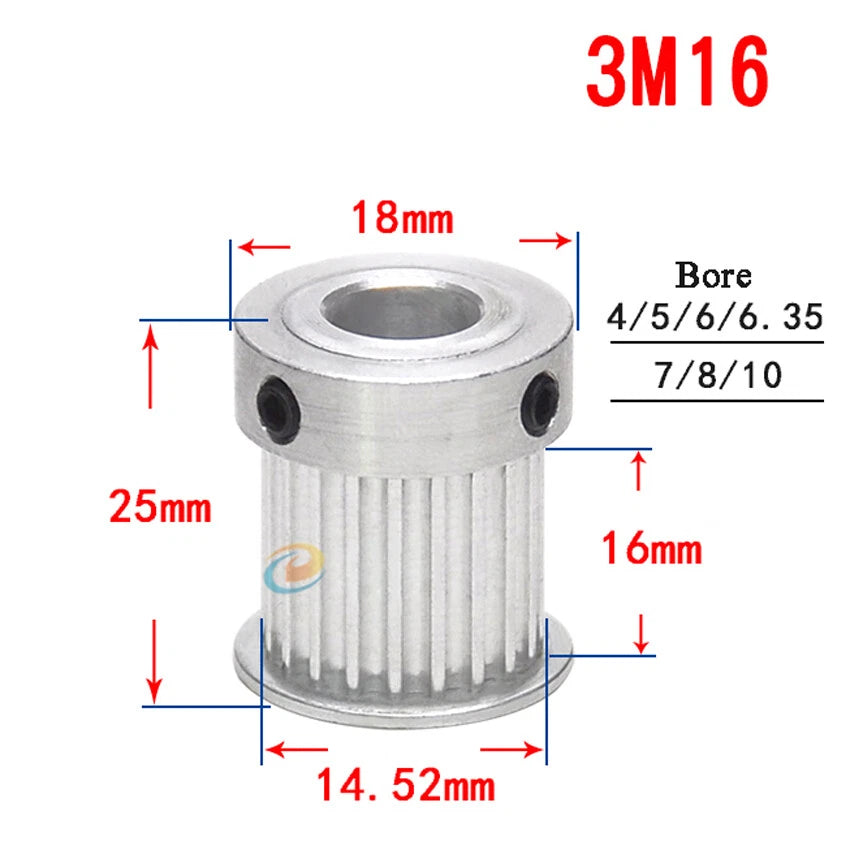
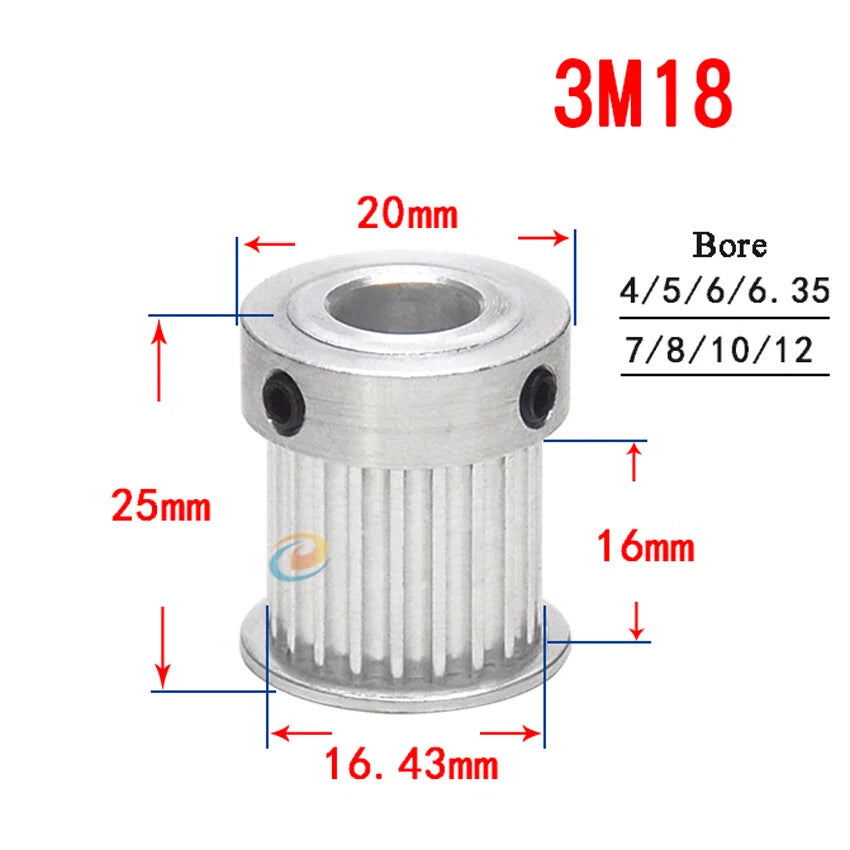
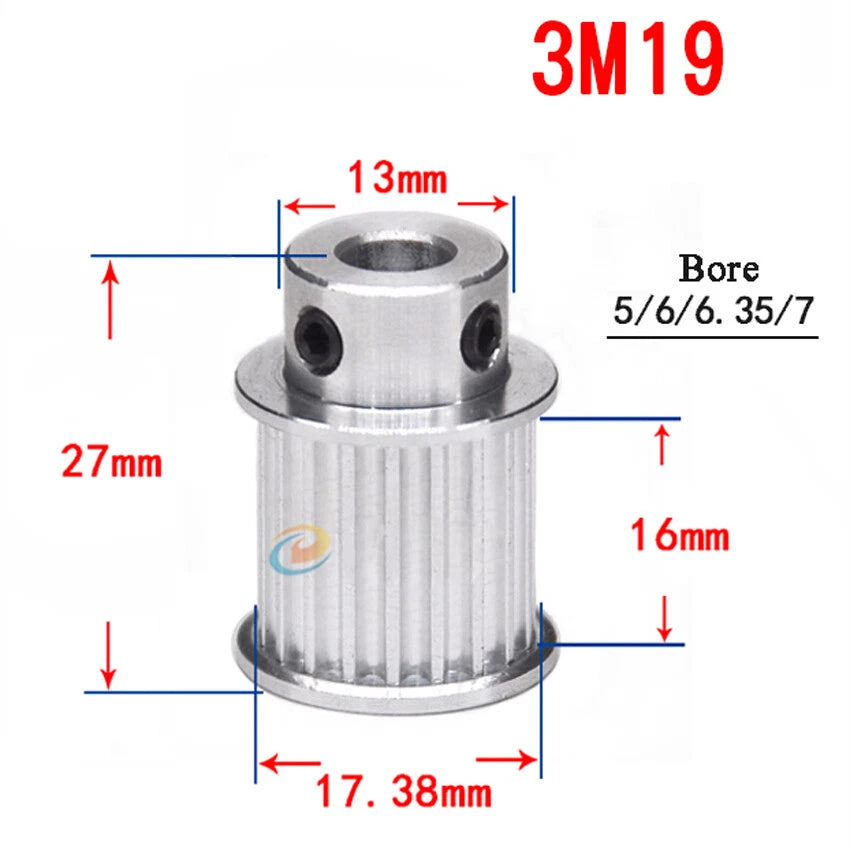
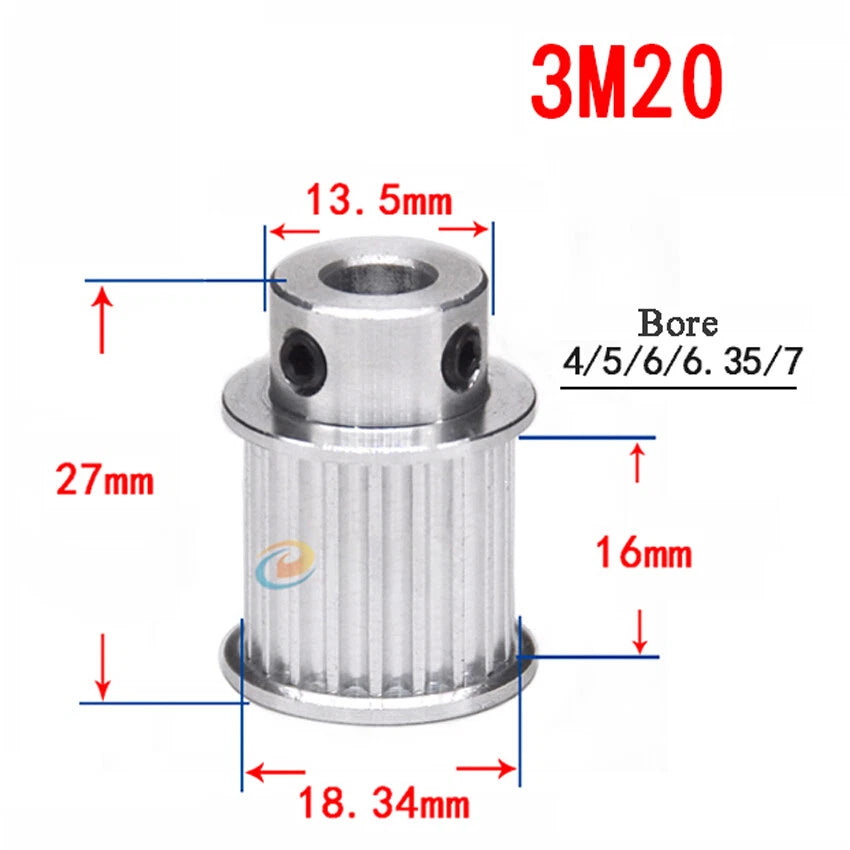
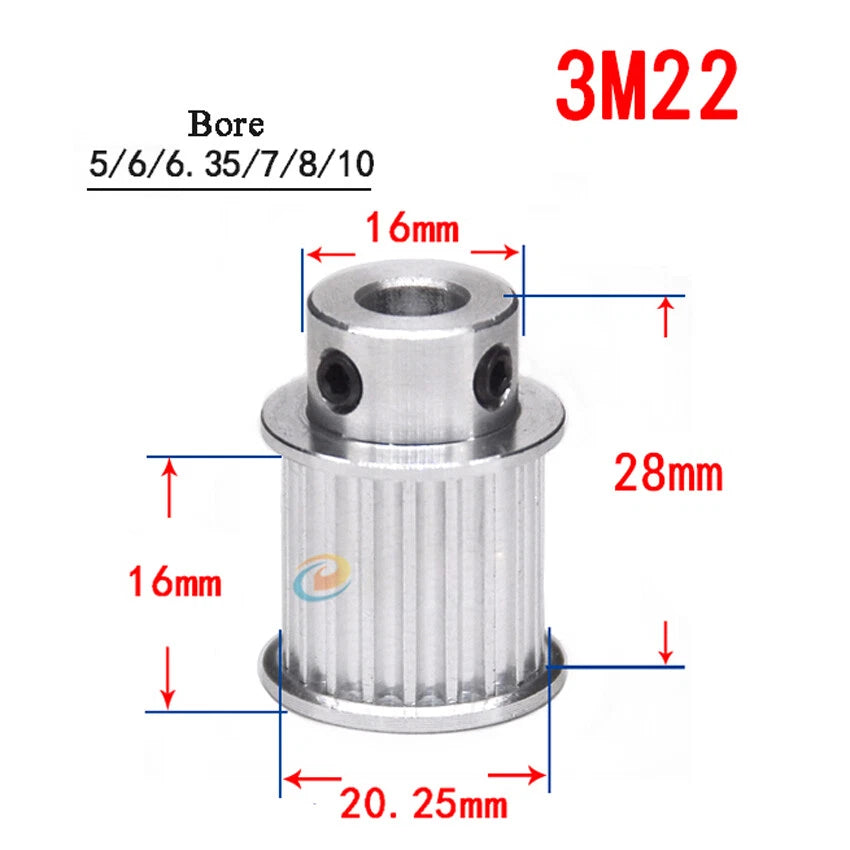
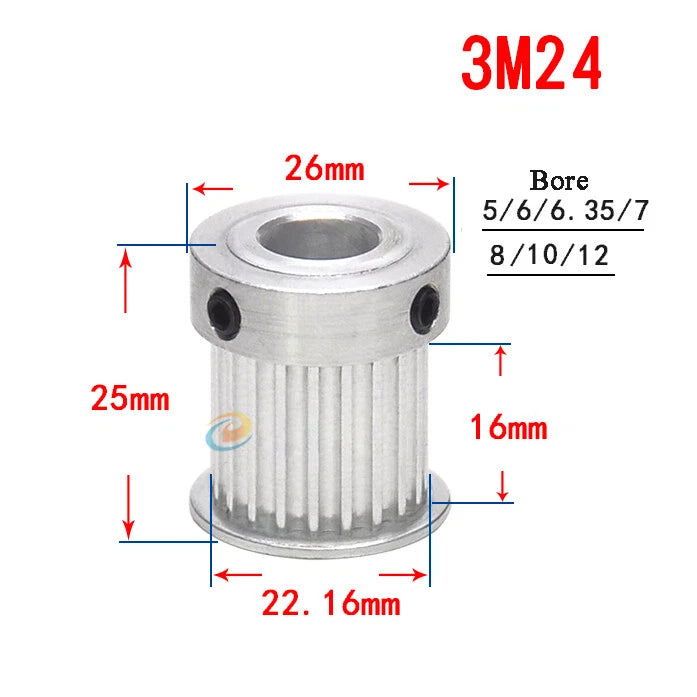
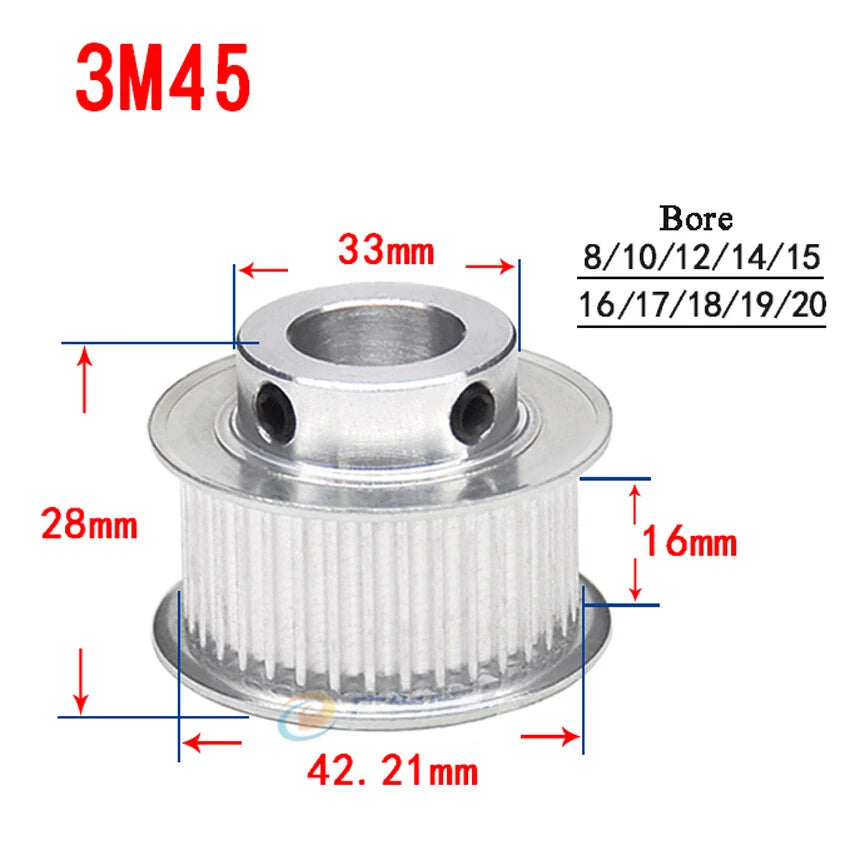
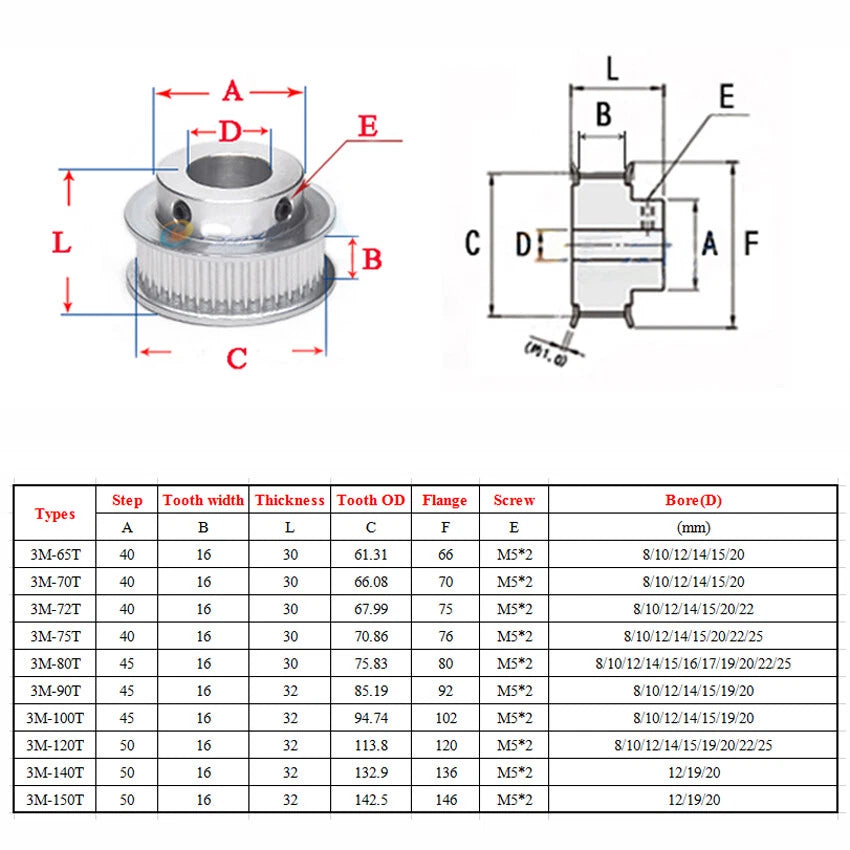
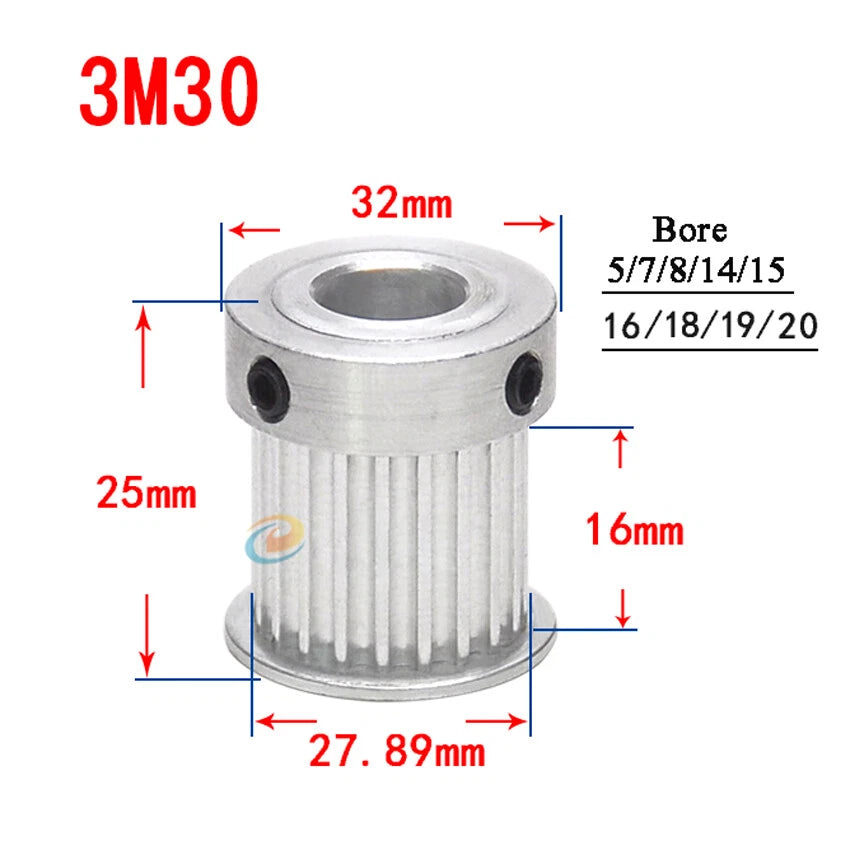
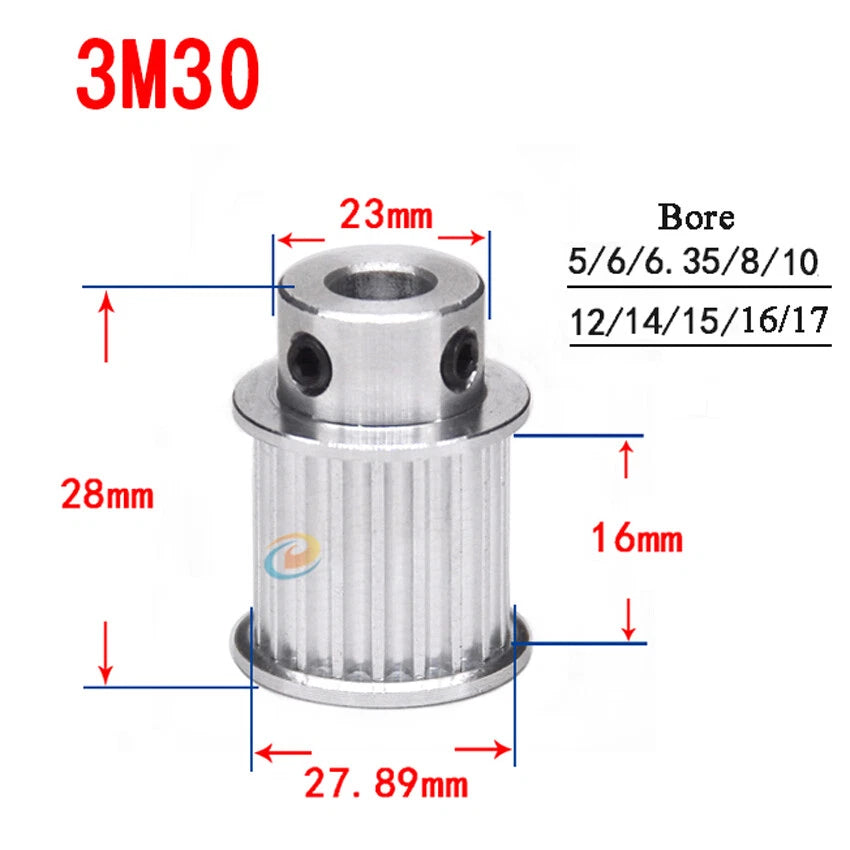
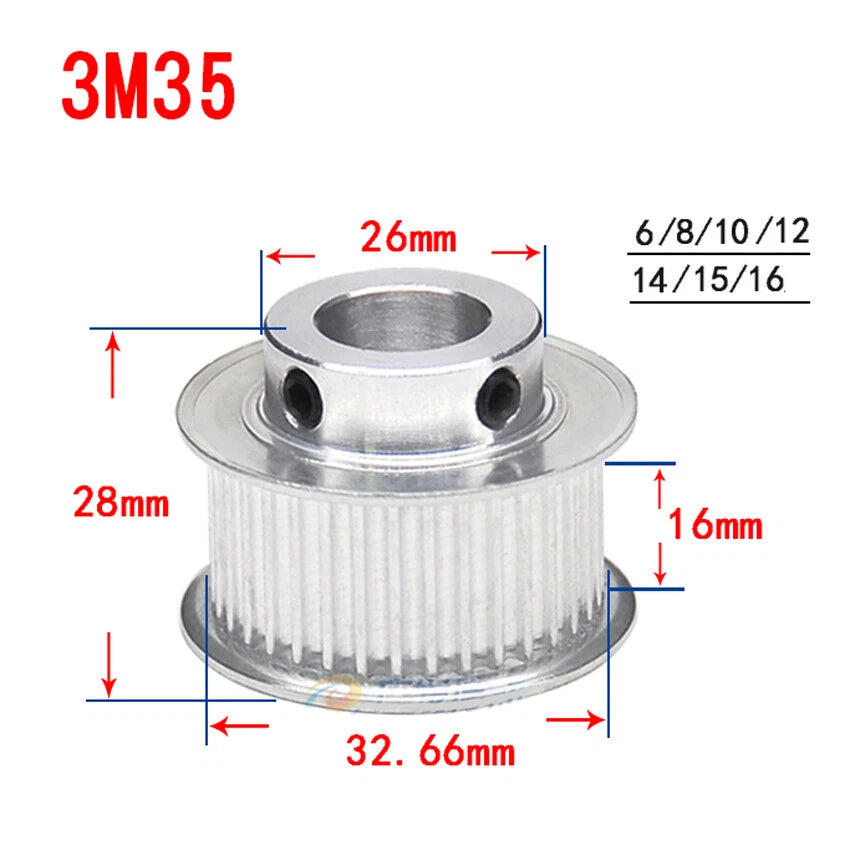
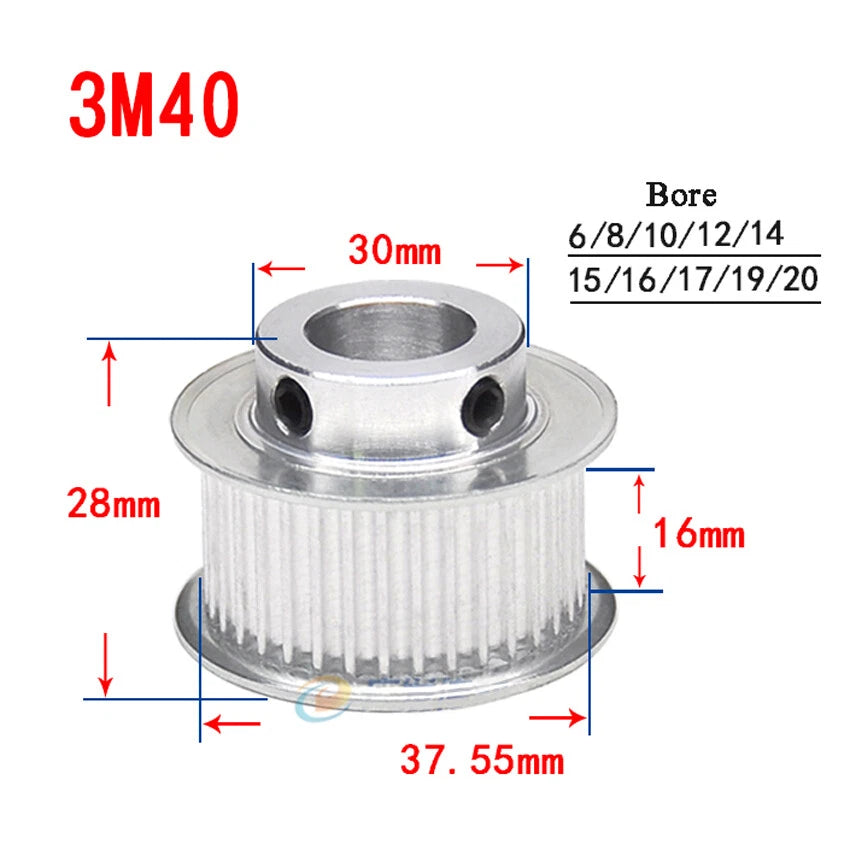
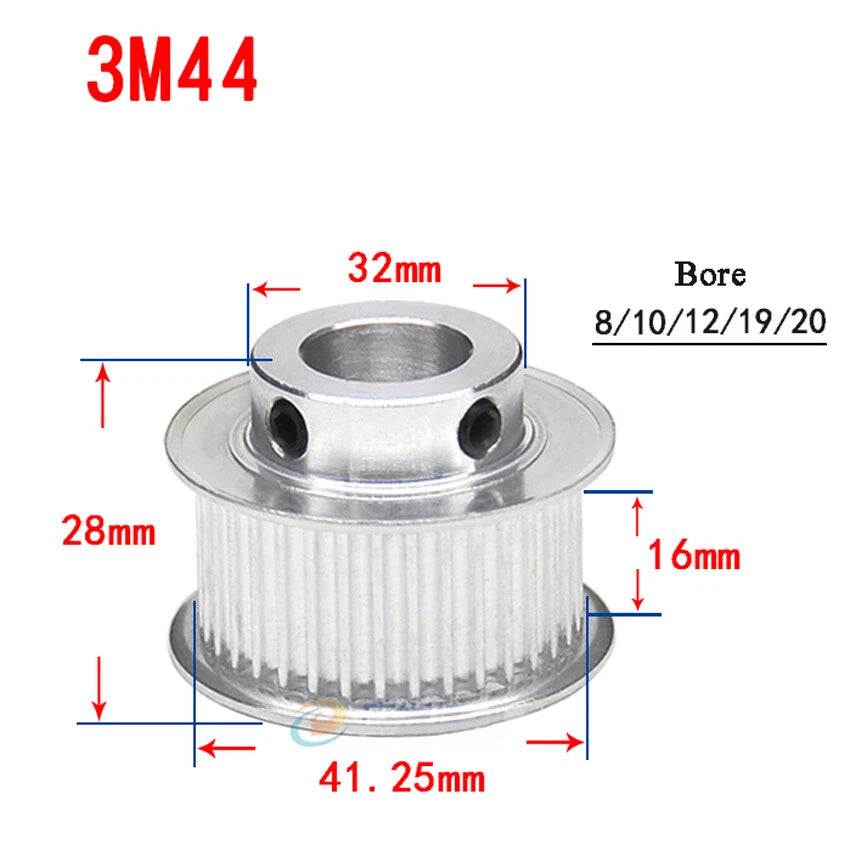
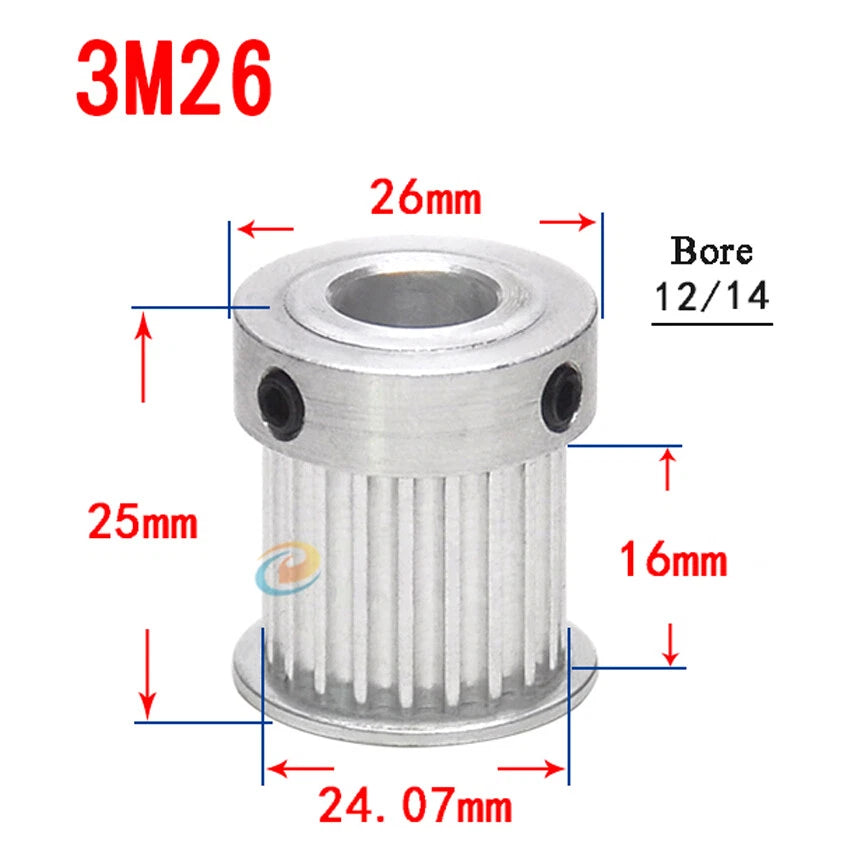
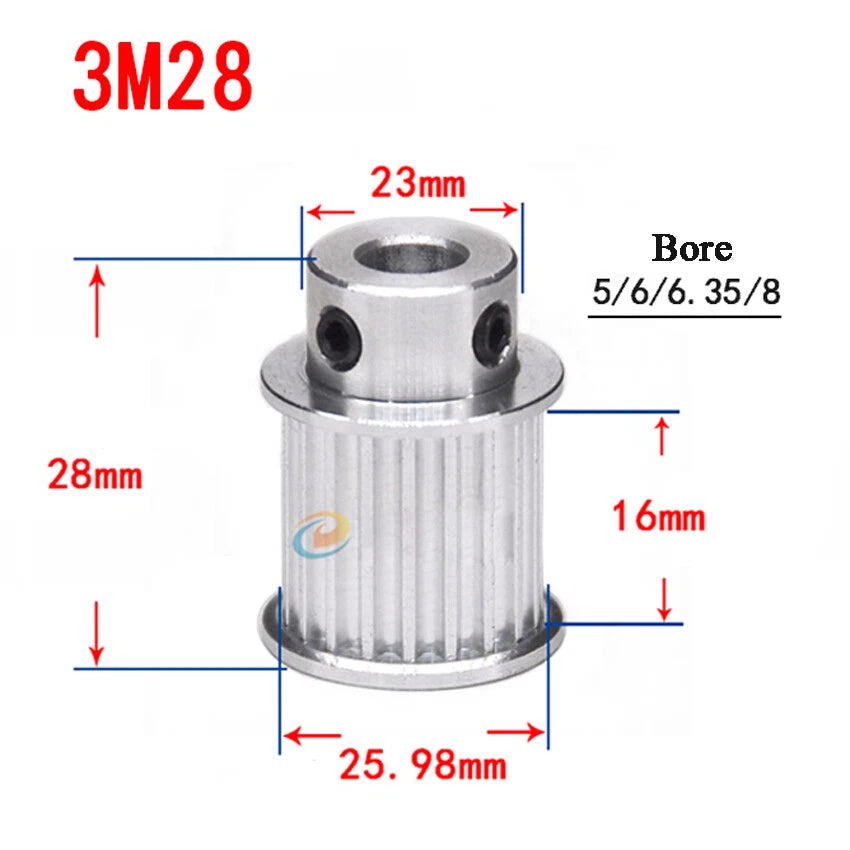
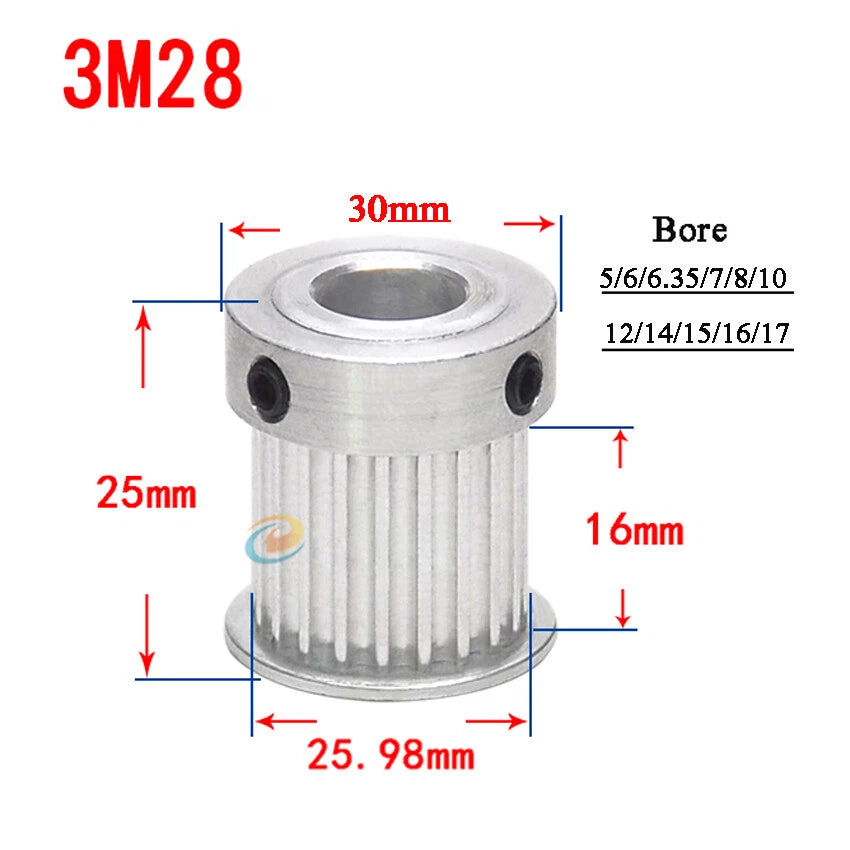
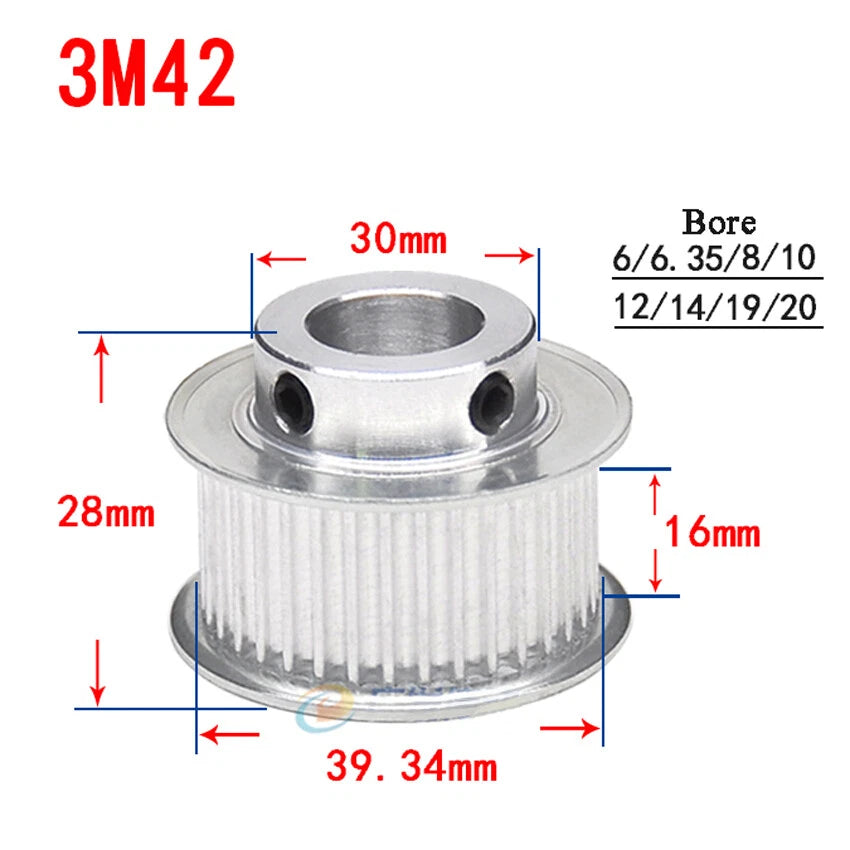
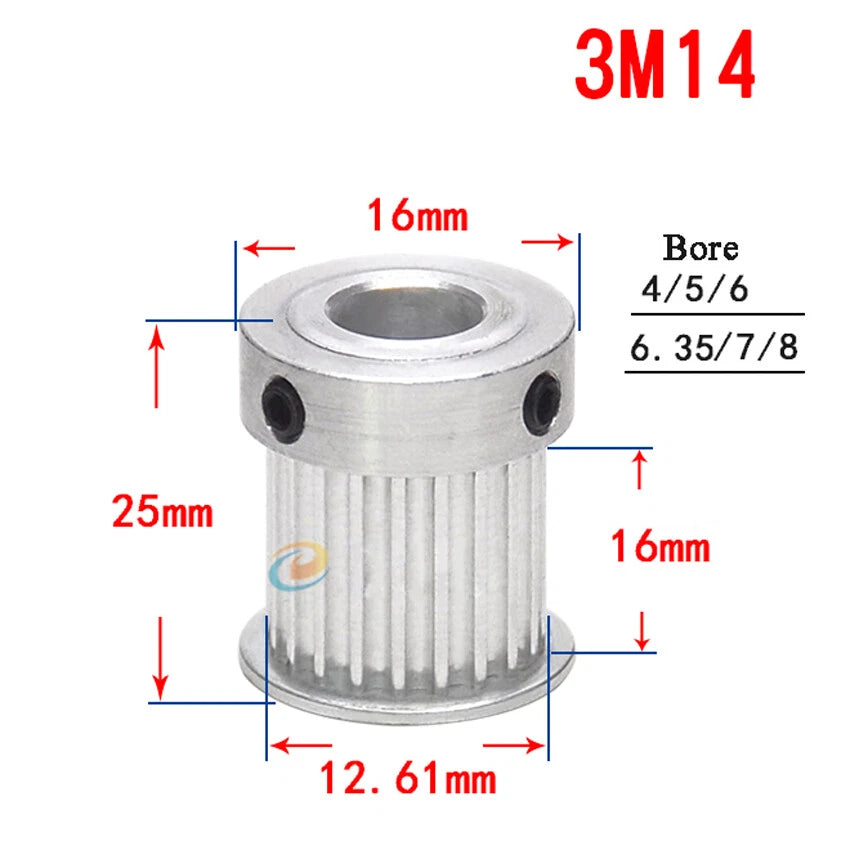
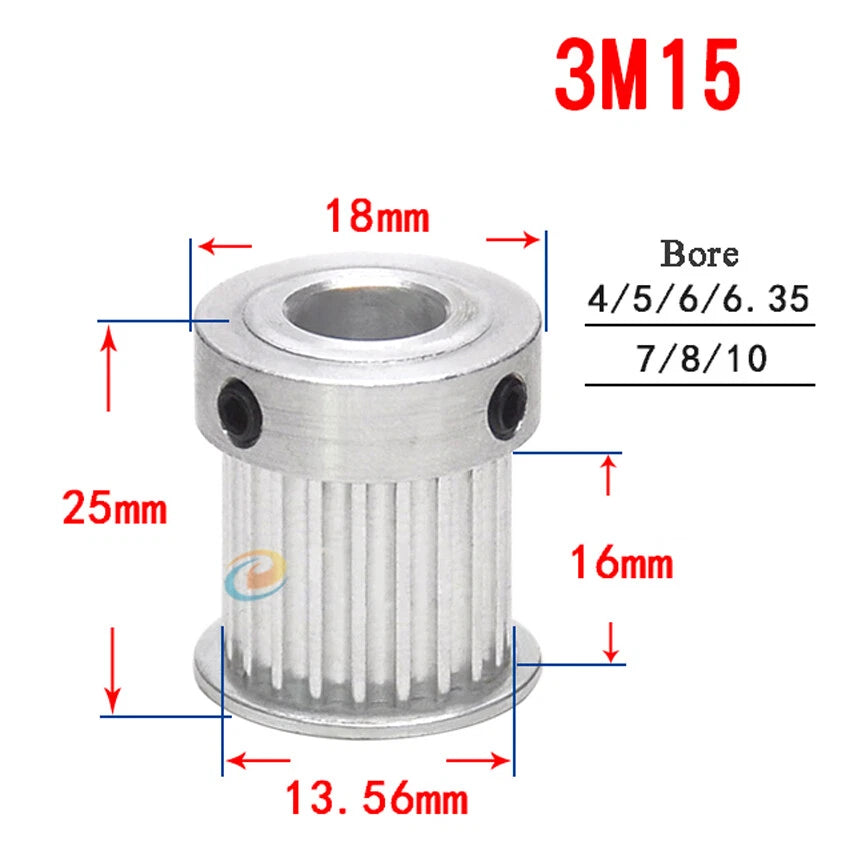
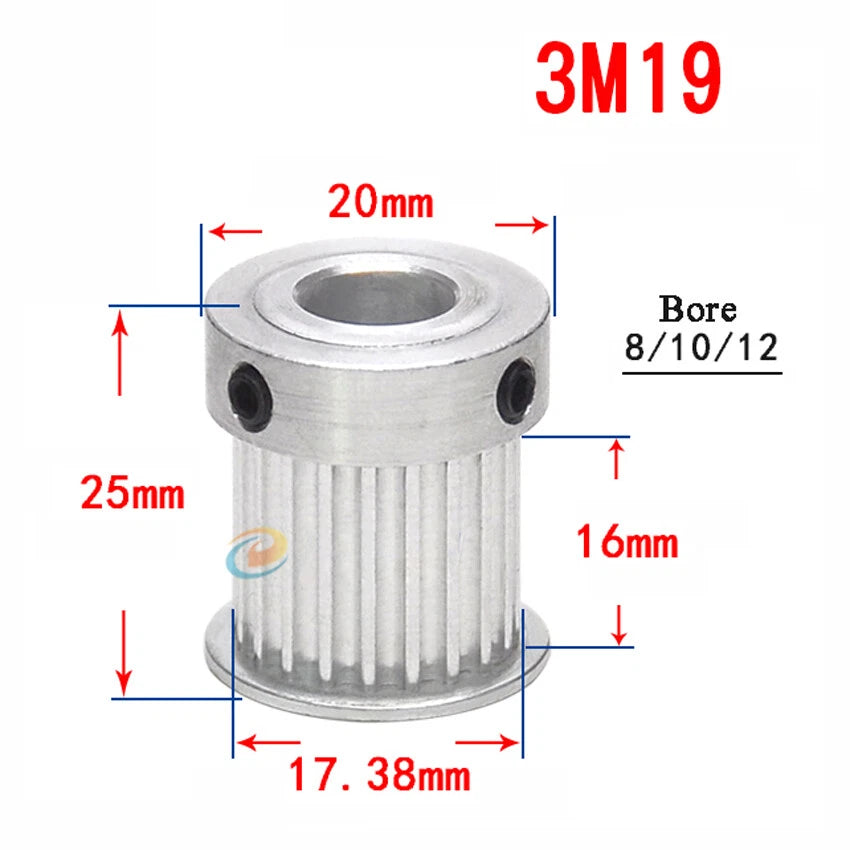
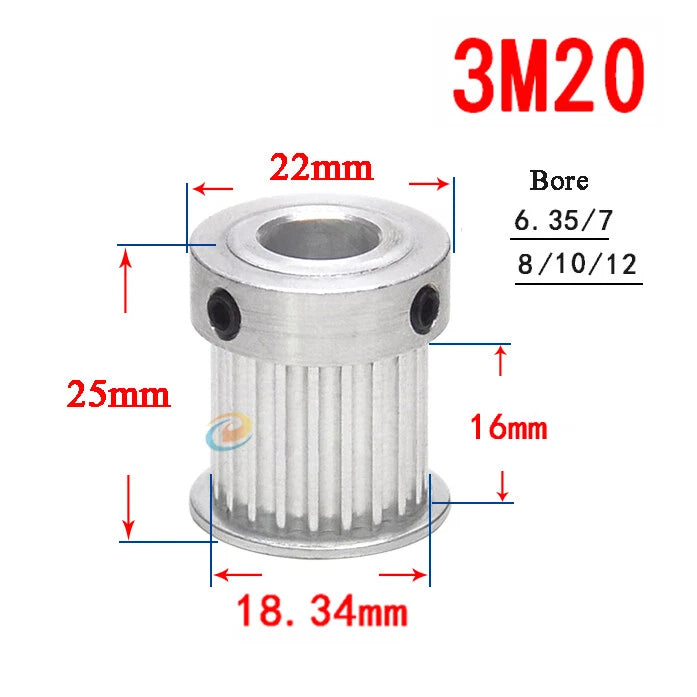
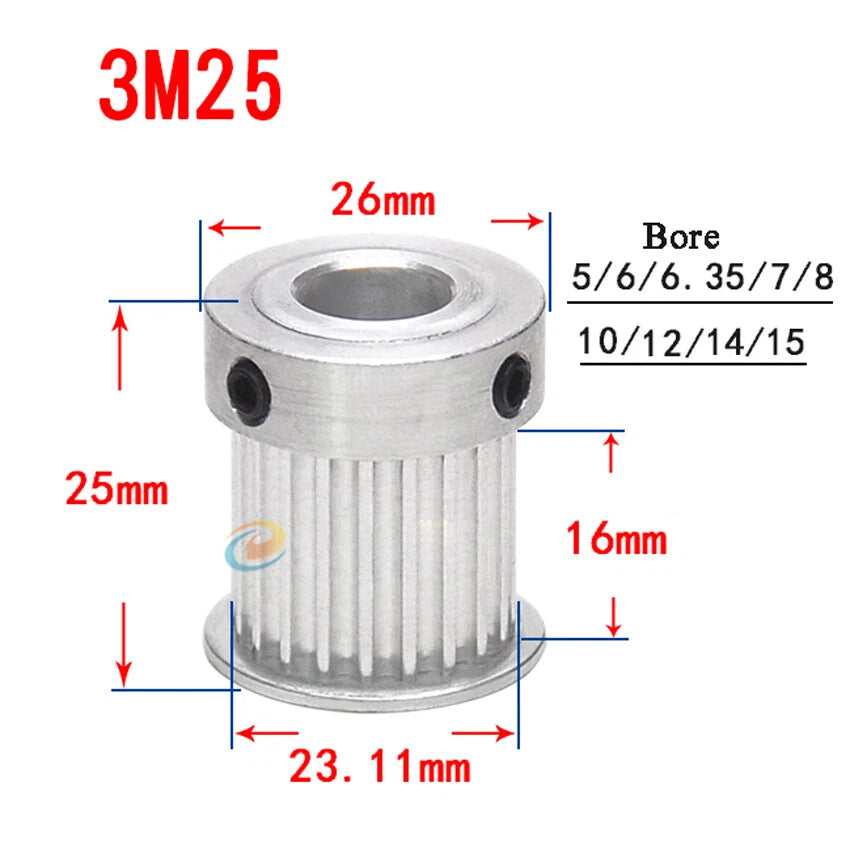
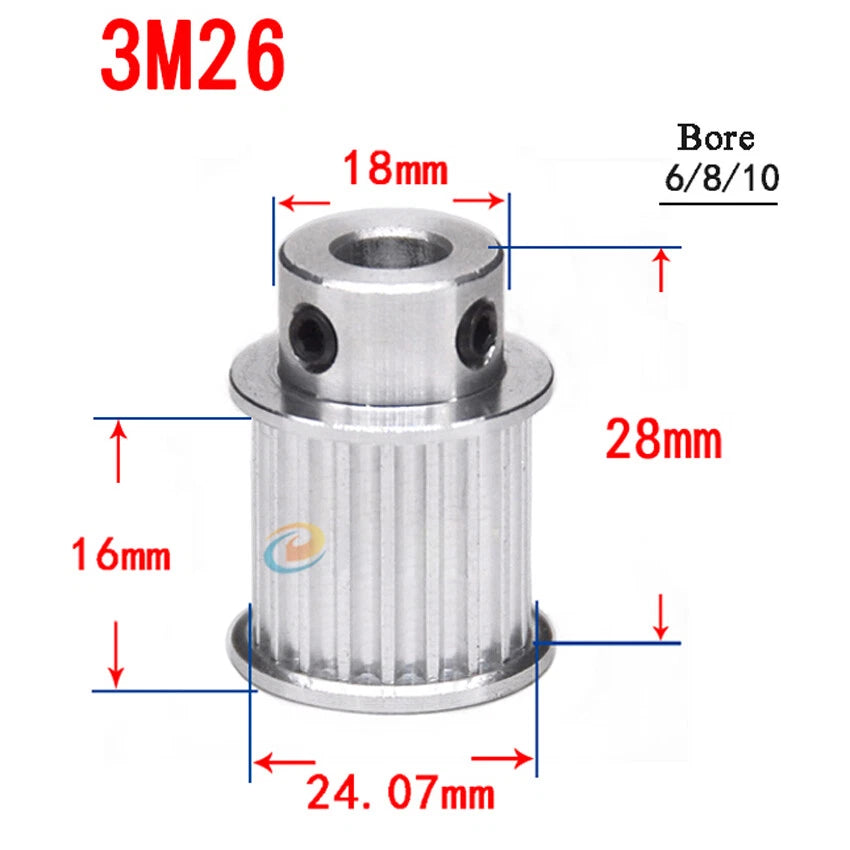
Each pulley features an HTD (High Torque Drive) 3M tooth profile — 3mm pitch — with tooth counts ranging from 12T to 150T and step bore options spanning 4mm to 25mm (approximately 0.16 in to 0.98 in). The body is machined from 6061-series aluminum alloy, typically 20–30mm in outer diameter for smaller tooth counts and up to approximately 143mm for 150T variants. A set screw secures the pulley to the shaft, and the step bore design accommodates a range of shaft diameters without requiring custom machining.

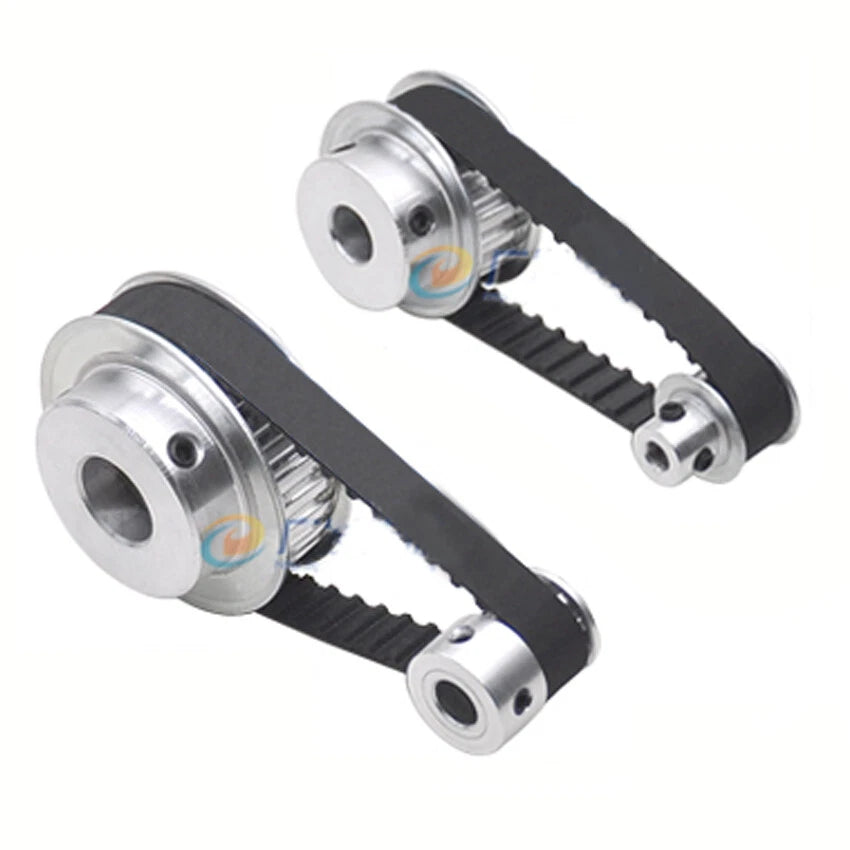
Typical use cases include X/Y axis drives on desktop CNC routers requiring HTD-3M belt drive systems, stepper motor pulley replacements in FDM 3D printers using 15mm belt width, and servo-driven robotic joint actuators where a compact aluminum timing pulley with step bore keeps weight low while maintaining torque capacity.

⚙️ Compatibility: Designed for HTD-3M synchronous belts, 15mm width. Tooth profile: HTD (rounded). Pitch: 3mm. Verify shaft diameter against selected bore size before ordering.

✅ Key Features of These HTD-3M Timing Belt Pulleys

🔩 Wide Tooth Count Range

Available from 12T to 150T, covering low-inertia high-speed drives and high-reduction torque applications in a single product family.

📐 Step Bore Design

Step bore accommodates shaft diameters from 4mm to 25mm (≈0.16–0.98 in), reducing the need for custom boring or adapter sleeves.

🏗️ Aluminum Alloy Construction

Machined from aluminum alloy for a balance of low rotational inertia, corrosion resistance, and structural rigidity under dynamic loads.

🎯 HTD-3M Tooth Profile

Rounded HTD tooth geometry distributes belt load across a larger contact area, reducing tooth shear stress versus trapezoidal profiles at equivalent torque.

🔧 Set Screw Retention

Includes a radial set screw for positive shaft locking. Compatible with standard metric hex keys for quick installation and removal.

🤖 Broad Application Fit

Suited for CNC routers, 3D printers, laser cutters, robotic actuators, conveyor drives, and other precision motion systems using 15mm HTD-3M belts.

📐 Technical Specifications — HTD-3M Timing Belt Pulleys

Belt Profile HTD (High Torque Drive)
Pitch 3mm
Belt Width Compatibility 15mm
Tooth Count (Types) 12T – 150T (see variant options)
Bore Diameter 4mm – 25mm (see variant options)
Material Aluminum alloy
Outer Diameter See variant options
Hub / Flange Flanged (retains belt laterally)
Shaft Retention Set screw (metric hex)
Surface Finish Natural aluminum / anodized (see variant options)
Weight See variant options

❓ Frequently Asked Questions

How do I choose the right tooth count for my application?

The tooth count determines the pulley's pitch diameter and, combined with your belt length and the driven pulley's tooth count, sets your drive ratio. For a 1:1 ratio use identical tooth counts on both pulleys. For speed reduction, use a larger tooth count on the driven side. Common starting points for CNC and 3D printer X/Y axes are 20T–30T on the motor pulley paired with a matching or larger driven pulley.

What bore size should I select for my motor shaft?

Match the bore to your motor or drive shaft diameter. Common stepper motor shaft sizes are 5mm and 6.35mm (1/4 in); servo motors often use 8mm, 10mm, or 12mm shafts. The step bore design means the pulley hub has a stepped internal profile — select the bore that matches your shaft exactly. If your shaft diameter falls between listed sizes, contact us to confirm fit before ordering.

Are these pulleys compatible with HTD-3M belts of other widths (e.g., 6mm or 9mm)?

These pulleys are designed and flanged for 15mm-wide HTD-3M belts. While the 3mm tooth pitch is the same across belt widths, the flange spacing and tooth face width are optimized for 15mm belts. Using a narrower belt may result in reduced load capacity and potential belt tracking issues. For 6mm or 9mm belt widths, select a pulley specifically designed for those widths.

How strong are aluminum pulleys compared to steel for my application?

Aluminum alloy pulleys offer an excellent strength-to-weight ratio for most CNC, 3D printing, and light-to-medium robotics applications. For high-torque industrial drives or applications with significant shock loading, steel pulleys may be more appropriate. In typical maker and automation builds where belt tension is within the belt's rated load, aluminum pulleys perform reliably and reduce rotational inertia, which benefits acceleration performance.

Do these pulleys resist corrosion in humid or outdoor environments?

Aluminum alloy naturally forms a thin oxide layer that provides moderate corrosion resistance in typical indoor environments. For humid, wet, or mildly corrosive environments, an anodized finish (where available) improves surface protection. For harsh outdoor or chemical-exposure environments, consider additional protective coatings or consult us for material alternatives.

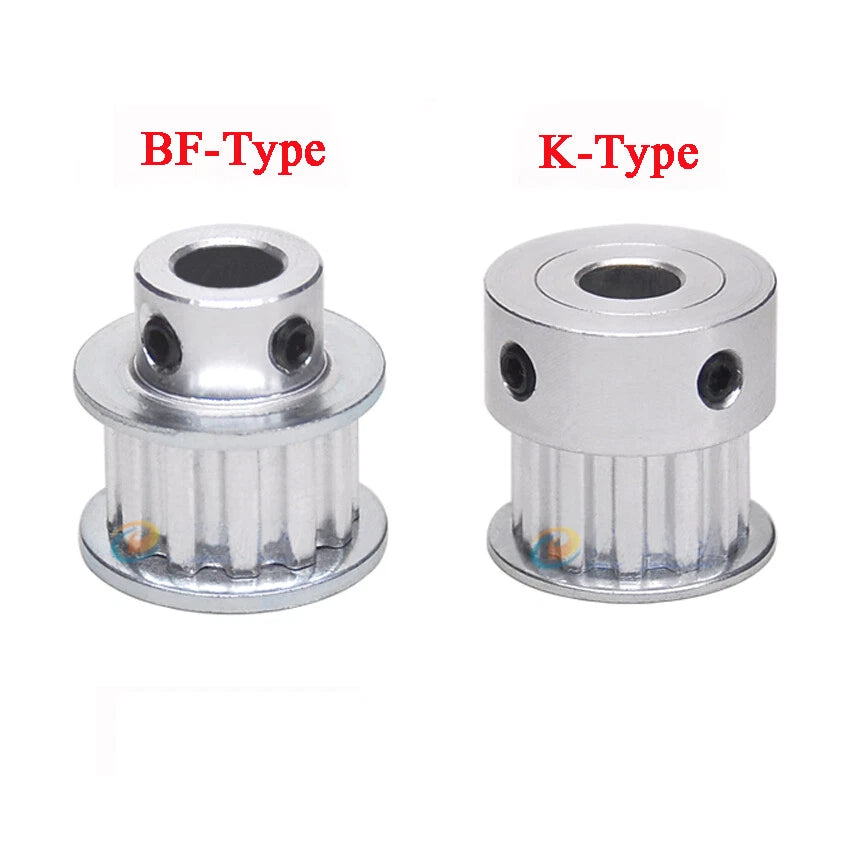
What is the difference between standard and K-Type pulleys in this listing?

K-Type variants (e.g., 3M-19T(K-Type), 3M-20T(K-Type)) feature a keyway slot in the bore in addition to the set screw, providing a more positive rotational lock for higher-torque or reversing-load applications. Standard variants use a set screw only. If your shaft has a matching keyway, select the K-Type for improved torque transmission and reduced risk of slippage under load.

Can I use these pulleys with a GT2 or MXL belt profile?

No. These pulleys use the HTD-3M tooth profile, which has a rounded tooth geometry with a 3mm pitch. GT2 and MXL profiles have different tooth shapes and are not interchangeable with HTD-3M pulleys. Always match the pulley tooth profile to your belt profile to ensure proper meshing and avoid premature wear or belt skipping.

How do I install the pulley onto my motor shaft?

Slide the pulley onto the shaft until the set screw hole aligns with a flat on the shaft (if present) or is positioned at the desired axial location. Tighten the set screw with the appropriate metric hex key to the manufacturer's recommended torque. For K-Type pulleys, align the keyway with the shaft key before tightening. Ensure the pulley is centered relative to the belt path before final tightening.

🛒 Select your tooth count (Types) and bore diameter above, then add to cart.


You may also like

Recently viewed