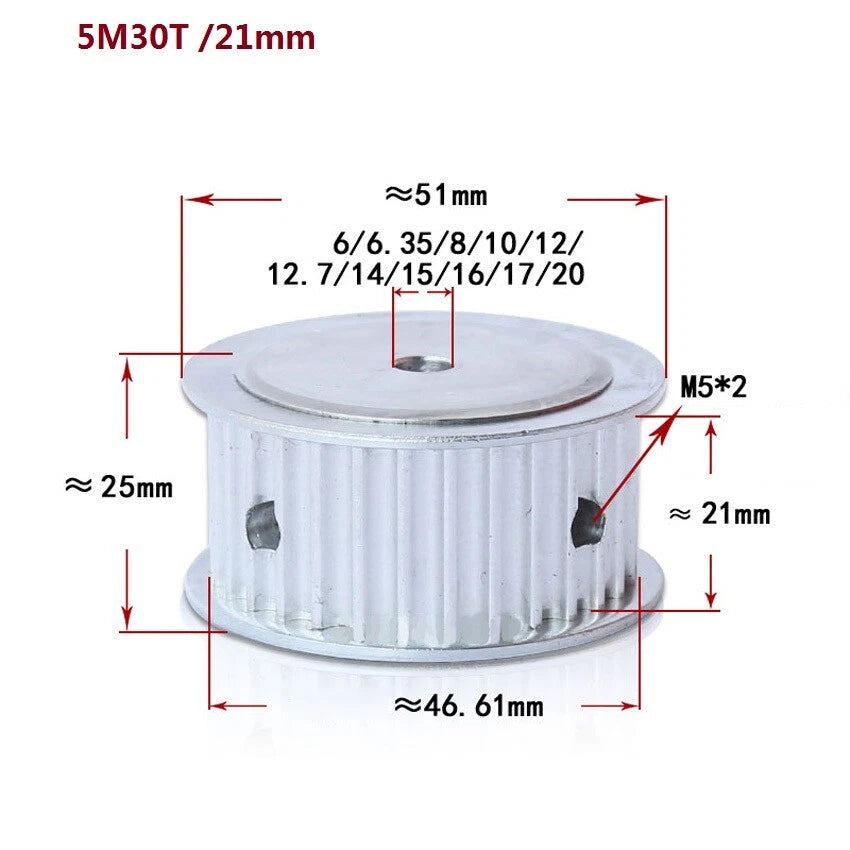
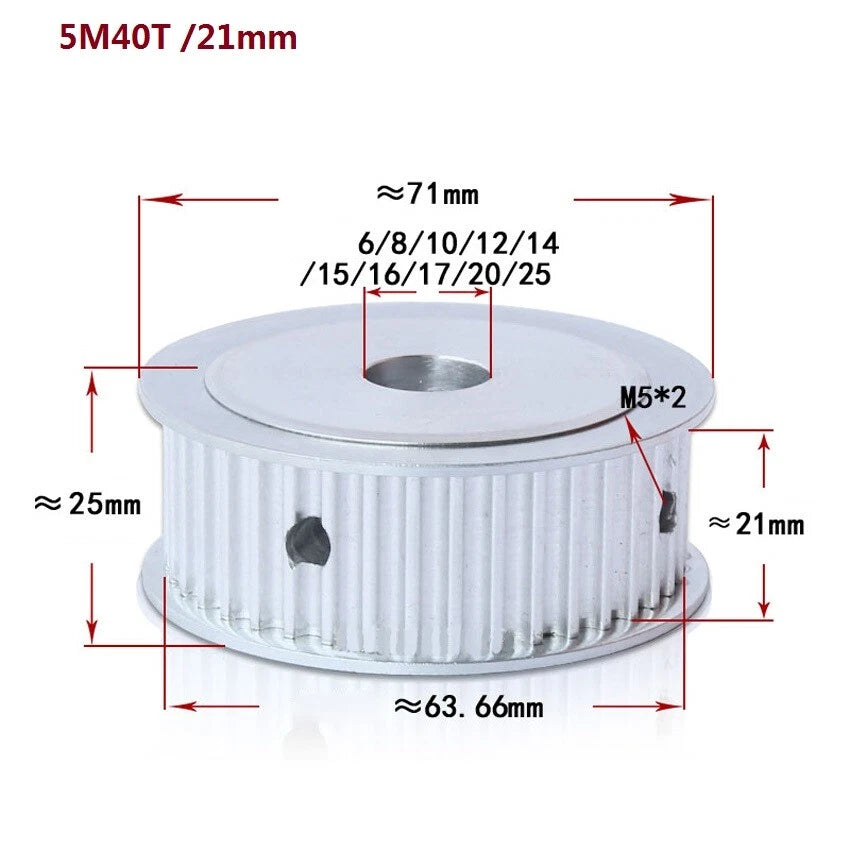
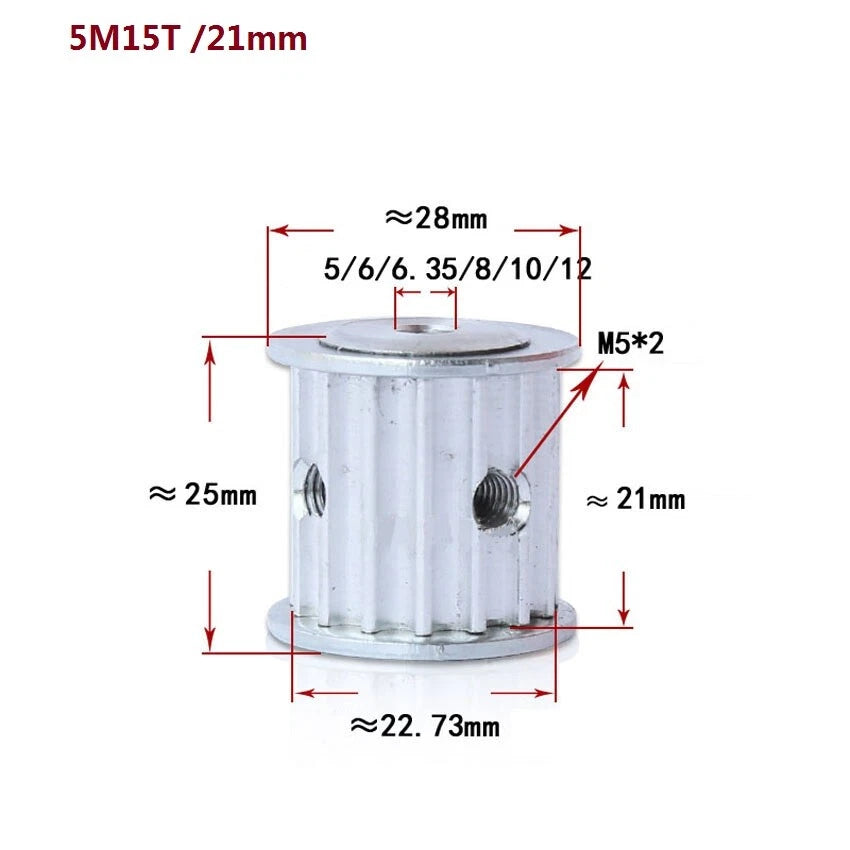
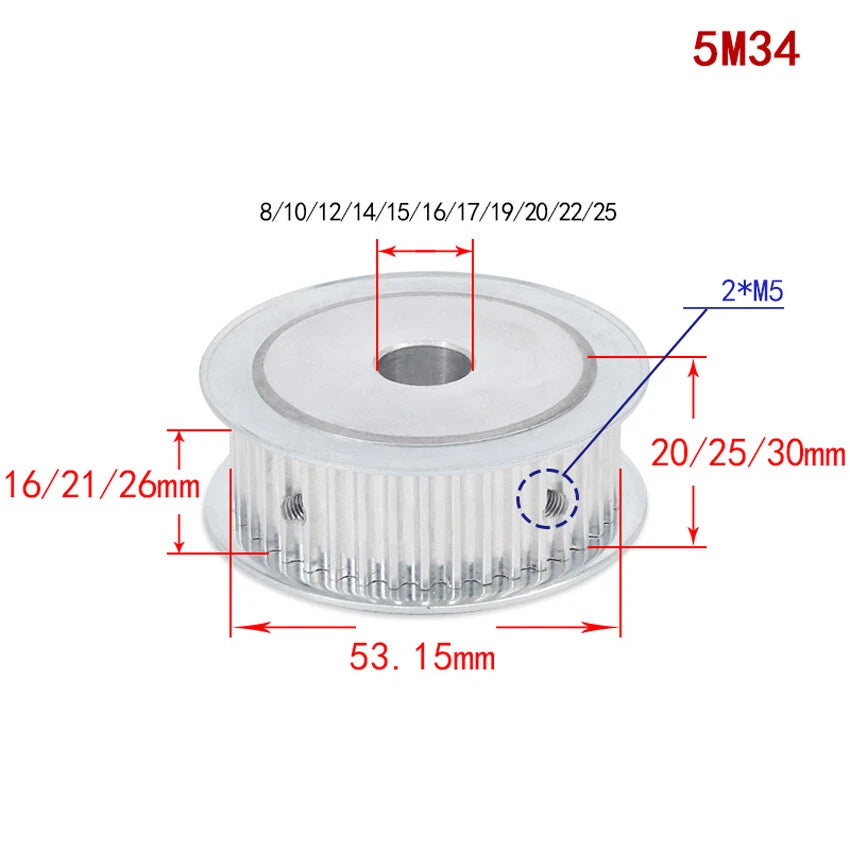
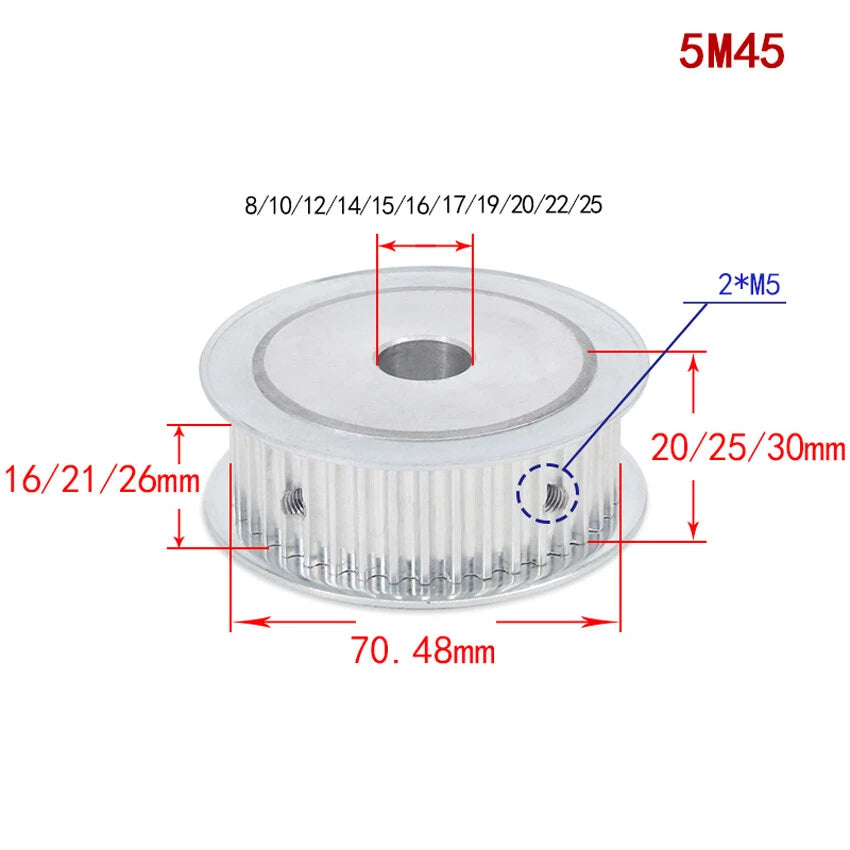
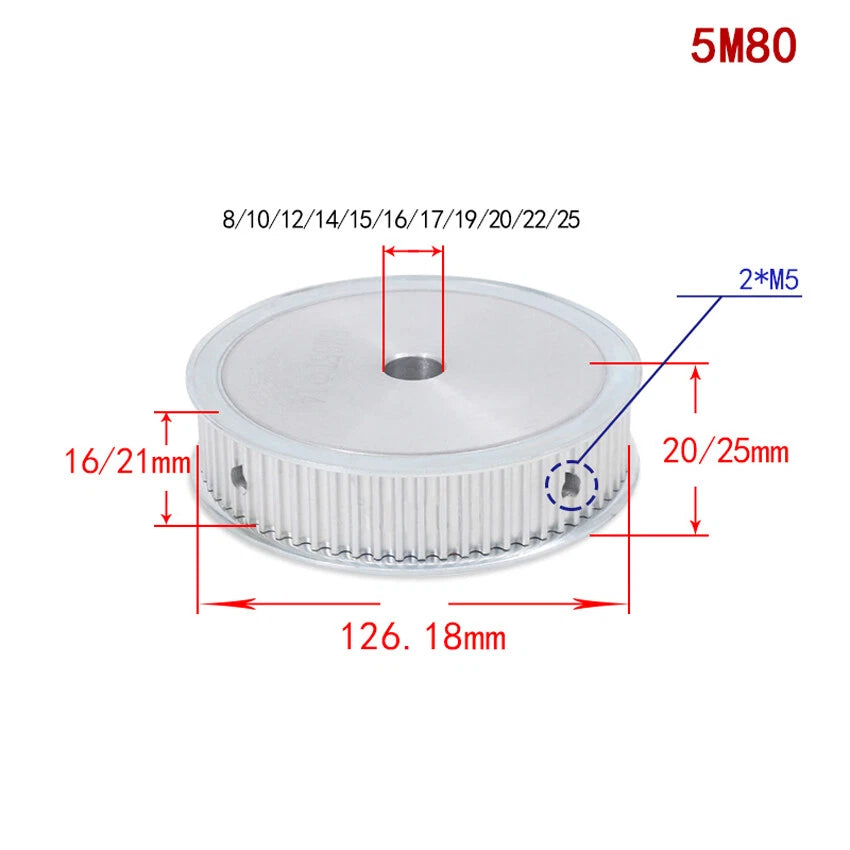
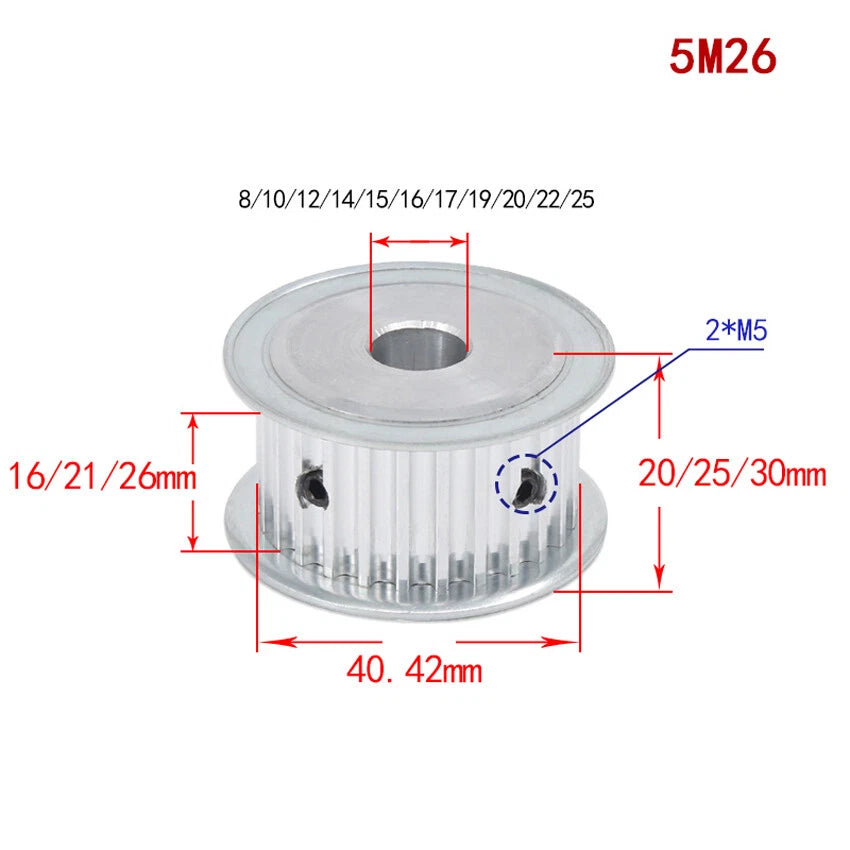
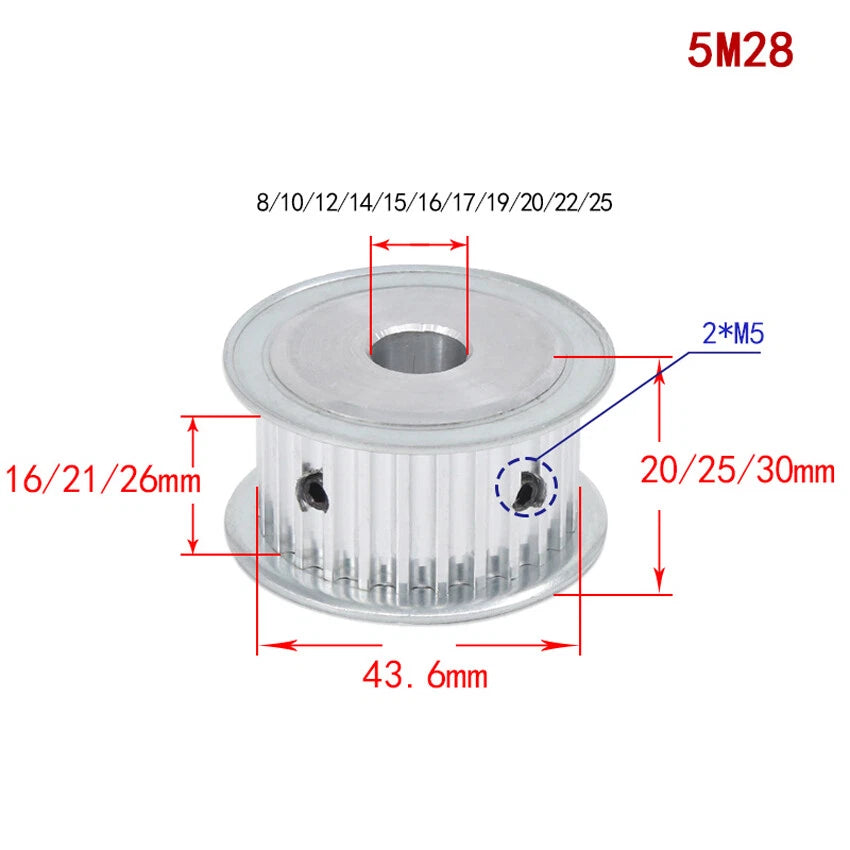
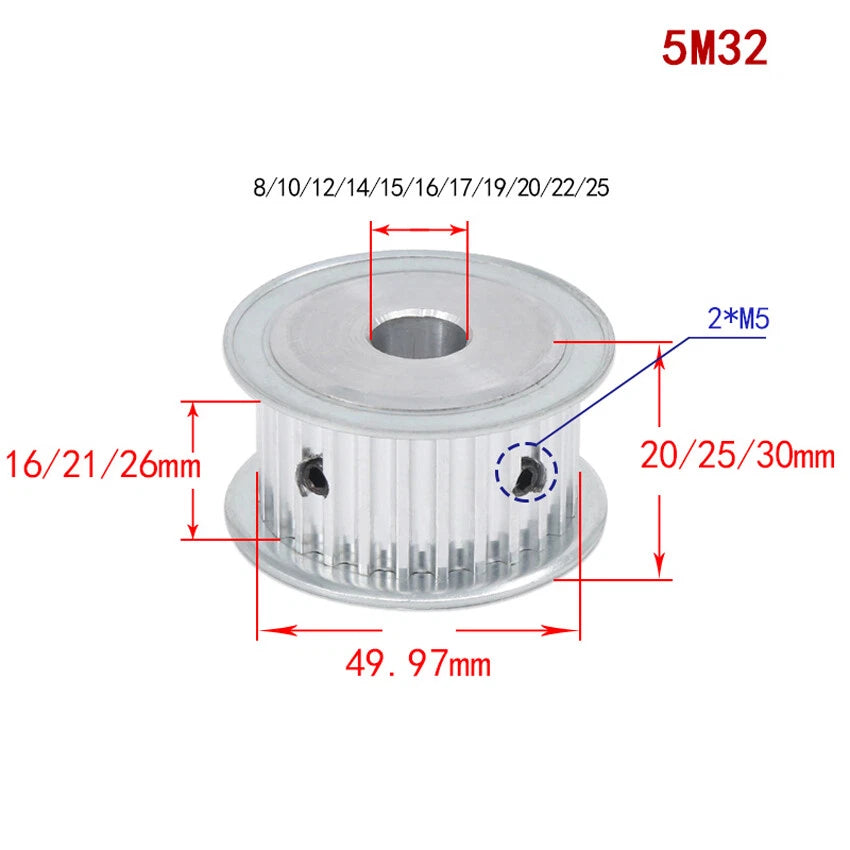
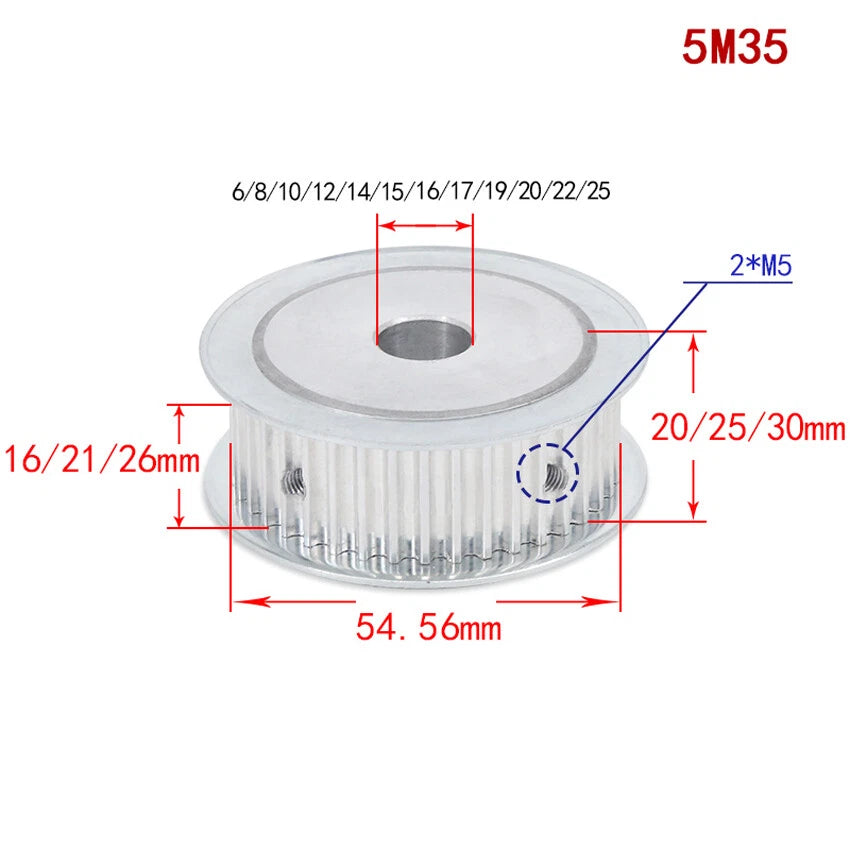
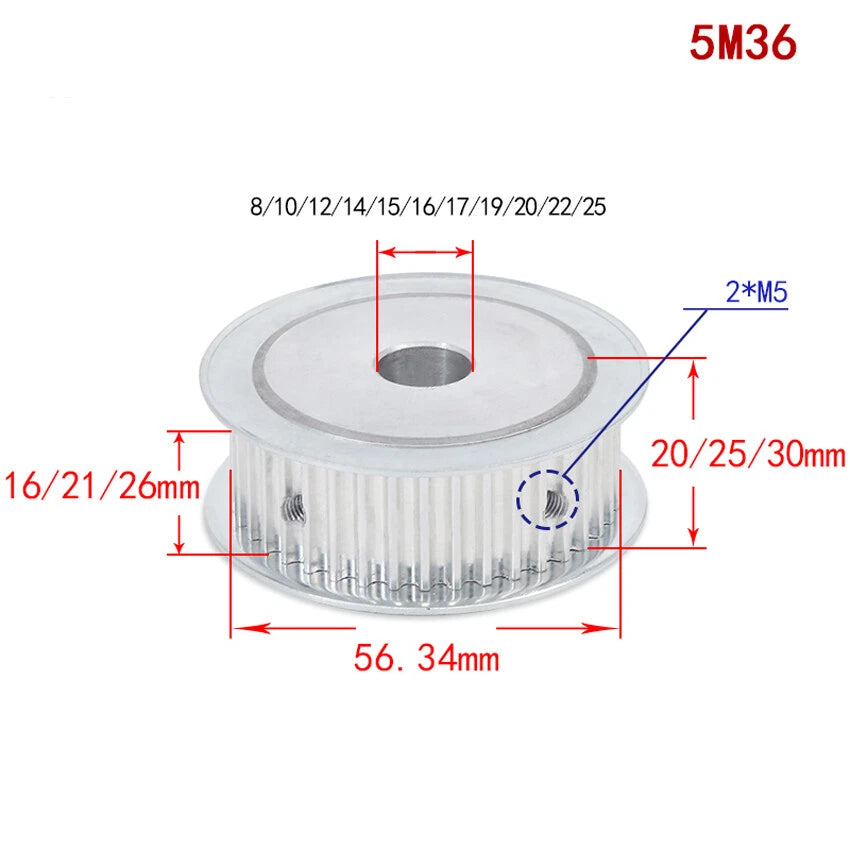
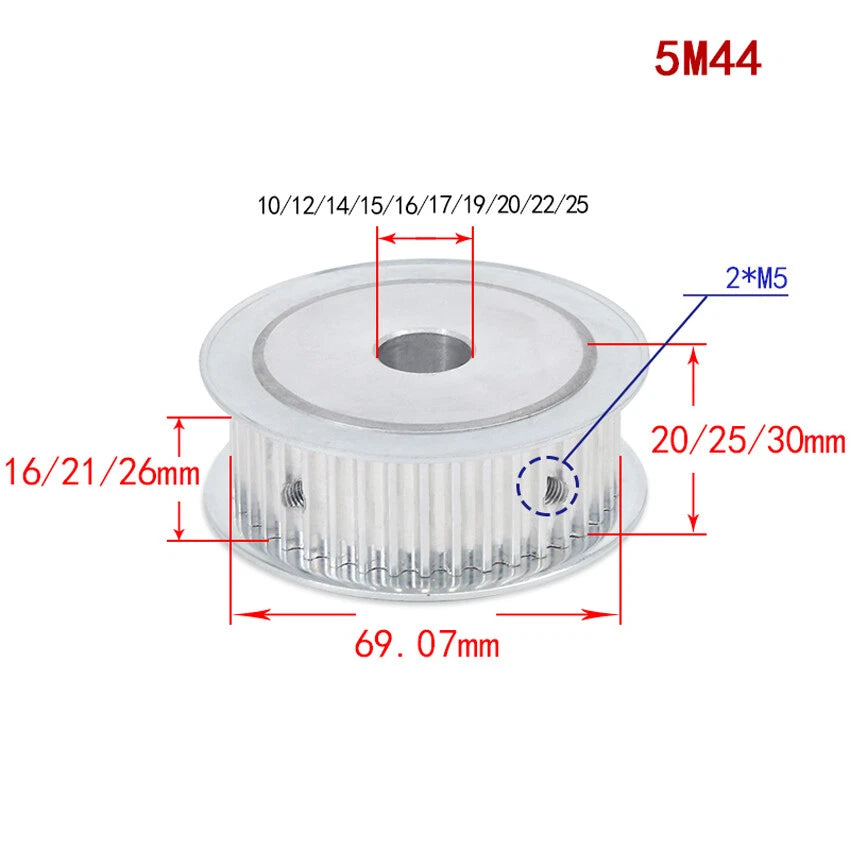
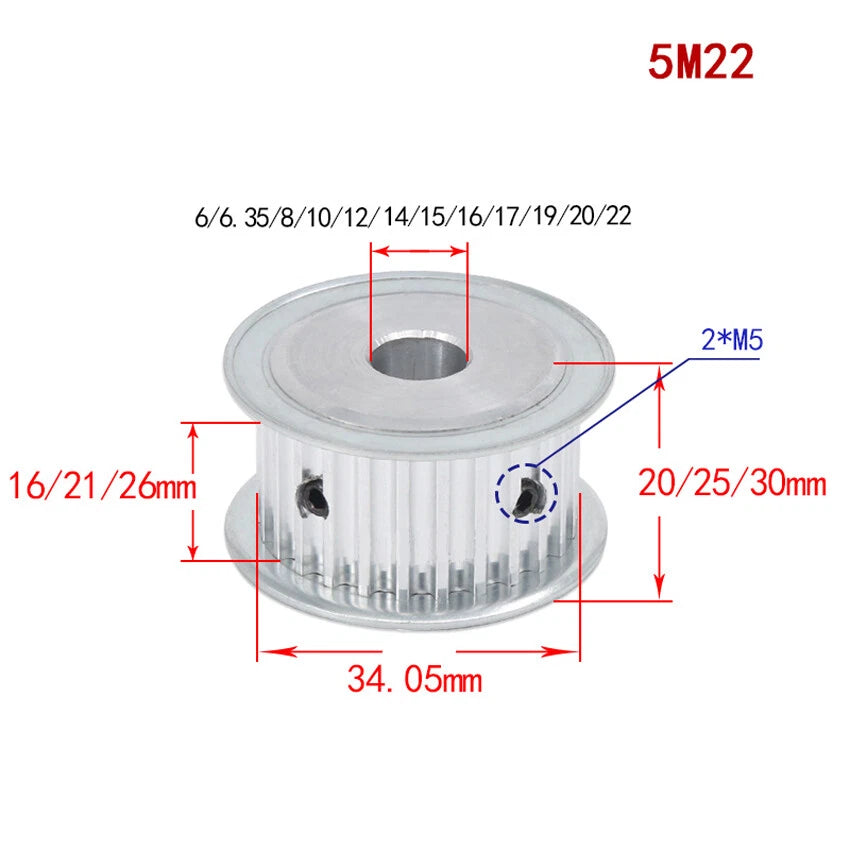
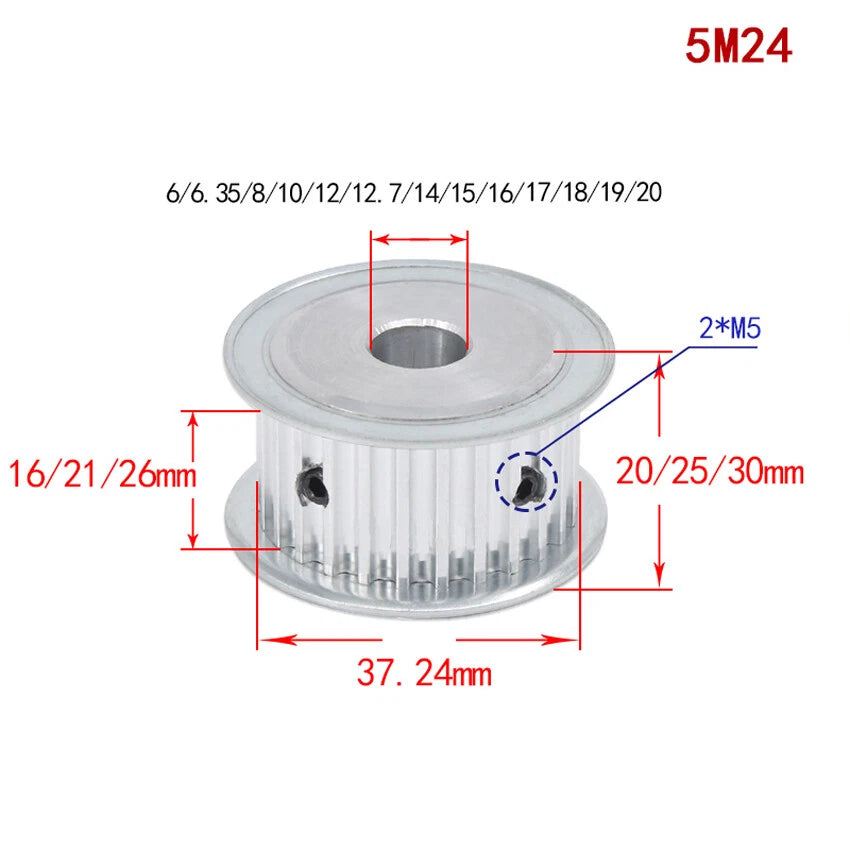
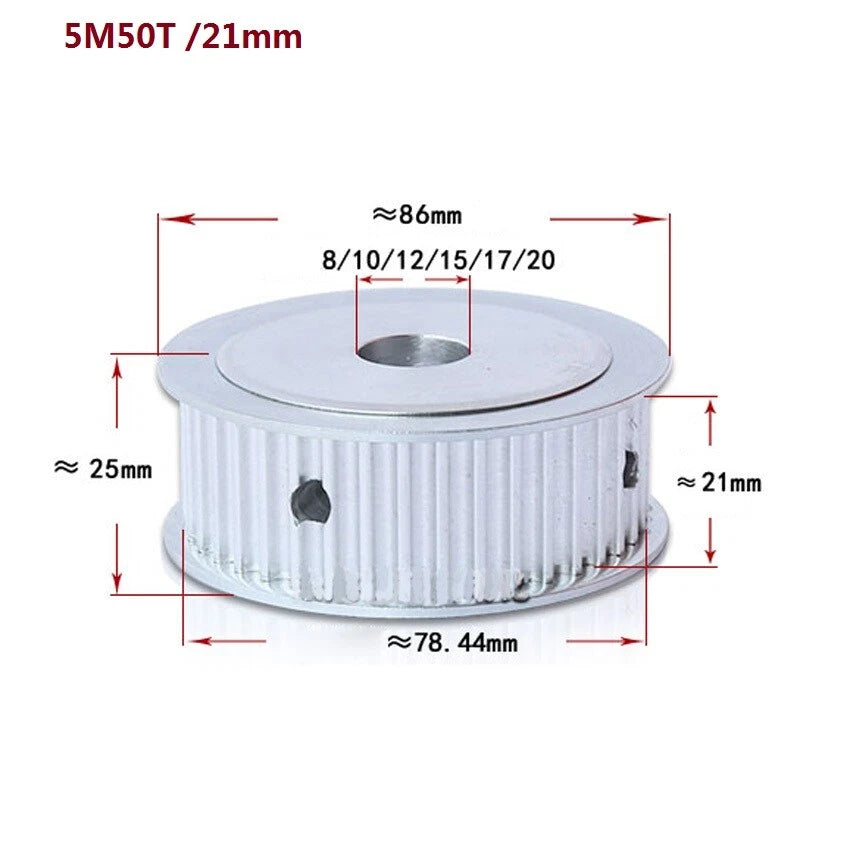
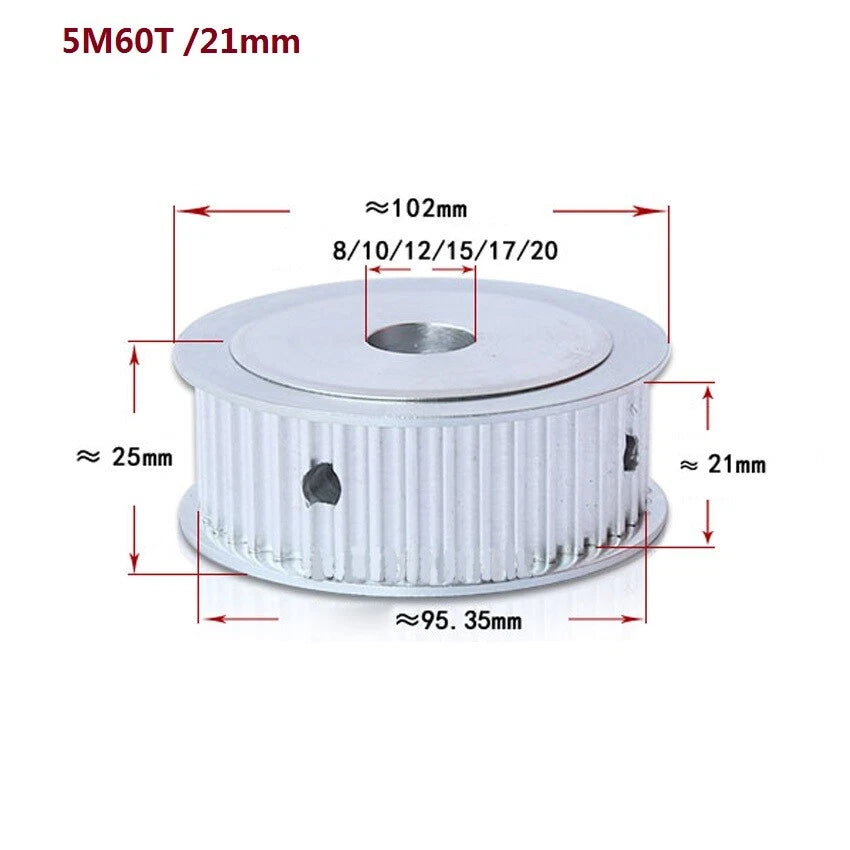
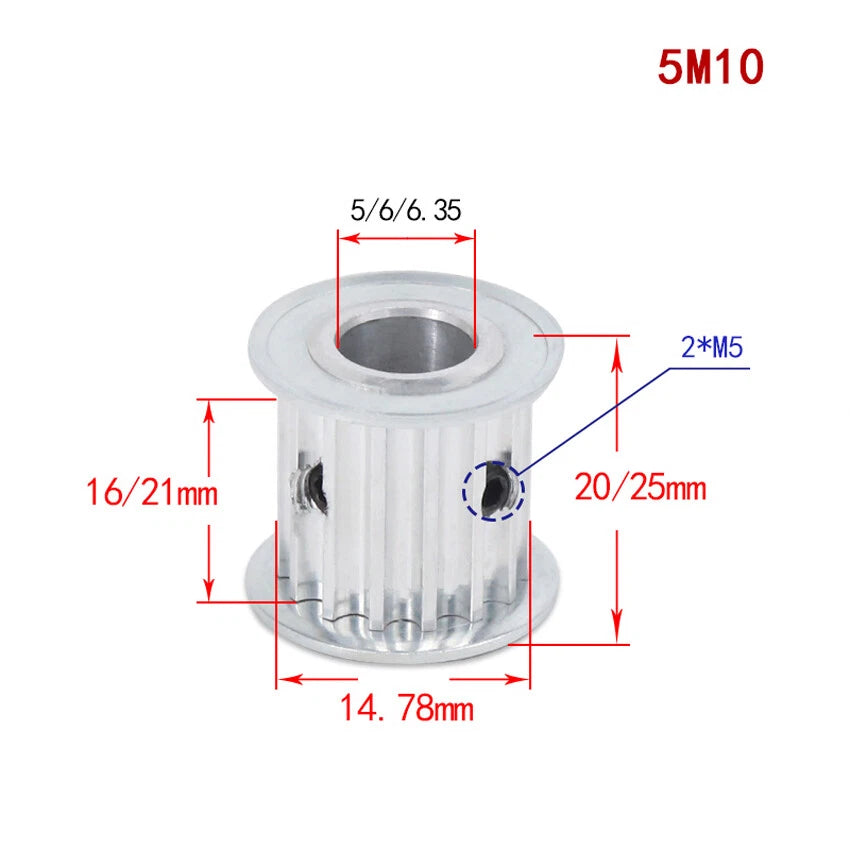
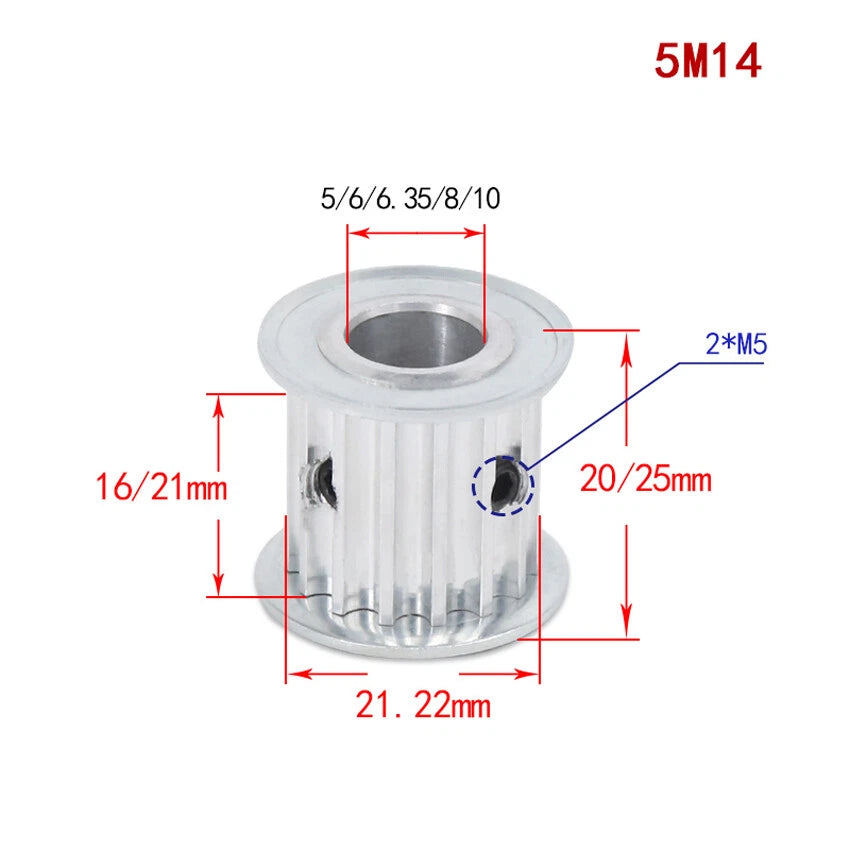
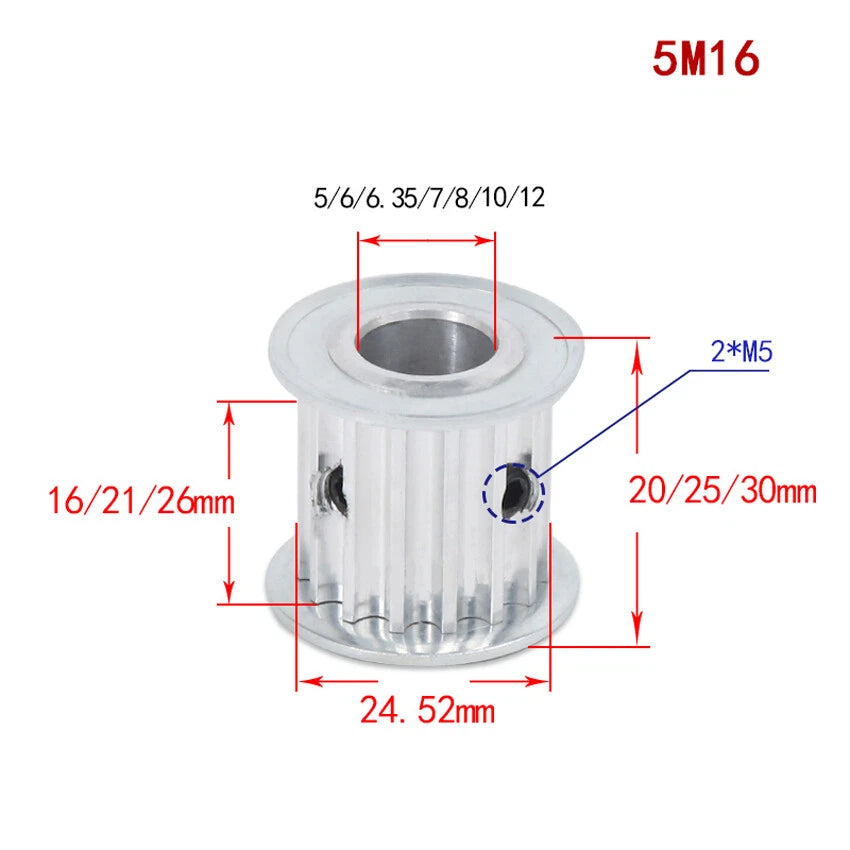
HTD-5M 12T-100T Timing Belt Pulleys Pitch 5mm AF-type Drive Pulley Width 21mm

No reviews

Price:
Sale price$3.79 USD
Stock:
In stock (500 units), ready to be shipped

Payment & Security

Ach Direct Debit Amazon American Express Apple Pay Bancontact BLIK Diners Club Discover EPS Google Pay iDEAL Wero JCB Maestro Mastercard Multibanco MobilePay PayPal Przelewy24 Shop Pay Twint Union Pay USDC Visa

Your payment information is processed securely. We do not store credit card details nor have access to your credit card information.

Limited Offer — Spend More, Save More
Spend $55+
Save $5
Spend $100+
Save $10
Spend $200+
Save $25
HomeDIYer DIY Expert Support

DIY Expert Support

Get fitment advice & recommendations

Mon–Fri  8:30 AM – 8:00 PM
24-Hour Fast Ship
Arrives in 3–14 Days
Worldwide Shipping
30-Day Returns
1 tree planted with every purchase

Description

HTD-5M Timing Belt Pulleys — Precise 5mm Pitch AF-Type Drive Pulleys for CNC & Automation

Engineers and makers building CNC routers, 3D printers, or robotic actuators know the frustration of belt slip and misalignment caused by poorly toleranced pulleys. These HTD-5M AF-type timing belt pulleys are designed for builders who need repeatable, slip-free power transmission in demanding motion-control applications.

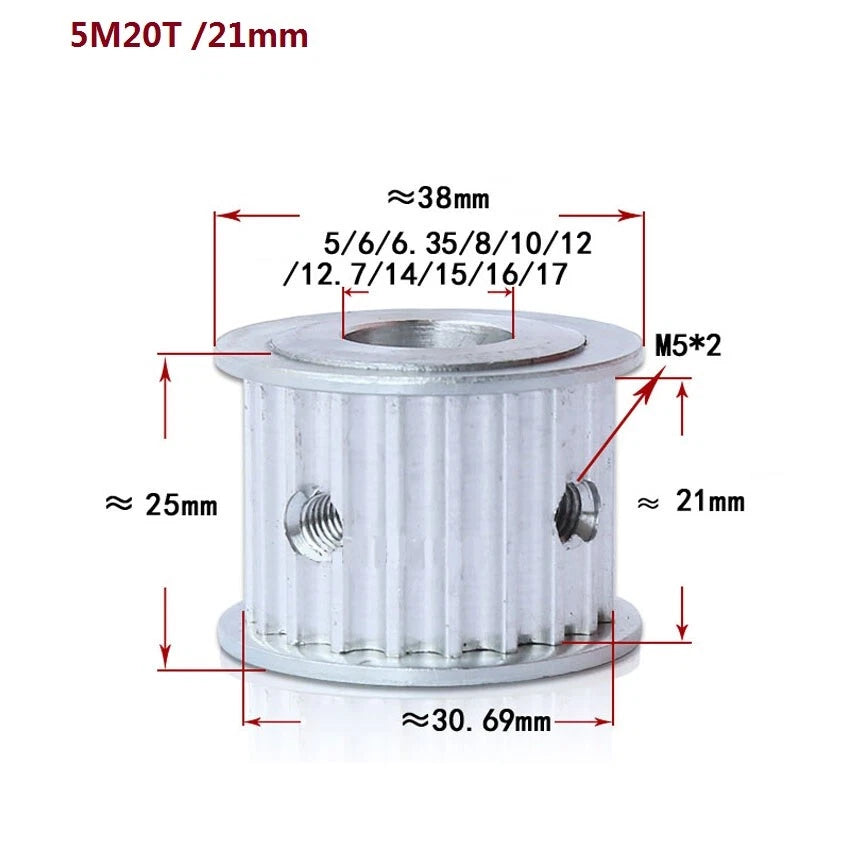
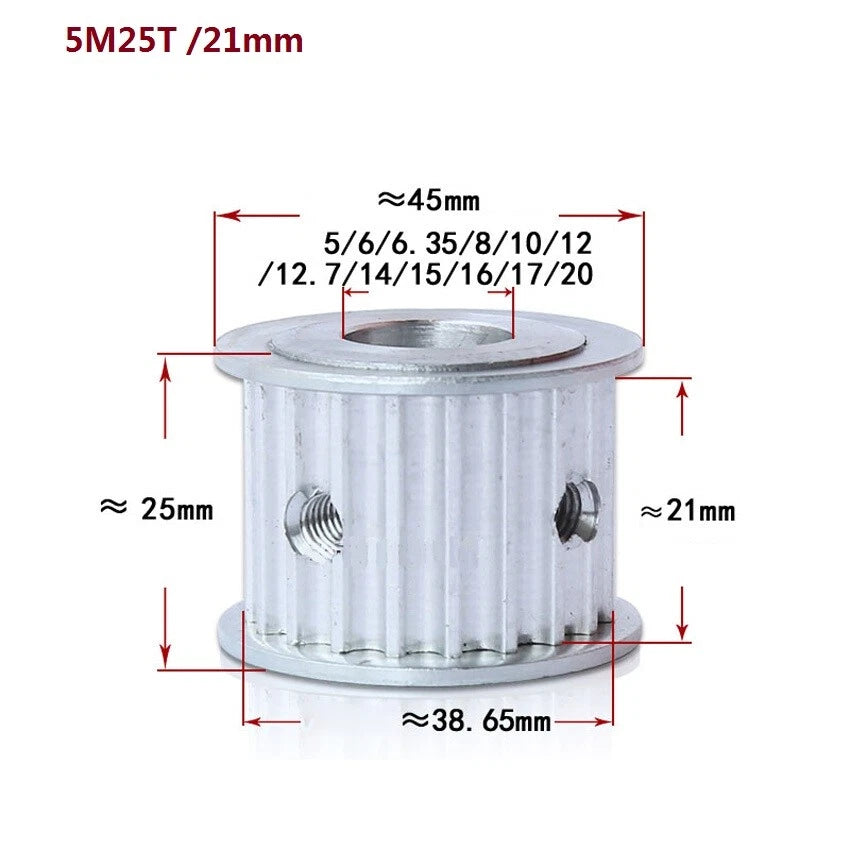
Each pulley is machined from aluminum alloy with a natural or anodized finish and features the HTD (High Torque Drive) 5mm pitch tooth profile. The AF-type hub design includes a set-screw bore for secure shaft clamping. Belt width compatibility is 21mm. Tooth counts range from 10T to 100T, and bore diameters span 5mm to 25mm (approximately 0.20 in to 0.98 in), covering the most common motor and lead-screw shaft sizes.

Typical use cases include: synchronous belt drives on desktop CNC mills and laser cutters, stepper-motor drive stages in 3D printers and pick-and-place machines, and speed-reduction or torque-multiplication stages in robotics and automation panels. Long-tail applications include HTD 5M pulley for NEMA 23 stepper, 5mm pitch timing pulley for 8mm shaft, and AF-type drive pulley for belt-driven linear axis.

⚙️ Compatibility: HTD-5M (5mm pitch) synchronous belts, 21mm belt width. Verify tooth count and bore diameter match your shaft and belt before ordering.

✅ Key Features of These HTD-5M AF-Type Timing Belt Pulleys

🔩 HTD 5mm Pitch Tooth Profile

Rounded HTD tooth geometry distributes load across a larger contact area, reducing tooth shear stress compared to trapezoidal profiles under equivalent torque.

📐 Wide Tooth Count Selection (10T–100T)

From compact 10-tooth drive pulleys to large 100-tooth driven pulleys, the range supports gear ratios from 1:1 up to 10:1 within a single product family.

🎯 Multi-Bore AF-Type Hub

AF-type hub with set-screw clamping accommodates bore diameters from 5mm to 25mm, fitting common stepper, servo, and DC motor shaft sizes without custom machining.

🏗️ Aluminum Alloy Construction

Lightweight aluminum body keeps rotational inertia low — critical for high-acceleration stepper and servo axes — while providing adequate strength for typical belt-drive loads.

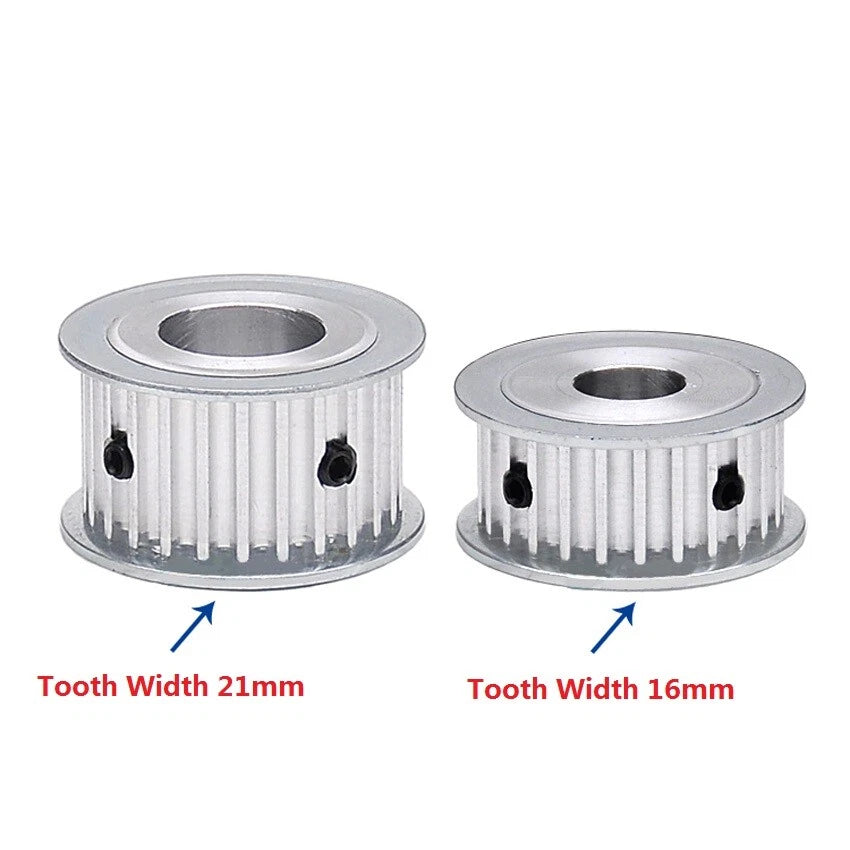
📏 21mm Belt Width Compatibility

Groove width is machined to accept standard 21mm-wide HTD-5M belts, ensuring proper belt tracking and even load distribution across the full belt width.

🔄 Slip-Free Synchronous Drive

Positive tooth engagement eliminates the belt creep inherent in V-belt or flat-belt drives, maintaining precise positional repeatability in open-loop stepper systems.

📐 Technical Specifications — HTD-5M Timing Belt Pulleys

Belt Pitch 5mm (HTD-5M)
Pulley Type AF-type (set-screw hub)
Belt Width 21mm
Tooth Count Range 10T – 100T (see variant options)
Bore Diameter Range 5mm – 25mm (see variant options)
Material Aluminum alloy
Finish See variant options
Flange See variant options
Quantity per Order 1 piece

❓ Frequently Asked Questions

How do I choose the right tooth count for my application?

The tooth count determines the pitch diameter and, when paired with a driven pulley, the gear ratio. A smaller drive pulley (fewer teeth) paired with a larger driven pulley (more teeth) reduces speed and multiplies torque. For example, a 20T drive and 40T driven pulley gives a 2:1 reduction. Calculate your required ratio first, then select a tooth count pair that fits within your available center-distance range.

Which bore diameter should I select for my motor shaft?

Select the bore diameter that matches your motor or drive shaft. Common stepper motor shaft sizes are 5mm (NEMA 17), 6.35mm (1/4 in, NEMA 23), and 8mm (larger NEMA 23/34). Servo and DC motor shafts often use 8mm, 10mm, or 12mm. If your shaft is metric, match exactly; if imperial (e.g., 1/4 in = 6.35mm), select the 6.35mm bore option.

Are these pulleys compatible with all HTD-5M belts?

These pulleys are designed for HTD-5M (5mm pitch, HTD tooth profile) synchronous belts with a 21mm width. They are not compatible with MXL, XL, T5, or GT2 belts, which use different tooth profiles. Verify your belt is labeled HTD-5M or 5M before ordering.

How strong is the set-screw clamping on the AF-type hub?

The AF-type hub uses one or two radial set screws that bear directly against the shaft. For light-to-medium torque applications (typical of NEMA 17/23 steppers and small servo motors), set-screw clamping is adequate. For high-torque or reversing-load applications, consider adding a keyway or using a clamp-style hub. Tighten set screws to the manufacturer's recommended torque and use thread-locking compound to prevent loosening under vibration.

Can I use these pulleys for a speed-increase (step-up) drive?

Yes. Place the larger tooth-count pulley on the input shaft and the smaller tooth-count pulley on the output shaft to achieve a speed increase with corresponding torque reduction. Ensure your belt tension and bearing loads are appropriate for the higher output speed.

What is the difference between HTD and GT2 tooth profiles?

HTD (High Torque Drive) uses a deeper, more rounded tooth profile optimized for high-torque, lower-speed applications. GT2 (Gates Tooth) uses a modified curvilinear profile with tighter tolerances, offering lower backlash and better positional accuracy at higher speeds. These pulleys use the HTD-5M profile and are not interchangeable with GT2 belts or pulleys of the same pitch.

How do I determine the correct belt length for my center distance?

Use the standard belt-length formula: L = 2C + π(D₁+D₂)/2 + (D₂−D₁)²/(4C), where C is center distance and D₁, D₂ are the pitch diameters of the two pulleys. Pitch diameter = (Tooth Count × Pitch) / π. Round up to the nearest available belt length and adjust center distance accordingly. Many online belt-length calculators accept tooth count and center distance directly.

🛒 Select your tooth count and bore diameter above, then add to cart.


You may also like

Recently viewed