Idler Timing Pulley GT2 16T-60T Synchronous Wheel for Drive Belts Width 6mm 10mm

No reviews

Price:
Sale price$10.66 USD
Stock:
In stock (500 units), ready to be shipped

Payment & Security

Ach Direct Debit Amazon American Express Apple Pay Bancontact BLIK Diners Club Discover EPS Google Pay iDEAL Wero JCB Maestro Mastercard Multibanco MobilePay PayPal Przelewy24 Shop Pay Twint Union Pay USDC Visa

Your payment information is processed securely. We do not store credit card details nor have access to your credit card information.

Limited Offer — Spend More, Save More
Spend $55+
Save $5
Spend $100+
Save $10
Spend $200+
Save $25
HomeDIYer DIY Expert Support

DIY Expert Support

Get fitment advice & recommendations

Mon–Fri  8:30 AM – 8:00 PM
24-Hour Fast Ship
Arrives in 3–14 Days
Worldwide Shipping
30-Day Returns
1 tree planted with every purchase

Description

GT2 Idler Timing Pulley — Precision Tensioning for 2mm Pitch Drive Belts

When your 3D printer skips layers, your CNC router loses position, or your belt-driven automation system develops unwanted slack, the culprit is almost always inadequate belt tensioning. Makers, engineers, and workshop builders who rely on GT2 timing belts need an idler pulley that holds tension reliably without adding friction or backlash to the system.

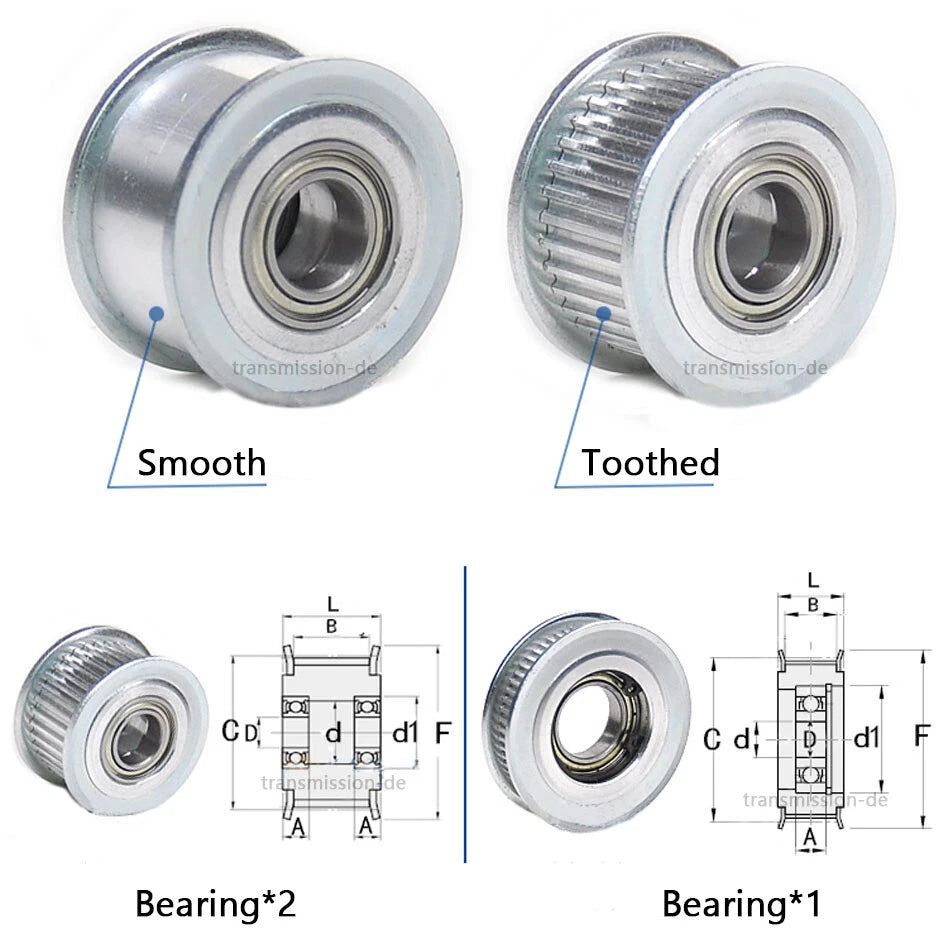
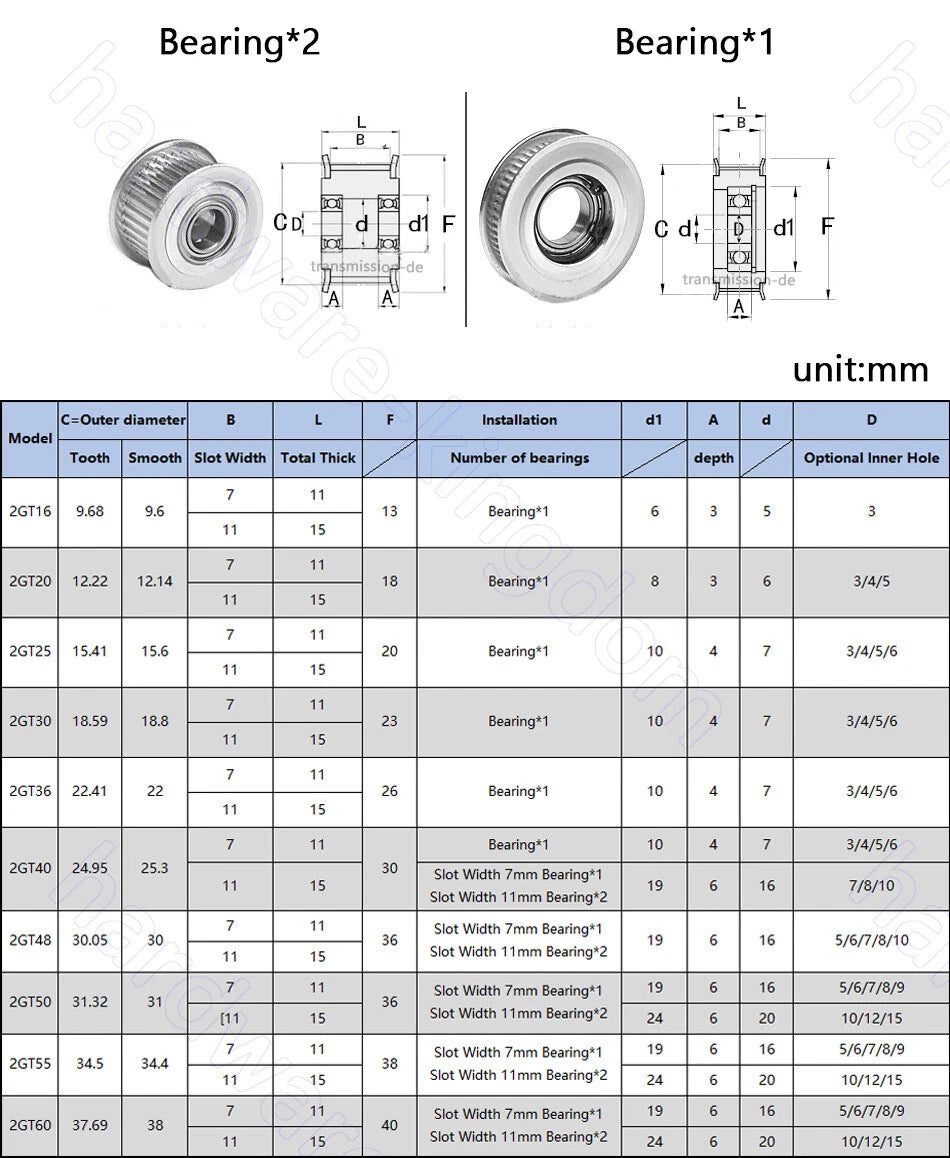
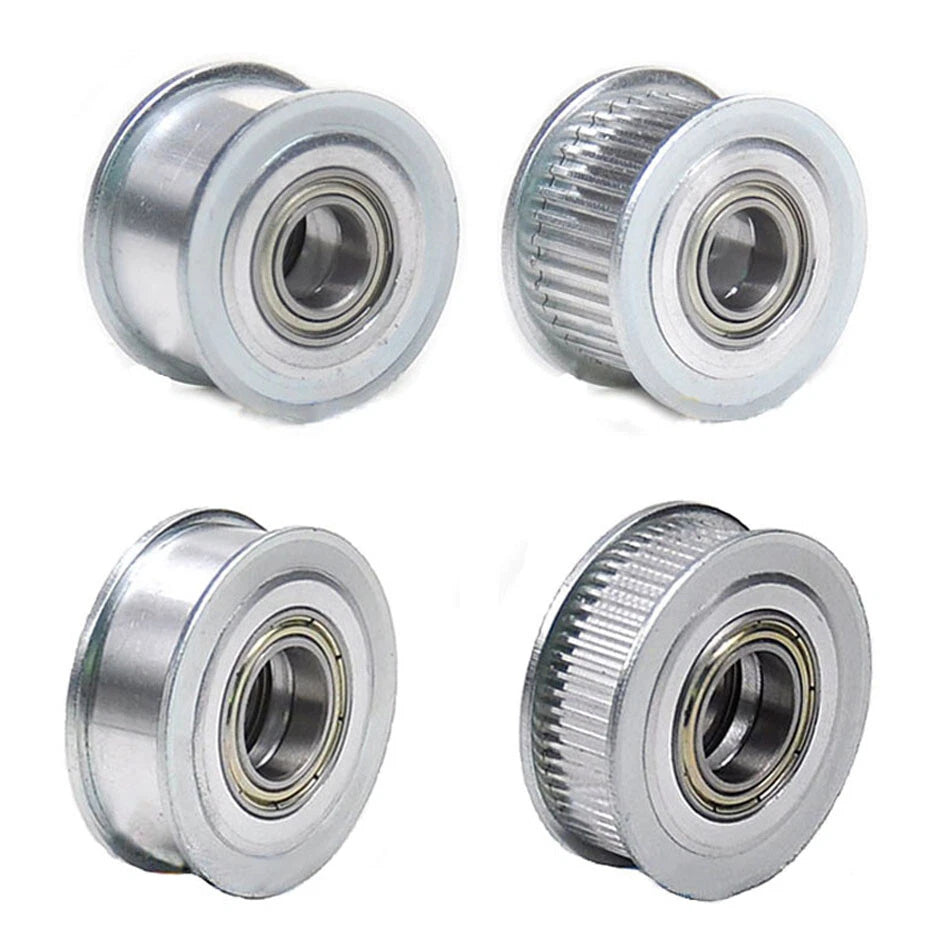
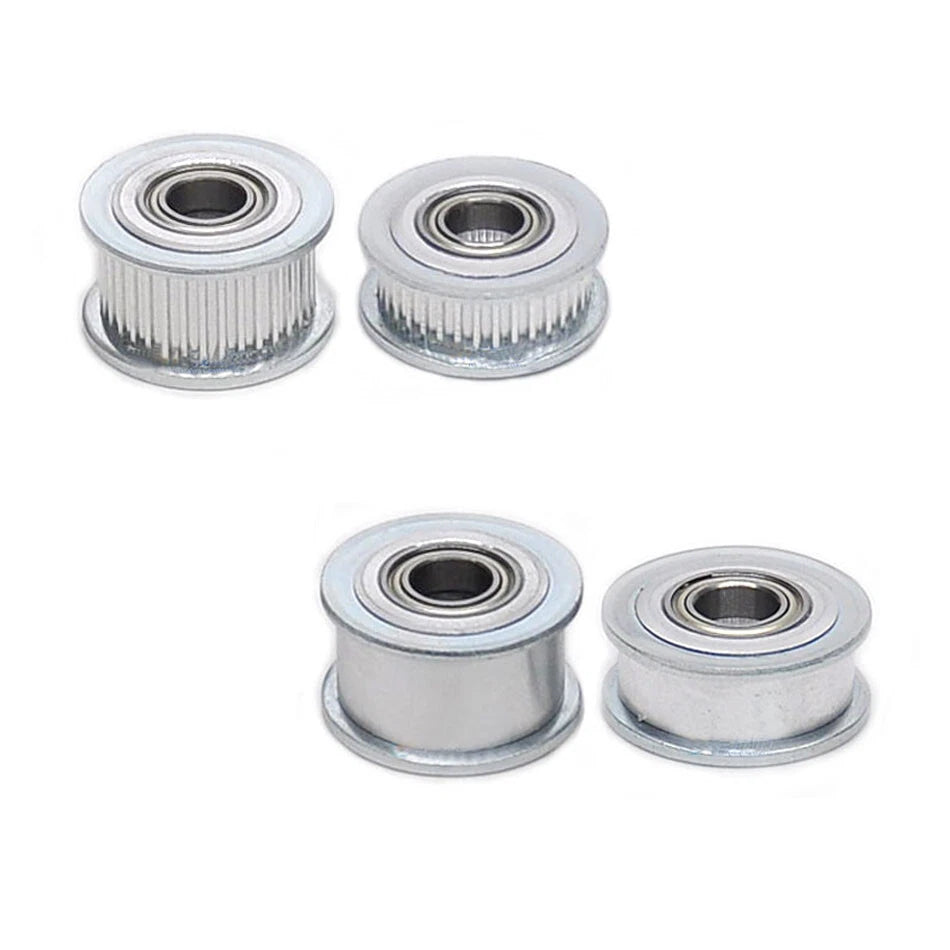
These GT2 idler timing pulleys are machined from aluminum alloy with a 2mm pitch round-arc tooth profile. Each unit ships with pre-installed bearings (toothed or smooth, depending on the variant selected). Tooth counts range from 16T to 60T, with slot widths of 7mm (for 6mm belts) and 11mm (for 10mm belts). Bore diameters span 3mm to 15mm to suit a wide range of shaft sizes.

Typical use cases include GT2 belt tensioning on Cartesian and CoreXY 3D printers, belt-driven axis systems on desktop CNC routers, and custom robotics or automation rigs where consistent belt tension is critical. The included bearings allow the pulley to spin freely on a fixed shaft — a common requirement in idler configurations for linear motion systems and conveyor-style automation builds.

Compatible with standard GT2 / 2GT timing belts — 6mm width (7mm slot) and 10mm width (11mm slot). Verify bore diameter and tooth count before ordering.

✅ Key Features of These GT2 Idler Timing Pulleys

⚙️ 2mm GT2 Pitch Profile

Round-arc tooth geometry matches standard GT2 / 2GT belt profiles for smooth, low-noise engagement and minimal belt wear over extended operation.

🔩 Aluminum Alloy Construction

Lightweight yet rigid aluminum alloy body keeps rotational inertia low while providing the structural integrity needed for continuous tensioning duty.

🎯 Wide Tooth Count Selection (16T–60T)

Ten tooth-count options from 16T to 60T let you match the idler geometry to your belt path and tensioner arm design without compromise.

🔄 Toothed or Smooth Bearing Options

Choose toothed bearings for positive belt engagement or smooth (flanged) bearings for free-spinning idler applications — both types are pre-installed and ready to mount.

📐 Dual Belt Width Support

7mm slot width accommodates 6mm GT2 belts; 11mm slot width accommodates 10mm GT2 belts. Select the correct slot width for your belt to ensure proper tracking.

🛠️ Multiple Bore Sizes (3mm–15mm)

Bore options from 3mm to 15mm cover the most common shaft diameters used in 3D printers, CNC machines, and custom automation frames.

📐 Technical Specifications — GT2 Idler Timing Pulley

Belt Standard GT2 / 2GT
Pitch 2 mm
Tooth Shape Round Arc
Tooth Count 16T, 20T, 25T, 30T, 36T, 40T, 48T, 50T, 55T, 60T
Slot Width 7mm (for 6mm belt) / 11mm (for 10mm belt)
Bore Diameter 3 / 4 / 5 / 6 / 7 / 8 / 10 / 12 / 15 mm (see variant options)
Material Aluminum Alloy
Bearing Type Toothed Bearing or Smooth Bearing (pre-installed)
Bearing Quantity 1 or 2 (see variant options)
Pulley Type Idler Pulley
Weight See variant options

❓ Frequently Asked Questions

How do I choose the right tooth count for my application?

The tooth count affects the wrap angle and the effective diameter of the idler. For most 3D printer and CNC tensioner applications, 16T–20T idlers are used in tight spaces, while 30T–60T idlers are used where a larger wrap angle or gentler belt path is needed. Match the tooth count to your tensioner arm geometry and available clearance.

What is the difference between toothed bearings and smooth bearings?

Toothed bearing variants have a toothed inner surface that positively engages the GT2 belt, preventing any slip between the belt and pulley. Smooth (flanged) bearing variants allow the belt to slide over the pulley surface freely — these are used when the idler only redirects or tensions the belt without needing to grip it. Choose toothed for drive-side idlers and smooth for tension-only idlers.

Which slot width should I select — 7mm or 11mm?

Select 7mm slot width if your belt is 6mm wide (the most common width in desktop 3D printers). Select 11mm slot width if your belt is 10mm wide (common in larger CNC routers and heavier-duty motion systems). Using the wrong slot width will cause the belt to track off-center and wear prematurely.

How do I select the correct bore diameter?

Measure the outer diameter of the shaft or bolt that the idler will spin on. The bore diameter of the pulley must match the outer diameter of the bearing's inner race, which in turn fits the shaft. Common shaft sizes for 3D printers are 3mm and 5mm; CNC and robotics applications often use 5mm, 6mm, 8mm, or 10mm shafts. If in doubt, check your machine's BOM or tensioner arm specification.

Are these pulleys strong enough for continuous-duty use?

Aluminum alloy construction provides a good strength-to-weight ratio suitable for the belt tension loads typical in 3D printers, desktop CNC routers, and light automation systems. For heavy industrial conveyor applications with high belt tension, verify that the bearing load rating meets your requirements before ordering.

Can I use these pulleys with belts other than GT2?

These pulleys are designed specifically for GT2 / 2GT timing belts with a 2mm pitch. They are not compatible with HTD, T2.5, T5, or other belt profiles. Using a mismatched belt profile will result in poor engagement, noise, and accelerated wear on both the belt and pulley teeth.

Do the bearings come pre-installed, or do I need to press them in myself?

The bearings are pre-installed in the pulley body. The pulley is ready to mount directly onto your shaft or tensioner bolt. No pressing or special tools are required for installation — simply slide the pulley onto the shaft and secure with your tensioner hardware.

🛒 Select your Model-Teeth, Slot Width, and Bore & Types above, then add to cart.

You may also like

Recently viewed