🔨 Product Overview
Precision metalworking and jewelry making demand tools that match the scale and sensitivity of the work. Standard hardware store hammers are too heavy, too coarse, and too imprecise for the controlled strikes needed when shaping gold, silver, copper, or other soft metals. Whether you're forming a bezel, texturing a surface, setting a rivet, or working on a small metal component, the wrong hammer makes every strike a gamble.
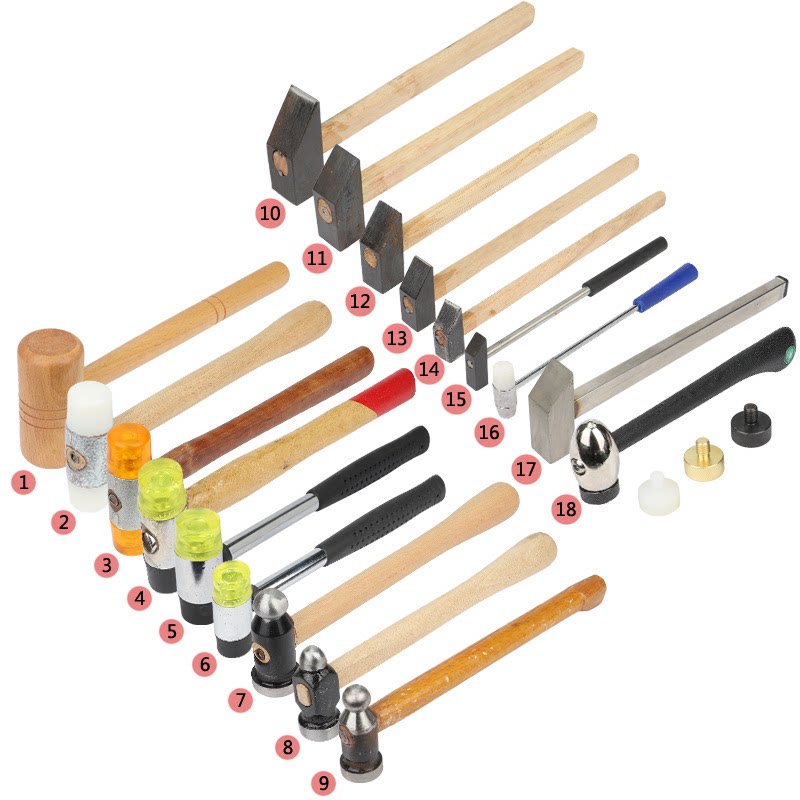
This Mini Jewelry & Metalworking Hammer series offers 18 specialized models — from compact iron hammers and wooden-handle shapers to rubber mallets, square-head hammers, and stainless steel striking tools. Each model is designed for a specific type of metalworking task, giving you the right weight, head shape, and material for precise, controlled work on fine metals and small-scale projects. ✨
✅ Why Jewelers & Metalworkers Choose These Hammers
- ✔ Right-Sized for Precision Work
Compact, lightweight design (200g) gives you the control needed for fine metalworking without the bulk and weight of standard workshop hammers.
- ✔ 18 Specialized Models
From rubber mallets for non-marring strikes to stainless steel hammers for hard metal work — choose the exact tool your project requires.
- ✔ Protect Delicate Metal Surfaces
The right hammer head material prevents unwanted marks, dents, or surface damage on soft metals like gold, silver, and copper.
- ✔ Versatile Across Techniques
Suitable for shaping, forming, texturing, riveting, stamping, and setting — covering the full range of jewelry and metalworking techniques.
- ✔ Durable Construction
Built for repeated use in workshop and bench settings. Each model is constructed to handle the demands of regular metalworking without premature wear.
- ✔ Compact & Portable
At 200g per hammer, lightweight enough to carry in a tool roll or jewelry kit without adding unnecessary bulk.
🔧 Common Problem → Solution
Problem: Standard hammers are too heavy for fine jewelry work, making it impossible to control strike force on delicate gold or silver pieces.
Solution: These mini hammers are sized and weighted for precision bench work, giving you the control to deliver exactly the force you need without over-striking.
Problem: Using a metal hammer on soft metals leaves unwanted marks and surface damage that require additional finishing work.
Solution: The rubber mallet models deliver non-marring strikes that move metal without leaving tool marks — ideal for forming and shaping without surface damage.
Problem: You need different hammer types for different tasks (shaping, texturing, riveting, stamping) but don't want to invest in a full set of expensive specialty tools.
Solution: With 18 models at accessible price points, you can select exactly the hammer types your work requires without overspending on tools you won't use.
Problem: A single all-purpose hammer can't handle both hard metal striking and delicate surface work without risking damage.
Solution: Matching the right hammer model to each task — stainless steel for hard strikes, rubber for forming, wooden handle for balanced shaping — gives you better results across every technique.
🔨 Applications & Use Cases
Suitable For:
- ✔ Jewelry making — gold, silver, copper, brass forming and shaping
- ✔ Metal stamping and texturing
- ✔ Rivet setting and cold connections
- ✔ Bezel forming and setting
- ✔ Small-scale metalsmithing and bench work
- ✔ Leather tooling and craft work (rubber mallet models)
- ✔ Light assembly and fitting tasks requiring controlled strikes
⭐ Key Features
- 18 specialized hammer models for jewelry making and metalworking
- Models include: iron hammer, mini wooden handle hammer, square head hammer, stainless steel hammer, rubber mallet, and more
- Compact and lightweight at 200g per hammer — sized for precision bench work
- Suitable for gold, silver, copper, brass, and other soft to medium metals
- Each model designed for specific metalworking techniques and strike types
- Durable construction built for repeated workshop use
- Price range $17.50–$58.50 depending on model — select only what you need
📋 How to Choose Your Model
For shaping and forming soft metals (gold, silver, copper): Choose a wooden handle or rubber mallet model for controlled, non-marring strikes.
For texturing and surface work: Choose a model with a textured or cross-peen head for creating surface patterns and finishes.
For riveting and cold connections: Choose a flat-face iron or stainless steel hammer for precise, controlled riveting strikes.
For stamping: Choose a heavier model (higher # number) that delivers consistent force for clean stamp impressions.
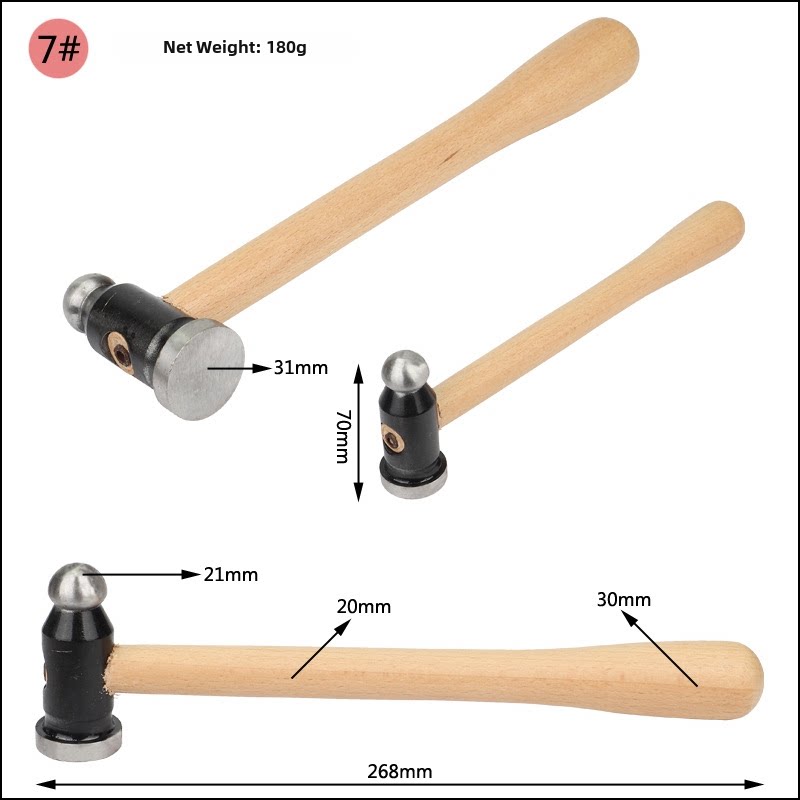
Not sure which to choose? Refer to the individual product images for each model — each variant image shows the specific hammer head shape and construction to help you identify the right tool for your work.
📐 Product Specifications
| Specification |
Details |
| Available Models |
18 variants (1# through 18#) |
| Weight per Hammer |
200 g |
| Price Range |
$17.50 – $58.50 depending on model |
| Head Materials |
Iron, Stainless Steel, Rubber (varies by model) |
| Handle Materials |
Wood, Metal (varies by model) |
| Applications |
Jewelry making, metalsmithing, stamping, forming, riveting |
| Package Includes |
1 × Hammer (choose model) |
🎯 Perfect For
- 🔨 Jewelry makers working with gold, silver, and copper
- 🔨 Metalsmiths and bench jewelers
- 🔨 Hobbyists learning jewelry making and metalworking techniques
- 🔨 Leather crafters needing a rubber mallet for tooling work
- 🔨 DIY crafters working on small-scale metal and mixed-media projects
- 🔨 Art students and craft school workshops
❓ FAQ
Q: How do I know which model number to choose?
A: Each variant has its own product image showing the specific hammer head shape and construction. Review the images for each model to identify the head style that matches your intended use. The "How to Choose" section above also provides guidance by technique.
Q: Are these suitable for working with gold and silver?
A: Yes. The rubber mallet and wooden-handle models are particularly well-suited for shaping and forming soft precious metals without leaving tool marks. For harder strikes (stamping, riveting), the iron and stainless steel models are appropriate.
Q: What's the difference between "hammers" and "strikes" in the variant names?
A: Both refer to striking tools — the naming reflects different head styles or construction types. Please refer to the individual variant images to see the specific design of each model.
Q: Can I use these for leather tooling?
A: Yes. The rubber mallet models are suitable for leather stamping and tooling work where a non-marring strike is needed.
Q: Is model 17# currently in stock?
A: Model 17# is currently out of stock. All other models (1#–16#, 18#) are available with 500 units in stock.
Q: Are these sold individually or as a set?
A: Each variant is sold individually — one hammer per order. Select the specific model number you need from the variant selector.
Q: What is the weight of each hammer?
A: All models weigh 200g. Note that this is the shipping weight of the packaged item — the actual hammer head weight varies by model and is shown in the individual product images.