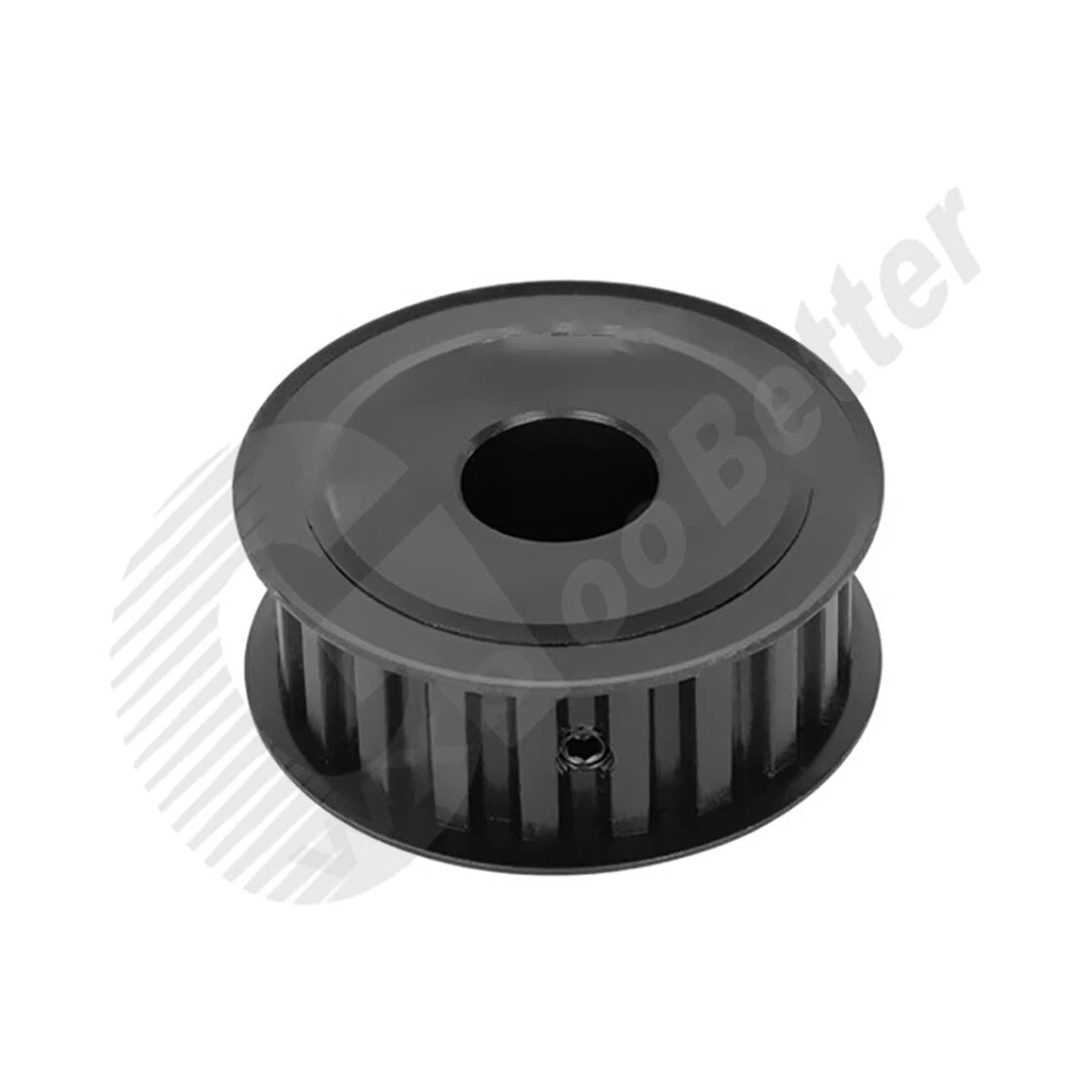
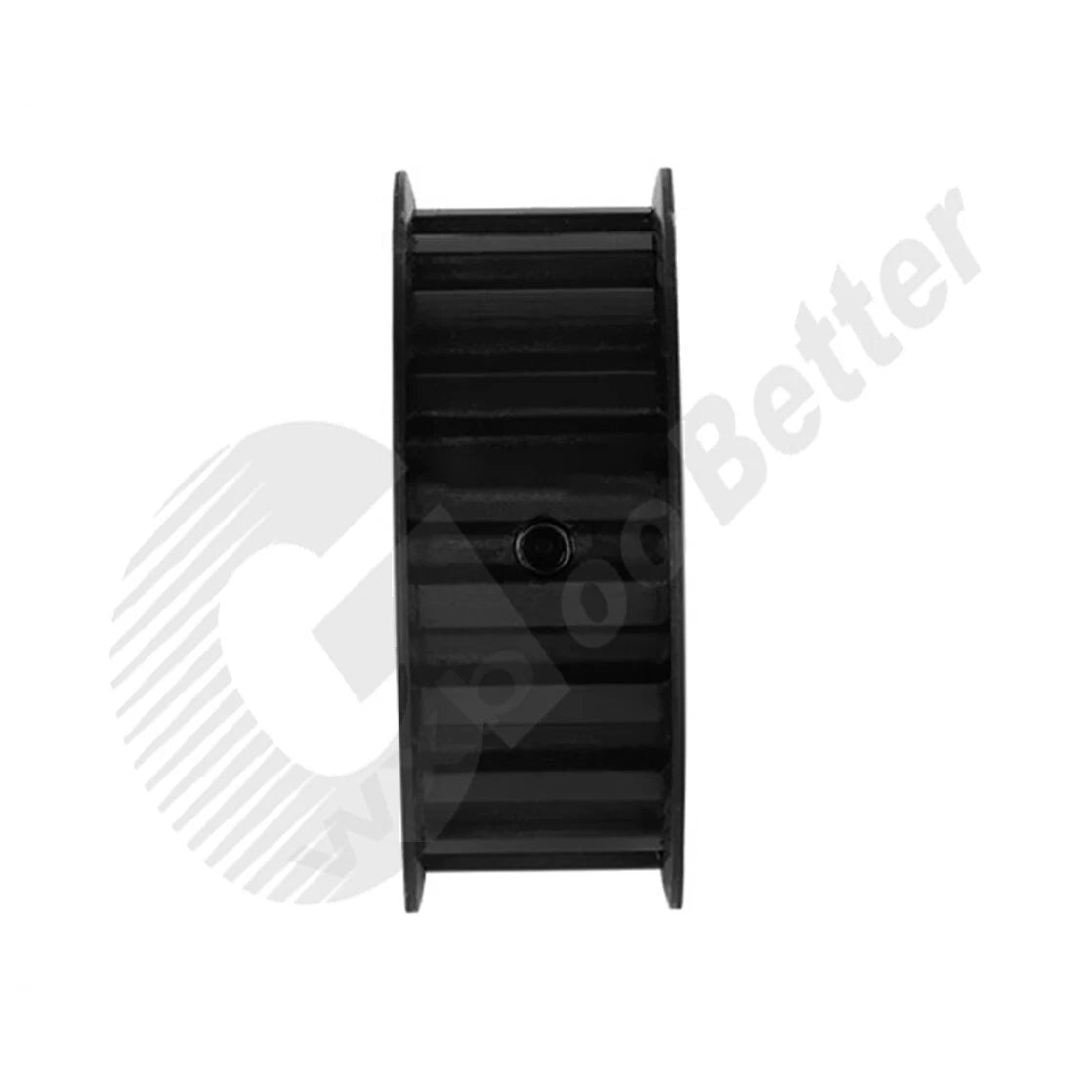
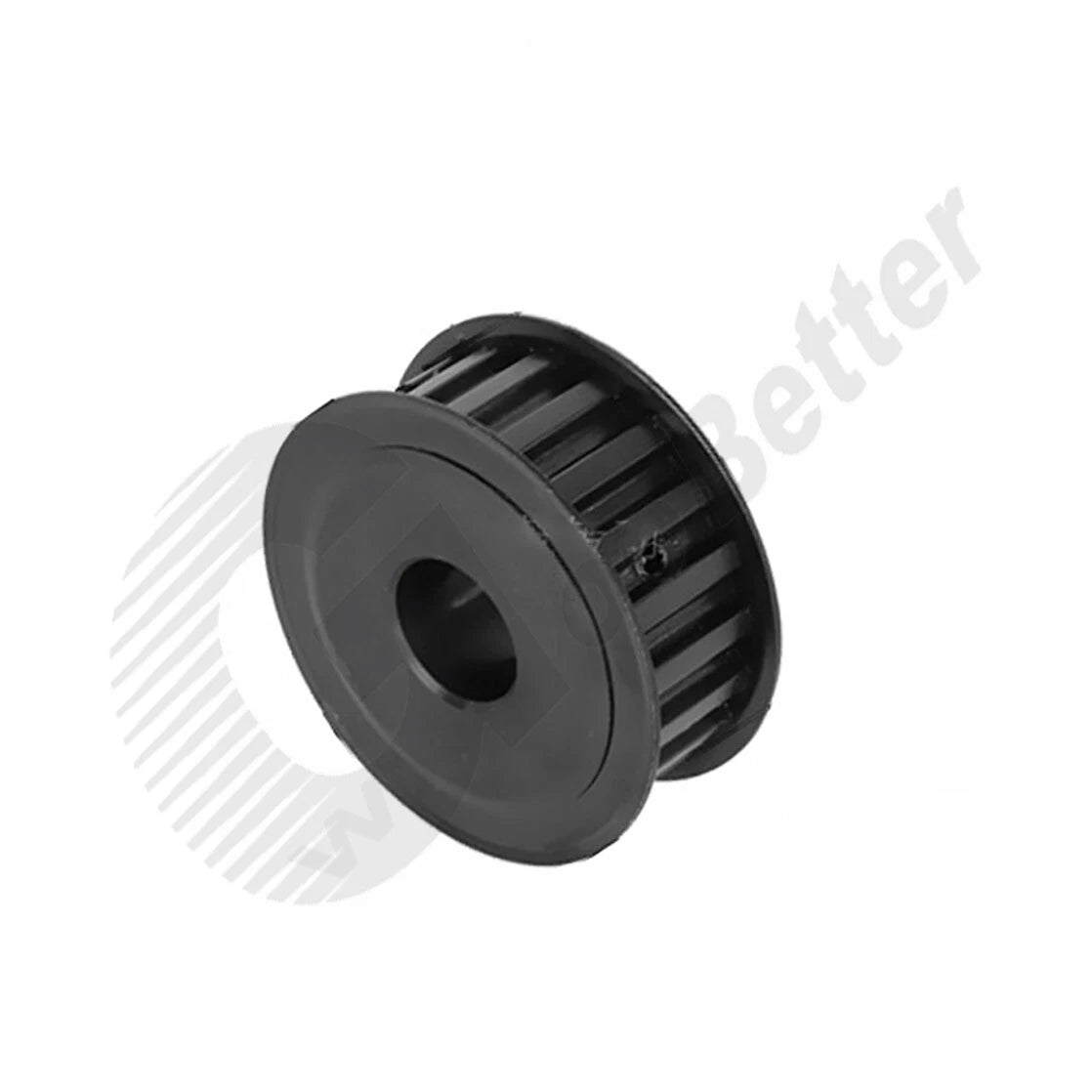
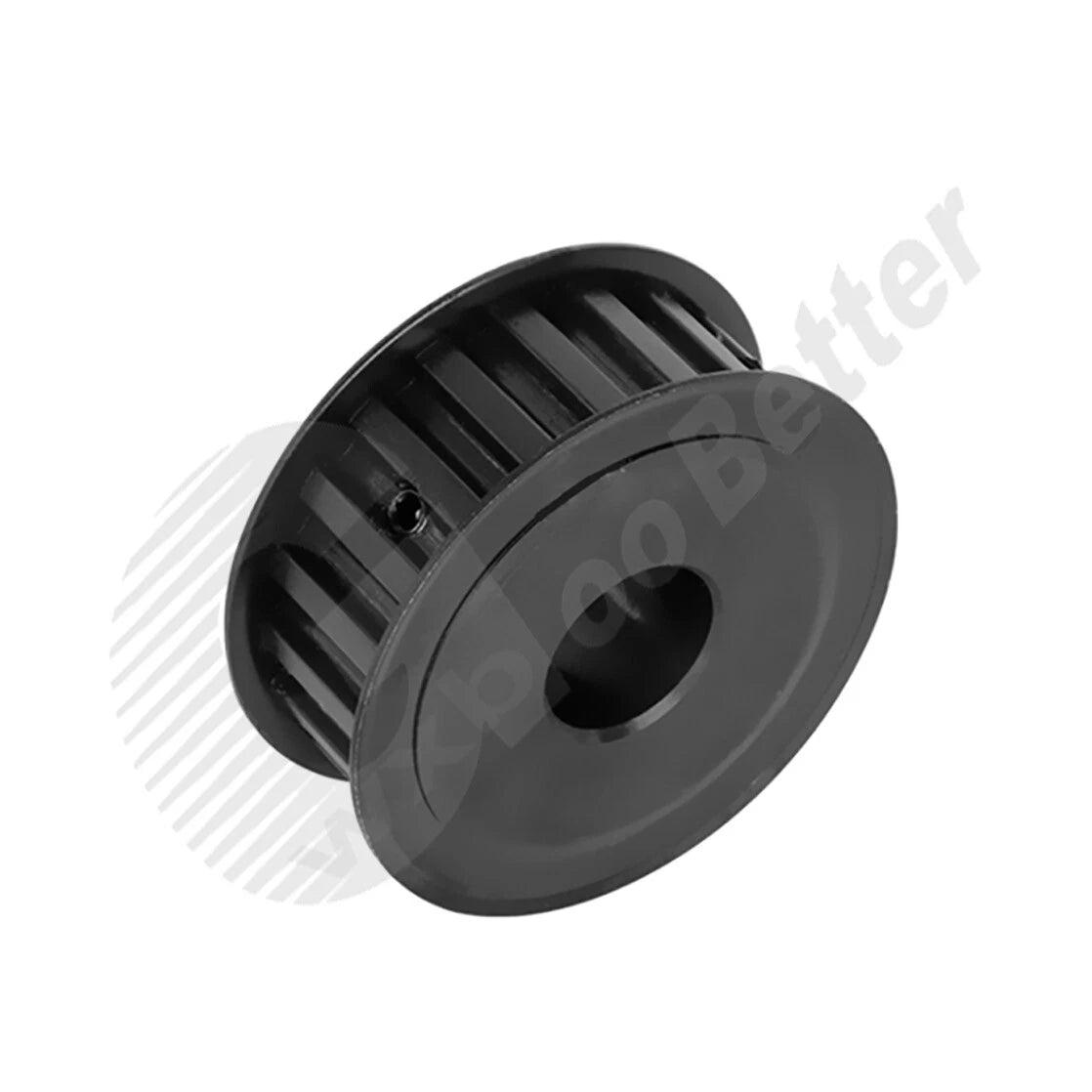
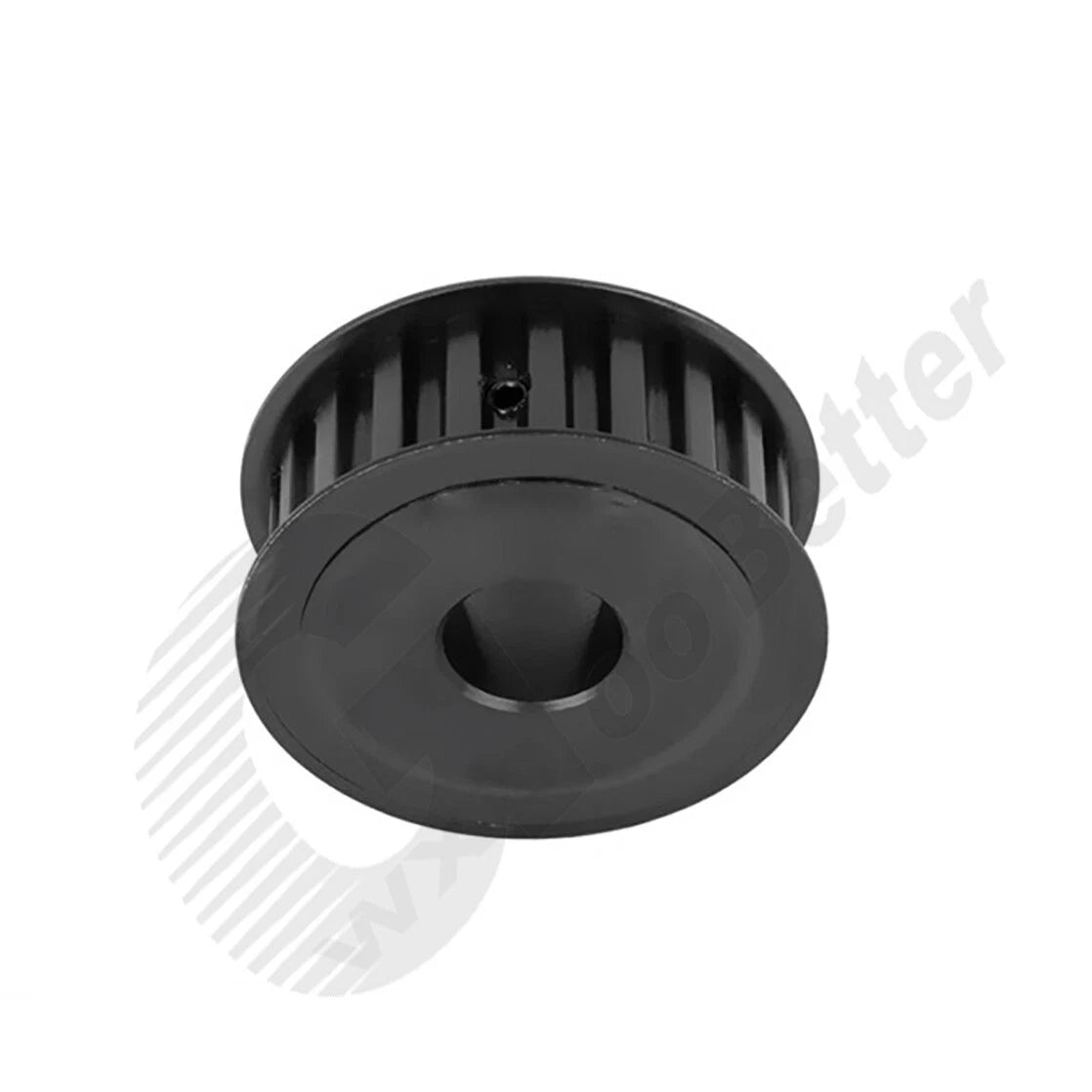
L type 25mm Timing Belt Smooth Tooth Drive Pulley 20T~40T Bore=8~28mm 45 Steel

No reviews

Price:
Sale price$97.40 USD
Stock:
In stock (500 units), ready to be shipped

Payment & Security

Ach Direct Debit Amazon American Express Apple Pay Bancontact BLIK Diners Club Discover EPS Google Pay iDEAL Wero JCB Maestro Mastercard Multibanco MobilePay PayPal Przelewy24 Shop Pay Twint Union Pay USDC Visa

Your payment information is processed securely. We do not store credit card details nor have access to your credit card information.

Limited Offer — Spend More, Save More
Spend $55+
Save $5
Spend $100+
Save $10
Spend $200+
Save $25
HomeDIYer DIY Expert Support

DIY Expert Support

Get fitment advice & recommendations

Mon–Fri  8:30 AM – 8:00 PM
24-Hour Fast Ship
Arrives in 3–14 Days
Worldwide Shipping
30-Day Returns
1 tree planted with every purchase

Description

L Type 25mm Timing Belt Drive Pulley — Precision-Machined 45 Steel for Reliable Power Transmission

When your CNC router, 3D printer, or automated conveyor demands slip-free, repeatable motion, a poorly fitted pulley becomes the weakest link in the entire drive train. Engineers and serious makers who need dimensional accuracy and long service life turn to L type 25mm timing belt drive pulleys machined from solid 45 steel — a material that delivers the toughness and machinability required for demanding duty cycles.

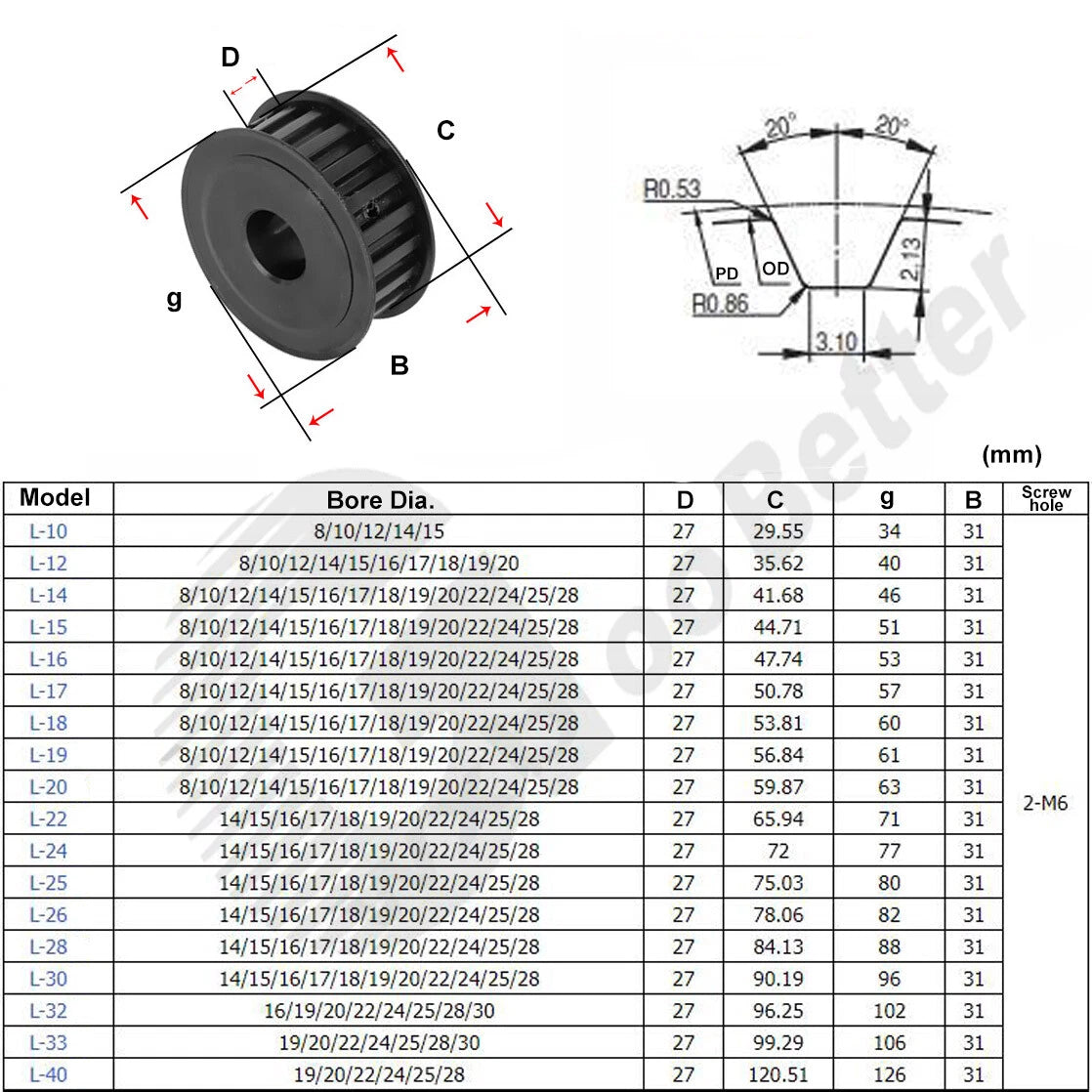
Each pulley is machined from 45 carbon steel and features the standard L-pitch tooth profile (25.4 mm / 1 inch pitch) with a smooth, flat tooth face designed to mate with L-type timing belts. Tooth counts span 20 T through 40 T (see variant options for the full range), and bore diameters run from 8 mm (0.31 in) to 28 mm (1.10 in). Keyway options include without keyway, 3 mm, 4 mm, 5 mm, 6 mm, and 8 mm widths to suit standard shaft keyway standards.

Typical use cases include CNC router X/Y axis drives requiring consistent belt engagement, 3D printer extruder and gantry drive systems where tooth-skip causes print failures, and light industrial conveyor or indexing table drives where a keyed bore ensures zero rotational slip under sustained load.

⚙️Compatibility: Designed for standard L-type (25.4 mm pitch) timing belts. Verify your belt width (typically 25 mm / 1 inch) and shaft diameter before ordering. Keyway dimensions follow standard DIN 6885 / ISO 773 profiles.

✅ Key Features of These L Type 25mm Timing Belt Drive Pulleys

🔩45 Carbon Steel Construction
Machined from 45 steel for a balance of tensile strength and machinability, resisting deformation under sustained belt tension loads.
📐Standard L-Pitch Tooth Profile
25.4 mm (1 inch) pitch tooth geometry ensures accurate meshing with L-type timing belts, minimizing backlash and tooth wear.
🎯Wide Tooth Count Range (20 T – 40 T)
Select the tooth count that matches your required drive ratio; more teeth reduce belt stress and noise at higher speeds.
🔧Multiple Bore and Keyway Options
Bore diameters from 8 mm to 28 mm with optional keyway widths (3 / 4 / 5 / 6 / 8 mm) allow direct mounting on standard metric shafts without adapters.
⚖️Smooth Tooth Face Design
The flat-tooth (smooth) profile reduces belt edge stress compared to flanged designs, extending belt service life in continuous-duty applications.
🏭Broad Application Compatibility
Suited for CNC machines, 3D printers, laser cutters, pick-and-place systems, and light conveyor drives requiring precise, repeatable positioning.

📐 Technical Specifications — L Type Timing Belt Drive Pulley

Belt Type L (25.4 mm / 1 inch pitch)
Belt Width Compatibility 25 mm (1 inch) — standard L-series
Tooth Count See variant options (20 T – 40 T range)
Bore Diameter See variant options (8 – 28 mm)
Keyway Width See variant options (without keyway / 3 / 4 / 5 / 6 / 8 mm)
Material 45 Carbon Steel
Tooth Profile L-type, smooth tooth face (no flange)
Pitch Diameter See variant options
Surface Finish Machined (natural steel)
Quantity 1 piece per order

❓ Frequently Asked Questions

How do I choose the right tooth count for my application?

The tooth count determines your drive ratio. Divide the driven pulley teeth by the driver pulley teeth to get the ratio. For example, a 20 T driver paired with a 40 T driven pulley gives a 2:1 reduction. Higher tooth counts on the driver increase output speed; lower tooth counts increase torque. Match the tooth count to your required speed and torque output, and ensure the belt length accommodates the center distance between pulleys.

What keyway width should I select for my shaft?

Keyway width is determined by your shaft diameter and the applicable standard (DIN 6885 / ISO 773). Common pairings: 8–10 mm shaft → 3 mm keyway; 10–12 mm shaft → 4 mm keyway; 12–17 mm shaft → 5 mm keyway; 17–22 mm shaft → 6 mm keyway; 22–30 mm shaft → 8 mm keyway. If your shaft has no keyway slot, select "without keyway" and secure with a set screw or interference fit.

Is 45 steel strong enough for my drive system?

45 carbon steel has a typical tensile strength of approximately 600–800 MPa in the normalized condition, making it well-suited for moderate-to-high belt tension applications such as CNC gantries, 3D printer drives, and light conveyor systems. For extremely high-load or corrosive environments, consider whether a surface treatment or alternative material is needed for your specific duty cycle.

Will these pulleys corrode or rust over time?

45 carbon steel is not inherently corrosion-resistant. In dry indoor environments (CNC workshops, 3D printing labs), surface oxidation is minimal with normal use. For humid or outdoor environments, applying a light machine oil or clear lacquer to exposed surfaces will significantly extend service life. If corrosion resistance is a primary requirement, consider stainless steel or aluminum pulleys instead.

Which L-type timing belts are compatible with these pulleys?

These pulleys are designed for standard L-pitch timing belts with a 25.4 mm (1 inch) tooth pitch and a belt width of 25 mm (1 inch). Confirm your belt pitch and width before ordering. Do not use with XL, T5, T10, GT2, or other pitch standards — the tooth geometry will not mesh correctly.

Can I use these pulleys without a keyway using a set screw only?

Yes. The "without keyway" variants are designed for set-screw mounting. Drill and tap a radial set screw hole in the hub if not already present, and use a hardened-tip set screw against a flat on the shaft for best holding force. This method is suitable for light-to-moderate torque applications. For high-torque or reversing loads, a keyed bore provides significantly more reliable torque transmission.

How do I verify the correct bore size before ordering?

Measure your shaft diameter with a digital caliper to the nearest 0.1 mm. Select the bore size that matches your shaft diameter exactly — these pulleys are machined to close tolerances for a slip or light interference fit. Do not select a bore smaller than your shaft diameter.

🛒 Select your Number of Teeth, Bore Width, and Keyway width above, then add to cart.


You may also like

Recently viewed