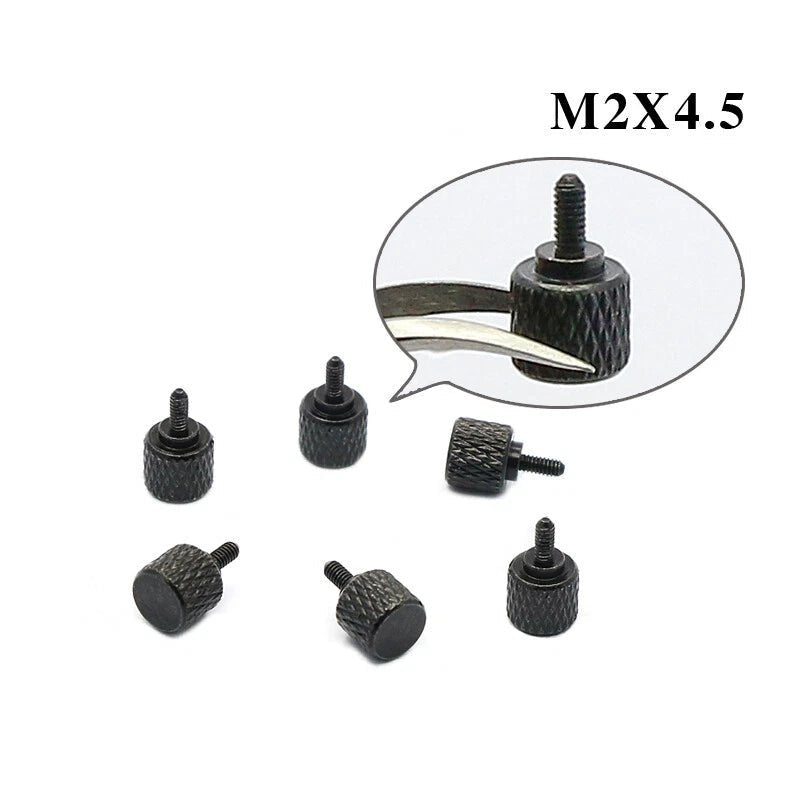
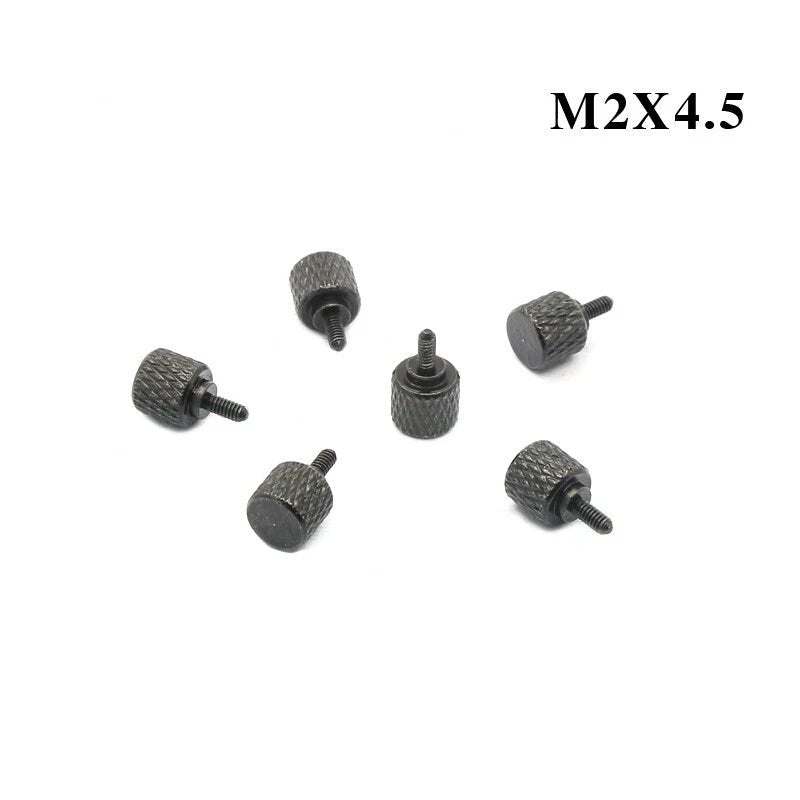
🔧 Product Overview: M2 Thumb Screws – 4.5mm Stepped Knurled Head Bolt for Instrument Adjustment
When you need to make precise, frequent adjustments on delicate instruments or small electronic devices, these M2 thumb screws are exactly what you're looking for. The compact 4.5mm thread length (measured under the head) is perfect for thin panels, battery compartments, and safety covers. The stepped knurled head provides a comfortable, non‑slip grip for hand tightening – no tools required. Made from durable steel, these screws allow you to control tightening force accurately, preventing over‑tightening and damage to sensitive components. Ideal for musical instruments, test equipment, and any application where components need regular removal and reinstallation.
✨ Why These Small Thumb Screws Are Perfect for Precision Work
-
Compact M2 thread size – Ideal for small electronics, instruments, and tight spaces where standard screws won't fit.
-
4.5mm thread length (under head) – Designed for thin panels, covers, and battery compartments. Provides just enough engagement without bottoming out.
-
Stepped knurled head – The stepped design gives you a natural finger stop and extra grip for easy hand tightening and loosening.
-
Tool‑less operation – No screwdriver needed. Perfect for frequent access to battery compartments, safety covers, and adjustable panels.
-
Accurate torque control – Hand tightening allows you to feel the resistance and avoid over‑tightening, preventing stripped threads or damaged components.
-
Versatile applications – Fasten panels, wiring covers, safety guards, battery compartments, and any parts that require regular removal and reinstallation.
-
Portable and easy to use – Small, lightweight, and ready to use anywhere – no power tools required.
📏 Technical Specifications – M2 Thumb Screws (4.5mm Thread Length)
| Product Type |
Knurled Thumb Screws (Stepped Head) |
| Material |
Steel |
| Thread Size (Diameter) |
M2 |
| Thread Pitch |
0.4mm (metric coarse) |
| Thread Length (under head) |
4.5mm |
| Length Measurement |
Under head – from underside of stepped head to tip (head not included) |
Head Style |
Stepped knurled cylinder (diamond knurl)
|
| Drive Style |
Hand grip (toolless) |
| Finish |
As shown (steel, may be natural or coated depending on batch) |
❓ FAQs – M2 Stepped Thumb Screws
🔸 What are the typical applications for a 4.5mm long M2 thumb screw?
These screws are ideal for securing thin panels (1‑2mm thick), battery compartment covers, safety covers on instruments, small electronic device enclosures, and any component that requires frequent hand access. They are commonly used in musical instruments, test equipment, and hobby electronics.
🔸 How is the 4.5mm thread length measured? Is it the total length?
Thread length is measured from the underside of the stepped head to the tip. The head itself is not included. The total length (including head) is approximately 6‑7mm depending on head height. This measurement ensures you have the correct thread engagement for thin panels.
🔸 Are these screws fully threaded? What is the thread pitch?
Yes – they are fully threaded from under the head to the tip. The thread pitch is standard M2 coarse: 0.4mm.
🔸 Can I use these screws with nuts, or are they for tapped holes only?
These are standard machine screws – they work with matching M2 nuts or in pre‑tapped holes. For through‑hole applications with thin panels, a nut can be used on the back side. However, given the short 4.5mm length, nuts are only suitable for very thin materials.
🔸 Will steel screws rust?
Steel can rust if exposed to moisture. For indoor instrument and electronics applications, rust is minimal. For humid or outdoor use, consider stainless steel or coated versions. These screws are best suited for dry, indoor environments.
🔸 What is the advantage of a stepped knurled head over a standard knurled head?
The stepped design provides a distinct finger stop – your finger naturally rests against the step, giving you better grip and control. It also adds a visual and tactile reference point, making it easier to find the screw by touch in low‑light conditions.