The chain is fine...but I ordered the wrong size. Nine links of the chain I ordered equals six of the size I wanted. My error...
How can I straighten out the springs? I can't use them coil uo as is.
Your payment information is processed securely. We do not store credit card details nor have access to your credit card information.
Get fitment advice & recommendations
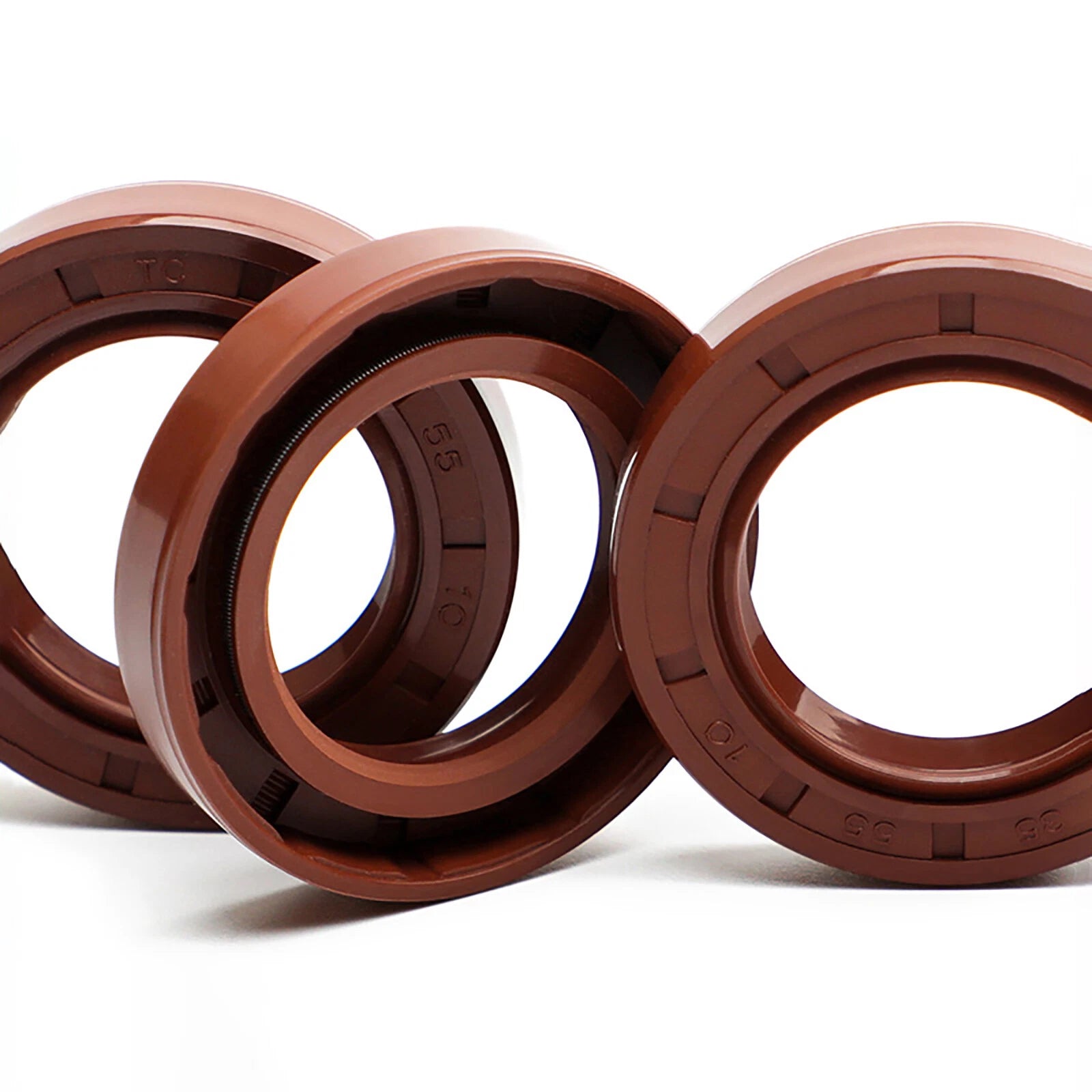
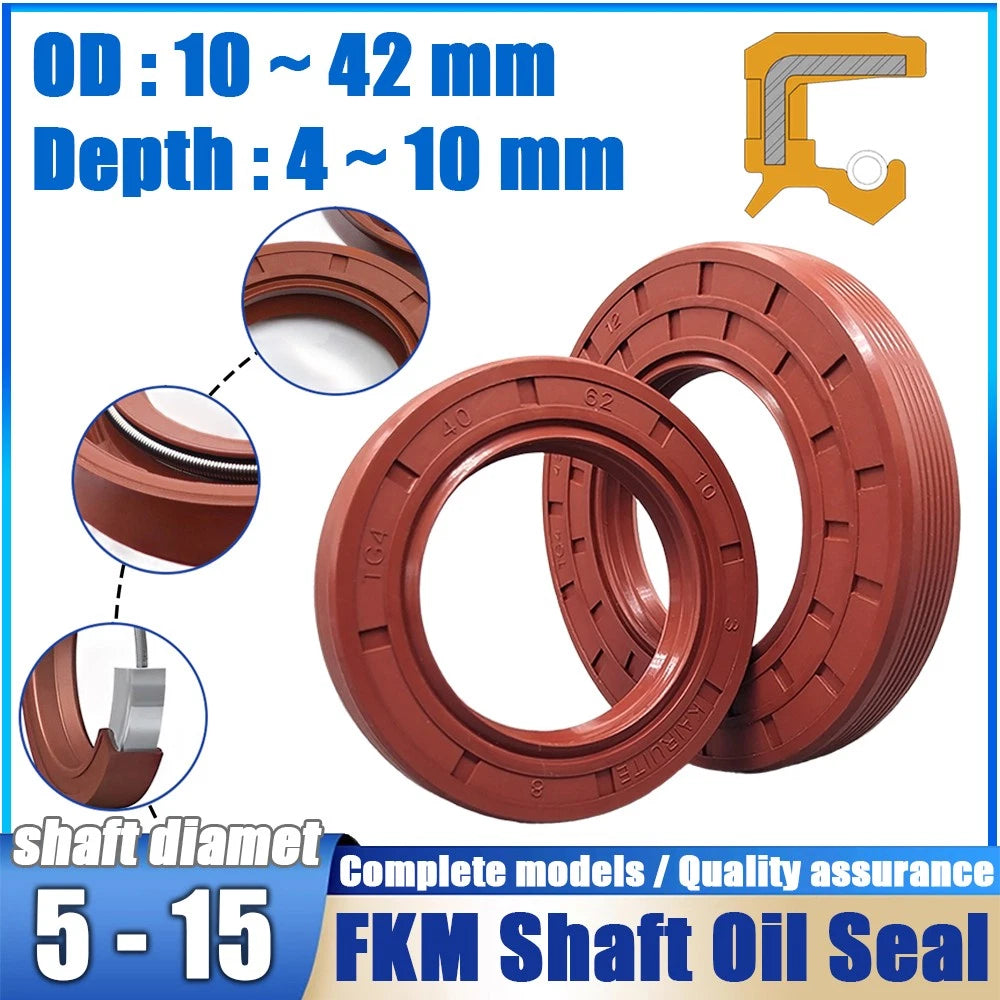
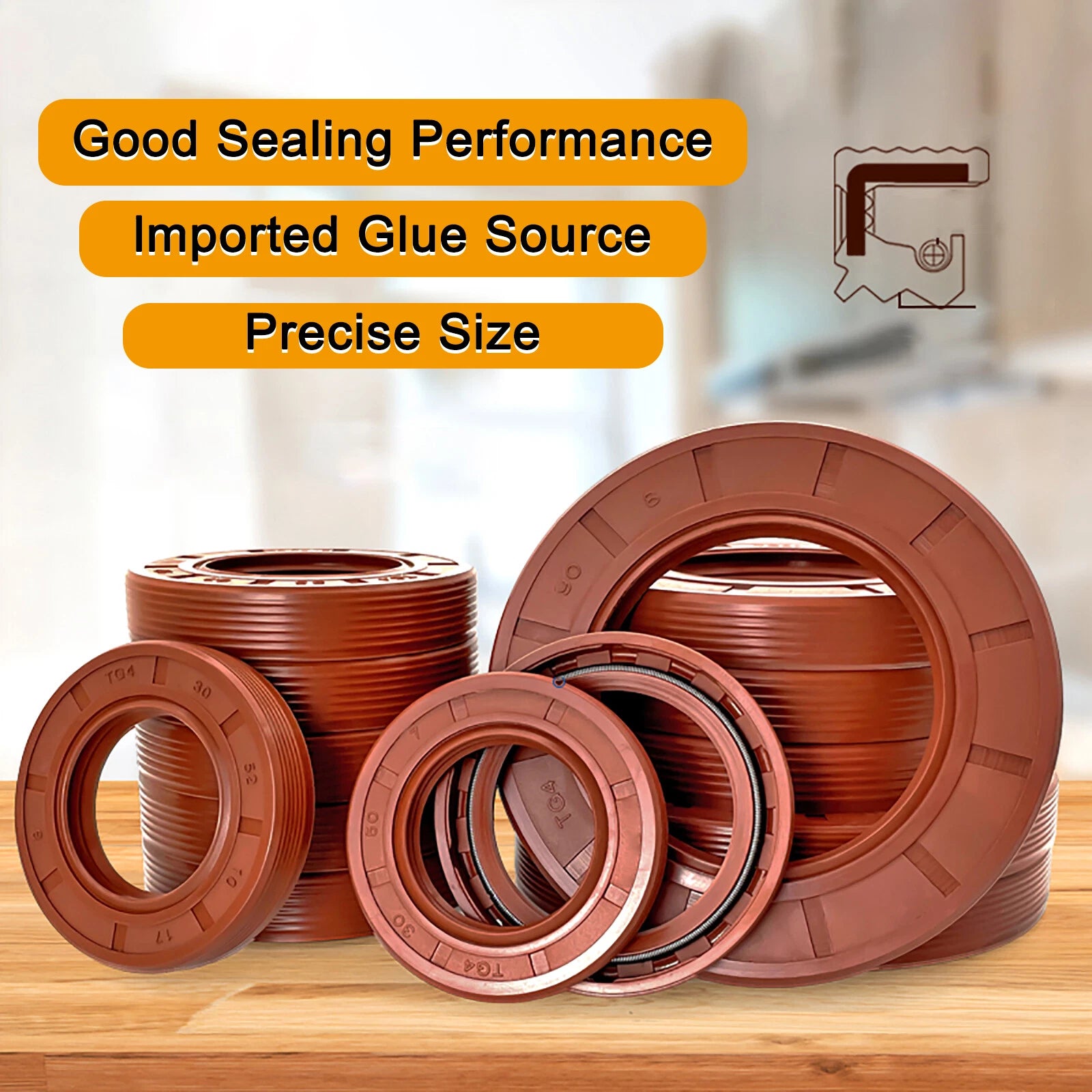
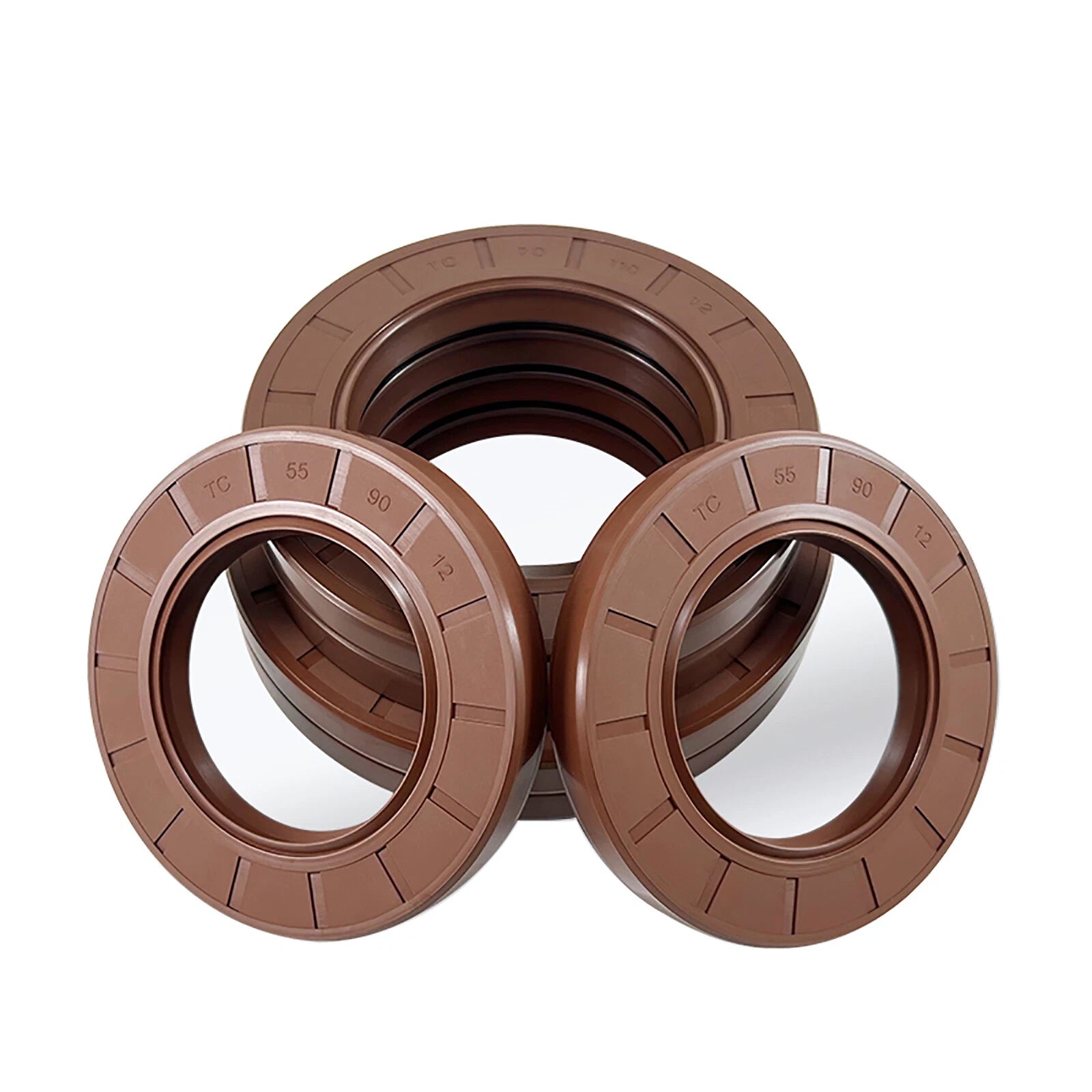
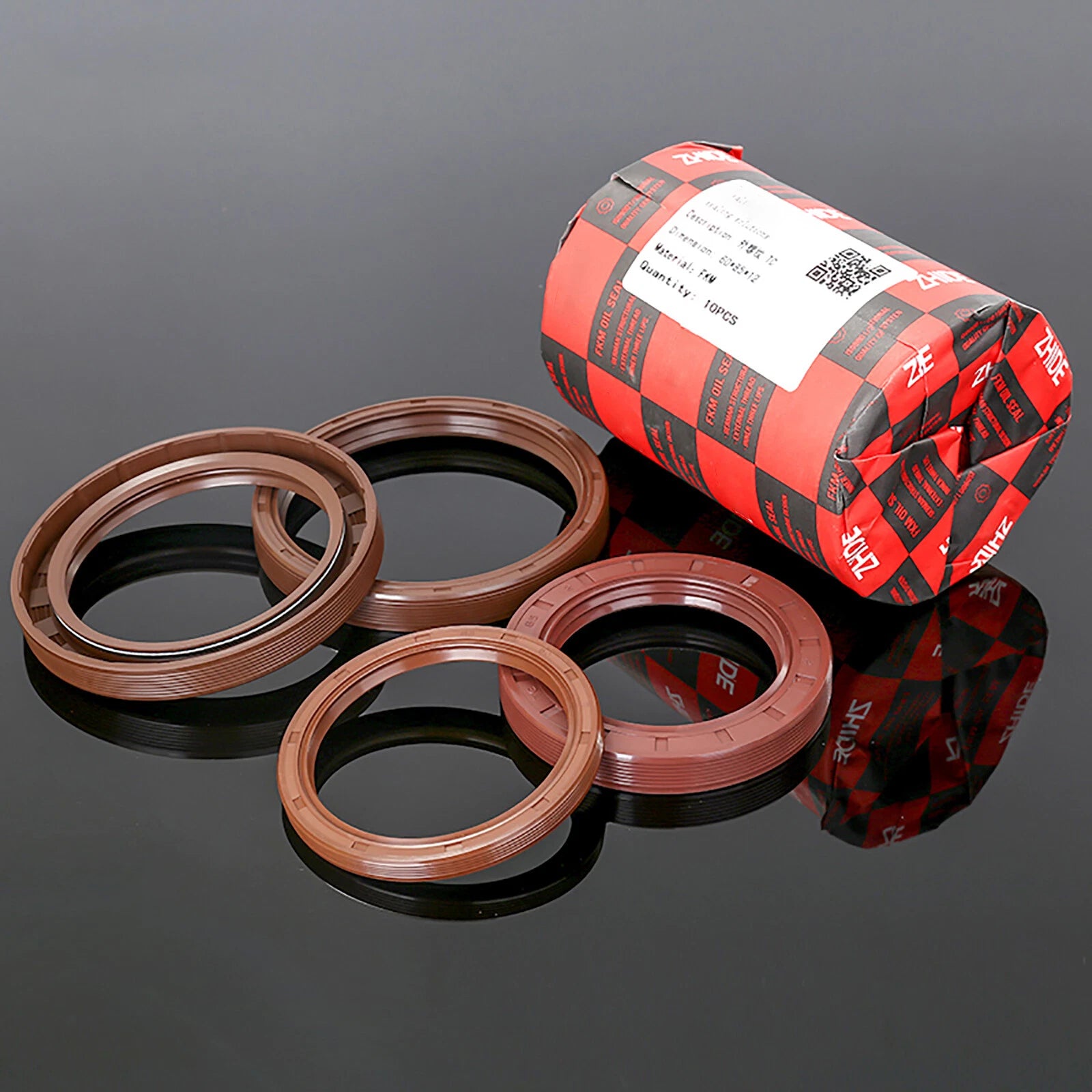
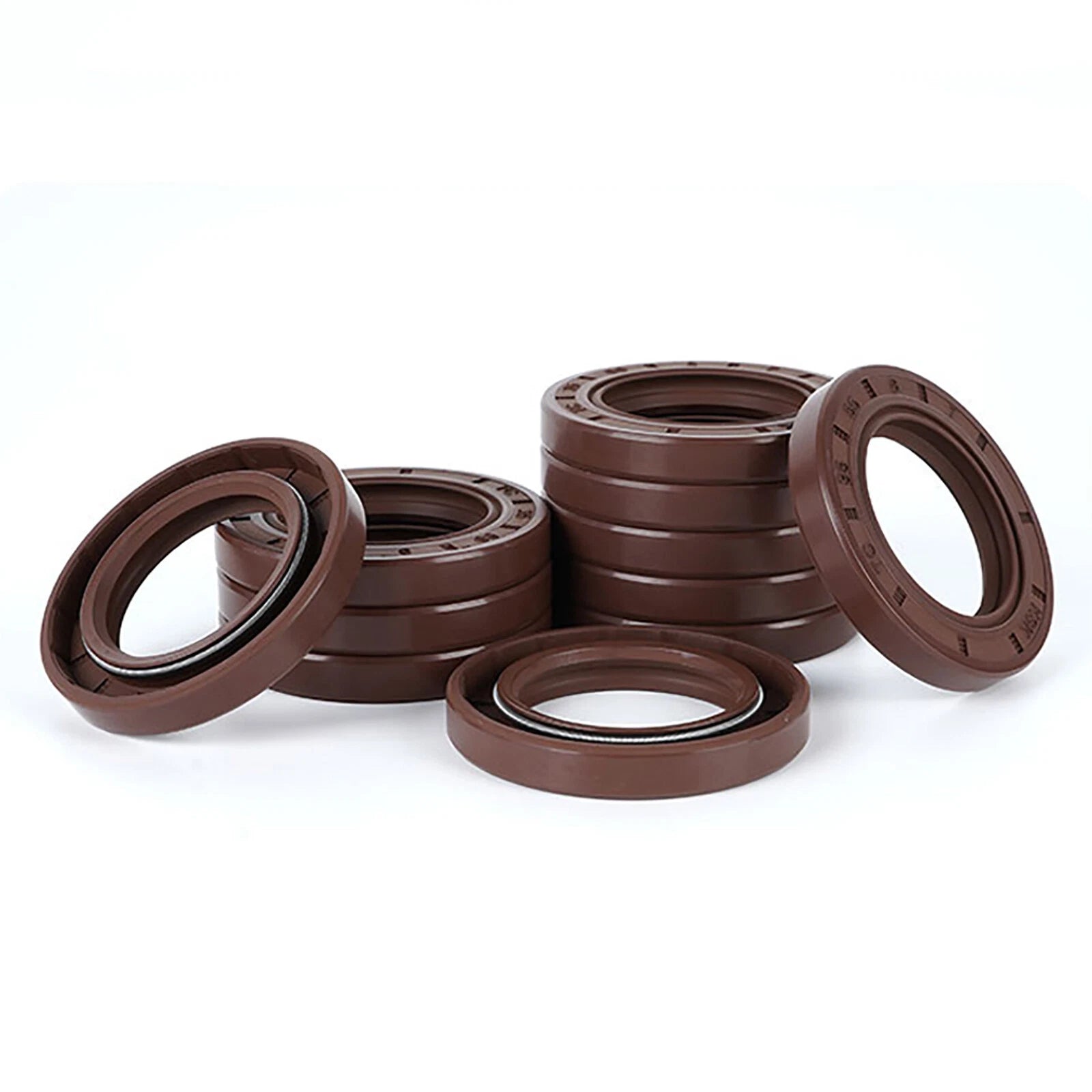
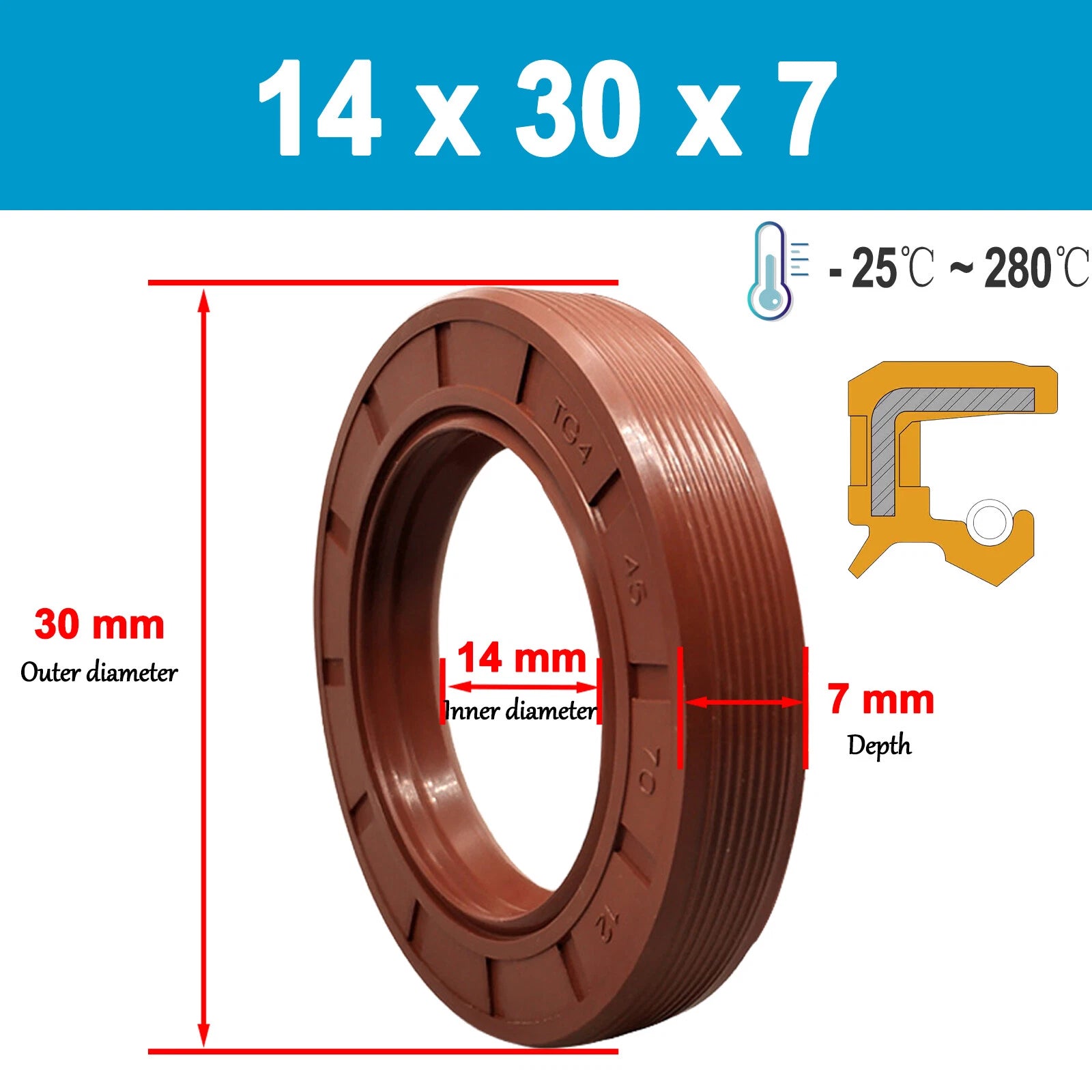
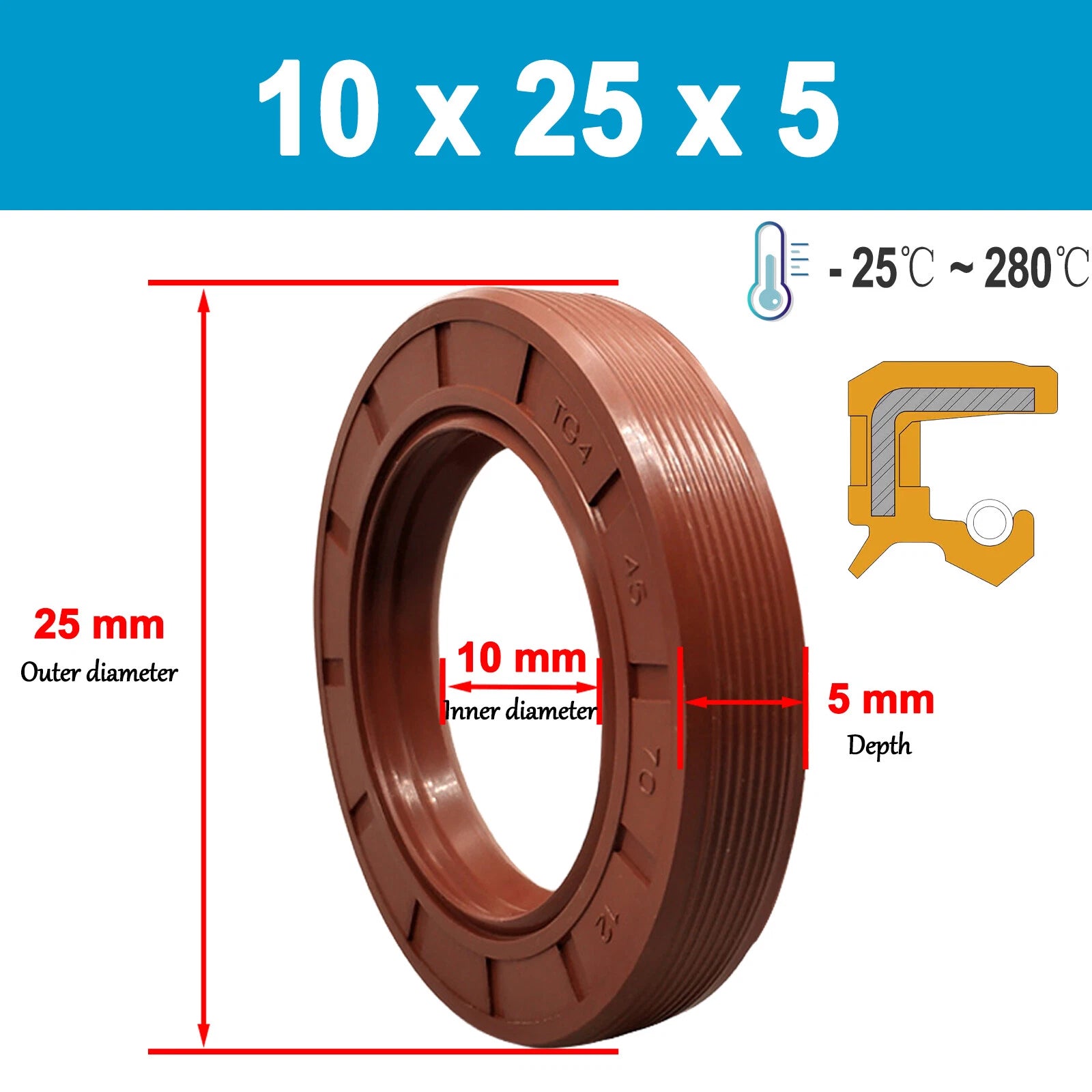
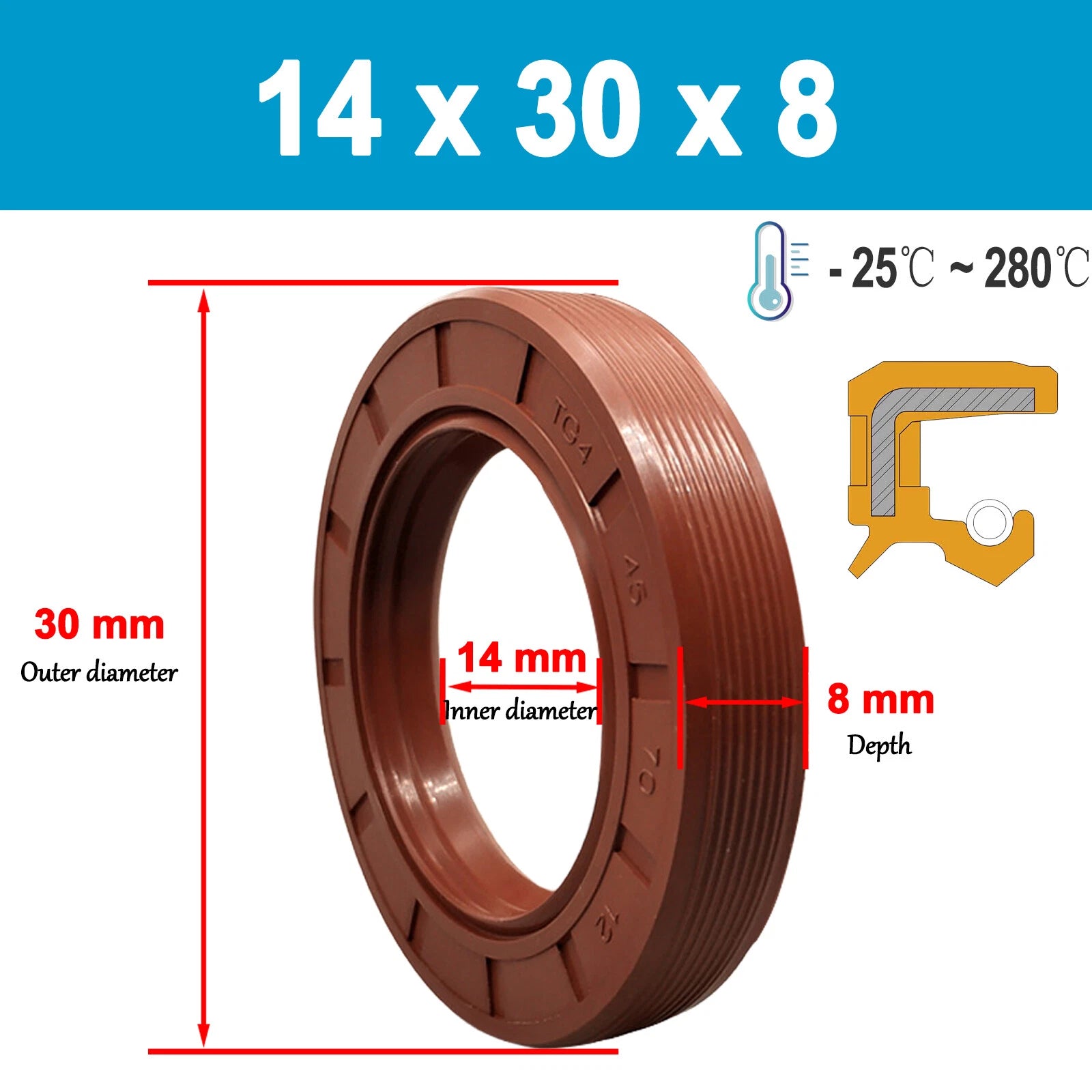
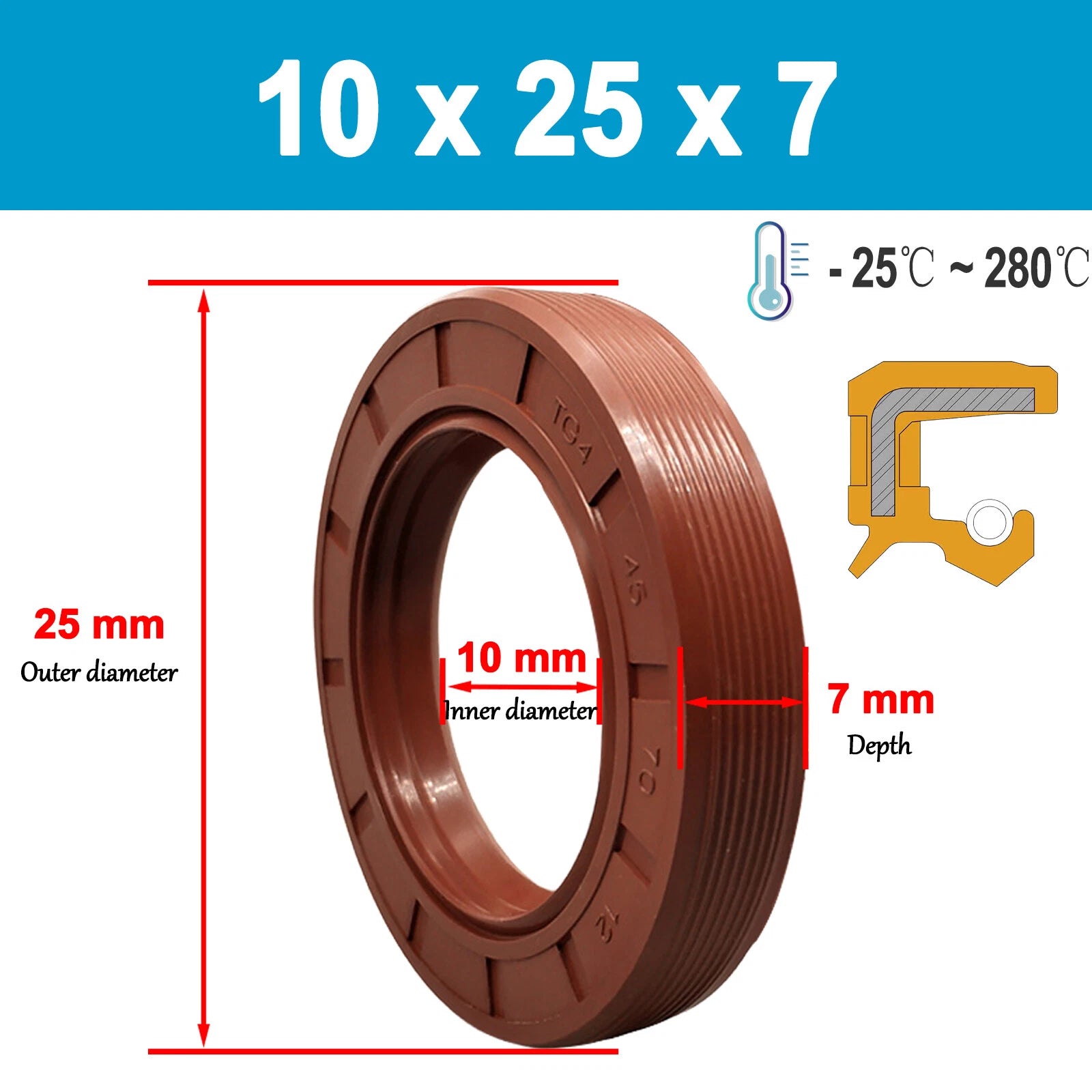
When a worn or undersized shaft seal lets oil weep past a rotating shaft, the result is contaminated bearings, accelerated wear, and costly downtime. Engineers, mechanics, and precision-equipment builders who need a dependable metric TC oil seal in FKM fluorine rubber will find this range covers the most common small-bore sizes in a single listing — no hunting across multiple SKUs.
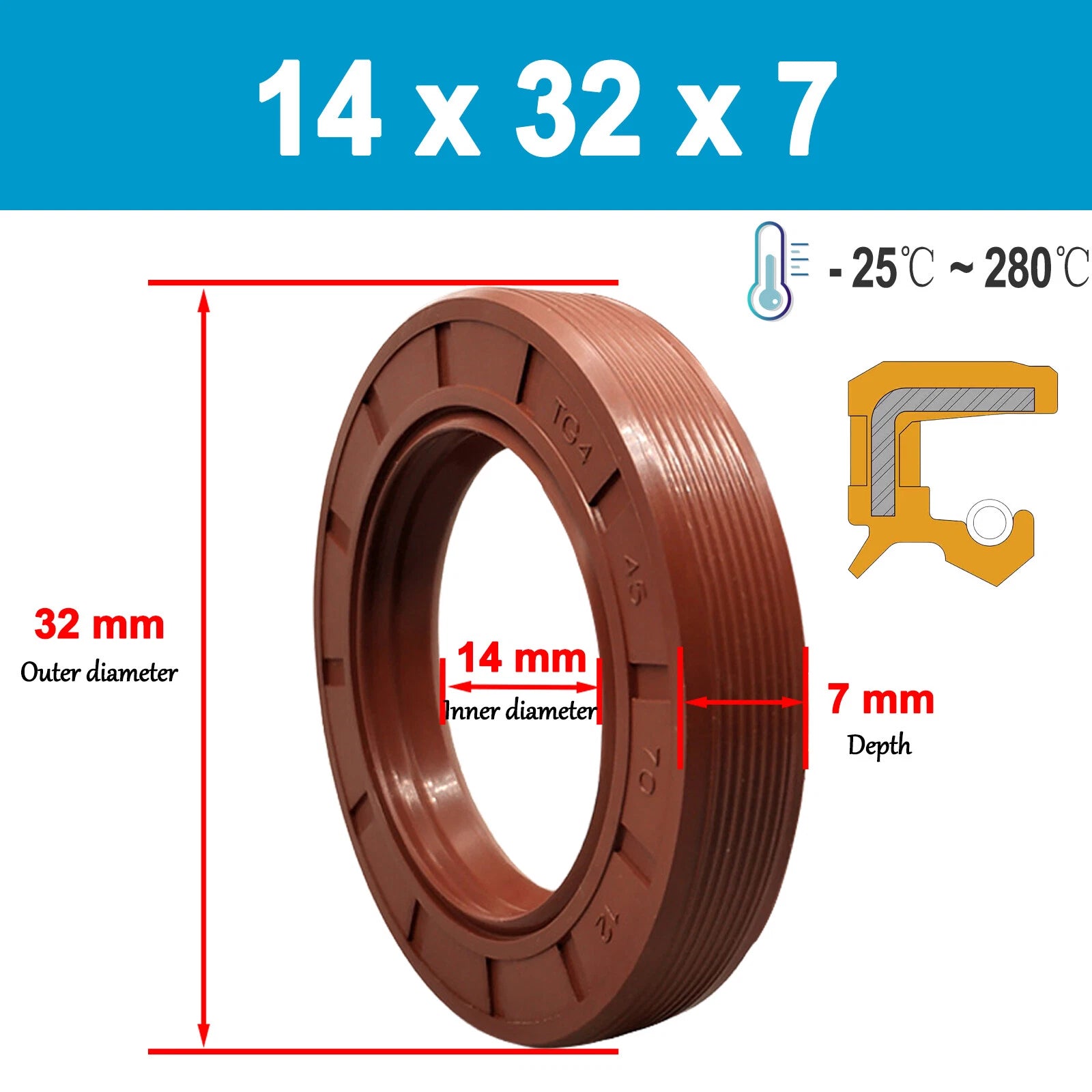
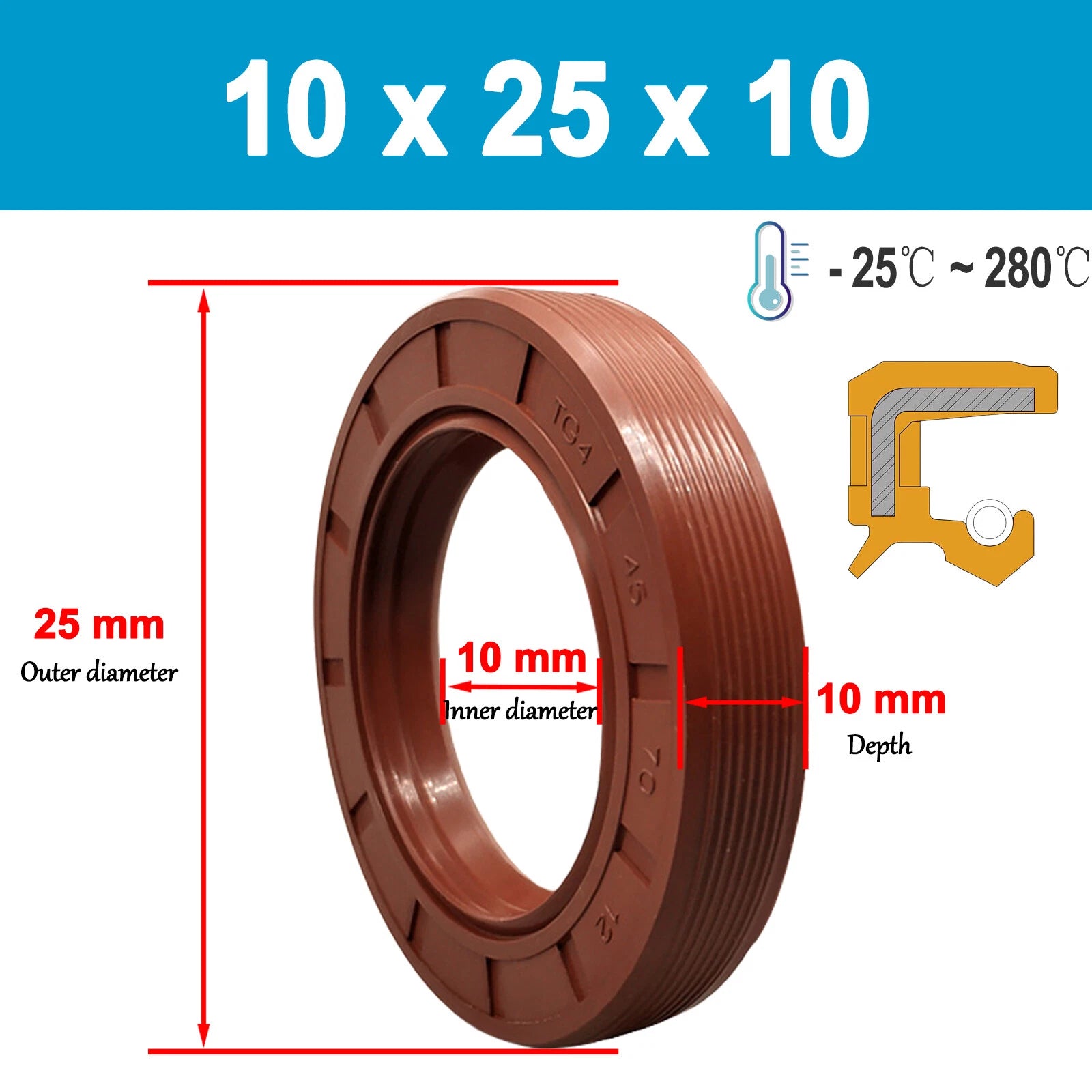
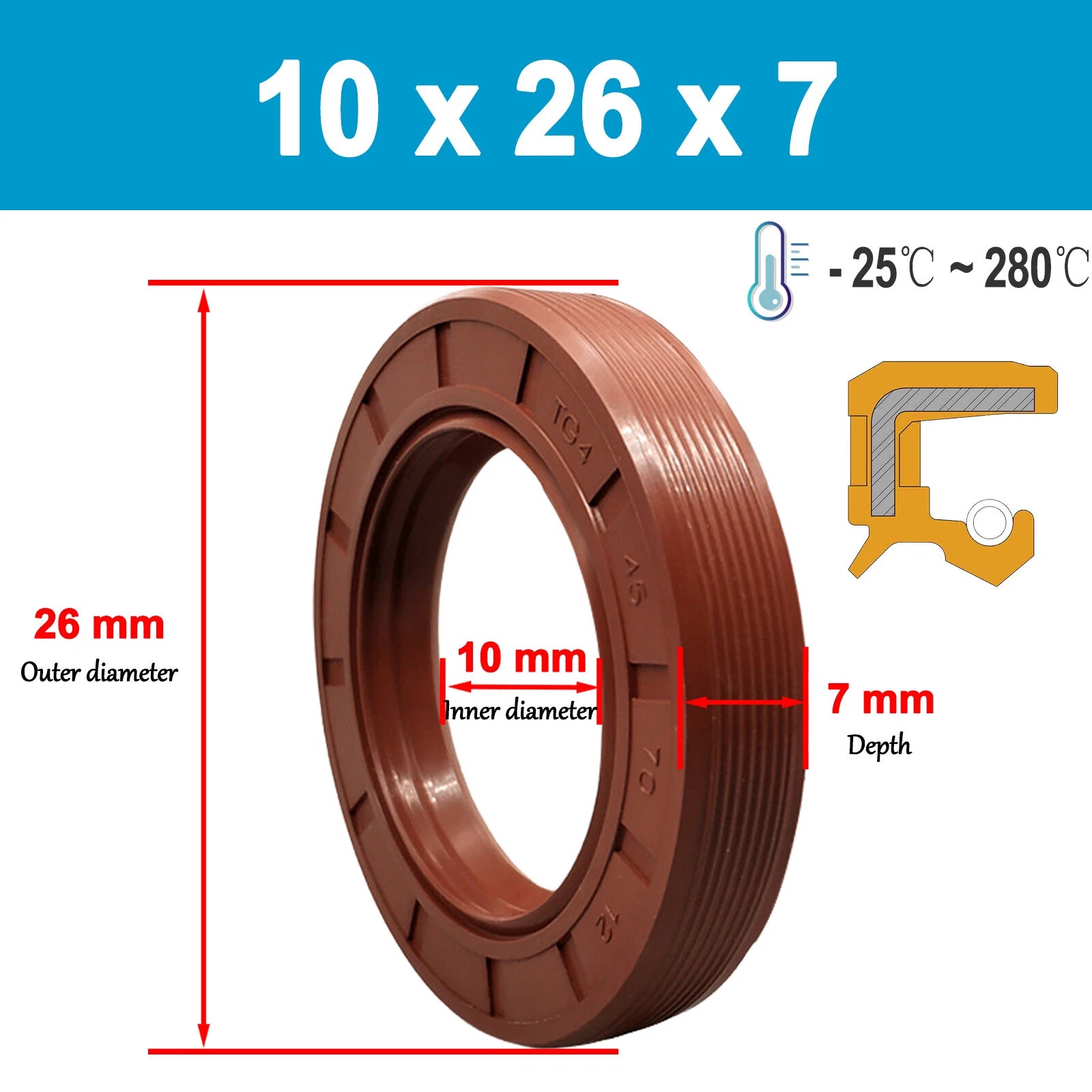
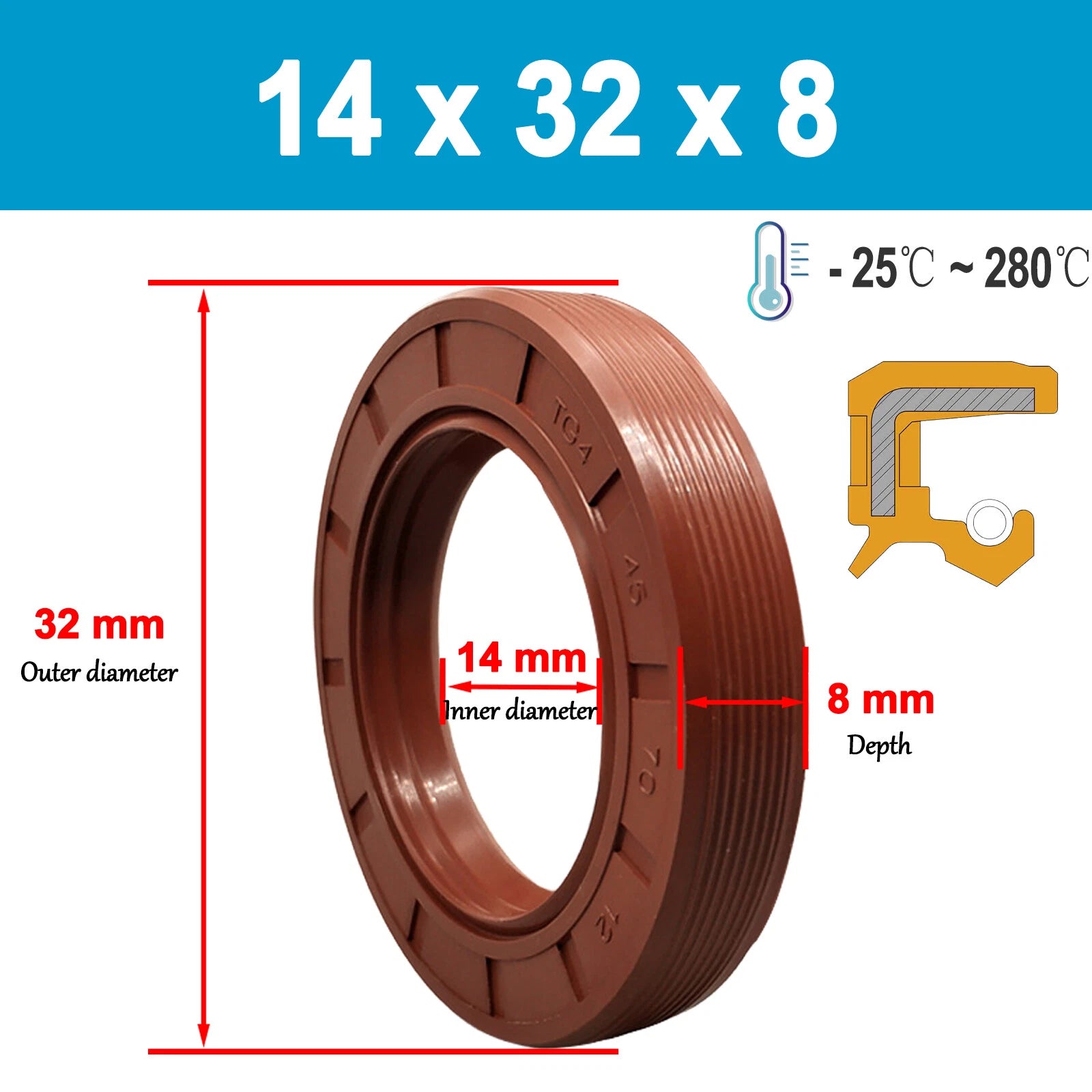
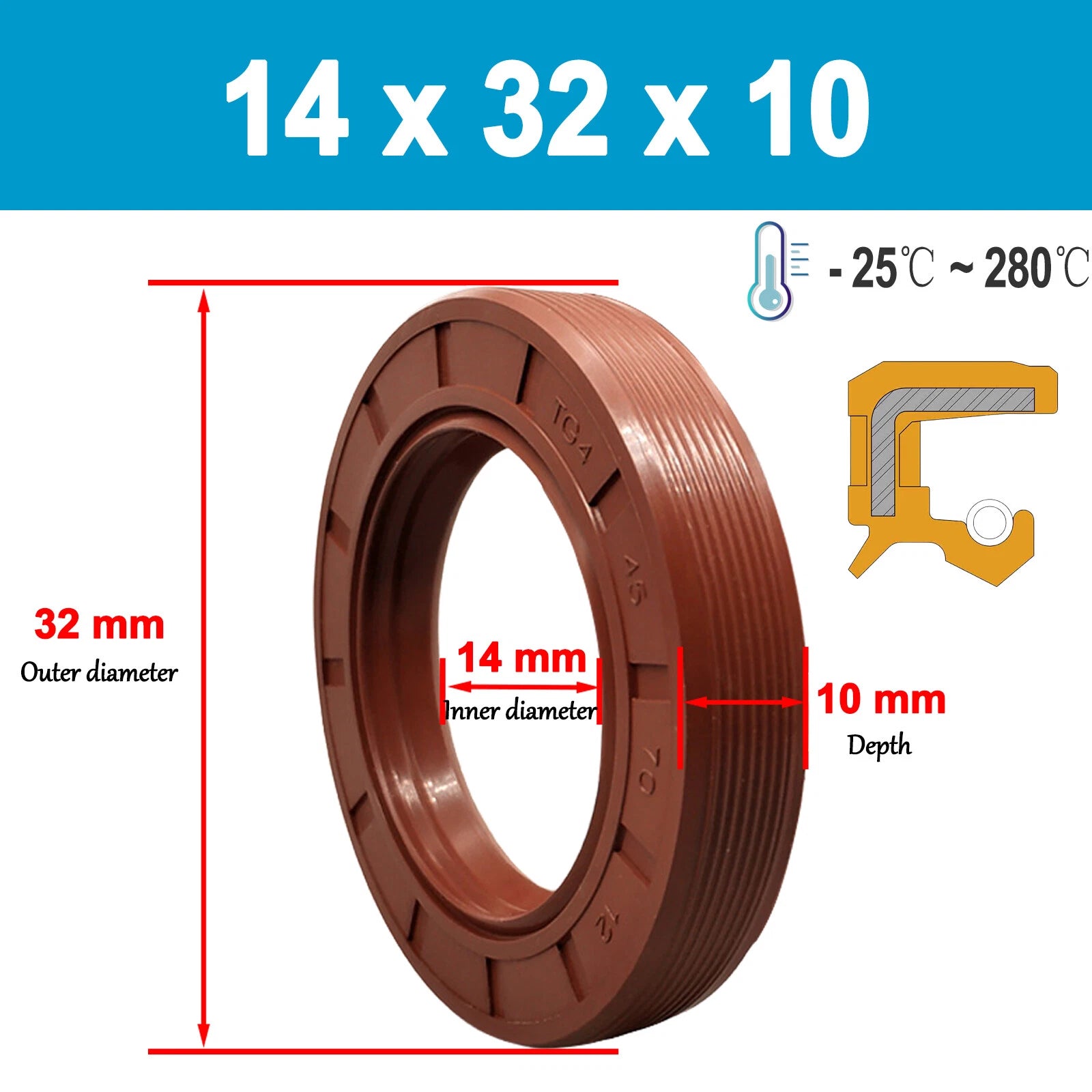
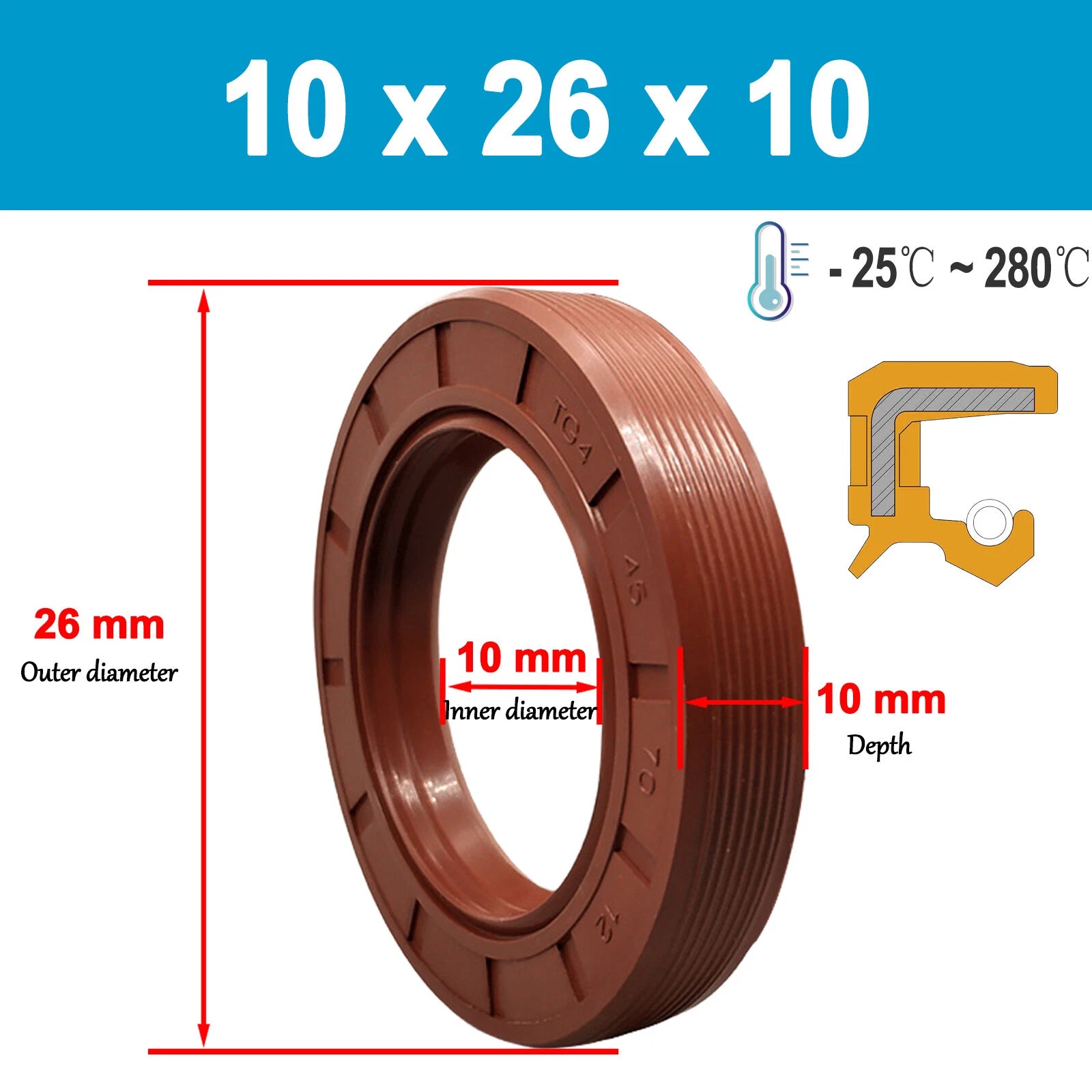
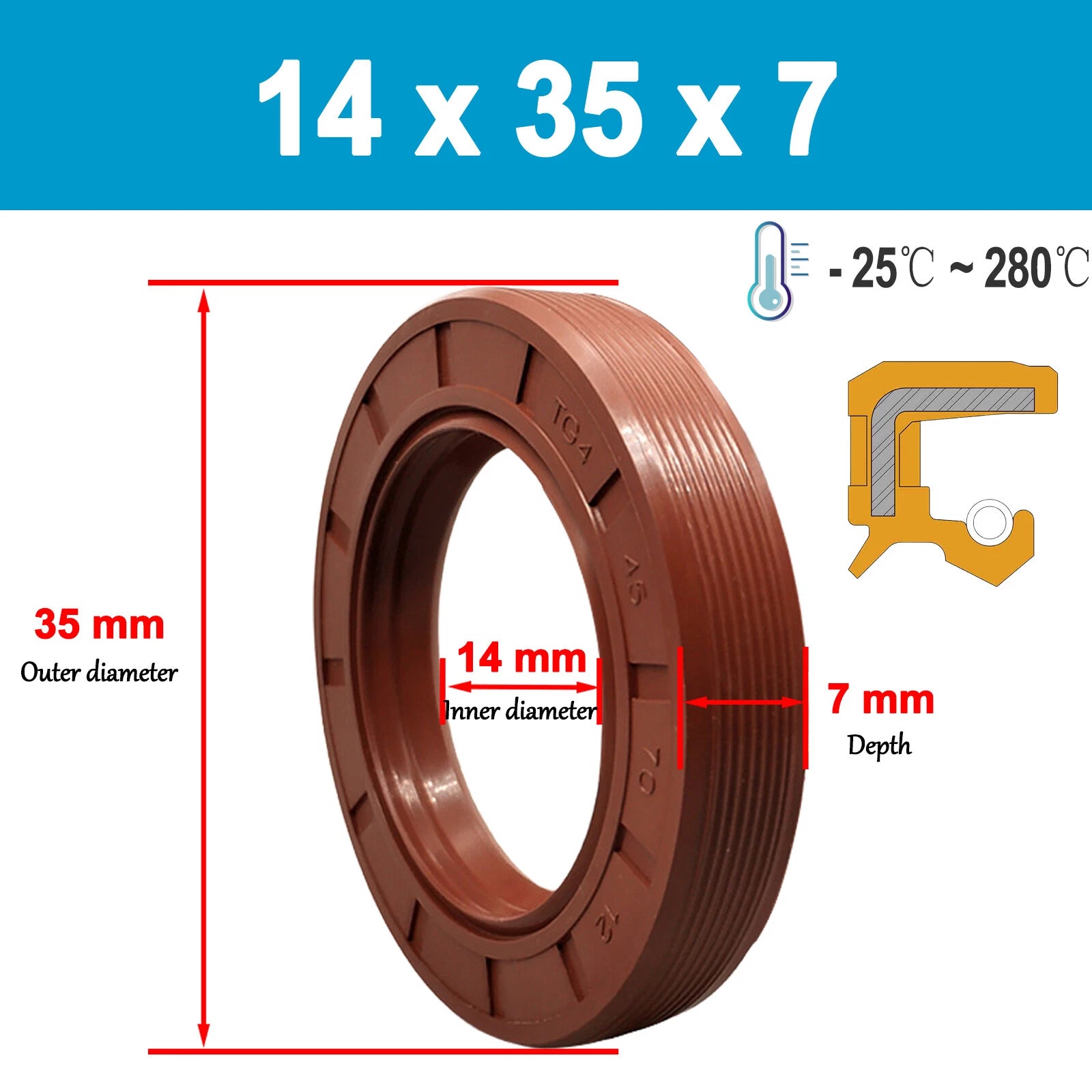
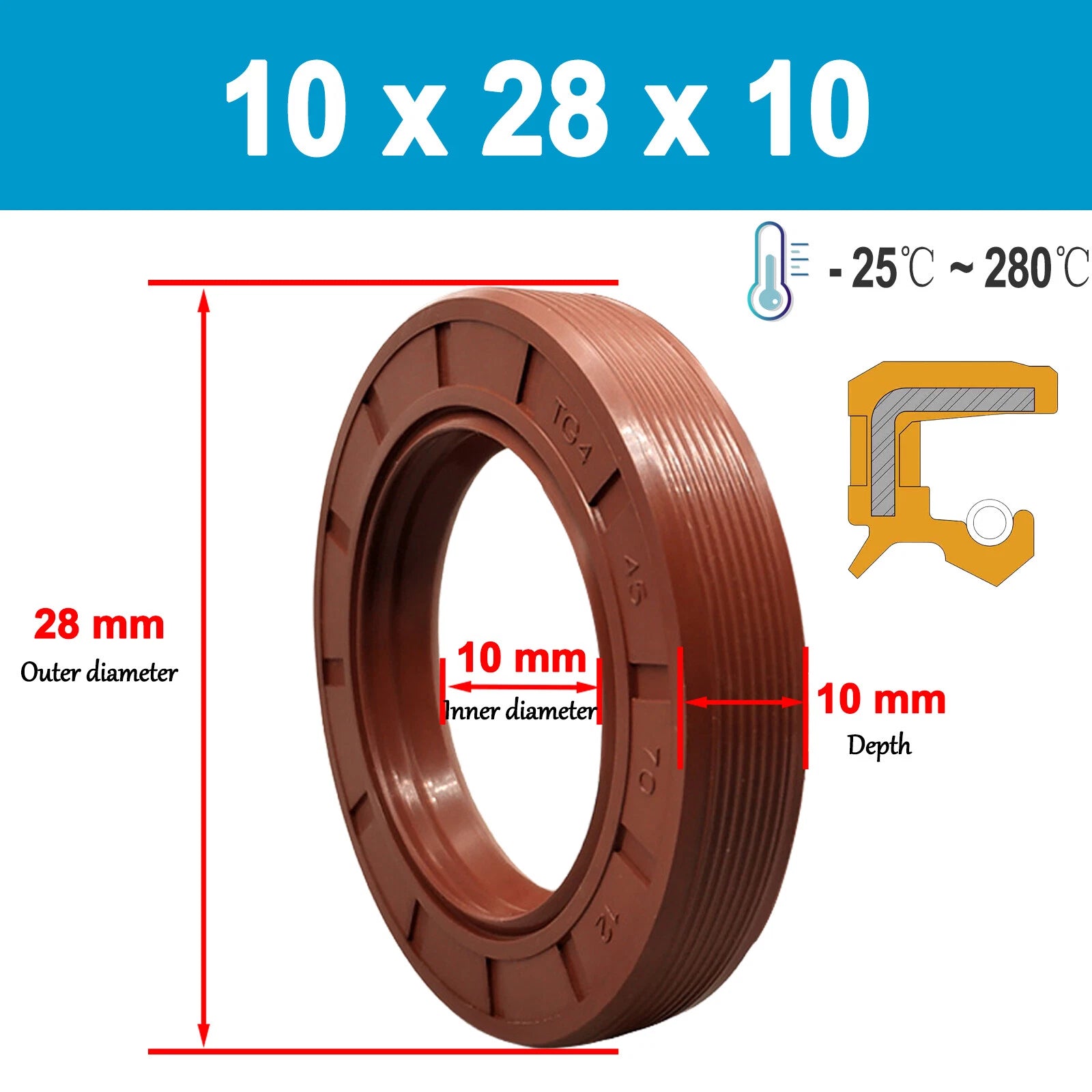
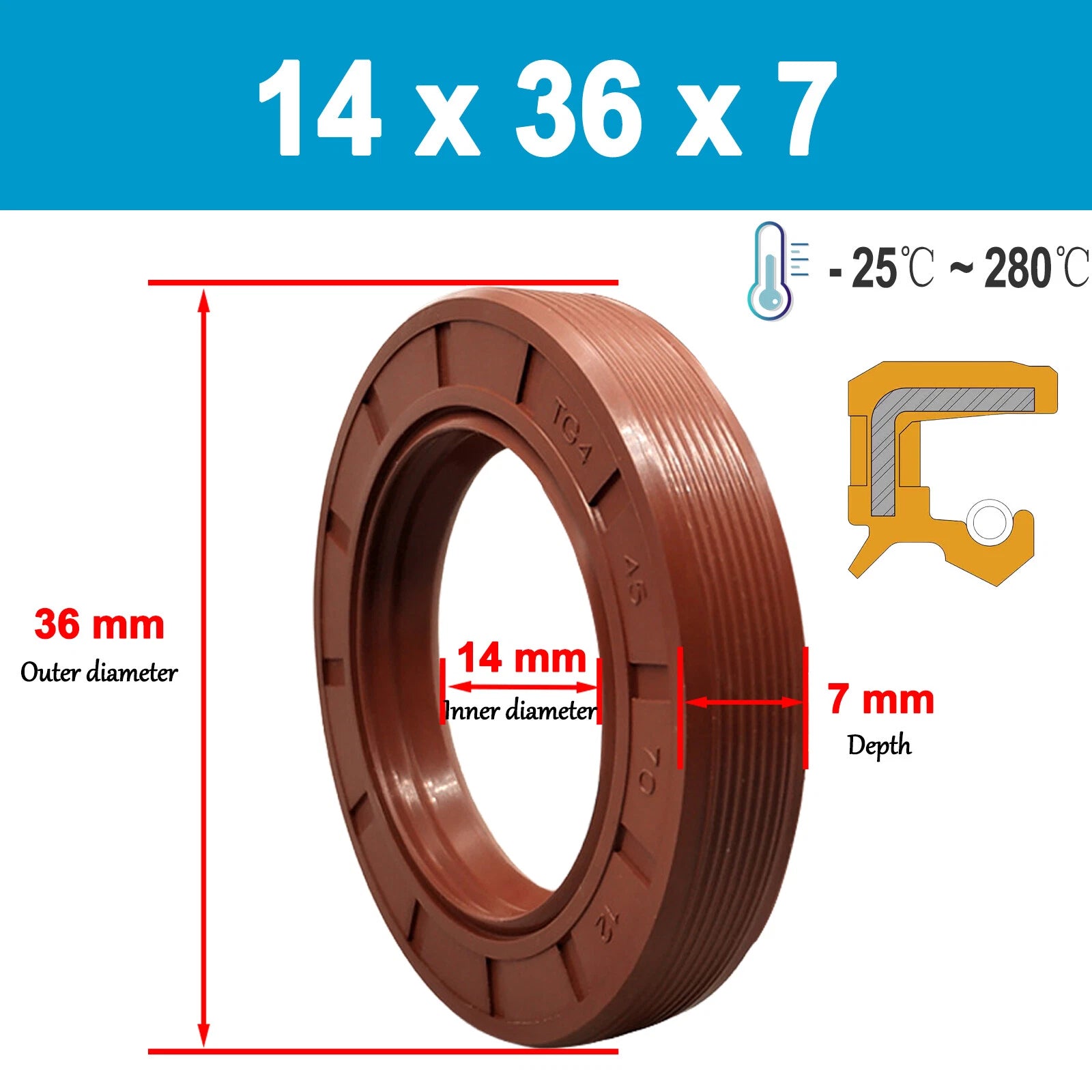
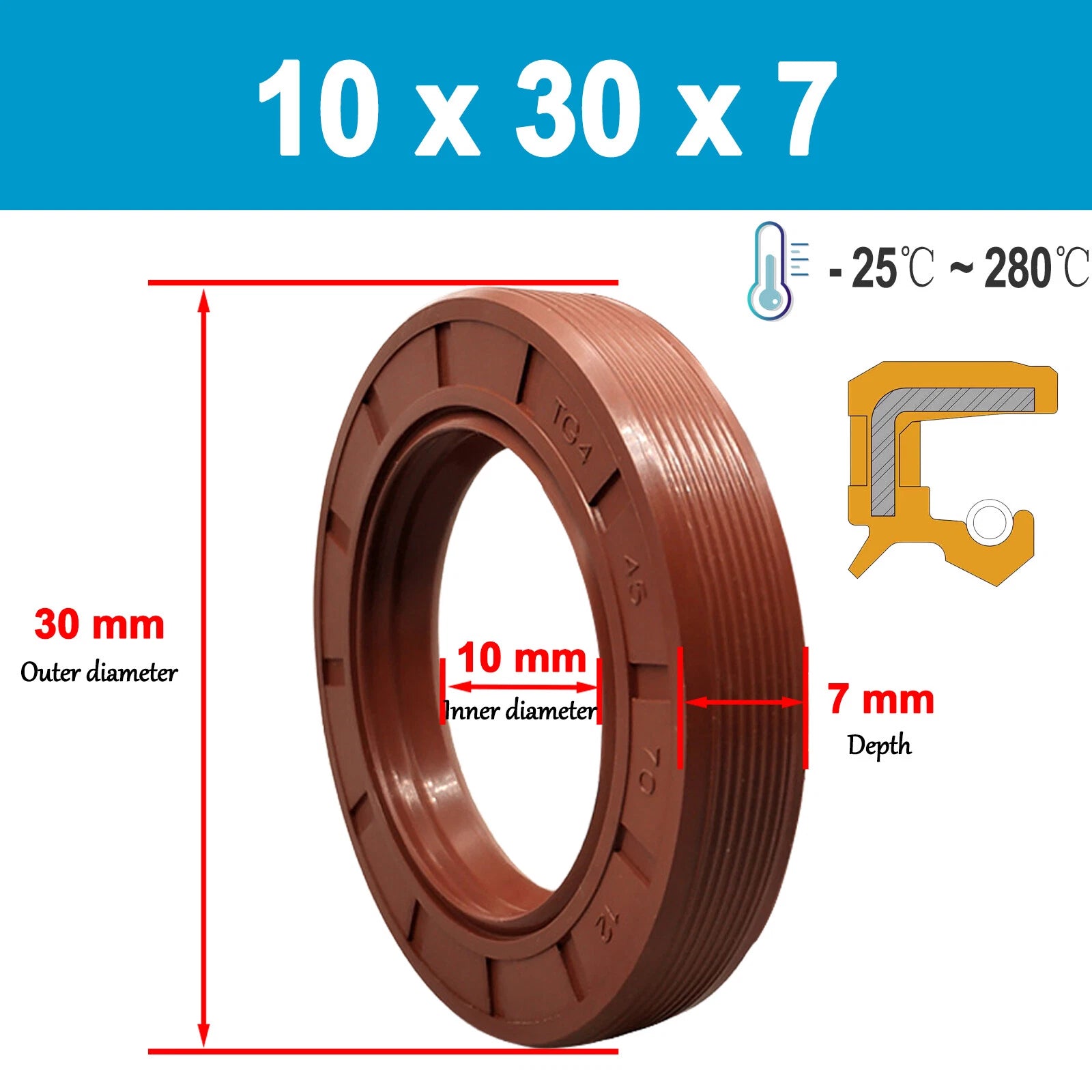
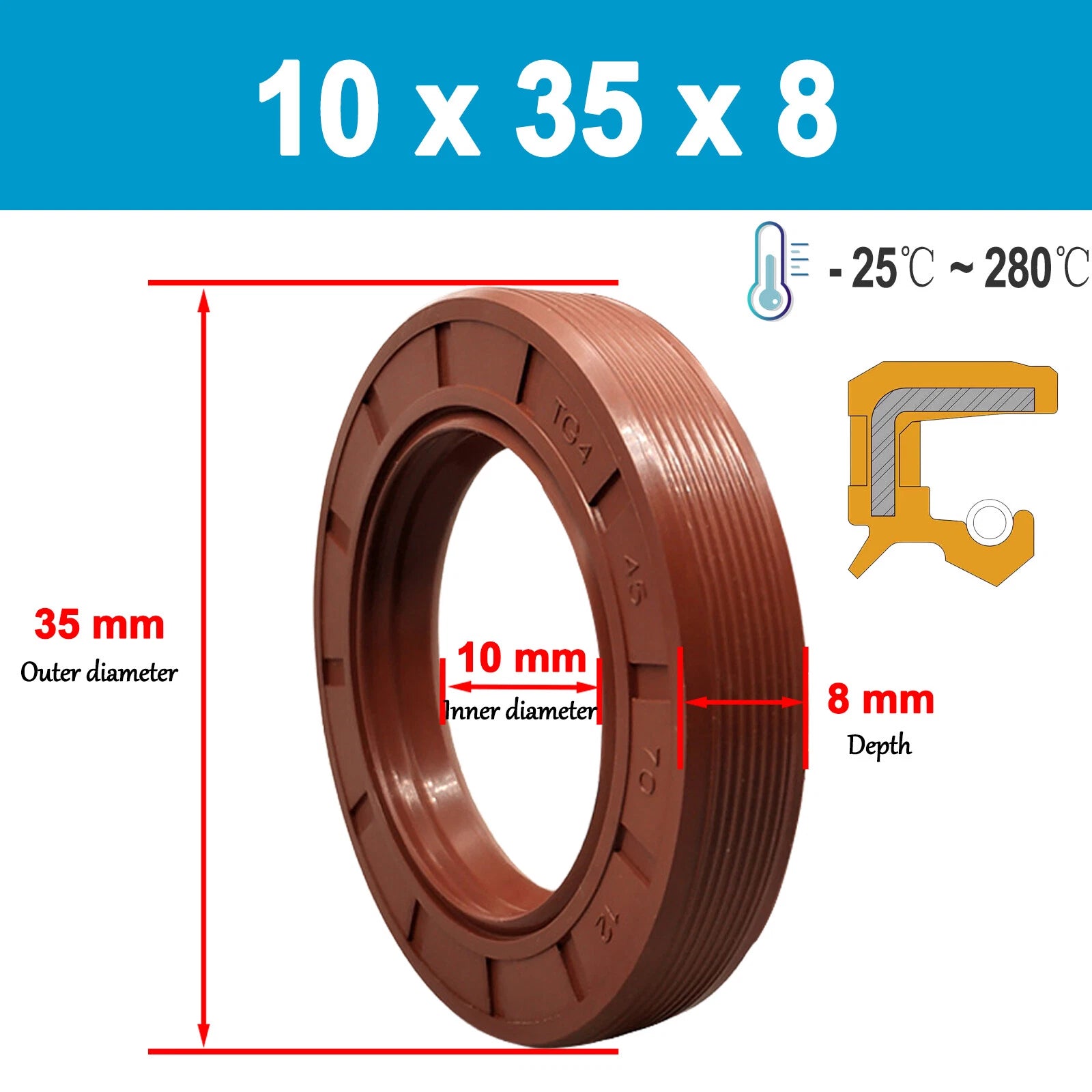
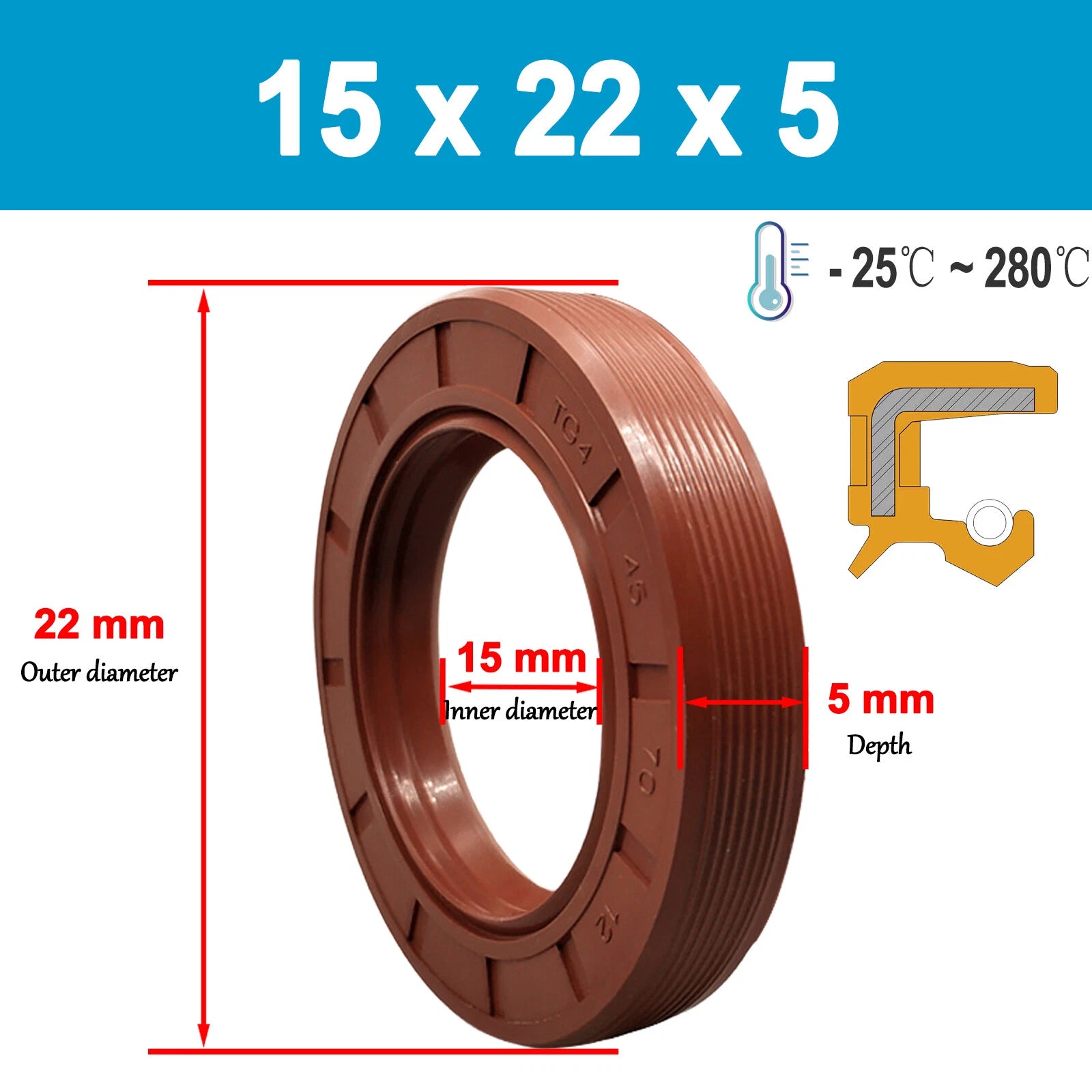
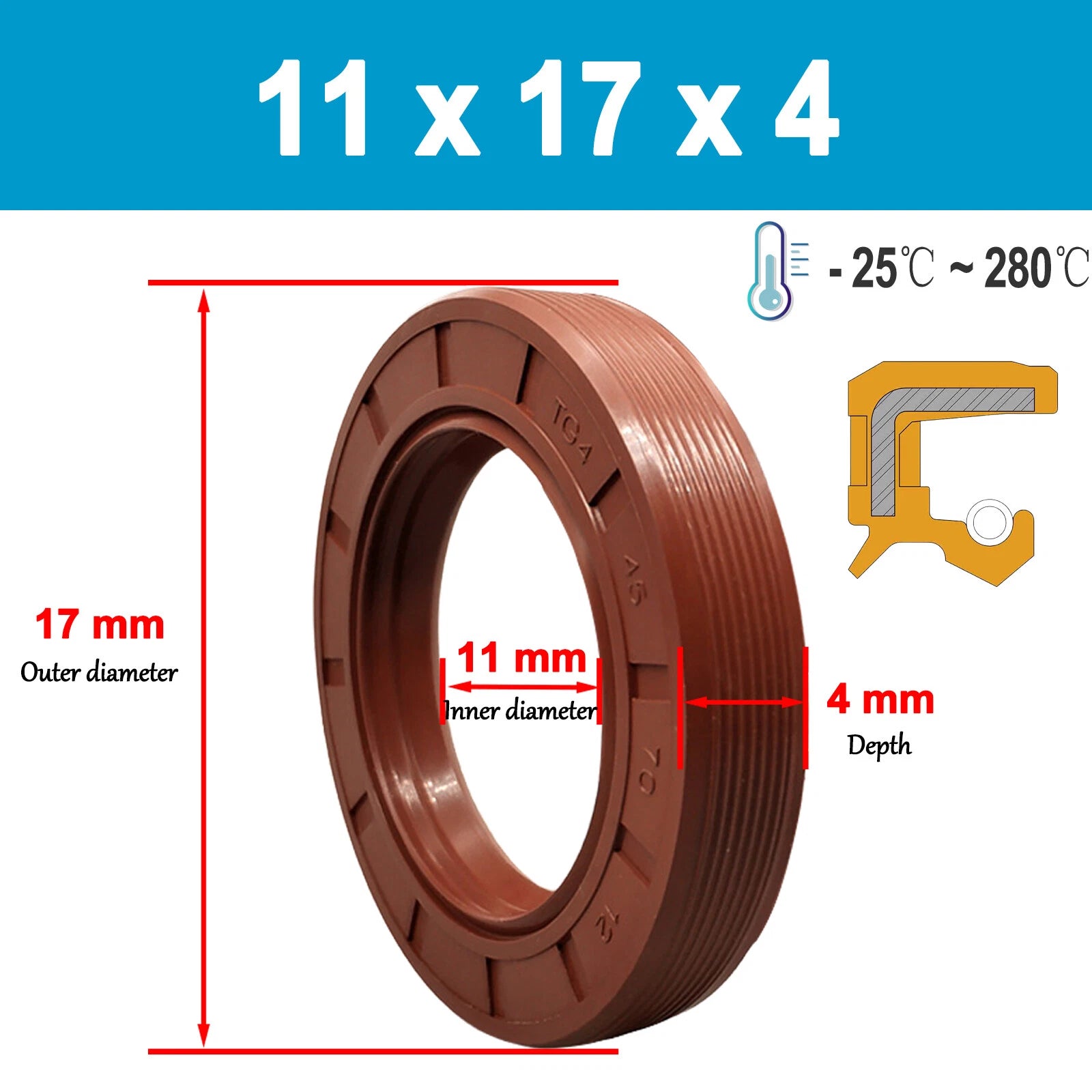
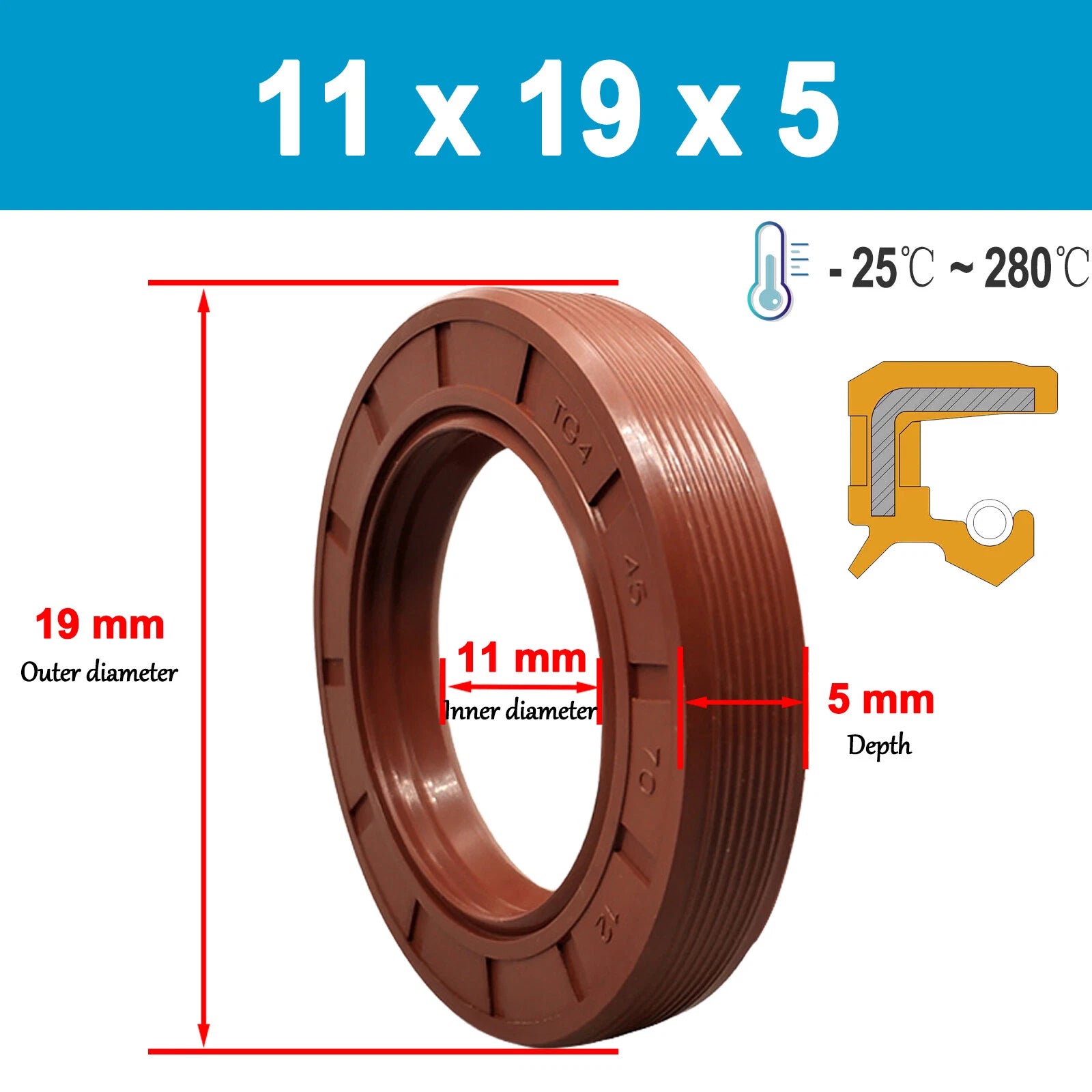
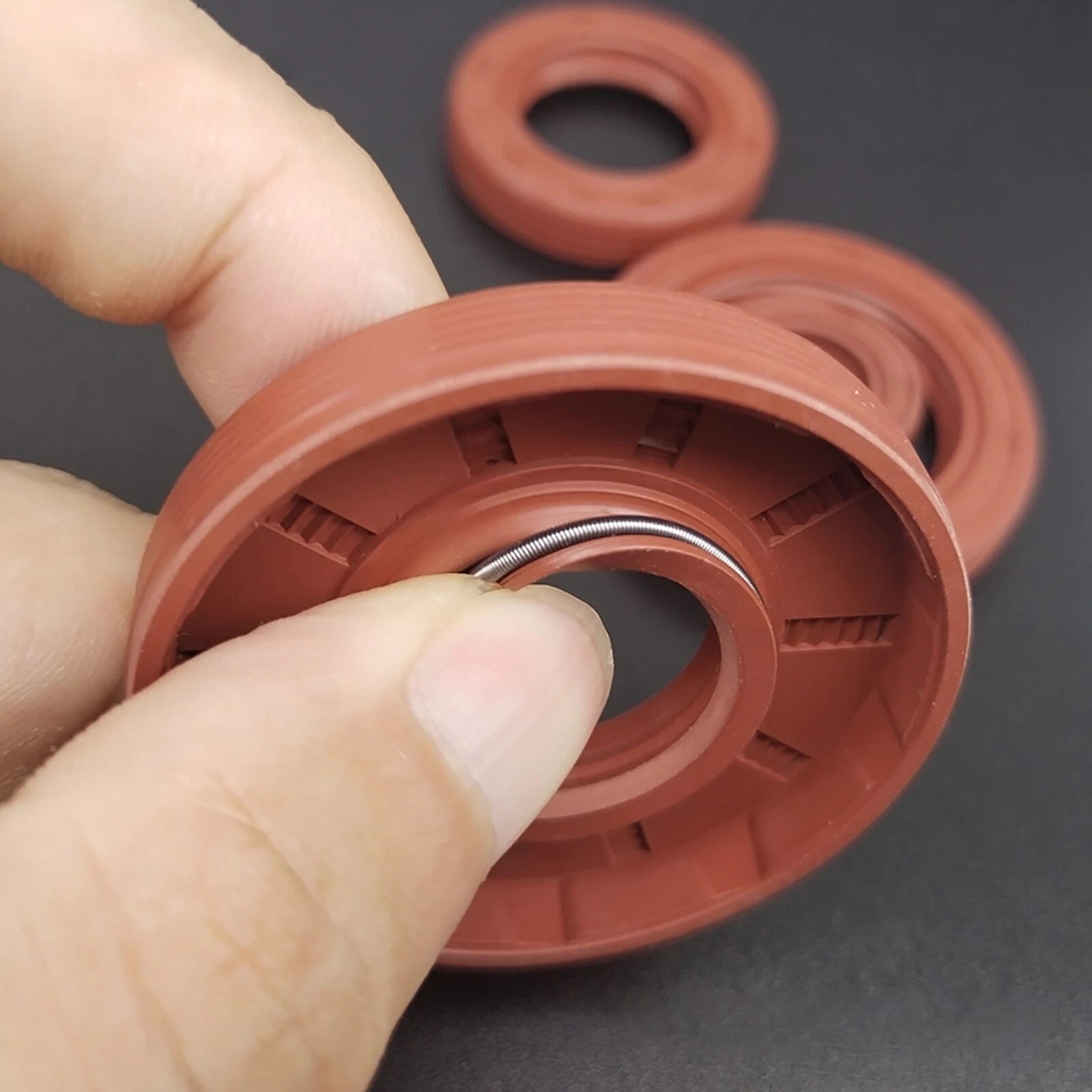
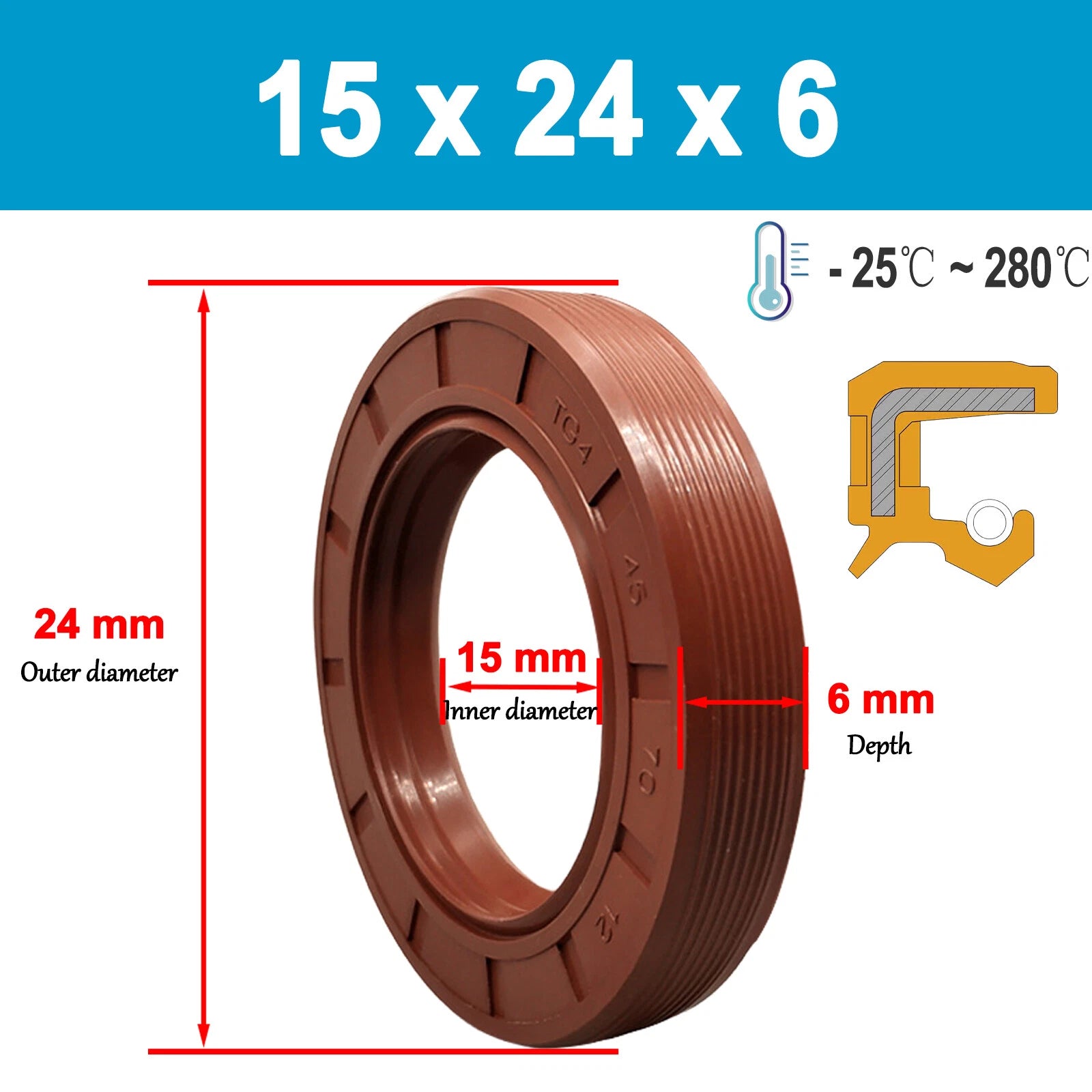
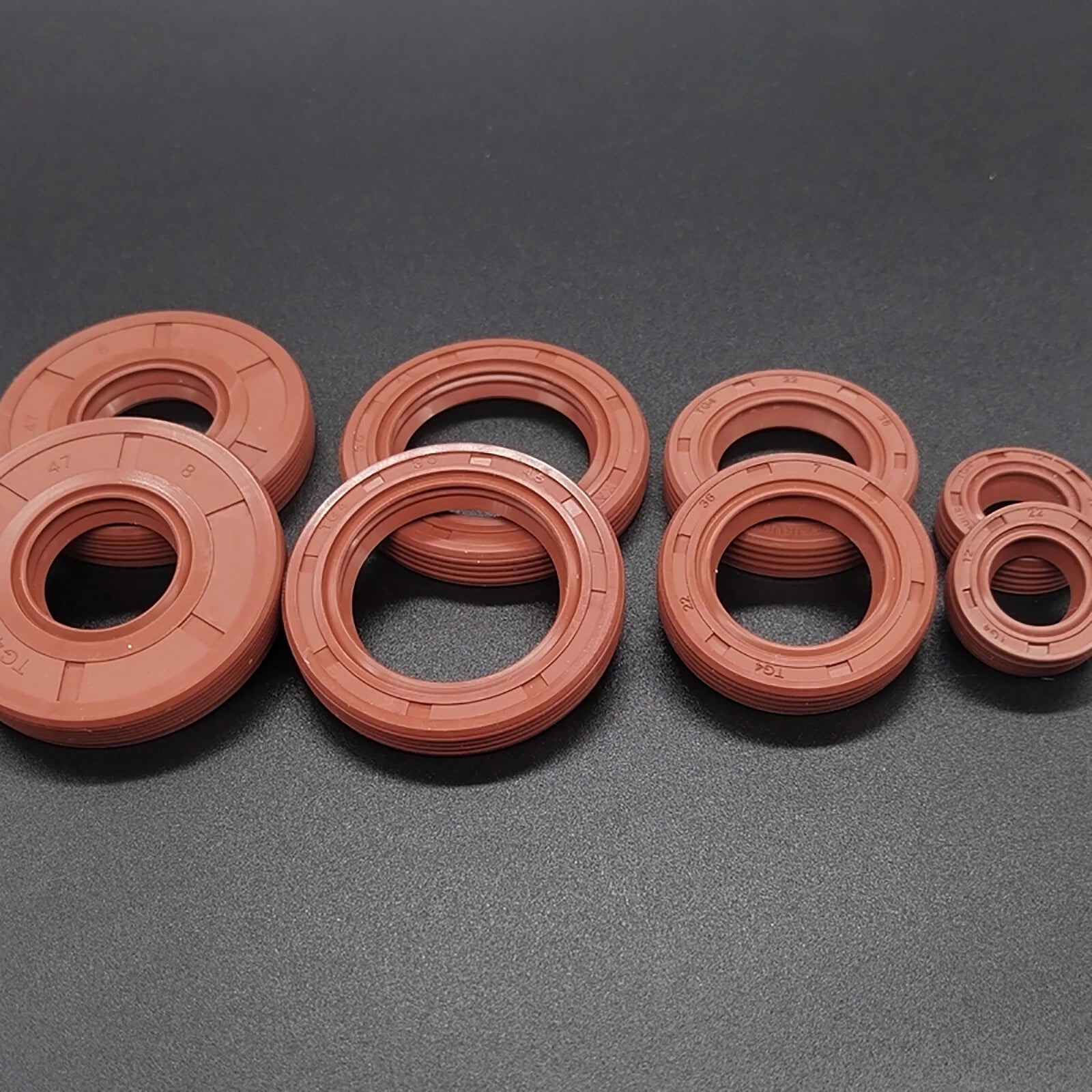
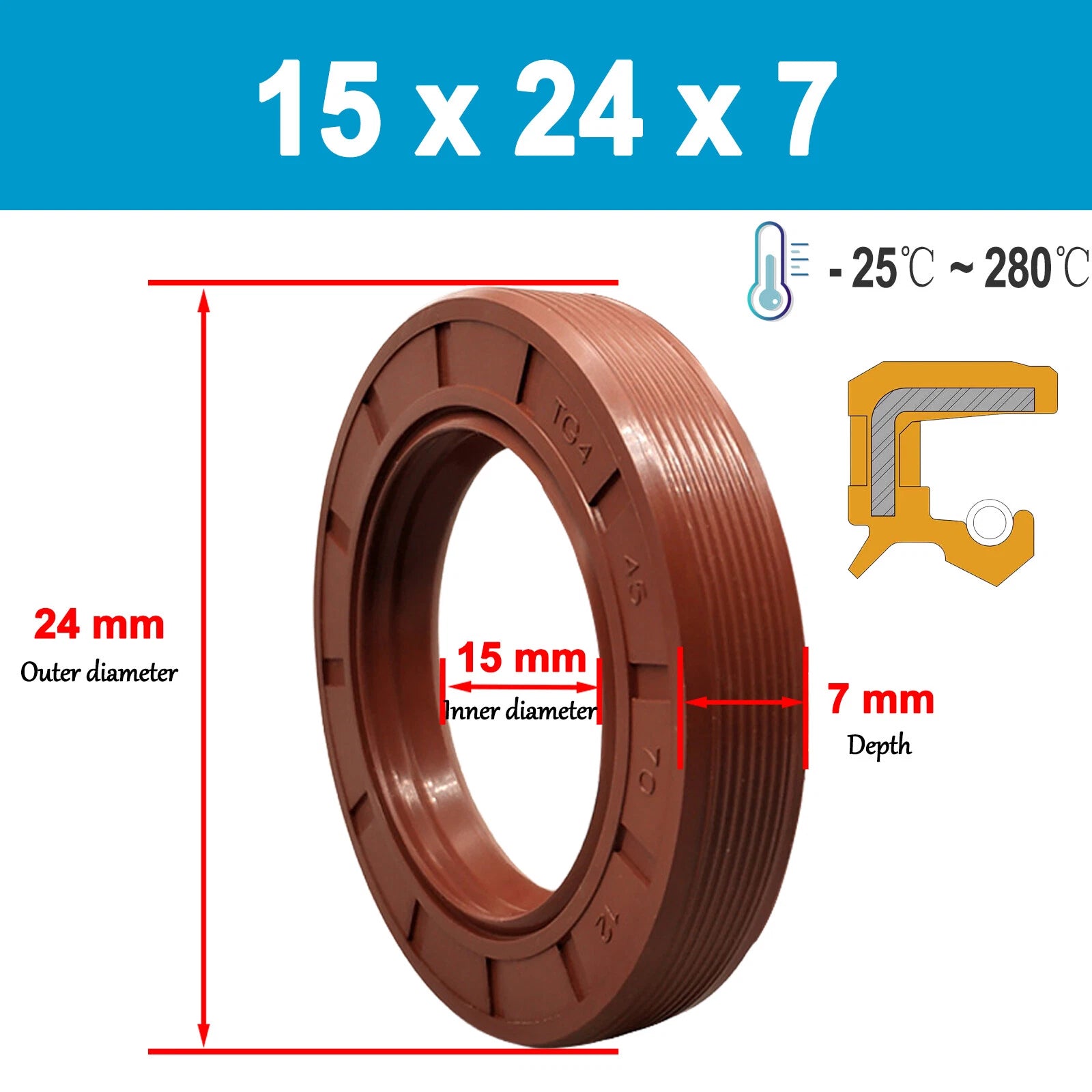
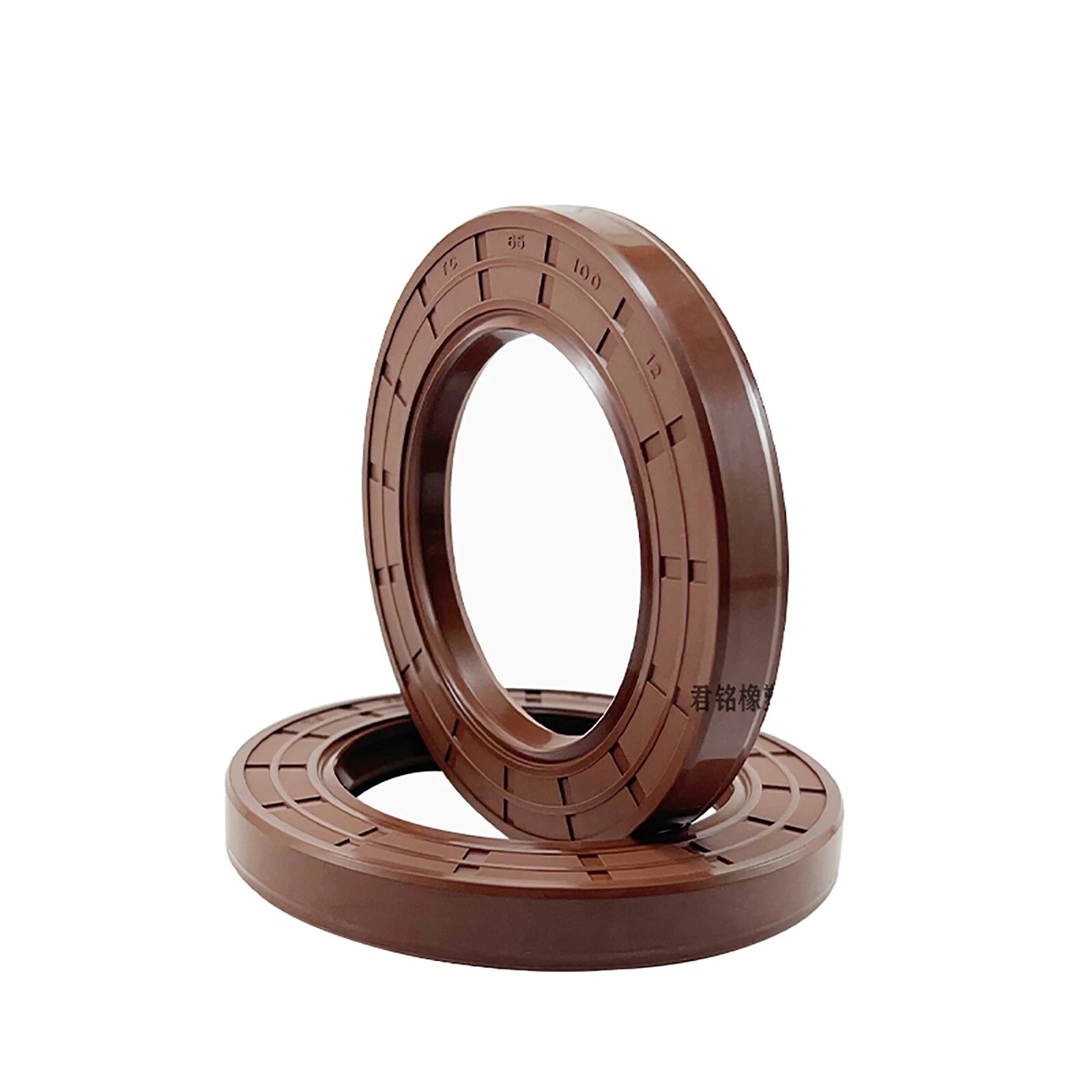
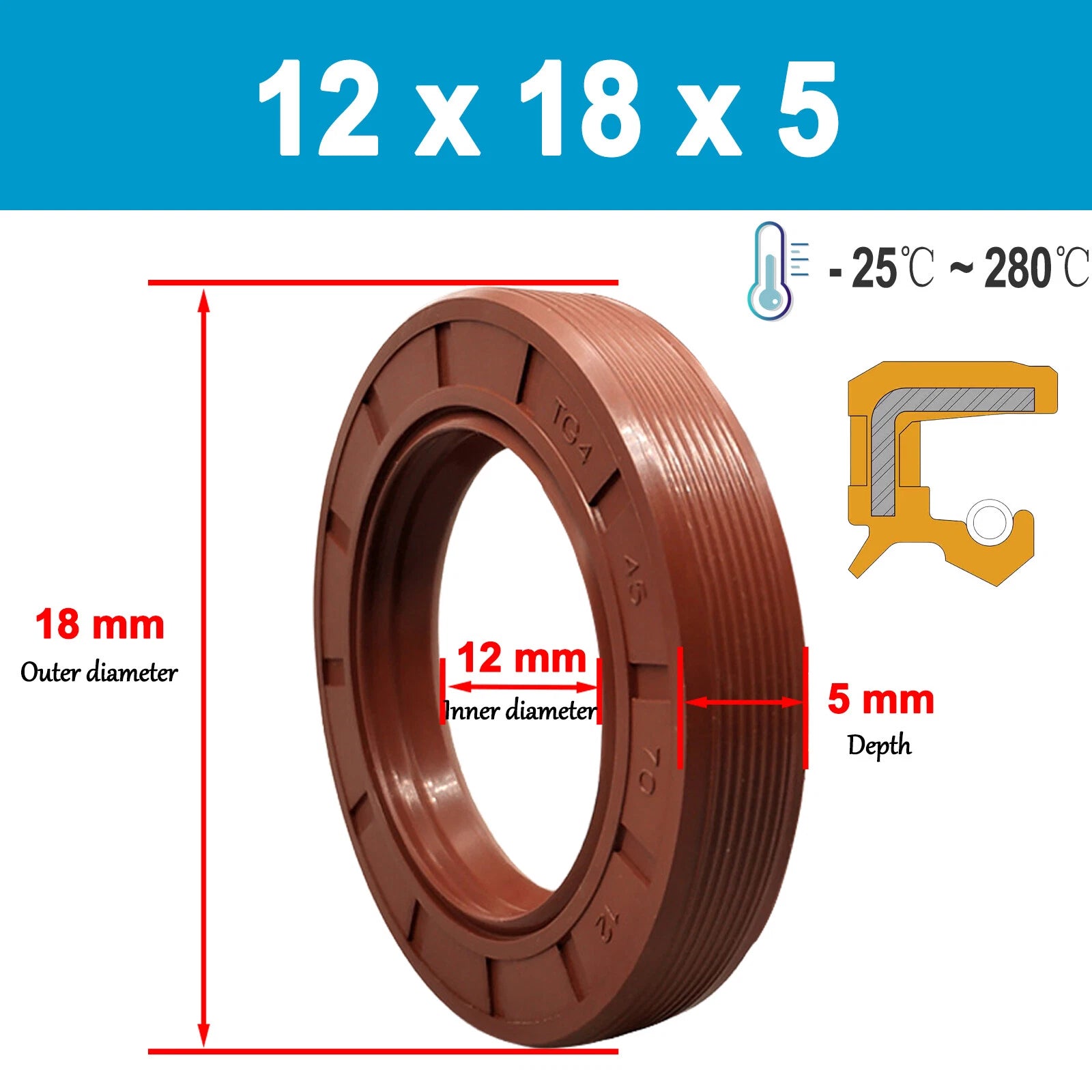
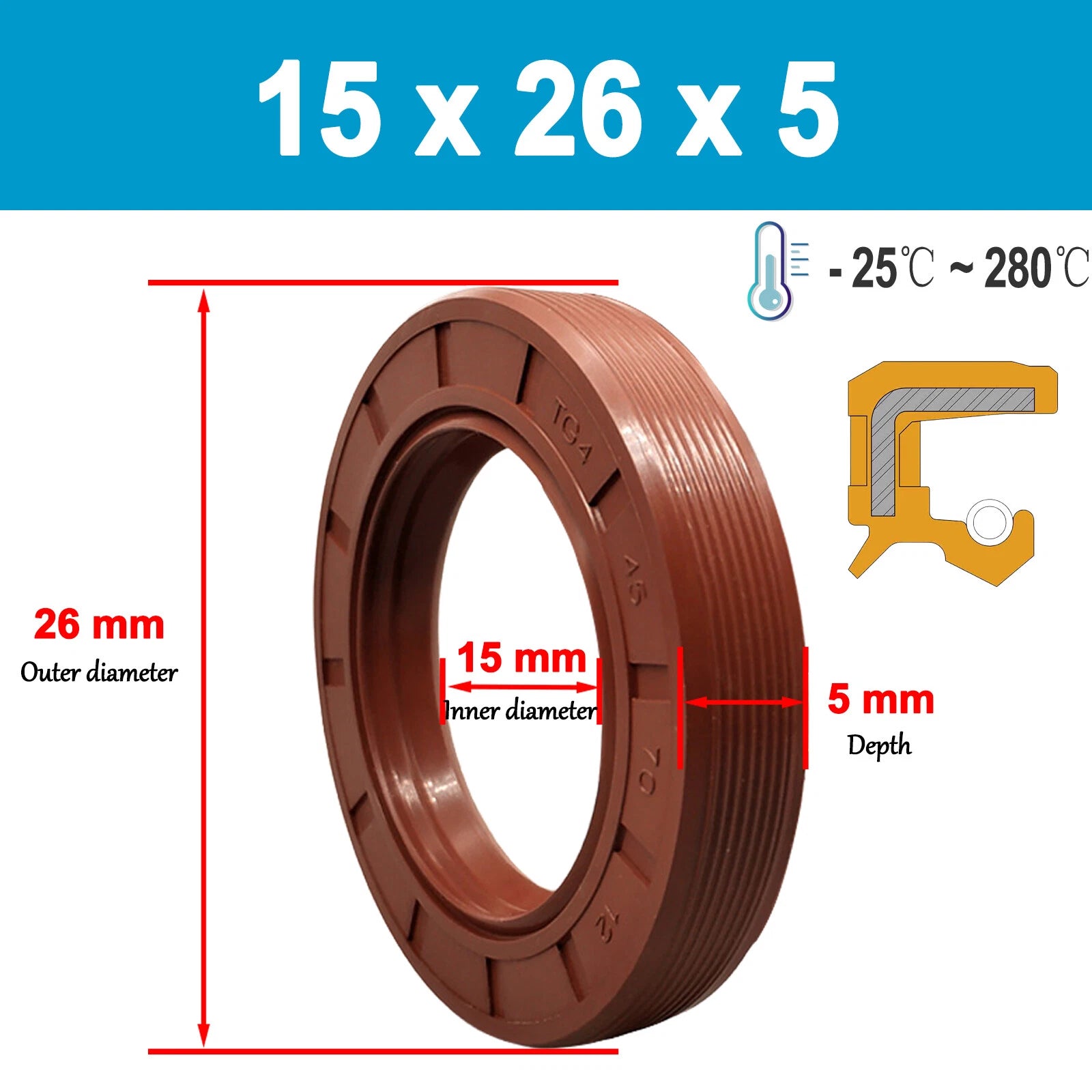
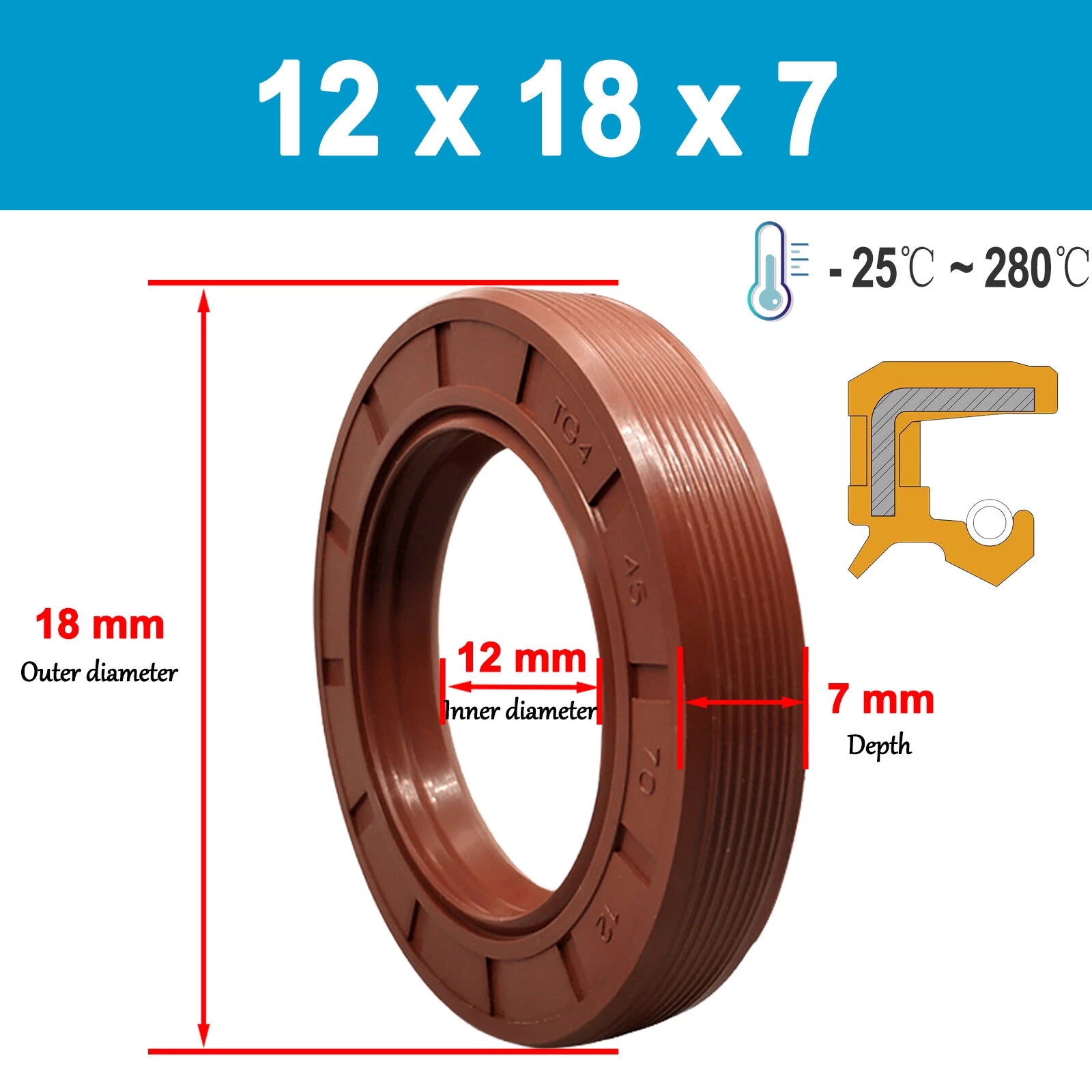
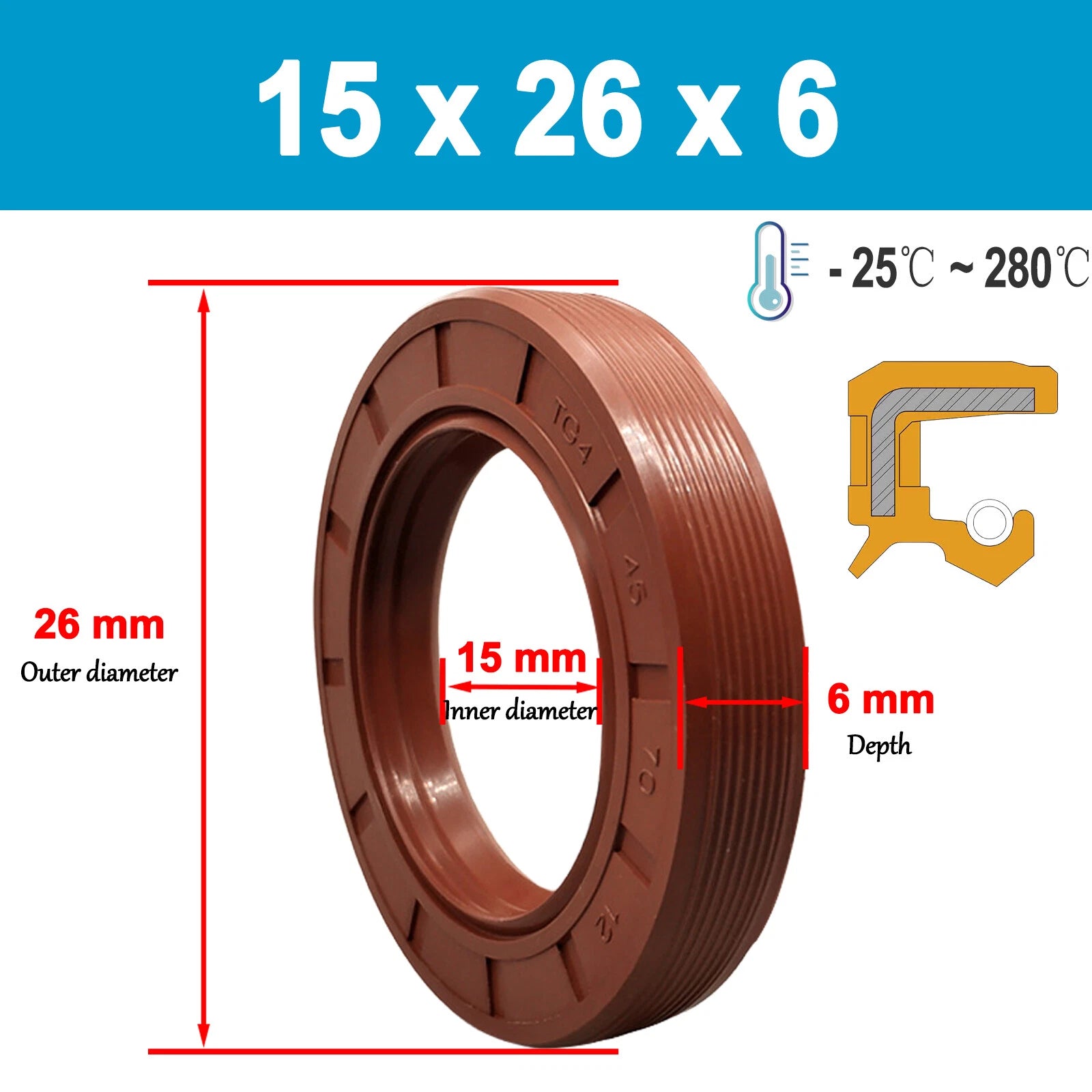
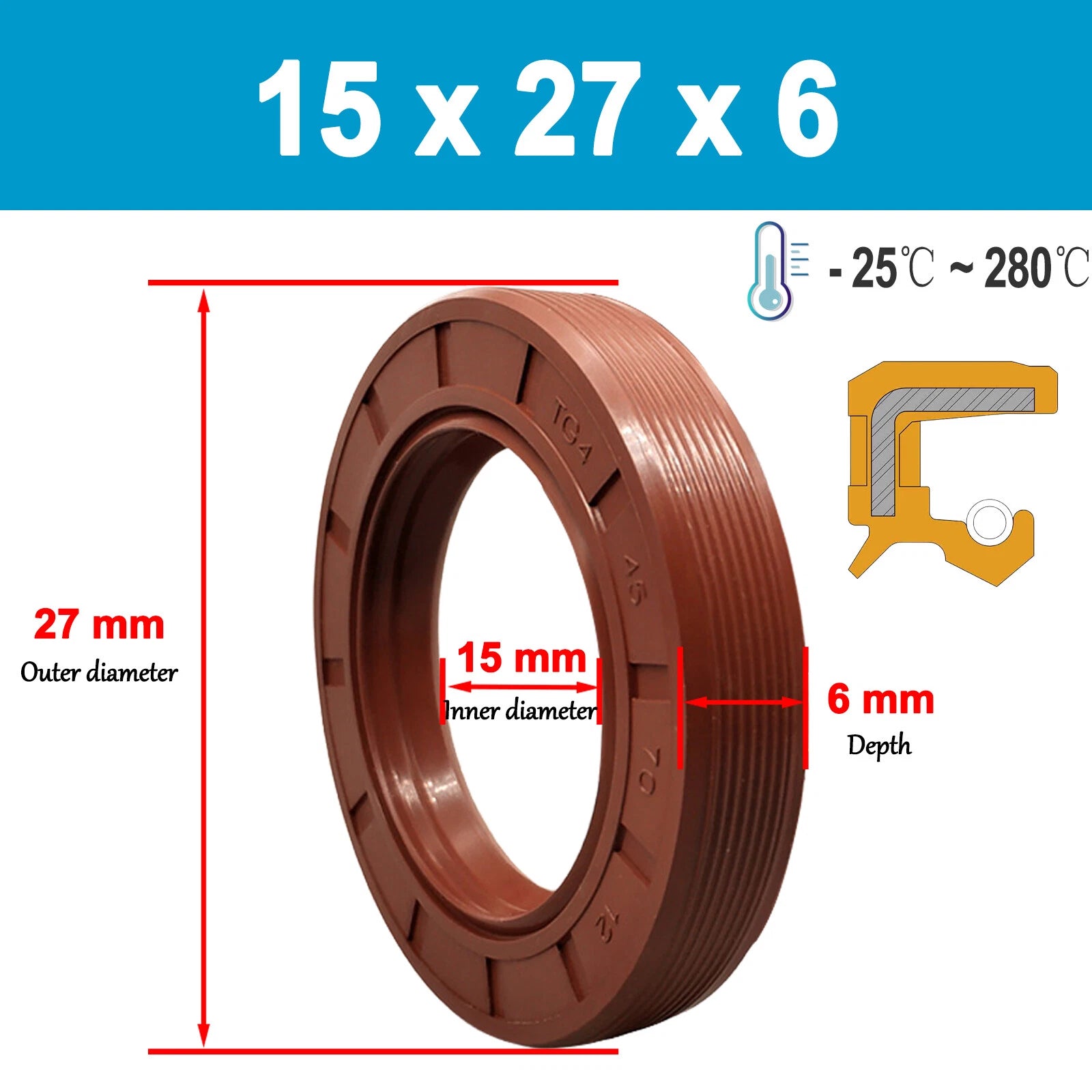
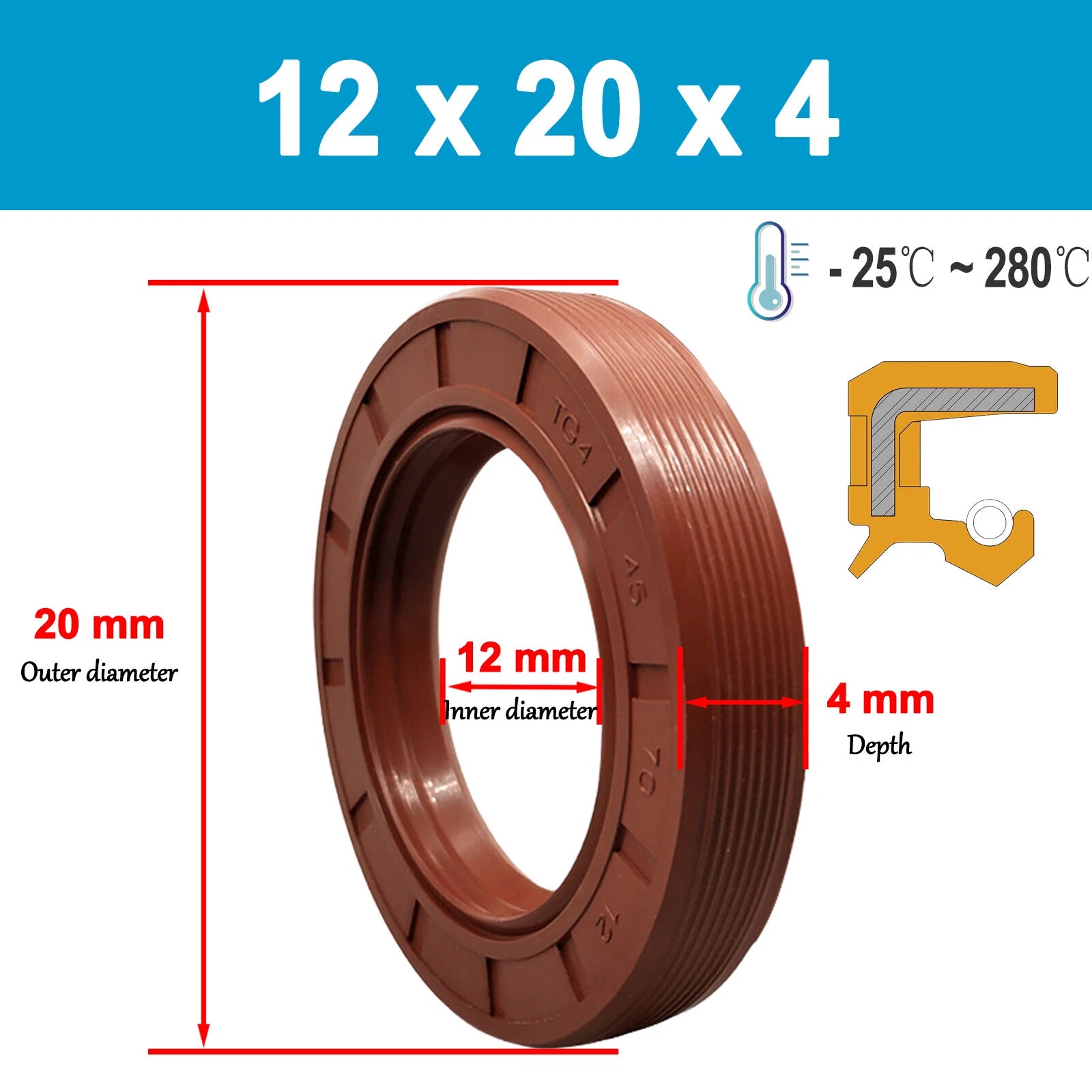
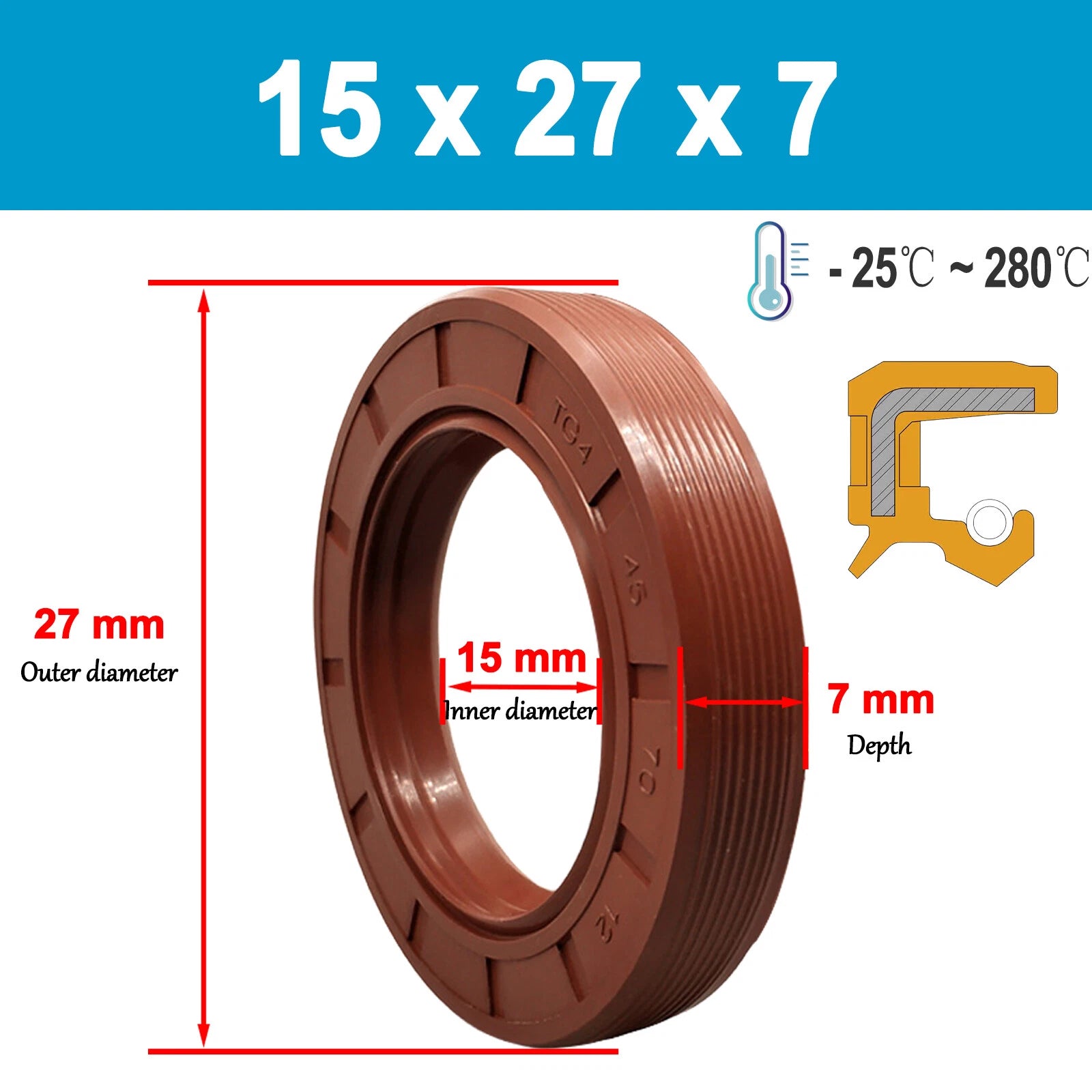
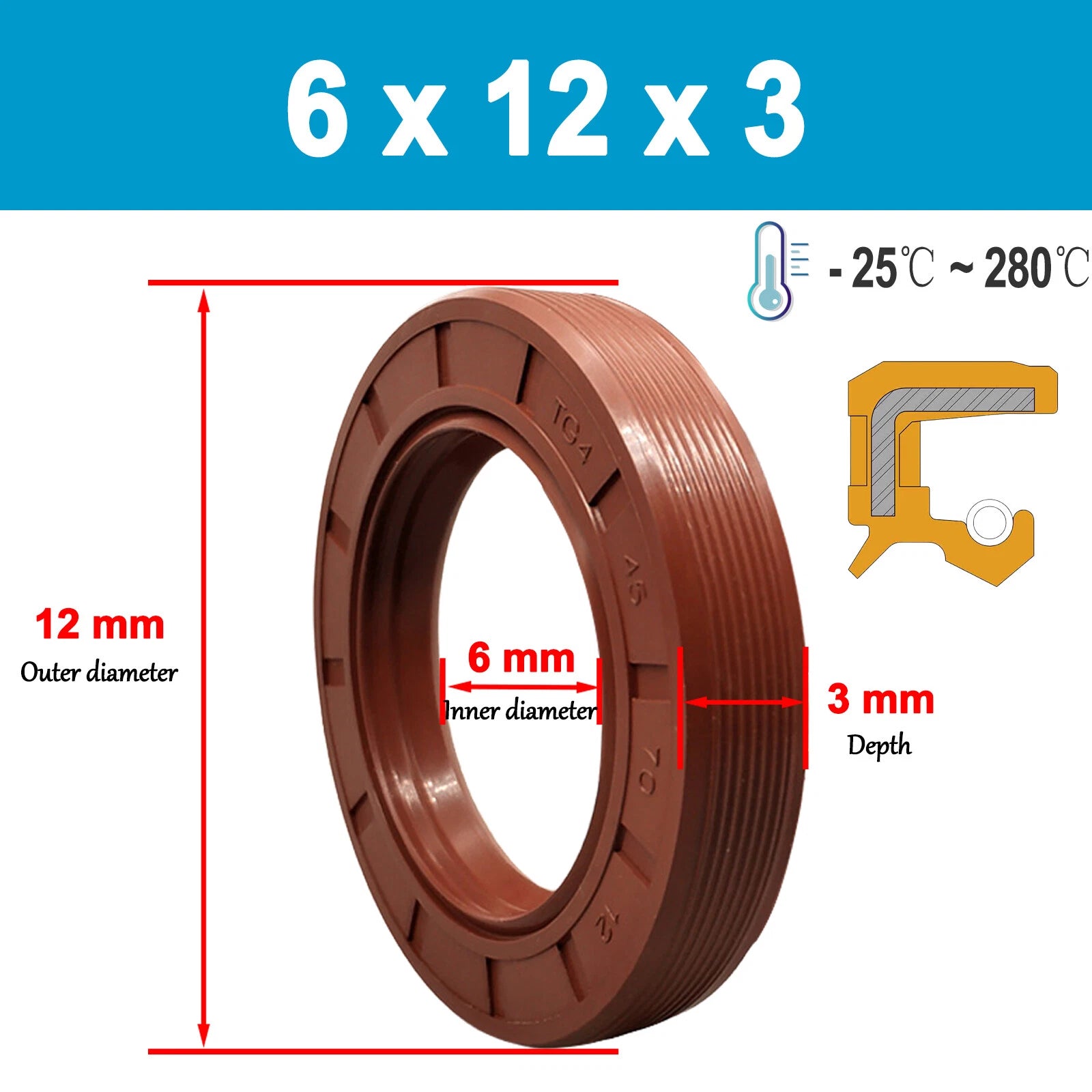
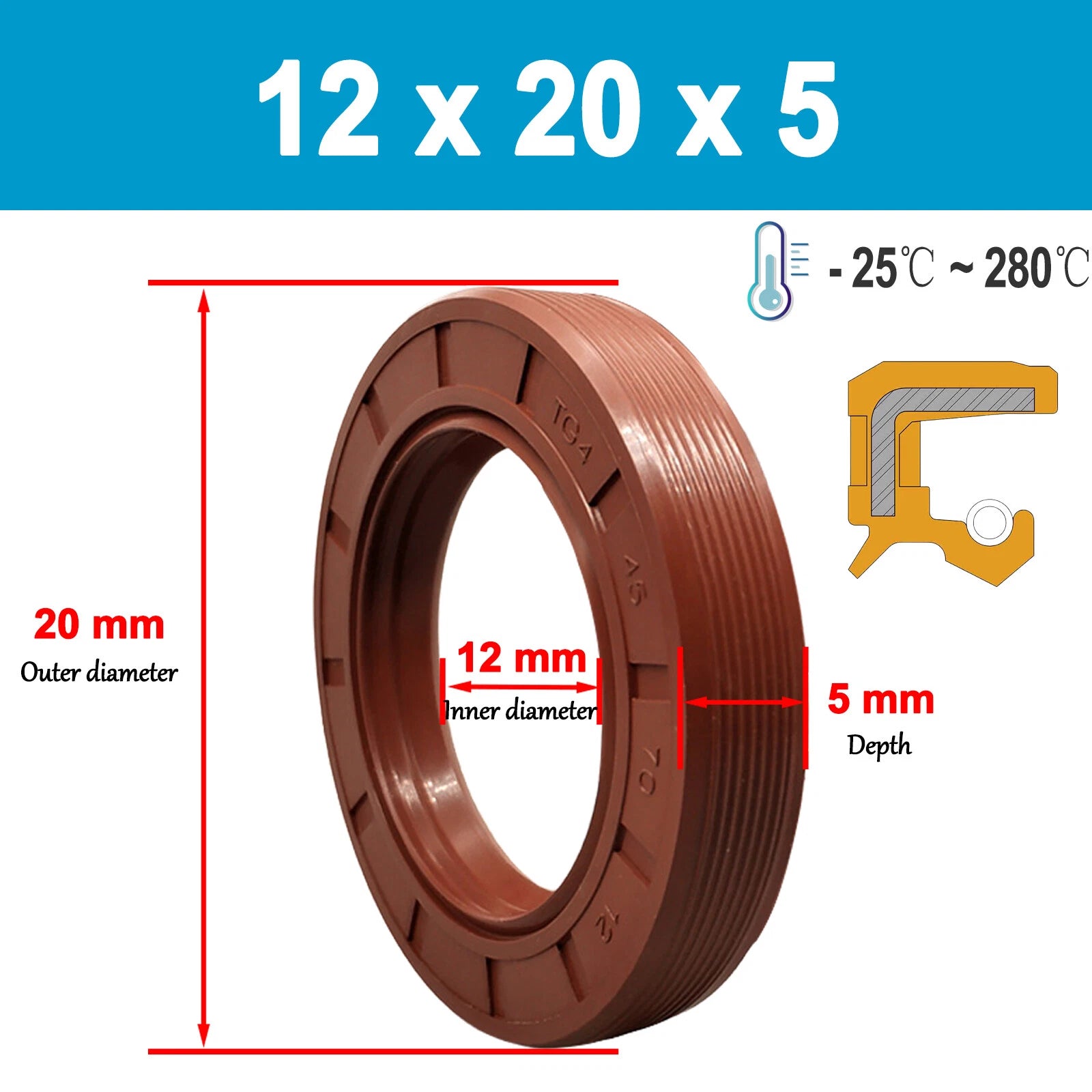
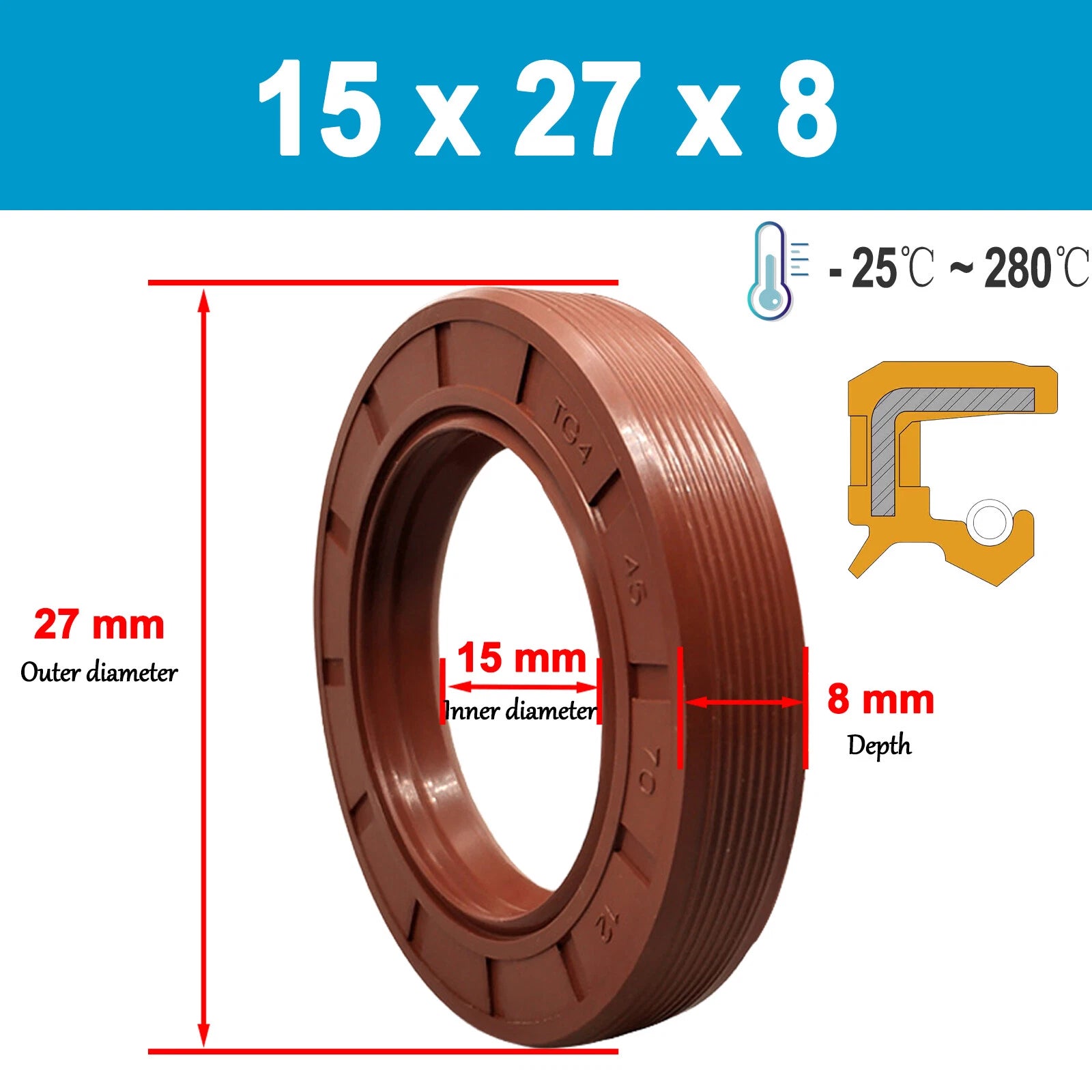
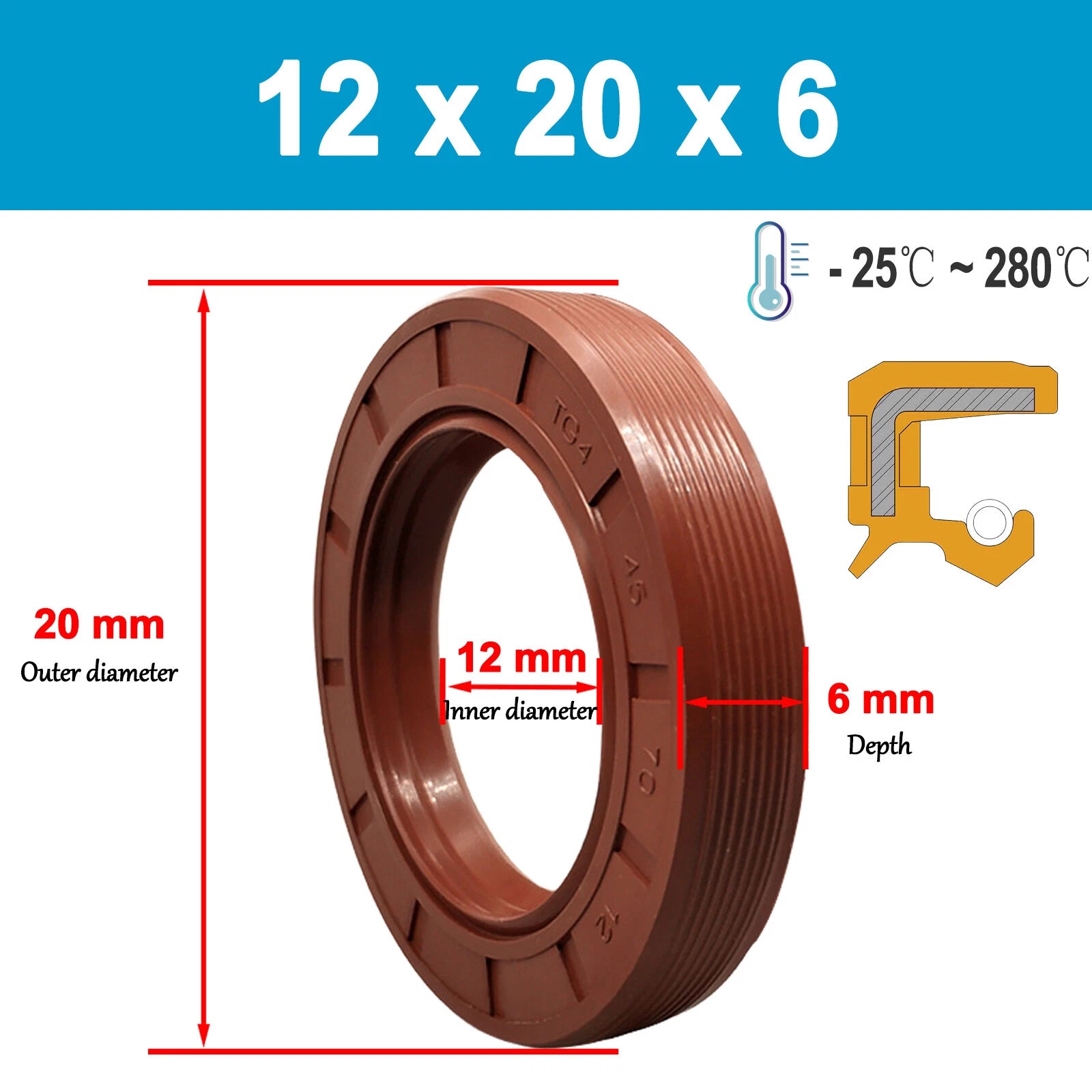
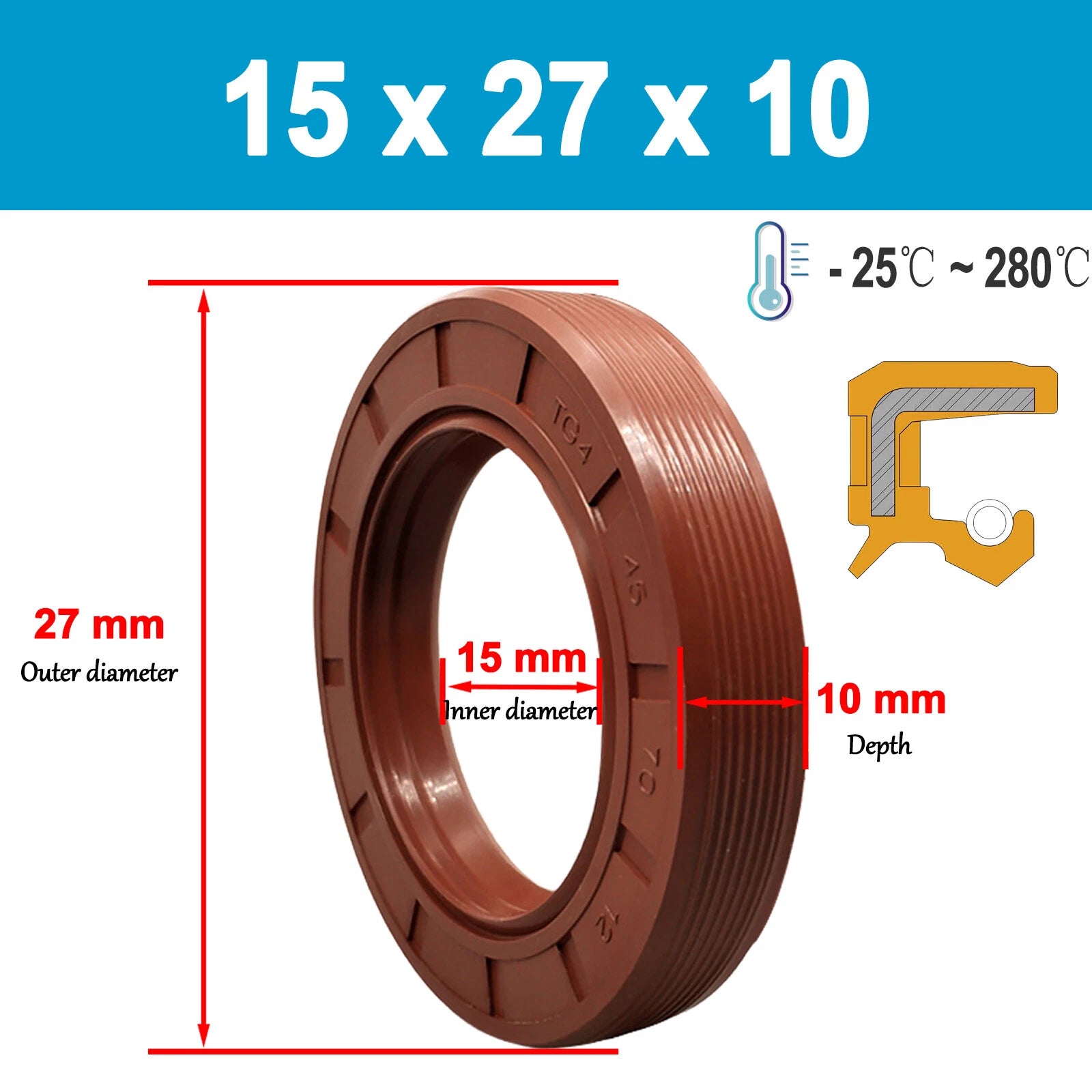
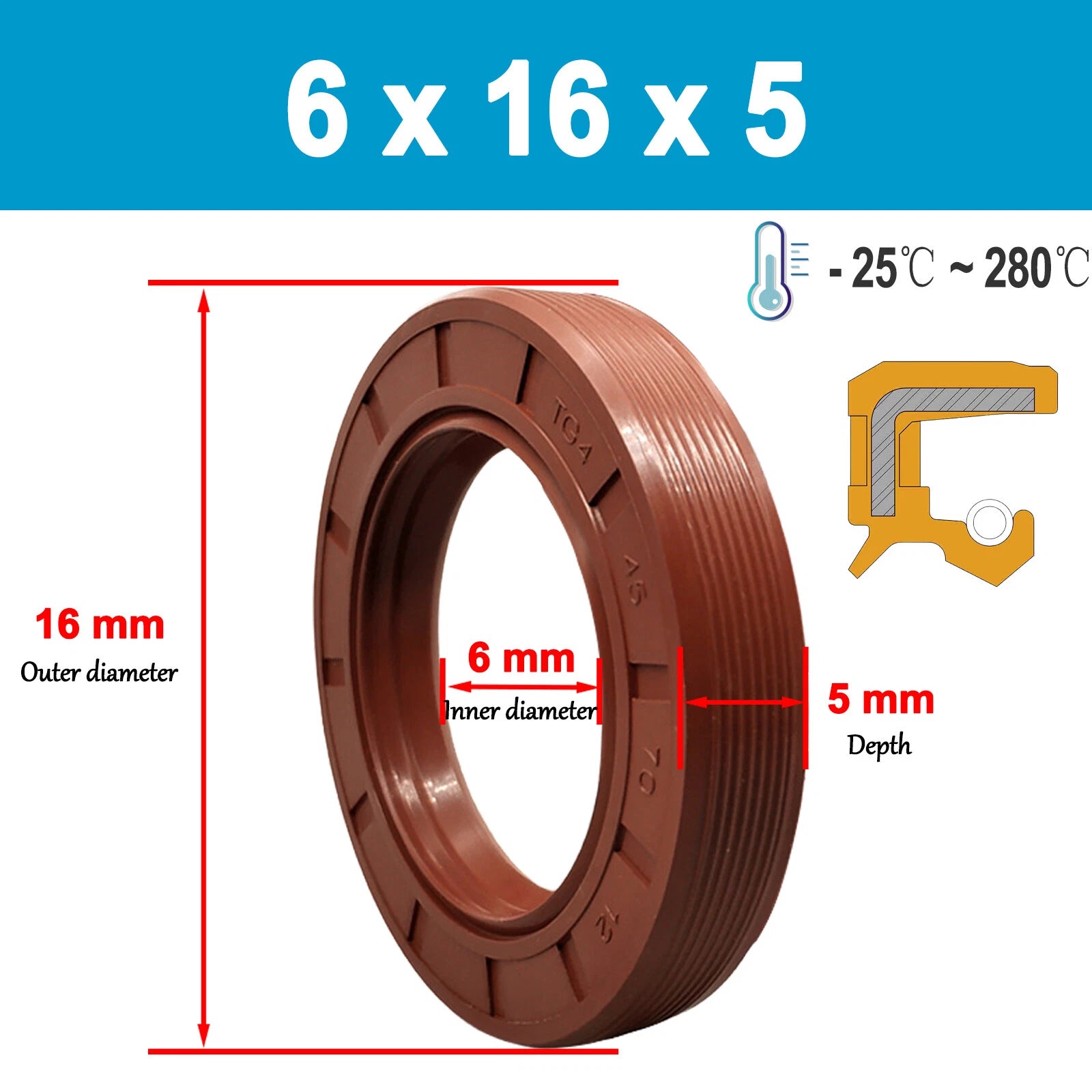
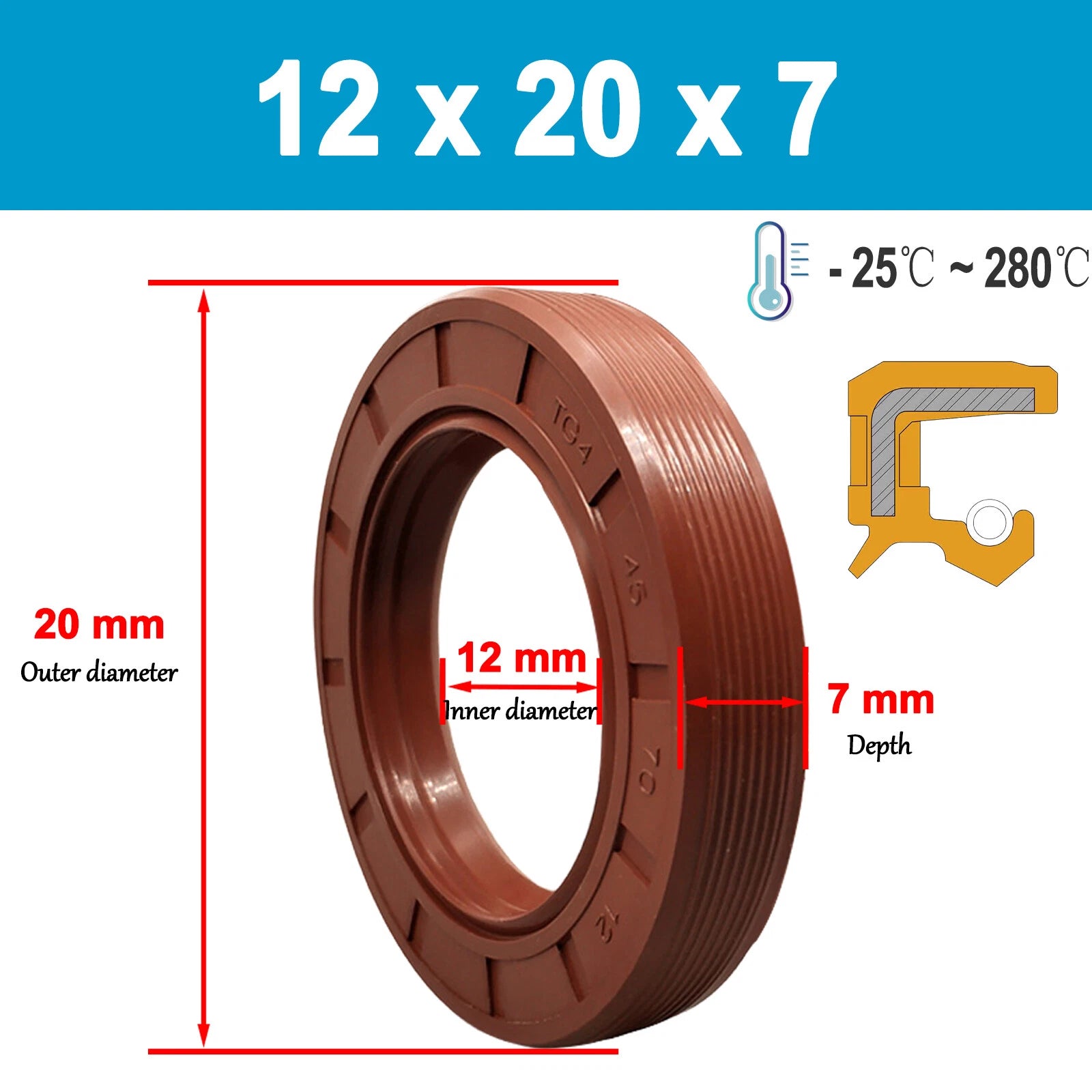
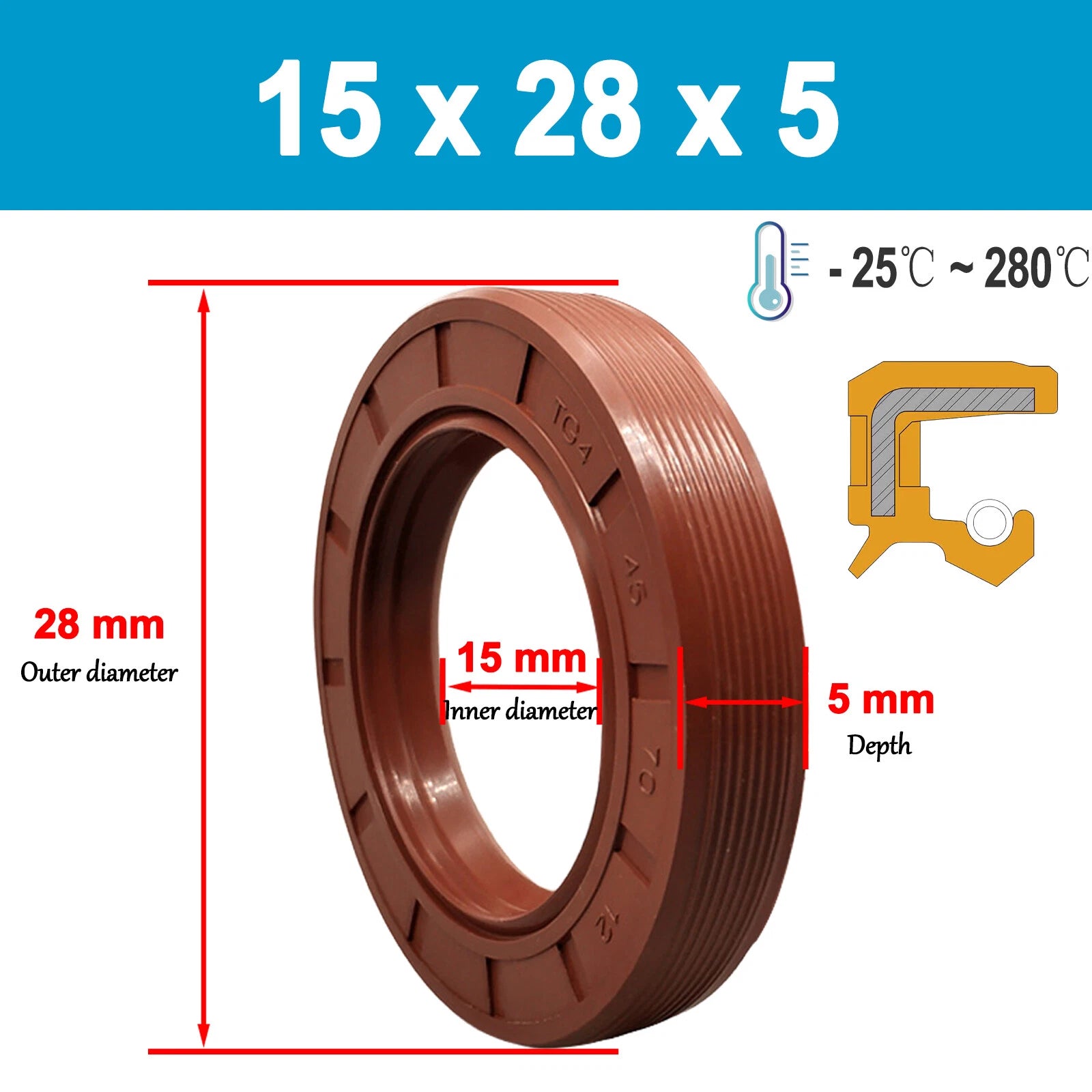
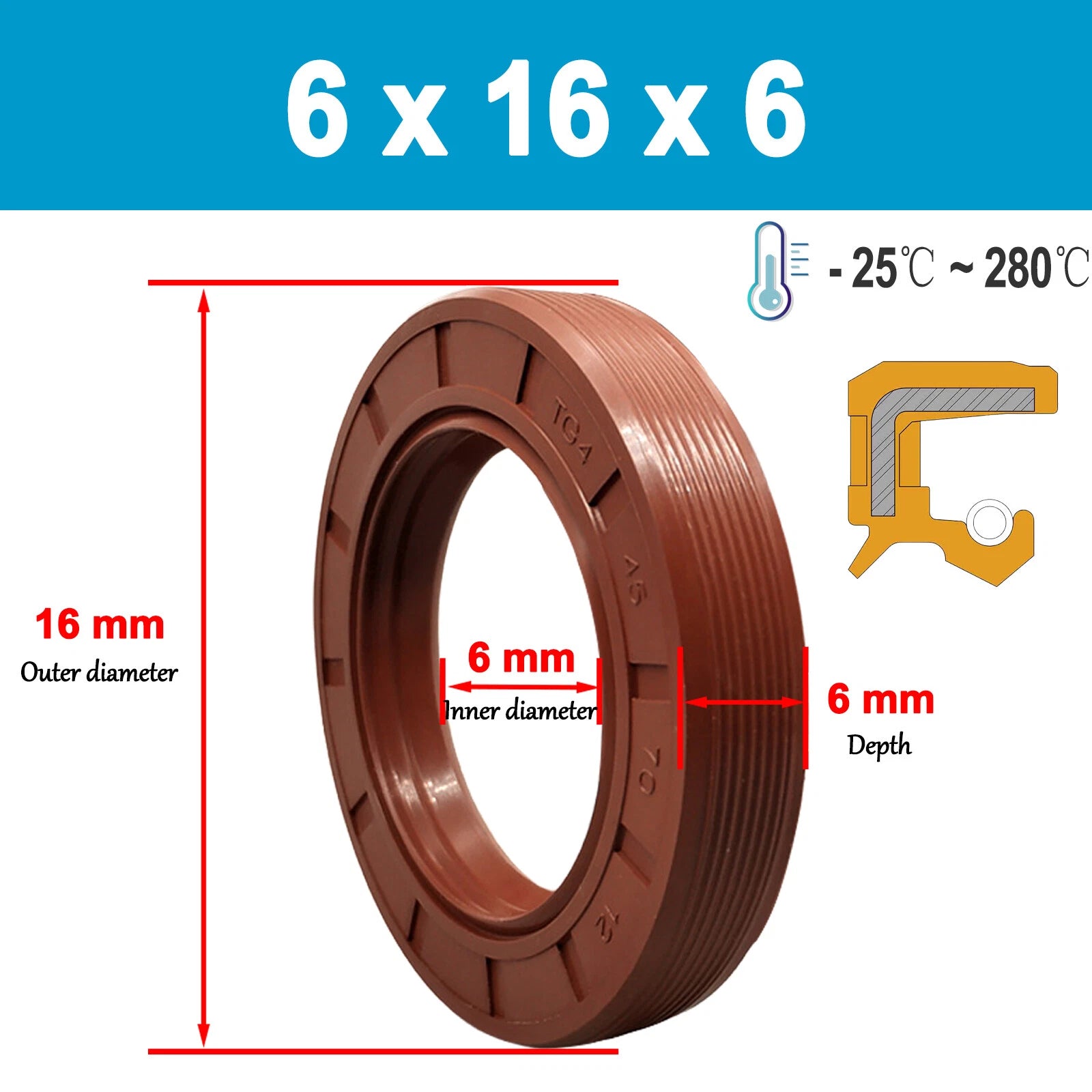
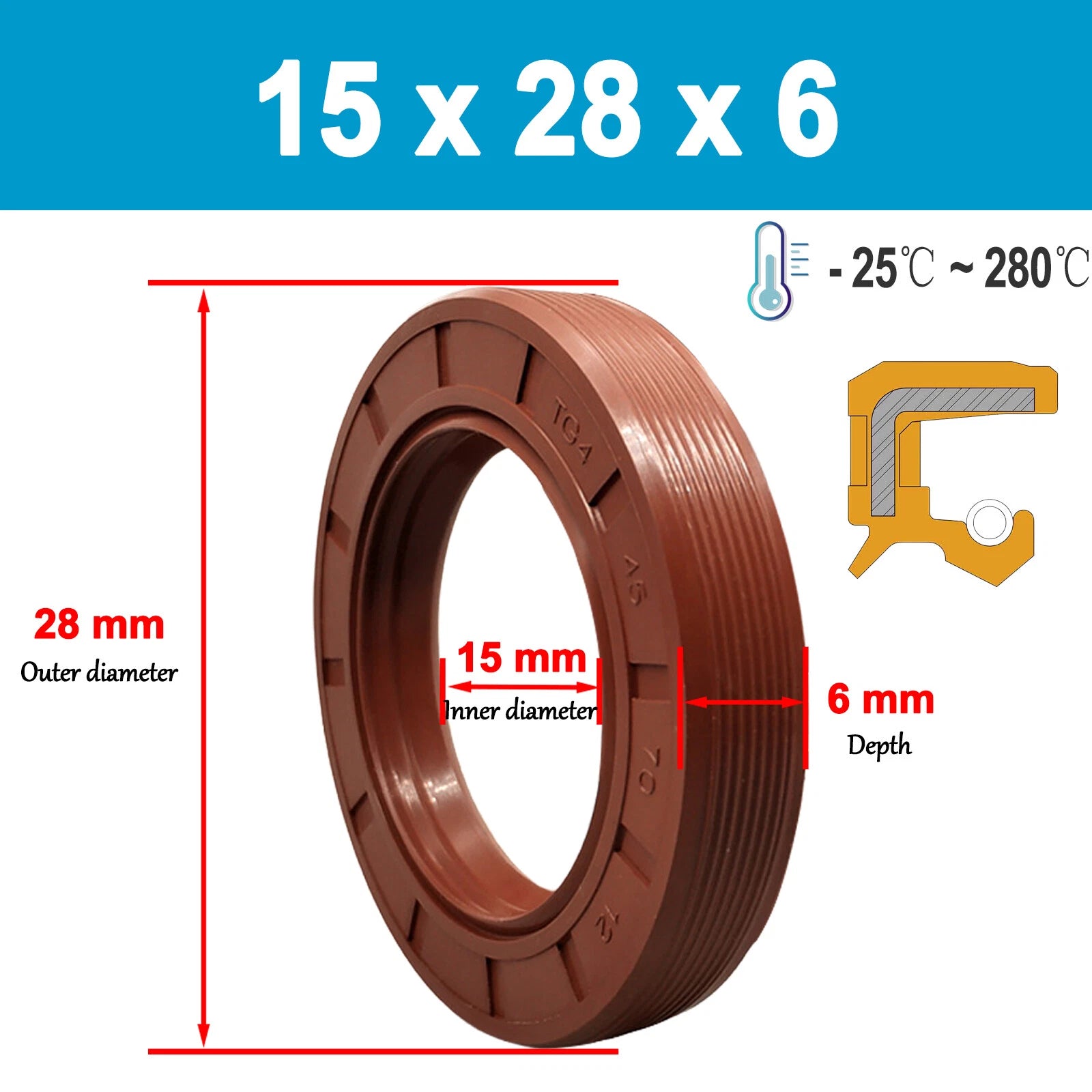
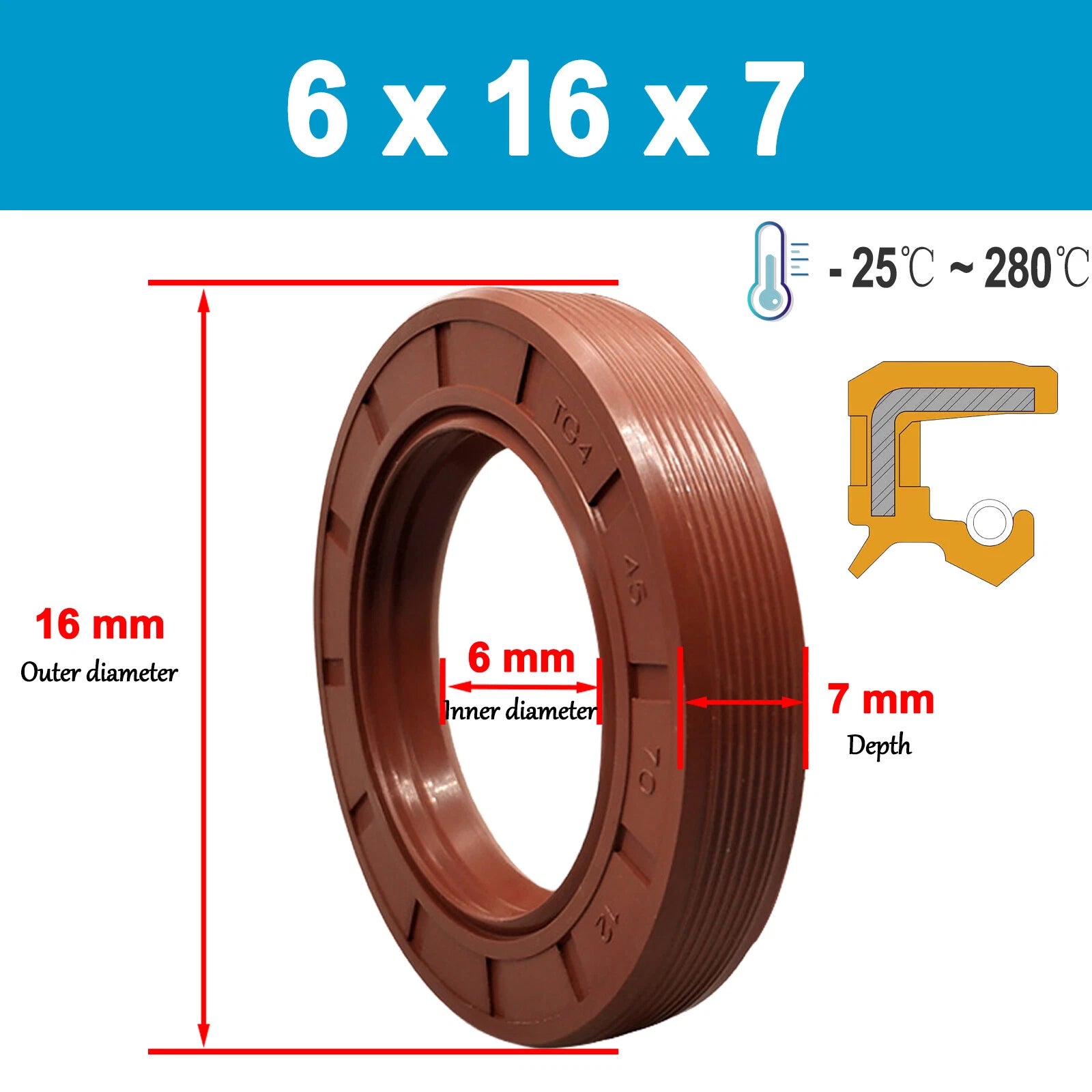
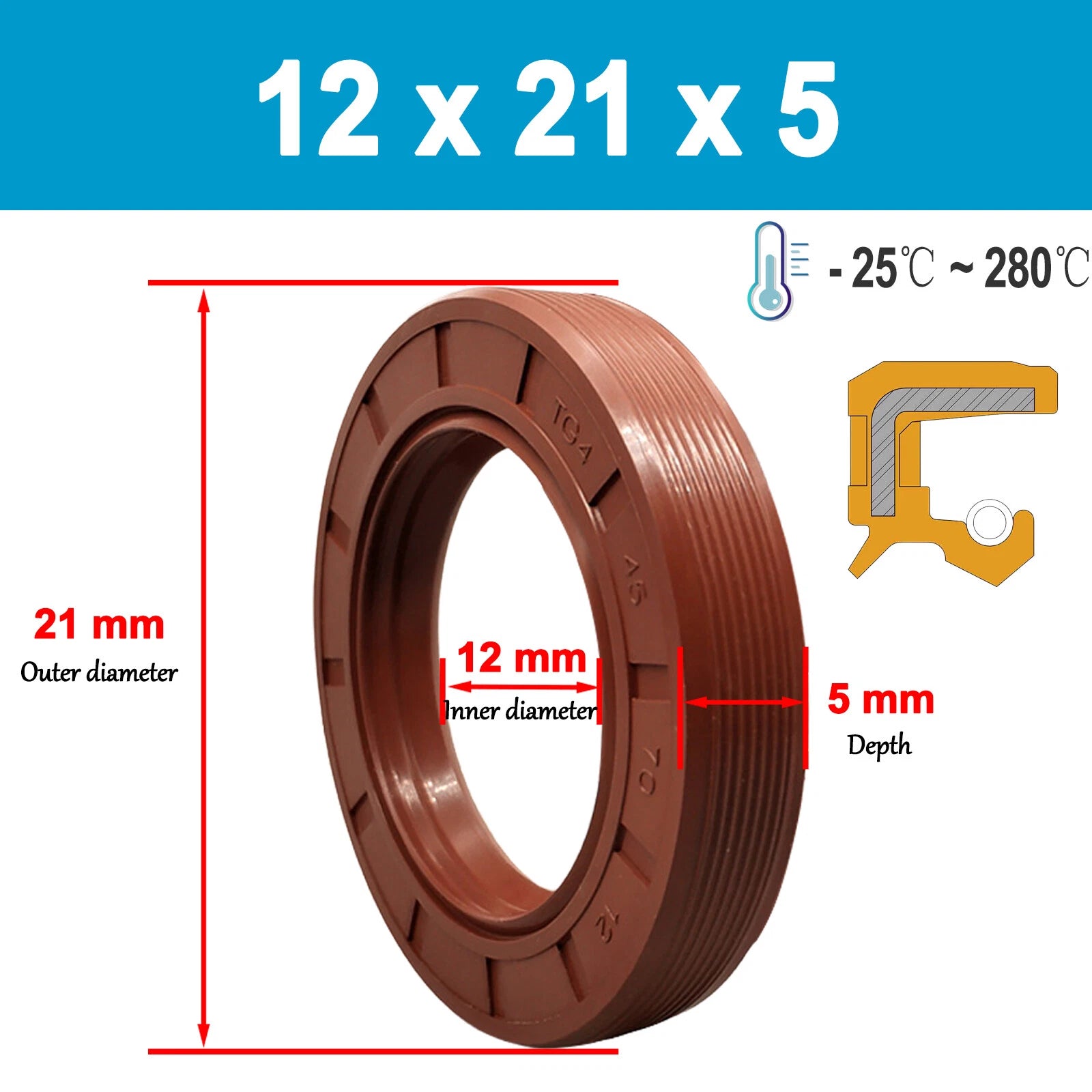
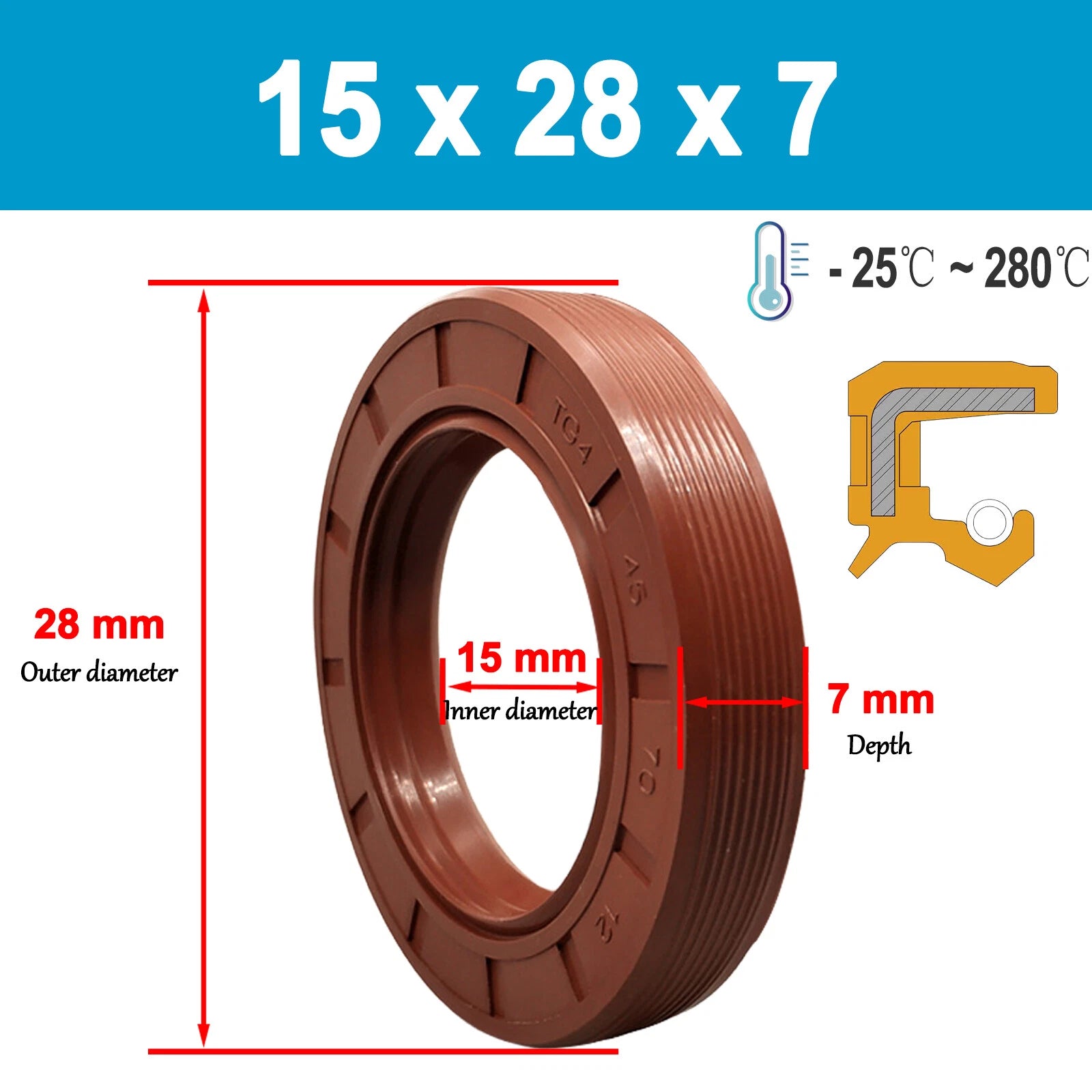
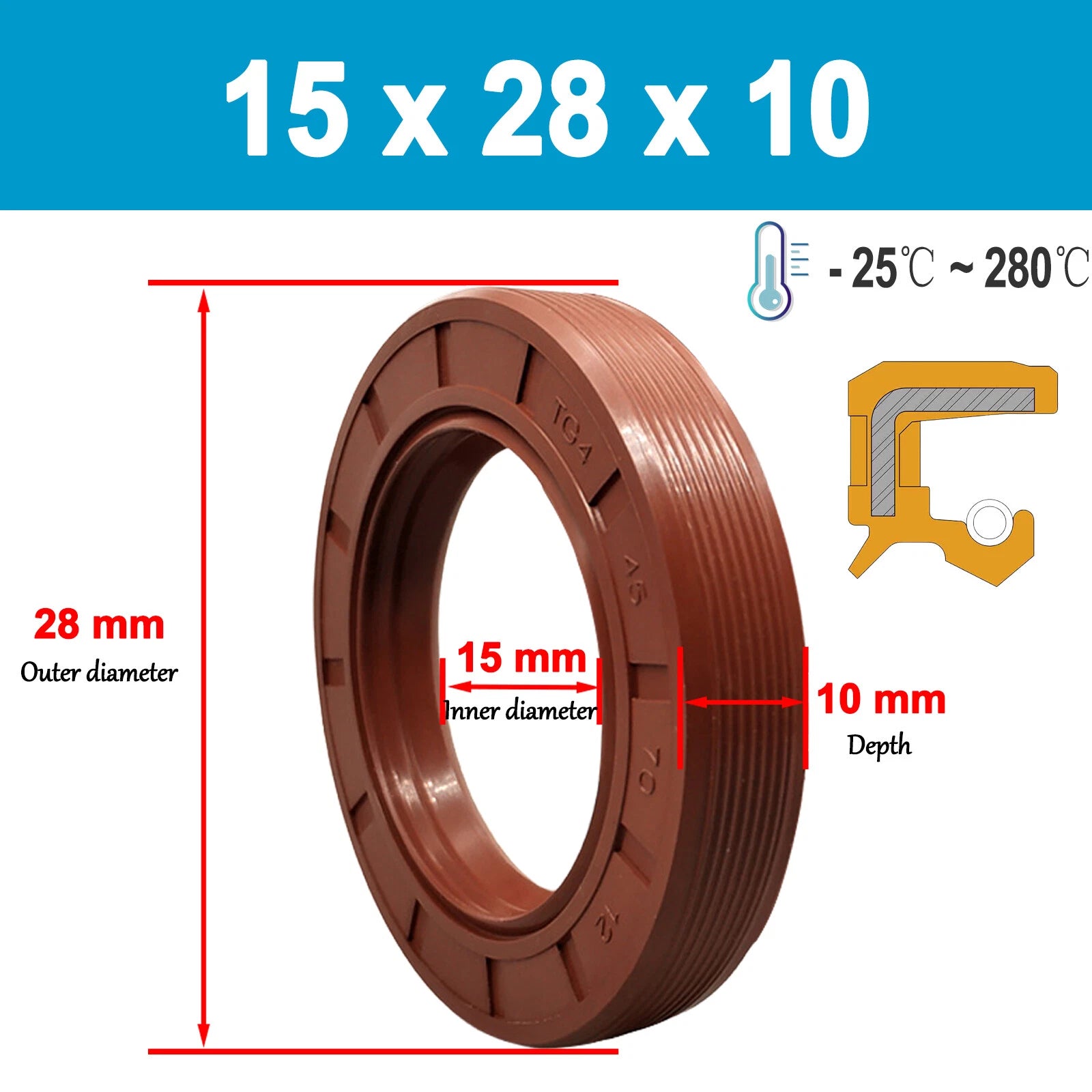
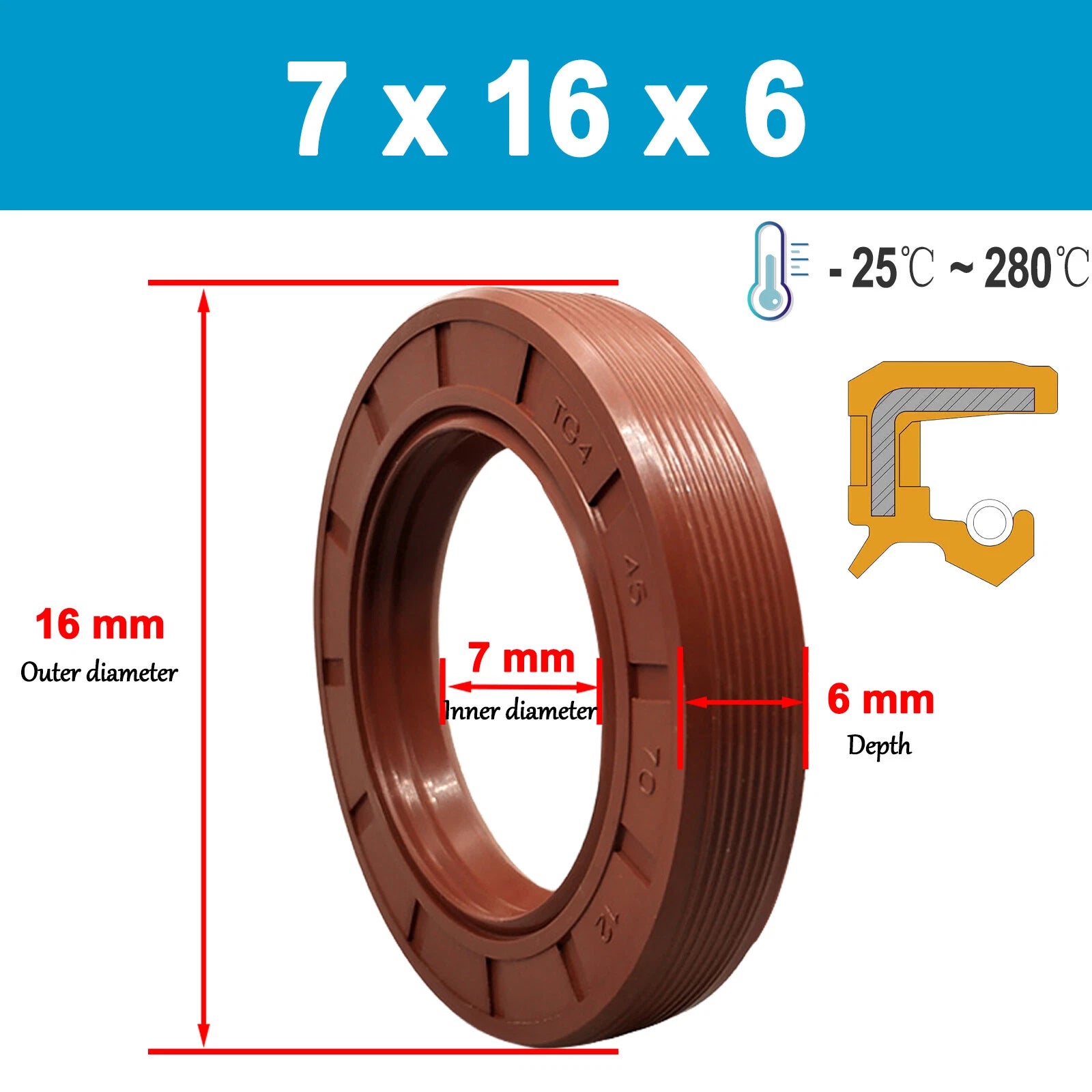
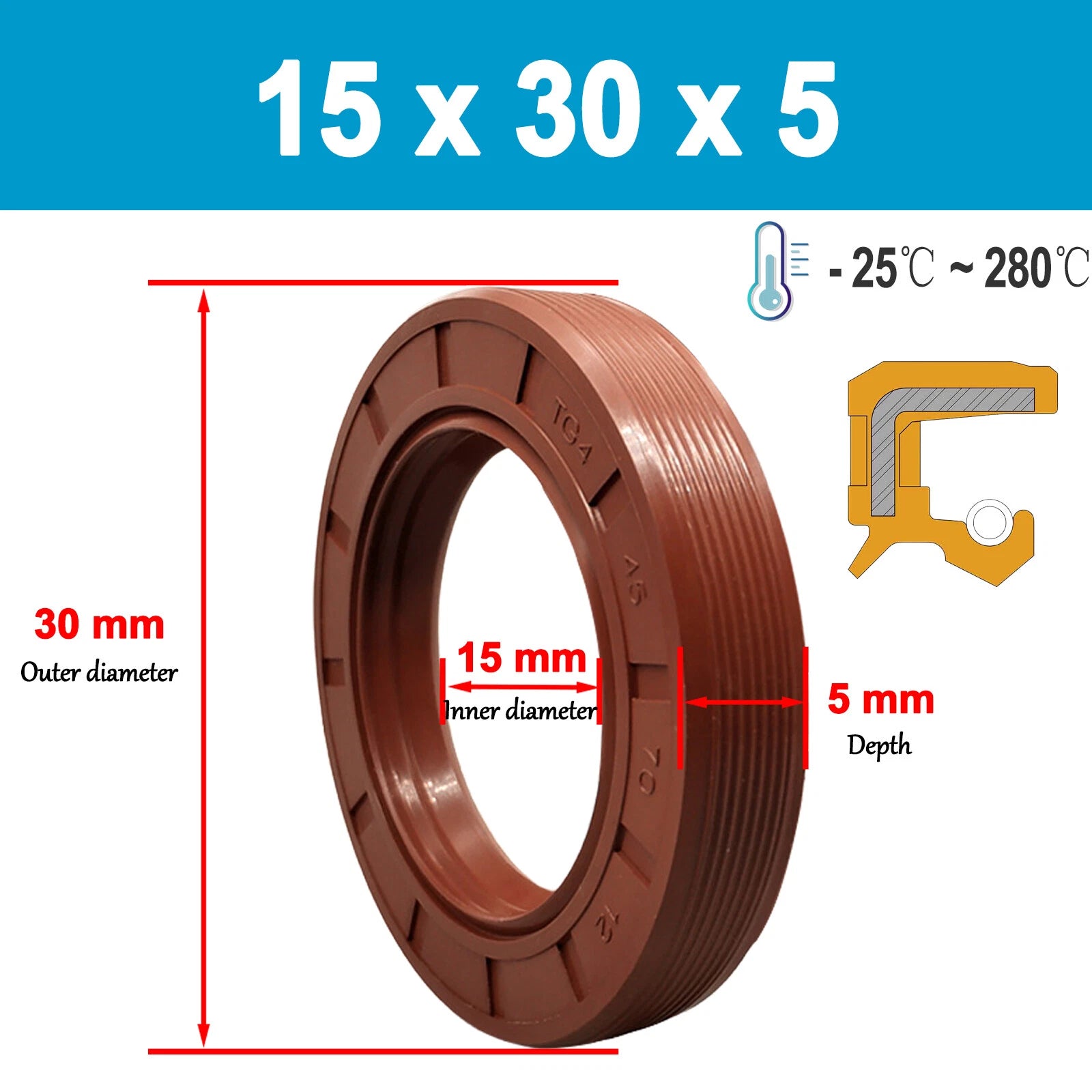
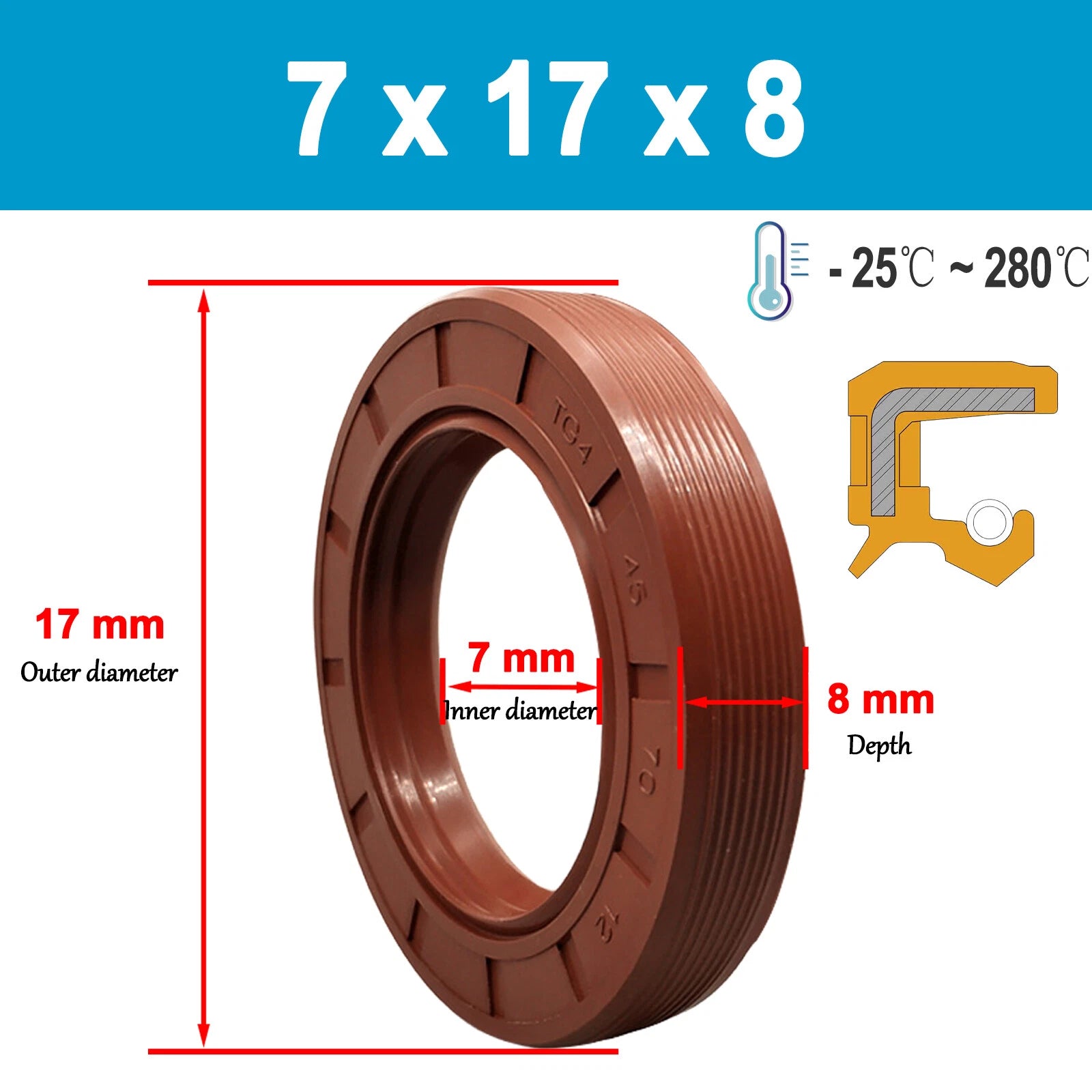
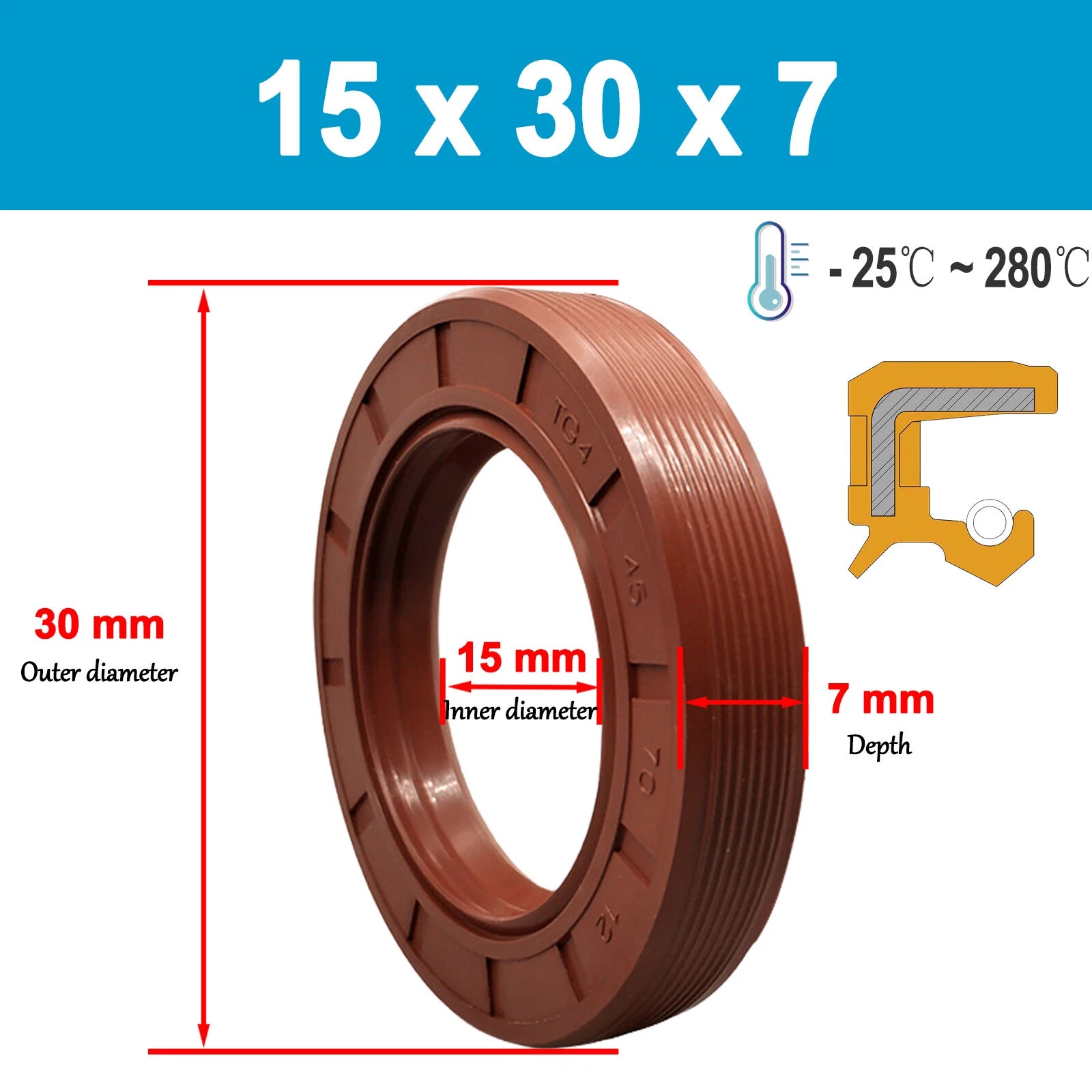
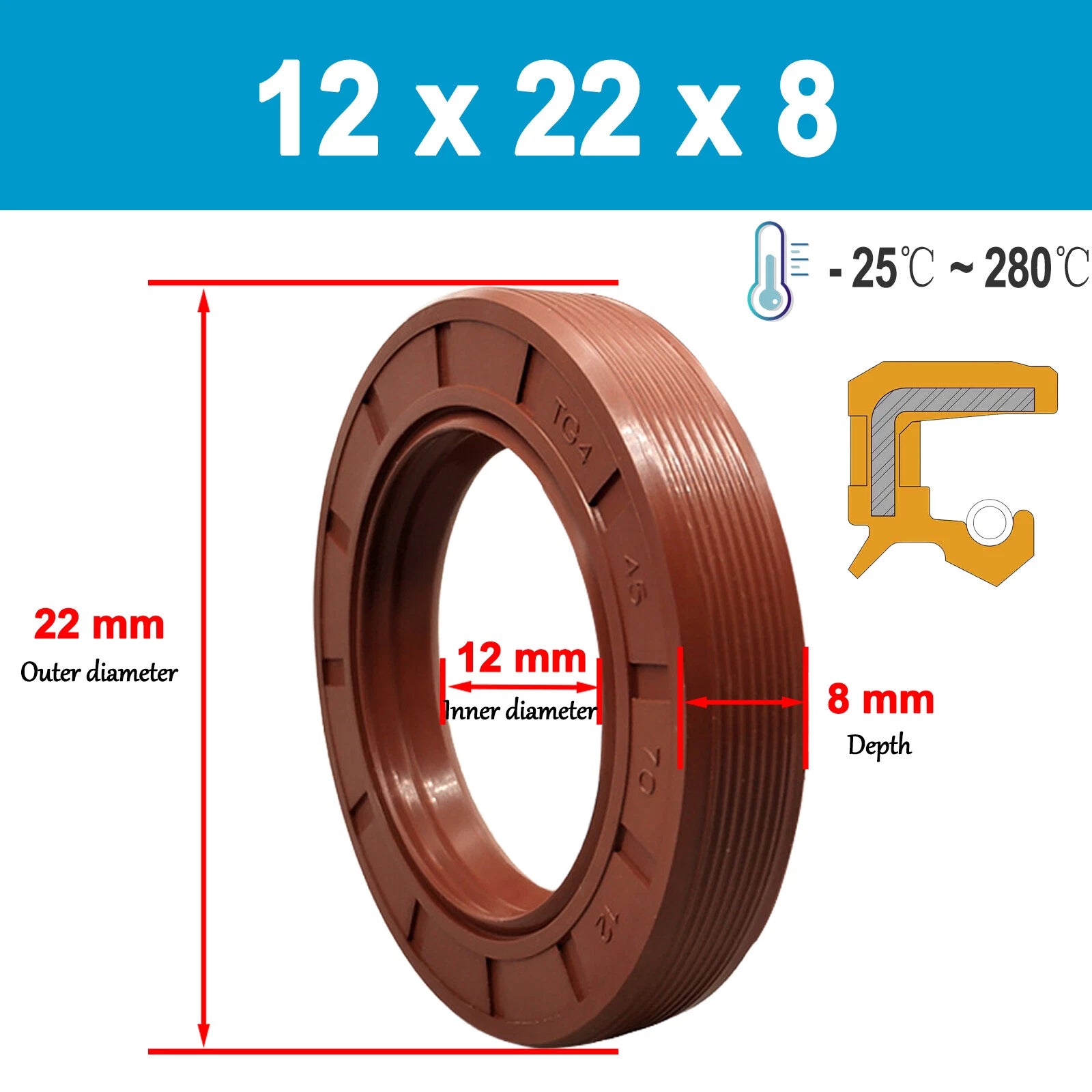
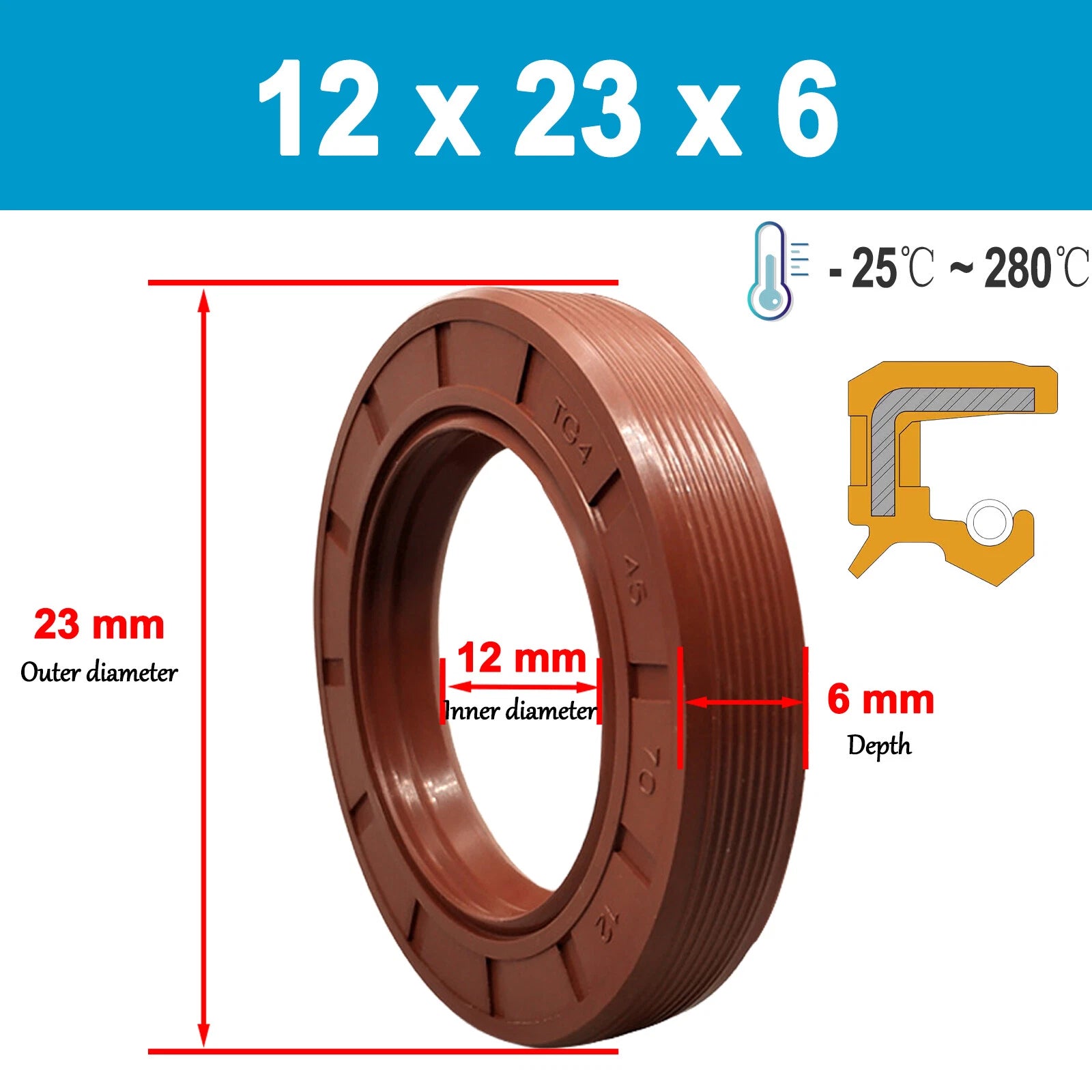
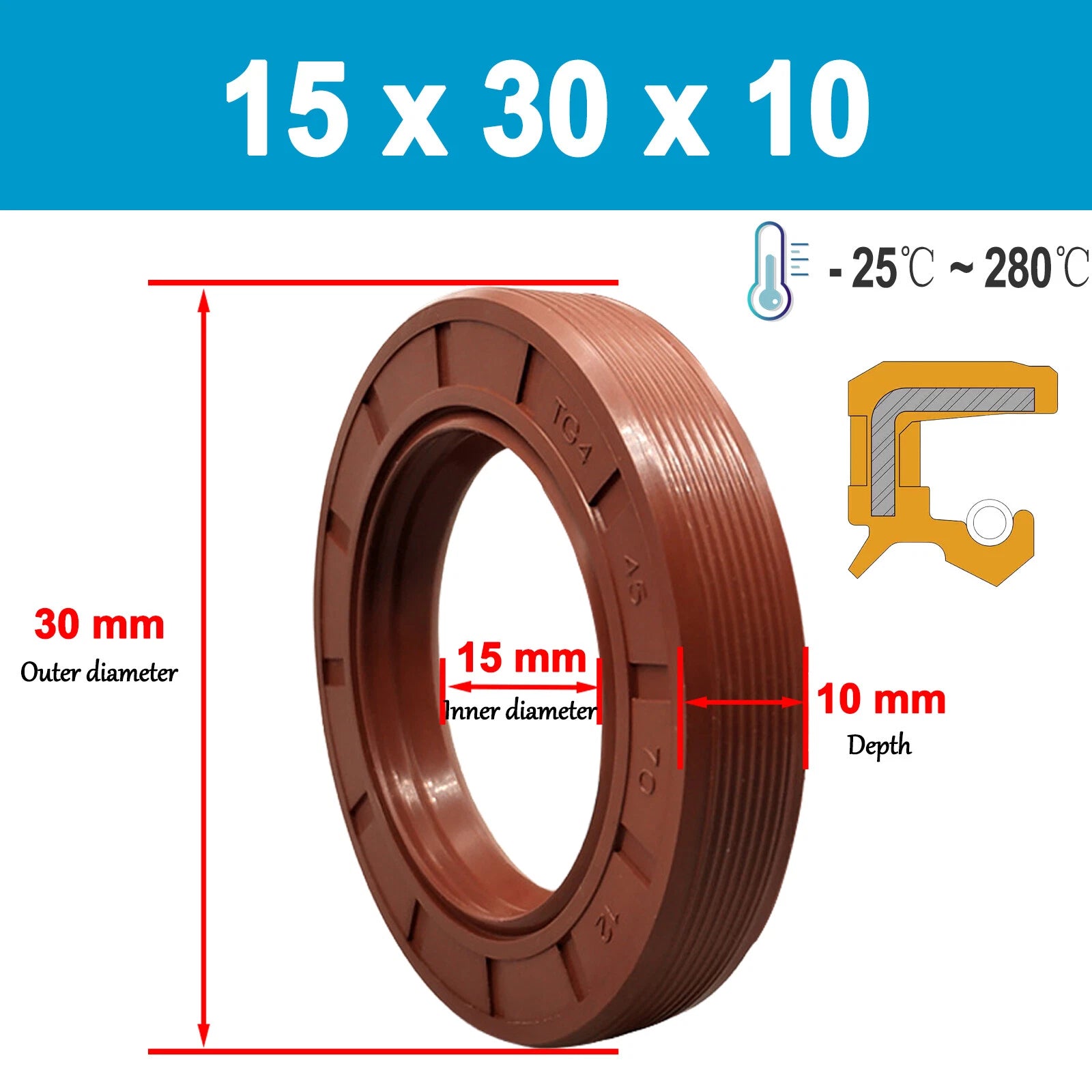
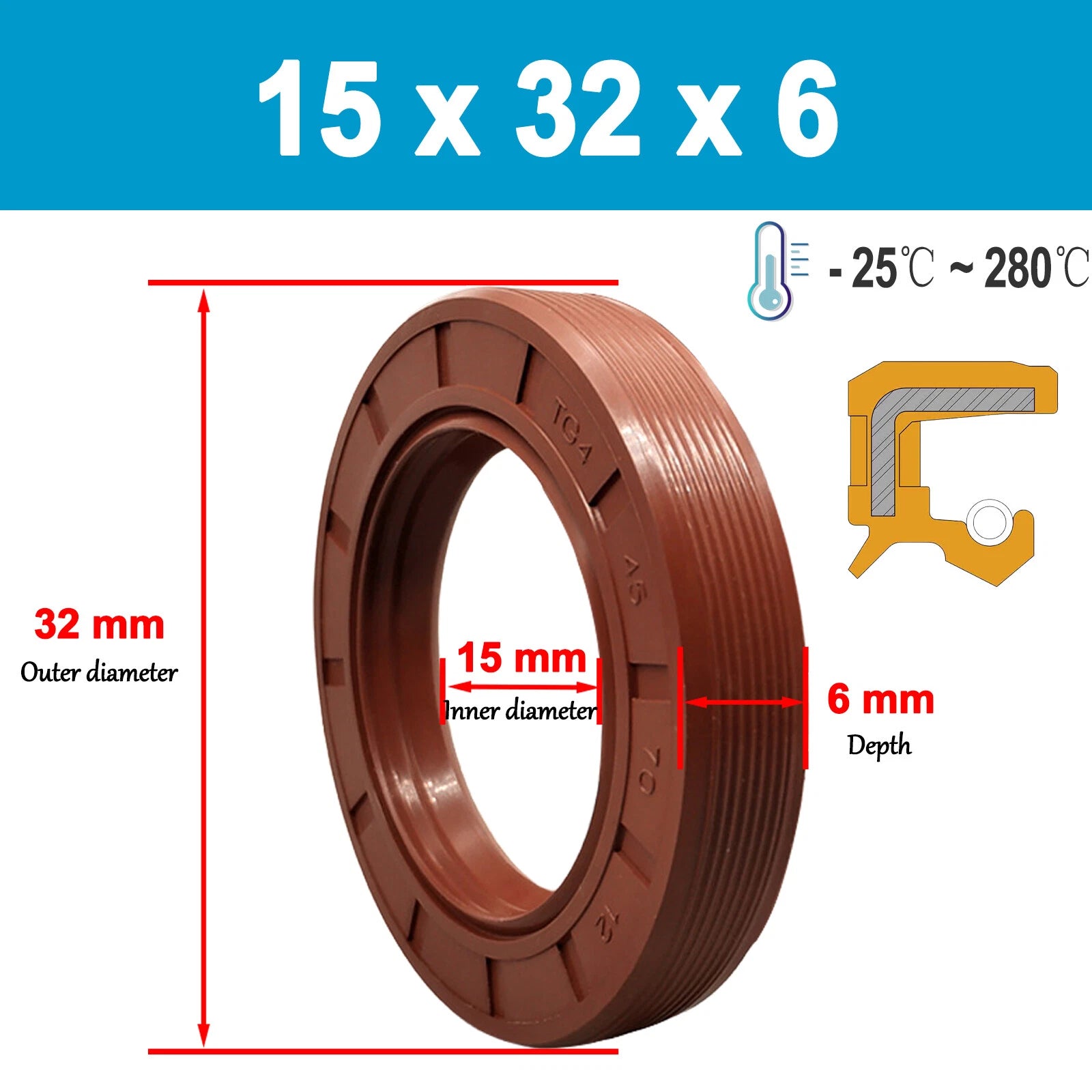
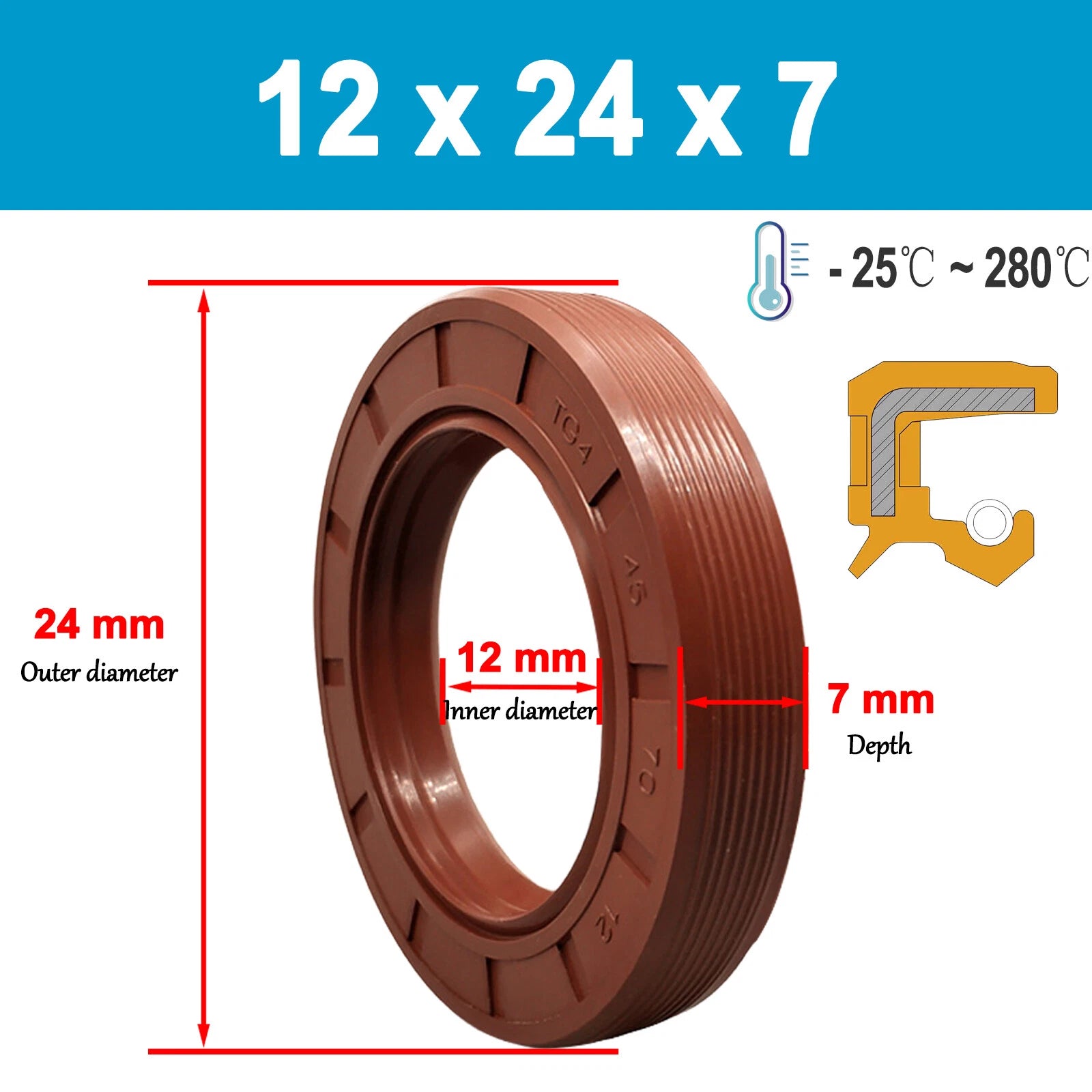
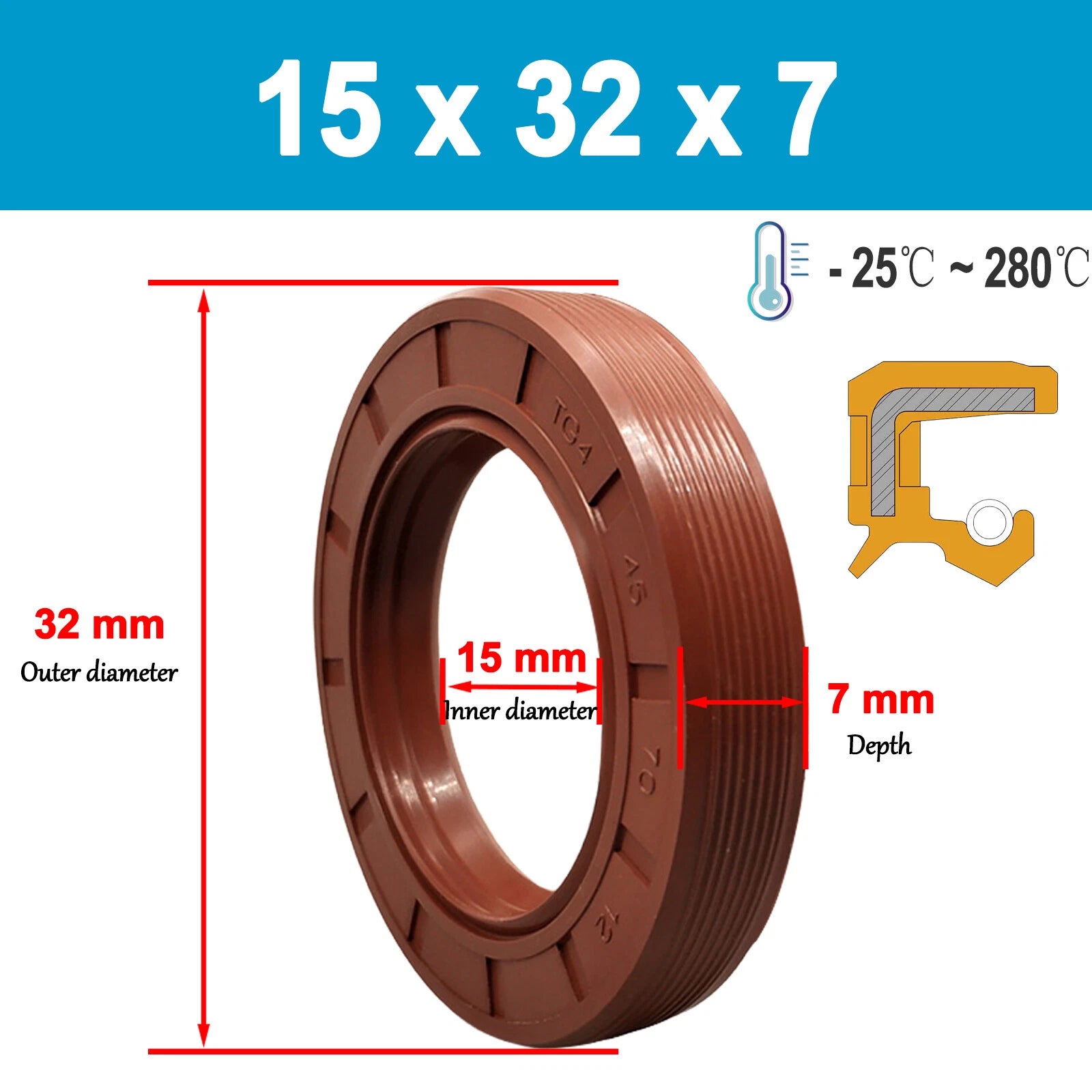
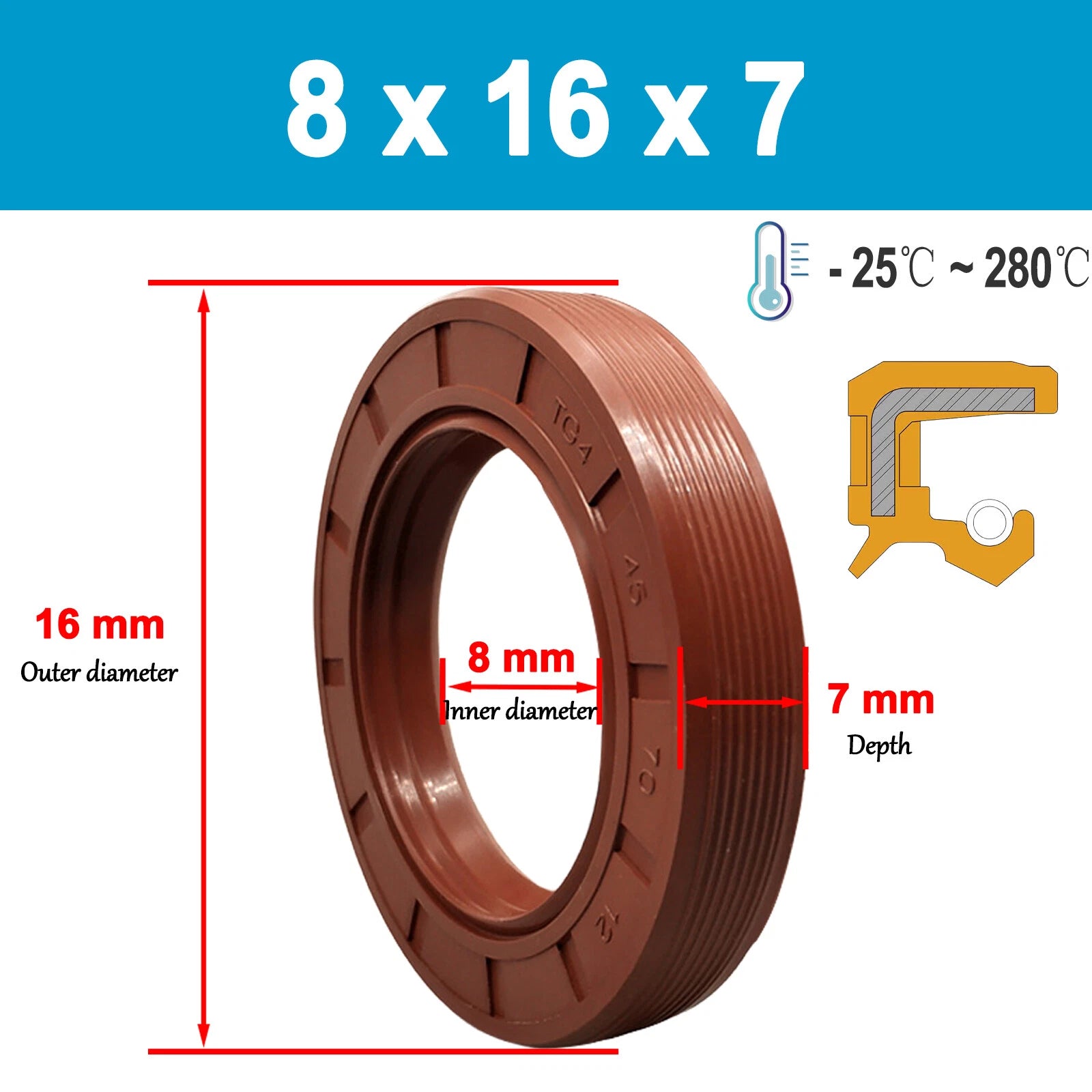
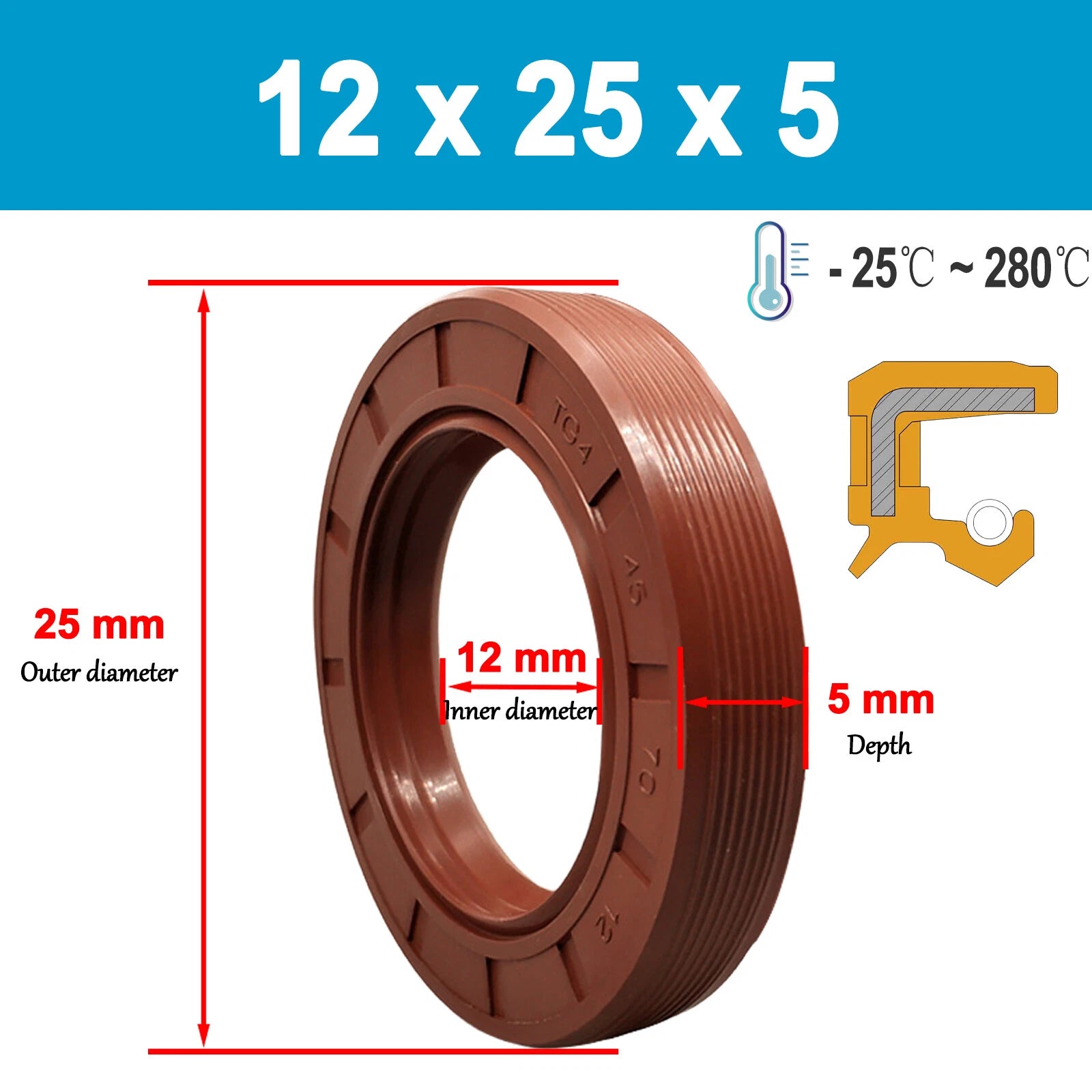
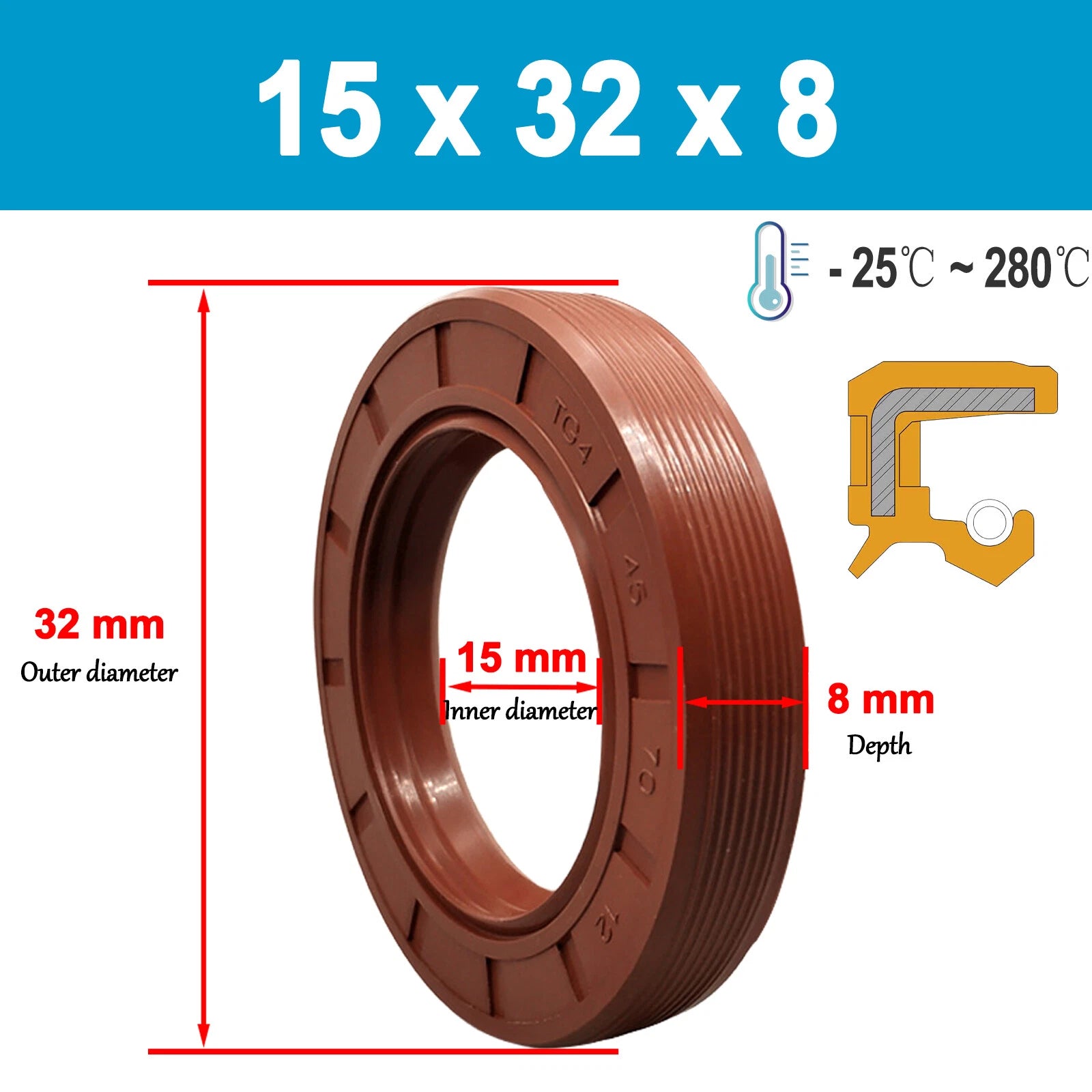
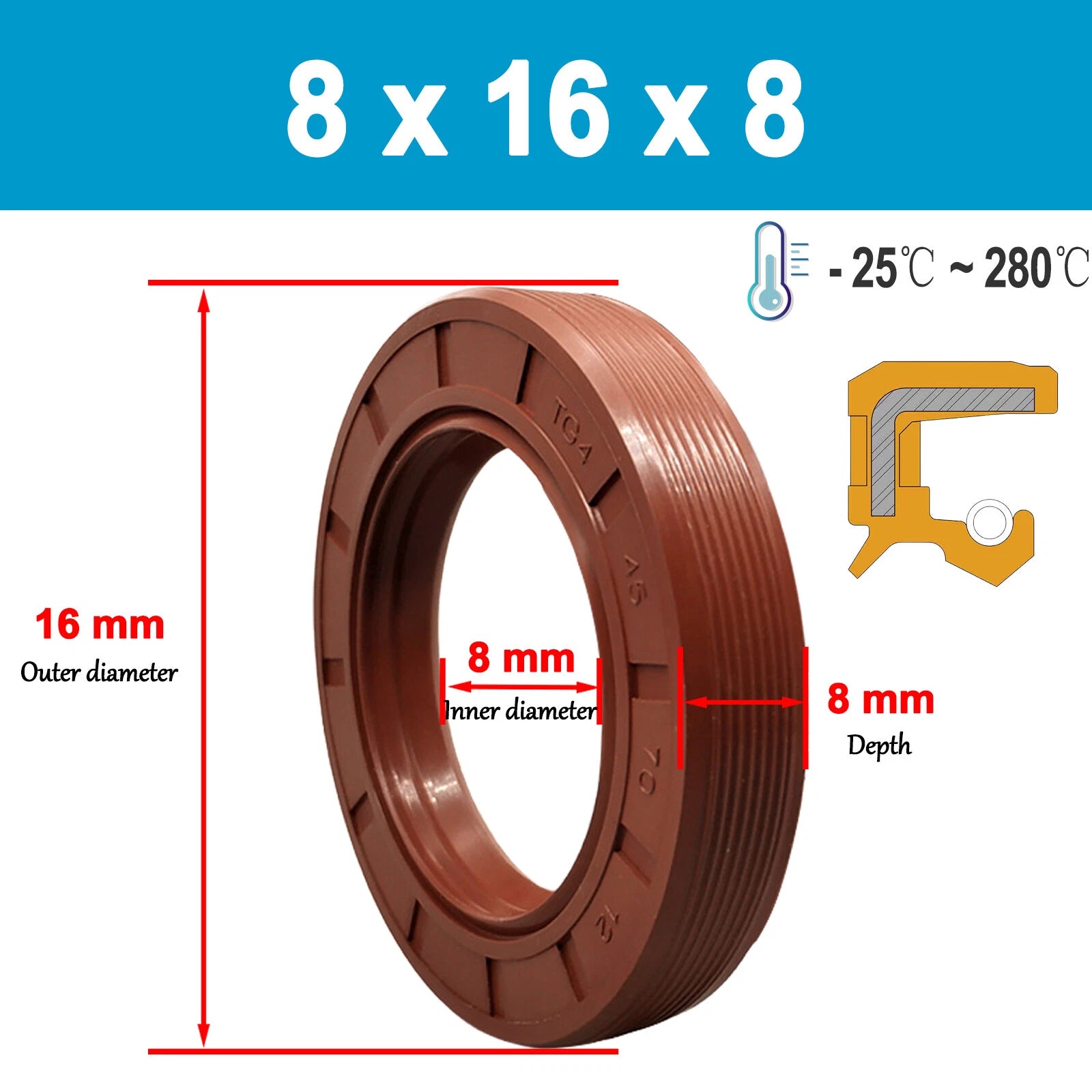
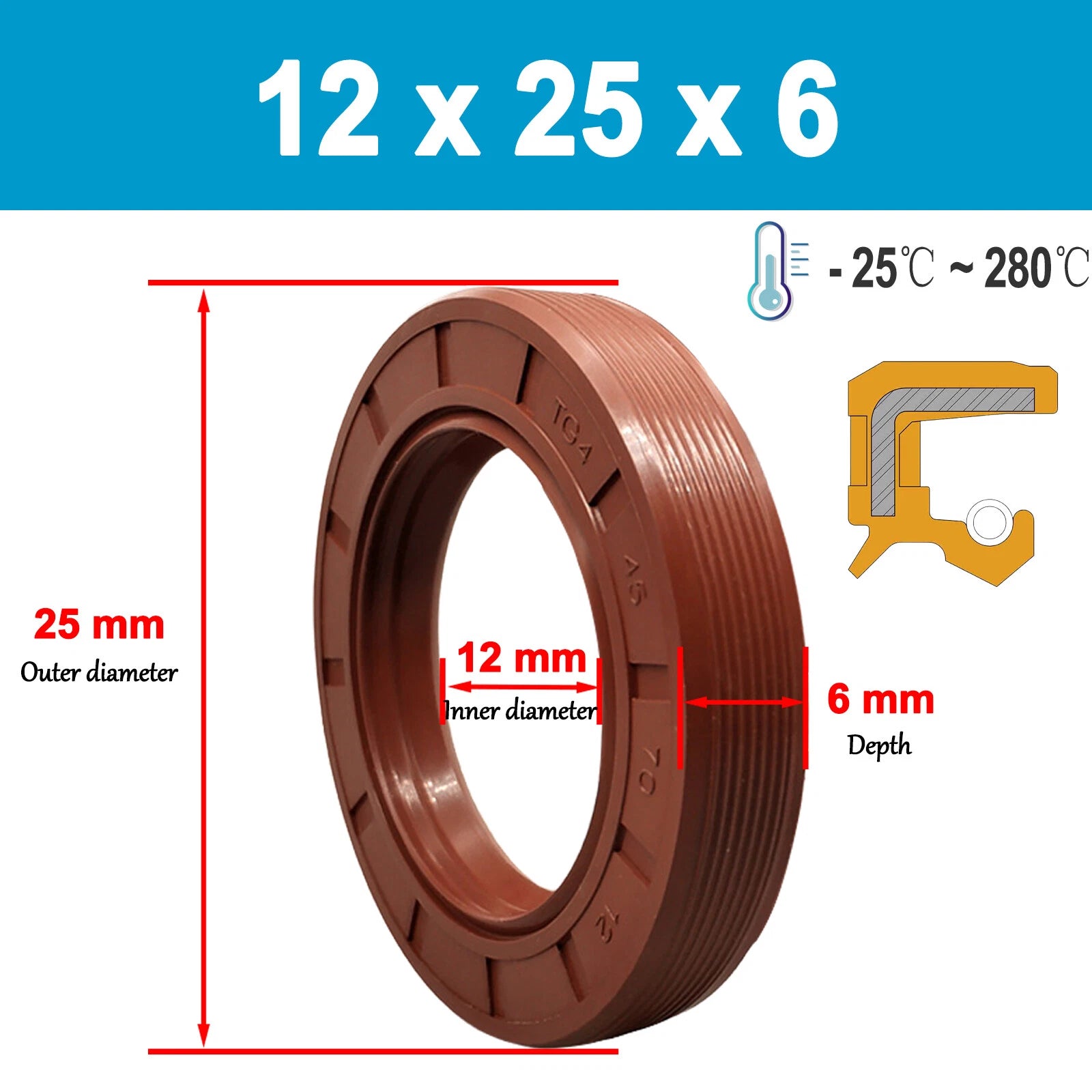
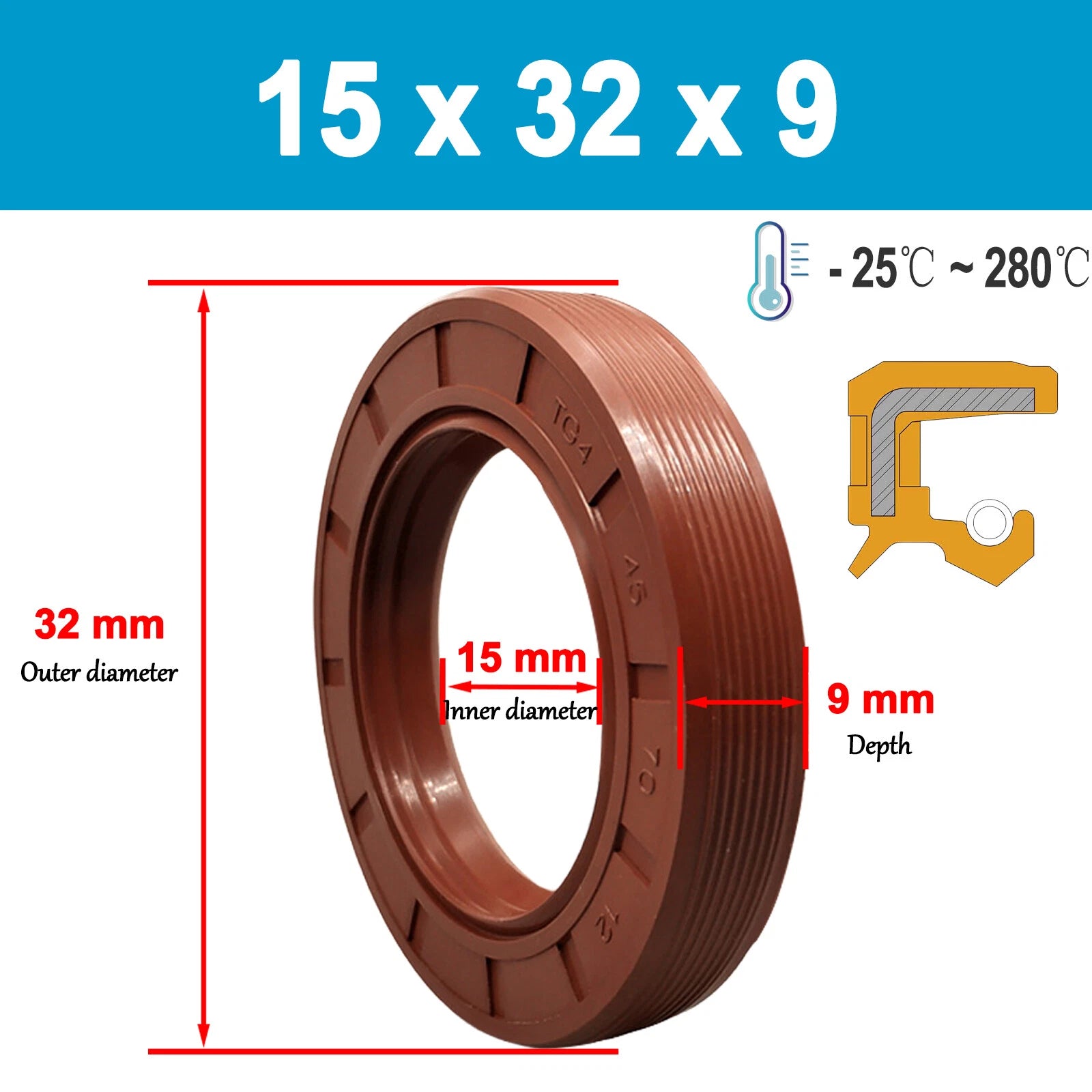
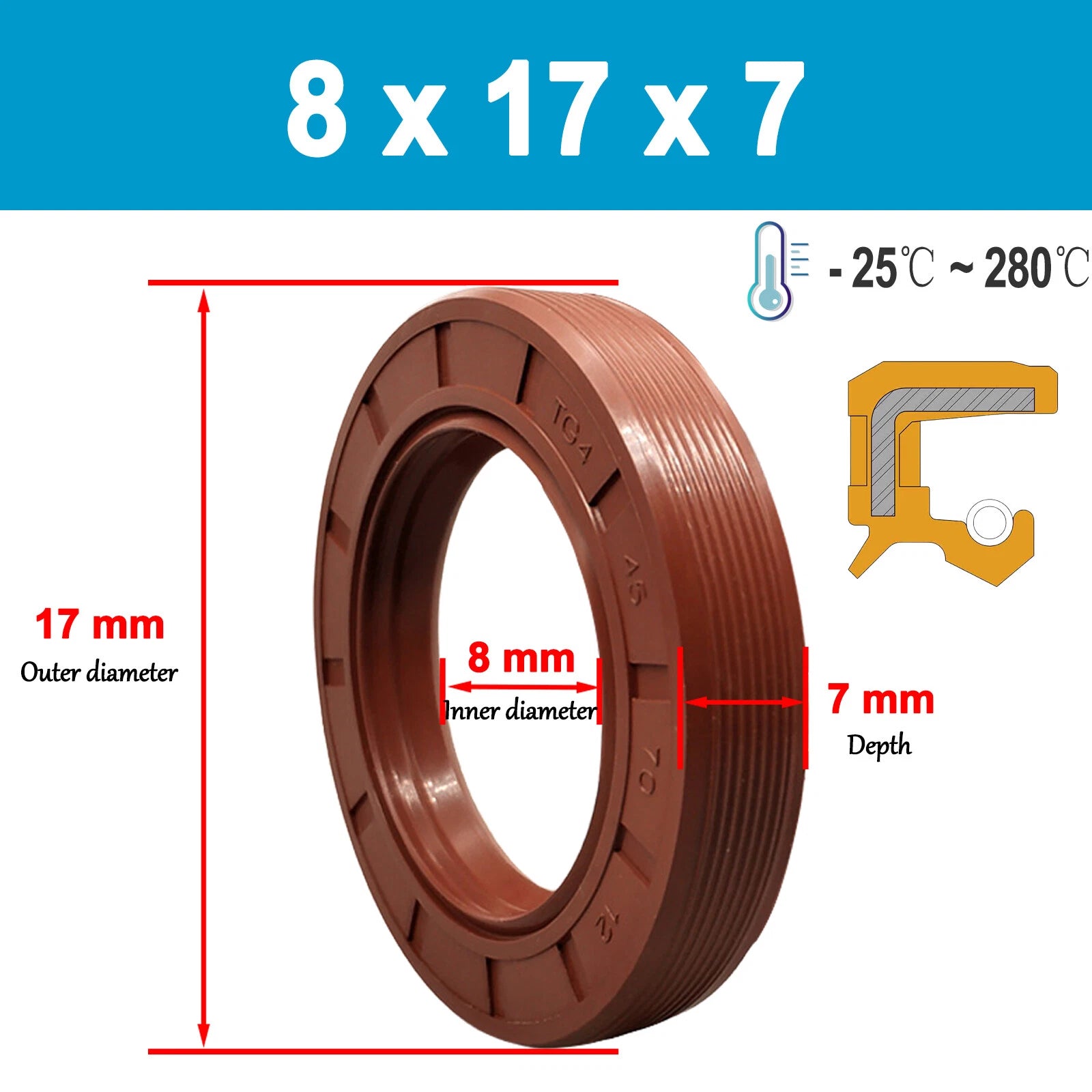
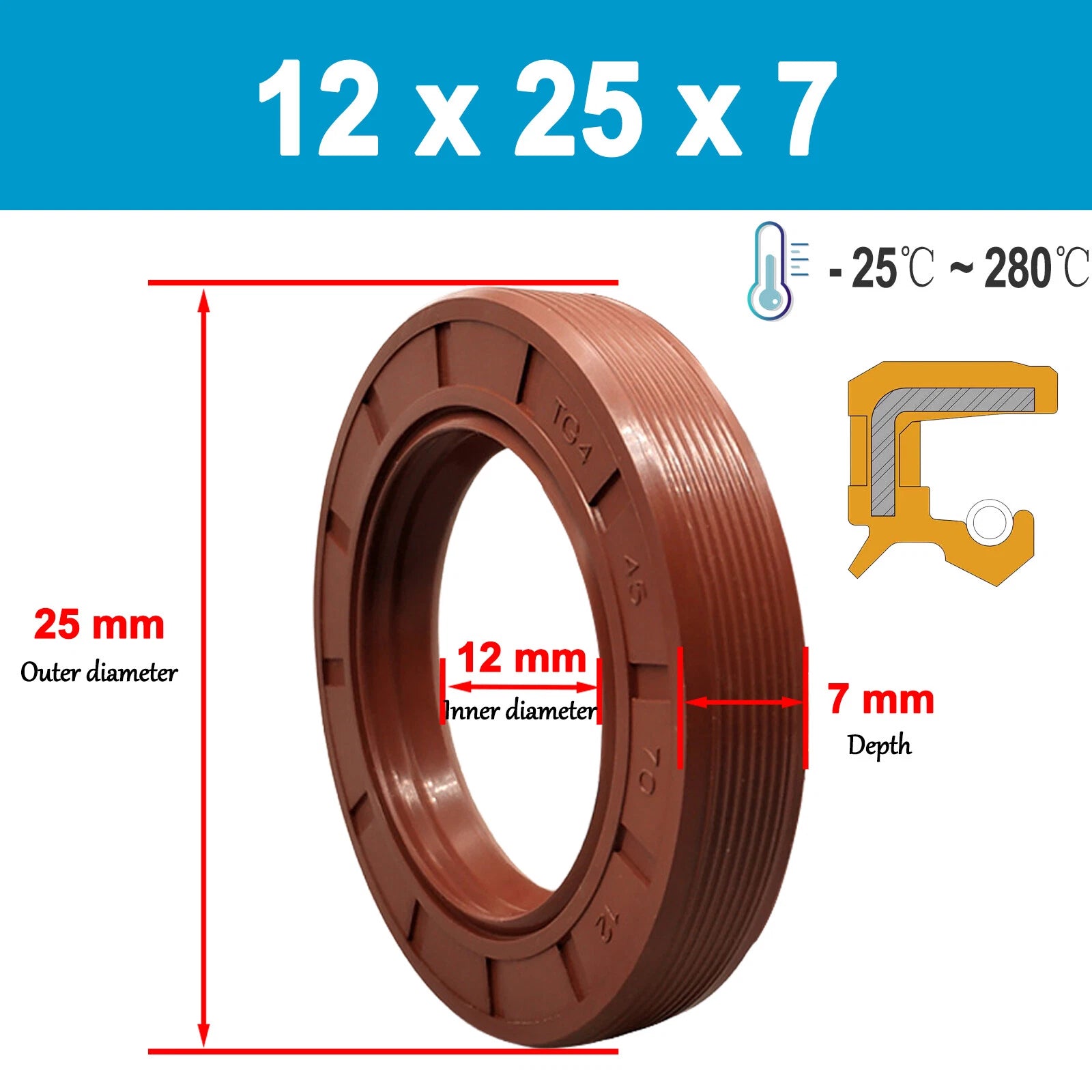
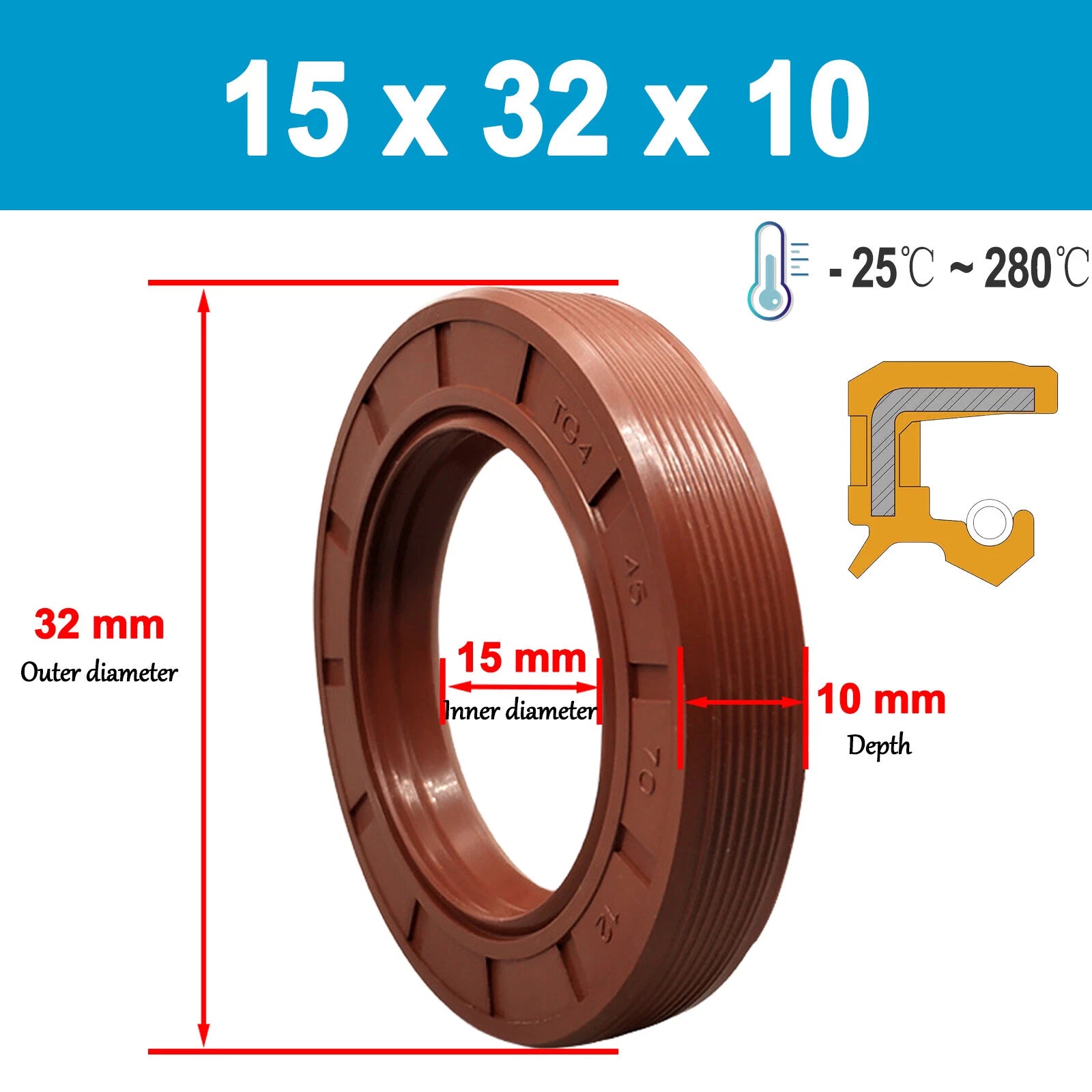
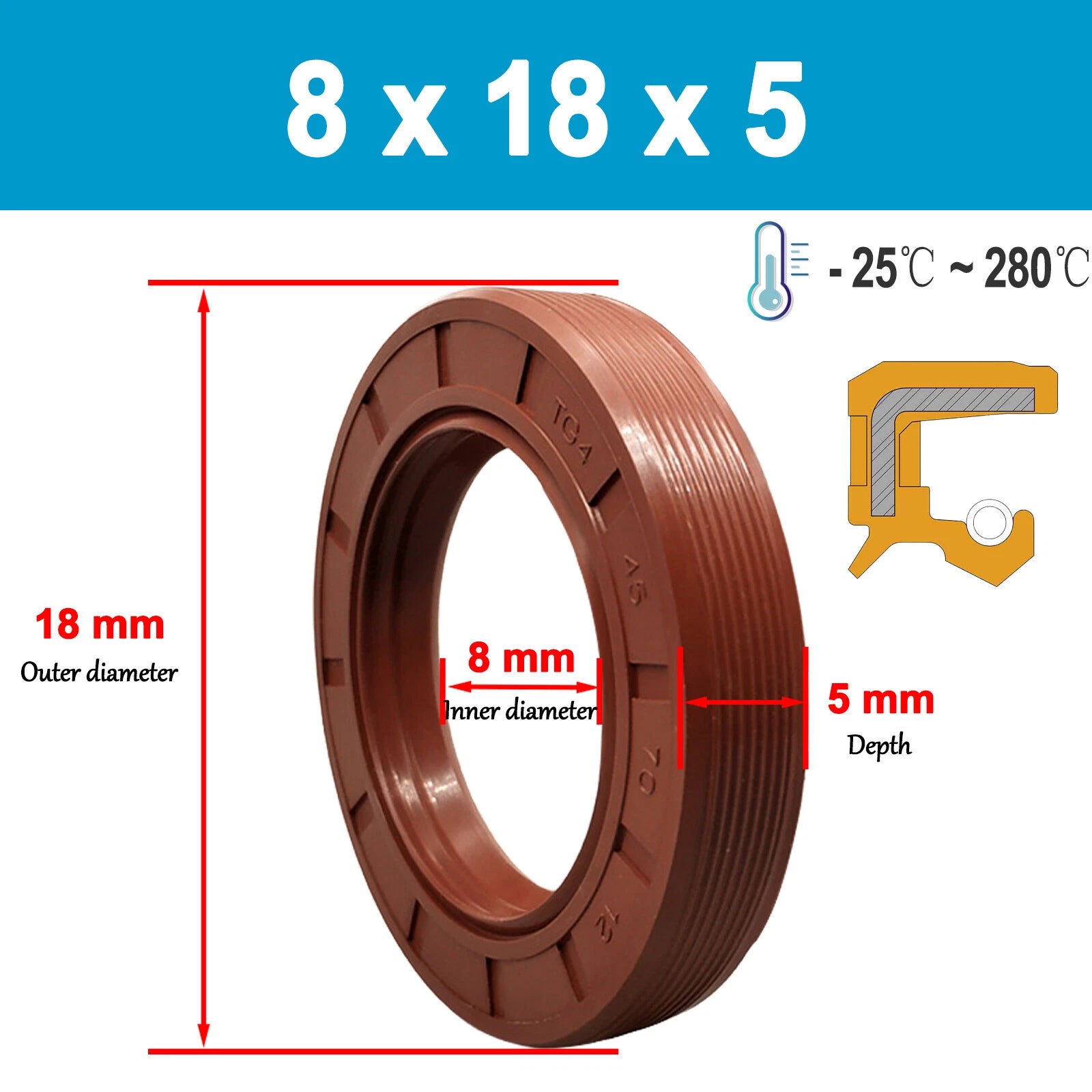
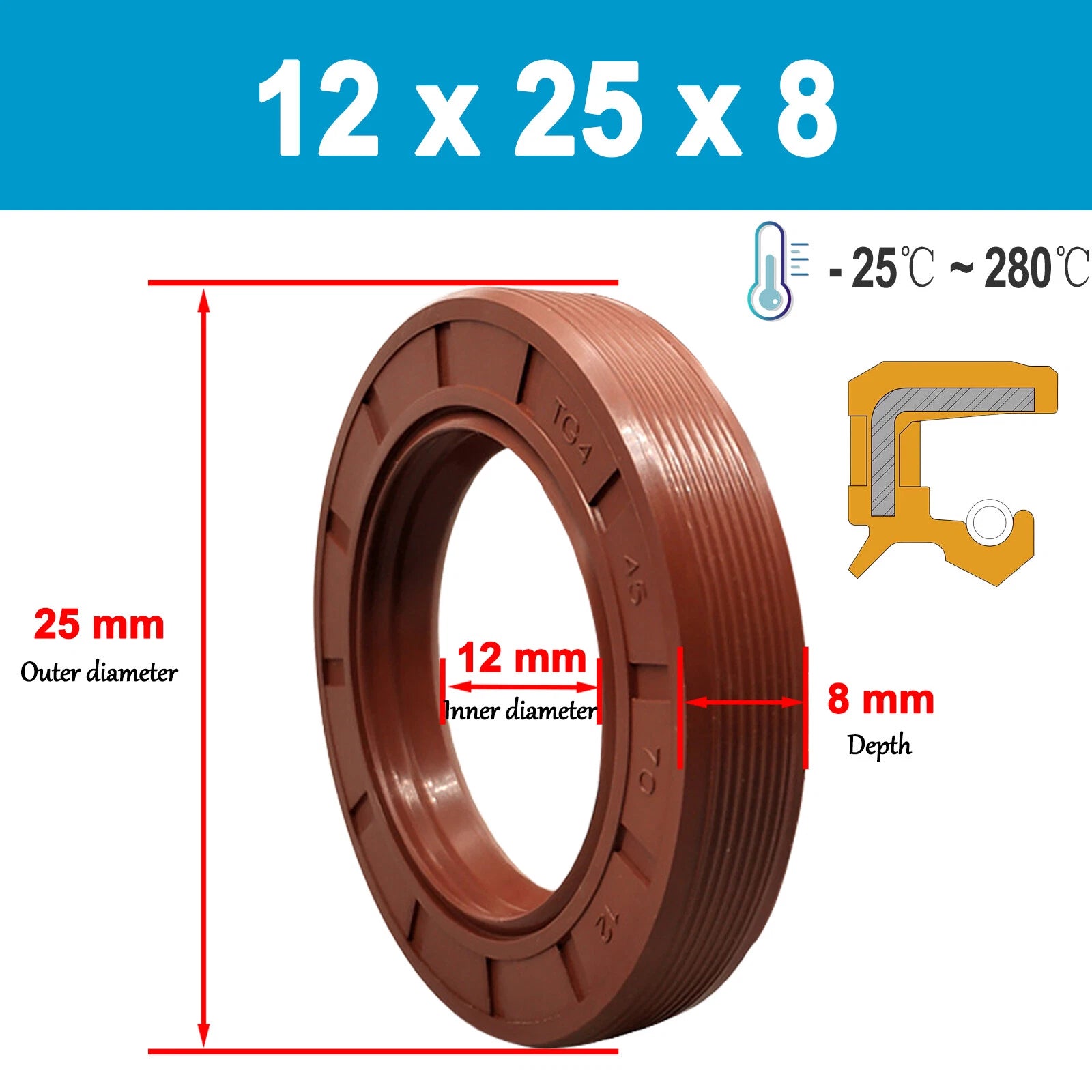
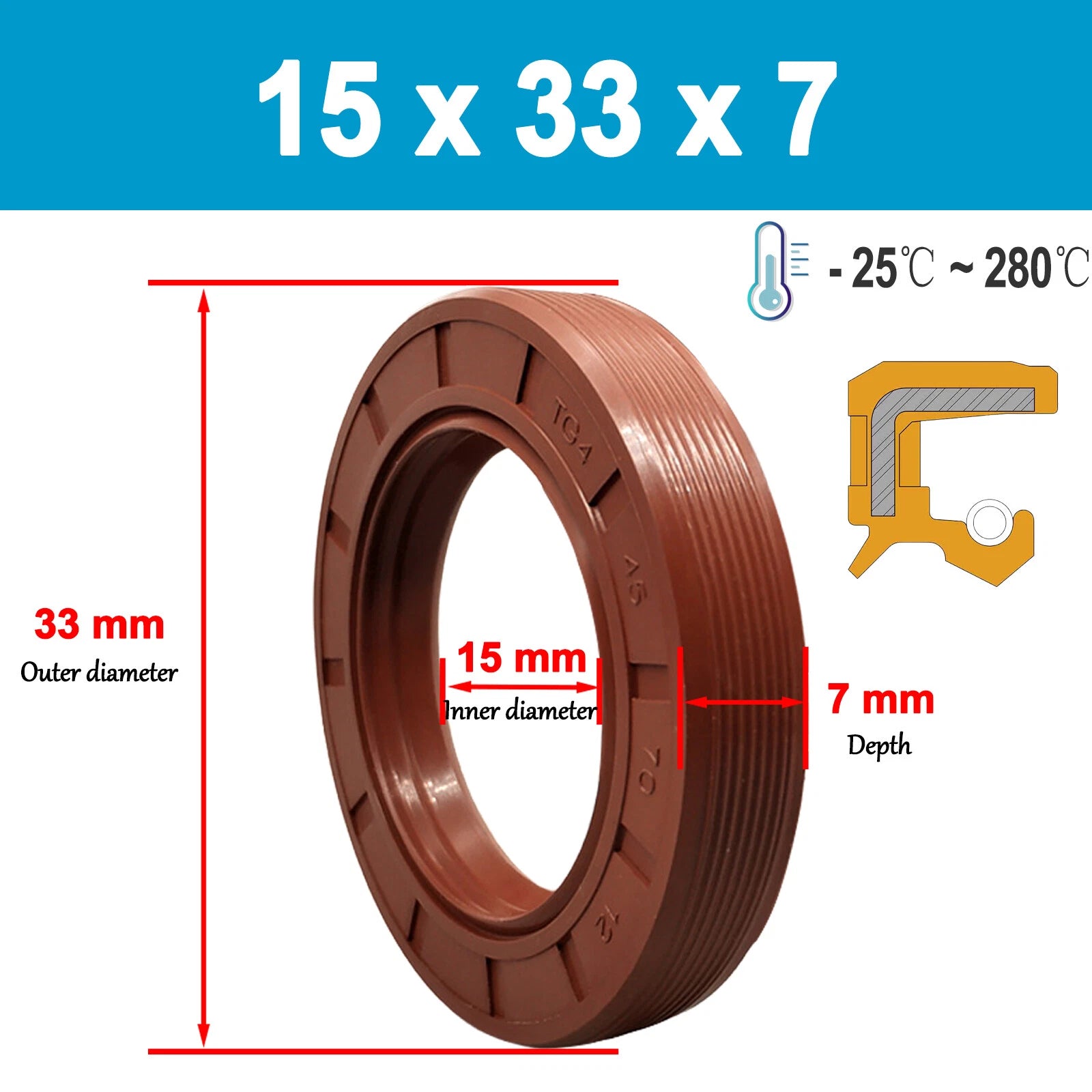
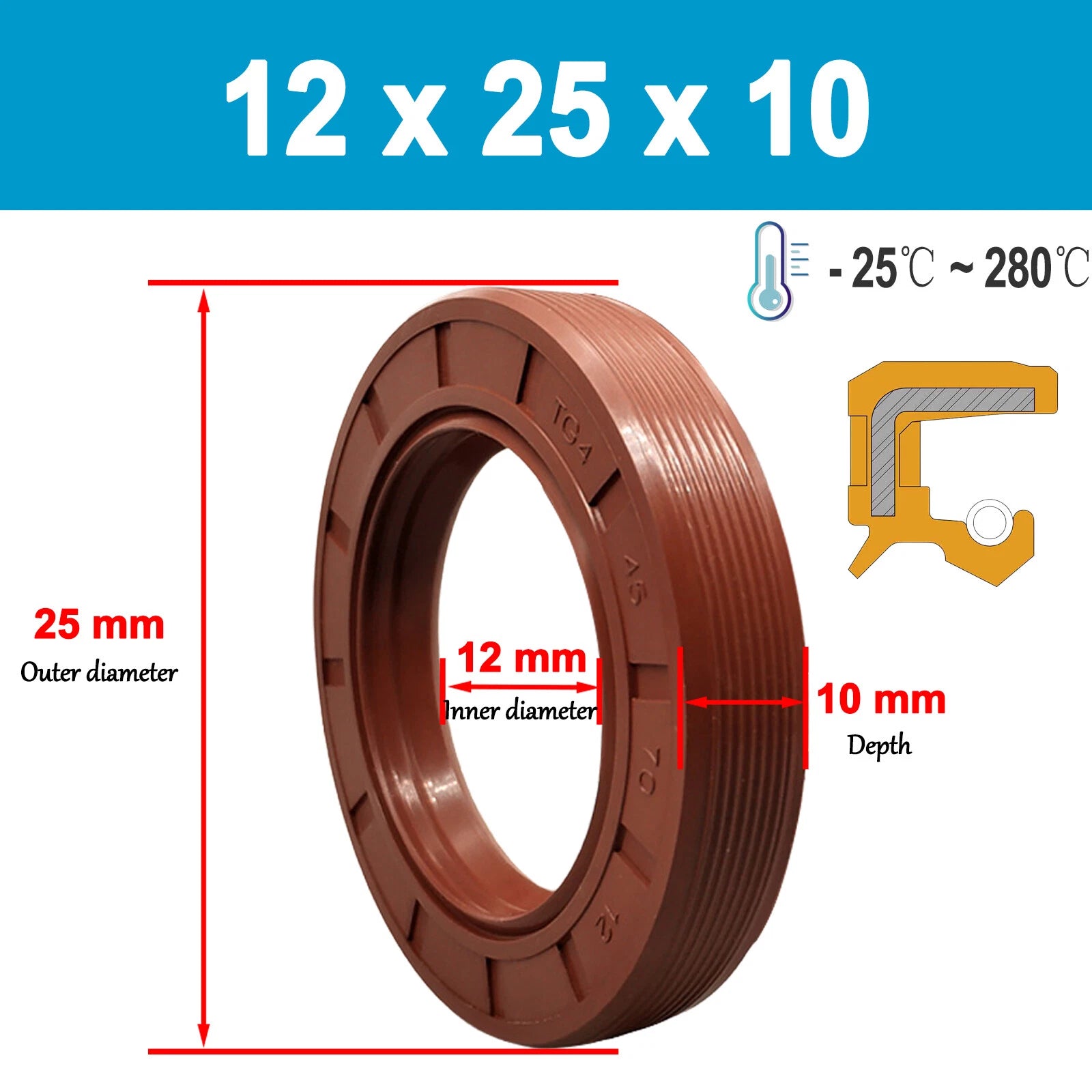
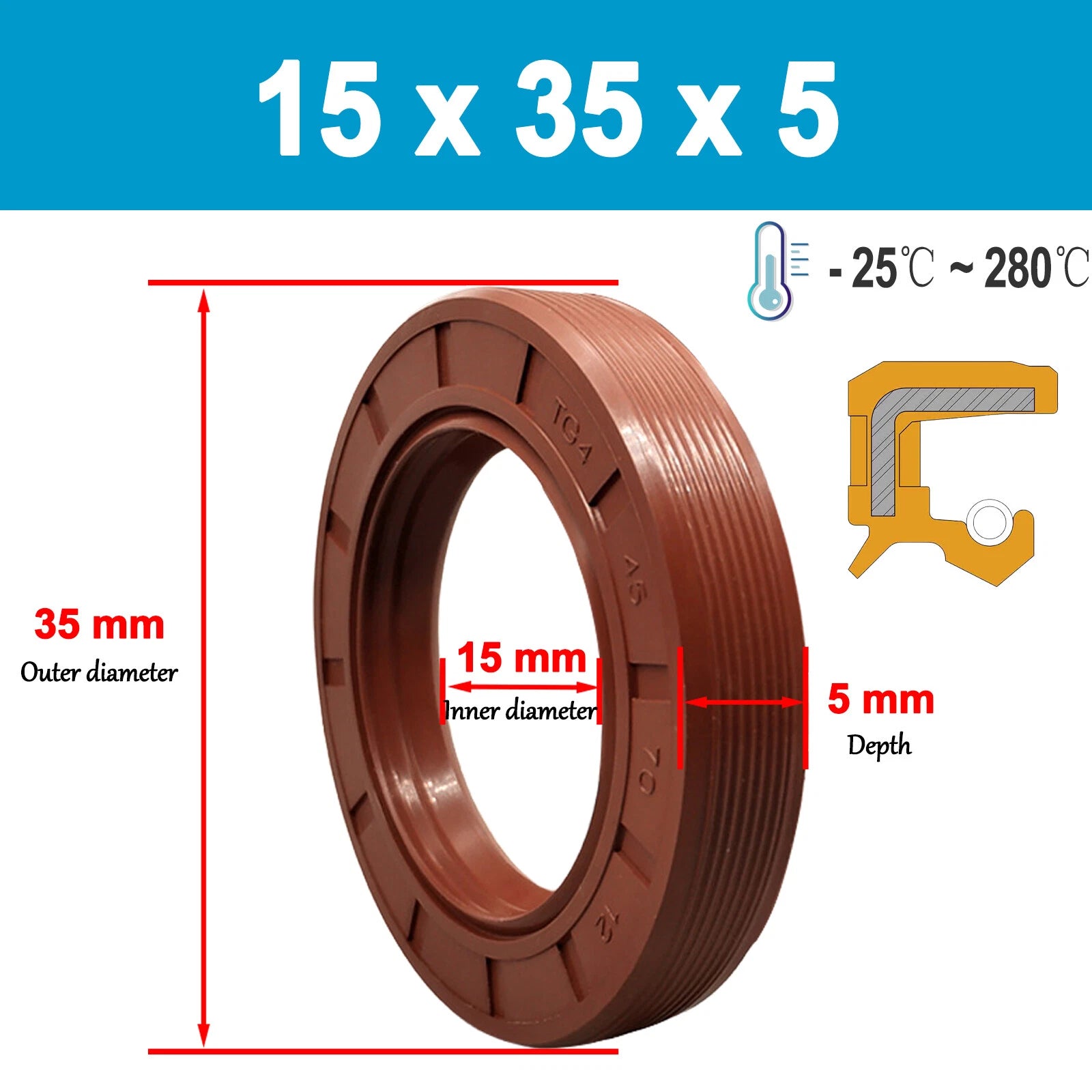
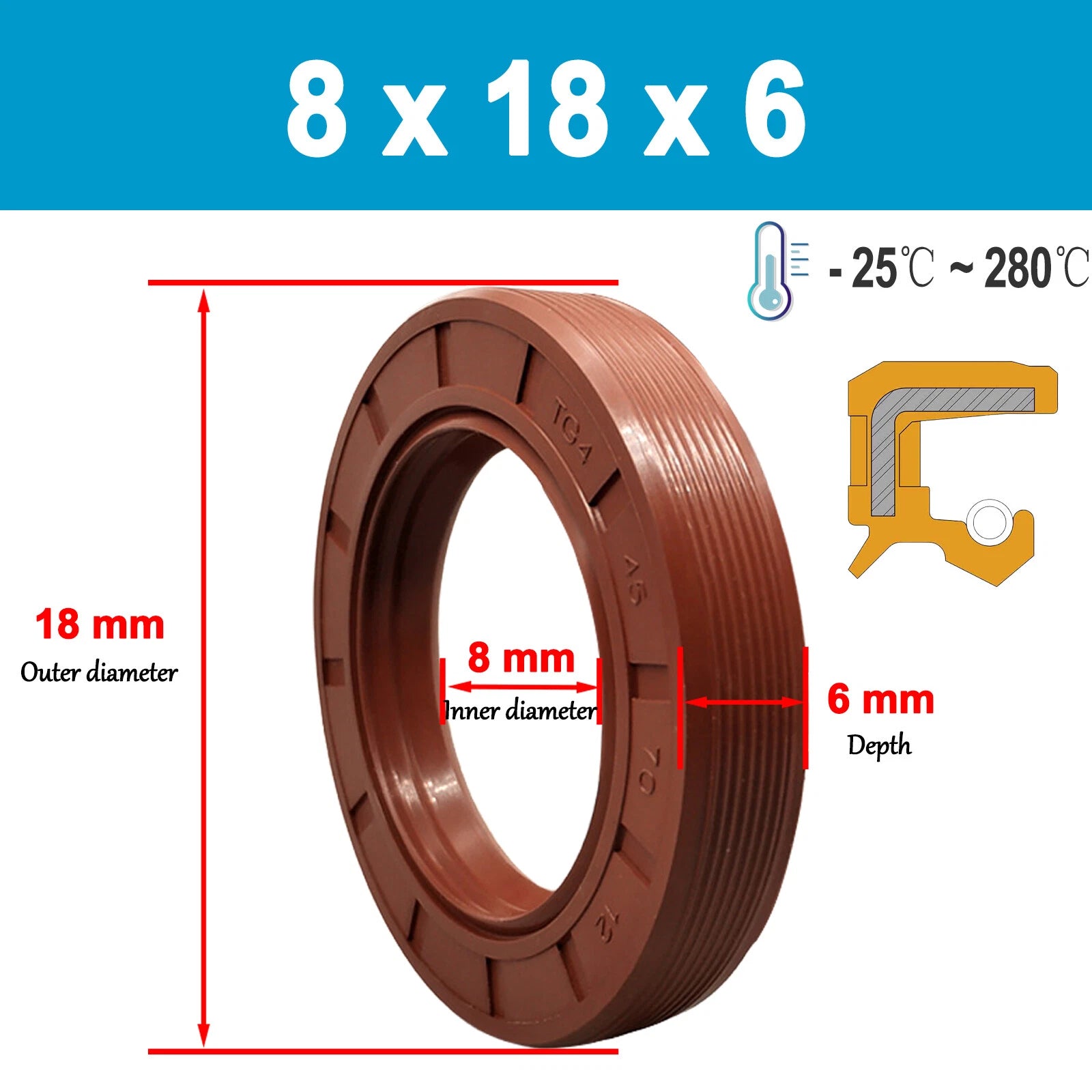
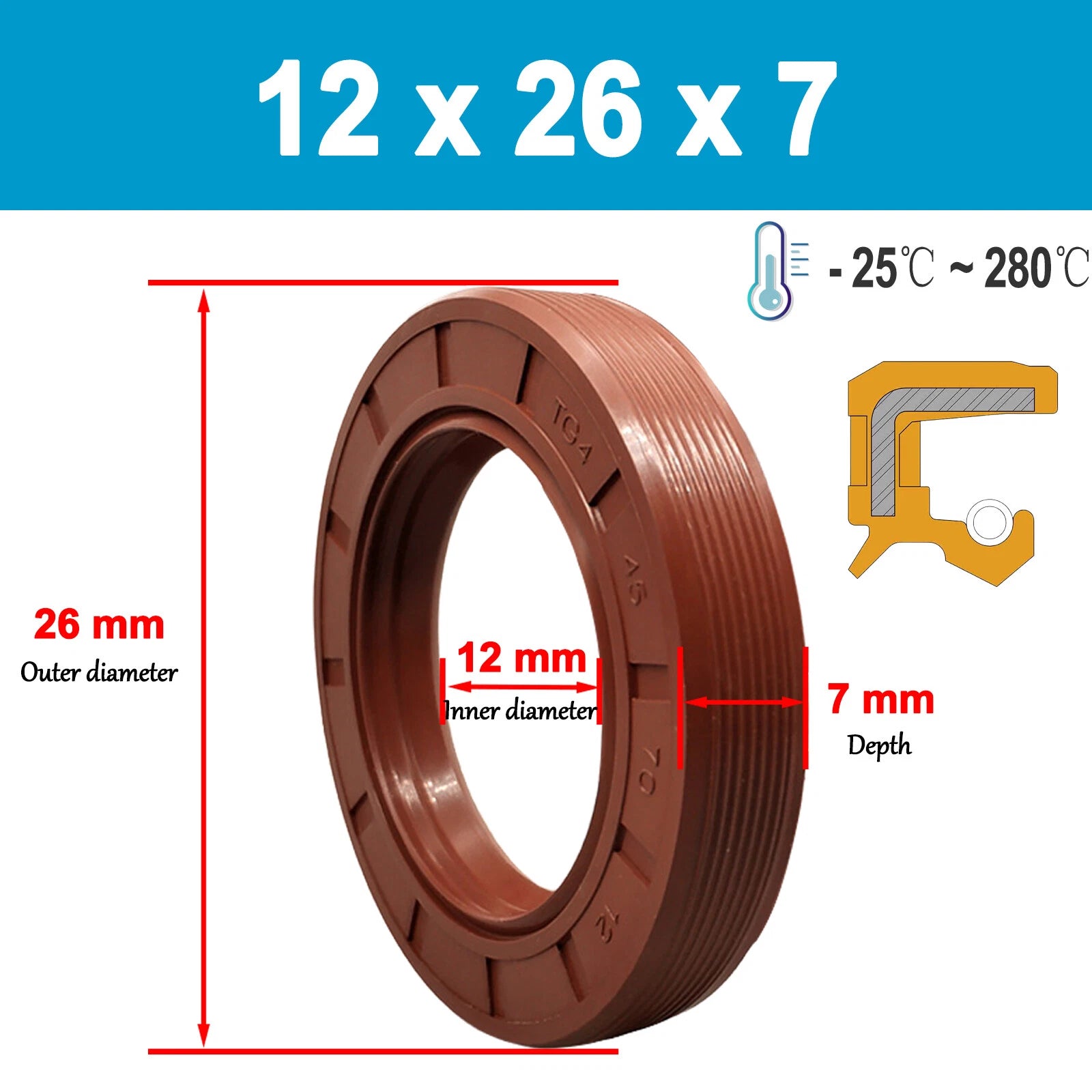
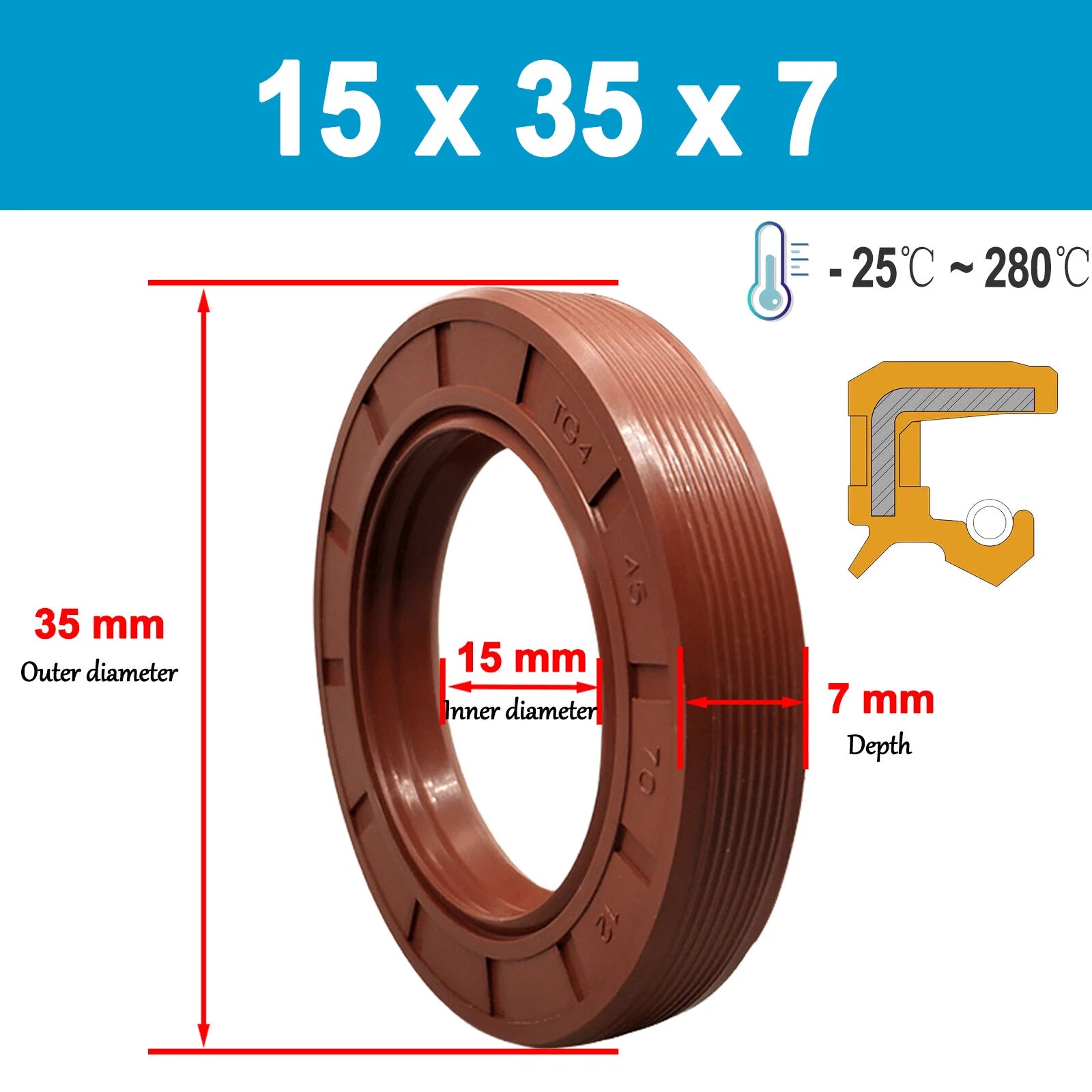
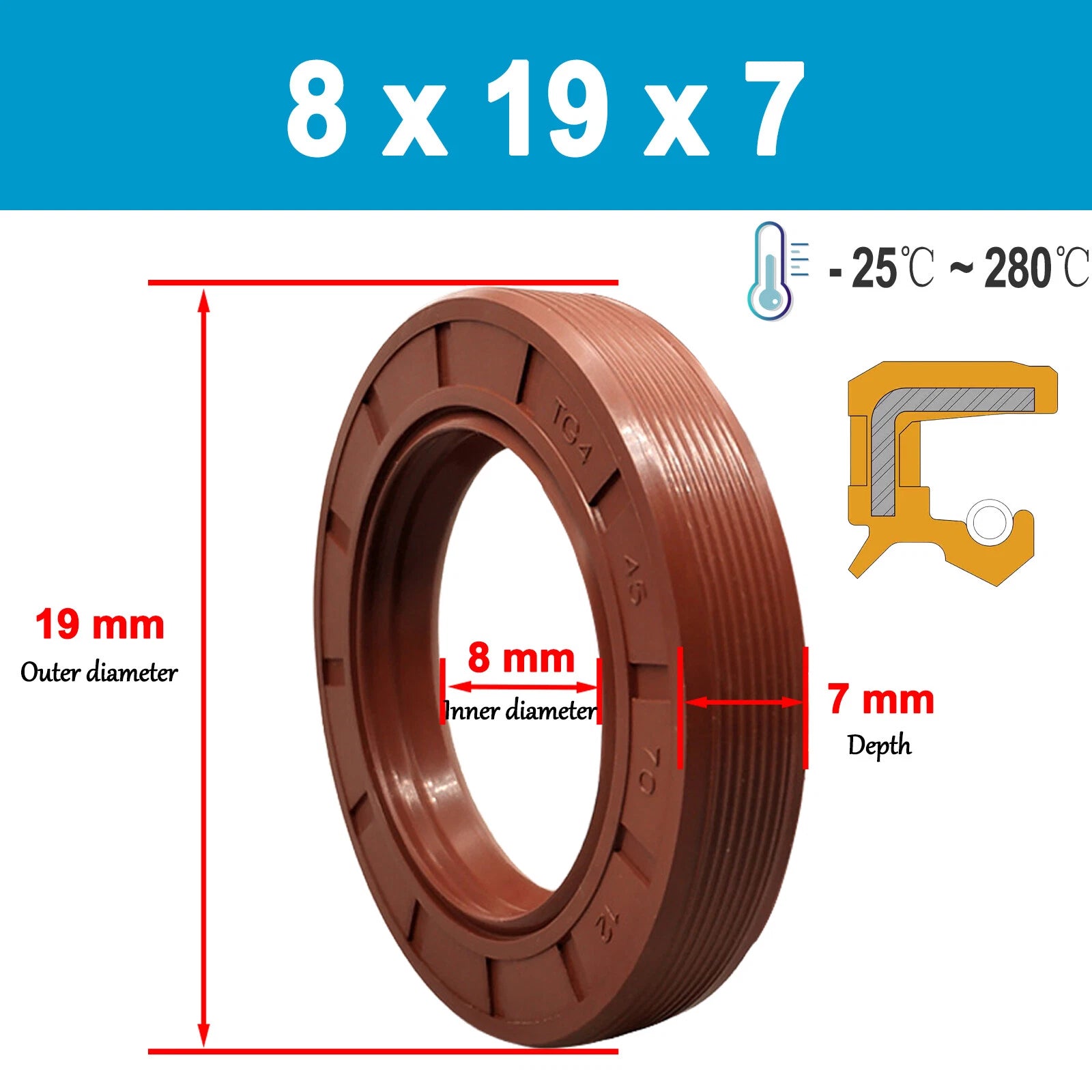
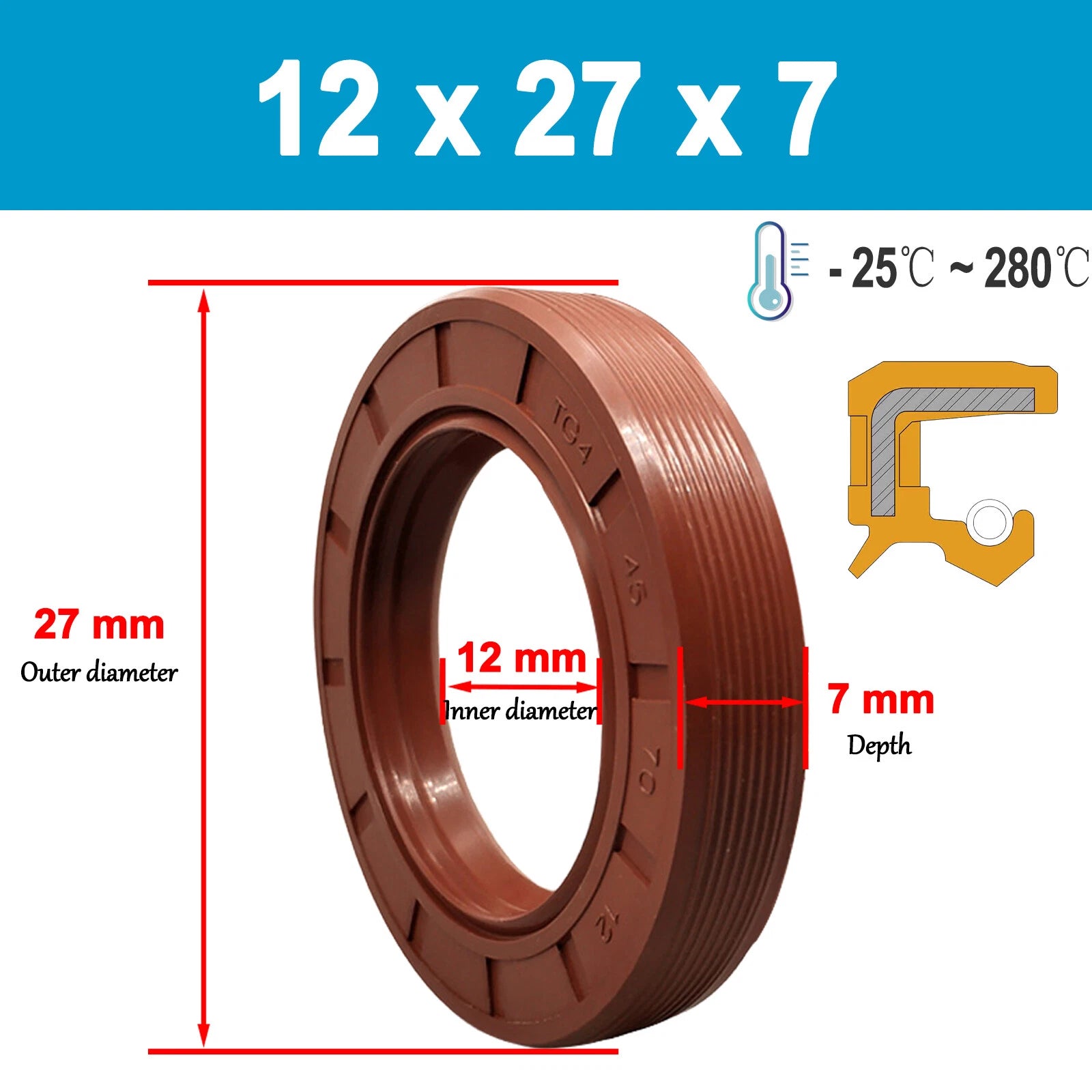
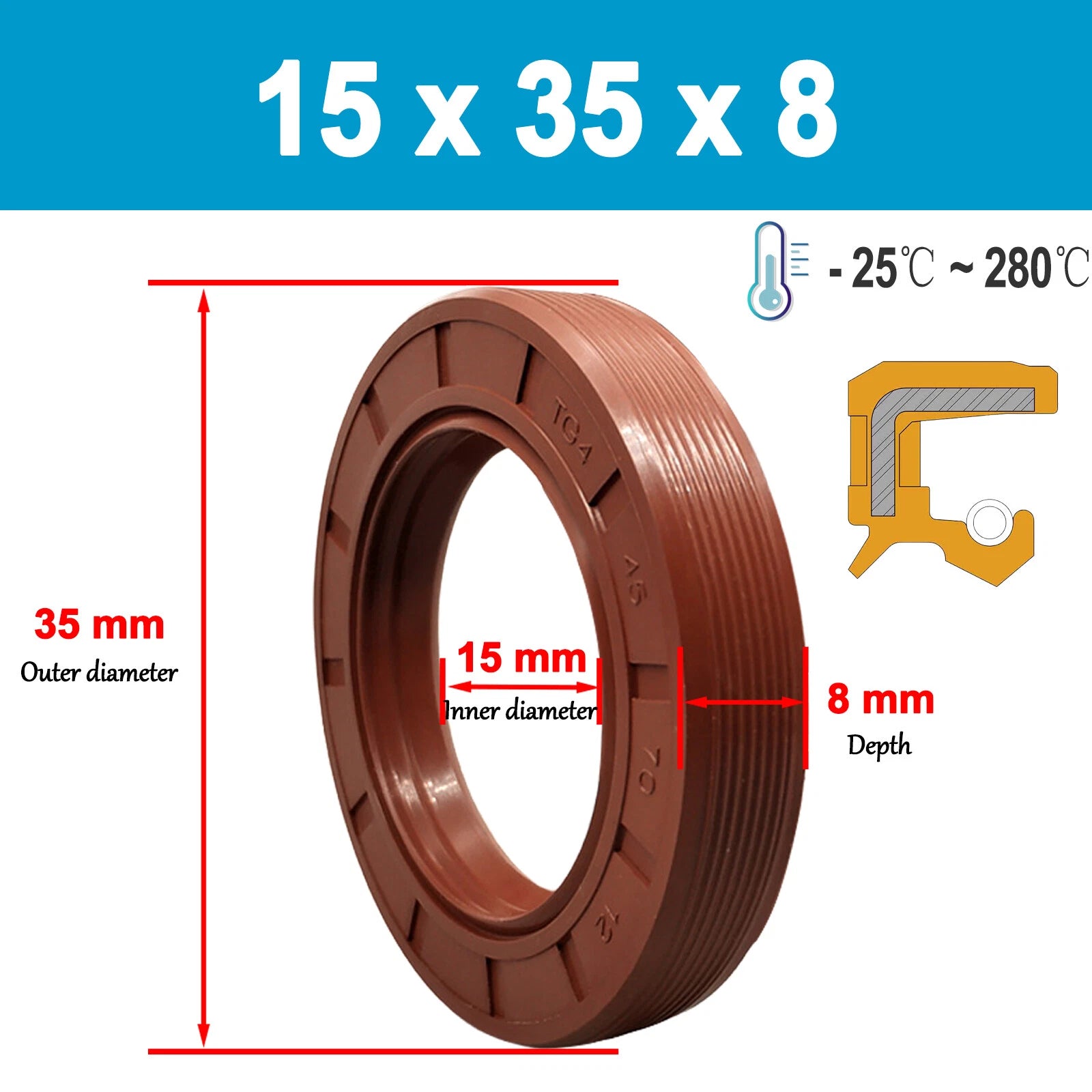
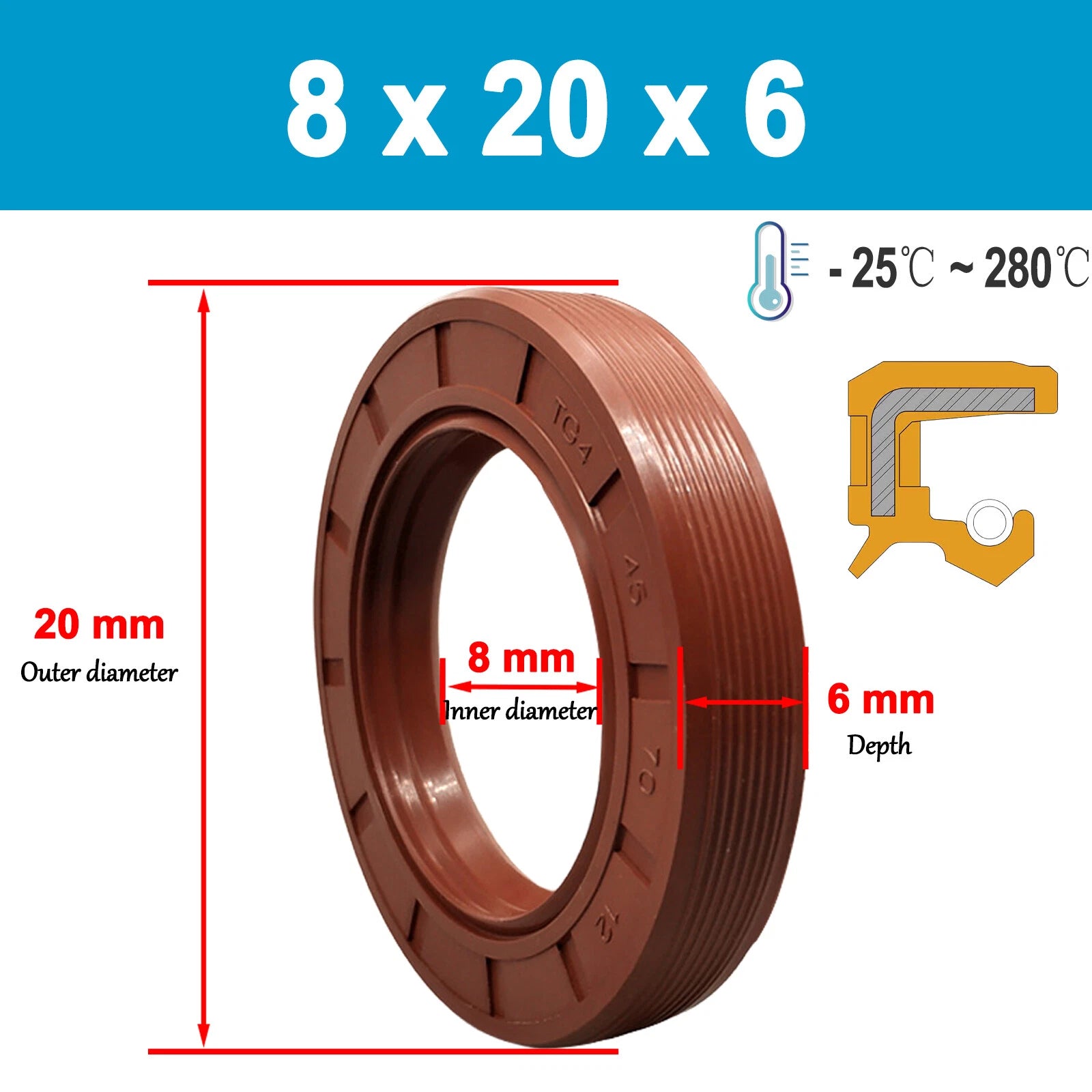
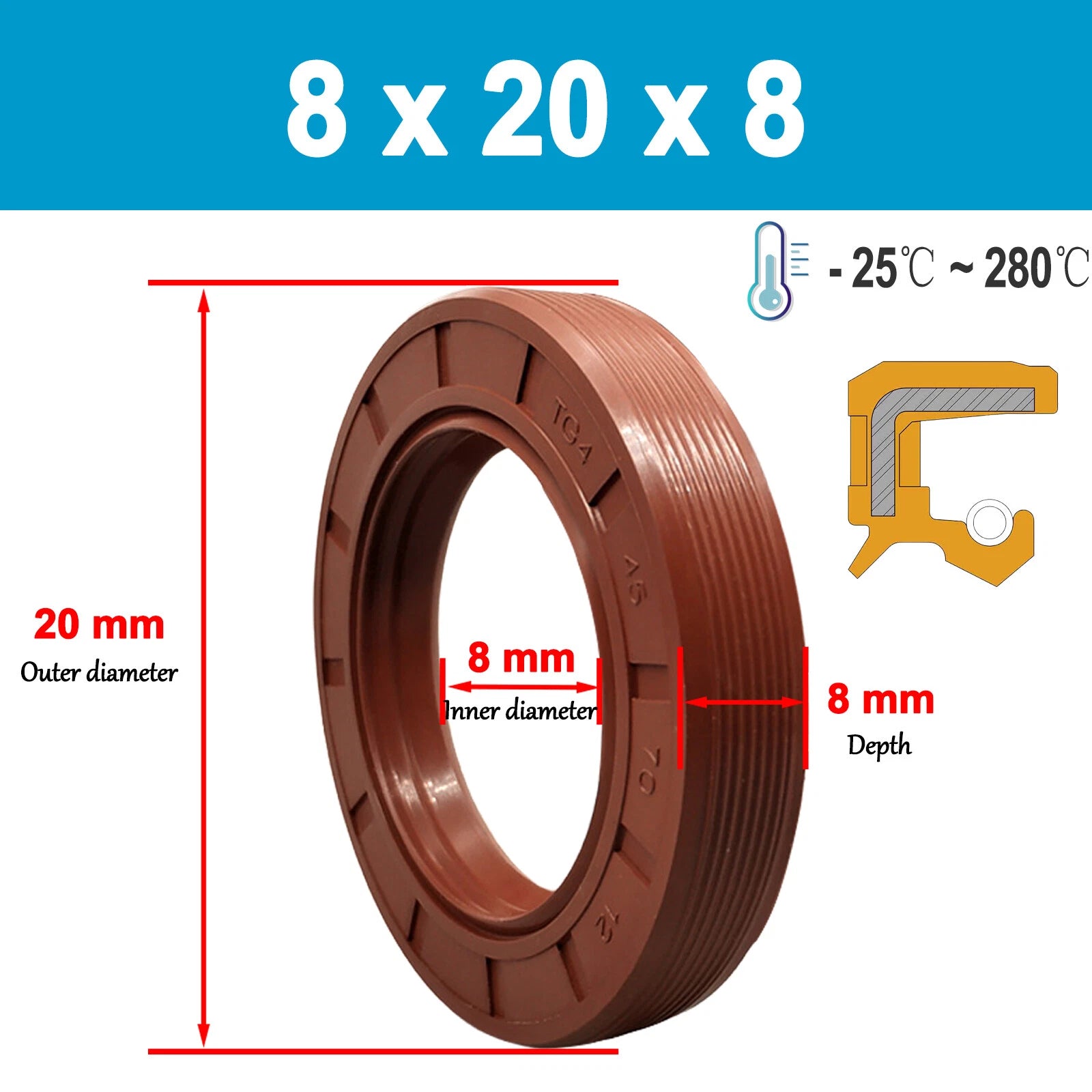
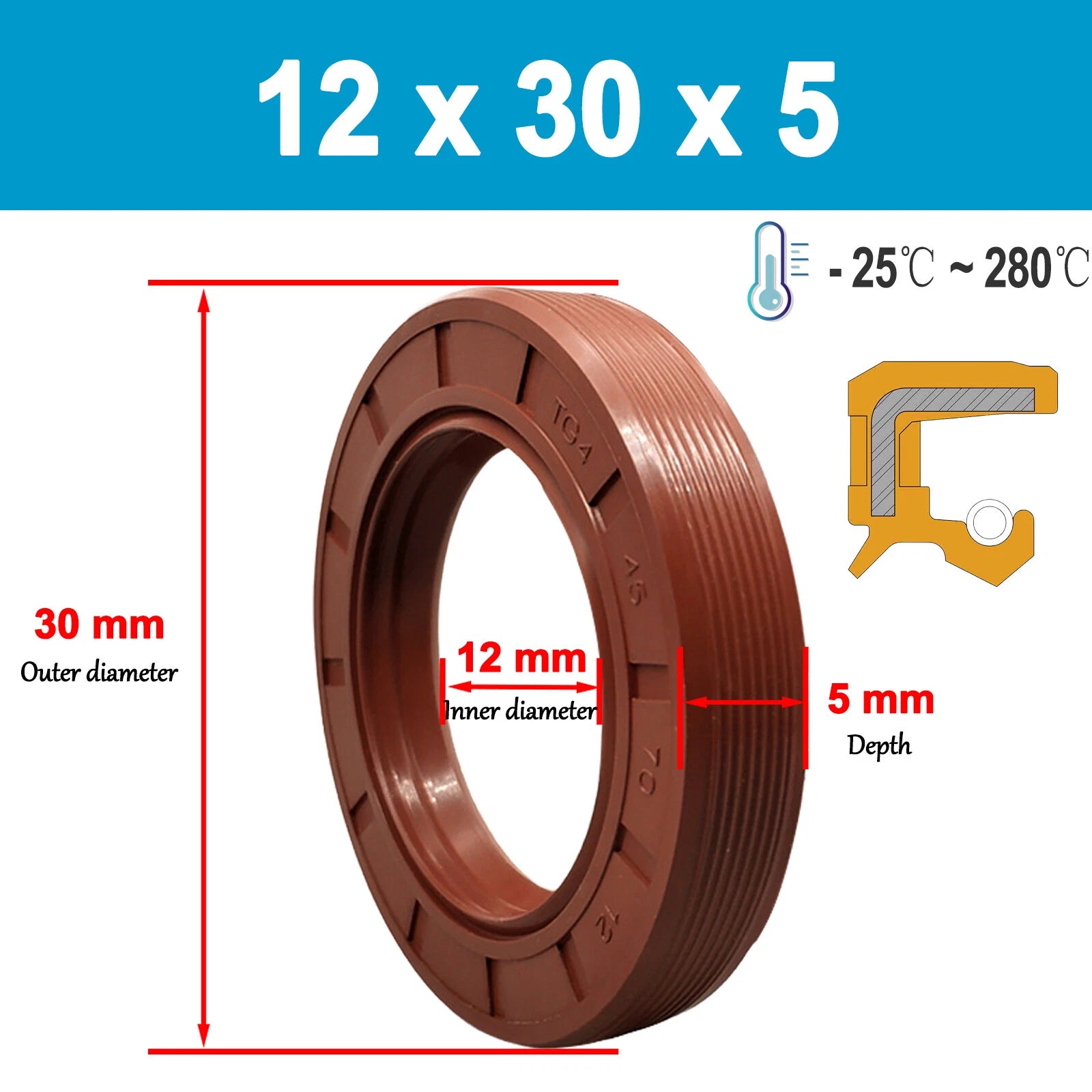
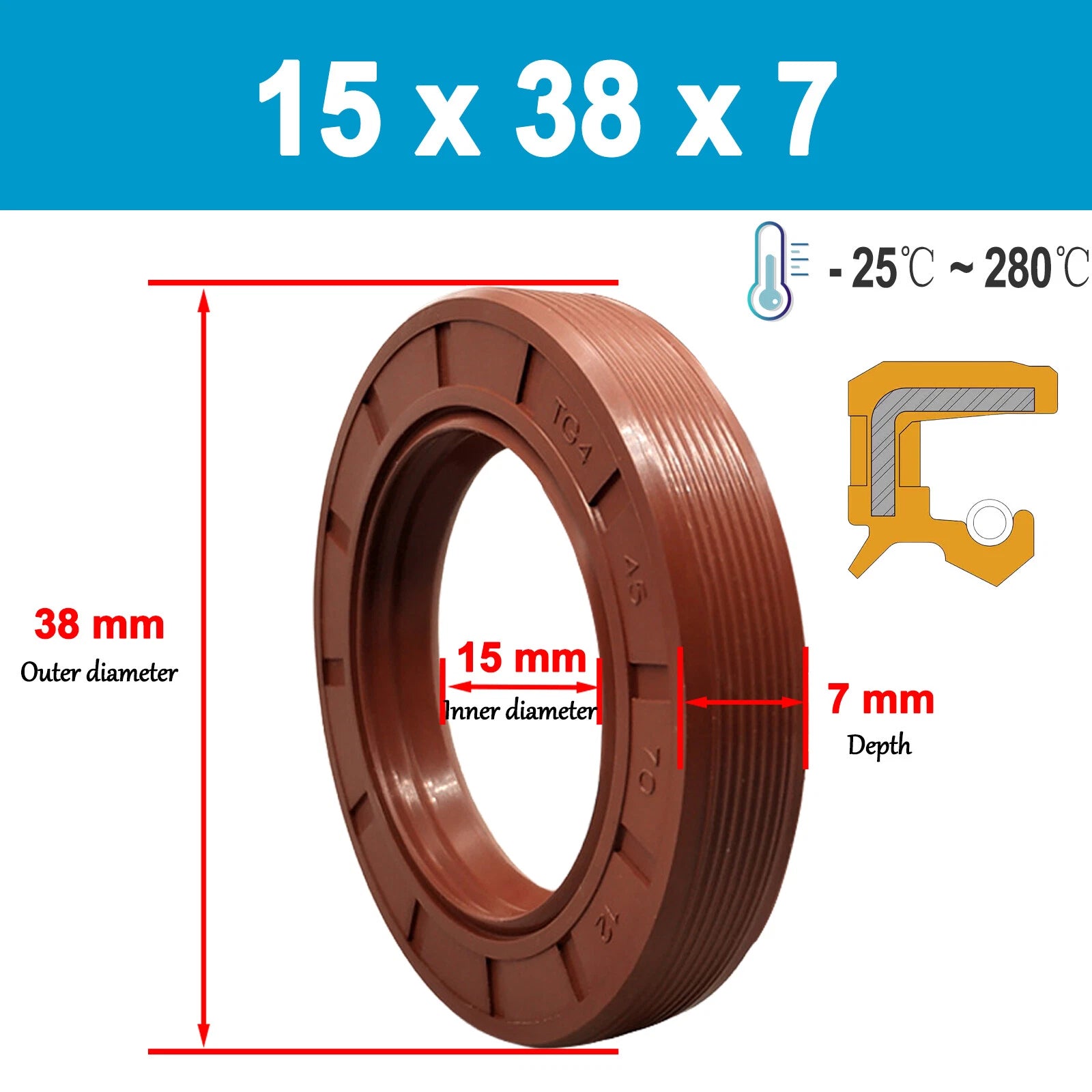
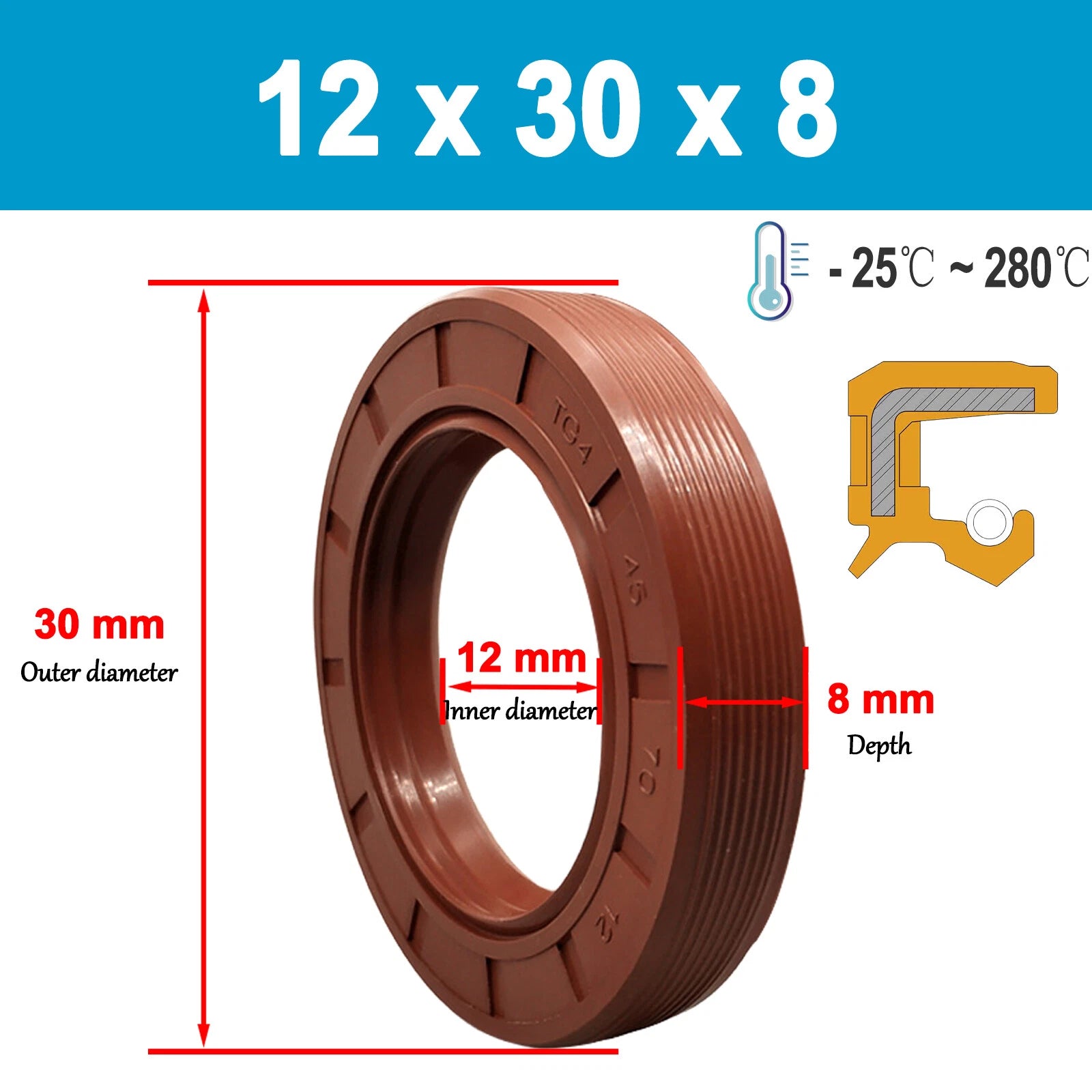
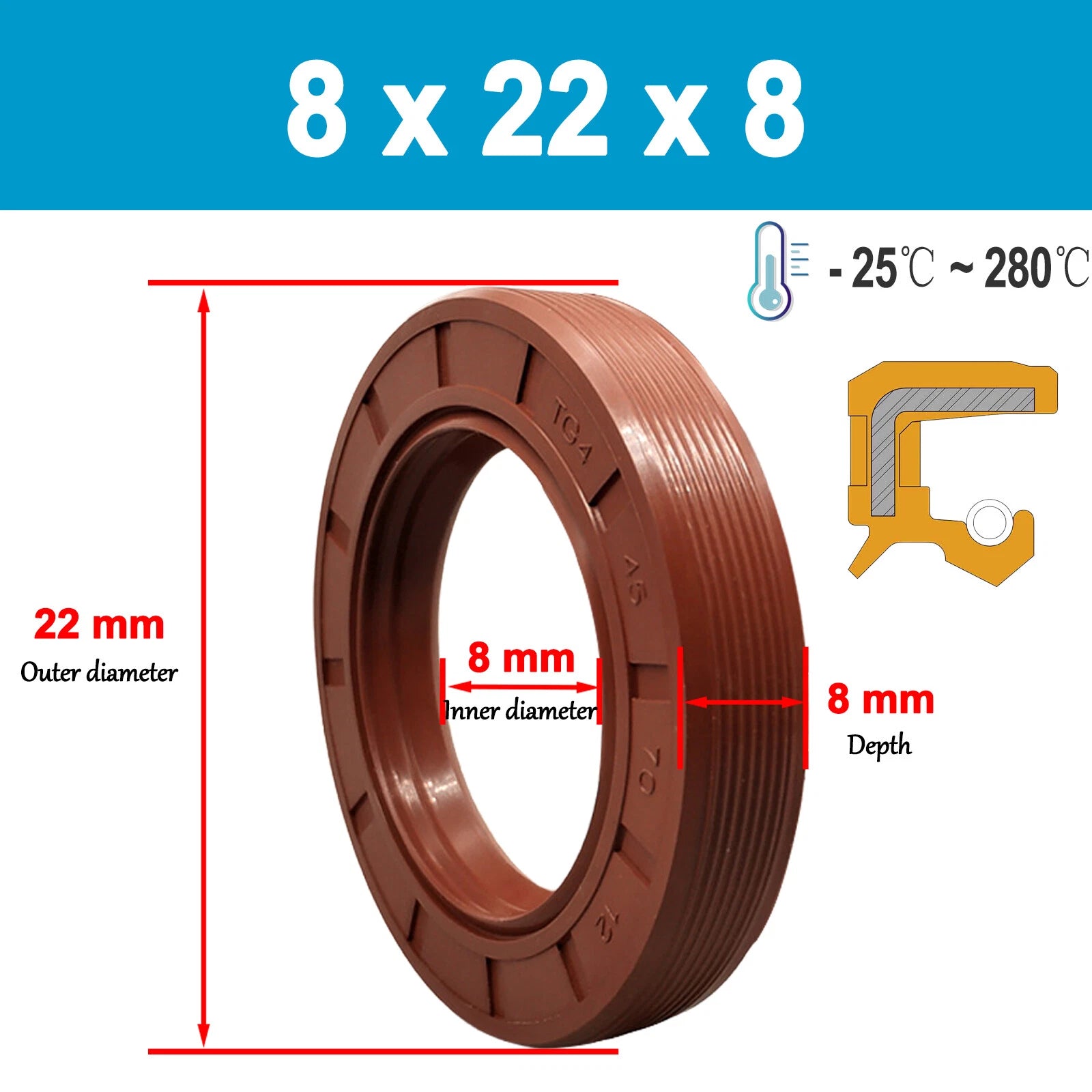
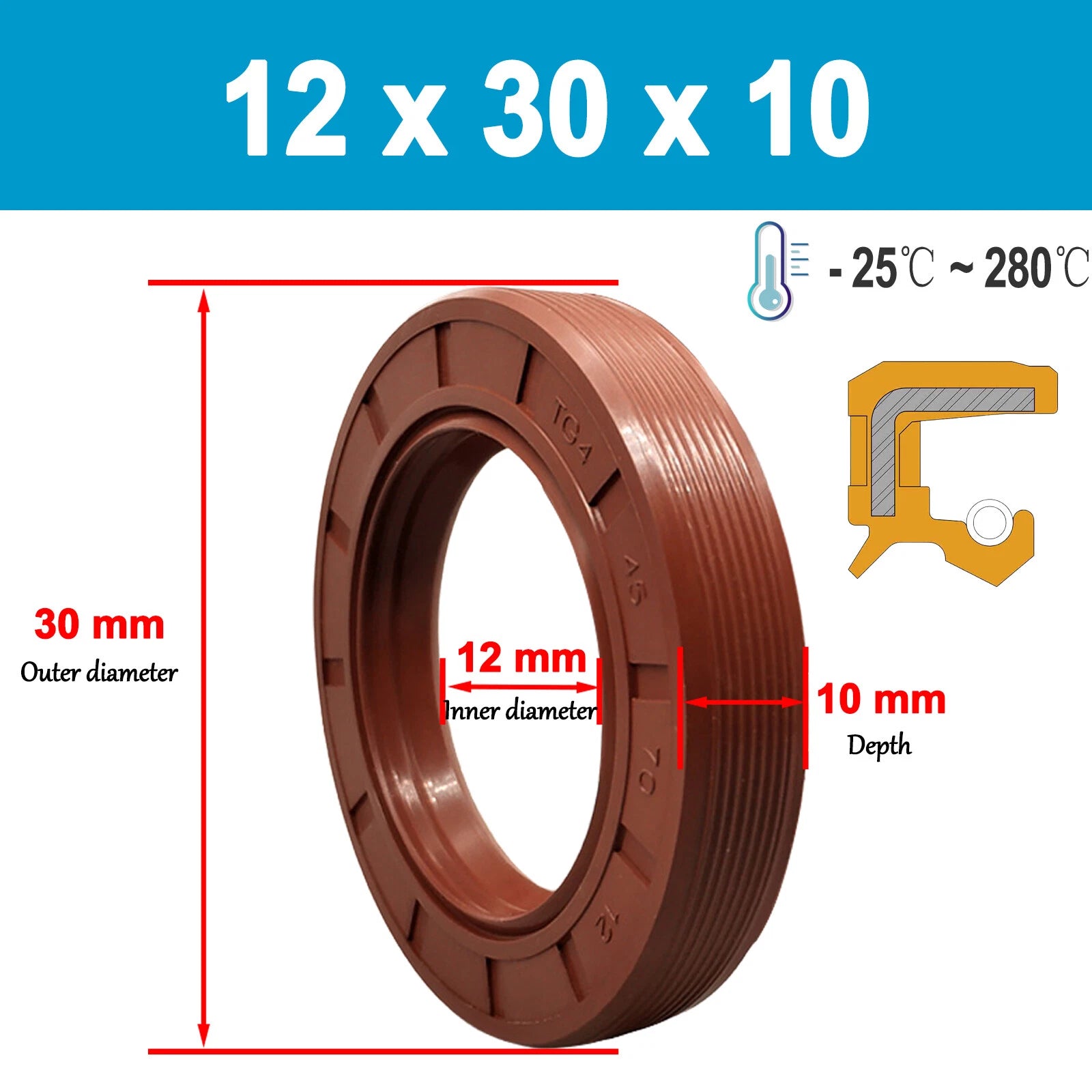
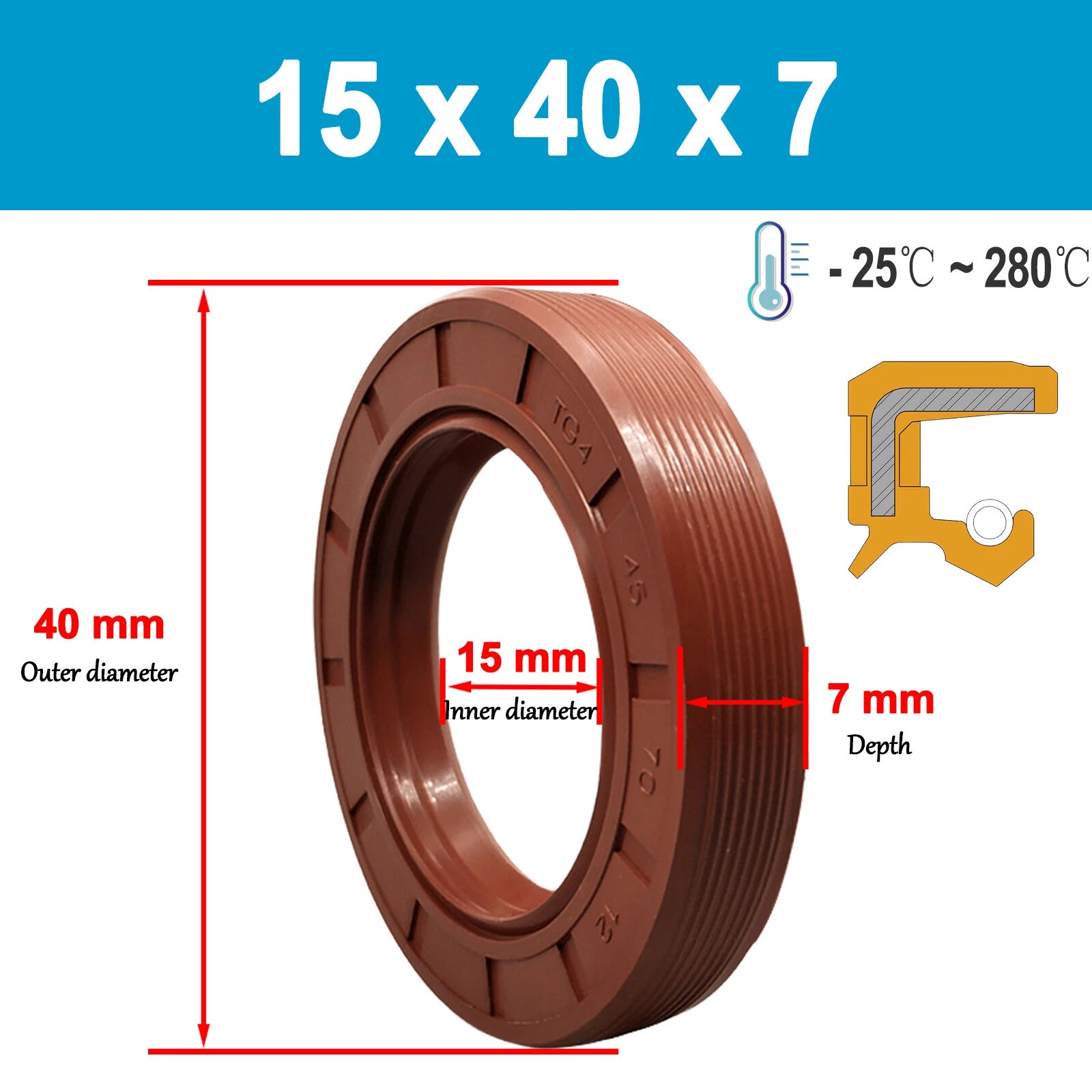
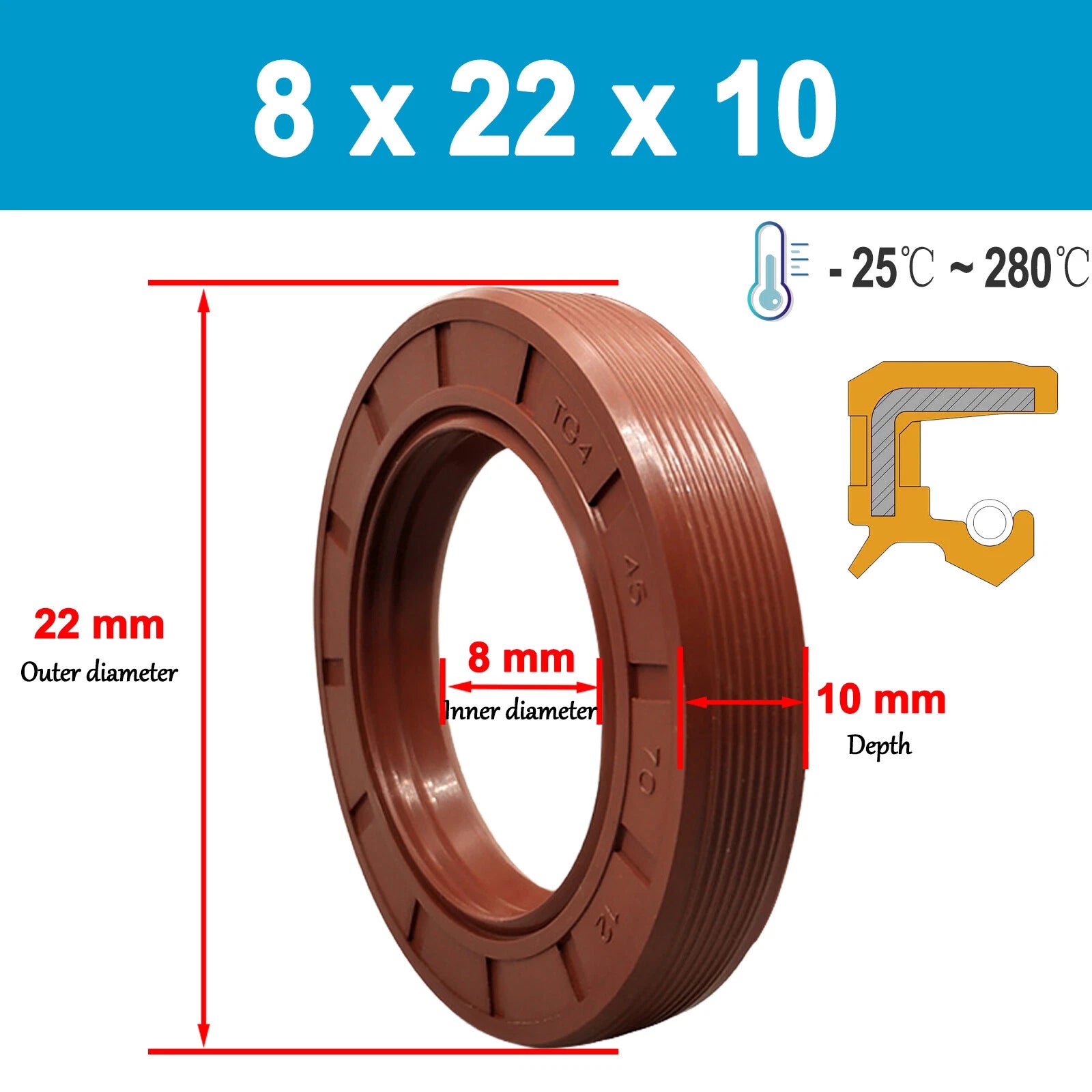
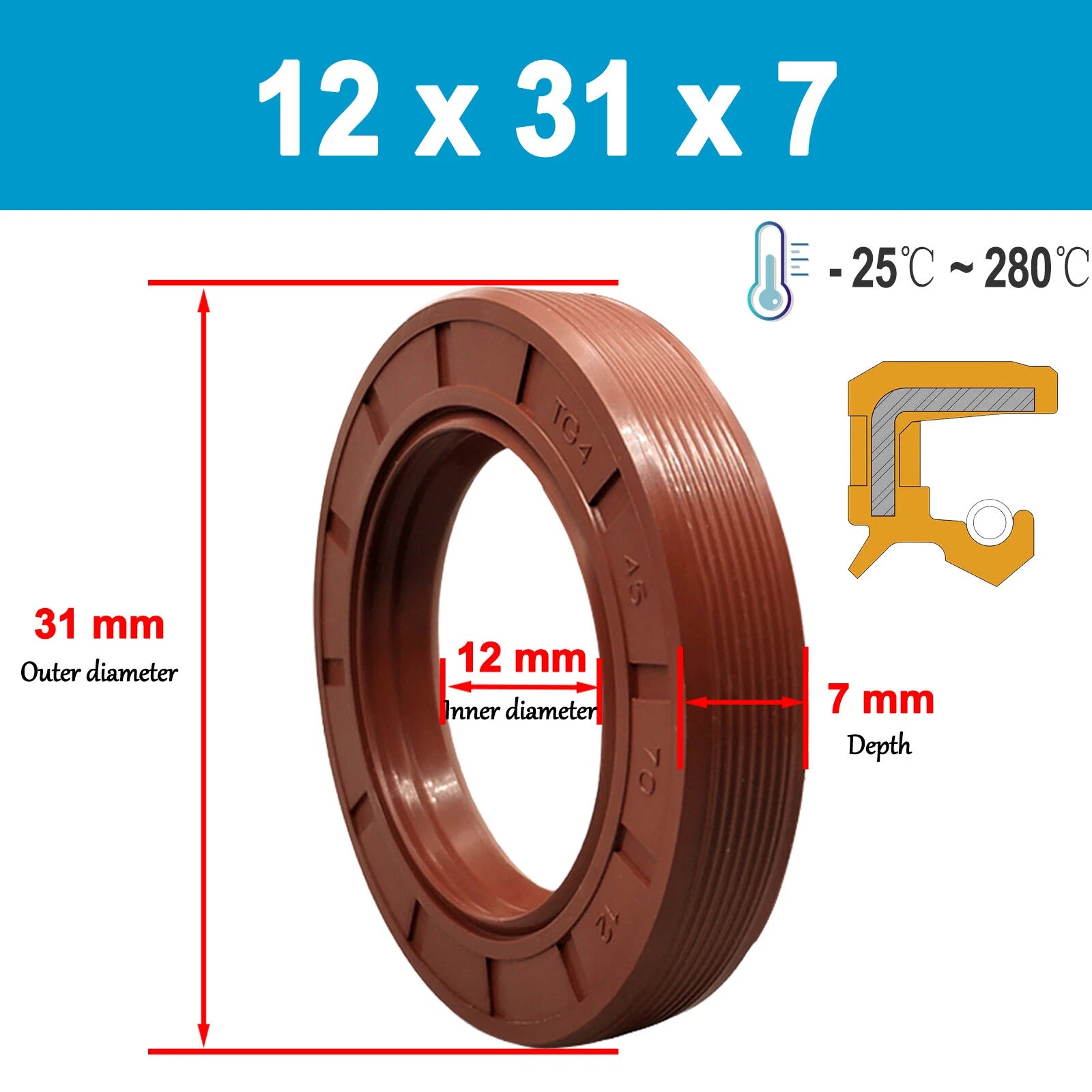
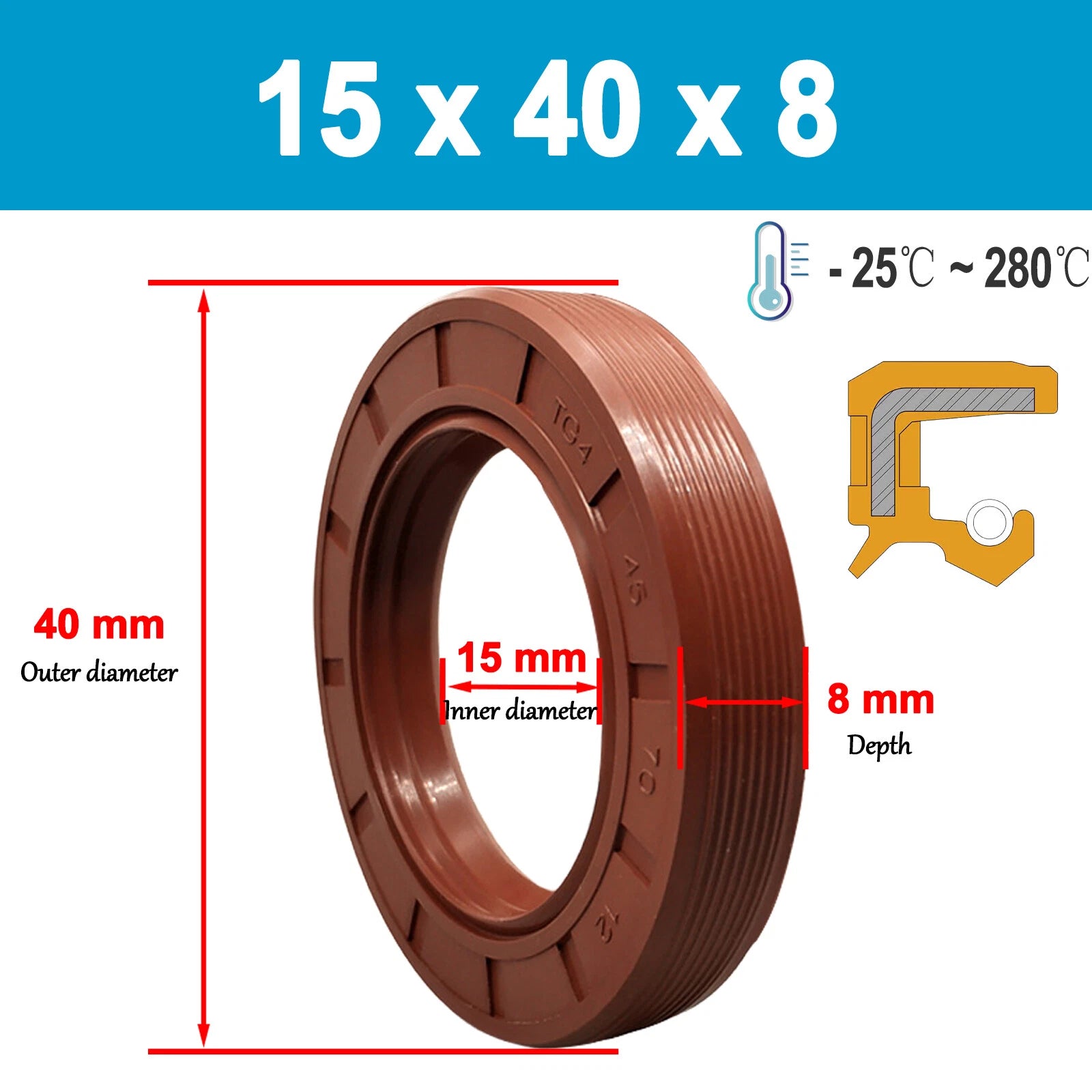
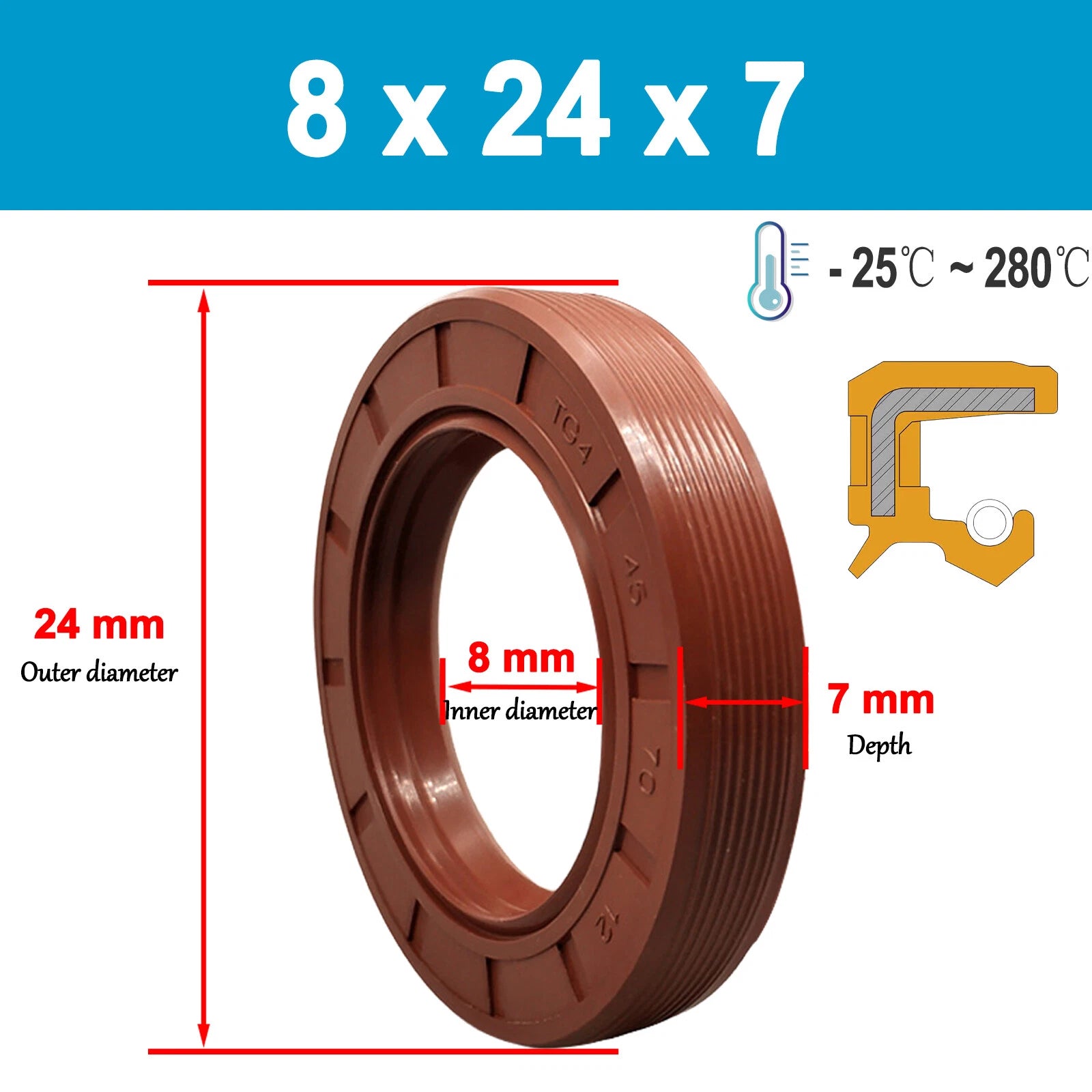
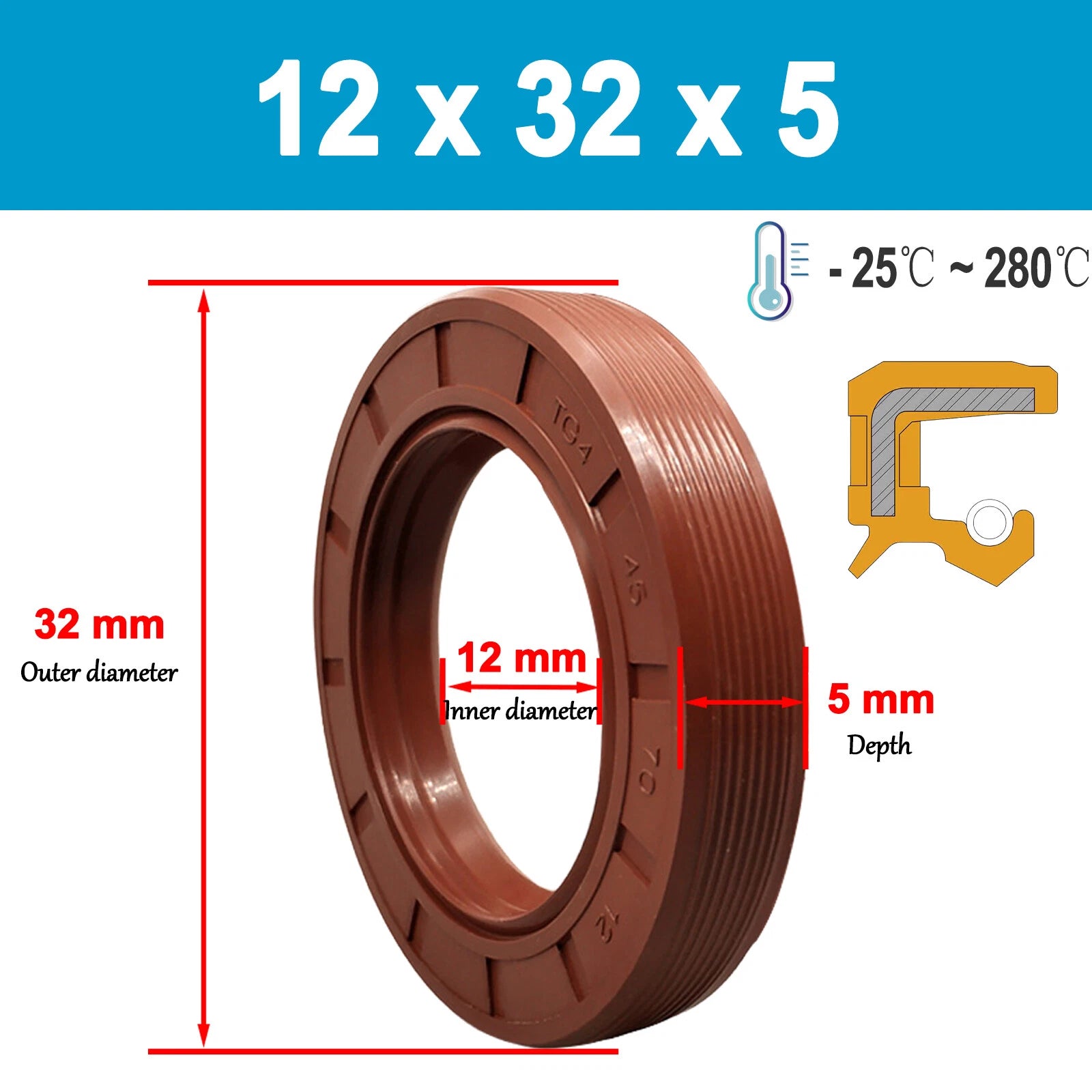
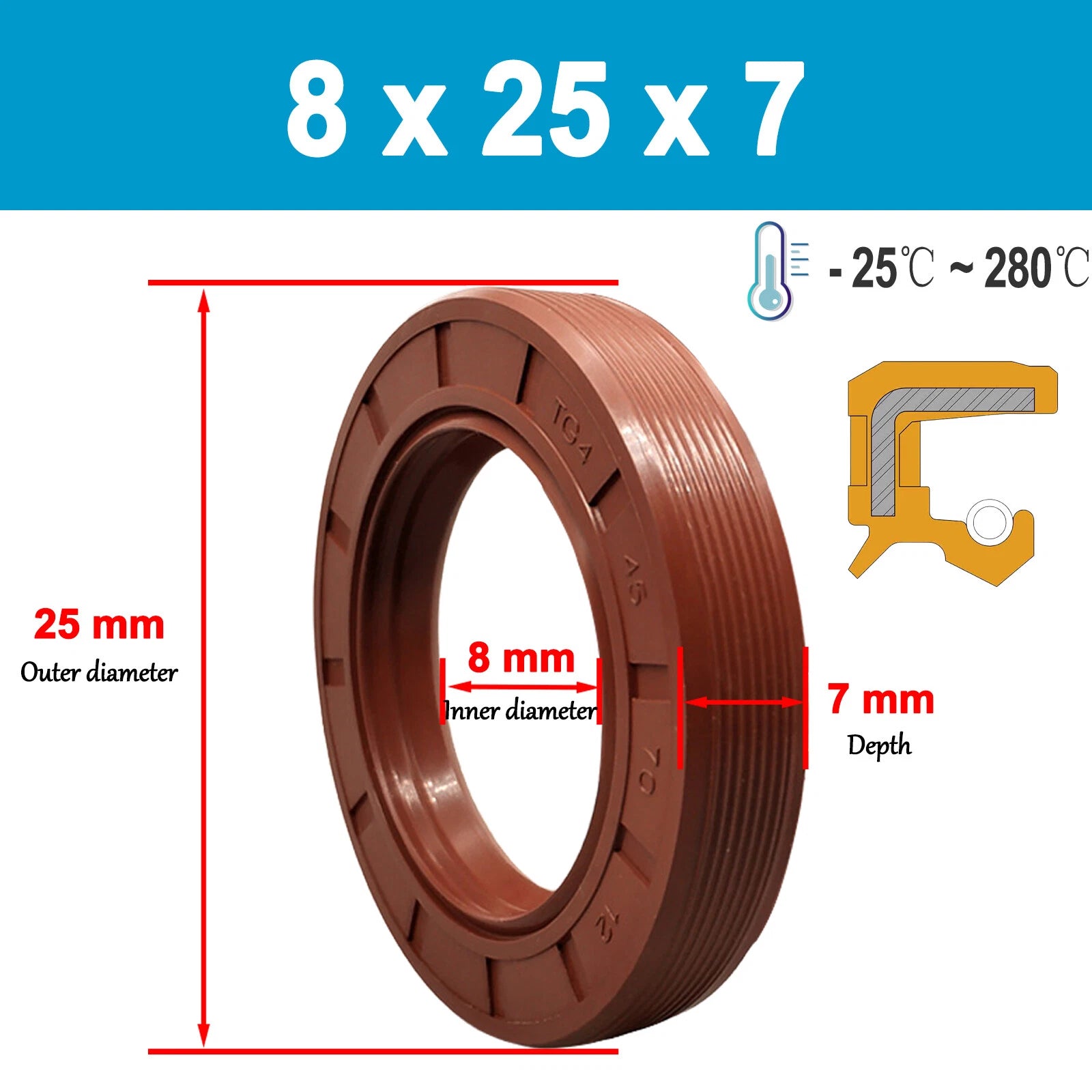
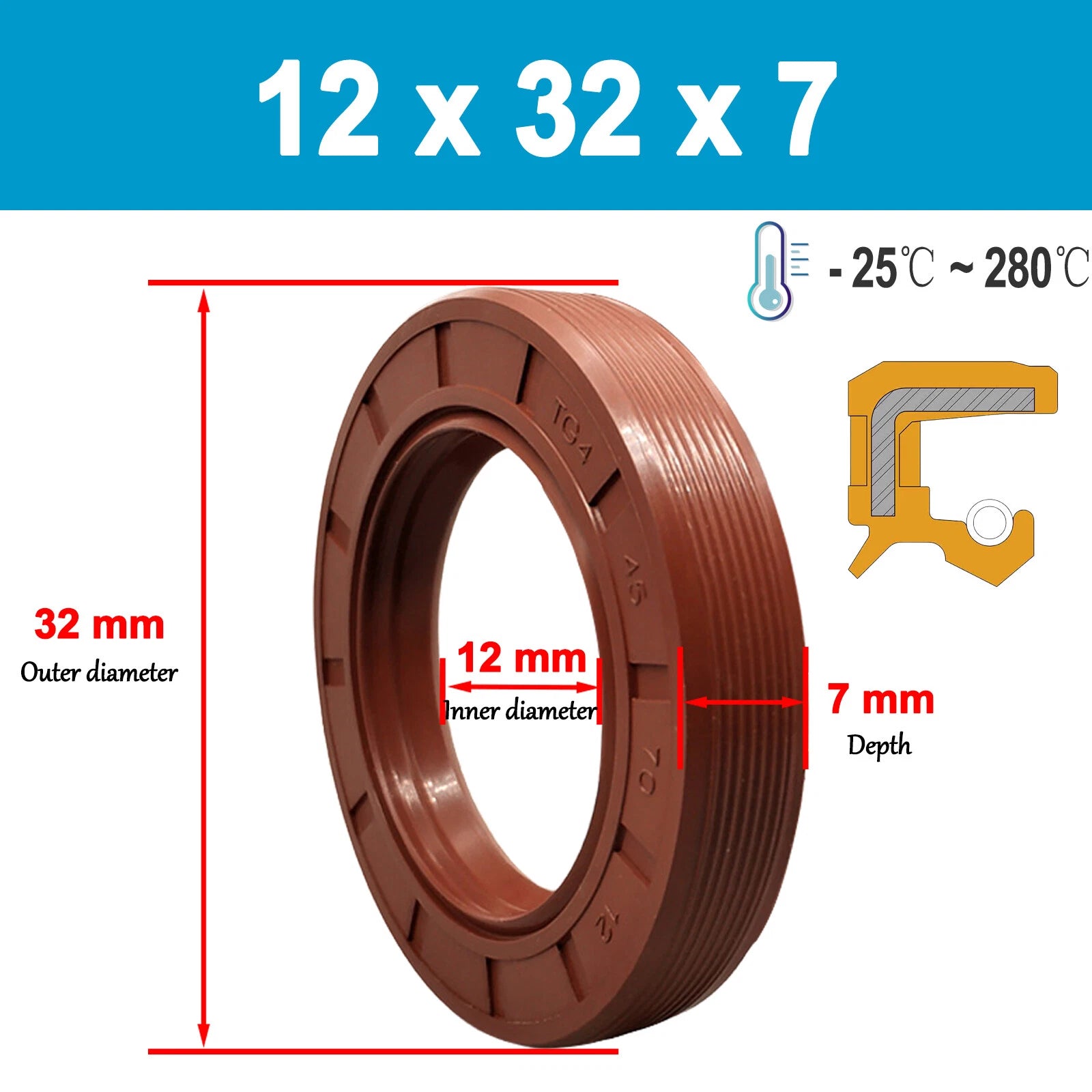
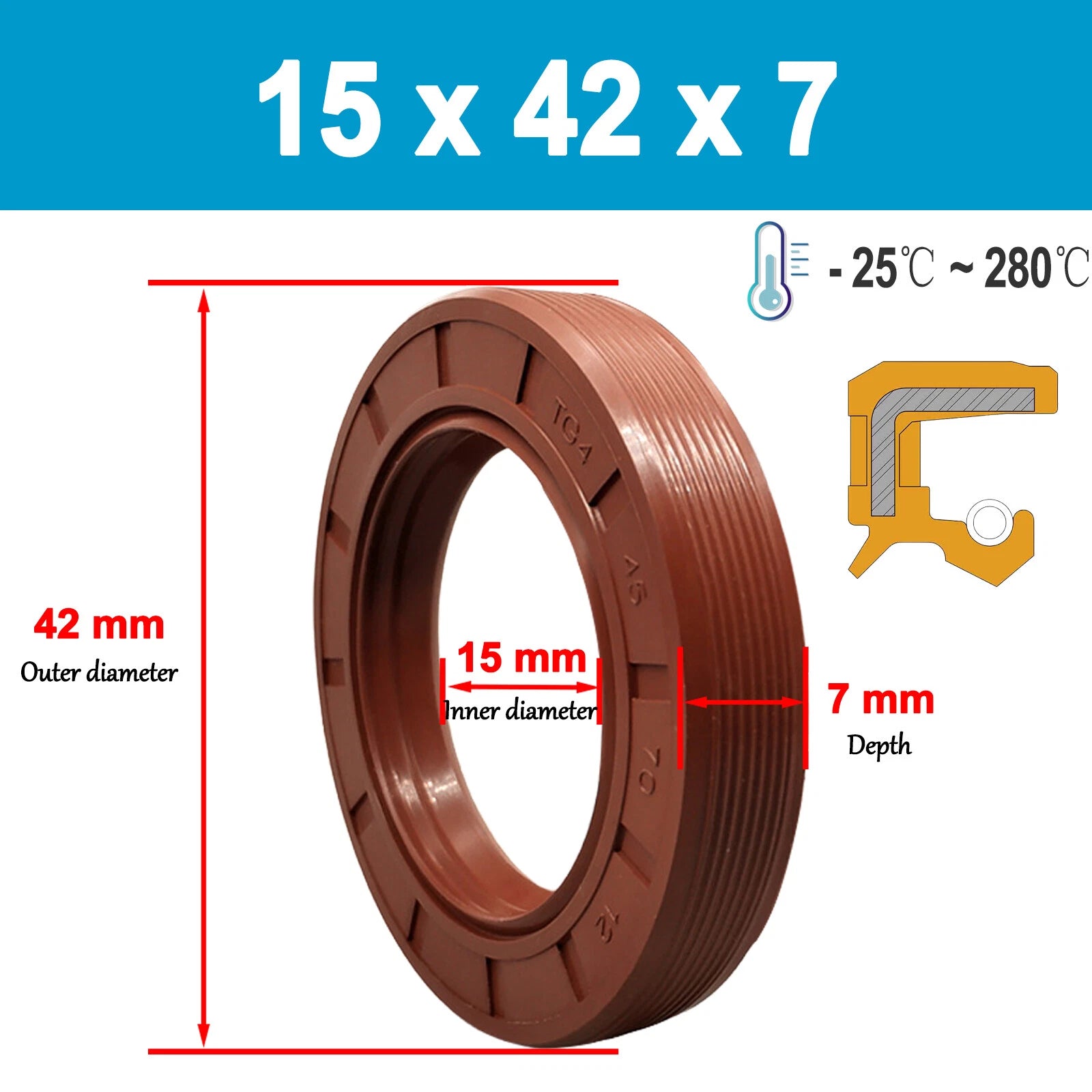
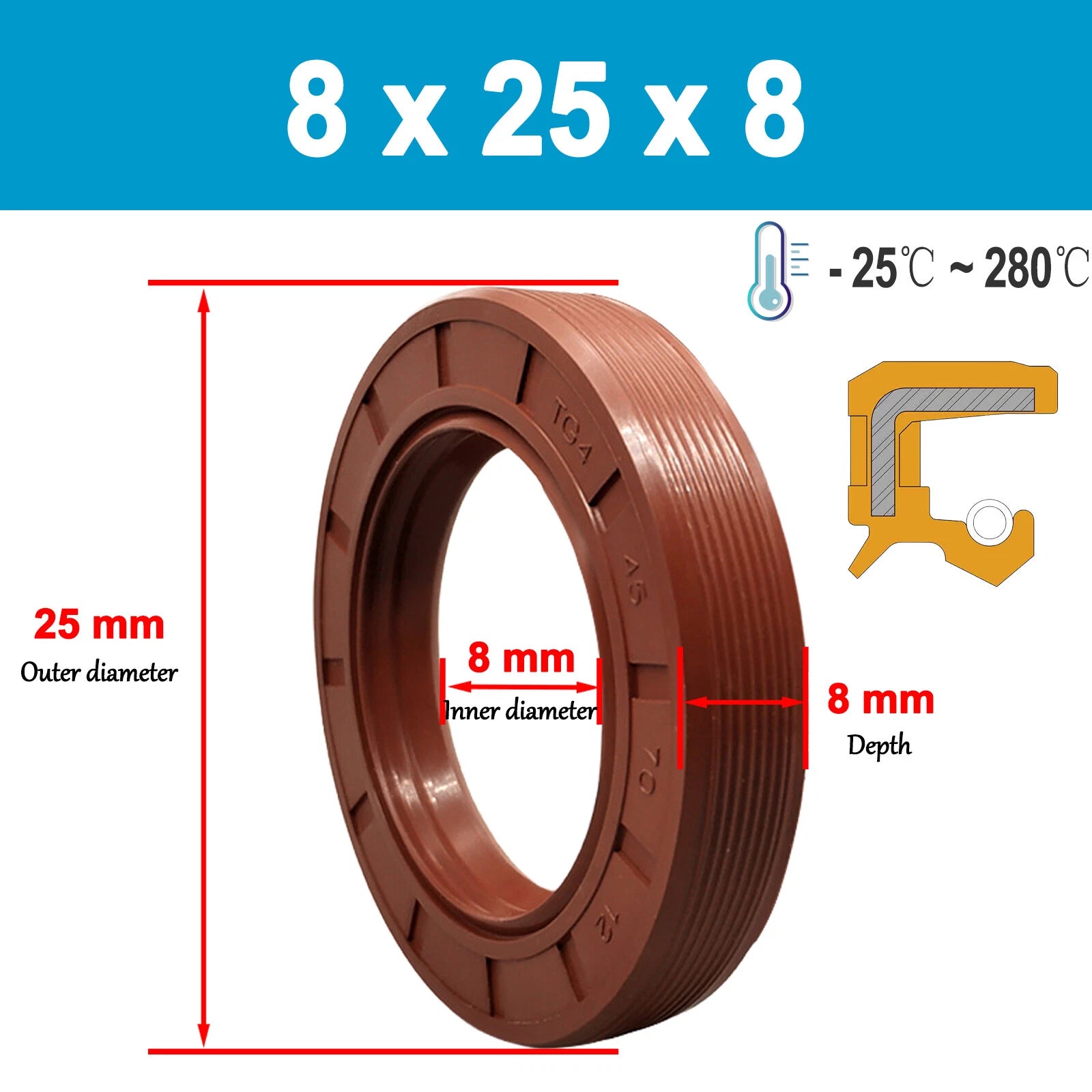
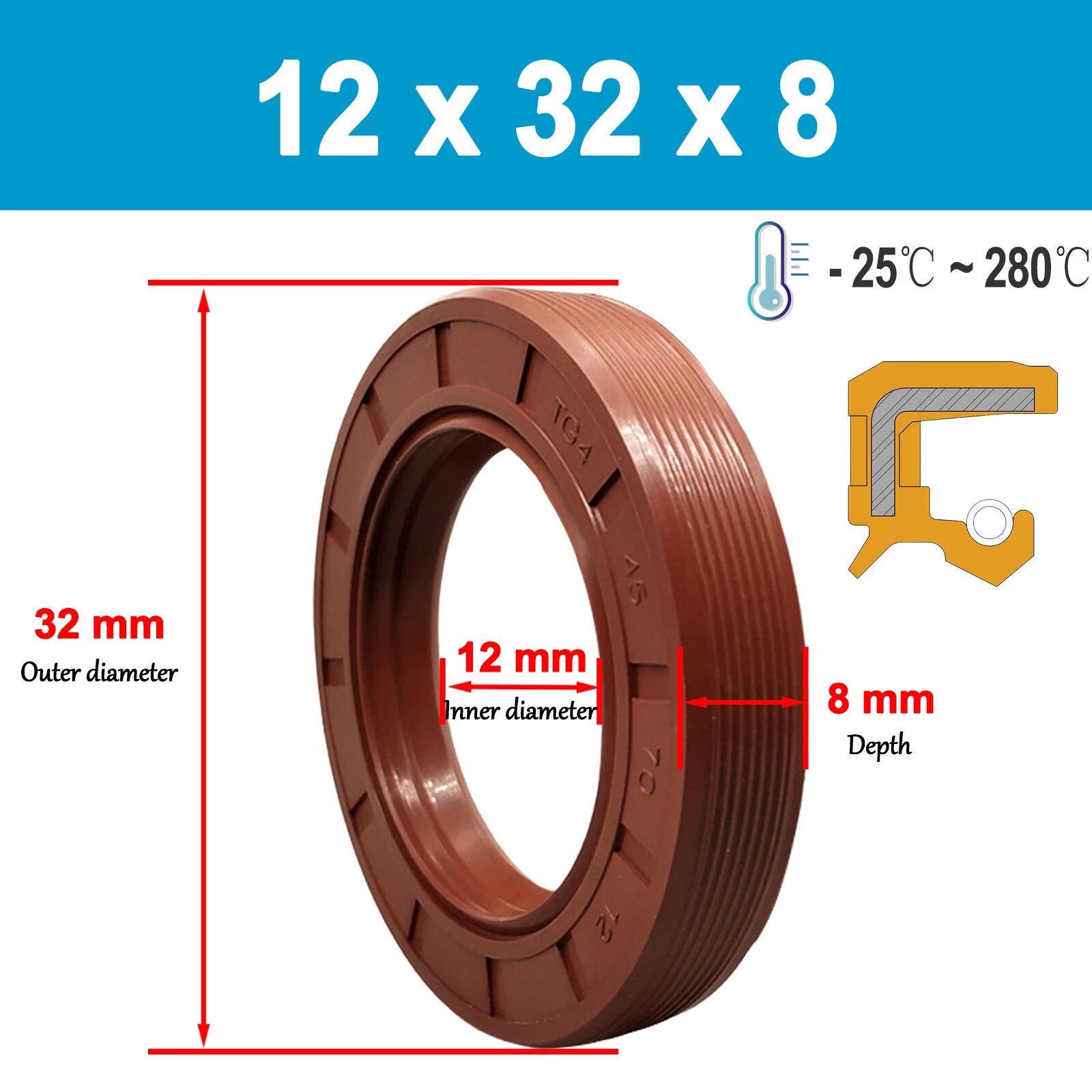
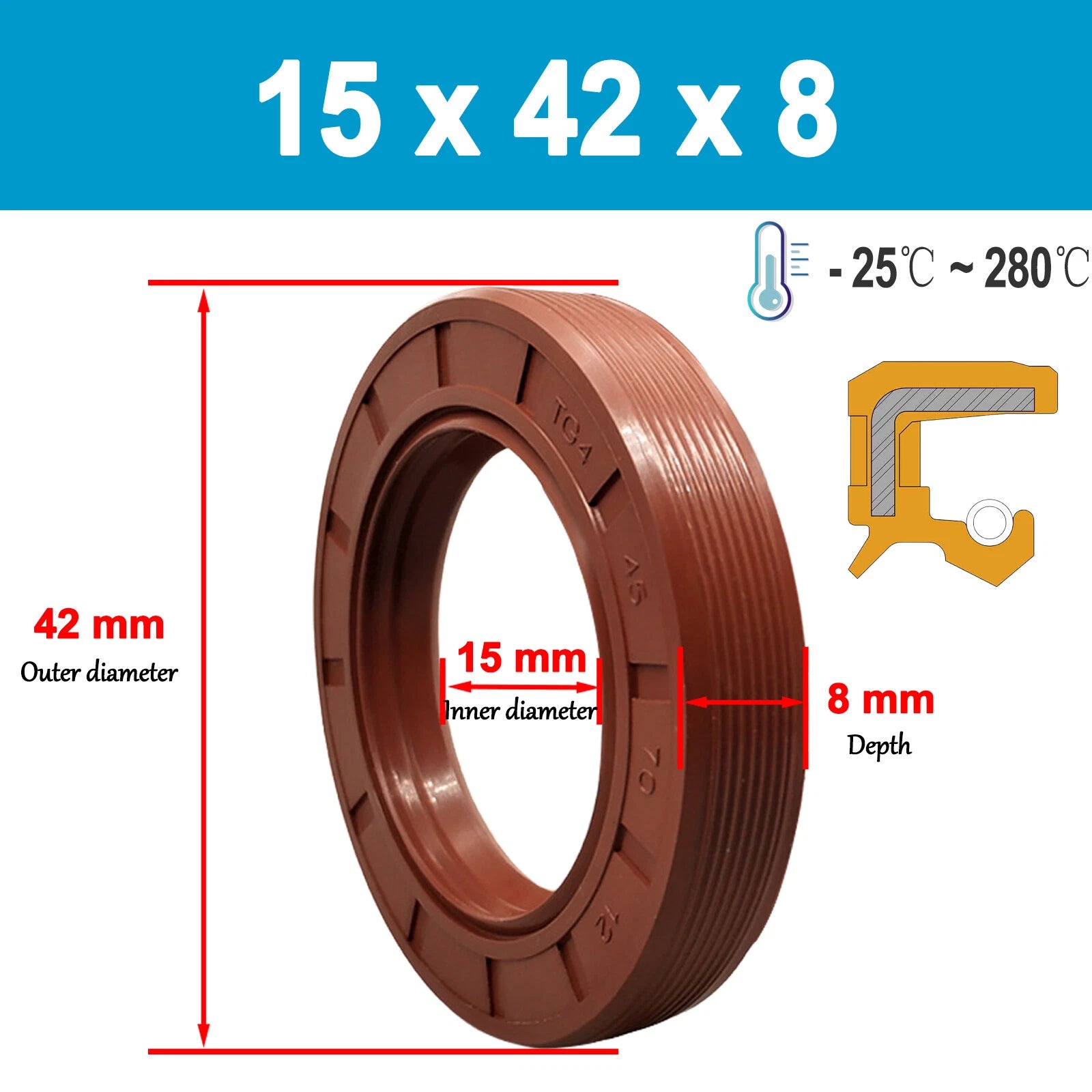
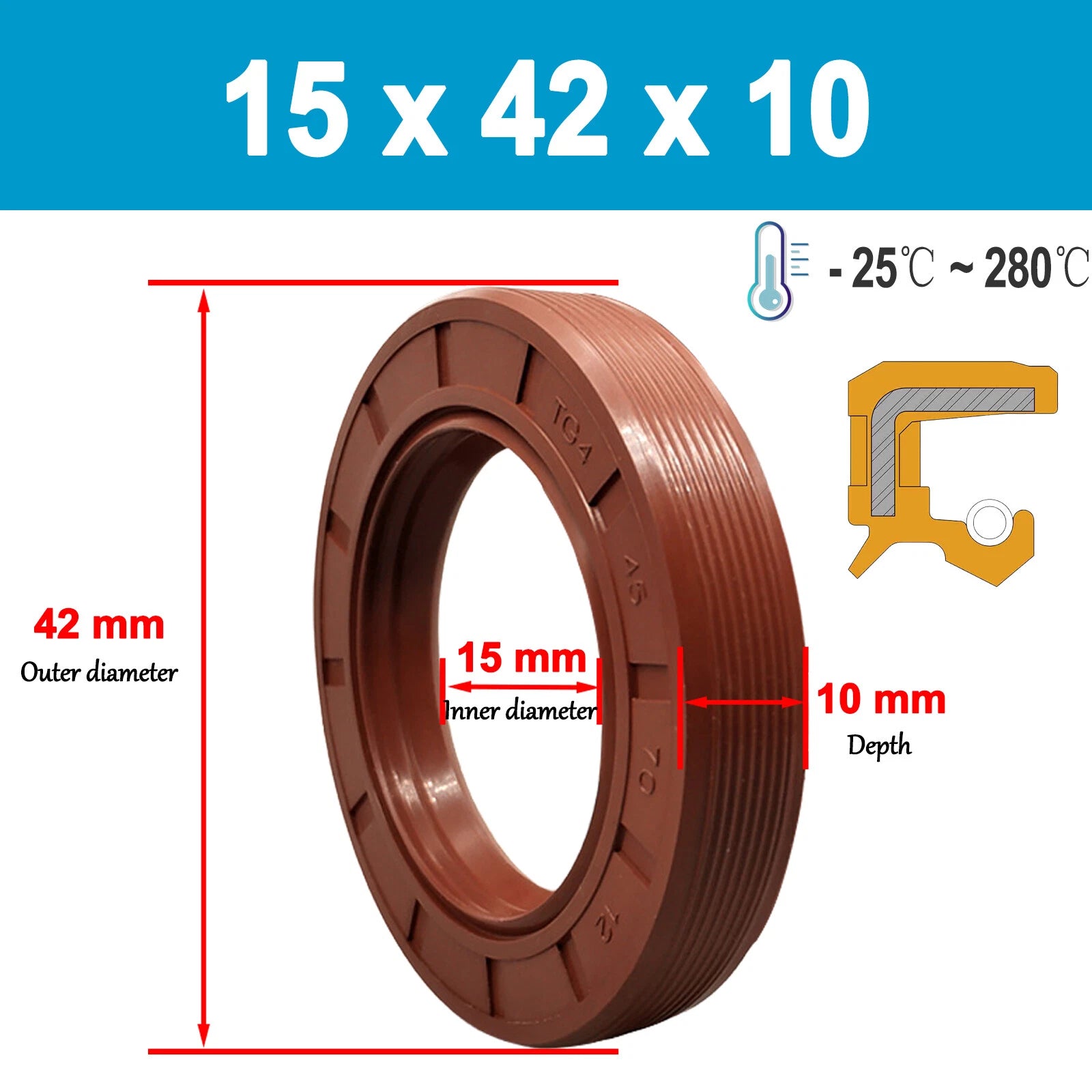
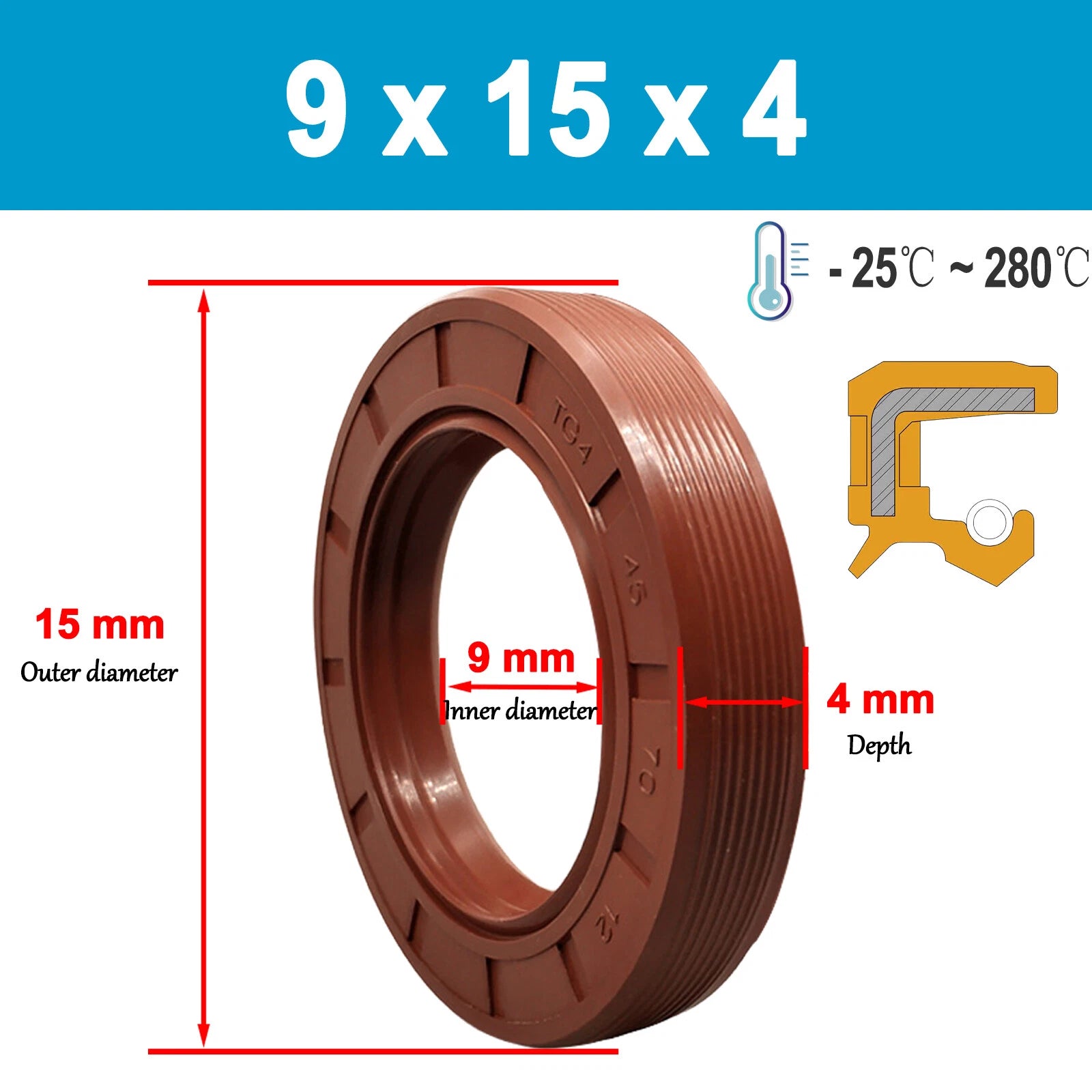
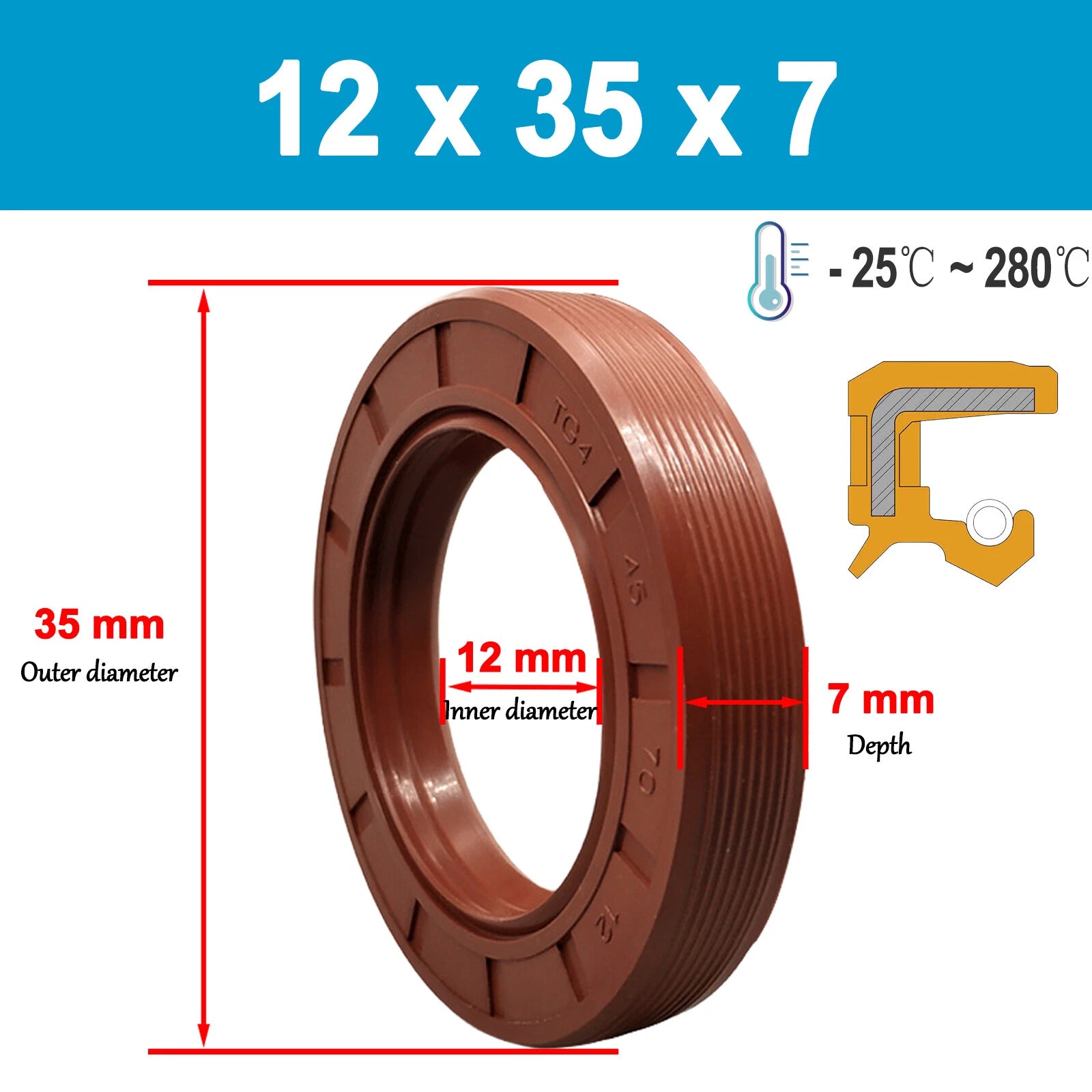
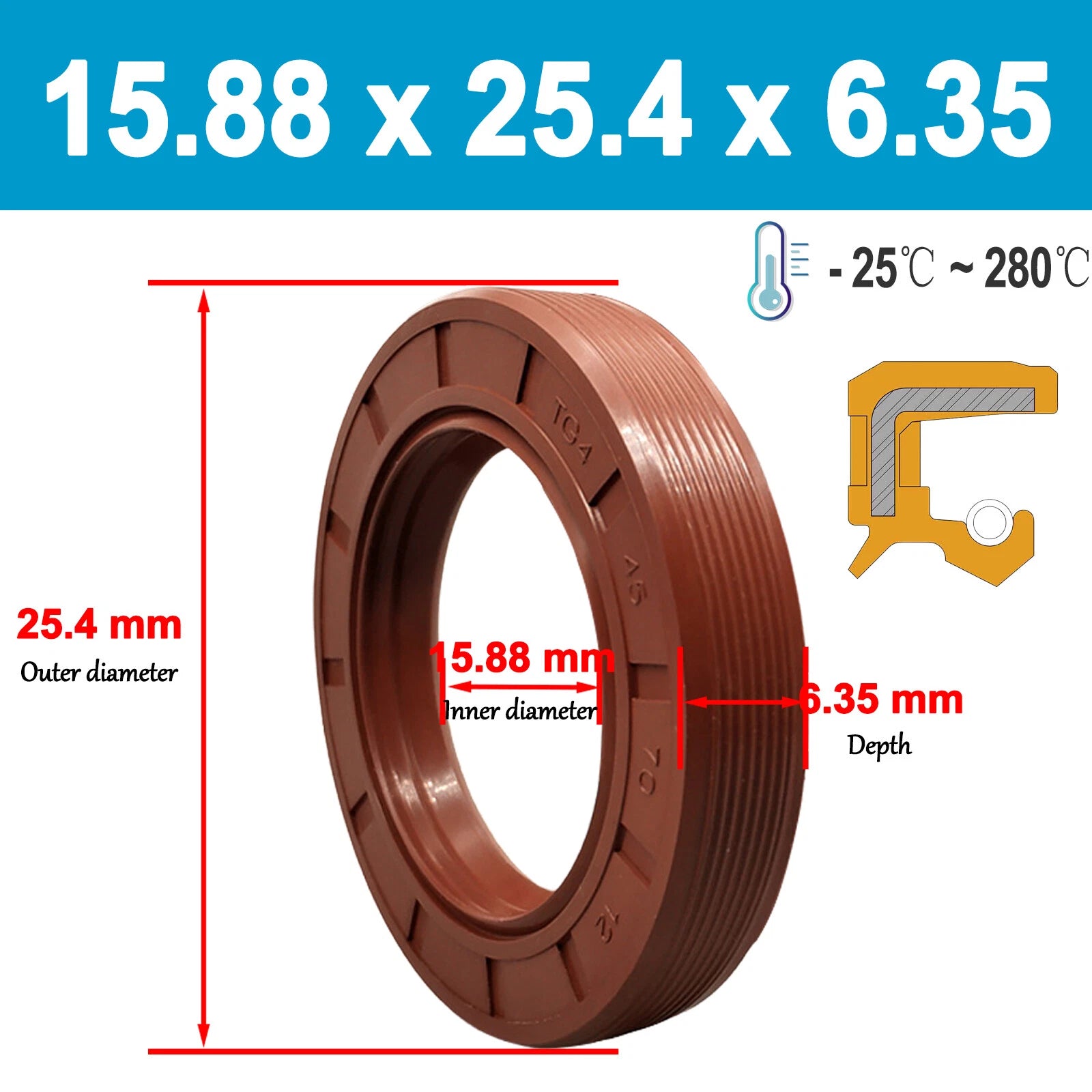
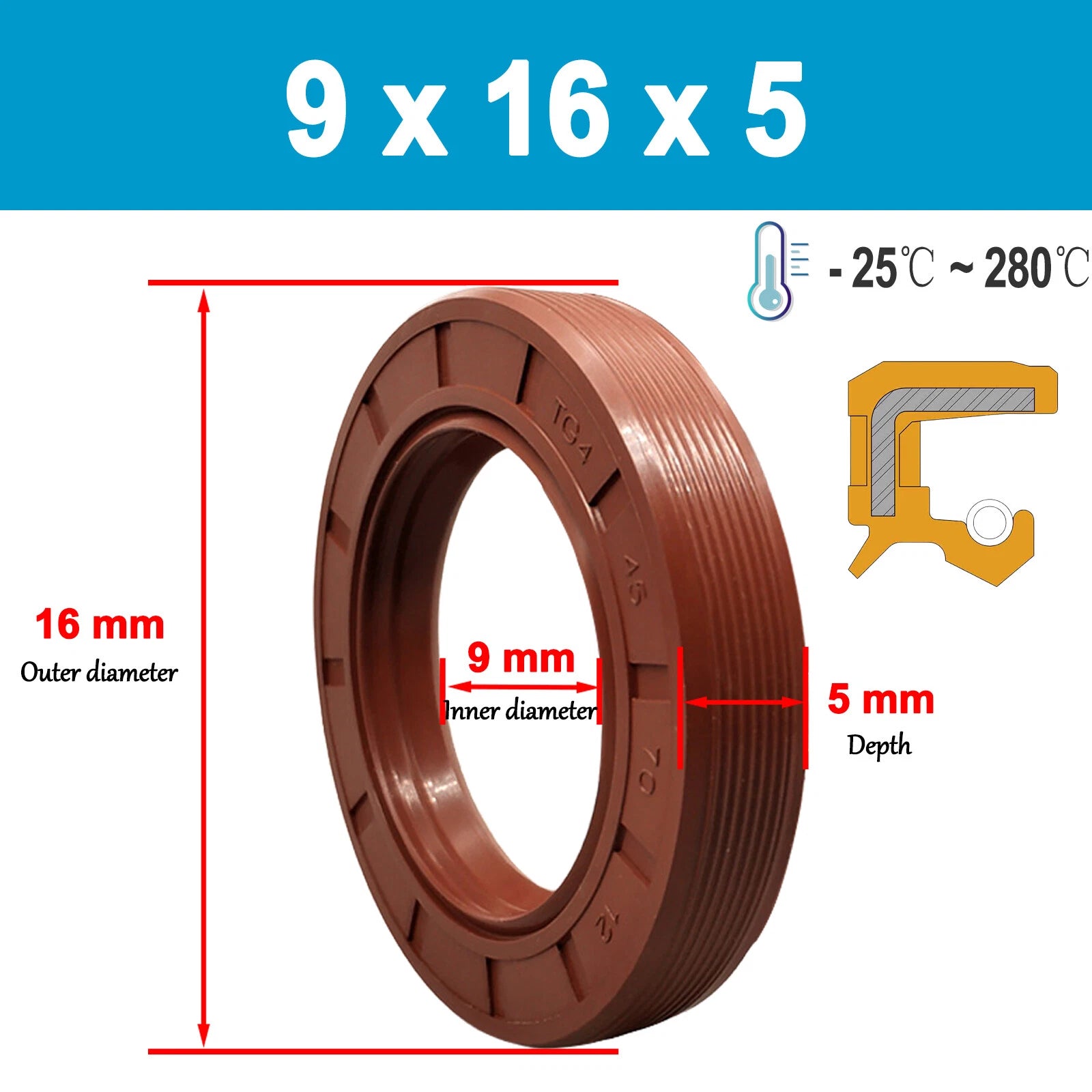
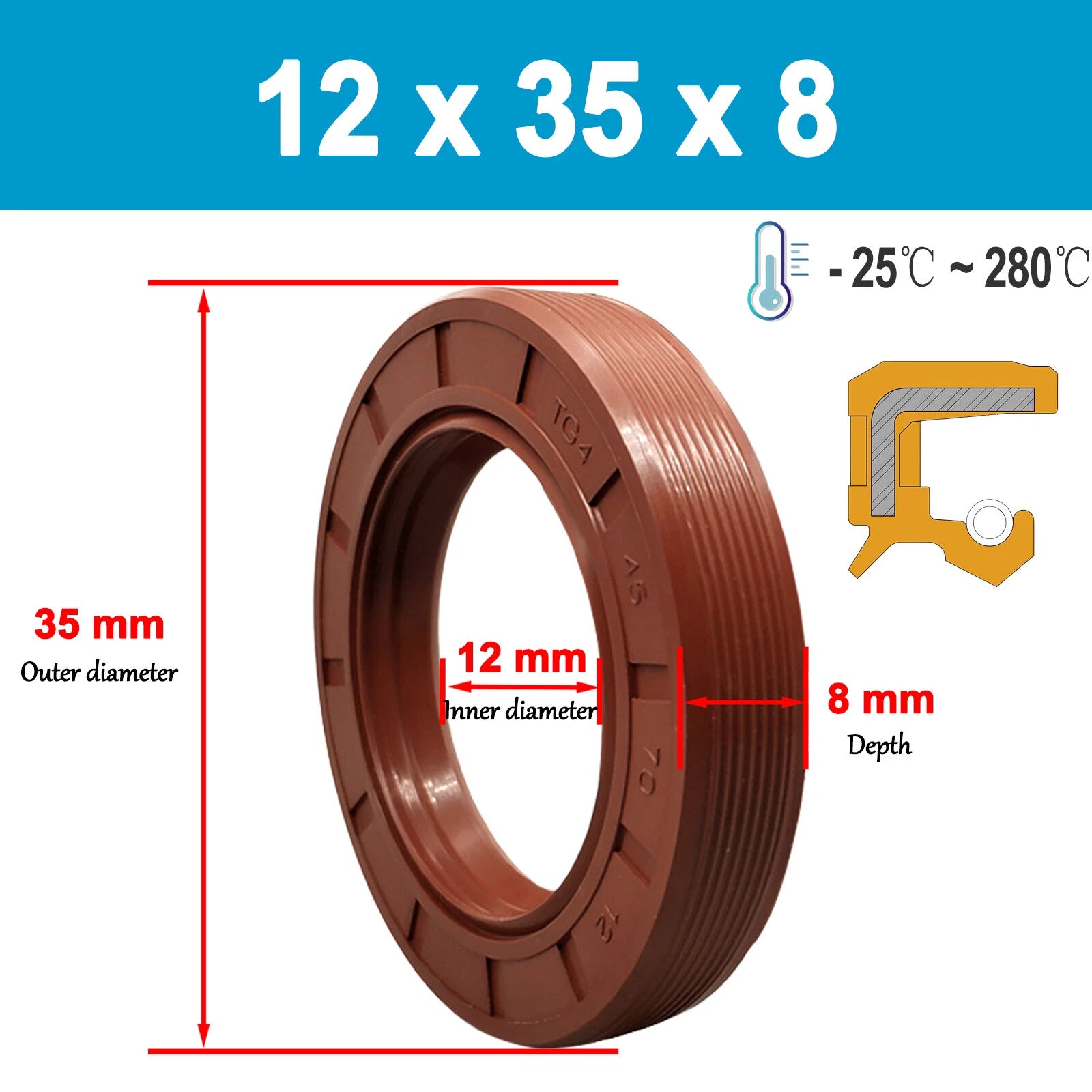
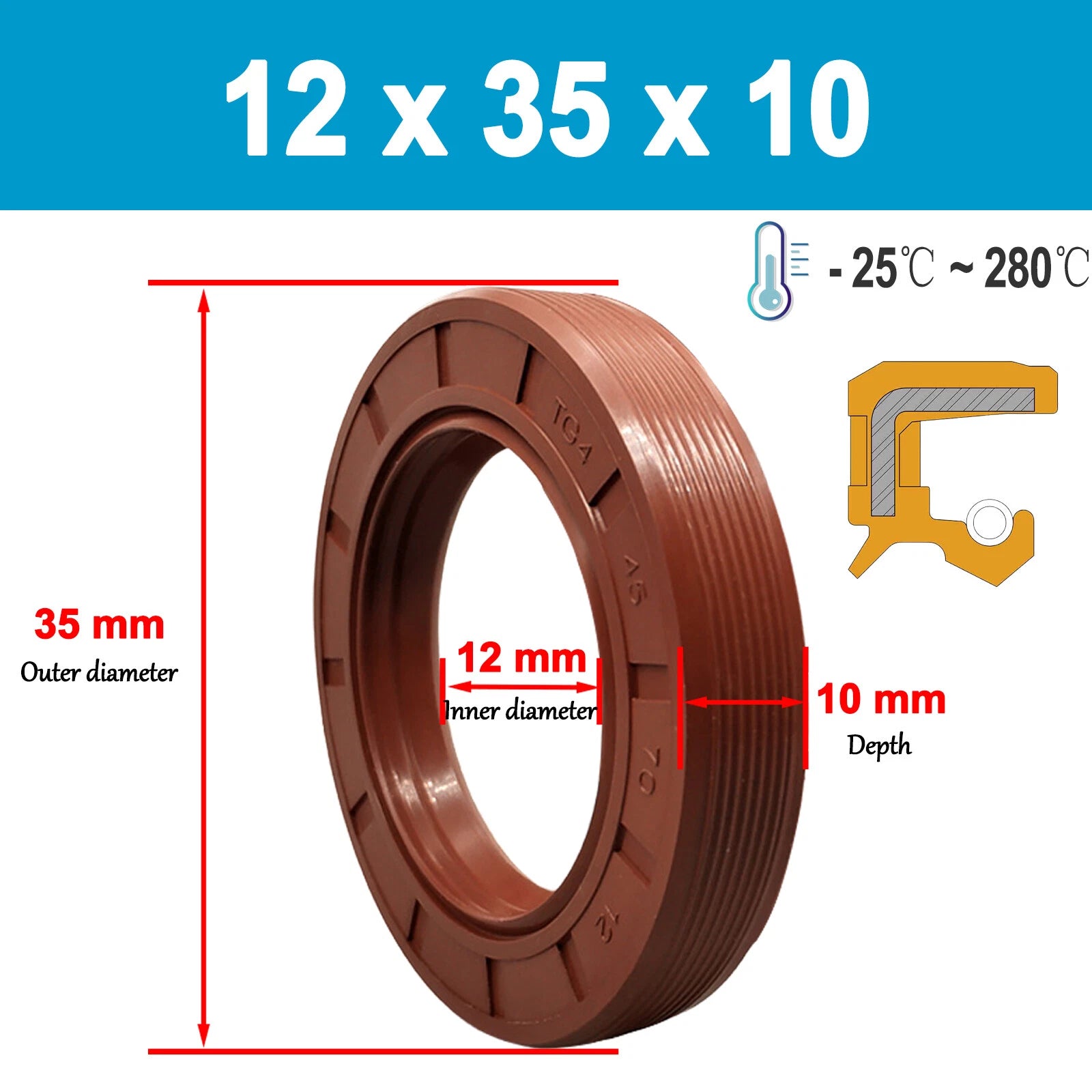
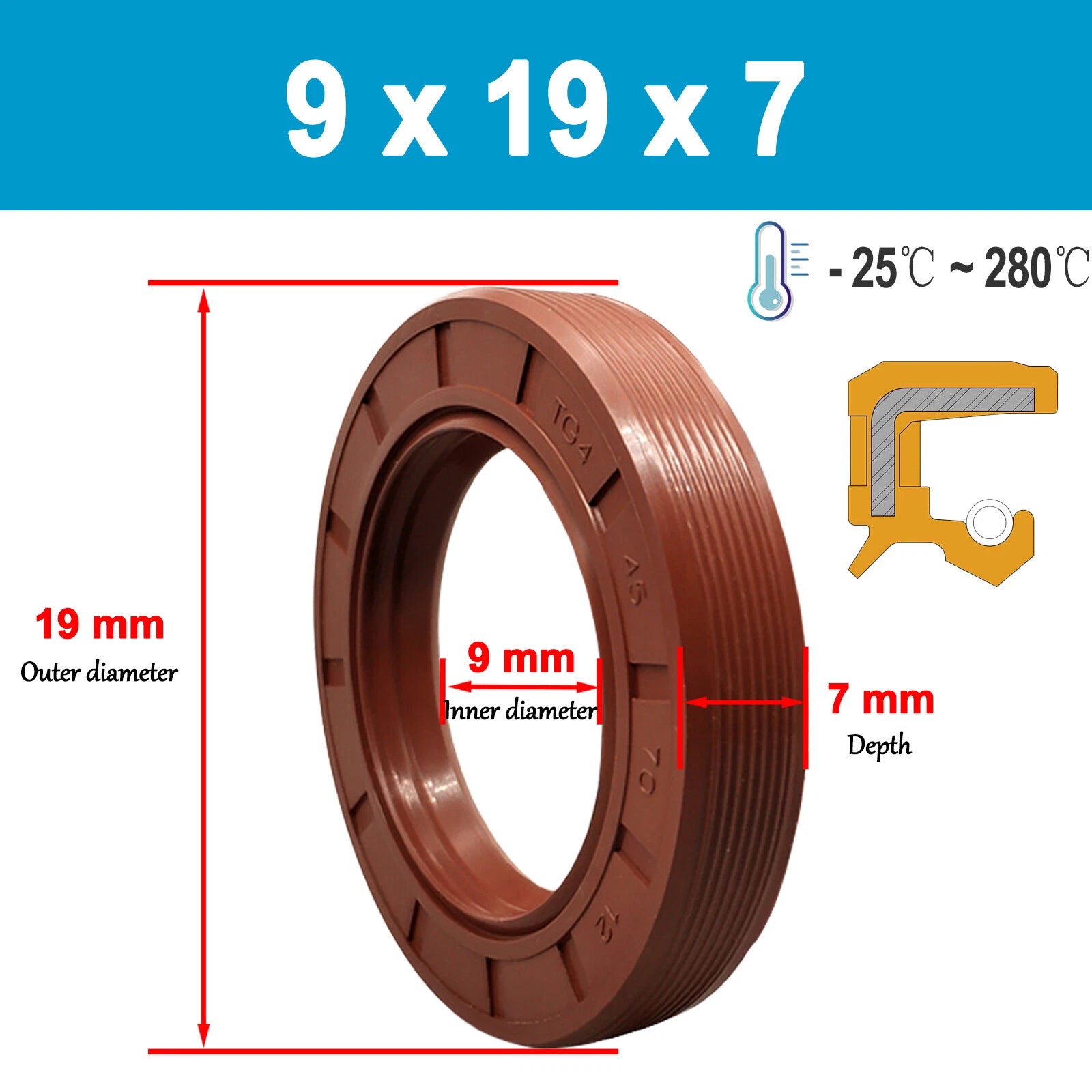
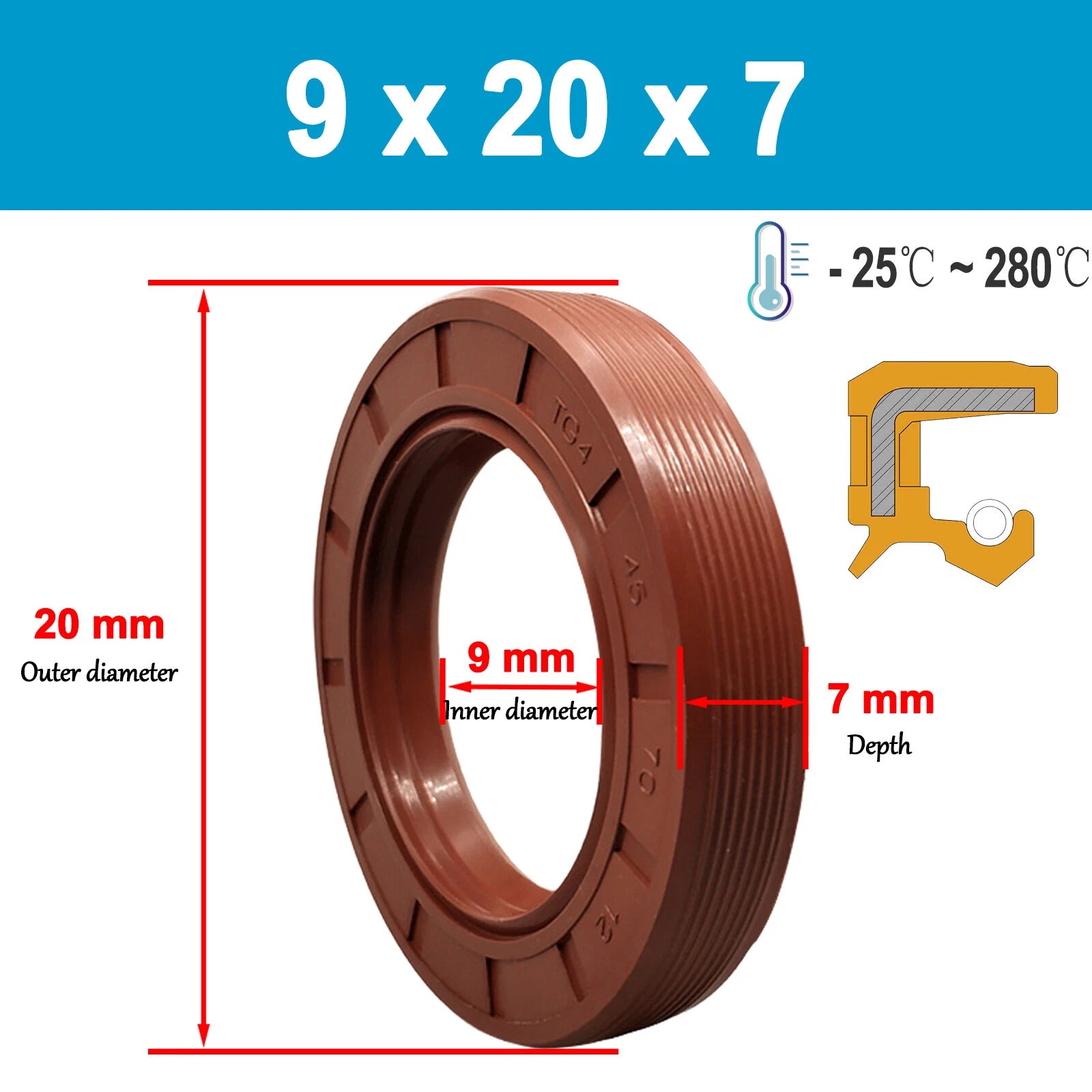
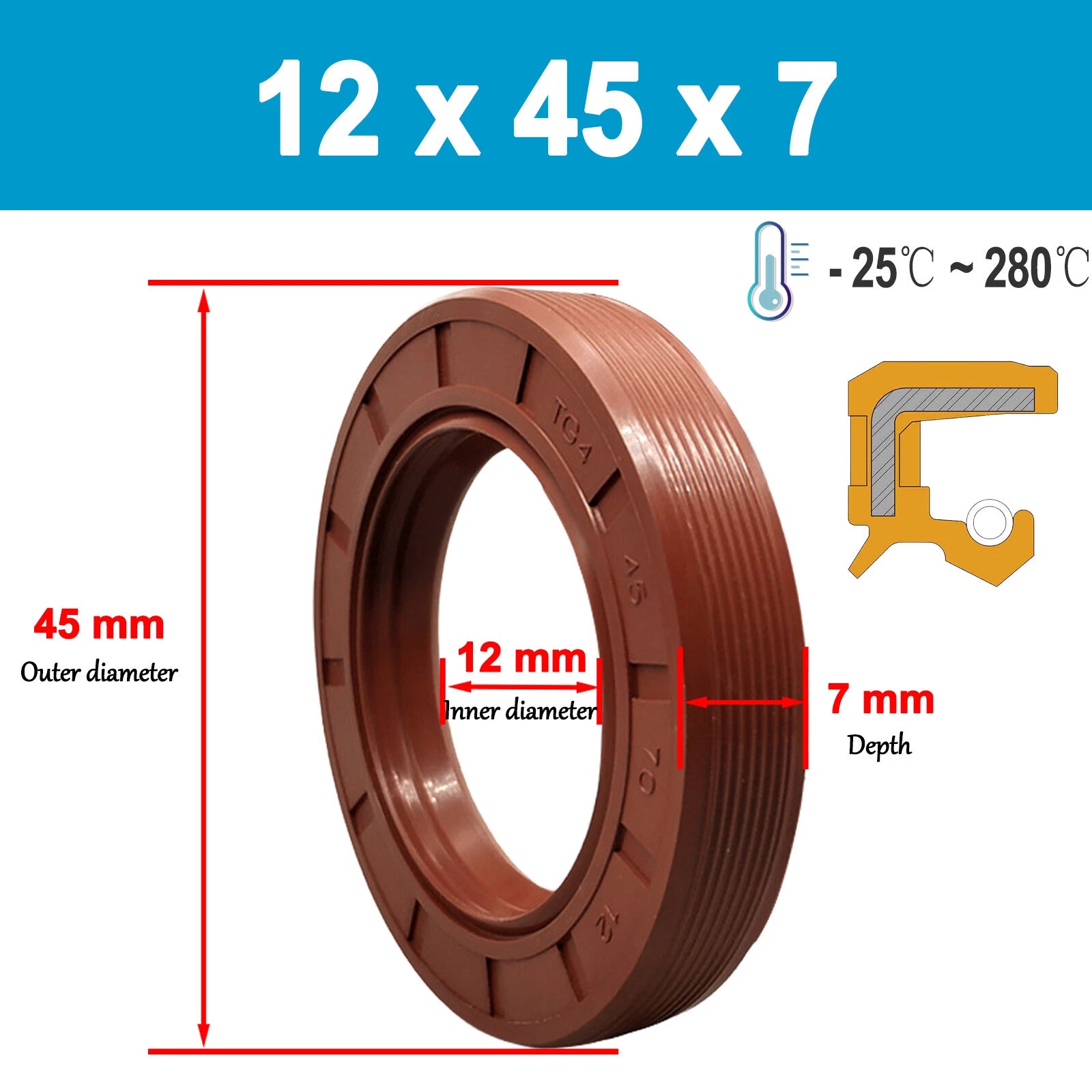
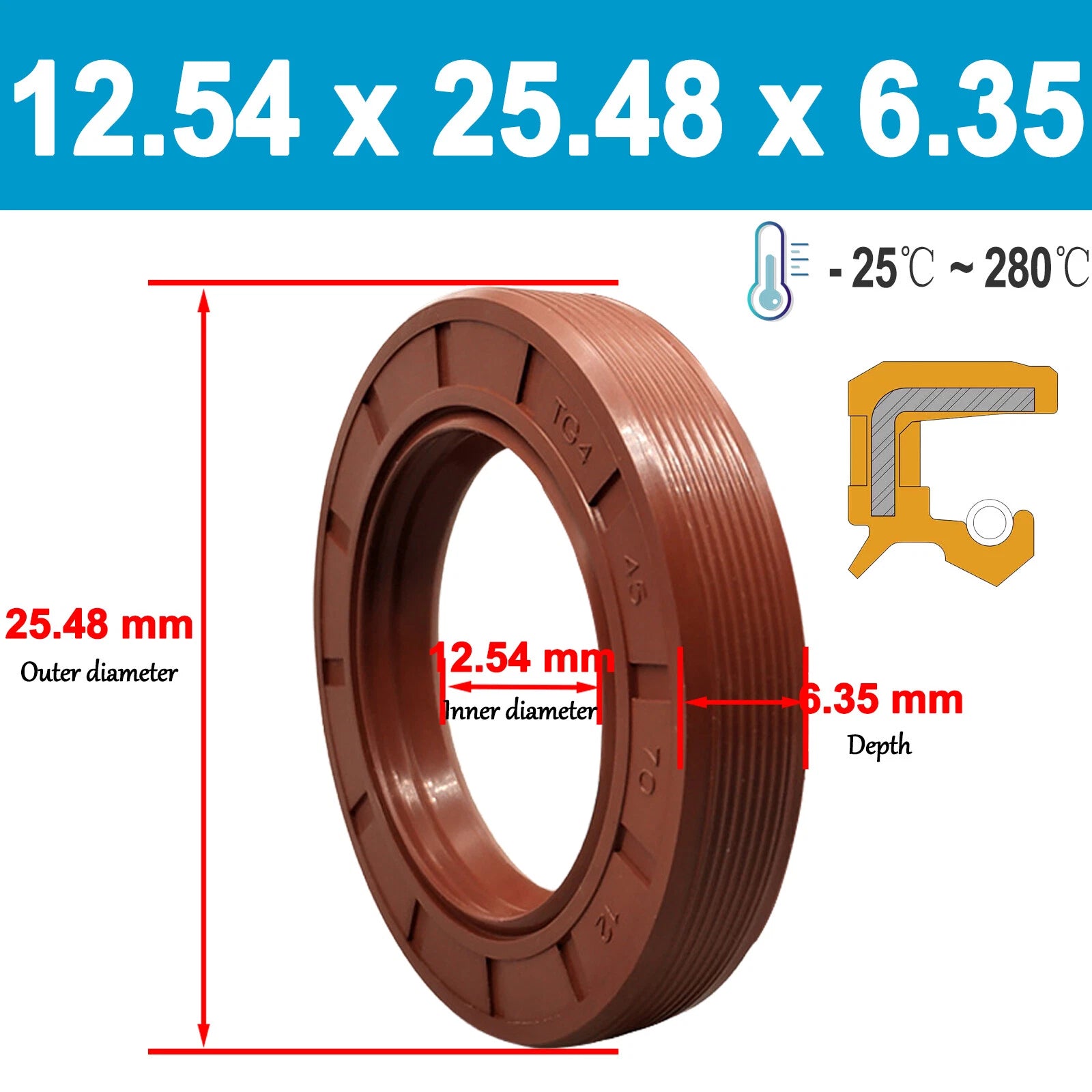
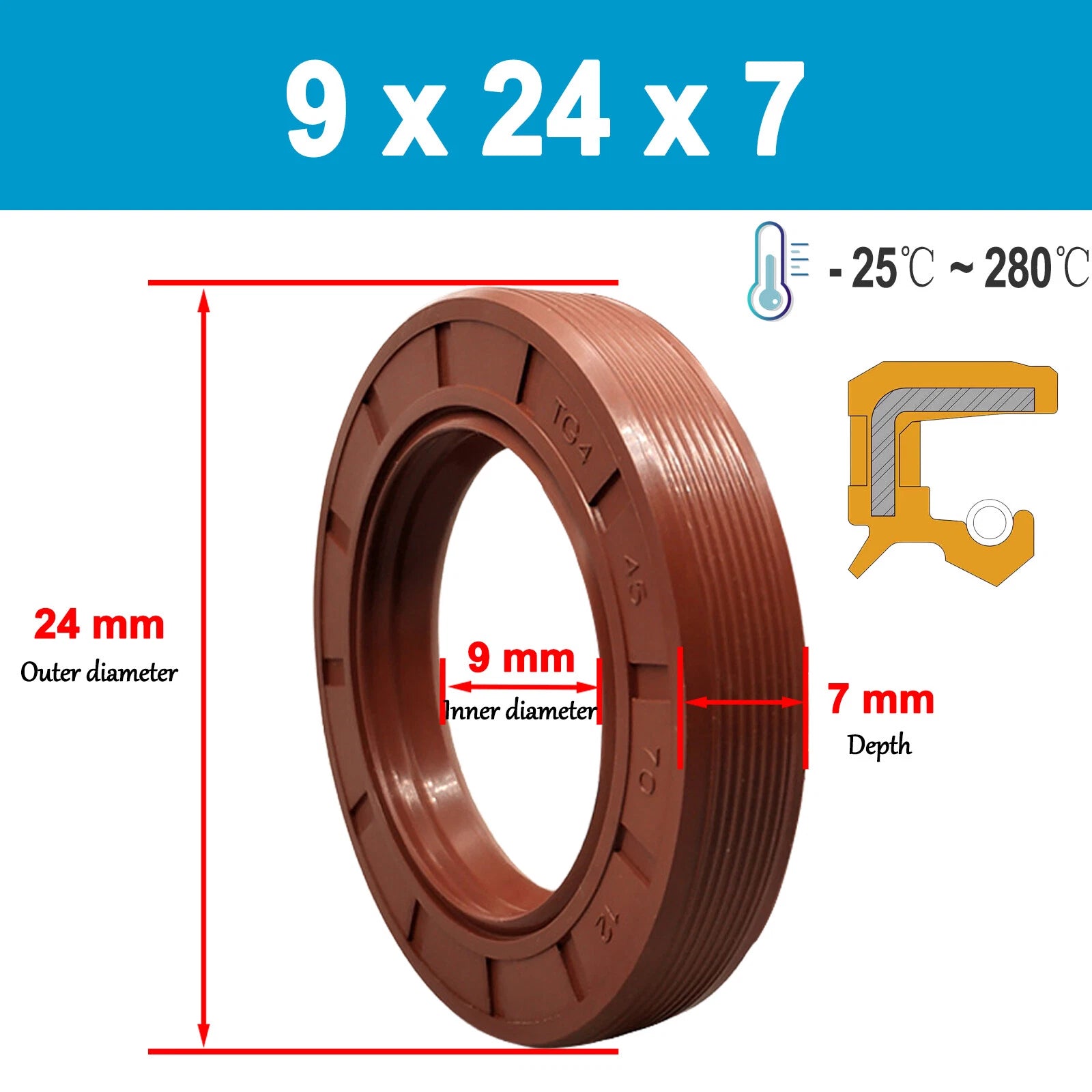
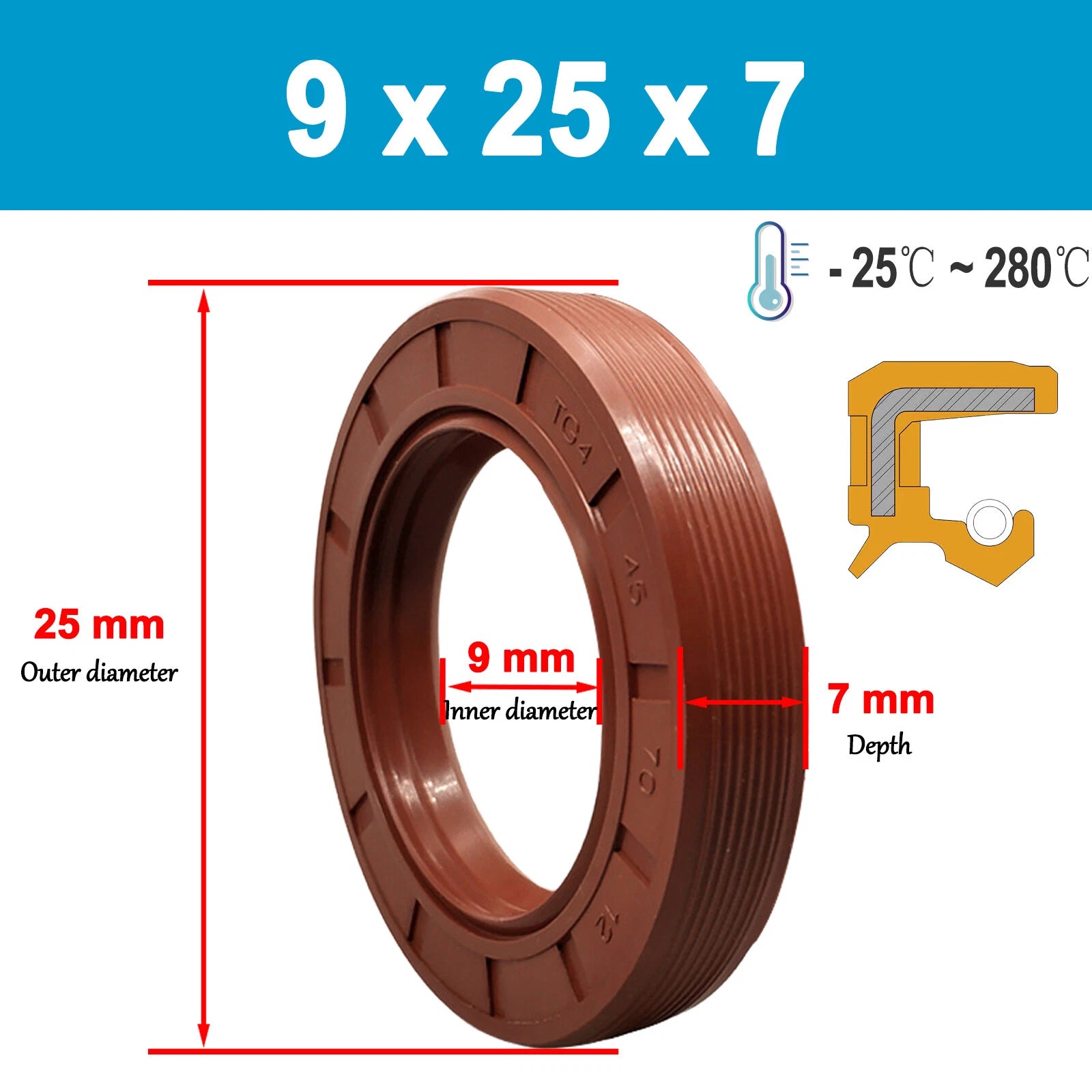
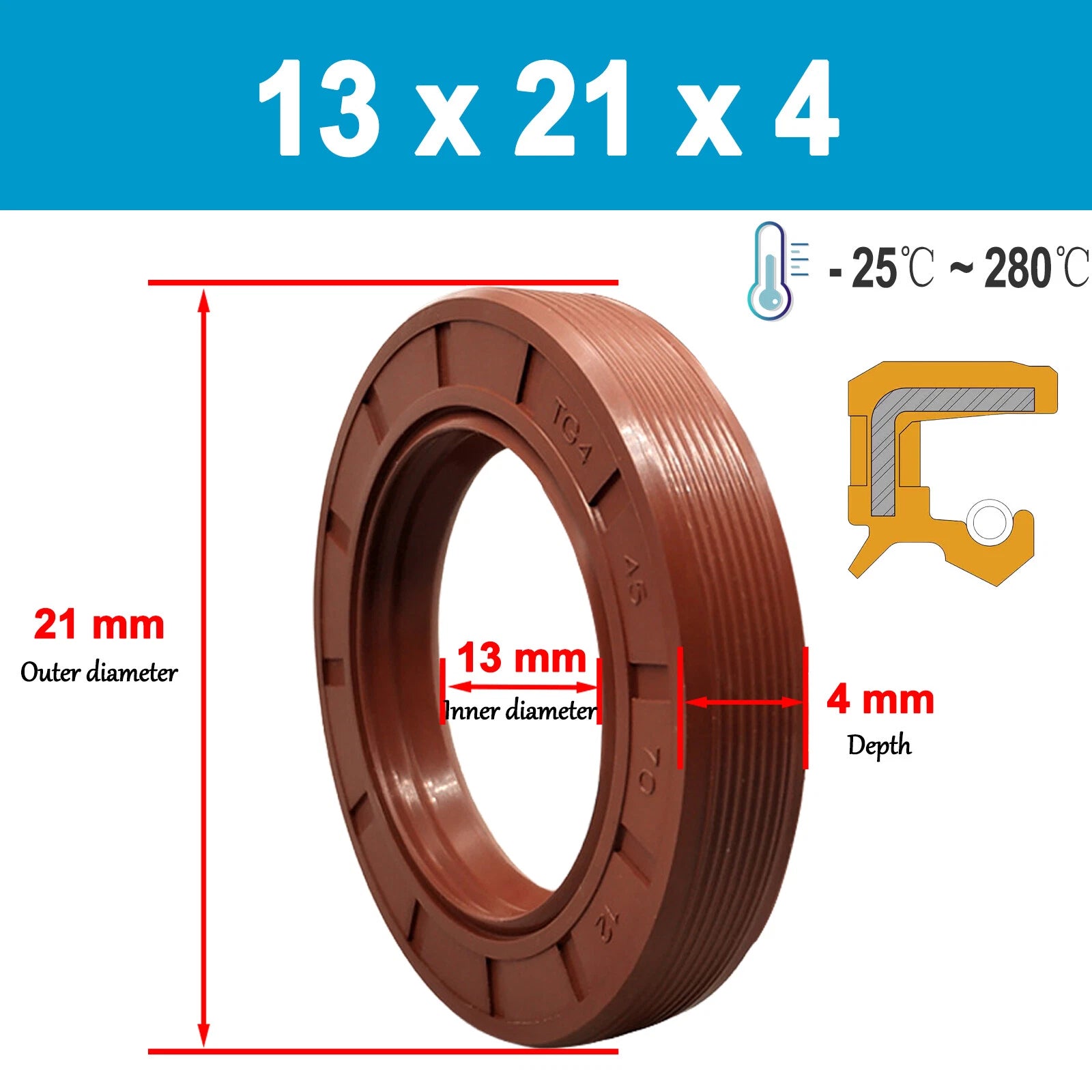
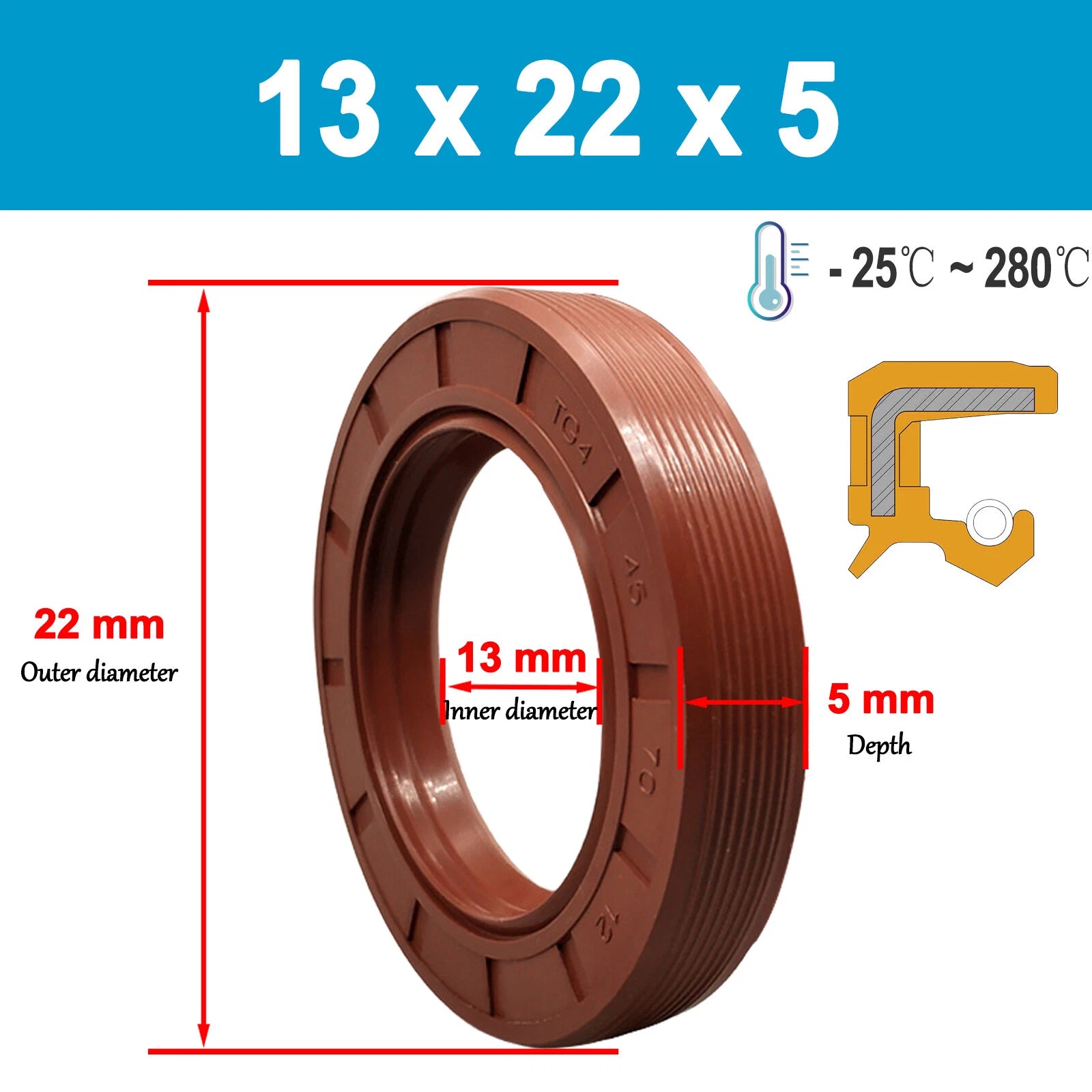
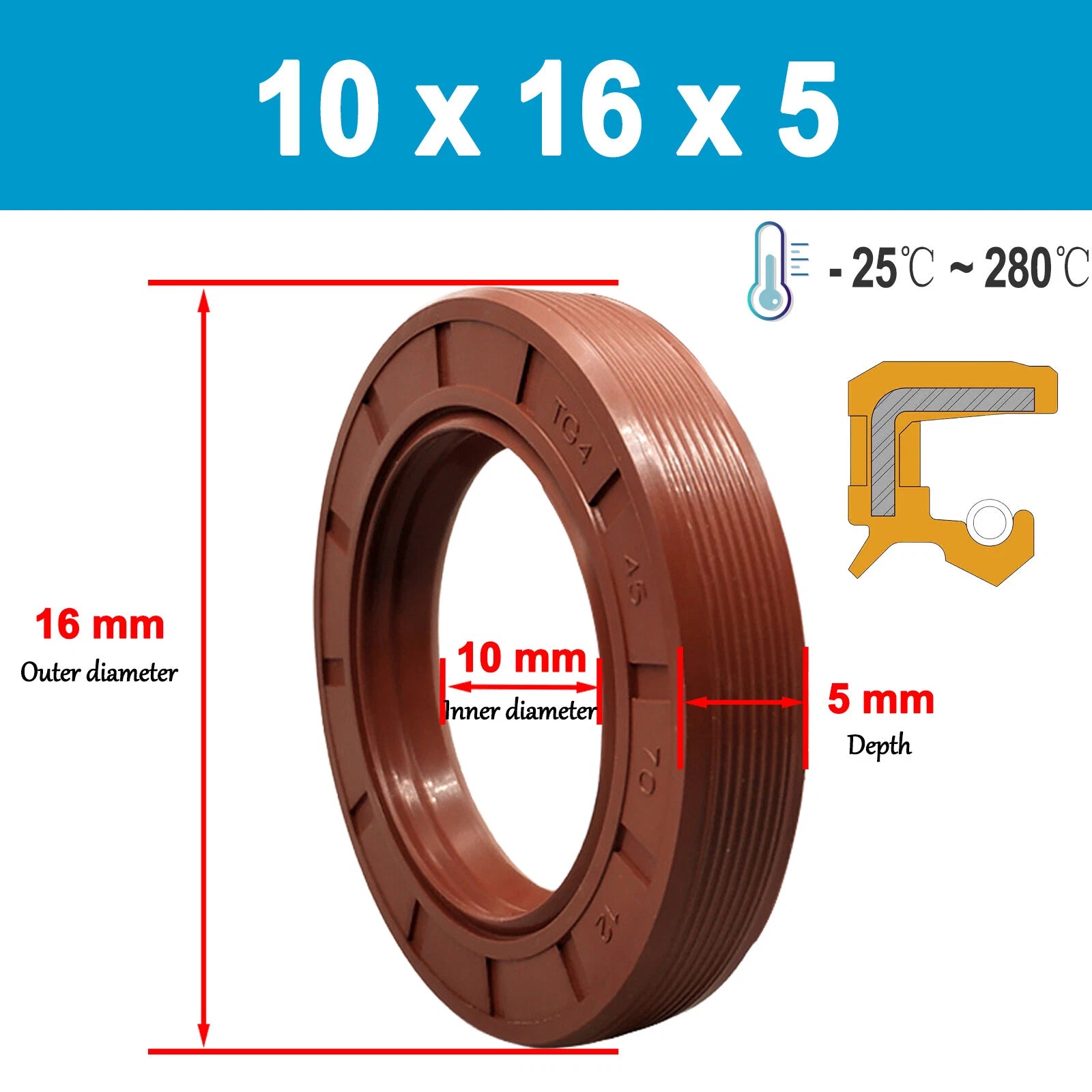
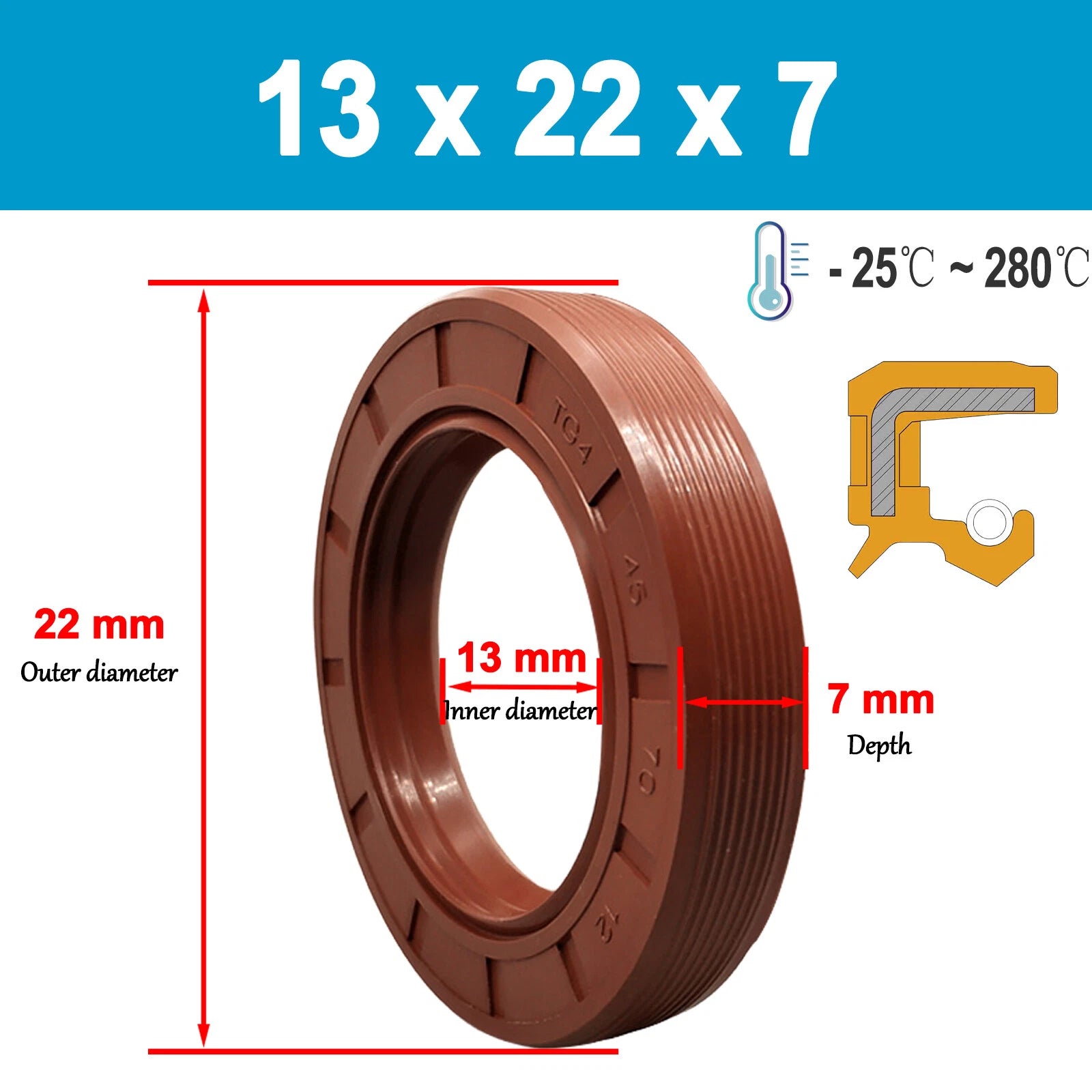
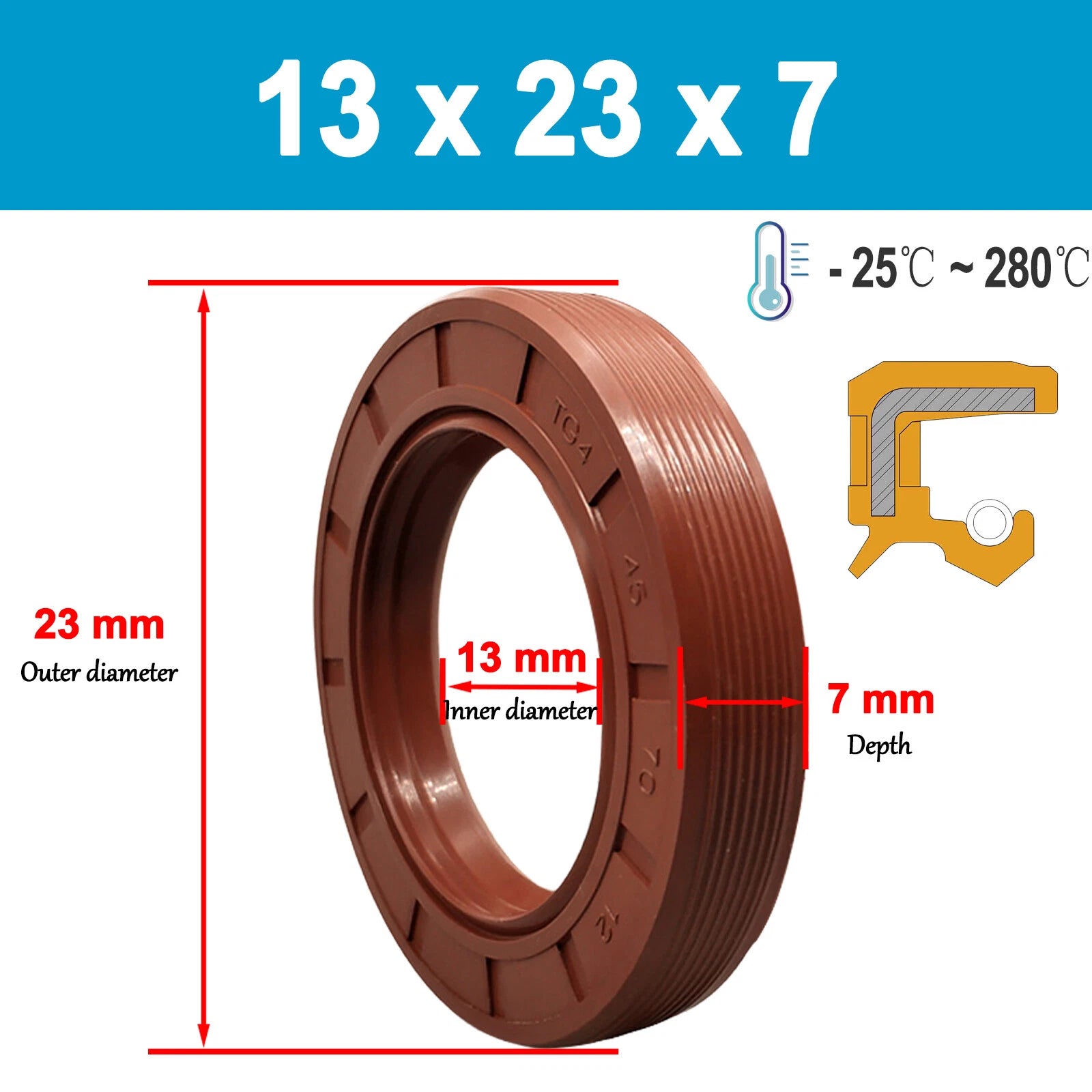
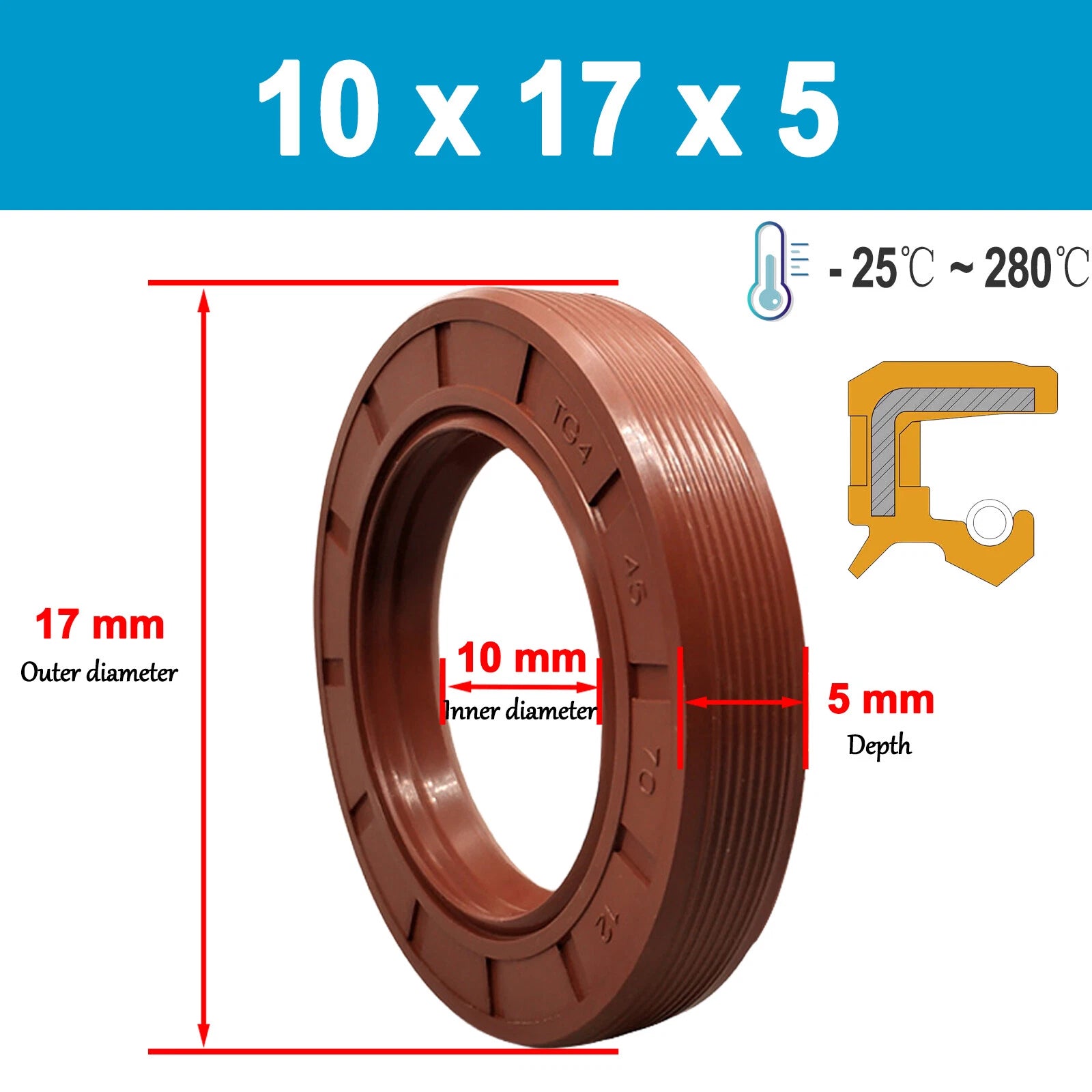
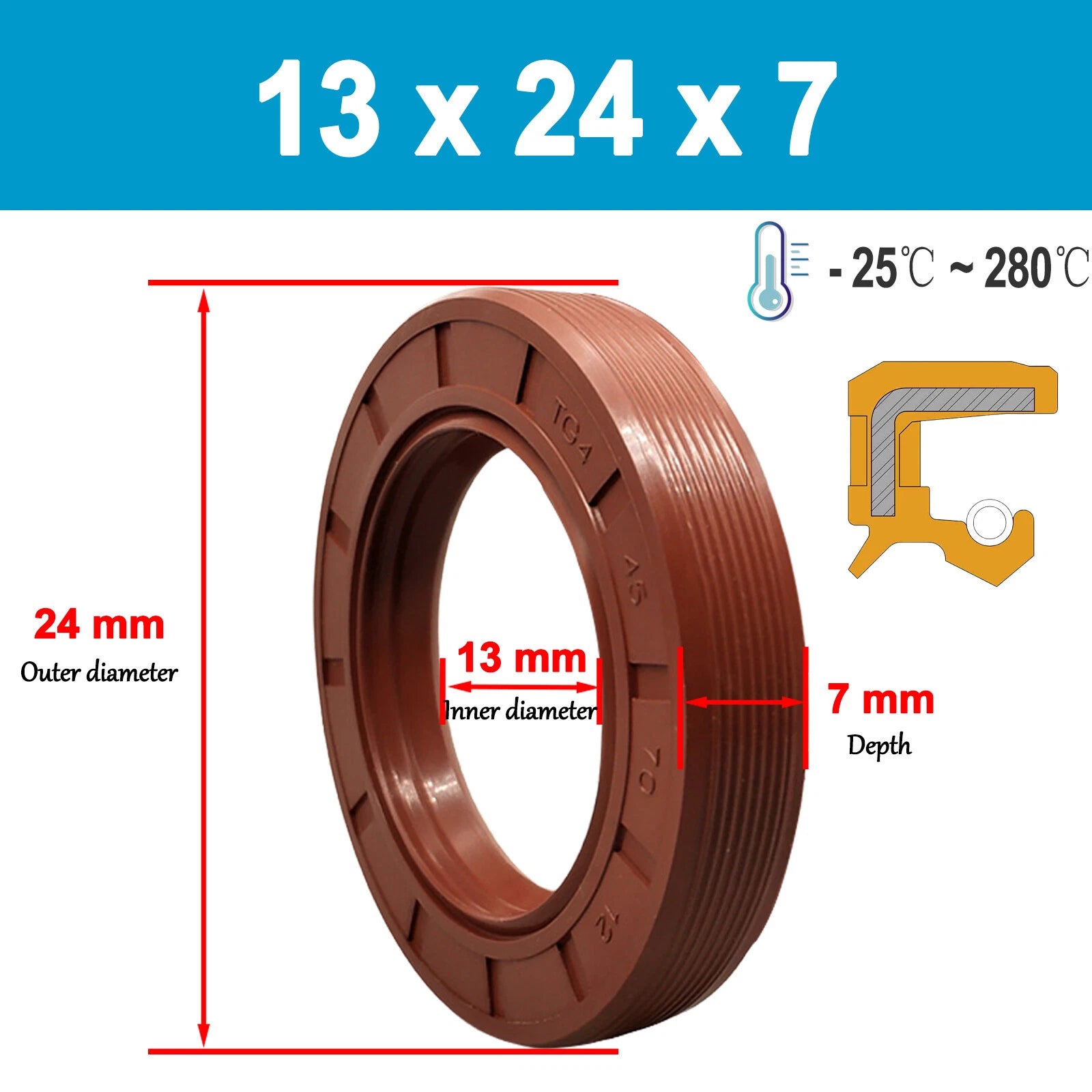
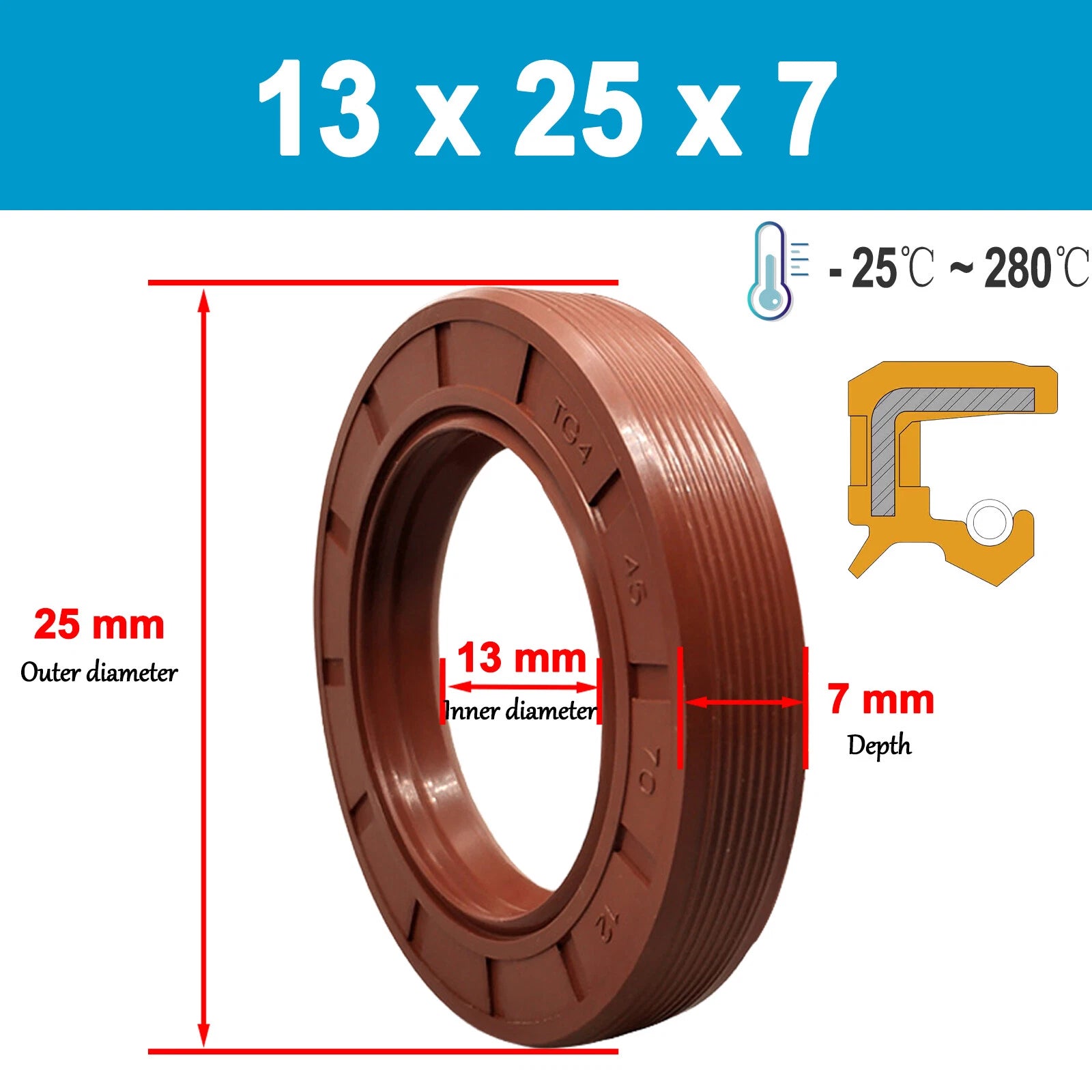
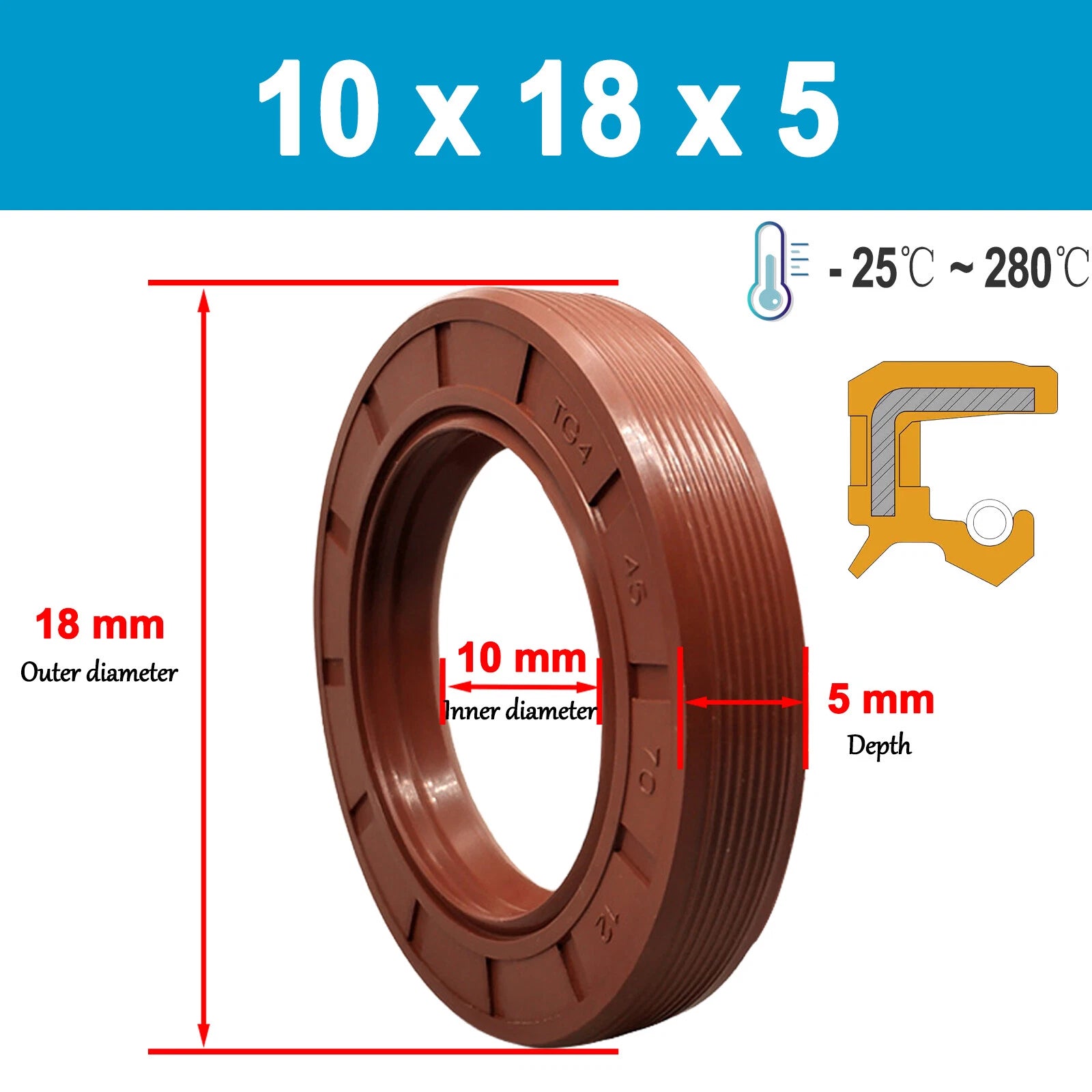
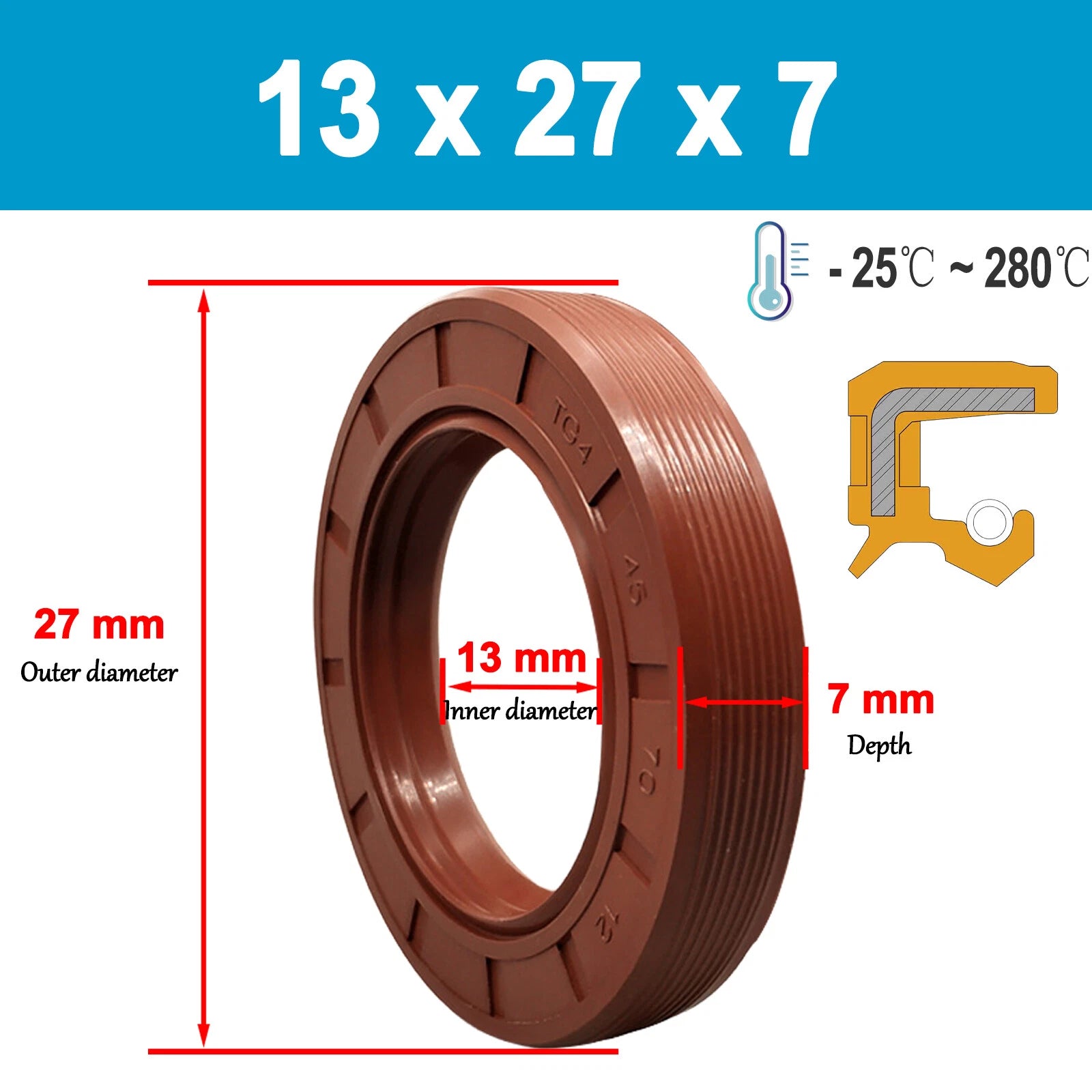
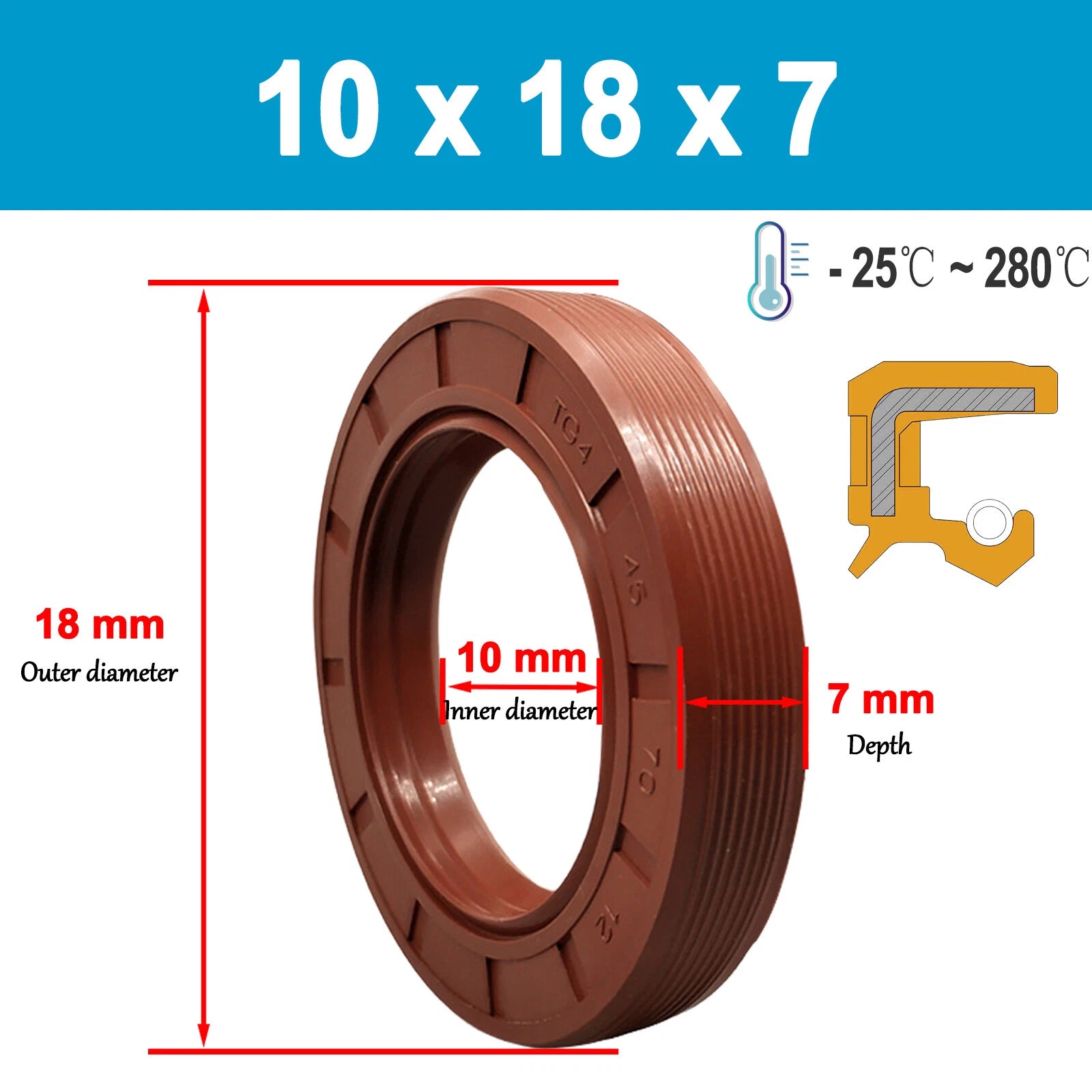
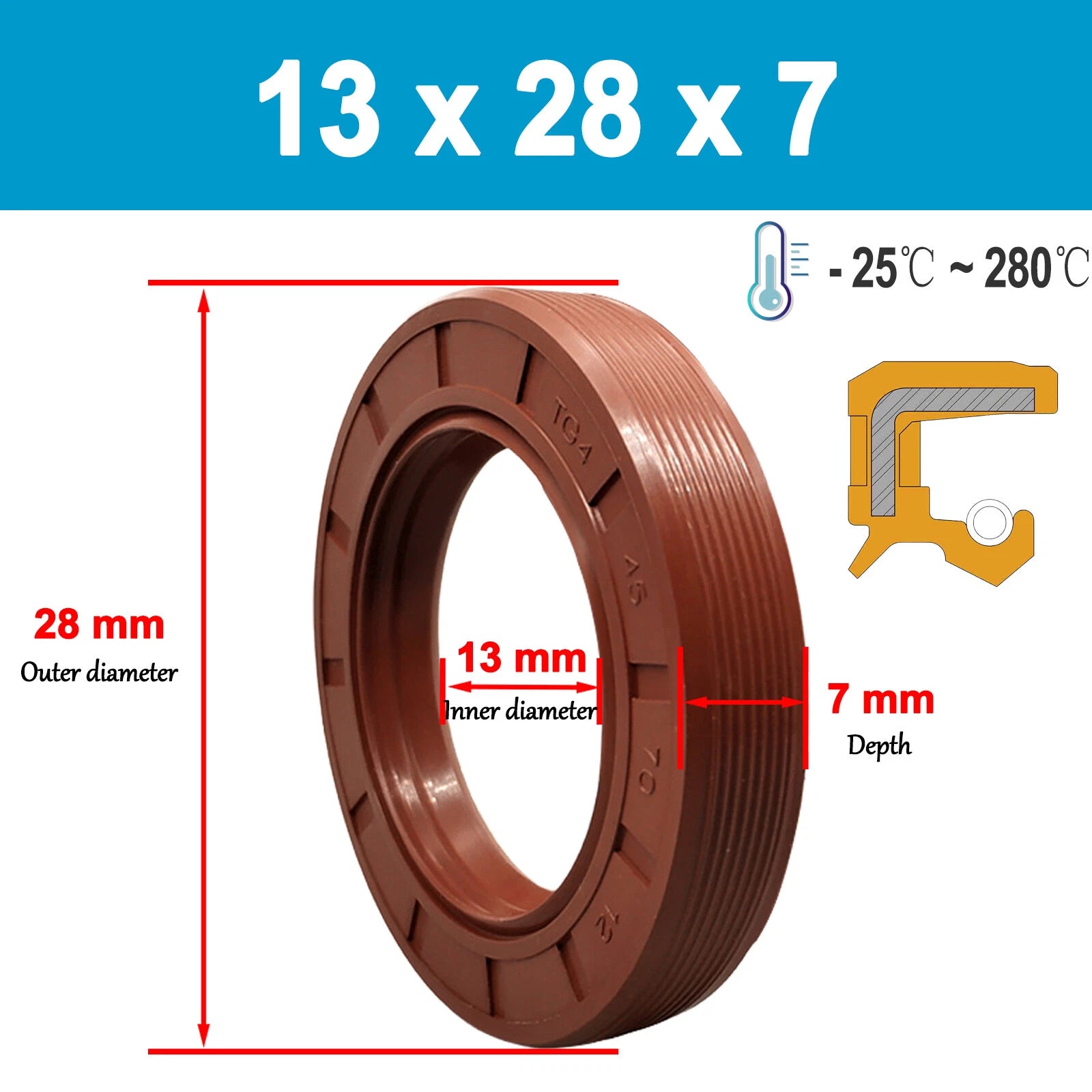
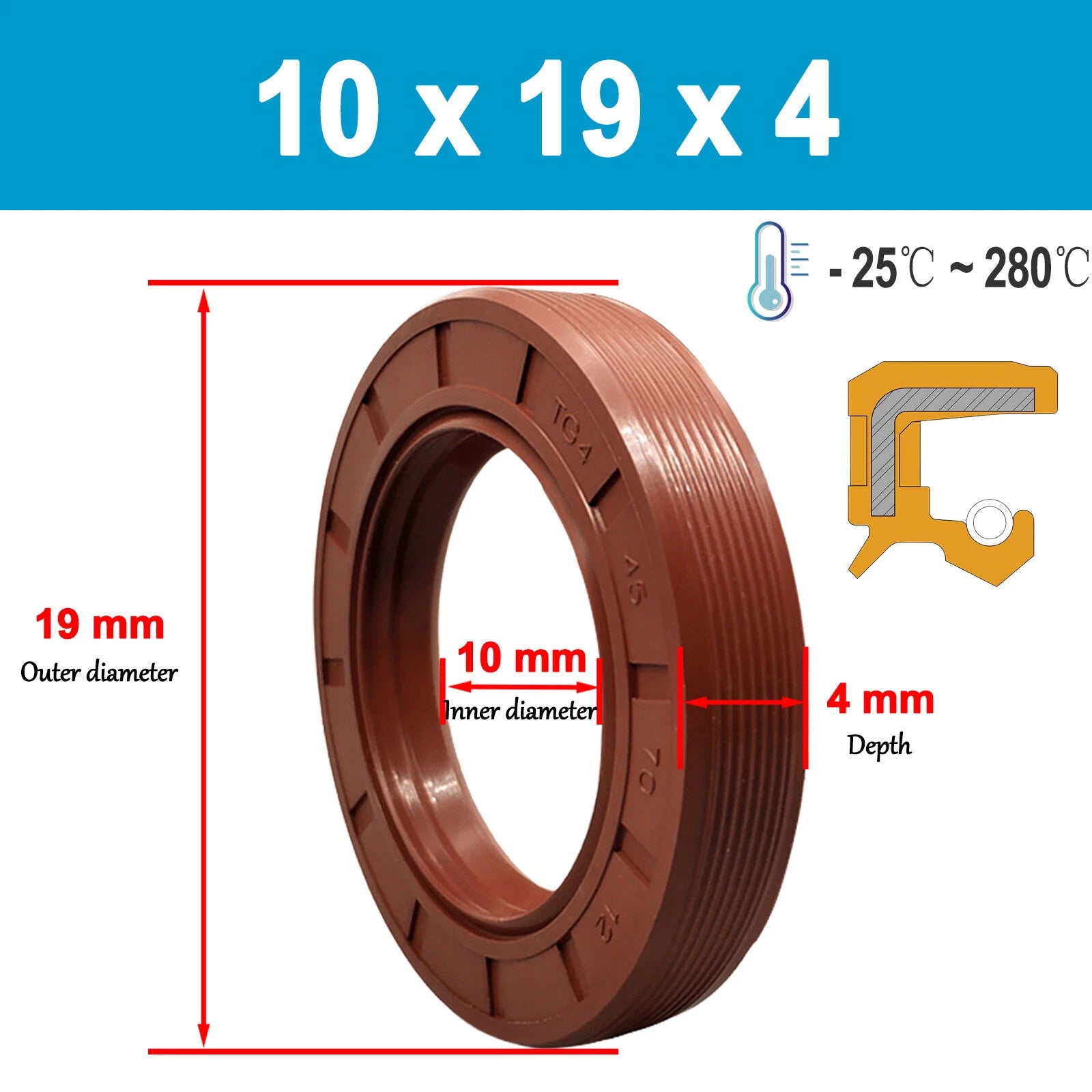
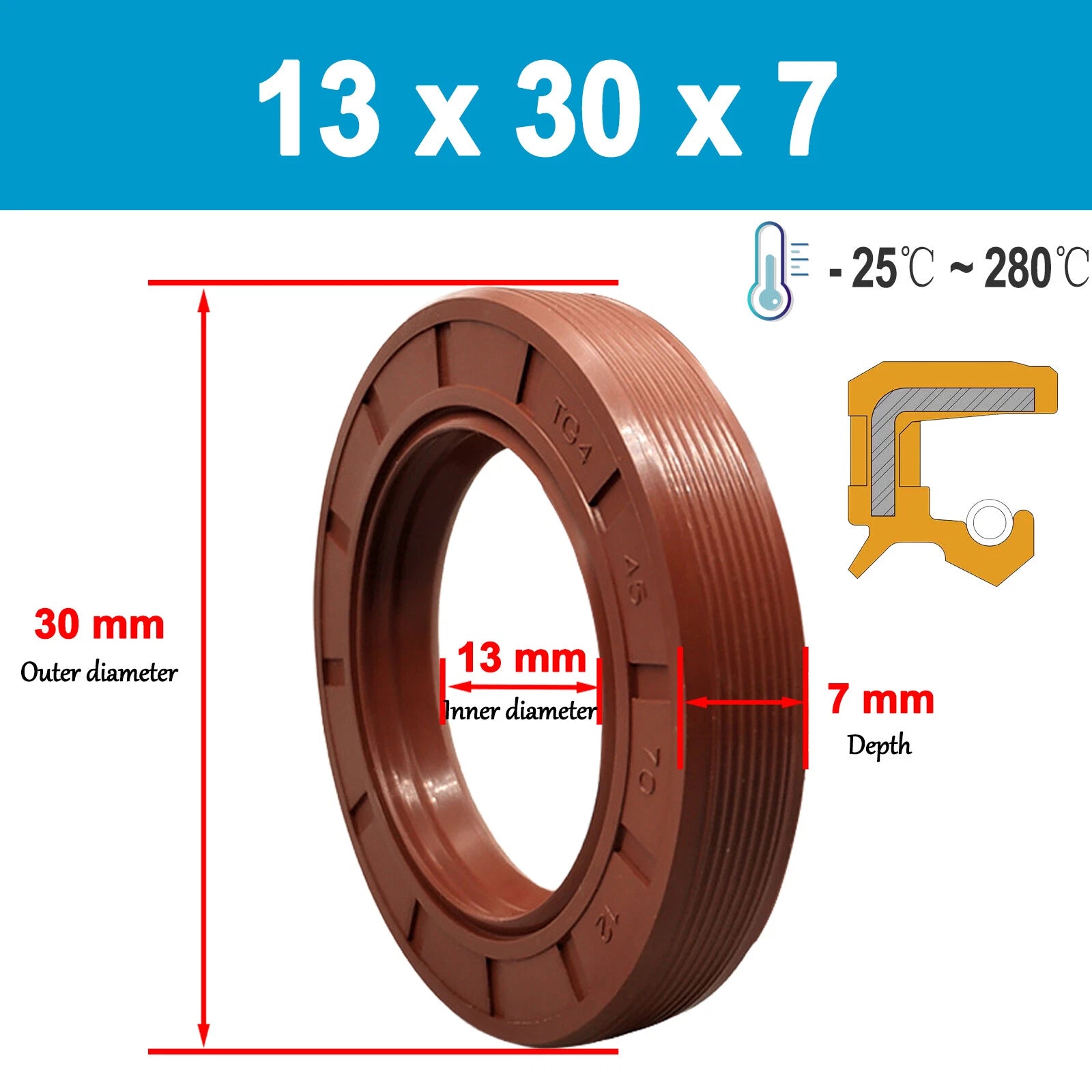
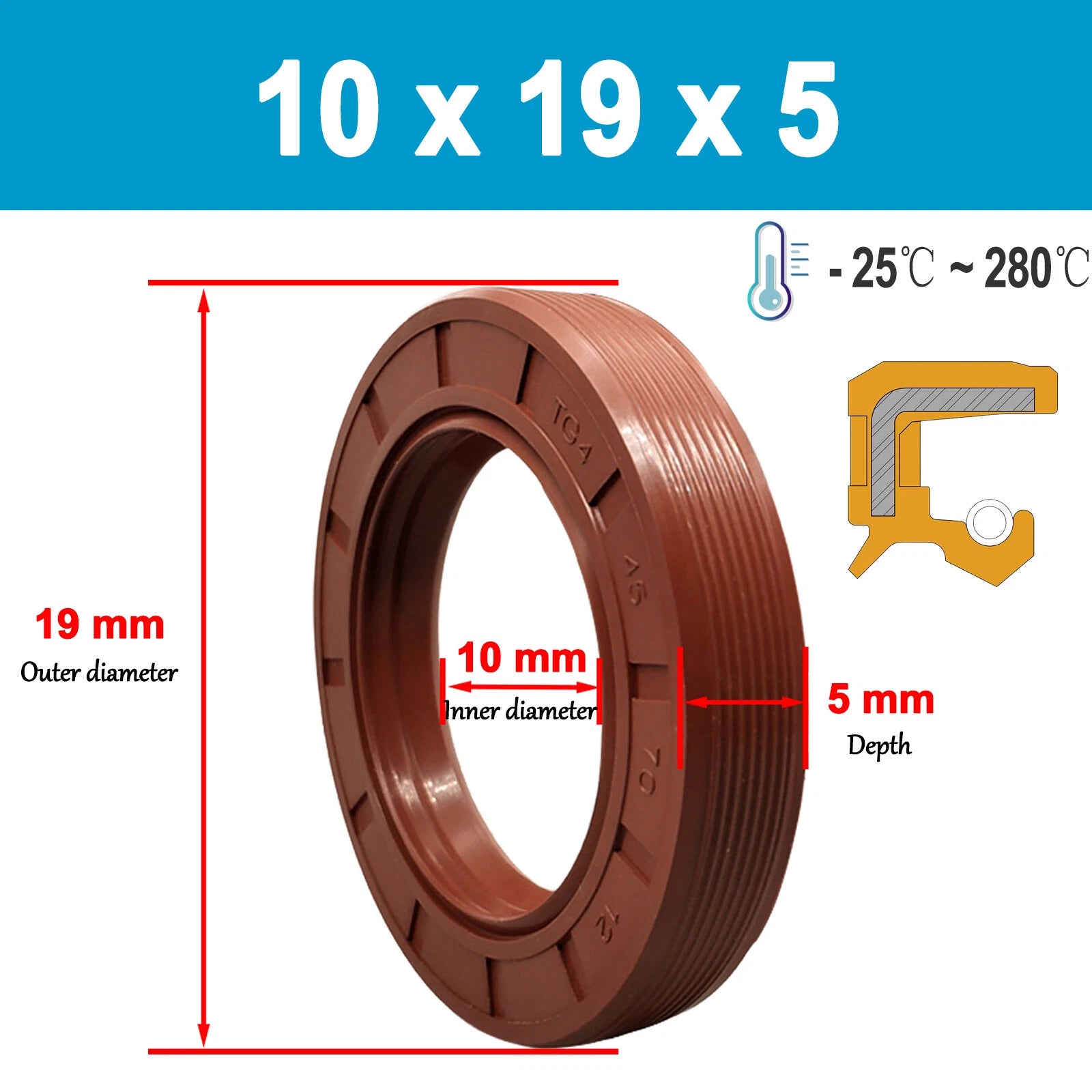
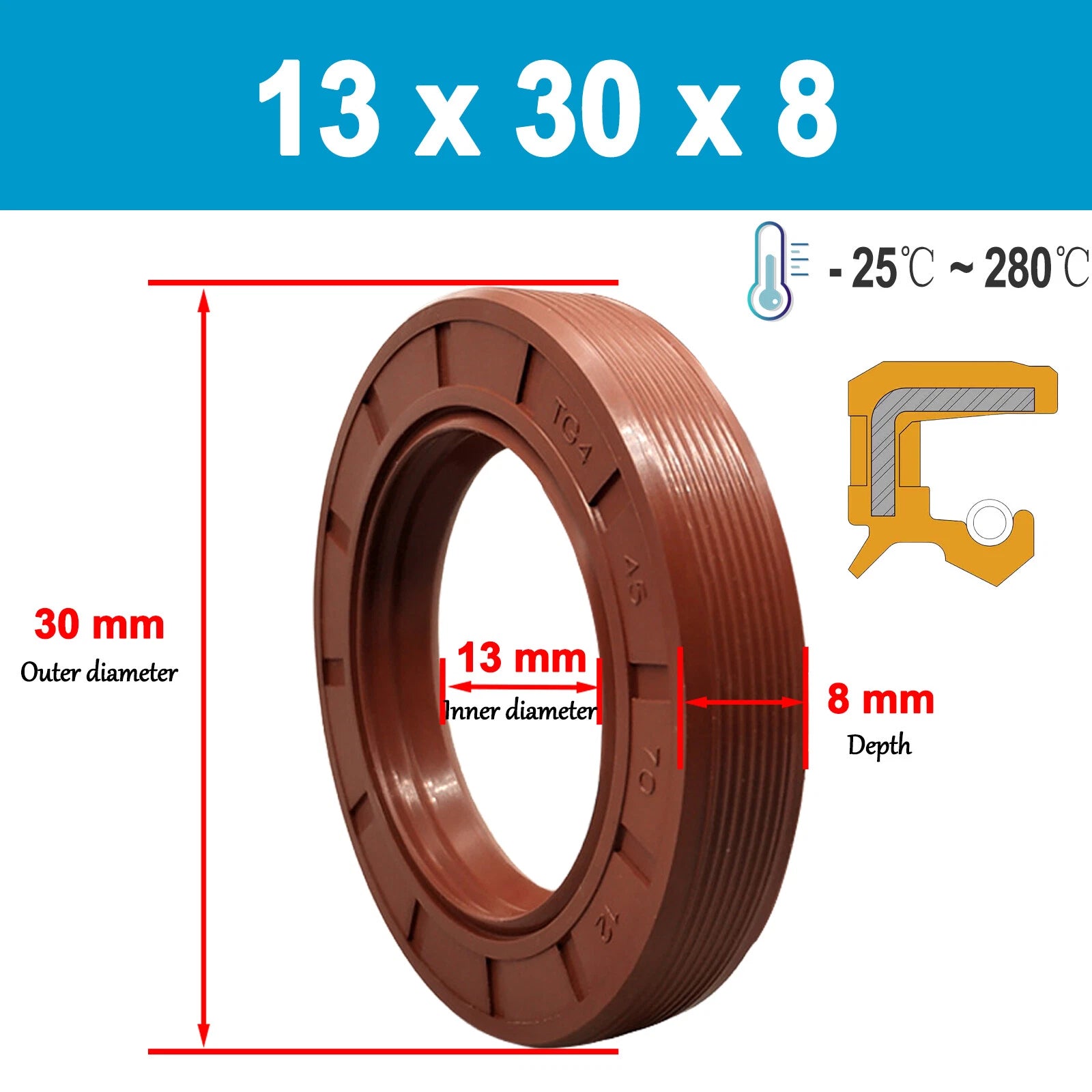
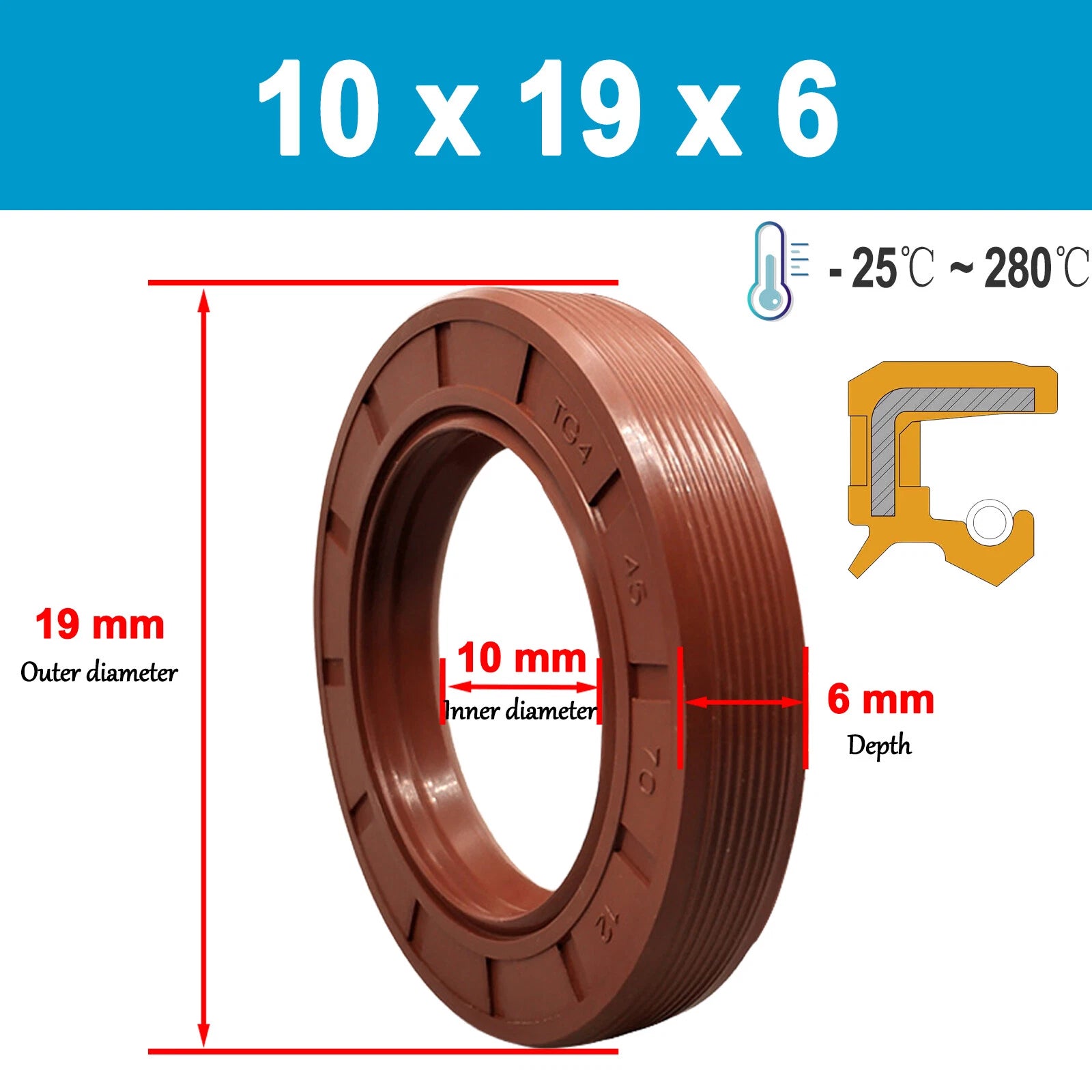
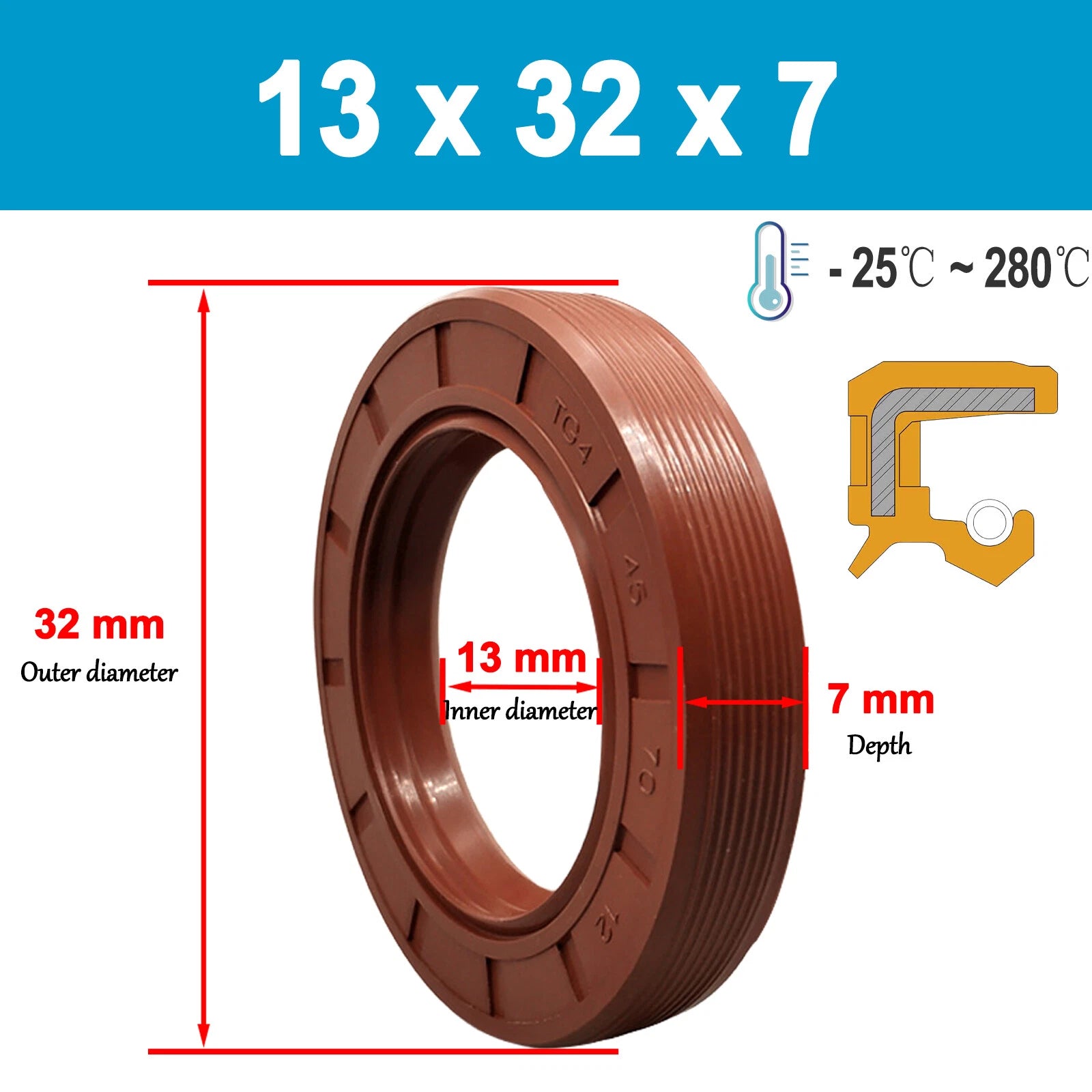
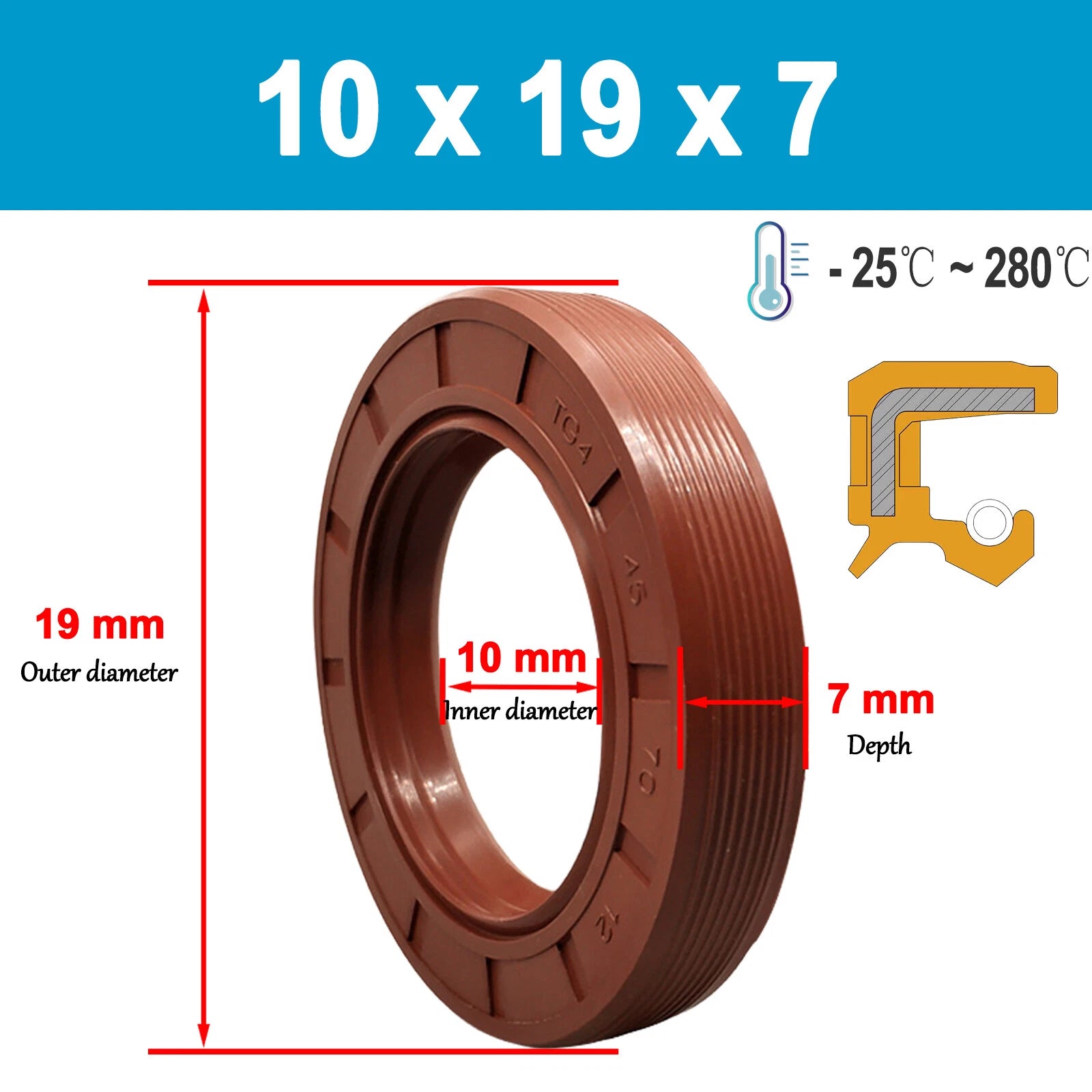
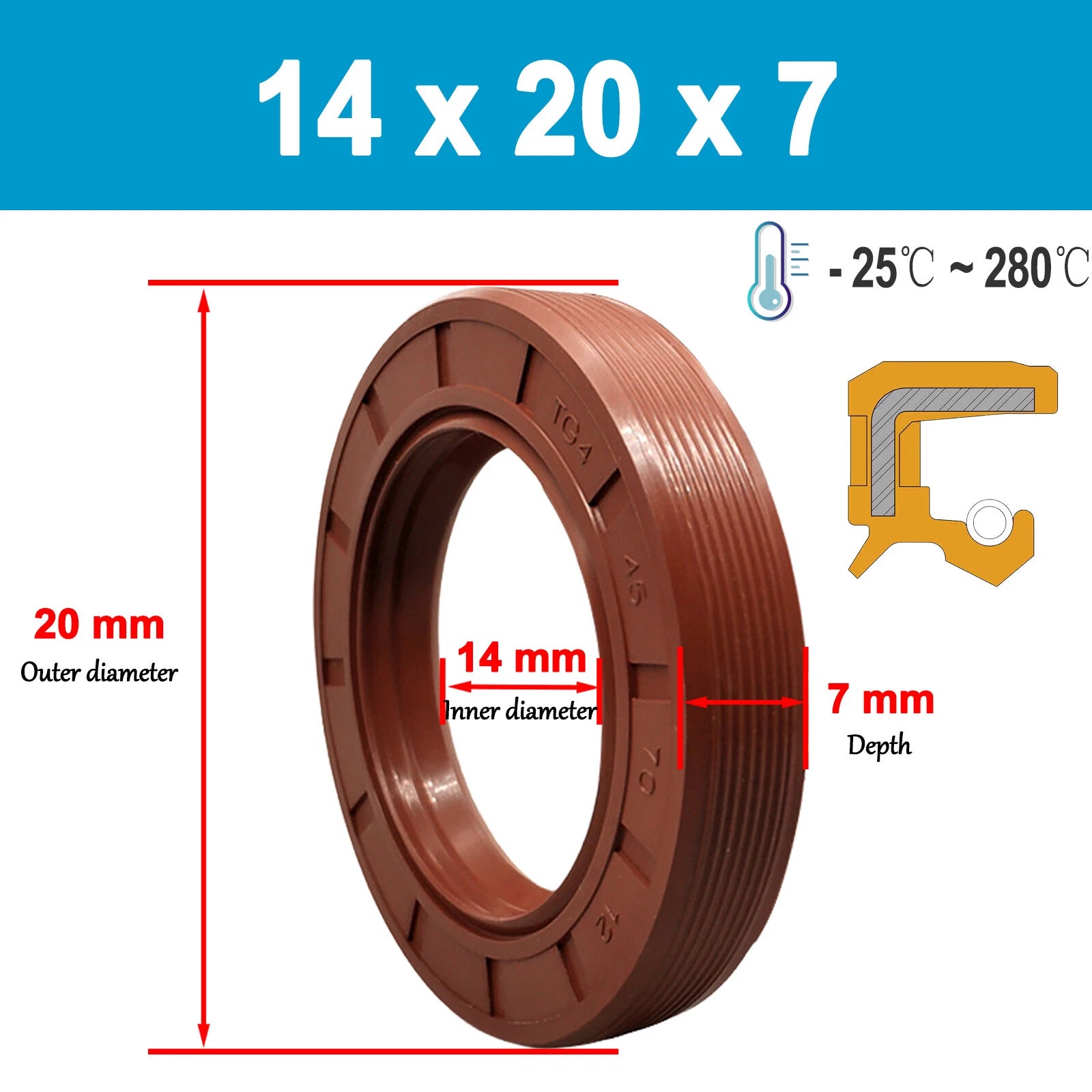
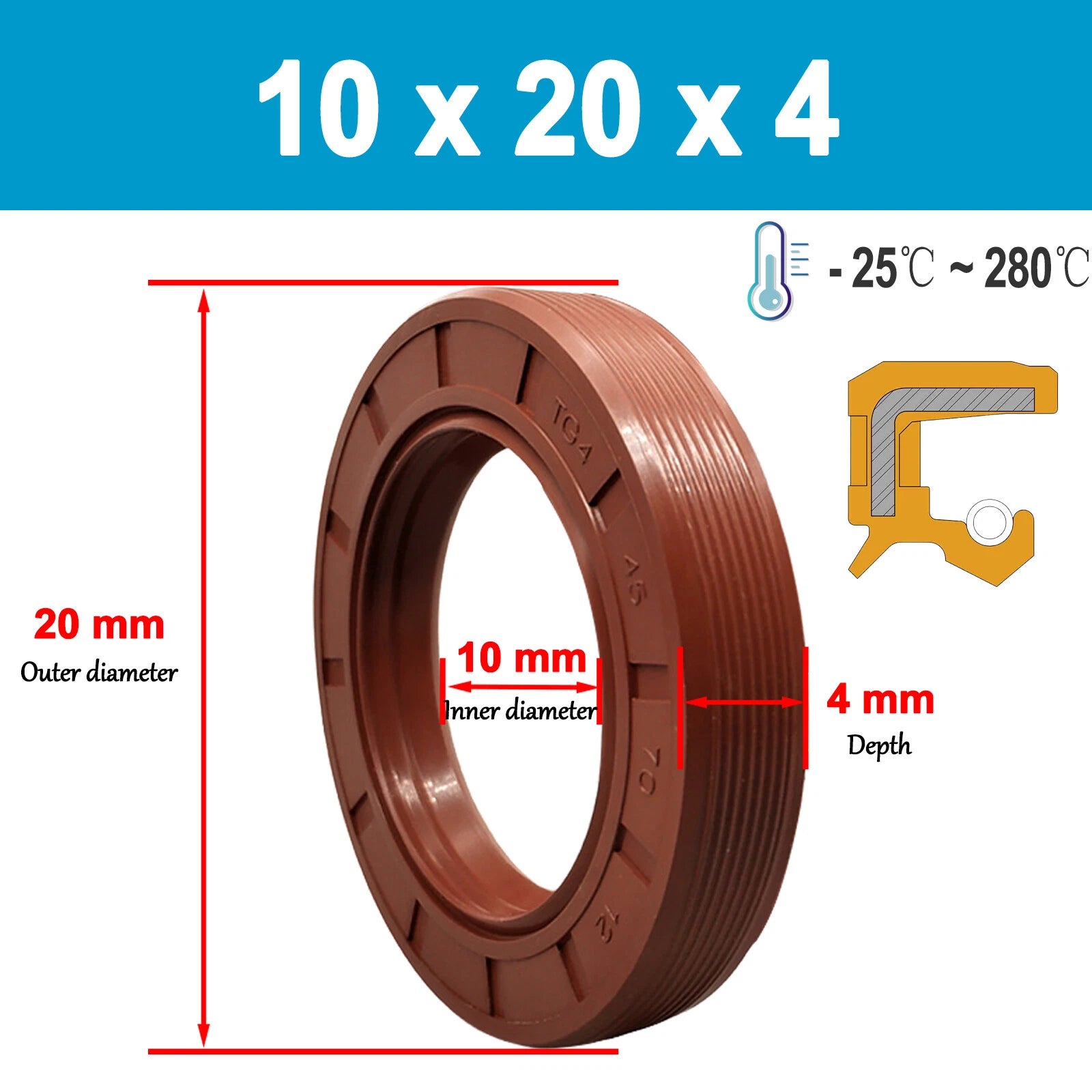
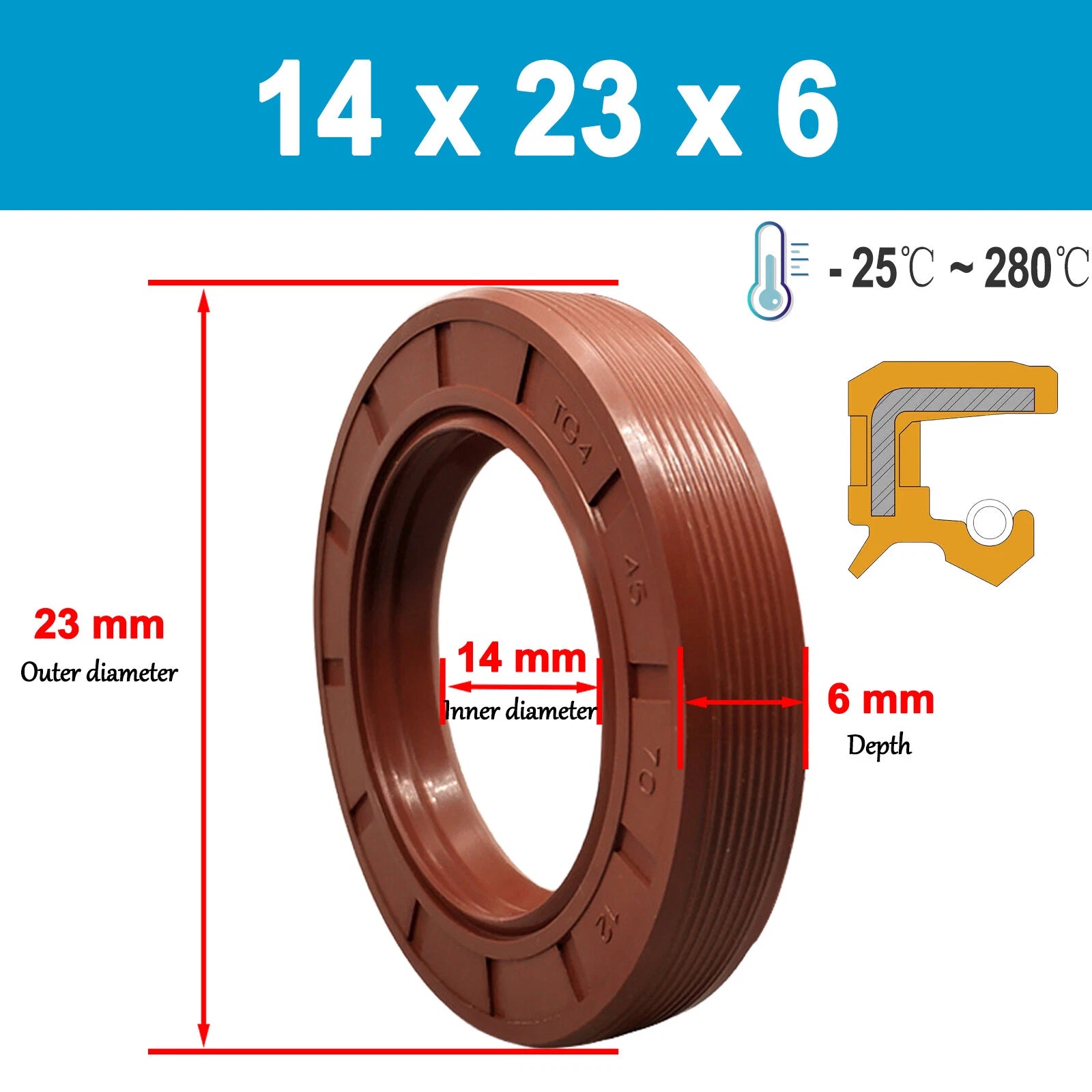
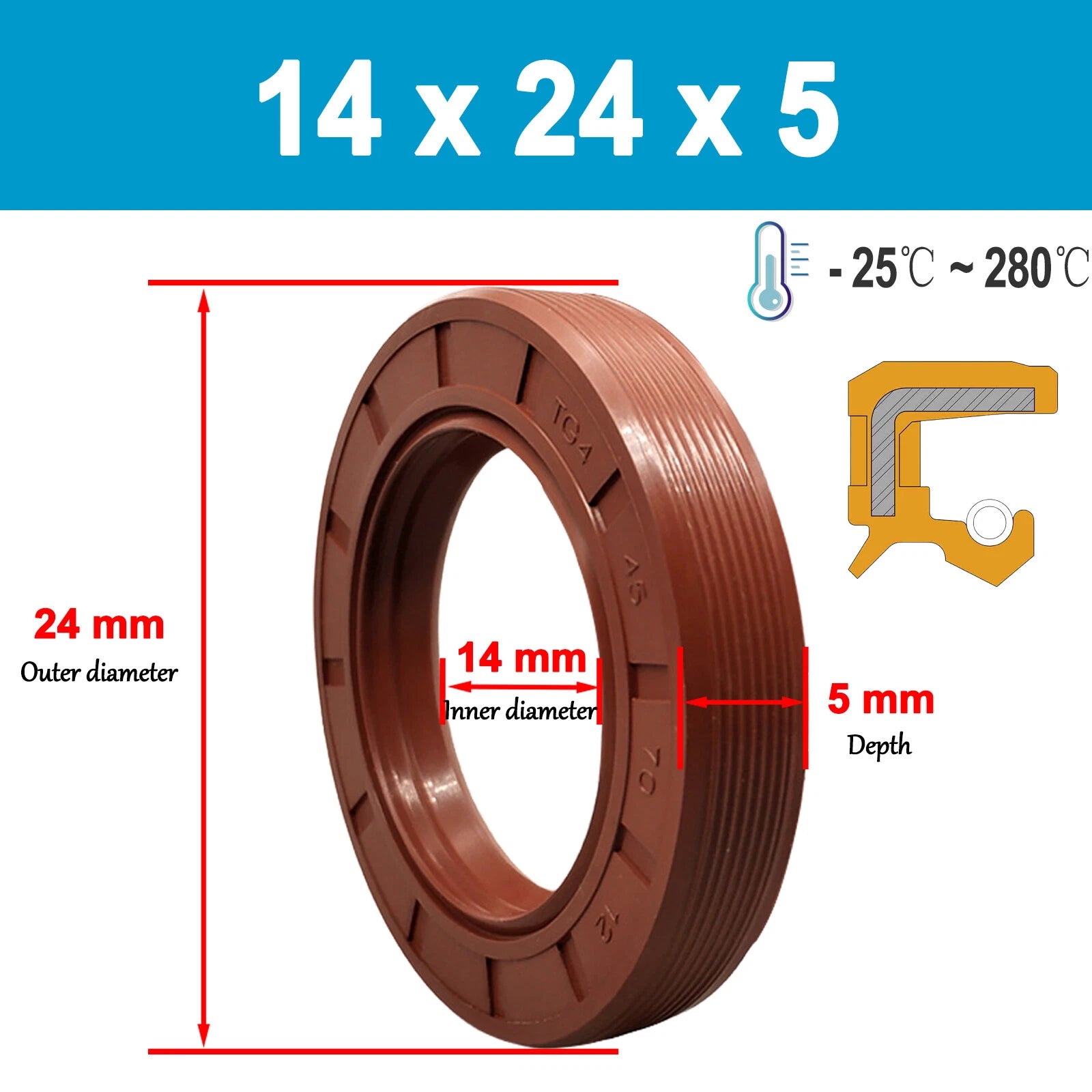
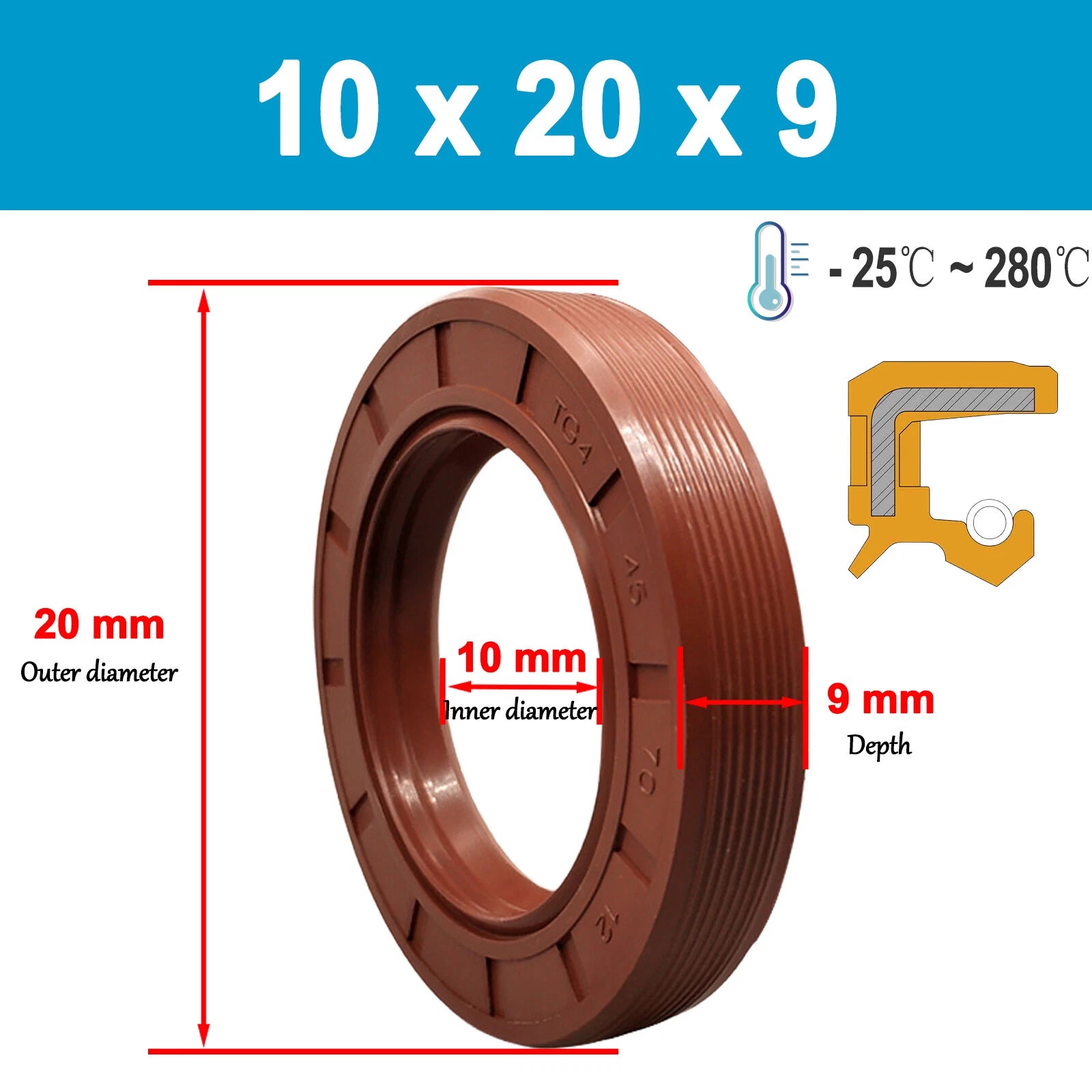
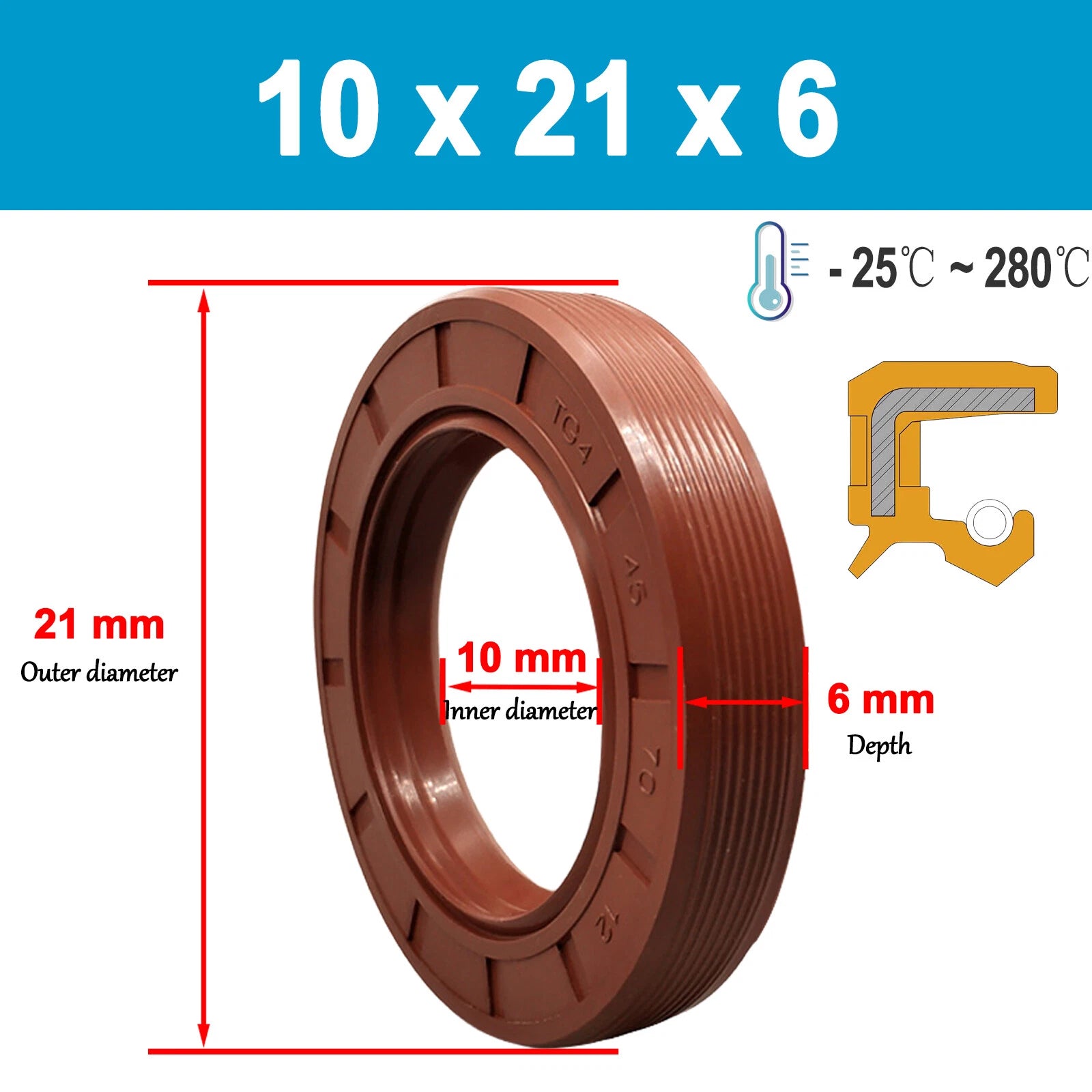
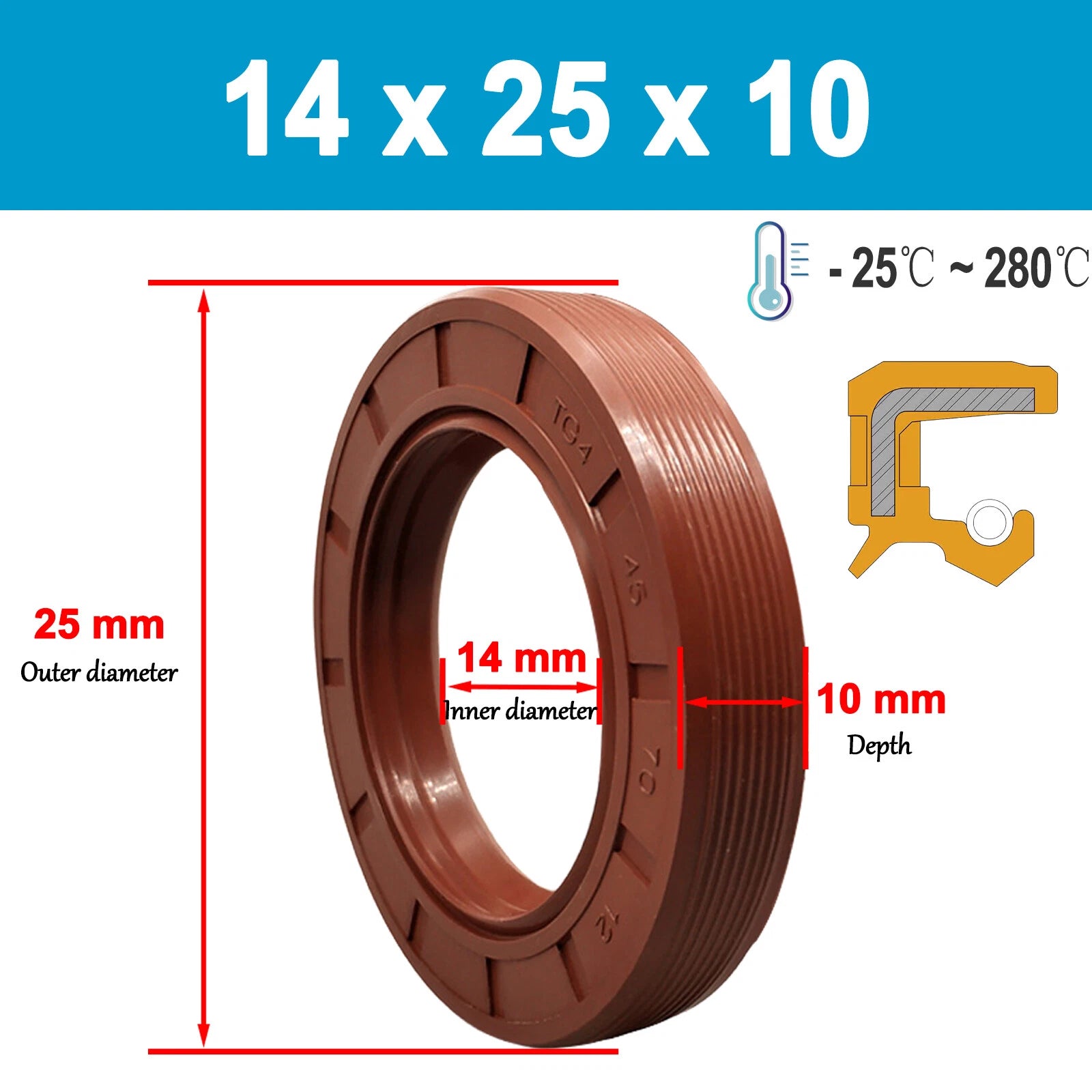
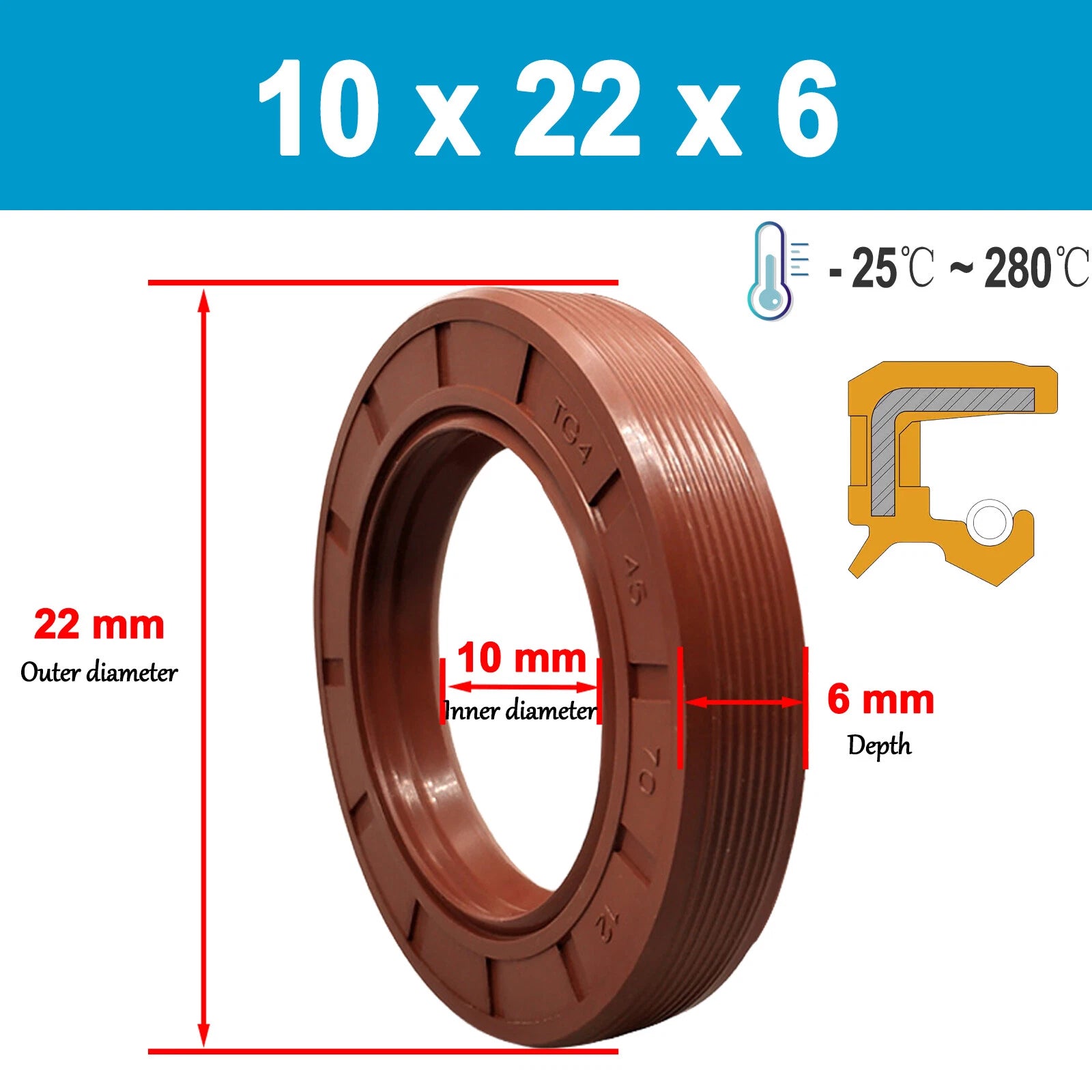
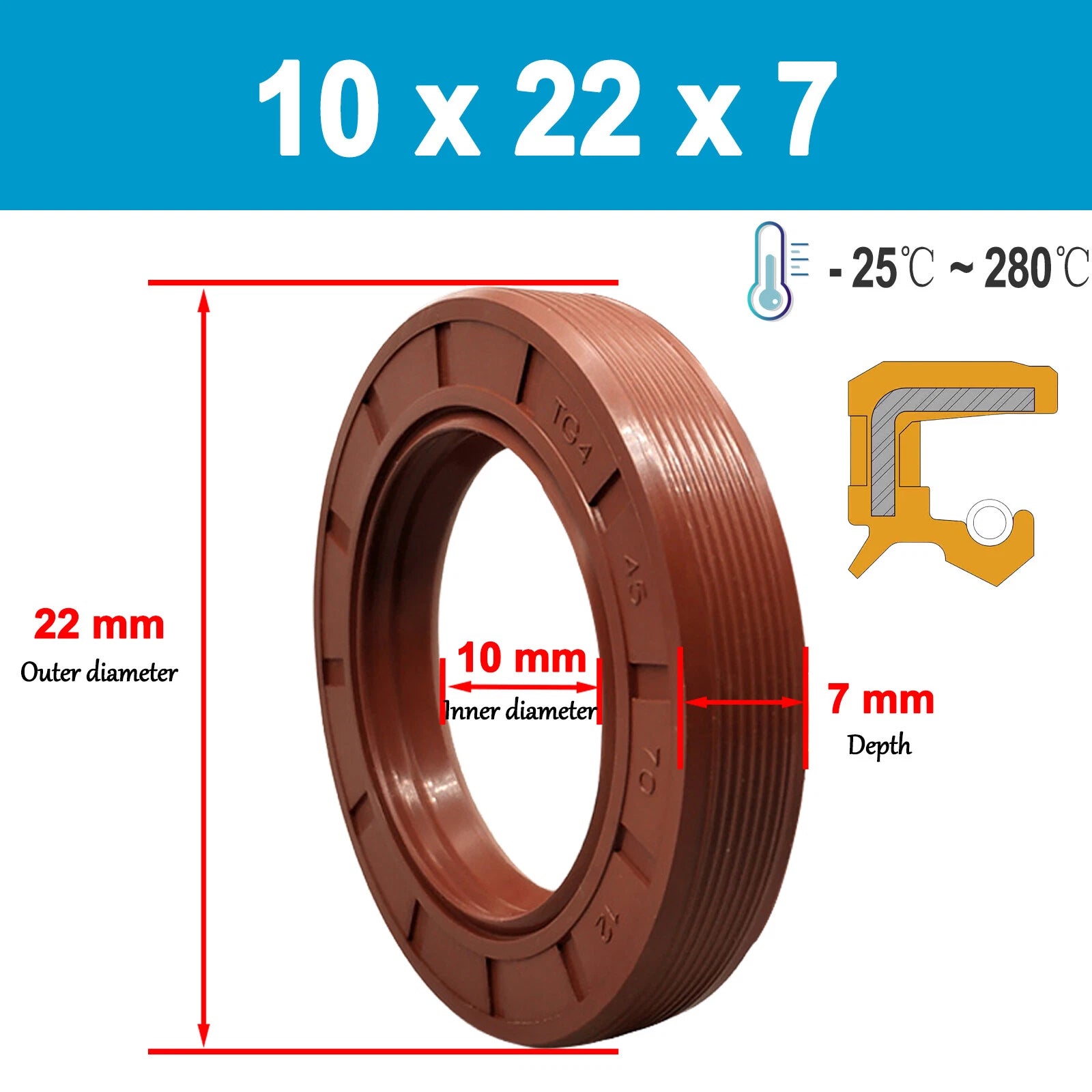
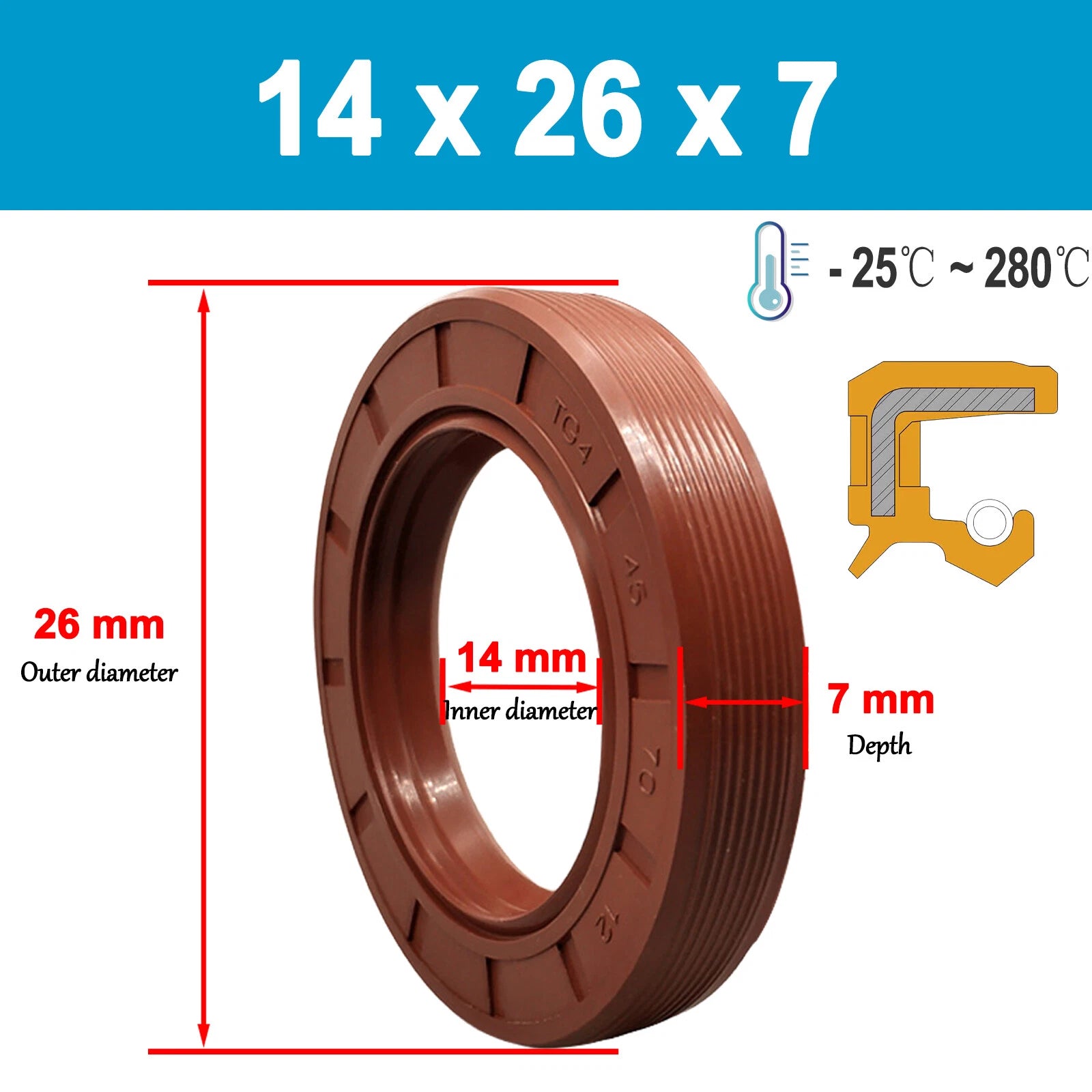
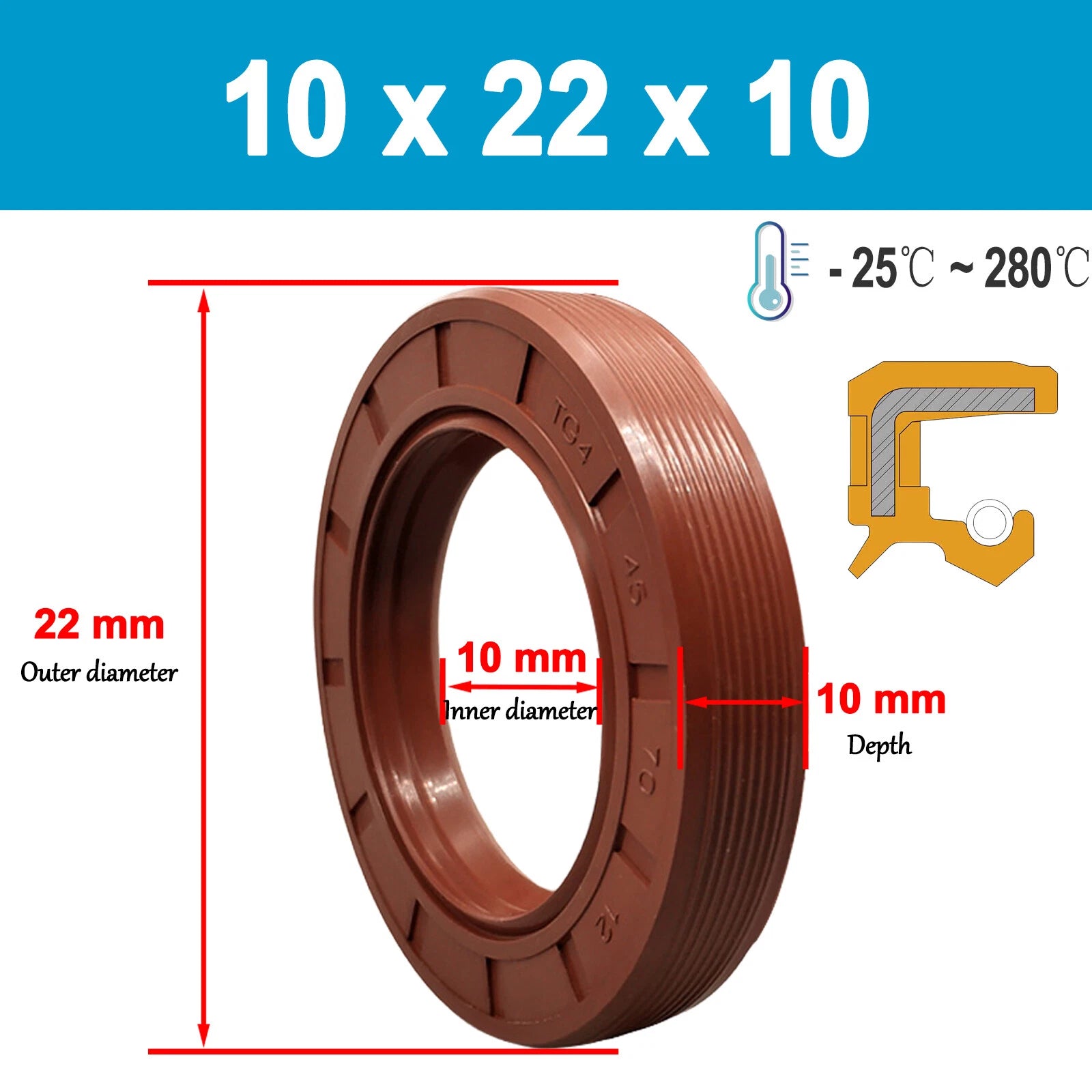
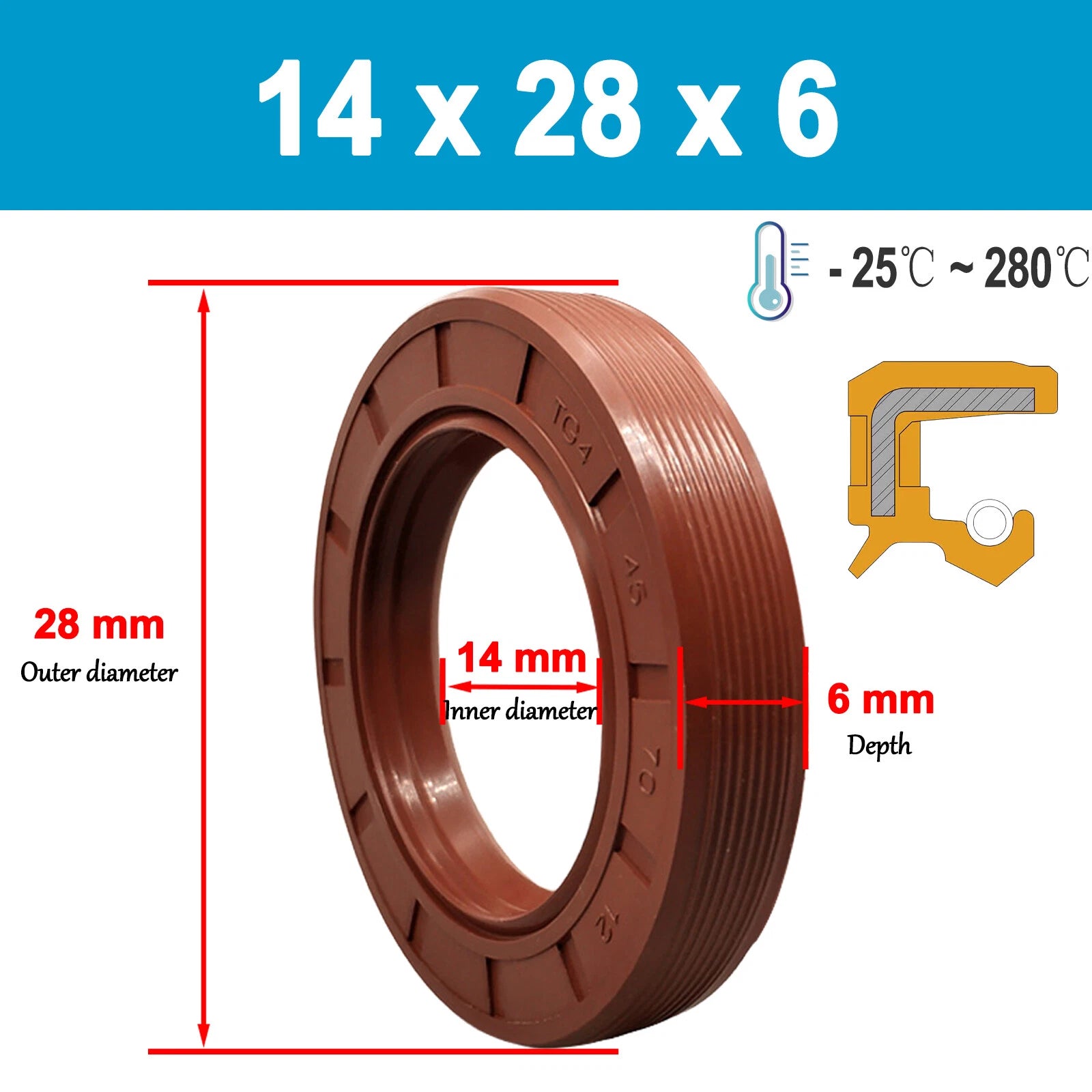
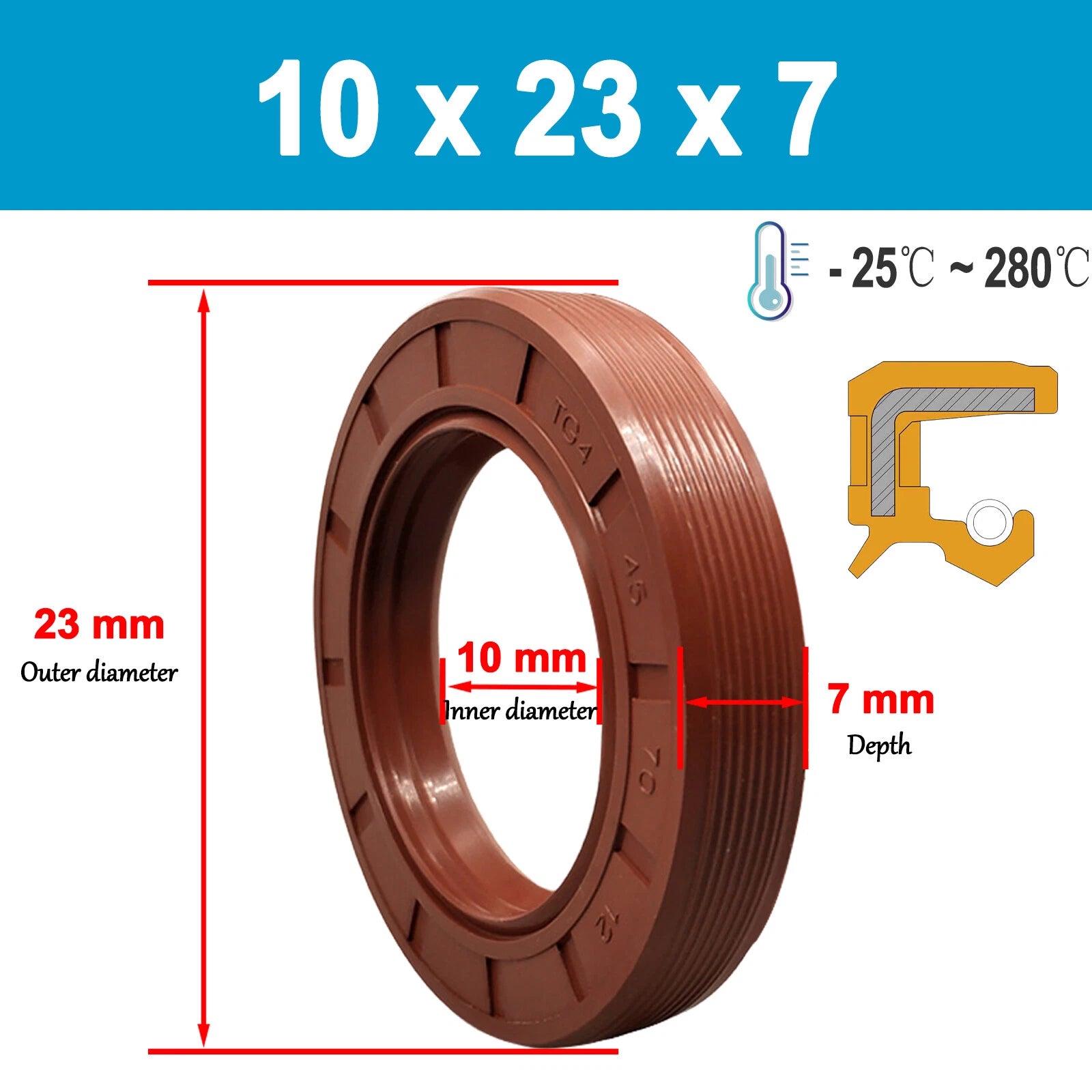
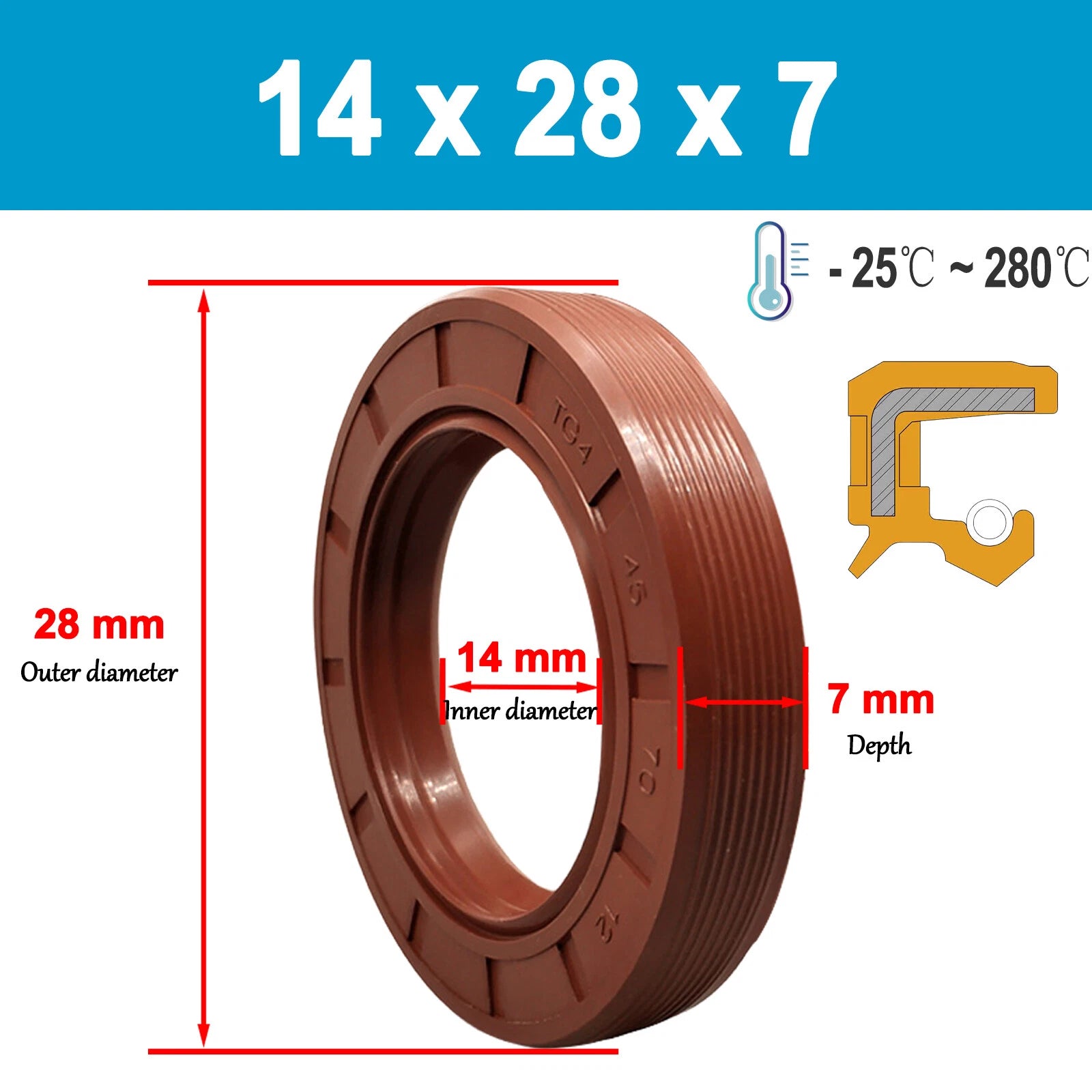
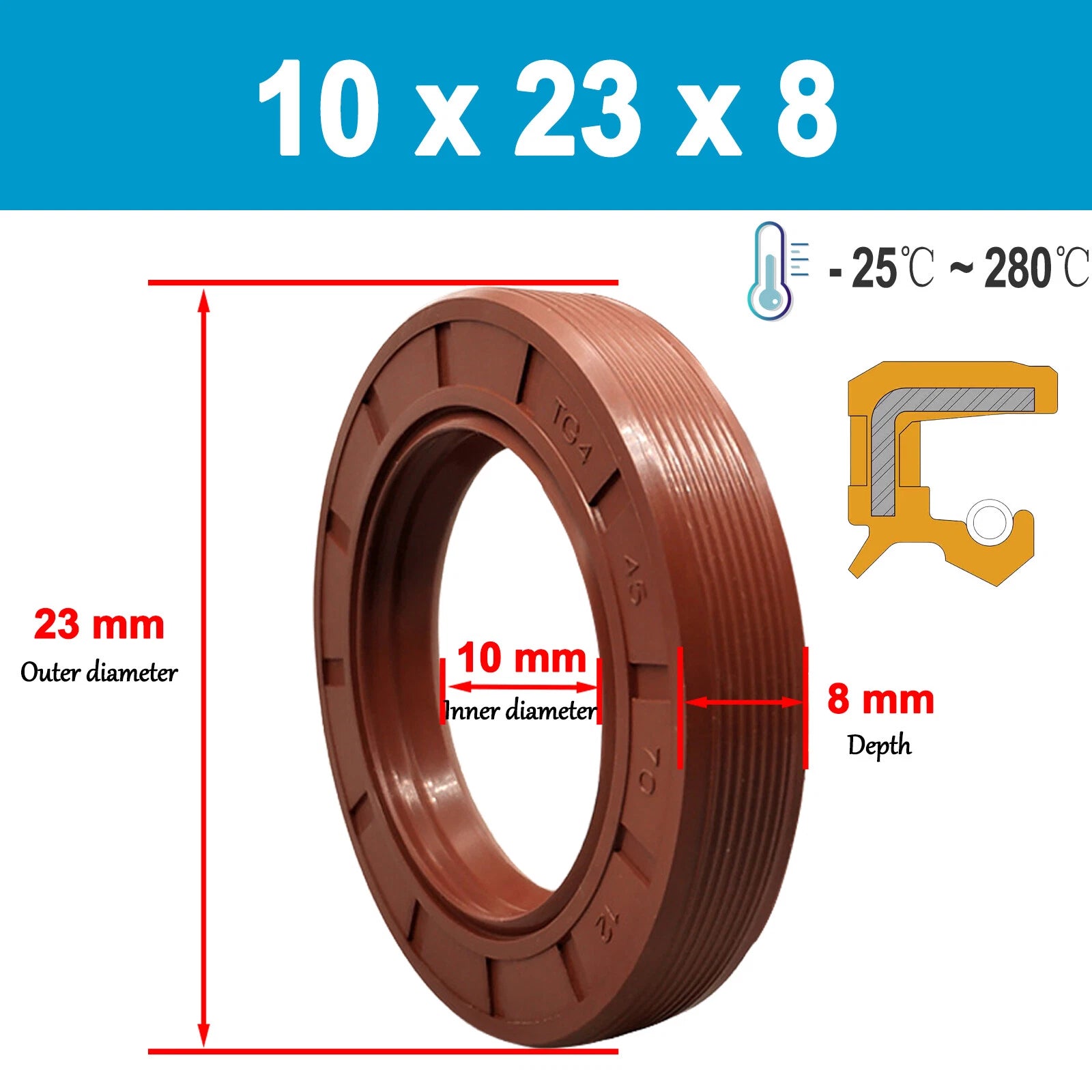
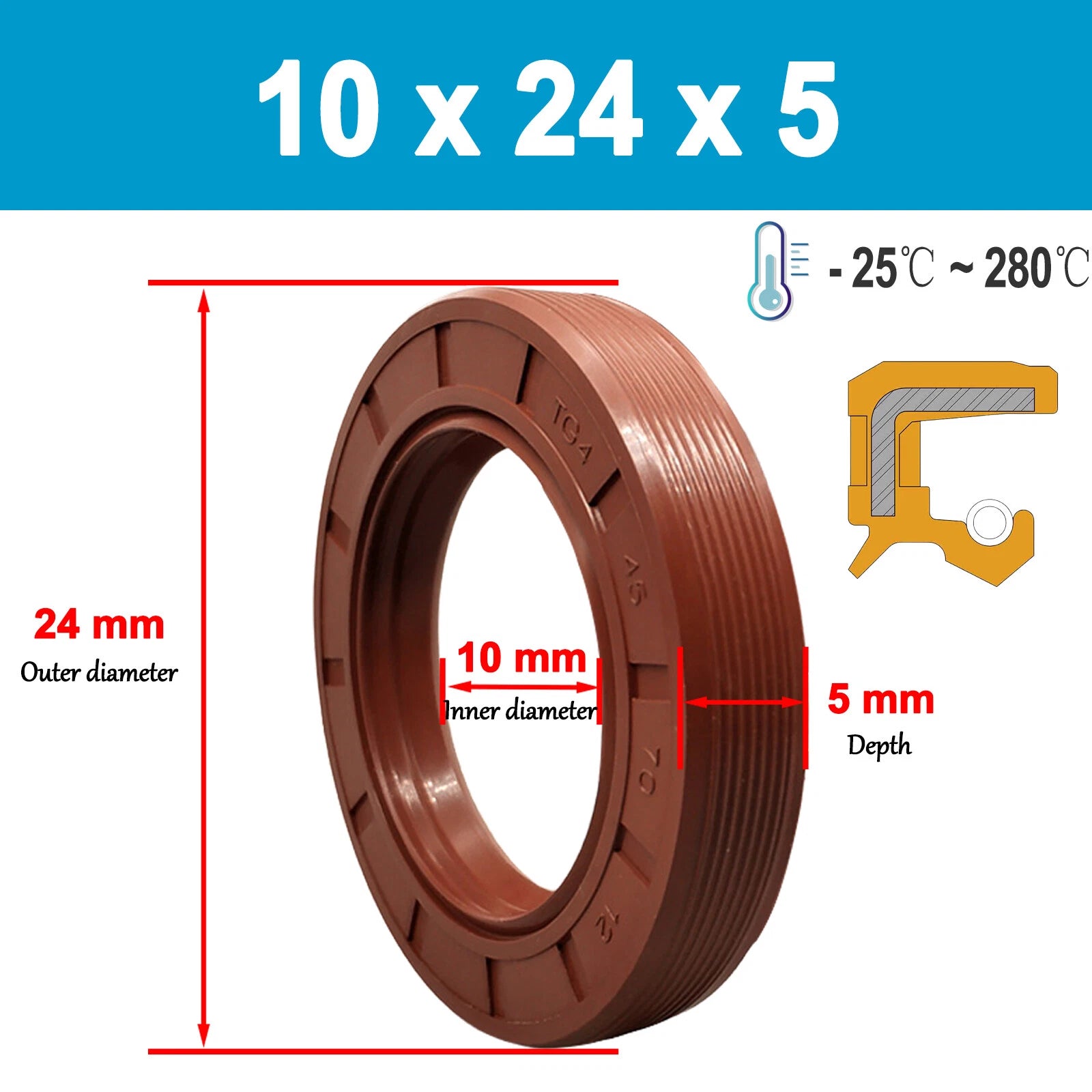
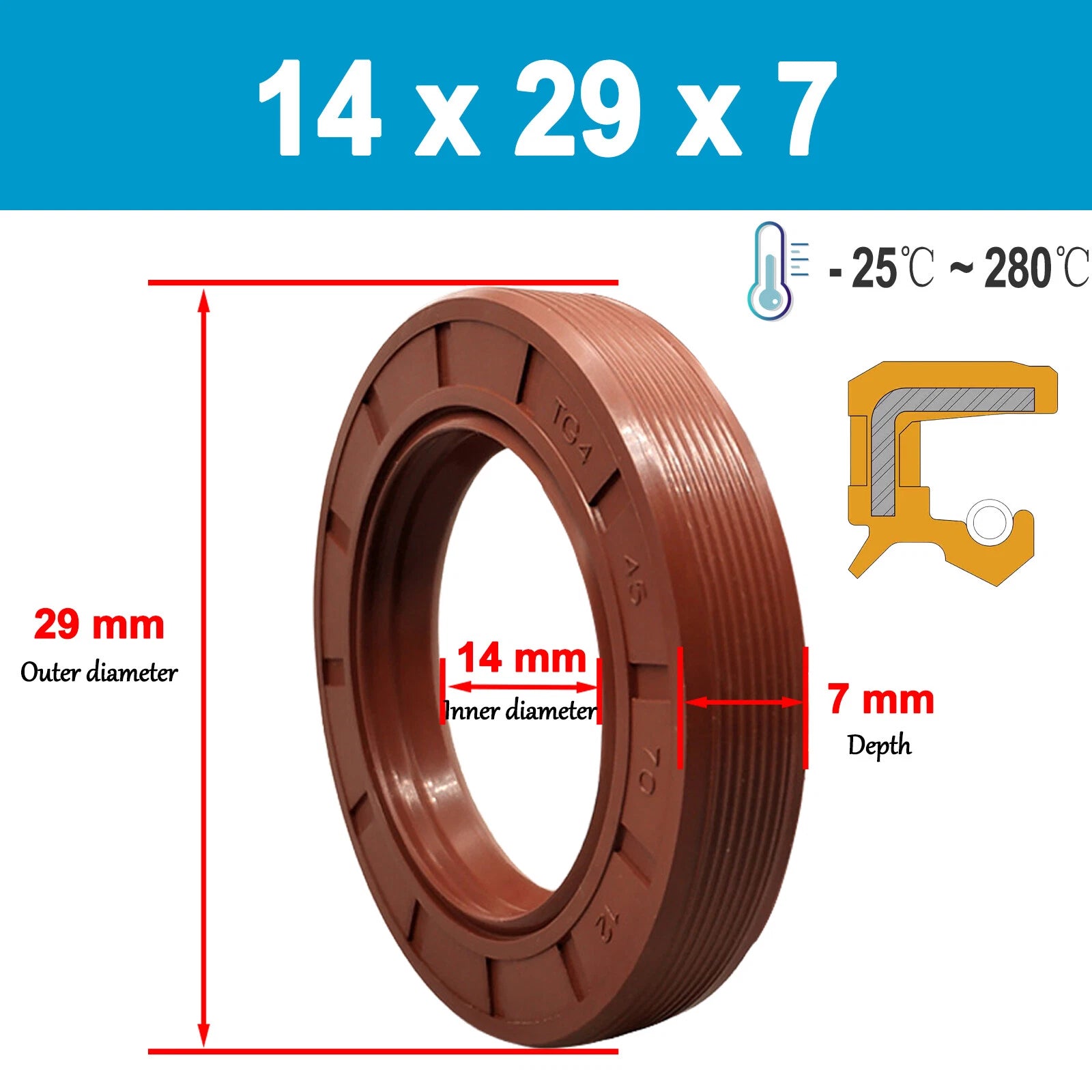
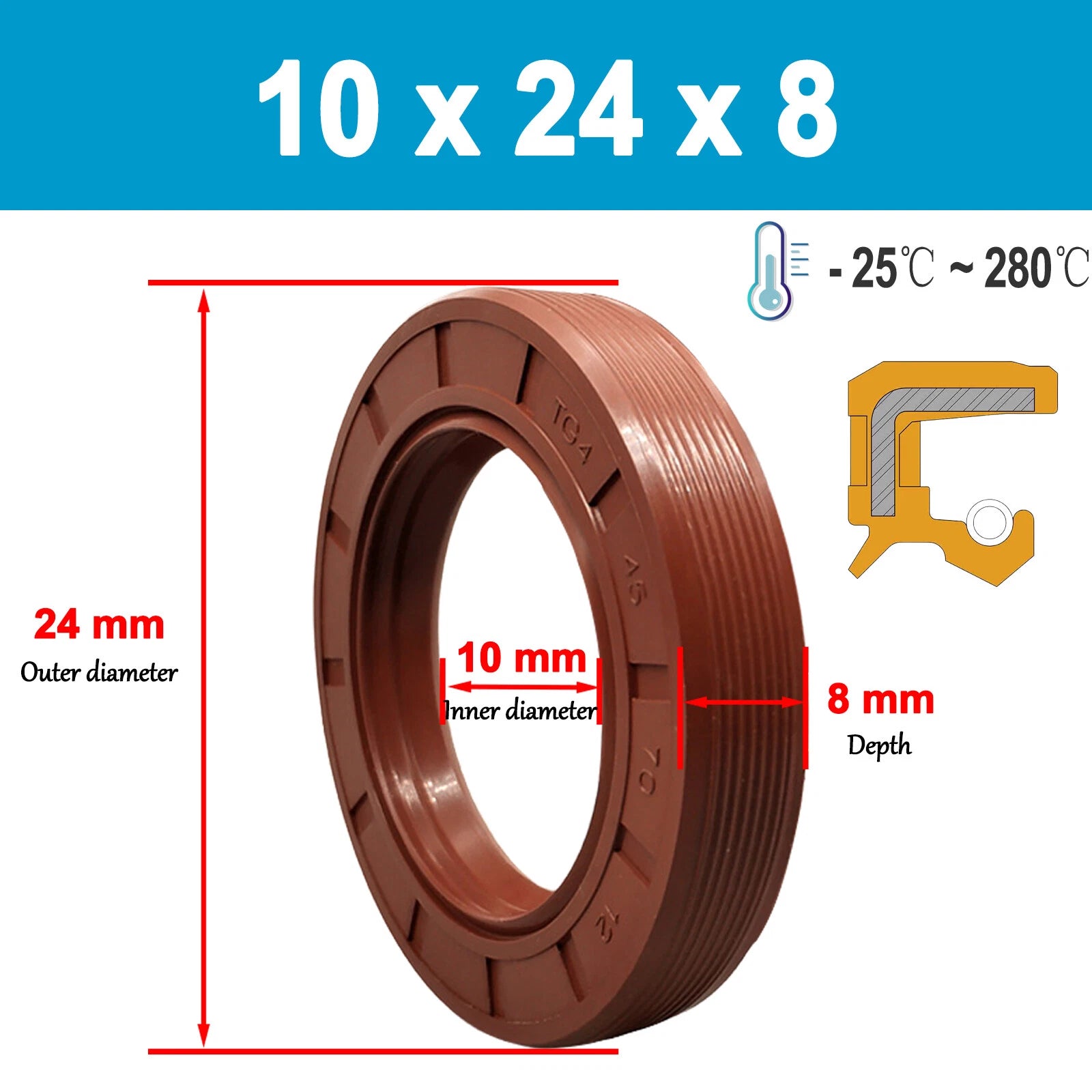
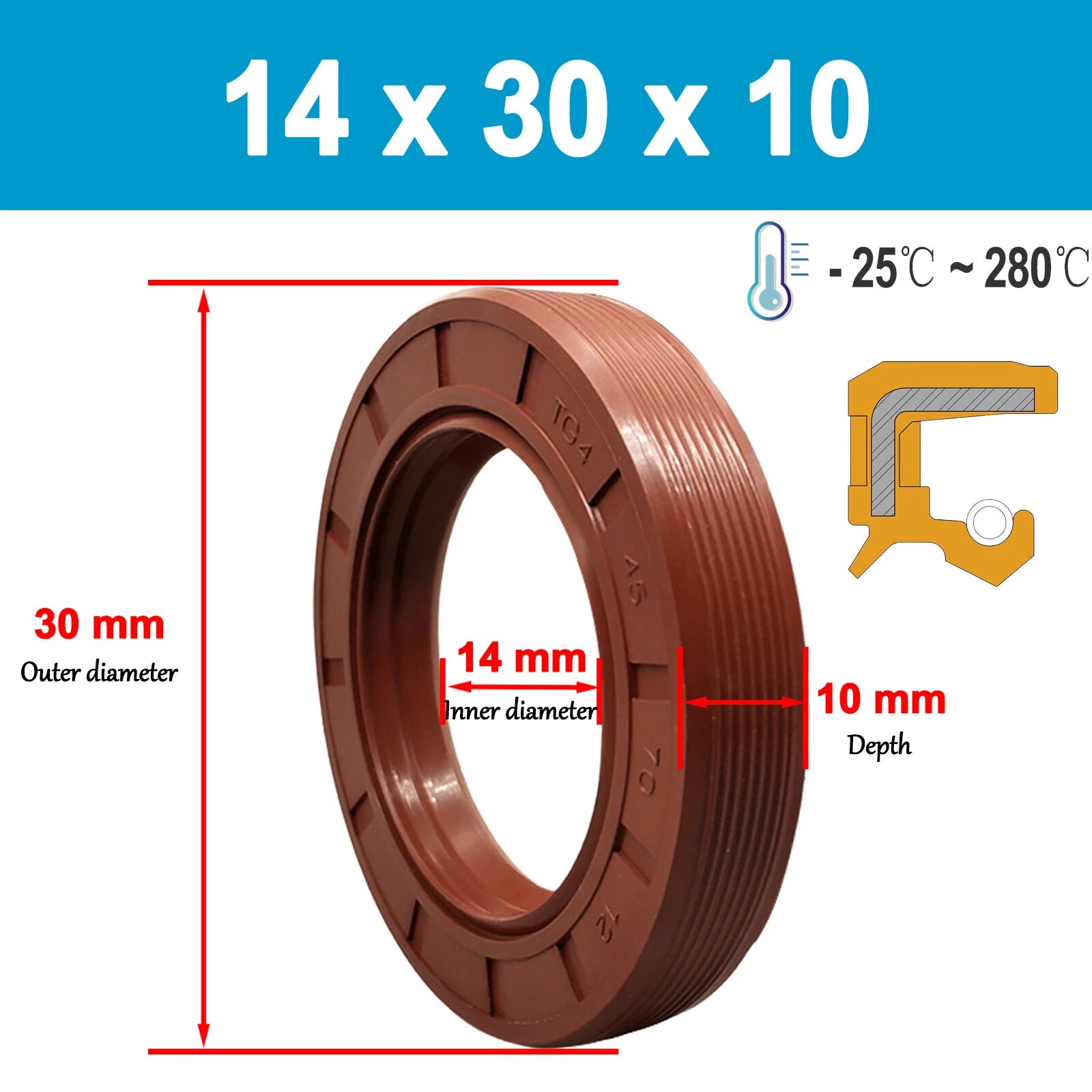
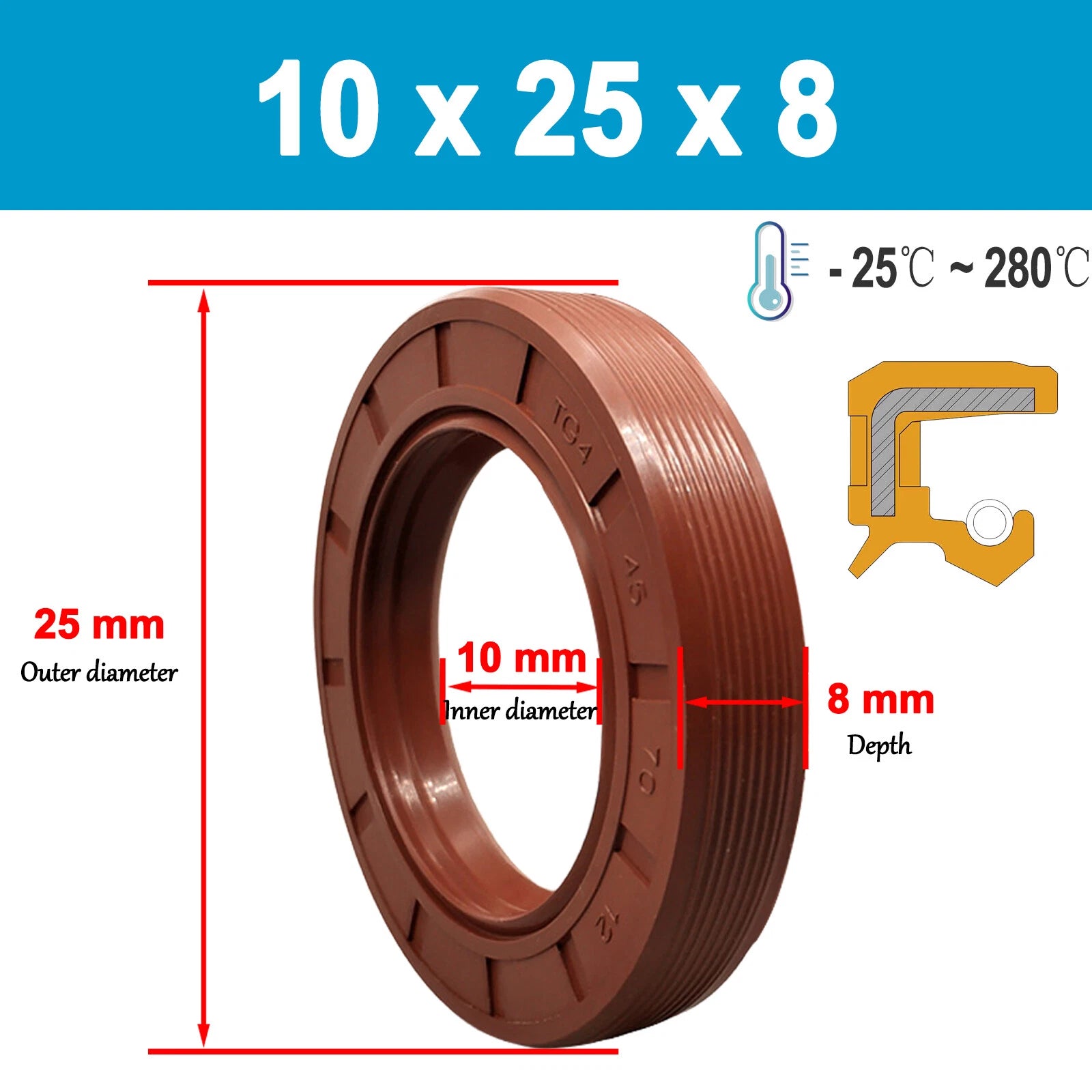
Each seal is a TC (double-lip) rotary shaft seal constructed from FKM (fluoroelastomer) rubber bonded to a steel case. The inner diameter spans 5 mm to 15.88 mm (approx. 0.20" to 0.63"), outer diameters range from 10 mm to 45 mm (approx. 0.39" to 1.77"), and cross-section depths run from 3 mm to 10 mm (approx. 0.12" to 0.39"). The double-lip TC profile provides a primary sealing lip against oil and a secondary dust-exclusion lip, while the metal case ensures press-fit retention in the housing bore.
Typical use cases include small gearbox output shafts requiring metric FKM oil seal replacement, pump shaft sealing in hydraulic or chemical-transfer equipment where fluorine rubber chemical resistance is needed, and precision spindle or motor shaft sealing in CNC machines and robotics where a compact double lip rotary seal keeps lubricant in and contaminants out.
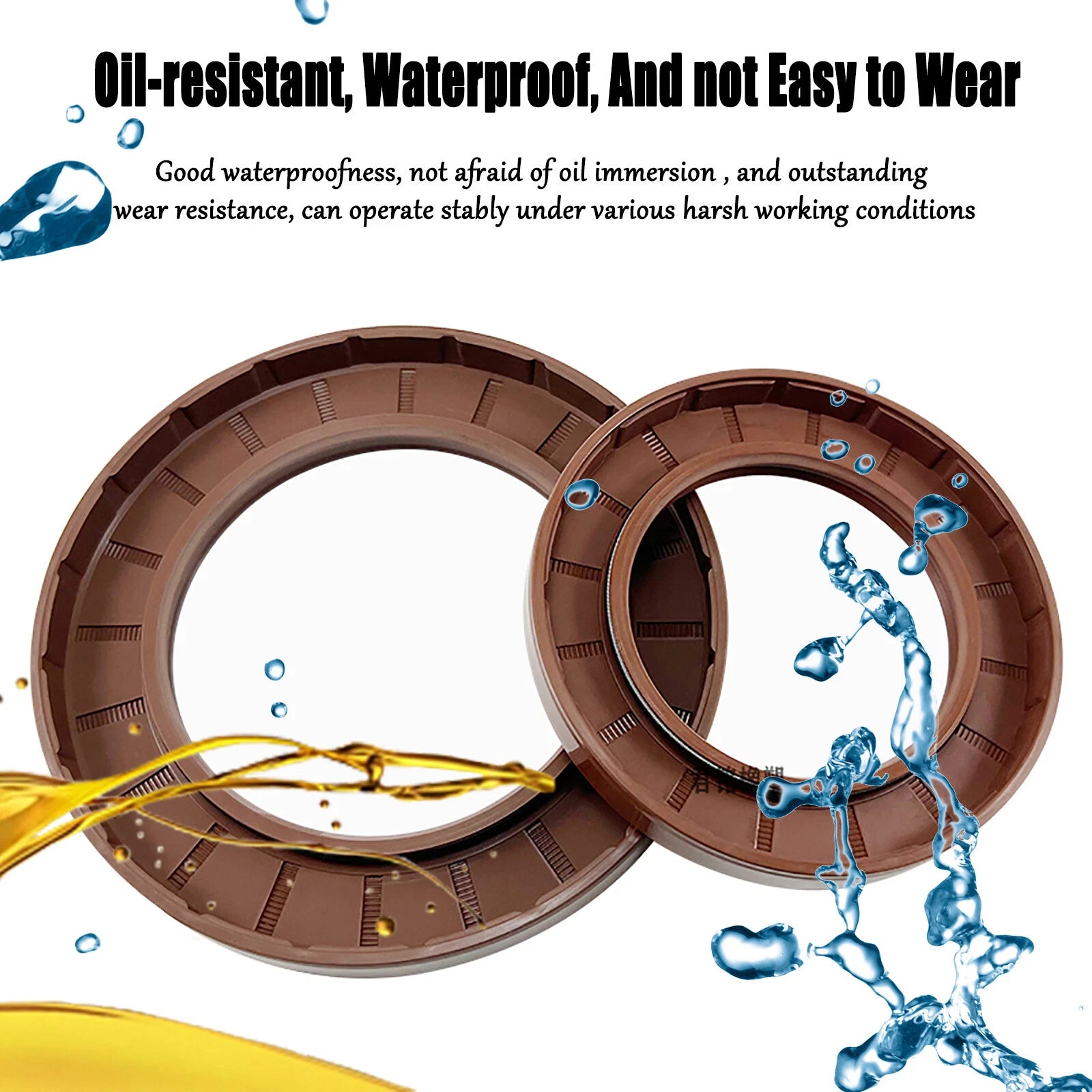
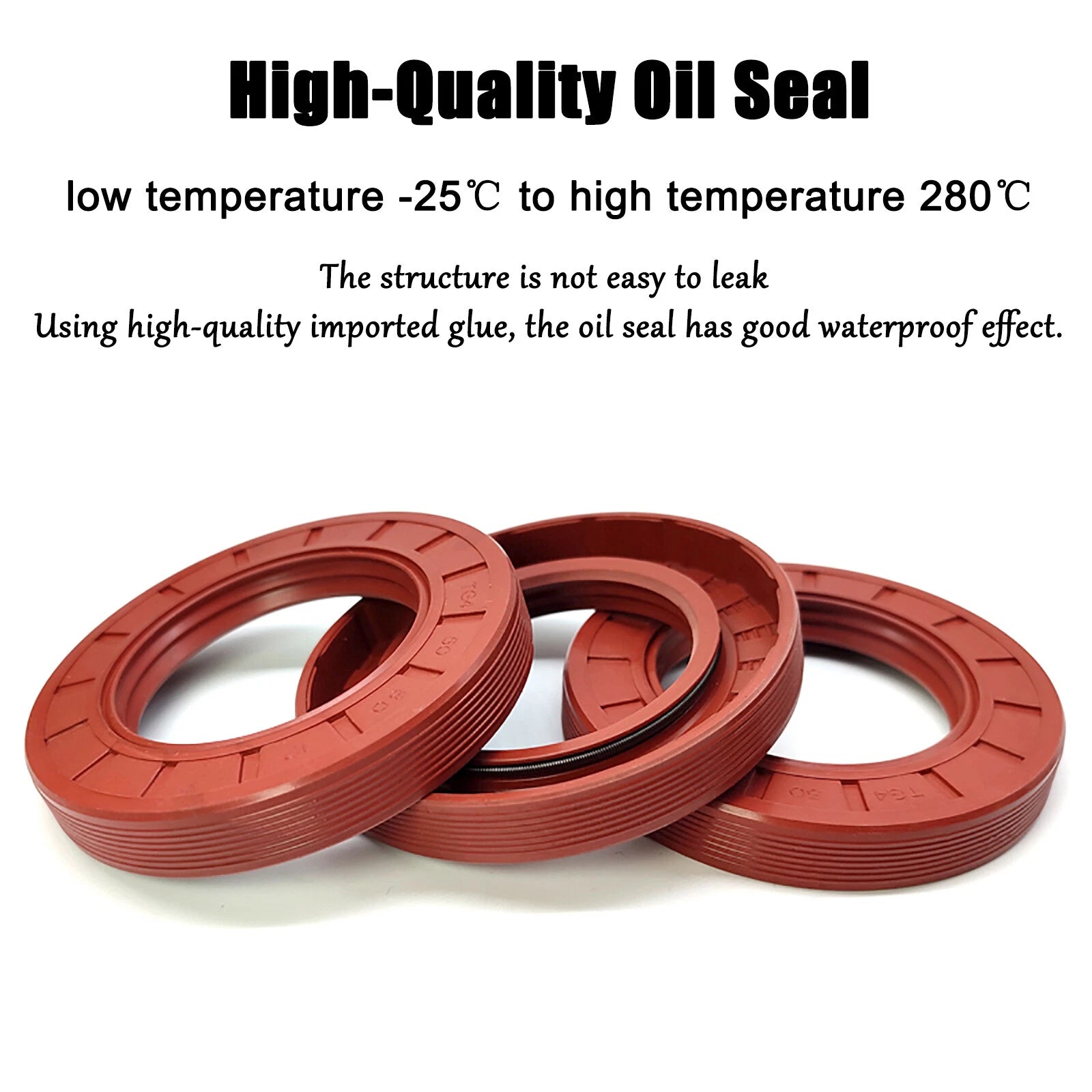
Fluoroelastomer lip material resists petroleum oils, synthetic lubricants, and many hydraulic fluids across a broad temperature range, outperforming standard NBR seals in demanding environments.
The primary lip retains oil; the secondary dust lip blocks ingress of dirt and moisture, extending bearing and lubricant service life in exposed or contaminated operating conditions.
A rigid metal outer case maintains dimensional stability during installation and resists housing bore distortion, ensuring consistent sealing contact force over the service life.
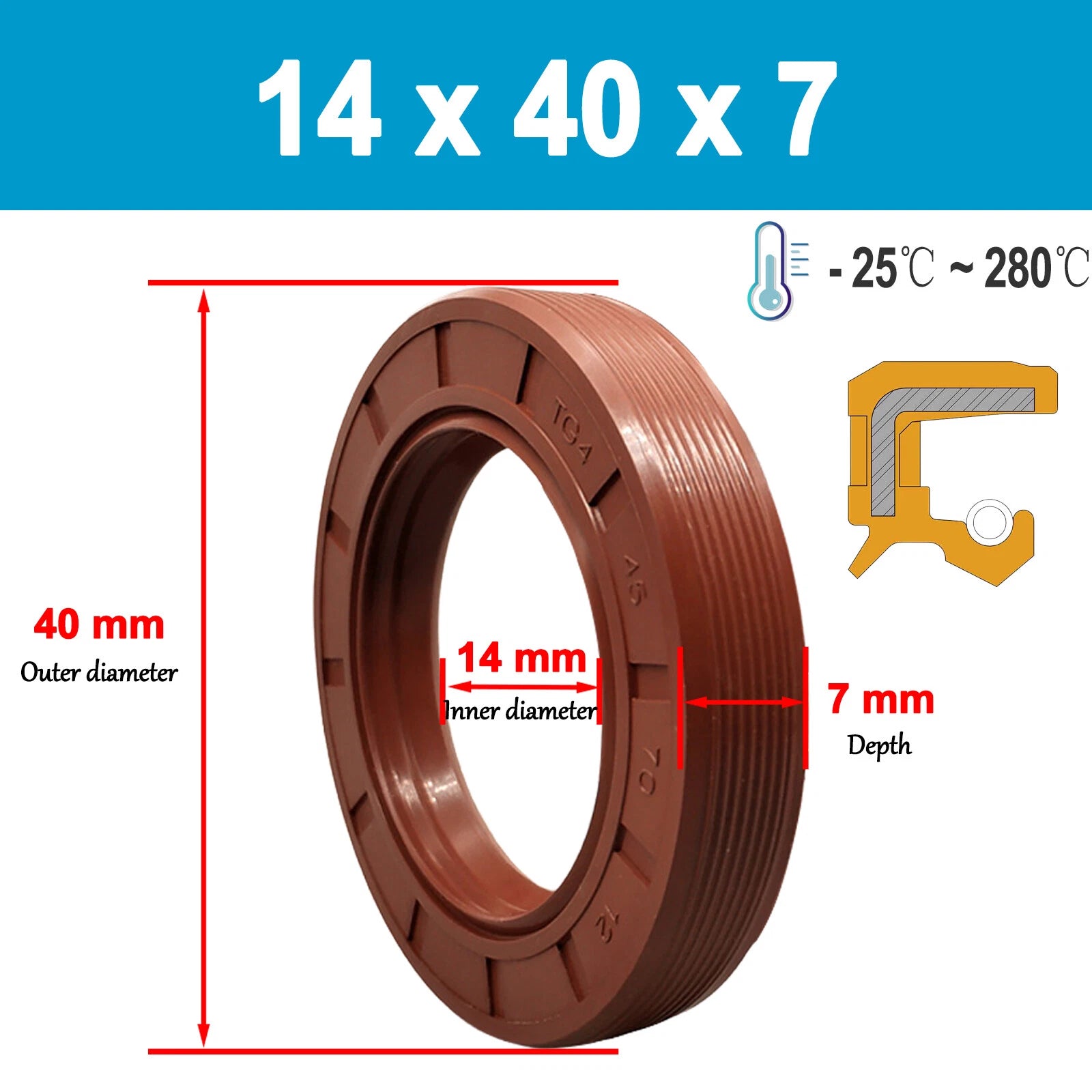
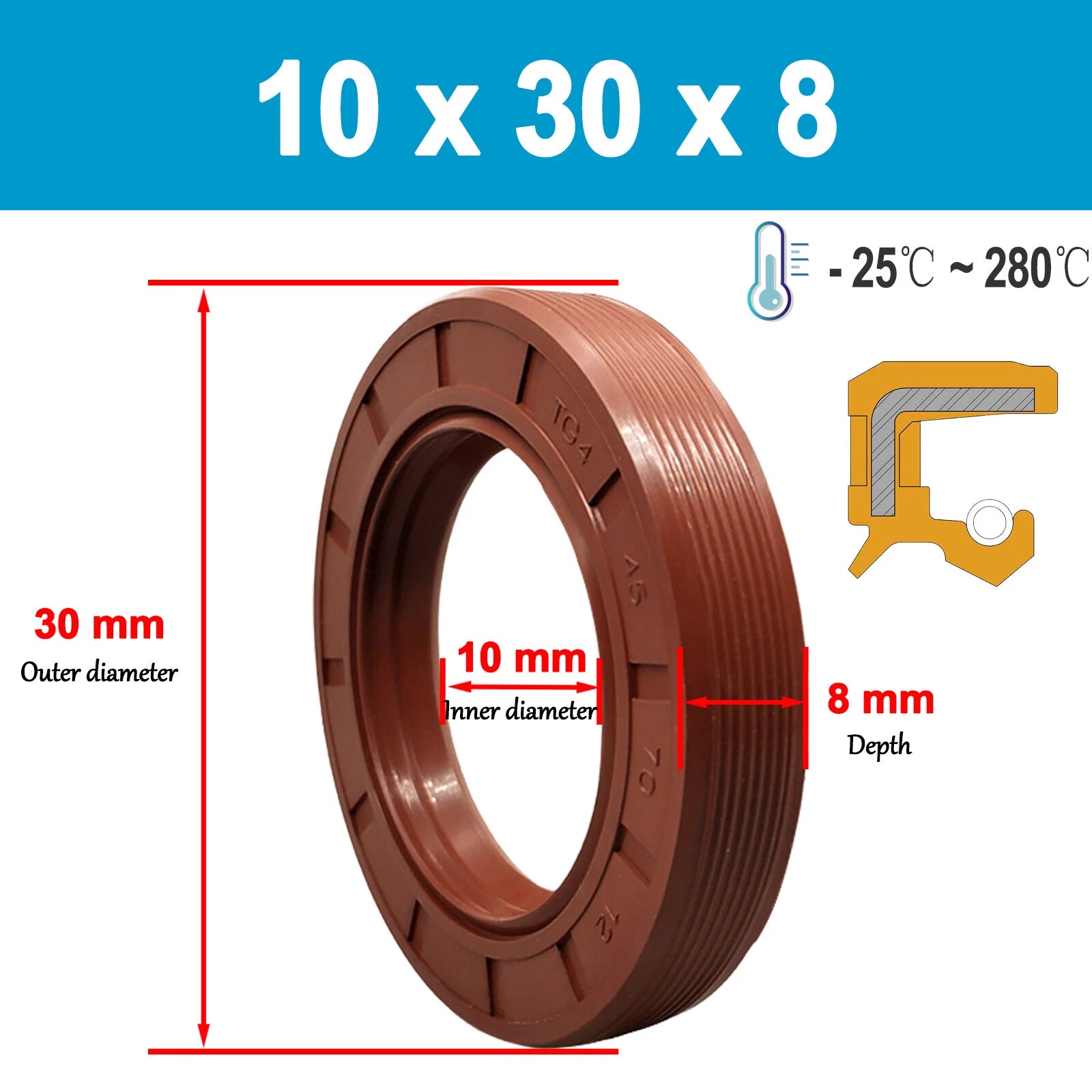
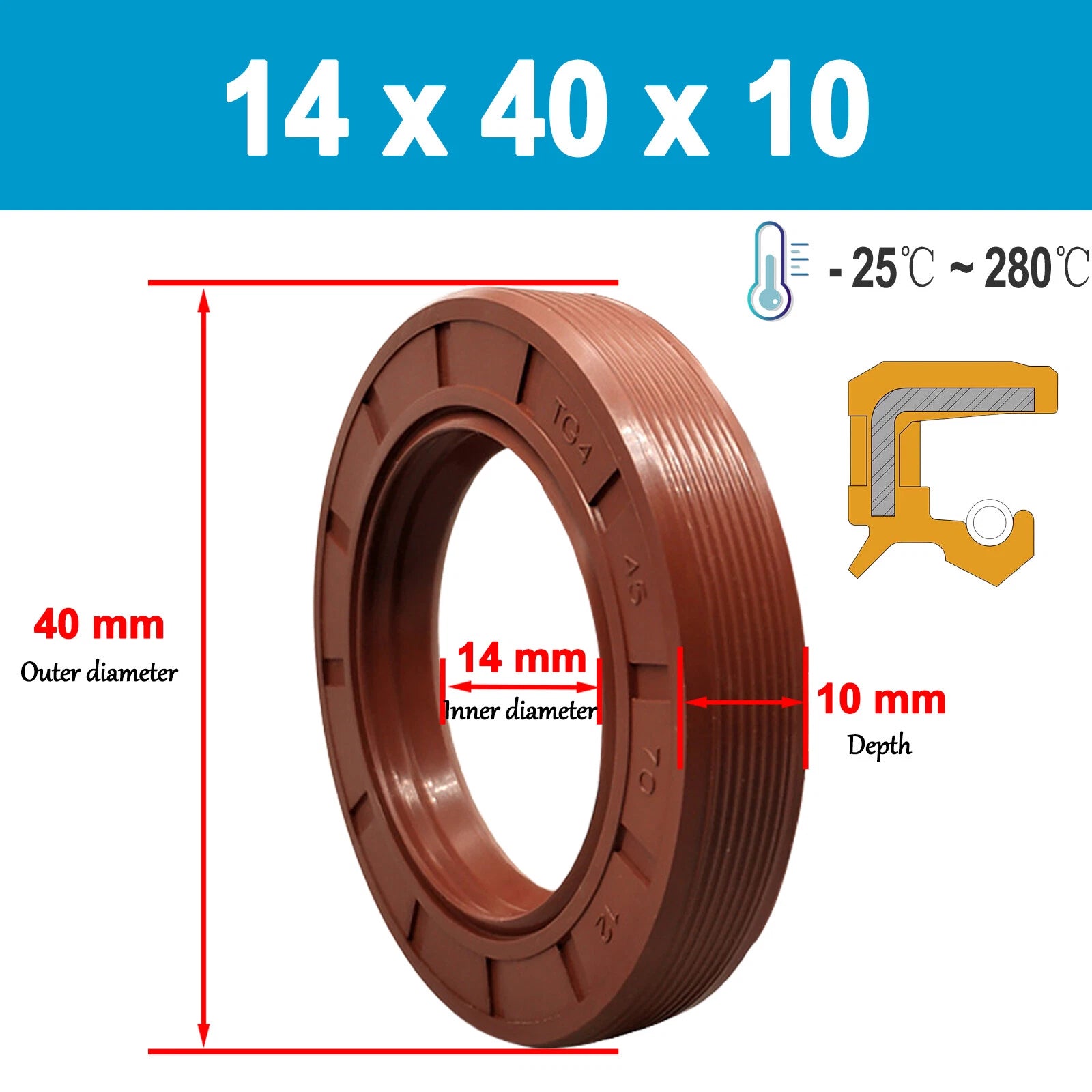
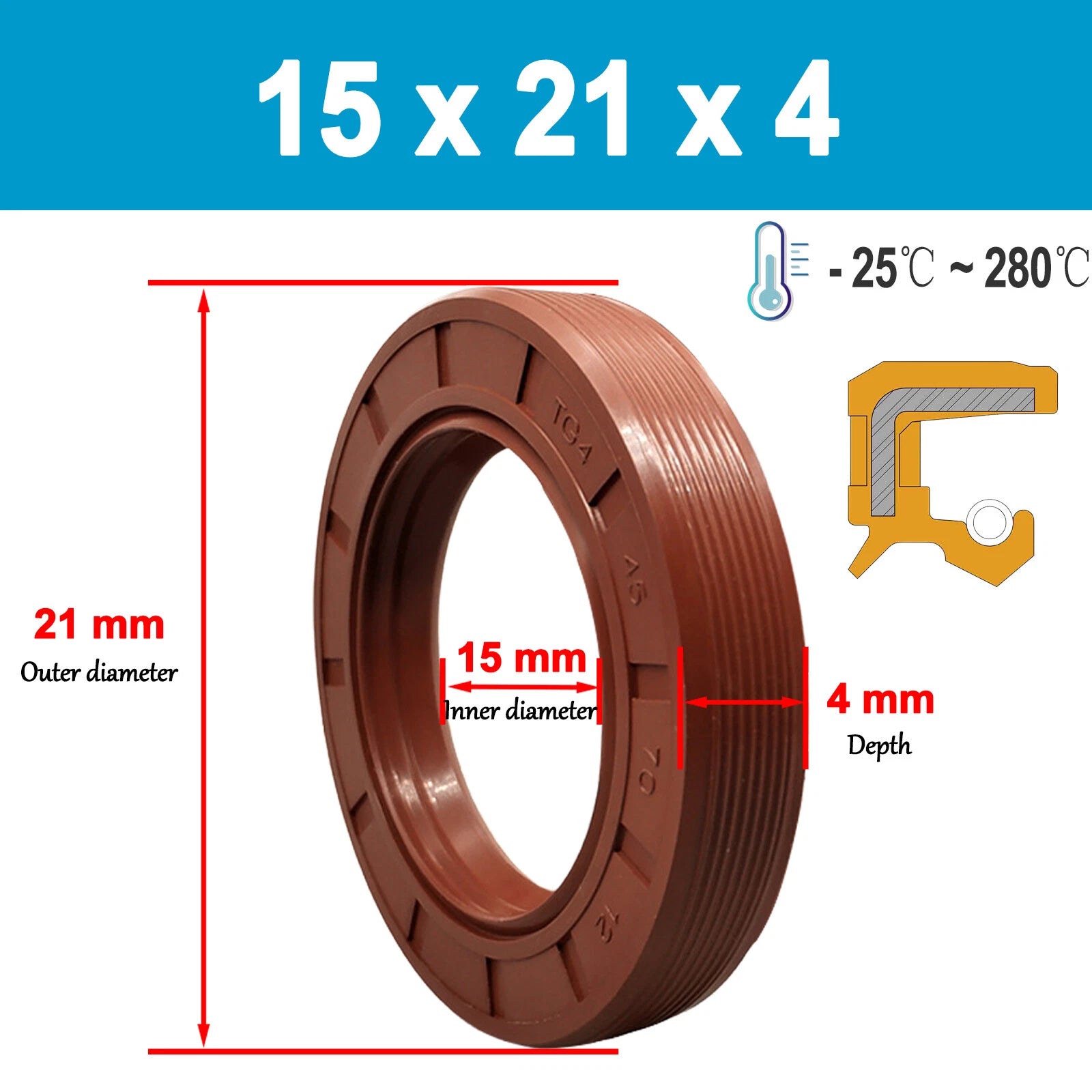
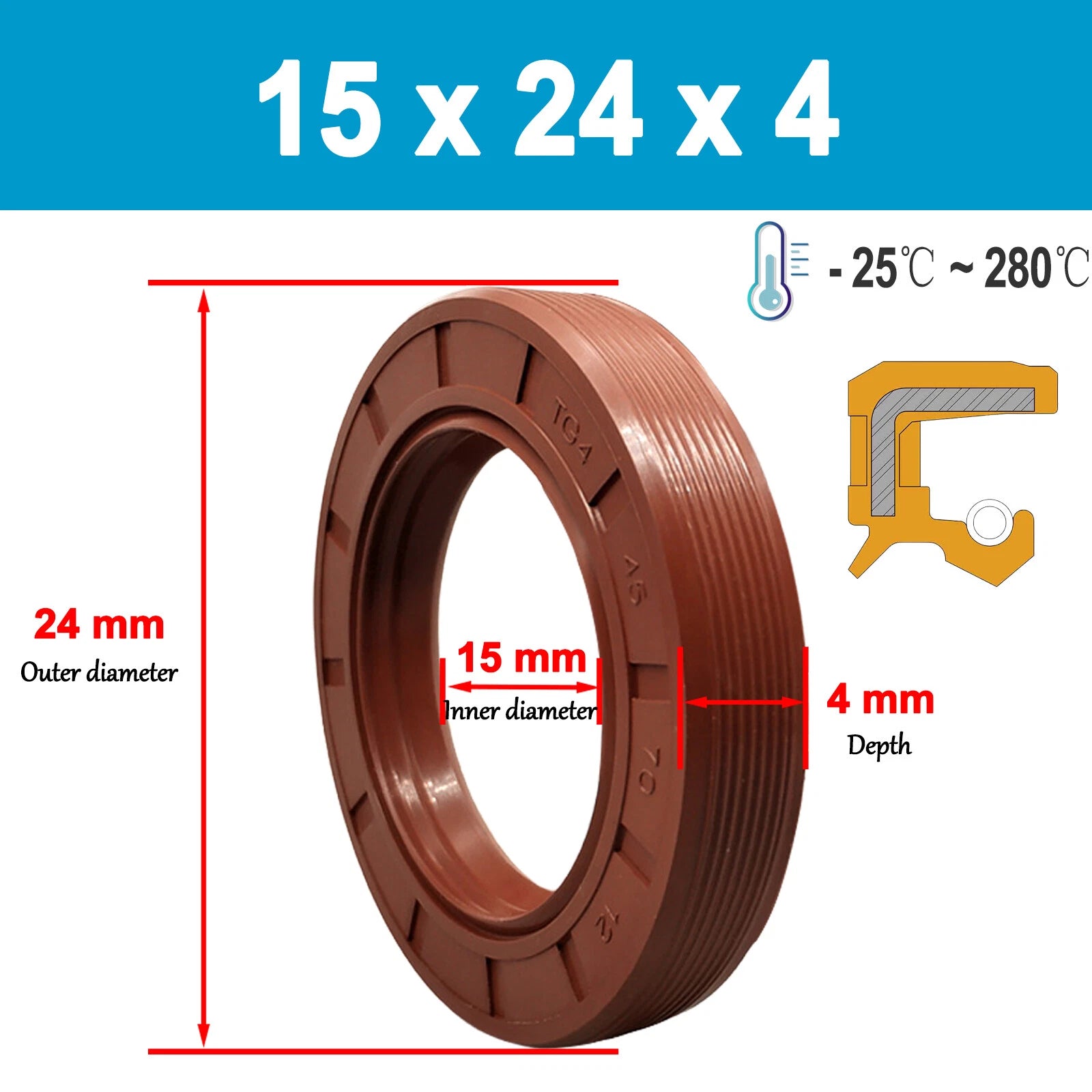
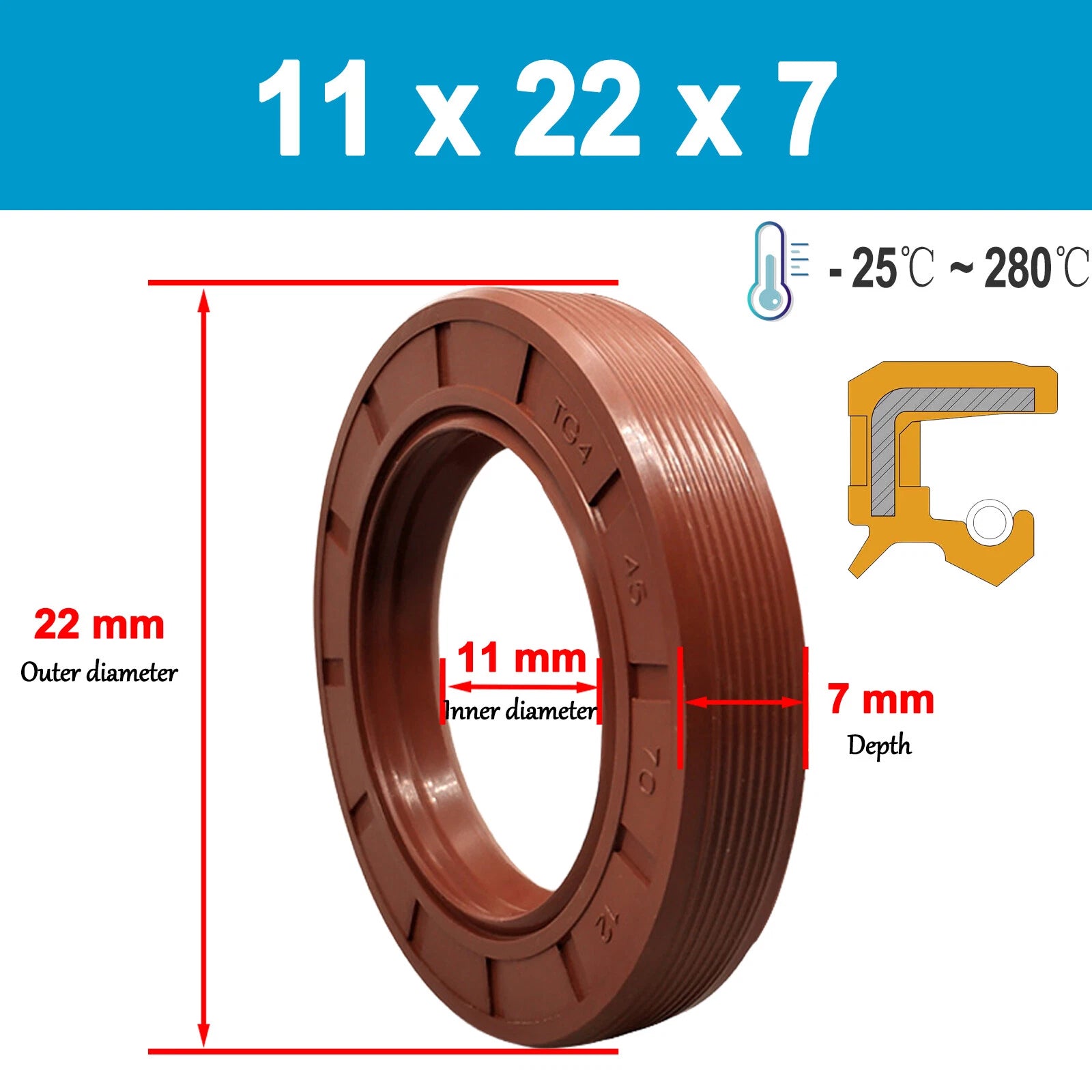
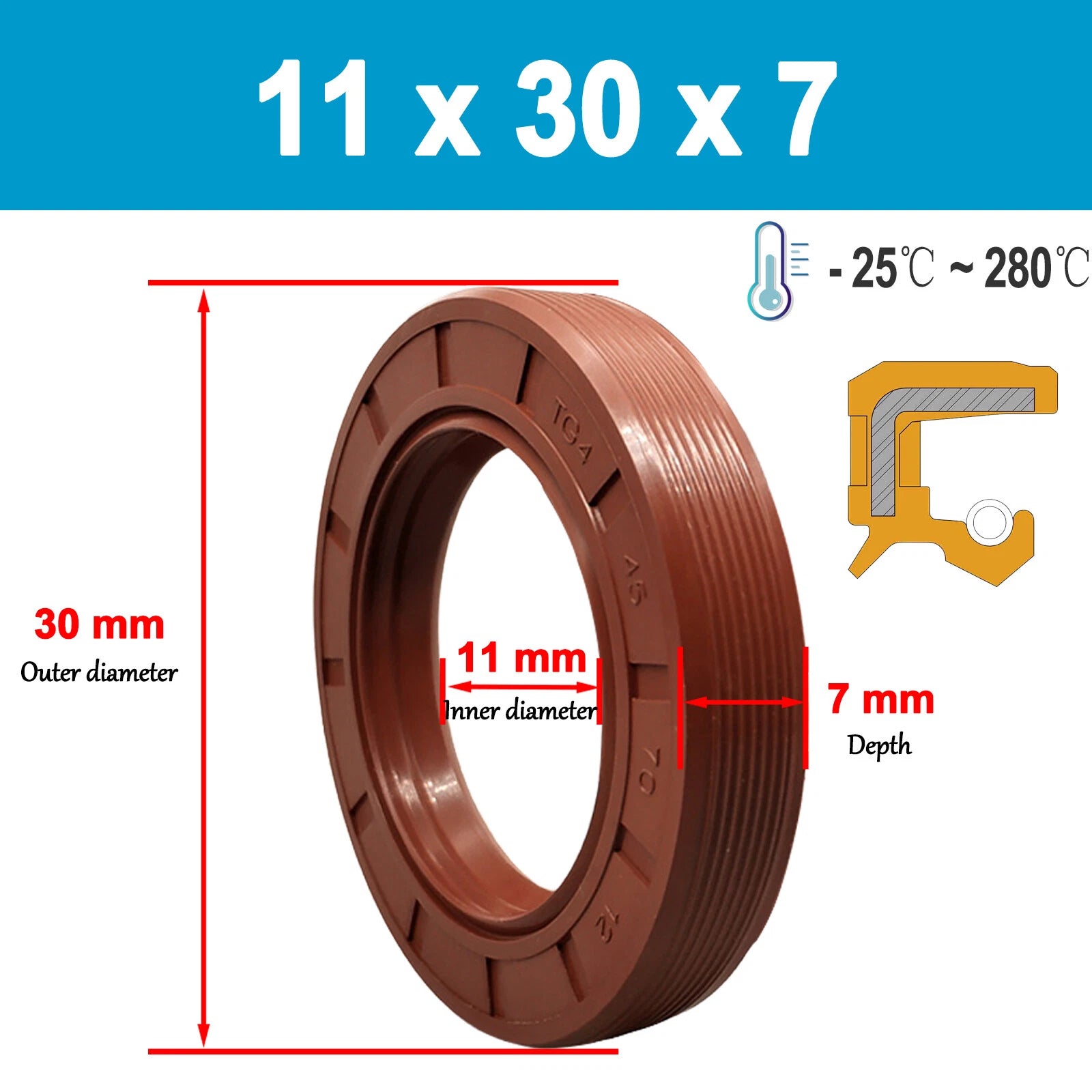
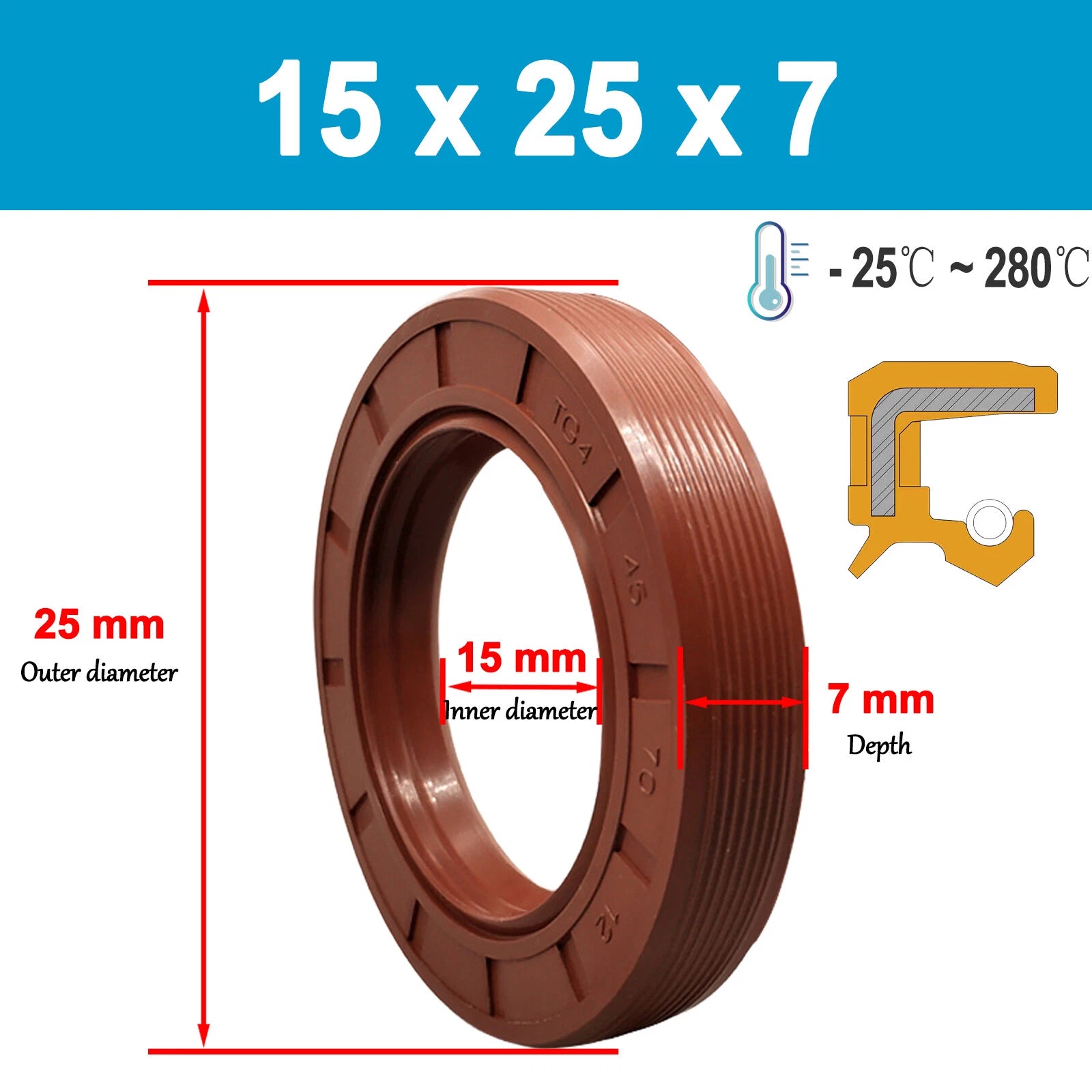
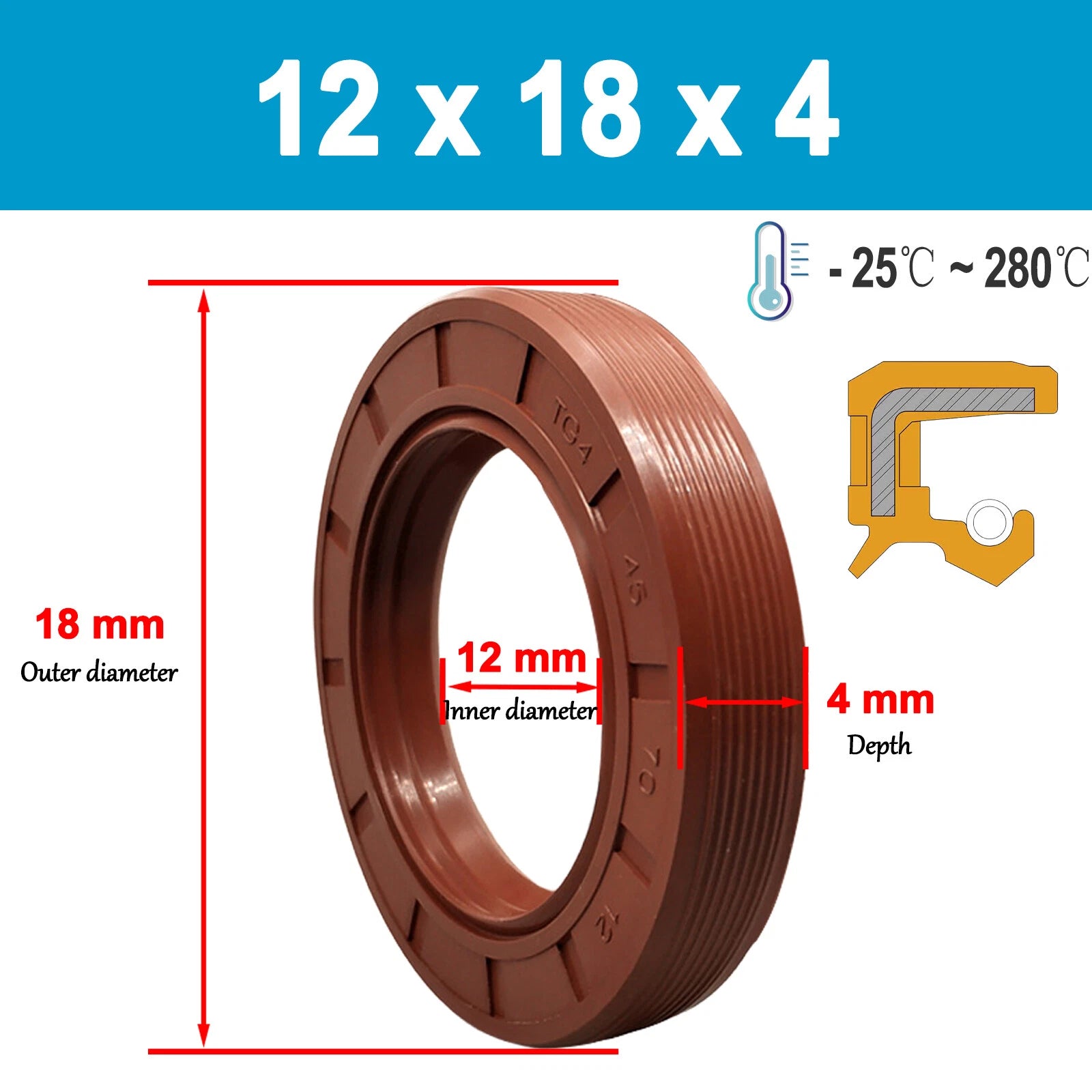
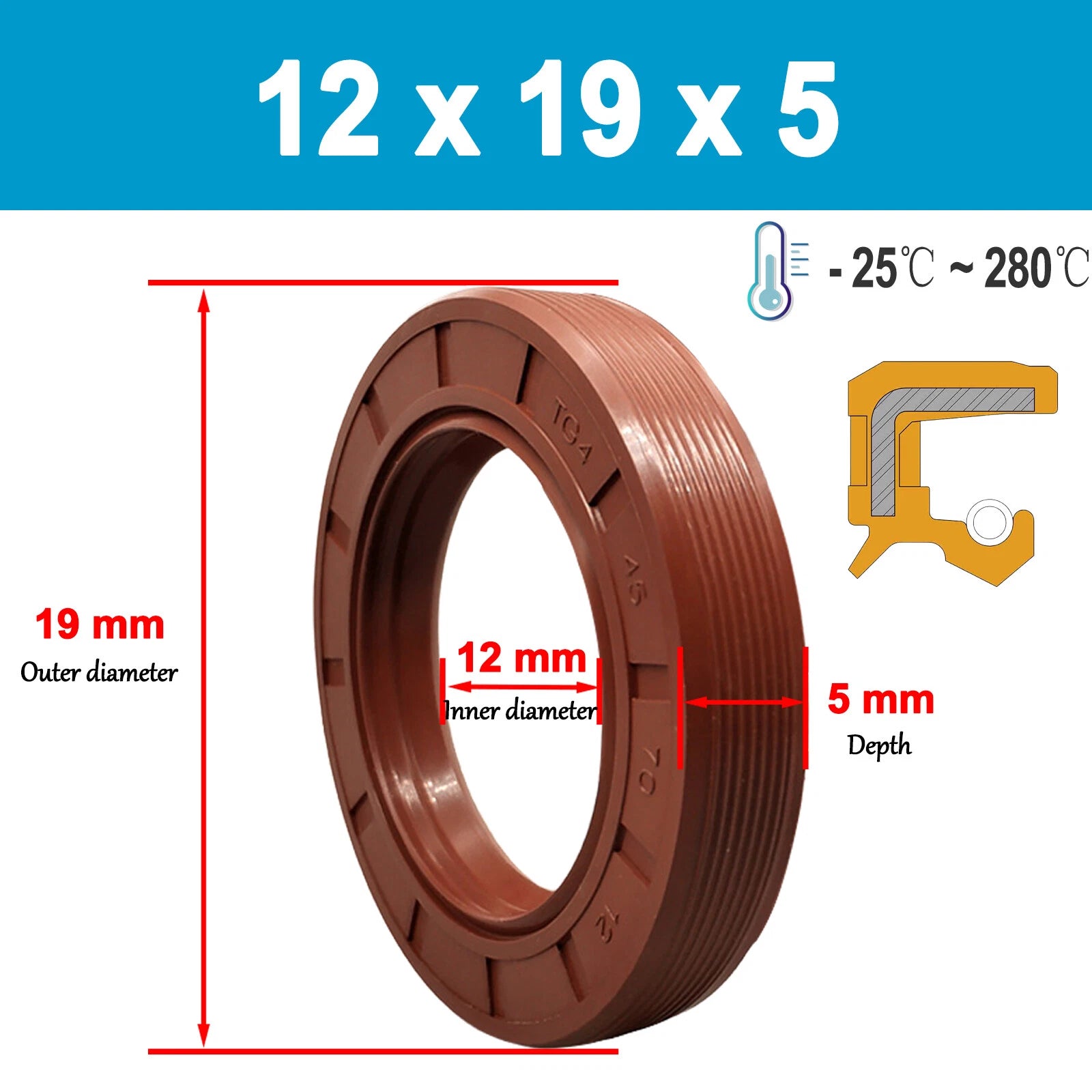
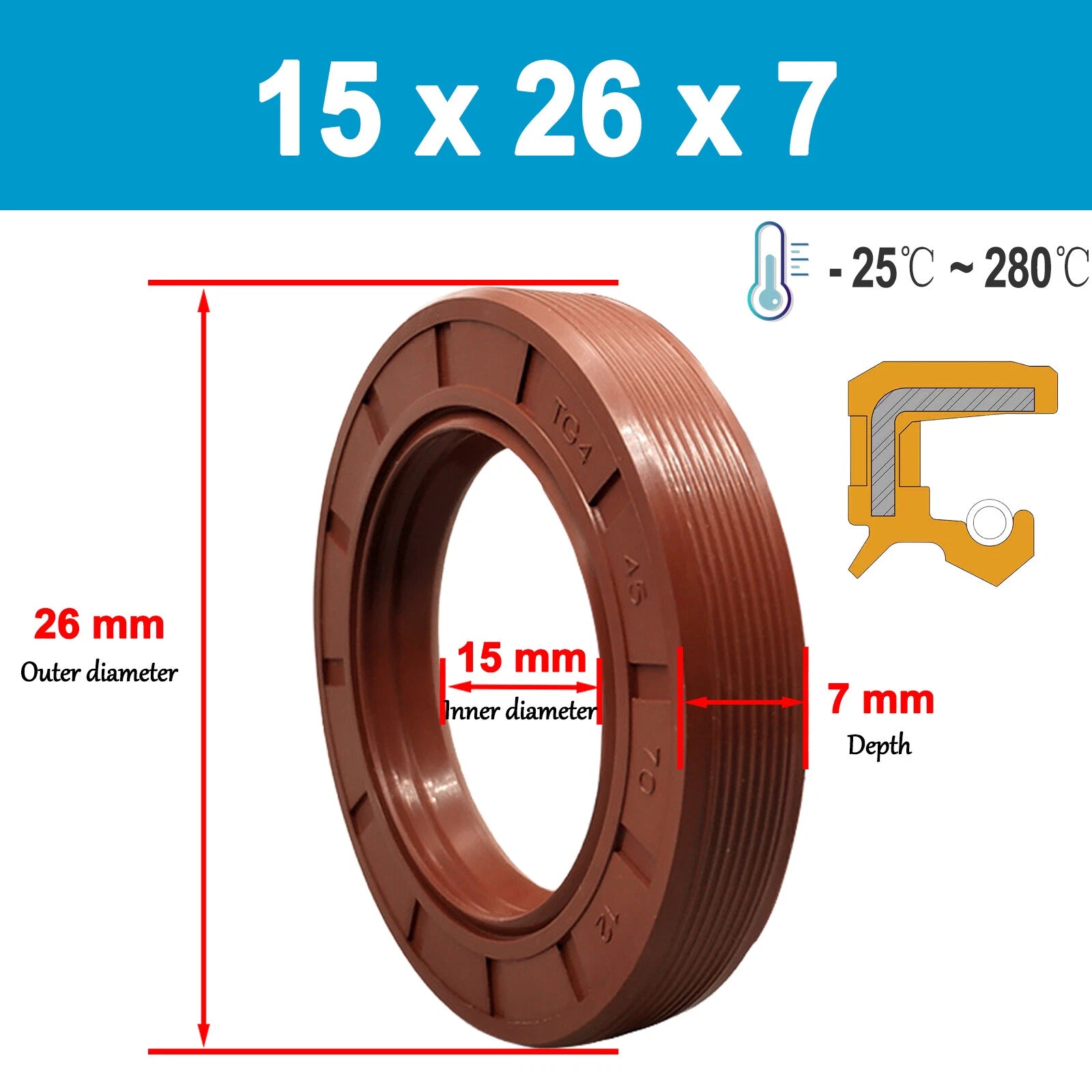
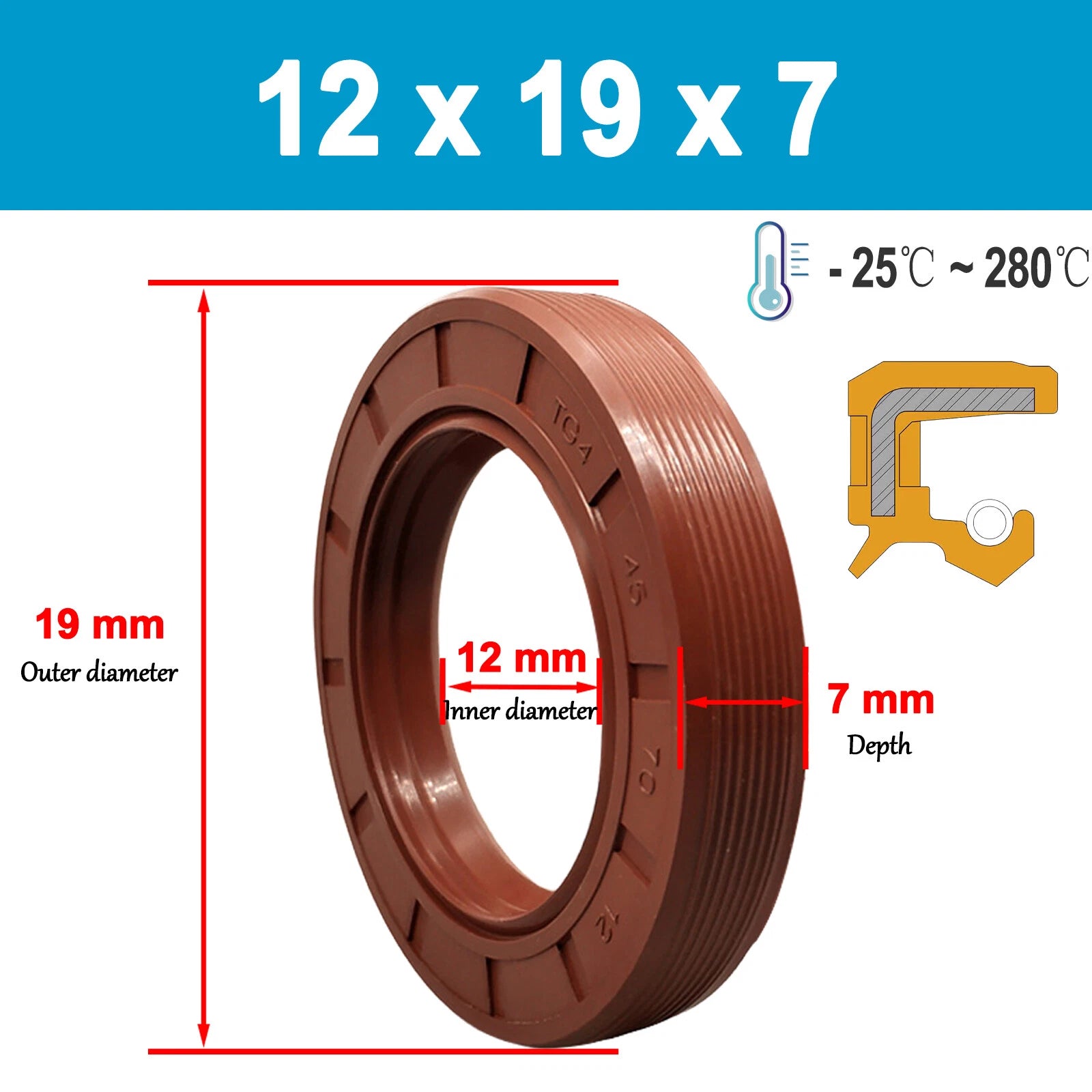
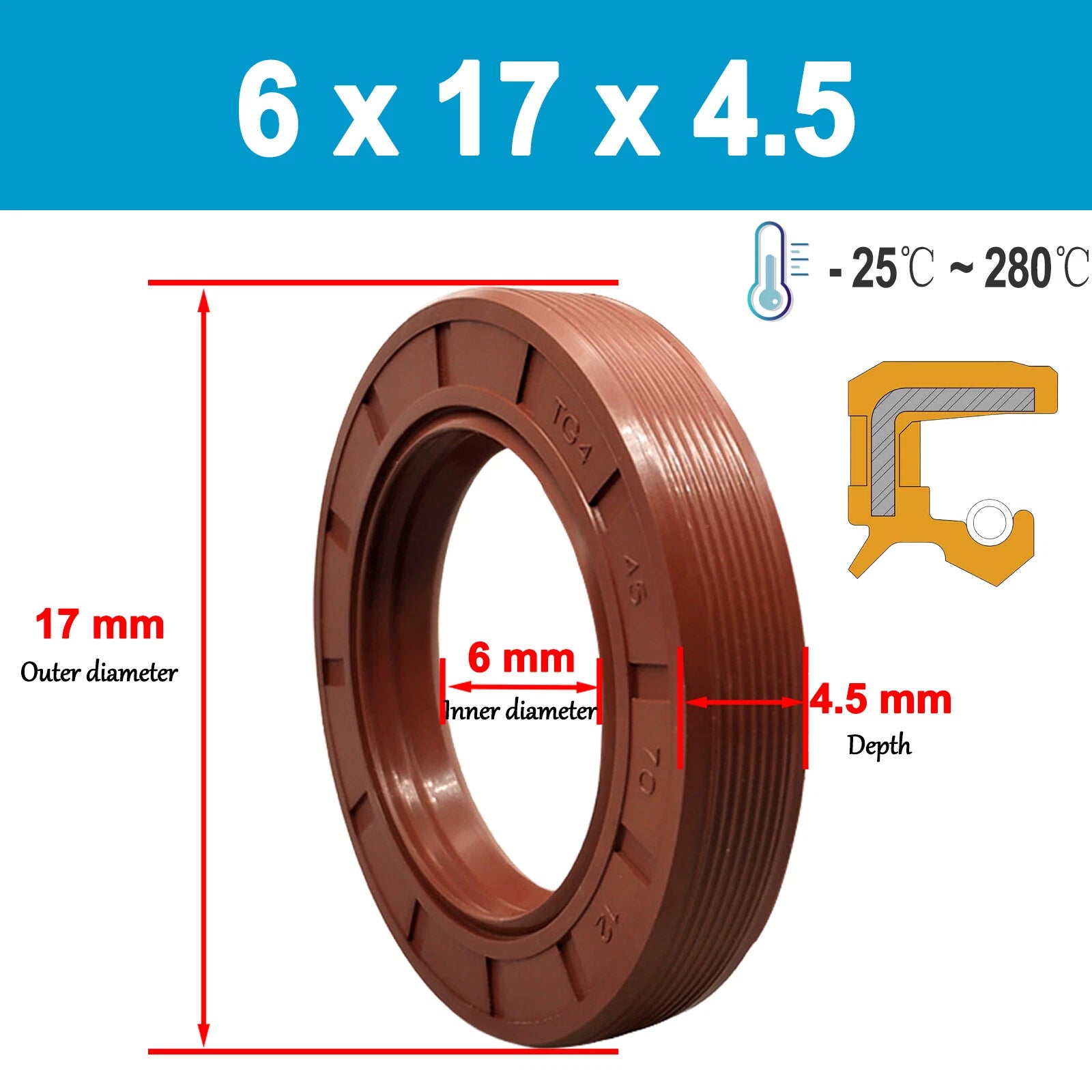
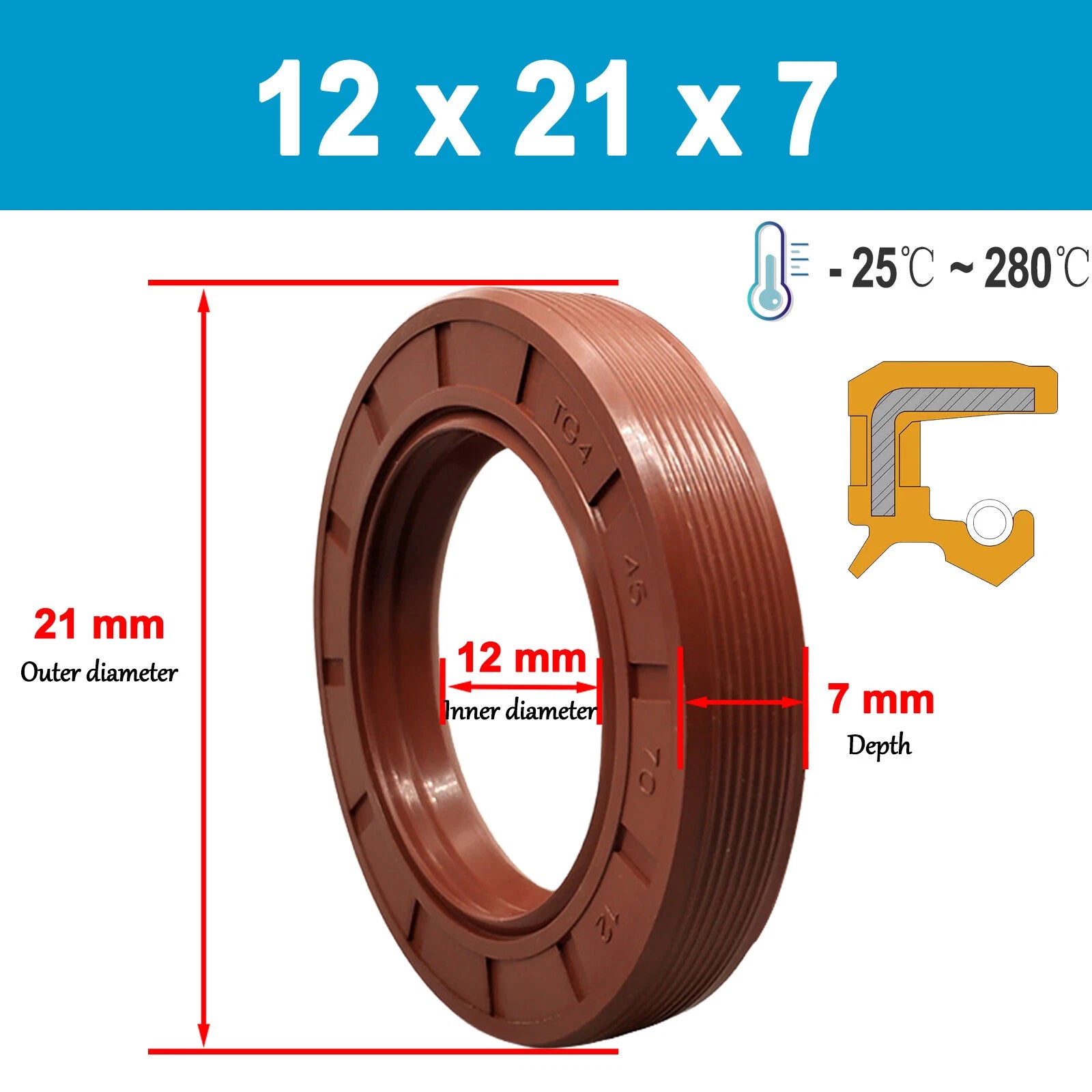
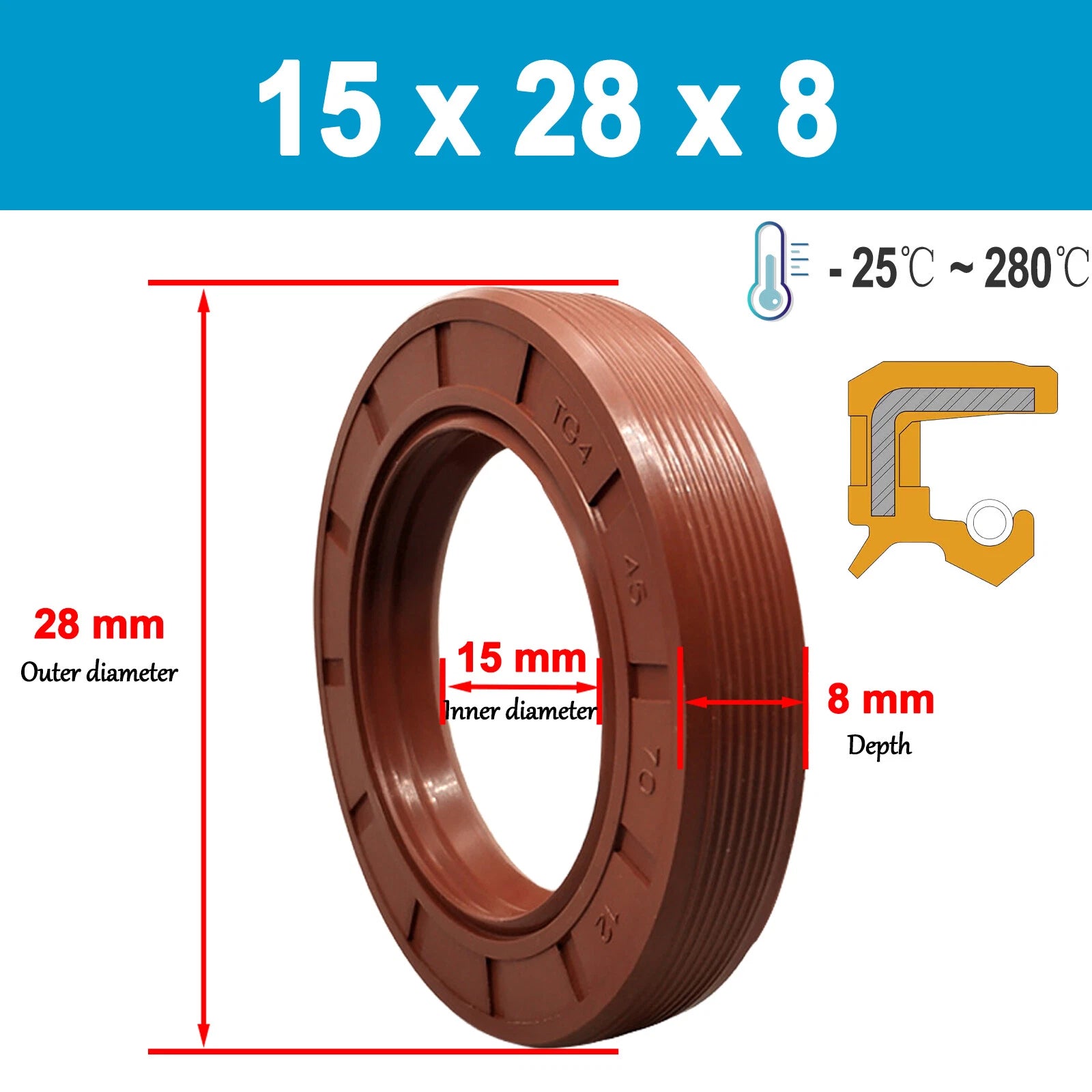
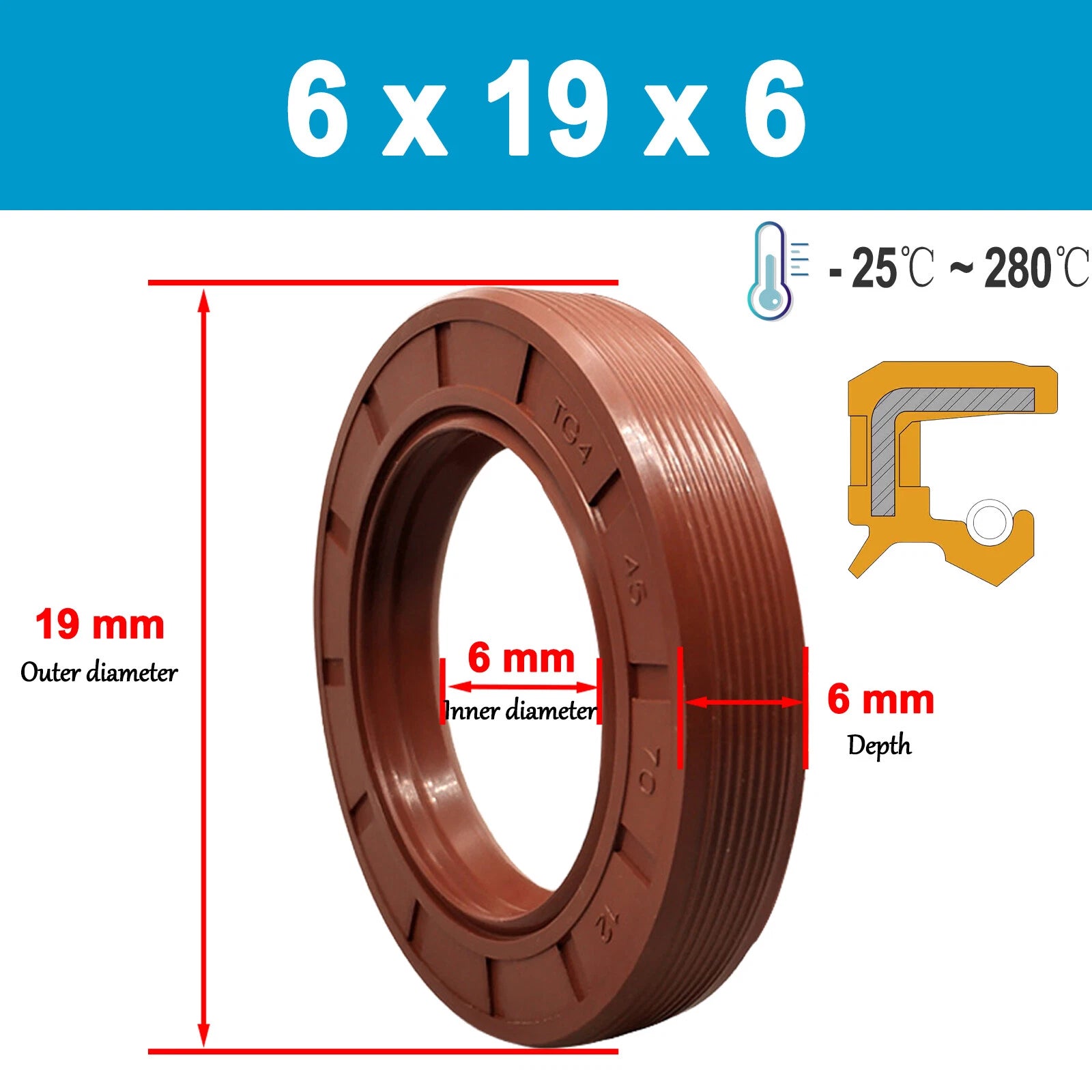
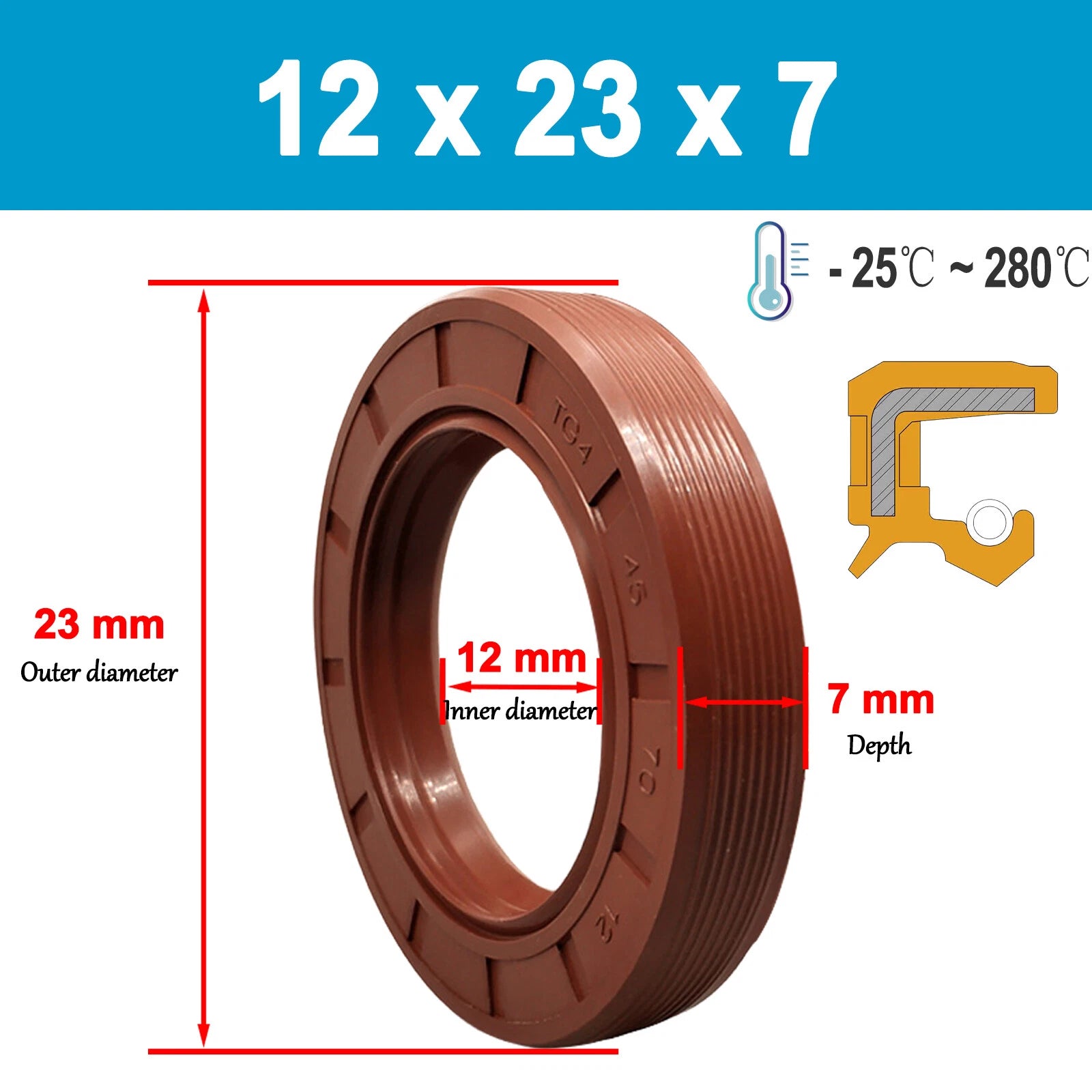
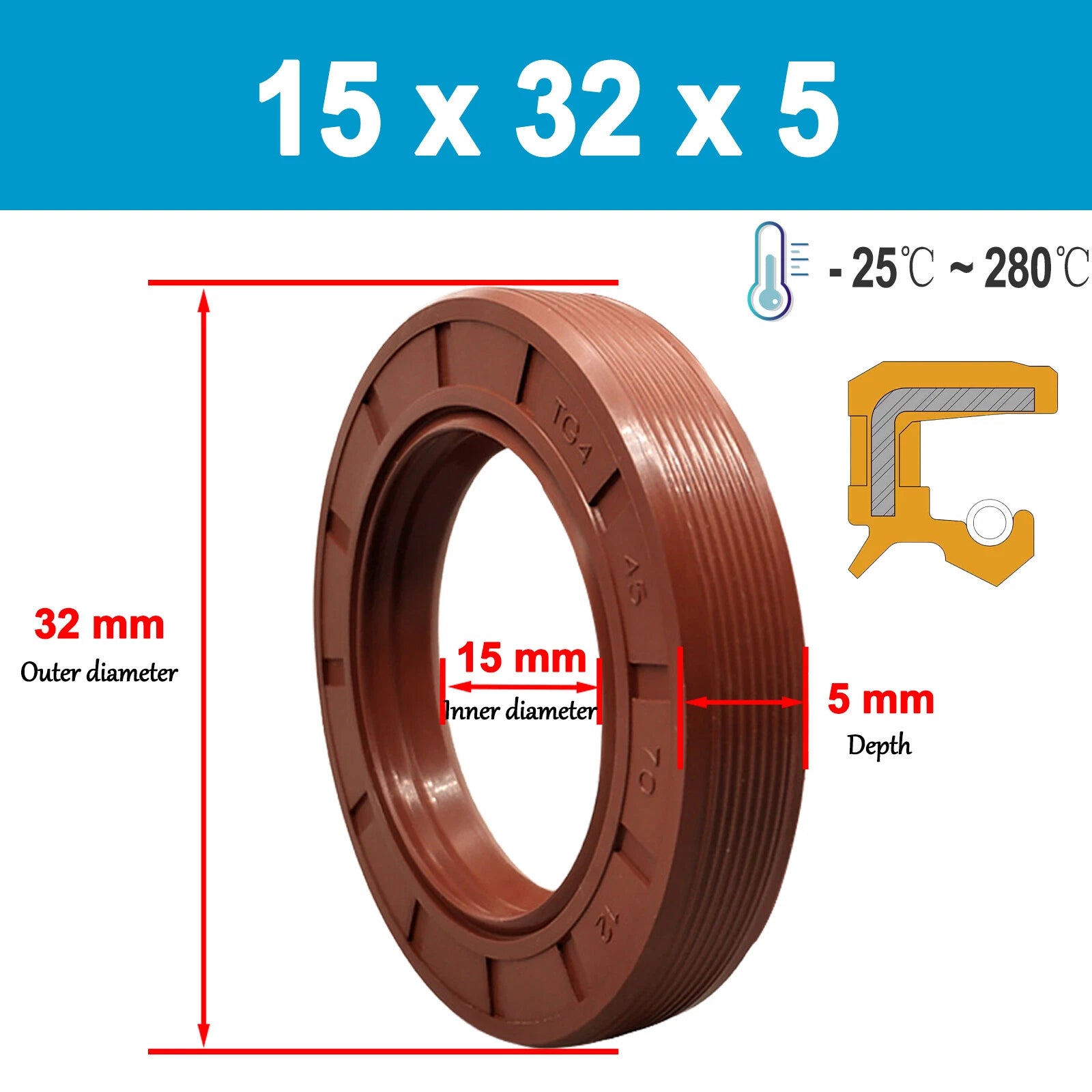
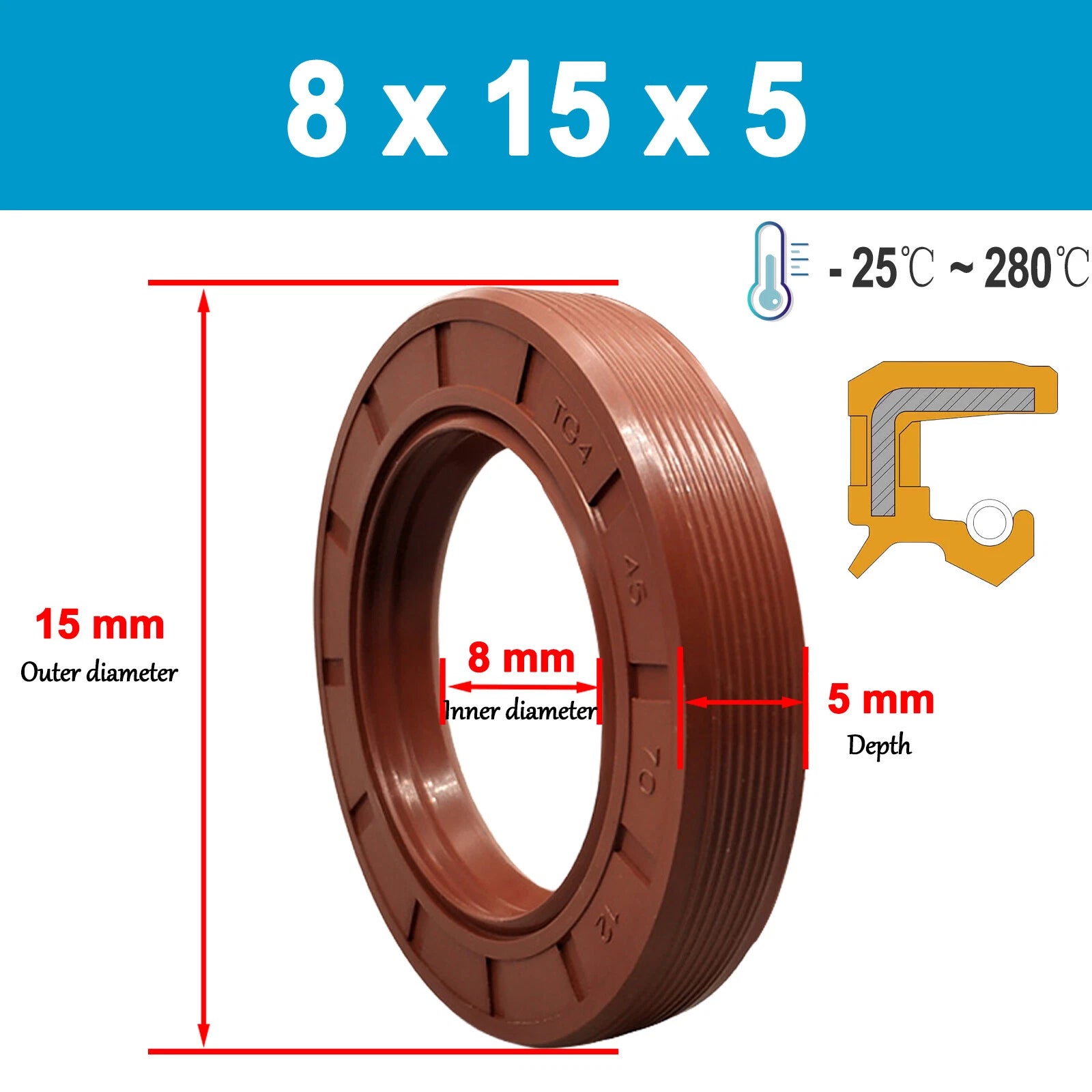
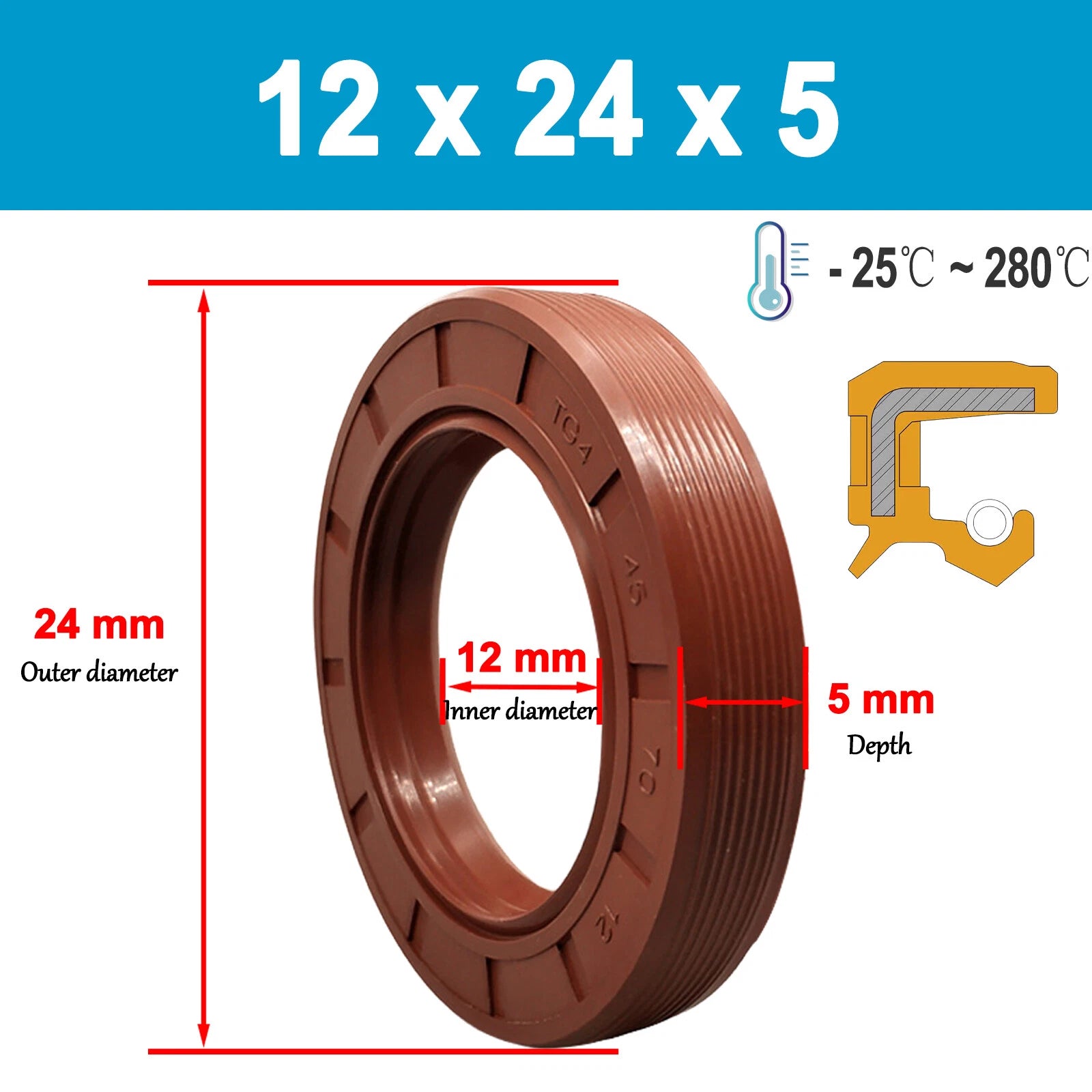
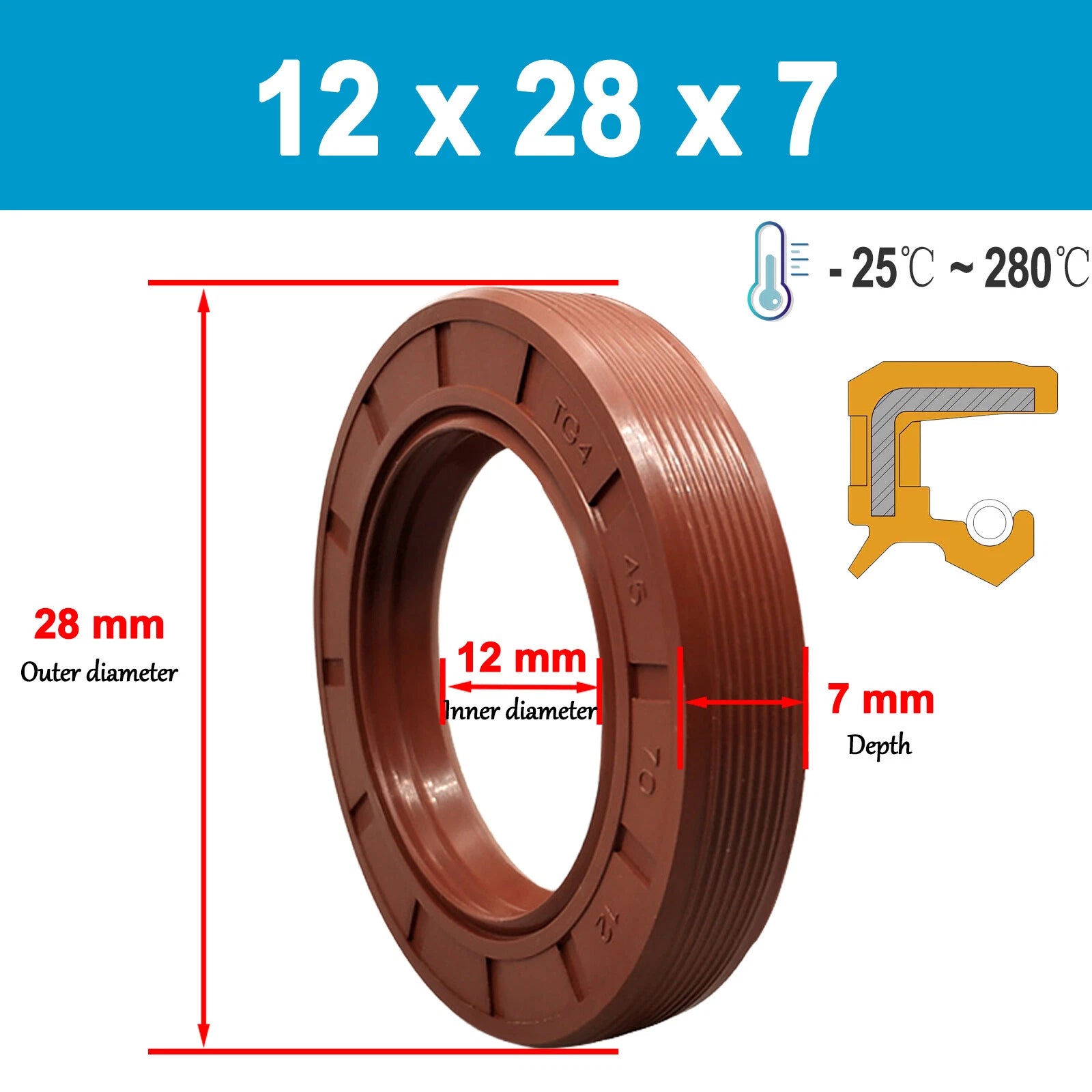
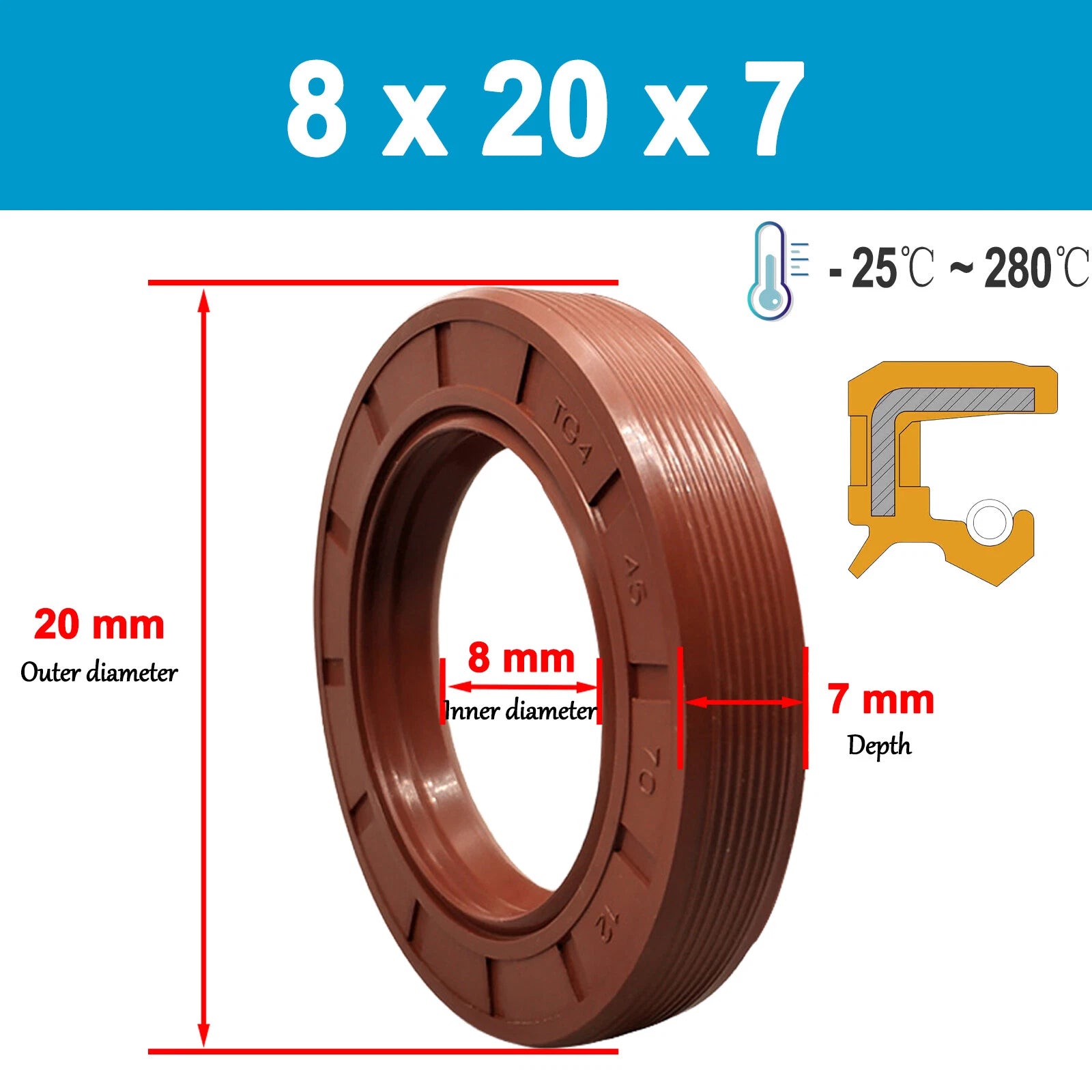
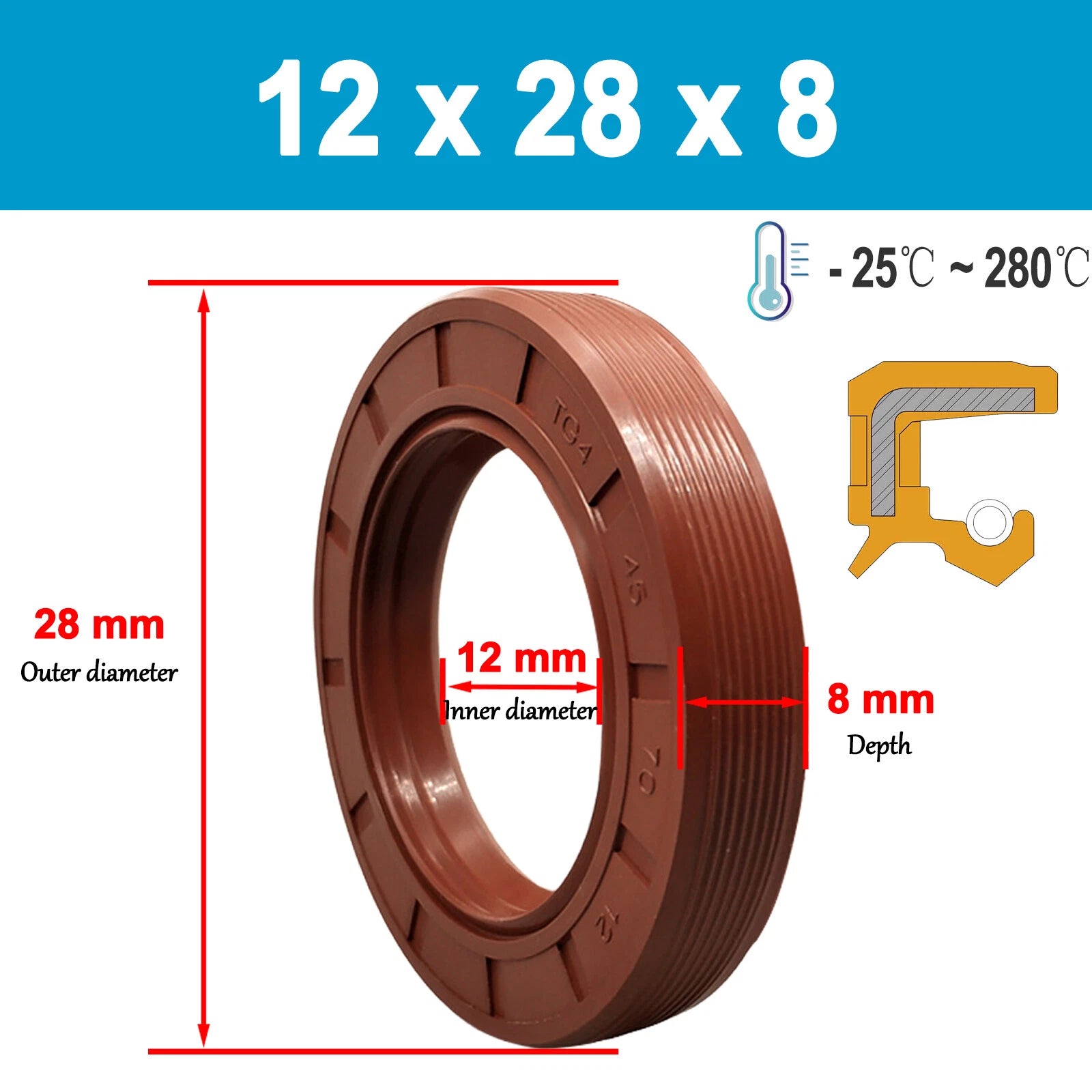
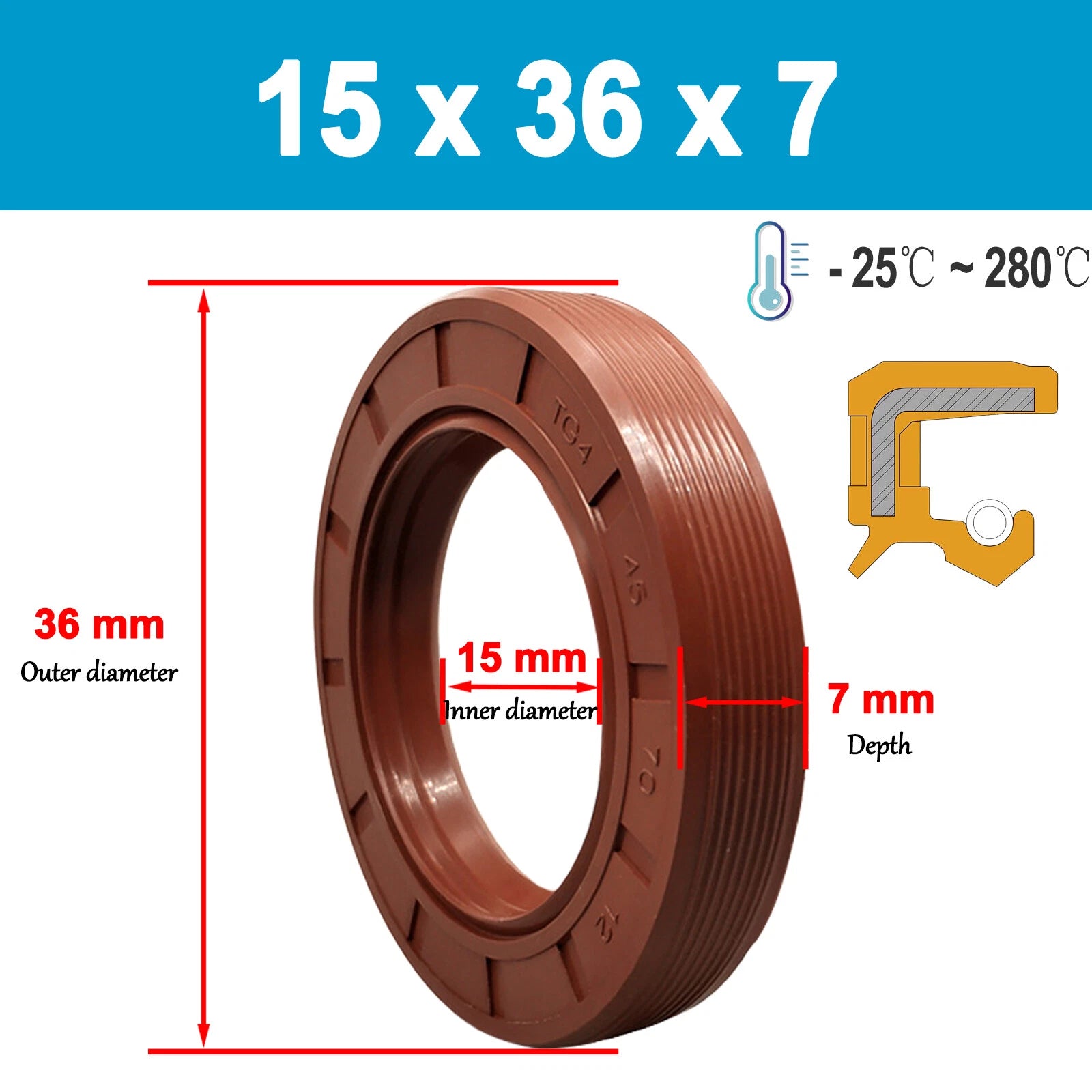
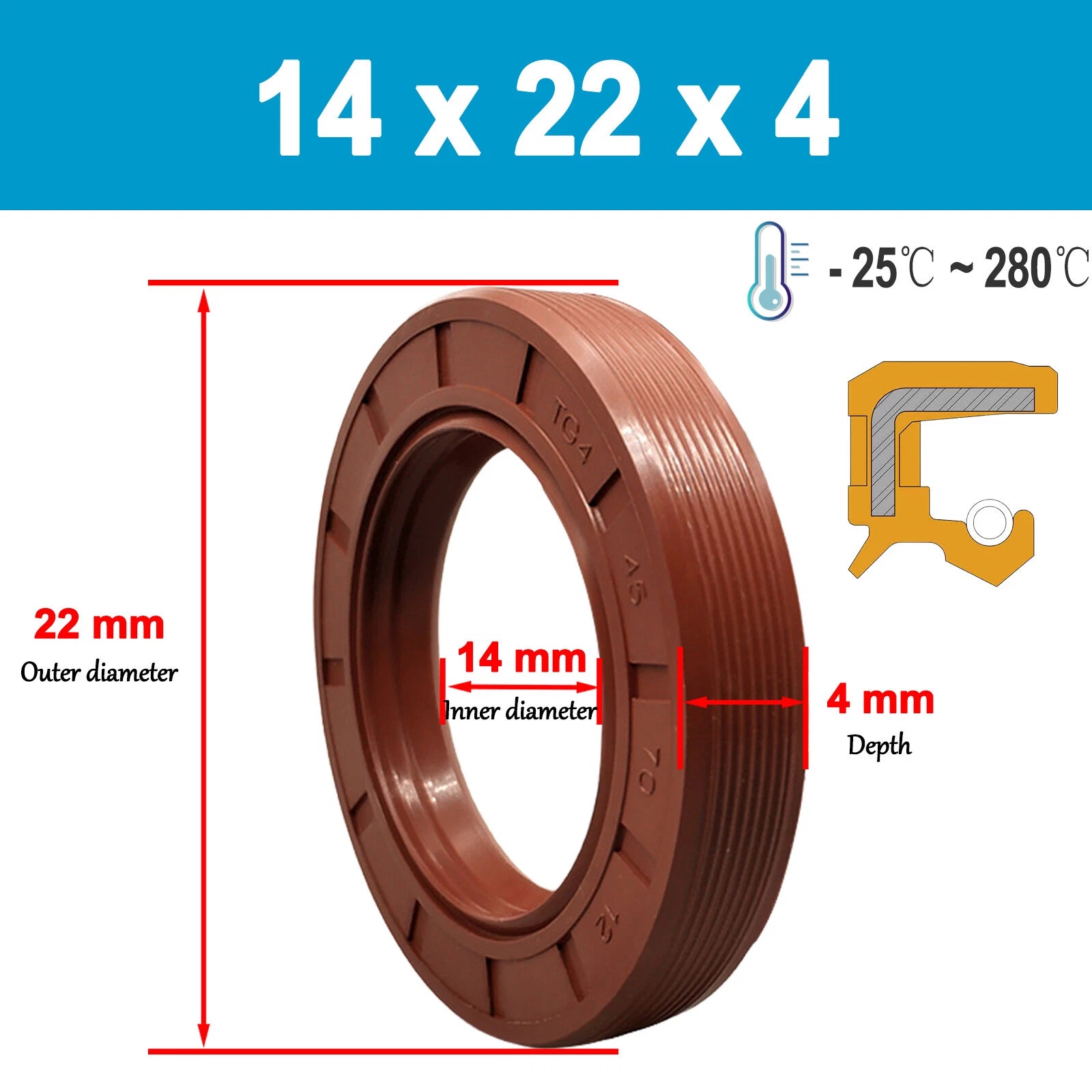
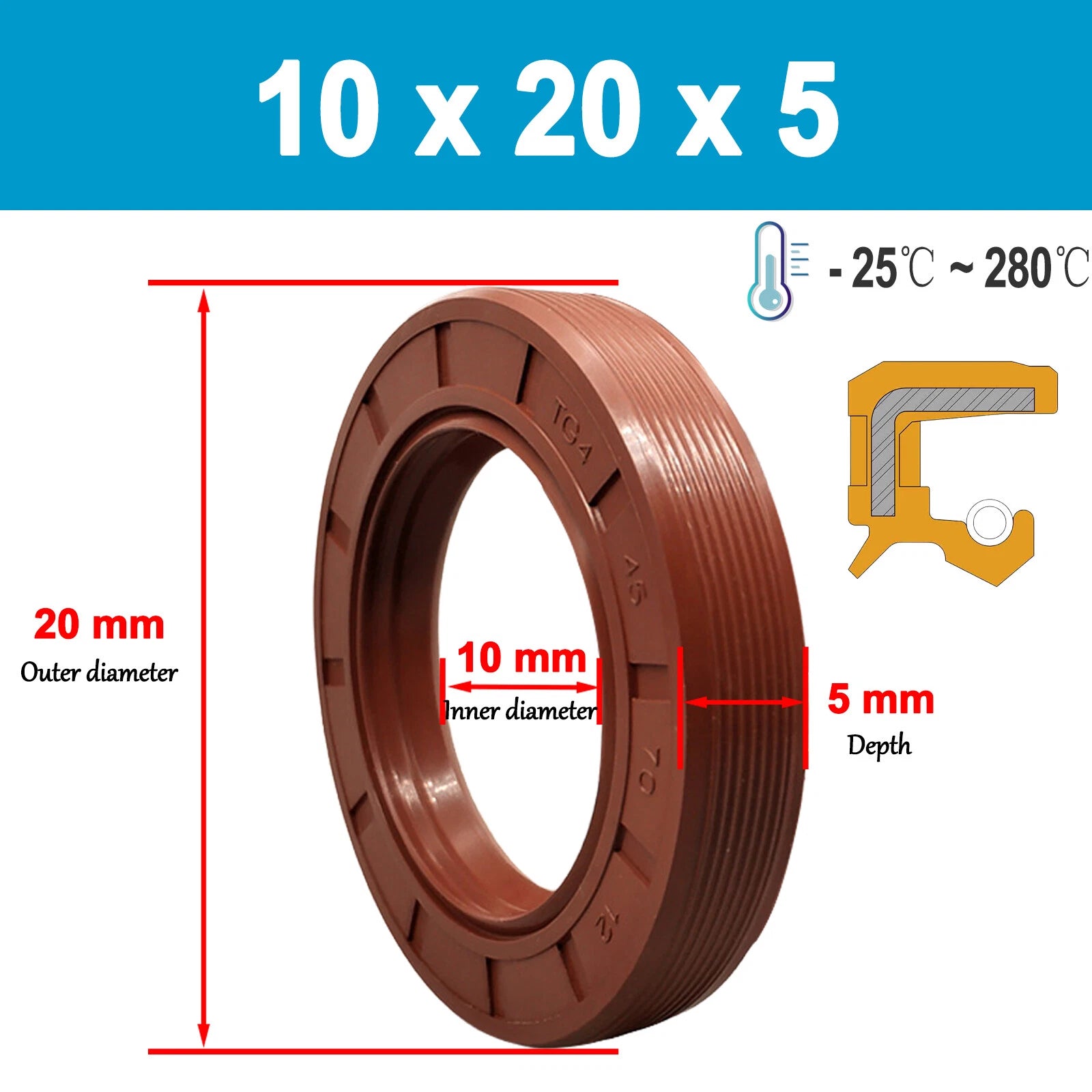
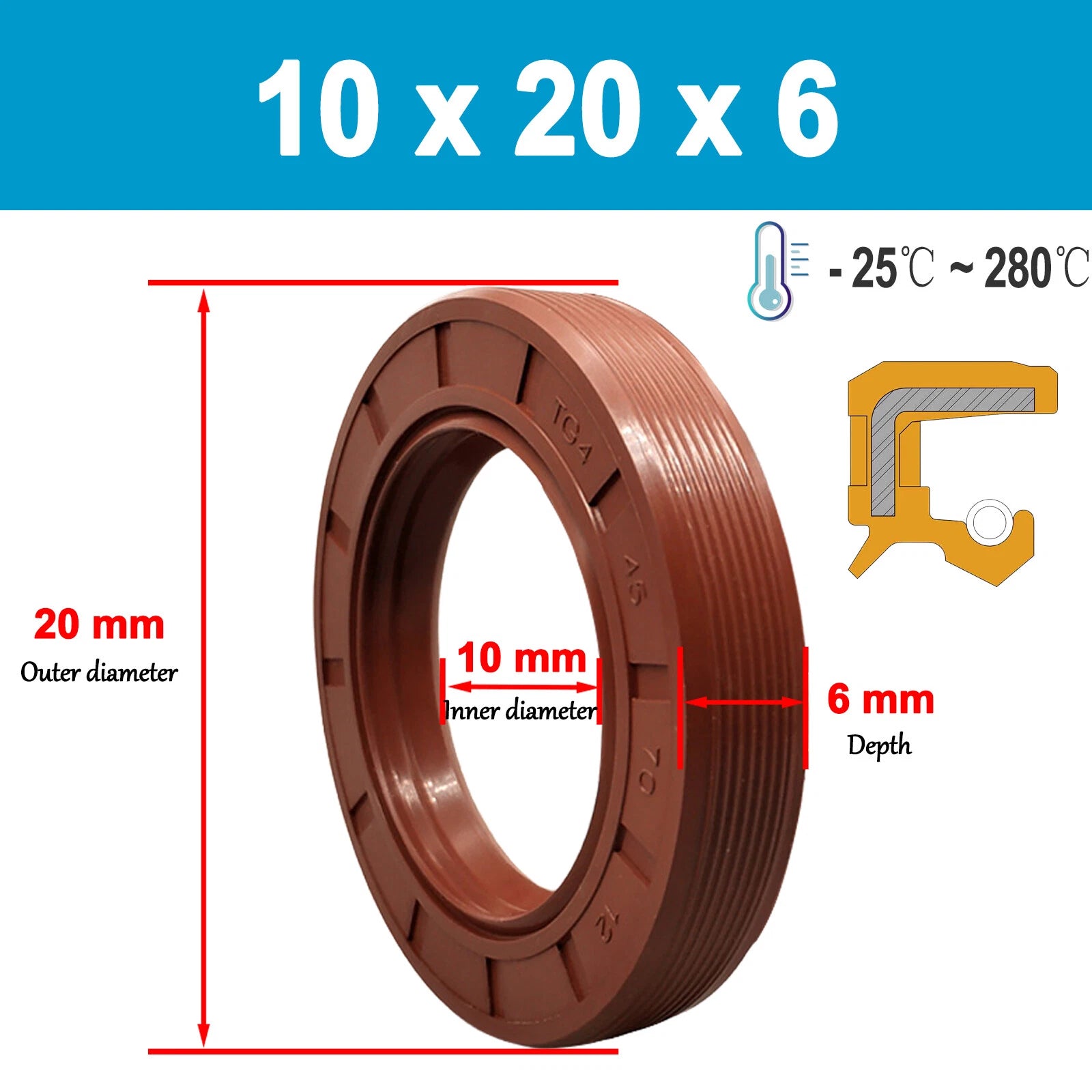
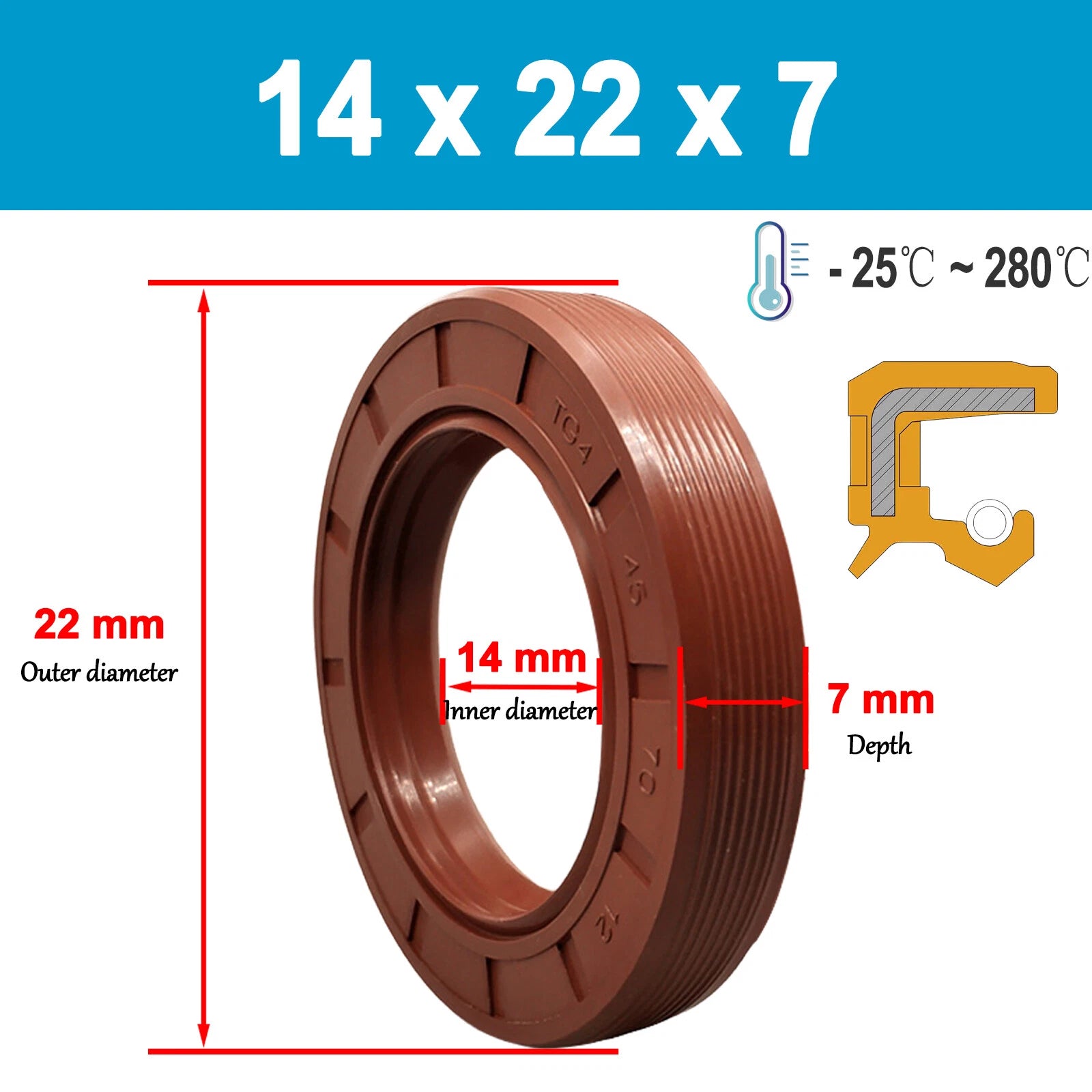
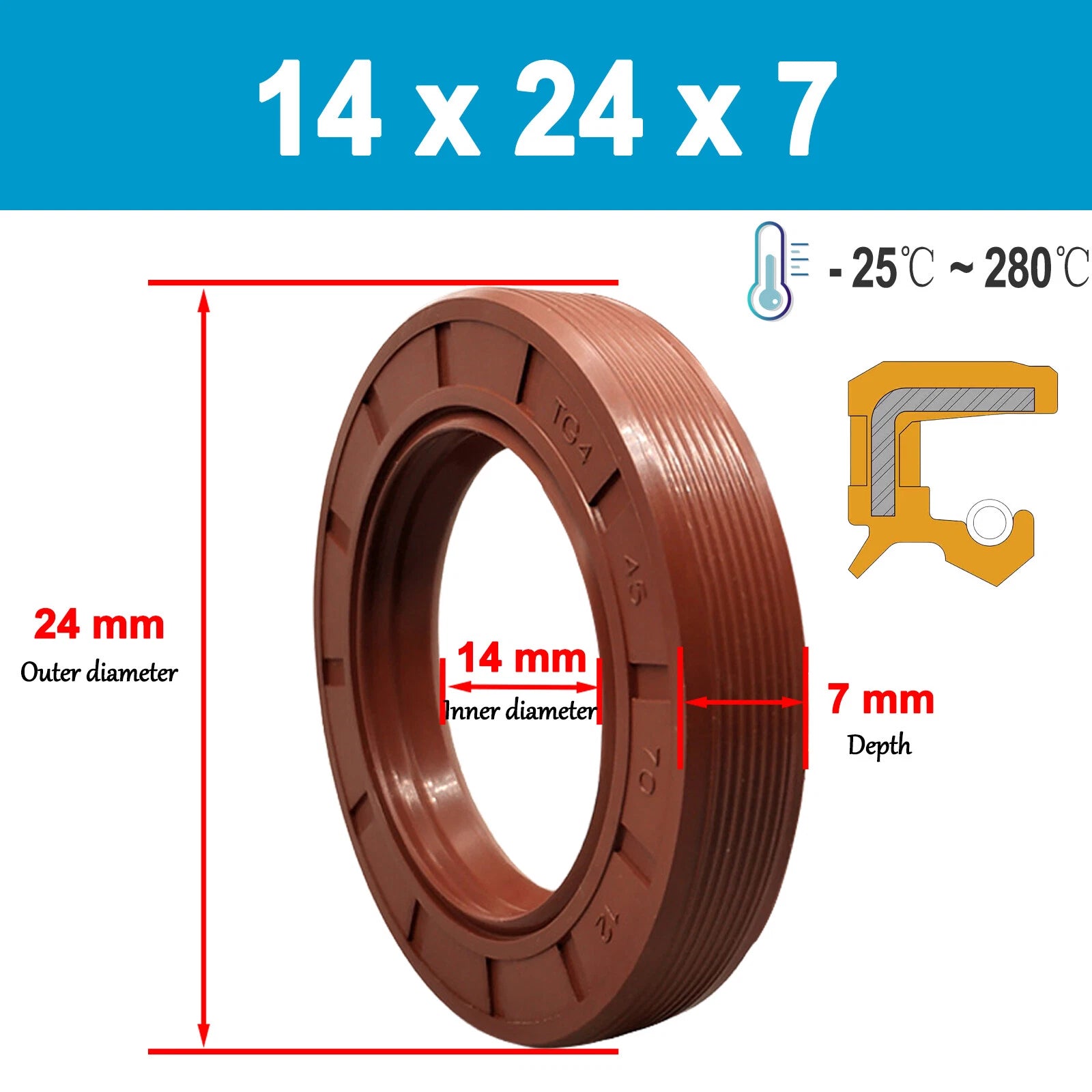
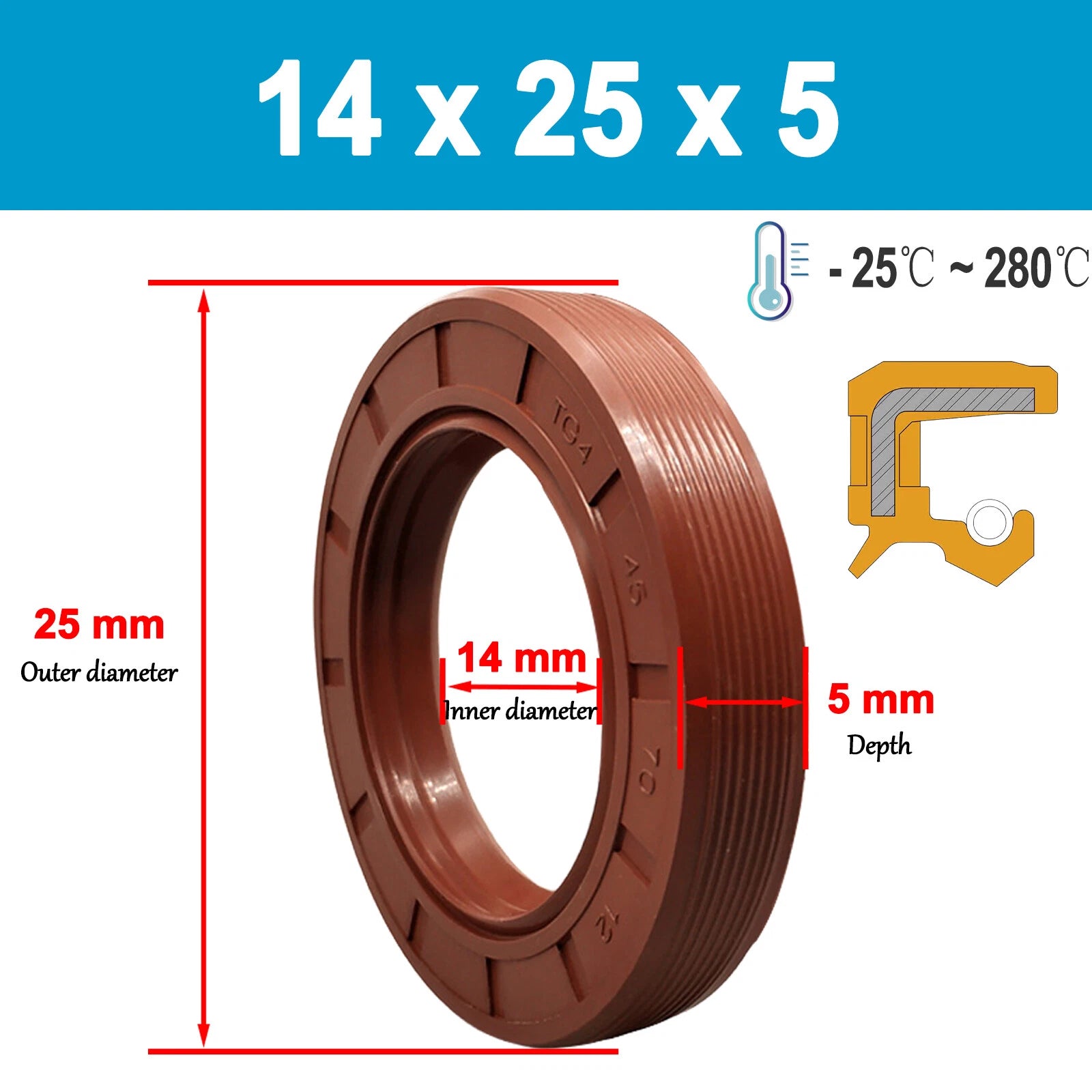
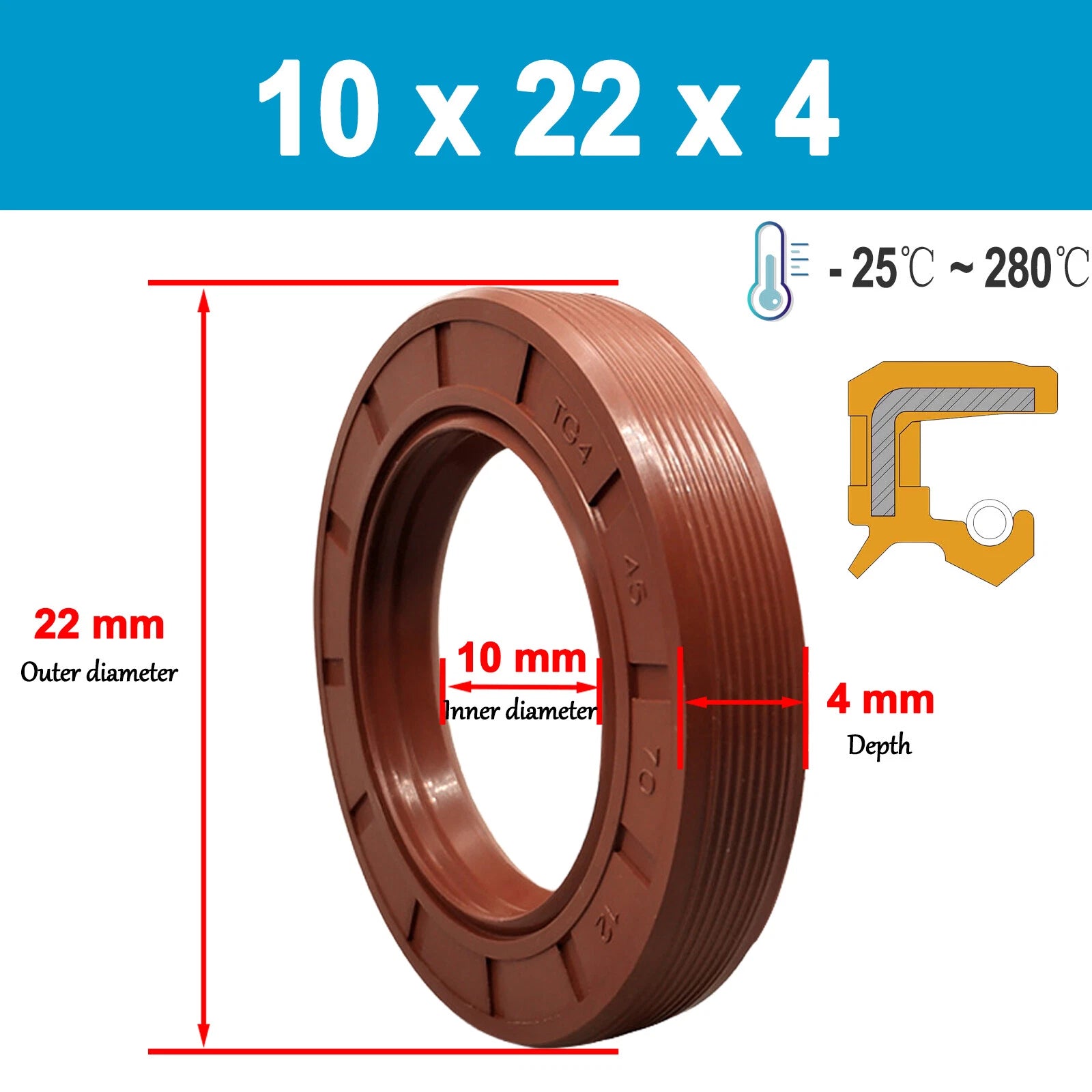
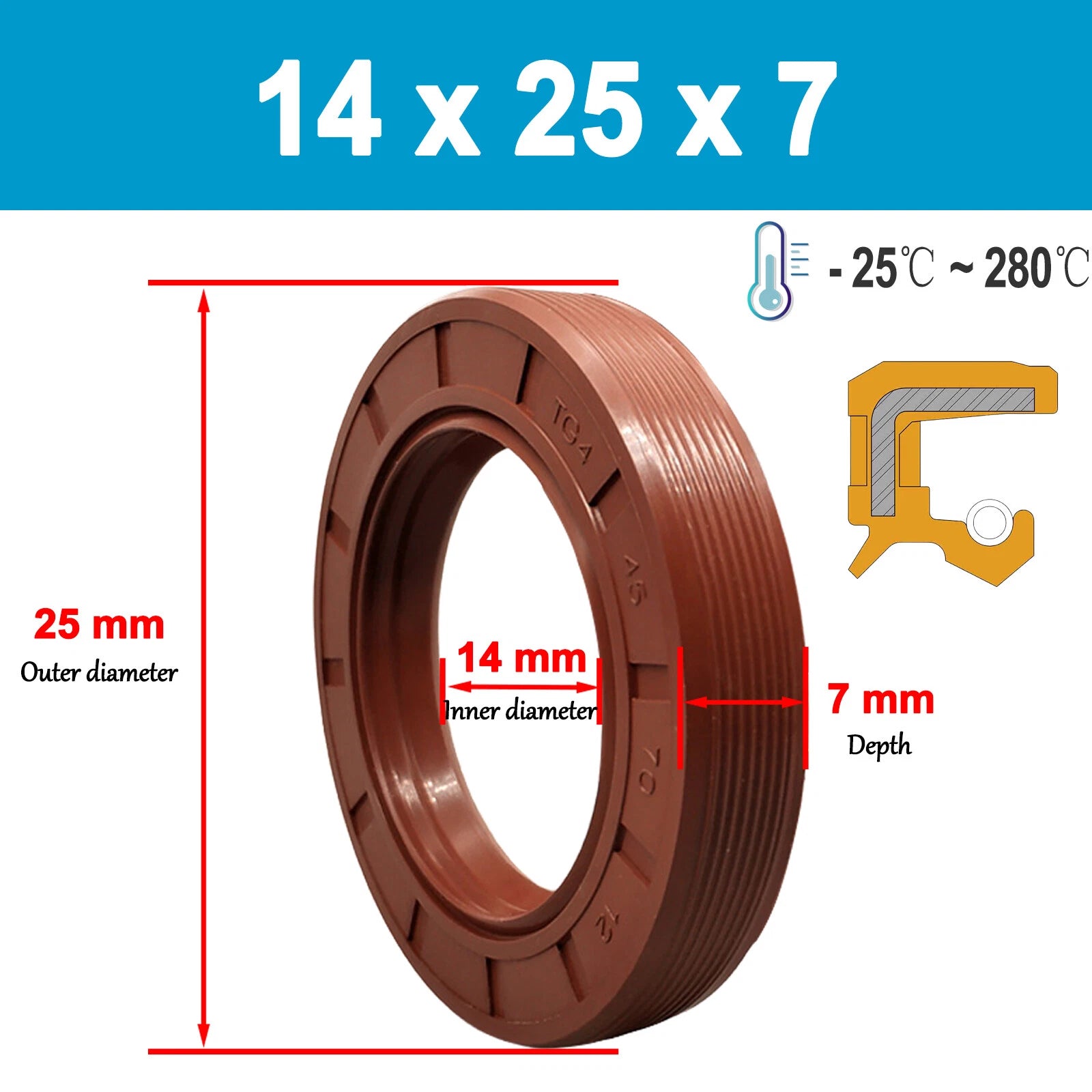
Inner Ø 5–15.88 mm, outer Ø 10–45 mm, depth 3–10 mm — covering a wide range of small-bore metric shaft seal applications without custom ordering.
Each variant ships as a pack of 5 seals, providing spares for maintenance kits or multi-unit builds without overstocking large quantities.
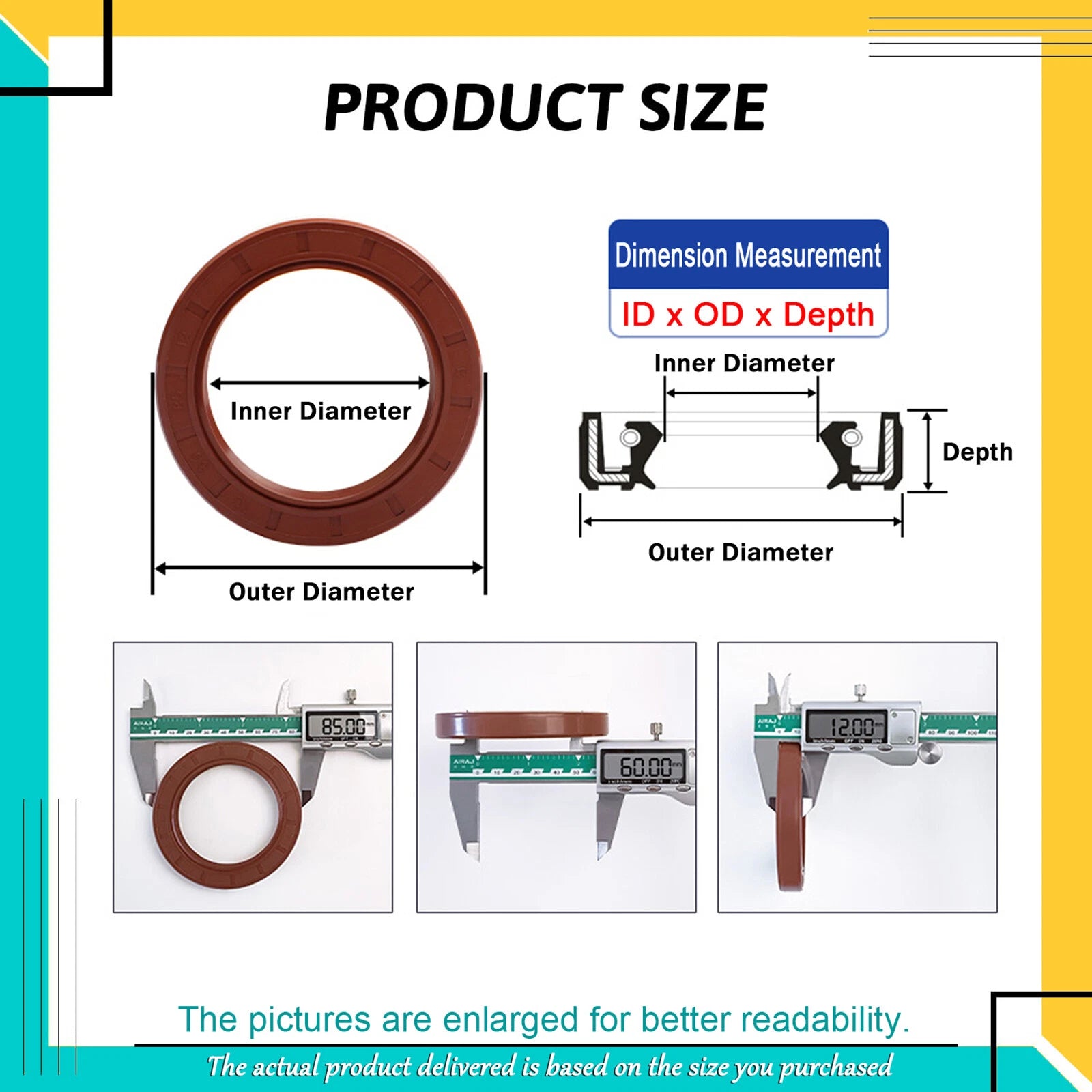
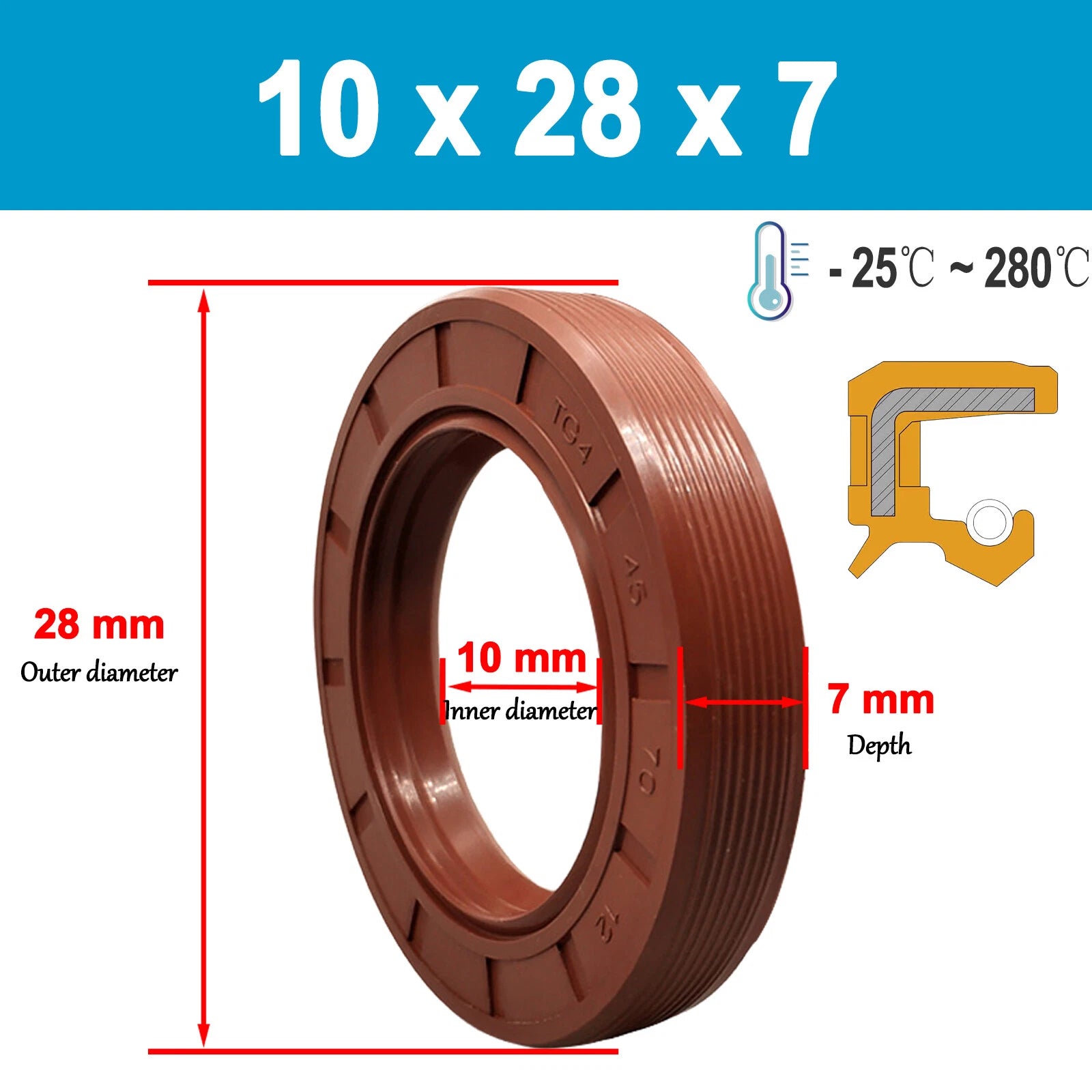
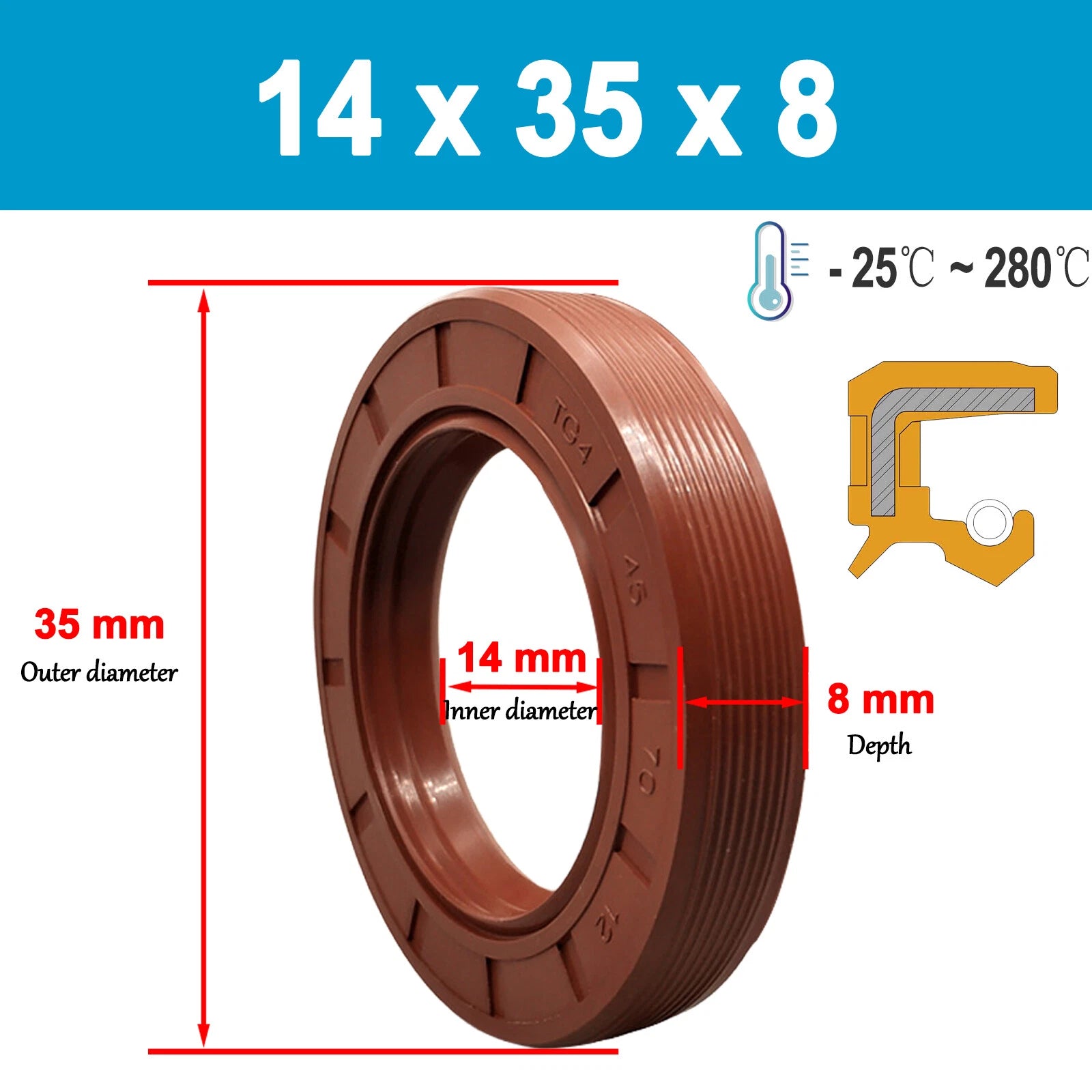
Dimensions follow standard metric TC seal conventions (Inner Ø × Outer Ø × Depth in mm), making cross-referencing against OEM part numbers and bearing catalogs straightforward.
| Seal Type | TC (Double Lip Rotary Shaft Seal) |
|---|---|
| Lip Material | FKM (Fluoroelastomer / Fluorine Rubber) |
| Case Material | Steel (metal-cased) |
| Inner Diameter (Shaft Ø) | 5 mm – 15.88 mm (approx. 0.20" – 0.63") |
| Outer Diameter (Housing Bore) | 10 mm – 45 mm (approx. 0.39" – 1.77") |
| Depth (Width) | 3 mm – 10 mm (approx. 0.12" – 0.39") |
| Dimension Standard | Metric (mm) |
| Number of Lips | 2 (primary oil lip + secondary dust lip) |
| Packing Quantity | 5 pcs per pack |
| Operating Temperature | See variant options |
| Max Shaft Speed | See variant options |
| Fluid Compatibility | Petroleum oils, synthetic lubricants, hydraulic fluids (FKM-compatible); not for steam or ketones |
| Finish / Color | See variant options |
Measure your shaft outer diameter (this becomes the seal's Inner Ø), then measure the housing bore diameter (this becomes the seal's Outer Ø), and finally measure the housing groove depth (this becomes the seal's Depth). Select the variant whose Inner Ø × Outer Ø × Depth matches those three measurements. If your shaft is metric, the dimensions listed in mm should match directly. For inch shafts, convert to mm first (1 inch = 25.4 mm).
FKM (fluoroelastomer) offers significantly better resistance to high temperatures, synthetic lubricants, and aggressive hydraulic fluids compared to standard NBR (nitrile) rubber. If your application involves elevated operating temperatures (typically above 100 °C / 212 °F), synthetic gear oils, or chemically aggressive fluids, FKM is the appropriate choice. For standard mineral oil at moderate temperatures, NBR is also suitable, but FKM provides a wider safety margin.
TC stands for a double-lip seal with a metal case. The first (primary) lip faces the oil side and maintains contact with the rotating shaft to retain lubricant. The second (secondary) lip faces outward and acts as a dust and moisture exclusion barrier. The metal outer case provides rigidity for press-fit installation into the housing bore and prevents the seal from rotating with the shaft.
Yes. FKM fluorine rubber is compatible with most petroleum-based and synthetic lubricants, including PAO (polyalphaolefin) synthetic gear oils and mineral-based hydraulic fluids. FKM is not recommended for use with steam, ketone-based fluids (such as MEK or acetone), or certain ester-based fluids — always verify compatibility with your specific fluid before installation.
Clean the housing bore and shaft thoroughly before installation. Lightly lubricate the seal lip with the same oil or grease used in the application. Use a seal driver or a flat press tool sized to the outer diameter to press the seal squarely into the bore — never hammer directly on the seal face. Ensure the seal is flush or slightly below the housing face. Protect the seal lip from sharp shaft edges or keyways during installation by using a sleeve or tape over the shaft end.
Pricing varies by size because larger outer diameters and greater depths require more FKM material and a heavier steel case, increasing the per-unit material cost. Less common size combinations may also carry a slight premium due to lower production volumes. All prices shown are for a pack of 5 seals.
Yes, provided the shaft diameter and housing bore match a listed size. FKM TC seals are used in precision spindles and robotic joints where compact dimensions, reliable oil retention, and resistance to synthetic lubricants are required. Verify the maximum shaft speed rating for your specific size, as lip seal performance is speed-dependent — contact us to confirm suitability for high-speed applications.