Mini Steel Pliers — Precision Control for Every Detail
When your project demands accuracy in tight spaces, ordinary tools fall short. Whether you're a jewelry maker wrestling with fine wire loops, an electronics hobbyist trimming leads on a crowded PCB, or a model builder attaching parts smaller than a fingernail, you need a tool that responds to your intent — not one that fights it.
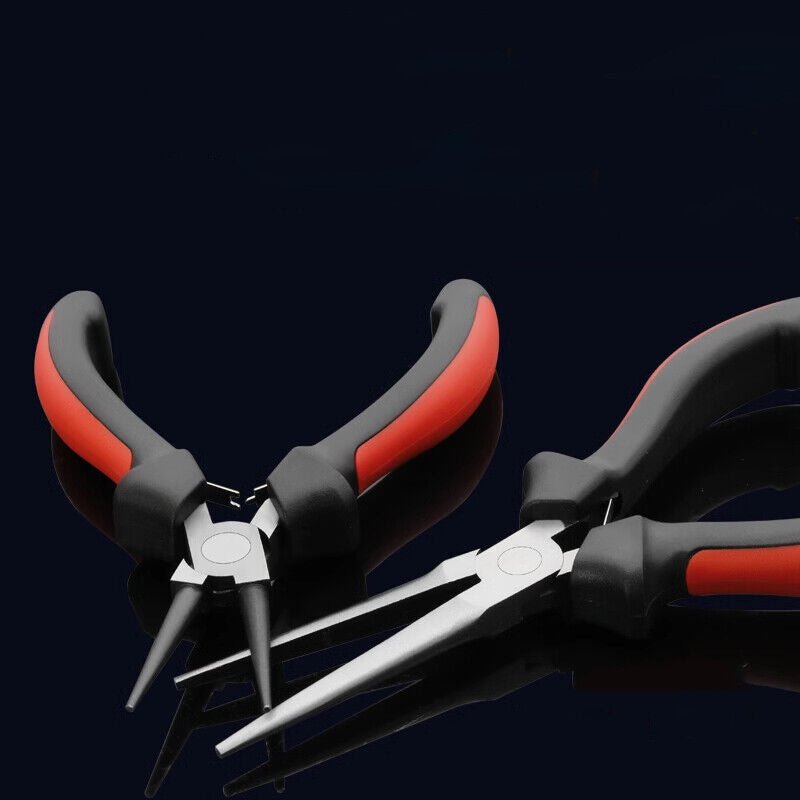
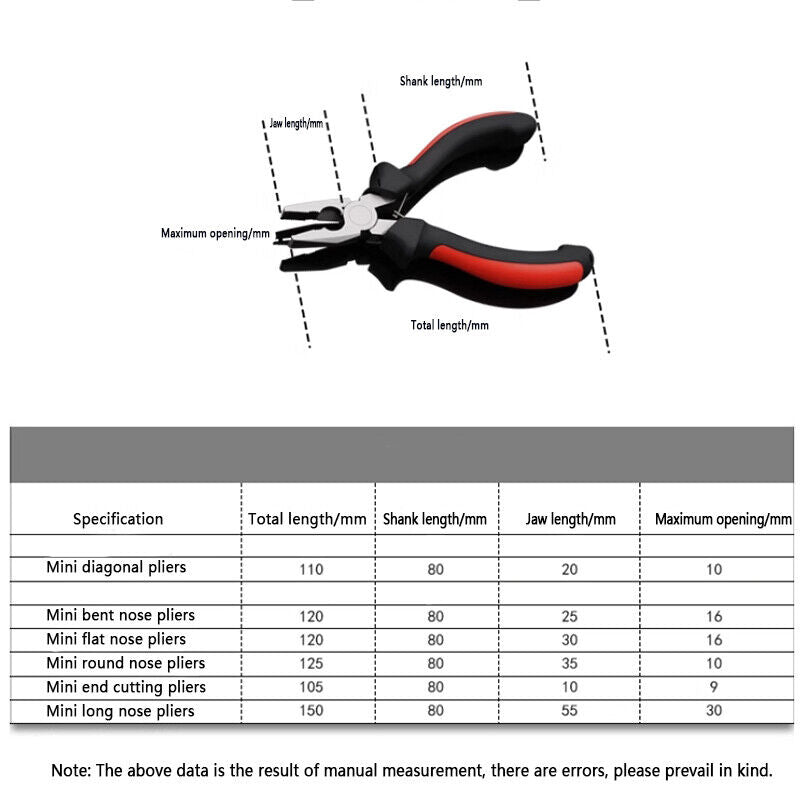
These mini steel pliers are crafted from heat-treated steel with precisely machined jaws, available in six specialized types: diagonal, bent nose, flat nose, round nose, end cutting, and long nose. Each variant weighs between 77–106 g (2.7–3.7 oz), sized for one-handed control without sacrificing grip strength.
Use them for wire-wrapped pendants, soldering circuit board connections, assembling scale model structures, or adding fine embellishments to DIY crafts — wherever small-scale precision is non-negotiable.
✅ Compatible with fine wire, beads, small electronic components, model parts, and delicate craft materials across jewelry making, electronics, and hobby applications.
Key Features
- 🎯 Precision-Machined Jaws — tapered tips and smooth jaw faces grip small objects firmly without marring surfaces, ideal for wire bending, bead handling, and component placement.
- 🔩 Heat-Treated Steel Construction — durable, wear-resistant steel maintains jaw alignment and sharpness through repeated use across all six plier types.
- 🛠️ Six Specialized Types — diagonal, bent nose, flat nose, round nose, end cutting, and long nose cover the full range of small-detail tasks in one product line.
- ✋ Non-Slip Textured Handles — ergonomic grip reduces hand fatigue during extended sessions and prevents slipping when handling delicate components.
- ⚙️ Spring-Loaded Mechanism — effortless jaw opening reduces repetitive strain, allowing smooth, controlled operation even during long crafting sessions.
- 🎒 Compact & Portable — lightweight build (77–106 g) fits in a toolbox drawer, craft pouch, or pocket, so precision is always within reach.
Who Is This For
💍 Jewelry Makers
Bend and shape fine wire for wrapped pendants, form loops for earring hooks, attach clasps to bracelets, and string beads with consistent tension — all without scratching precious metals.
🔌 Electronics Hobbyists
Trim component leads, hold wires steady during soldering, make precise bends for PCB connections, and navigate crowded circuit boards with the narrow-tip variants.
🏗️ Model Builders
Attach antennas, rivets, and decals to scale models, bend metal rods for structural detail, and handle resin or plastic parts too small for fingers.
🎨 DIY Craft Enthusiasts
Add wire accents to paper crafts, assemble dollhouse furniture, secure embellishments on mixed-media art, and tackle any small-detail hobby project that demands a steady, precise grip.
Technical Specifications
| Types Available |
Diagonal, Bent Nose, Flat Nose, Round Nose, End Cutting, Long Nose |
| Material |
Heat-treated steel |
| Weight Range |
77–106 g (2.7–3.7 oz) depending on type |
| Handle |
Non-slip textured grip |
| Mechanism |
Spring-loaded |
| Jaw Surface |
Smooth, precision-machined |
| Recommended Use |
Jewelry making, electronics, model building, DIY crafts |
Frequently Asked Questions
What is the difference between the six plier types?
Each type is optimized for a specific task: diagonal pliers cut wire at an angle; bent nose pliers reach into curved or recessed areas; flat nose pliers grip and bend flat; round nose pliers form loops and curves; end cutting pliers trim flush to a surface; long nose pliers reach deep into tight spaces.
Are these suitable for cutting wire?
The diagonal and end cutting variants are designed for wire cutting. The other types are primarily for gripping, bending, and shaping rather than cutting.
What wire gauges can these pliers handle?
These pliers are designed for fine detail work and are generally suited for wire gauges typically ranging from 20–30 AWG (approximately 0.25–0.8 mm). For heavier wire, a full-size plier is recommended.
Will the jaws scratch delicate metals like gold or silver wire?
The smooth, precision-machined jaw faces are designed to minimize surface marking. For extra protection on precious metals, wrapping the jaws with masking tape is a common practice among jewelers.
How do I maintain these pliers?
Wipe the jaws clean with a dry cloth after each use. Avoid exposure to harsh chemicals or solvents that could degrade the handle grip. Store in a dry location to prevent rust on the steel jaws.
Can beginners use these pliers?
Yes. The spring-loaded mechanism makes opening and closing the jaws effortless, and the non-slip handles provide good control even for those new to fine detail work. Starting with the flat nose or round nose type is generally recommended for beginners.
Are these pliers sold individually or as a set?
Each variant is sold individually. Select the specific type you need from the variant options above.
Ready to elevate your detail work? Select your plier type above and add to cart — built for makers who demand precision in every project.