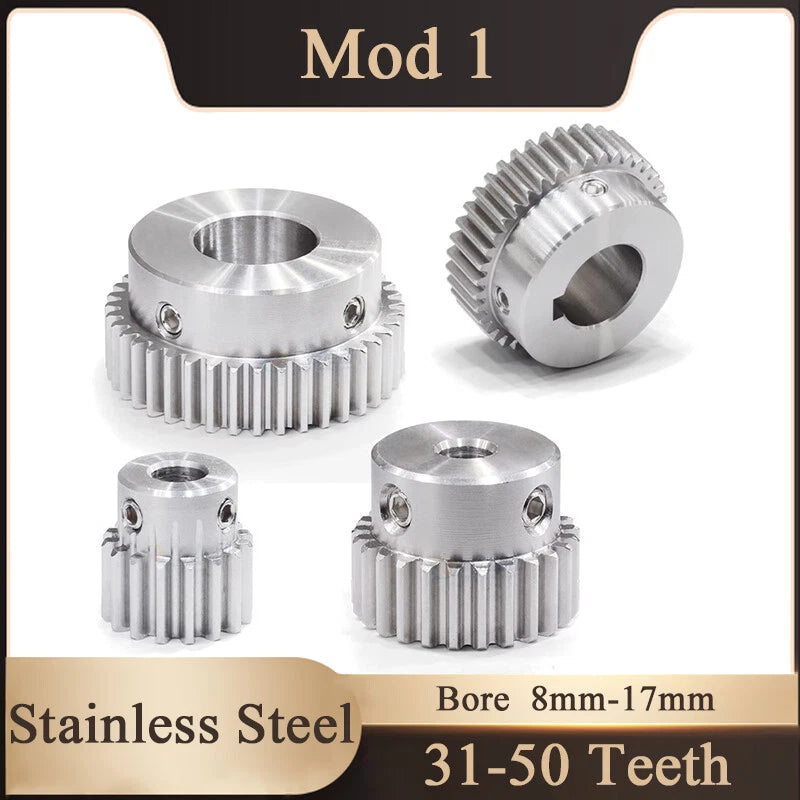
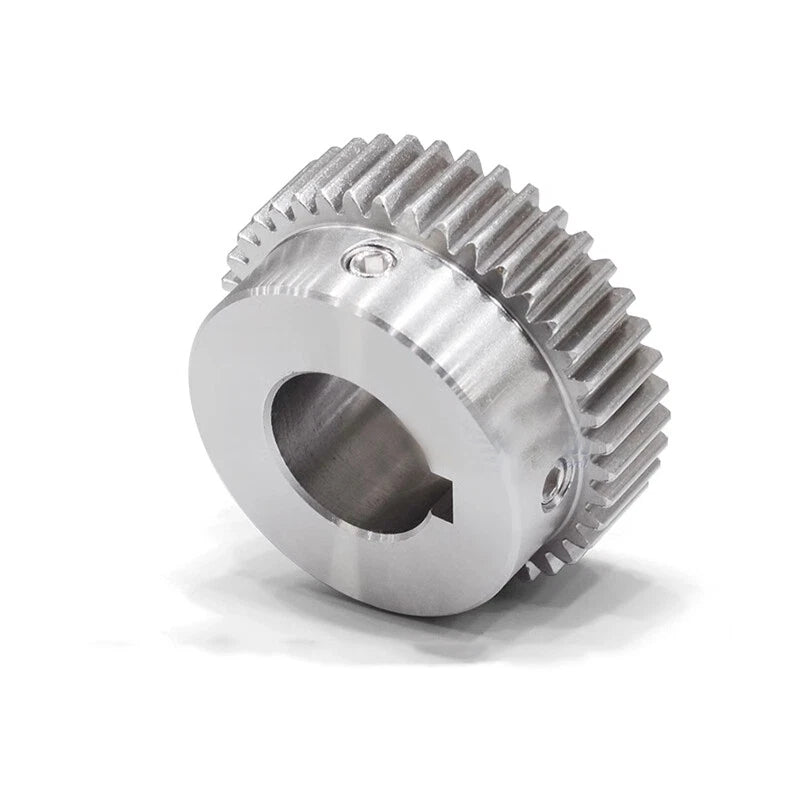
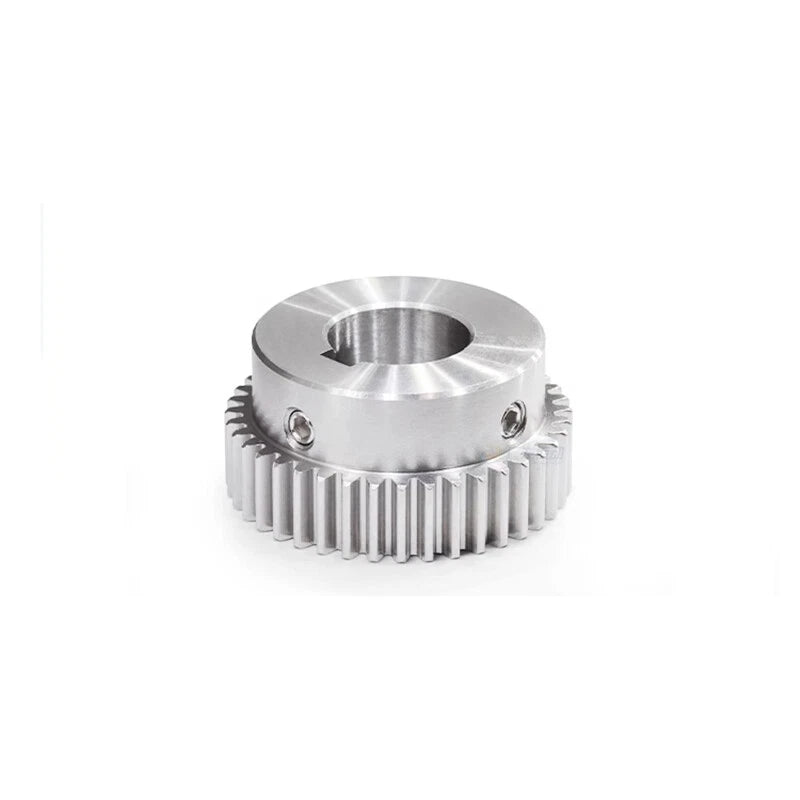
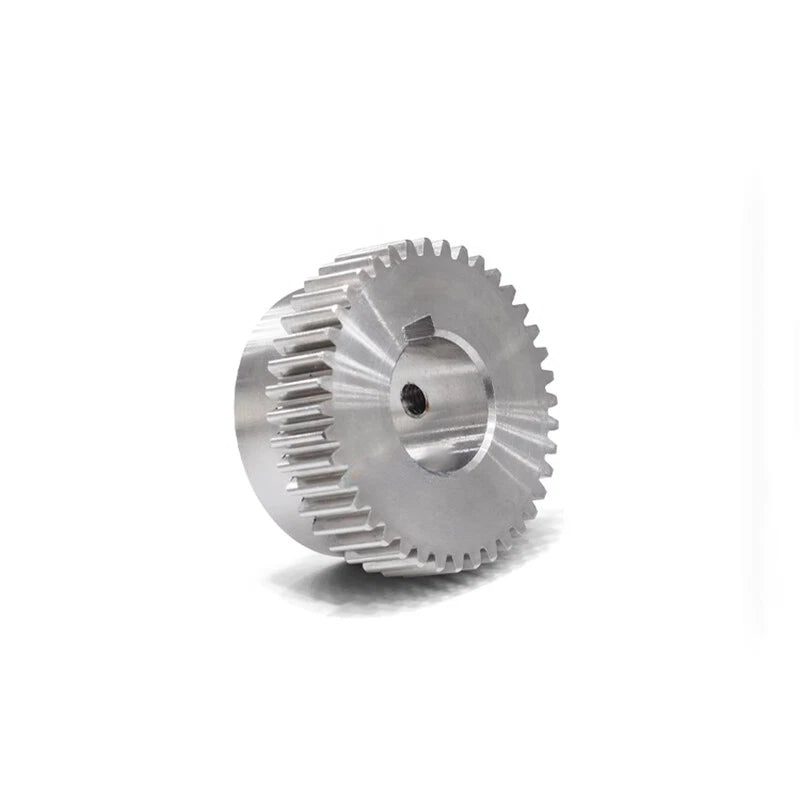
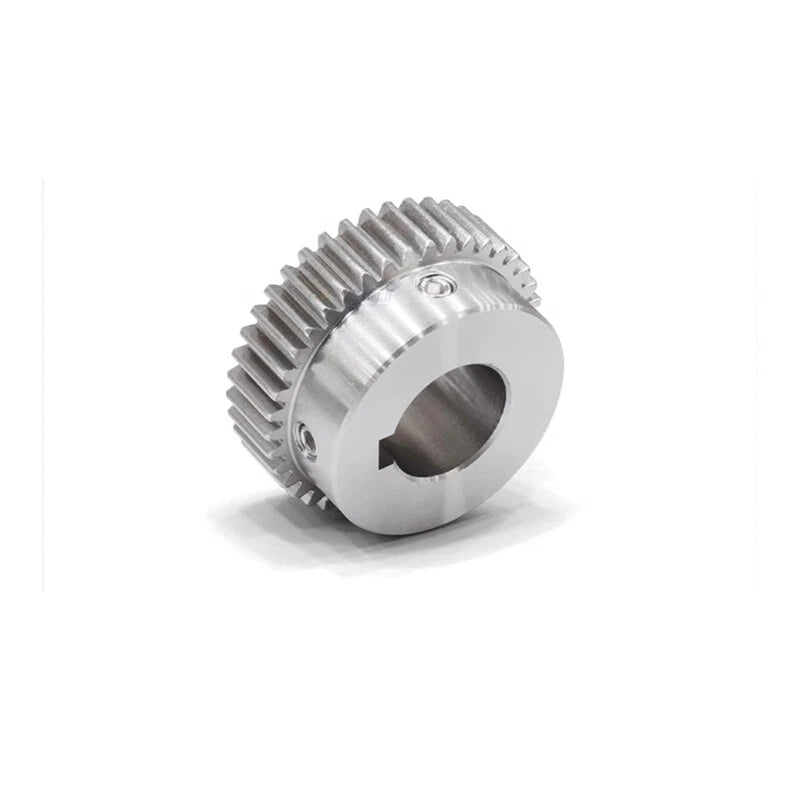
Mod 1 Stainless Steel Spur Gears Pinion Gear Motor Gear, 31-50 Teeth Bore 8-20mm

No reviews

Price:
Sale price$23.94 USD
Stock:
In stock (500 units), ready to be shipped

Payment & Security

Ach Direct Debit Amazon American Express Apple Pay Bancontact BLIK Diners Club Discover EPS Google Pay iDEAL Wero JCB Maestro Mastercard Multibanco MobilePay PayPal Przelewy24 Shop Pay Twint Union Pay USDC Visa

Your payment information is processed securely. We do not store credit card details nor have access to your credit card information.

Limited Offer — Spend More, Save More
Spend $55+
Save $5
Spend $100+
Save $10
Spend $200+
Save $25
HomeDIYer DIY Expert Support

DIY Expert Support

Get fitment advice & recommendations

Mon–Fri  8:30 AM – 8:00 PM
24-Hour Fast Ship
Arrives in 3–14 Days
Worldwide Shipping
30-Day Returns
1 tree planted with every purchase

Description

Mod 1 Stainless Steel Spur Gears — Precise Power Transmission for DIY and Industrial Drives

When your motor drive, robotic arm, or CNC axis demands consistent torque transfer without slop or premature wear, the wrong gear becomes the most expensive part in your build. These Mod 1 stainless steel spur gears are engineered for makers, engineers, and hobbyists who need reliable pinion gear performance across a wide range of shaft sizes and tooth counts — without sourcing from multiple suppliers.

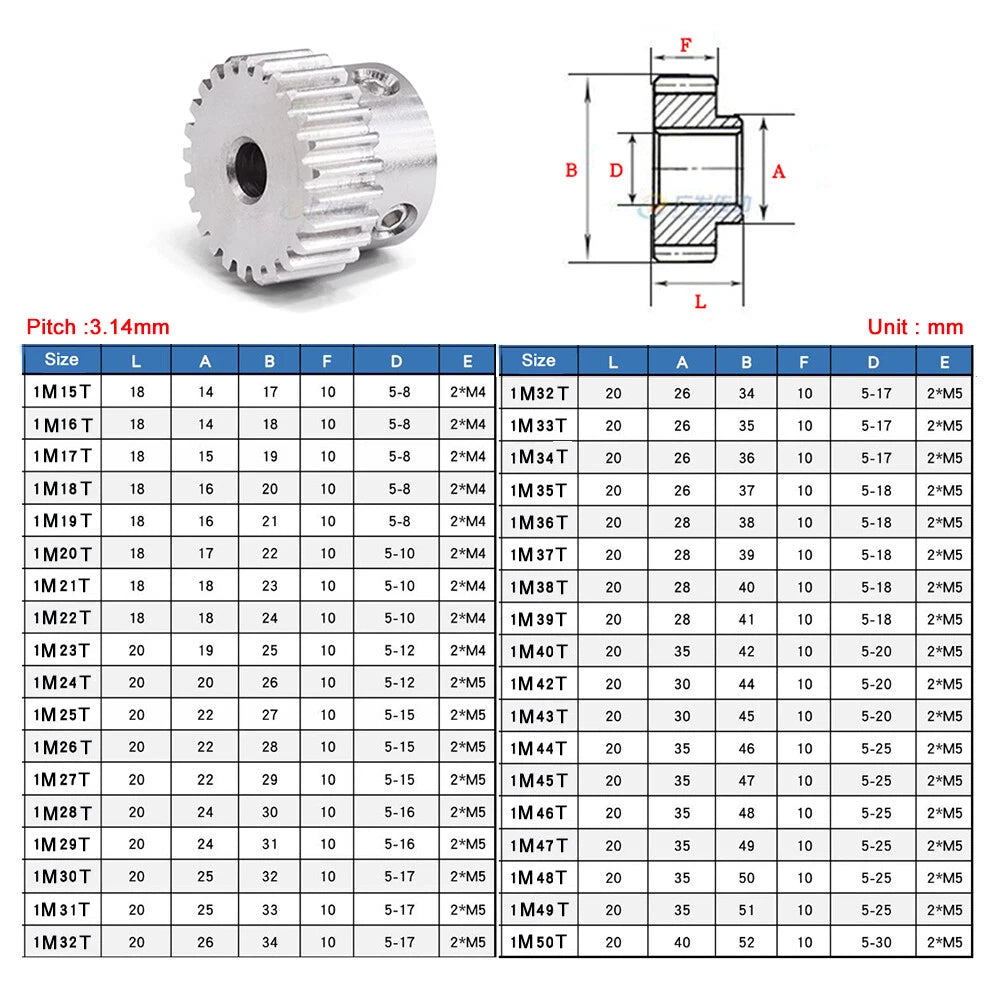
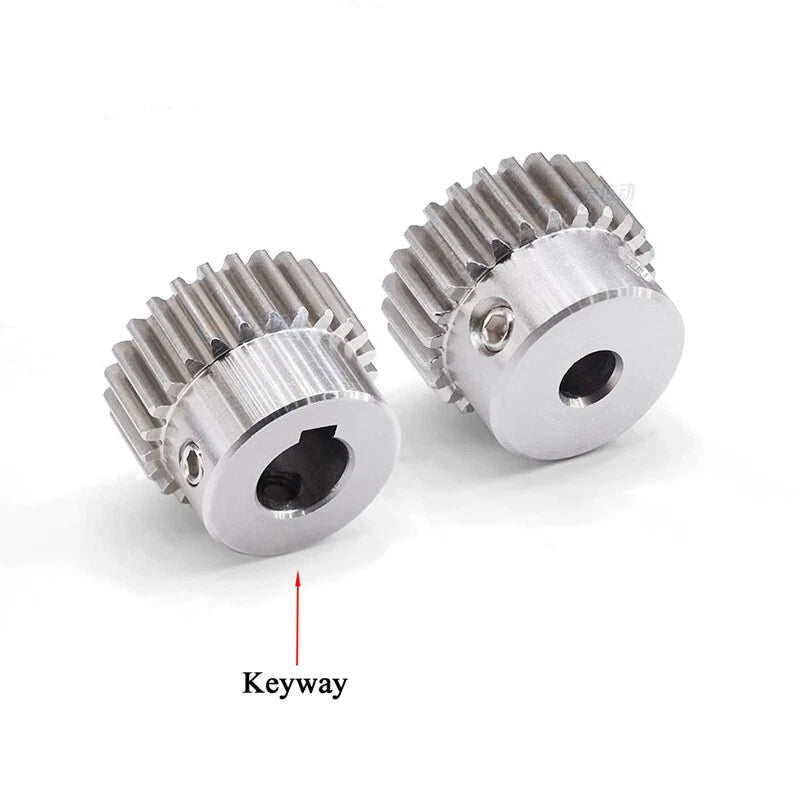
Each gear is machined from stainless steel, offering corrosion resistance and structural rigidity. The Mod 1 (1M) tooth profile ensures standard metric compatibility across the full range of 31 to 50 teeth. Bore options span 8 mm (0.31 in) to 20 mm (0.79 in), with plain round bores and keyway variants available — keyway slots range from 3×1.4 mm up to 6×2.8 mm depending on bore size, enabling positive shaft locking without set-screw slippage.

Typical use cases include DC motor pinion drives in robotics and automation rigs, lead-screw stage drives in DIY CNC routers and laser cutters, and gear-reduction assemblies in electric go-karts, conveyor systems, and custom actuators where a standard Mod 1 spur gear mesh is required.

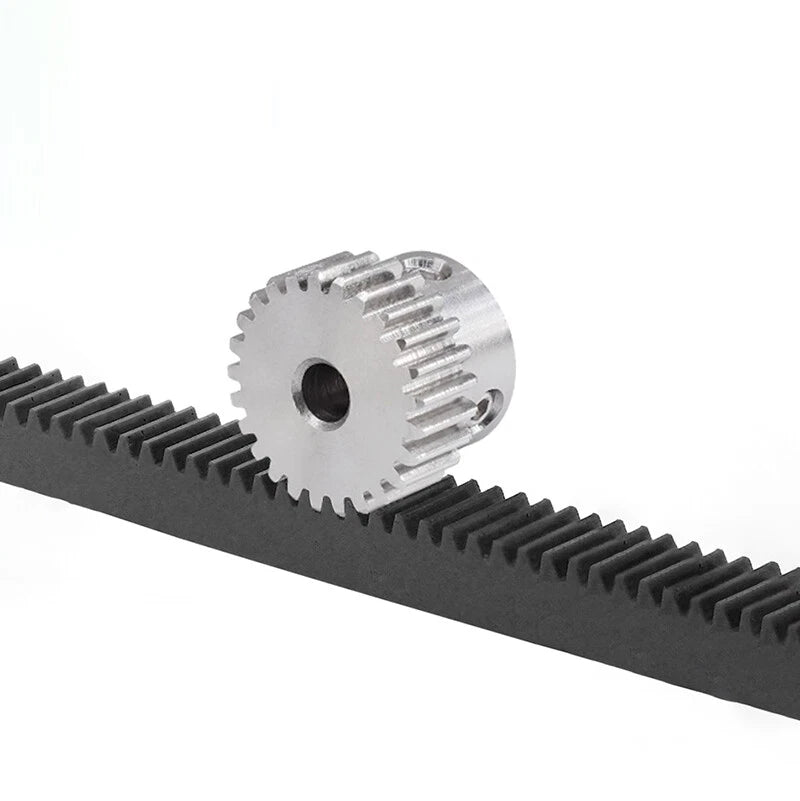
⚙️ Compatibility: Meshes with any standard Mod 1 (Module 1) spur or rack gear. Verify bore diameter and keyway dimensions against your shaft before ordering.

✅ Key Features of These Mod 1 Stainless Steel Spur Gears

🦾 Wide Tooth Count Range
Available from 31T to 50T (excluding 41T) in a single product listing — select the exact gear ratio you need without hunting across multiple SKUs.
🔩 Multiple Bore Options
Plain round bores from 8 mm to 20 mm, plus keyway variants (3×1.4 mm, 4×1.8 mm, 5×2.3 mm, 6×2.8 mm) for positive shaft engagement and zero rotational slip.
🛡️ Stainless Steel Construction
Corrosion-resistant stainless steel body withstands humid, wet, and mildly corrosive environments — suitable for food-adjacent machinery, outdoor robotics, and marine-adjacent builds.
📐 Standard Mod 1 Tooth Profile
Full metric Module 1 tooth geometry ensures drop-in mesh compatibility with any standard 1M rack, pinion, or mating spur gear in your drivetrain.
Precision Machined Bore
Bores are machined to close tolerances for minimal runout, reducing vibration and noise in high-speed motor pinion applications.
🔧 Keyway Variants for Secure Shaft Locking
Keyway bore options eliminate set-screw dependency for torque transmission — critical for reversing loads and high-cycle applications in CNC and automation.

📐 Technical Specifications — Mod 1 Stainless Steel Spur Gear

Module (Mod) 1 (Mod 1 / 1M)
Tooth Count Range 31T – 50T (see variant options)
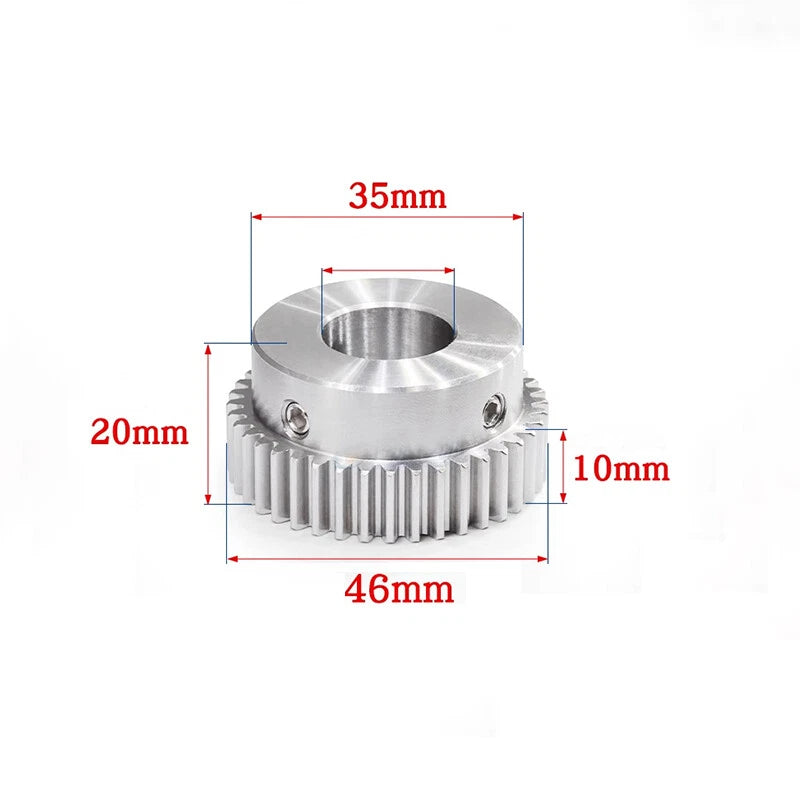
Bore Diameter Range 8 mm – 20 mm (0.31 in – 0.79 in)
Bore Type Plain round bore; Keyway bore (see variant options)
Keyway Sizes Available 3×1.4 mm, 4×1.8 mm, 5×2.3 mm, 6×2.8 mm (bore-dependent)
Material Stainless Steel
Tooth Profile Standard Metric Module 1 (involute)
Pressure Angle 20°
Pitch Diameter See variant options (= Teeth × Module = Teeth × 1 mm)
Face Width See variant options
Finish Natural stainless (uncoated)
Quantity per Order 1 piece

❓ Frequently Asked Questions

How do I choose the right tooth count for my application?

The tooth count determines your gear ratio. Divide the driven gear teeth by the driving gear (pinion) teeth to get the reduction ratio. For example, a 31T pinion driving a 62T gear gives a 2:1 reduction. Choose a higher tooth count for more torque and lower speed, or a lower tooth count for higher speed with less torque. All gears in this listing are Mod 1, so any two Mod 1 gears will mesh correctly regardless of tooth count.

What bore size should I select for my motor shaft?

Measure your motor or drive shaft diameter precisely with calipers. Select the bore that matches your shaft — available plain round bores are 8, 10, 12, 14, 15, 16, 17, 18, 19, and 20 mm. If your shaft uses a key for torque locking, select the corresponding keyway bore variant (e.g., Keyway 12/4×1.8 mm means a 12 mm bore with a 4 mm wide × 1.8 mm deep keyway slot).

Do I need a keyway bore, or will a plain bore work?

For light-duty, low-torque, or unidirectional applications, a plain bore secured with a set screw is often sufficient. For reversing loads, high torque, or high-cycle applications — such as CNC axis drives or robotic joints — a keyway bore provides a positive mechanical lock that prevents rotational slip under load. If your shaft already has a machined keyway, select the matching keyway bore variant.

Are these gears compatible with other Mod 1 gears and racks?

Yes. All gears in this listing use the standard Mod 1 (Module 1) involute tooth profile with a 20° pressure angle, which is the global metric standard. They will mesh correctly with any other Mod 1 spur gear, pinion, or rack regardless of brand, as long as the tooth profile and module match. Do not attempt to mesh Mod 1 gears with DP (diametral pitch) imperial gears — they are not interchangeable.

How strong are stainless steel spur gears compared to steel or aluminum?

Stainless steel offers a good balance of tensile strength (typically 515–860 MPa depending on grade), corrosion resistance, and machinability. It is stronger than aluminum and more corrosion-resistant than carbon steel, making it well-suited for environments with moisture, mild chemicals, or food-adjacent use. For extremely high-torque industrial applications, consult the specific load ratings for your tooth count and face width.

How do I calculate the pitch diameter and center distance for meshing gears?

For Mod 1 gears, the pitch diameter (PD) in millimeters equals the number of teeth (e.g., a 40T gear has a 40 mm PD). The center distance between two meshing Mod 1 gears equals (PD1 + PD2) / 2. For example, a 31T pinion (31 mm PD) meshing with a 40T gear (40 mm PD) requires a center distance of (31 + 40) / 2 = 35.5 mm. This makes layout calculations straightforward for any Mod 1 pair.

Can I use these gears outdoors or in wet environments?

Stainless steel provides good corrosion resistance for outdoor, humid, and mildly wet environments. For prolonged submersion or highly corrosive chemical exposure, additional sealing or lubrication is recommended. Apply a light gear grease or oil to the tooth mesh to reduce wear and noise, especially in continuous-duty applications.

🛒 Select your Mod x Teeth count and Bore size above, then add to cart.

You may also like

Recently viewed