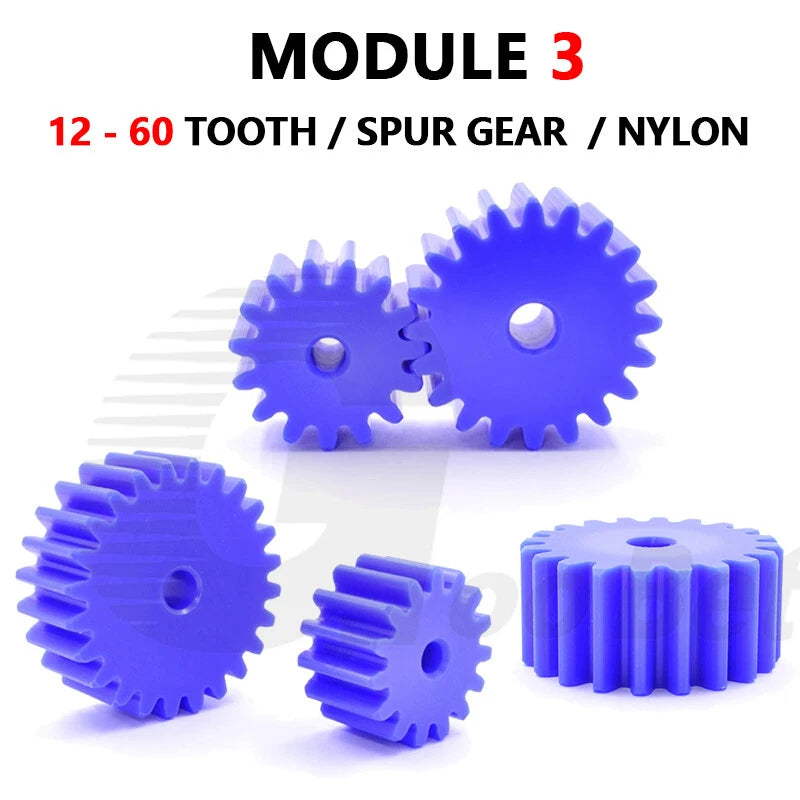
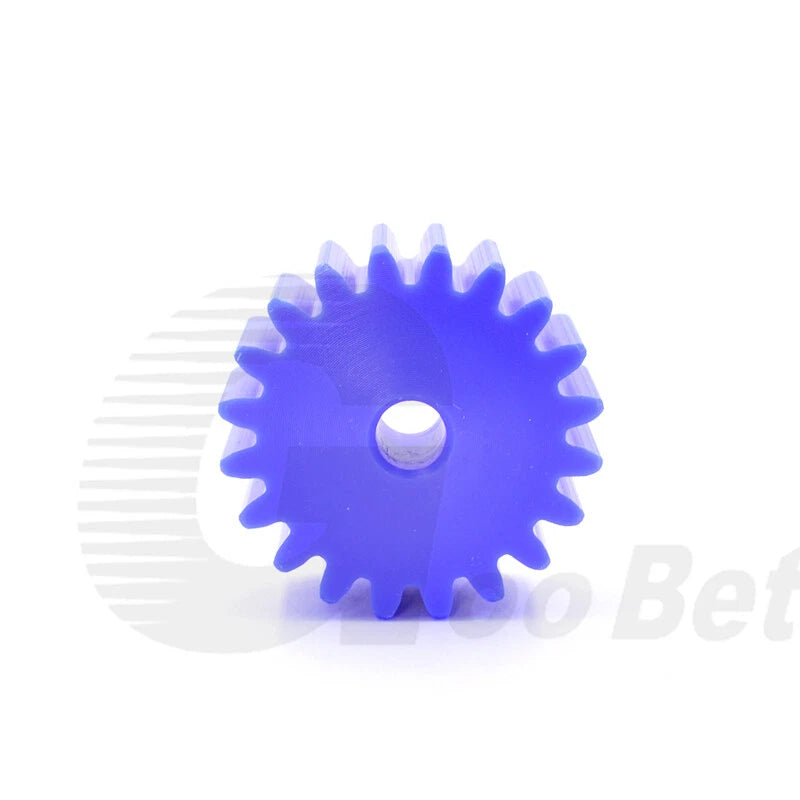
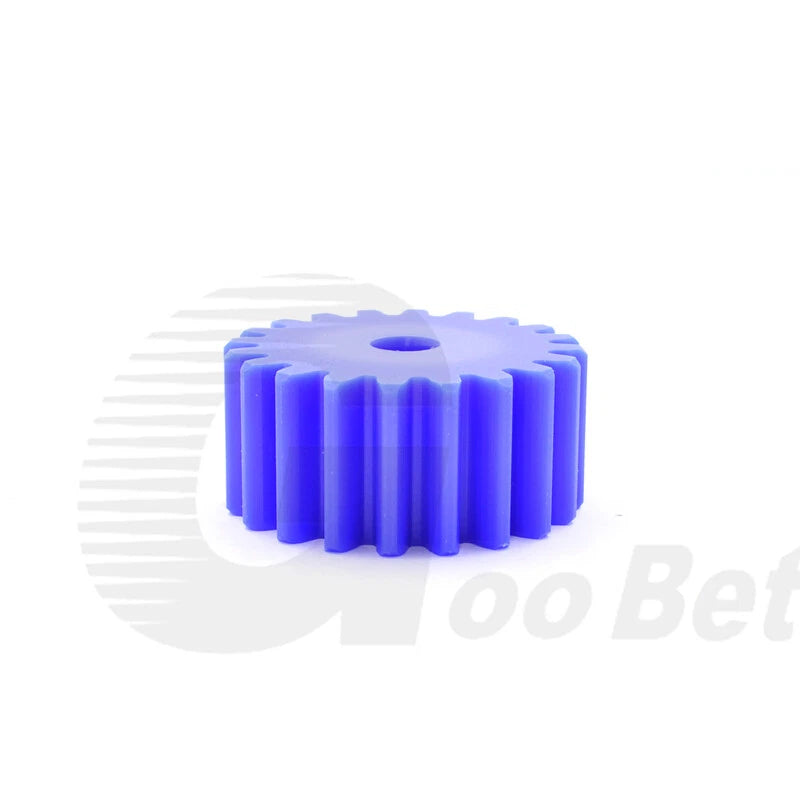
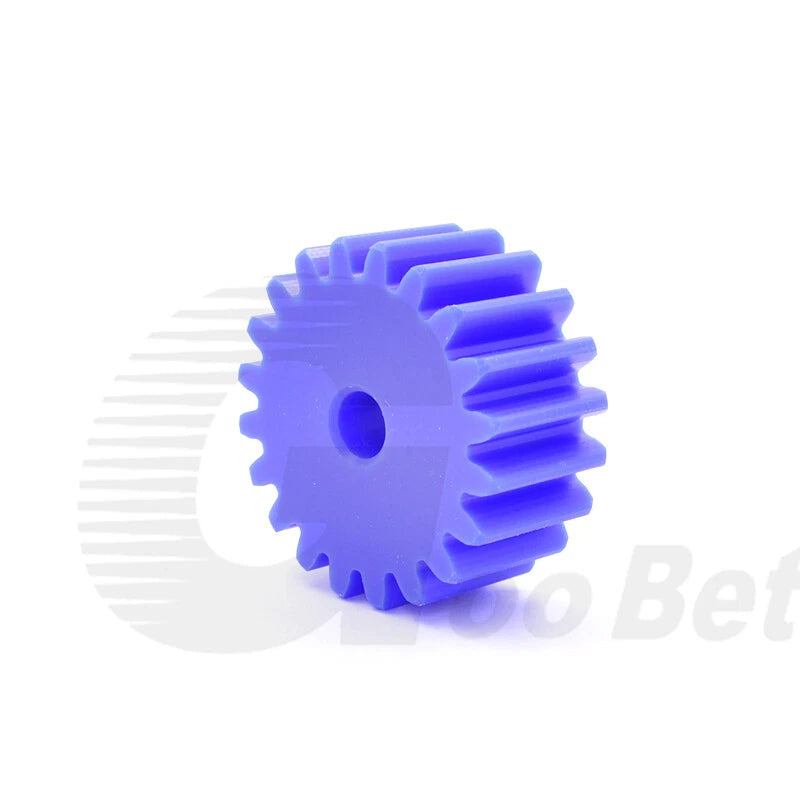
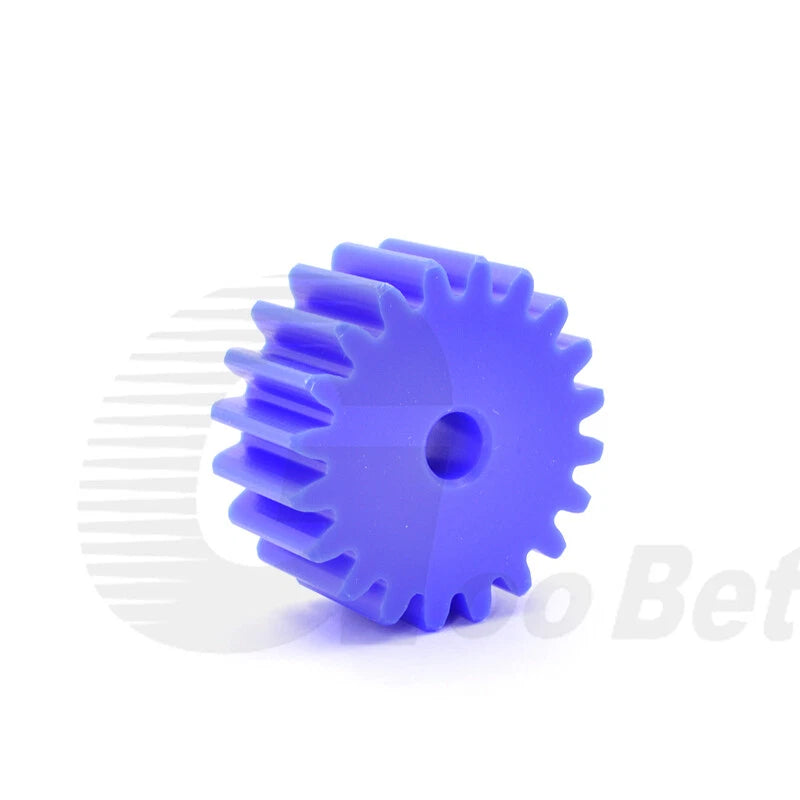
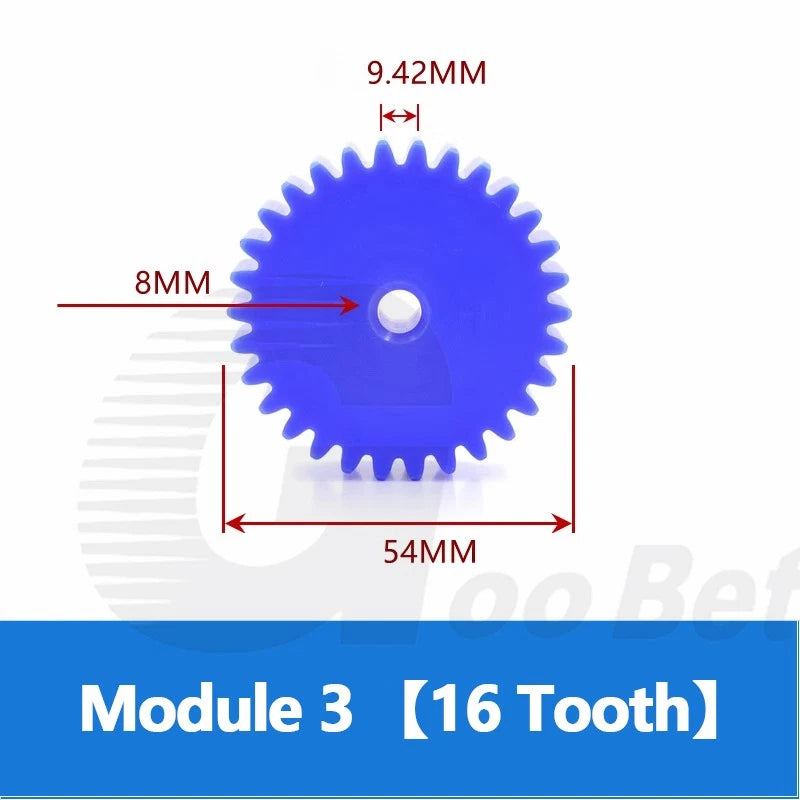
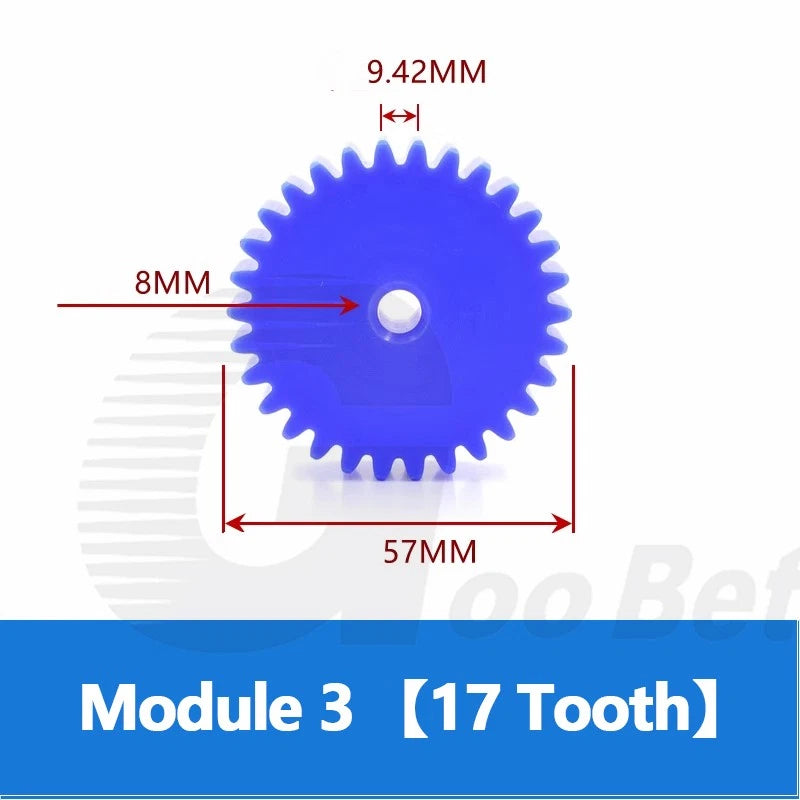
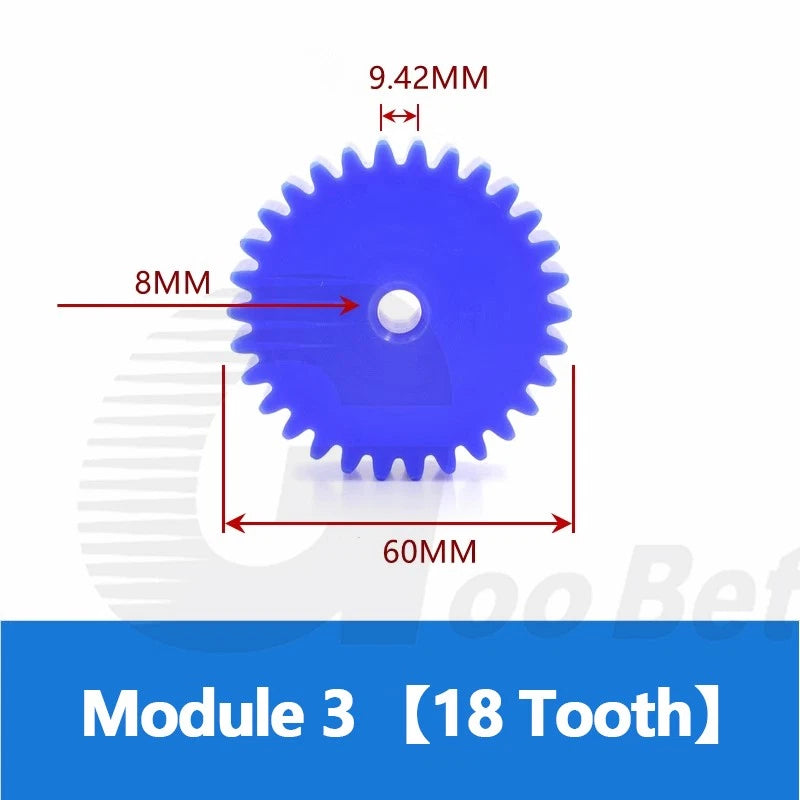
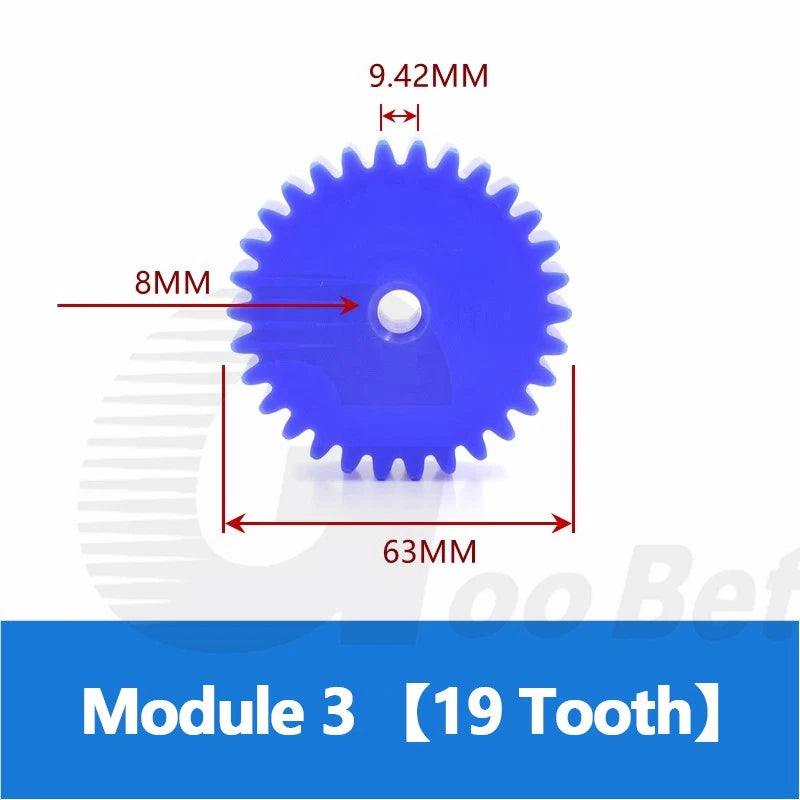
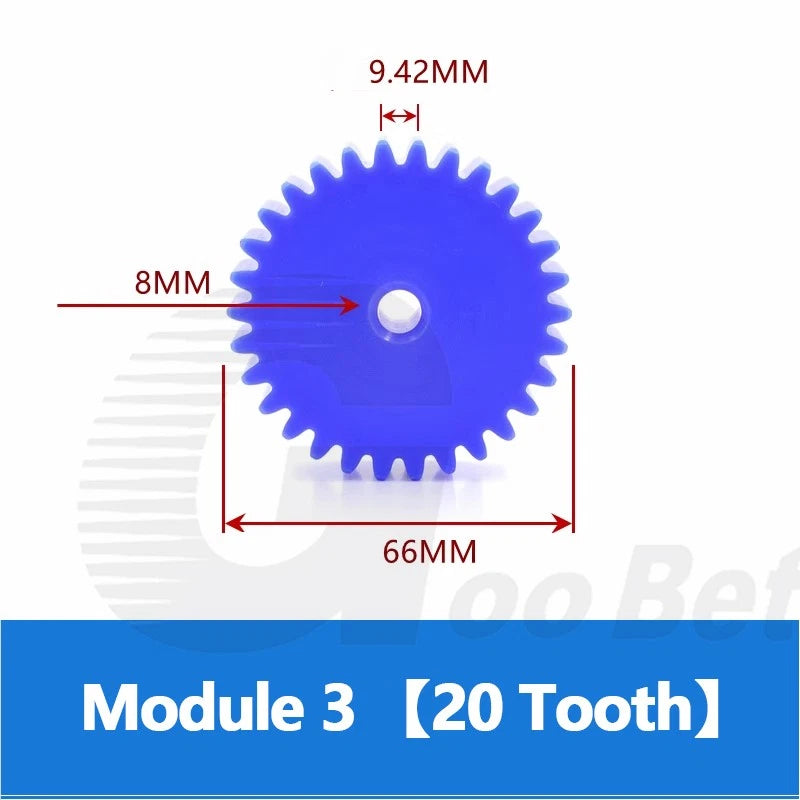
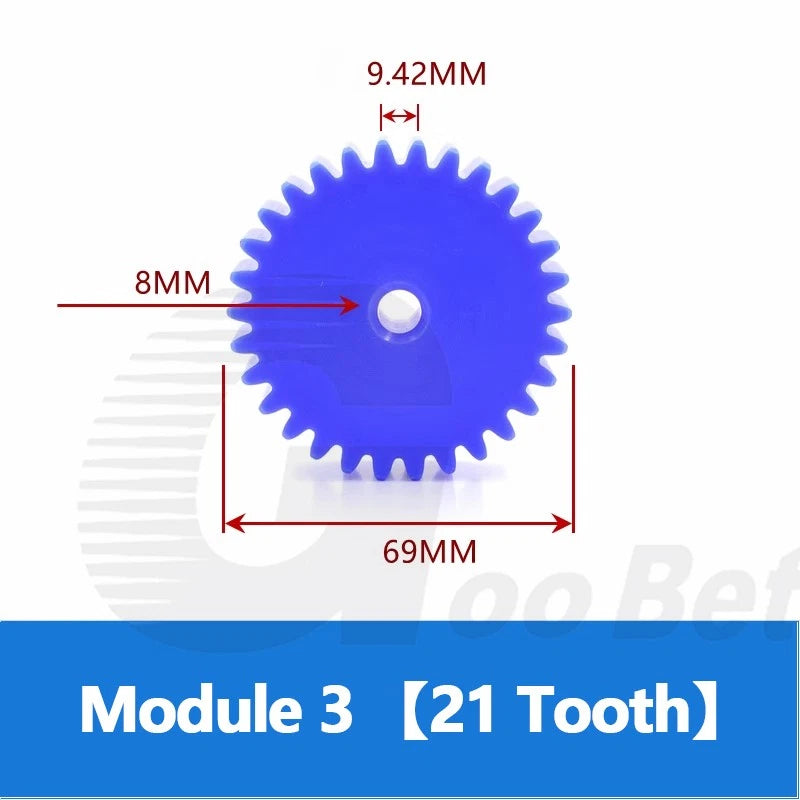
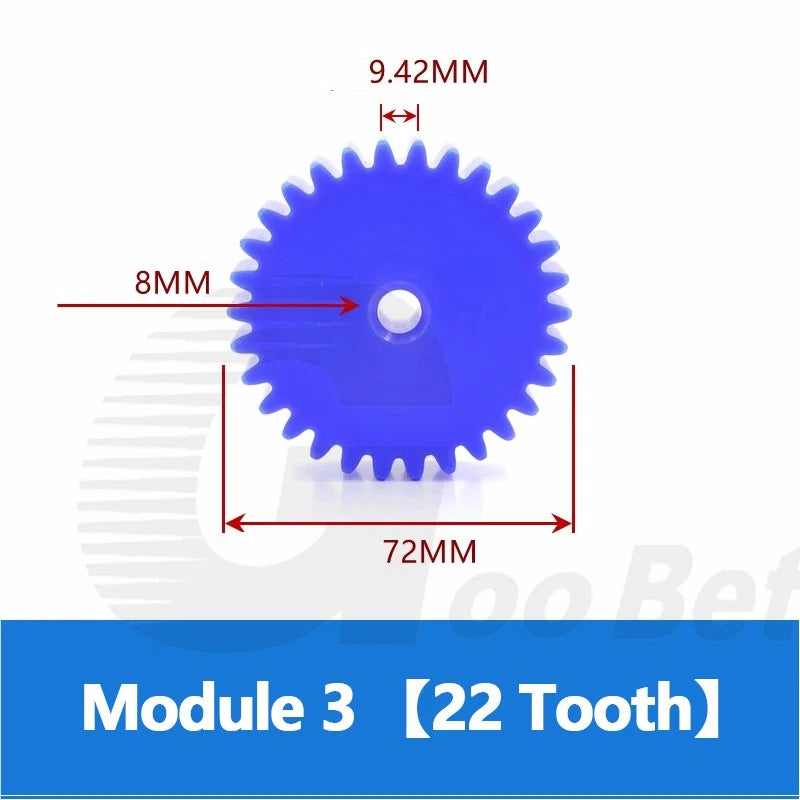
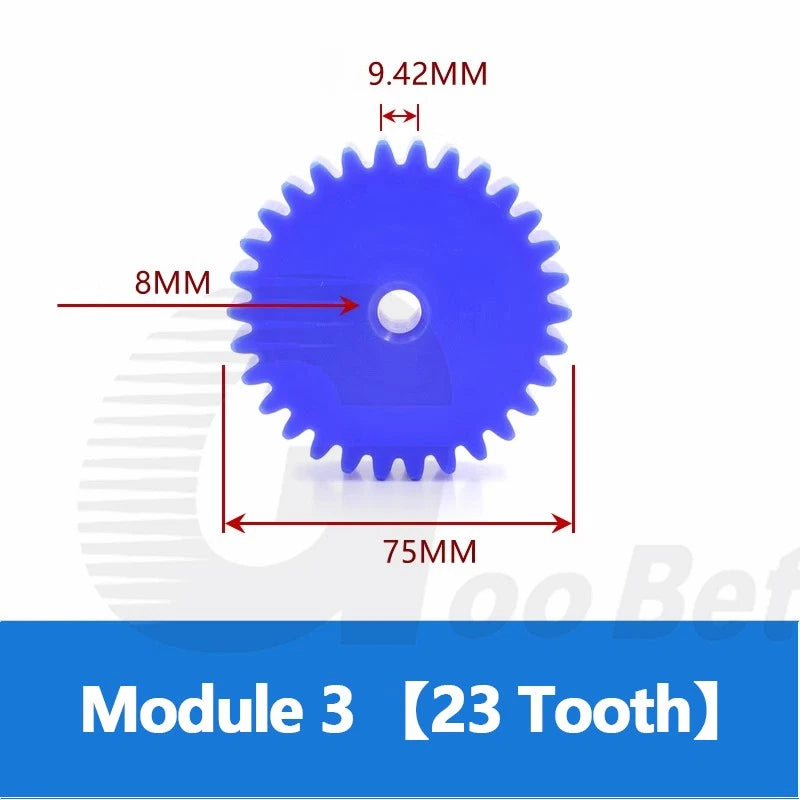
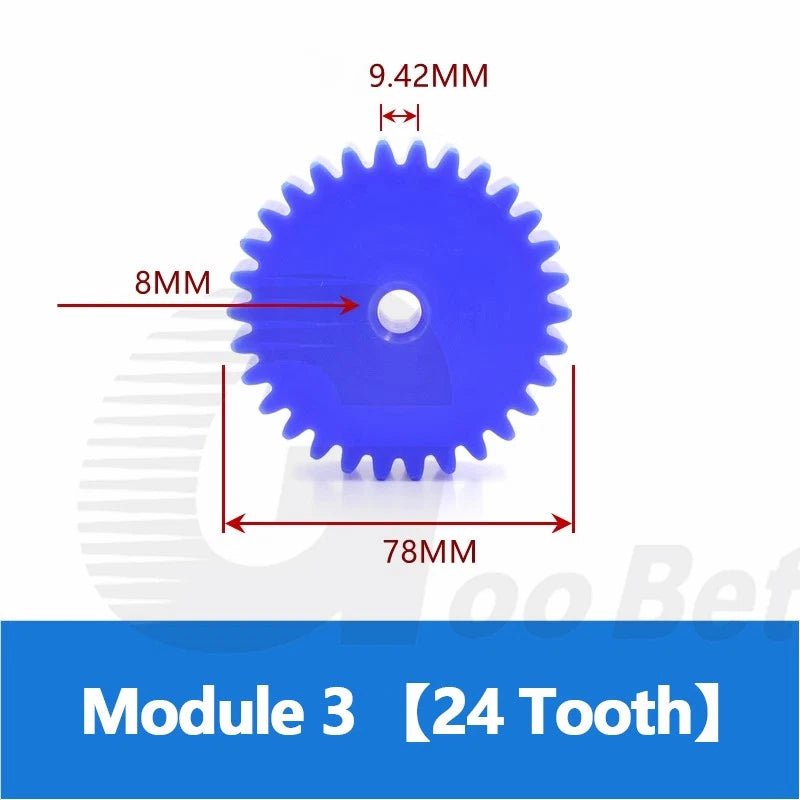
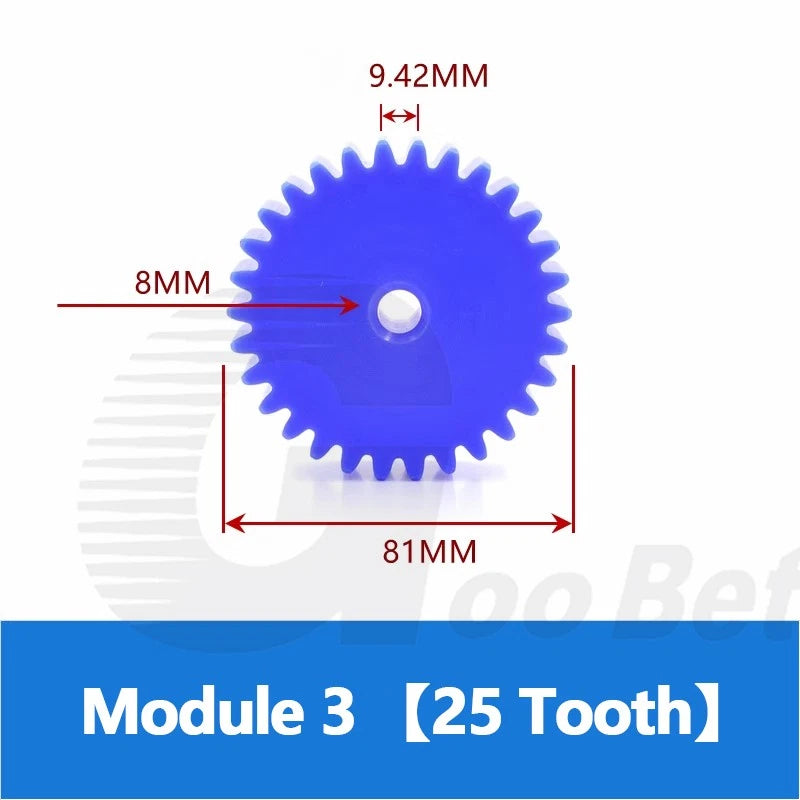
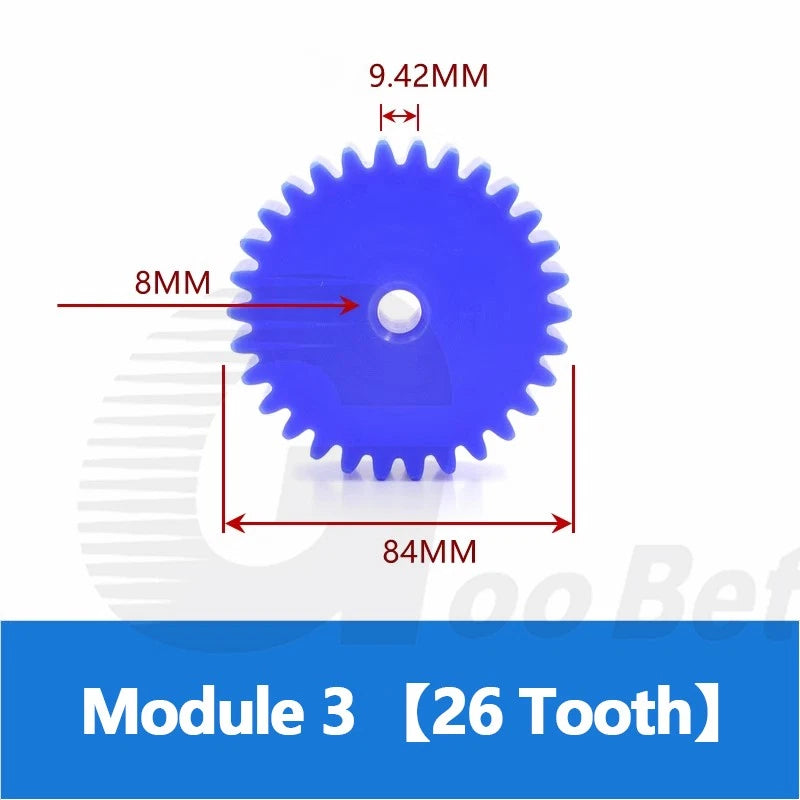
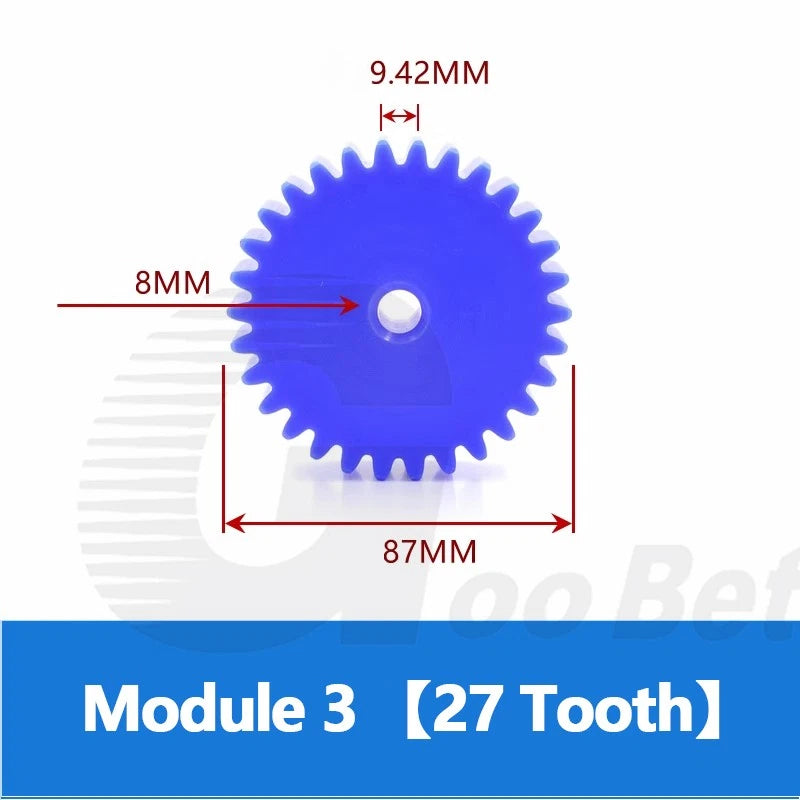
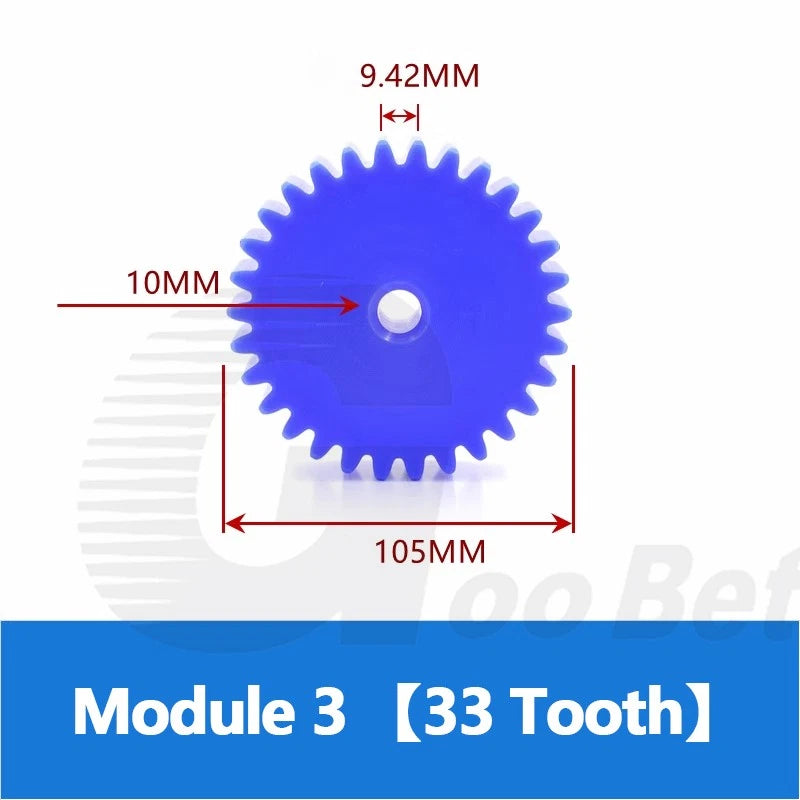
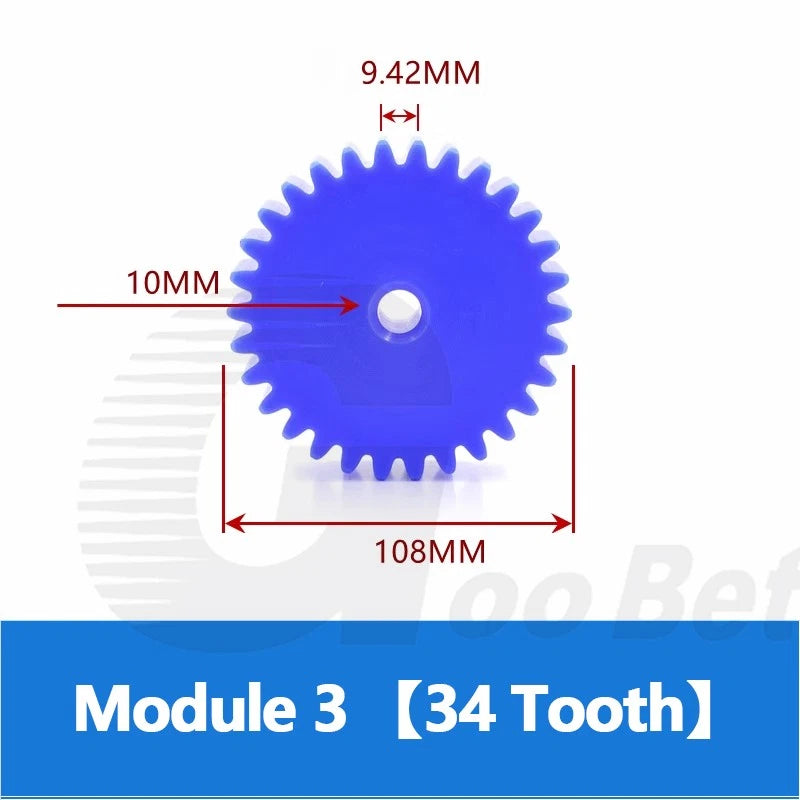
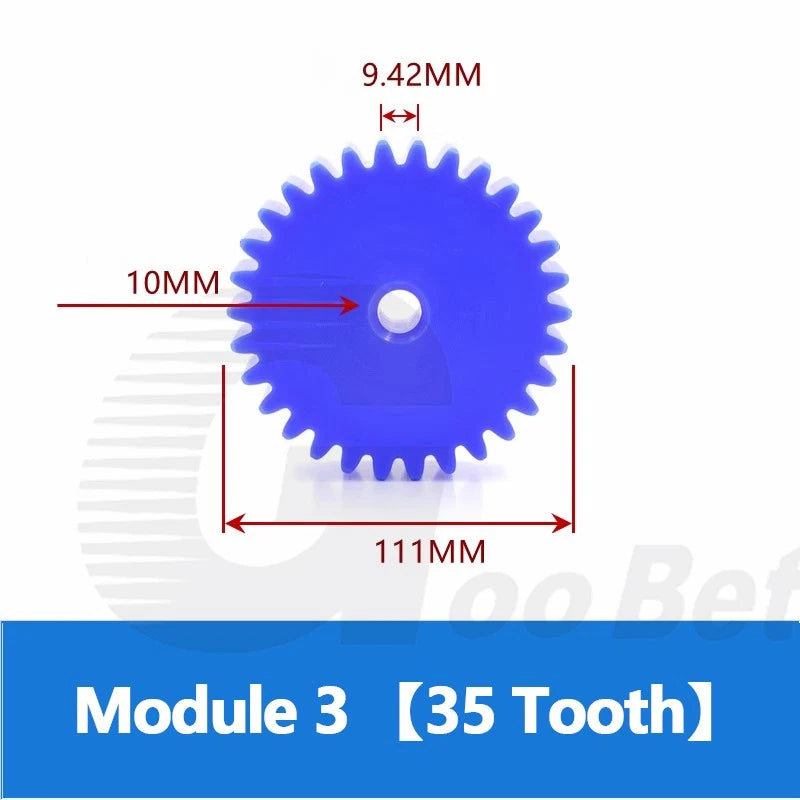
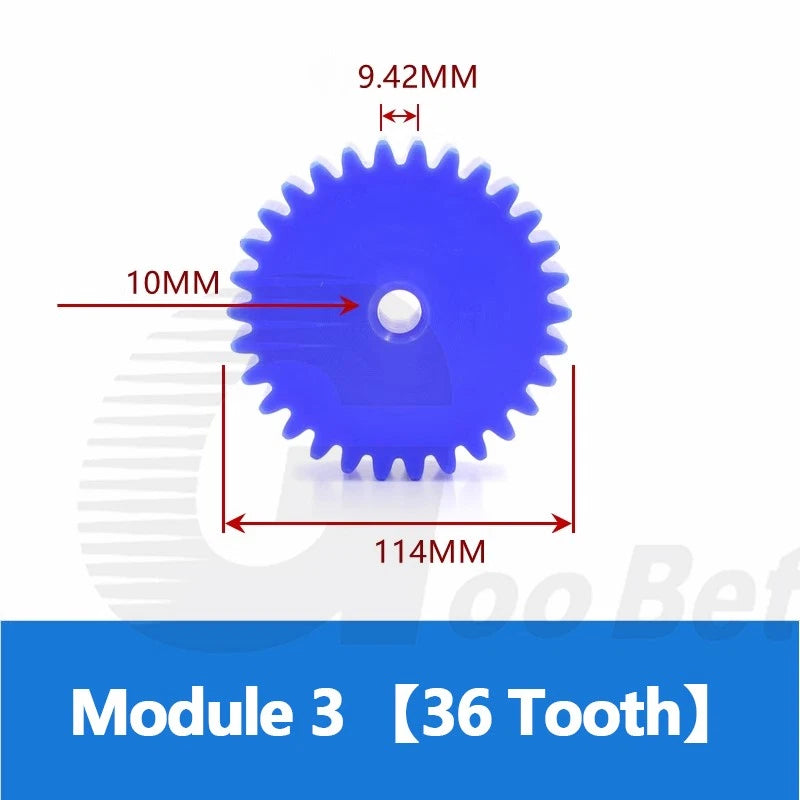
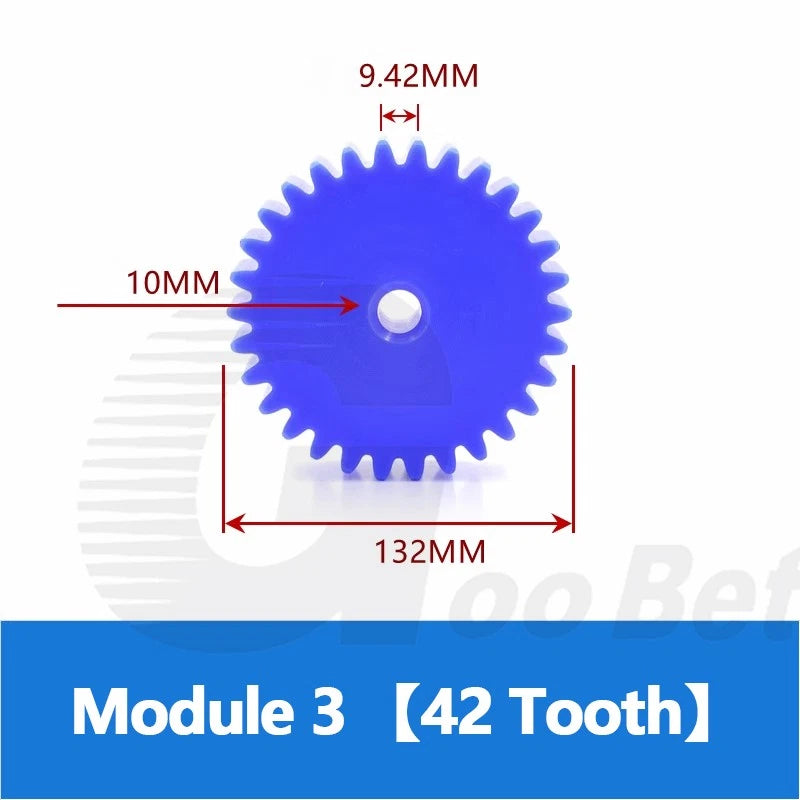
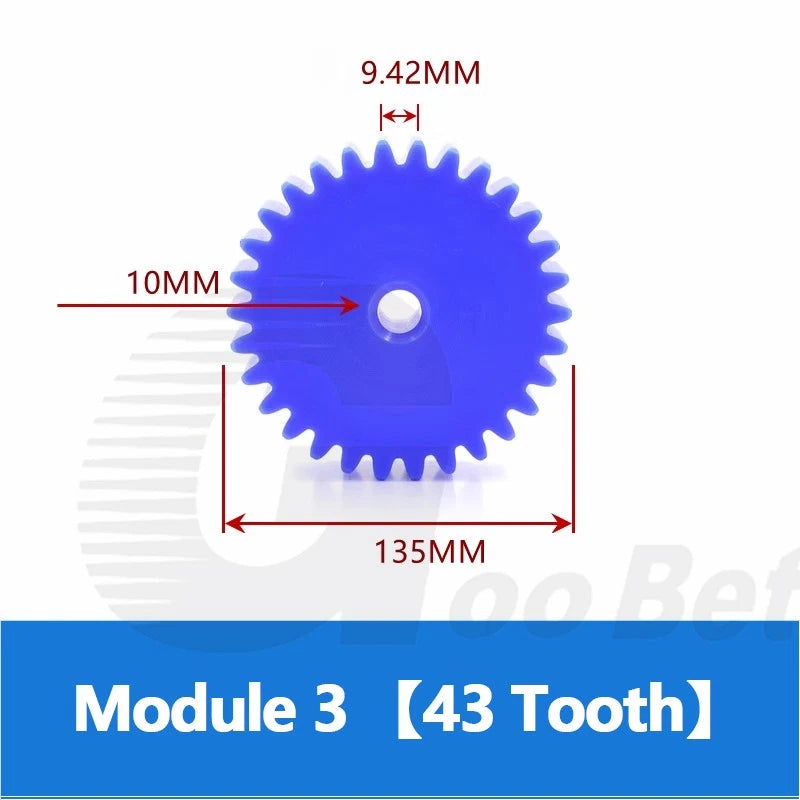
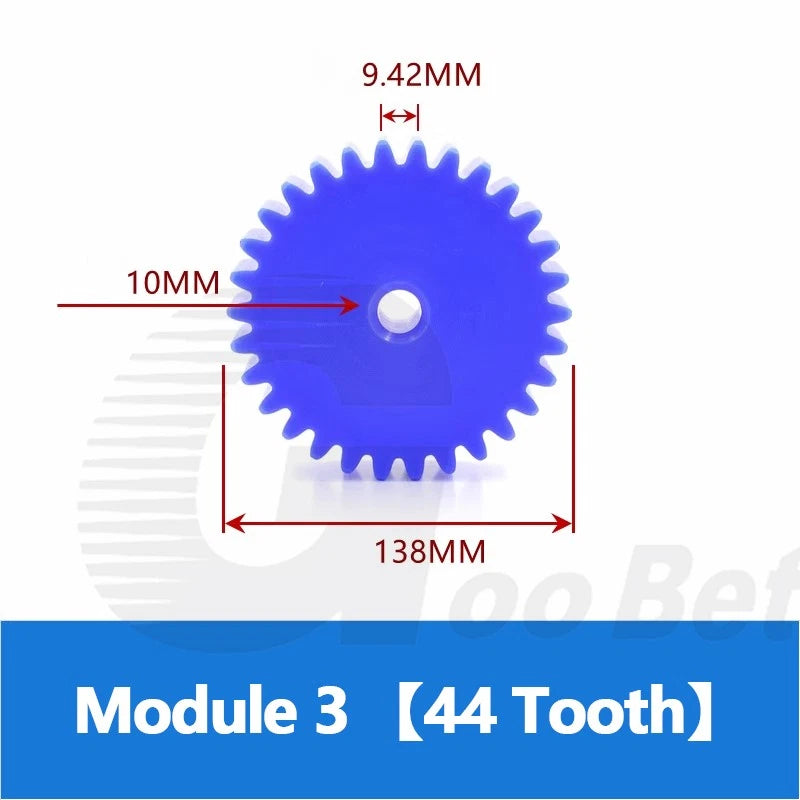
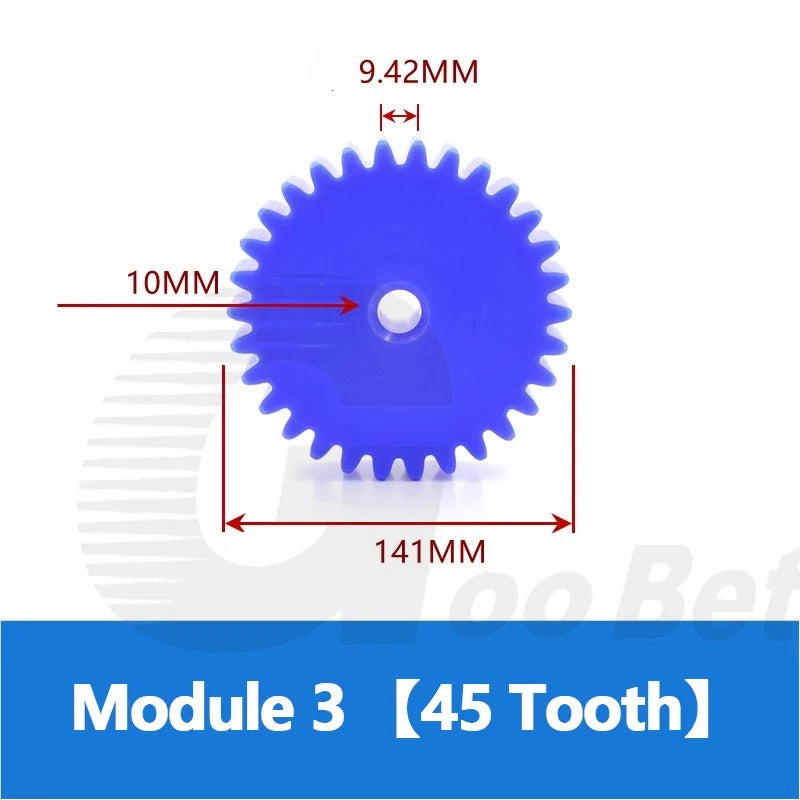
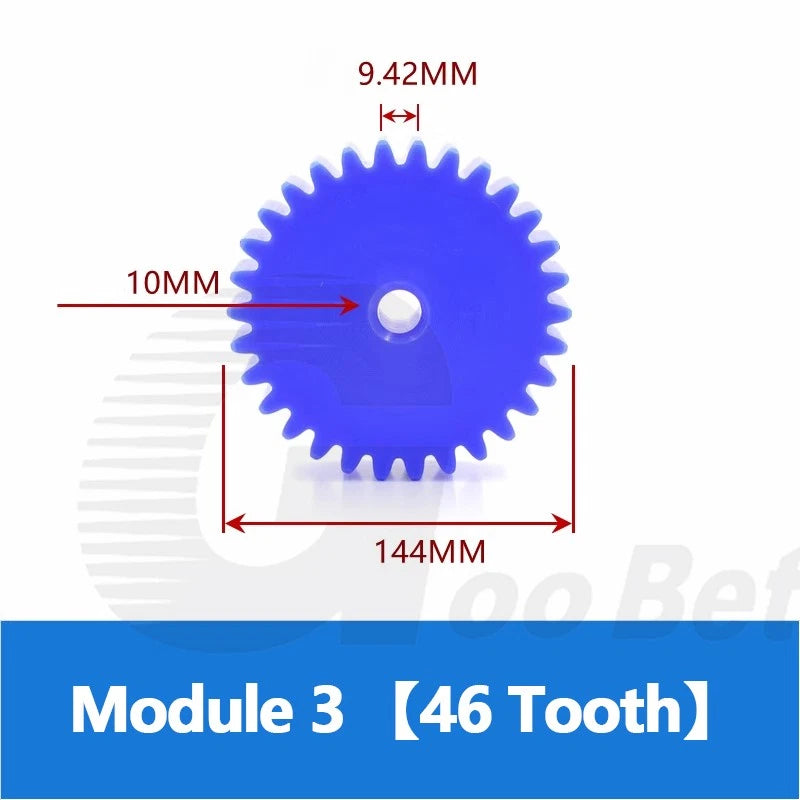
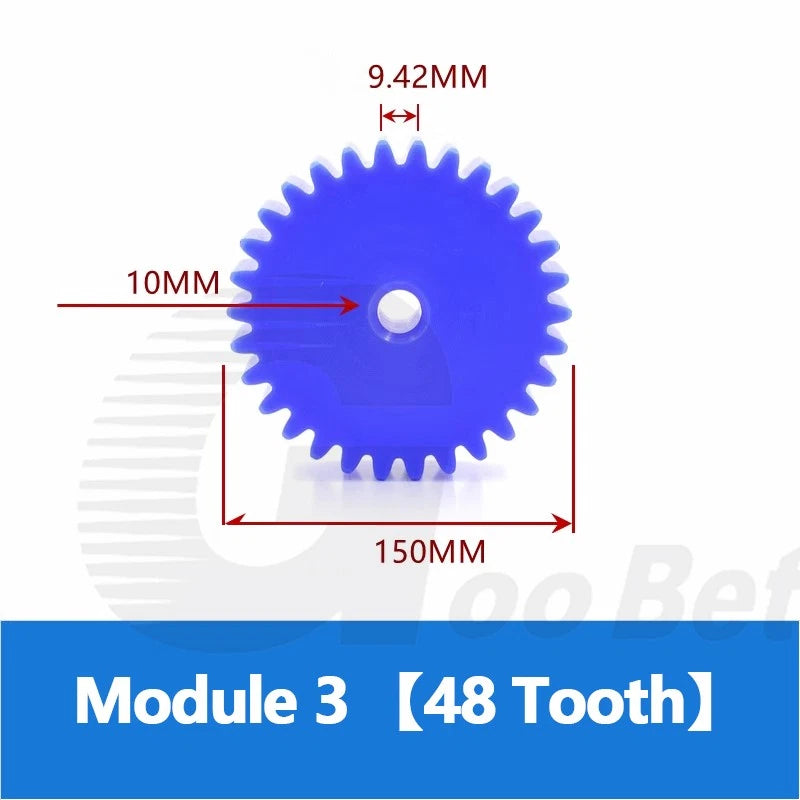
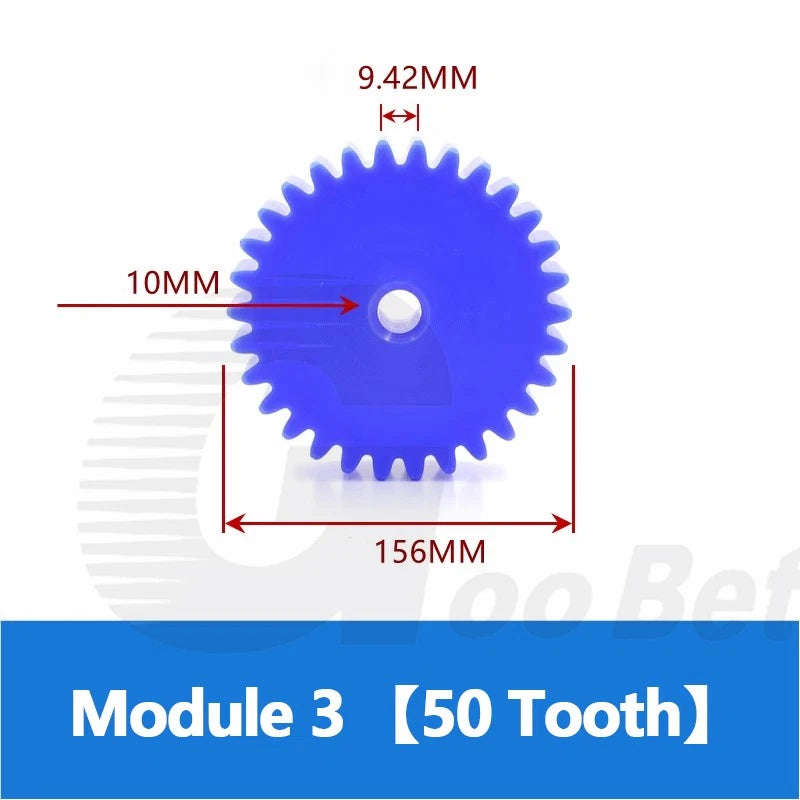
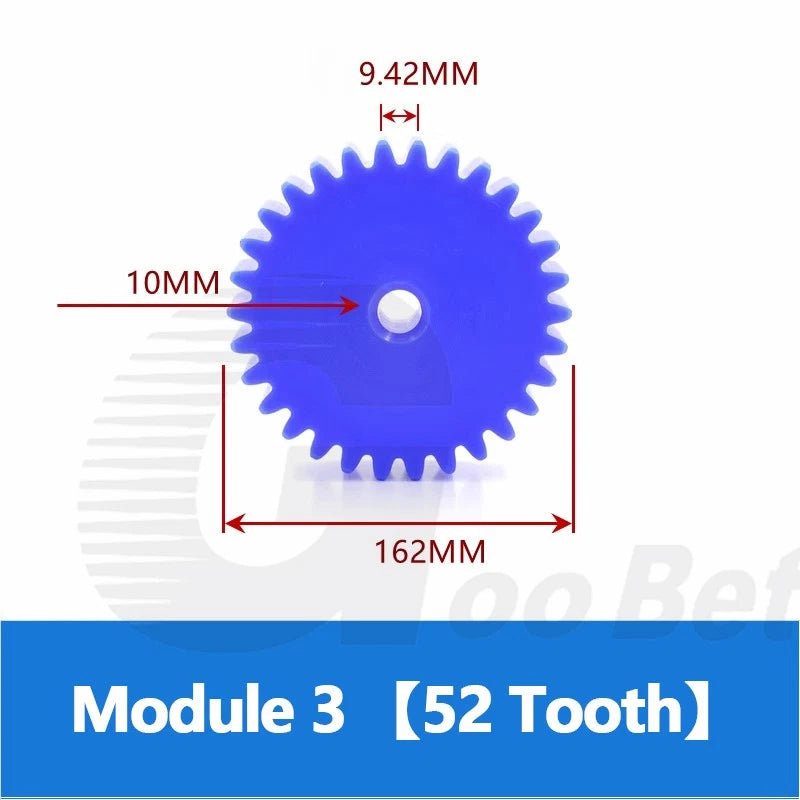
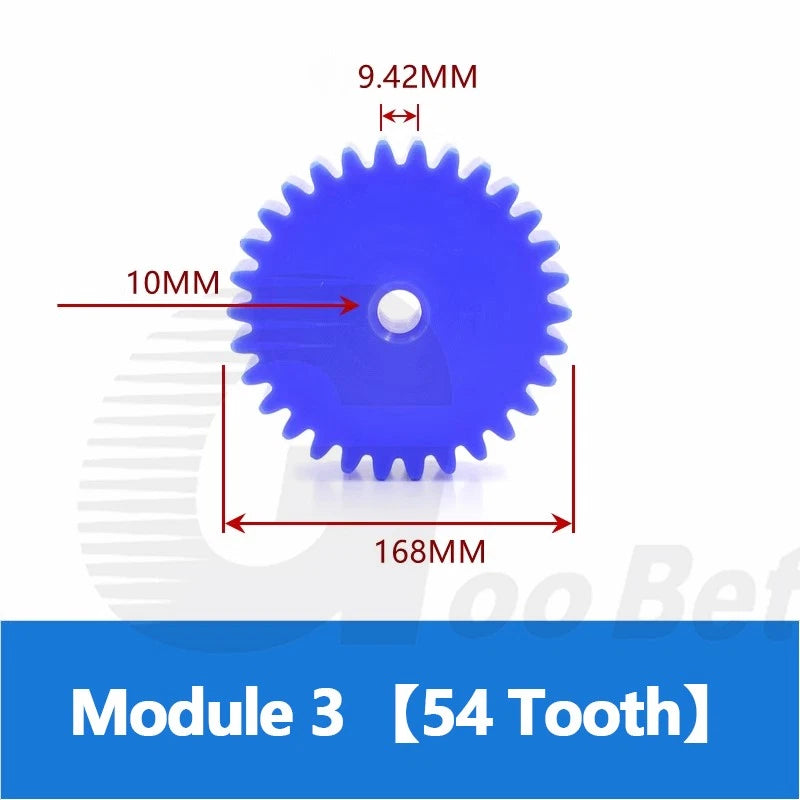
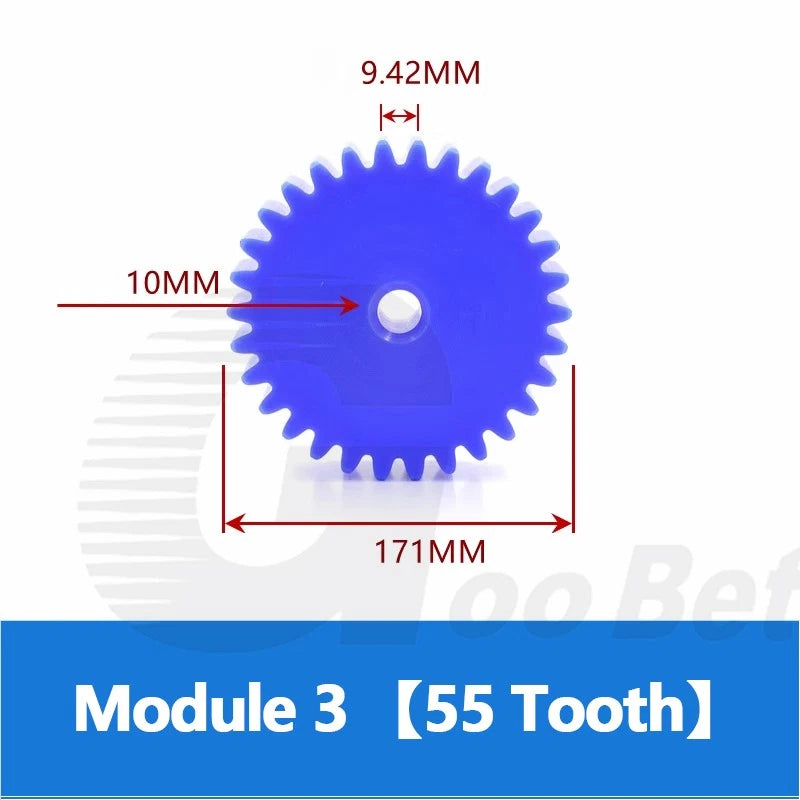
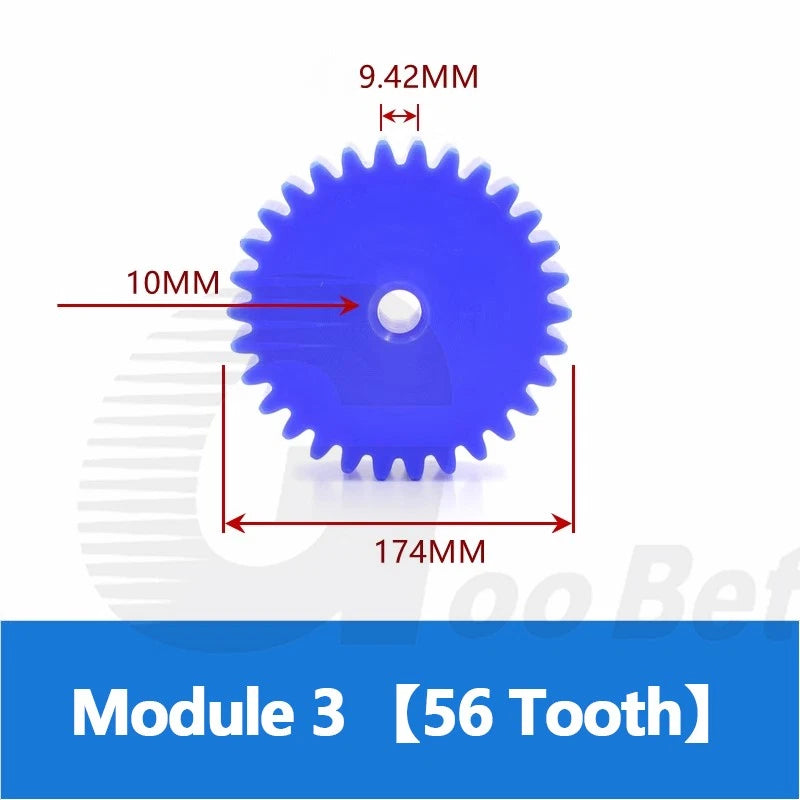
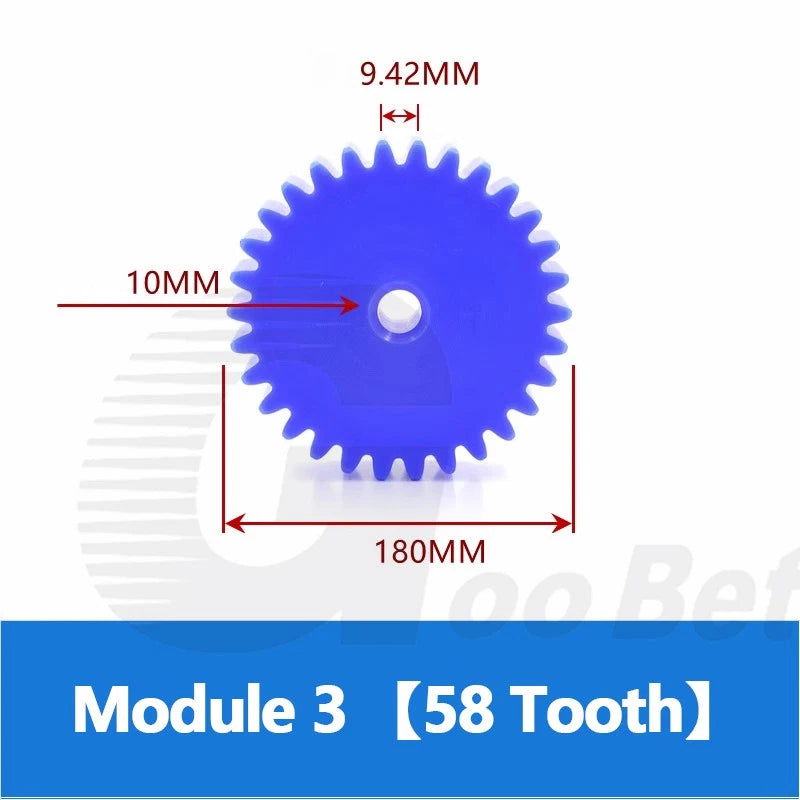
Module 3 Nylon Flat Gear Spur Gear Plastic 12-60 Tooth Pinion Motor Gear Blue

No reviews

Price:
Sale price$17.94 USD
Stock:
In stock (500 units), ready to be shipped

Payment & Security

Ach Direct Debit Amazon American Express Apple Pay Bancontact BLIK Diners Club Discover EPS Google Pay iDEAL Wero JCB Maestro Mastercard Multibanco MobilePay PayPal Przelewy24 Shop Pay Twint Union Pay USDC Visa

Your payment information is processed securely. We do not store credit card details nor have access to your credit card information.

Limited Offer — Spend More, Save More
Spend $55+
Save $5
Spend $100+
Save $10
Spend $200+
Save $25
HomeDIYer DIY Expert Support

DIY Expert Support

Get fitment advice & recommendations

Mon–Fri  8:30 AM – 8:00 PM
24-Hour Fast Ship
Arrives in 3–14 Days
Worldwide Shipping
30-Day Returns
1 tree planted with every purchase

Description

Module 3 Nylon Spur Gear — Lightweight Plastic Pinion for Quiet, Reliable Power Transmission

When metal gears create too much noise, add unwanted weight, or corrode in humid environments, engineers and makers turn to nylon spur gears. Whether you're building a custom robot arm, upgrading a 3D printer extruder drive, or designing a low-speed automation rig, finding a Module 3 plastic pinion gear in the exact tooth count you need can be a frustrating search — this listing solves that with 41 tooth-count options in a single place.

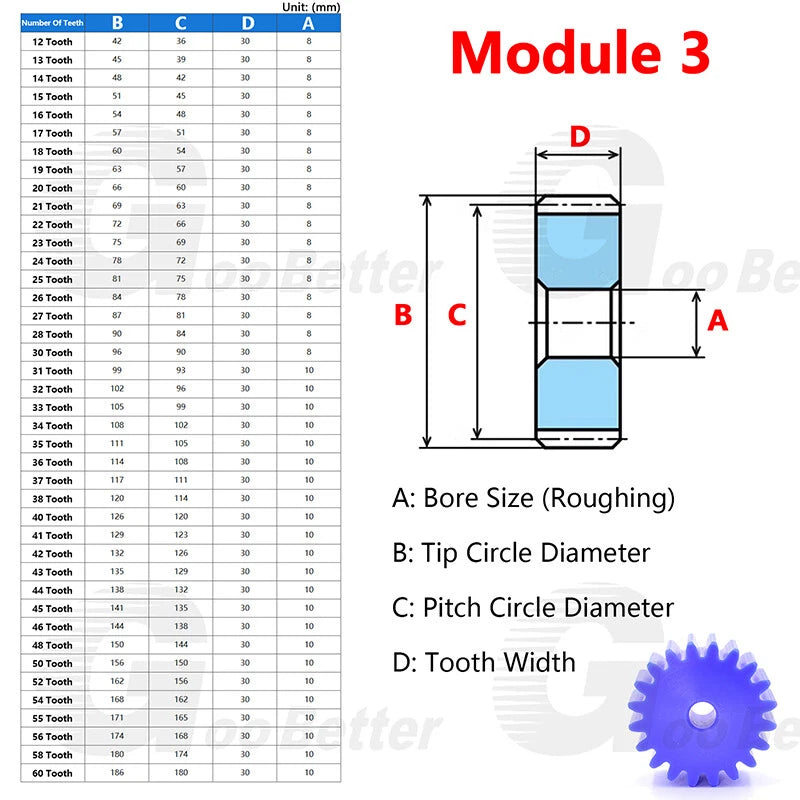
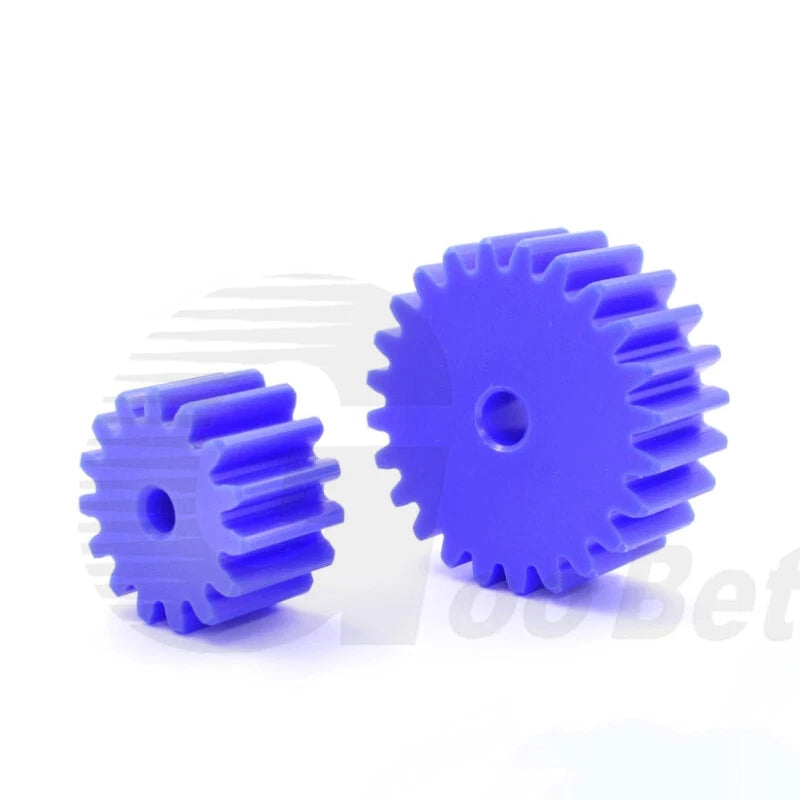
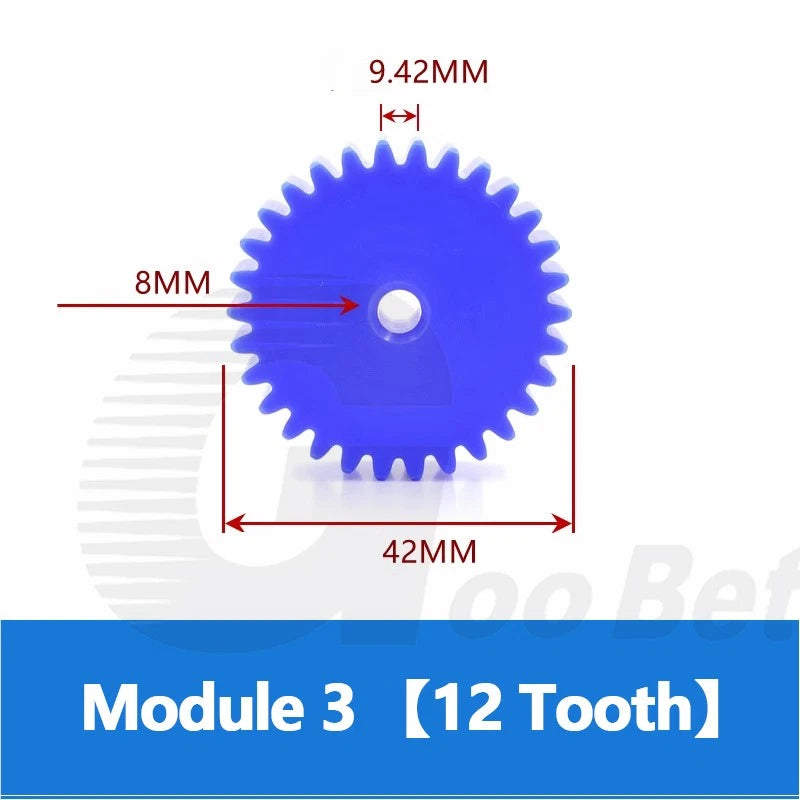
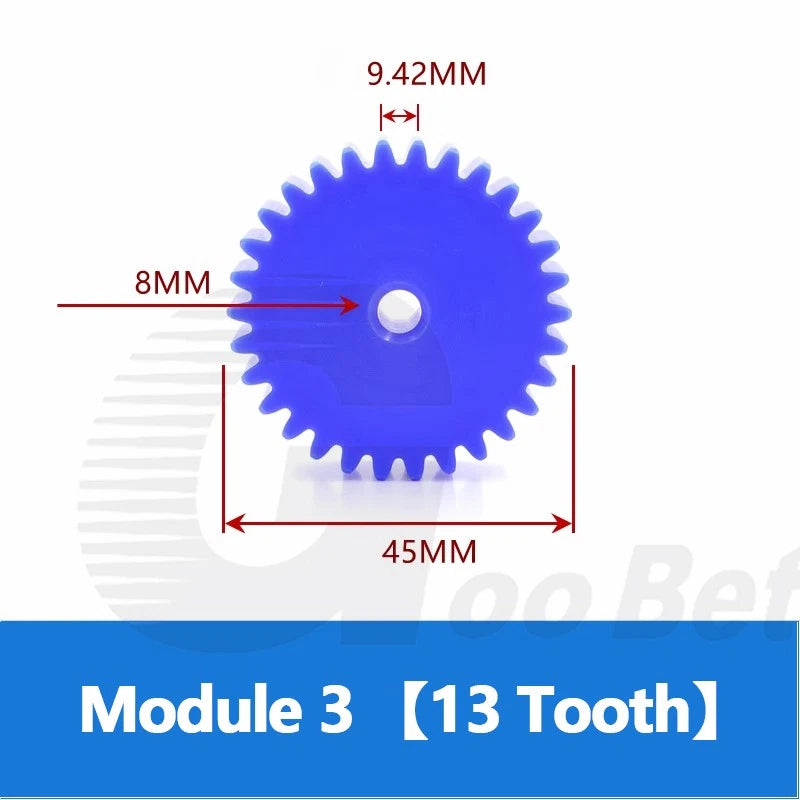
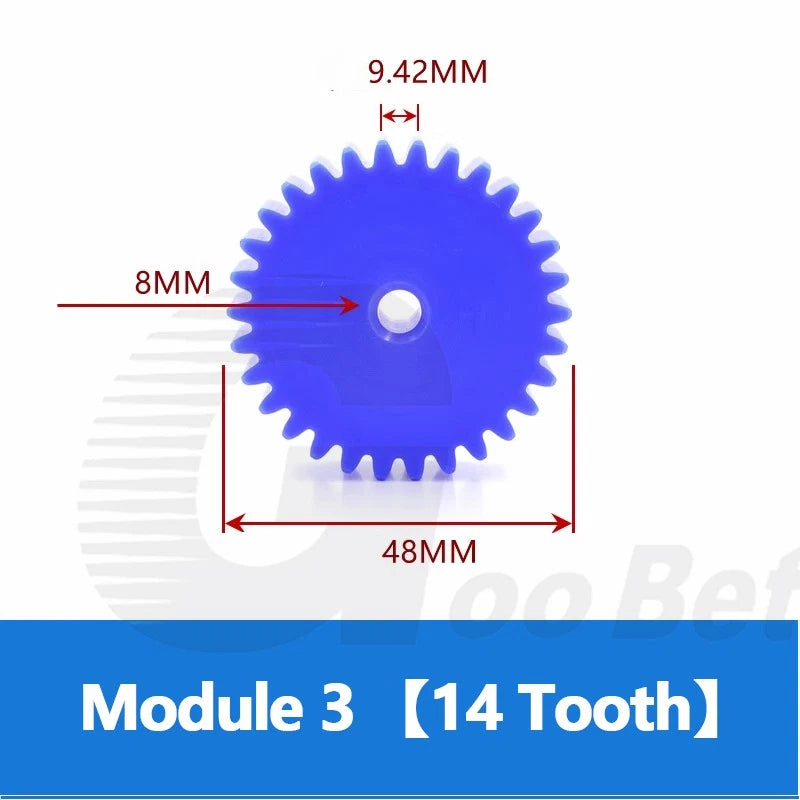
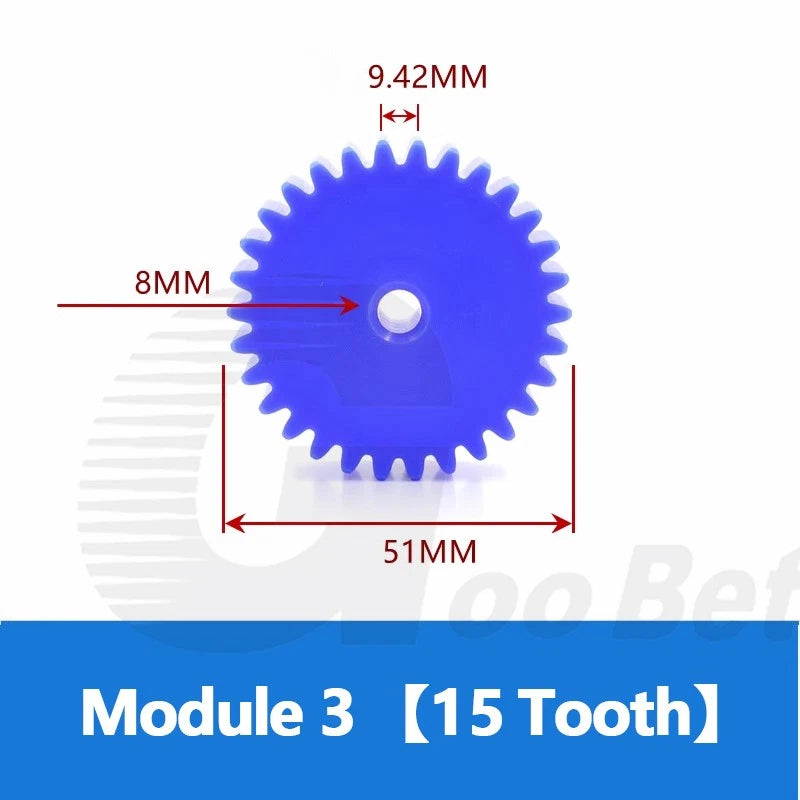
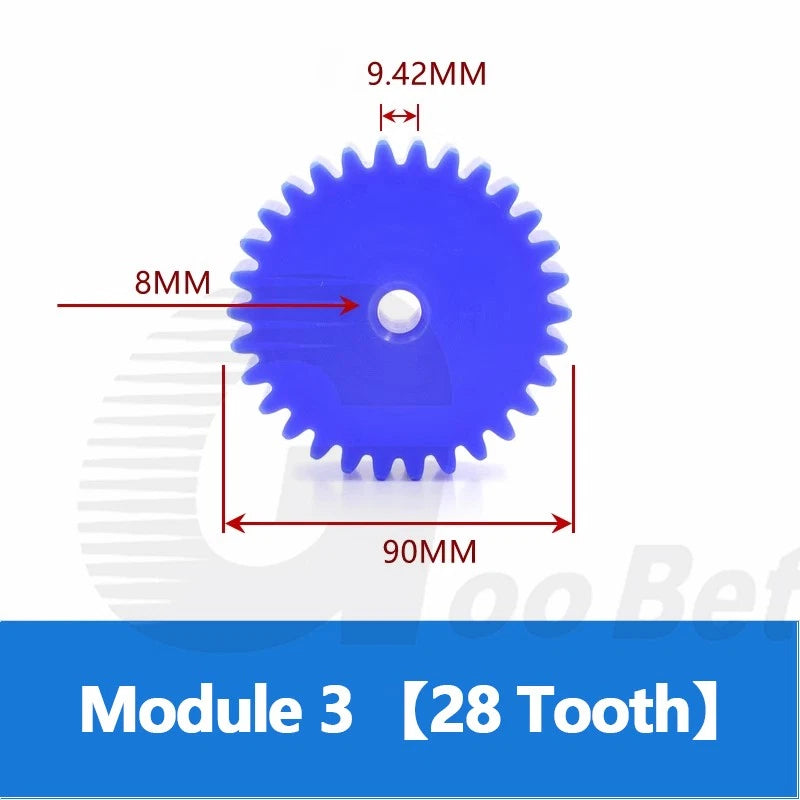
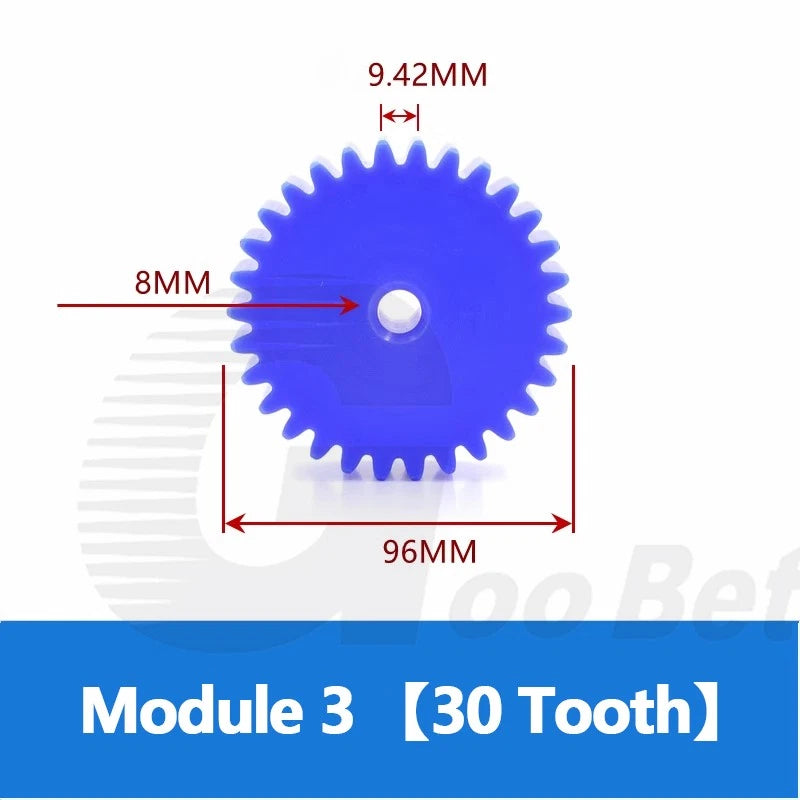
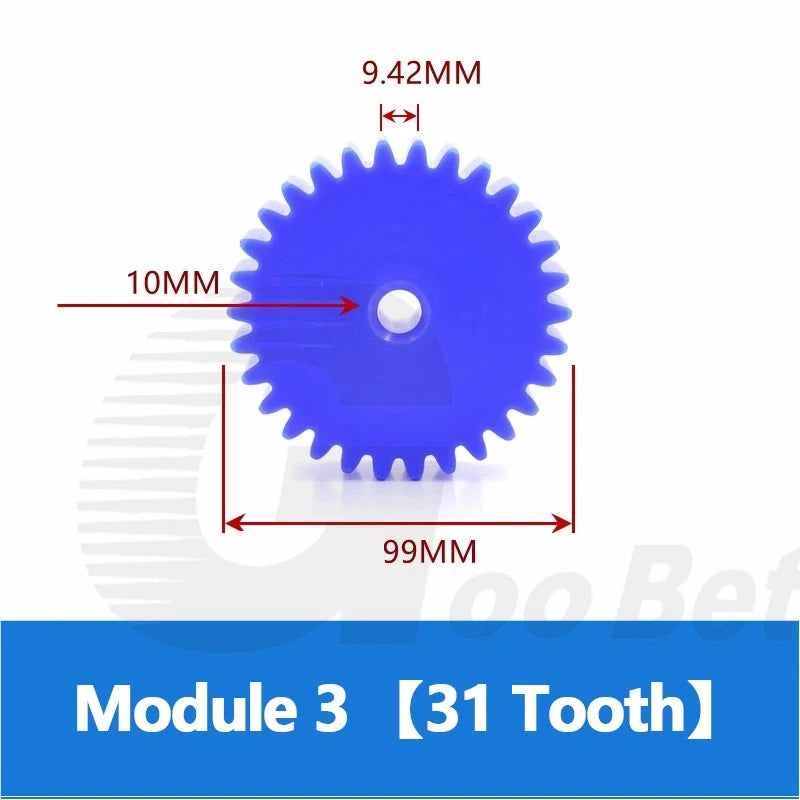
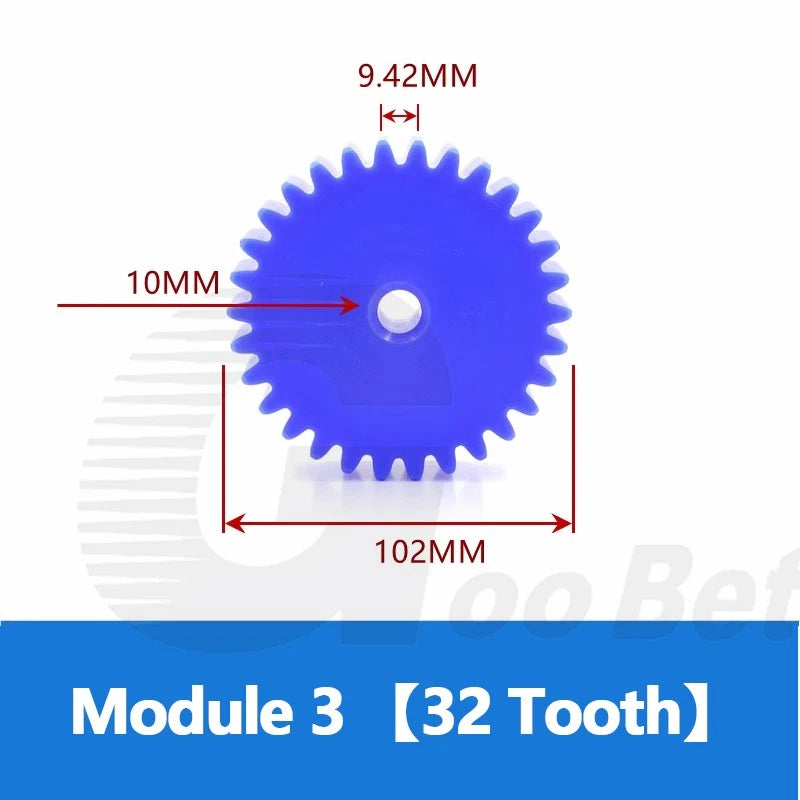
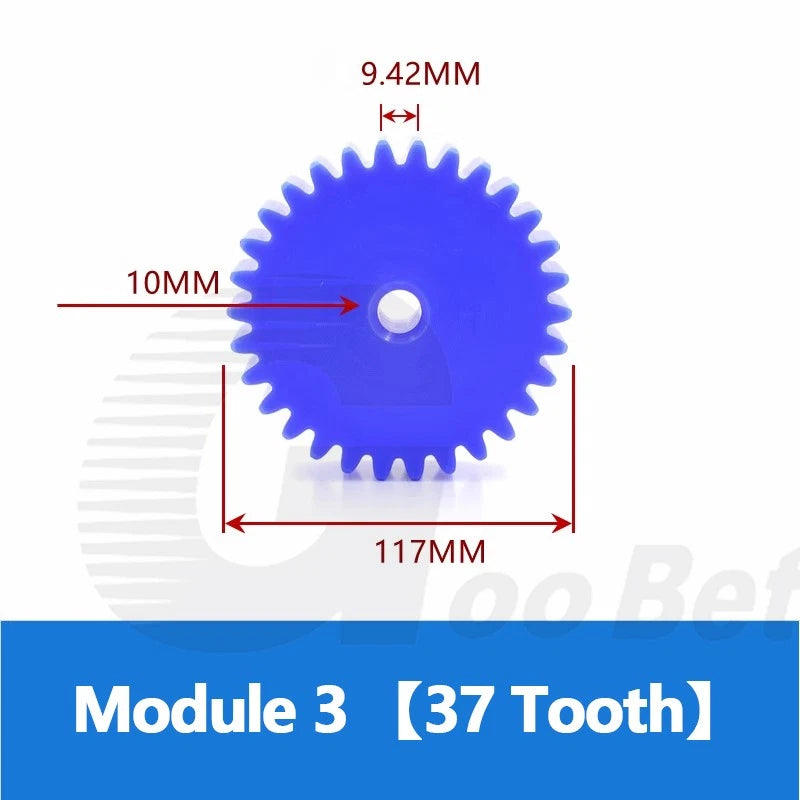
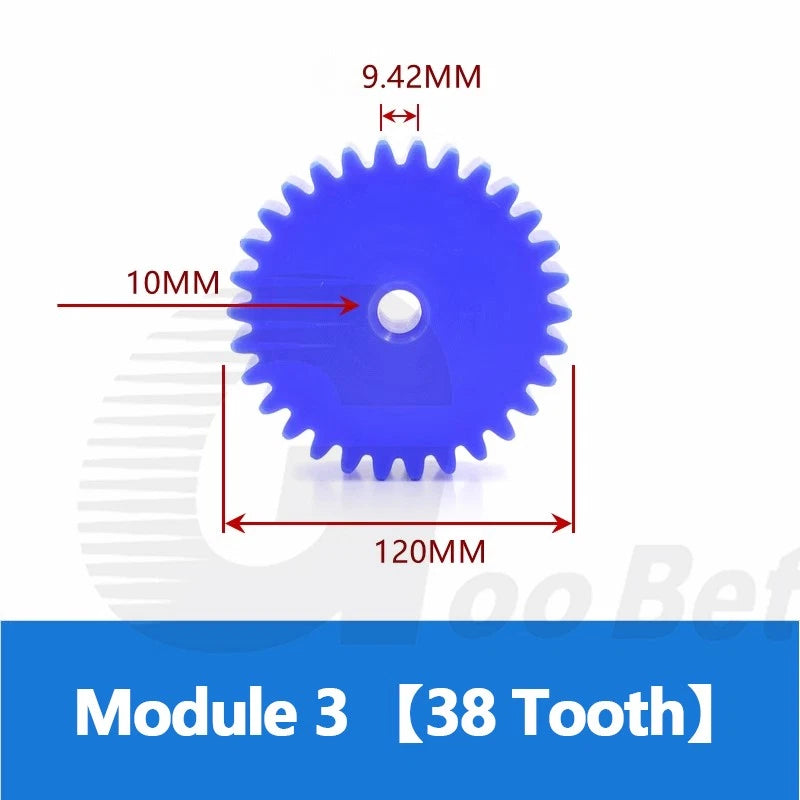
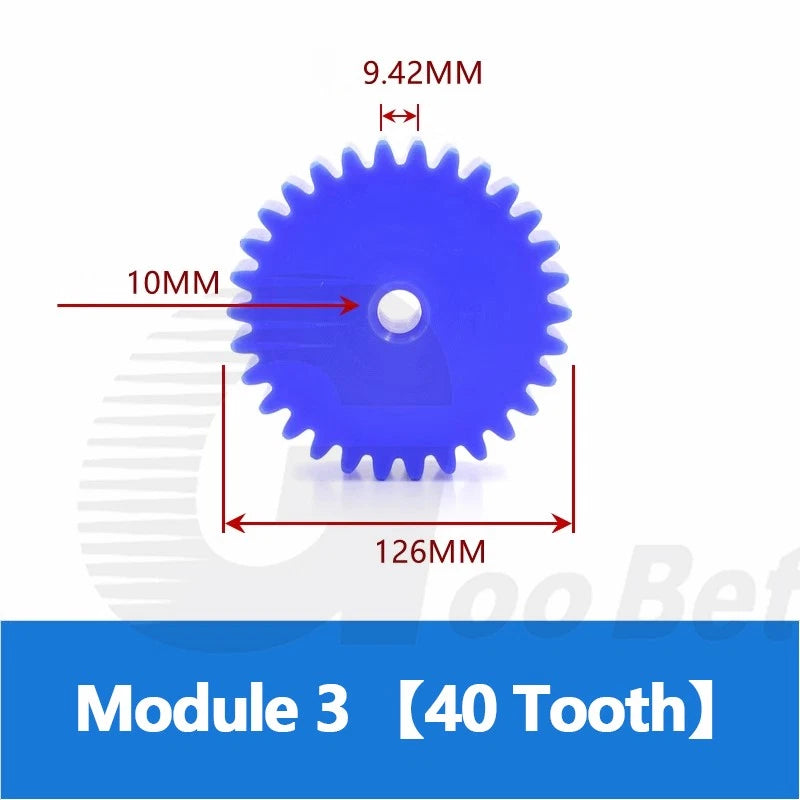
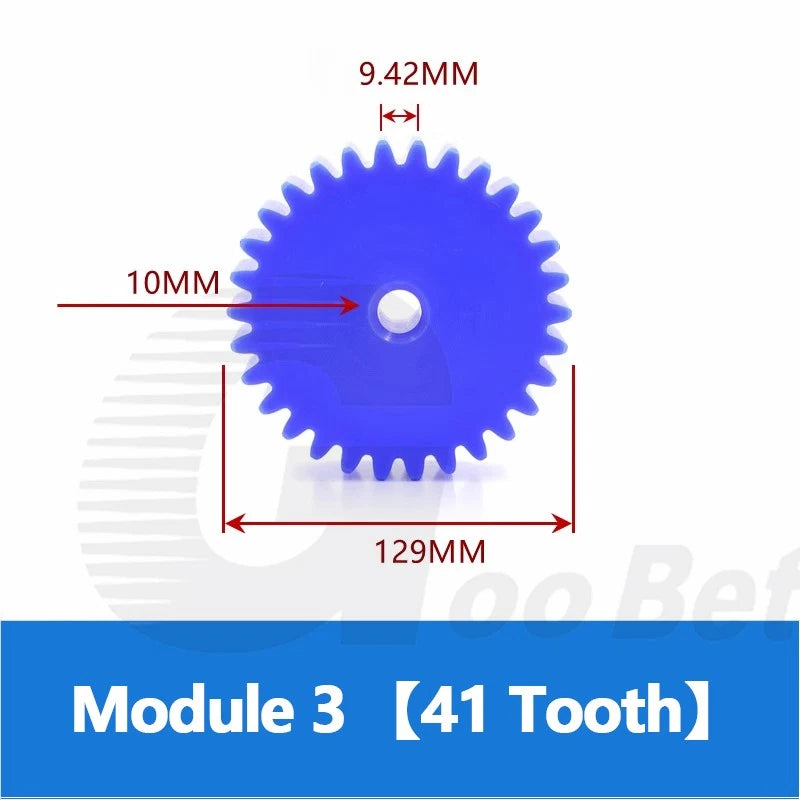
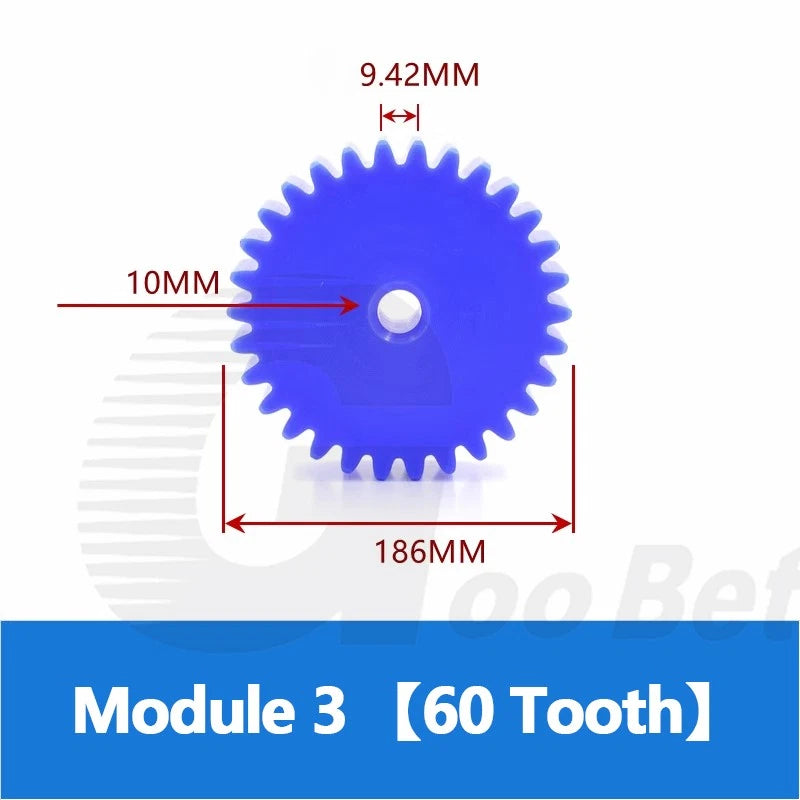
These Module 3 nylon flat spur gears are machined from engineering-grade nylon (PA66), offering a good balance of tensile strength, low friction, and dimensional stability. The module (pitch) is 3 mm, meaning the tooth pitch diameter equals 3 × tooth count (e.g., a 20-tooth gear has a 60 mm pitch diameter). Tooth counts range from 12 to 60, covering pitch diameters of approximately 36 mm (1.42 in) to 180 mm (7.09 in). Bore diameter and face width vary by tooth count — see variant options for exact dimensions.

Typical use cases include DIY robotics and servo-driven mechanisms where quiet operation matters, 3D printer filament drive and extruder gear trains, RC vehicle transmission and reduction stages, and light-duty conveyor or automation projects requiring corrosion-resistant plastic pinion motor gears.

⚙️ Compatibility: Designed for Module 3 (Mod 3) gear systems. Pairs with any Module 3 rack, pinion, or mating spur gear. Verify bore diameter against your shaft size before ordering.

✅ Key Features of These Module 3 Nylon Spur Gears

🔵 41 Tooth-Count Options (12–60T)
From compact 12-tooth pinions to large 60-tooth driven gears, one listing covers the full Module 3 nylon spur gear range so you can match your exact gear ratio without compromise.
🔇 Low-Noise Nylon Construction
Engineering-grade nylon (PA66) runs significantly quieter than steel or aluminum gears, making these plastic pinion motor gears ideal for indoor robots, desktop automation, and noise-sensitive environments.
⚖️ Lightweight for Weight-Critical Builds
Nylon is substantially lighter than metal equivalents, reducing rotational inertia and overall system weight — a key advantage in mobile robotics, drones, and 3D printer carriages.
🛡️ Corrosion-Resistant Material
Unlike steel gears, nylon does not rust or oxidize, making these spur gears suitable for humid workshops, outdoor enclosures, and applications where lubrication is minimal or absent.
📐 Standard Module 3 Tooth Profile
Machined to the standard involute tooth profile for Module 3, ensuring smooth meshing with any compatible Mod 3 rack or mating gear without custom modification.
🔩 Flat Gear Design for Compact Assemblies
The flat (straight-cut) spur gear geometry transmits power efficiently along parallel shafts and integrates easily into tight gearbox housings, extruder bodies, and robotic joint assemblies.

📐 Technical Specifications — Module 3 Nylon Spur Gear

Gear Type Flat Spur Gear (Straight-Cut)
Module (Pitch) Module 3 (Mod 3)
Material Engineering Nylon (PA66)
Color Blue
Tooth Count Range 12T – 60T (41 options)
Pitch Diameter Range 36 mm – 180 mm (1.42 in – 7.09 in)
Bore Diameter See variant options
Face Width See variant options
Pressure Angle 20°
Tooth Profile Standard Involute
Quantity per Order 1 pcs
Surface Finish Smooth machined nylon

❓ Frequently Asked Questions

How do I choose the right tooth count for my project?

Select your tooth count based on the gear ratio you need. Divide the driven gear teeth by the driving gear teeth to get the ratio. For example, a 12-tooth pinion driving a 60-tooth gear gives a 5:1 reduction. Also confirm the resulting pitch diameter fits within your housing clearance — pitch diameter = Module × Tooth Count (e.g., 3 × 20 = 60 mm for a 20-tooth gear).

What is the bore diameter, and will it fit my motor shaft?

Bore diameter varies by tooth count and is listed in the variant details. Before ordering, measure your motor or shaft diameter with calipers and compare it to the bore listed for your chosen tooth count. If the bore is slightly larger than your shaft, a set screw or keyway adapter can be used to secure the gear.

Are these gears strong enough for my application?

These nylon spur gears are suited for light-to-medium duty applications such as robotics, 3D printer drives, RC vehicles, and small automation systems. Nylon (PA66) has good tensile strength and fatigue resistance for these use cases. For heavy industrial loads, high-torque drives, or continuous high-speed operation, metal gears are recommended instead.

Do nylon gears require lubrication?

One of the advantages of nylon gears is that they can run dry (without lubrication) in many applications due to the material's self-lubricating properties. For higher speeds or loads, a light application of white lithium grease or PTFE-based lubricant can extend service life. Avoid petroleum-based oils that may degrade nylon over time.

Will these gears mesh with my existing Module 3 metal gears or rack?

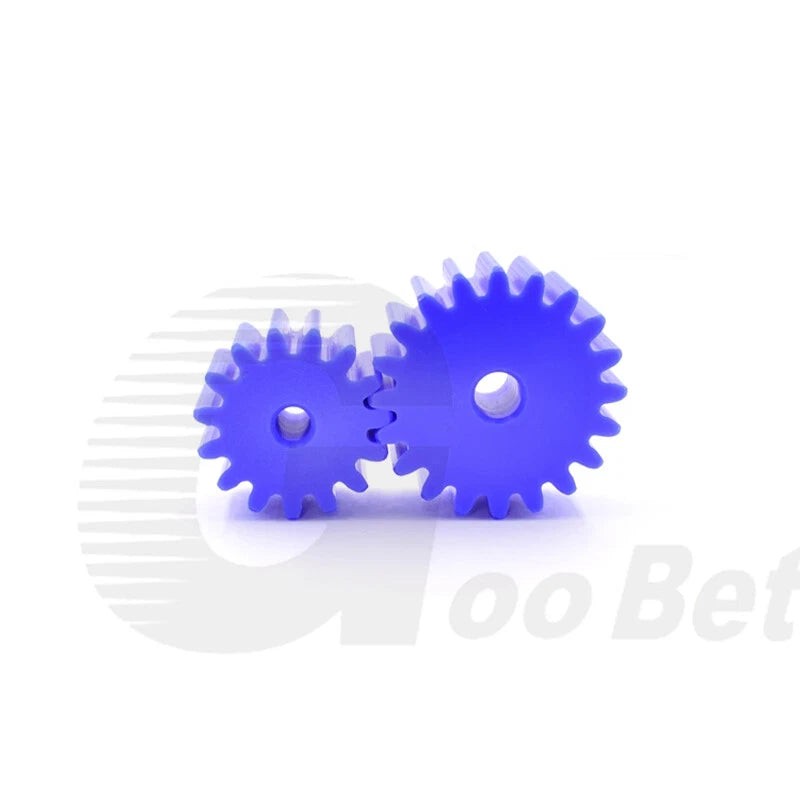
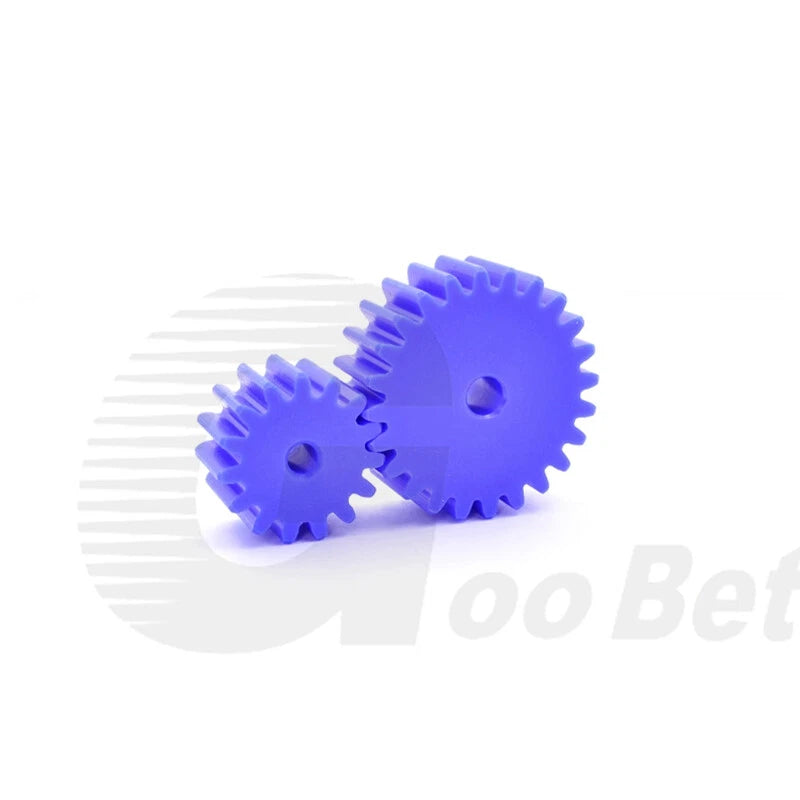
Yes. These gears use the standard Module 3 involute tooth profile with a 20° pressure angle, which is compatible with any other Module 3 gear or rack regardless of material (steel, aluminum, or nylon). Just ensure the mating gear is also Module 3 — mixing modules (e.g., Mod 2 with Mod 3) will result in improper meshing.

How do nylon gears compare to metal gears for noise and weight?

Nylon gears run noticeably quieter than steel or aluminum gears because the material absorbs vibration and impact between teeth. They are also significantly lighter — typically 6–7× less dense than steel — which reduces rotational inertia and is beneficial in weight-sensitive builds like mobile robots or 3D printer extruder carriages. The trade-off is lower load capacity and reduced heat tolerance compared to metal.

Can I use these gears outdoors or in humid environments?

Yes. Nylon does not rust or corrode, making these gears a practical choice for outdoor enclosures, humid workshops, or applications where condensation is present. Note that nylon can absorb a small amount of moisture over time, which may cause very slight dimensional changes. For precision applications in wet environments, verify dimensional tolerances after conditioning.

🛒 Select your tooth count (Models) above, then add to cart.

You may also like

Recently viewed