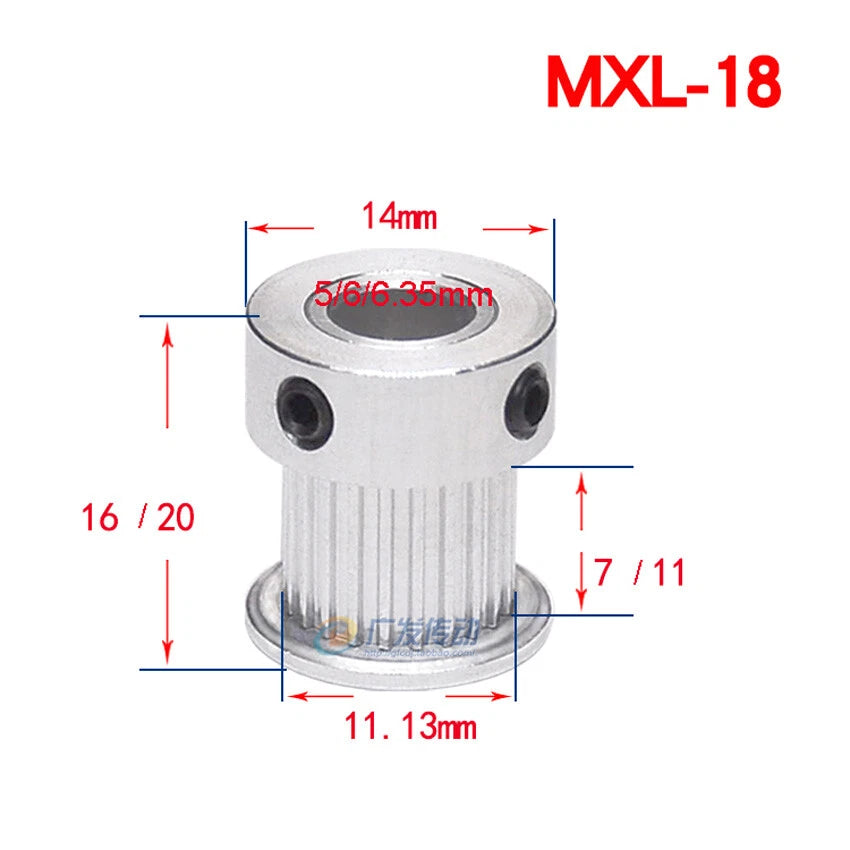
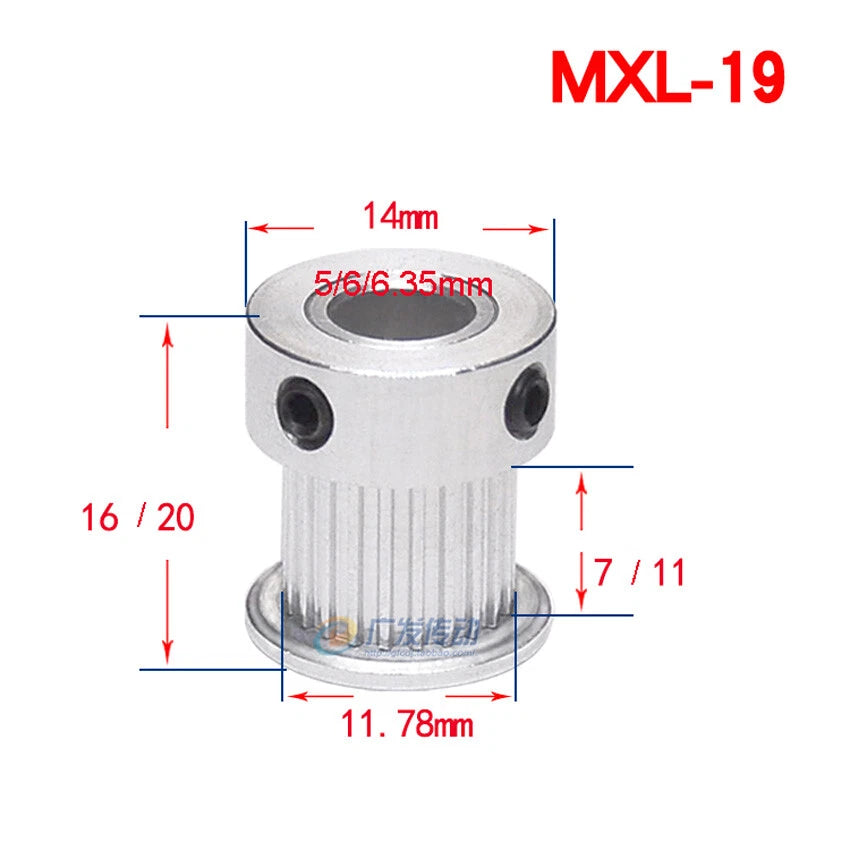
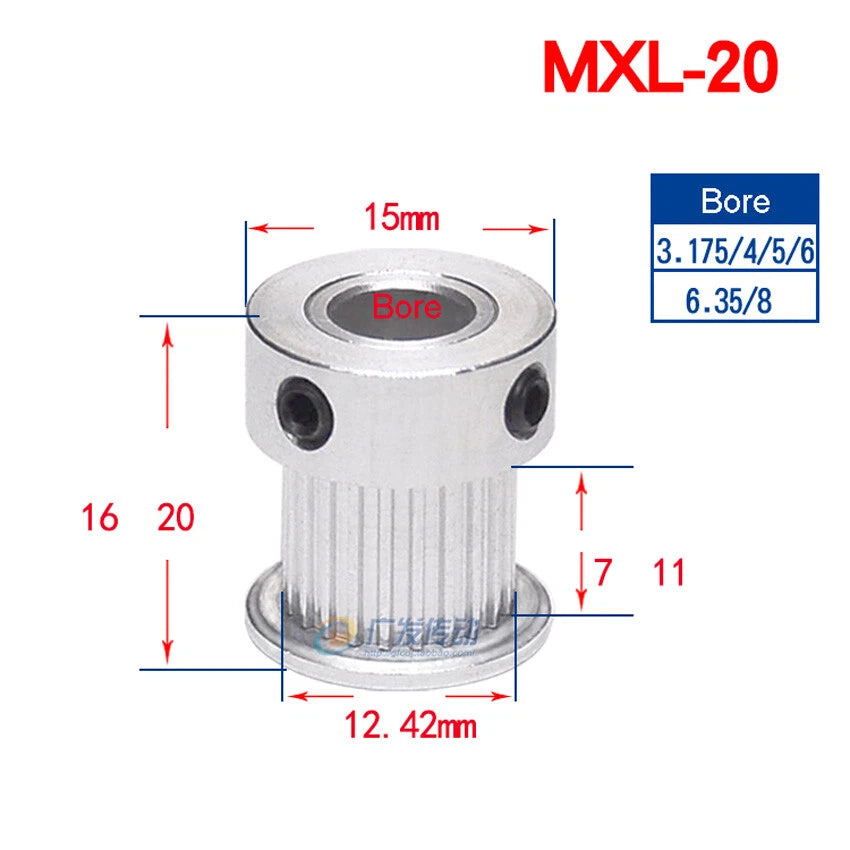
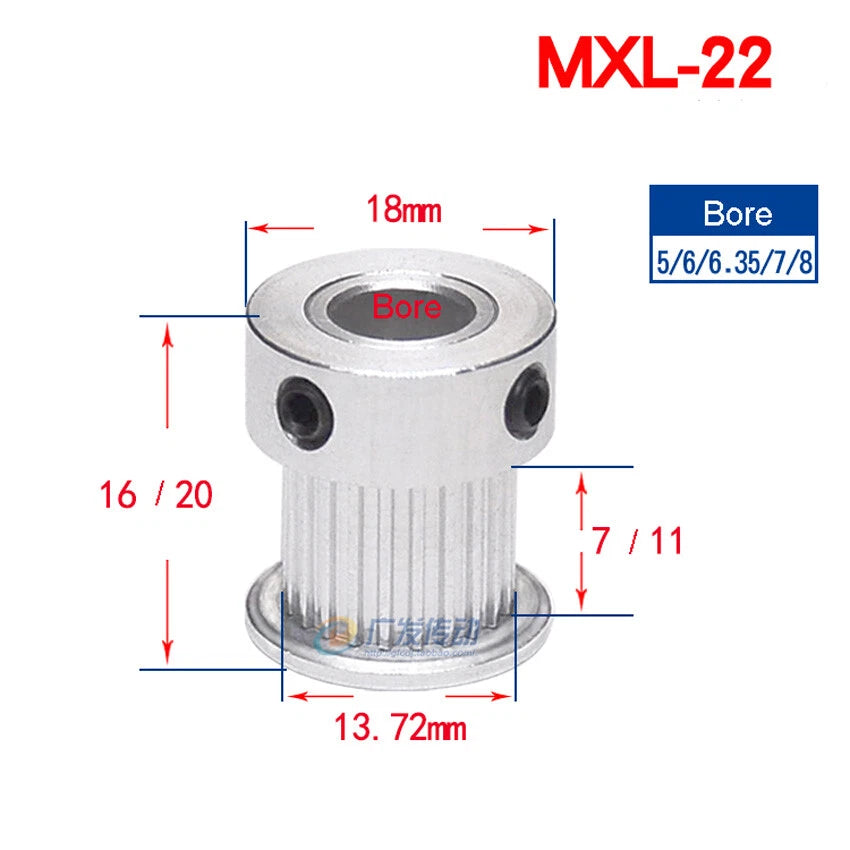
MXL 14-160Teeth Timing Belt Pulleys Pitch 2.032mm With Step For 10mm Width Belt

No reviews

Price:
Sale price$4.96 USD
Stock:
In stock (500 units), ready to be shipped

Payment & Security

Ach Direct Debit Amazon American Express Apple Pay Bancontact BLIK Diners Club Discover EPS Google Pay iDEAL Wero JCB Maestro Mastercard Multibanco MobilePay PayPal Przelewy24 Shop Pay Twint Union Pay USDC Visa

Your payment information is processed securely. We do not store credit card details nor have access to your credit card information.

Limited Offer — Spend More, Save More
Spend $55+
Save $5
Spend $100+
Save $10
Spend $200+
Save $25
HomeDIYer DIY Expert Support

DIY Expert Support

Get fitment advice & recommendations

Mon–Fri  8:30 AM – 8:00 PM
24-Hour Fast Ship
Arrives in 3–14 Days
Worldwide Shipping
30-Day Returns
1 tree planted with every purchase

Description

MXL Timing Belt Pulleys — Precision Drive Components for Robotics & Automation

When your motion control project demands repeatable, slip-free power transmission, a mismatched or poorly machined pulley becomes the weakest link in the entire drive train. Engineers, makers, and small-batch manufacturers working on CNC machines, 3D printers, robotic arms, and conveyor systems need MXL timing belt pulleys they can rely on — components that hold tight tolerances and mount cleanly without rework.

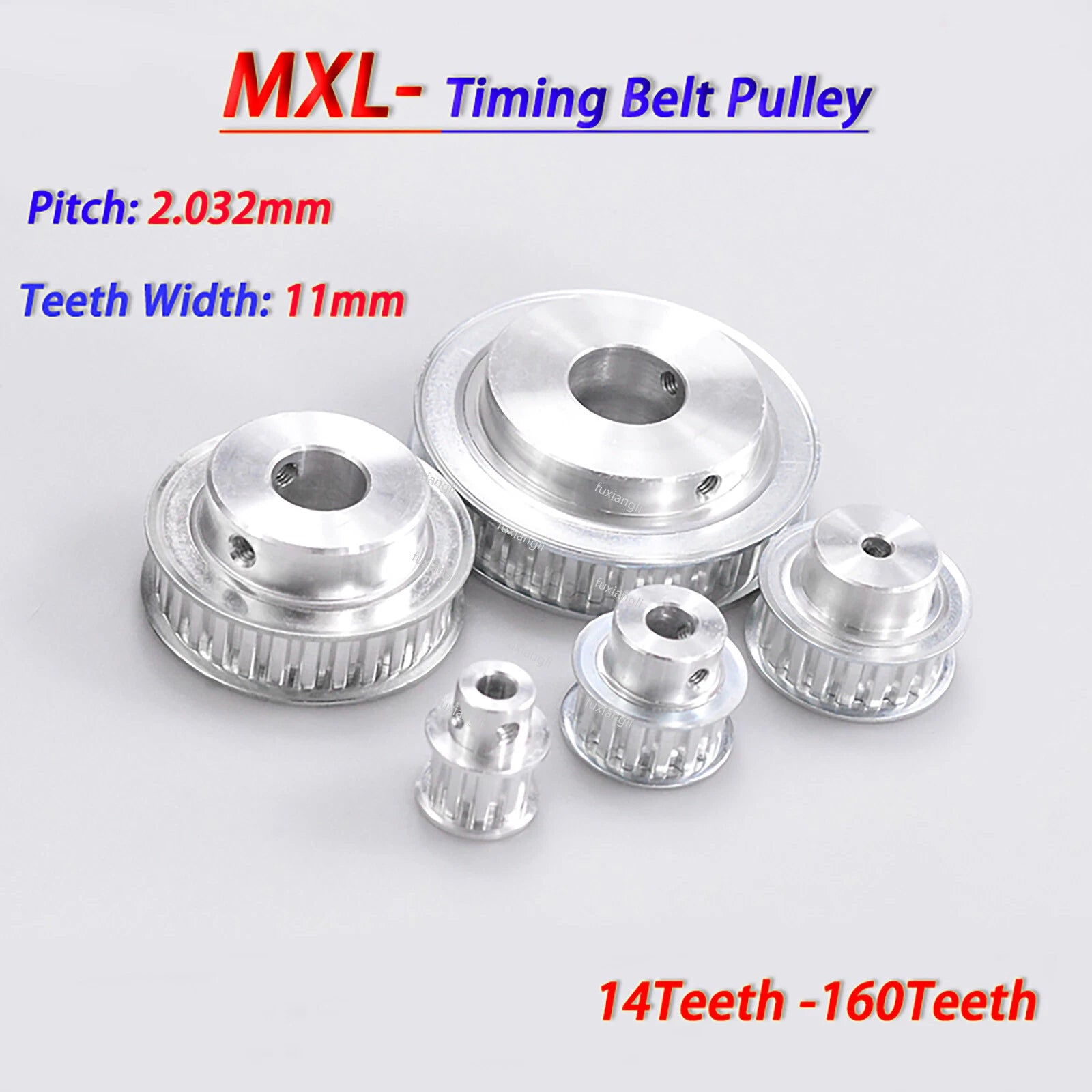
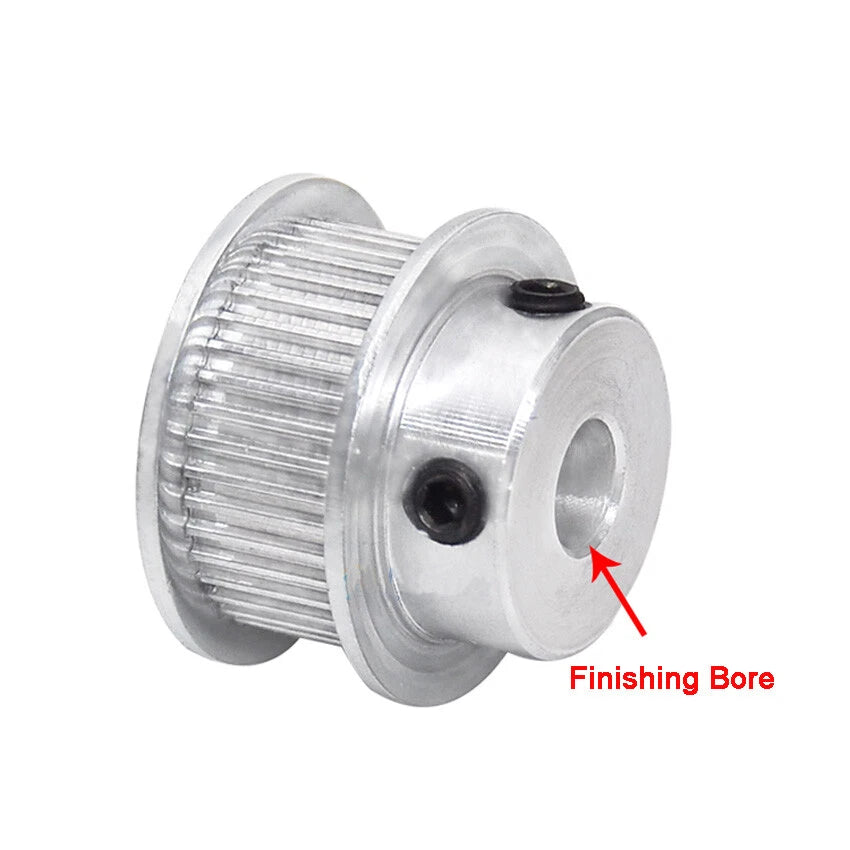
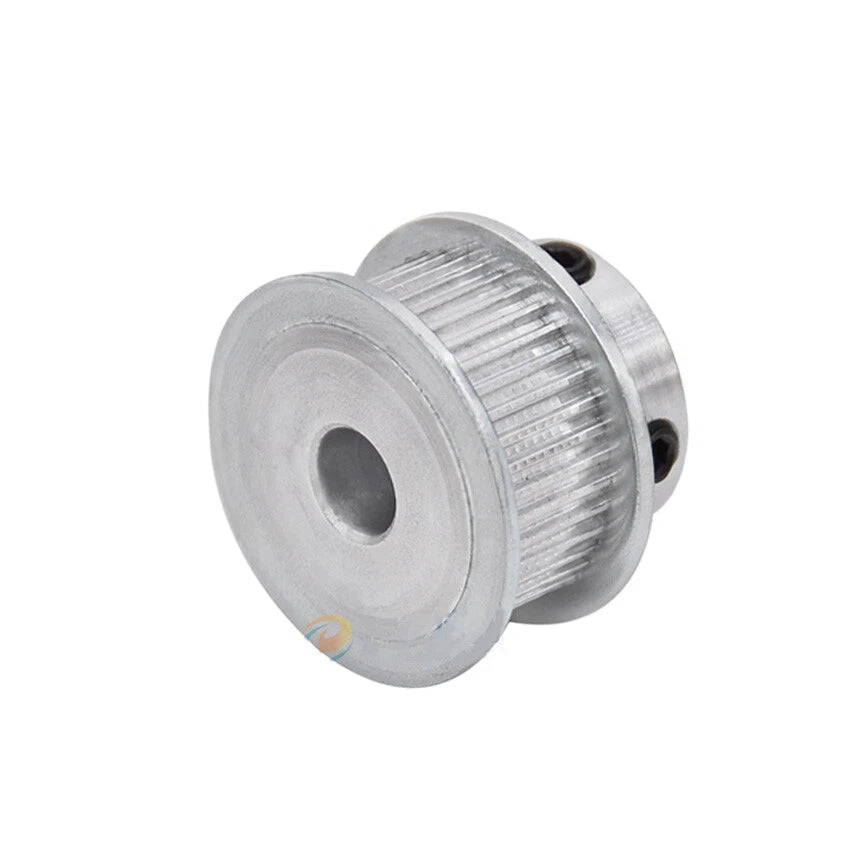
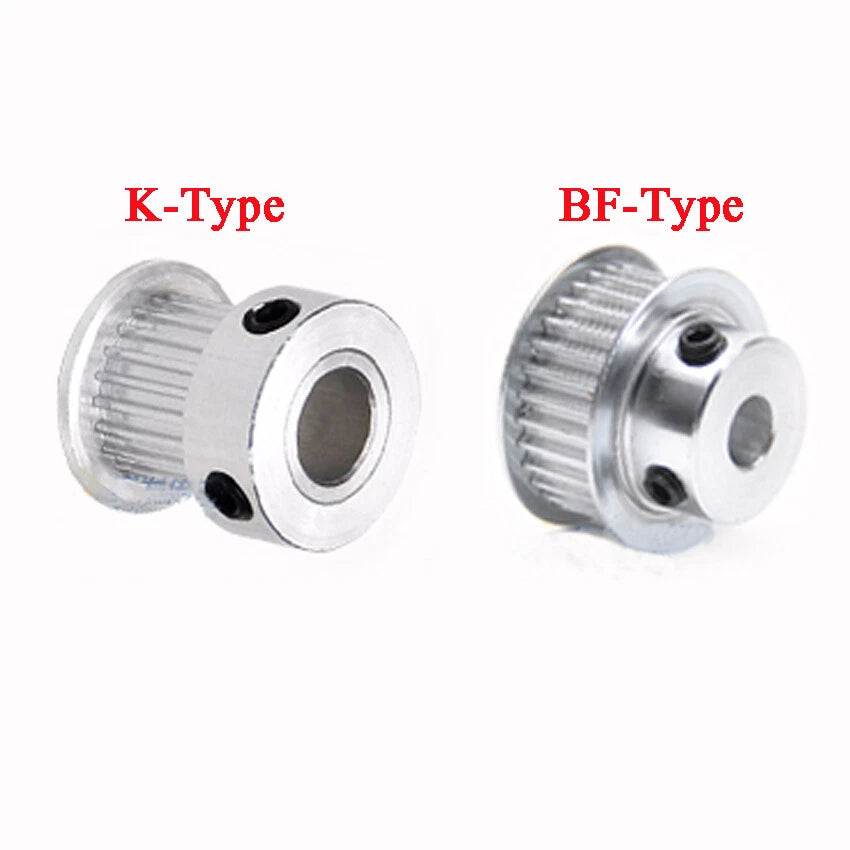
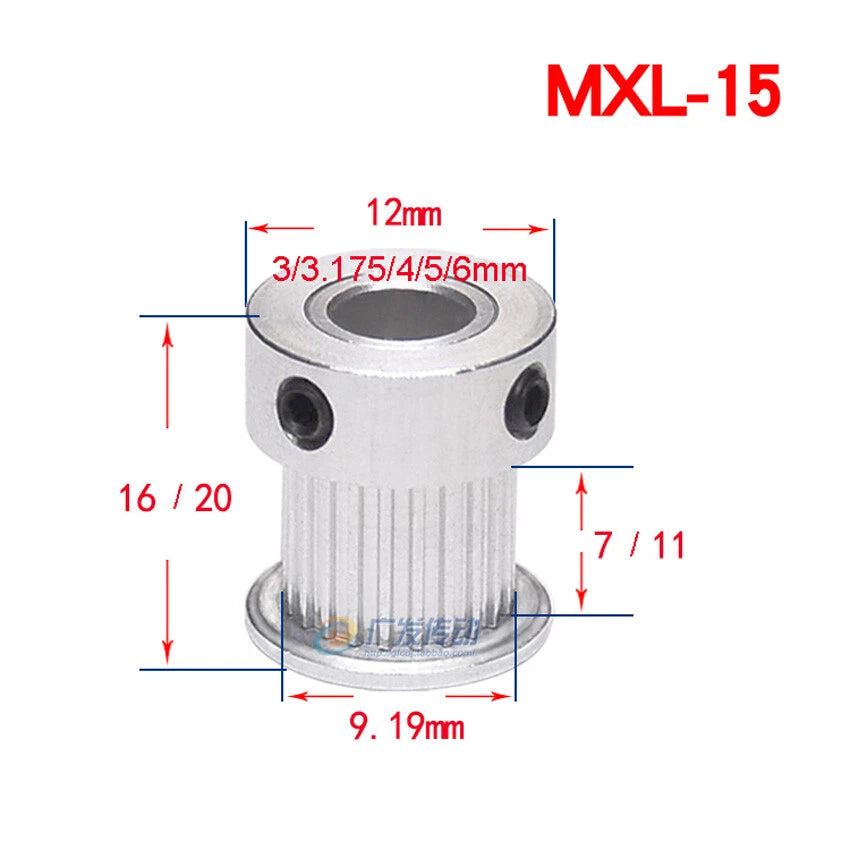
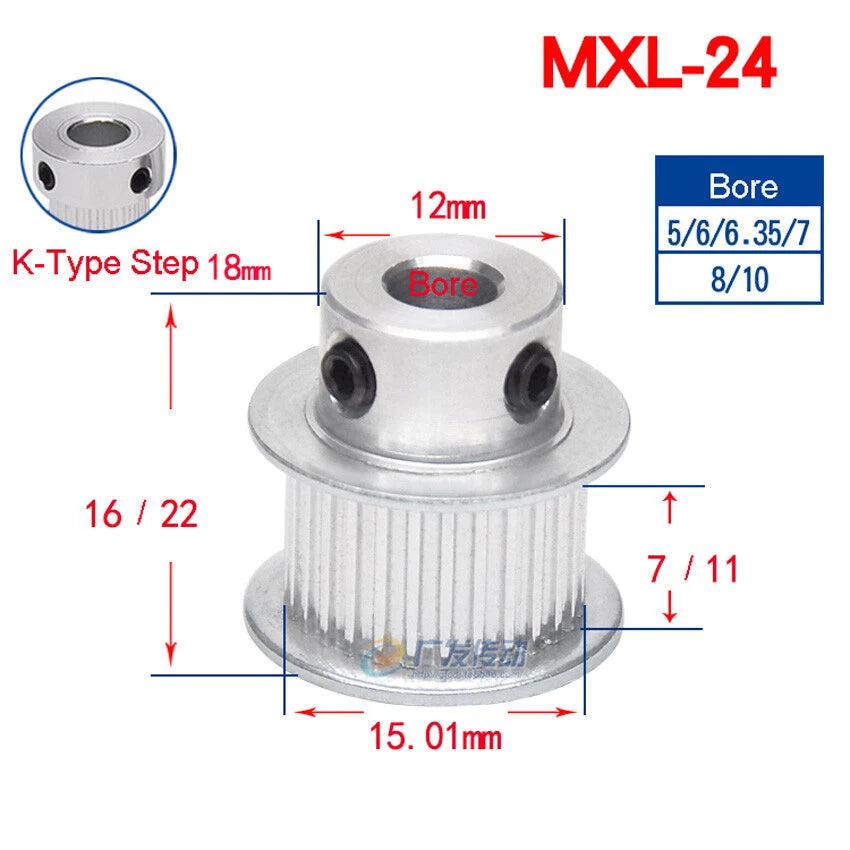
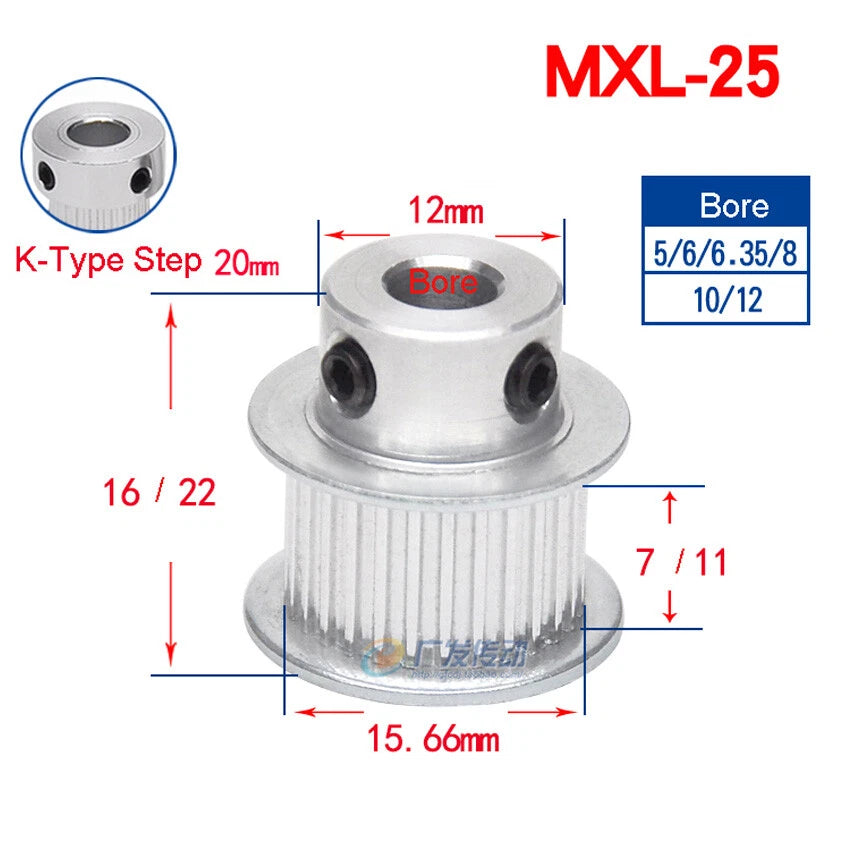
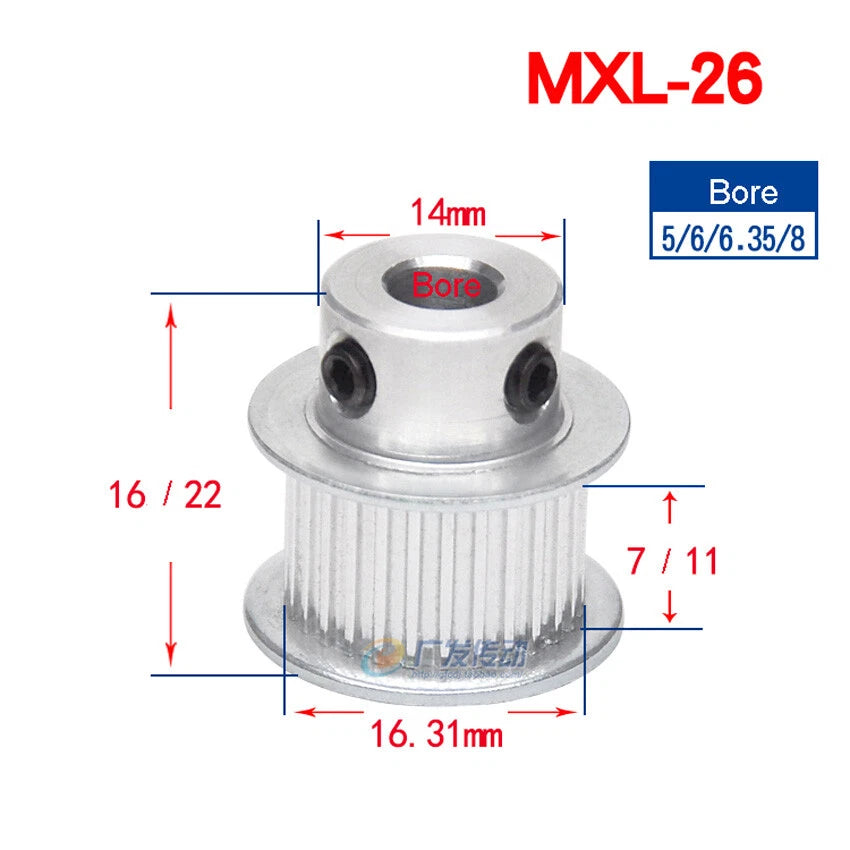
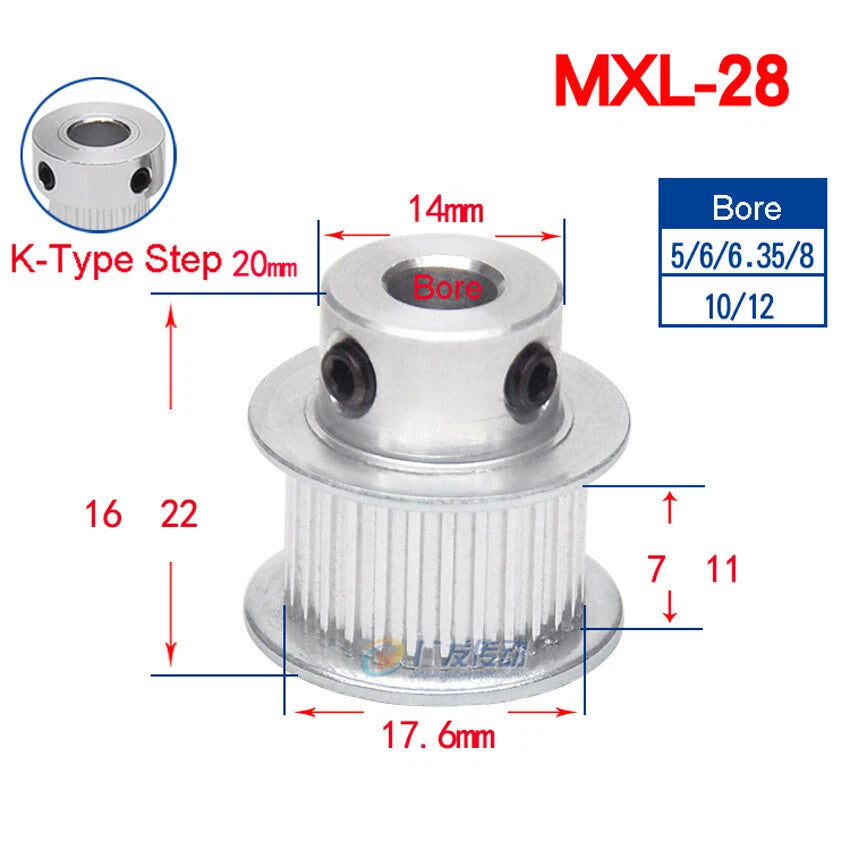
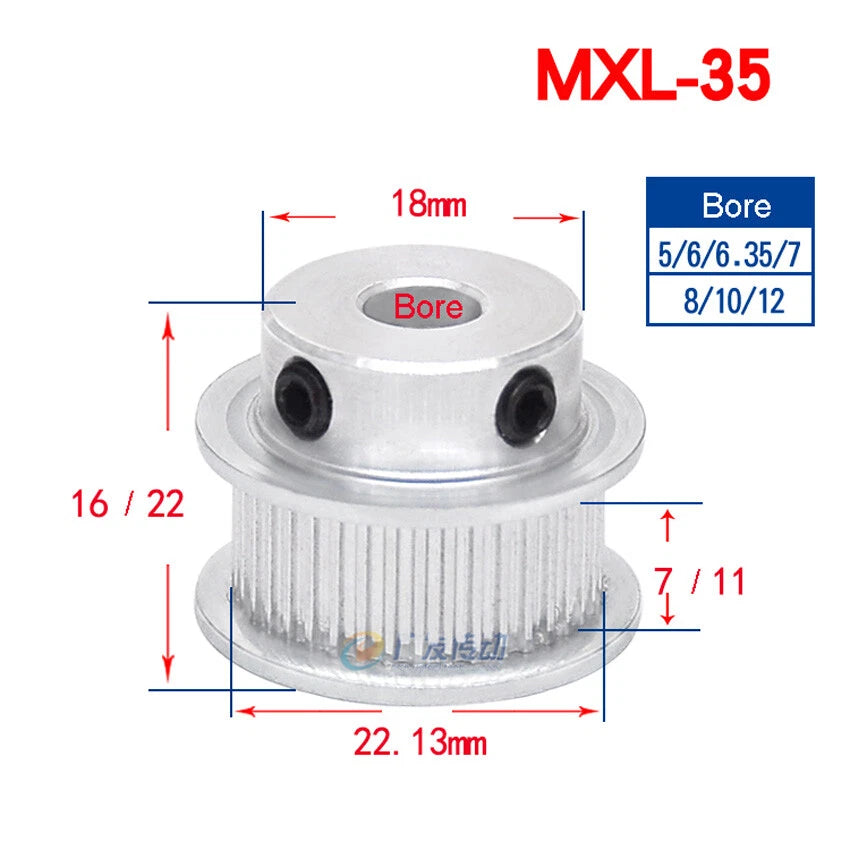
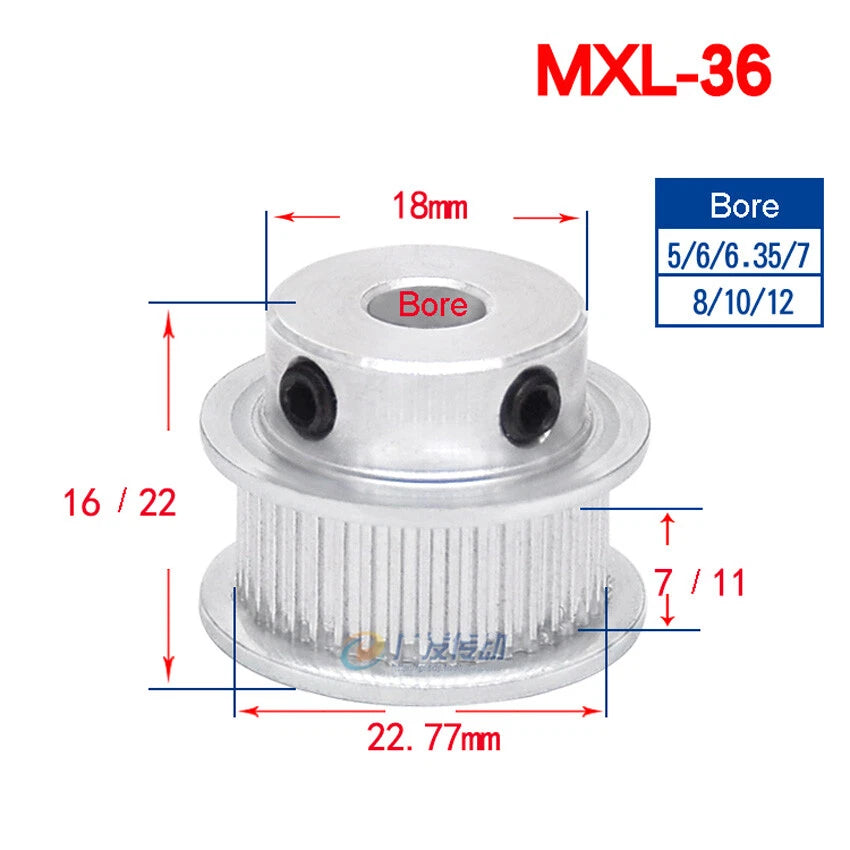
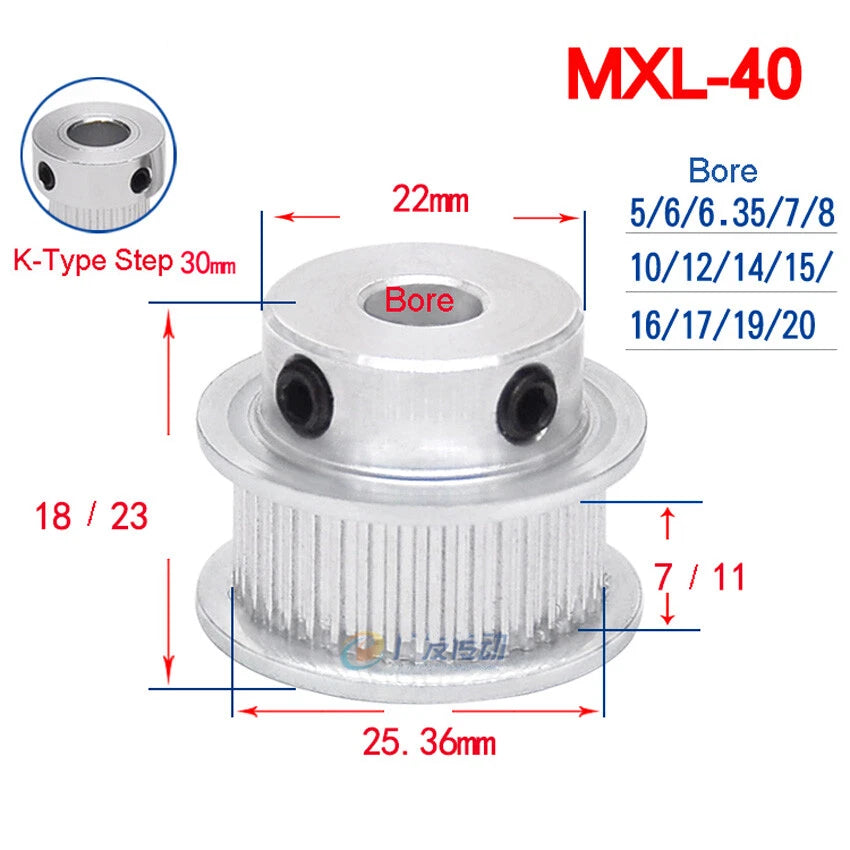
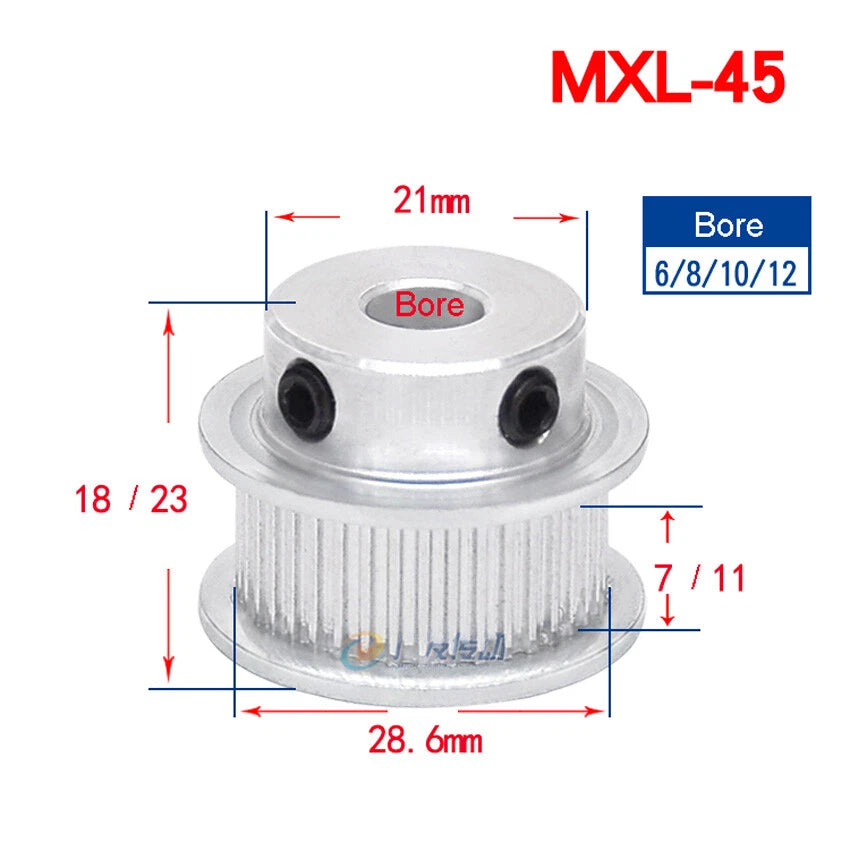
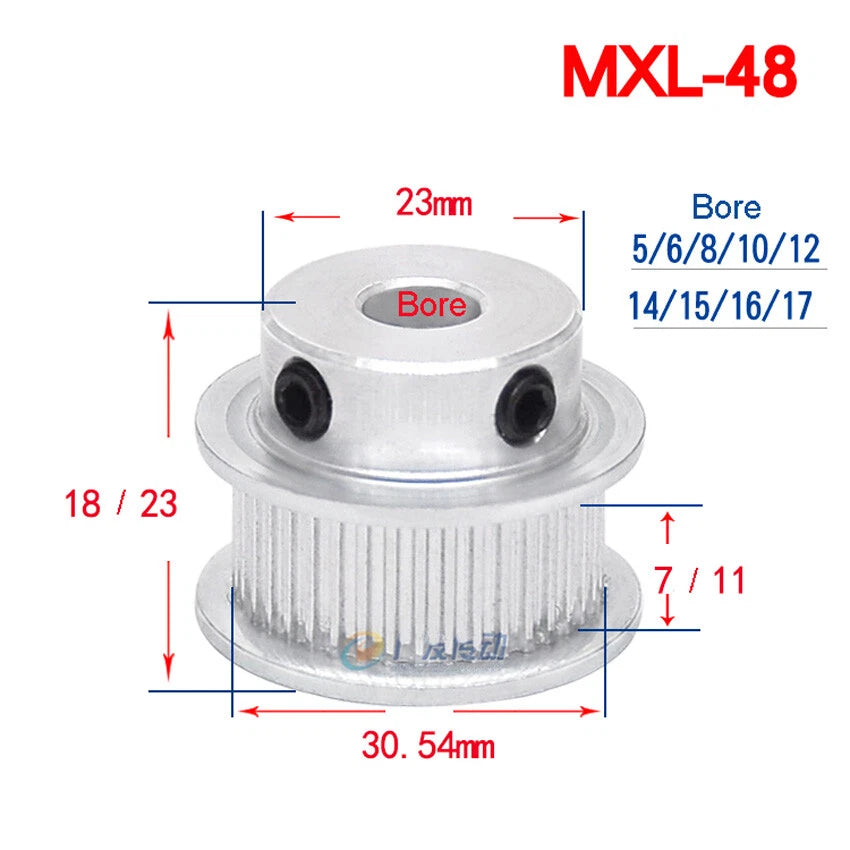
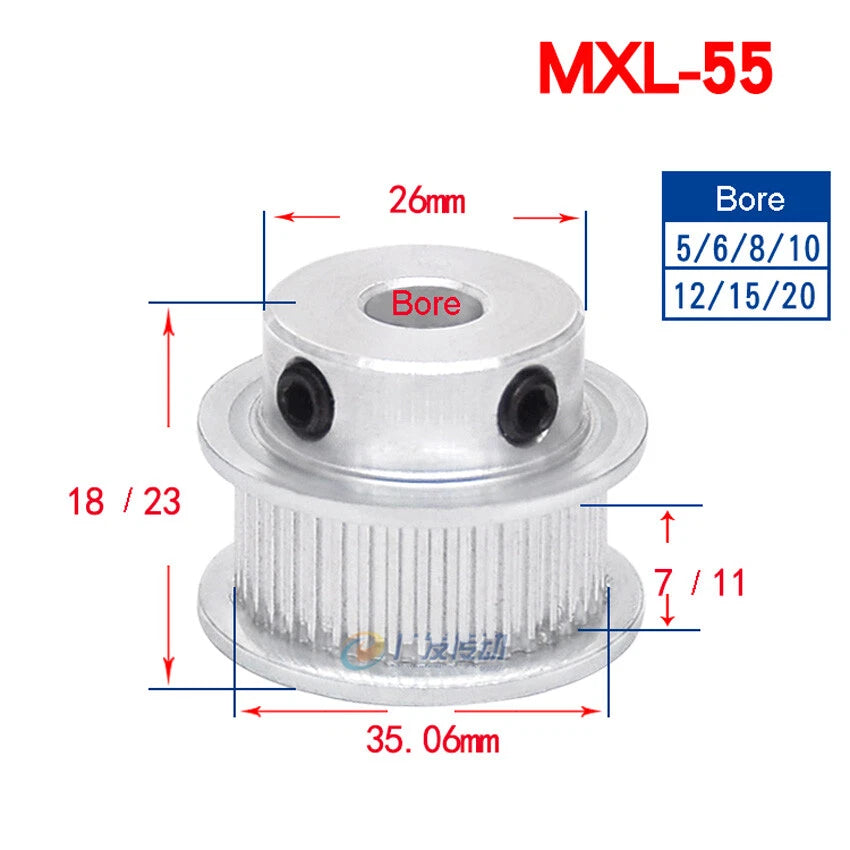
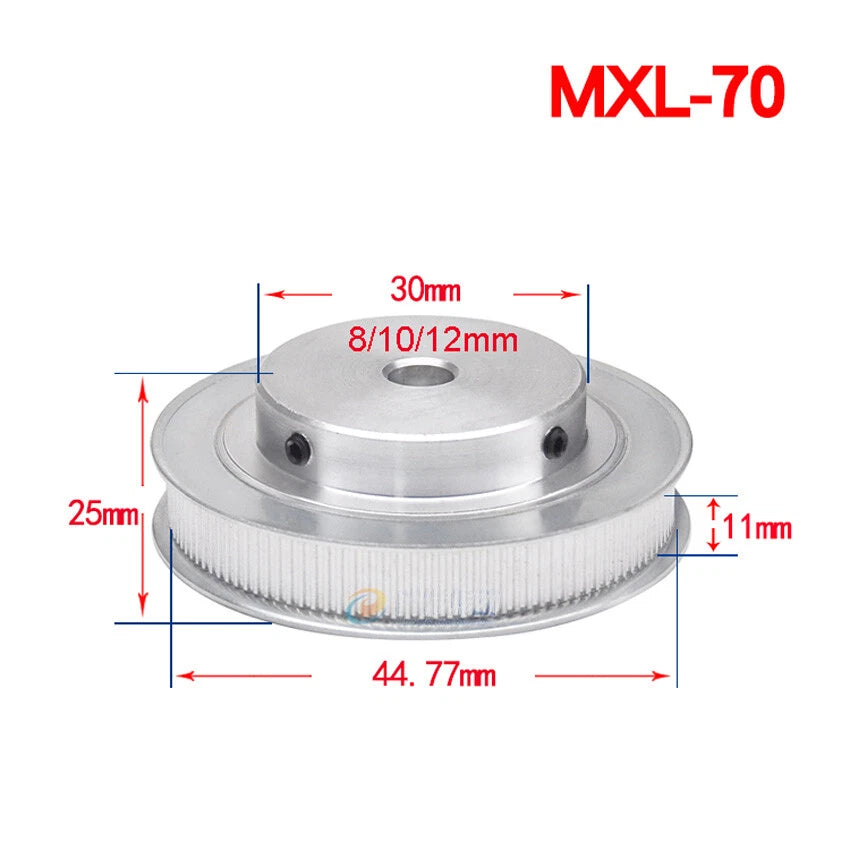
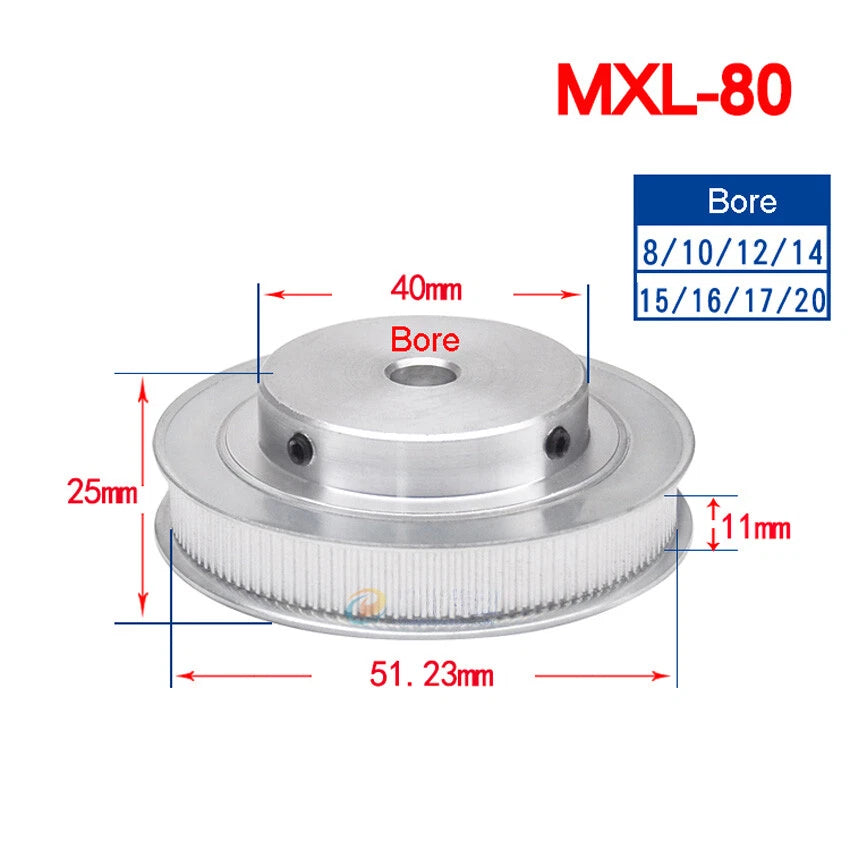
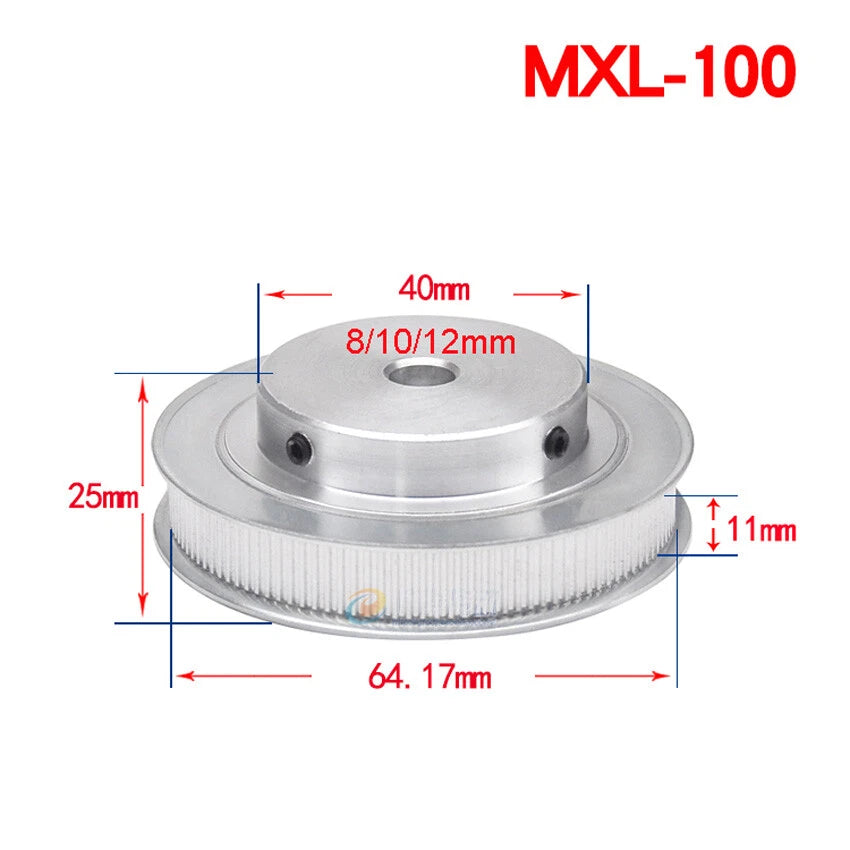
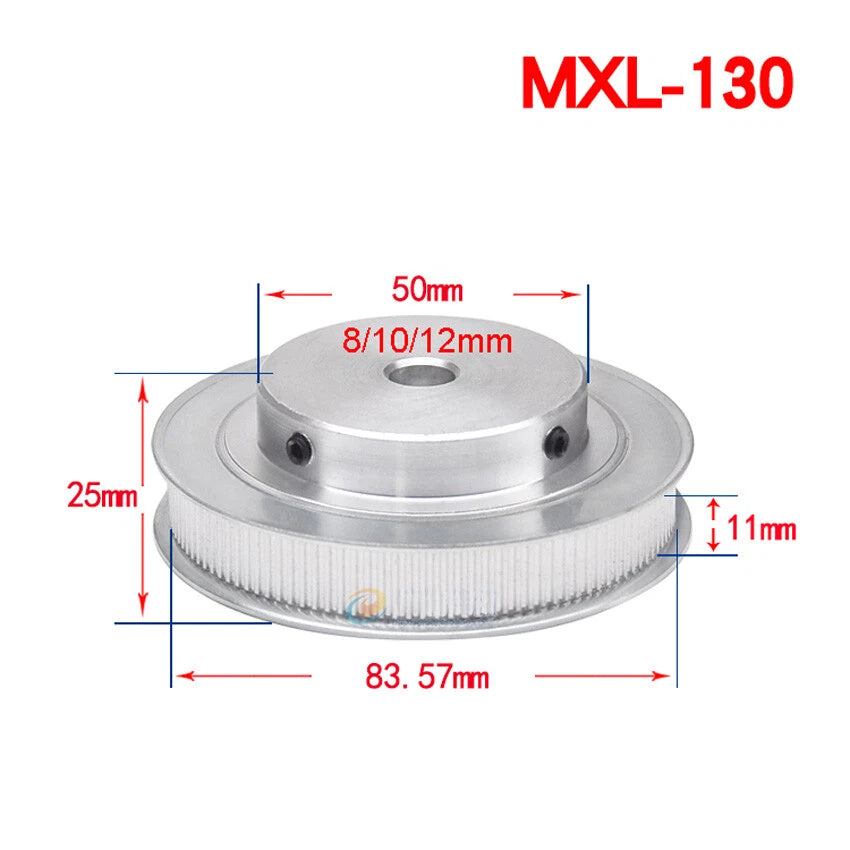
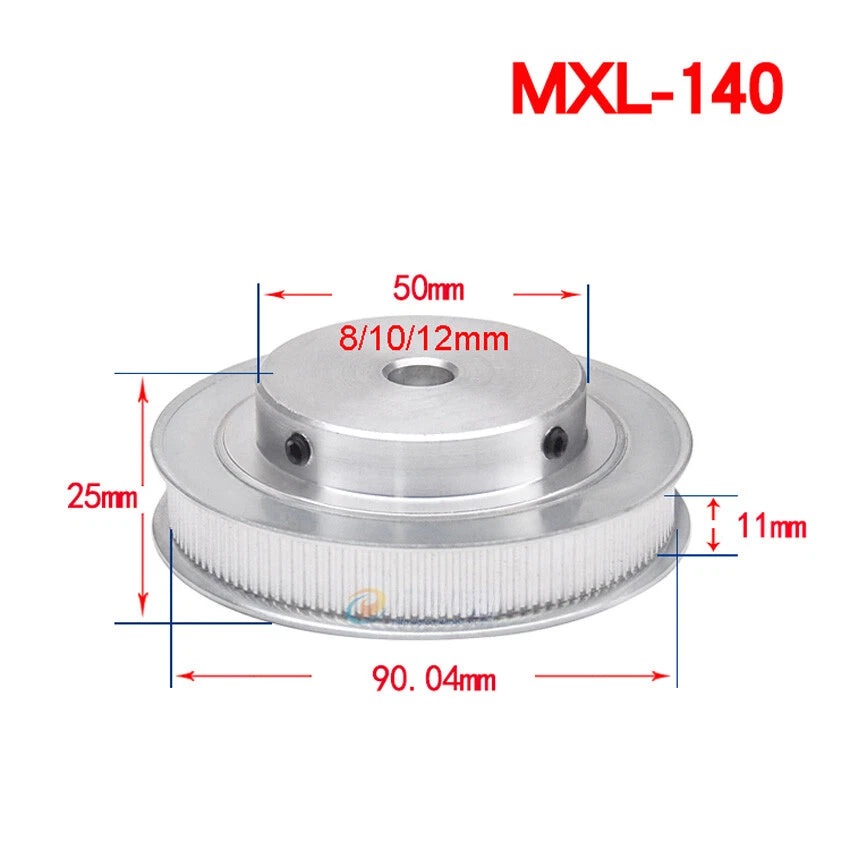
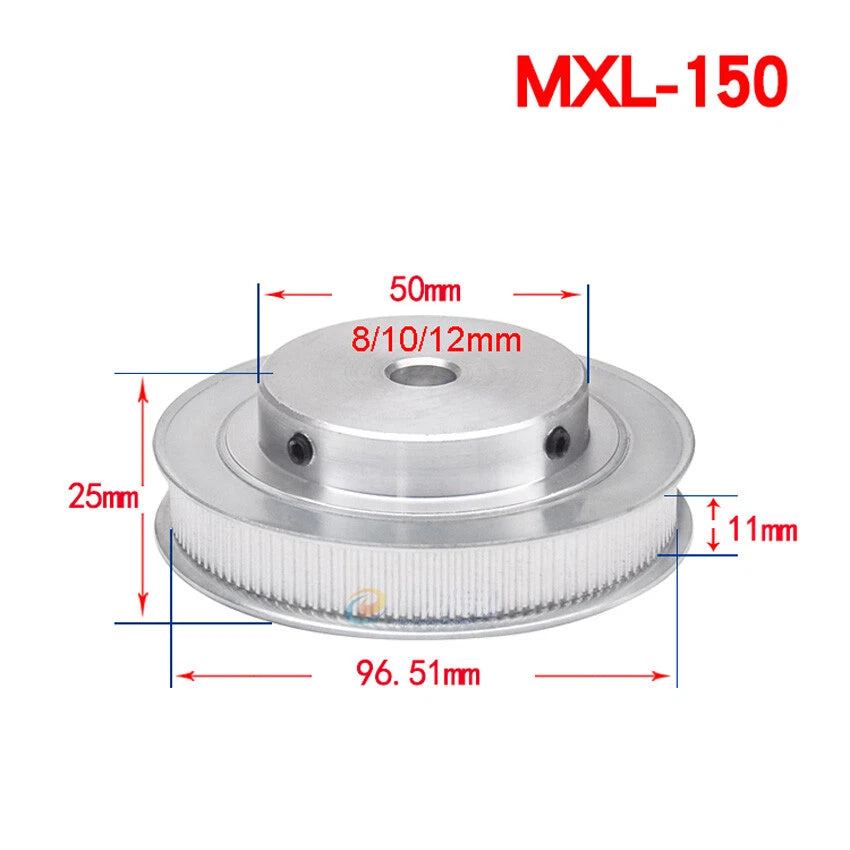
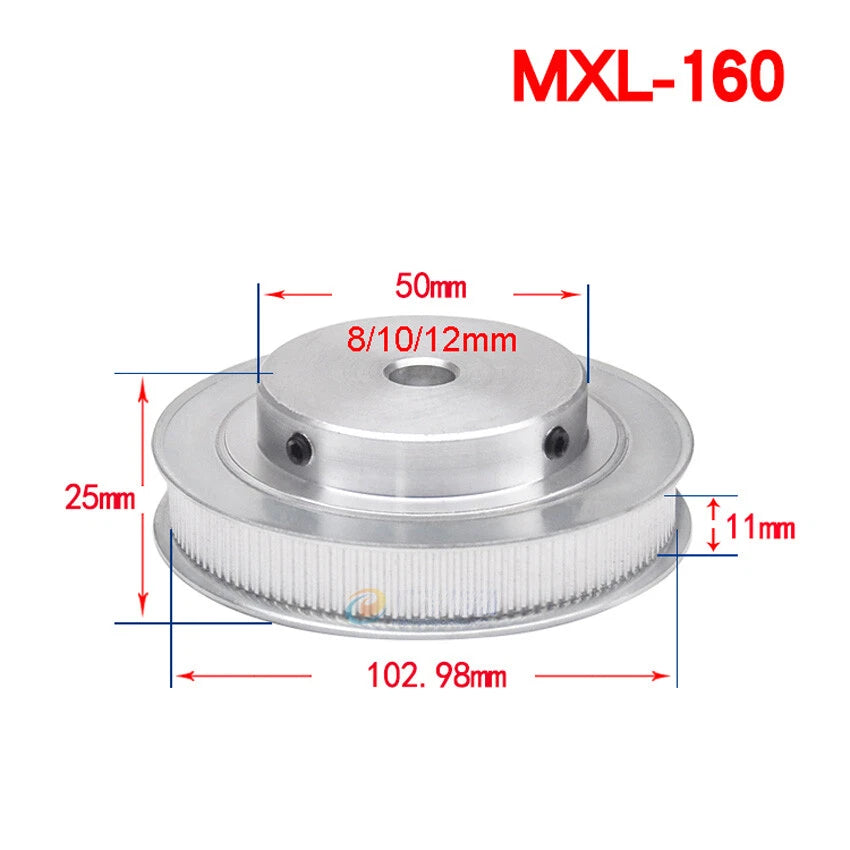
These MXL timing belt pulleys feature a 2.032 mm (0.080 in) pitch profile machined to accept 10 mm wide MXL belts. The toothed bore section is available in K-Type (plain hub) and BF-Type (flanged hub) configurations, with tooth counts spanning 14 T through 160 T and bore diameters from 3 mm (0.118 in) to 20 mm (0.787 in). The stepped hub design provides a positive axial stop for the belt, keeping it centered on the pulley face during operation.

Typical applications include desktop CNC router X/Y axes requiring low-backlash MXL pulley drive systems, open-frame 3D printer extruder and motion stages using 2.032 mm pitch timing pulleys, and lightweight robotic joint actuators where compact MXL belt pulley assemblies reduce overall drivetrain weight.

⚙️ Belt Compatibility: Designed for standard MXL (2.032 mm pitch) timing belts, 10 mm width. Verify belt tooth profile and width before ordering.

✅ Key Features of These MXL Timing Belt Pulleys

📐 Wide Tooth Count Range

Available from 14 T to 160 T, covering a broad range of speed-ratio requirements in a single product family.

🔩 Multiple Bore Sizes

Bore options from 3 mm to 20 mm (0.118 in – 0.787 in) accommodate common motor and shaft diameters without custom machining.

🔄 K-Type & BF-Type Shapes

K-Type plain hub suits compact inline drives; BF-Type flanged hub provides additional belt retention for high-speed or vertical-axis applications.

📏 Stepped Hub Design

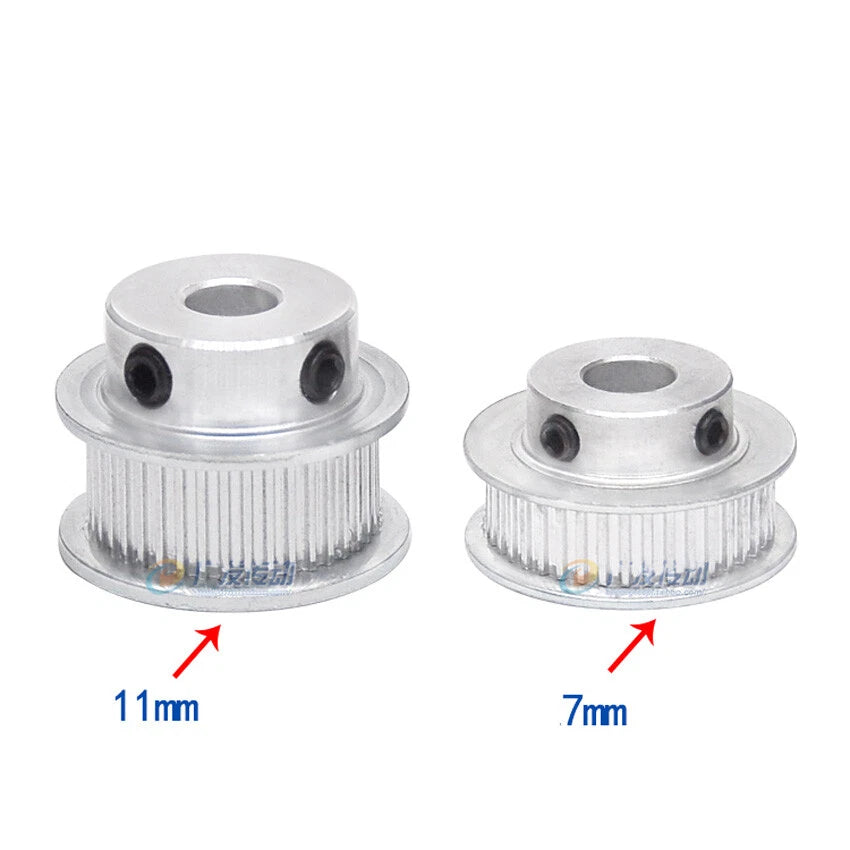
Integrated step keeps the 10 mm belt centered on the pulley face, reducing edge wear and lateral drift during continuous operation.

⚖️ Consistent Pitch Accuracy

2.032 mm MXL pitch machined to standard tolerances ensures smooth meshing with MXL belts and predictable positional accuracy.

🛠️ Drop-In Replacement Geometry

Standard MXL tooth profile is interchangeable with other MXL-spec pulleys, simplifying upgrades or replacements in existing drive systems.

📐 Technical Specifications — MXL Timing Belt Pulleys

Belt Standard MXL (Miniature Extra Light)
Pitch 2.032 mm (0.080 in)
Belt Width Compatibility 10 mm
Tooth Count Range 14 T – 160 T
Hub Shape K-Type (plain) / BF-Type (flanged)
Bore Diameter Range 3 mm – 20 mm (0.118 in – 0.787 in)
Hub Feature Stepped (belt centering)
Material See variant options
Finish / Colour See variant options
Weight See variant options

❓ Frequently Asked Questions

How do I choose the correct tooth count for my application?

The tooth count determines the pulley's pitch diameter and, combined with the driven pulley's tooth count, sets your speed ratio. Divide the driven pulley teeth by the driver pulley teeth to get the reduction ratio. For example, a 60 T driver paired with a 30 T driven pulley gives a 2:1 speed reduction. Use a belt-length calculator to confirm the center distance fits your frame before ordering.

What is the difference between K-Type and BF-Type?

K-Type pulleys have a plain cylindrical hub with no flange — they rely on the belt's own tension to stay centered. BF-Type pulleys add a flange on one or both sides of the tooth face, physically constraining the belt laterally. BF-Type is recommended for vertical-axis drives, high-speed applications, or any setup where belt tracking is critical.

Which bore size should I select for my motor shaft?

Measure your motor or drive shaft diameter with a caliper and select the matching bore. Common stepper motor shaft sizes are 5 mm and 6.35 mm (1/4 in); servo motors often use 6 mm, 8 mm, or 10 mm shafts. If your shaft diameter falls between available bore sizes, choose the next size up and use a set screw or keyway adapter to secure the pulley.

Are these pulleys compatible with standard MXL timing belts from other brands?

Yes. The MXL tooth profile (2.032 mm pitch, 40° tooth angle) is an industry-standard geometry. These pulleys will mesh correctly with any MXL-spec timing belt of 10 mm width, regardless of brand, as long as the belt pitch and width match.

What load or torque can these pulleys handle?

MXL is a light-duty belt standard suited for low-torque, high-speed positioning applications such as 3D printers, small CNC machines, and robotic joints. Maximum transmissible torque depends on the number of teeth in mesh, belt tension, and operating speed. For heavy-duty torque requirements, consider upgrading to GT2 or HTD belt systems. Contact us to confirm suitability for your specific load conditions.

Do I need a set screw or keyway to secure the pulley to the shaft?

Most variants include a set screw hole in the hub for shaft retention. Confirm the specific variant's hub details before assembly. For high-torque or reversing-load applications, a keyway or shaft collar is recommended in addition to the set screw to prevent rotational slip.

What is the stepped hub feature and why does it matter?

The stepped hub creates a shoulder on the pulley body that acts as a physical stop for the belt edge. This keeps the belt aligned on the tooth face during operation, reducing lateral drift, uneven wear, and the risk of the belt riding off the pulley — particularly important in open-loop positioning systems where belt tracking cannot be actively corrected.

🛒 Select your tooth count, shape, and bore size above, then add to cart.

You may also like

Recently viewed