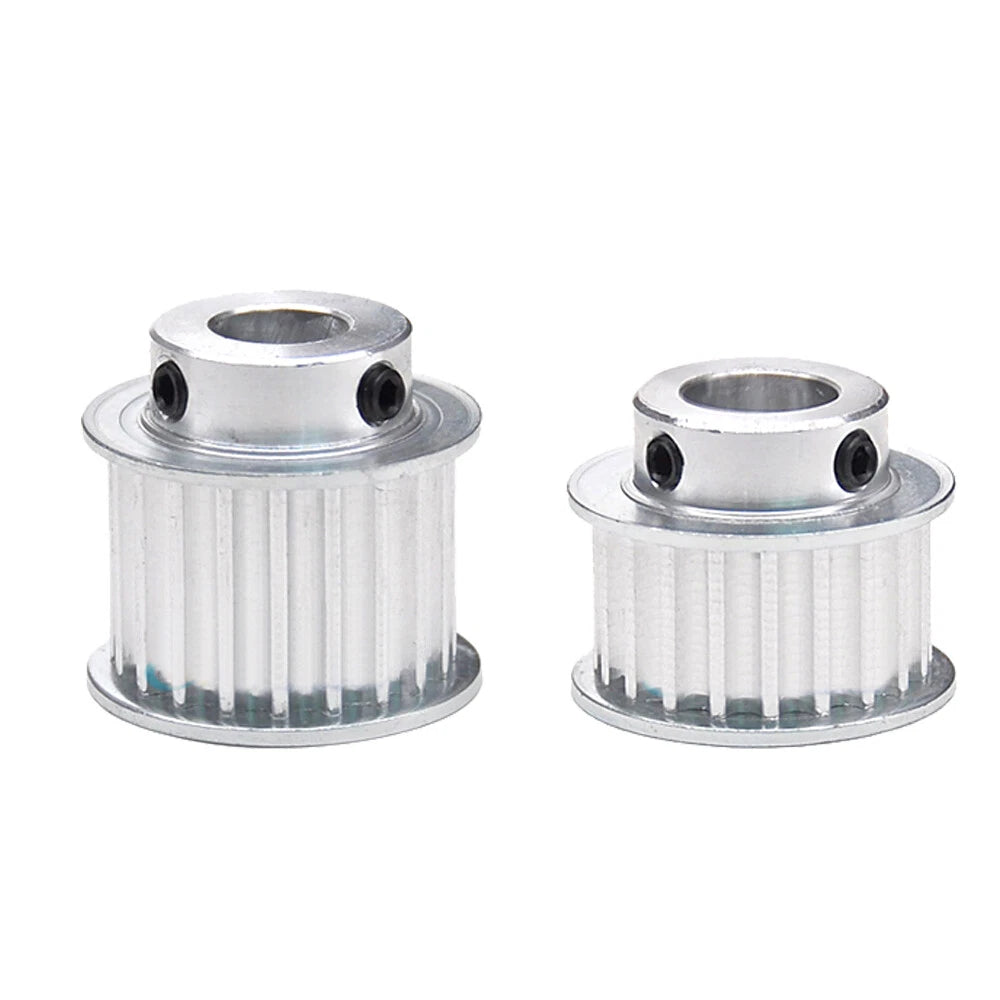
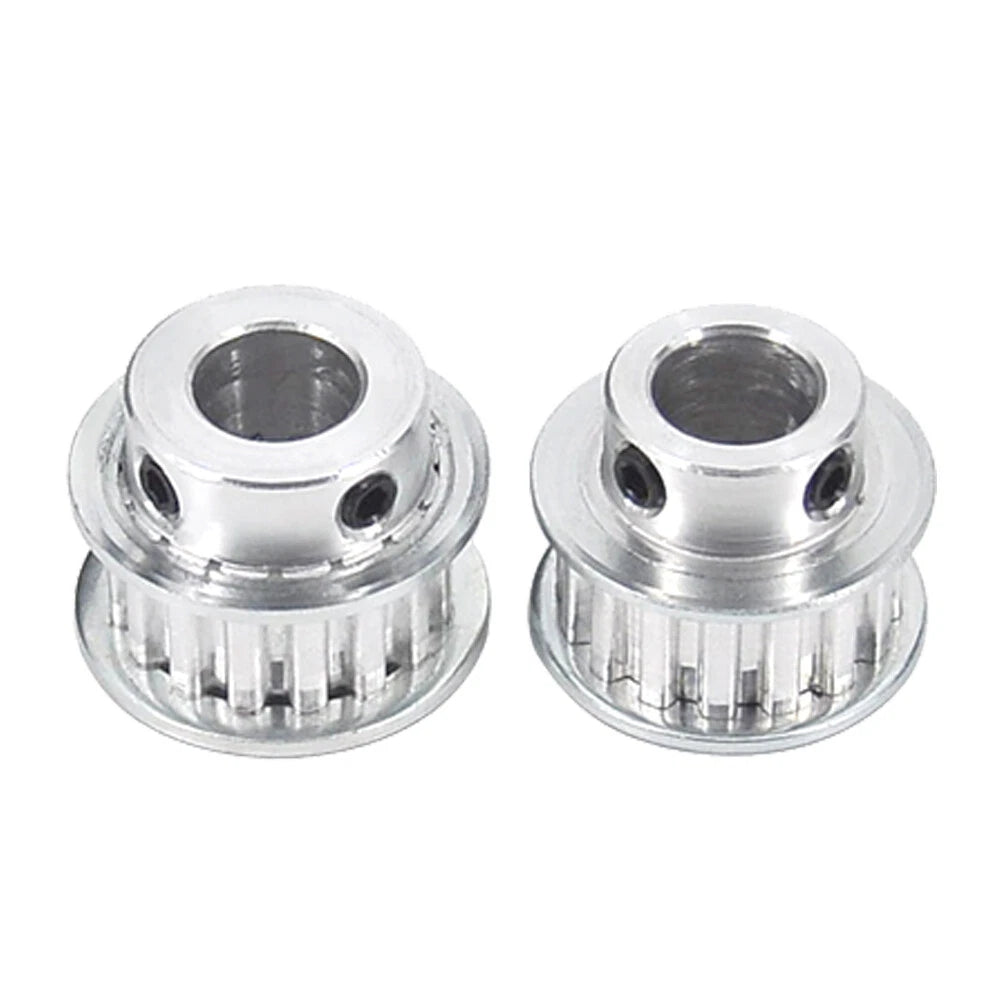
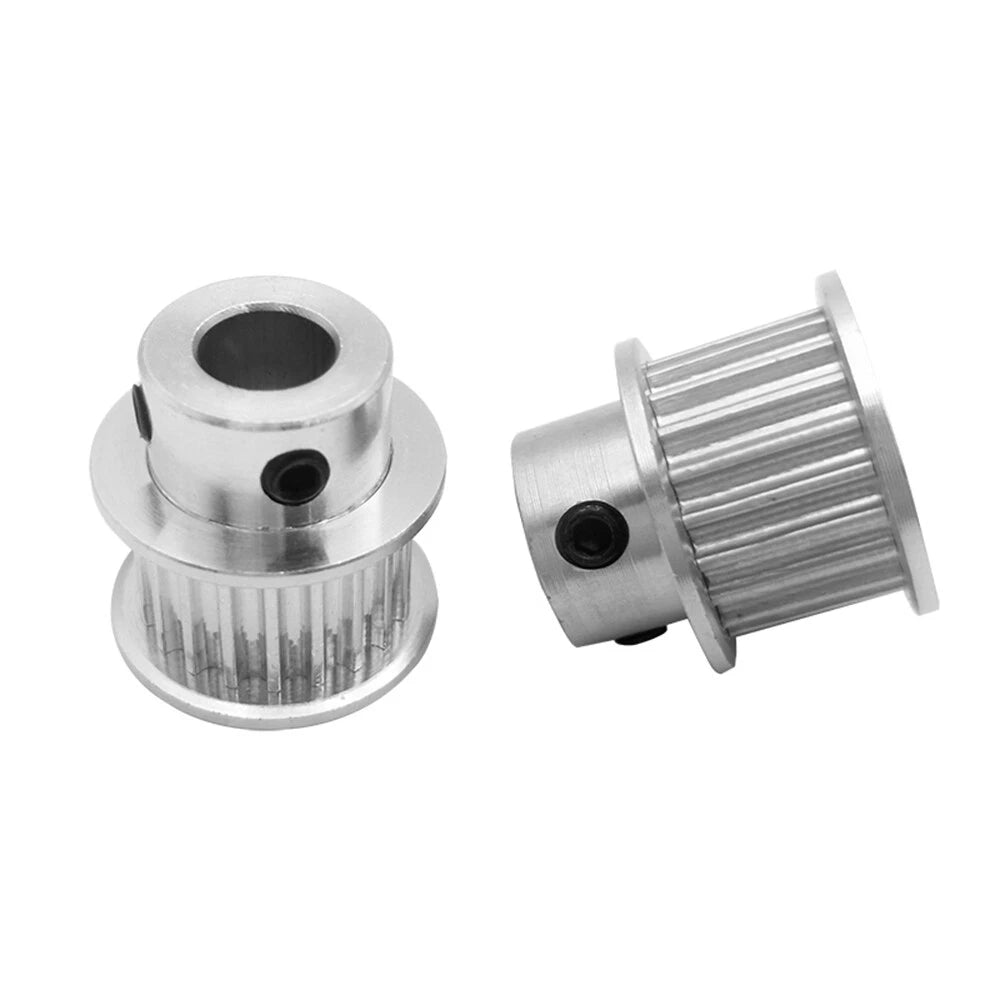
MXL Timing Belt Pulley with Step 5mm-20mm Bore 24 - 160 Teeth For 3D Printer CNC

No reviews

Price:
Sale price$3.39 USD
Stock:
In stock (500 units), ready to be shipped

Payment & Security

Ach Direct Debit Amazon American Express Apple Pay Bancontact BLIK Diners Club Discover EPS Google Pay iDEAL Wero JCB Maestro Mastercard Multibanco MobilePay PayPal Przelewy24 Shop Pay Twint Union Pay USDC Visa

Your payment information is processed securely. We do not store credit card details nor have access to your credit card information.

Limited Offer — Spend More, Save More
Spend $55+
Save $5
Spend $100+
Save $10
Spend $200+
Save $25
HomeDIYer DIY Expert Support

DIY Expert Support

Get fitment advice & recommendations

Mon–Fri  8:30 AM – 8:00 PM
24-Hour Fast Ship
Arrives in 3–14 Days
Worldwide Shipping
30-Day Returns
1 tree planted with every purchase

Description

MXL Timing Belt Pulley — Stepped Bore, 24–160 Teeth for Precise Motion Control

When your 3D printer skips steps or your CNC router loses position mid-cut, the culprit is often a poorly fitted pulley. Engineers, makers, and automation builders who need a reliable, drop-in MXL timing belt pulley with a stepped bore design will find this component solves the shaft-fit problem without custom machining. The stepped bore accommodates a range of shaft diameters from 5 mm to 20 mm (approximately 0.20 in to 0.79 in), letting you match the pulley to your exact motor shaft in one purchase.

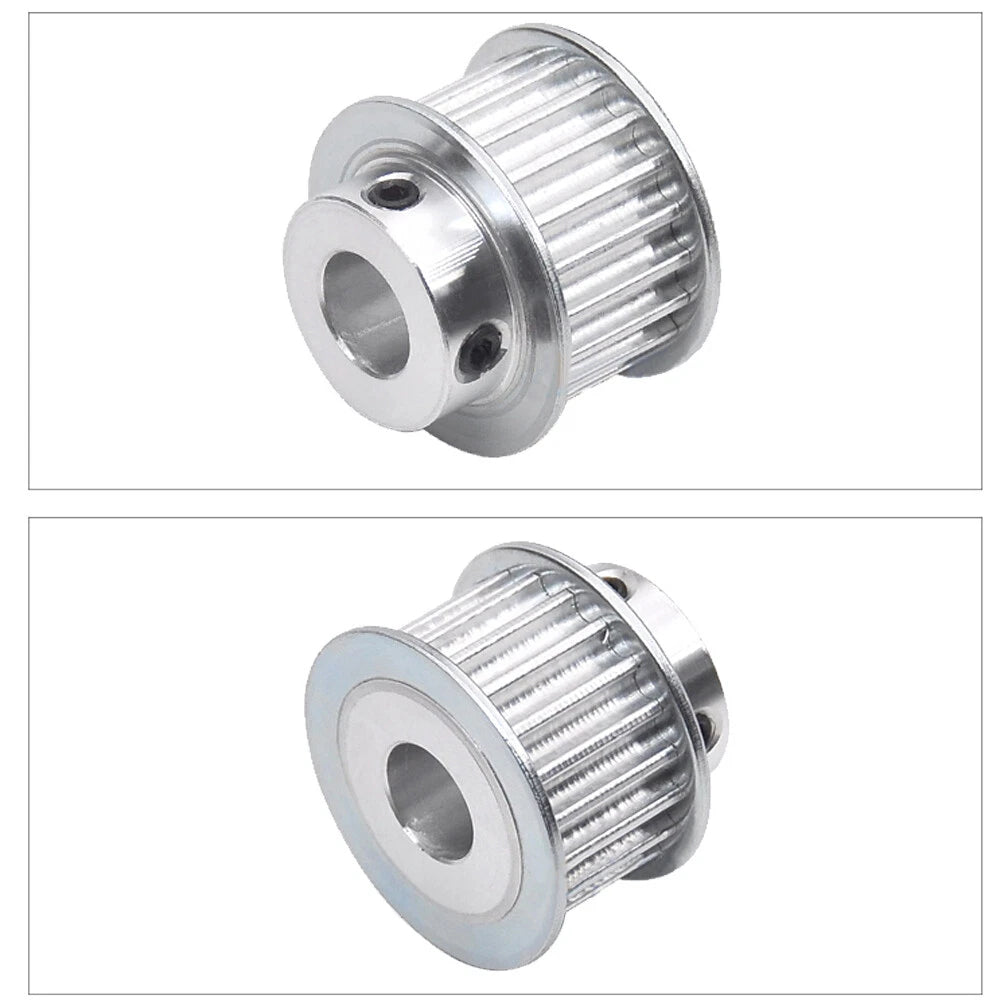
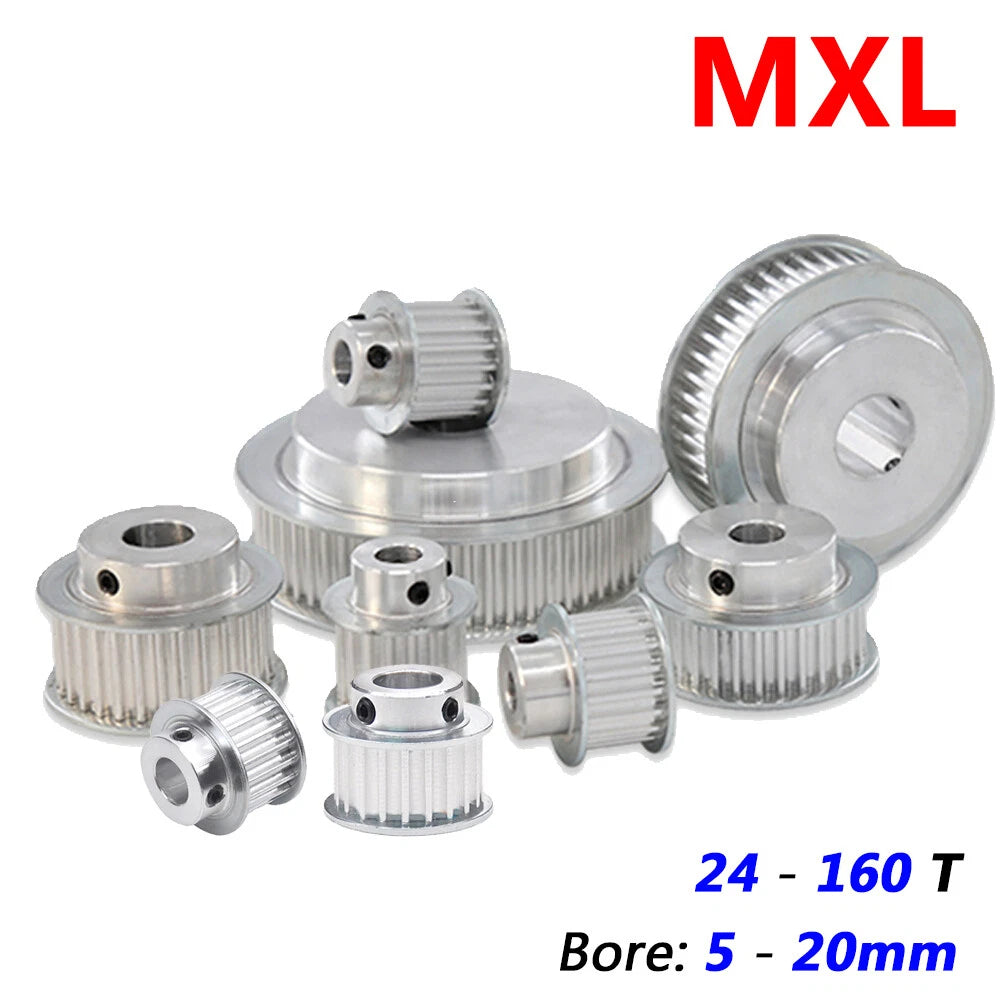
Each MXL timing belt pulley is machined from aluminum alloy and features a natural silver finish. Tooth counts span 24 T to 160 T, covering pitch diameters from roughly 14.6 mm (0.57 in) for a 24-tooth model up to approximately 97.3 mm (3.83 in) for a 160-tooth model. Belt width compatibility is offered in two series: 6 mm and 10 mm MXL belts, selectable via the variant options above.

Typical use cases include open-loop stepper-driven 3D printer X/Y axes, CNC router gantry drives, laser engraver carriage systems, and lightweight robotic arm joints — all applications where an MXL timing belt pulley with a precise tooth profile and secure bore fit is critical for repeatable positioning.

⚙️ Compatibility: Fits standard MXL (2.032 mm pitch) timing belts. Belt width options: 6 mm or 10 mm. Bore options: 5 / 6 / 6.35 / 7 / 8 / 10 / 12 / 14 / 15 / 16 / 17 / 19 / 20 mm. Verify your motor shaft diameter and belt width before ordering.

✅ Key Features of These MXL Timing Belt Pulleys

🔩
Stepped Bore Design

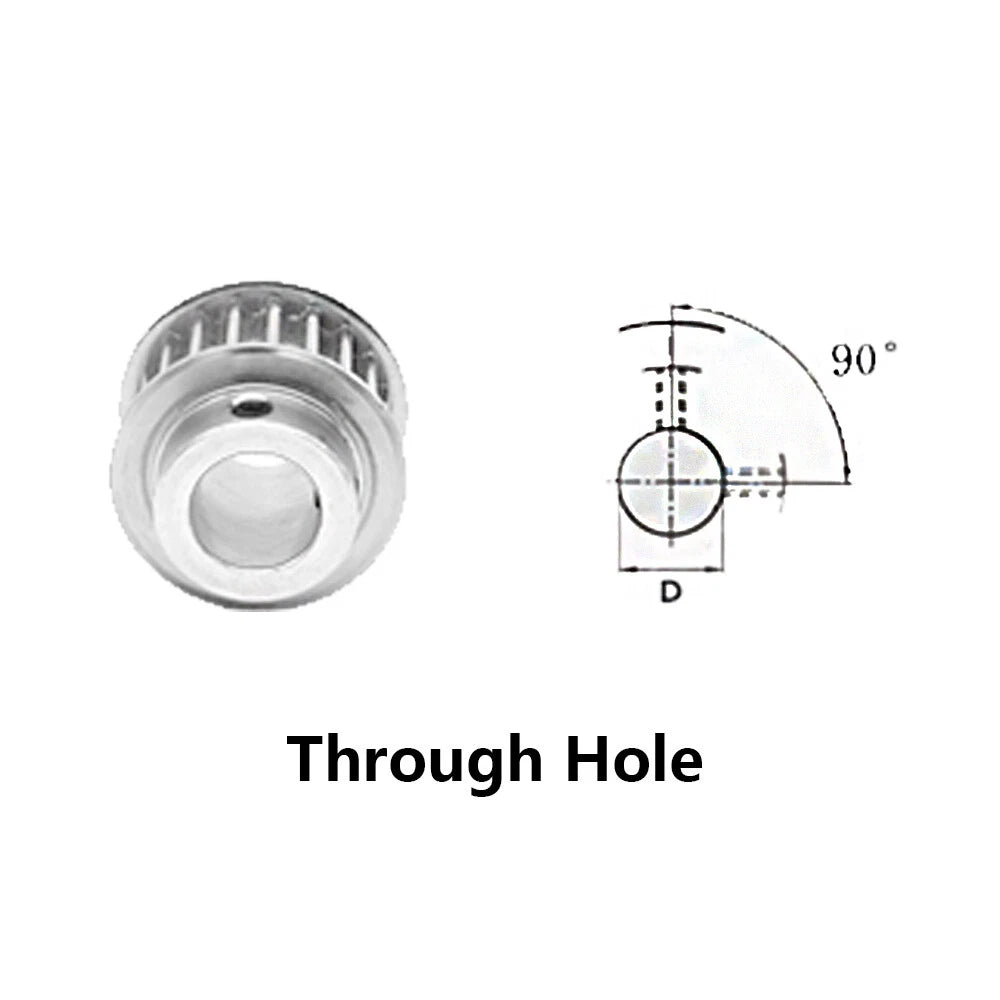
The stepped bore accommodates shaft diameters from 5 mm to 20 mm (0.20–0.79 in), eliminating the need for custom boring or adapters on common stepper motor shafts.

⚙️
MXL Tooth Profile

Standard 2.032 mm pitch MXL tooth geometry ensures accurate meshing with MXL timing belts, maintaining consistent belt-to-pulley engagement across the full tooth count range (24 T–160 T).

🏗️
Aluminum Alloy Construction

Machined from aluminum alloy for a balance of low rotational inertia and sufficient rigidity, making these pulleys well-suited for high-cycle motion applications in 3D printers and CNC machines.

📐
Wide Tooth Count Selection

Available in 22 tooth count options from 24 T to 160 T, allowing you to dial in the exact gear ratio needed for your drive system without compromise.

🔗
Dual Belt Width Compatibility

Each model is offered for both 6 mm and 10 mm wide MXL belts, so you can match the pulley to your existing belt inventory without sourcing a different belt series.

🔄
Broad Application Range

Suitable for 3D printer X/Y axes, CNC router gantries, laser engraver carriages, robotic joints, and other open-loop or closed-loop stepper/servo motion systems requiring MXL belt drive.

📐 Technical Specifications — MXL Timing Belt Pulley

Belt Type MXL (2.032 mm pitch)
Tooth Count Range 24 T – 160 T (22 options)
Bore Diameter Range 5 mm – 20 mm (0.20 in – 0.79 in)
Compatible Belt Width 6 mm or 10 mm (see variant options)
Material Aluminum alloy
Finish Natural silver (uncoated)
Bore Type Stepped bore with set screw
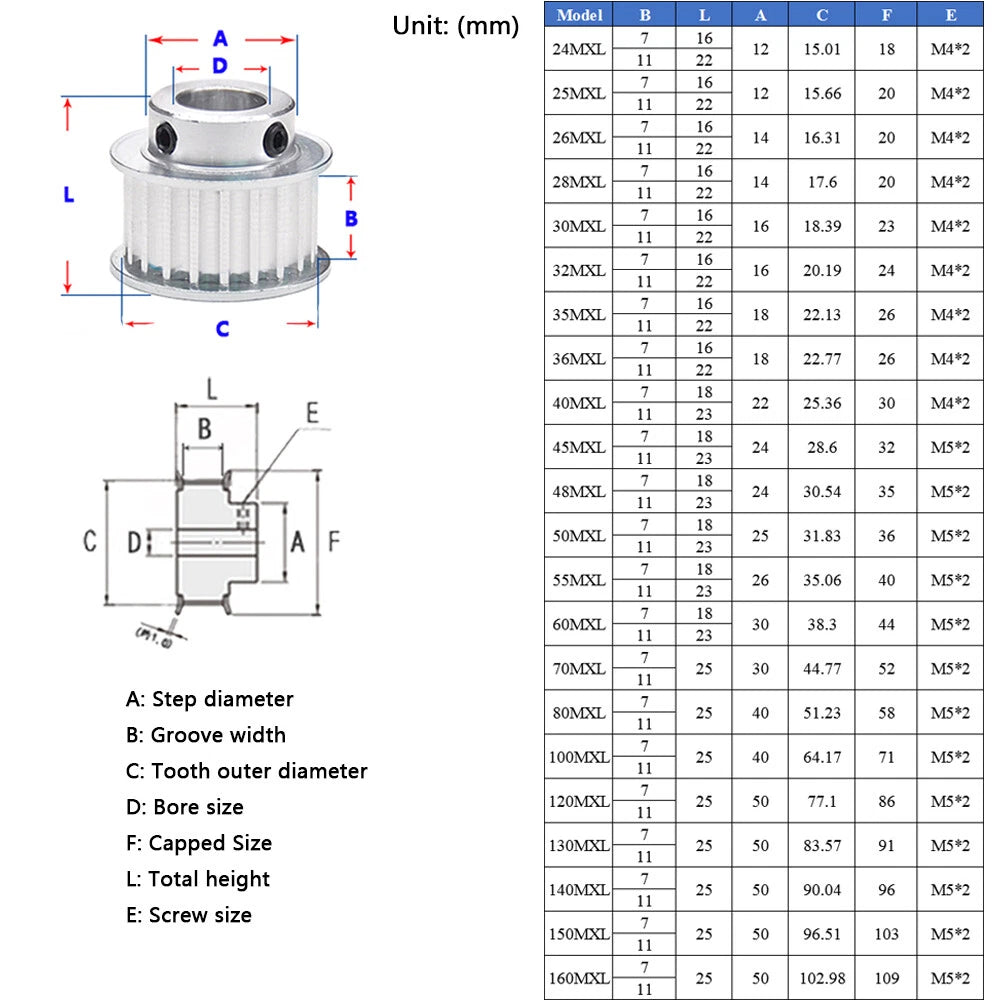
Flange See variant options
Outside Diameter See variant options
Hub Length See variant options

❓ Frequently Asked Questions

How do I choose the right tooth count for my application?

The tooth count determines the pulley's pitch diameter and, combined with your motor steps-per-revolution, sets the linear resolution of your drive. Smaller tooth counts (e.g., 24 T–30 T) are common on 3D printer and CNC motor shafts for compact drive assemblies. Larger counts (e.g., 60 T–160 T) are used as driven pulleys to create a speed reduction. Calculate your required gear ratio first, then select the tooth count pair that achieves it.

Which bore size should I select for my stepper motor shaft?

Most NEMA 17 stepper motors have a 5 mm shaft; NEMA 23 motors typically use an 8 mm shaft. Measure your motor shaft diameter with calipers before ordering. The stepped bore design means the pulley is pre-machined to the selected diameter — choose the bore that matches your shaft exactly. A set screw secures the pulley to the shaft.

What is the difference between the 6 mm and 10 mm belt width options?

The belt width option determines which MXL belt the pulley is designed to run. A 6 mm belt and pulley combination is lighter and more compact, common in smaller 3D printers. A 10 mm belt and pulley combination offers greater load capacity and is preferred for heavier CNC gantries or applications with higher belt tension. Match the pulley belt width to the belt already in your system.

Are these pulleys compatible with GT2 or HTD belts?

No. These pulleys are machined specifically for MXL profile belts with a 2.032 mm pitch. GT2 belts use a 2 mm pitch with a different tooth geometry, and HTD belts use a rounded tooth profile. Mixing belt and pulley profiles causes poor meshing, accelerated wear, and potential belt skipping. Use only MXL belts with these pulleys.

How strong is the aluminum alloy used, and will it corrode?

The pulleys are machined from aluminum alloy, which offers a good strength-to-weight ratio for motion control applications. Aluminum naturally forms a thin oxide layer that provides moderate corrosion resistance in typical indoor environments (3D printer enclosures, CNC workshops). For high-humidity or outdoor environments, consider applying a light coating of dry lubricant or anodizing the surface after purchase.

Can I use these pulleys in a closed-loop servo system?

Yes. The MXL tooth profile provides positive engagement with no slip, making these pulleys suitable for both open-loop stepper systems and closed-loop servo systems. Ensure the bore diameter matches your servo motor shaft and that the set screw is properly torqued to prevent slippage under load.

What is the set screw size, and do I need a special tool?

Set screw size varies by bore diameter and tooth count. Typically, a standard metric hex key (Allen wrench) in the M3 or M4 size is required. Refer to the product images or contact us to confirm the set screw specification for your selected variant before assembly.

🛒 Select your Model (tooth count) and Bore & Applicable Belt Width above, then add to cart.


You may also like

Recently viewed