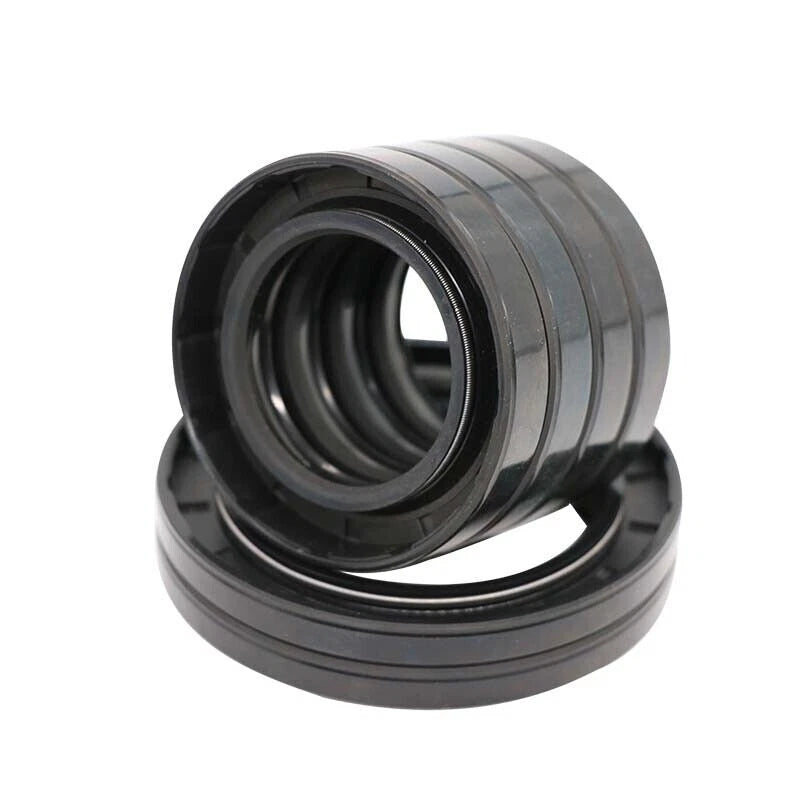
NBR TC Rotary Shaft Oil Seal with Garter Spring — 70mm to 200mm ID

No reviews

Price:
Sale price$39.96 USD
Stock:
In stock (500 units), ready to be shipped

Payment & Security

Ach Direct Debit Amazon American Express Apple Pay Bancontact Diners Club Discover Google Pay iDEAL Wero Mastercard PayPal Shop Pay USDC Visa

Your payment information is processed securely. We do not store credit card details nor have access to your credit card information.

Quantity Discount Promotion
🎯 BULK DISCOUNT: Buy More, Save More!
Buy 2 Items
5% OFF
Buy 4 Items
10% OFF
Buy 6 Items
15% OFF
Expert

DIY Expert Support

Get fitment advice & recommendations

Mon-Fri, 8:30AM-8PM
24-Hour Fast Ship
🚚
Arrives in 3-14 days
🌍
Global Reach
↩️
30-Day Returns
🌱 1 tree planted with every purchase

Description

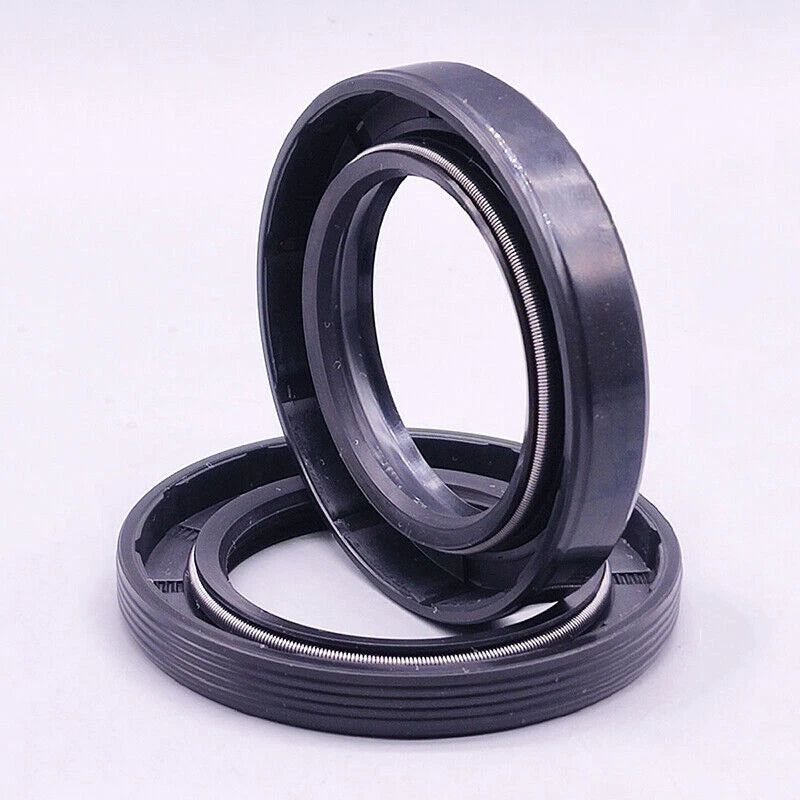
NBR TC Rotary Shaft Oil Seal with Garter Spring — Stop Leaks Before They Start

Mechanics, equipment operators, and maintenance professionals know the frustration of a leaking shaft seal: oil on the floor, contaminated bearings, and unplanned downtime. Whether you are rebuilding a gearbox, servicing an agricultural machine, or replacing a worn pump seal, getting the right rotary shaft oil seal the first time matters.

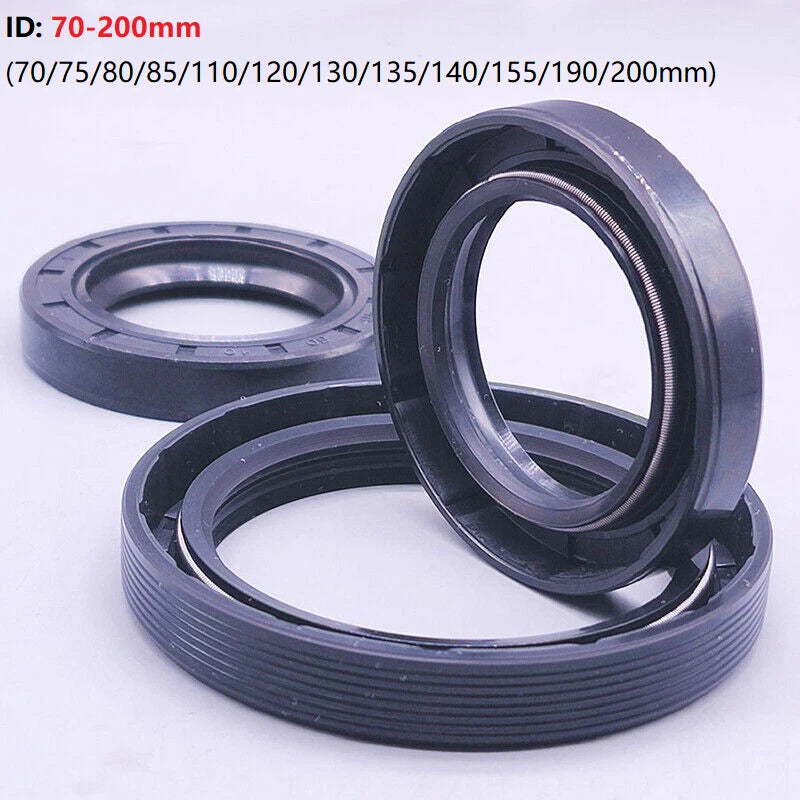
Each set includes 10 or 20 pieces (see variant options) of TC double-lip rotary shaft oil seals made from NBR (nitrile rubber) with a steel outer case and an internal garter spring. Available in inner diameters from 70mm (approximately 2.76 inches) to 200mm (approximately 7.87 inches), outer diameters from 90mm (approximately 3.54 inches) to 260mm (approximately 10.24 inches), and thicknesses from 8mm (approximately 0.315 inches) to 18mm (approximately 0.709 inches). Select your exact ID x OD x thickness combination from the variant dropdown above.

These TC oil seals are well-suited for gearbox output shafts, axle seals on tractors and trailers, pump shaft seals, and general industrial rotary shaft applications where reliable lubricant retention and dust exclusion are required. The double-lip TC design is a widely used standard for rotary shaft sealing in both agricultural equipment shaft seals and industrial gearbox shaft seals.

Compatibility Note: These seals use metric dimensions (ID x OD x thickness in mm). Always verify all three measurements against your equipment housing bore and shaft diameter before ordering. If your equipment uses inch-based seals, contact us to confirm the metric equivalent.

✅ Key Features of These NBR TC Rotary Shaft Oil Seals

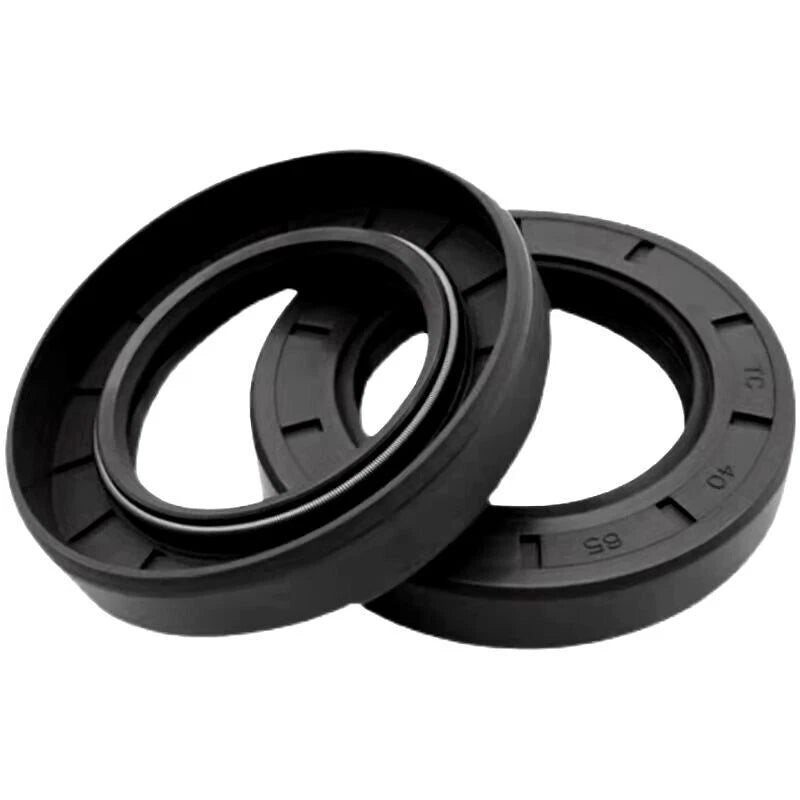
  • 🔩TC Double-Lip Design — The primary sealing lip retains lubricant while the secondary dust lip faces outward, providing a dual barrier against oil leakage and ingress of dirt, water, and debris in demanding rotary shaft applications.
  • 🌀Garter Spring Loaded — An internal garter spring maintains consistent radial lip pressure against the shaft surface, compensating for minor lip wear over time and helping sustain sealing performance throughout the service life of the seal.
  • 🧪NBR Nitrile Rubber Construction — NBR offers broad compatibility with petroleum-based oils, gear lubricants, greases, and hydraulic fluids, making these seals a practical choice for gearbox shaft seals, axle seals, and pump shaft seals.
  • 🏗Steel-Reinforced Outer Case — The rigid steel outer shell provides a secure press-fit into the housing bore, resisting distortion during installation and maintaining concentricity between the seal and shaft for consistent lip contact.
  • 📐Wide Size Range — 70mm to 200mm ID — With over 200 size combinations spanning ID 70 to 200mm, OD 90 to 260mm, and thickness 8 to 18mm, this range covers a broad spectrum of agricultural, industrial, and mechanical power transmission applications.
  • 📦Multi-Pack Value — 10 or 20 Pieces per Set — Sold in packs of 10 or 20 depending on size, making these seals cost-effective for maintenance shops, fleet operators, and repair facilities that need to keep common sizes on hand.

📐 Technical Specifications — TC Rotary Shaft Oil Seal

Seal Type TC (Double Lip with Garter Spring)
Material — Lip NBR (Nitrile Butadiene Rubber)
Material — Case Steel (metal outer shell)
Inner Diameter (ID) Range 70mm (approx. 2.76 in) to 200mm (approx. 7.87 in)
Outer Diameter (OD) Range 90mm (approx. 3.54 in) to 260mm (approx. 10.24 in)
Thickness Range 8mm (approx. 0.315 in) to 18mm (approx. 0.709 in)
Lip Configuration Primary sealing lip + secondary dust exclusion lip
Spring Type Internal garter spring
Temperature Range (typical NBR) Approx. -40F to +250F (-40C to +120C)
Fluid Compatibility (typical NBR) Petroleum oils, gear oils, greases, hydraulic fluids
Quantity per Set 10 pcs or 20 pcs (see variant options)
Dimension Standard Metric (mm)
Country of Manufacture China
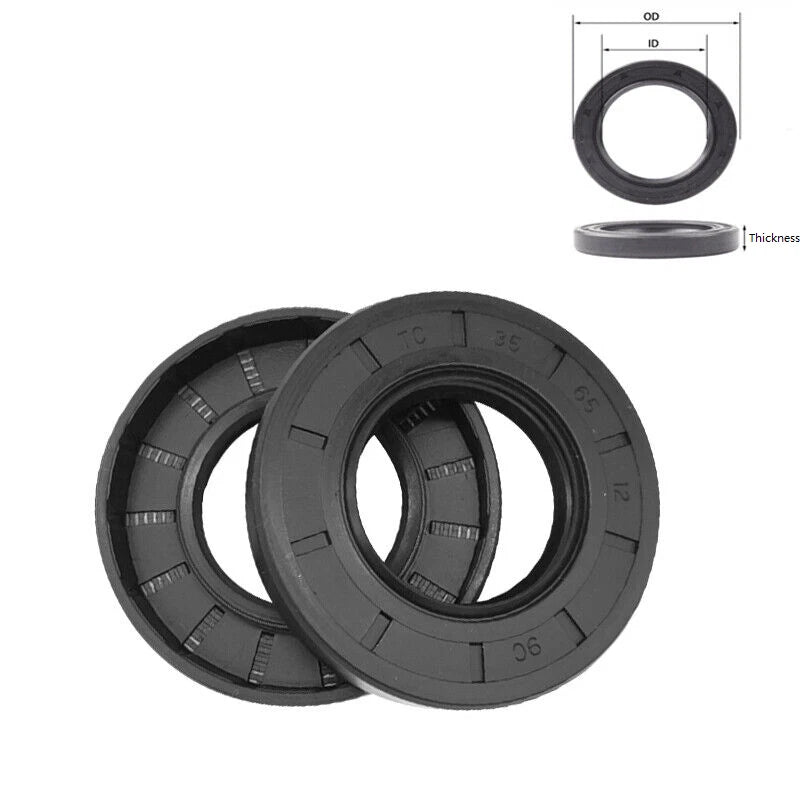
Sizing Reminder: Seal dimensions are listed as ID x OD x Thickness (e.g., 70x95x8mm). Measure your shaft diameter (ID), housing bore (OD), and housing depth (thickness) before selecting a variant. Contact us if you need help confirming the correct size.

❓ Frequently Asked Questions

How do I choose the right oil seal size for my application?

You need three measurements: the shaft diameter (this becomes the ID), the housing bore diameter (this becomes the OD), and the housing depth (this becomes the thickness). For example, if your shaft is 70mm, your bore is 95mm, and your housing is 8mm deep, you need a 70x95x8mm seal. In inches: 70mm is approximately 2.756 inches, 95mm is approximately 3.740 inches, 8mm is approximately 0.315 inches. Always measure with calipers rather than relying on worn or corroded part markings.

What does the TC designation mean on these oil seals?

TC indicates a double-lip seal design. The inner primary lip seals against the rotating shaft to retain lubricant, while the outer secondary lip faces away from the oil side to exclude dust, dirt, and moisture. This dual-barrier construction is generally more effective than single-lip (SC) seals in environments with contamination exposure, making TC seals a common choice for agricultural and industrial rotary shaft applications.

What shaft speeds and temperatures can NBR TC oil seals typically handle?

NBR generally performs in a temperature range of approximately -40F to +250F (-40C to +120C). Shaft surface speeds are typically suitable up to about 4 to 6 m/s, though this varies with shaft finish quality, lubricant viscosity, and operating pressure. For high-speed spindles or elevated-temperature environments, contact us to confirm suitability before ordering.

Are these seals suitable for outdoor, wet, or muddy environments?

NBR provides good resistance to water, petroleum oils, and common greases. The TC double-lip design adds an outer dust lip that helps exclude moisture and debris — a key reason TC seals are widely used on agricultural equipment, trailers, and outdoor machinery. For highly corrosive chemical environments or prolonged immersion, a Viton (FKM) seal may be more appropriate. Contact us to confirm compatibility with your specific conditions.

What lubricants are compatible with NBR oil seals?

NBR is generally compatible with petroleum-based engine oils, gear oils, hydraulic fluids, and greases. It is typically not recommended for use with phosphate ester hydraulic fluids, ketones, strong acids, or aromatic hydrocarbons. When in doubt, verify chemical compatibility with your specific lubricant data sheet before installation.

How do I install a rotary shaft oil seal correctly?

Clean the housing bore and shaft thoroughly. Lightly coat the seal lip with the same lubricant used in the application. Press the seal squarely into the bore using a seal driver or flat plate — never strike the seal face directly with a hammer. The seal should sit flush or slightly below the housing face. Ensure the shaft surface finish is smooth (typically Ra 0.2 to 0.8 micrometers) to prevent premature lip wear. Avoid dragging the seal lip over sharp keyways or threads during installation.

Can these seals be used on agricultural equipment, gearboxes, and axles?

Yes — TC-type NBR rotary shaft oil seals are commonly used in agricultural machinery, tractor axles, gearbox output shafts, pump shafts, and general industrial power transmission equipment. Verify that the ID, OD, and thickness match your equipment specifications exactly before ordering. For critical or high-load applications, confirm suitability with your equipment manufacturer or service manual.

What is the garter spring inside the seal for?

The internal garter spring wraps around the primary sealing lip and applies consistent inward radial pressure against the shaft surface. This spring loading compensates for minor lip wear over time and helps maintain an effective seal even as the NBR material ages. Springless seals rely entirely on the elasticity of the rubber, which can diminish faster under heat and wear cycles.

🛒 Select your size (ID x OD x thickness) above, then add to cart — ships from our US warehouse.

You may also like

Recently viewed