OD 10mm/ID 5mm Die Springs Compression Mould Spring Light/Medium/Heavy Load Duty

No reviews

Price:
Sale price$6.92 USD
Stock:
In stock (500 units), ready to be shipped

Payment & Security

Ach Direct Debit Amazon American Express Apple Pay Bancontact BLIK Diners Club Discover EPS Google Pay iDEAL Wero JCB Maestro Mastercard Multibanco MobilePay PayPal Przelewy24 Shop Pay Twint Union Pay USDC Visa

Your payment information is processed securely. We do not store credit card details nor have access to your credit card information.

Limited Offer — Spend More, Save More
Spend $55+
Save $5
Spend $100+
Save $10
Spend $200+
Save $25
HomeDIYer DIY Expert Support

DIY Expert Support

Get fitment advice & recommendations

Mon–Fri  8:30 AM – 8:00 PM
24-Hour Fast Ship
Arrives in 3–14 Days
Worldwide Shipping
30-Day Returns
1 tree planted with every purchase

Description

OD 10mm ID 5mm Die Springs — Reliable Compression Force for Molds, Presses & Automation

When a mold fails mid-run or a press return feels sluggish, the culprit is often an undersized or worn-out compression spring. Engineers, toolmakers, and DIY fabricators who demand consistent return force choose OD 10mm ID 5mm die springs because the standardized dimensions drop straight into existing spring pockets without modification.

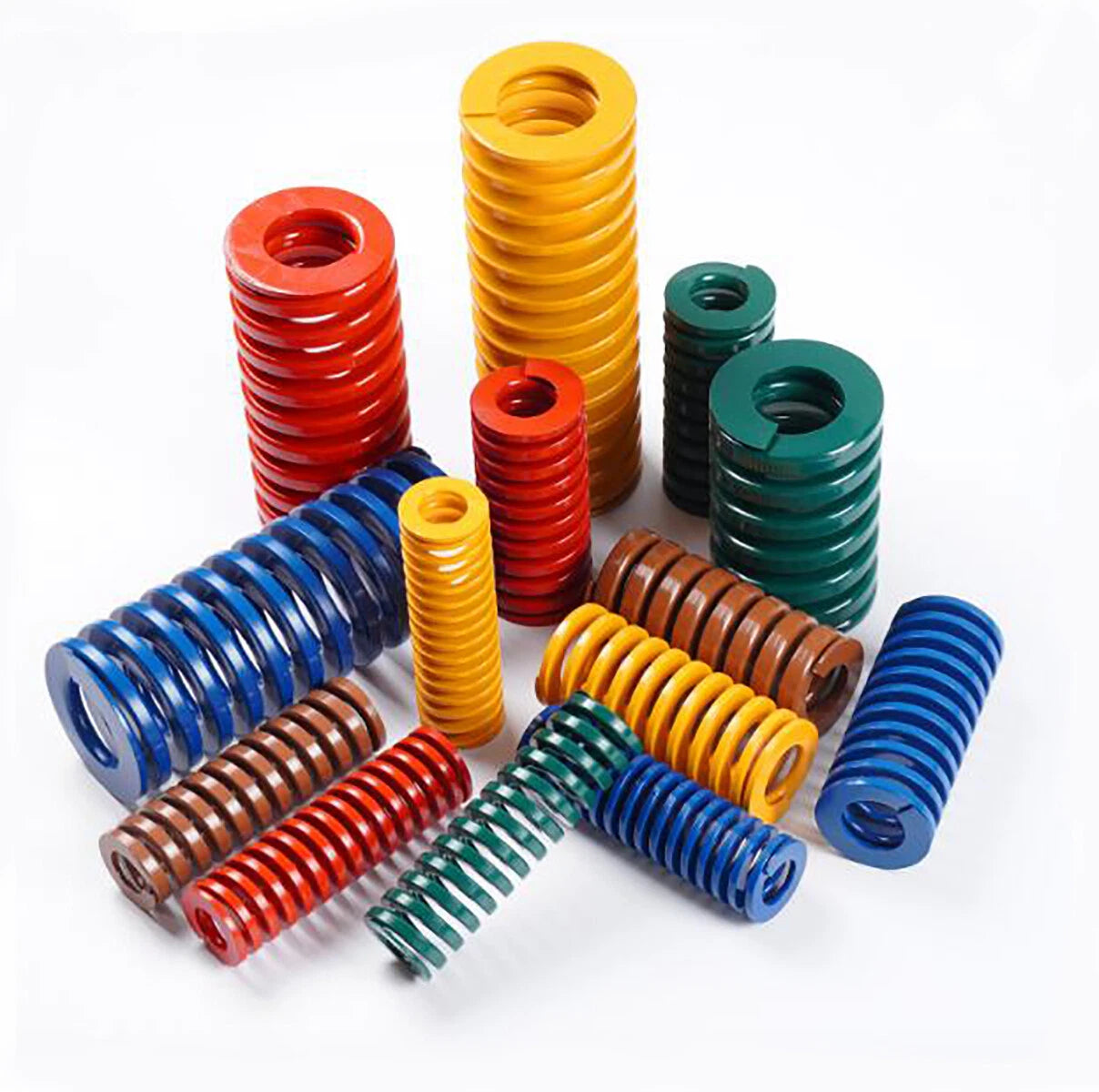
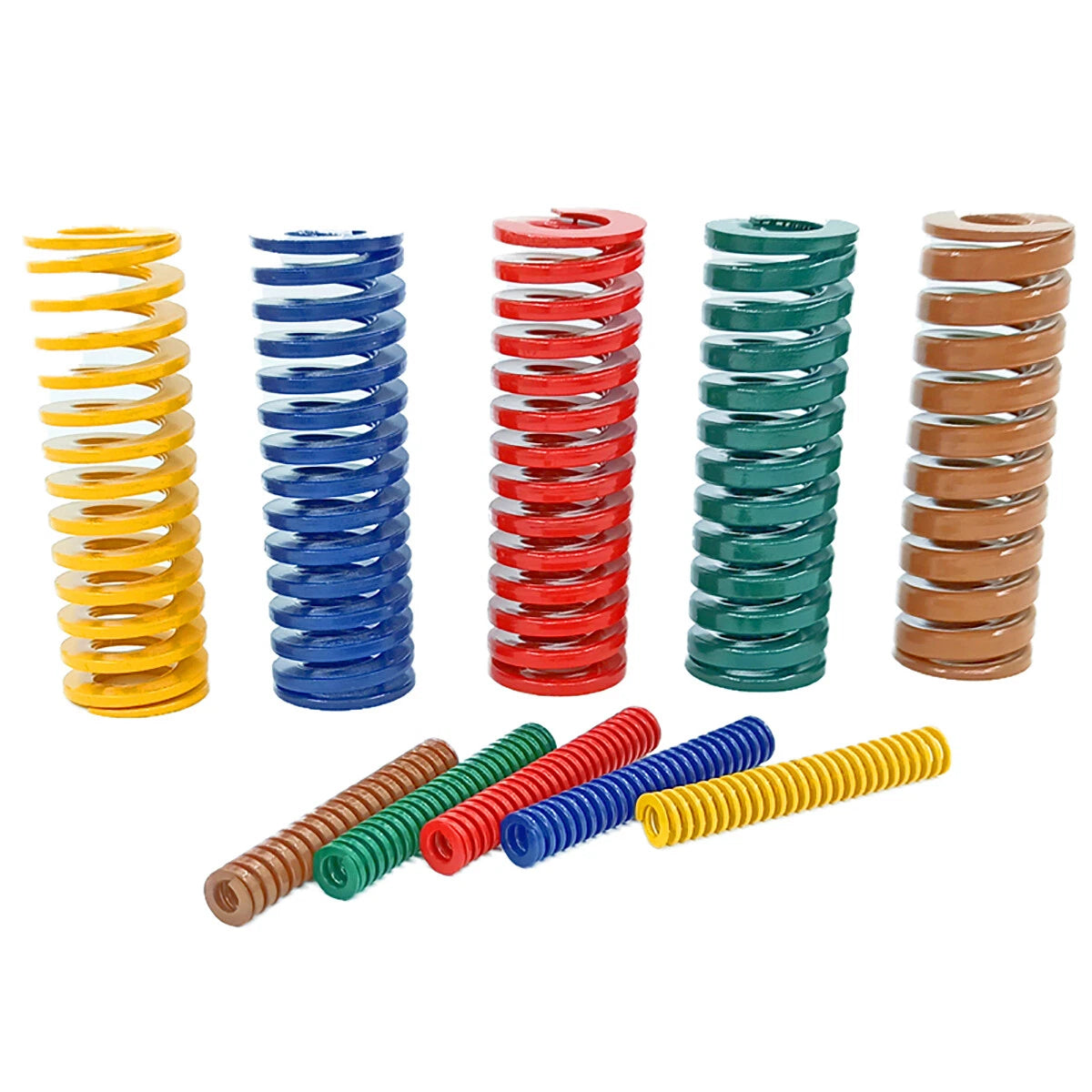
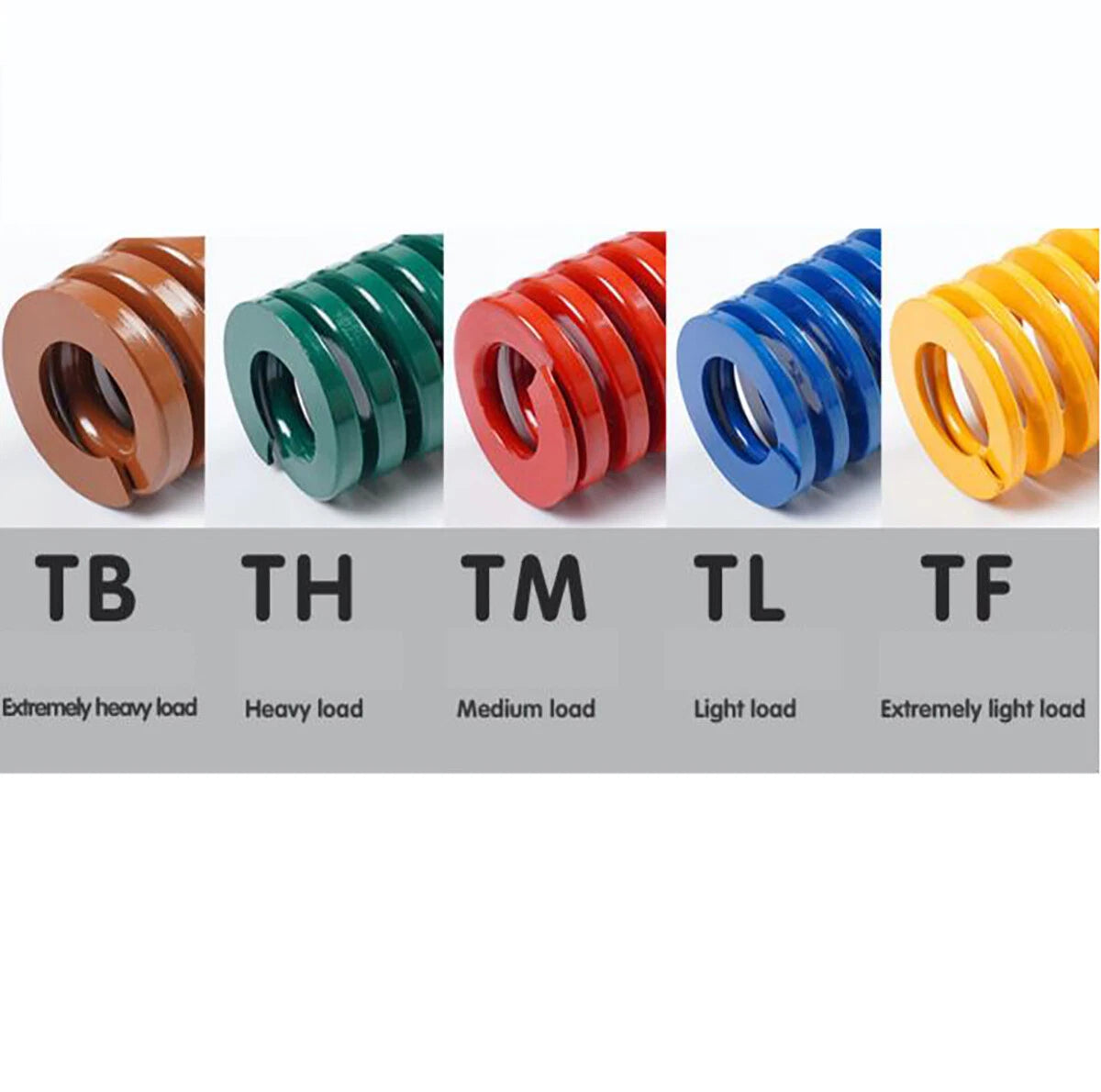
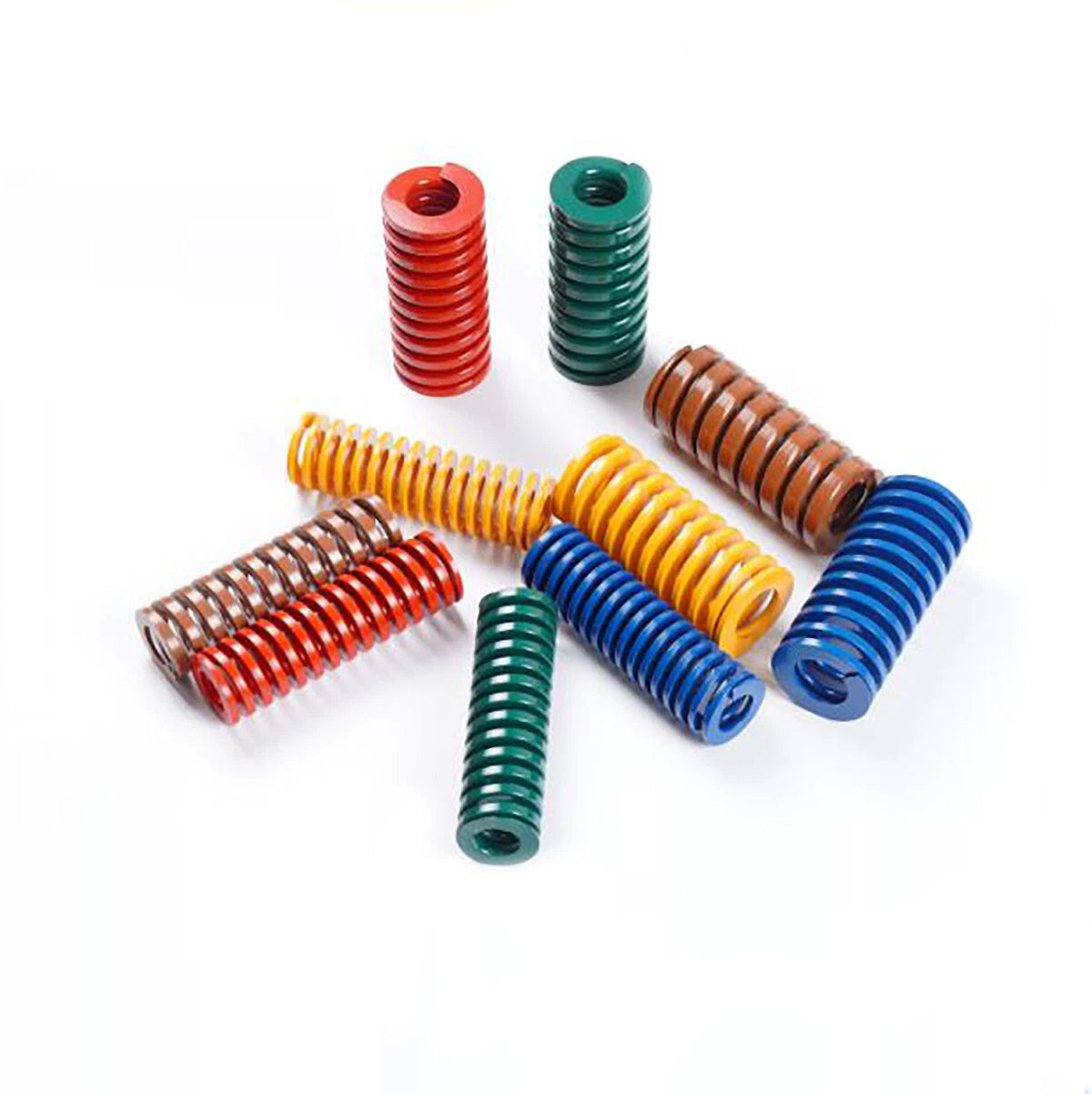
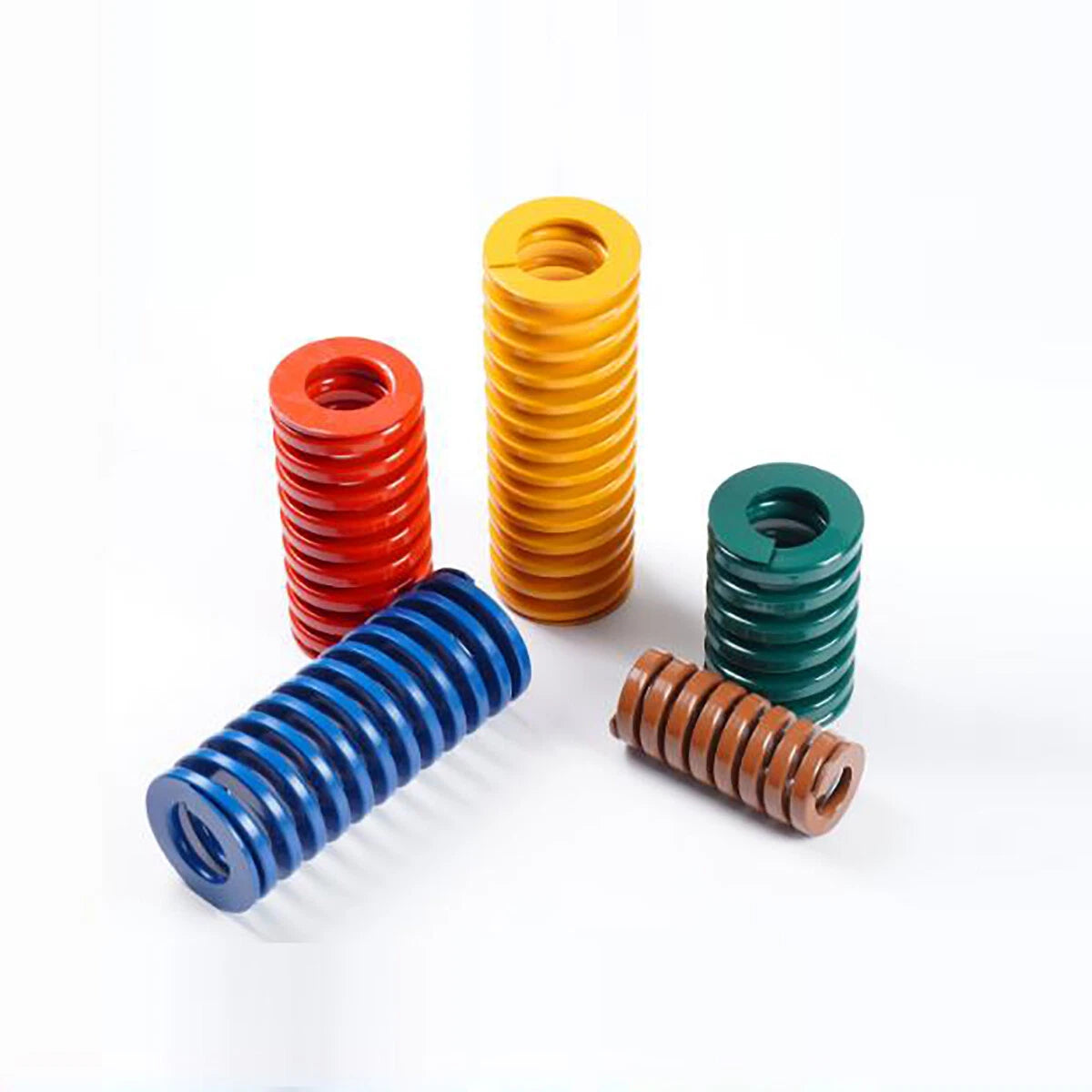
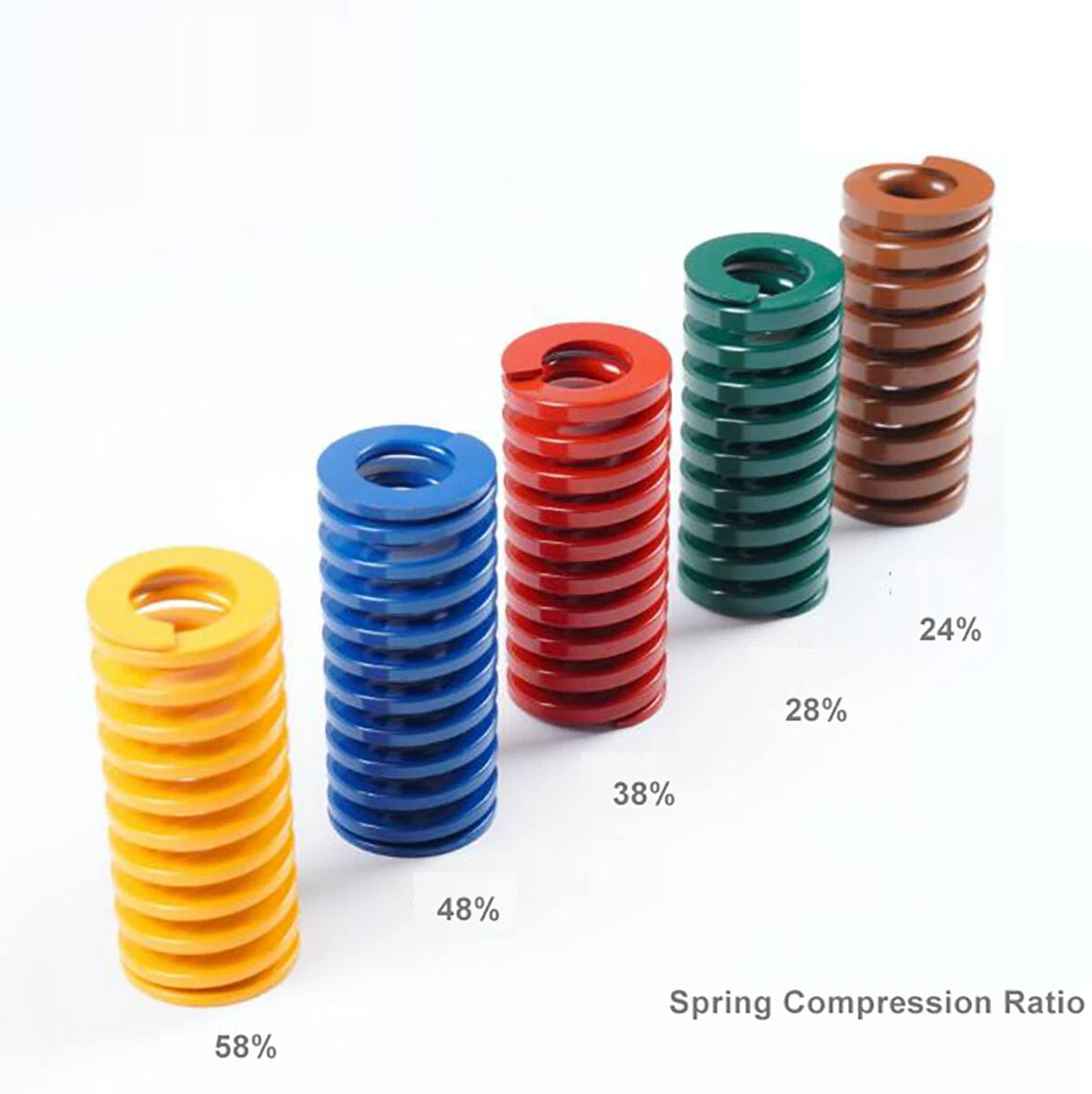
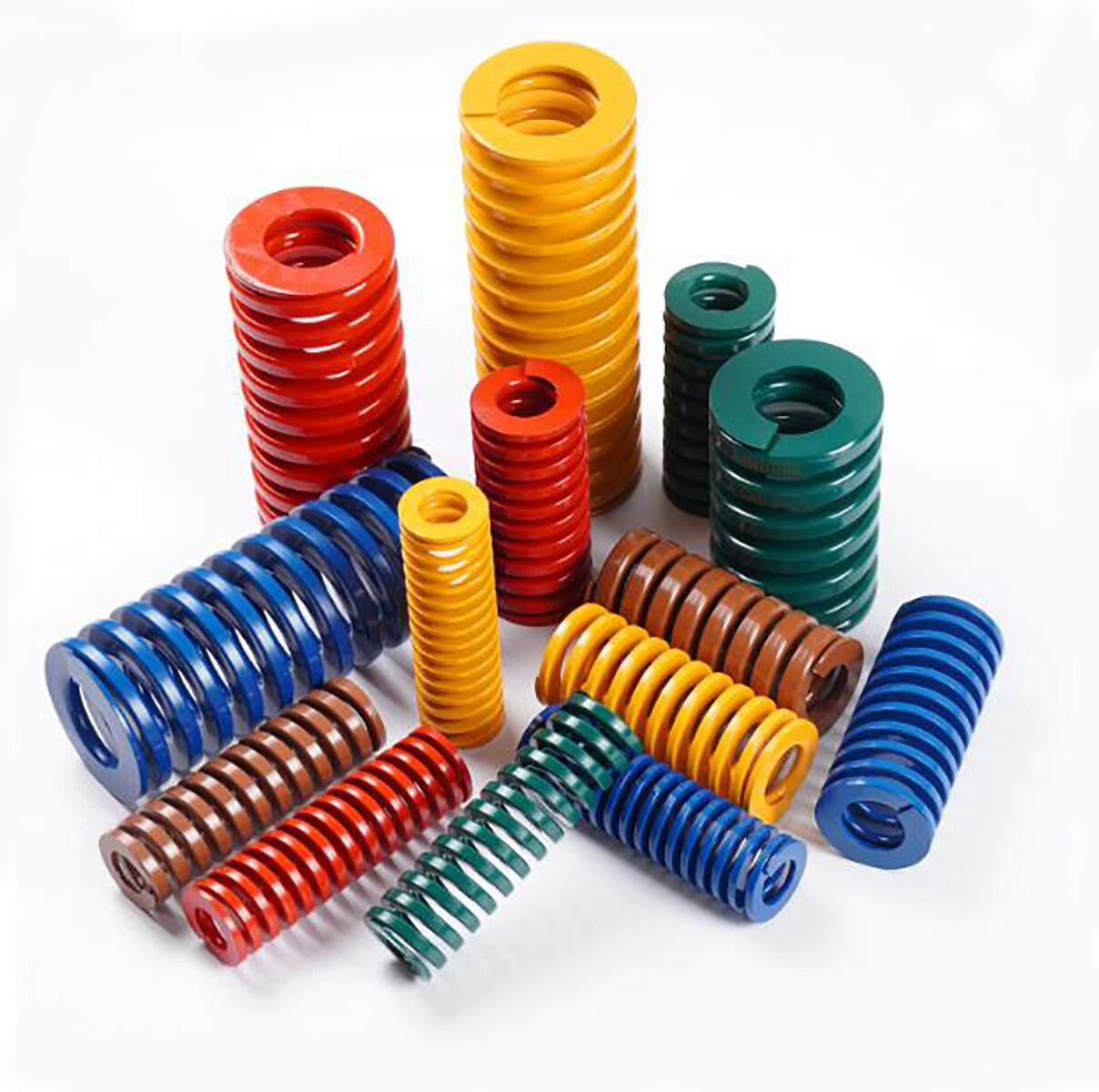
Each spring is machined from rectangular-section alloy steel wire, giving a higher load capacity per unit length than round-wire alternatives. The outer diameter is 10 mm (~0.394 in) and the inner diameter is 5 mm (~0.197 in), with free lengths ranging from 15 mm to 150 mm (~0.59 in to 5.91 in) depending on the variant selected. Five color-coded load grades are available: Yellow (TF – light), Blue (TL – light-medium), Red (TM – medium), Green (TH – heavy), and Brown (TB – extra-heavy).

Typical applications include injection-mold stripper plates, stamping-die return mechanisms, CNC fixture clamping, robotic end-effector compliance, and general-purpose spring-loaded assemblies where a compact 10 mm OD envelope is required.

⚙️ Compatibility: Fits standard 10 mm spring pockets with a 5 mm guide pin. Conforms to ISO 10243 / JIS B 5012 die-spring dimensional standards. Suitable for mold bases, press tools, jigs, and custom spring-loaded fixtures.

✅ Key Features of These OD 10mm ID 5mm Die Springs

🔩 Rectangular-Wire Construction

Flat-section alloy steel wire maximizes coil contact area, delivering higher load density and longer fatigue life compared to round-wire springs of the same envelope size.

🎨 Color-Coded Load Grades

Five distinct colors (Yellow / Blue / Red / Green / Brown) map directly to light through extra-heavy load ratings, eliminating mix-up errors during assembly and maintenance.

📐 Standardized 10 × 5 mm Dimensions

OD 10 mm and ID 5 mm match ISO 10243 / JIS B 5012 pocket and pin dimensions, enabling direct drop-in replacement without reworking tooling.

📏 Wide Length Range

Free lengths from 15 mm to 150 mm (0.59 in – 5.91 in) cover short-stroke stripper plates through long-travel return mechanisms in a single product family.

🛡️ Alloy Steel with Surface Treatment

Heat-treated alloy steel core with a protective surface finish resists oxidation and wear under repeated compression cycles in industrial tooling environments.

📦 Flexible Pack Quantities

Available in 1 pc, 2 pc, 5 pc, and 10 pc packs — order exactly what your project needs, from single-spring prototyping to multi-cavity mold builds.

📐 Technical Specifications — OD 10mm ID 5mm Die Springs

Outer Diameter (OD) 10 mm (0.394 in)
Inner Diameter (ID) 5 mm (0.197 in)
Free Length Range 15 mm – 150 mm (0.59 in – 5.91 in)
Wire Cross-Section Rectangular alloy steel
Load Grades Available Light (Yellow), Light-Medium (Blue), Medium (Red), Heavy (Green), Extra-Heavy (Brown)
Standard Reference ISO 10243 / JIS B 5012
Surface Treatment See variant options
Deflection Rate See variant options
Max. Compression Ratio See variant options
Pack Quantities 1 pc / 2 pc / 5 pc / 10 pc

❓ Frequently Asked Questions

How do I choose the right load grade (color) for my application?

Match the color to your required spring force: Yellow (TF) for light-load stripper plates and light-duty returns; Blue (TL) for light-to-medium loads; Red (TM) for medium-load stamping and clamping; Green (TH) for heavy-duty press tools; Brown (TB) for extra-heavy loads requiring maximum force in a compact envelope. If in doubt, calculate the required spring force from your tool design and compare against the deflection rate listed on the variant detail page.

What free length should I select for my mold or press?

The free length should be at least 1.5× your required working stroke to keep the spring within its safe deflection range (typically 20–40% of free length for die springs). For example, a 20 mm stroke generally calls for a free length of 50 mm or longer. Measure your spring pocket depth and guide pin length to confirm the spring fits without bottoming out.

Are these springs compatible with standard mold bases?

Yes. The 10 mm OD and 5 mm ID conform to ISO 10243 and JIS B 5012 die-spring standards, which are the basis for most commercial mold-base spring pocket dimensions. They are designed to slide over a 5 mm guide pin and seat in a 10 mm counterbore without modification.

How corrosion-resistant are these die springs?

The springs are made from heat-treated alloy steel with a protective surface treatment that provides moderate corrosion resistance suitable for indoor tooling environments. For applications exposed to coolant, cutting fluid, or high humidity, consider applying a light coat of machine oil during storage and periodically during use to extend service life.

Can I use these springs in CNC fixtures or robotic assemblies?

Yes. The compact 10 × 5 mm cross-section and wide length range make these springs well-suited for CNC workholding fixtures, robotic end-effector compliance mechanisms, and spring-loaded locating pins. Select the load grade that matches your required clamping or return force, and choose a free length that accommodates your travel range.

How many springs do I need to order for a multi-cavity mold?

Count the number of spring pockets in your mold design — typically 4, 8, or 16 per mold half depending on the stripper plate layout. Use the 5 pc or 10 pc pack options for multi-cavity builds to reduce per-unit cost. It is also advisable to keep 1–2 spare springs on hand for quick replacement during production runs.

What is the difference between die springs and standard coil springs?

Die springs use rectangular-section wire wound at a higher density than standard round-wire coil springs. This gives them a higher load capacity and greater fatigue life within the same outer diameter envelope — critical in high-cycle tooling applications. Standard coil springs of the same OD would deliver significantly lower force and wear out faster under repeated compression.

🛒 Select your size, color, and quantity above, then add to cart.


You may also like

Recently viewed