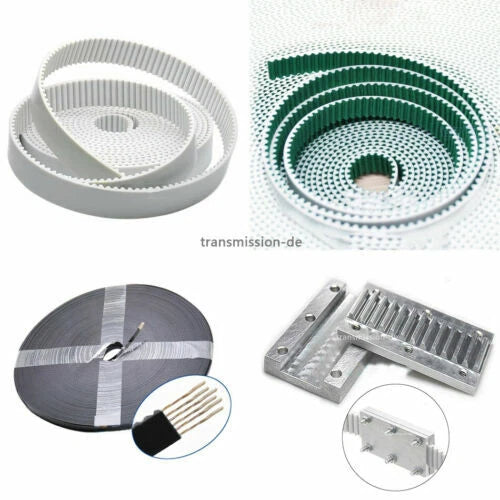
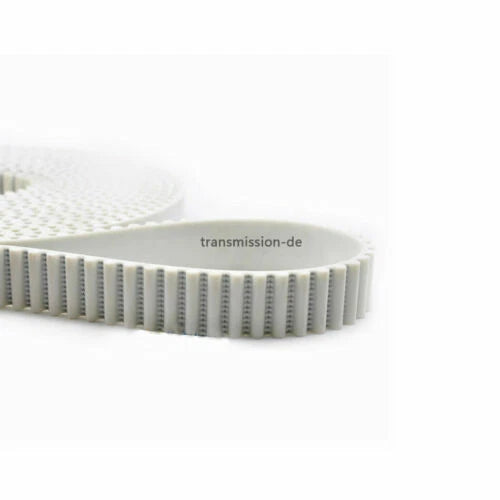
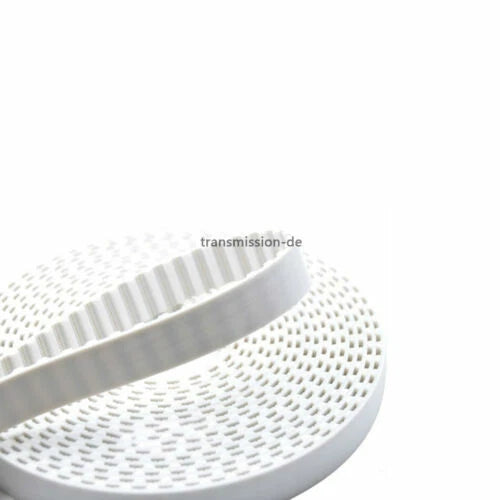
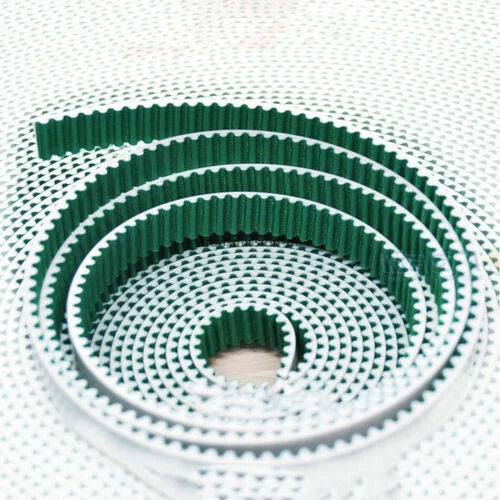
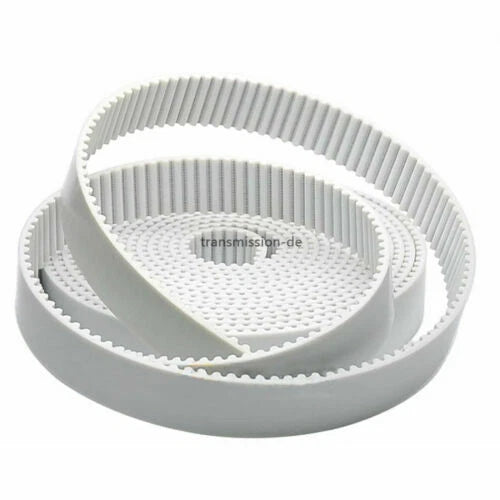
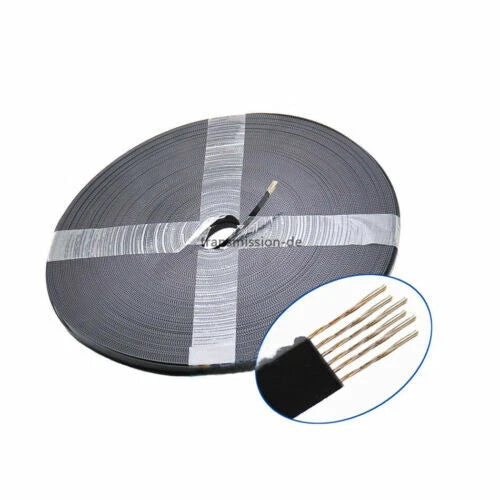
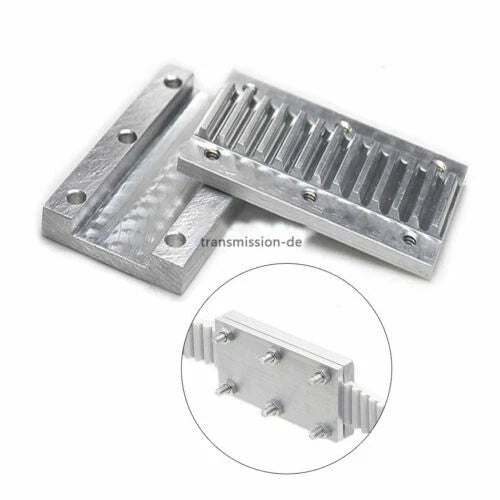
Open-End Polyurethane Timing Belt with Steel Core — 2GT / 3M / 5M / 8M / XL / MXL / T5 / T10 / L / H Profiles, Green White Black

No reviews

Price:
Sale price$12.09 USD
Stock:
In stock (500 units), ready to be shipped

Payment & Security

Ach Direct Debit Amazon American Express Apple Pay Bancontact Diners Club Discover Google Pay iDEAL Wero Mastercard PayPal Shop Pay USDC Visa

Your payment information is processed securely. We do not store credit card details nor have access to your credit card information.

Quantity Discount Promotion
🎯 BULK DISCOUNT: Buy More, Save More!
Buy 2 Items
5% OFF
Buy 4 Items
10% OFF
Buy 6 Items
15% OFF
Expert

DIY Expert Support

Get fitment advice & recommendations

Mon-Fri, 8:30AM-8PM
24-Hour Fast Ship
🚚
Arrives in 3-14 days
🌍
Global Reach
↩️
30-Day Returns
🌱 1 tree planted with every purchase

Description


Open-End Polyurethane Timing Belt with Steel Core — Precision Linear Drive for CNC, 3D Printing & Automation

Engineers, makers, and machine builders who rely on precise linear motion know the frustration of sourcing the right open-end timing belt: wrong pitch, wrong width, or a rubber belt that creeps under load. This listing offers a comprehensive selection of open-end polyurethane timing belts with embedded steel wire tensile cords, covering the most widely used metric and imperial profiles in one place.

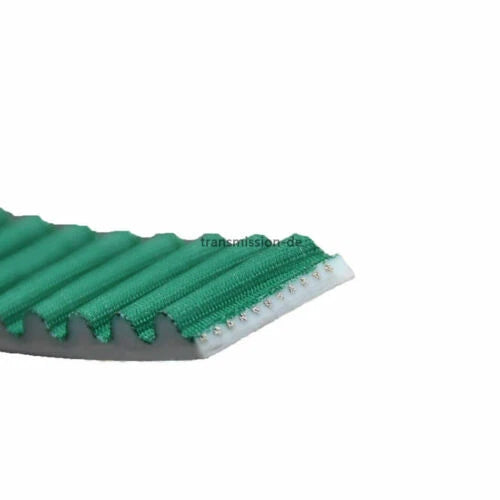
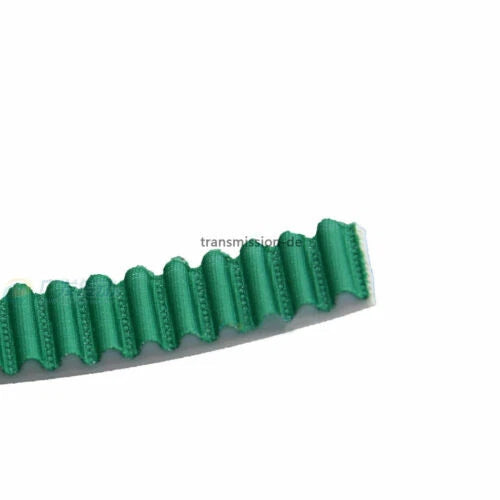
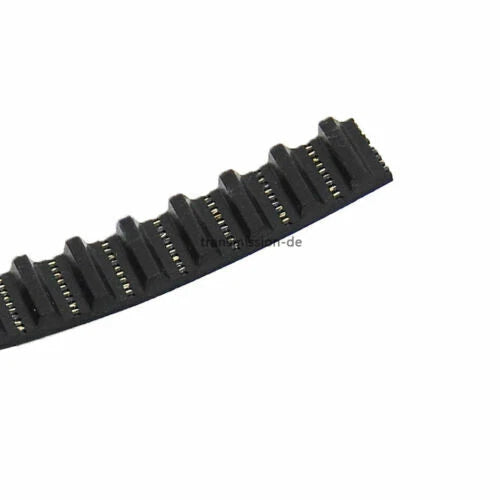
Each belt is constructed from cast polyurethane with a continuous steel wire core. Available profiles include 2GT (GT2), S2M, 3M, S3M, 5M, S5M, 8M, S8M, XL, MXL, T5, T10, L, and H. Belt widths range from 6mm (≈1/4") to 40mm (≈1-9/16"). Three color options — green, white, and black — allow easy identification in multi-axis systems. Matching timing belt clamping plates are available as a separate variant for complete linear drive assemblies.

Typical applications include CNC router and laser cutter gantry drives, 3D printer X/Y axis linear motion, automated conveyor and pick-and-place systems, and industrial linear actuator replacements where a cut-to-length open-end belt is required.

ℹ️ Compatibility note: Belt profiles are not interchangeable. Match the pitch designation (e.g., 5M, S5M, XL) and belt width to your existing pulleys before ordering. Metric profiles fit metric pulleys; XL / MXL / L / H profiles follow ANSI/RMA inch-pitch standards.

✅ Key Features of These Open-End Polyurethane Timing Belts

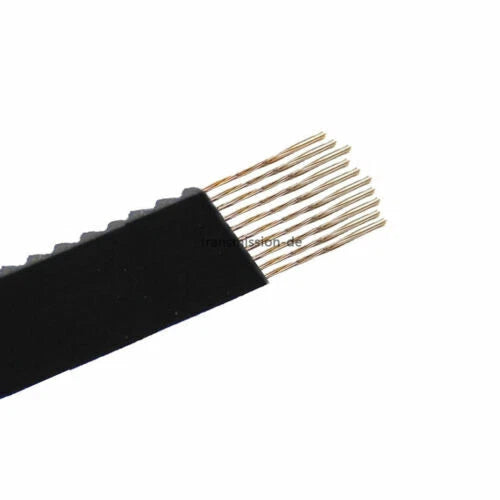
  • 🔩Steel Wire Tensile Core — Embedded continuous steel wire cords resist elongation under tension, maintaining consistent tooth pitch over the belt's service life in demanding CNC and automation drives.
  • 🧪Cast Polyurethane Construction — Polyurethane offers greater abrasion resistance and oil tolerance compared to neoprene rubber, making these belts suitable for light-oil environments and extended duty cycles.
  • 📐14 Profiles in One Listing — Covers 2GT, S2M, 3M, S3M, 5M, S5M, 8M, S8M, XL, MXL, T5, T10, L, and H profiles, reducing the need to source from multiple suppliers for multi-axis open-end timing belt applications.
  • ✂️Cut-to-Length Flexibility — Open-end format allows the belt to be trimmed to any required length on-site. Pair with the matching clamping plate variant to anchor cut ends securely to carriages or brackets.
  • 🎨Three Color Options — Green, white, and black variants allow axis identification in multi-belt systems such as CoreXY 3D printers or dual-gantry CNC machines without additional labeling.
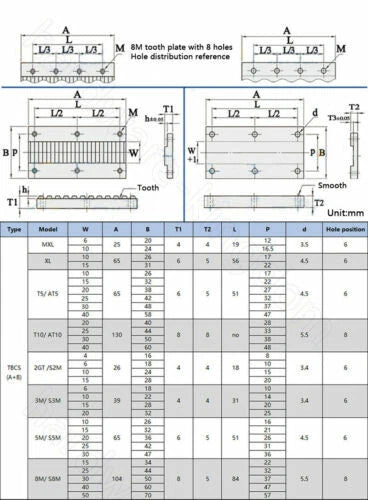
  • 📦Clamping Plates Included as a Variant — Matching timing belt clamping plates for 2GT through S8M profiles are available in the same listing, simplifying procurement for complete linear drive assemblies.

📐 Technical Specifications — Open-End Polyurethane Timing Belt

Belt Type Open-end (non-looped), cut-to-length
Material Cast polyurethane body with continuous steel wire tensile cord
Available Profiles (Metric) 2GT (GT2) — 2mm pitch; S2M — 2mm pitch curvilinear; 3M — 3mm pitch; S3M — 3mm pitch curvilinear; 5M — 5mm pitch; S5M — 5mm pitch curvilinear; 8M — 8mm pitch; S8M — 8mm pitch curvilinear; T5 — 5mm pitch trapezoidal; T10 — 10mm pitch trapezoidal
Available Profiles (Imperial / ANSI) MXL — 0.080" (2.032mm) pitch; XL — 0.200" (5.08mm) pitch; L — 0.375" (9.525mm) pitch; H — 0.500" (12.7mm) pitch
Belt Widths Available 6mm (≈1/4"), 10mm (≈3/8"), 15mm (≈19/32"), 20mm (≈25/32"), 25mm (≈1"), 30mm (≈1-3/16"), 40mm (≈1-9/16") — availability varies by profile; see variant options
Color Options Green, White, Black
Tensile Member Steel wire (continuous cord)
Tooth Form Trapezoidal (3M, 5M, 8M, XL, MXL, L, H, T5, T10) or Curvilinear (S2M, S3M, S5M, S8M, 2GT)
Clamping Plate Compatibility Matching clamping plates available for 2GT, S2M, 3M, S3M, 5M, S5M, 8M, S8M, T5, XL, MXL profiles — select "Timing Belt Clamping Plate" in the Types option
Recommended Use CNC linear drives, 3D printer axes, laser cutter gantries, automated conveyor systems, linear actuators
Operating Temperature Contact us to confirm for your specific application
Country of Origin See variant options
⚠️ Before ordering: Confirm your pulley's pitch designation and groove width. Metric and imperial profiles are not interchangeable. If you are unsure which profile matches your machine, contact us with your pulley part number or a photo.

❓ Frequently Asked Questions

How do I choose the right belt width?

Match the belt width to your pulley groove width. Common widths are 6mm (≈1/4"), 10mm (≈3/8"), 15mm (≈19/32"), 20mm (≈25/32"), 25mm (≈1"), and 30mm (≈1-3/16"). When in doubt, measure the pulley flange-to-flange distance and select the closest standard width. A belt that is too narrow will track poorly; one that is too wide will bind against the flanges.

What profile should I select — standard (3M, 5M, 8M) or the 'S' series (S3M, S5M, S8M)?

Standard profiles (3M, 5M, 8M) use a trapezoidal tooth form. The 'S' series (S3M, S5M, S8M) uses a curvilinear tooth profile that generally offers lower backlash and quieter operation at comparable loads. The two series are not interchangeable — match the profile exactly to your existing pulleys.

How much load can an open-end polyurethane timing belt carry?

Load capacity depends on the pitch, width, and number of teeth in mesh. Wider belts and larger pitches (e.g., 8M vs. 3M) typically handle higher torque. As a general guide, wider and coarser-pitch belts are used in heavier-duty automation, while 2GT and 3M belts are typically used in lighter-load 3D printing and small CNC applications. For precise load ratings, contact us to confirm suitability for your application.

Can these belts be used outdoors or in wet environments?

Polyurethane timing belts generally offer good resistance to oils, greases, and moderate moisture — better than standard neoprene rubber belts in many cases. They are not typically rated for continuous submersion or prolonged UV exposure. For outdoor or high-humidity applications, contact us to verify suitability before ordering.

Are these belts compatible with standard metric and imperial pulleys?

Yes. The metric profiles (2GT, S2M, 3M, S3M, 5M, S5M, 8M, S8M, T5, T10) are compatible with standard metric timing pulleys of the same pitch designation. The imperial profiles (XL, MXL, L, H) follow ANSI/RMA standards and fit corresponding inch-pitch pulleys. Always verify that both the pitch and tooth form (trapezoidal vs. curvilinear) match your pulley before ordering.

What is the difference between the 2GT and GT2 designations?

2GT and GT2 refer to the same 2mm pitch Gates GT2 curvilinear tooth profile. The two designations are used interchangeably across suppliers and machine documentation. Both are compatible with GT2 pulleys widely used in FDM 3D printers (Ender, Voron, Prusa, etc.) and small CNC machines.

Can I cut the open-end belt to a custom length?

Yes — that is the primary advantage of an open-end format. The belt can be cut to any required length with a sharp utility blade or heavy-duty scissors. The steel wire core can be trimmed with wire cutters. Use a matching clamping plate (available as a variant in this listing) to anchor the cut ends to your carriage or bracket.

What is the clamping plate used for, and do I need one?

Timing belt clamping plates anchor the cut ends of an open-end belt to a carriage, bracket, or linear actuator frame. If your application uses a fixed-end linear drive — such as a CNC gantry, 3D printer axis, or linear slide — you will typically need a clamping plate at each end of the belt run. Select the "Timing Belt Clamping Plate" type in the variant options and choose the model that matches your belt profile and width.

🛒 Select your belt type and model above, then add to cart — ships from our US warehouse.

You may also like

Recently viewed