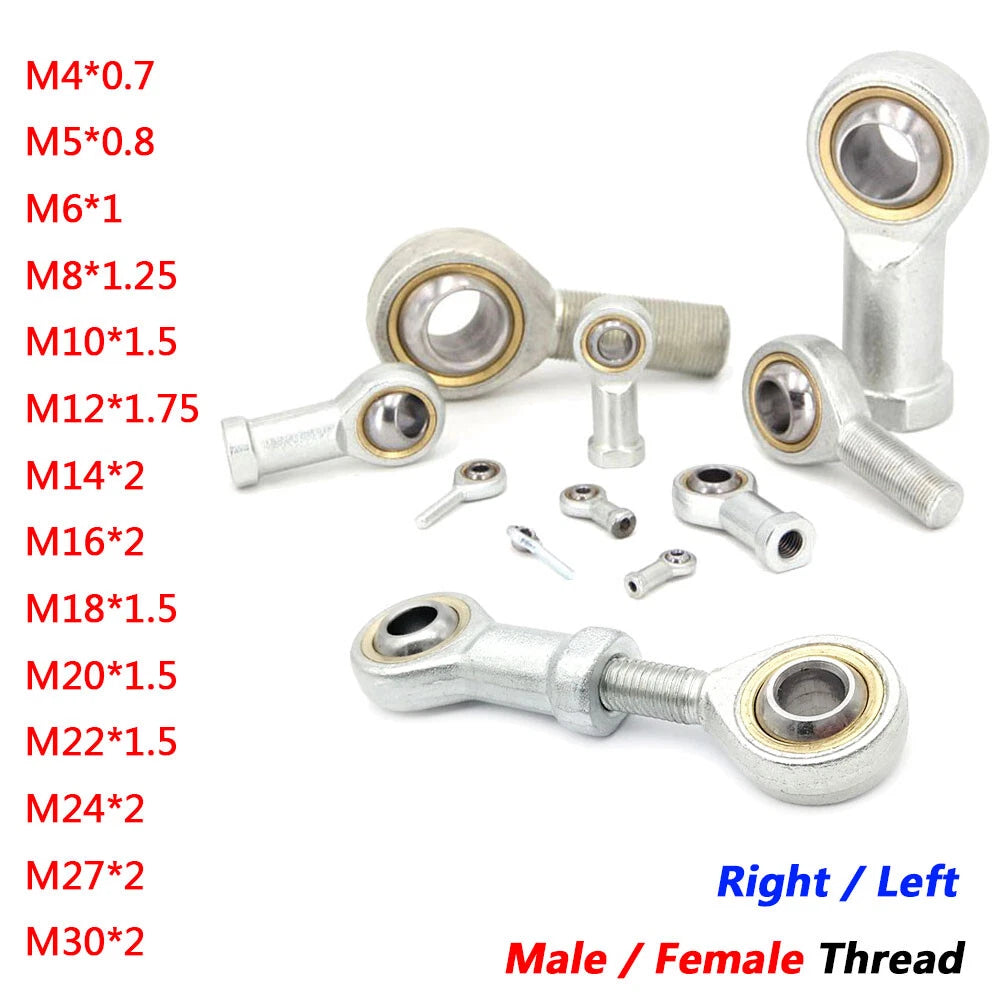
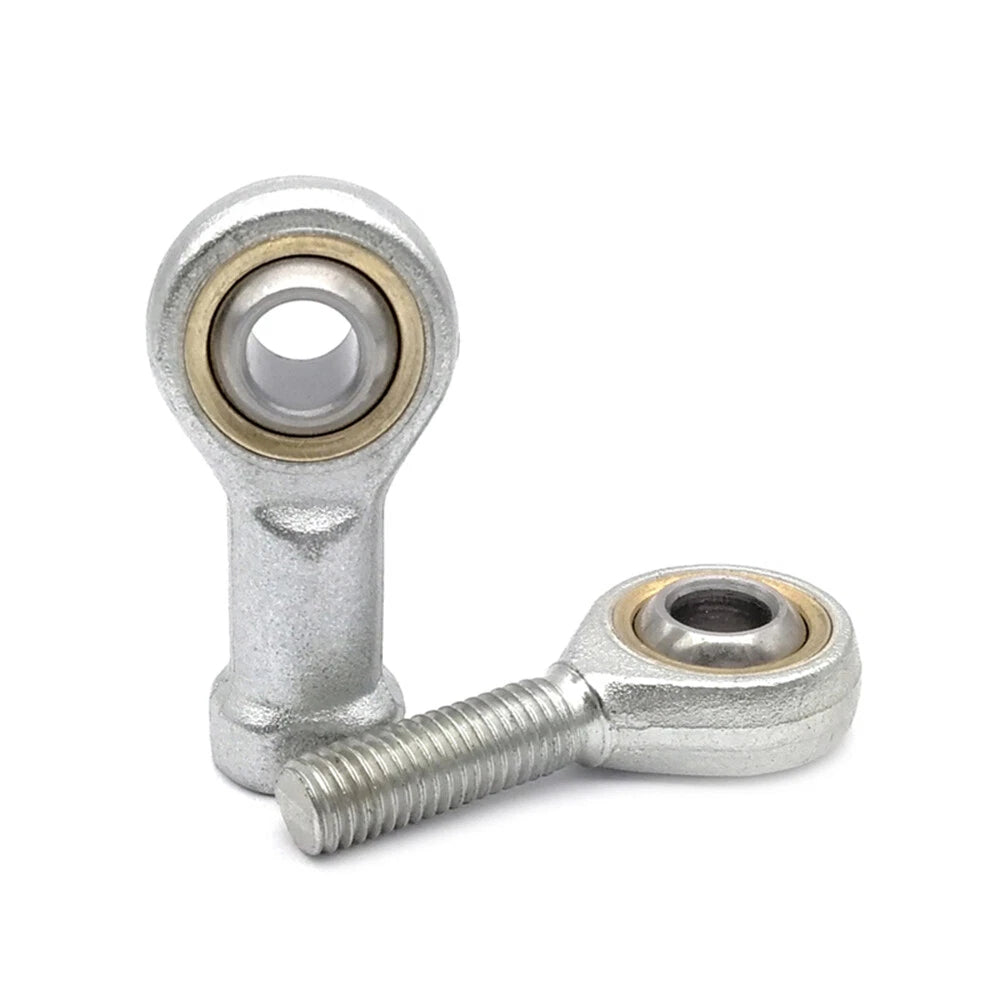
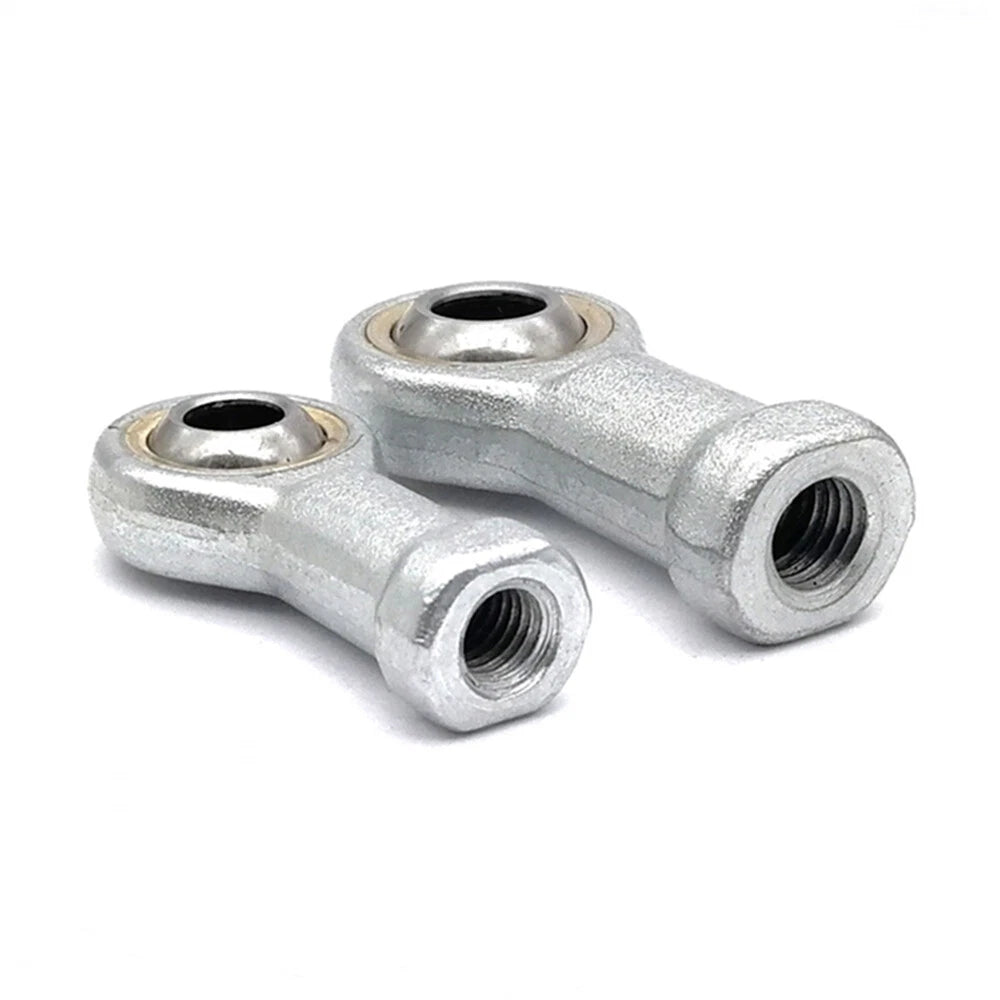
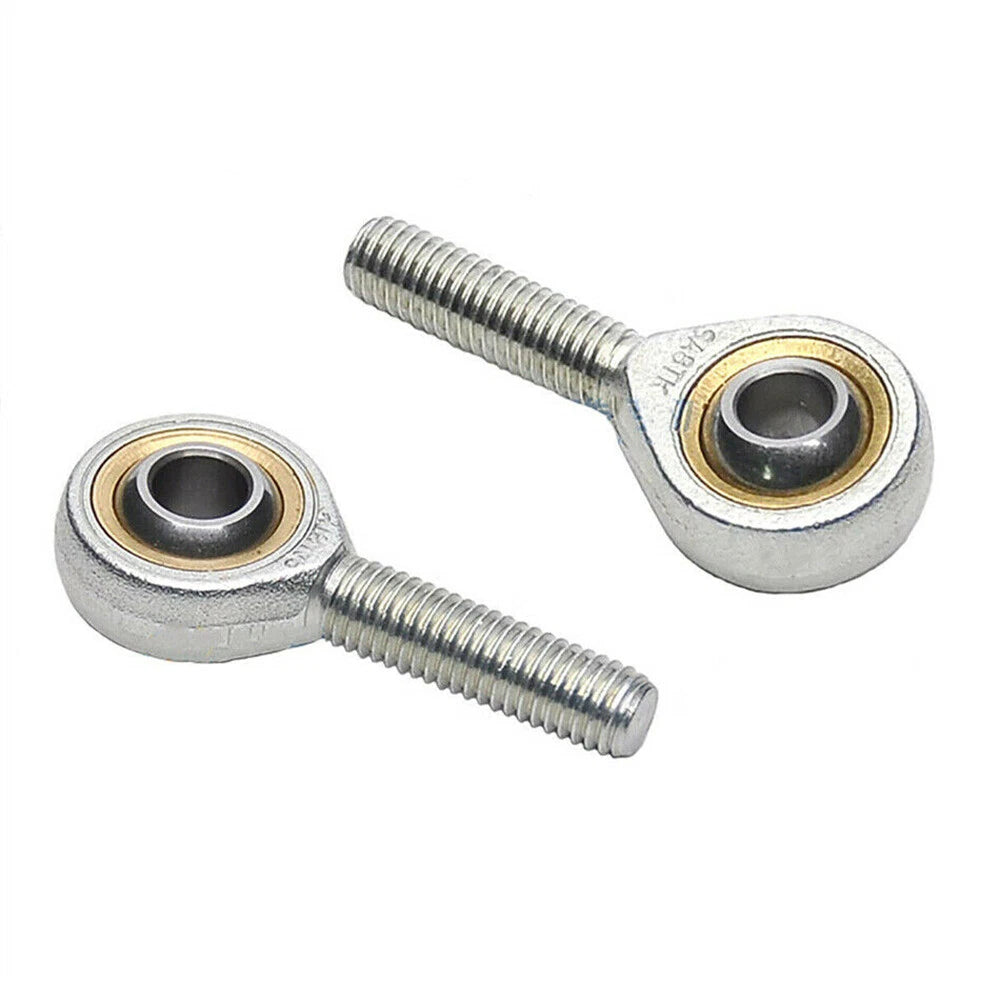
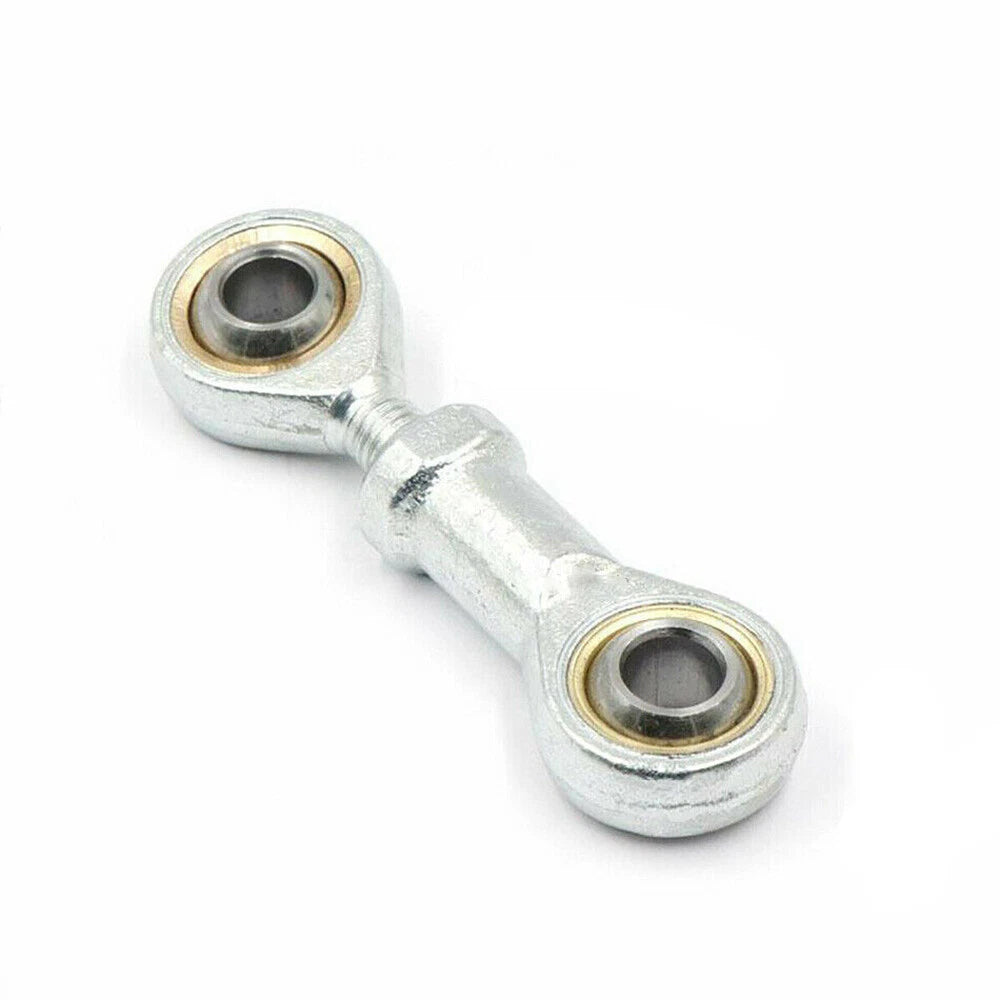
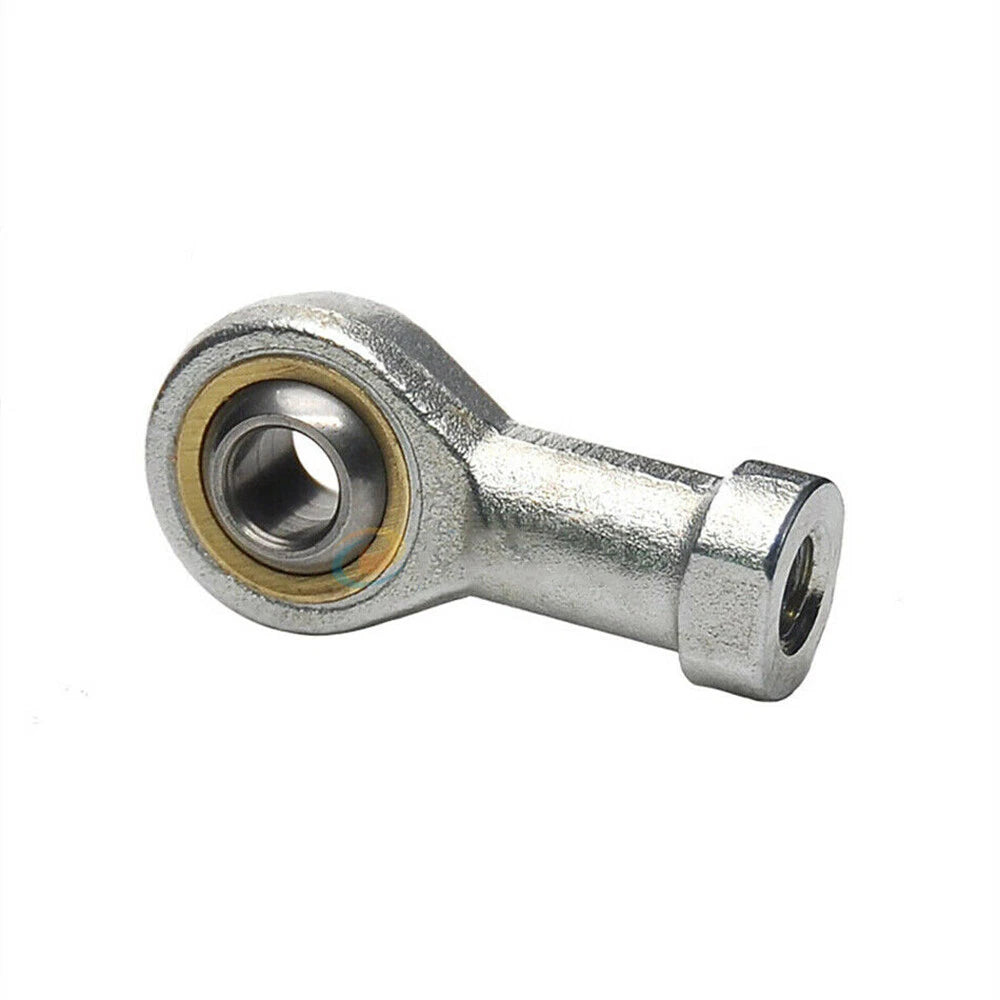
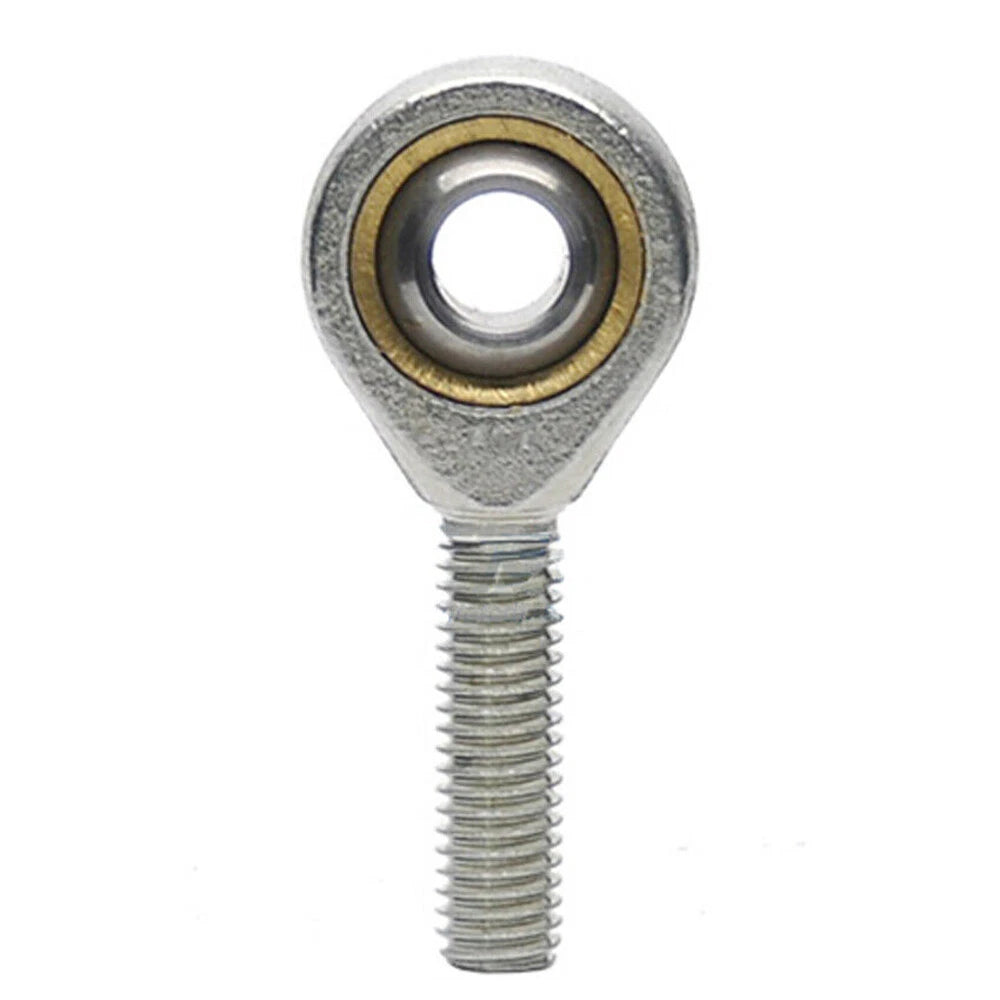
Rod End joint Bearings Right/Left Hand Thread Male/Female M4 to M30 SAT/K SALT/K

No reviews

Price:
Sale price$5.29 USD
Stock:
In stock (500 units), ready to be shipped

Payment & Security

Ach Direct Debit Amazon American Express Apple Pay Bancontact BLIK Diners Club Discover EPS Google Pay iDEAL Wero JCB Maestro Mastercard Multibanco MobilePay PayPal Przelewy24 Shop Pay Twint Union Pay USDC Visa

Your payment information is processed securely. We do not store credit card details nor have access to your credit card information.

Limited Offer — Spend More, Save More
Spend $55+
Save $5
Spend $100+
Save $10
Spend $200+
Save $25
HomeDIYer DIY Expert Support

DIY Expert Support

Get fitment advice & recommendations

Mon–Fri  8:30 AM – 8:00 PM
24-Hour Fast Ship
Arrives in 3–14 Days
Worldwide Shipping
30-Day Returns
1 tree planted with every purchase

Description

Rod End Joint Bearings — Precise Threaded Linkage for Mechanical Systems

When a misaligned shaft or a worn pivot point causes slop in your linkage, the entire mechanism loses accuracy — a frustration familiar to CNC builders, robotics engineers, and industrial maintenance technicians. These rod end joint bearings give you a direct, thread-in solution that restores precise angular articulation without custom machining or adapters.

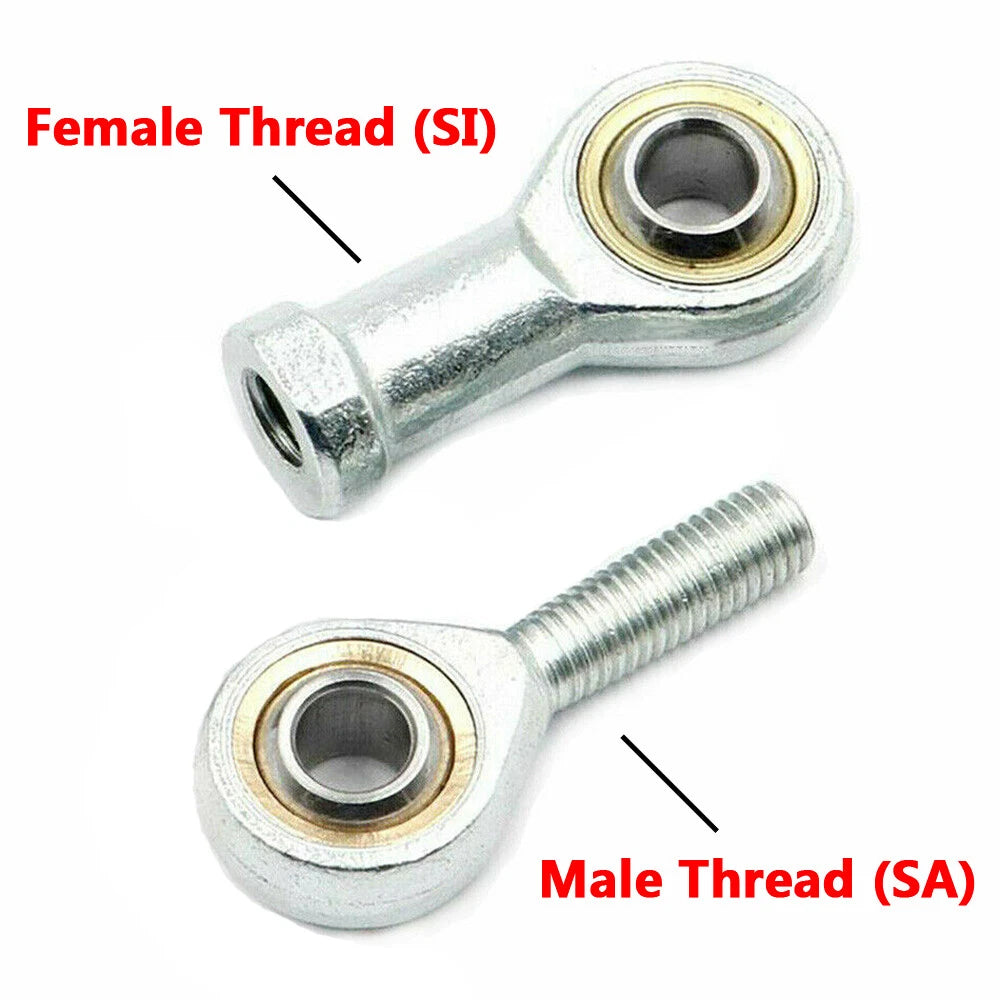
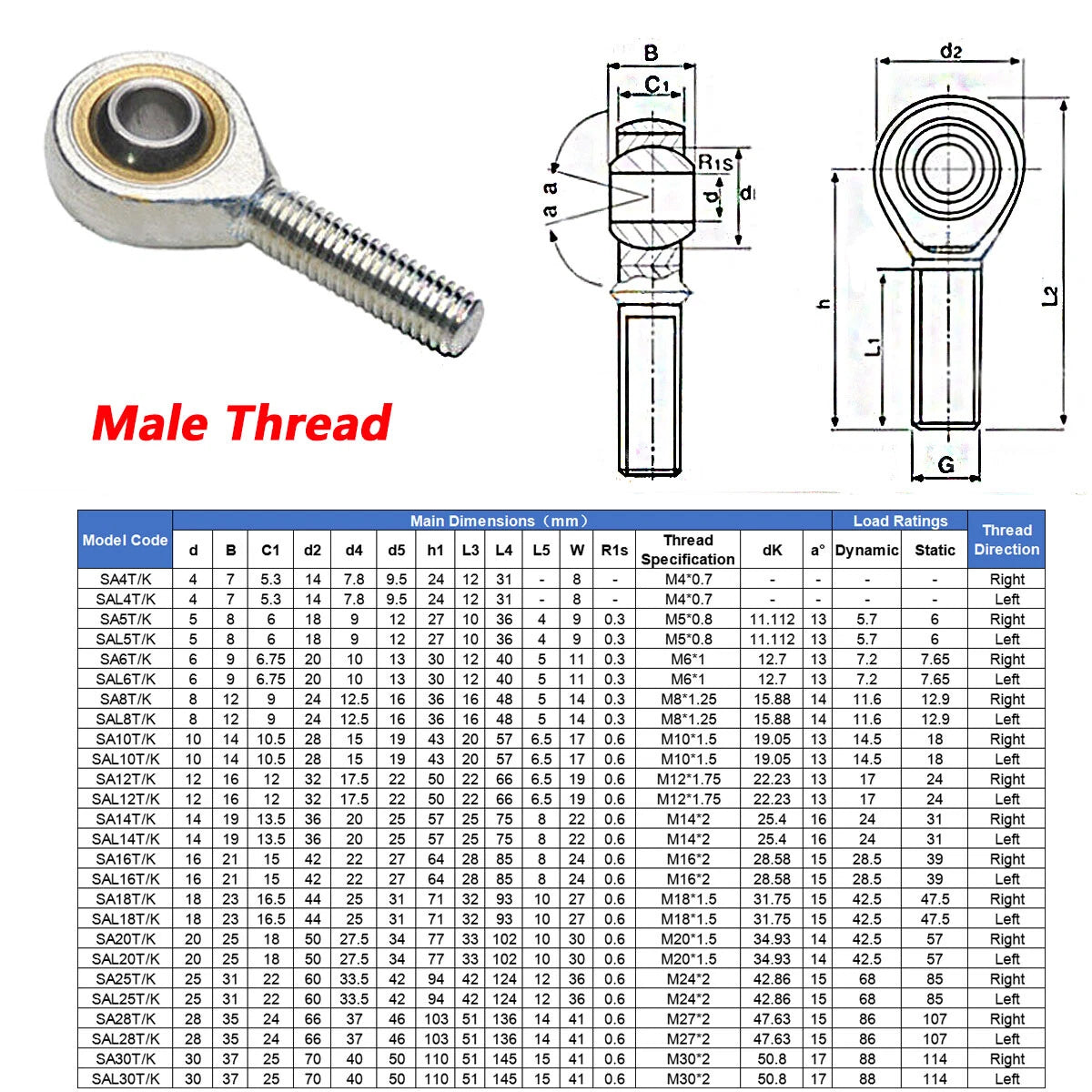
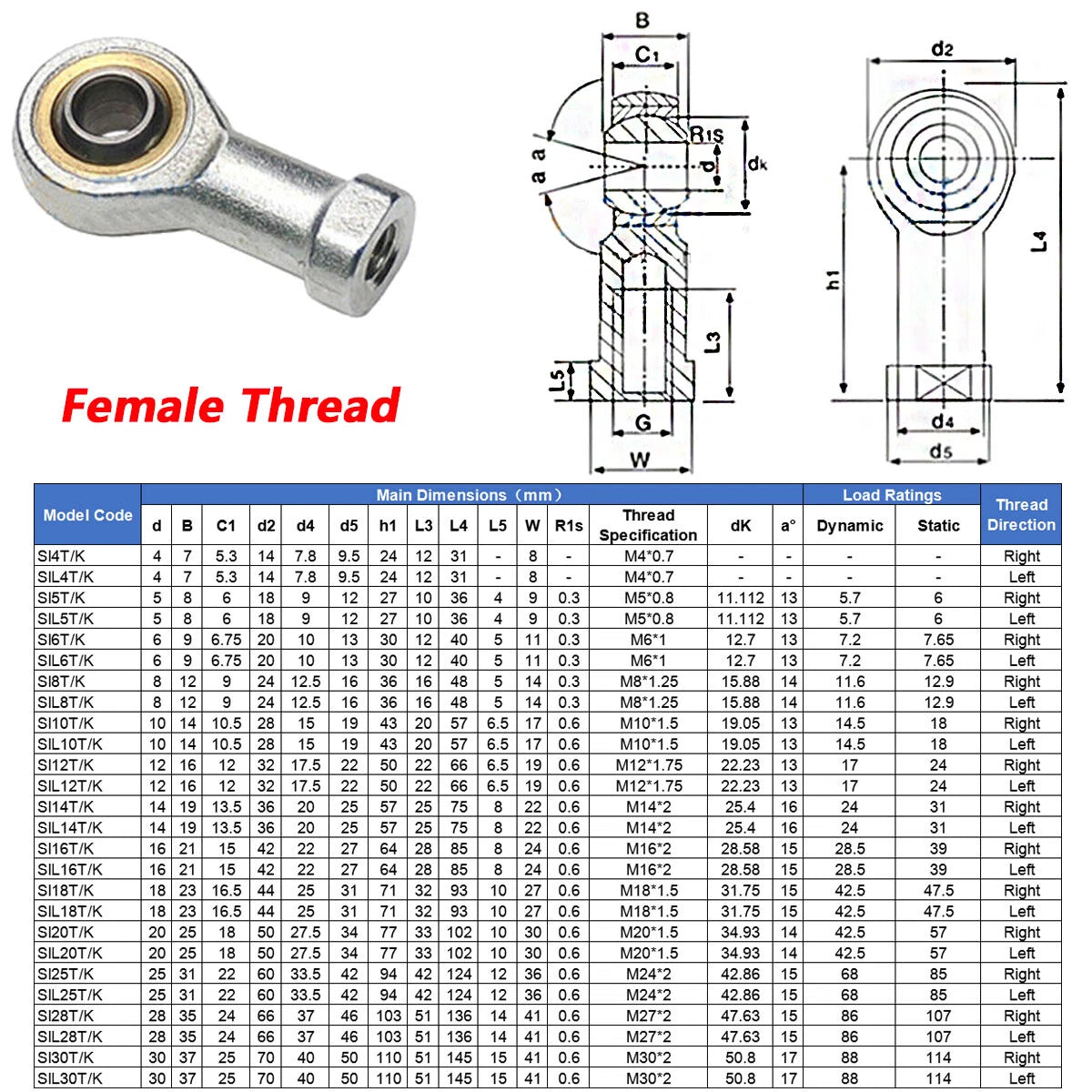
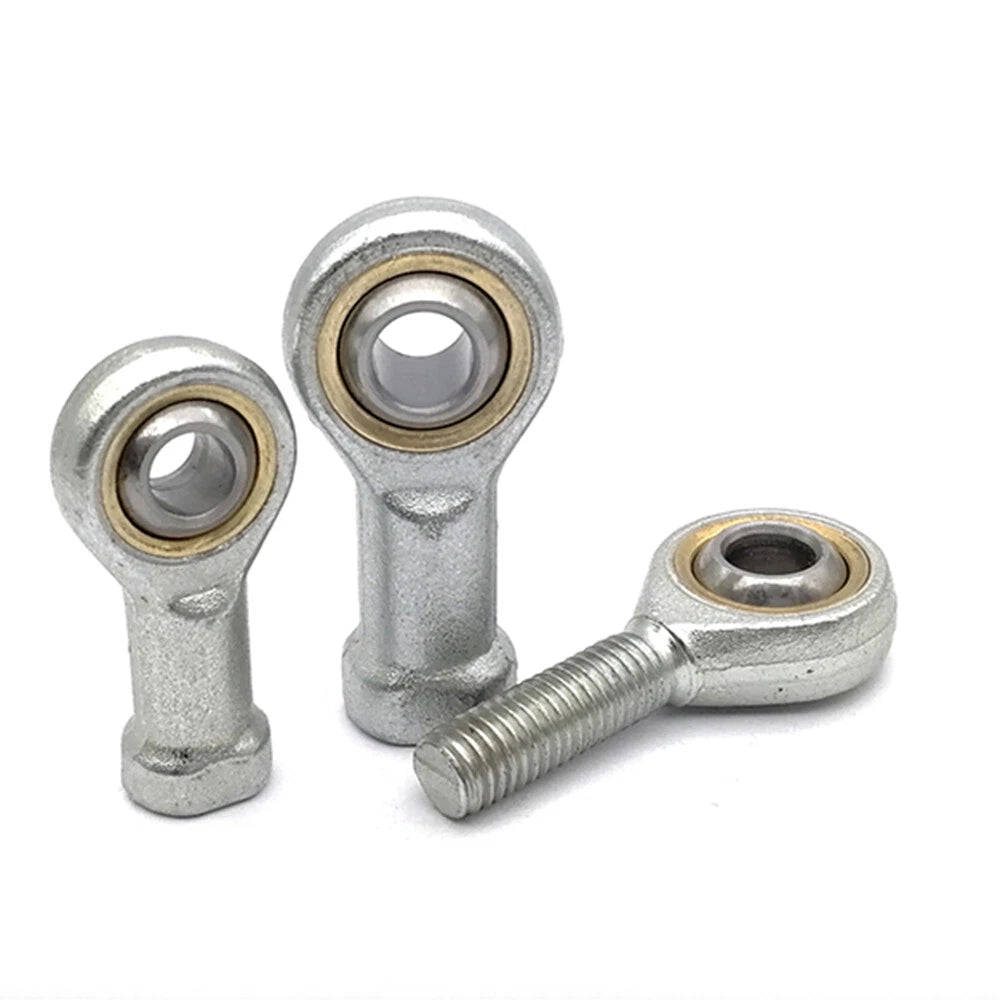
Each rod end consists of a forged steel shank with a rolled thread and a spherical plain bearing pressed into the eye. Available in bore diameters from 4 mm to 30 mm (approximately 5/32 in to 1-3/16 in) with matching metric thread pitches from M4×0.7 to M30×2. Both male (external, SA/SAL series) and female (internal, SI/SIL series) thread configurations are offered, in right-hand and left-hand versions for turnbuckle-style length adjustment.

Typical use cases include CNC router Z-axis anti-backlash linkages, robotic arm pivot joints requiring rod end bearings for 3-axis motion, and industrial push-pull control rods where a left-right thread pair enables in-line length tuning without disassembly.

🔗 Compatibility: Fits standard metric threaded rod, clevis brackets, and turnbuckle bodies. Match bore diameter to your shaft OD and thread spec to your rod or housing. Right-hand (R) and left-hand (L) variants can be paired for adjustable-length tie rods.

✅ Key Features of These Rod End Joint Bearings

⚙️Wide Size Range
Bore diameters from 4 mm to 30 mm with matched metric thread pitches — one catalog covers light-duty robotics through heavy industrial linkages.
🔄Male & Female Thread Options
SA/SAL series (external male thread) and SI/SIL series (internal female thread) let you thread directly into a rod or a tapped housing without extra adapters.
↔️Right & Left Hand Thread
Pair a right-hand and left-hand rod end on the same rod to create a turnbuckle-style adjuster — extend or shorten the linkage by rotating the rod without removing either end.
🎯Spherical Plain Bearing Eye
The pressed-in spherical bearing accommodates angular misalignment (typically ±8°–12°) so the joint self-aligns under load rather than binding or side-loading the shank.
🔩Forged Steel Shank
The shank is forged and thread-rolled for consistent pitch accuracy and fatigue resistance — critical in cyclic-load applications like CNC axis drives and robotic actuators.
📐Standardized Model Codes
Each variant carries an industry-standard model code (e.g., SA4T/K, SIL10T/K) for straightforward cross-referencing with engineering drawings and replacement part lists.

📐 Technical Specifications — Rod End Joint Bearings

Product Type Rod End Joint Bearing (Spherical Plain)
Series SA/SAL (Male Thread), SI/SIL (Female Thread)
Bore Diameter Range 4 mm – 30 mm (approx. 5/32 in – 1-3/16 in)
Thread Size Range M4×0.7 – M30×2 (metric)
Thread Type Male (External) / Female (Internal)
Thread Direction Right-Hand / Left-Hand
Angular Misalignment See variant options
Shank Material Forged Steel
Bearing Insert Spherical Plain Bearing
Finish / Coating See variant options
Weight (per piece) See variant options

❓ Frequently Asked Questions

How do I choose between male (SA/SAL) and female (SI/SIL) thread rod ends?

Choose male thread (SA/SAL) when you need to thread the rod end shank into a tapped hole in a bracket or clevis. Choose female thread (SI/SIL) when you want to thread a rod or stud into the rod end body. If you are building an adjustable-length tie rod, use one male and one female end on opposite ends of a threaded rod.

What is the difference between right-hand and left-hand thread versions?

Right-hand thread tightens clockwise (standard). Left-hand thread tightens counter-clockwise. Pairing a right-hand rod end on one end of a threaded rod with a left-hand rod end on the other creates a turnbuckle effect — rotating the rod adjusts overall length without removing either end from its mount.

How much angular misalignment can these rod end bearings handle?

The spherical plain bearing insert accommodates angular misalignment in multiple planes, typically in the range of ±8° to ±12° depending on bore size and load. This self-aligning capability prevents binding when the connected components are not perfectly coaxial. For exact values, contact us to confirm.

Are these rod ends suitable for CNC machines and robotics?

Yes. The forged steel shank and thread-rolled pitch make these rod ends well-suited for CNC axis linkages, robotic arm joints, and servo push-pull rods where dimensional accuracy and fatigue resistance matter. Select the bore size that matches your shaft diameter and the thread size that matches your existing rod or housing.

How do I select the correct bore and thread size?

Match the bore diameter (e.g., 8 mm) to the diameter of the pin or shaft that will pass through the bearing eye. Match the thread size (e.g., M8×1.25) to the thread on your rod or tapped hole. Both dimensions are listed together in the variant selector (e.g., "8 mm & M8×1.25") for easy selection.

Are these rod ends corrosion-resistant for outdoor or wet environments?

The base material is forged steel. Surface finish and corrosion resistance vary by variant — contact us to confirm the specific coating or finish for your chosen size. For consistently wet or chemically exposed environments, consider adding a compatible grease or protective coating after installation.

Can I use these rod ends in a high-cycle fatigue application?

The thread-rolled shank improves fatigue life compared to cut threads by inducing compressive residual stress at the thread roots. For high-cycle applications, ensure the rod end is correctly sized for the applied load, properly torqued, and inspected periodically for wear in the spherical bearing insert.

🛒 Select your bore diameter, thread type, and thread direction above, then add to cart.

You may also like

Recently viewed