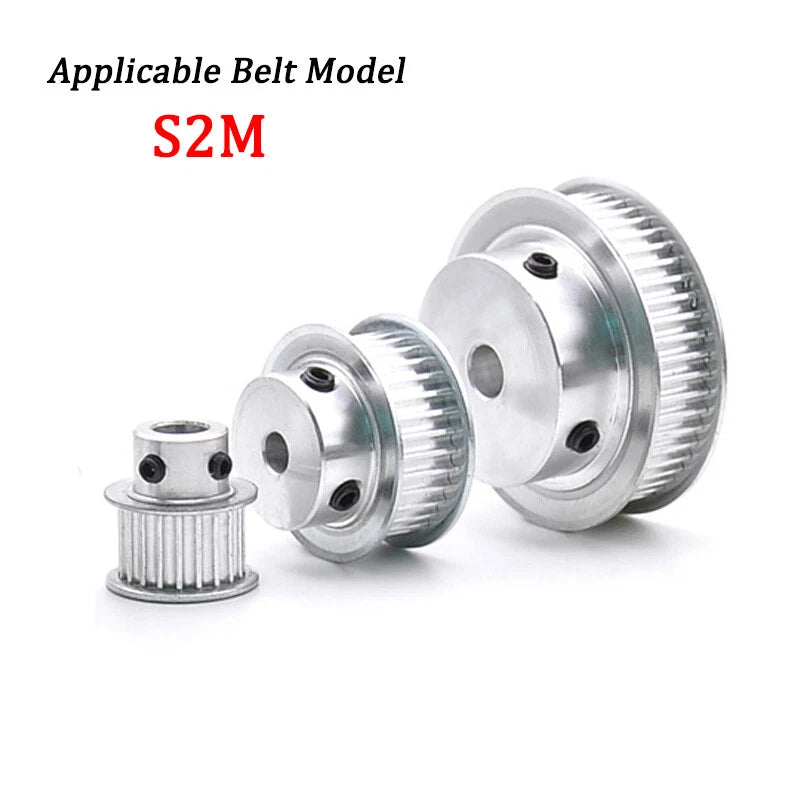
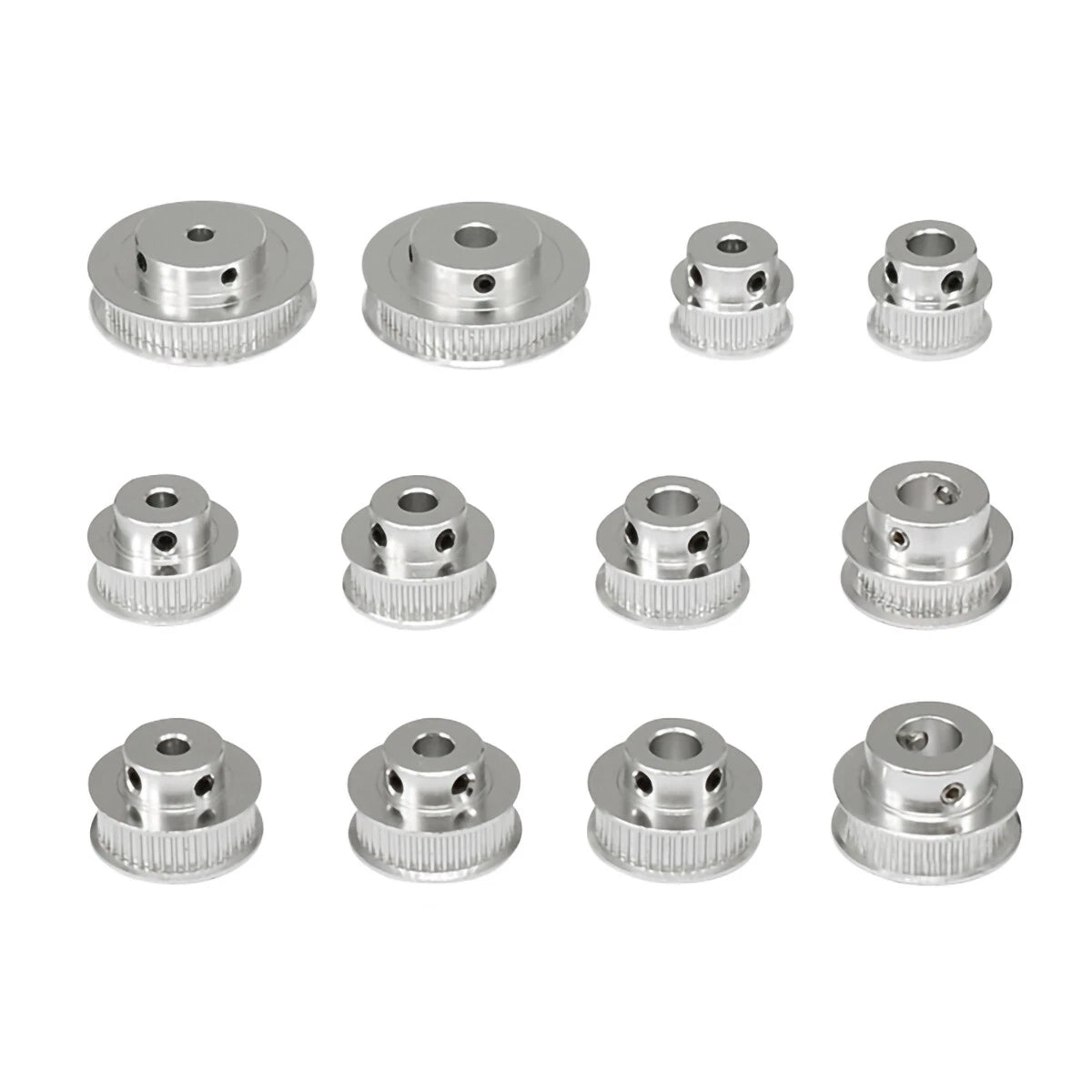
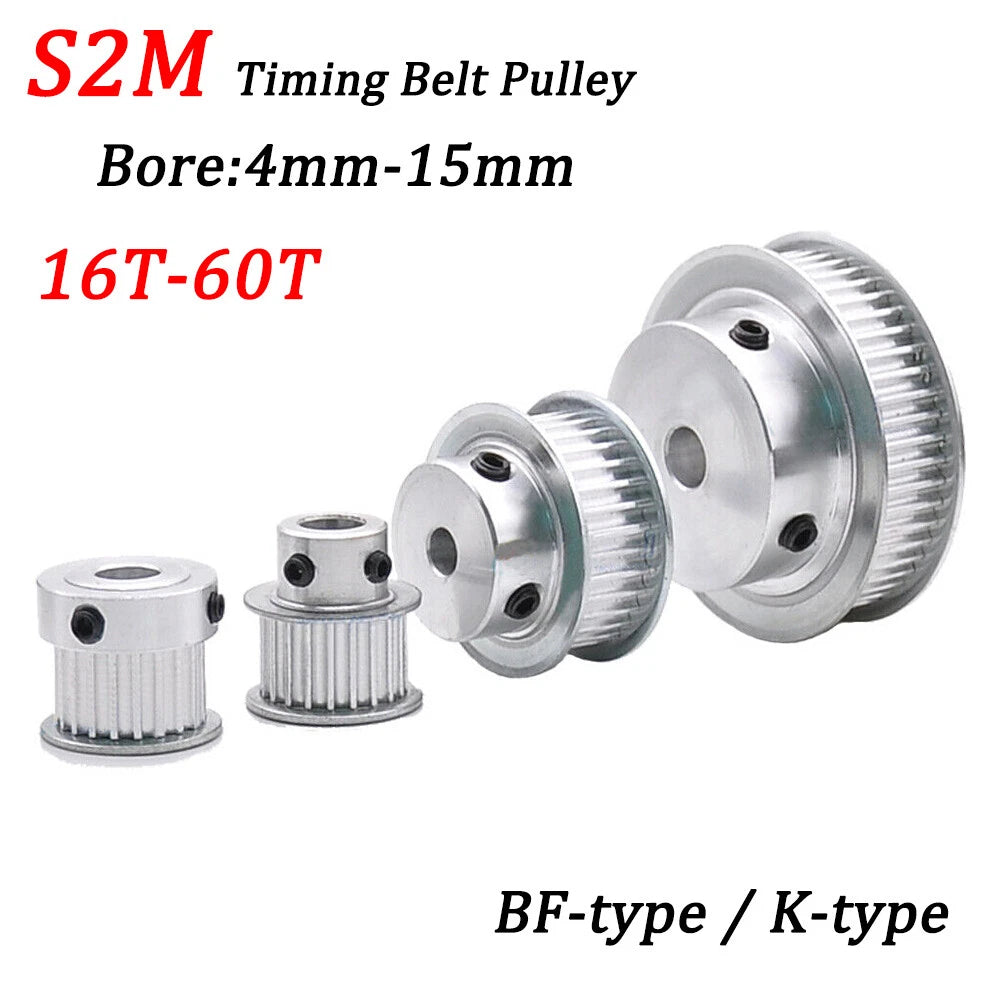
S2M Timing Belt Pulley With Step 16T-60T Bore 4-15mm For 6/10mm Wide Timing Belt

No reviews

Price:
Sale price$8.34 USD
Stock:
In stock (500 units), ready to be shipped

Payment & Security

Ach Direct Debit Amazon American Express Apple Pay Bancontact BLIK Diners Club Discover EPS Google Pay iDEAL Wero JCB Maestro Mastercard Multibanco MobilePay PayPal Przelewy24 Shop Pay Twint Union Pay USDC Visa

Your payment information is processed securely. We do not store credit card details nor have access to your credit card information.

Limited Offer — Spend More, Save More
Spend $55+
Save $5
Spend $100+
Save $10
Spend $200+
Save $25
HomeDIYer DIY Expert Support

DIY Expert Support

Get fitment advice & recommendations

Mon–Fri  8:30 AM – 8:00 PM
24-Hour Fast Ship
Arrives in 3–14 Days
Worldwide Shipping
30-Day Returns
1 tree planted with every purchase

Description

S2M Timing Belt Pulley with Step Hub — Precise Drive for 6mm & 10mm Belts

When your motion-control build demands repeatable positioning and slip-free power transfer, a mismatched pulley is the first point of failure. Engineers, robotics builders, and CNC hobbyists working with S2M (2mm pitch) synchronous belt systems need a stepped-hub pulley that locks shaft alignment and resists axial creep — without adding unnecessary bulk to the drivetrain.

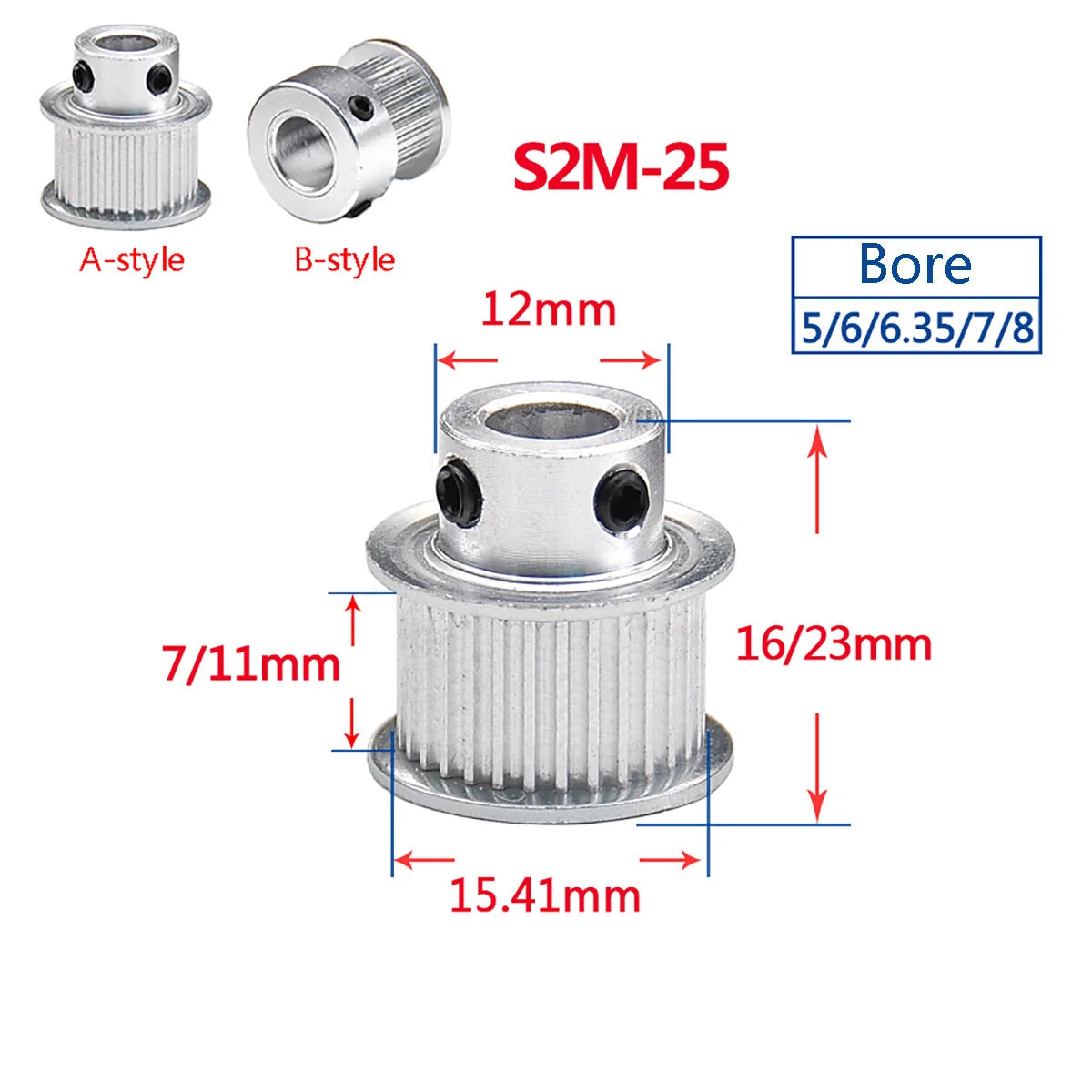
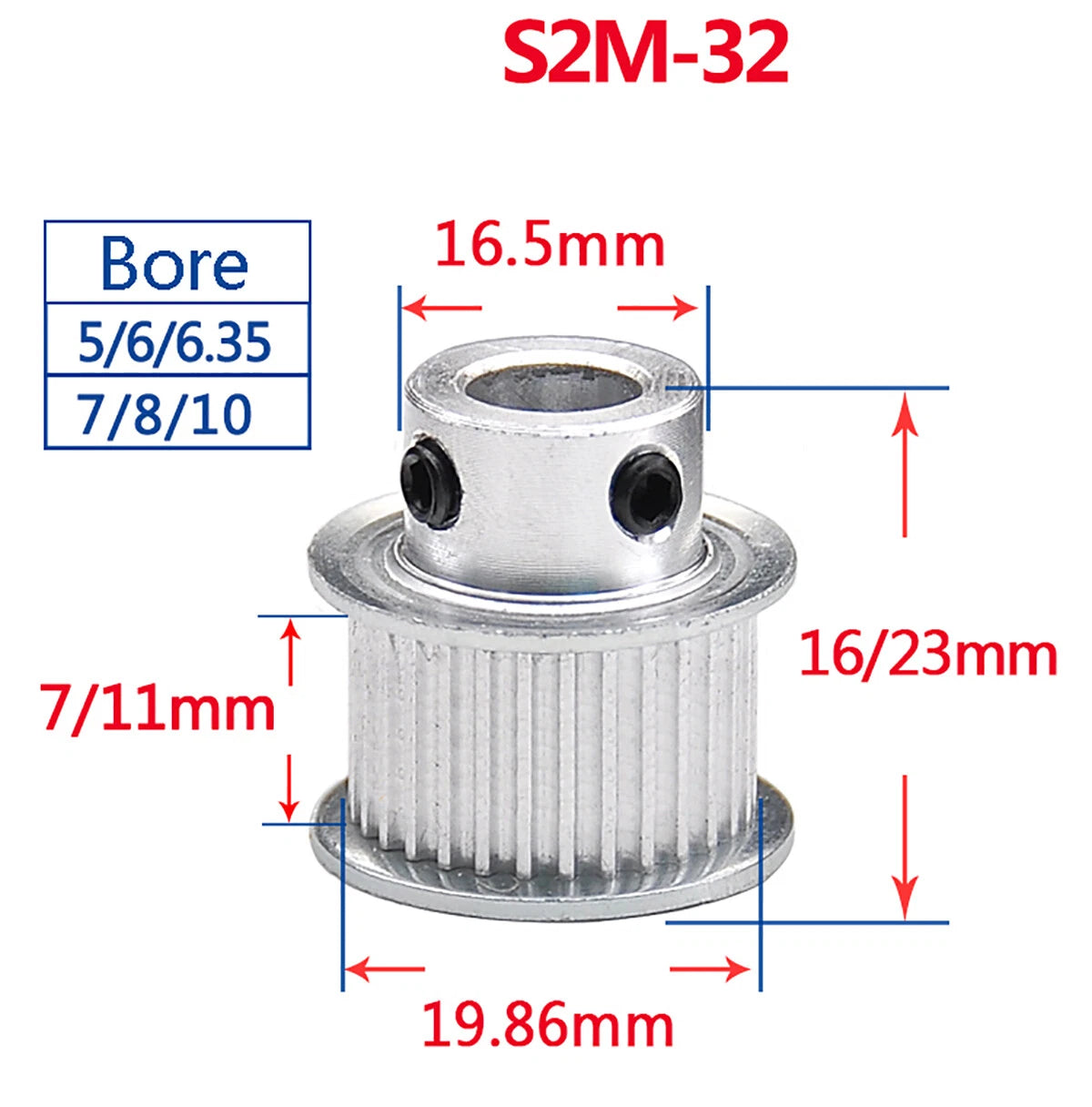
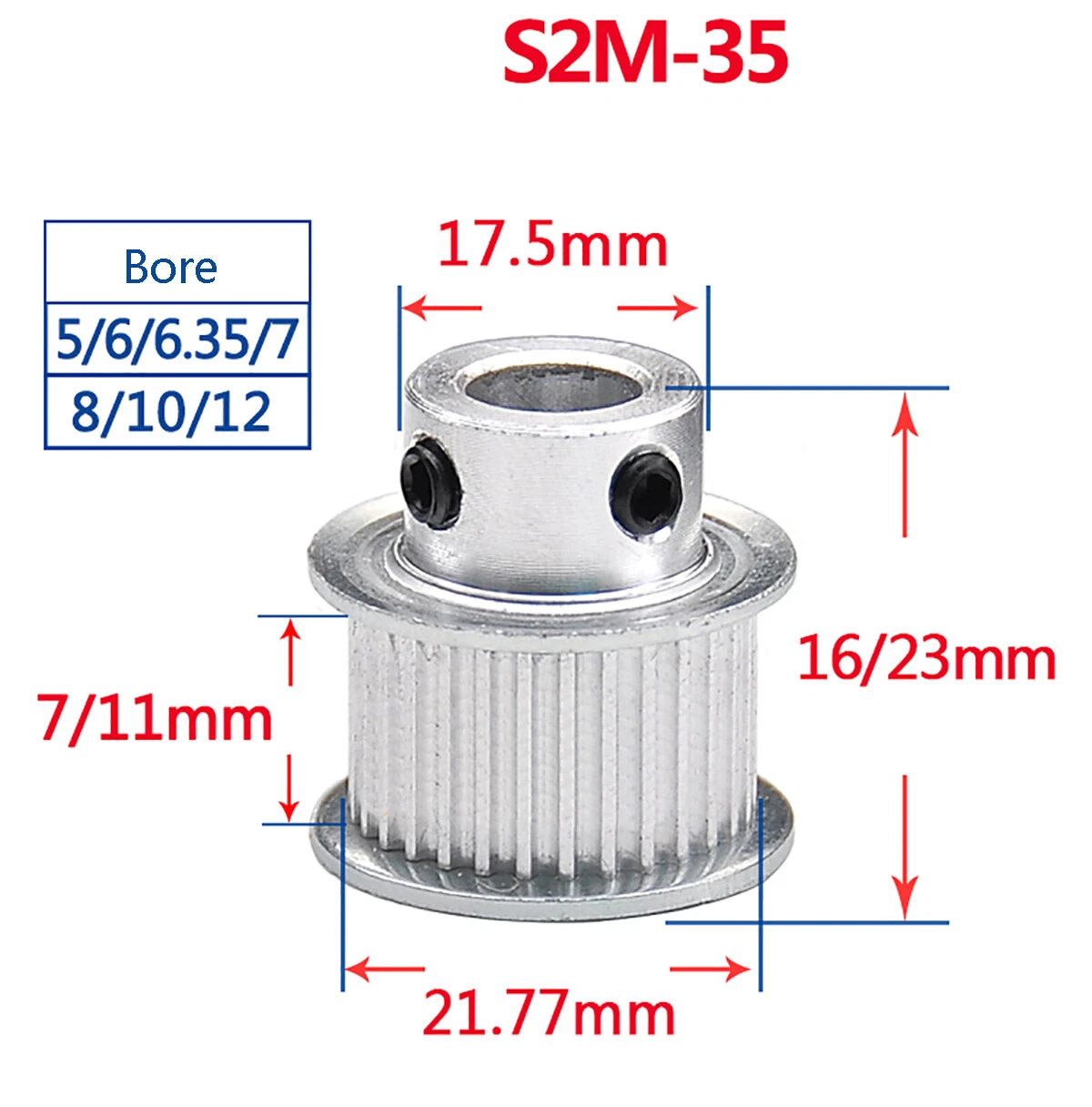
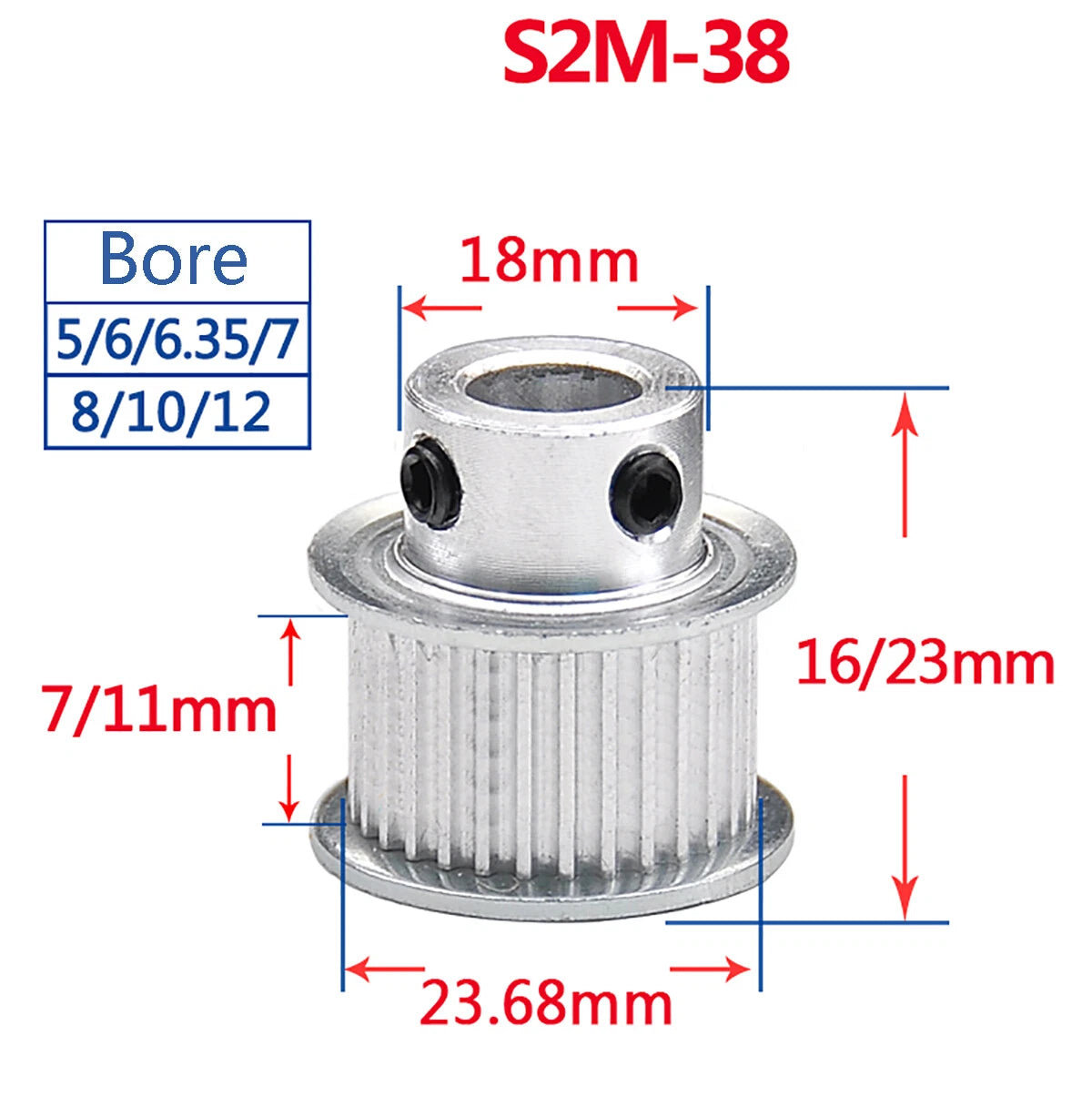
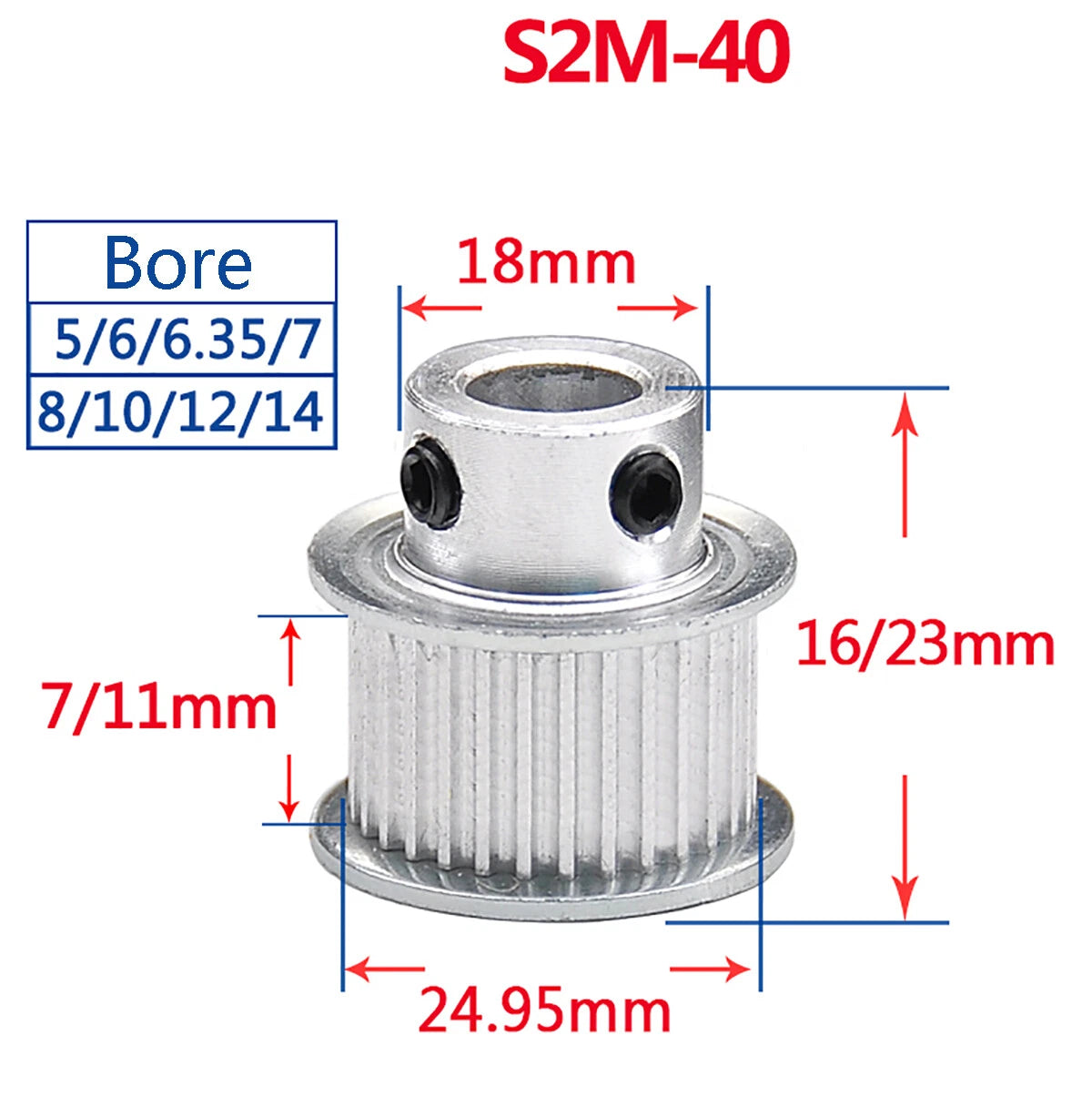
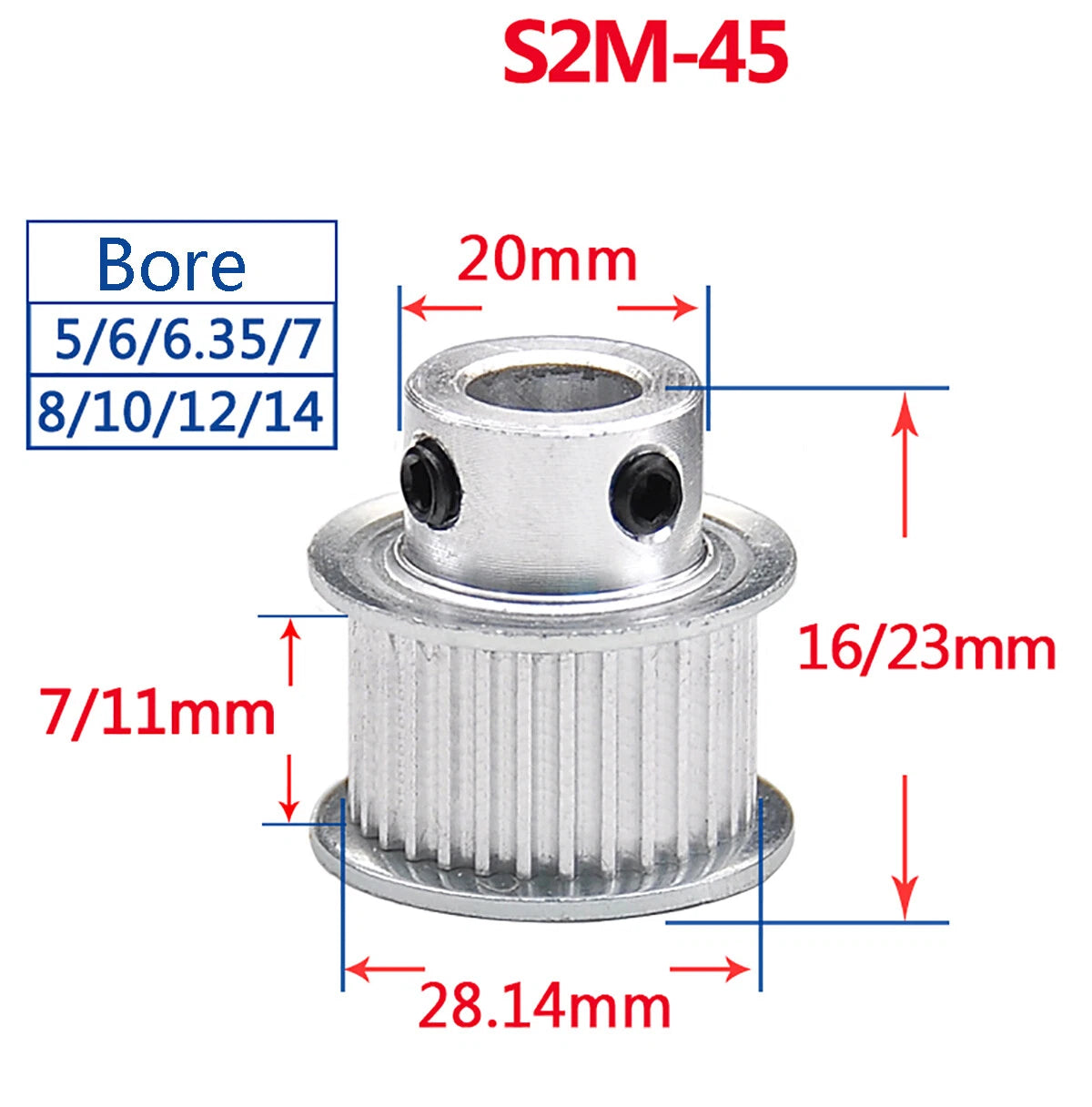
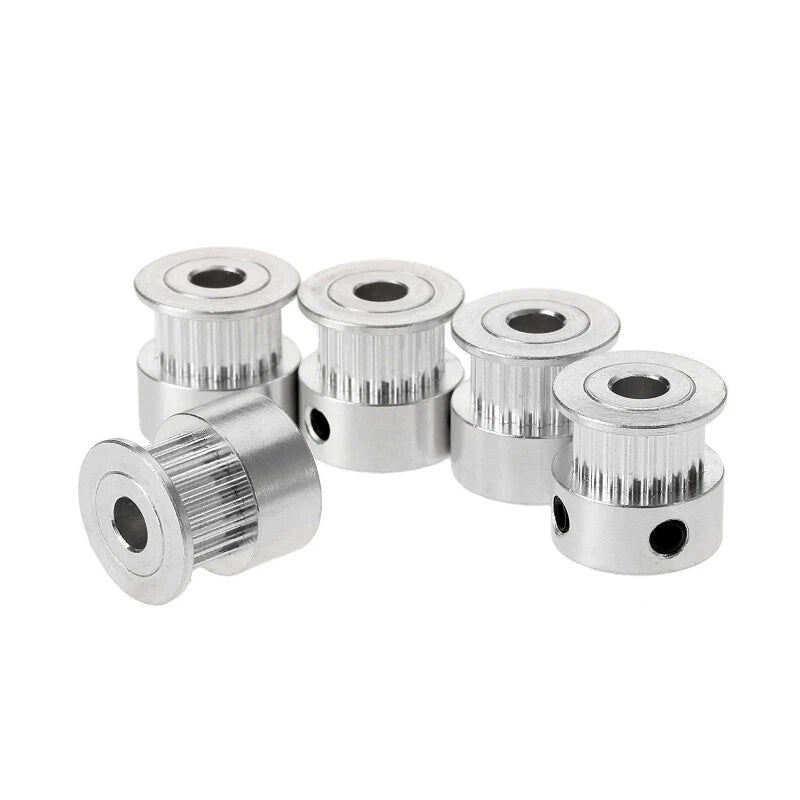
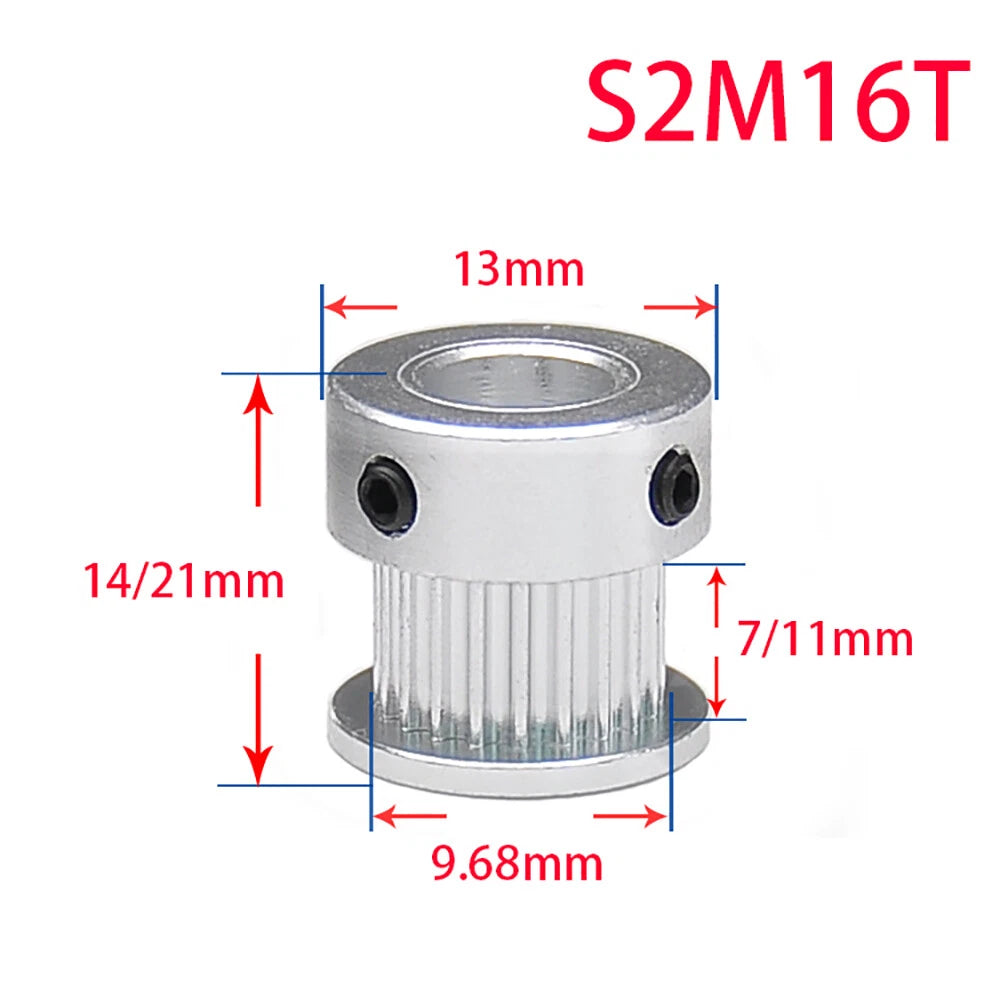
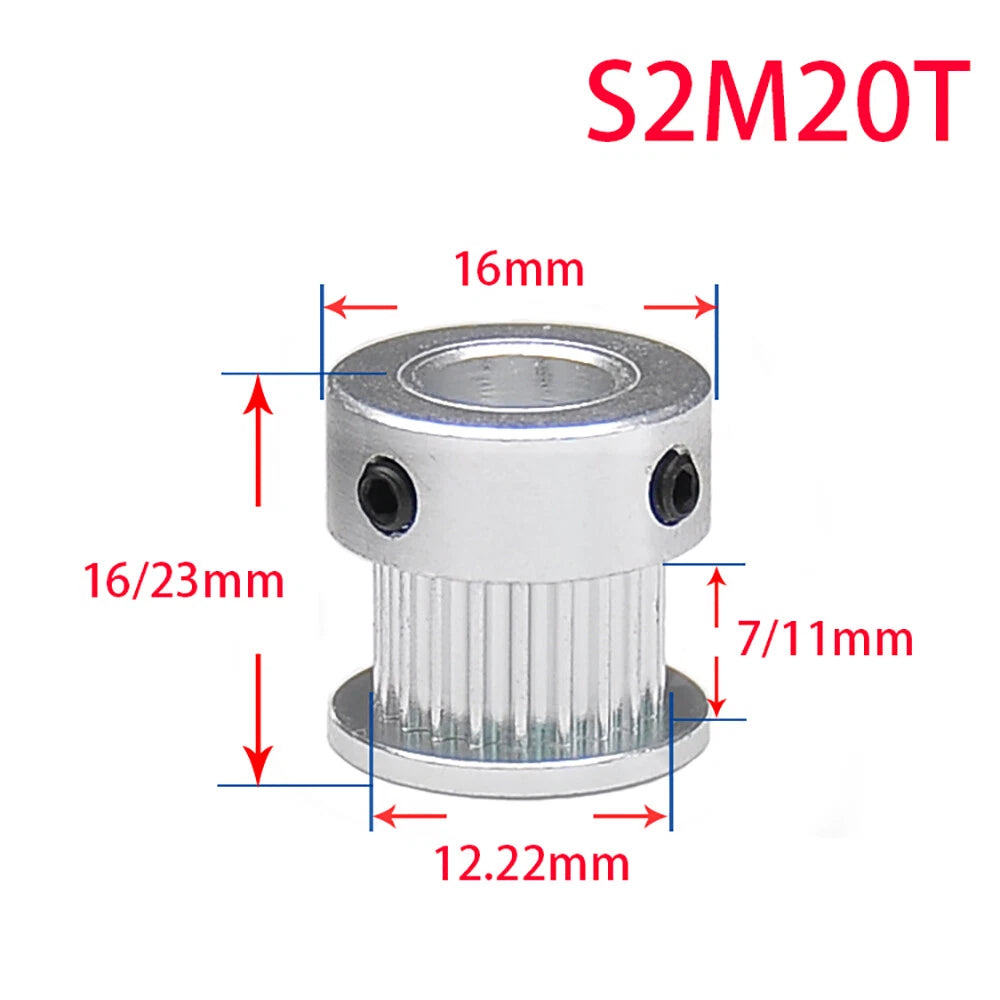
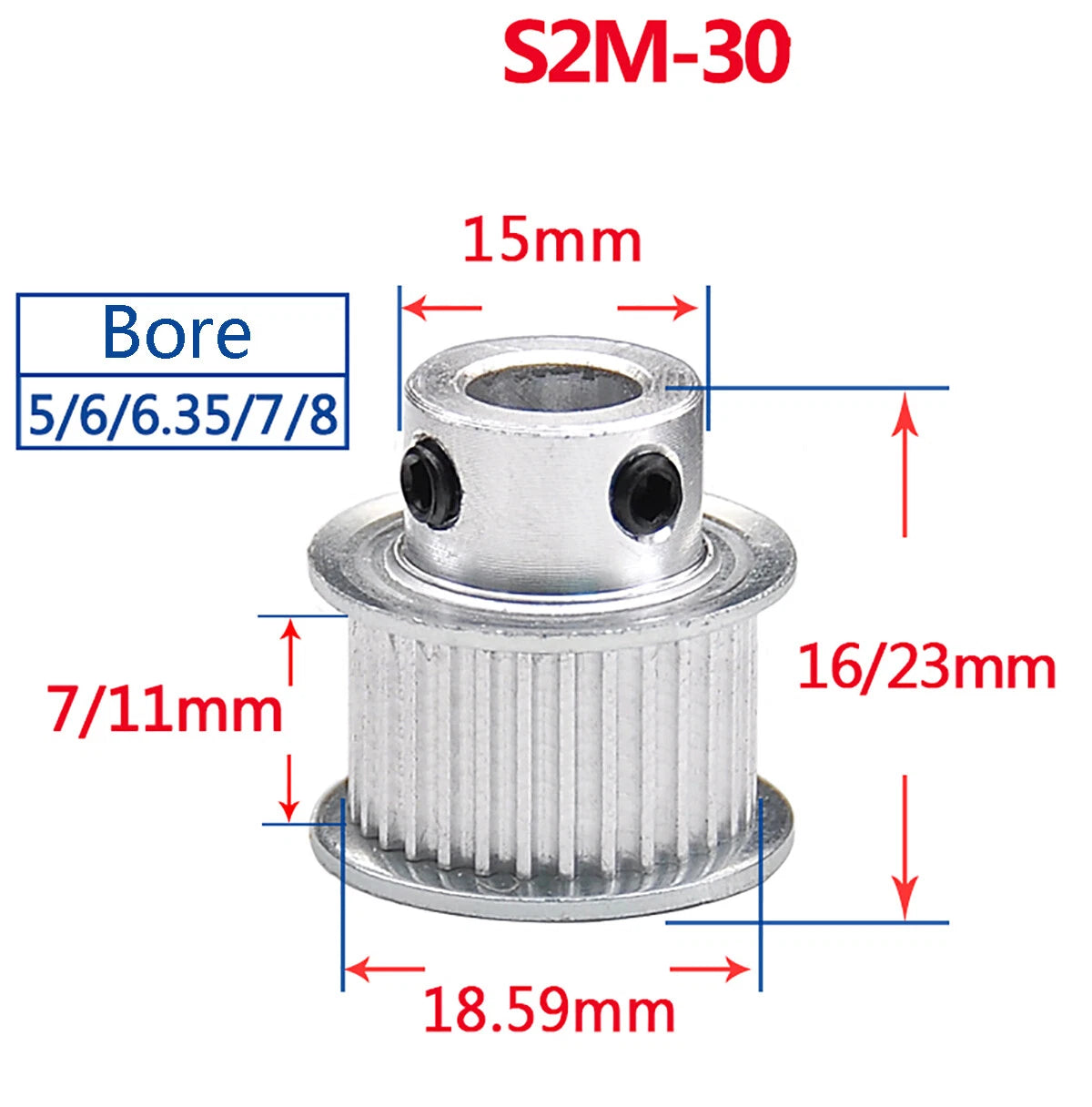
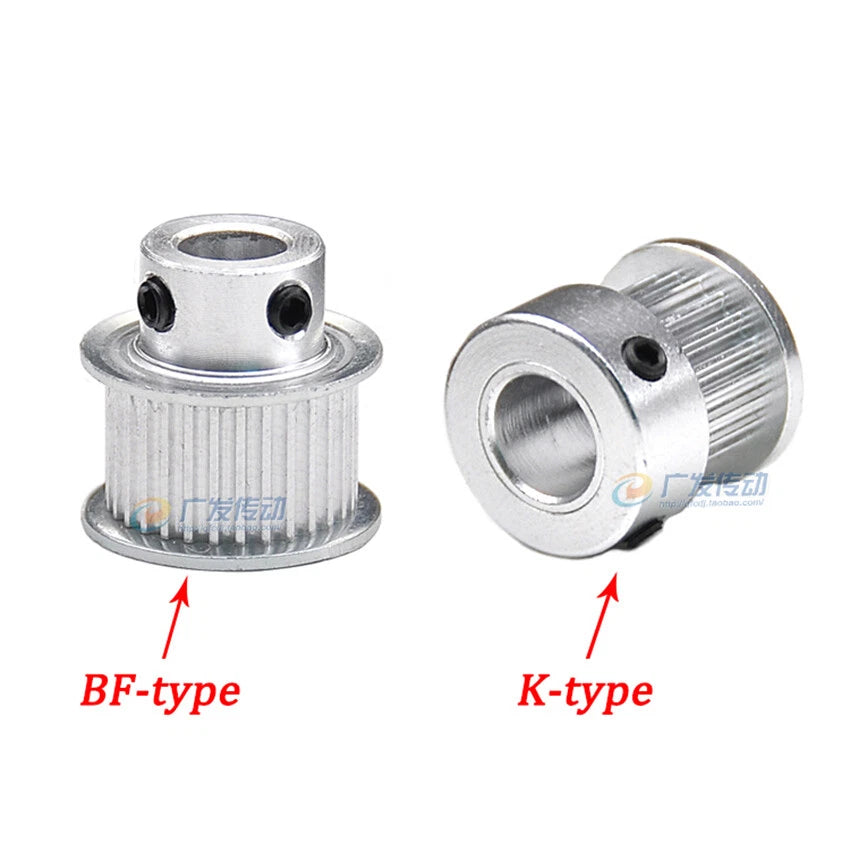
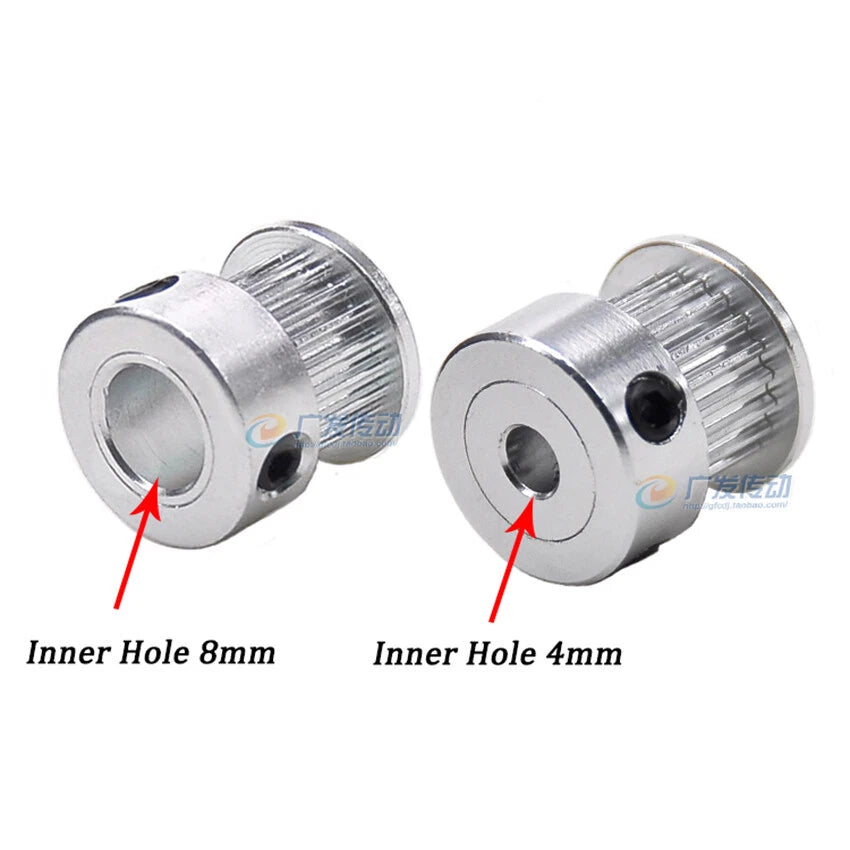
These S2M timing belt pulleys feature a machined aluminum body with an integrated step hub, available in two belt-type profiles — K-Type (standard flange) and BF-Type (flanged both sides) — spanning 16T to 60T tooth counts. Bore diameters range from 4mm to 15mm (~0.16 in to ~0.59 in), and each variant is matched to either 6mm or 10mm wide S2M timing belts. The 2mm pitch tooth profile ensures positive engagement with standard S2M belt runs.

Typical use cases include desktop CNC router X/Y axis drives, 3D printer extruder and motion systems using S2M belt loops, small robotic arm joint actuators requiring precise angular positioning, and DIY linear actuator builds where shaft-to-pulley concentricity is critical.

⚙️ Compatibility: Designed for S2M (2mm pitch) synchronous timing belts. K-Type variants suit standard open-flange applications; BF-Type variants include flanges on both sides for belt retention. Select your belt width (6mm or 10mm) and bore diameter to match your shaft.

✅ Key Features of These S2M Timing Belt Pulleys

🦷
Wide Tooth Range: 16T–60T

Covers a broad gear-ratio spread in a single product line, letting you dial in the exact speed/torque trade-off your drivetrain needs without sourcing multiple suppliers.

🔩
Step Hub Design

The integrated step hub provides a positive axial stop for the belt, reducing lateral drift and simplifying assembly on shafts from 4mm to 15mm diameter.

📐
Dual Belt-Width Compatibility

Each variant is matched to either 6mm or 10mm wide S2M belts, so you can standardize your belt stock and swap pulleys without changing belt runs.

🔄
K-Type & BF-Type Profiles

K-Type (single-flange) suits open-ended belt paths; BF-Type (double-flange) retains the belt laterally on both sides — ideal for high-speed or vibration-prone applications.

⚖️
Machined Aluminum Construction

Lightweight yet rigid, the aluminum body keeps rotational inertia low — a key factor in servo-driven systems where acceleration and deceleration cycles are frequent.

🎯
Precise 2mm Pitch Tooth Profile

The S2M tooth geometry provides positive, backlash-minimized engagement with standard S2M belts, supporting accurate positioning in open-loop and closed-loop motion systems.

📐 Technical Specifications — S2M Timing Belt Pulley

Belt Pitch S2M (2mm)
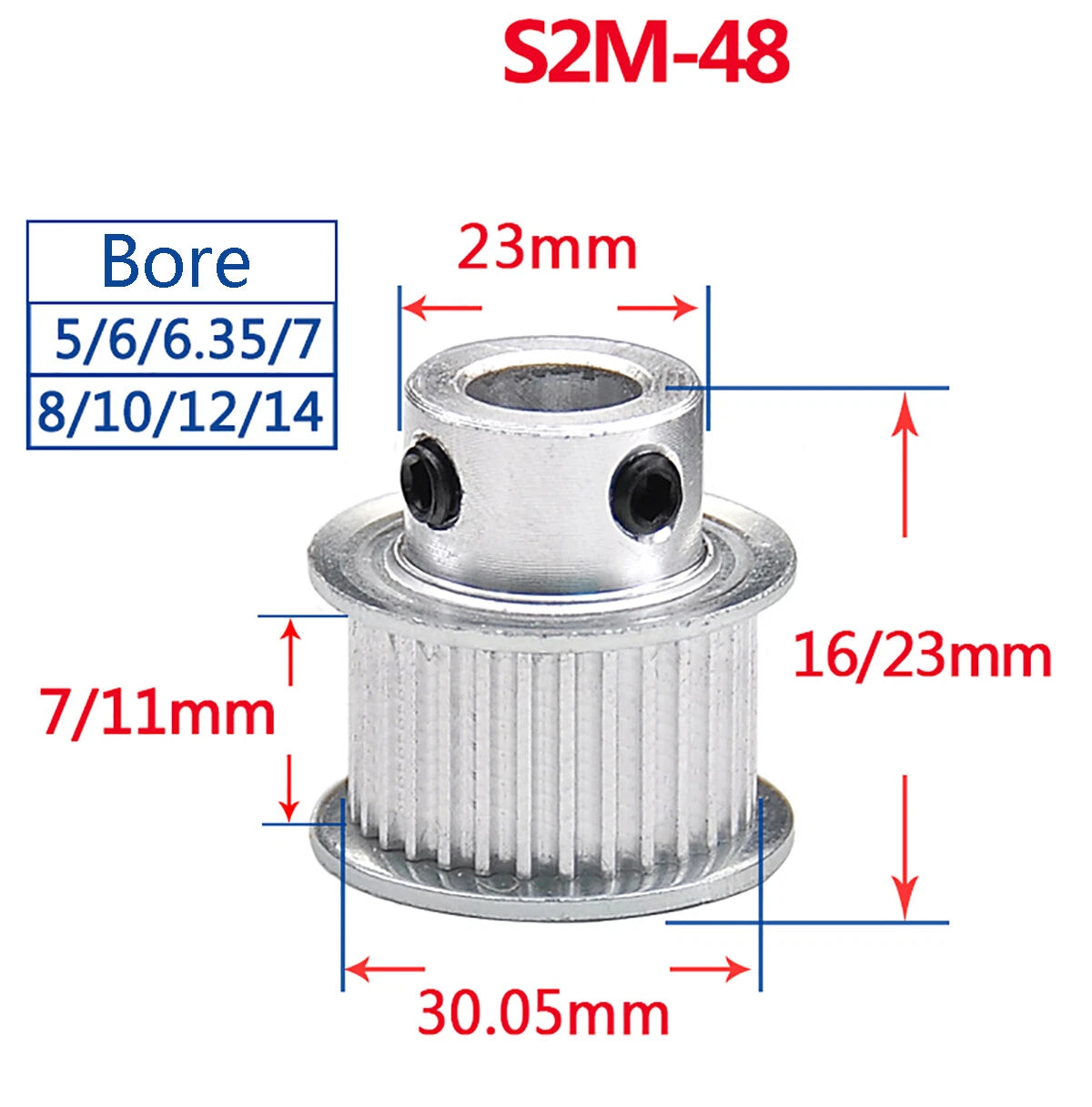
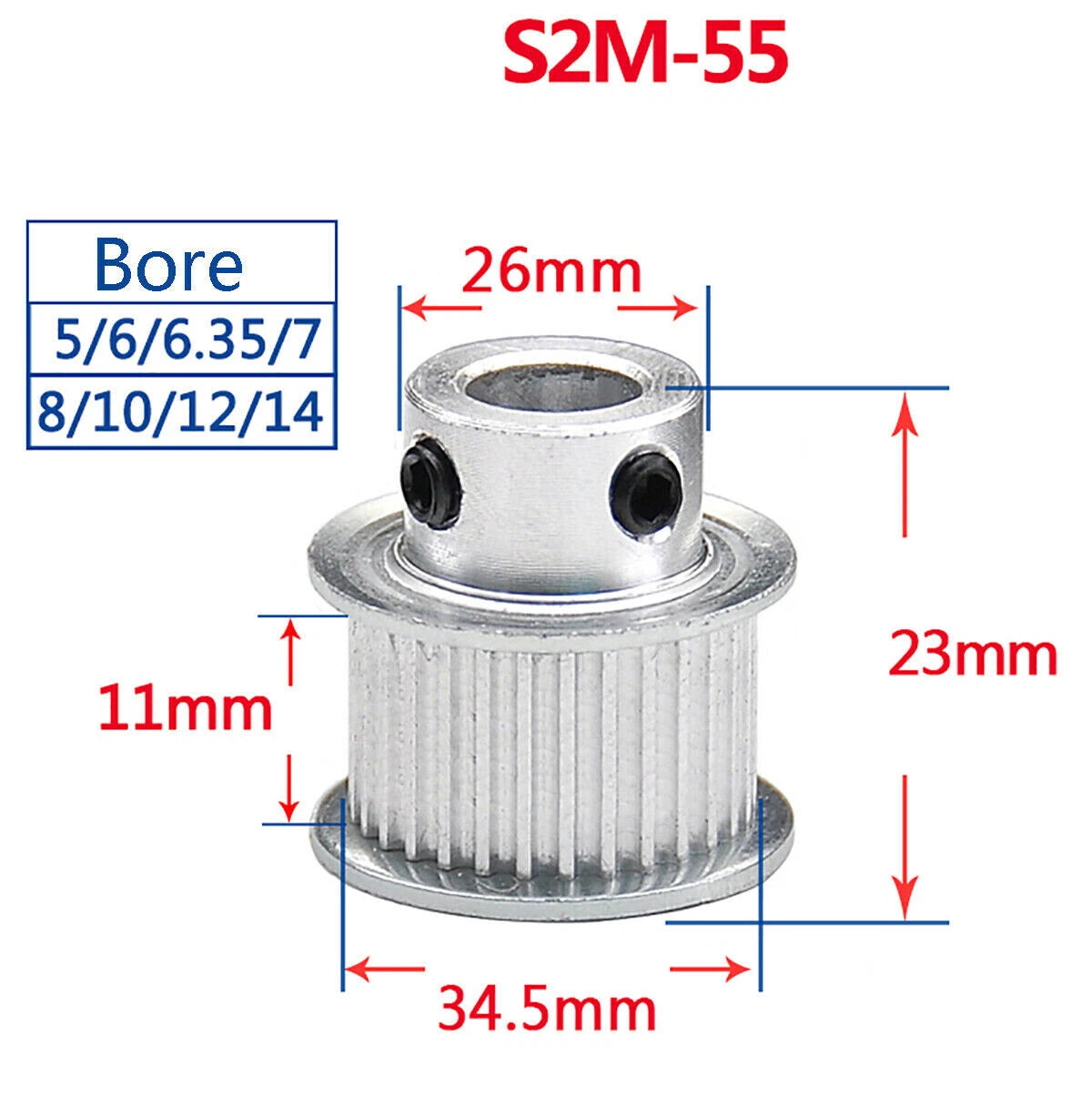
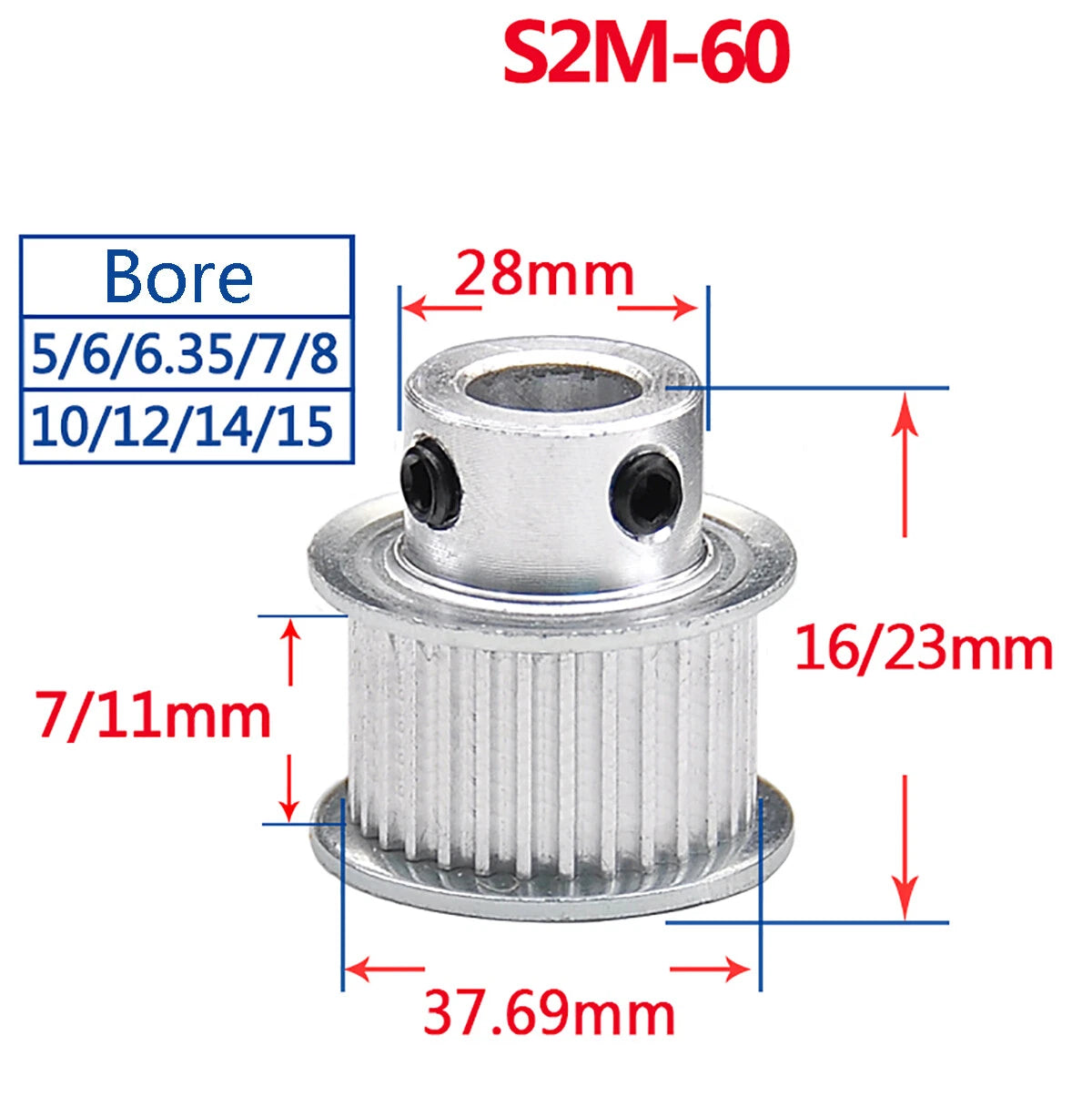
Tooth Count Range 16T, 20T, 24T, 25T, 30T, 32T, 35T, 36T, 38T, 40T, 45T, 48T, 50T, 55T, 60T
Belt Type K-Type (single-flange) / BF-Type (double-flange)
Compatible Belt Width 6mm or 10mm (see variant options)
Bore Diameter 4mm, 5mm, 6mm, 6.35mm, 7mm, 8mm, 10mm, 12mm, 14mm, 15mm
Hub Style Step hub (integrated axial stop)
Material Aluminum alloy
Pitch Diameter (approx.) See variant options
Outside Diameter (approx.) See variant options
Hub Length See variant options
Set Screw See variant options
Quantity per Order 1 piece

❓ Frequently Asked Questions

How do I choose the right tooth count for my application?

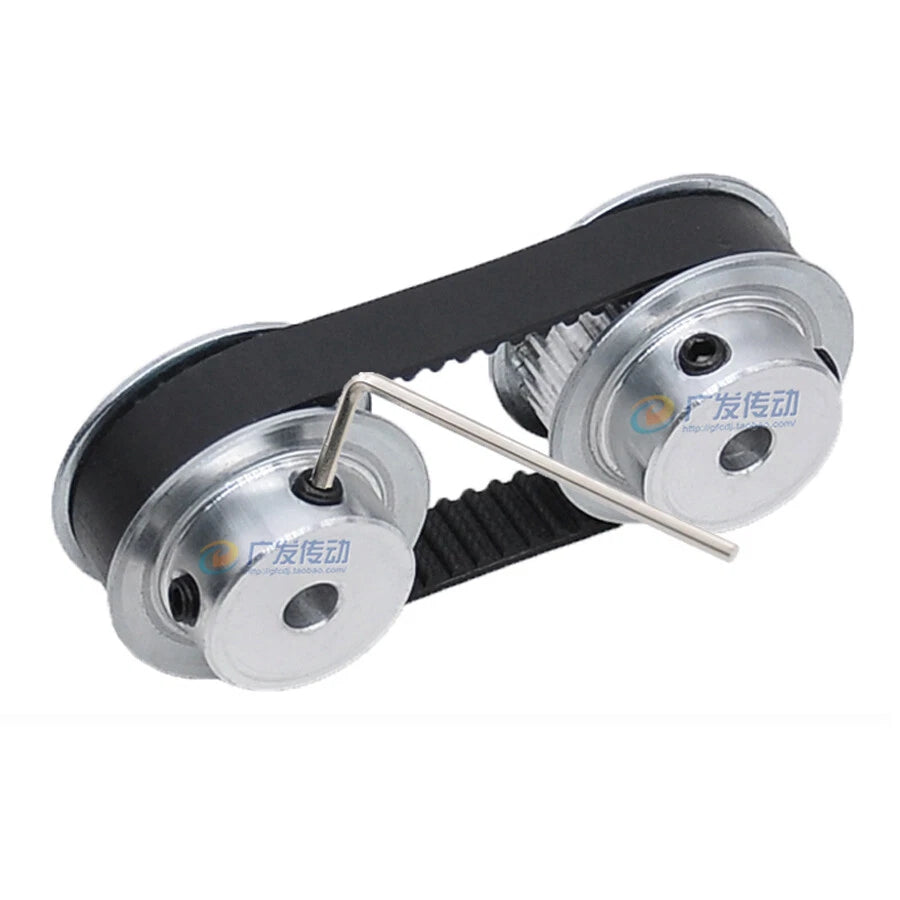
The tooth count determines your drive ratio. Divide the driven pulley teeth by the driving pulley teeth to get the speed reduction ratio. For example, a 16T drive pulley paired with a 32T driven pulley gives a 2:1 reduction — halving speed and doubling torque. Match your required RPM and torque to select the appropriate pairing from the 16T–60T range available.

What is the difference between K-Type and BF-Type pulleys?

K-Type pulleys have a single flange on one side of the tooth profile, suitable for standard open belt paths where lateral belt retention is handled by the belt track or tensioner. BF-Type pulleys have flanges on both sides, physically containing the belt laterally — recommended for high-speed runs, vertical belt paths, or applications with vibration that could cause belt walk.

How do I select the correct bore diameter?

Measure your motor or drive shaft diameter precisely with a caliper. The bore must match the shaft diameter for a secure fit. Common shaft sizes in this range include 4mm, 5mm, 6mm, 6.35mm (1/4 inch), 7mm, 8mm, 10mm, 12mm, 14mm, and 15mm. If your shaft is imperial (e.g., 1/4"), select the 6.35mm bore variant.

Are these pulleys compatible with standard S2M timing belts from other brands?

Yes. The S2M tooth profile is an industry-standard 2mm pitch synchronous belt specification. These pulleys are designed to mesh with any S2M-profile timing belt of the matching width (6mm or 10mm). Always verify the belt pitch and width match the pulley variant you select.

How strong is the aluminum construction — can it handle continuous duty?

Aluminum alloy pulleys are well-suited for light-to-medium duty continuous operation typical of CNC routers, 3D printers, and small robotic systems. For heavy industrial loads or high-shock environments, verify the torque rating against your application requirements. The step hub design helps distribute shaft load and reduces stress concentration at the bore.

Will the pulley corrode if used in a humid or outdoor environment?

Aluminum alloy naturally forms a thin oxide layer that provides moderate corrosion resistance in typical indoor and mildly humid environments. For prolonged outdoor exposure or contact with corrosive chemicals, consider applying a protective coating or anodizing treatment. These pulleys are not rated for submersion or highly corrosive industrial atmospheres.

Do I need to purchase a set screw or keyway separately?

Set screw inclusion varies by variant — please refer to the variant detail or contact us to confirm. If your application requires a keyed shaft connection for high-torque transmission, verify the bore style before ordering. For most light-duty motion applications, a set screw bore provides sufficient holding force when properly torqued.

🛒 Select your Tooth Count, Belt Type, and Bore Diameter above, then add to cart.


You may also like

Recently viewed