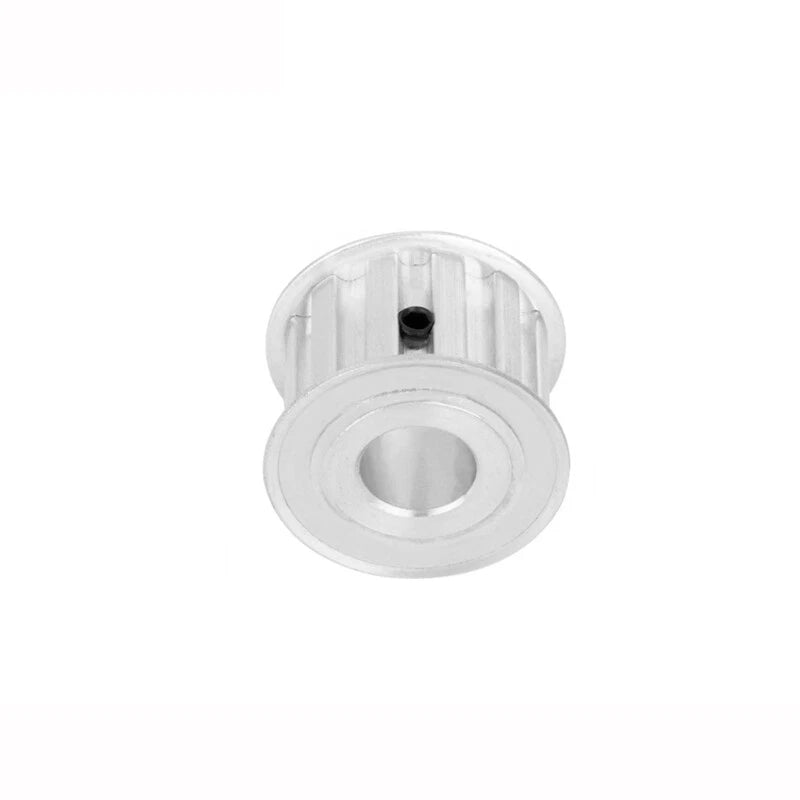
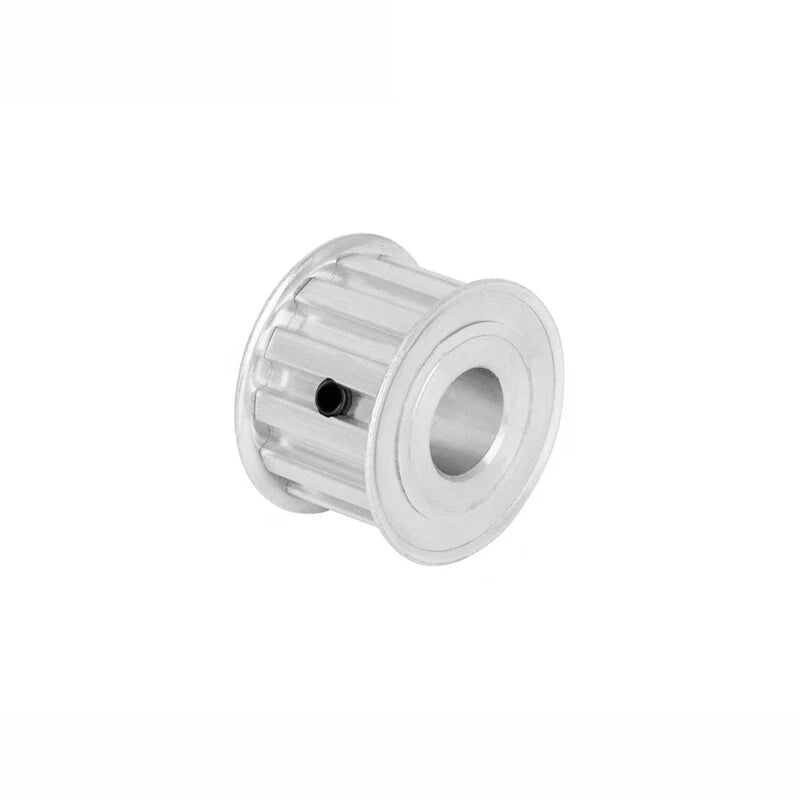
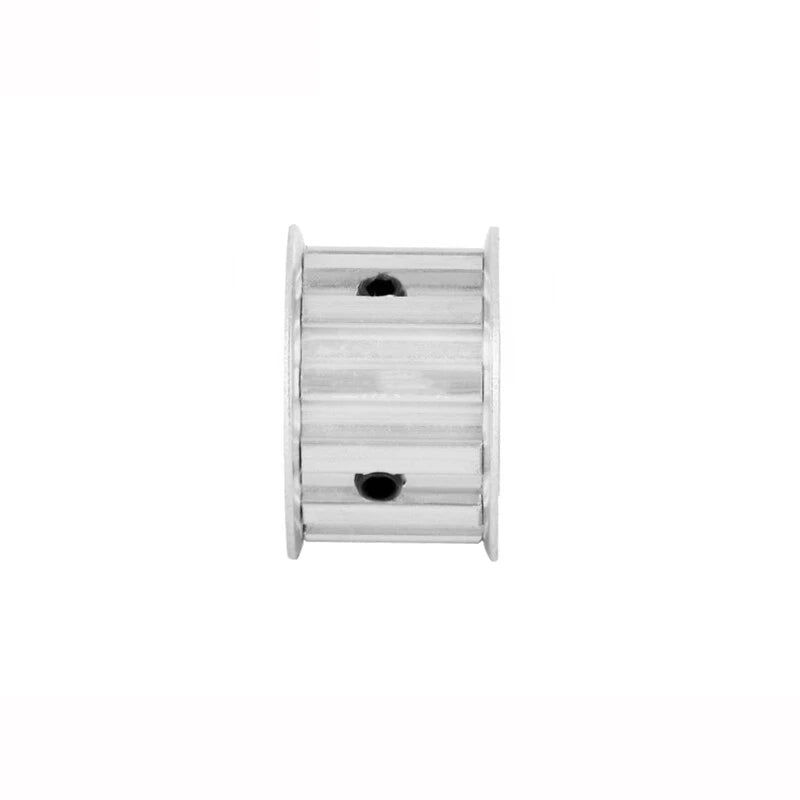
S3M 3mm Pitch Timing Belt Pulley 3-25mm Bore,15-90T,for 10mm Wide,CNC,3D Printer

No reviews

Price:
Sale price$10.05 USD
Stock:
In stock (500 units), ready to be shipped

Payment & Security

Ach Direct Debit Amazon American Express Apple Pay Bancontact BLIK Diners Club Discover EPS Google Pay iDEAL Wero JCB Maestro Mastercard Multibanco MobilePay PayPal Przelewy24 Shop Pay Twint Union Pay USDC Visa

Your payment information is processed securely. We do not store credit card details nor have access to your credit card information.

Limited Offer — Spend More, Save More
Spend $55+
Save $5
Spend $100+
Save $10
Spend $200+
Save $25
HomeDIYer DIY Expert Support

DIY Expert Support

Get fitment advice & recommendations

Mon–Fri  8:30 AM – 8:00 PM
24-Hour Fast Ship
Arrives in 3–14 Days
Worldwide Shipping
30-Day Returns
1 tree planted with every purchase

Description

S3M Timing Belt Pulley — Precision 3mm Pitch Drive for CNC & 3D Printers

When a slipping or mismatched pulley throws off your axis calibration mid-print or derails a CNC pass, the cost is more than just wasted material — it's lost time and lost confidence in your machine. Engineers, makers, and automation integrators who demand repeatable motion control need a pulley they can trust. These S3M 3mm pitch timing belt pulleys are machined to keep your drive train locked in sync, run after run.

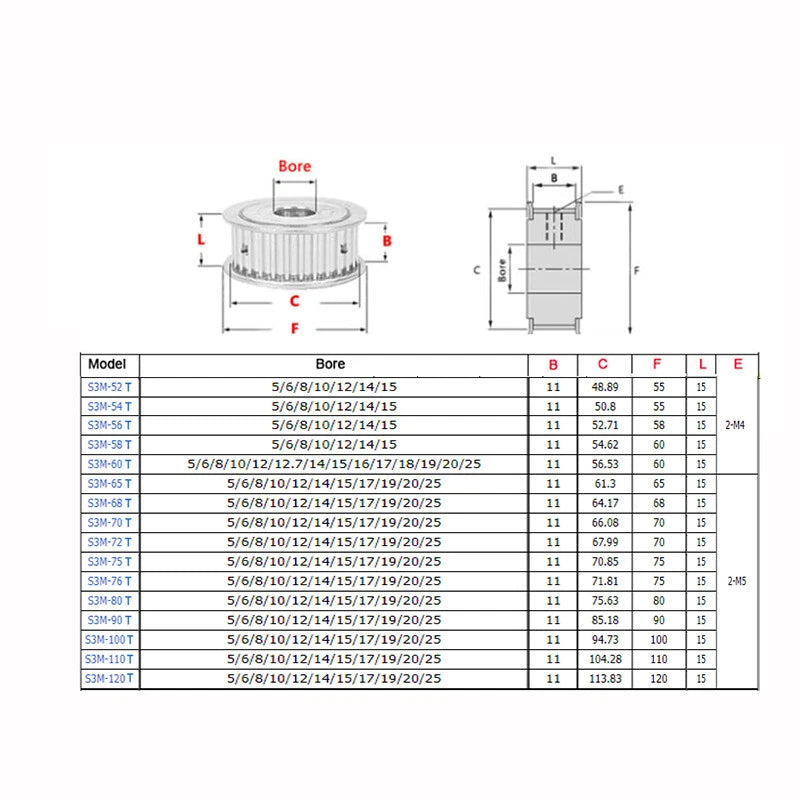
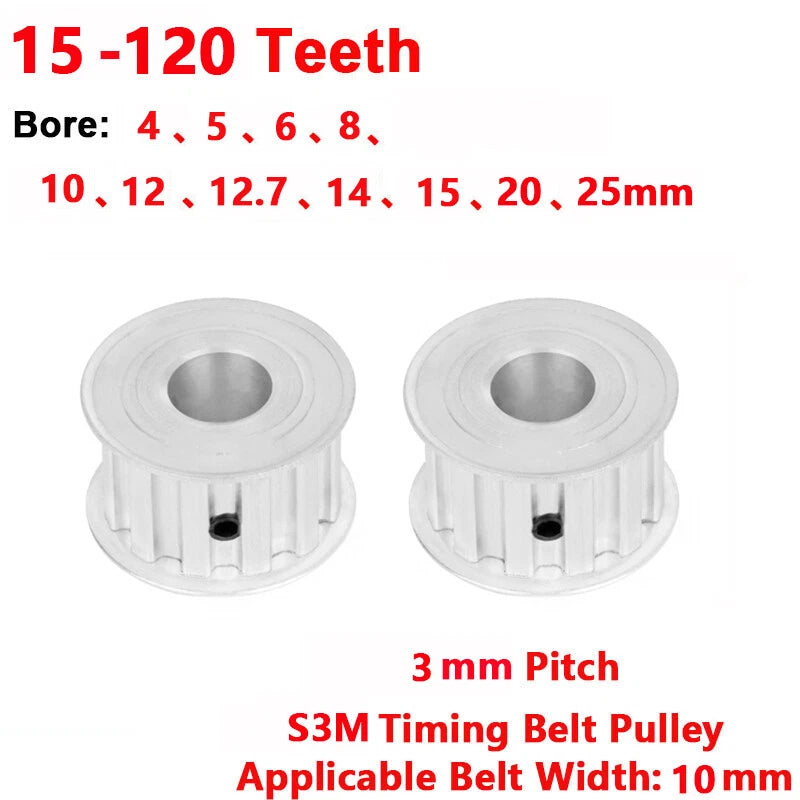
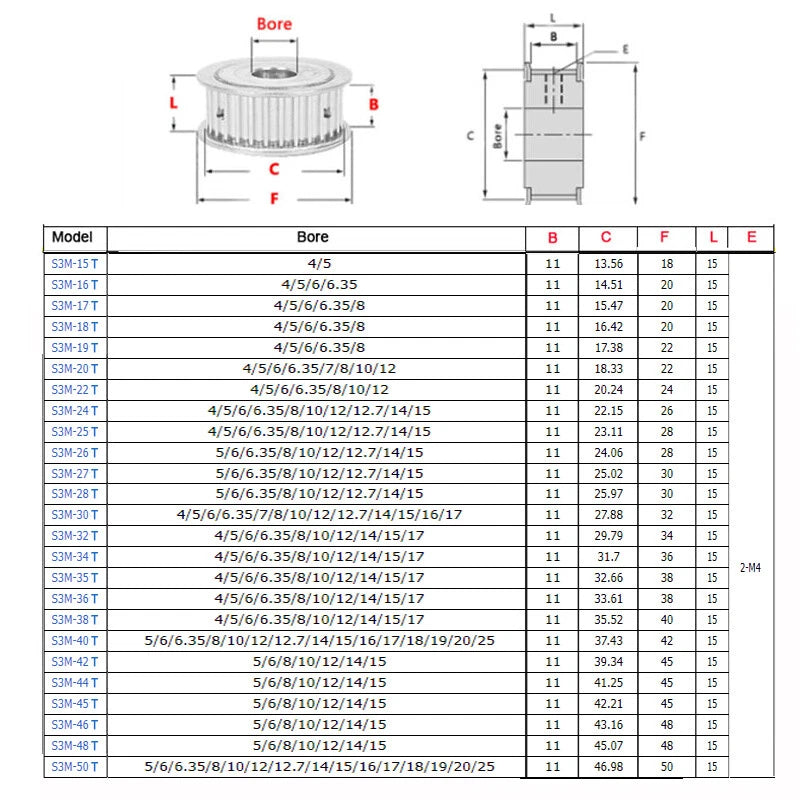
Each S3M timing belt pulley features a 3mm tooth pitch (S3M profile) with a tooth width of 11mm (approximately 0.43 in), compatible with standard 10mm wide S3M belts. Bore options range from 3mm to 25mm (approximately 0.12–0.98 in), and tooth counts span 15T to 120T, giving you precise gear-ratio flexibility. The body is typically machined from aluminum alloy with a natural or anodized finish; set-screw retention is standard on most bore sizes.

Typical use cases include CNC router X/Y axis drives, FDM 3D printer extruder and motion systems, light-duty conveyor and pick-and-place automation, and DIY robotics requiring low-backlash synchronous drive. Long-tail applications: S3M pulley for Ender 3 upgrade, S3M aluminum pulley for GRBL CNC, 3mm pitch synchronous pulley replacement.

⚙️ Compatibility: Designed for standard S3M (3mm pitch) synchronous timing belts, 10mm belt width. Verify bore diameter and tooth count match your shaft and drive ratio before ordering.

✅ Key Features of These S3M Timing Belt Pulleys

  • 🔩3mm S3M Tooth Profile — Standard S3M pitch ensures direct interchangeability with S3M belts for zero-slip synchronous power transmission.
  • 📐Wide Bore Range (3–25mm) — Fits shafts from 3mm to 25mm (≈0.12–0.98 in), covering stepper motor shafts, servo shafts, and custom drive axles.
  • 🔢Extensive Tooth Count Selection (15–120T) — Choose from 15 to 120 teeth to dial in your exact drive ratio for speed or torque optimization.
  • 🏗️Aluminum Alloy Construction — Lightweight yet rigid body keeps rotational inertia low while maintaining dimensional stability under continuous cycling.
  • 📏11mm Tooth Width — Matched to 10mm wide S3M belts with a 0.5mm flange overhang on each side to keep the belt tracking true.
  • 🔧Set-Screw Bore Retention — Radial set-screw(s) lock the pulley to the shaft without adhesives, allowing quick repositioning or replacement during maintenance.

📐 Technical Specifications — S3M Timing Belt Pulley

Belt Profile S3M (3mm pitch, synchronous)
Tooth Pitch 3mm (0.118 in)
Tooth Width 11mm (0.43 in)
Compatible Belt Width 10mm
Number of Teeth See variant options (15T – 120T)
Bore Diameter See variant options (3mm – 25mm)
Body Material Aluminum alloy
Finish Natural / anodized (varies by batch)
Bore Retention Set-screw (radial)
Flange Double-flanged
Quantity per Order 1 piece

❓ Frequently Asked Questions

How do I choose the right number of teeth for my application?

The tooth count determines your drive ratio. Divide the driven pulley teeth by the driving pulley teeth to get the ratio. For example, a 20T driver paired with a 40T driven pulley gives a 2:1 reduction (half speed, double torque). For CNC and 3D printer motion axes, matching tooth counts on both ends gives a 1:1 ratio for direct speed mapping to your steps-per-mm setting.

Which bore size should I select for a standard NEMA 17 stepper motor?

Standard NEMA 17 stepper motors have a 5mm output shaft diameter. Select the 5mm bore variant. If your motor has a flat (D-cut) shaft, the set-screw will seat against the flat for a more secure grip. For NEMA 23 motors, the shaft is typically 6.35mm or 8mm — choose the 8mm bore in that case.

Is this pulley compatible with GT2 or HTD belts?

No. This pulley uses the S3M tooth profile (trapezoidal, 3mm pitch). GT2 belts use a curvilinear 2mm pitch profile, and HTD belts use a different curvilinear profile. Mixing profiles causes poor mesh, accelerated wear, and potential belt skipping. Always match the pulley profile to your belt profile exactly.

How corrosion-resistant is the aluminum body?

Aluminum alloy offers good natural oxidation resistance for indoor and light-industrial environments. For humid or mildly corrosive environments, anodized variants provide an additional oxide layer. These pulleys are not recommended for continuous immersion or highly corrosive chemical exposure without additional protective coating.

What is the maximum RPM or load rating for these pulleys?

Maximum RPM and torque capacity depend on the specific tooth count, bore size, belt tension, and operating temperature. For typical CNC and 3D printer applications (low-to-medium load, under 3000 RPM), these pulleys perform reliably. For high-speed or high-torque industrial applications, contact us to confirm suitability for your specific duty cycle.

Can I use this pulley with a keyed shaft?

The standard bore is smooth (no keyway). The set-screw provides the primary retention. If your shaft has a keyway, the set-screw can still be used, but for high-torque applications a custom keyed bore is recommended. Contact us to confirm if a keyed bore option is available for your required size.

How do I install and align the pulley correctly?

Slide the pulley onto the shaft to the desired axial position. Ensure the belt is routed before tightening. Tighten the set-screw(s) with the appropriate hex key to the manufacturer's recommended torque (typically 0.5–1.5 Nm for small bores). Use a straightedge or laser alignment tool to verify the pulley face is coplanar with the mating pulley to prevent belt tracking issues.

🛒 Select your Number of Teeth and Bore size above, then add to cart.


You may also like

Recently viewed