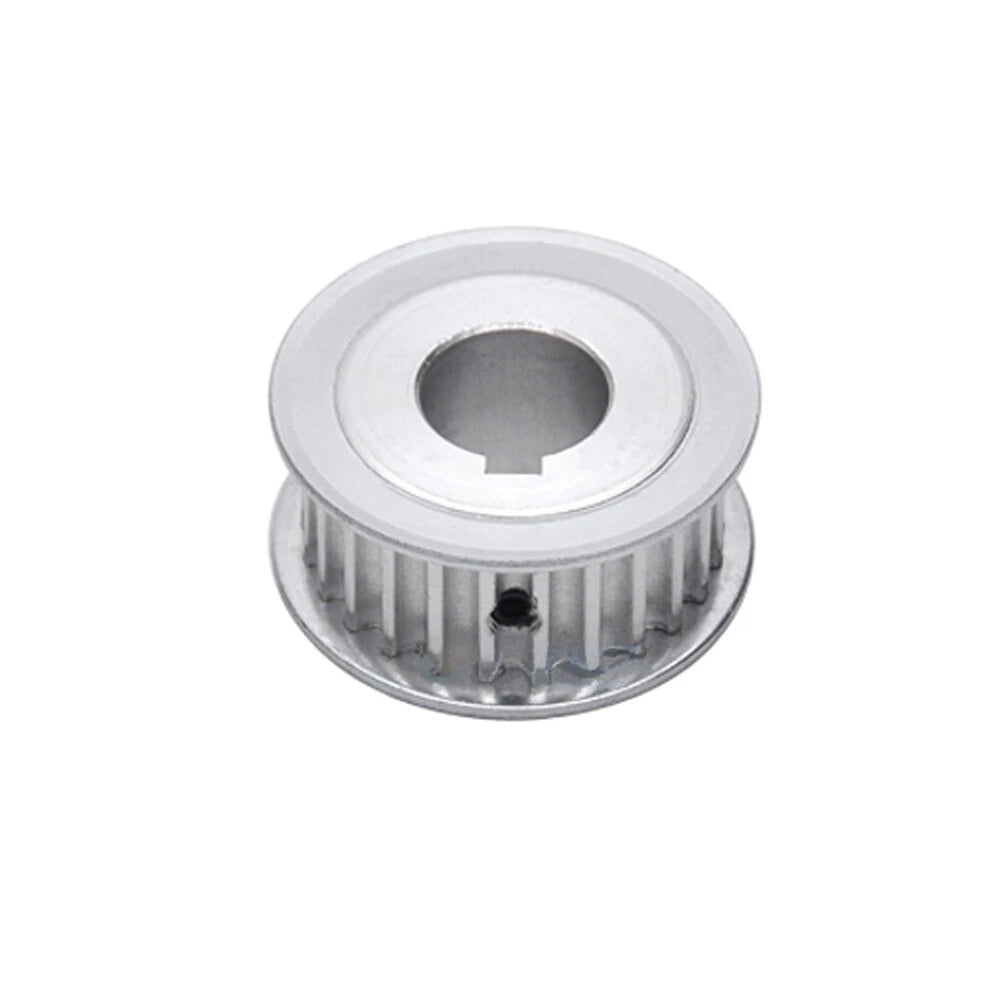
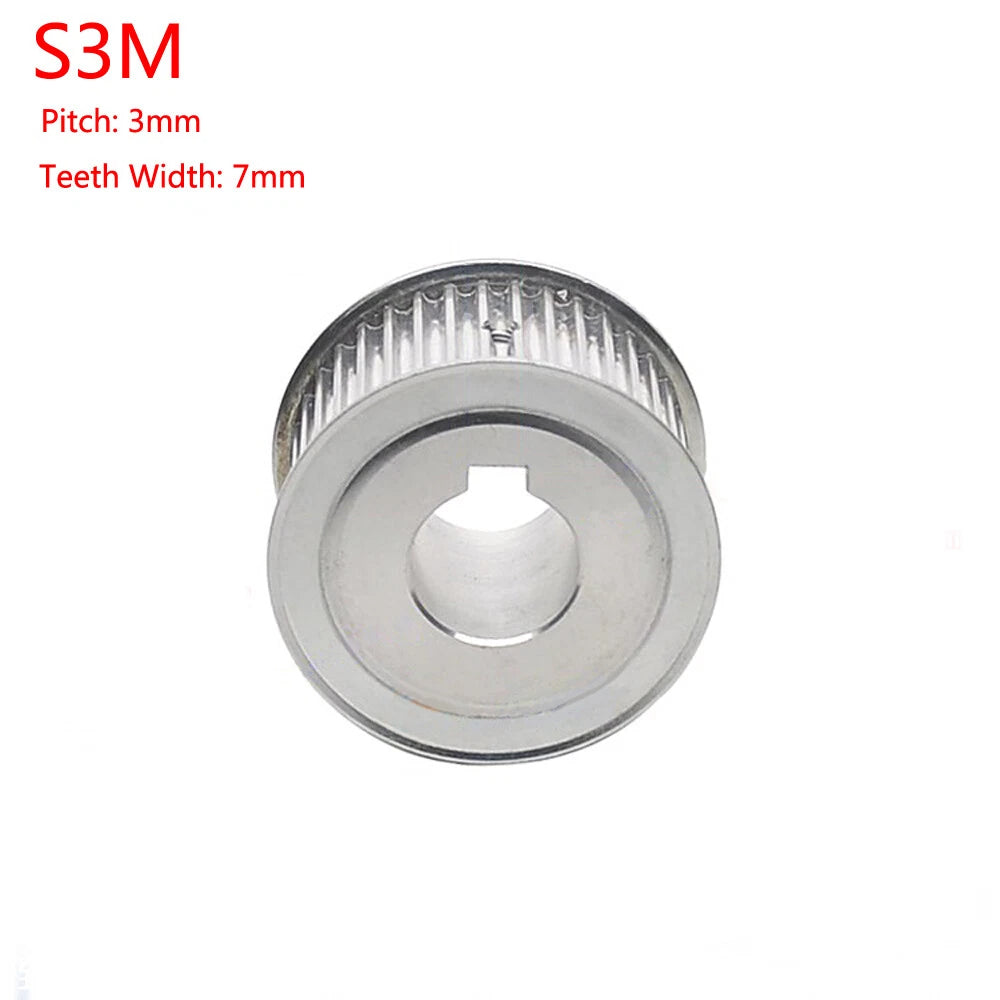
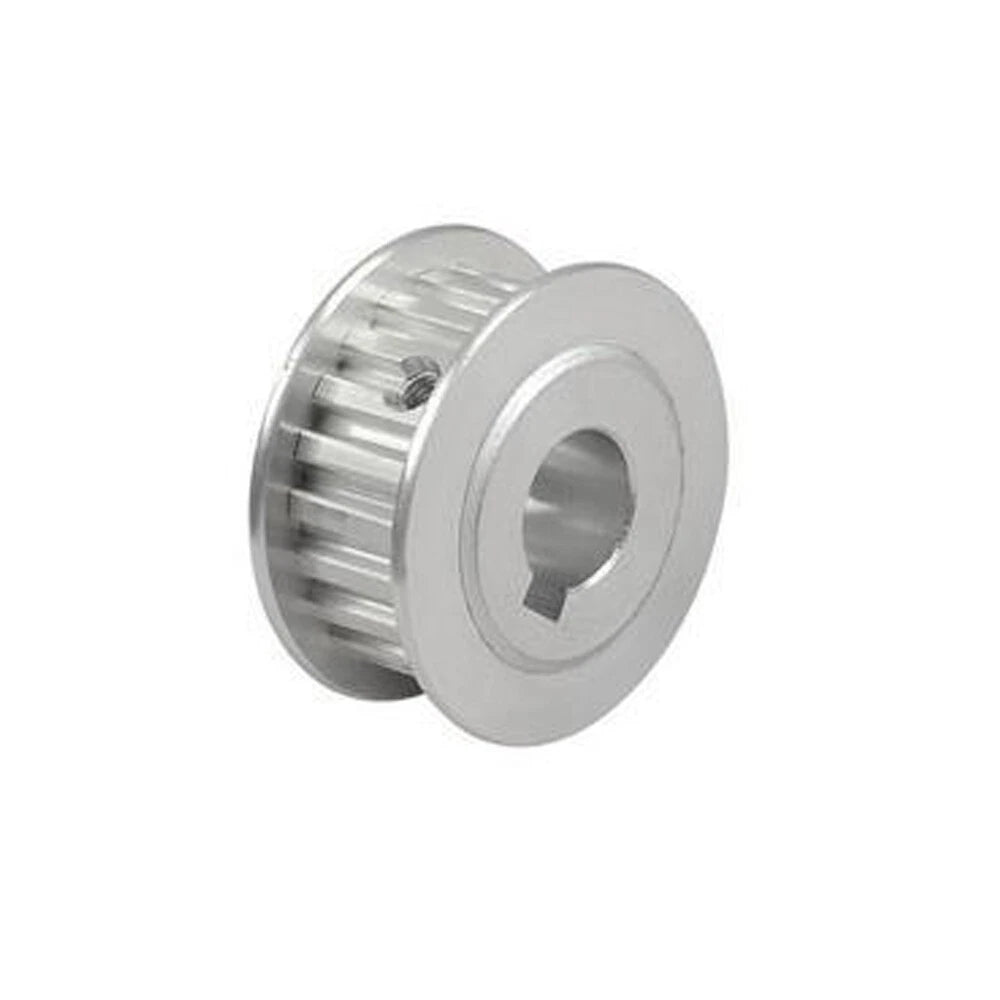
S3M 18T-40T Timing Belt Pulley Pitch 3mm AF-type With Keyway CNC Drive Width 7mm

No reviews

Price:
Sale price$14.13 USD
Stock:
In stock (500 units), ready to be shipped

Payment & Security

Ach Direct Debit Amazon American Express Apple Pay Bancontact BLIK Diners Club Discover EPS Google Pay iDEAL Wero JCB Maestro Mastercard Multibanco MobilePay PayPal Przelewy24 Shop Pay Twint Union Pay USDC Visa

Your payment information is processed securely. We do not store credit card details nor have access to your credit card information.

Limited Offer — Spend More, Save More
Spend $55+
Save $5
Spend $100+
Save $10
Spend $200+
Save $25
HomeDIYer DIY Expert Support

DIY Expert Support

Get fitment advice & recommendations

Mon–Fri  8:30 AM – 8:00 PM
24-Hour Fast Ship
Arrives in 3–14 Days
Worldwide Shipping
30-Day Returns
1 tree planted with every purchase

Description

S3M Timing Belt Pulley — 3mm Pitch AF-Type With Keyway for Precise CNC Drive Systems

When your CNC router, 3D printer, or automation rig demands slip-free, repeatable motion, a mismatched or poorly machined pulley becomes the weakest link in the entire drivetrain. Engineers and makers who need a reliable S3M timing belt pulley with a keyed bore — not a plain bore that spins under load — will find this AF-type series purpose-built for the job.

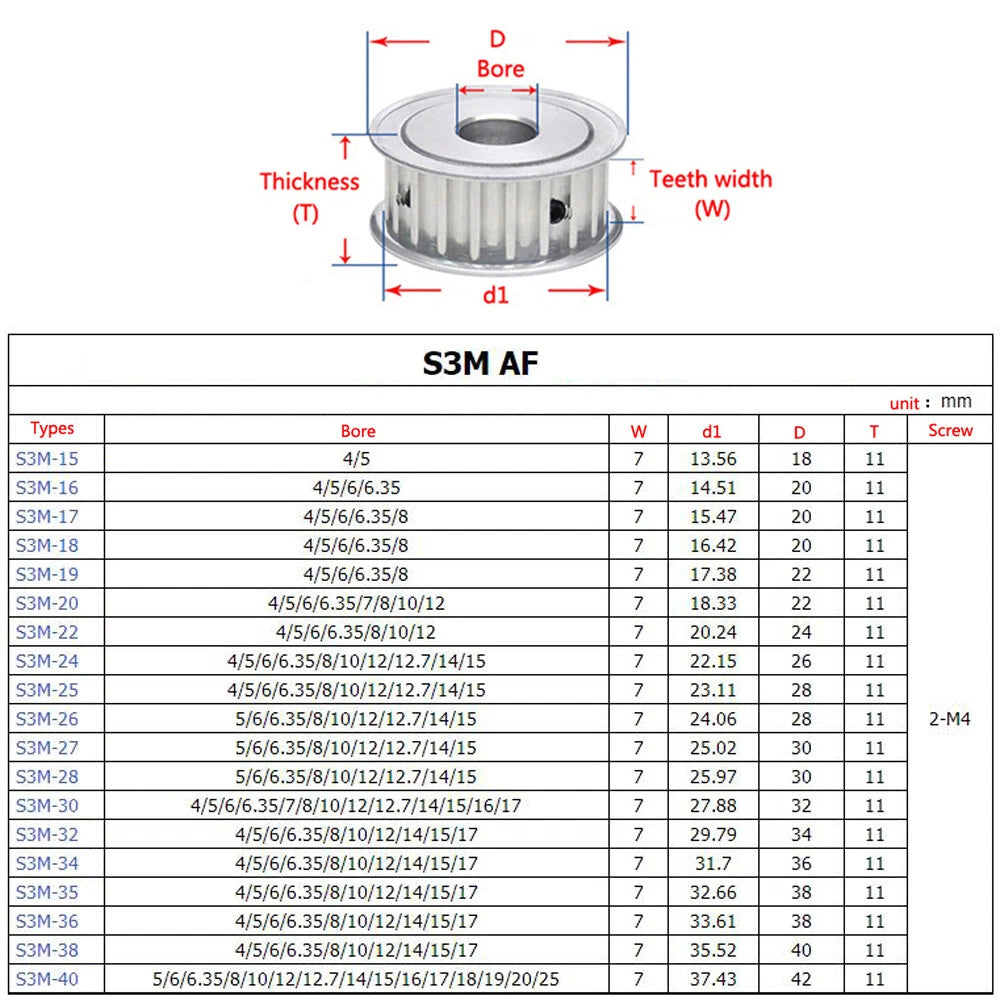
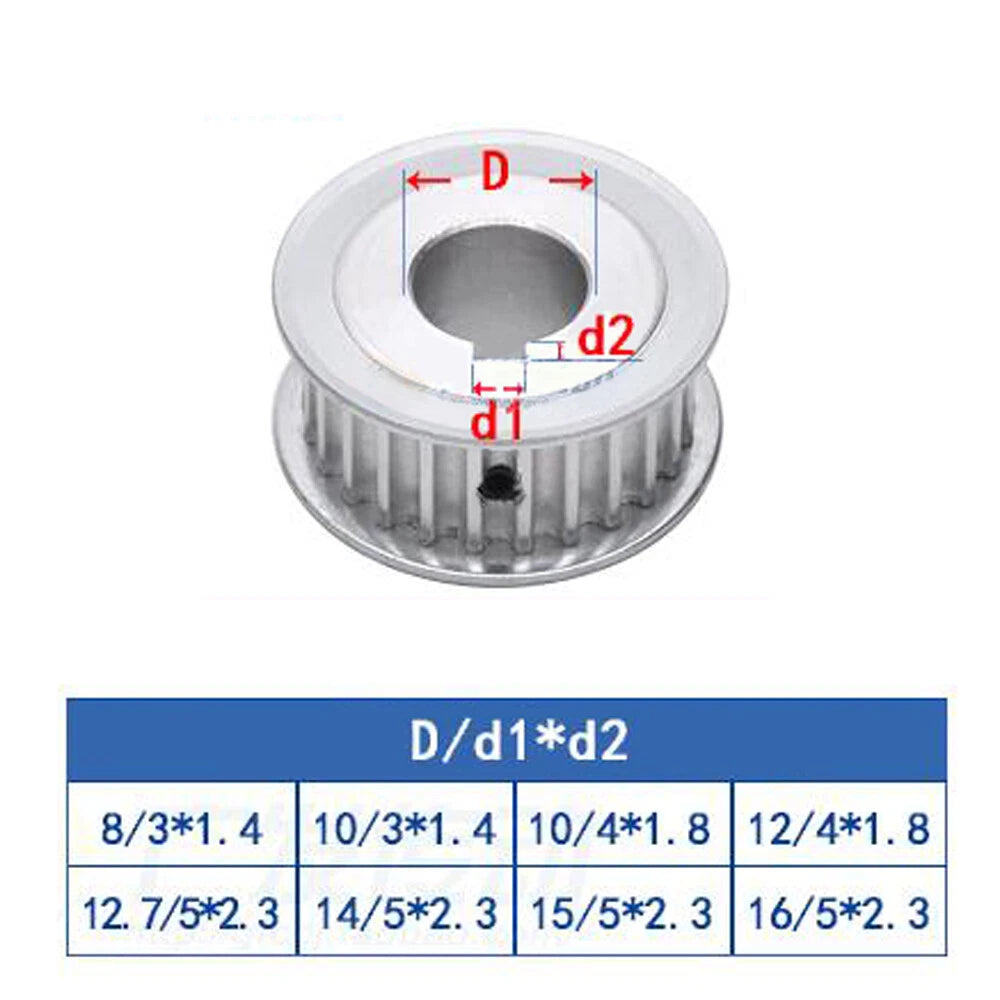
Each pulley in this series is machined from aluminum alloy with an anodized finish, covering tooth counts from 18T to 40T and bore diameters from 8mm to 25mm (approximately 0.31" to 0.98"). The 3mm pitch (S3M standard) matches standard S3M/HTD-3M open or closed timing belts. Drive width is 7mm, and every variant ships with a precision-cut keyway — sizes range from 3×1.4mm up to 8×3.3mm depending on bore — ensuring positive torque transfer without set-screw slippage.

Typical use cases include desktop CNC axis drives requiring backlash-free positioning, DIY robotic arm joints where keyway engagement prevents rotational slip under load, and compact conveyor or pick-and-place automation systems using S3M belt loops. The wide tooth-count range (18T–40T) lets you dial in your gear ratio without sourcing multiple pulley families.

⚙️ Compatibility: Fits standard S3M / HTD-3M timing belts with 3mm pitch and 7mm width. Verify your belt width and bore requirement before ordering.

✅ Key Features of These S3M Timing Belt Pulleys

  • 🔩AF-Type With Keyway — Positive key engagement (3×1.4mm to 8×3.3mm) locks the pulley to the shaft, eliminating rotational slip under dynamic loads.
  • 📐Wide Tooth Count Range (18T–40T) — Sixteen tooth-count options let you fine-tune drive ratios for speed or torque without switching belt families.
  • 🕳️Multiple Bore Sizes (8–25mm) — Twelve bore options from 8mm to 25mm cover most standard motor and shaft diameters used in CNC and robotics.
  • 🏗️Aluminum Alloy Construction — Lightweight yet rigid material keeps rotating inertia low while maintaining dimensional accuracy under continuous operation.
  • 📏3mm Pitch / 7mm Drive Width — Matches the S3M belt standard precisely; the 7mm belt contact width provides adequate load capacity for light-to-medium duty applications.
  • 🔧CNC-Machined Tooth Profile — Consistent tooth geometry across the full range ensures smooth belt engagement and reduced vibration at operating speeds.

📐 Technical Specifications — S3M Timing Belt Pulley

Belt Standard S3M (HTD-3M compatible)
Pitch 3mm
Drive Width 7mm
Tooth Count 18T, 19T, 20T, 22T, 24T, 25T, 26T, 27T, 28T, 30T, 32T, 34T, 35T, 36T, 38T, 40T
Bore Diameter 8mm, 10mm, 12mm, 12.7mm, 14mm, 15mm, 16mm, 17mm, 18mm, 19mm, 20mm, 25mm
Keyway Size 3×1.4mm / 4×1.8mm / 5×2.3mm / 6×2.8mm / 8×3.3mm (varies by bore)
Hub Type AF-type (flanged hub with keyway)
Material Aluminum alloy
Finish Anodized
Outer Diameter See variant options
Flange Diameter See variant options
Quantity per Order 1 piece

❓ Frequently Asked Questions

How do I choose the right tooth count (18T vs 40T)?

The tooth count determines your pulley's pitch diameter and, combined with your driven pulley's tooth count, sets the drive ratio. A smaller tooth count (e.g., 18T) on the motor gives a speed reduction when paired with a larger driven pulley, increasing torque. A larger tooth count (e.g., 40T) on the motor increases output speed. Match the tooth count to your required belt loop length and center distance as well — use a belt length calculator to confirm compatibility before ordering.

What bore size should I select for my motor shaft?

Measure your motor or drive shaft diameter with calipers and select the matching bore. Available bores are 8mm, 10mm, 12mm, 12.7mm (1/2"), 14mm, 15mm, 16mm, 17mm, 18mm, 19mm, 20mm, and 25mm. The 12.7mm bore is designed for imperial 1/2" shafts common in some stepper motors. If your shaft is metric, choose the exact metric bore — do not use an oversized bore with a sleeve unless you have a precision adapter.

What is the keyway for, and do I need it?

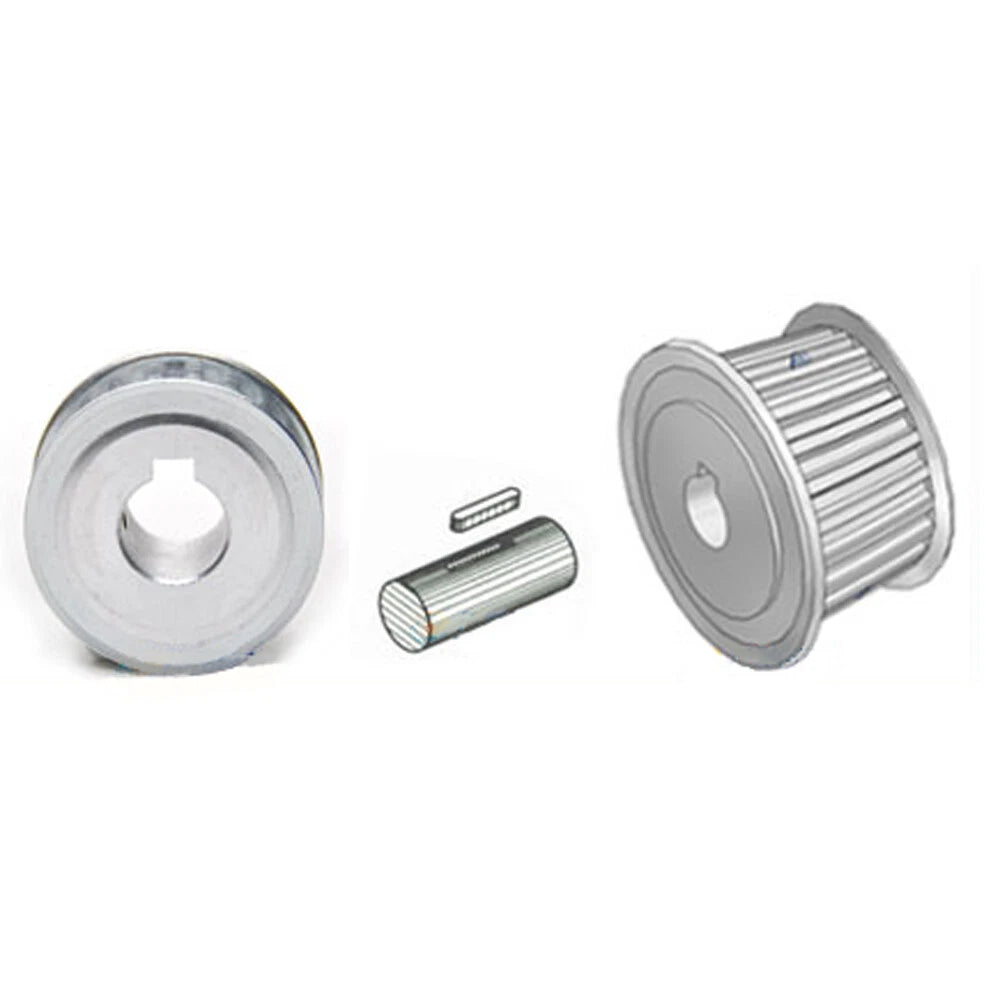
The keyway is a rectangular slot machined into the bore that accepts a matching key (a small rectangular bar) inserted between the shaft and pulley. This creates a positive mechanical lock that prevents the pulley from rotating on the shaft under torque — something a set-screw alone cannot reliably do under reversing or high-cycle loads. If your shaft has a matching keyway cut, use the key. If your shaft is plain (no keyway), the pulley can still be mounted using the set screw, but for high-torque or reversing applications, a keyed shaft is strongly recommended.

Is this pulley compatible with HTD-3M belts as well as S3M belts?

S3M and HTD-3M share the same 3mm pitch, so these pulleys are generally cross-compatible with both belt profiles. However, the tooth flank geometry differs slightly between the two standards. For light-to-medium duty applications the difference is negligible, but for high-load or precision positioning systems, use the belt and pulley from the same standard (S3M with S3M, HTD-3M with HTD-3M) to ensure optimal tooth engagement and belt life.

How strong is an aluminum pulley — can it handle my application?

Aluminum alloy pulleys are well-suited for light-to-medium duty CNC, 3D printing, robotics, and small automation applications. The S3M belt standard itself is rated for relatively modest torque loads (typically up to a few Nm depending on belt width and speed), so the aluminum pulley is not the limiting factor in most S3M drive systems. For heavy industrial applications with high shock loads, consider steel pulleys instead. If you are unsure, calculate the belt drive load using your motor torque, pulley diameter, and safety factor before selecting materials.

Will this pulley corrode or require lubrication?

The anodized aluminum finish provides good resistance to oxidation and mild corrosion in typical indoor environments. Timing belt drives are dry-running systems — do not apply grease or oil to the belt or pulley teeth, as lubricants attract debris and degrade belt rubber, reducing belt life and causing slippage. For outdoor or high-humidity environments, inspect the pulley periodically for surface oxidation and ensure the keyway and bore remain clean and free of moisture ingress.

How do I decide between this pulley and a plain-bore (non-keyway) version?

Choose the AF-type keyway pulley when your shaft has a matching keyway cut and you need reliable torque transfer under reversing loads, high cycle counts, or moderate-to-high torque. Choose a plain-bore pulley only for very light-duty, unidirectional, low-torque applications where a set screw is sufficient. For CNC axis drives and robotics joints — the primary use cases for S3M pulleys — the keyed version is the correct choice in most scenarios.

🛒 Select your Number of Teeth, Bore, and Keyway size above, then add to cart.


You may also like

Recently viewed