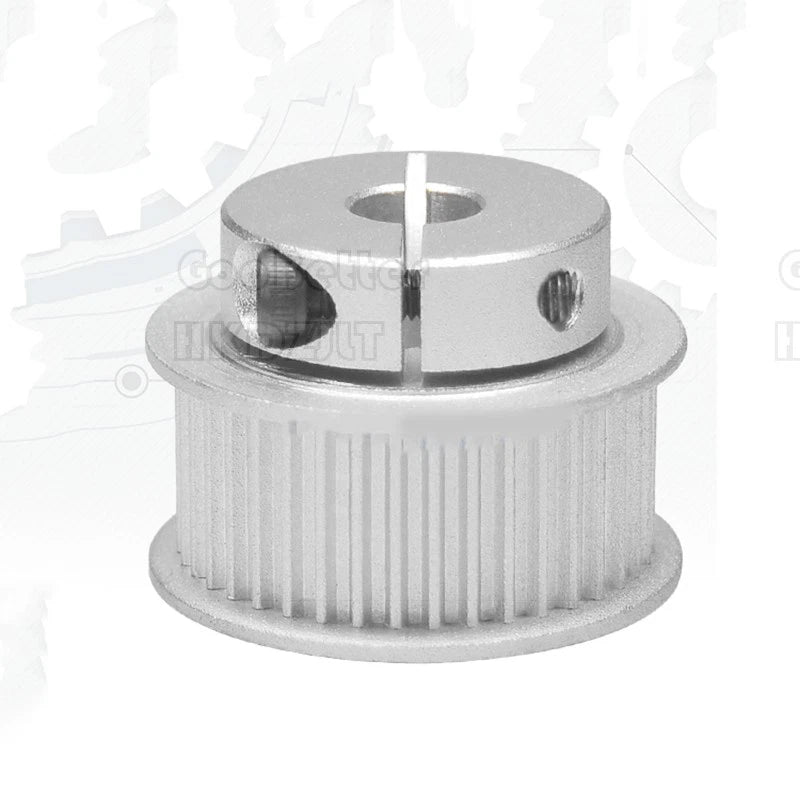
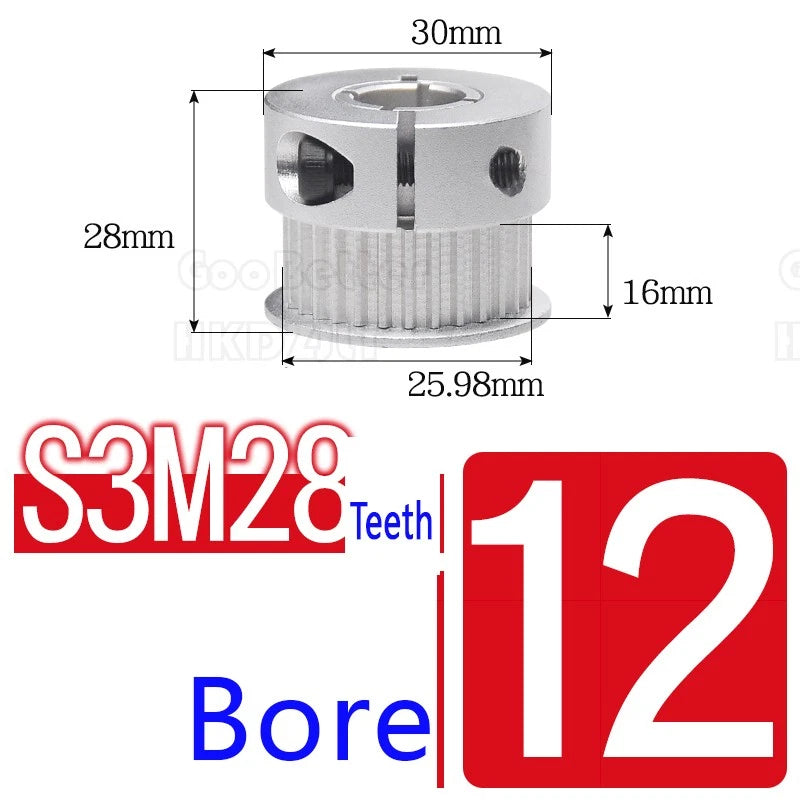
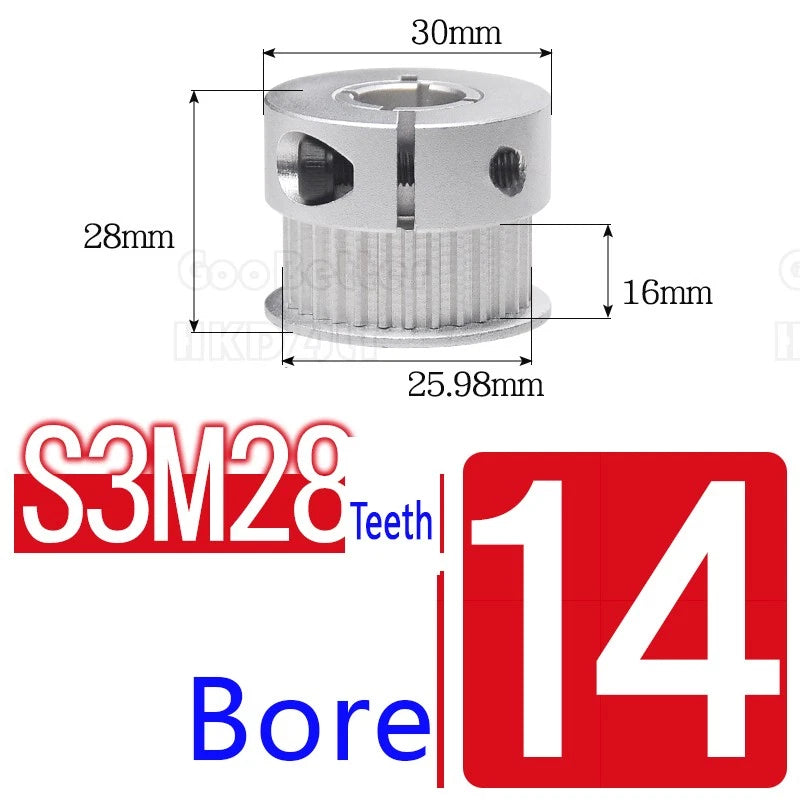
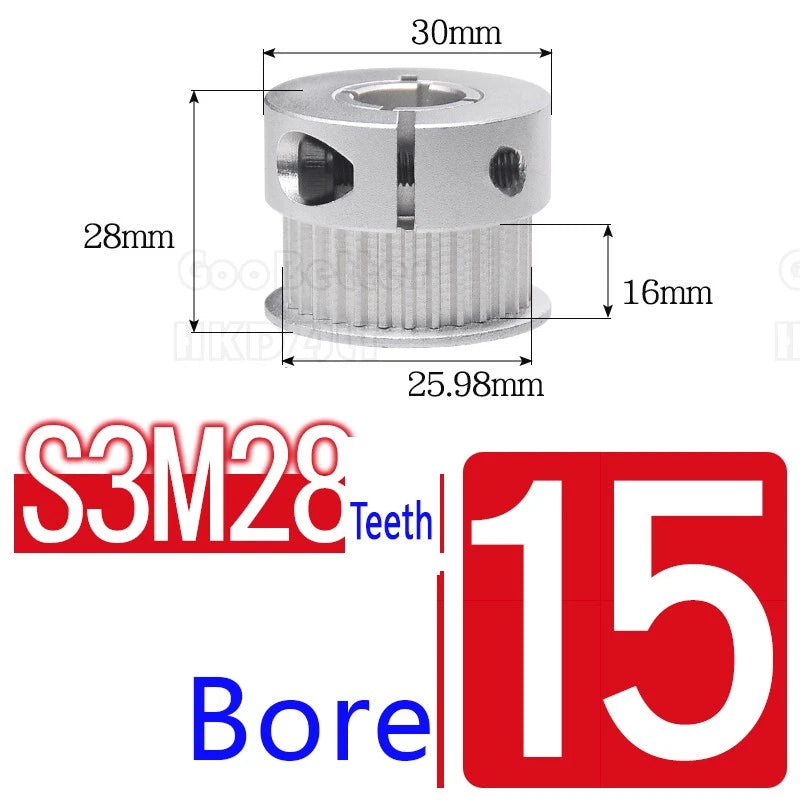
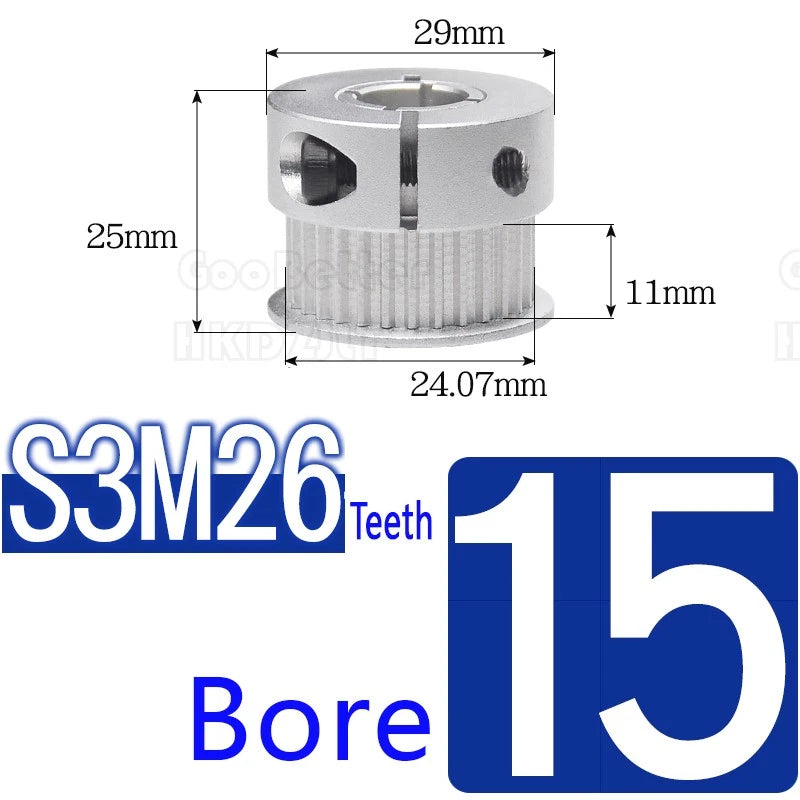
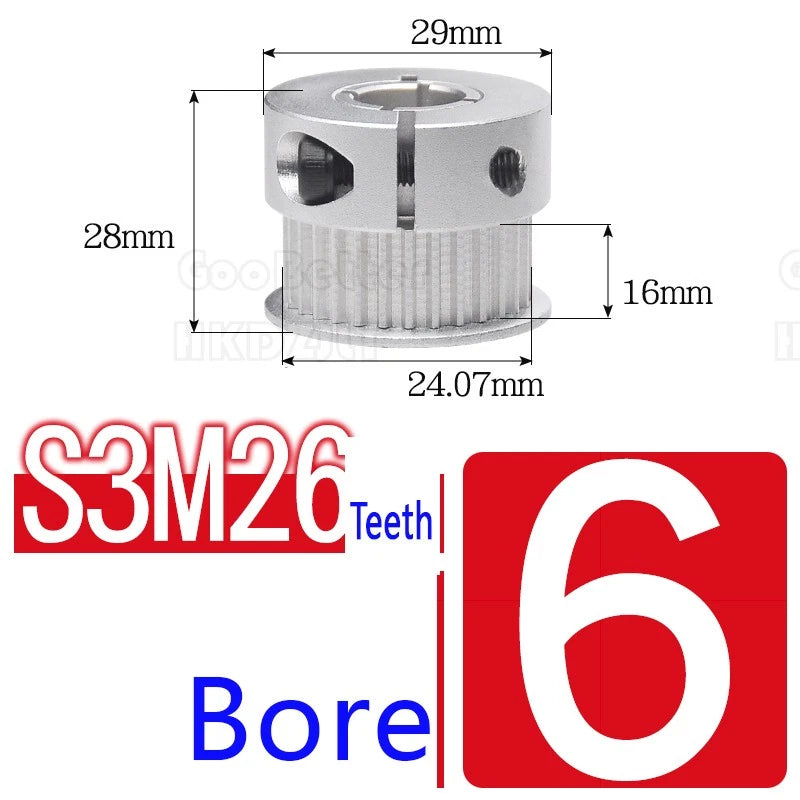
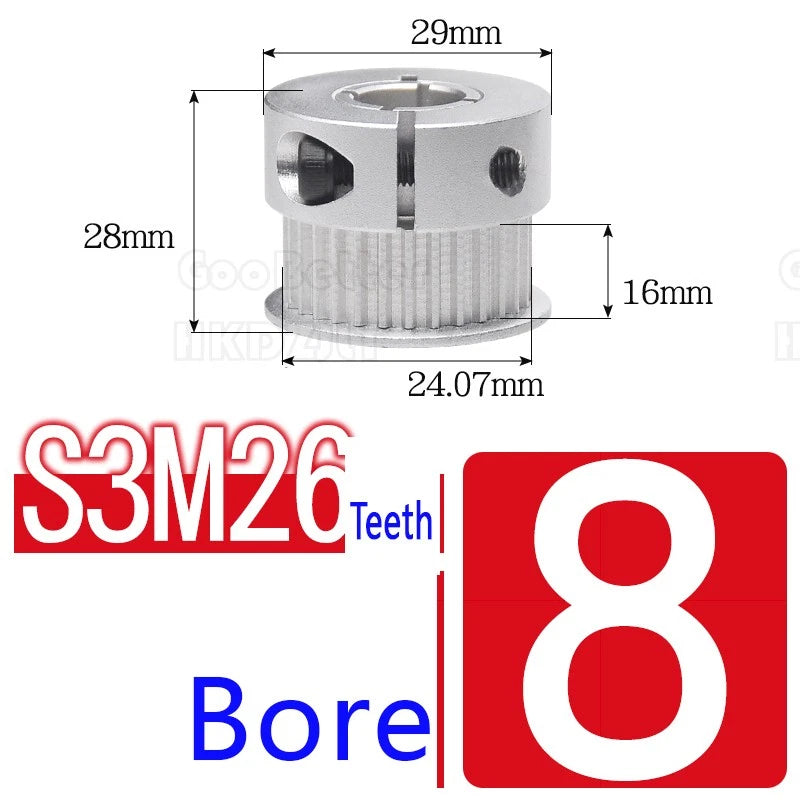
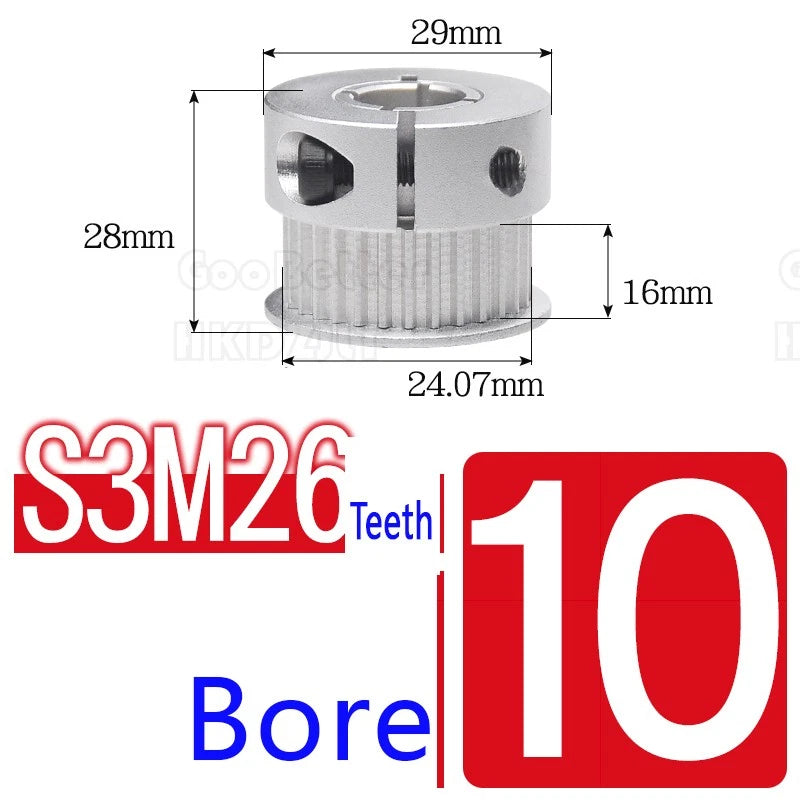
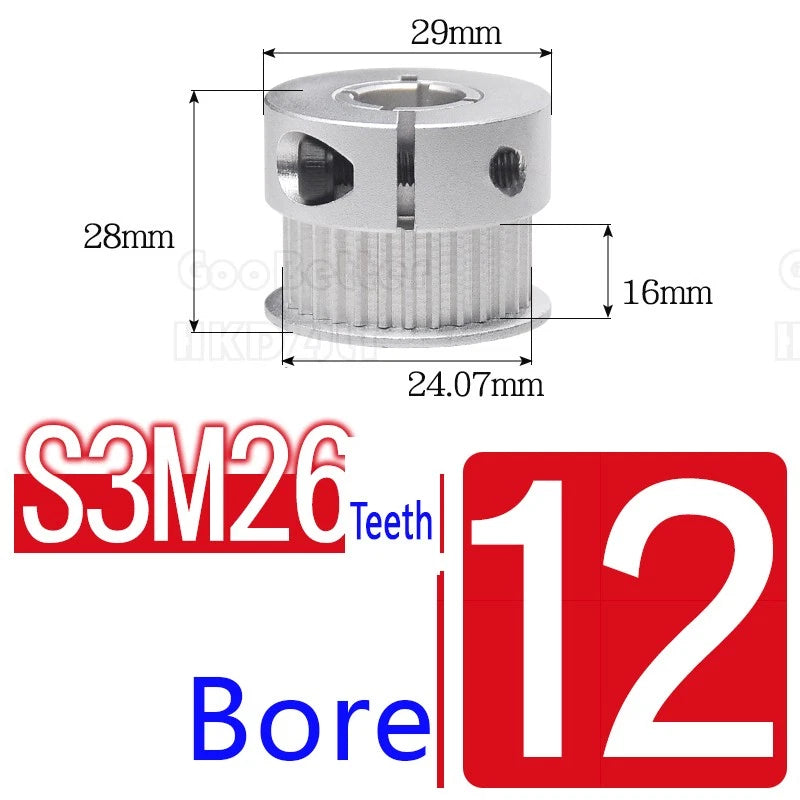
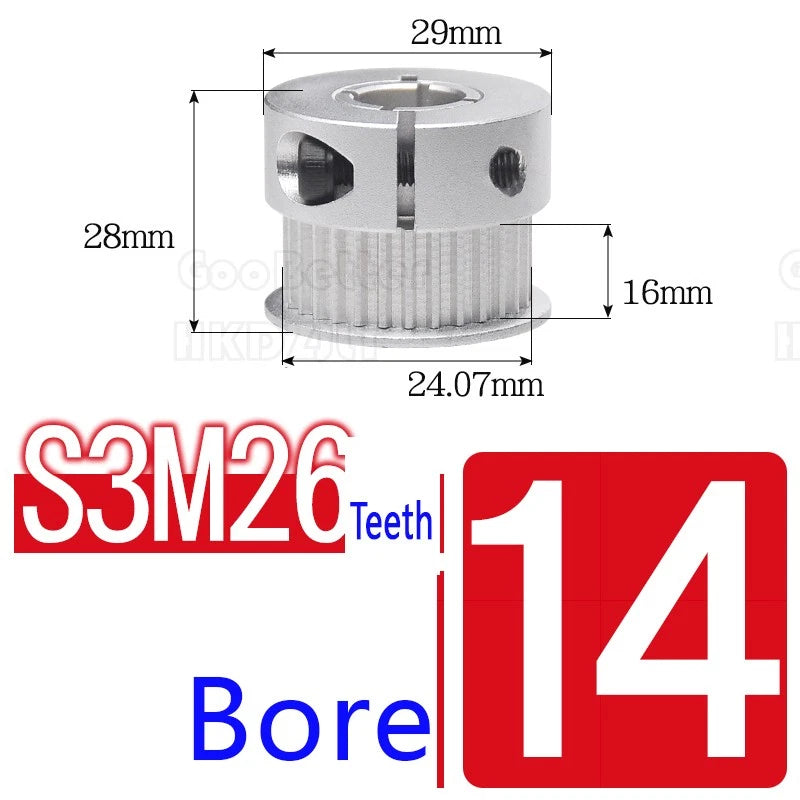
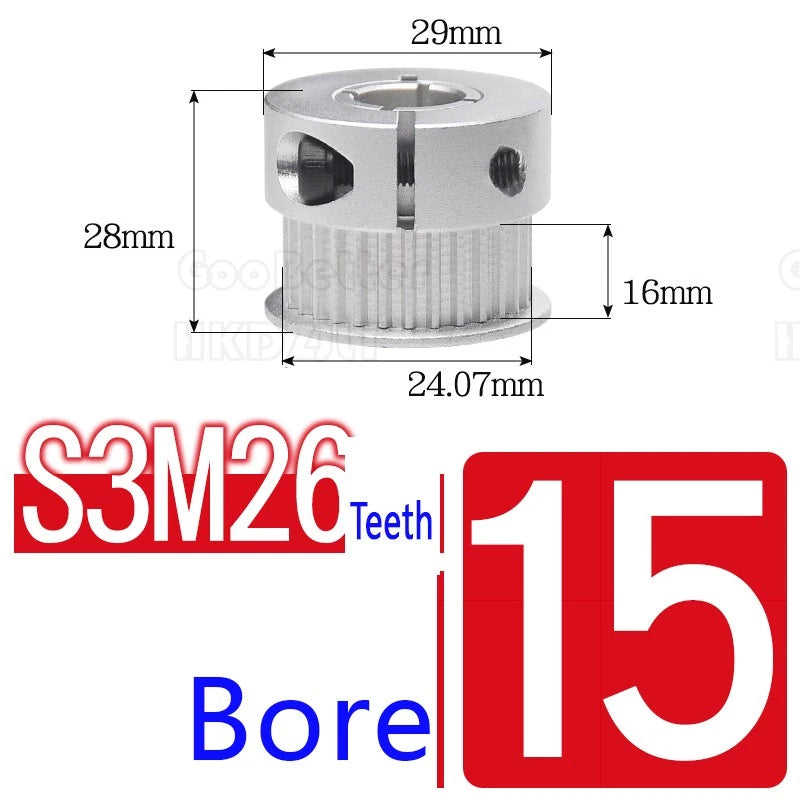
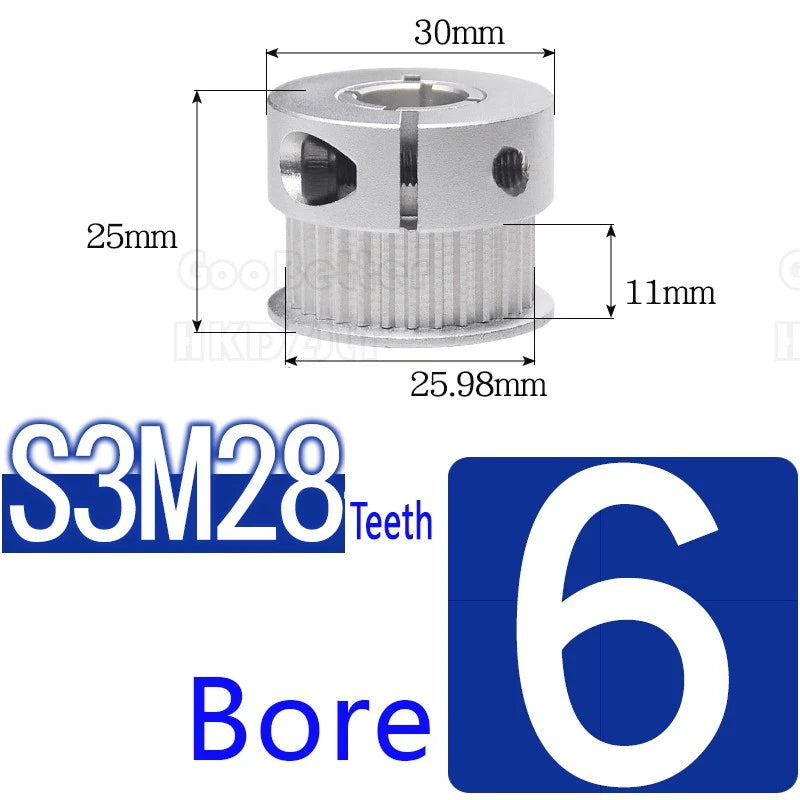
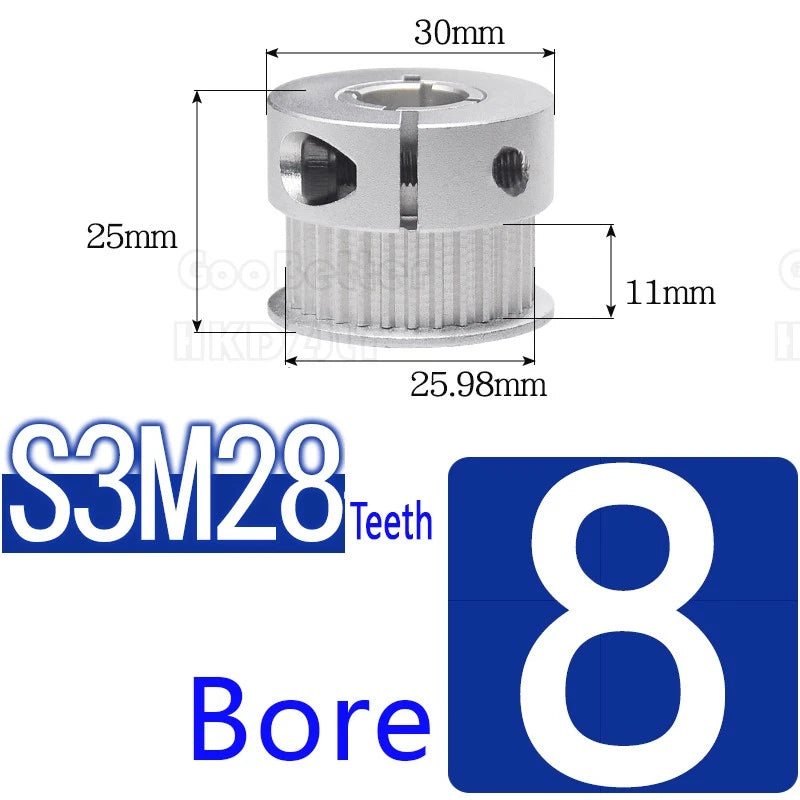
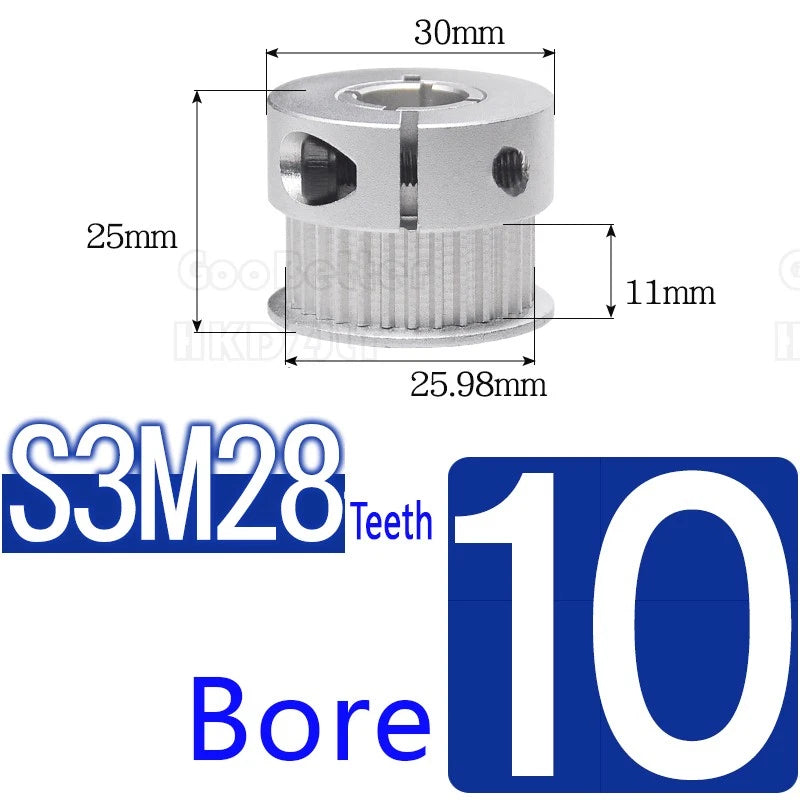
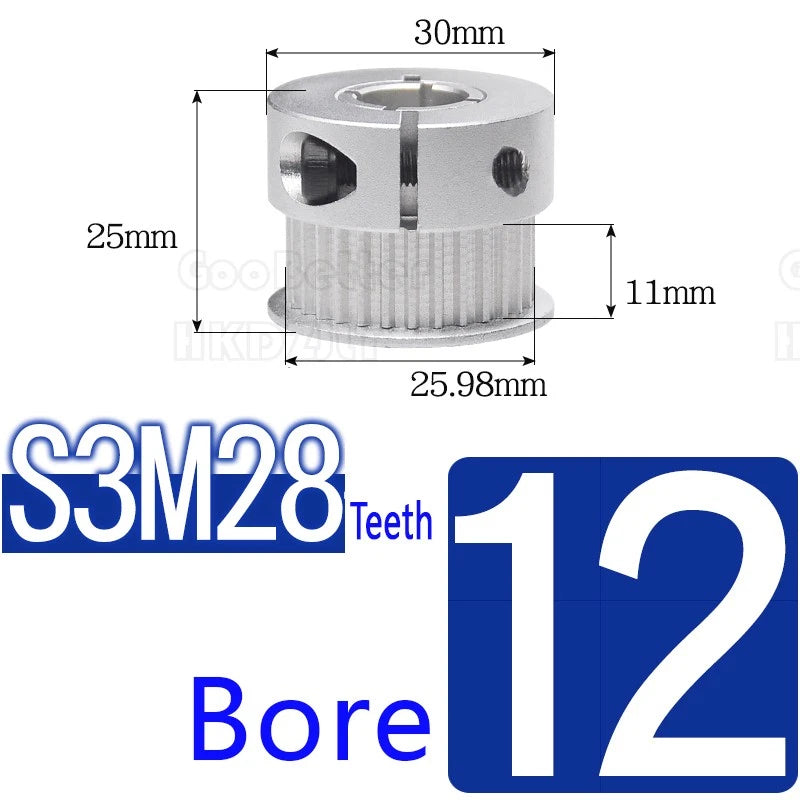
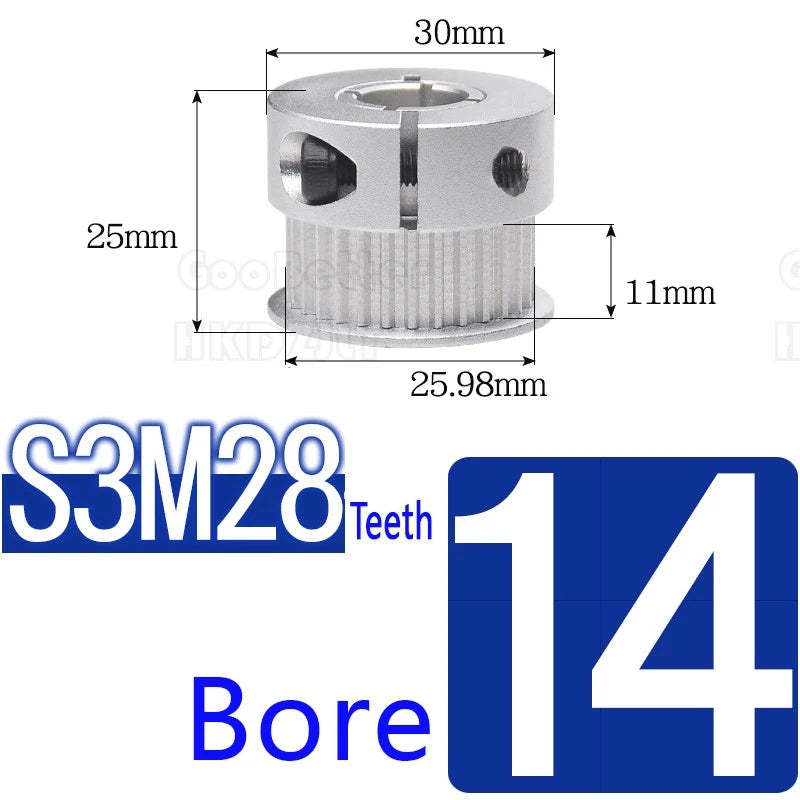
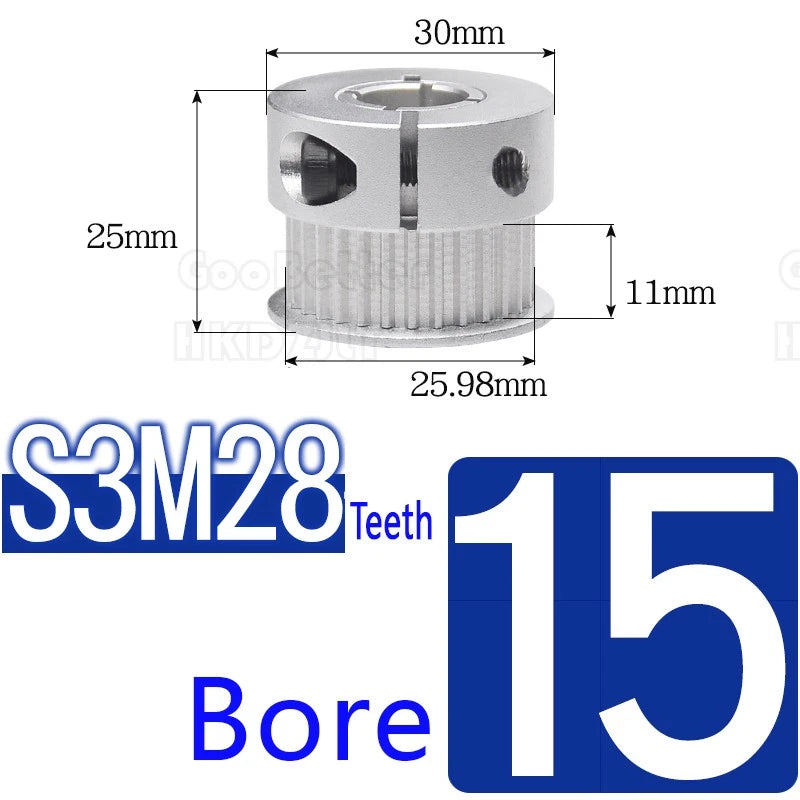
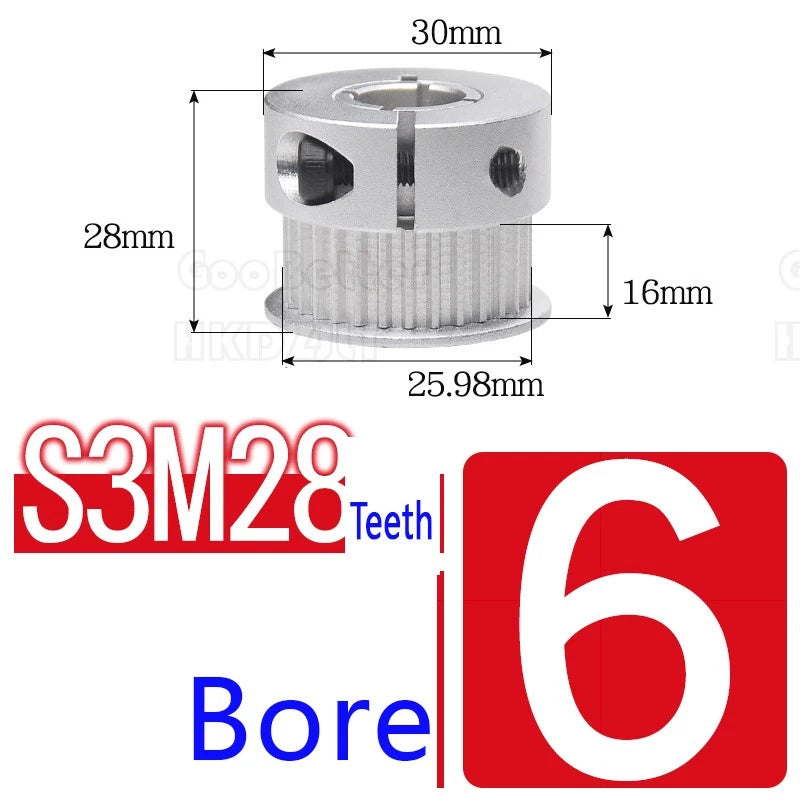
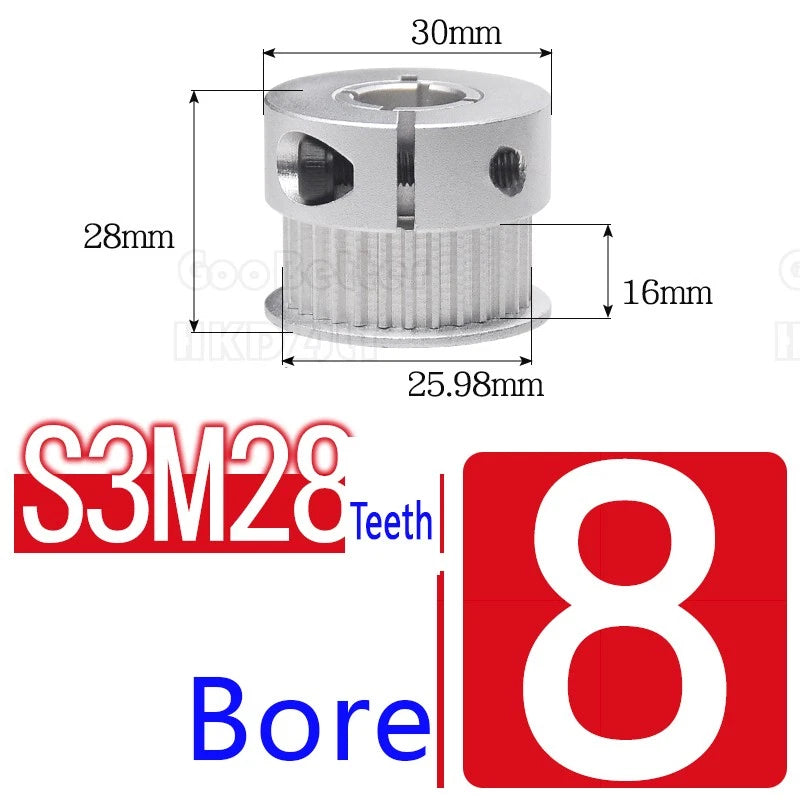
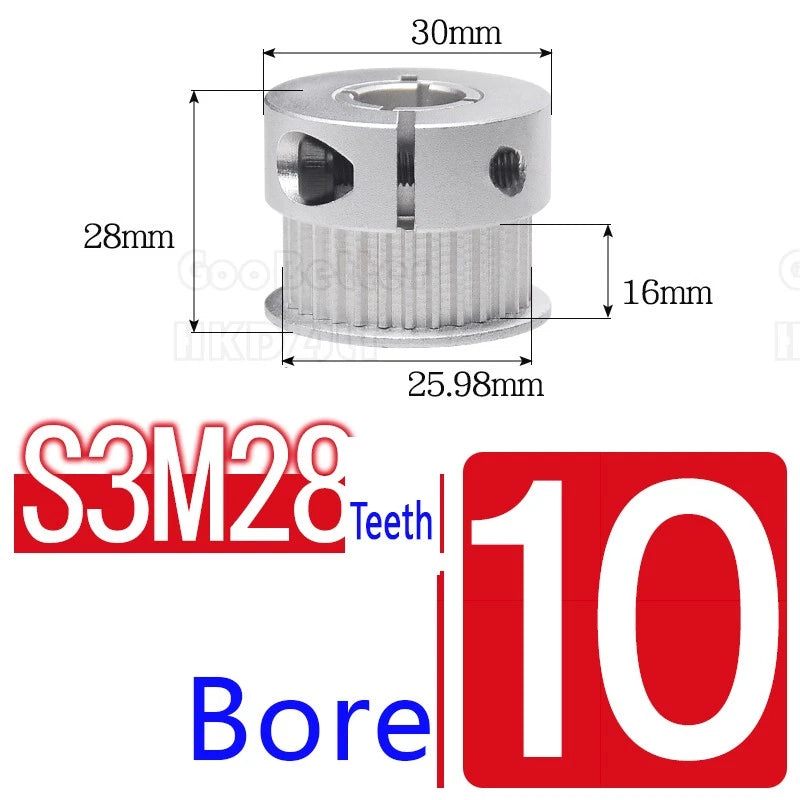
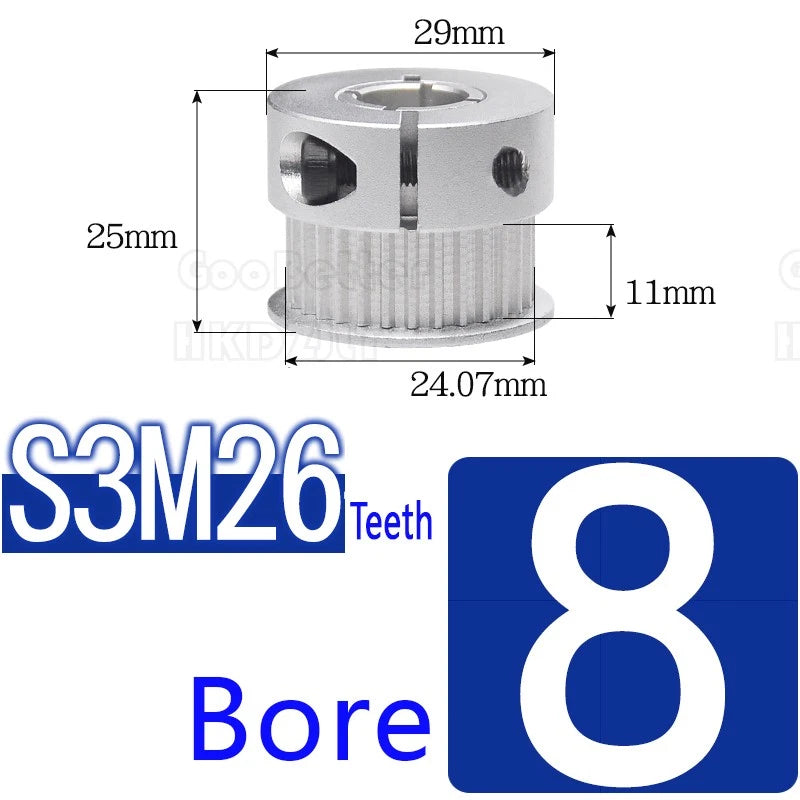
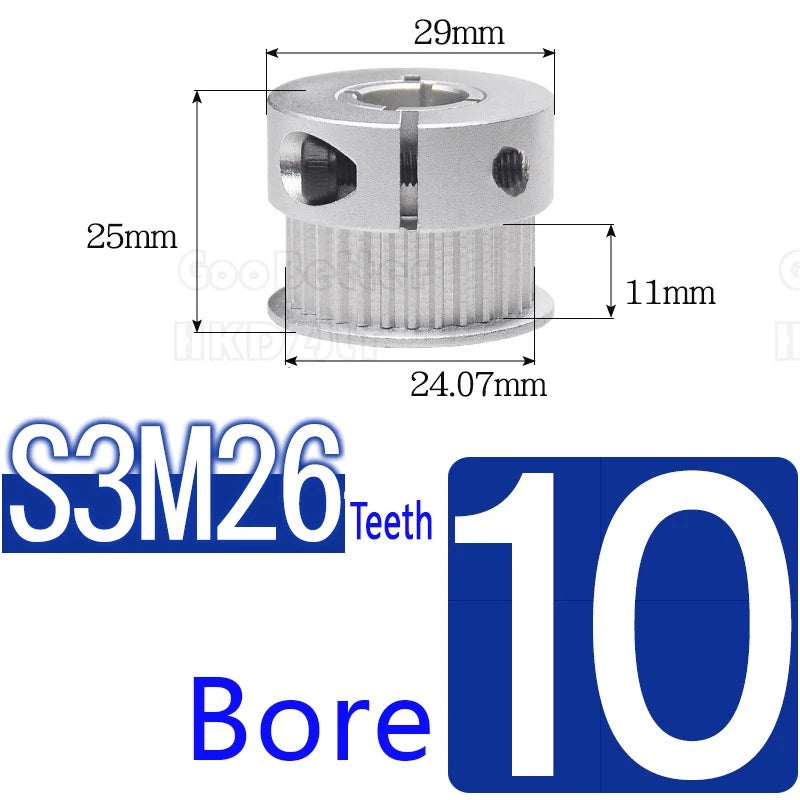
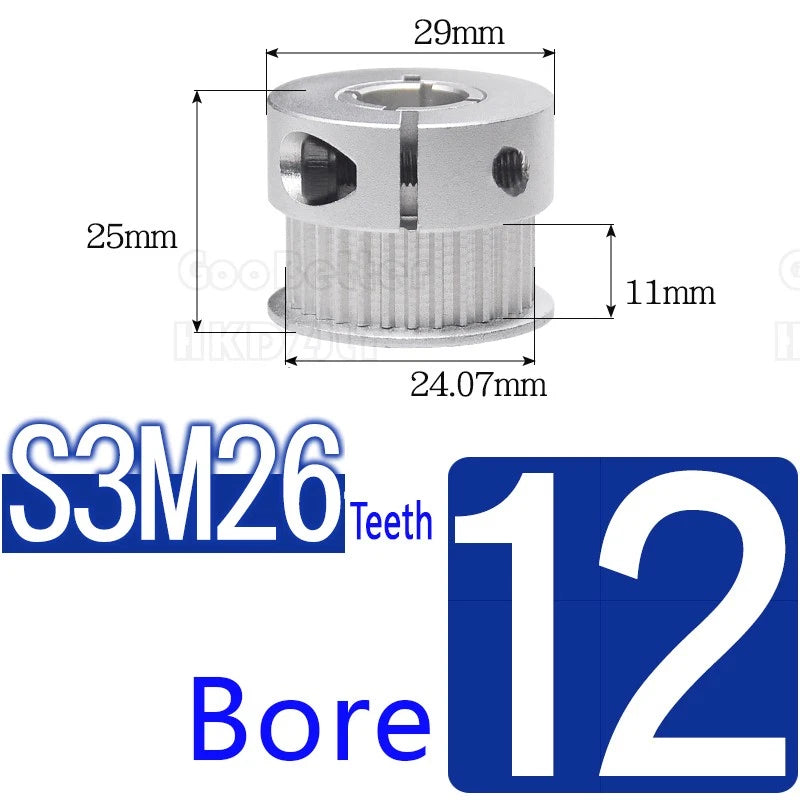
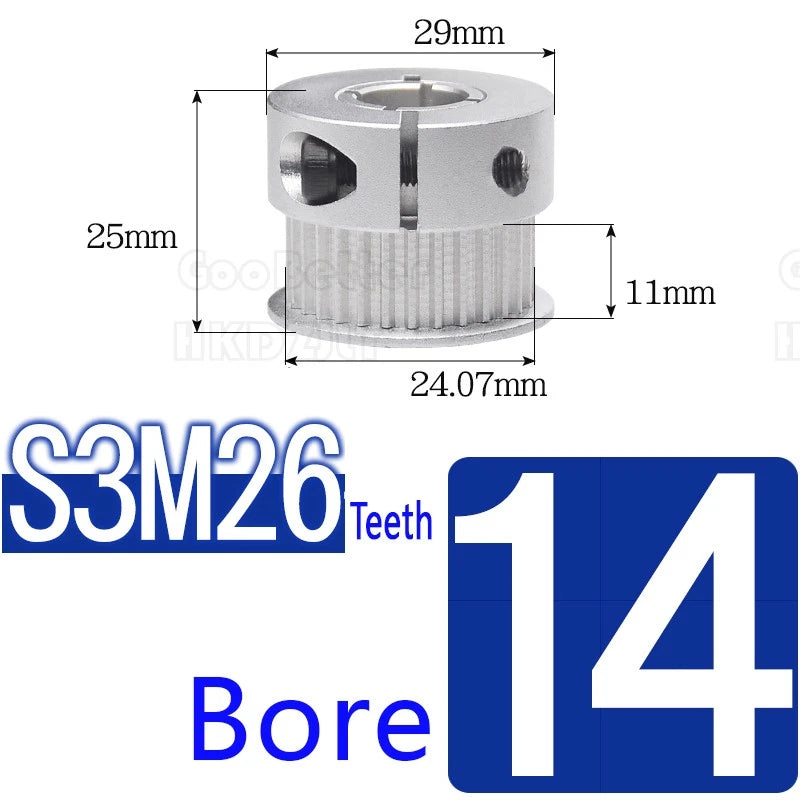
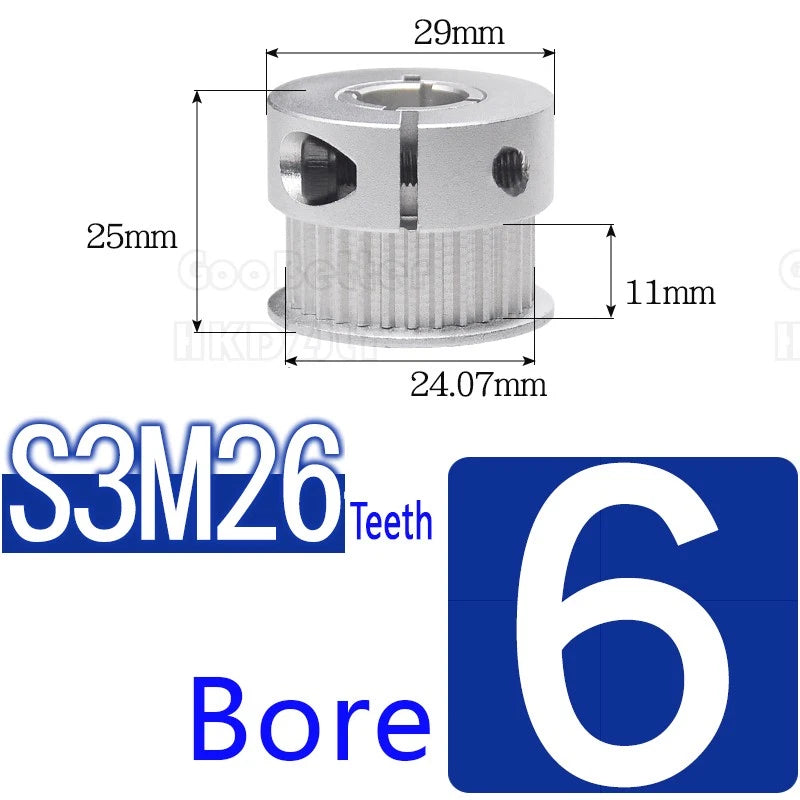
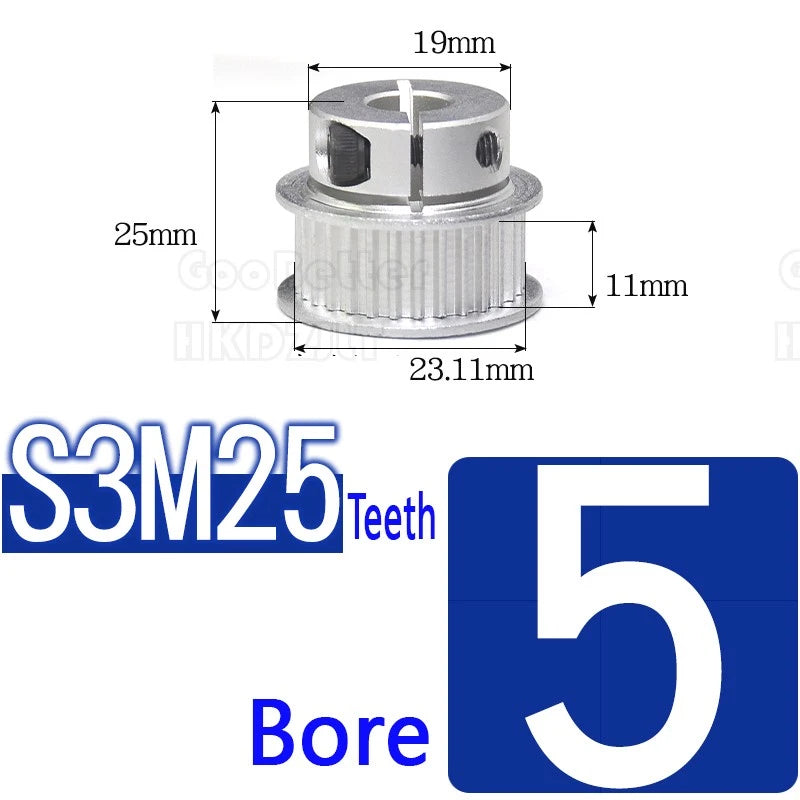
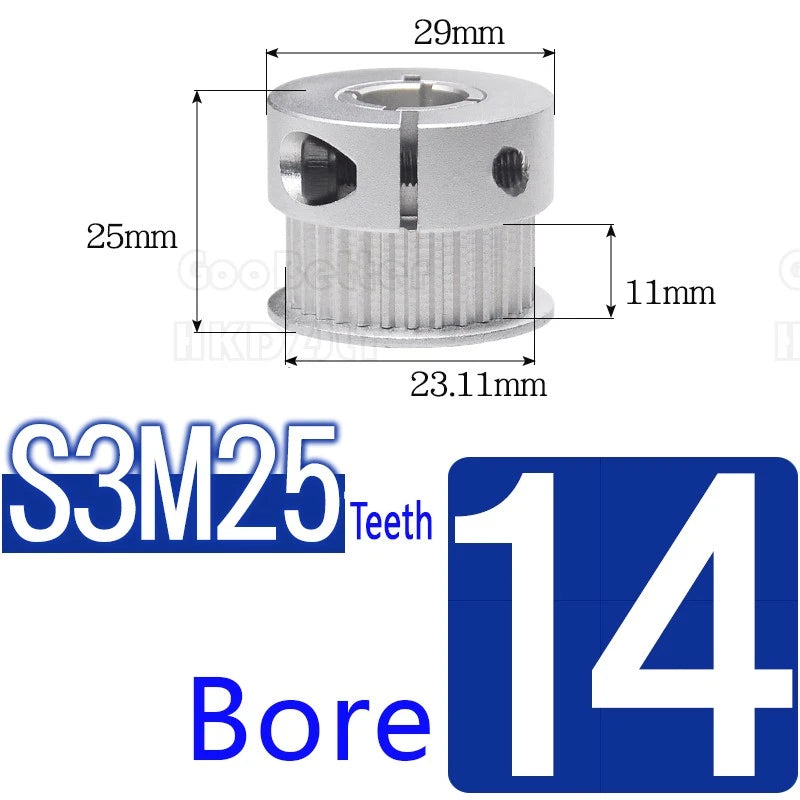
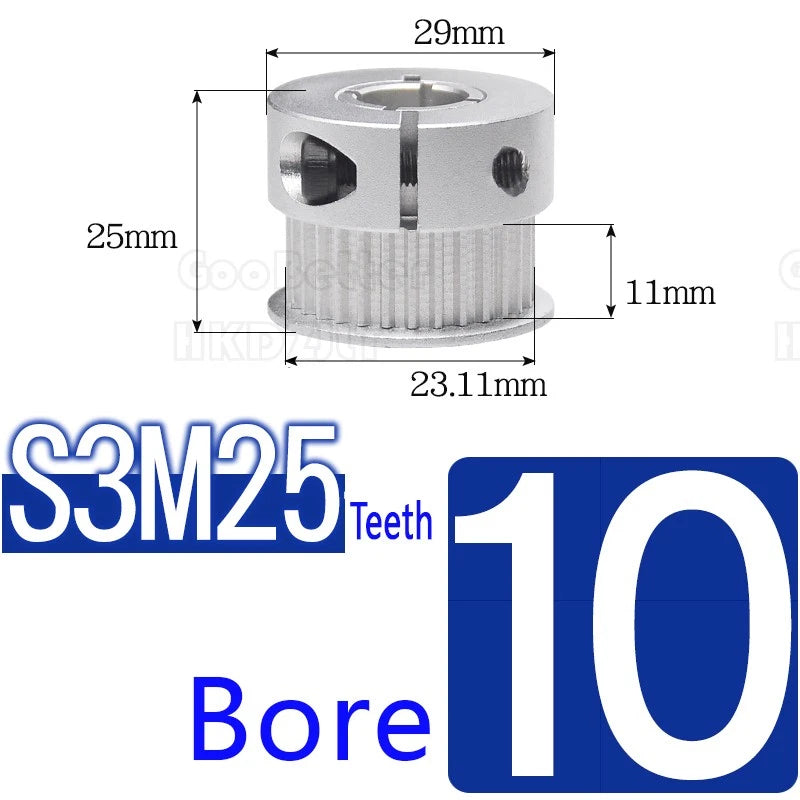
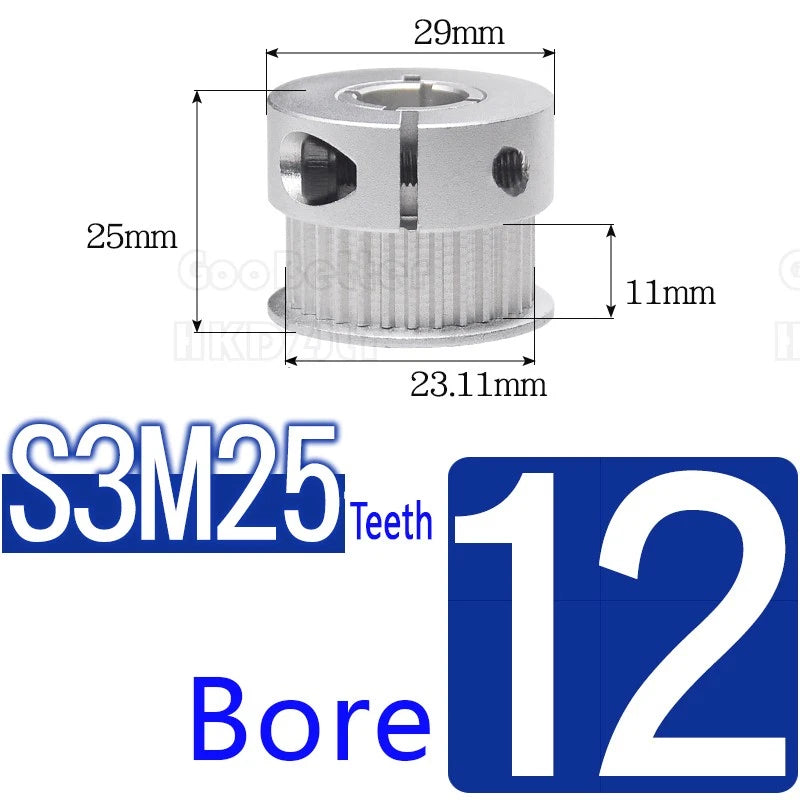
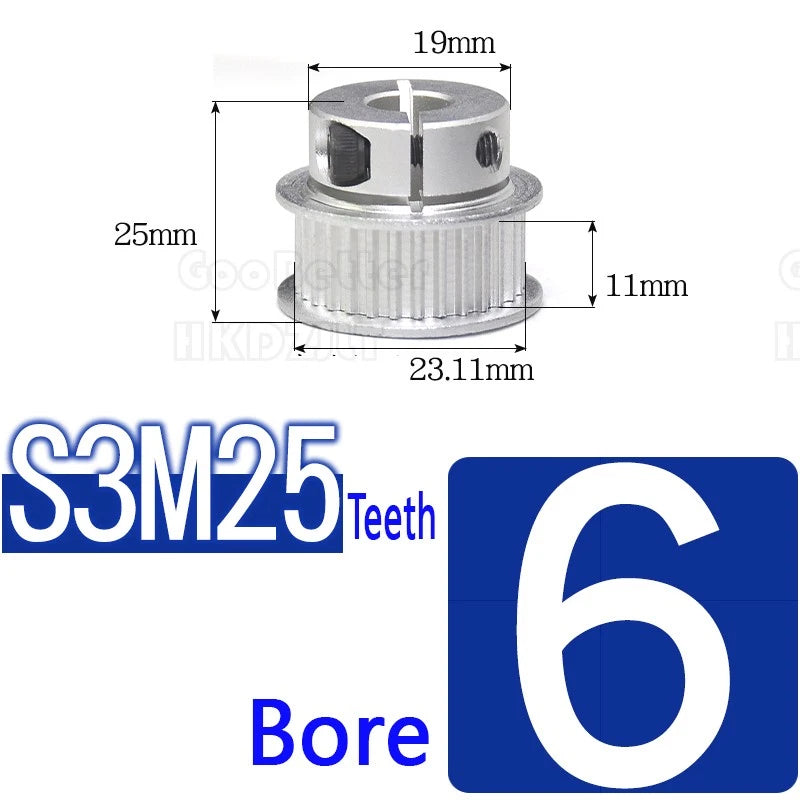
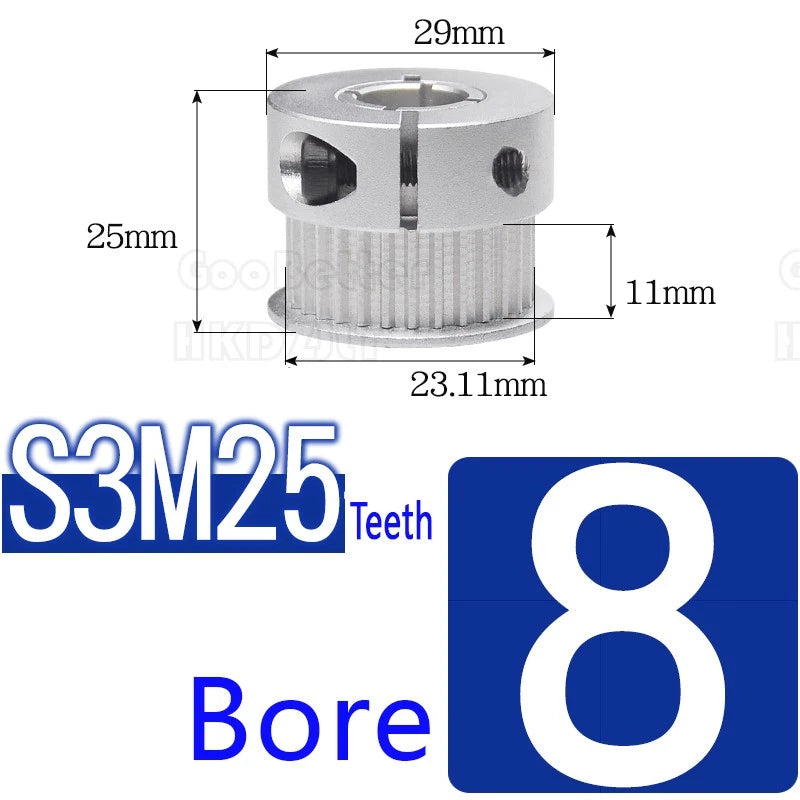
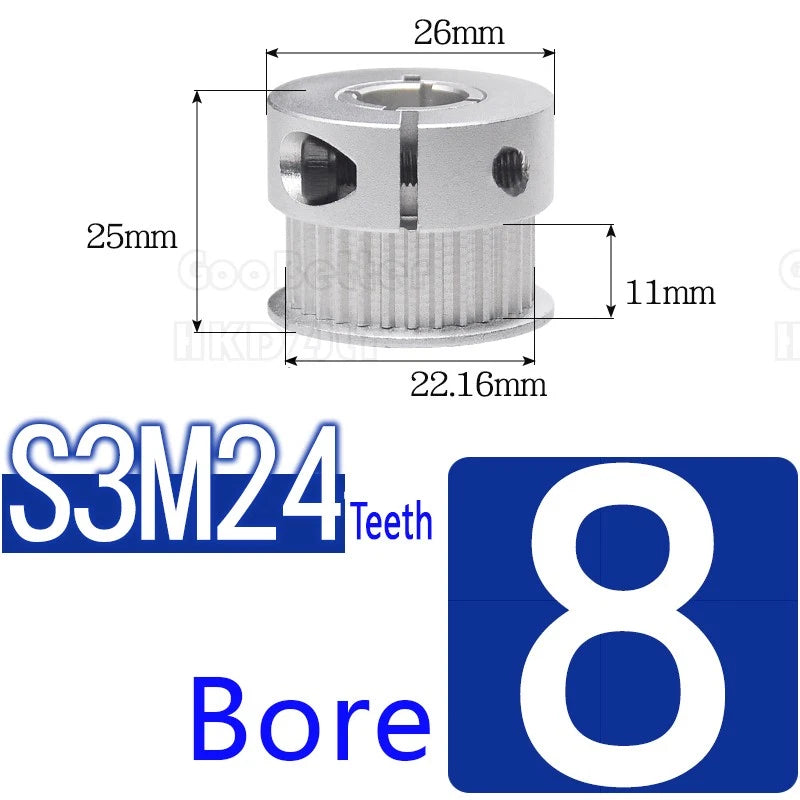
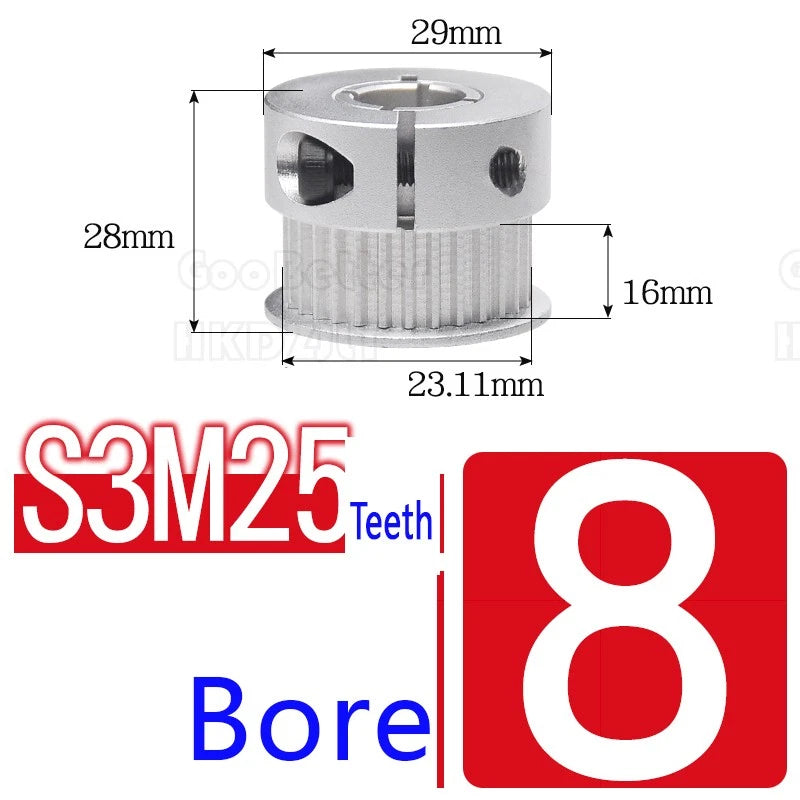
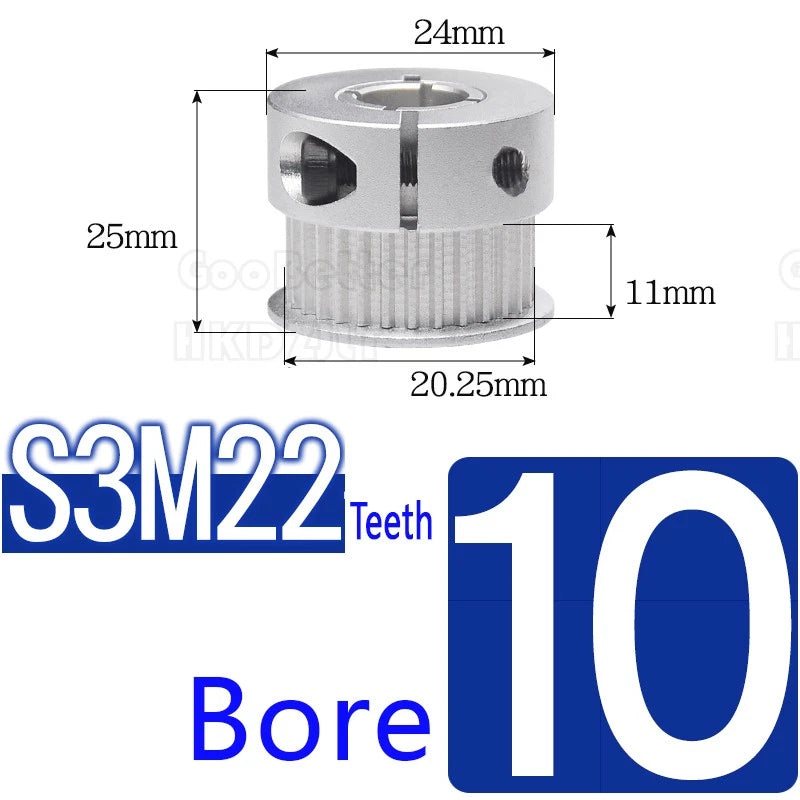
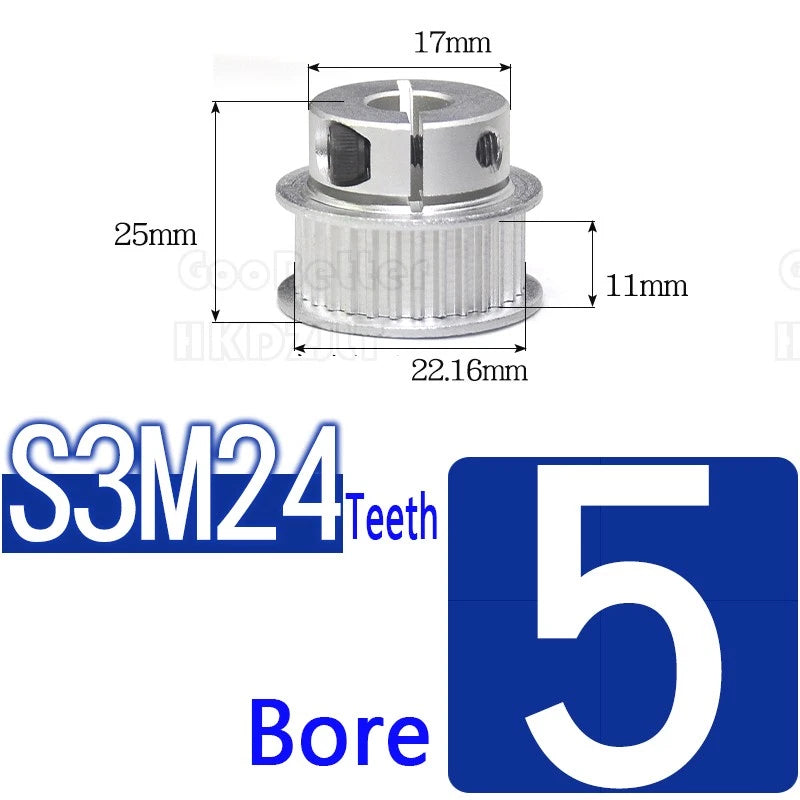
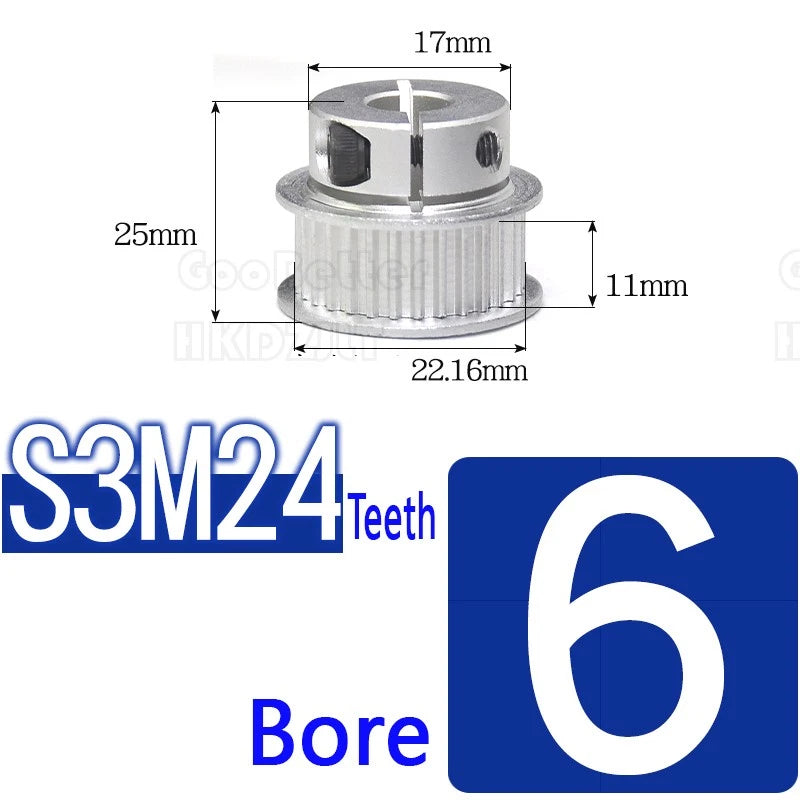
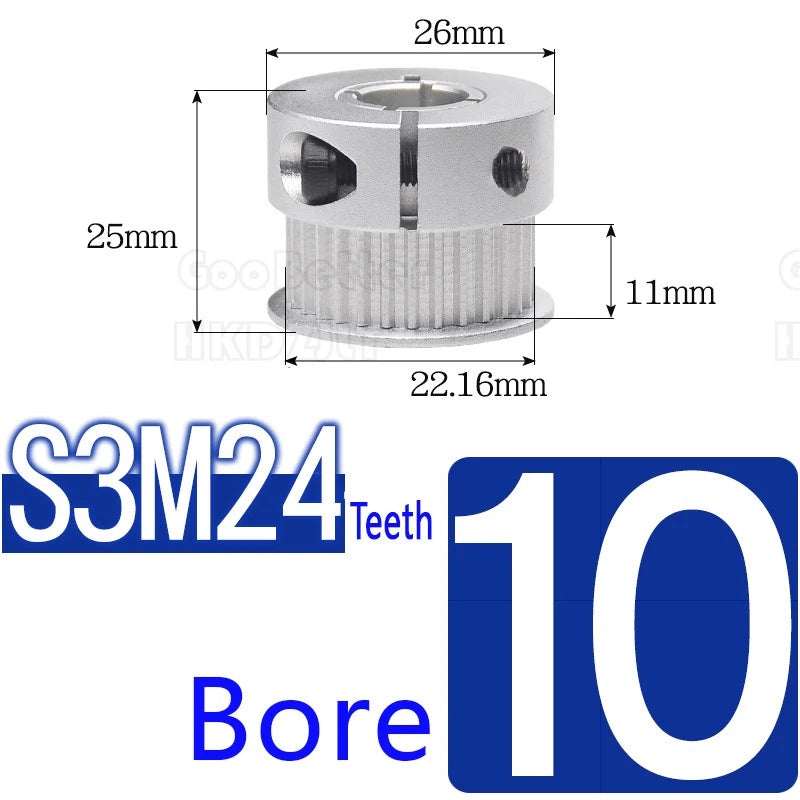
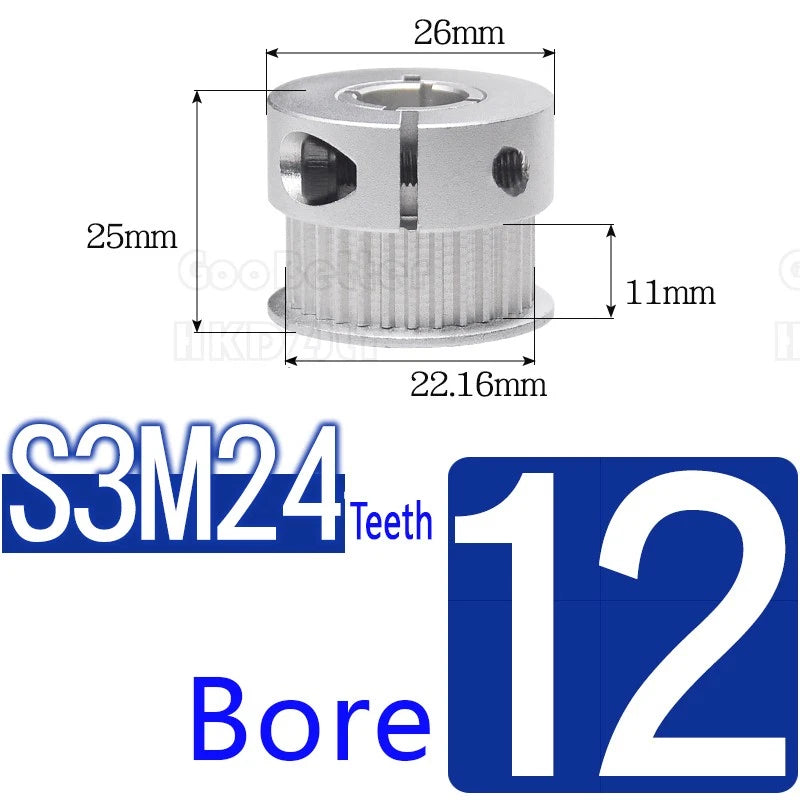
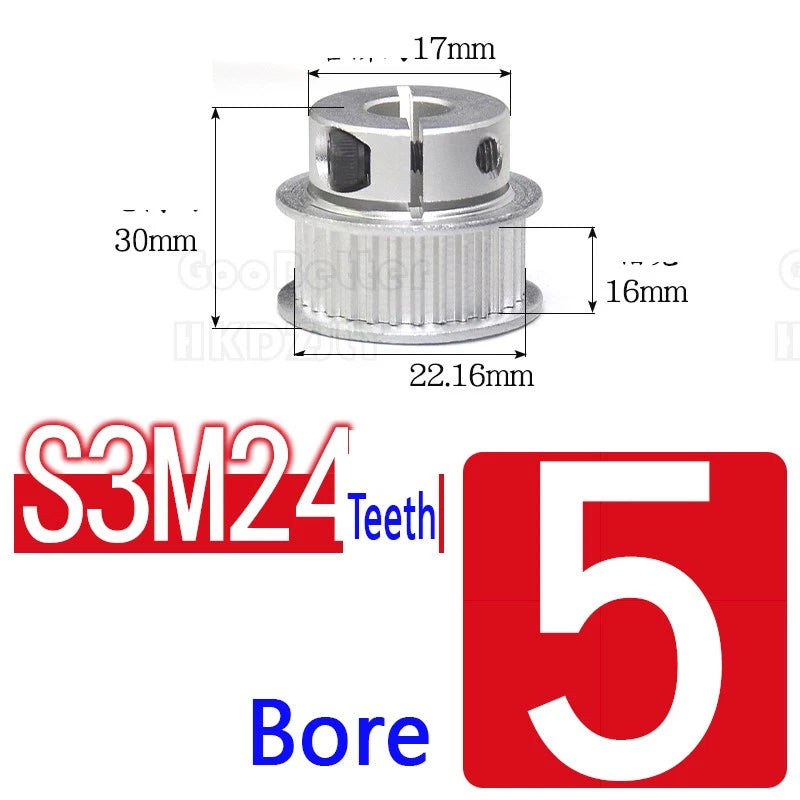
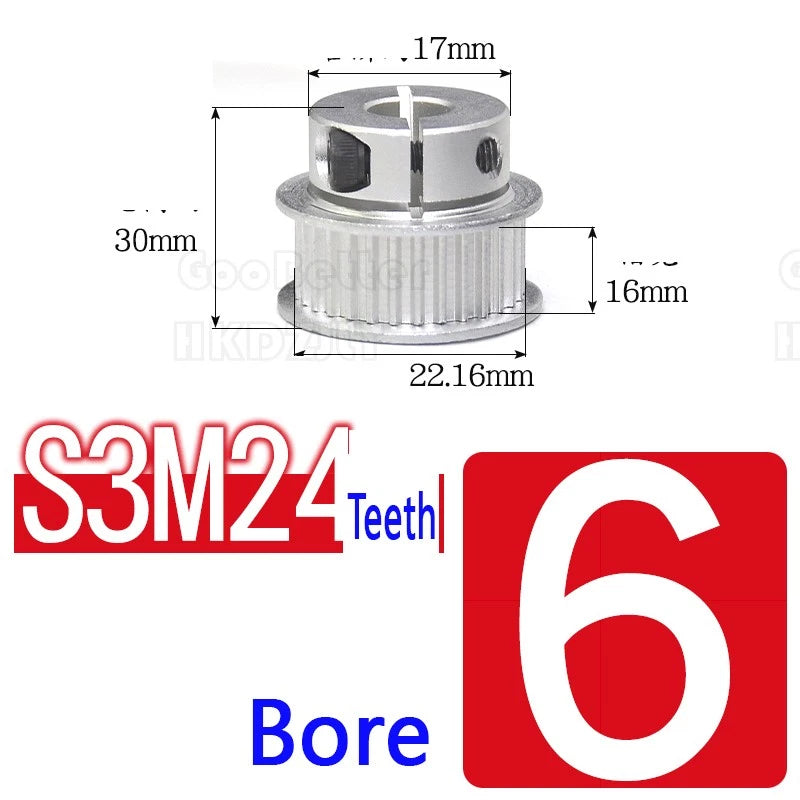
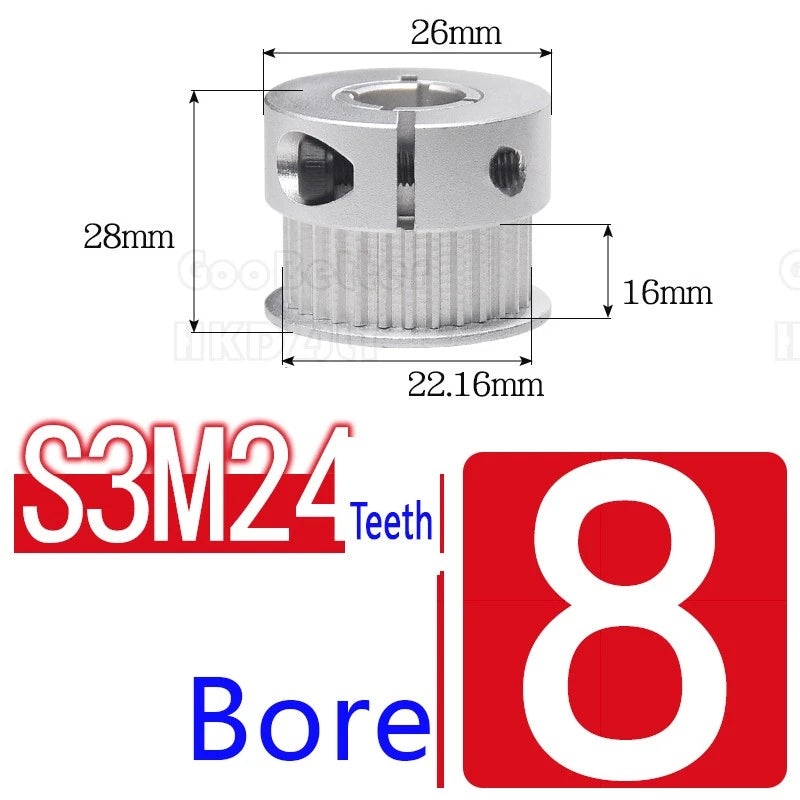
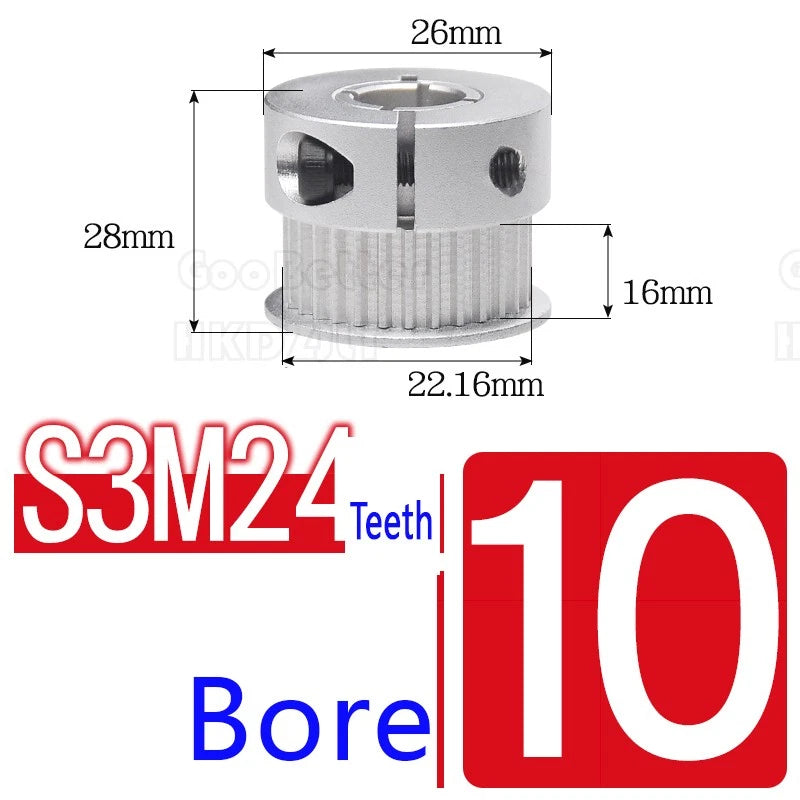
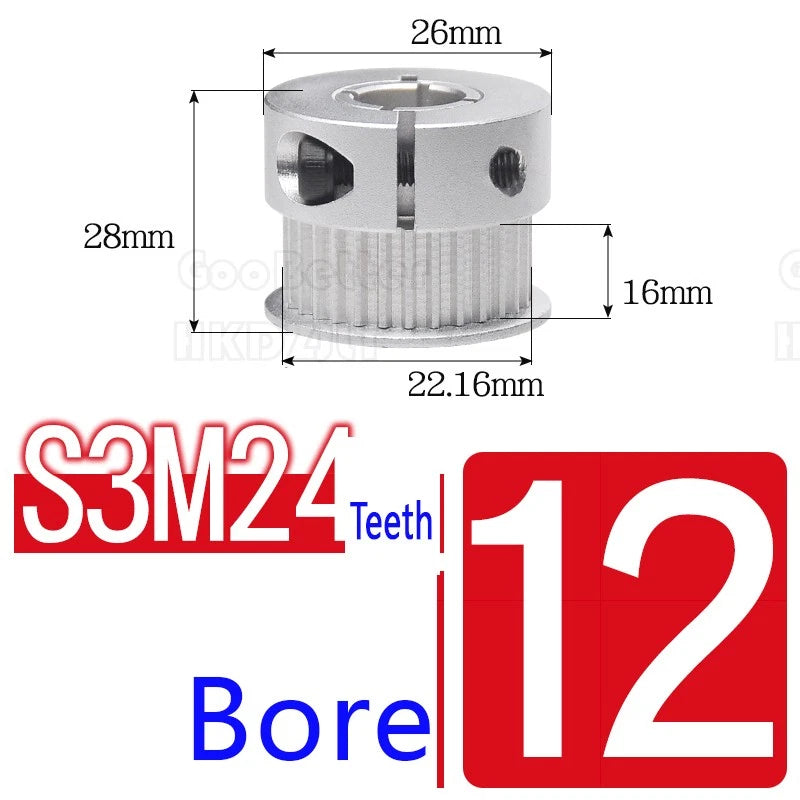
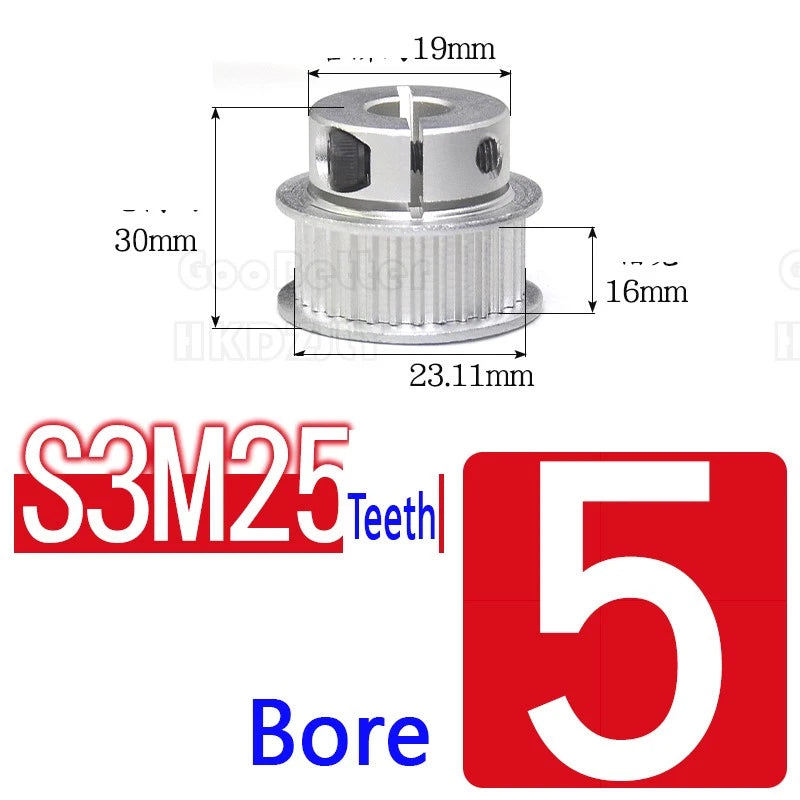
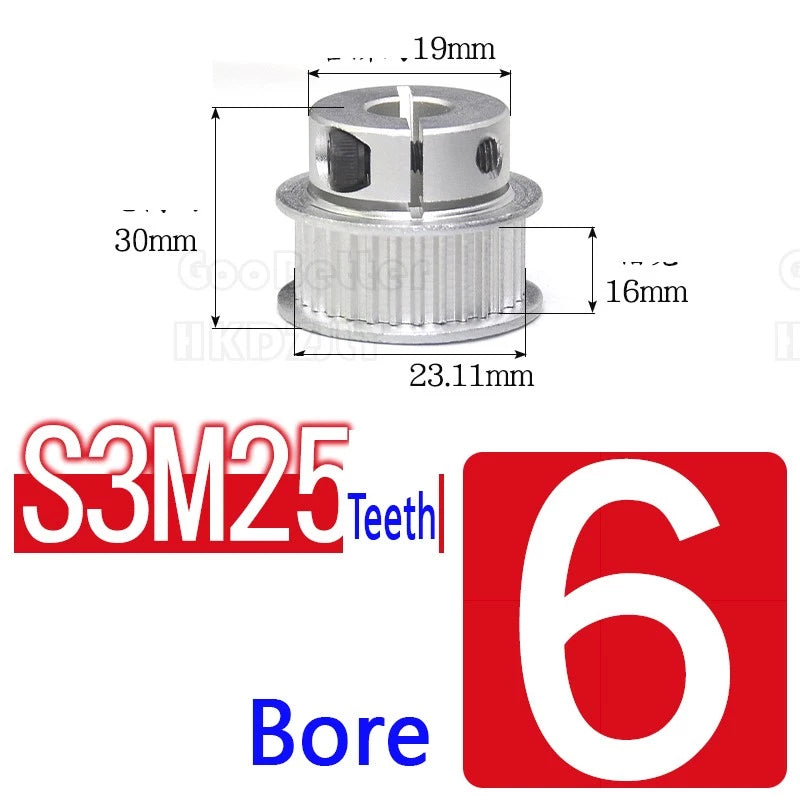
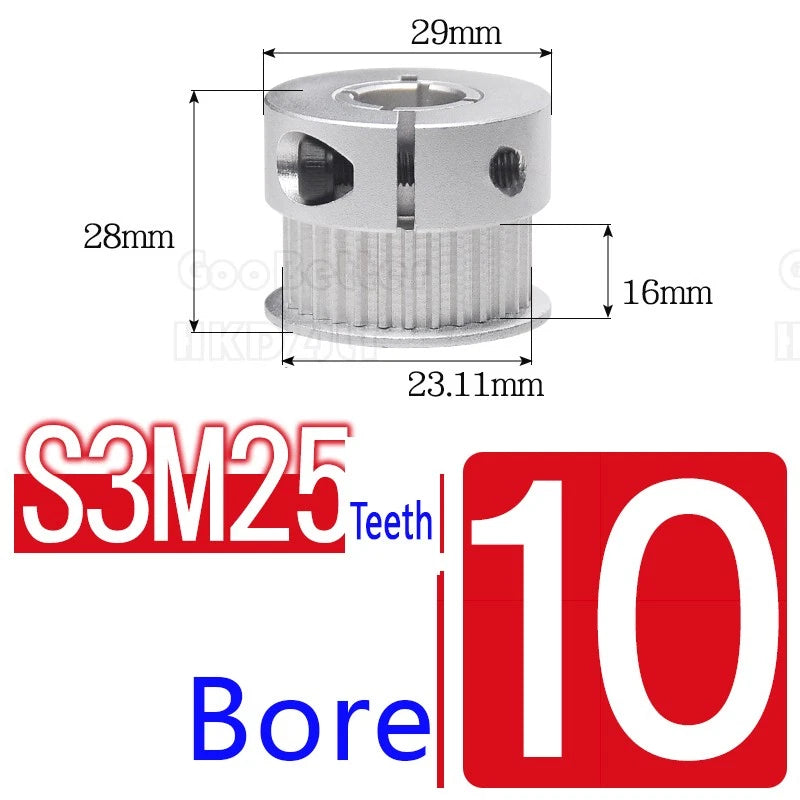
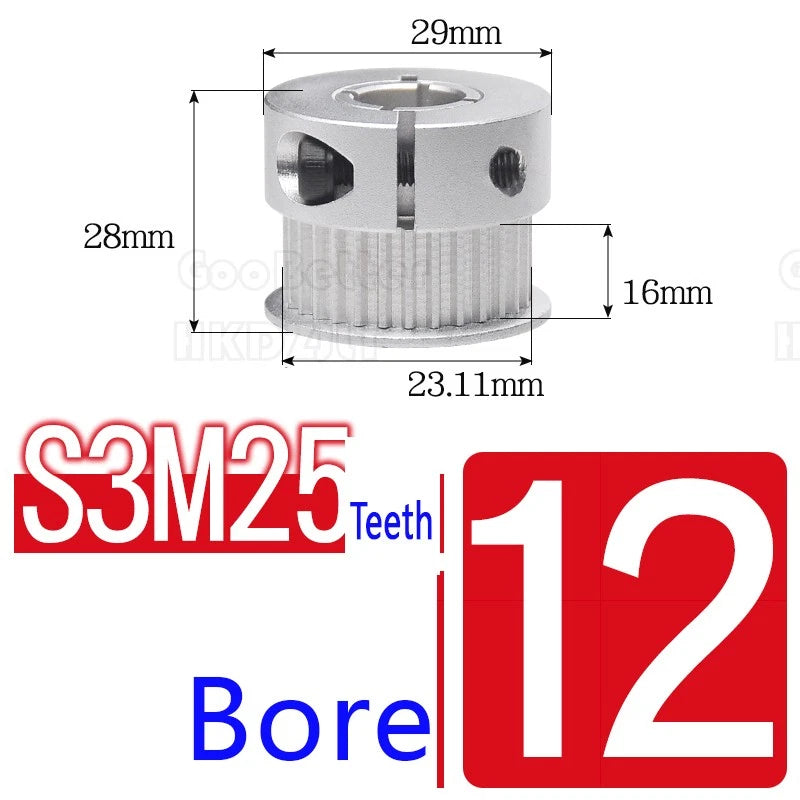
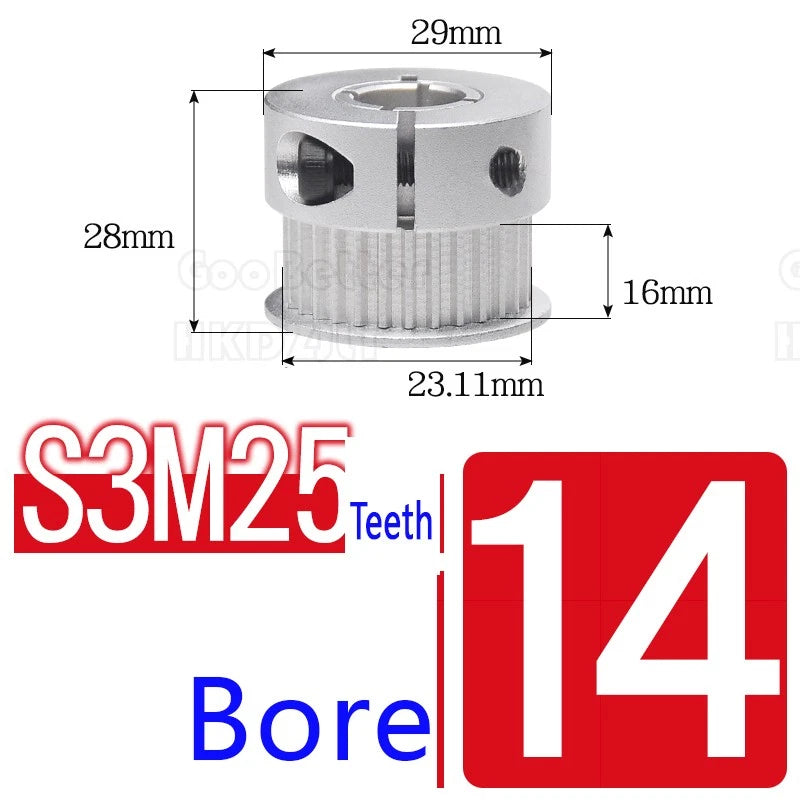
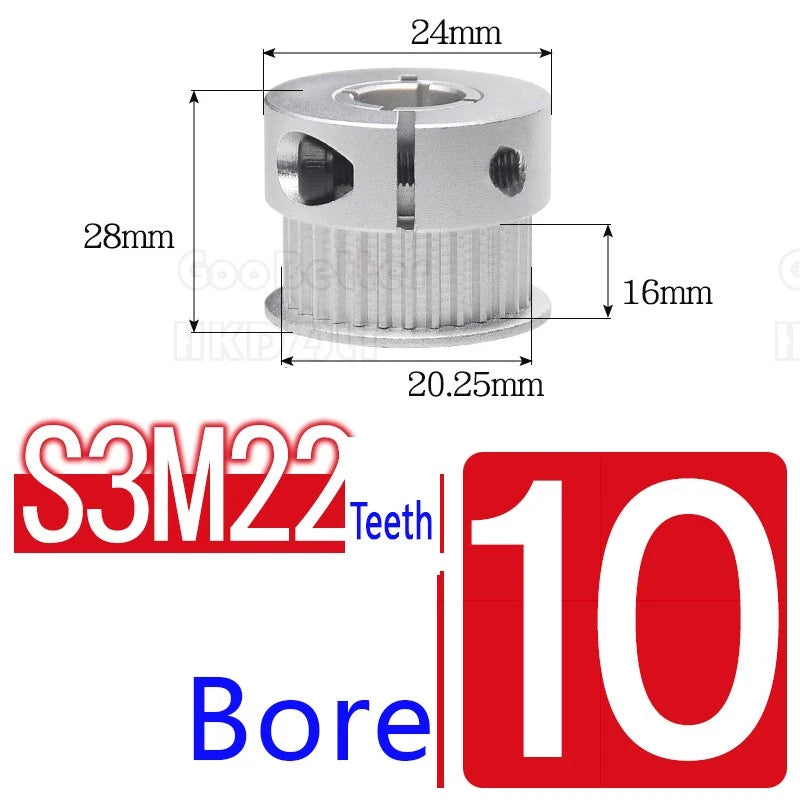
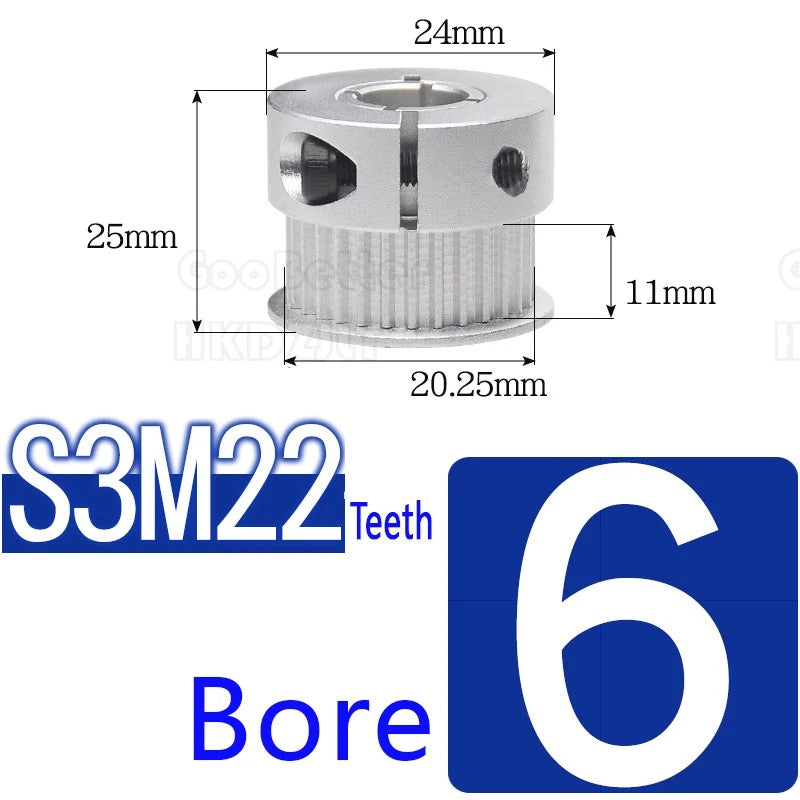
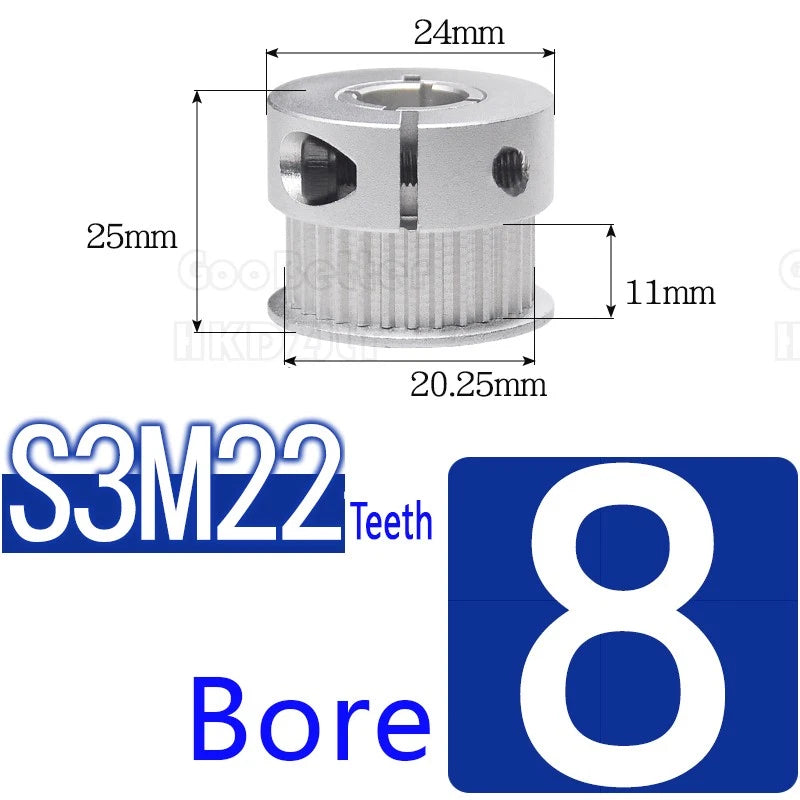
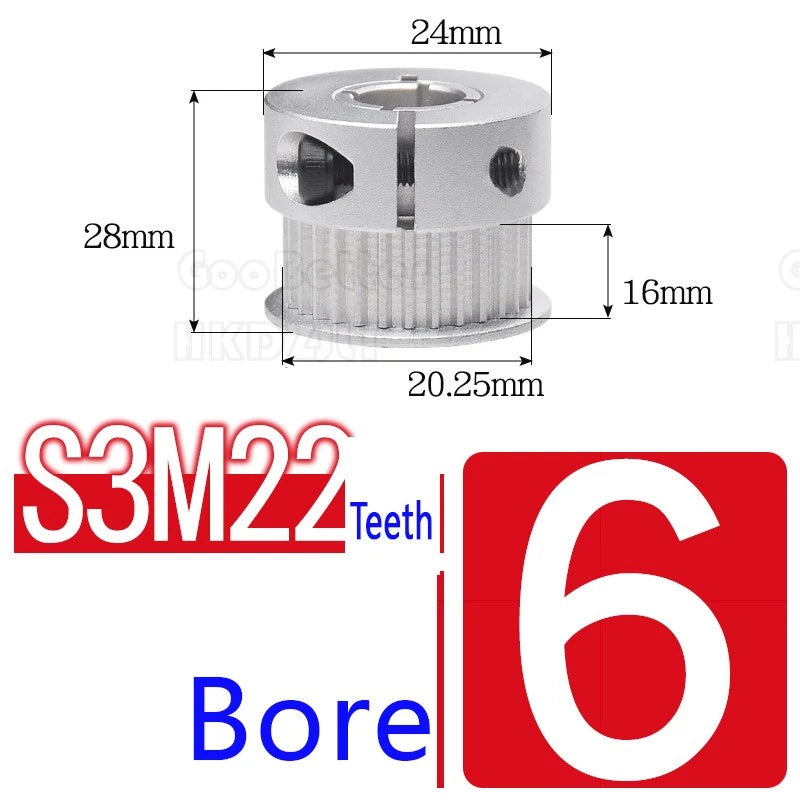
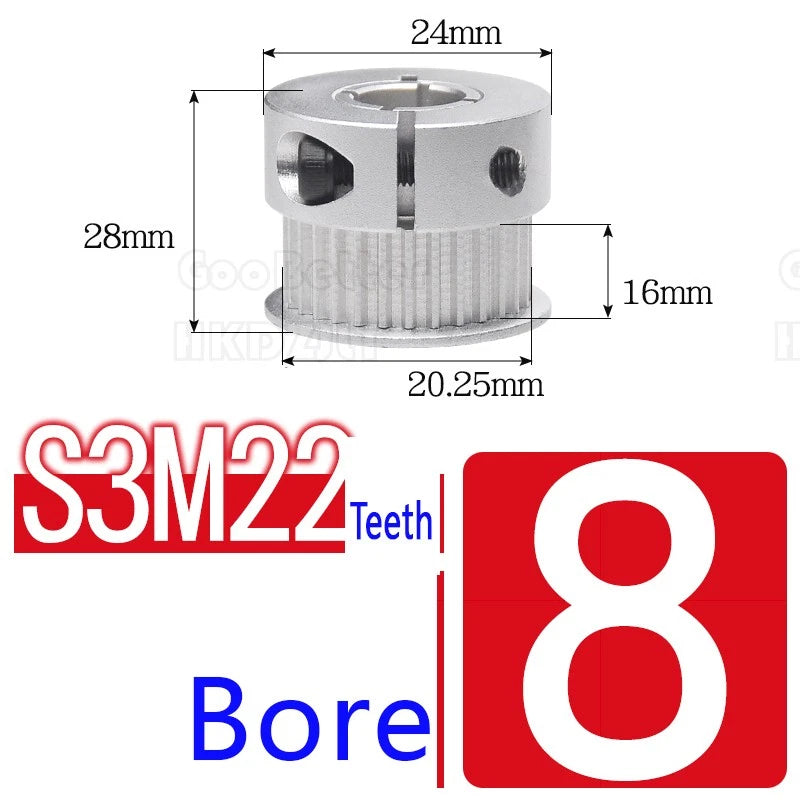
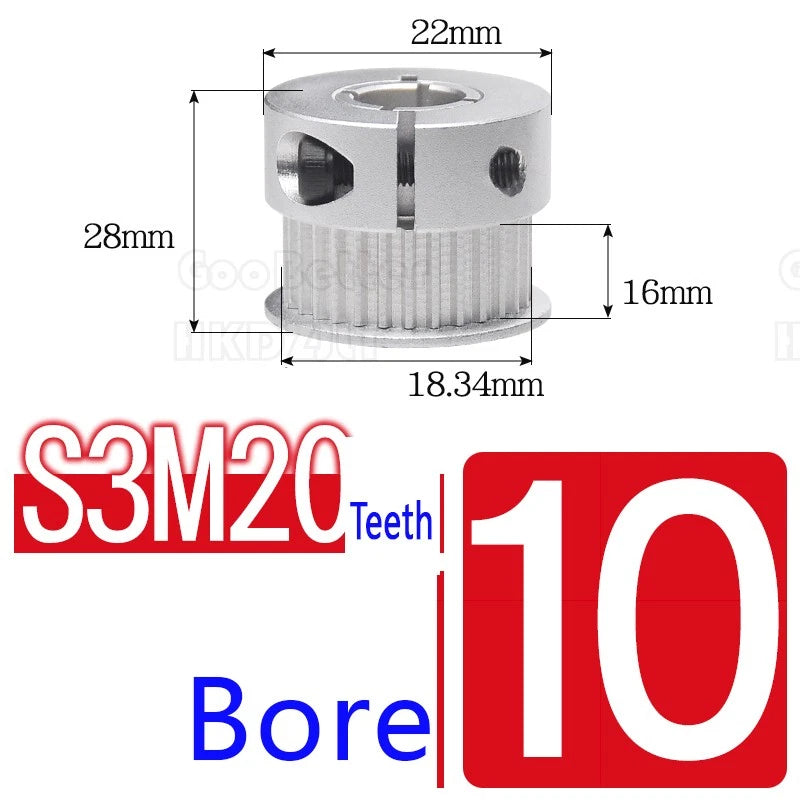
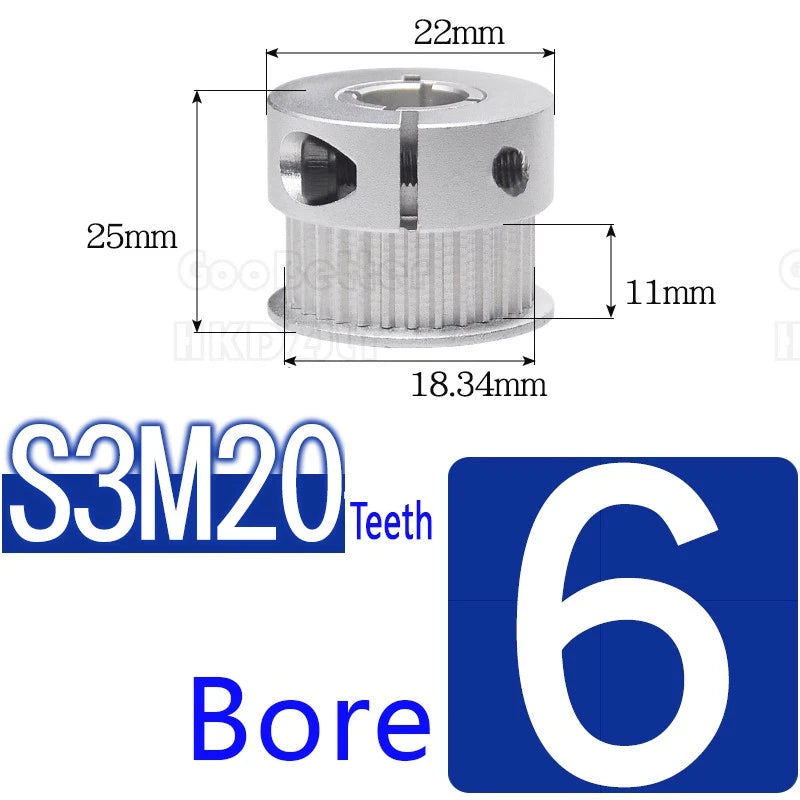
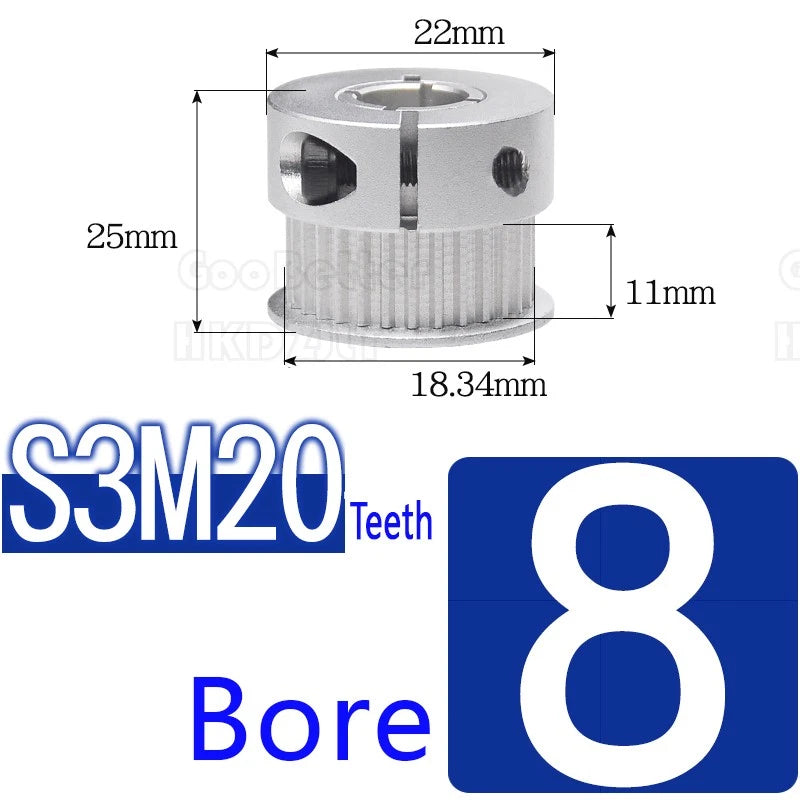
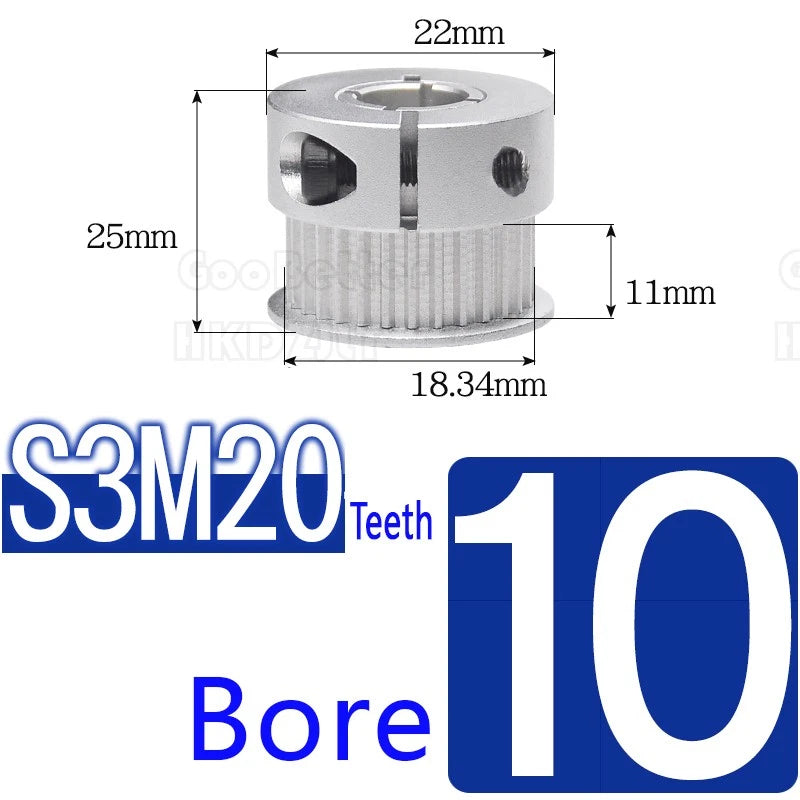
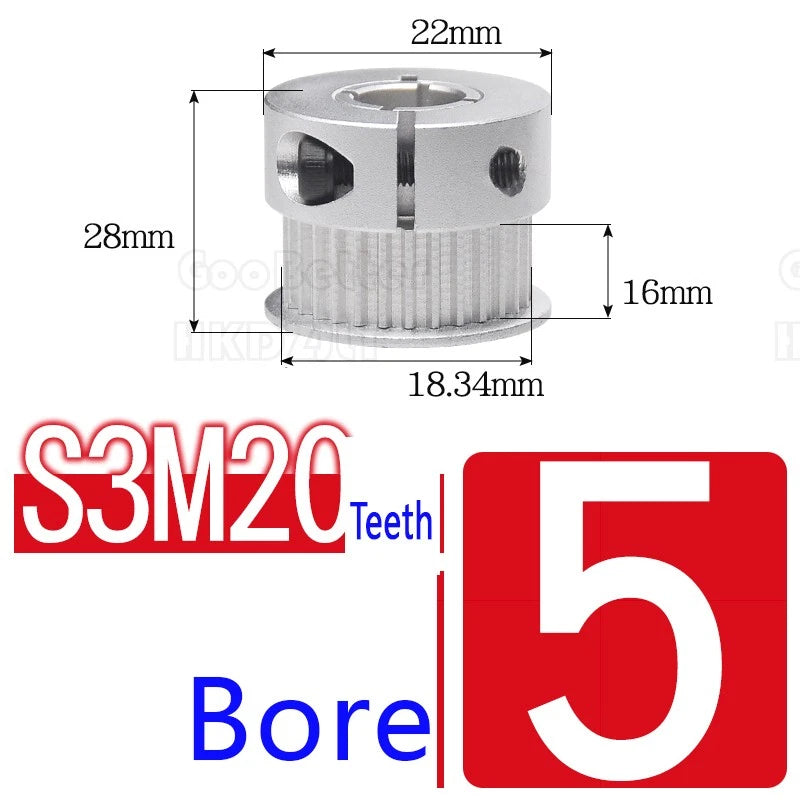
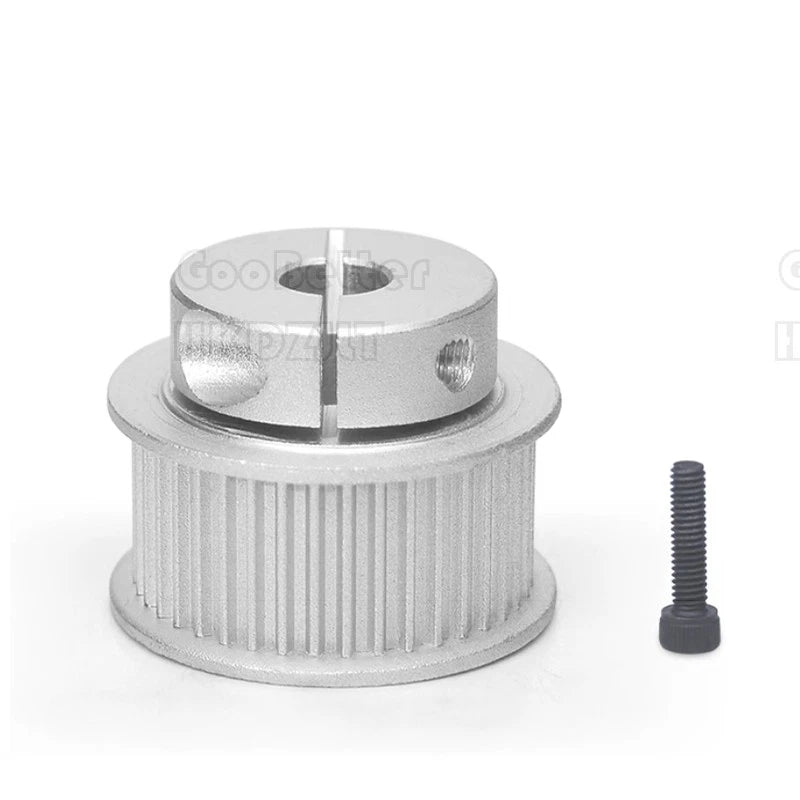
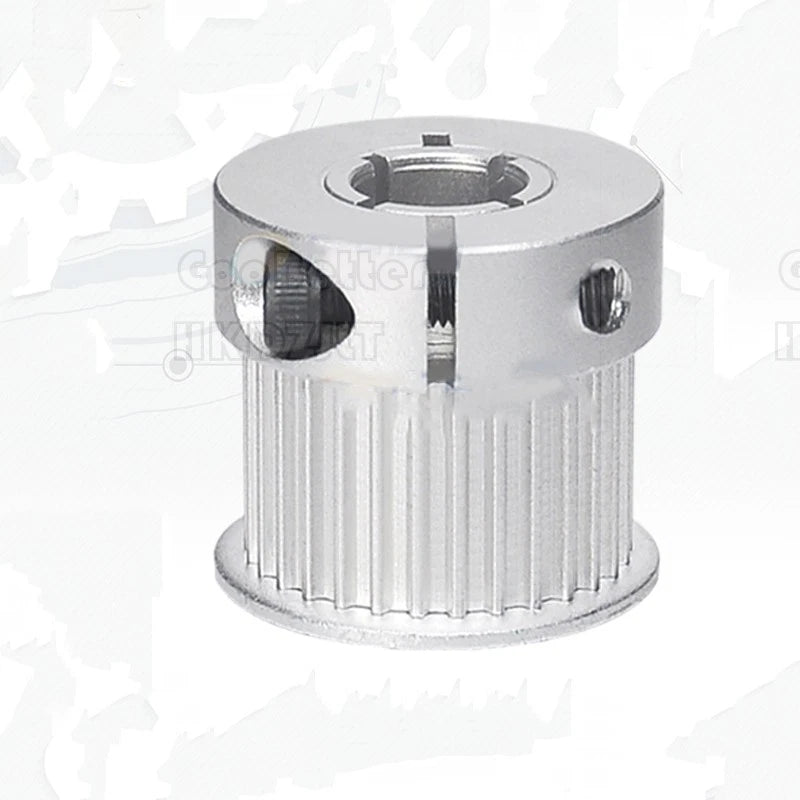
S3M Timing Pulley Belt Synchronous Wheel Gear 3D Printer Bore 5-15mm 20-28 Teeth

No reviews

Price:
Sale price$17.67 USD
Stock:
In stock (500 units), ready to be shipped

Payment & Security

Ach Direct Debit Amazon American Express Apple Pay Bancontact BLIK Diners Club Discover EPS Google Pay iDEAL Wero JCB Maestro Mastercard Multibanco MobilePay PayPal Przelewy24 Shop Pay Twint Union Pay USDC Visa

Your payment information is processed securely. We do not store credit card details nor have access to your credit card information.

Limited Offer — Spend More, Save More
Spend $55+
Save $5
Spend $100+
Save $10
Spend $200+
Save $25
HomeDIYer DIY Expert Support

DIY Expert Support

Get fitment advice & recommendations

Mon–Fri  8:30 AM – 8:00 PM
24-Hour Fast Ship
Arrives in 3–14 Days
Worldwide Shipping
30-Day Returns
1 tree planted with every purchase

Description

S3M Timing Pulley Synchronous Wheel Gear — Precise Motion Control for CNC, 3D Printers & Robotics

When your CNC router skips steps or your 3D printer loses position mid-print, the culprit is often a mismatched or worn timing pulley. Engineers, makers, and automation builders who need repeatable, slip-free power transmission rely on S3M synchronous wheel gears to keep their drives locked in sync. Whether you are retrofitting a motion axis or building a new machine from scratch, selecting the right S3M timing pulley is the foundation of a reliable drivetrain.

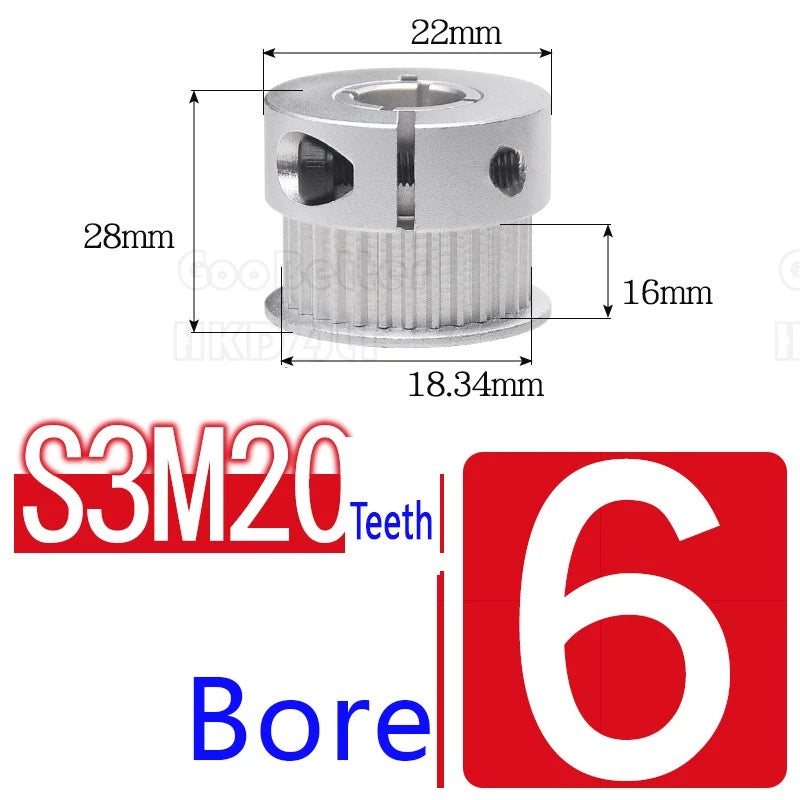
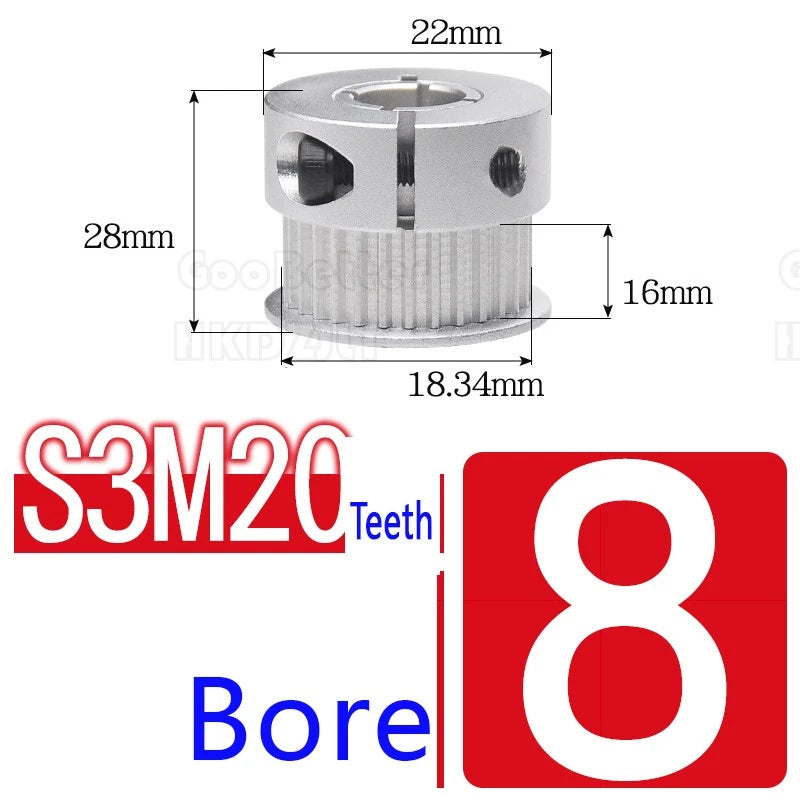
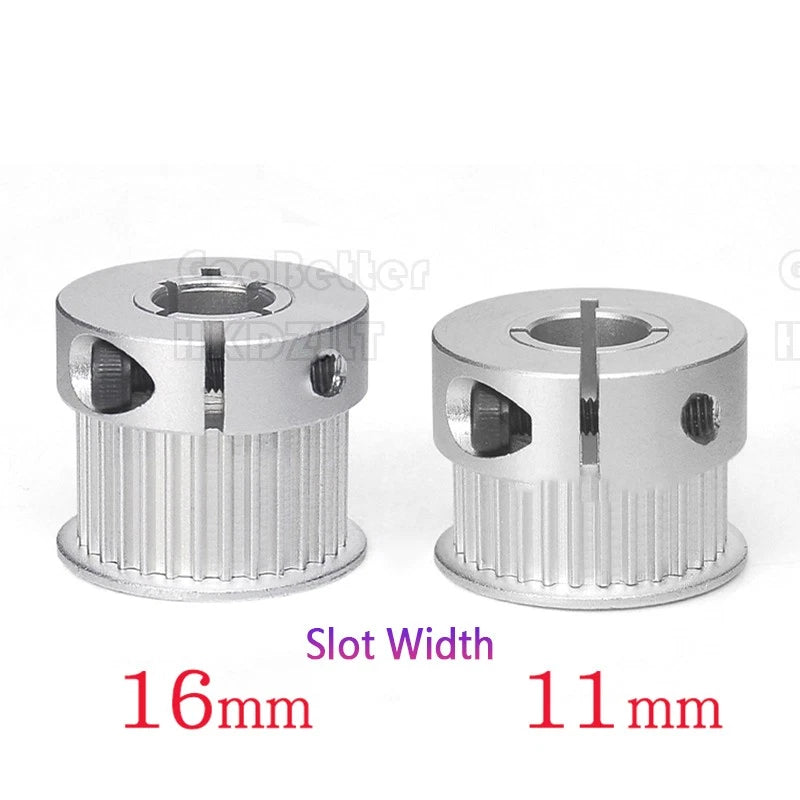
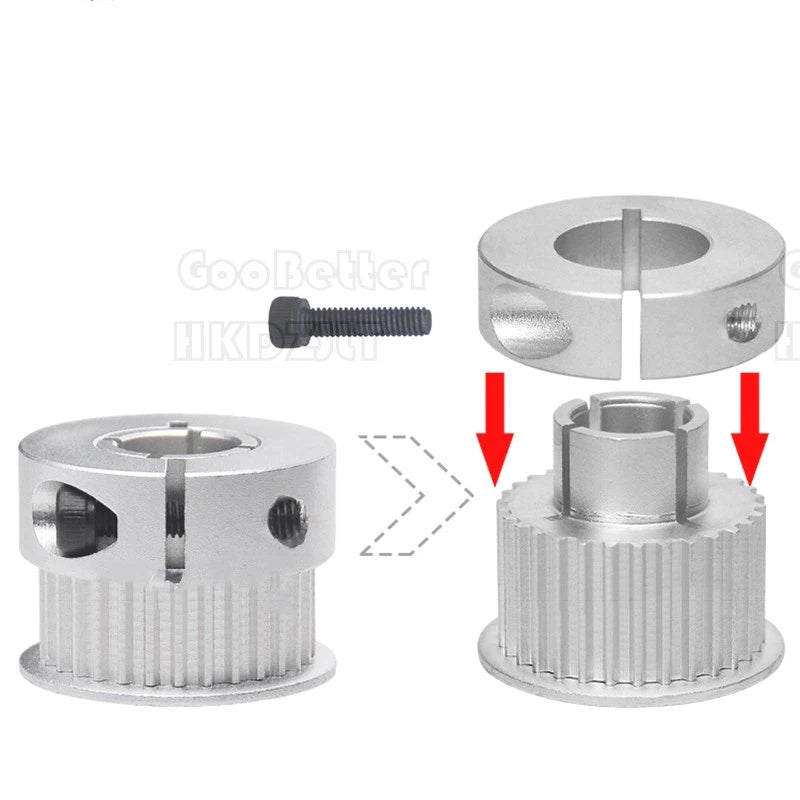
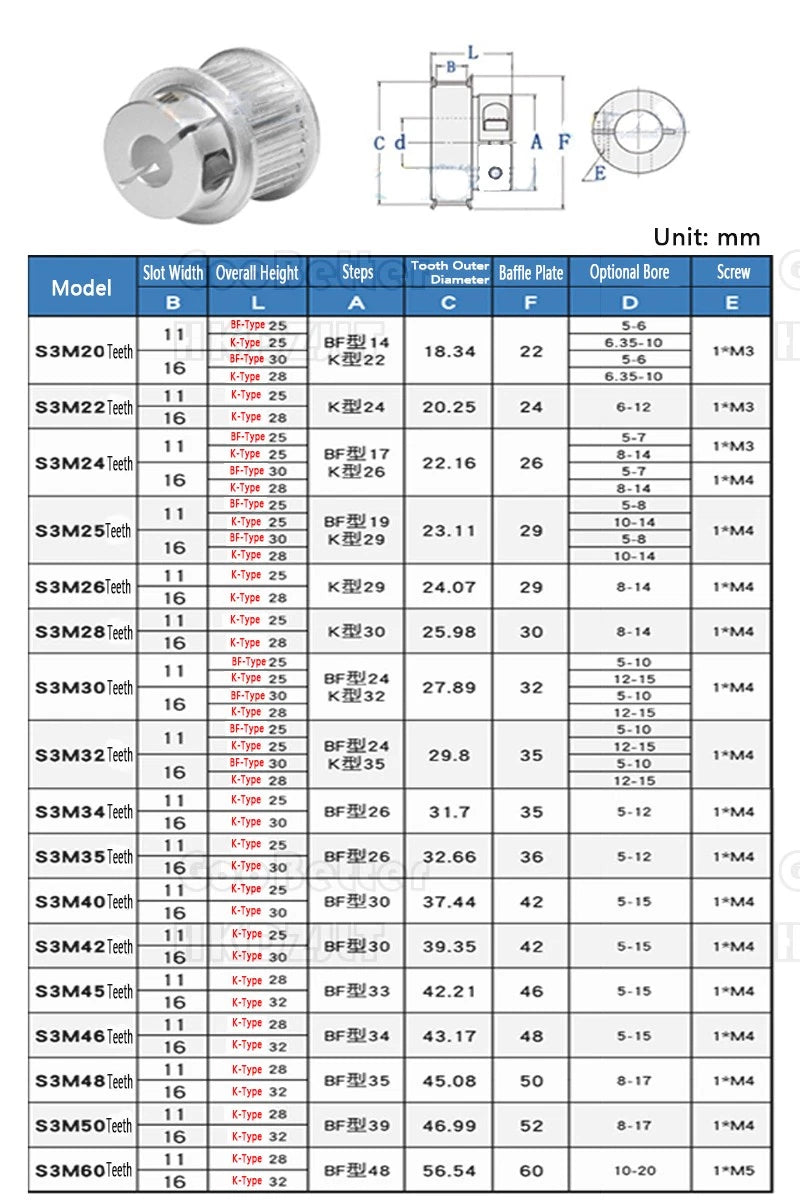
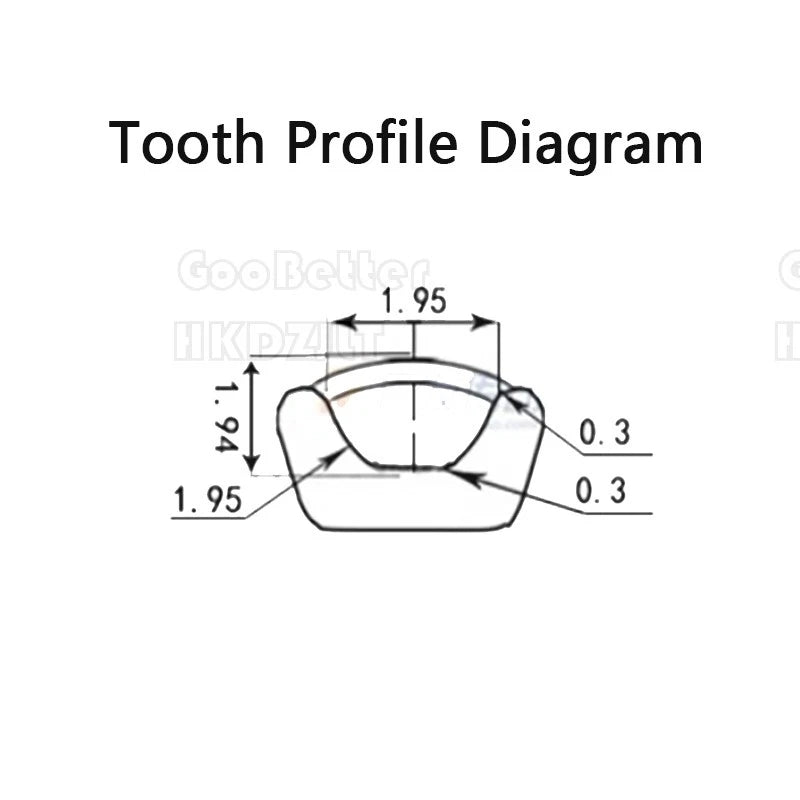
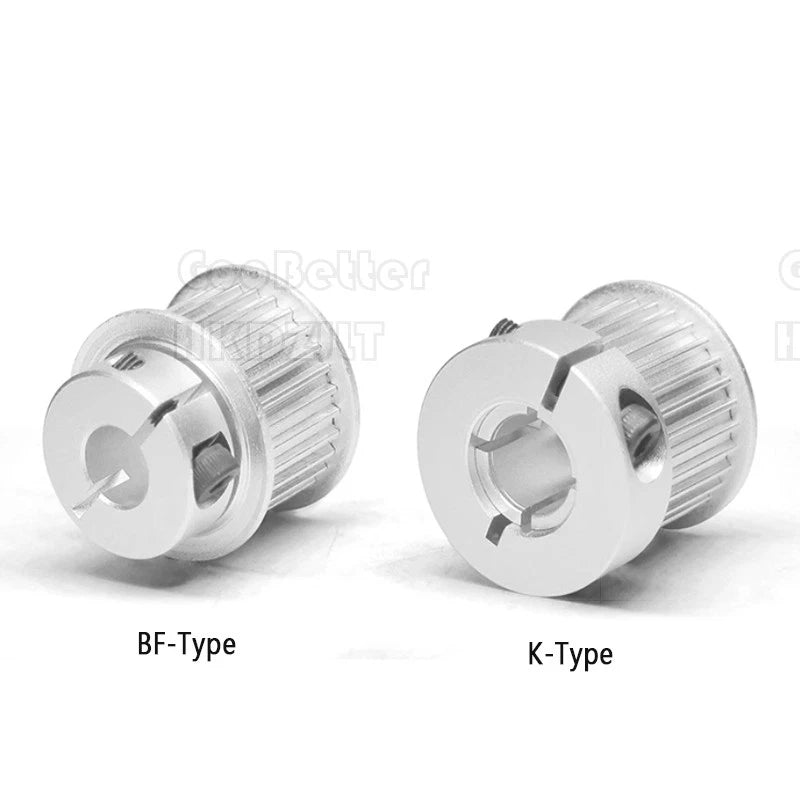
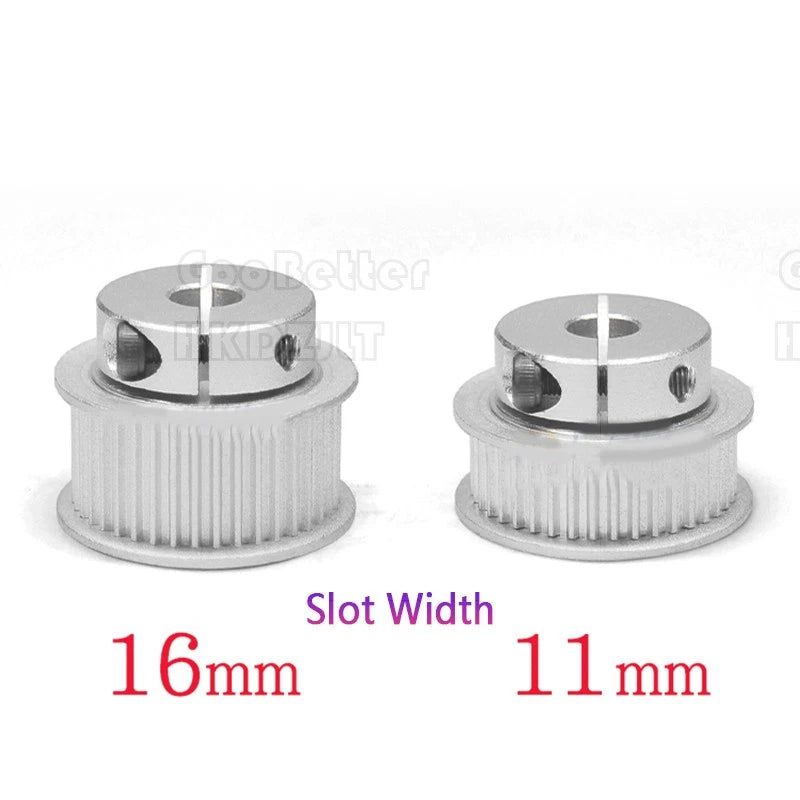
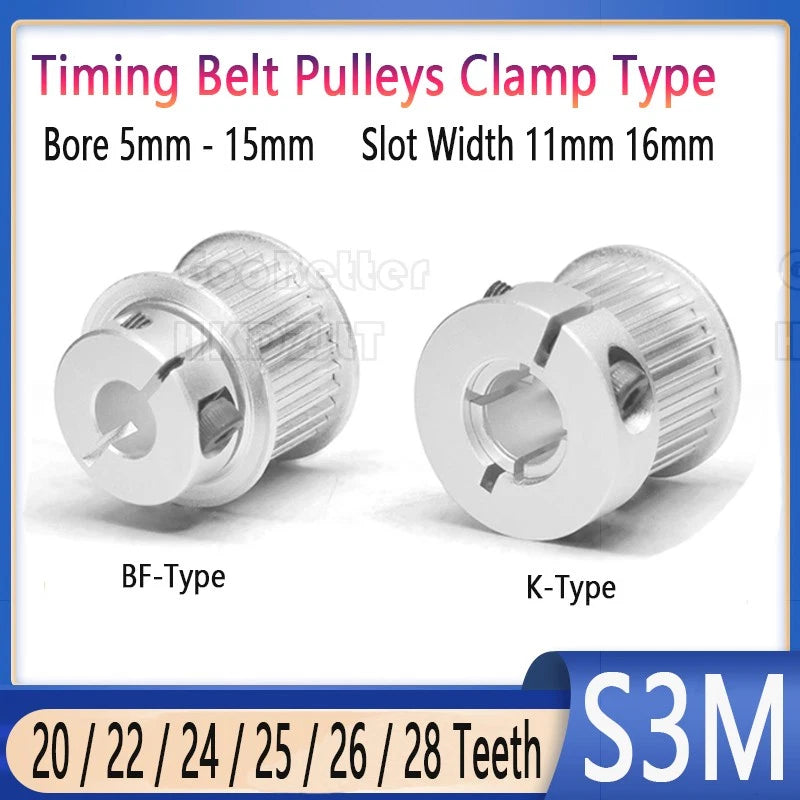
These S3M timing pulleys are machined from aluminum alloy with a hard-anodized or natural finish and feature the standard 3 mm pitch S3M tooth profile. Bore options range from 5 mm to 16 mm (approximately 0.20 in to 0.63 in), and tooth counts span 20 to 28 teeth. Two flange styles are available: K-Type (with set-screw clamping hub) and BF-Type (with through-bore and flange). Belt slot widths of 11 mm and 16 mm accommodate the most common S3M belt widths. Each pulley ships individually or in multi-piece packs of 2, 3, or 5 units.

Typical applications include S3M belt drive systems for desktop CNC routers and laser engravers, extruder and axis drives on FDM 3D printers, and lightweight robotic arm joints requiring low-backlash synchronous motion. The compact tooth count range (20–28 teeth) suits high-speed, low-torque drive stages where a small pulley diameter keeps the overall footprint tight.

⚙️ Compatibility: Designed for S3M (3 mm pitch) synchronous belts with 11 mm or 16 mm width. Verify bore diameter and tooth count match your shaft and belt before ordering.

✅ Key Features of These S3M Timing Pulleys

🔩
K-Type & BF-Type Flange Styles

K-Type pulleys include a set-screw hub for secure shaft clamping; BF-Type pulleys feature a through-bore with flanged rim for guided belt tracking.

📐
Wide Bore Range: 5–16 mm

Eight bore sizes (5, 6, 8, 10, 12, 14, 15, 16 mm) cover the most common motor and shaft diameters used in desktop CNC, 3D printing, and robotics platforms.

Standard S3M 3 mm Pitch Tooth Profile

Machined to the S3M tooth standard for zero-slip synchronous engagement with S3M belts, ensuring accurate step-to-distance ratios in motion control applications.

🏗️
Aluminum Alloy Construction

Lightweight aluminum body keeps rotational inertia low while providing sufficient rigidity for continuous-duty drive cycles in CNC and automation equipment.

📦
Multi-Pack Options (1, 2, 3, or 5 PCS)

Order a single pulley for a repair or a multi-pack for a full machine build or spare-parts inventory — all variants ship as a matched set of the same spec.

🔧
11 mm & 16 mm Belt Slot Widths

Two slot widths let you match the pulley to your existing belt width without modification, reducing assembly time and the risk of belt edge wear.

📐 Technical Specifications — S3M Timing Pulley

Belt Pitch S3M — 3 mm
Tooth Count Options 20, 22, 24, 25, 26, 28 Teeth
Flange / Hub Type K-Type (set-screw hub) / BF-Type (through-bore flange)
Bore Diameter Range 5 mm / 6 mm / 8 mm / 10 mm / 12 mm / 14 mm / 15 mm / 16 mm
Belt Slot Width 11 mm or 16 mm
Material Aluminum alloy
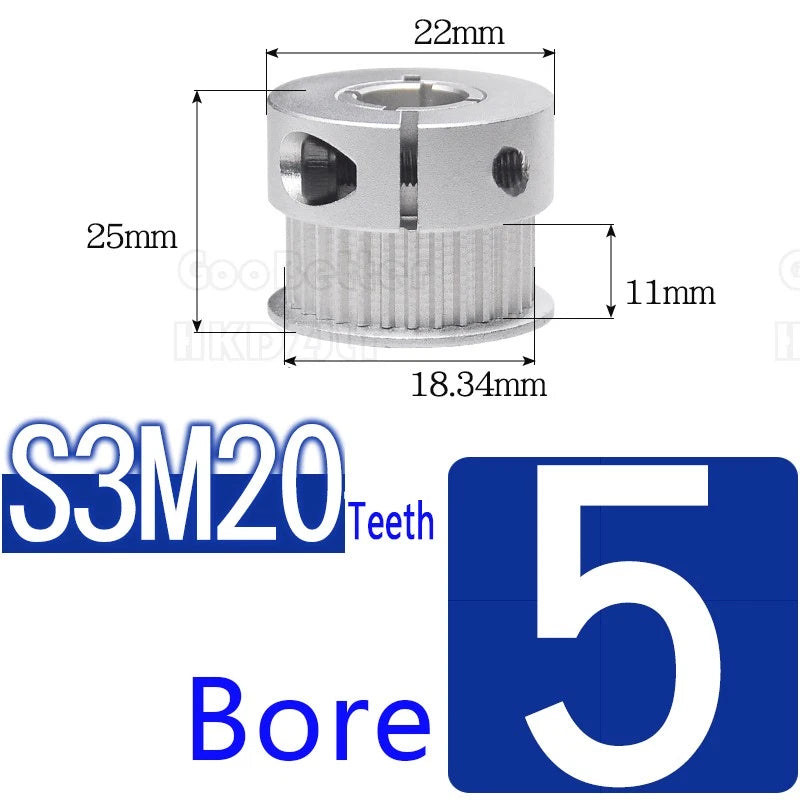
Outer Diameter (approx.) See variant options
Hub Length See variant options
Pack Quantity 1 PCS / 2 PCS / 3 PCS / 5 PCS
Finish See variant options

❓ Frequently Asked Questions

How do I choose the right tooth count for my application?

Tooth count determines the pitch diameter and, combined with your belt length and the driven pulley's tooth count, sets the gear ratio. For most desktop CNC and 3D printer axes, 20 teeth is a common starting point for compact, high-resolution drives. Higher tooth counts (24–28) increase pitch diameter, which can reduce belt tension requirements and lower noise at high speeds. Match the tooth count to your existing belt loop length and the pulley spacing on your machine.

What is the difference between K-Type and BF-Type pulleys?

K-Type pulleys have a hub with one or two set screws that clamp directly onto the shaft — ideal for solid shafts where you need to lock the pulley at a specific axial position. BF-Type pulleys have a through-bore with a flanged rim; they are typically used where the belt needs a guided edge or where the pulley is retained by other means such as a key or circlip. Check your machine's design drawings to confirm which style is required before ordering.

Which bore size should I select for my stepper motor shaft?

Most NEMA 17 stepper motors use a 5 mm shaft, while NEMA 23 motors commonly use an 8 mm shaft. Servo motors and larger steppers may use 10 mm, 12 mm, or 14 mm shafts. Measure your shaft diameter with a caliper before ordering. The bore must match the shaft diameter exactly — a loose fit will cause slippage and positioning errors, while an oversized bore cannot be corrected without machining.

Are these pulleys compatible with standard S3M timing belts?

Yes. These pulleys are machined to the S3M tooth profile (3 mm pitch, specific tooth geometry) and are designed to mesh with standard S3M synchronous belts. Ensure the belt width matches the pulley's slot width — use an 11 mm belt with the 11 mm slot variant and a 16 mm belt with the 16 mm slot variant. Mixing belt and slot widths will cause the belt to ride off-center and wear prematurely.

How strong are aluminum timing pulleys for continuous-duty use?

Aluminum alloy pulleys are well-suited for the torque and speed levels typical of desktop CNC routers, 3D printers, and light robotic joints. They are significantly lighter than steel pulleys, which reduces rotational inertia and improves acceleration response. For heavy industrial applications with high belt tension or shock loads, consult your machine's torque requirements against the pulley's rated load capacity. In standard maker and automation use cases, aluminum S3M pulleys provide reliable service life.

Do I need to order matching pulleys for both ends of the belt drive?

A belt drive requires at least two pulleys — a driver and a driven pulley. They do not need to have the same tooth count (different counts create a speed/torque ratio), but they must share the same belt pitch (S3M) and the same belt slot width. If you are replacing only one pulley in an existing drive, match the tooth count and slot width of the pulley being replaced. If you are building a new drive, calculate your desired gear ratio and select tooth counts accordingly.

Can I use these pulleys in a 3D printer extruder or Z-axis drive?

Yes. S3M pulleys are commonly used in 3D printer extruder drives and Z-axis lead screw coupling stages. For a direct-drive extruder, a 20-tooth pulley with a 5 mm bore is a typical choice for NEMA 17 motors. For Z-axis or XY gantry drives, select the tooth count that matches your existing belt loop and desired steps-per-mm value. Always verify the bore matches your motor shaft before purchasing.

🛒 Select your Models & Number of Teeth, Bore, and Slot Width & Amount above, then add to cart.


You may also like

Recently viewed