
Servomotor Flexible Shaft Couplings Precision D34 Double Diaphragm CNC Coupler

No reviews

Price:
Sale price$28.75 USD
Stock:
In stock (500 units), ready to be shipped

Payment & Security

Ach Direct Debit Amazon American Express Apple Pay Bancontact BLIK Diners Club Discover EPS Google Pay iDEAL Wero JCB Maestro Mastercard Multibanco MobilePay PayPal Przelewy24 Shop Pay Twint Union Pay USDC Visa

Your payment information is processed securely. We do not store credit card details nor have access to your credit card information.

Limited Offer — Spend More, Save More
Spend $55+
Save $5
Spend $100+
Save $10
Spend $200+
Save $25
HomeDIYer DIY Expert Support

DIY Expert Support

Get fitment advice & recommendations

Mon–Fri  8:30 AM – 8:00 PM
24-Hour Fast Ship
Arrives in 3–14 Days
Worldwide Shipping
30-Day Returns
1 tree planted with every purchase

Description

D34 Double Diaphragm Shaft Coupling — Zero-Backlash Precision for CNC Servomotors

When misalignment between a servomotor shaft and a lead screw causes vibration, lost steps, or premature bearing wear, the coupling is almost always the culprit. Engineers and machine builders who demand repeatable positioning accuracy need a coupling that transmits torque without play while still absorbing angular and parallel offset — that is exactly what this D34 double diaphragm design delivers.

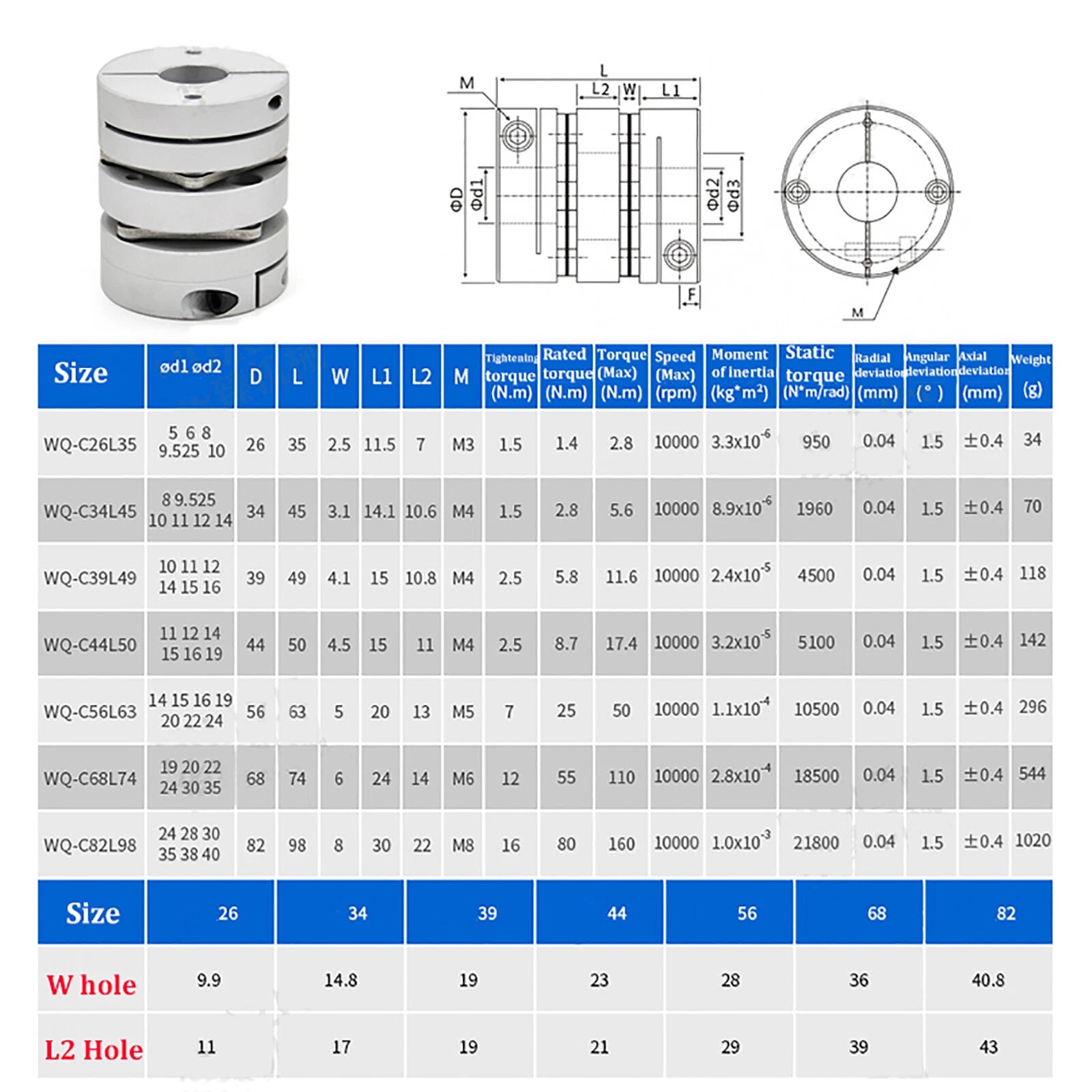
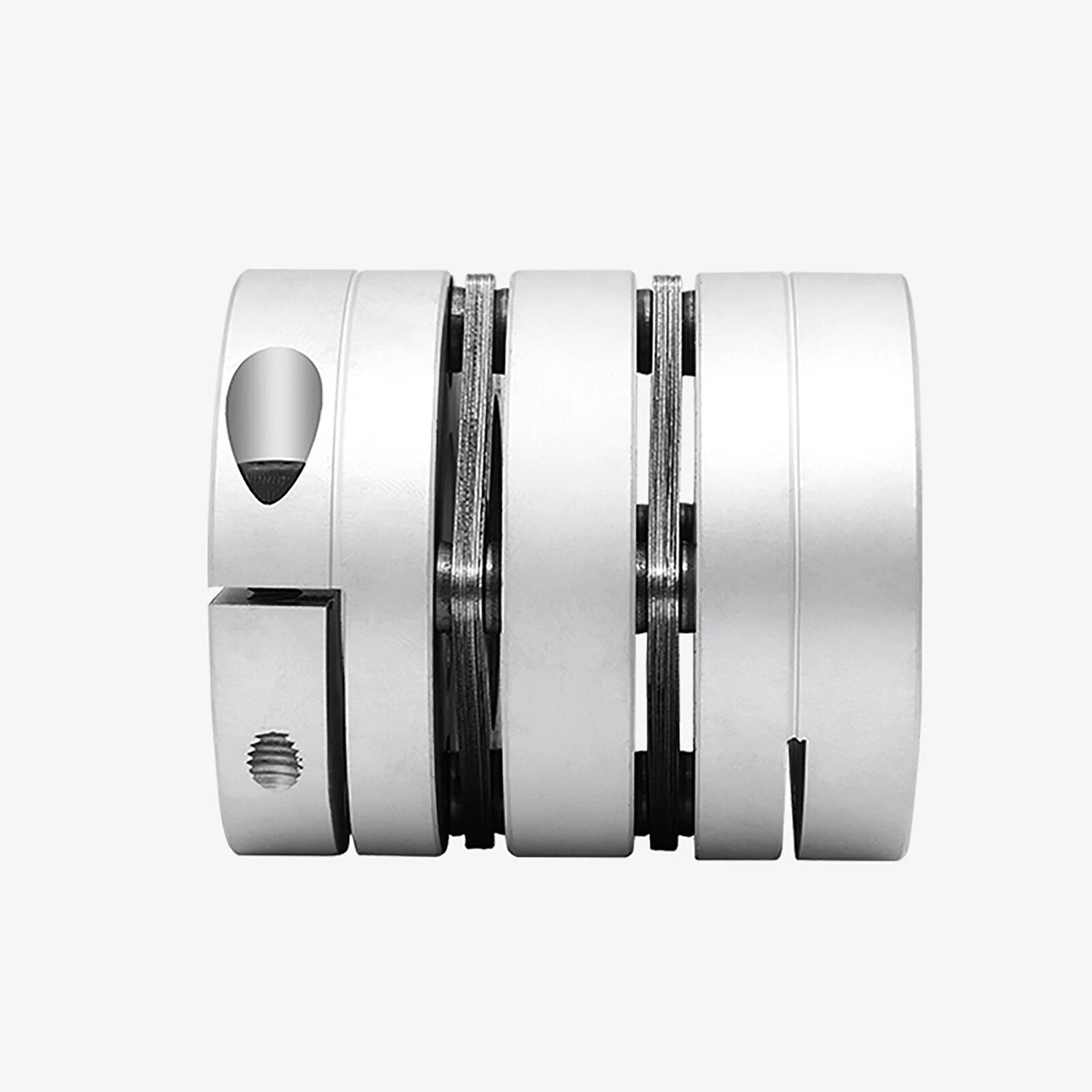
Each coupling features a two-diaphragm flexible element sandwiched between precision-machined aluminum hubs. The outer diameter is 34 mm (1.34 in) and the body length is 45 mm (1.77 in). Bore combinations span φd1 × φd2 from 6 mm up to 14 mm on each side, covering both equal-bore and stepped-bore configurations. Set screws clamp each bore independently for secure shaft retention.

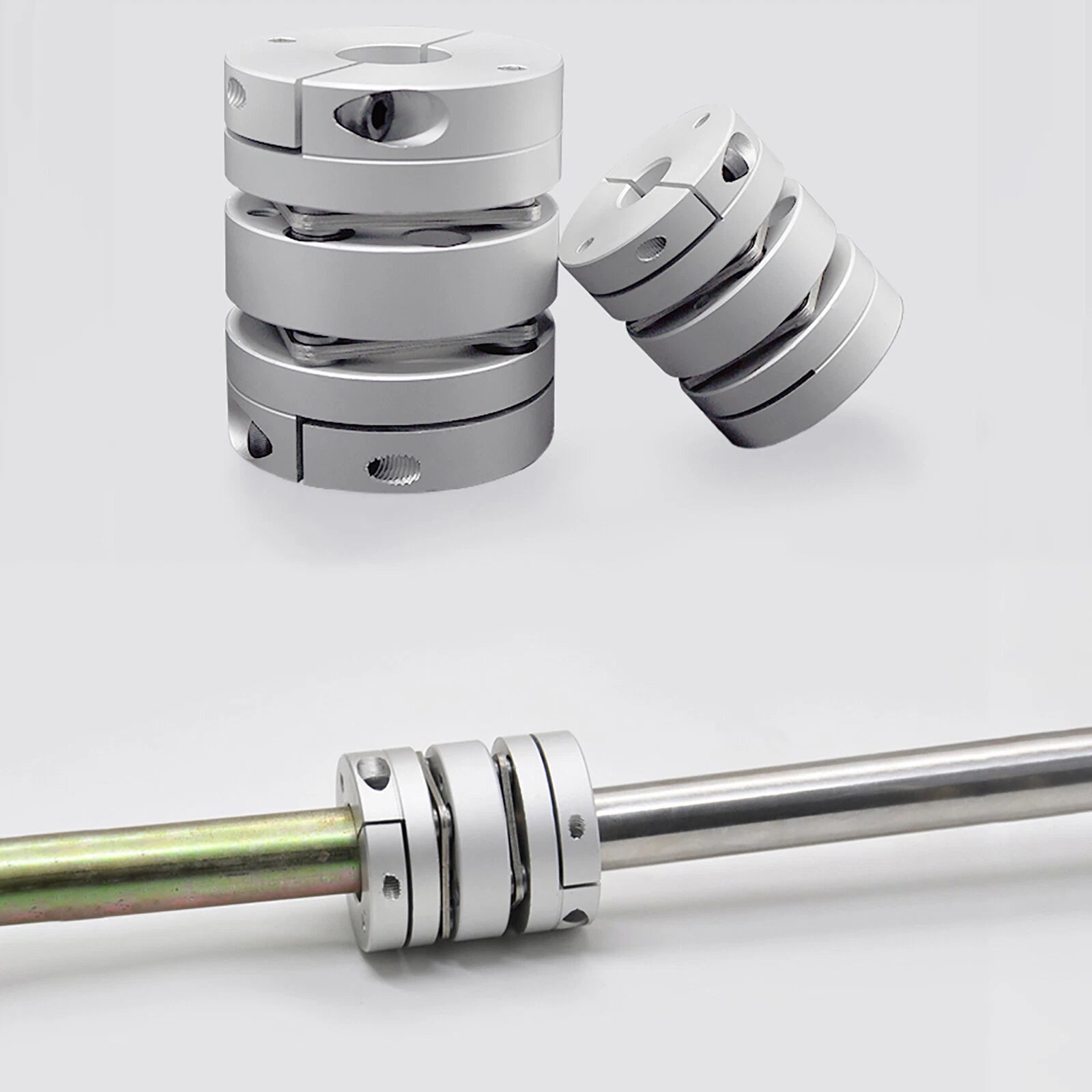
Typical applications include CNC router Z-axis ball-screw couplings, servo-driven linear actuator connections, laser engraver spindle drives, and 3D printer lead-screw flexible shaft couplings where zero backlash and torsional stiffness are non-negotiable.

⚙️ Compatibility: Fits standard servo and stepper motor shafts with bore diameters from 6 mm to 14 mm. Verify your motor shaft diameter (φd1) and lead-screw diameter (φd2) before selecting a variant.

✅ Key Features of These D34 Double Diaphragm CNC Shaft Couplings

  • 🔩Zero-Backlash Double Diaphragm Design — Two stainless-steel diaphragm discs transmit torque with no rotational play, preserving positioning accuracy in closed-loop servo systems.
  • 📐Wide Bore Range (6–14 mm) — Equal-bore and stepped-bore variants accommodate most servo and stepper motor shaft combinations without adapters or sleeves.
  • ⚖️Lightweight Aluminum Hubs — Machined aluminum alloy body keeps rotating inertia low, reducing settling time and improving dynamic response in high-speed CNC axes.
  • 🔄Misalignment Compensation — Accepts angular misalignment (typically up to 1°) and parallel offset (typically up to 0.2 mm) without transmitting bending loads to motor bearings.
  • 🔧Independent Set-Screw Clamping — Each hub bore is secured by its own set screw, allowing independent tightening and easy shaft removal during maintenance.
  • 📦Multi-Pack Options (1–10 pcs) — Available in quantities of 1, 2, 3, 5, or 10 pieces, making it straightforward to stock spares or outfit an entire machine build in one order.

📐 Technical Specifications — D34 Double Diaphragm Shaft Coupling

Coupling Type Double Diaphragm Flexible Coupling
Outer Diameter (D) 34 mm (1.34 in)
Body Length (L) 45 mm (1.77 in)
Bore Diameter φd1 6 mm – 14 mm (see variant options)
Bore Diameter φd2 6 mm – 14 mm (see variant options)
Hub Material Aluminum Alloy
Diaphragm Material Stainless Steel
Backlash Zero (rigid torsional transmission)
Angular Misalignment Typically up to 1°
Parallel Offset Typically up to 0.2 mm
Clamping Method Set Screw (per hub)
Finish See variant options
Quantity per Order 1 / 2 / 3 / 5 / 10 pcs (see variant options)

❓ Frequently Asked Questions

How do I choose the correct bore sizes for my application?

Measure the diameter of your motor output shaft (this becomes φd1) and the diameter of your lead screw or driven shaft (this becomes φd2). Select the variant that matches both values. If both shafts are the same diameter, choose an equal-bore variant (e.g., 8 mm × 8 mm). If they differ, choose the appropriate stepped-bore variant (e.g., 6 mm × 10 mm).

What is the advantage of a double diaphragm coupling over a single diaphragm or jaw coupling?

A double diaphragm coupling provides zero backlash and higher torsional stiffness than a jaw (spider) coupling, while still accommodating angular and parallel misalignment. Compared to a single diaphragm, the double diaphragm design handles greater angular misalignment and axial displacement without introducing bending moments into the motor bearings.

Is this coupling suitable for high-speed CNC spindle or servo applications?

Yes. The lightweight aluminum hubs minimize rotational inertia, making this coupling well-suited for servo-driven axes and stepper-motor lead-screw assemblies where fast acceleration and deceleration are required. For very high-RPM spindle applications (above approximately 3,000 RPM), confirm dynamic balance requirements with your system specifications.

How corrosion-resistant is this coupling?

The aluminum alloy hubs offer good resistance to oxidation in typical workshop and indoor environments. The stainless-steel diaphragm elements provide additional corrosion resistance. For harsh environments involving coolant mist or high humidity, consider applying a light protective coating to the aluminum hubs.

Can I use this coupling to connect shafts that are not perfectly aligned?

Yes — the double diaphragm element is designed to compensate for small angular misalignment (typically up to 1°) and parallel offset (typically up to 0.2 mm). However, for best service life and accuracy, align shafts as closely as possible before installation. Excessive misalignment beyond the rated tolerance will reduce coupling life and may transmit unwanted loads to motor bearings.

How do I install and secure the coupling on the shafts?

Slide each hub onto its respective shaft until the shaft reaches the bottom of the bore. Tighten the set screw on each hub to the manufacturer's recommended torque using an appropriate hex key. Ensure the shaft surface is clean and free of oil before tightening. Do not over-tighten, as this may deform the bore or damage the shaft.

What quantity option should I order for a single machine build?

A typical 3-axis CNC router or laser engraver requires one coupling per driven axis, so a 3-piece order covers a full build. The 5-piece and 10-piece options offer a lower per-unit cost and provide spares for future maintenance or additional machine builds.

🛒 Select your Dia. × Length, bore size (φd1 × φd2), and quantity above, then add to cart.


You may also like

Recently viewed





