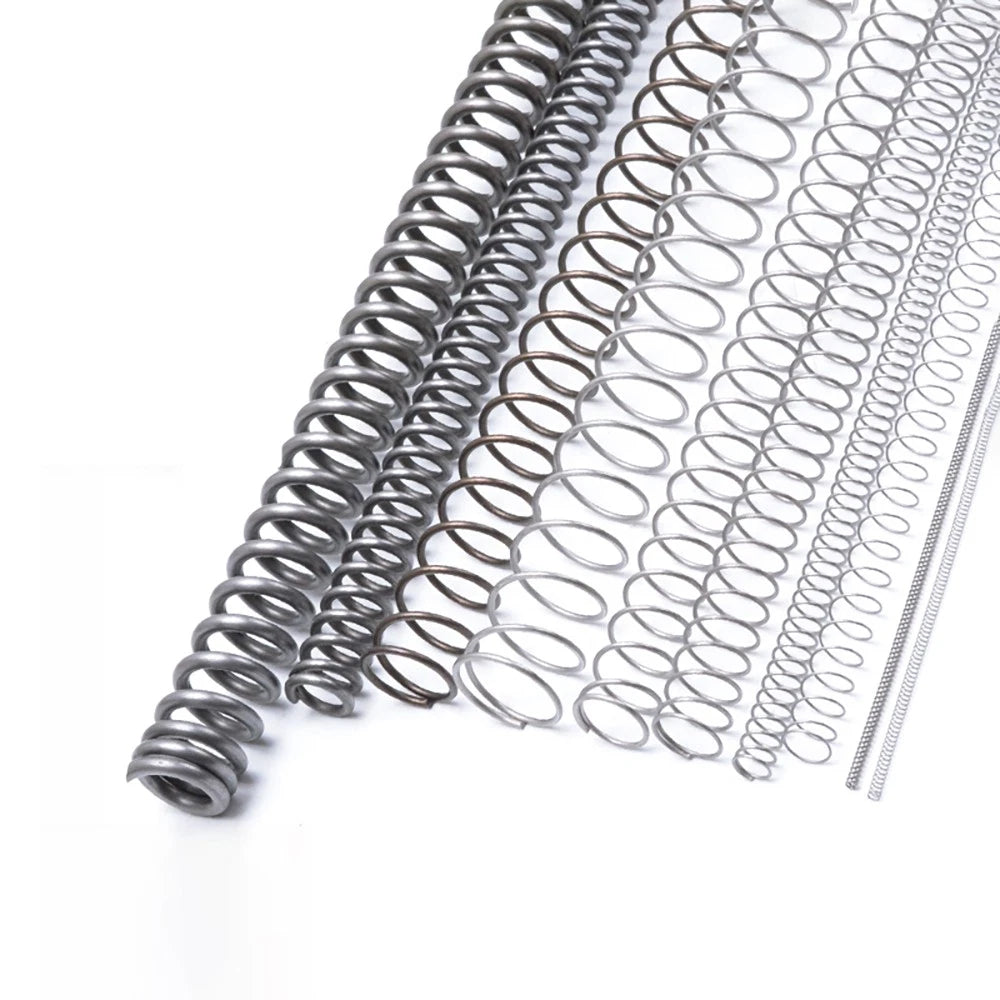
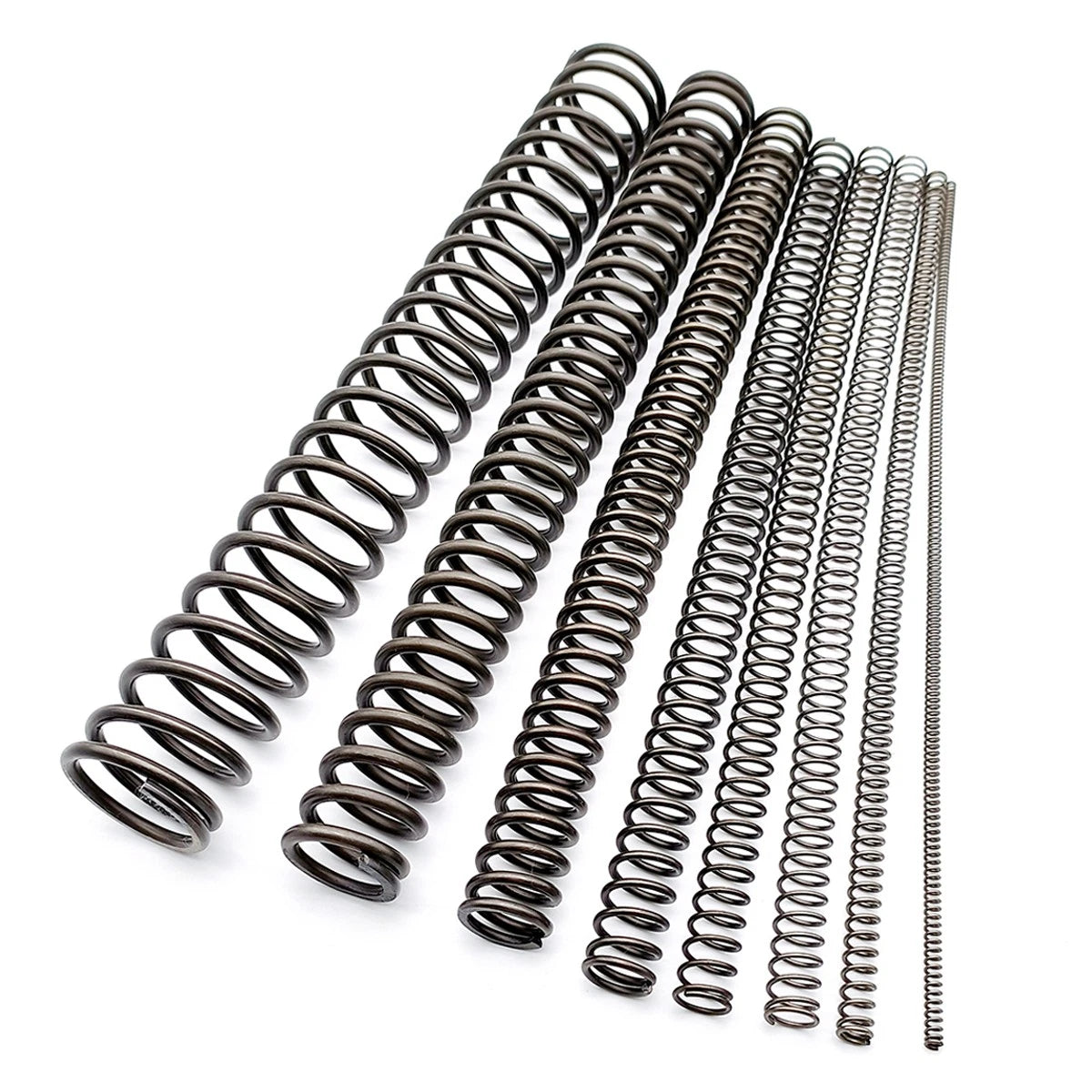
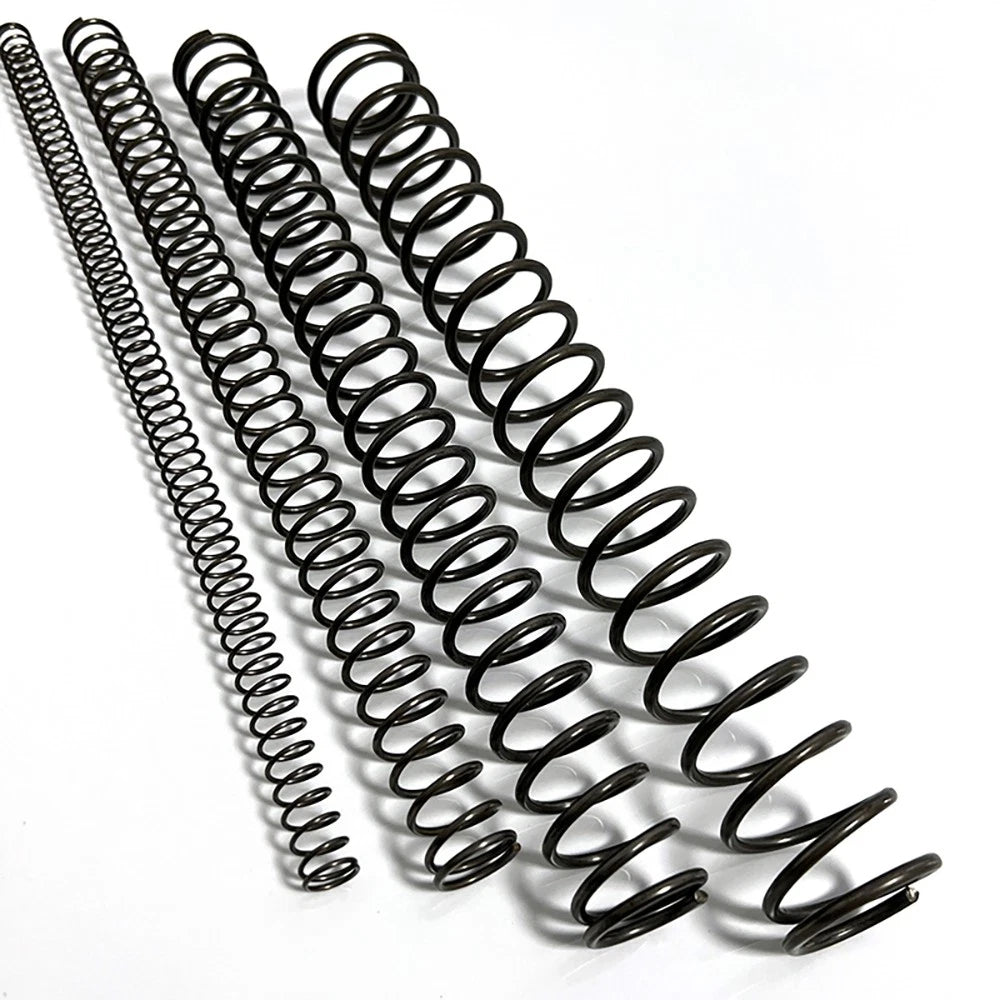
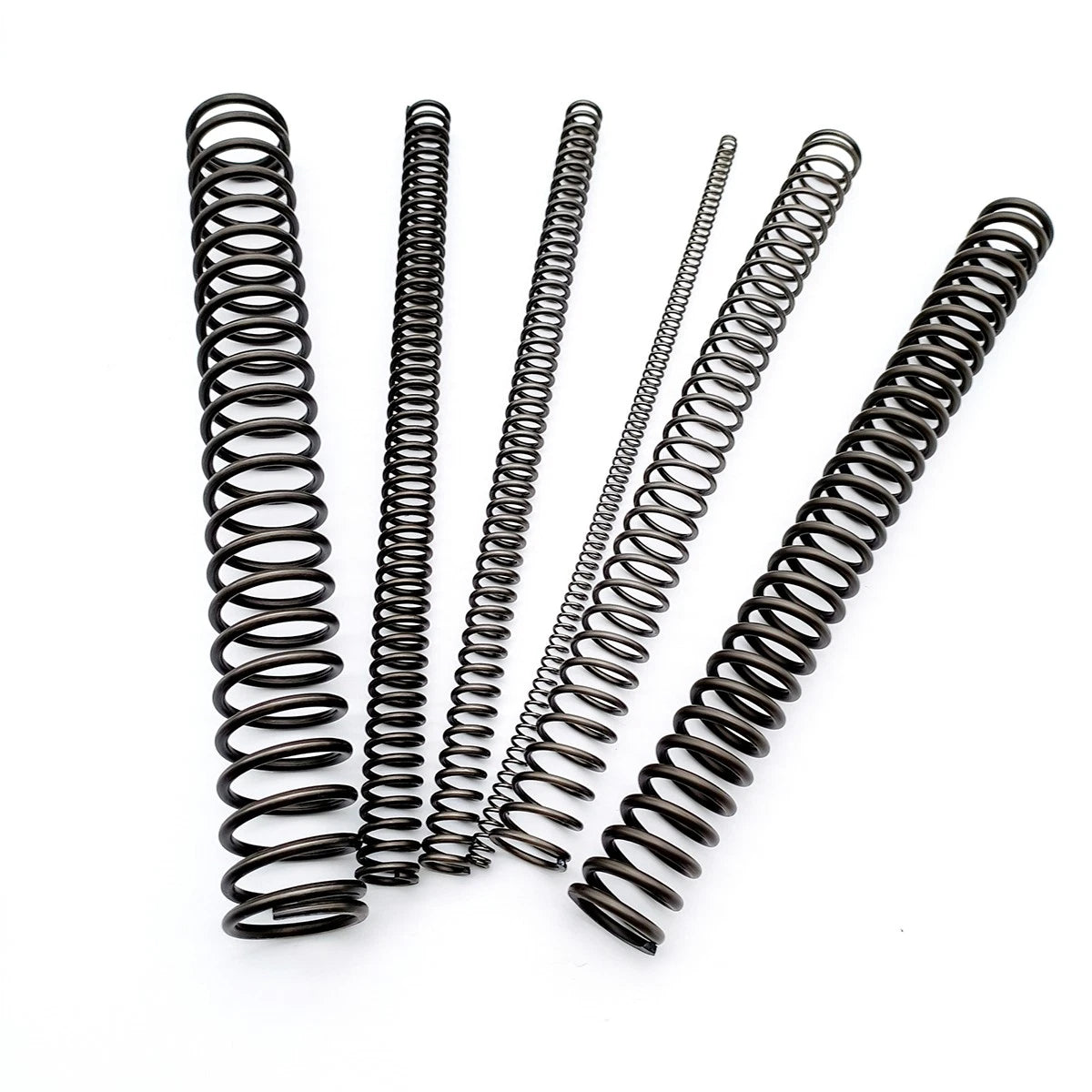
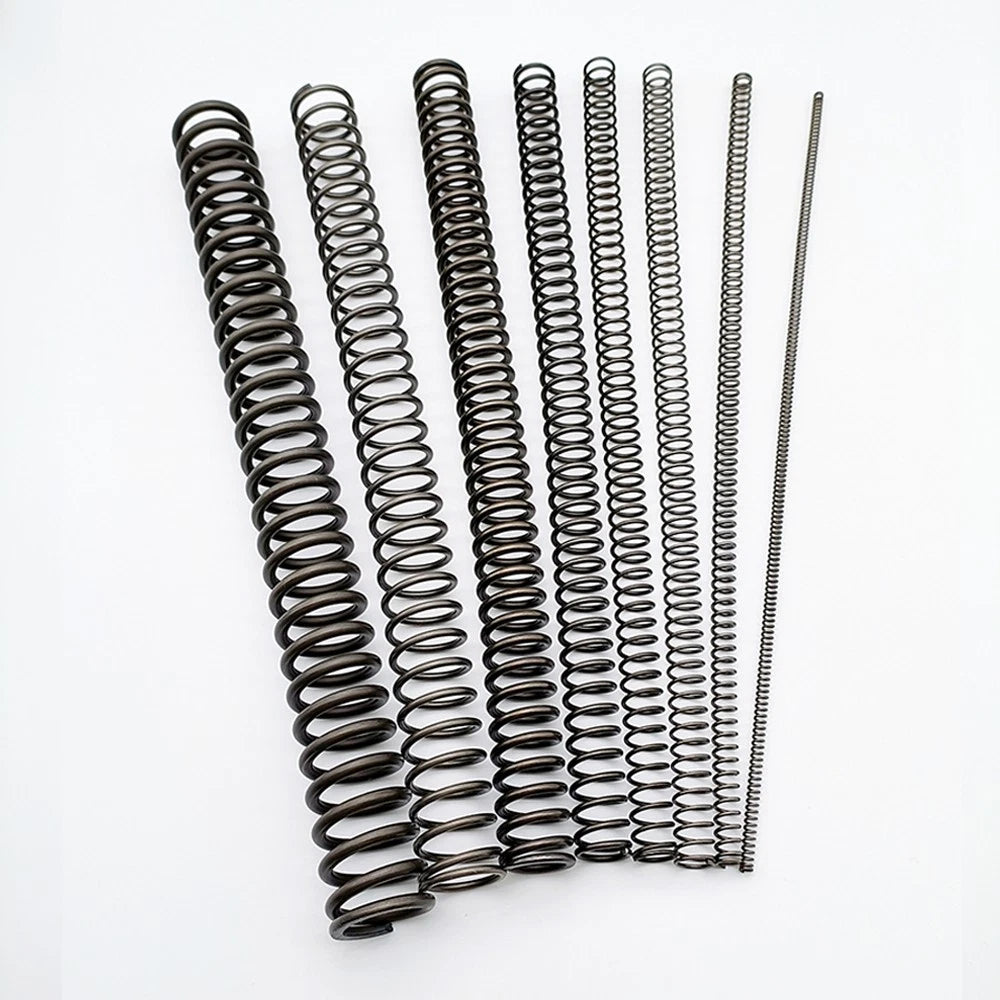
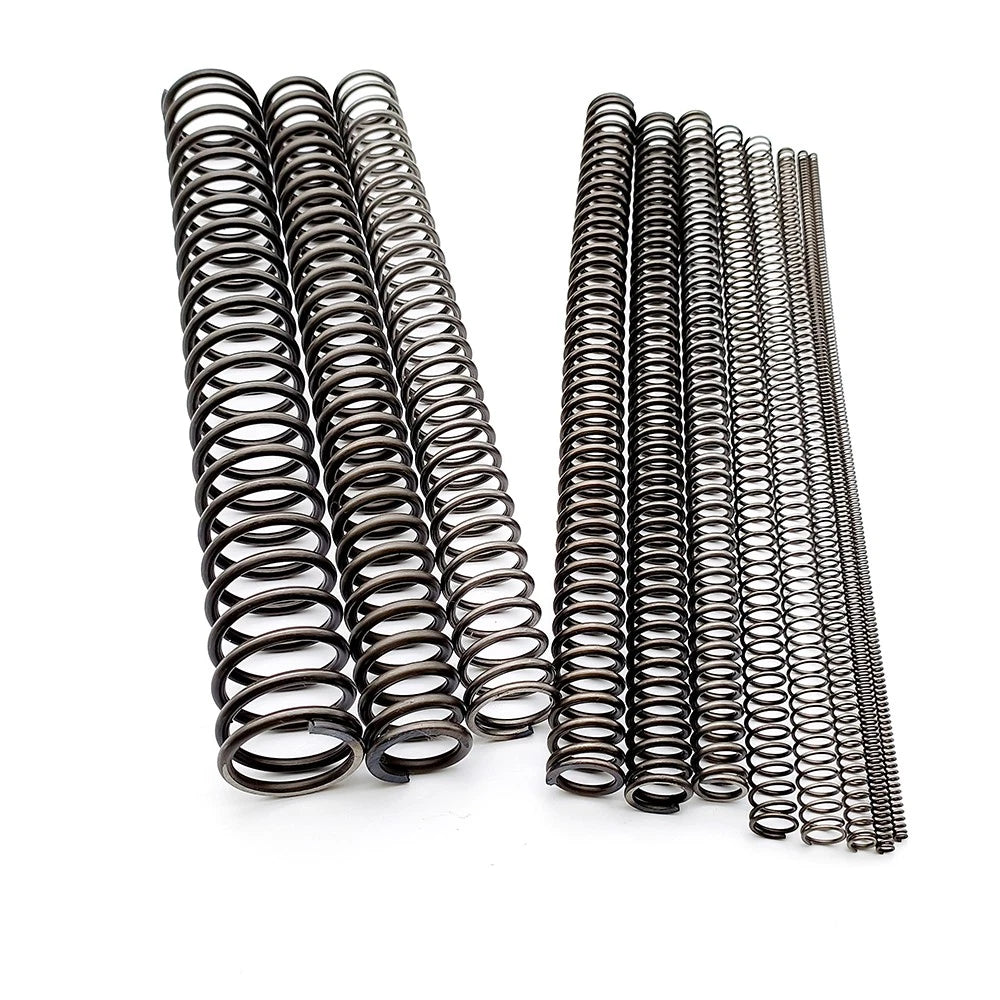
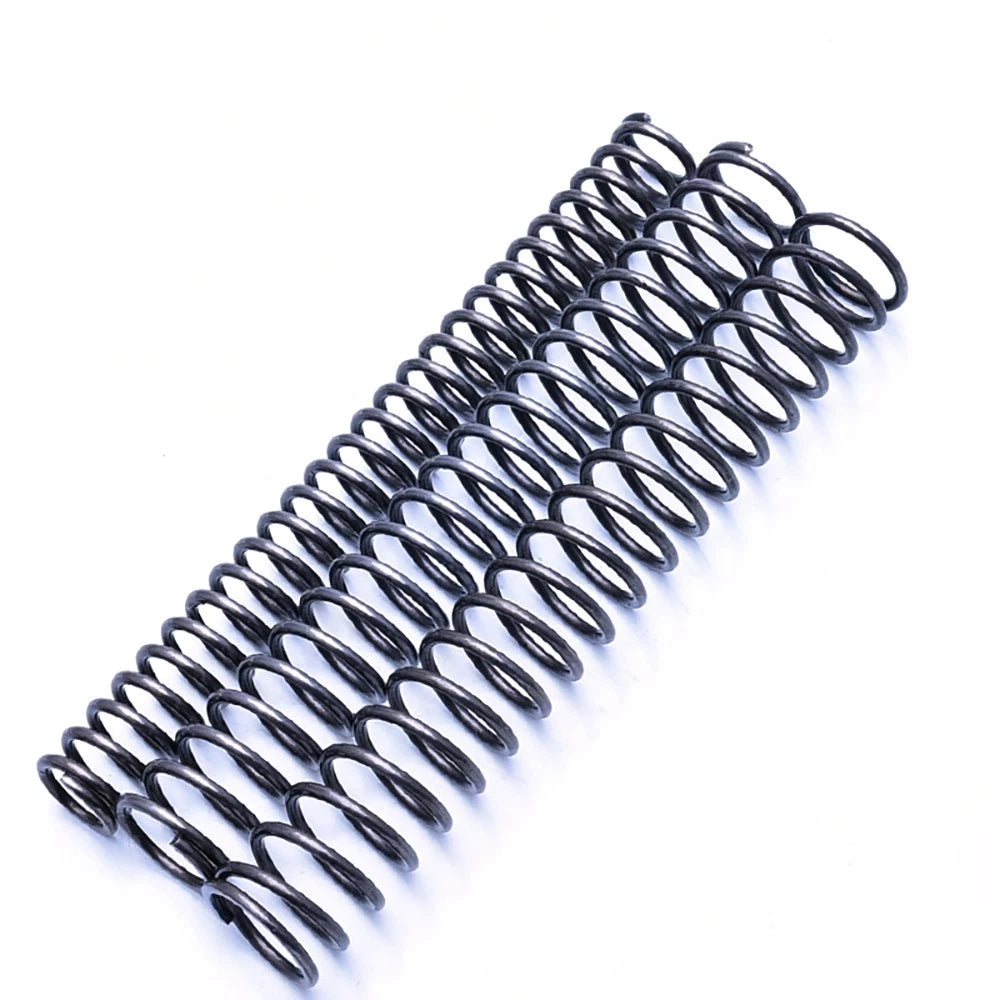
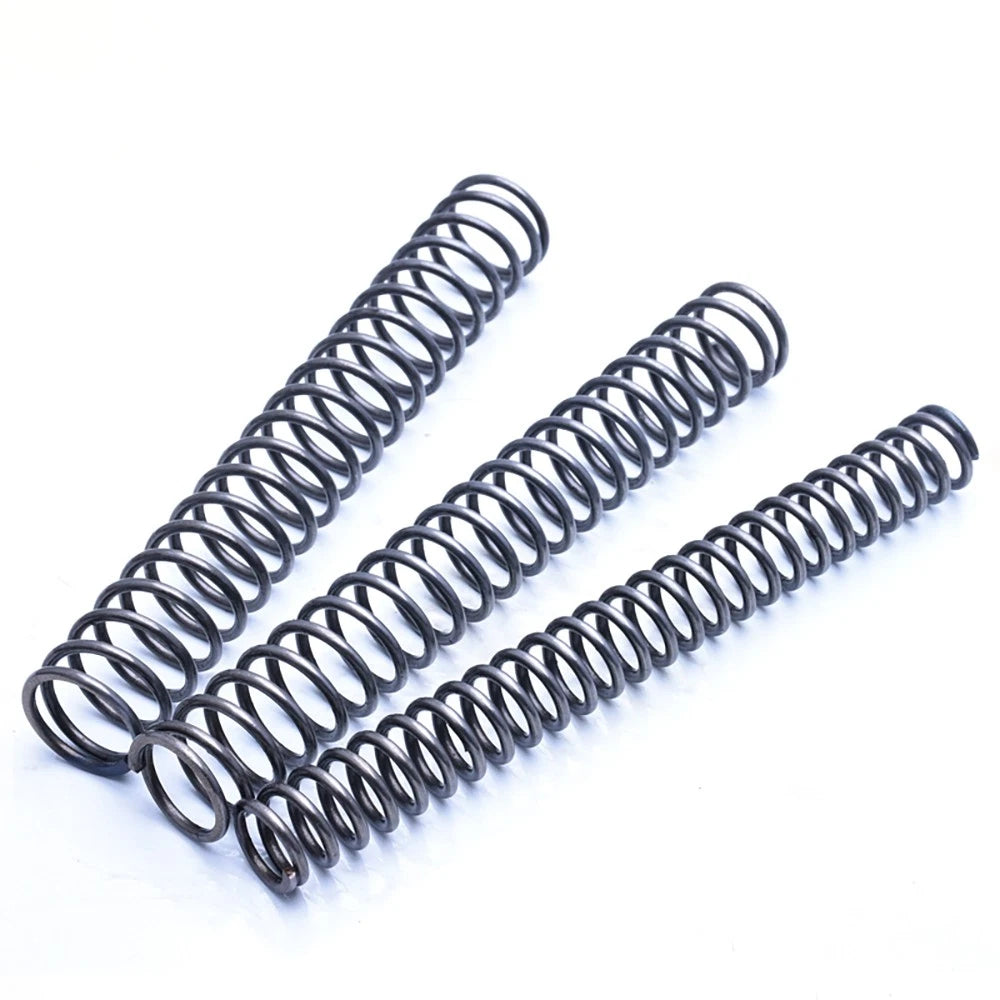
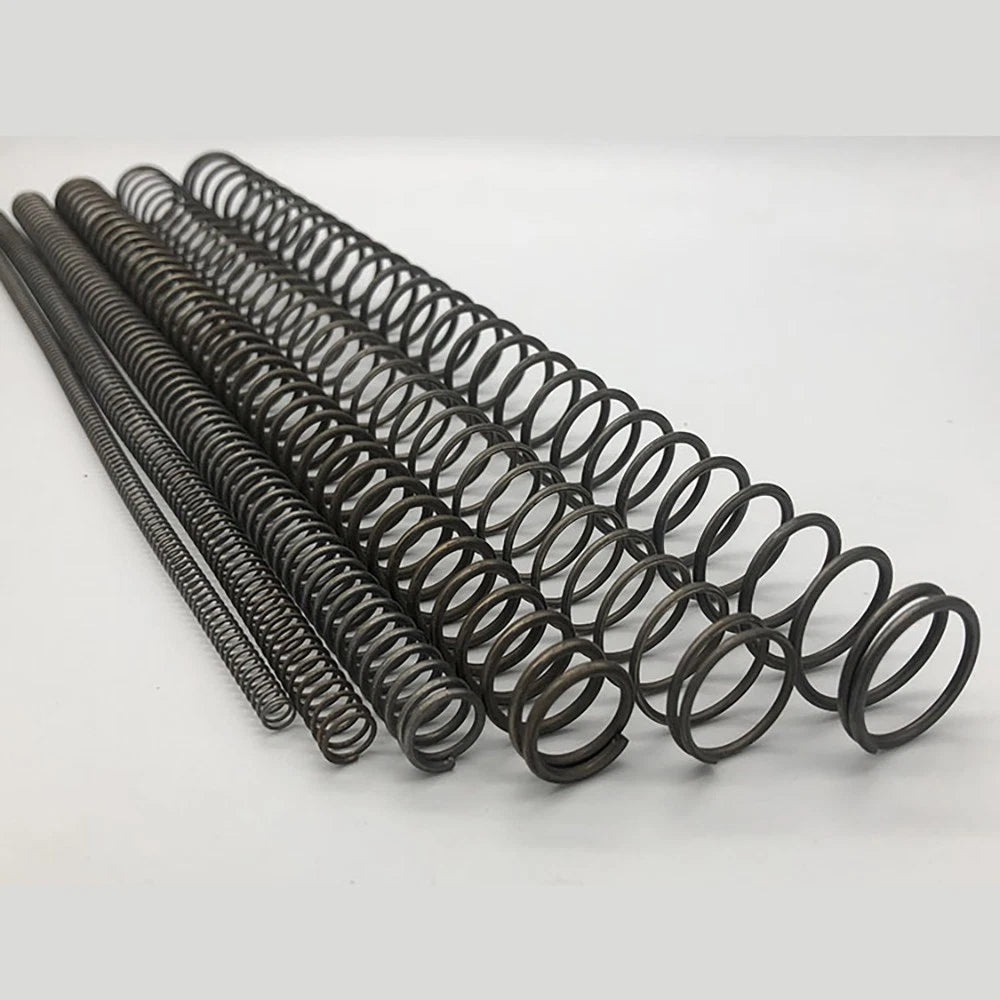
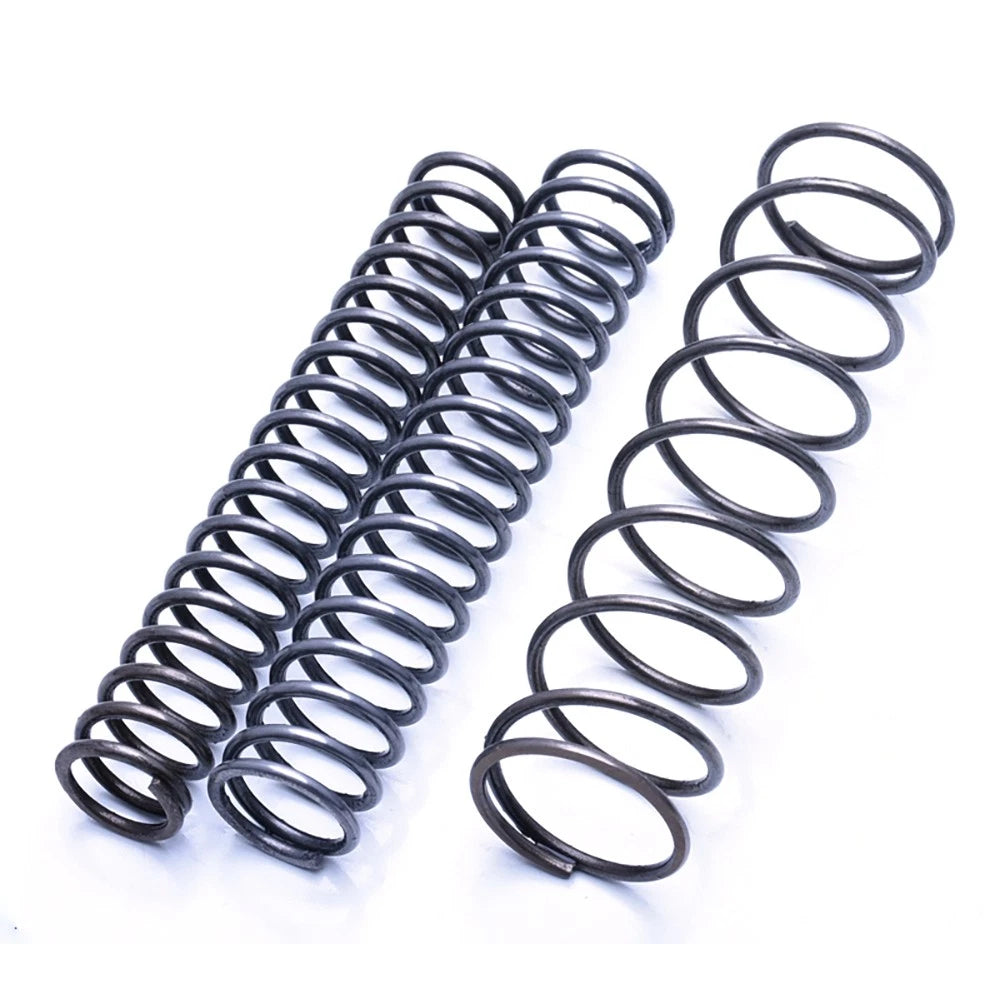
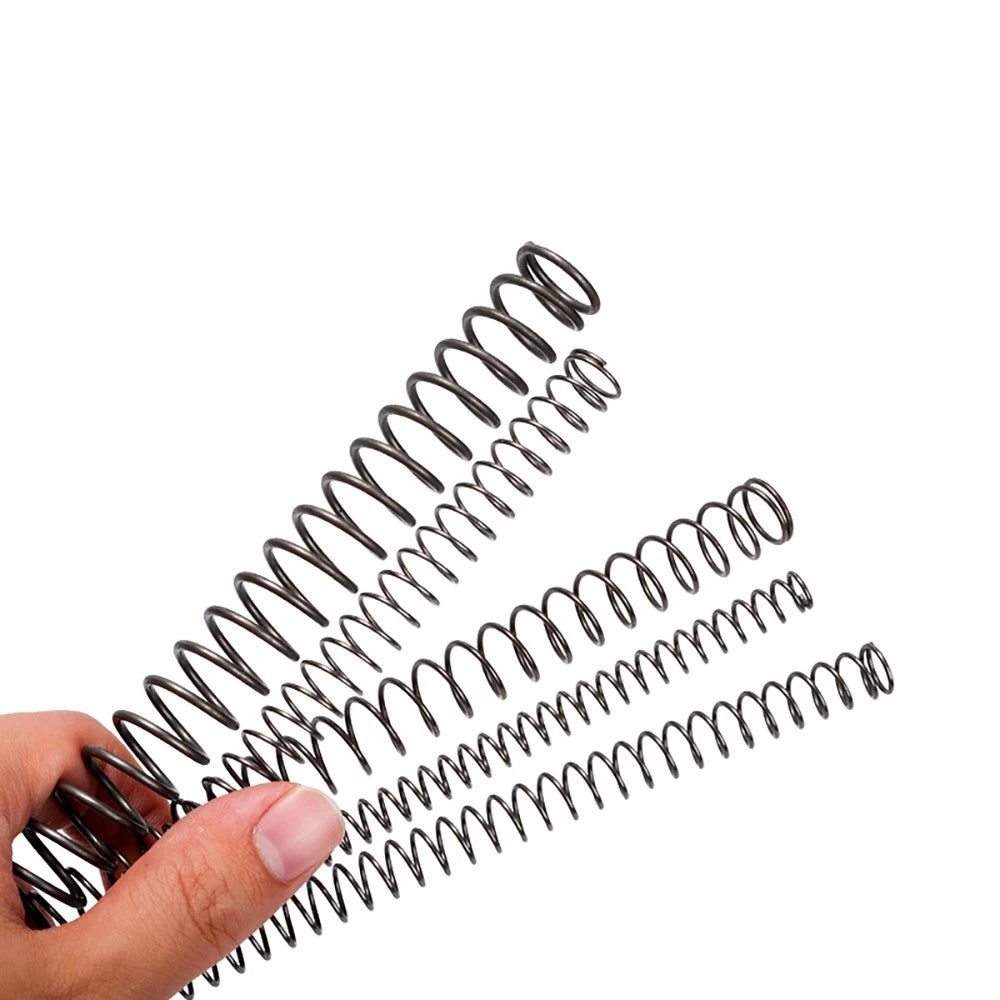
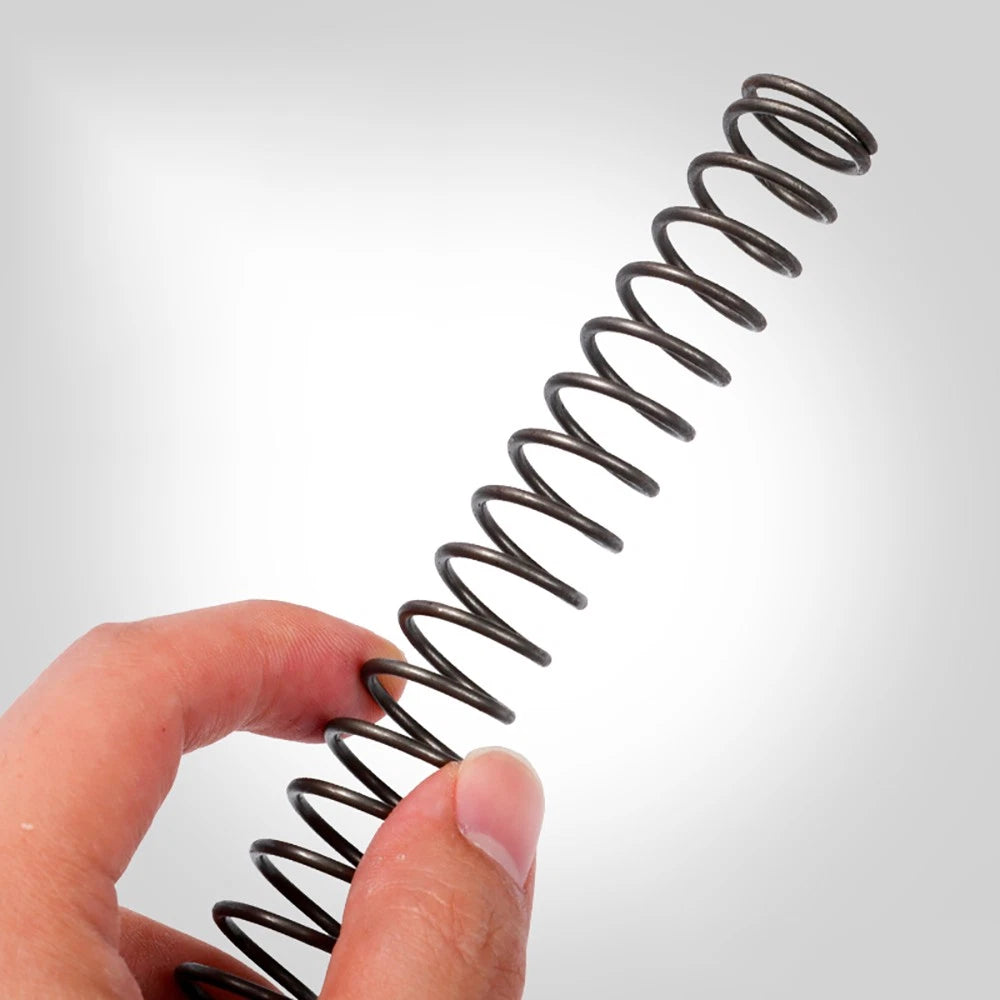
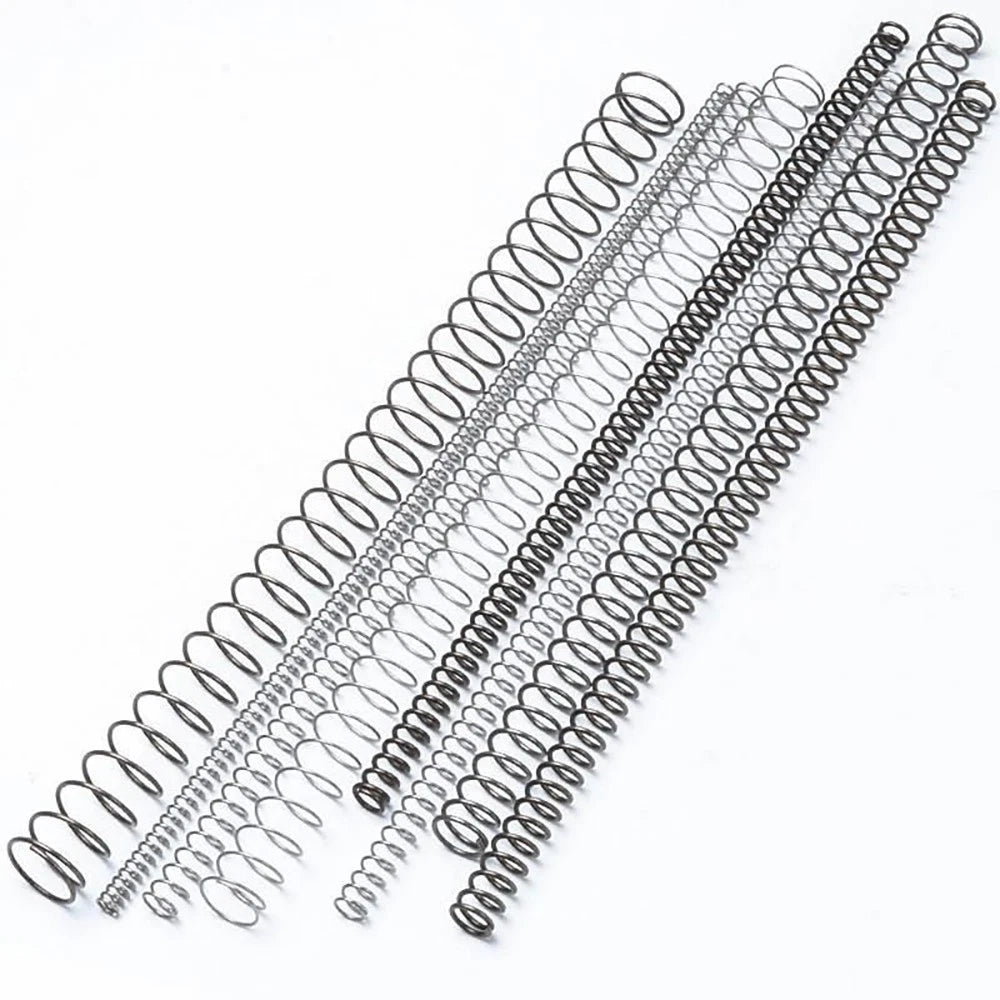
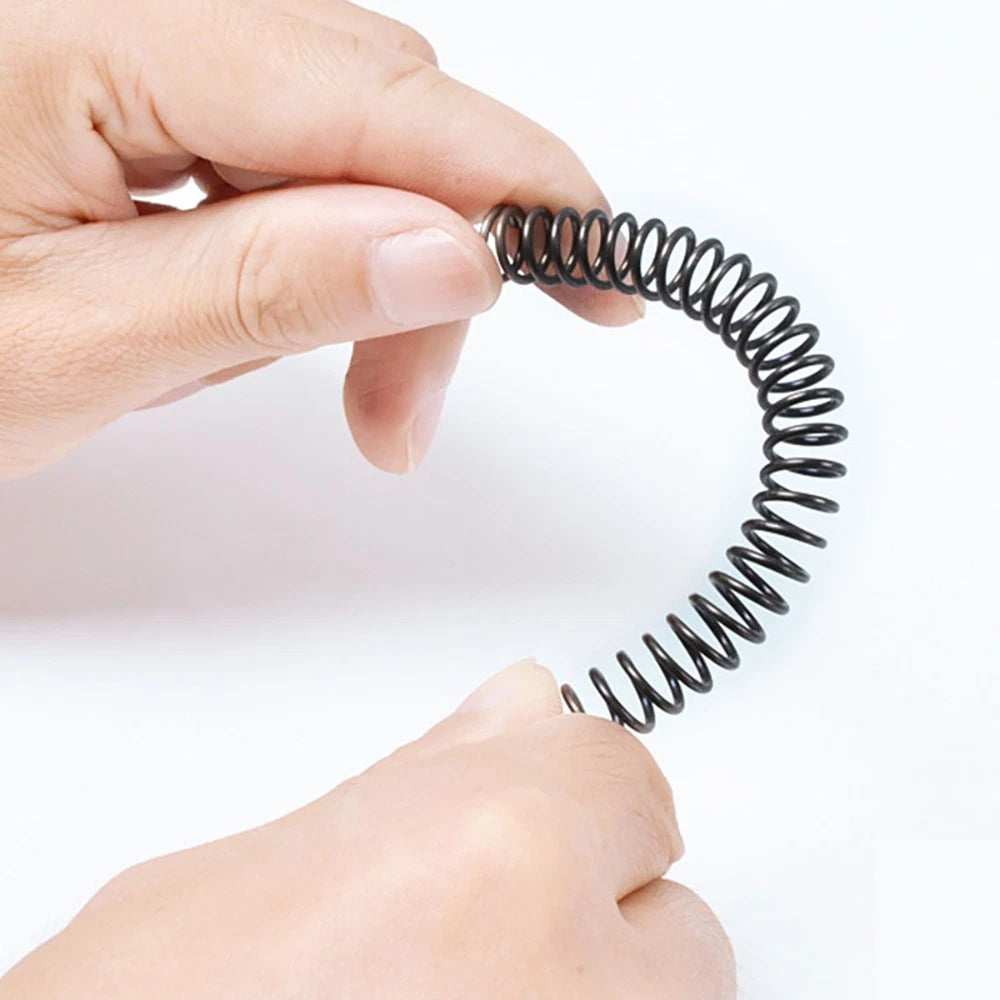
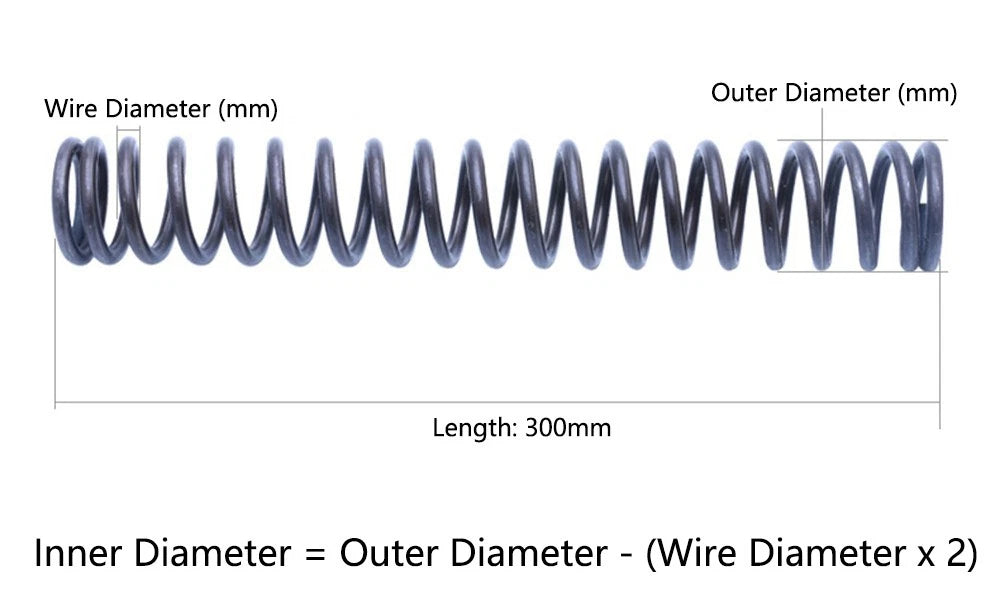
Spring Steel Compression Spring, 0.3-4.5mm Wire Dia, 300mm Length, Spiral Spring

No reviews

Price:
Sale price$9.47 USD
Stock:
In stock (500 units), ready to be shipped

Payment & Security

Ach Direct Debit Amazon American Express Apple Pay Bancontact BLIK Diners Club Discover EPS Google Pay iDEAL Wero JCB Maestro Mastercard Multibanco MobilePay PayPal Przelewy24 Shop Pay Twint Union Pay USDC Visa

Your payment information is processed securely. We do not store credit card details nor have access to your credit card information.

Limited Offer — Spend More, Save More
Spend $55+
Save $5
Spend $100+
Save $10
Spend $200+
Save $25
HomeDIYer DIY Expert Support

DIY Expert Support

Get fitment advice & recommendations

Mon–Fri  8:30 AM – 8:00 PM
24-Hour Fast Ship
Arrives in 3–14 Days
Worldwide Shipping
30-Day Returns
1 tree planted with every purchase

Description

Spring Steel Compression Springs — Precision-Wound Spiral Springs for DIY and Mechanical Applications

When a project demands reliable, repeatable spring force — whether you're repairing a mechanism, building a custom jig, or prototyping a robotics assembly — finding the right compression spring in the exact wire diameter and outer diameter can be a frustrating bottleneck. These spring steel compression springs are stocked across a wide dimensional matrix specifically for makers, engineers, and small-batch manufacturers who need the right spring now, not after a custom order lead time.

Each spring is wound from spring steel wire in diameters ranging from 0.3 mm to 4.5 mm (approximately 0.012 in to 0.177 in), with outer diameters spanning 4 mm to 40 mm (approximately 0.16 in to 1.57 in). The standard cut length is 300 mm (approximately 11.8 in), providing a long working blank that can be cut to a shorter free length if your application requires it. The open-coil spiral geometry delivers consistent linear compression force across the working stroke.

Typical use cases include return springs in tool fixtures and clamps, preload springs in linear motion guides and drawer slides, cushioning elements in light-duty robotics end-effectors, and replacement springs in consumer appliances and mechanical assemblies. The broad wire-diameter range makes these springs suitable for both delicate low-force applications (0.3–0.5 mm wire) and heavier-duty compression tasks (3.0–4.5 mm wire).

⚙️ Compatibility: Suitable for standard spring housings, bores, and guide rods sized to match the selected outer diameter. Verify bore ID and guide rod OD against your chosen variant before ordering.

✅ Key Features of These Spring Steel Compression Springs

  • 📐Wide Dimensional Range — Wire diameters from 0.3 mm to 4.5 mm; outer diameters from 4 mm to 40 mm, covering a broad spectrum of force and deflection requirements.
  • 📏300 mm Working Length — Long blank length (≈11.8 in) allows cutting to a custom free length, giving you flexibility without ordering a custom spring.
  • 🔩Spring Steel Construction — Wound from spring steel wire for consistent elastic recovery, fatigue resistance, and dimensional stability under repeated cycling.
  • 🔄Open-Coil Spiral Geometry — Uniform coil pitch delivers predictable linear force-deflection behavior, making load calculations straightforward for engineering applications.
  • 🛠️Broad Application Compatibility — Suitable for DIY repairs, robotics, automation fixtures, tooling, appliance maintenance, and small-batch manufacturing.
  • 📦Single-Piece and Multi-Pack Options — Available per piece so you can order exactly the quantity your project requires without excess inventory.

📐 Technical Specifications — Compression Spring

Spring Type Compression (open-coil spiral)
Material Spring steel
Wire Diameter Range 0.3 mm – 4.5 mm (0.012 in – 0.177 in)
Outer Diameter Range 4 mm – 40 mm (0.16 in – 1.57 in)
Free Length 300 mm (11.8 in)
Coil Direction See variant options
Surface Finish See variant options
Spring Rate See variant options
End Type See variant options
Quantity per Unit 1 PCS

❓ Frequently Asked Questions

How do I choose the right wire diameter for my application?

Wire diameter is the primary factor controlling spring stiffness (spring rate) and load capacity. Thinner wire (0.3–0.8 mm) produces softer, lower-force springs suited to light mechanisms, electronics, and small appliances. Thicker wire (1.5–4.5 mm) produces stiffer, higher-force springs for tooling, robotics, and structural assemblies. As a starting point, match the wire diameter to the force range your application requires, then verify the outer diameter fits your housing or guide rod.

What outer diameter should I select relative to my bore or guide rod?

For a spring working inside a bore, the outer diameter should be approximately 1–2 mm smaller than the bore inner diameter to allow free compression without binding. For a spring working over a guide rod, the inner diameter of the spring (outer diameter minus twice the wire diameter) should be approximately 1–2 mm larger than the rod outer diameter. Select your variant accordingly and verify clearances before final assembly.

Can I cut the 300 mm spring to a shorter free length?

Yes. The 300 mm free length is intentionally long to serve as a working blank. You can cut the spring to your required free length using an angle grinder, cut-off wheel, or spring cutter. After cutting, lightly dress the cut end to remove any sharp burrs. Note that cutting changes the number of active coils and therefore the spring rate — recalculate your load-deflection values after cutting if precision is required.

How strong are these springs — what load can they handle?

Load capacity depends on wire diameter, outer diameter, free length, and the number of active coils. Thicker wire and smaller outer diameter (tighter coil index) generally produce higher spring rates and load capacities. Because this product spans wire diameters from 0.3 mm to 4.5 mm, the force range is very wide — from a few grams for the finest wire sizes to several kilograms for the heaviest. If you need a specific spring rate or load value, contact us with your wire diameter, outer diameter, and required deflection and we can provide guidance.

Are these springs corrosion-resistant? Can they be used outdoors or in humid environments?

Spring steel provides good mechanical properties but has limited inherent corrosion resistance compared to stainless steel. For indoor, dry, or lightly humid environments these springs perform reliably. For outdoor, wet, or corrosive environments, consider applying a light coat of oil or grease, or contact us to inquire about stainless steel alternatives. Avoid prolonged exposure to salt spray or aggressive chemicals without protective treatment.

How do I confirm this spring is compatible with my existing assembly?

Measure the bore inner diameter (or guide rod outer diameter), the available space for free length, and the required compressed length in your assembly. Then select the variant whose outer diameter fits your bore or guide rod clearance, and verify the 300 mm free length is sufficient for your required working stroke. If you are replacing an existing spring, match the wire diameter and outer diameter of the original spring as closely as possible.

What is the difference between a compression spring and a tension or torsion spring?

A compression spring resists being compressed along its axis — it pushes back when you squeeze it. A tension spring resists being stretched — it pulls back when you extend it. A torsion spring resists rotational twisting. These listings are compression springs only. If your application requires tension or torsion springs, please browse our other spring listings or contact us for assistance.

🛒 Select your Wire Diameter and Outer Diameter above, then add to cart.

You may also like

Recently viewed