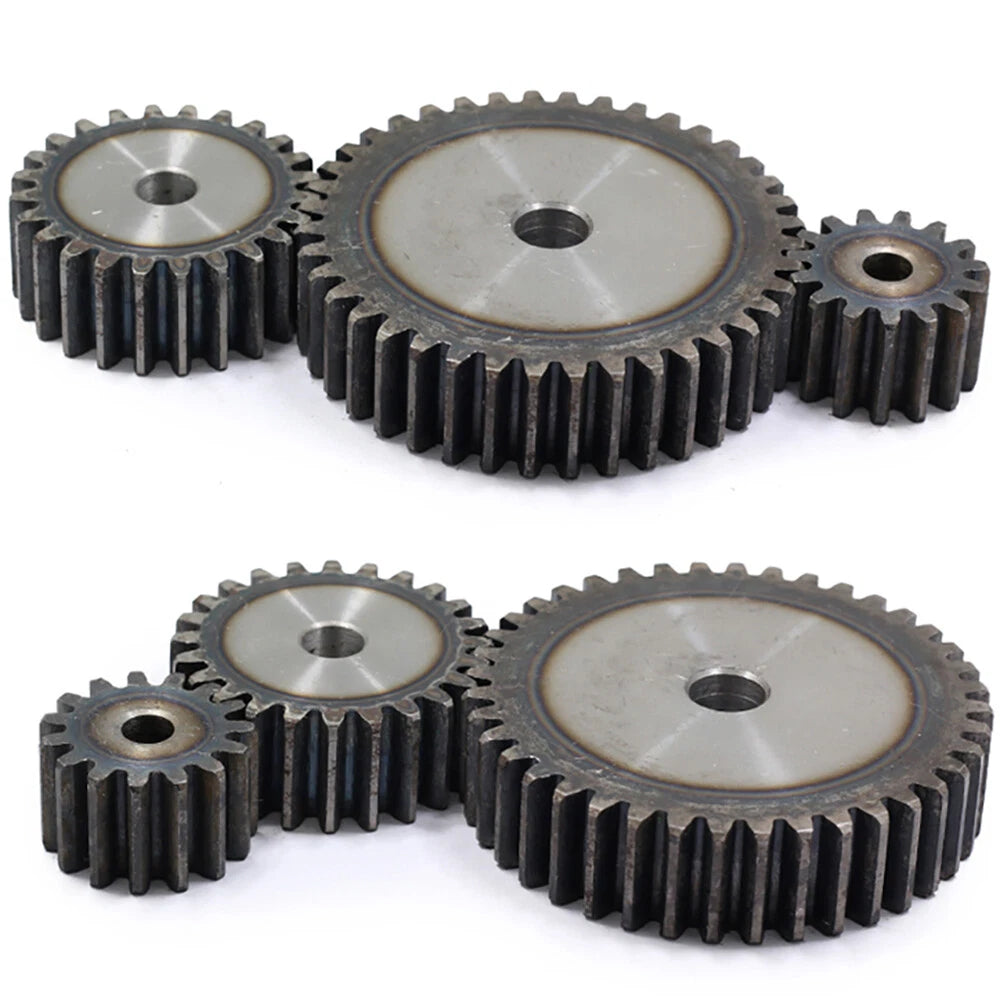
2M/2.5M/3M/4M/5M 10-96T Spur Gear Transmission Motor Gears (Harden by Quenching)

No reviews

Price:
Sale price$13.57 USD
Stock:
In stock (500 units), ready to be shipped

Payment & Security

Ach Direct Debit Amazon American Express Apple Pay Bancontact BLIK Diners Club Discover EPS Google Pay iDEAL Wero JCB Maestro Mastercard Multibanco MobilePay PayPal Przelewy24 Shop Pay Twint Union Pay USDC Visa

Your payment information is processed securely. We do not store credit card details nor have access to your credit card information.

Limited Offer — Spend More, Save More
Spend $55+
Save $5
Spend $100+
Save $10
Spend $200+
Save $25
HomeDIYer DIY Expert Support

DIY Expert Support

Get fitment advice & recommendations

Mon–Fri  8:30 AM – 8:00 PM
24-Hour Fast Ship
Arrives in 3–14 Days
Worldwide Shipping
30-Day Returns
1 tree planted with every purchase

Description

Spur Gear 2M–5M Transmission Motor Gears — Precision Quench-Hardened for Reliable DIY Drives

When your automation project demands consistent torque transfer without slippage or premature wear, choosing the right spur gear matters. Hobbyists, makers, and small-workshop engineers building CNC routers, robotic arms, conveyor systems, or motorized platforms need gears that hold their geometry under load — not soft blanks that deform after a few hundred cycles.

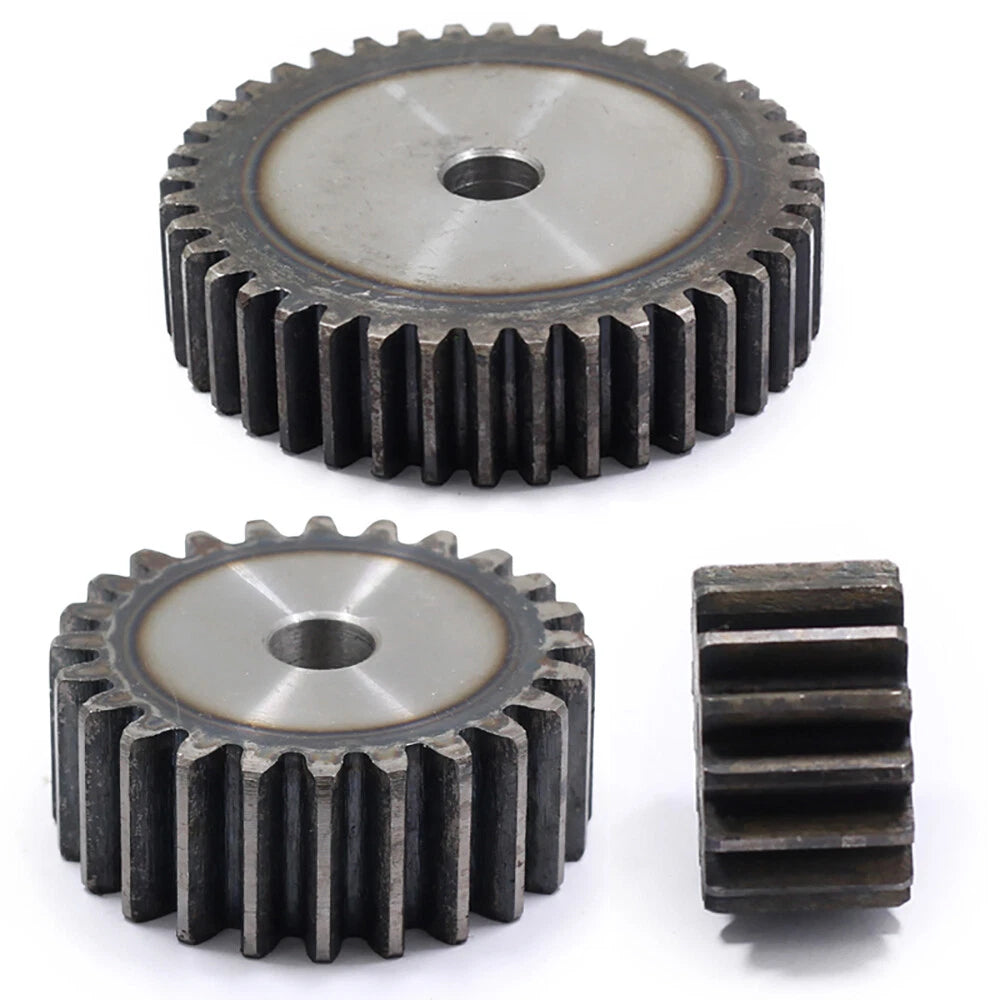
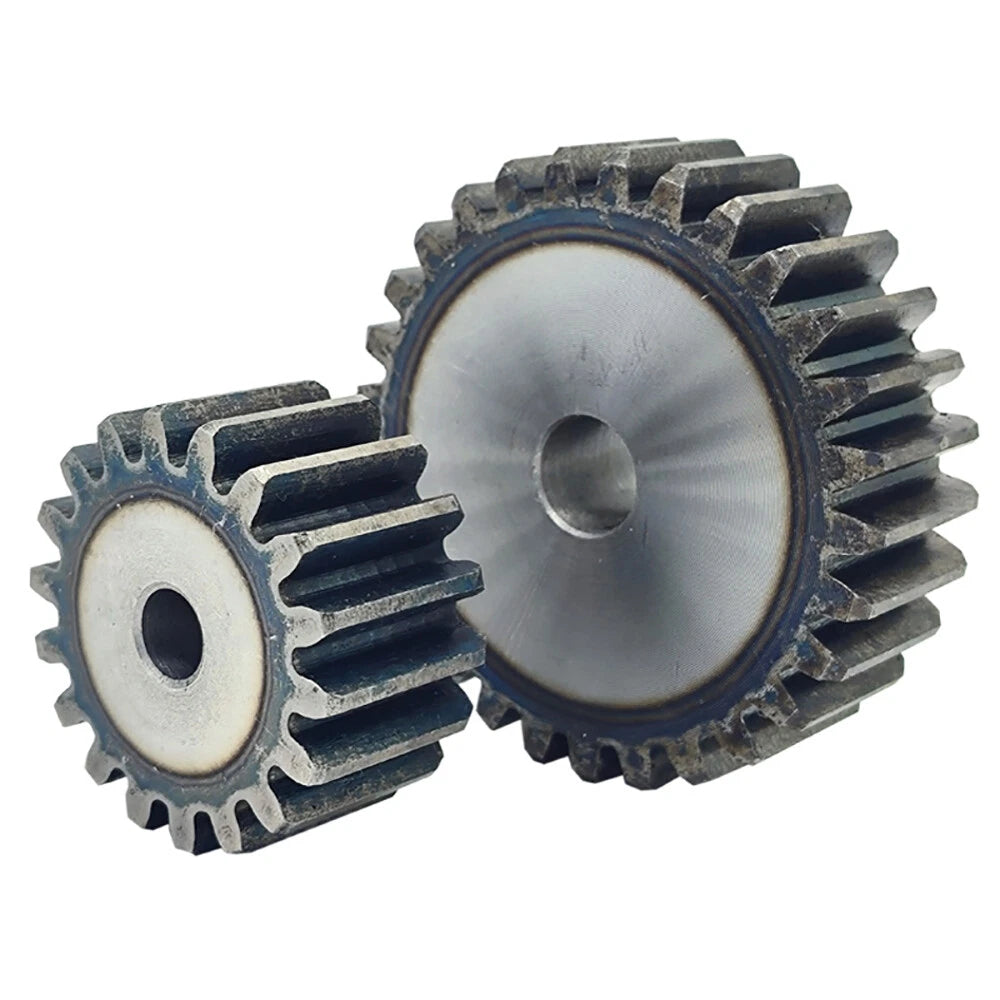
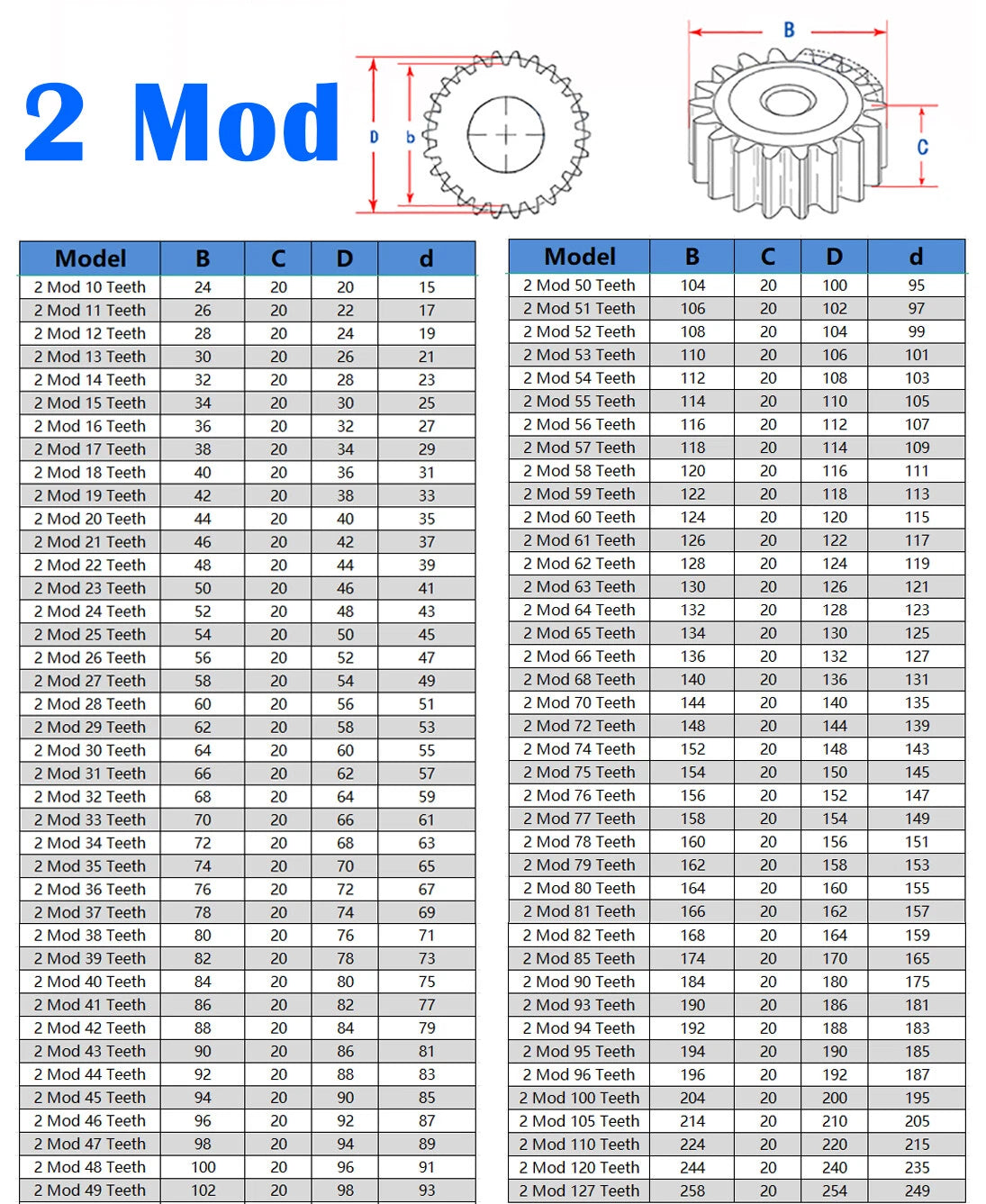
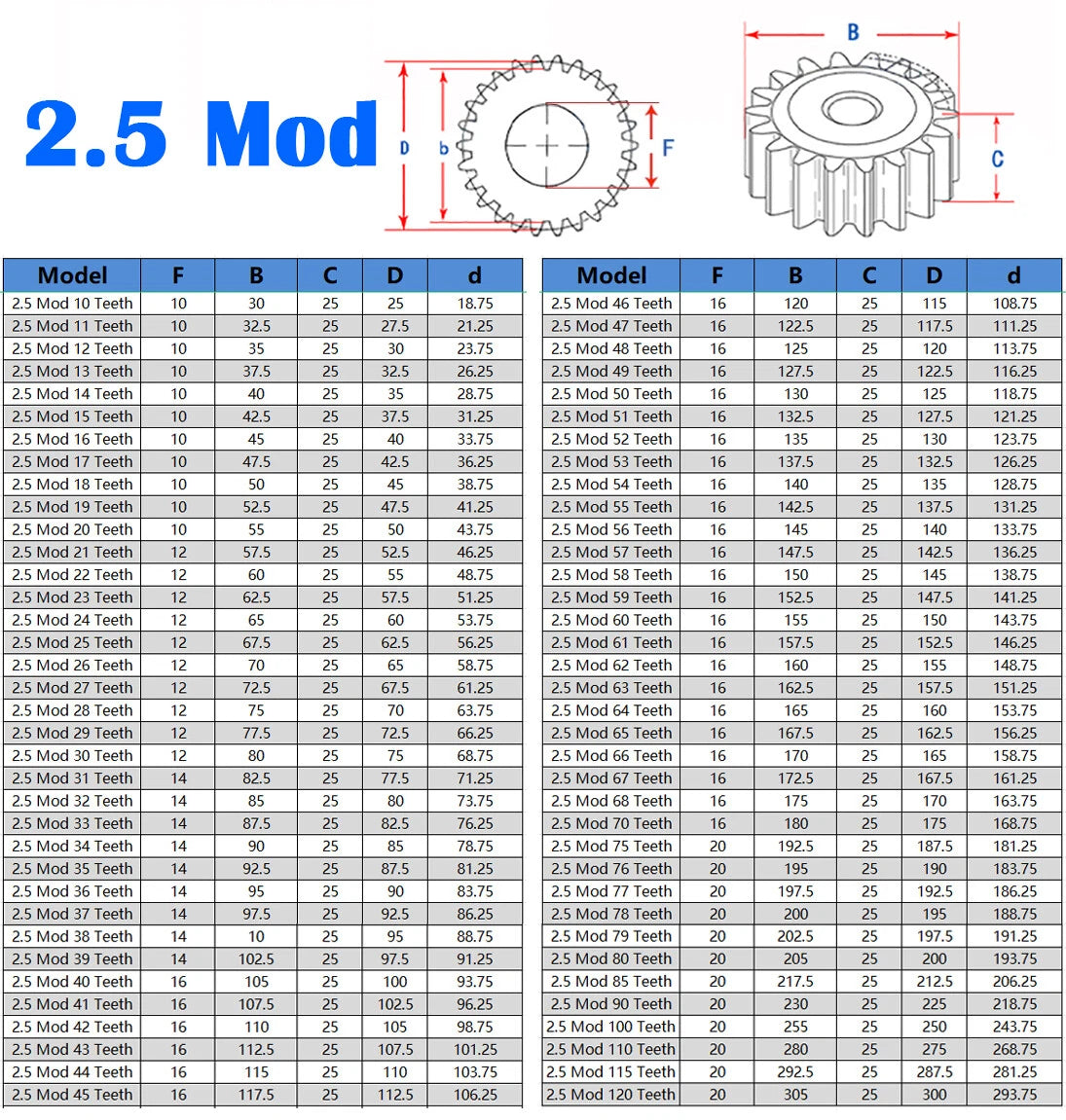
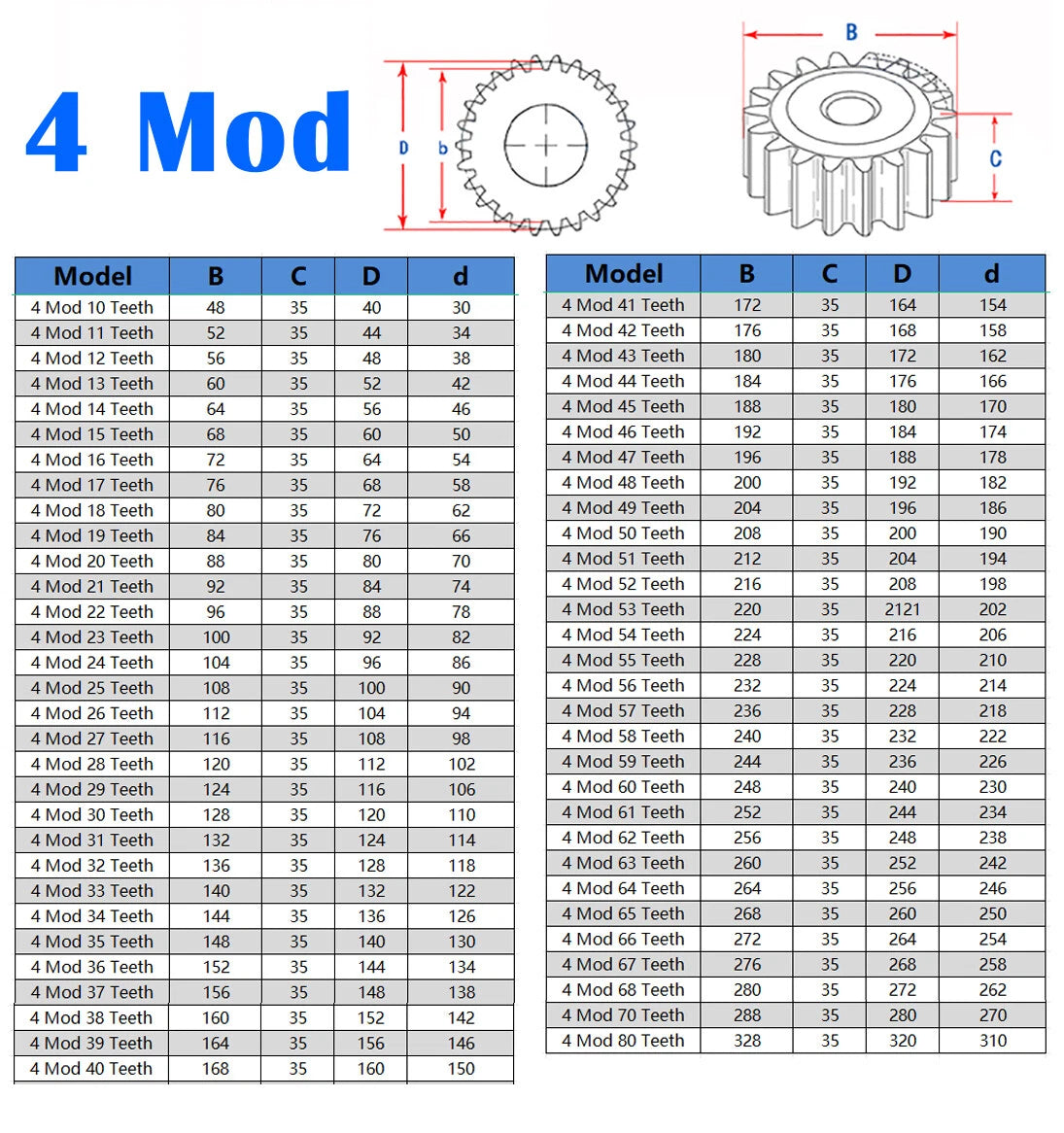
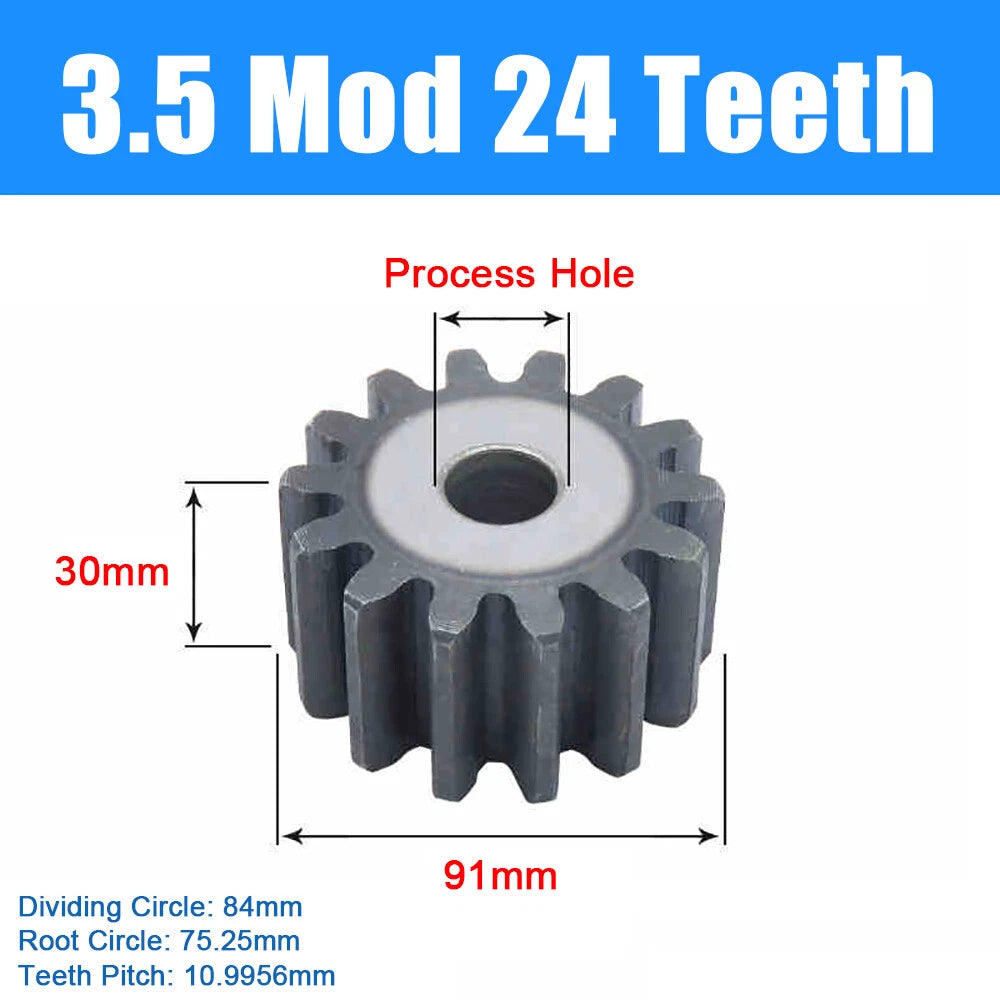
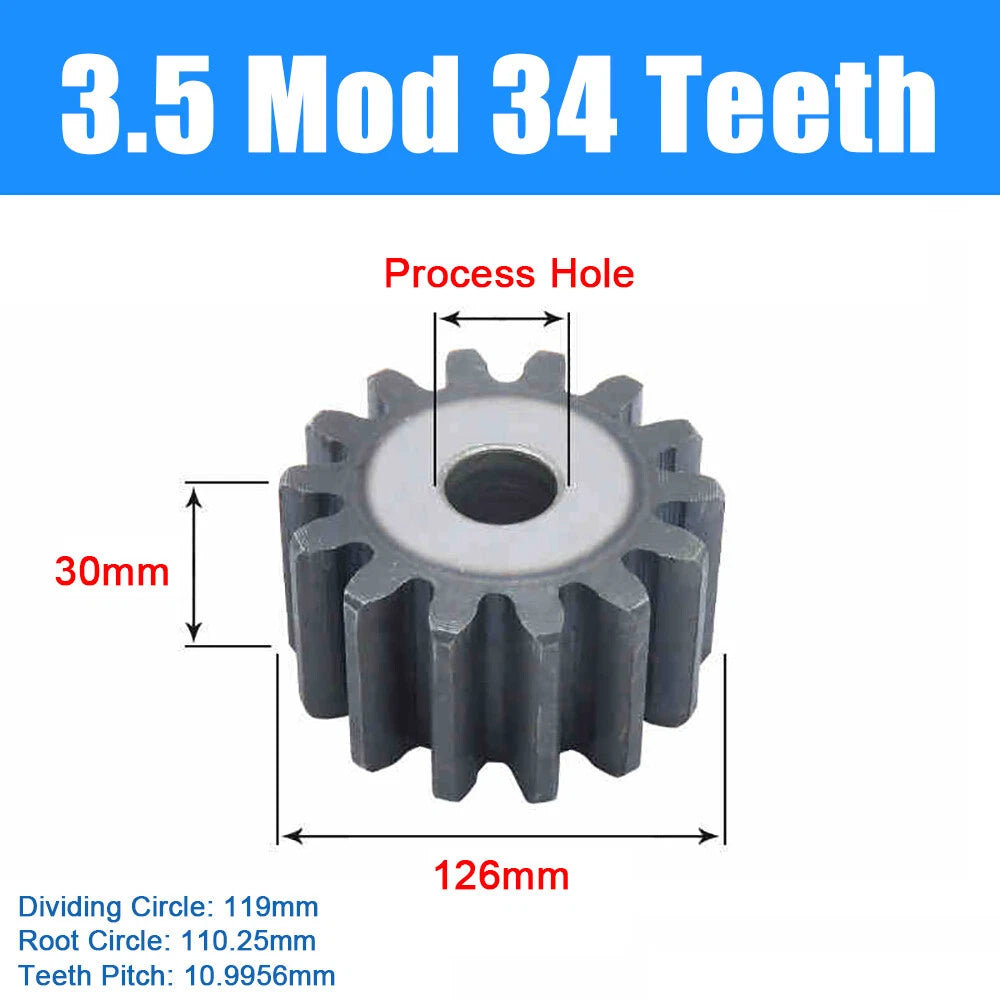
These spur gears are machined from steel and hardened by quenching for increased surface hardness and fatigue resistance. Available in five metric modules — 2M, 2.5M, 3M, 3.5M, 4M, and 5M — with tooth counts ranging from 10 to 96 teeth (varies by module). Pitch diameters scale accordingly: a 2M 20T gear has a pitch diameter of 40 mm (~1.57 in), while a 5M 28T gear reaches 140 mm (~5.51 in). Bore diameter and keyway dimensions vary by model; see variant options for exact fit details.

Typical use cases include DIY CNC axis drives requiring repeatable positioning, open-frame robotics joints where gear mesh must stay tight under cyclic loading, and educational lab automation rigs where students need interchangeable metric-module gear sets. Long-tail applications: replacement spur gear for stepper motor gearbox, metric module gear for 3D printer extruder drive, quench-hardened steel gear for conveyor belt tensioner.

⚙️ Compatibility: Mates with any gear of the same metric module (2M, 2.5M, 3M, 3.5M, 4M, or 5M). Confirm bore diameter and keyway against your shaft before ordering. Not cross-compatible across different module sizes.

✅ Key Features of These Spur Gears

🔩 Quench-Hardened Steel

Heat-treated by quenching to increase surface hardness, reducing tooth wear and extending service life under repetitive mesh loading.

📐 Wide Module Range

Five metric modules available — 2M, 2.5M, 3M, 3.5M, 4M, and 5M — covering light-duty robotics through heavier torque-transfer applications.

🦷 Broad Tooth Count Selection

Tooth counts from 10T to 96T (range varies by module) let you dial in your gear ratio without custom machining.

🎯 Metric Module Standard

Manufactured to standard metric module tolerances, ensuring reliable mesh with any same-module mating gear from any compatible source.

🔄 Straight-Cut Tooth Profile

Spur (straight-cut) tooth geometry delivers efficient power transfer on parallel shafts with no axial thrust load — ideal for most DIY drive trains.

🏭 Versatile Application Fit

Suited for CNC routers, robotic joints, conveyor drives, motorized camera sliders, and educational automation platforms requiring interchangeable metric gears.

📐 Technical Specifications — Spur Gears

Product Type Spur Gear (Straight-Cut)
Available Modules 2M, 2.5M, 3M, 3.5M, 4M, 5M
Tooth Count Range 10T – 96T (varies by module)
Tooth Profile Standard metric involute
Material Steel (quench-hardened)
Surface Treatment Hardened by quenching
Pitch Diameter See variant options
Bore Diameter See variant options
Keyway See variant options
Hub Width / Face Width See variant options
Pressure Angle 20° (standard metric)
Shaft Orientation Parallel shafts
Weight See variant options

❓ Frequently Asked Questions

How do I choose the right module and tooth count for my project?

The module determines the size of each tooth and must match between mating gears. Larger modules (e.g., 4M, 5M) handle higher torque but produce larger, heavier gears. Tooth count sets your gear ratio: divide the driven gear's tooth count by the driving gear's tooth count to get the ratio. For example, a 10T driver meshing with a 40T driven gear gives a 4:1 reduction. Start with the torque and speed requirements of your motor, then select the smallest module that keeps tooth stress within safe limits.

Can I mix modules — for example, use a 2M gear with a 2.5M gear?

No. Gears of different modules cannot mesh correctly. The tooth pitch, height, and thickness are all scaled to the module value, so a 2M gear and a 2.5M gear will not engage properly and will damage each other if forced together. Always confirm that both the driving and driven gears share the same module before ordering.

How strong are these gears, and what loads can they handle?

These gears are made from steel and hardened by quenching, which significantly increases surface hardness compared to unhardened or cast gears. Quench hardening improves resistance to tooth surface fatigue (pitting) and wear under cyclic loading. Exact load ratings depend on the specific module, tooth count, face width, and operating speed of your application. For critical load calculations, use standard AGMA or ISO gear rating methods with the gear's geometry data.

Are these gears corrosion-resistant for outdoor or humid environments?

These are steel gears without a stated corrosion-resistant coating. For outdoor, humid, or wet environments, we recommend applying a suitable gear lubricant or grease to the tooth surfaces and bore, and considering periodic reapplication. If long-term corrosion resistance is a primary requirement, contact us to confirm whether a coated or stainless option is available for your module and tooth count.

What bore diameter and keyway size does each variant have?

Bore diameter and keyway dimensions vary by module and tooth count. These details are specific to each variant and are not uniform across the range. Please check the variant options on this page or contact us with your selected model number (e.g., "3M 20T") and we will confirm the bore and keyway specifications before you order.

How do I select the right variant for my motor shaft?

First, identify your motor shaft diameter and whether it uses a keyway or set-screw retention. Then select the module that matches your mating gear (or calculate the required module from your center distance and tooth counts). Finally, choose the tooth count that gives your target gear ratio. If you are unsure, measure your existing gear's tooth pitch with calipers: module = pitch diameter ÷ tooth count.

Do these gears require lubrication during operation?

Yes, like all steel spur gears, these benefit from lubrication to reduce friction, heat, and tooth wear. For low-speed, light-load applications, a light machine oil or grease applied to the tooth faces is sufficient. For higher-speed or higher-load drives, use a gear-rated grease or oil appropriate for your operating temperature range. Regular lubrication intervals will extend gear life significantly.

🛒 Select your module and tooth count above, then add to cart.

You may also like

Recently viewed