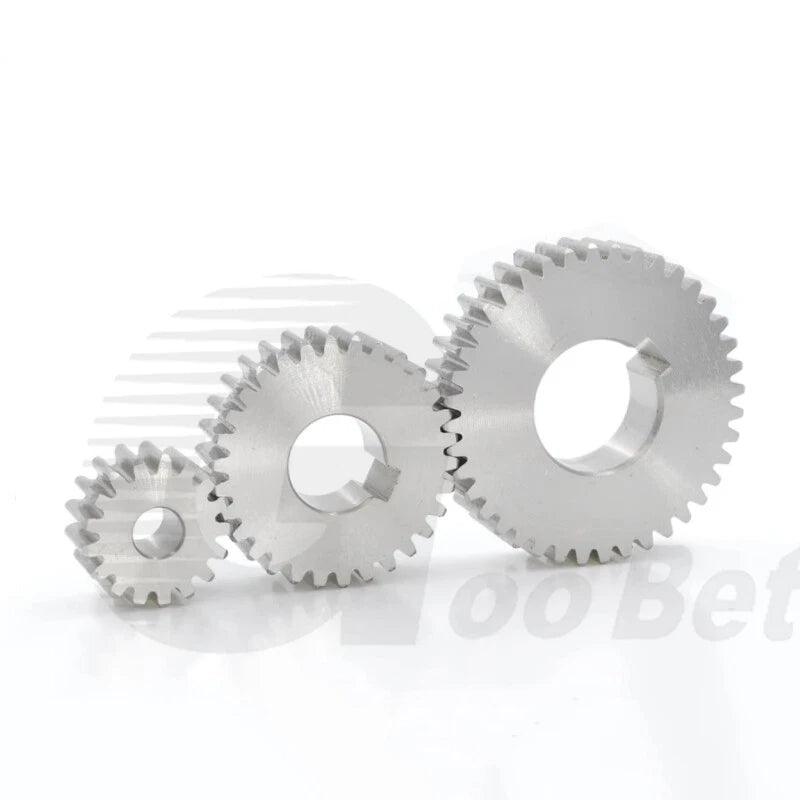
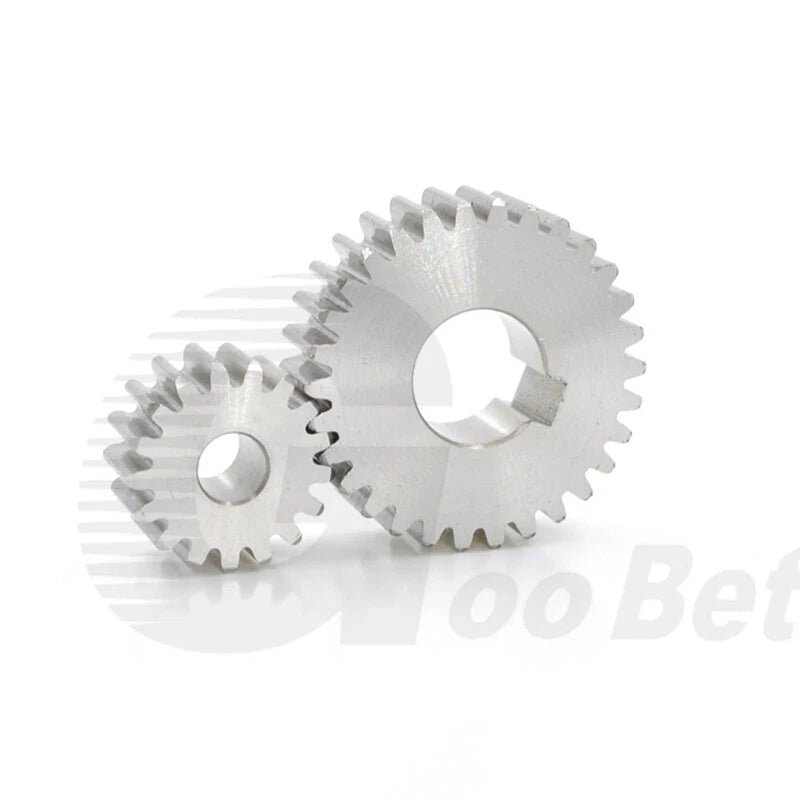
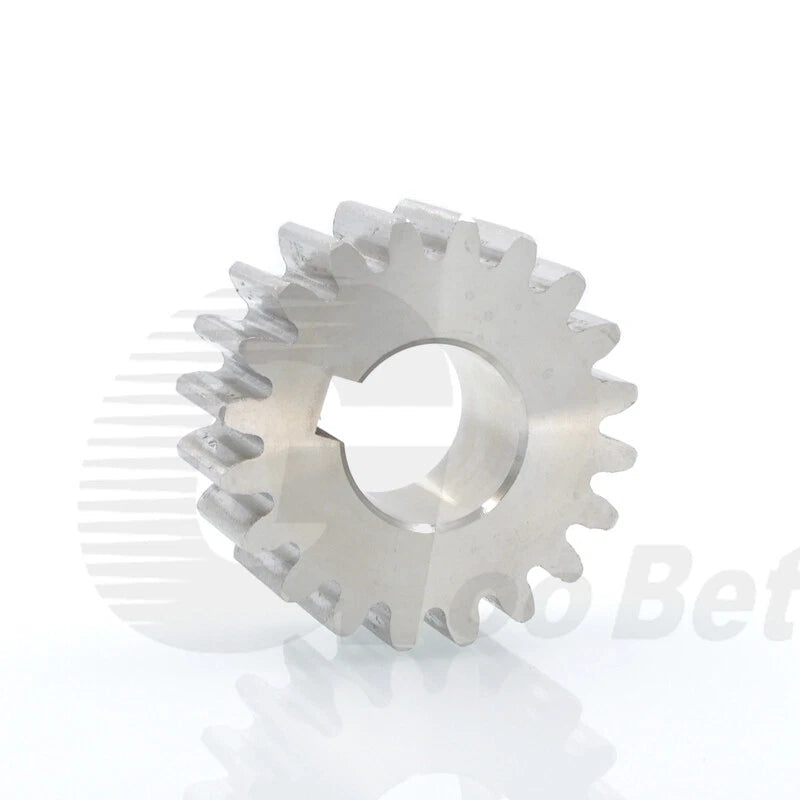
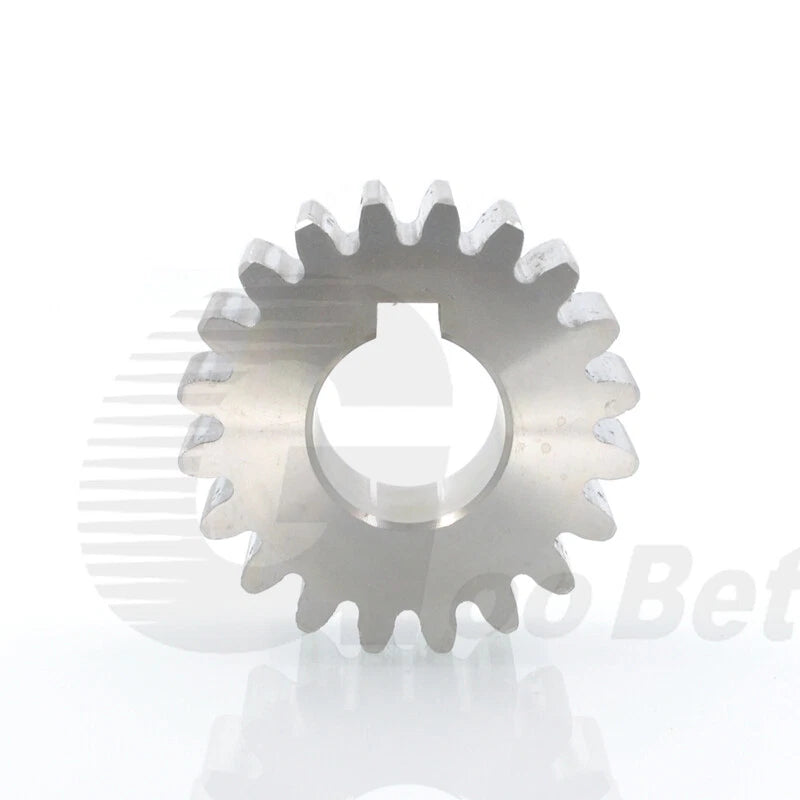
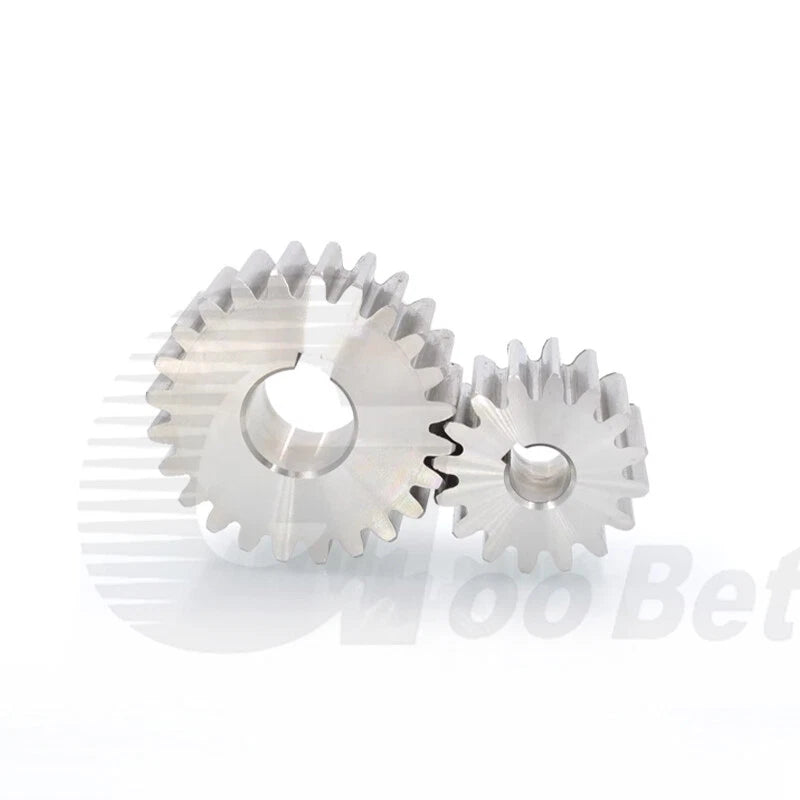
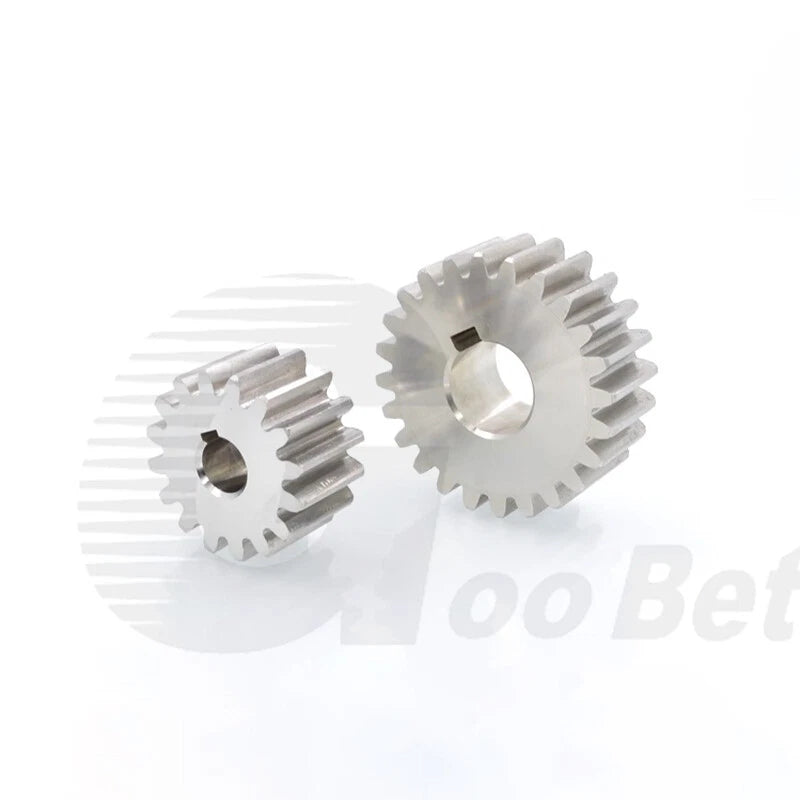
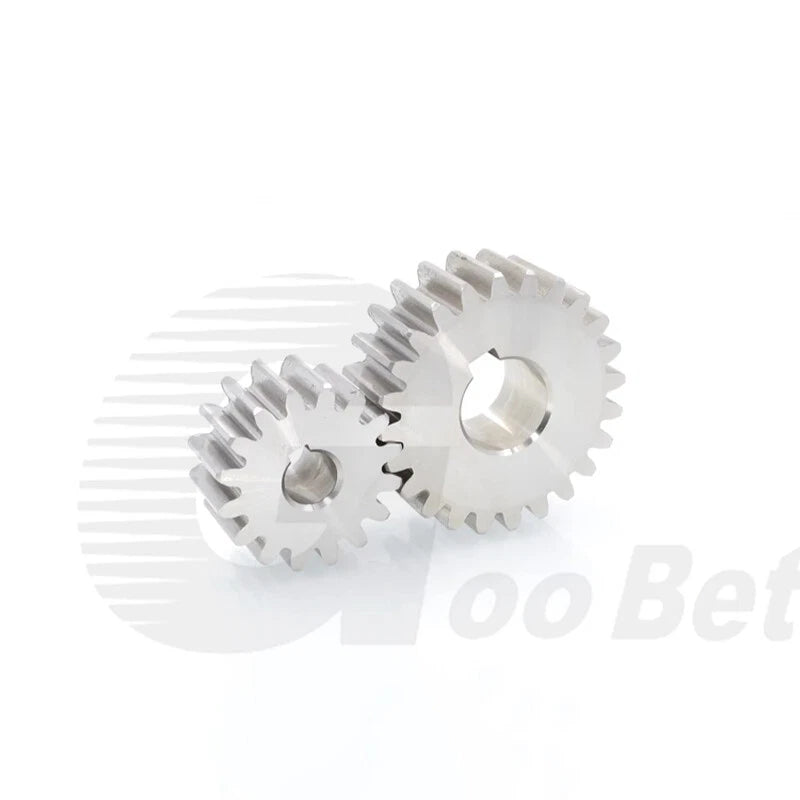
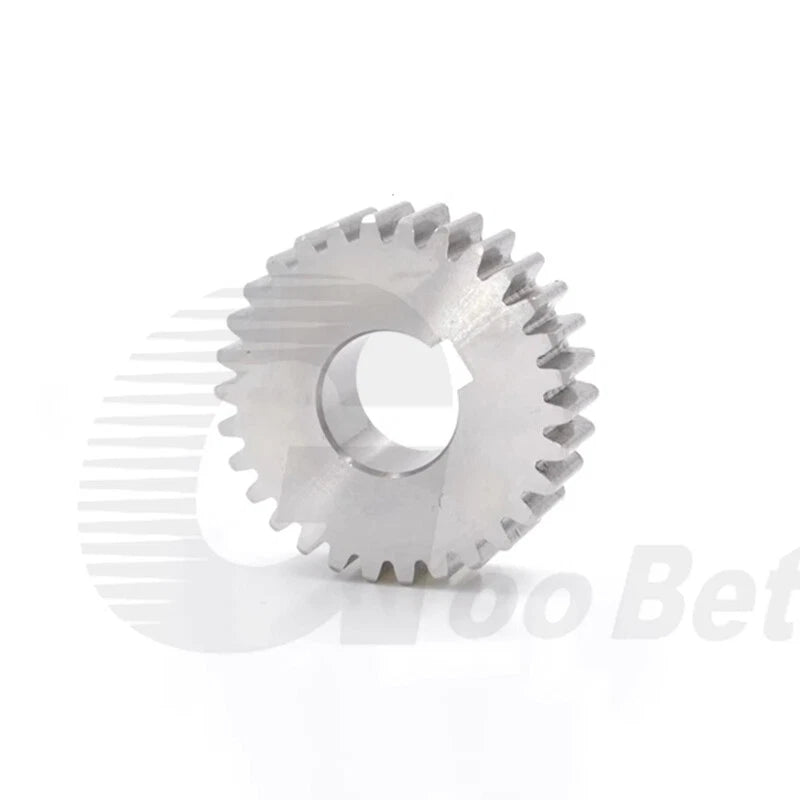
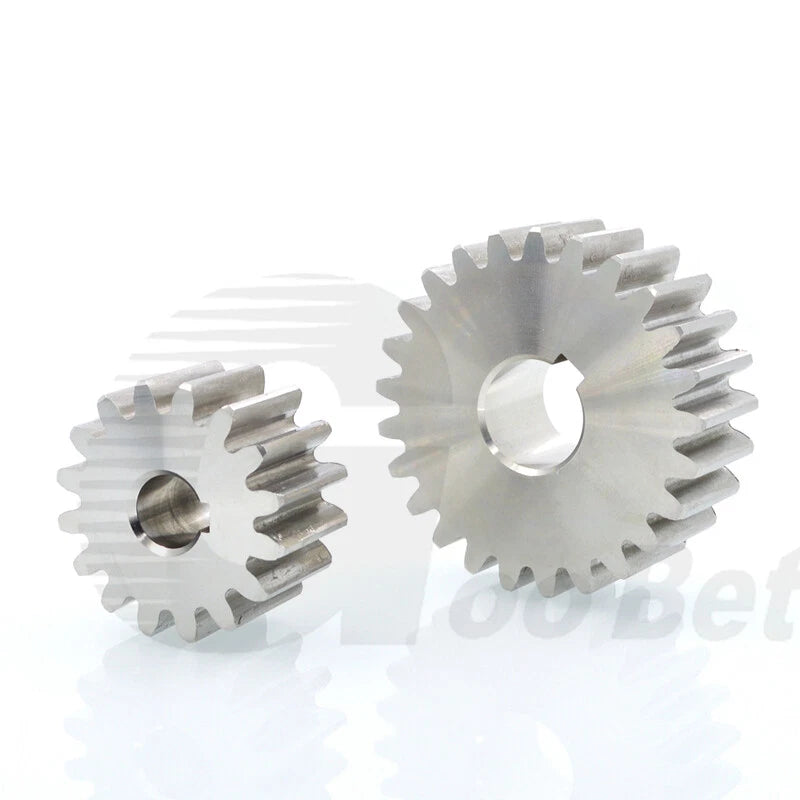
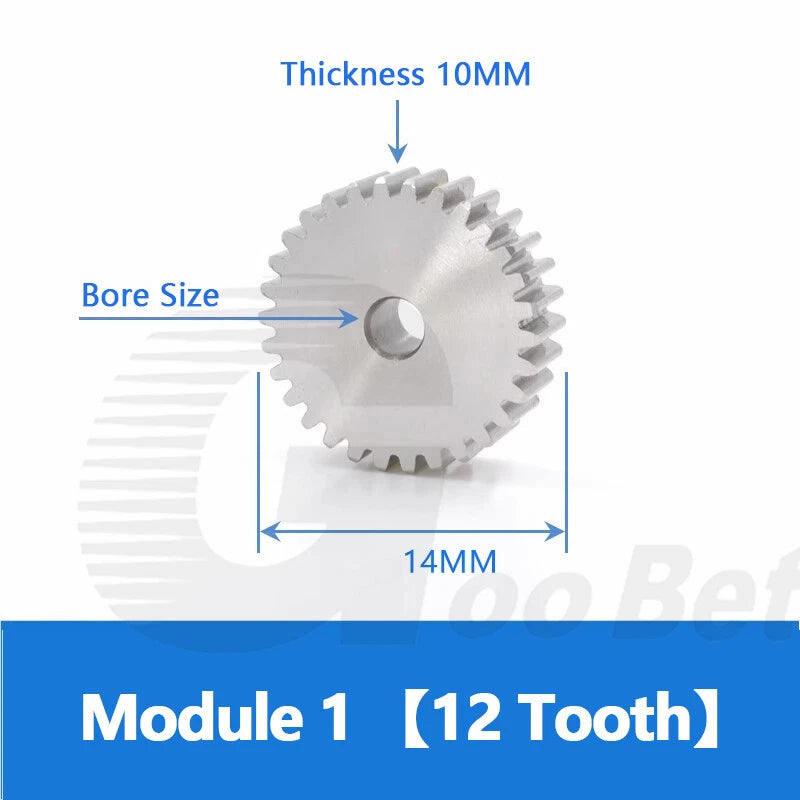
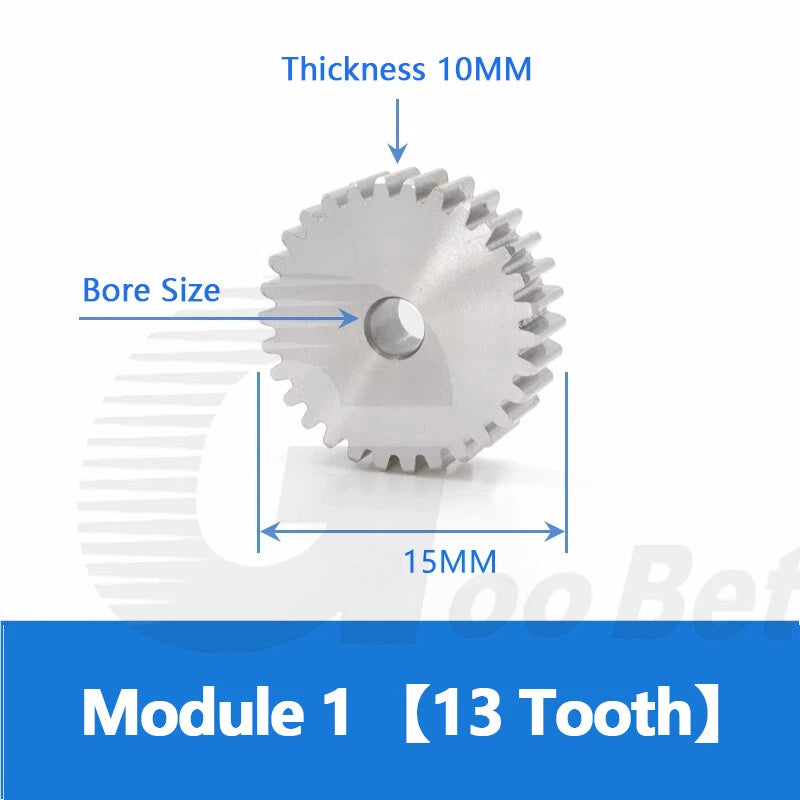
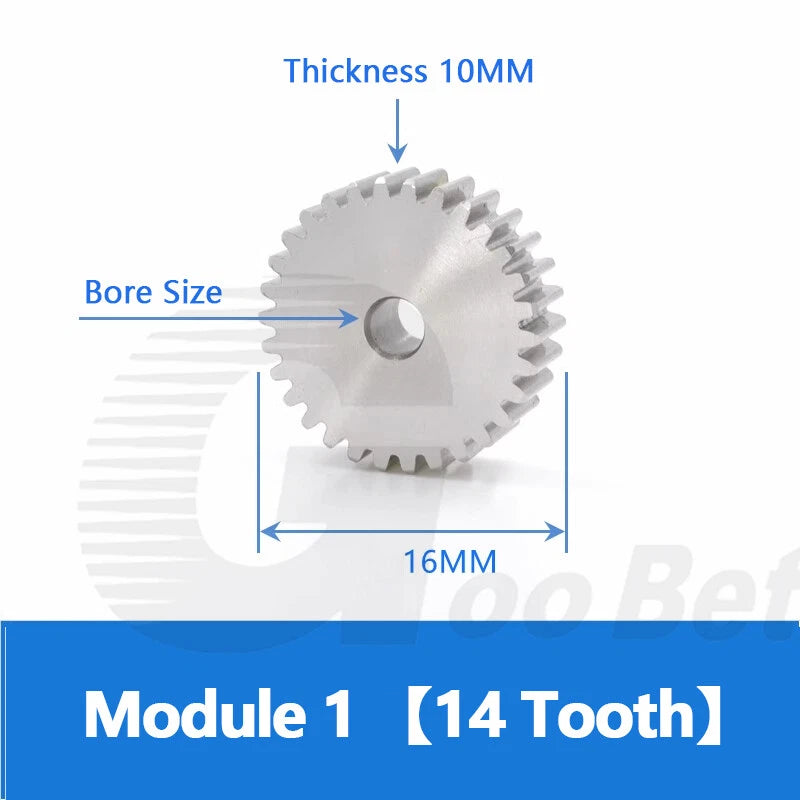
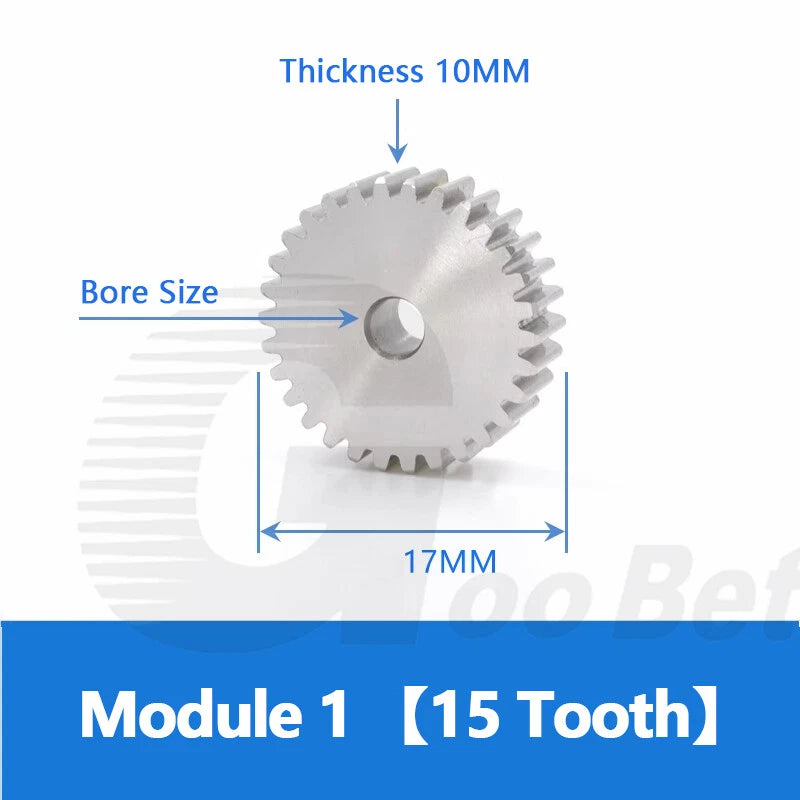
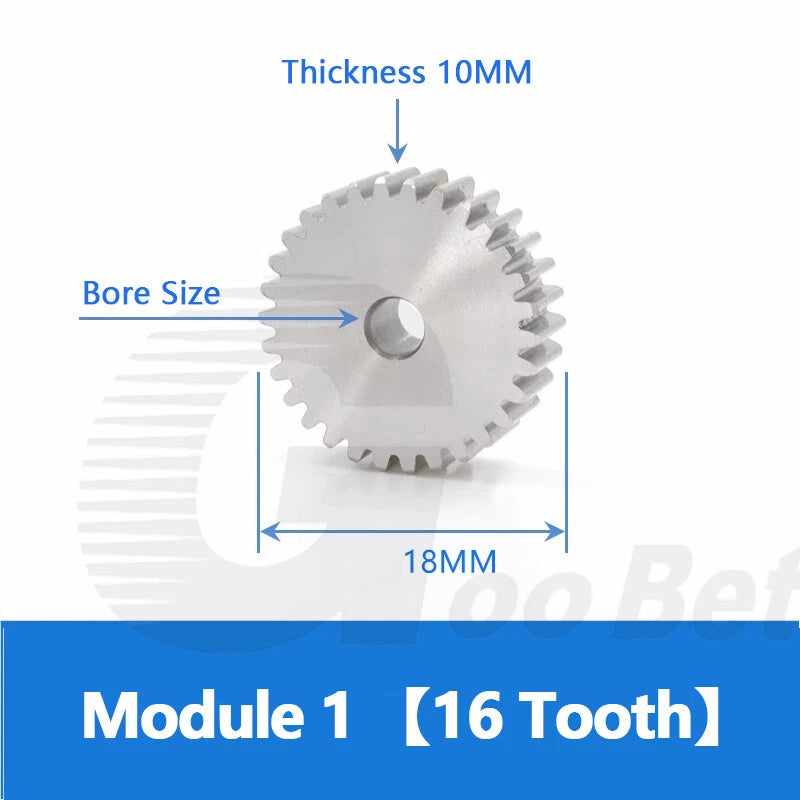
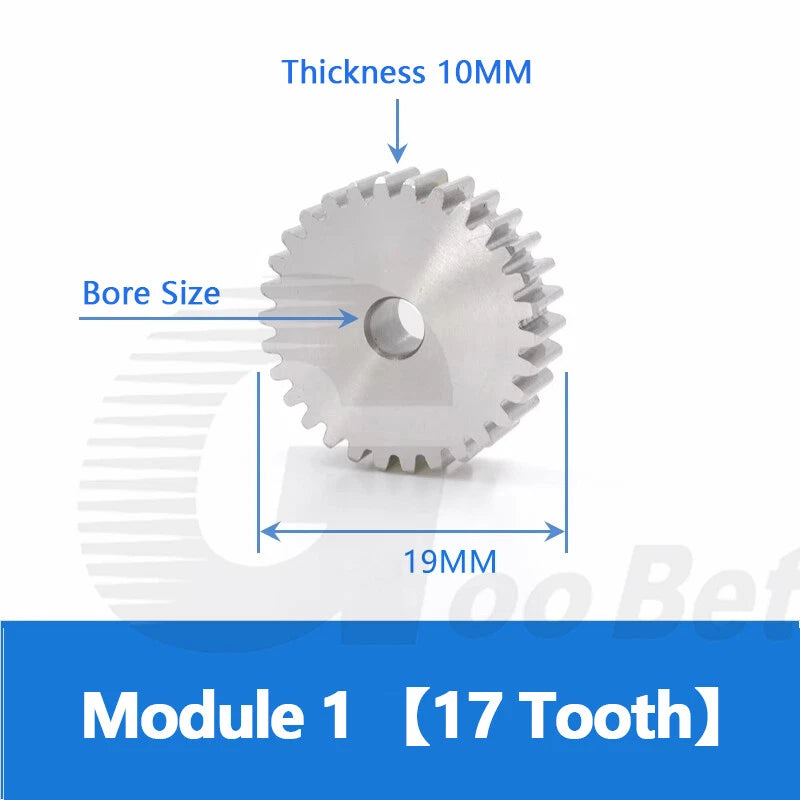
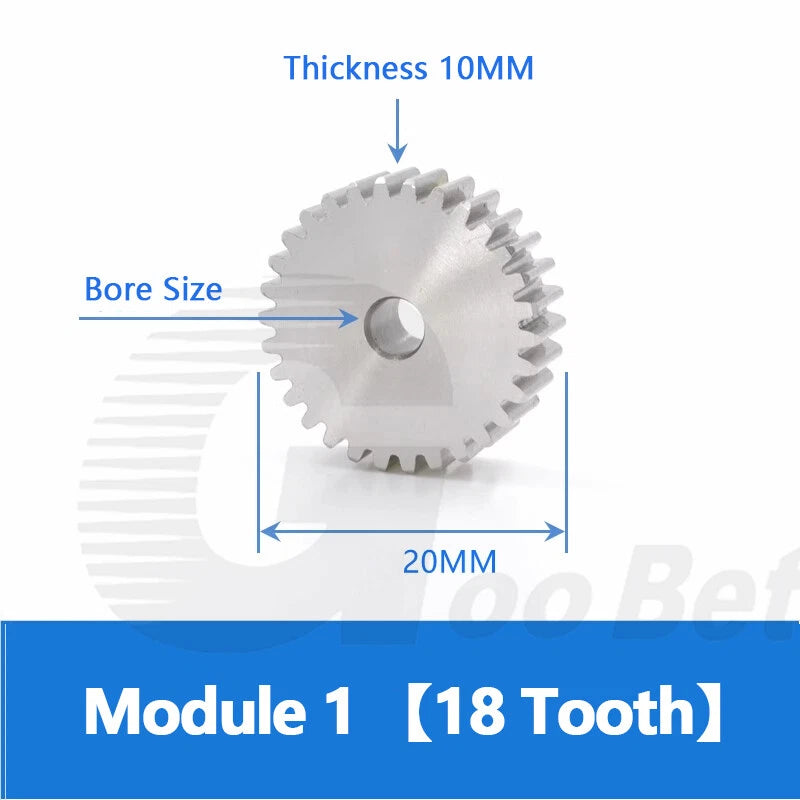
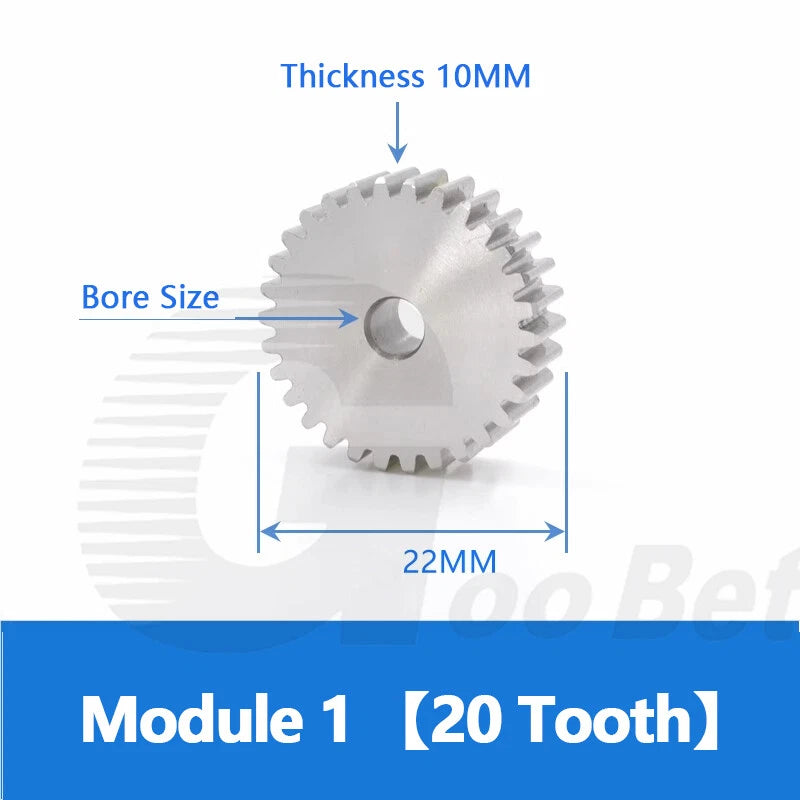
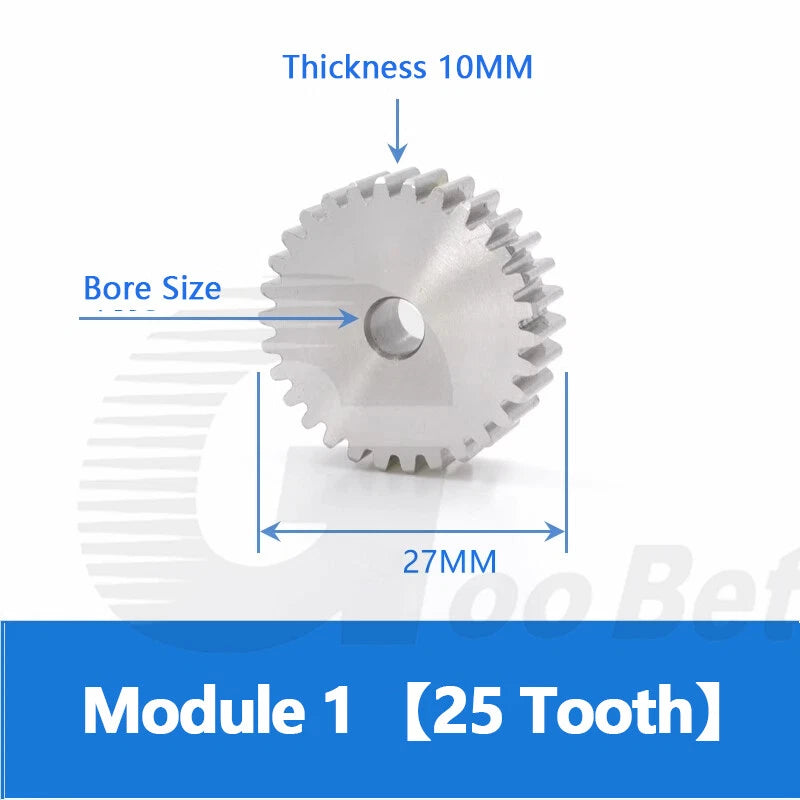
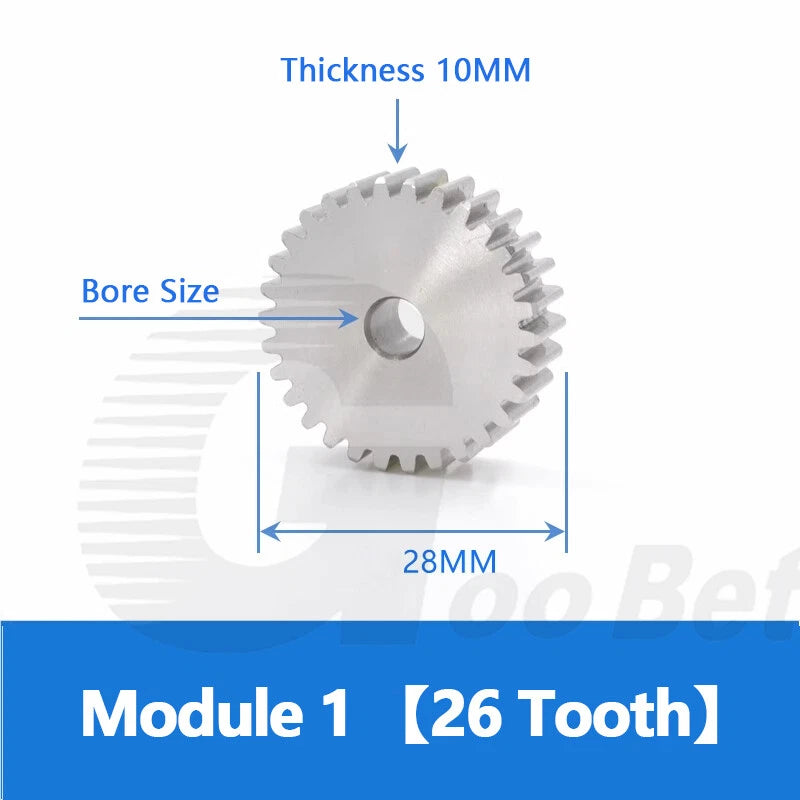
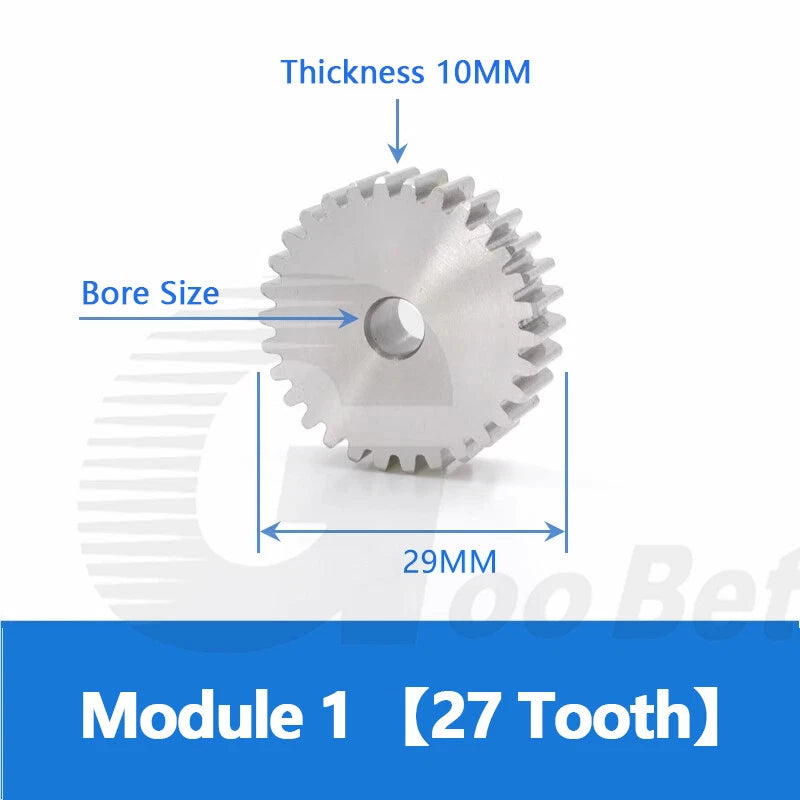
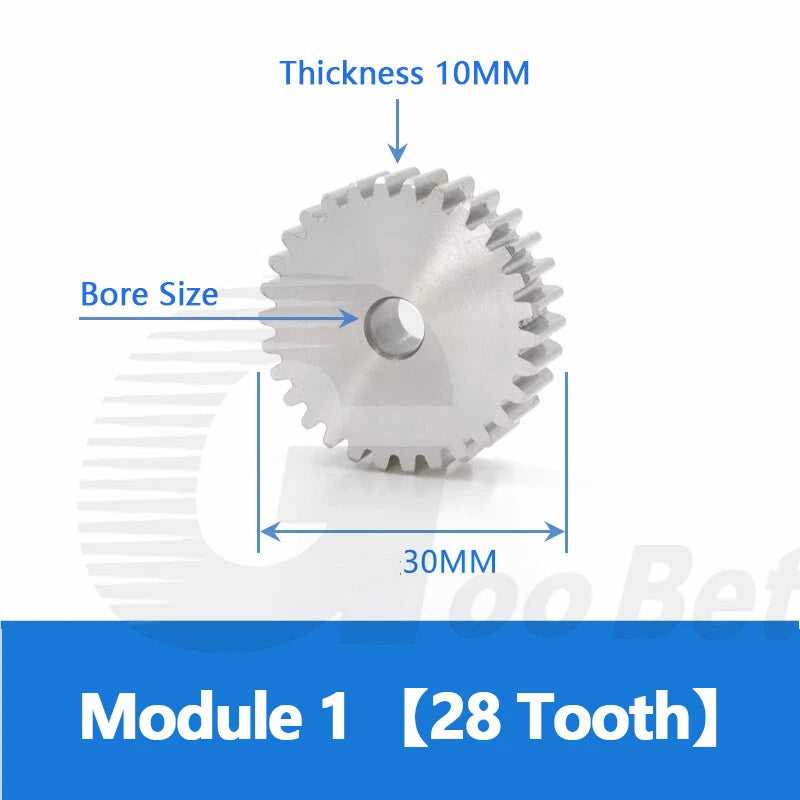
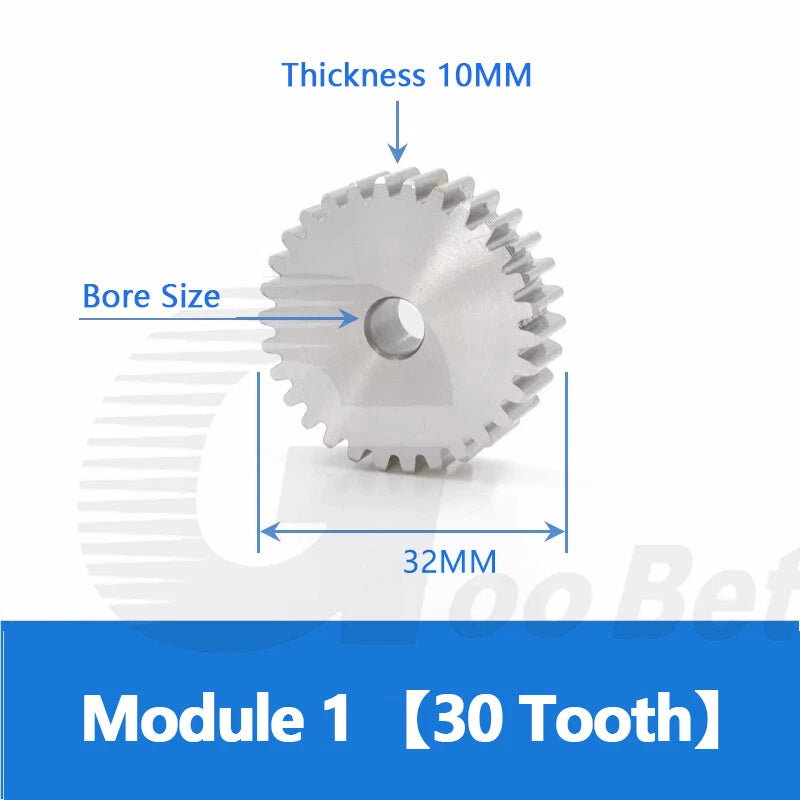
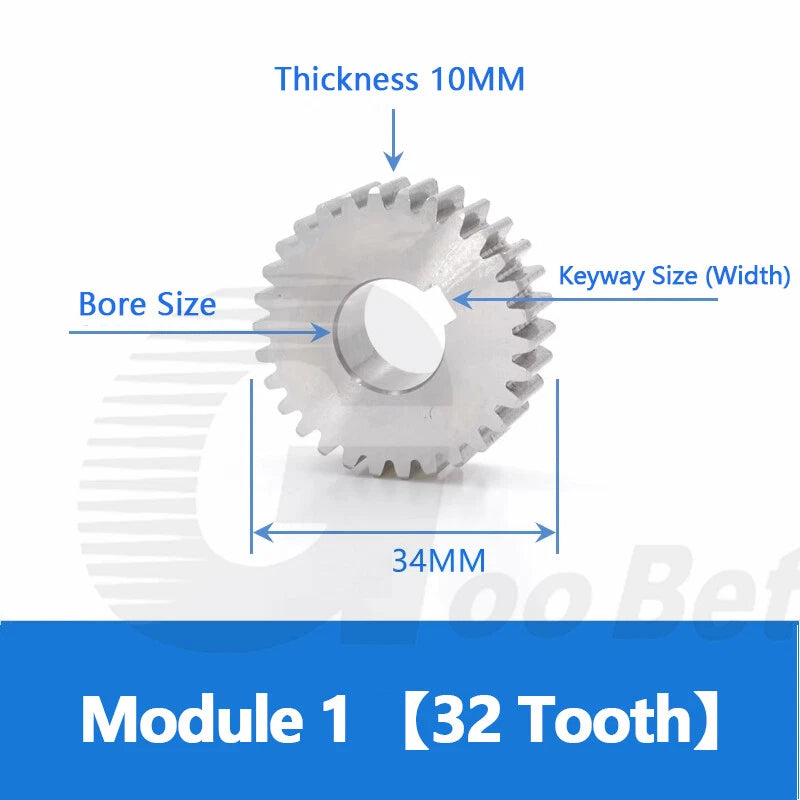
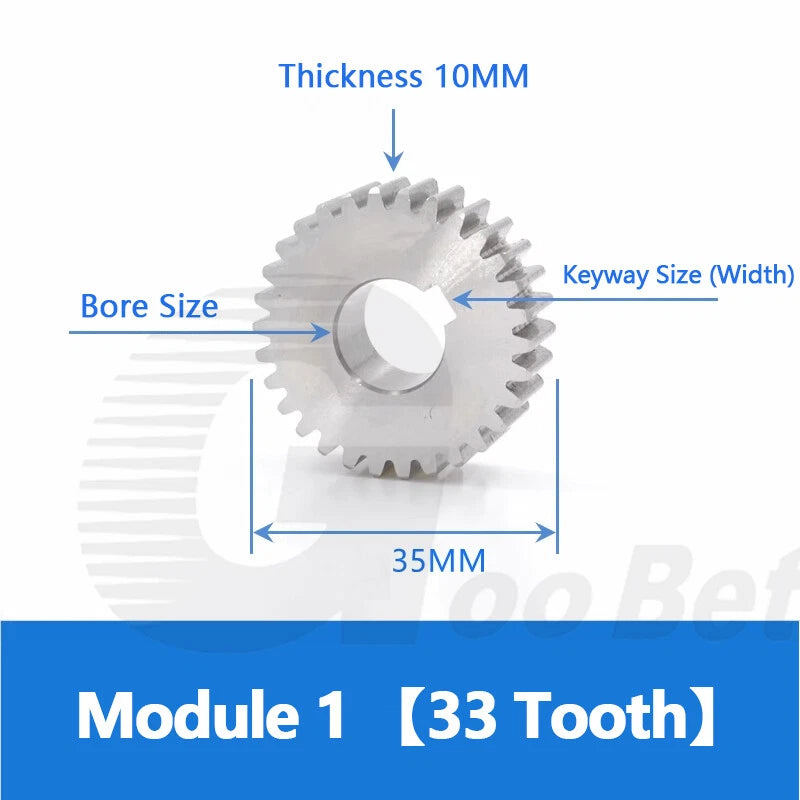
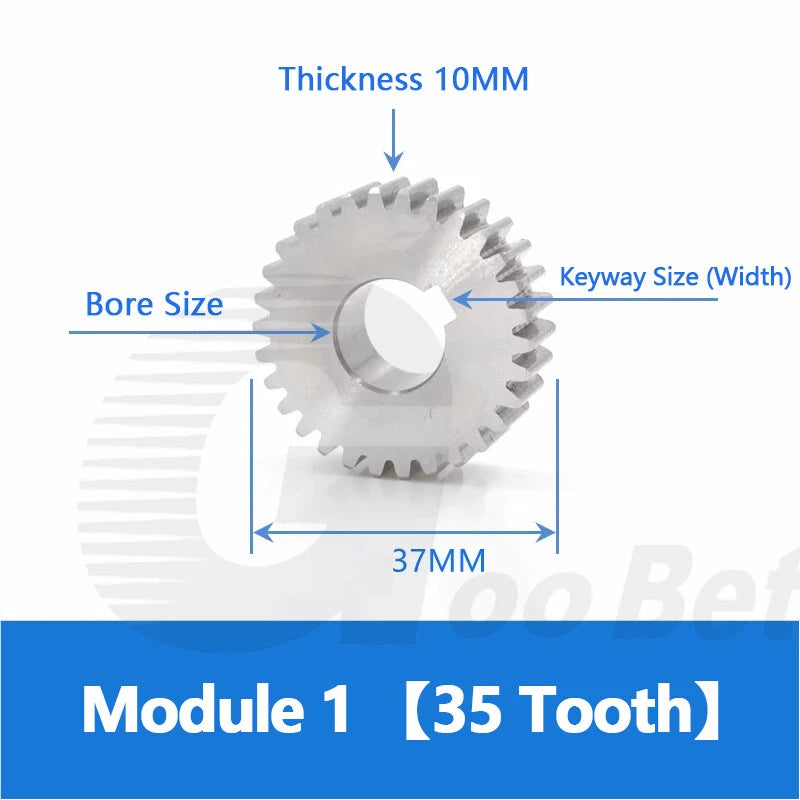
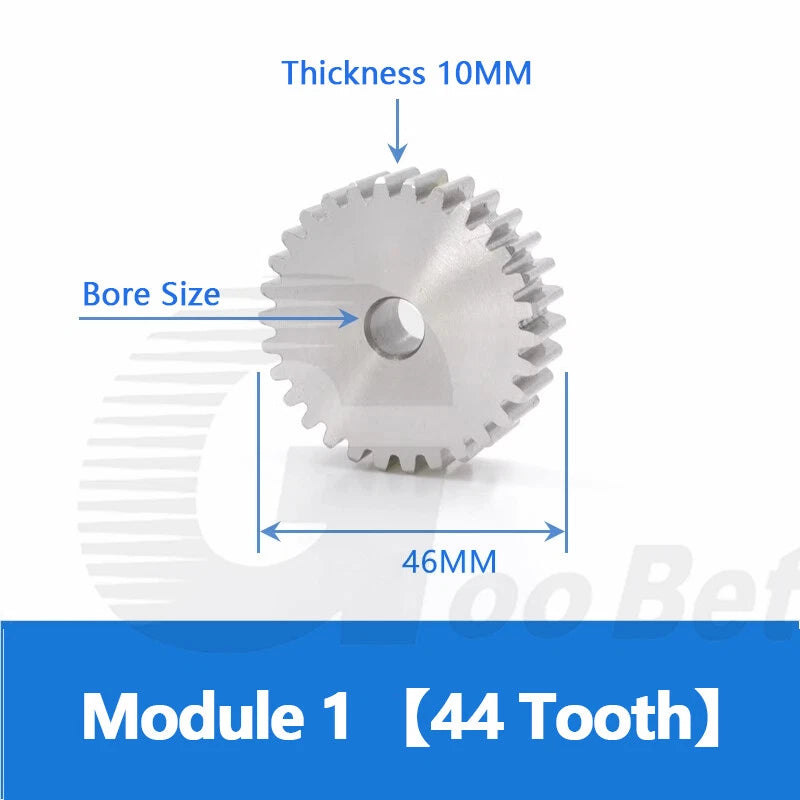
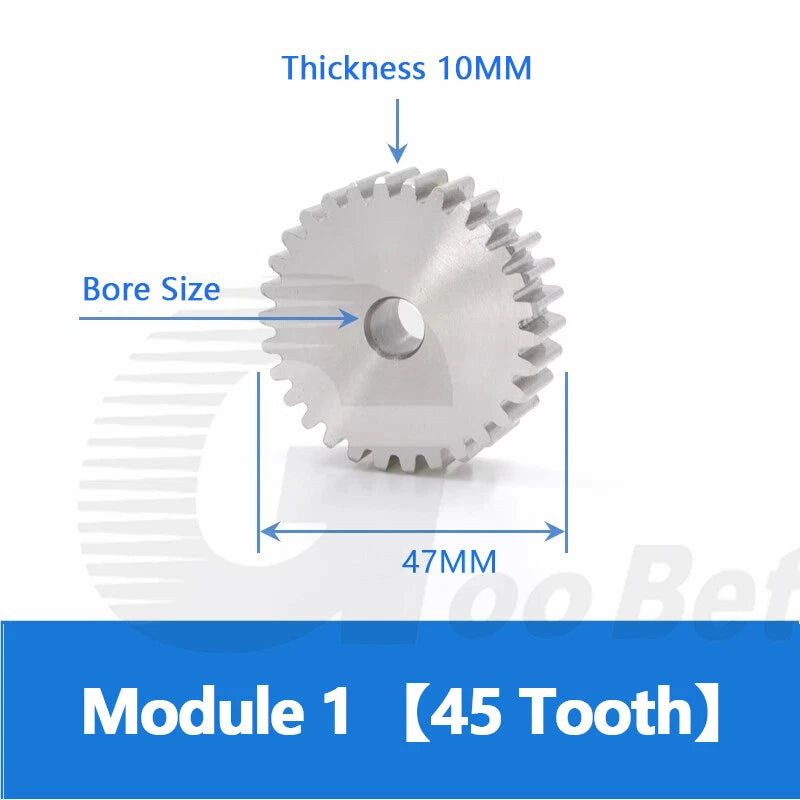
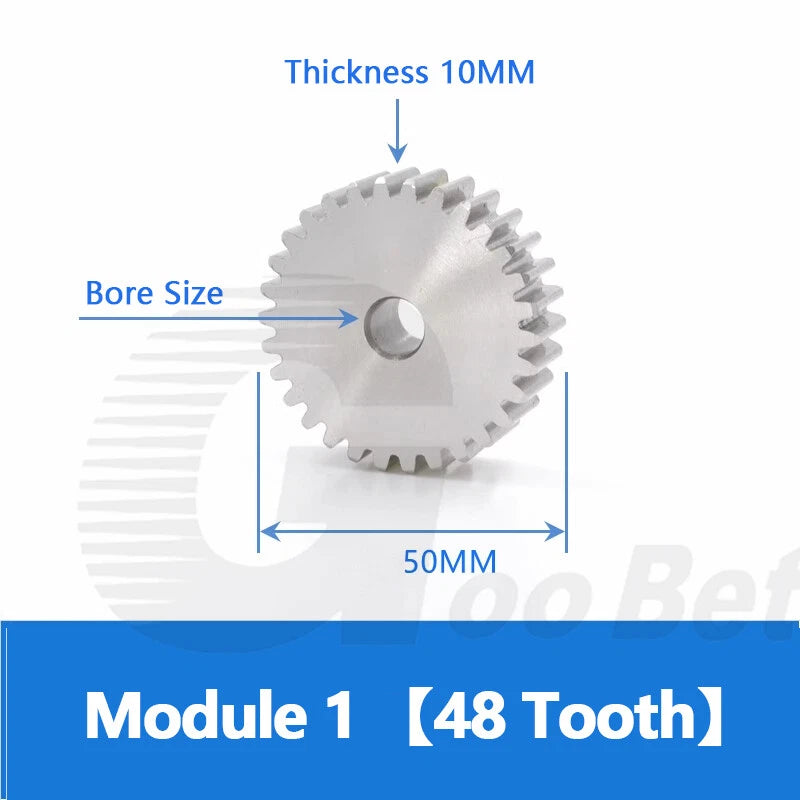
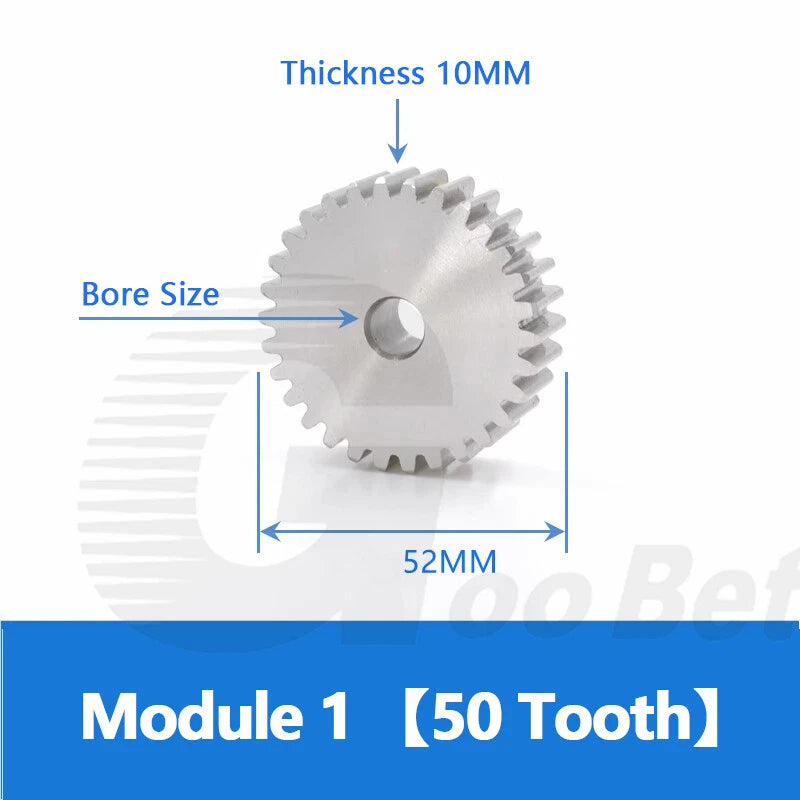
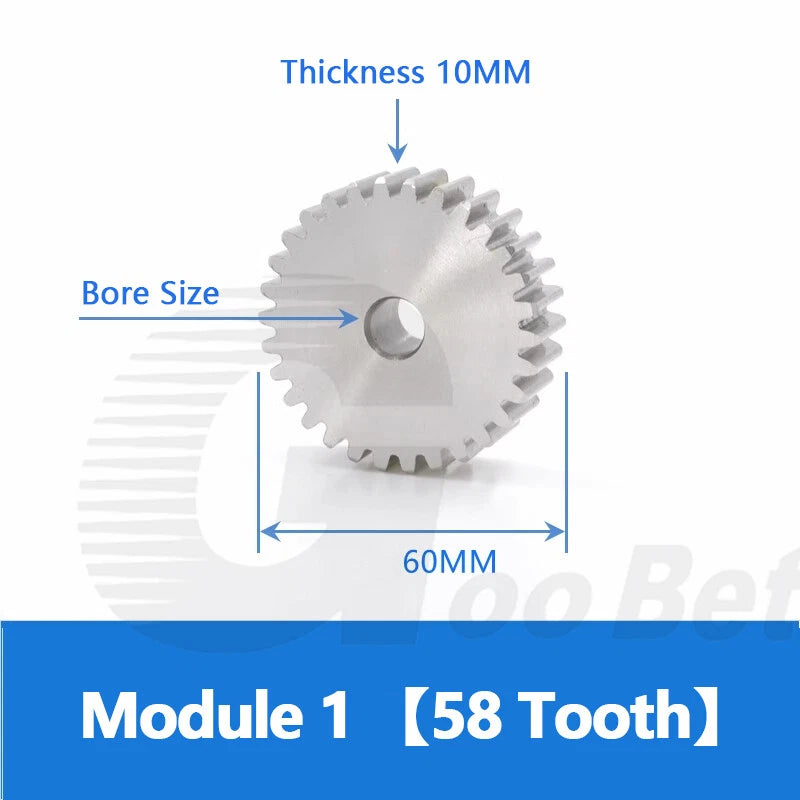
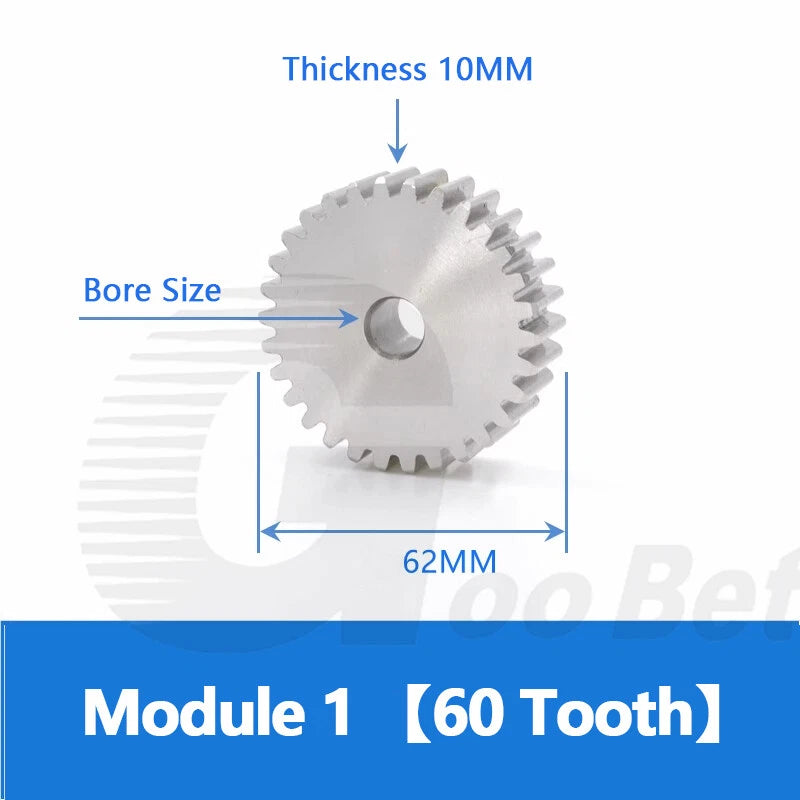
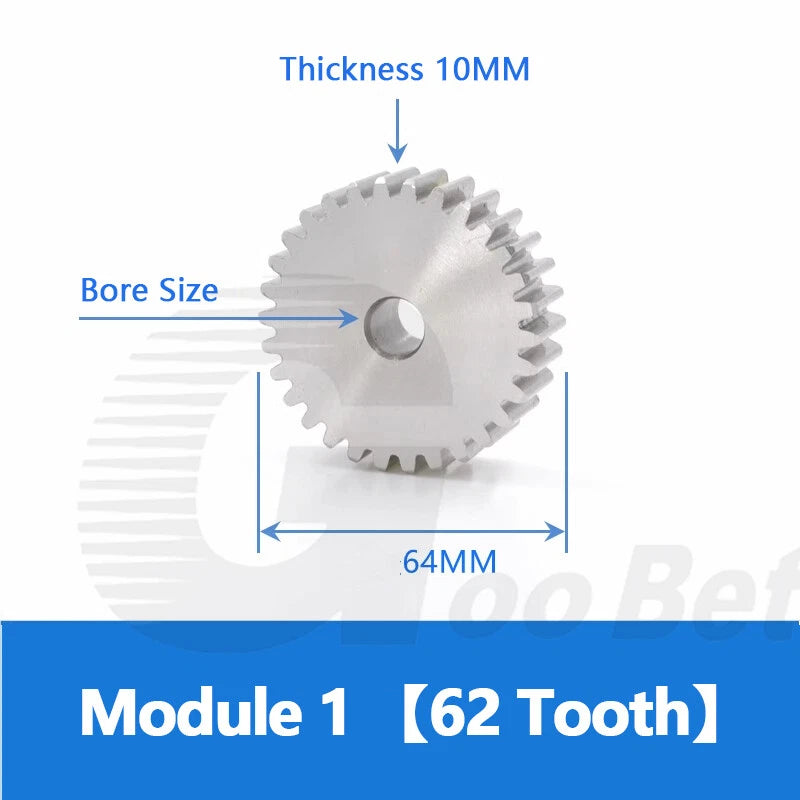
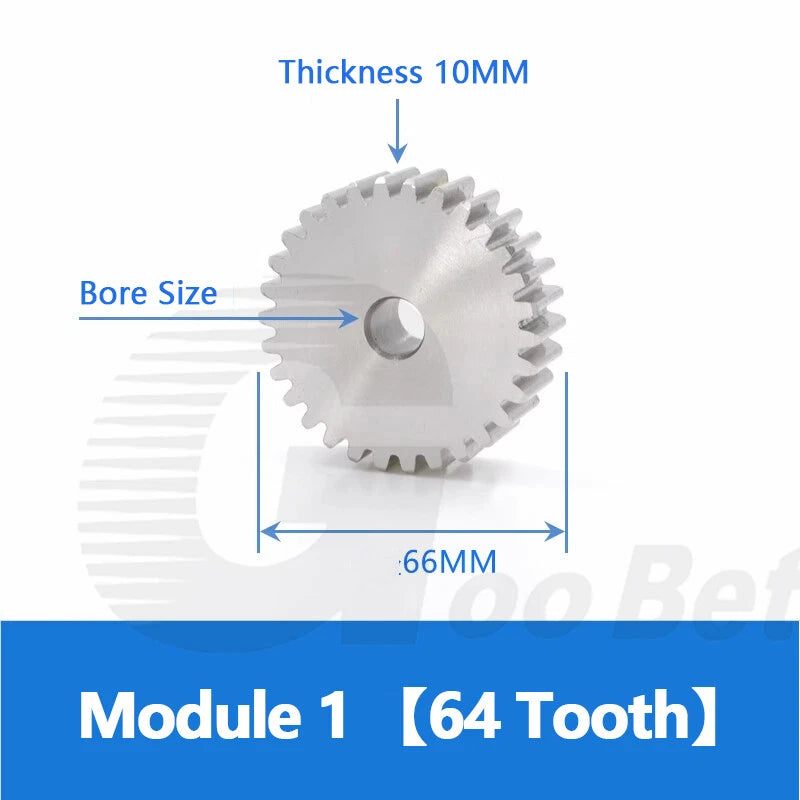
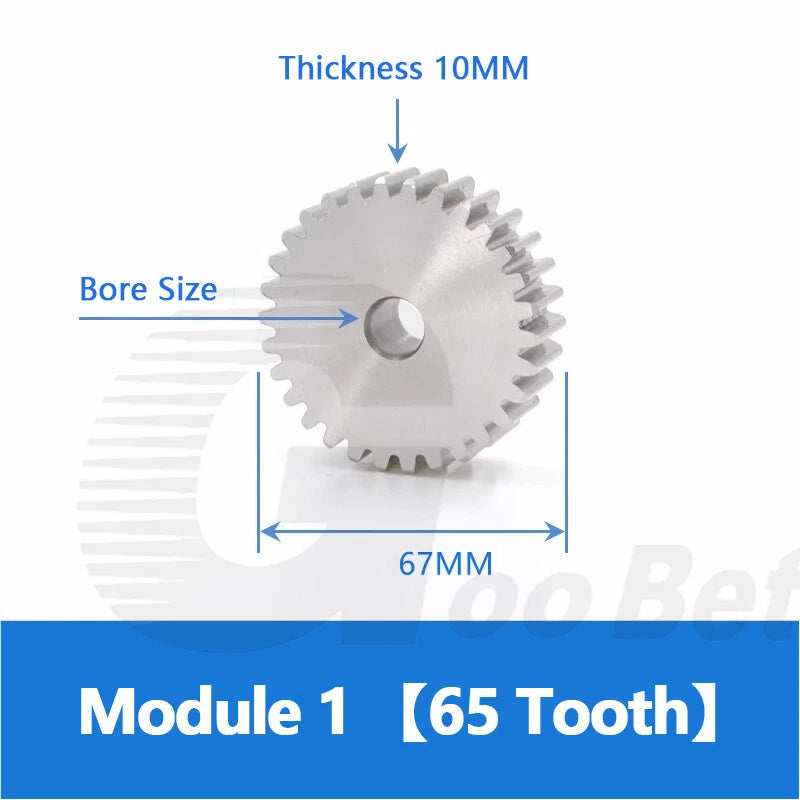
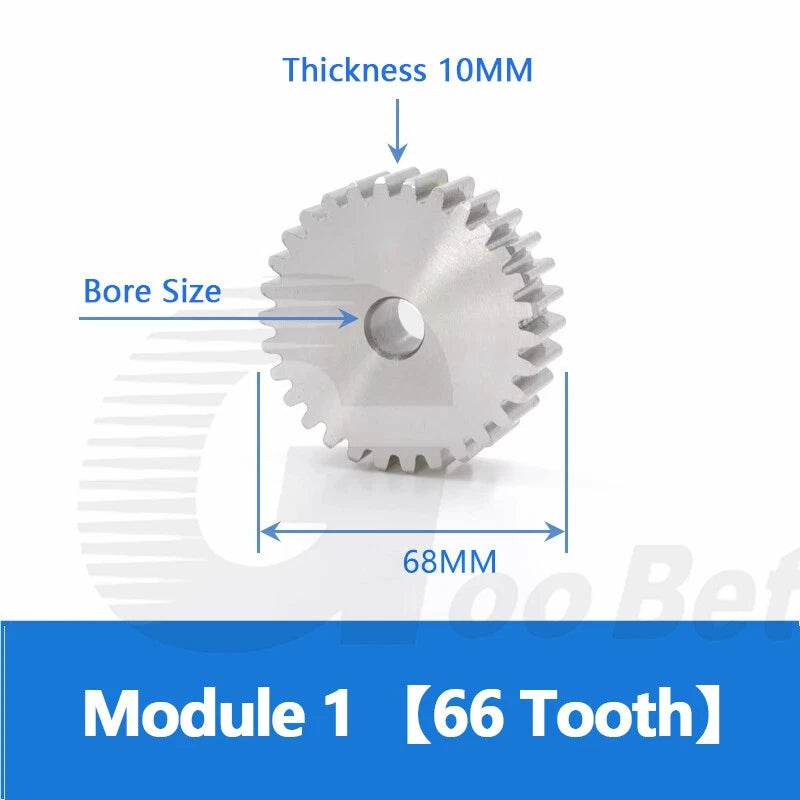
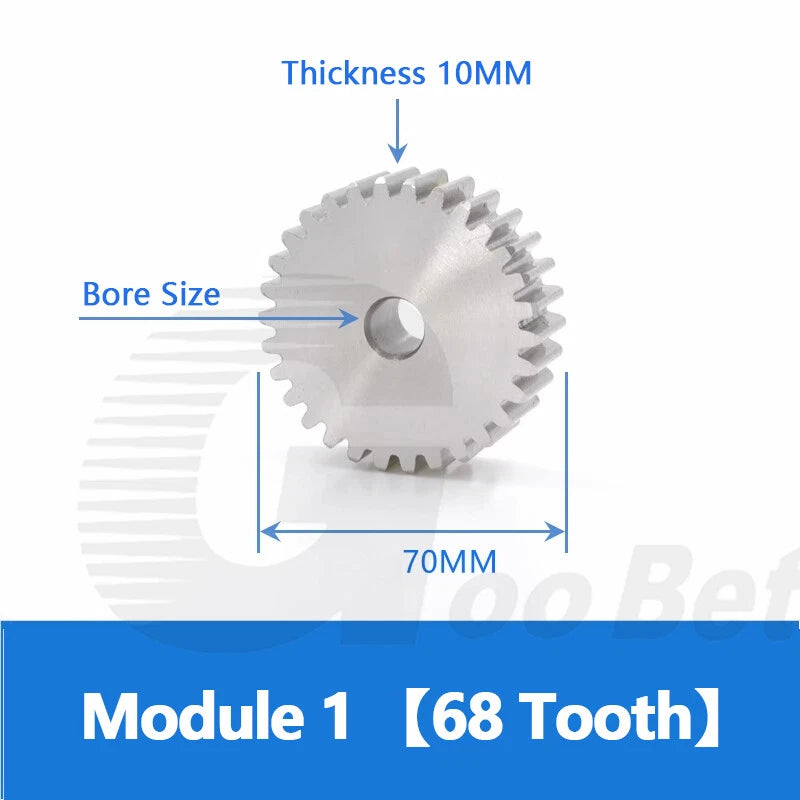
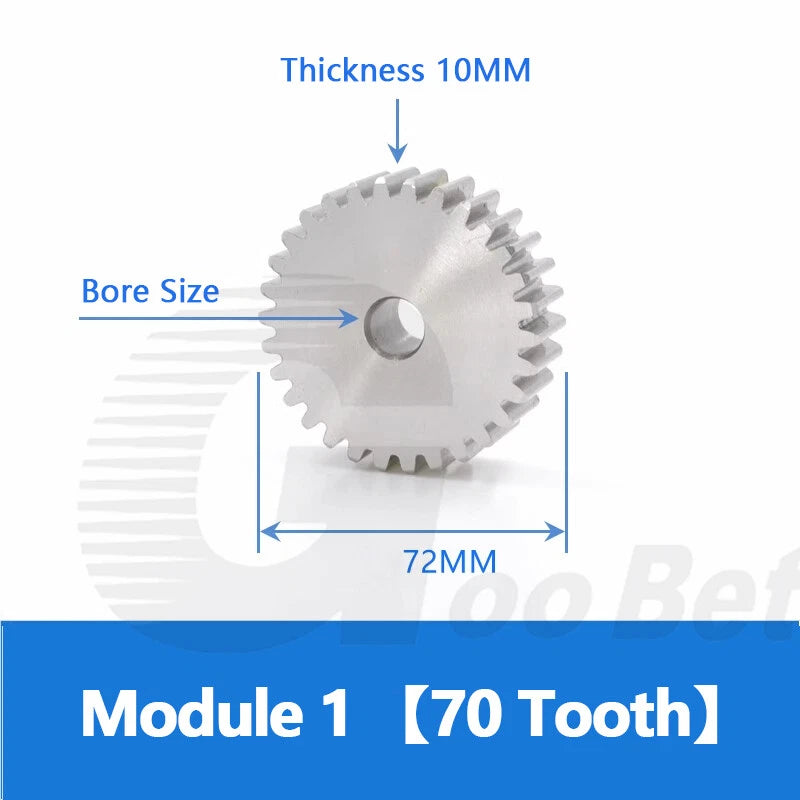
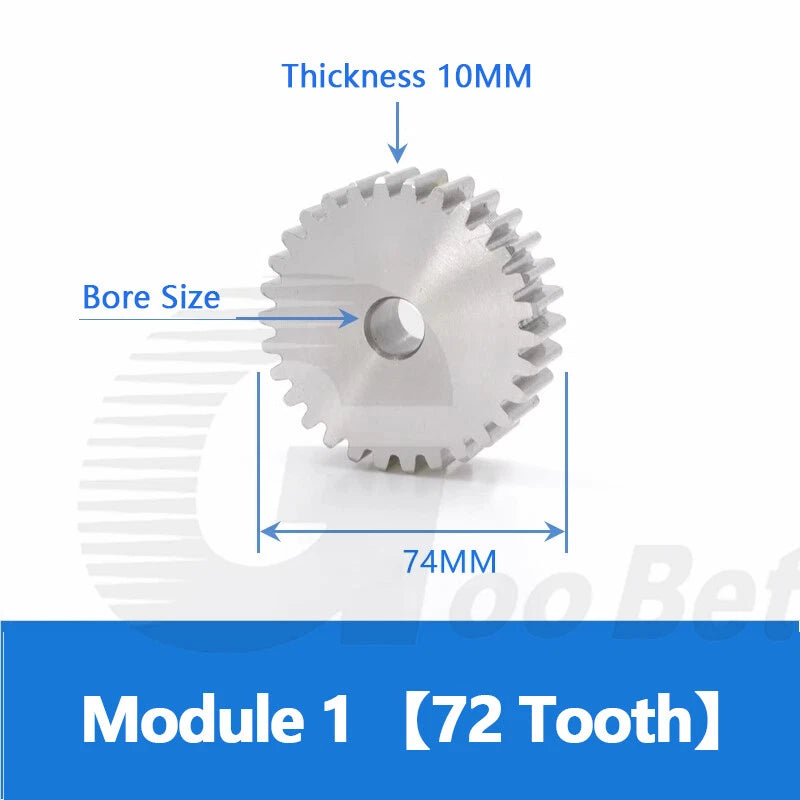
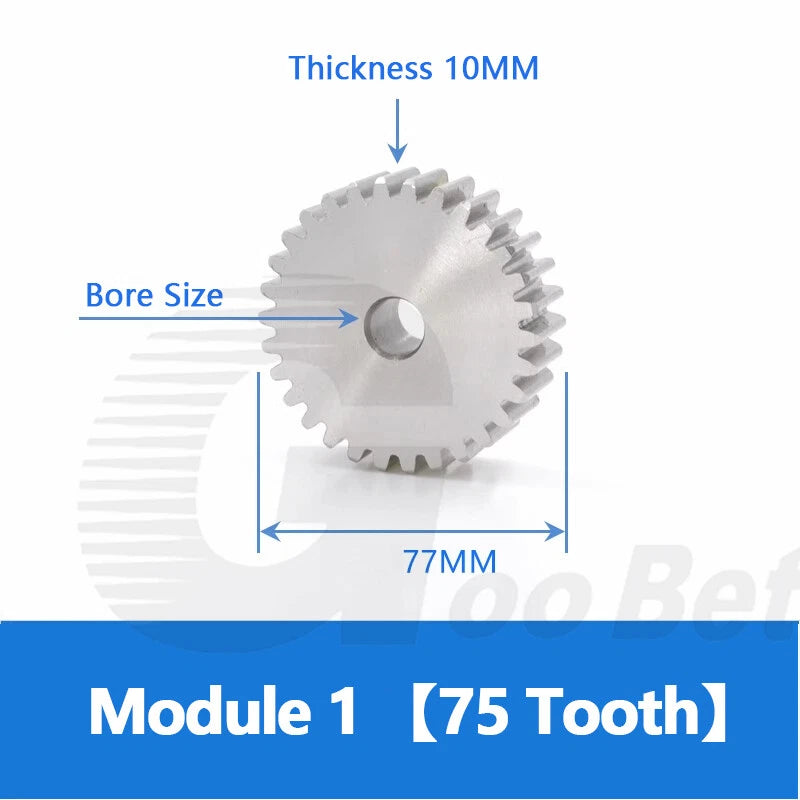
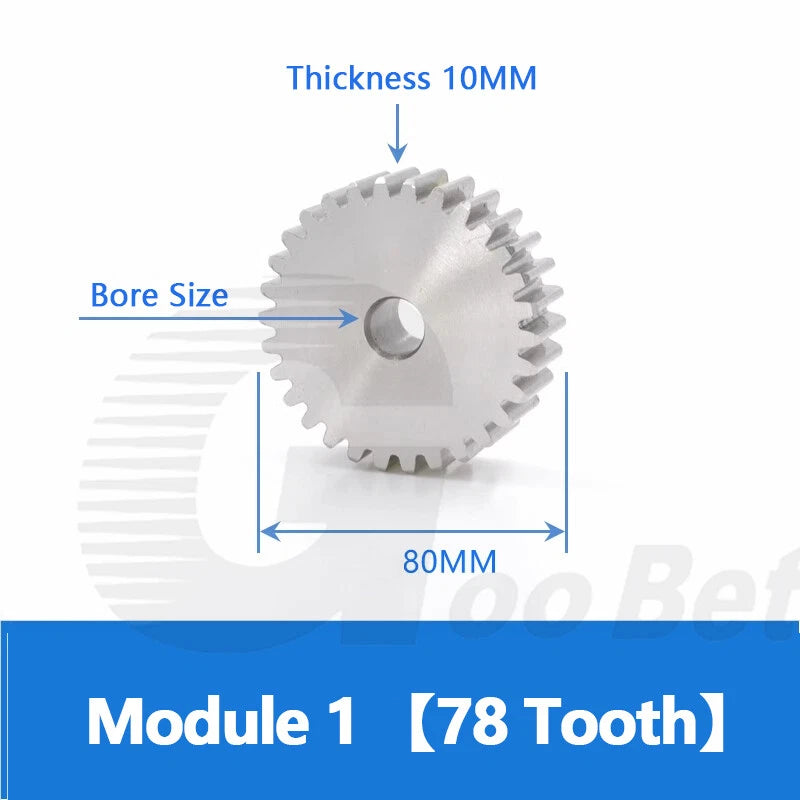
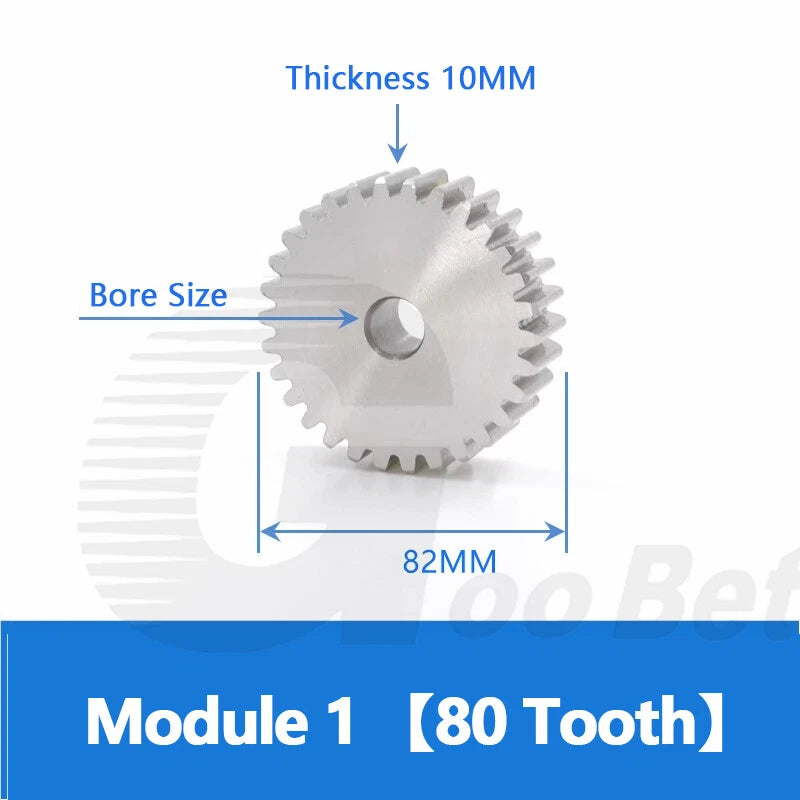
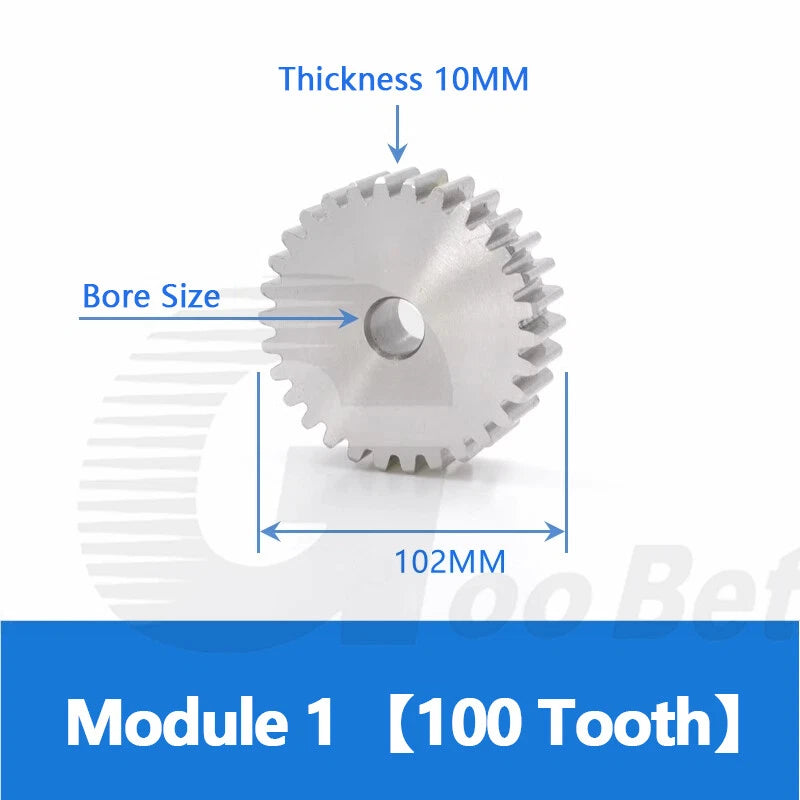
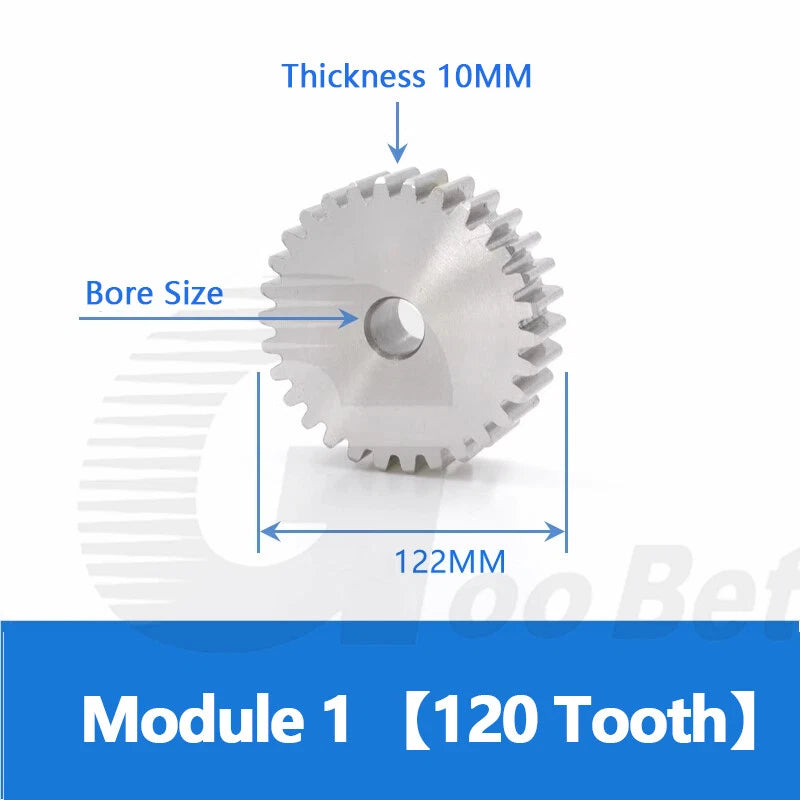
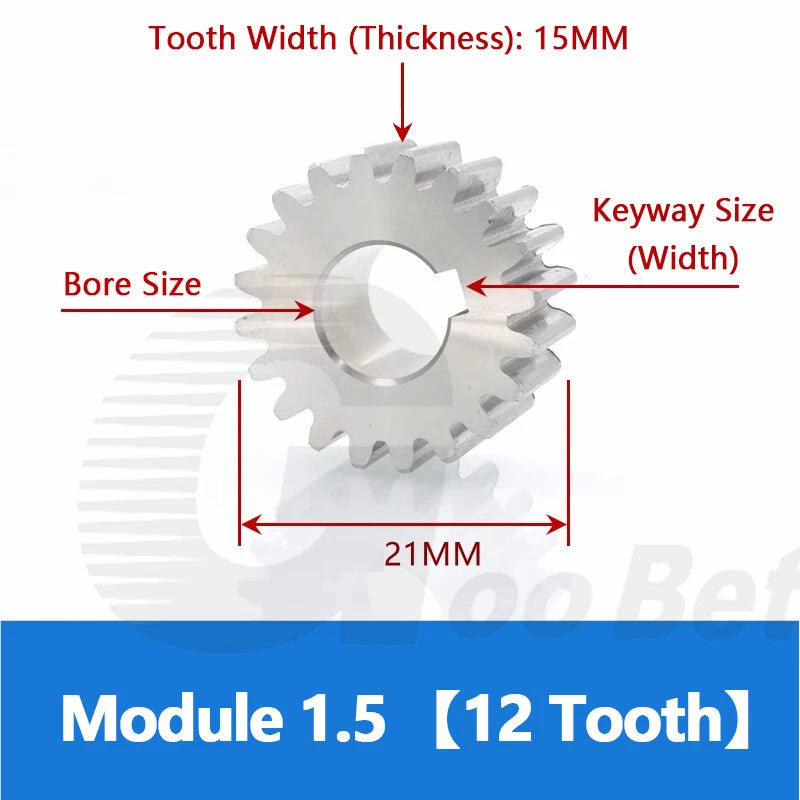
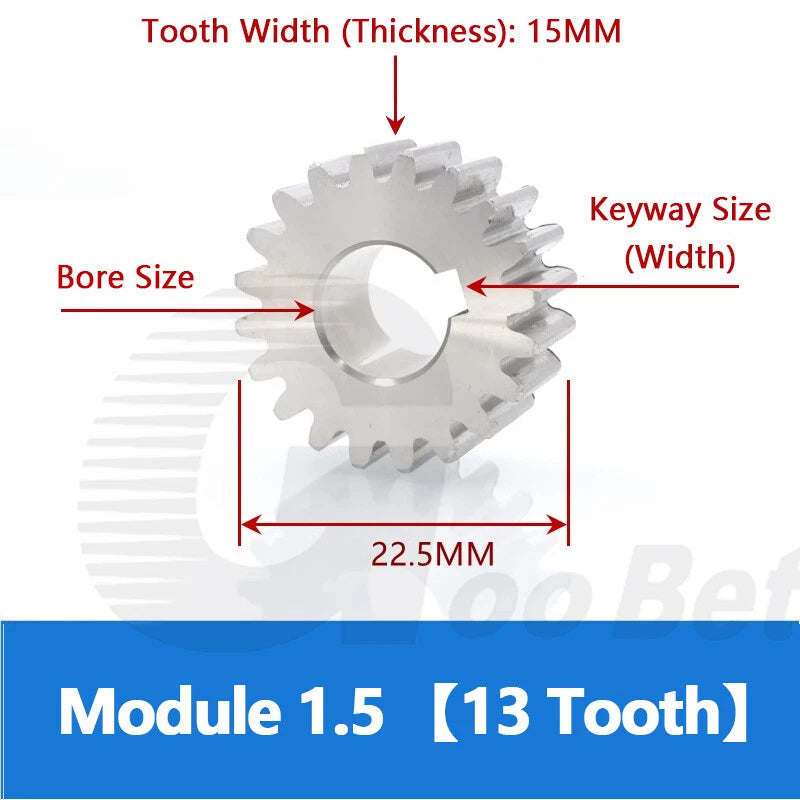
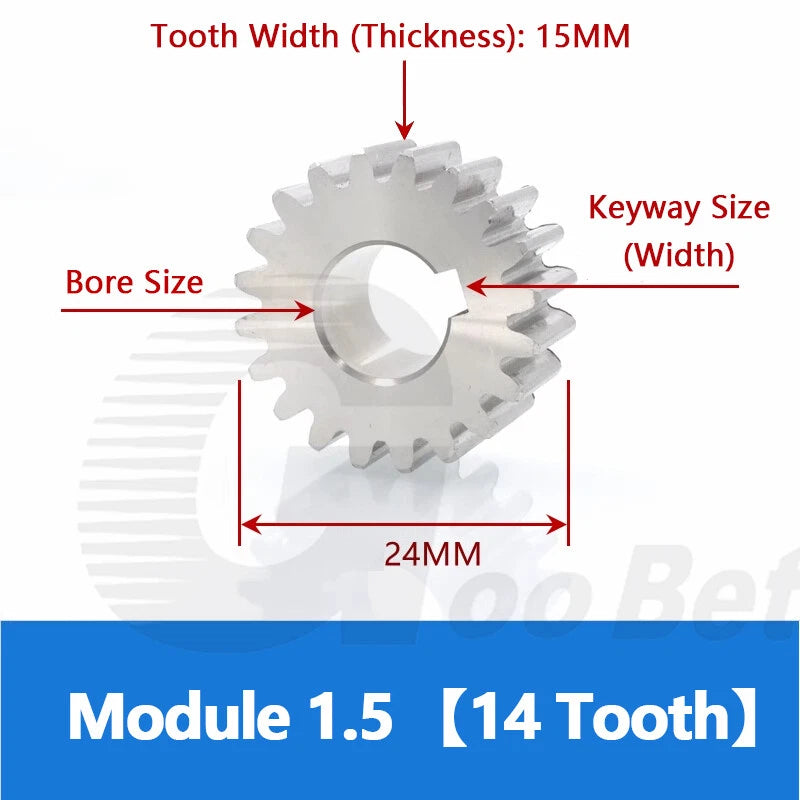
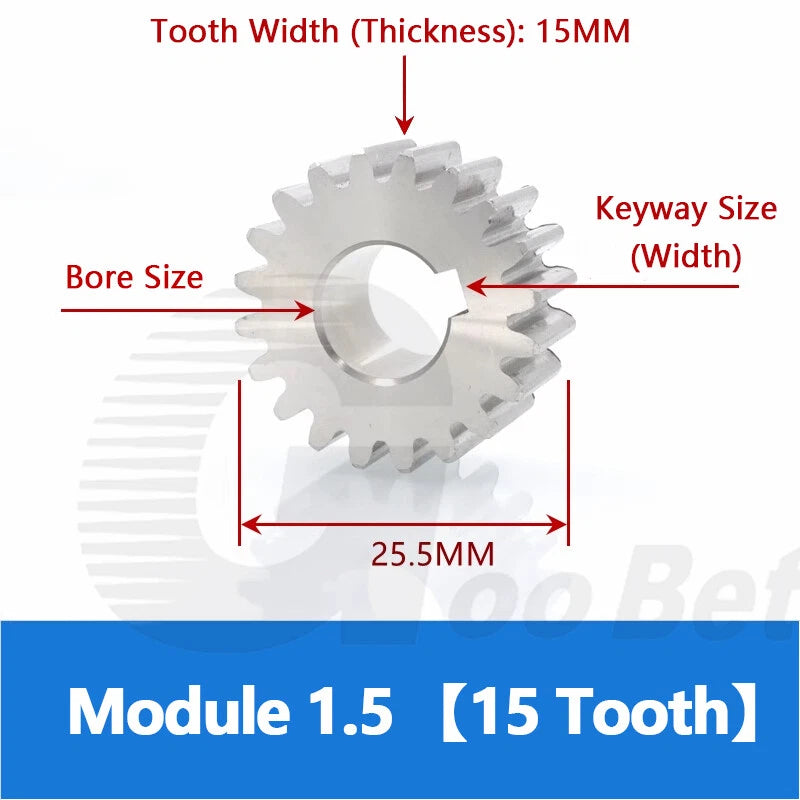
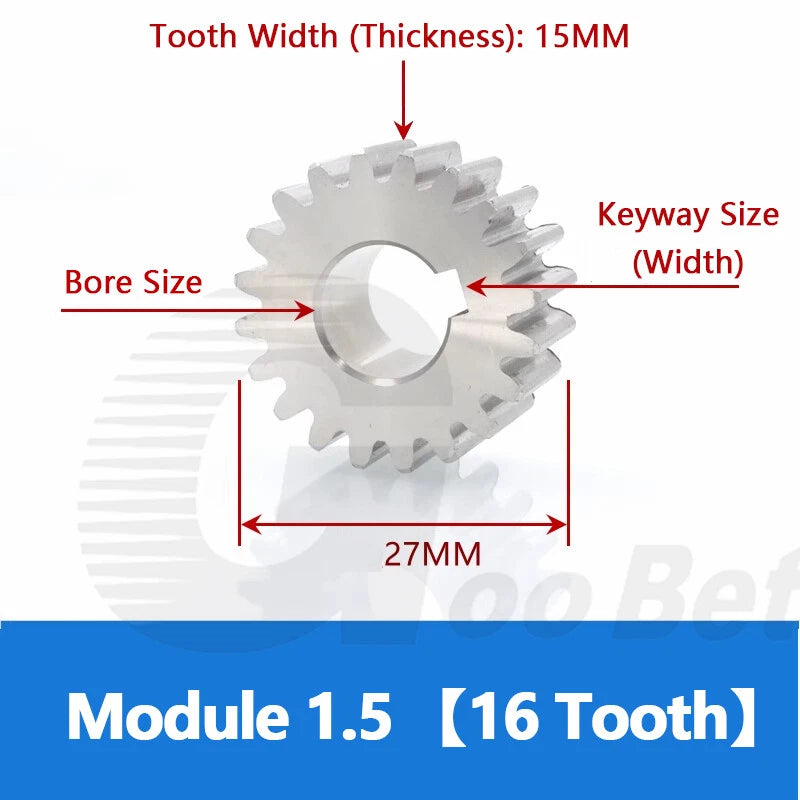
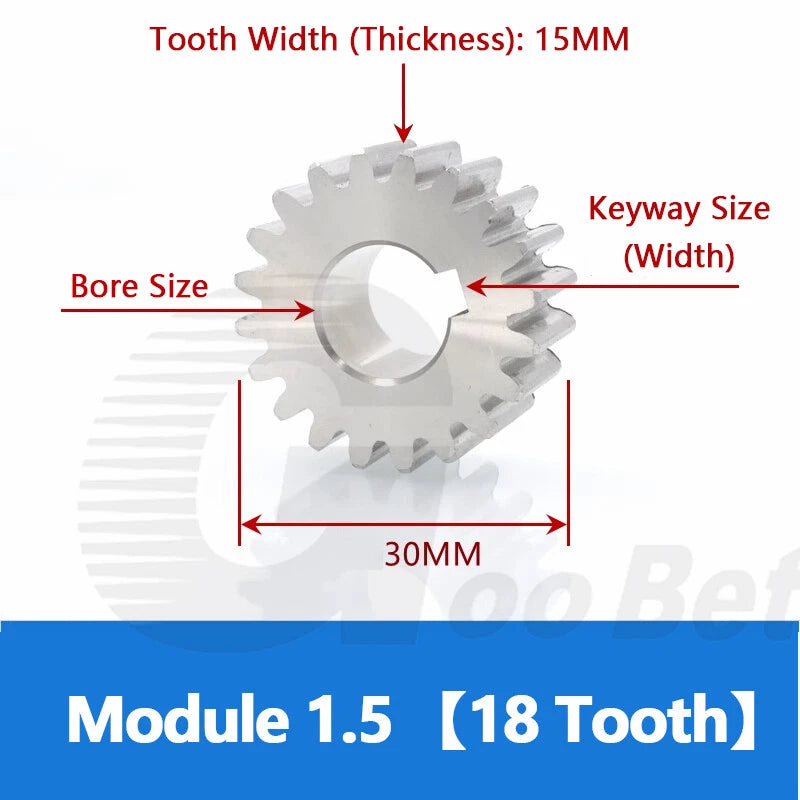
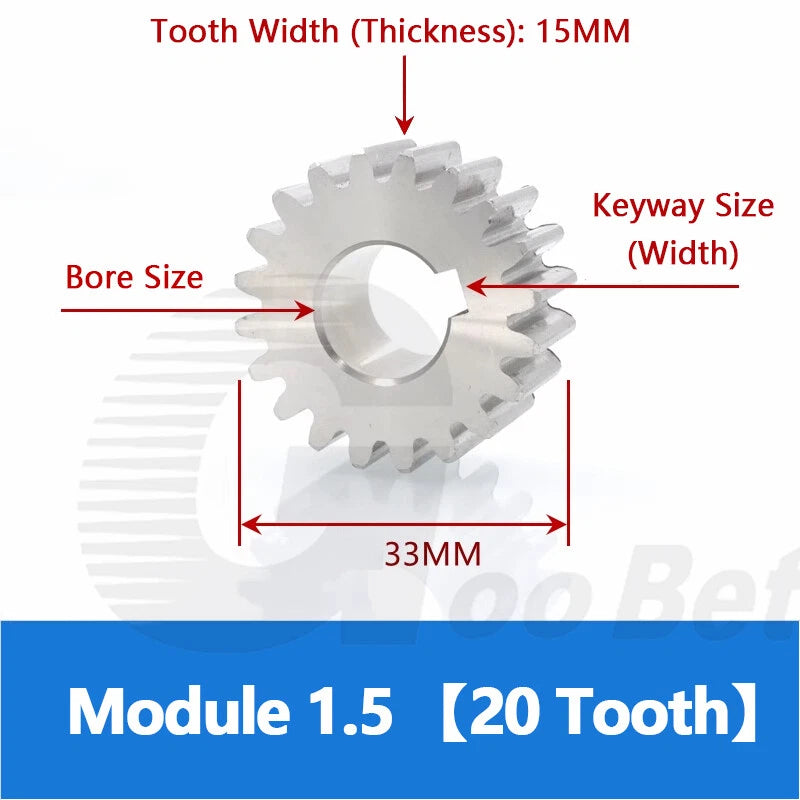
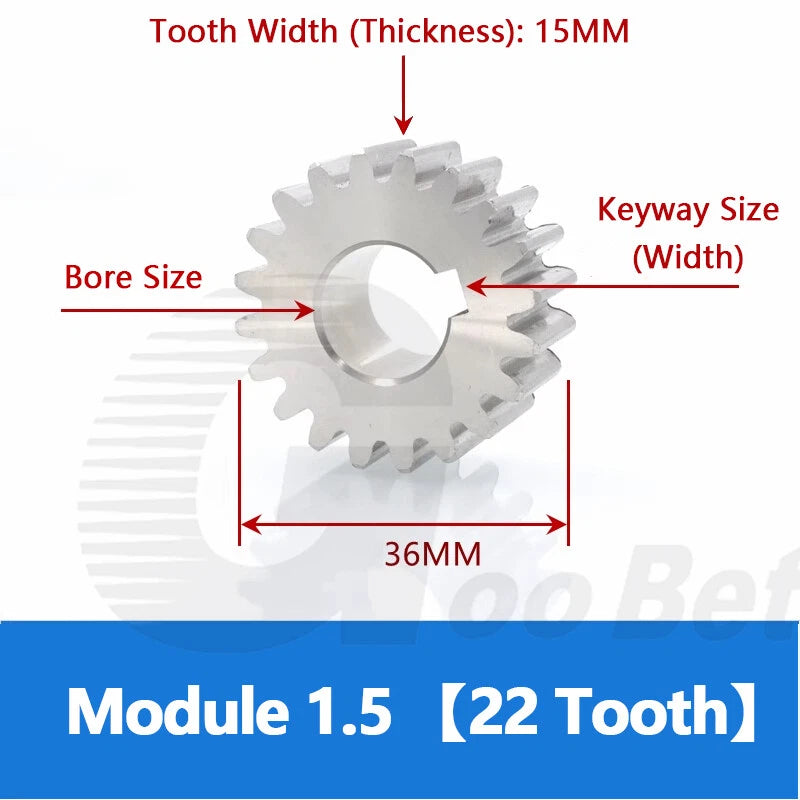
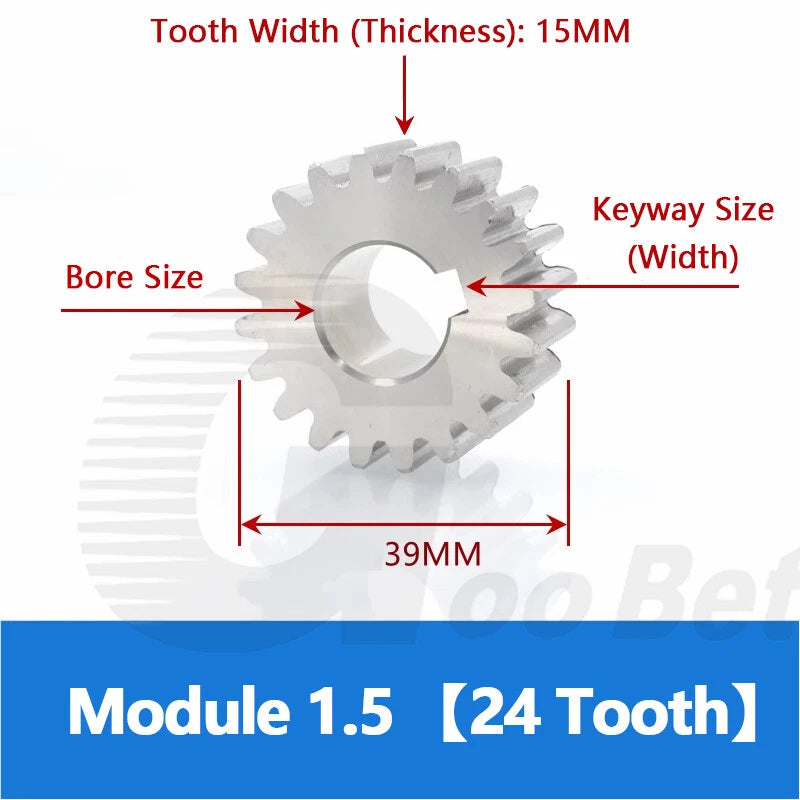
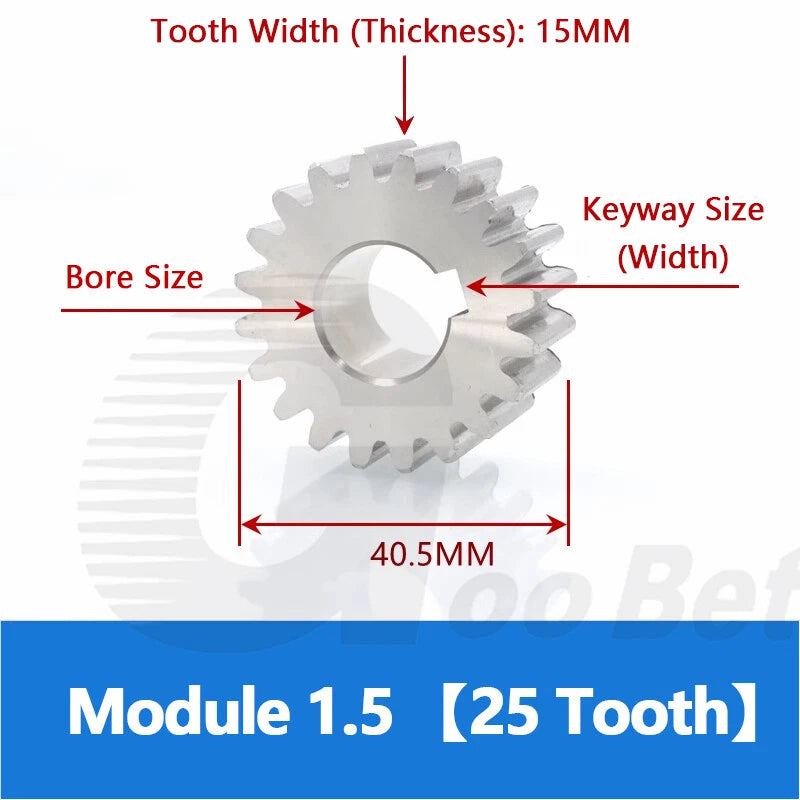
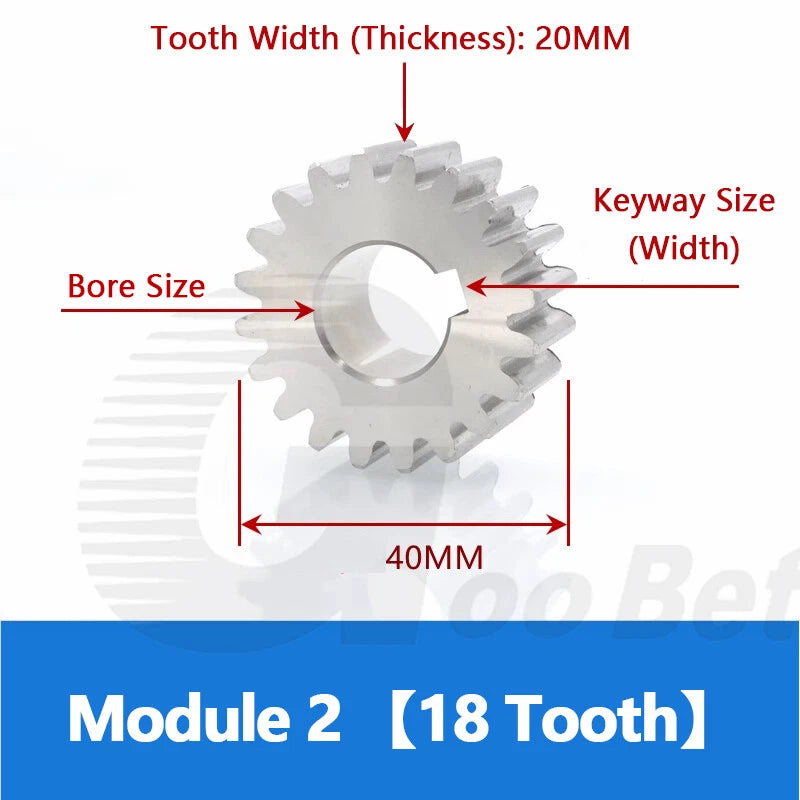
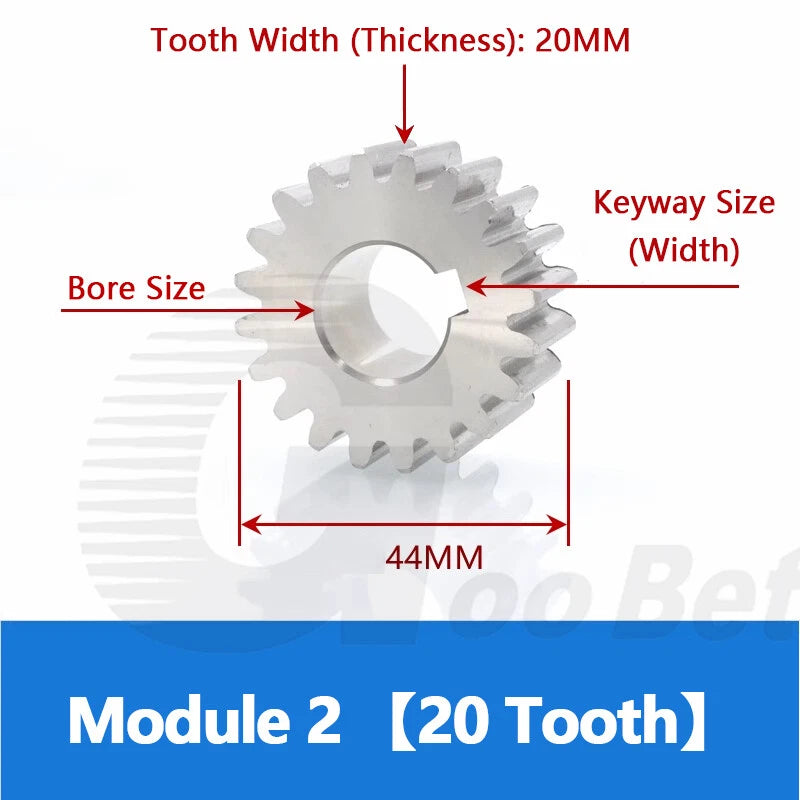
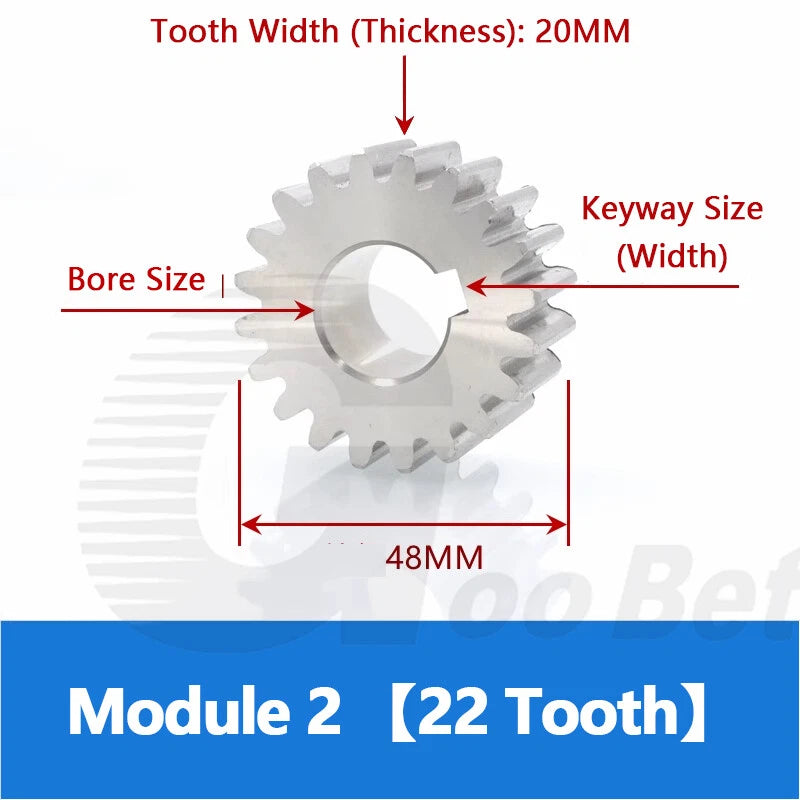
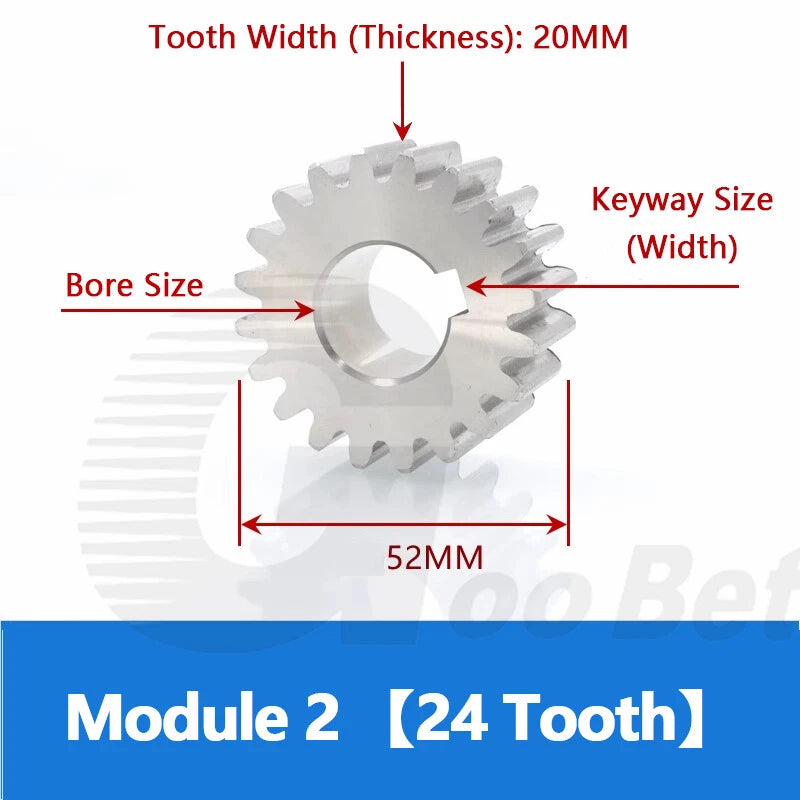
Spur Gear Stainless Steel Module 1 1.5 2 Motor Pinion 12 to 100 Tooth Flat Gear

No reviews

Price:
Sale price$12.42 USD
Stock:
In stock (500 units), ready to be shipped

Payment & Security

Ach Direct Debit Amazon American Express Apple Pay Bancontact BLIK Diners Club Discover EPS Google Pay iDEAL Wero JCB Maestro Mastercard Multibanco MobilePay PayPal Przelewy24 Shop Pay Twint Union Pay USDC Visa

Your payment information is processed securely. We do not store credit card details nor have access to your credit card information.

Limited Offer — Spend More, Save More
Spend $55+
Save $5
Spend $100+
Save $10
Spend $200+
Save $25
HomeDIYer DIY Expert Support

DIY Expert Support

Get fitment advice & recommendations

Mon–Fri  8:30 AM – 8:00 PM
24-Hour Fast Ship
Arrives in 3–14 Days
Worldwide Shipping
30-Day Returns
1 tree planted with every purchase

Description

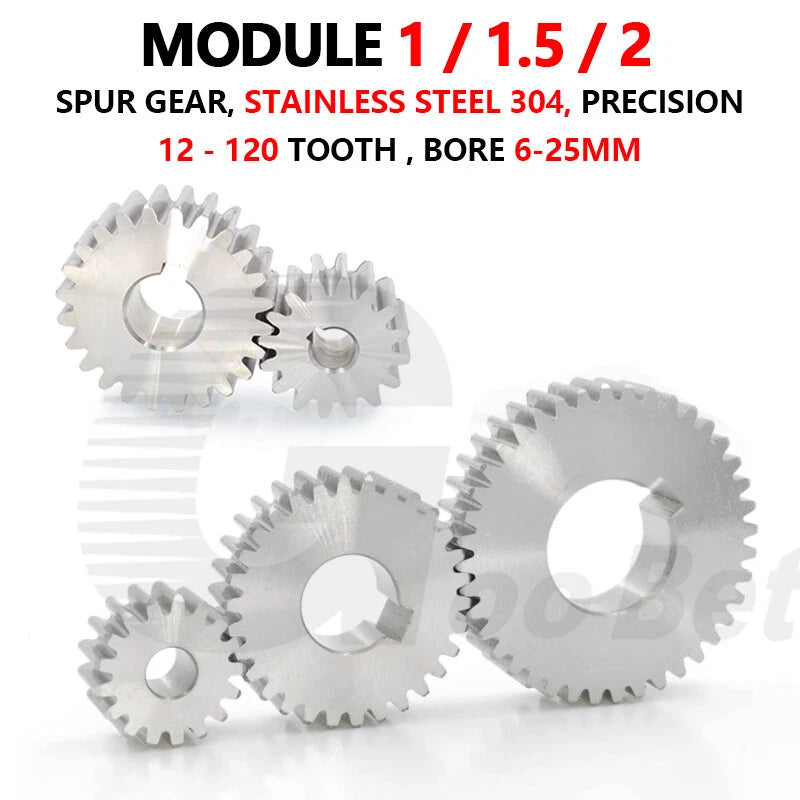
Stainless Steel Spur Gears — Precision Module 1, 1.5 & 2 for Demanding Drive Applications

When a stripped plastic gear or an undersized pinion brings your project to a halt, you need a drop-in replacement that won't let you down again. These stainless steel spur gears are engineered for makers, robotics builders, CNC hobbyists, and small-machine designers who require reliable, corrosion-resistant power transmission without custom machining.

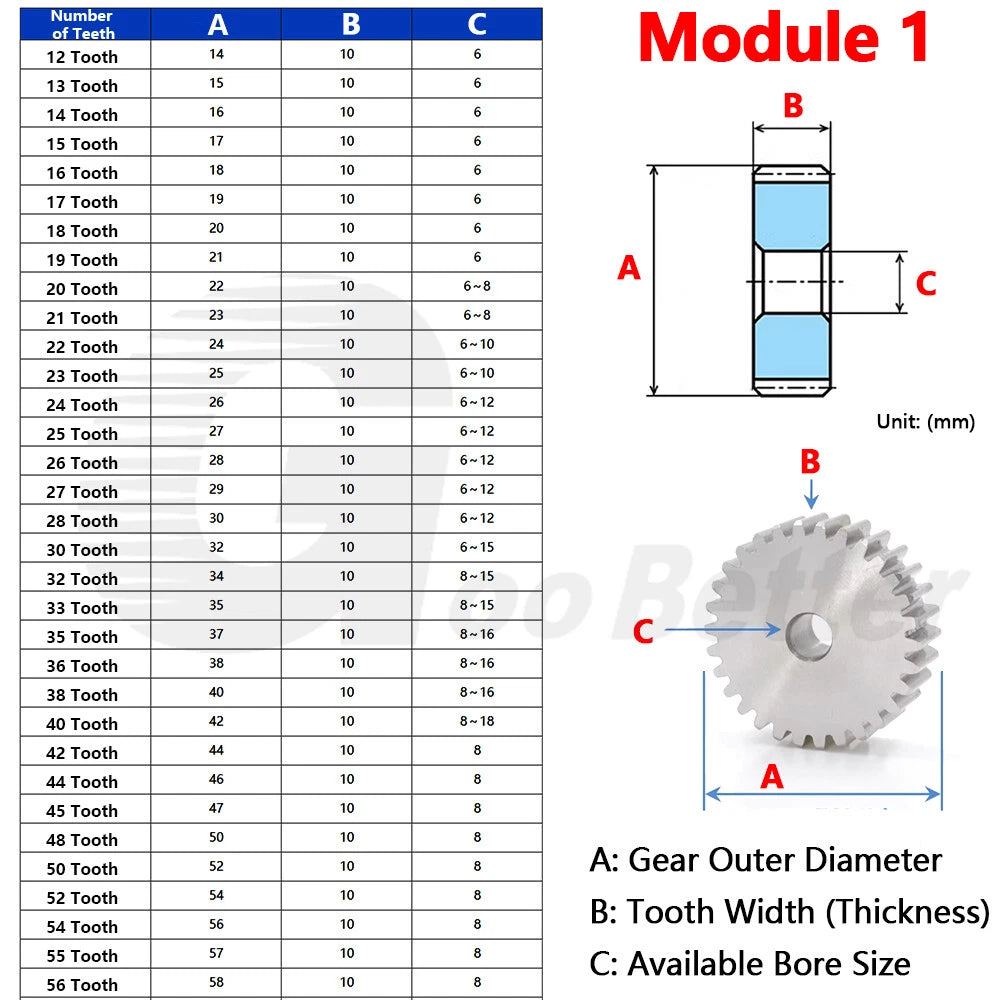
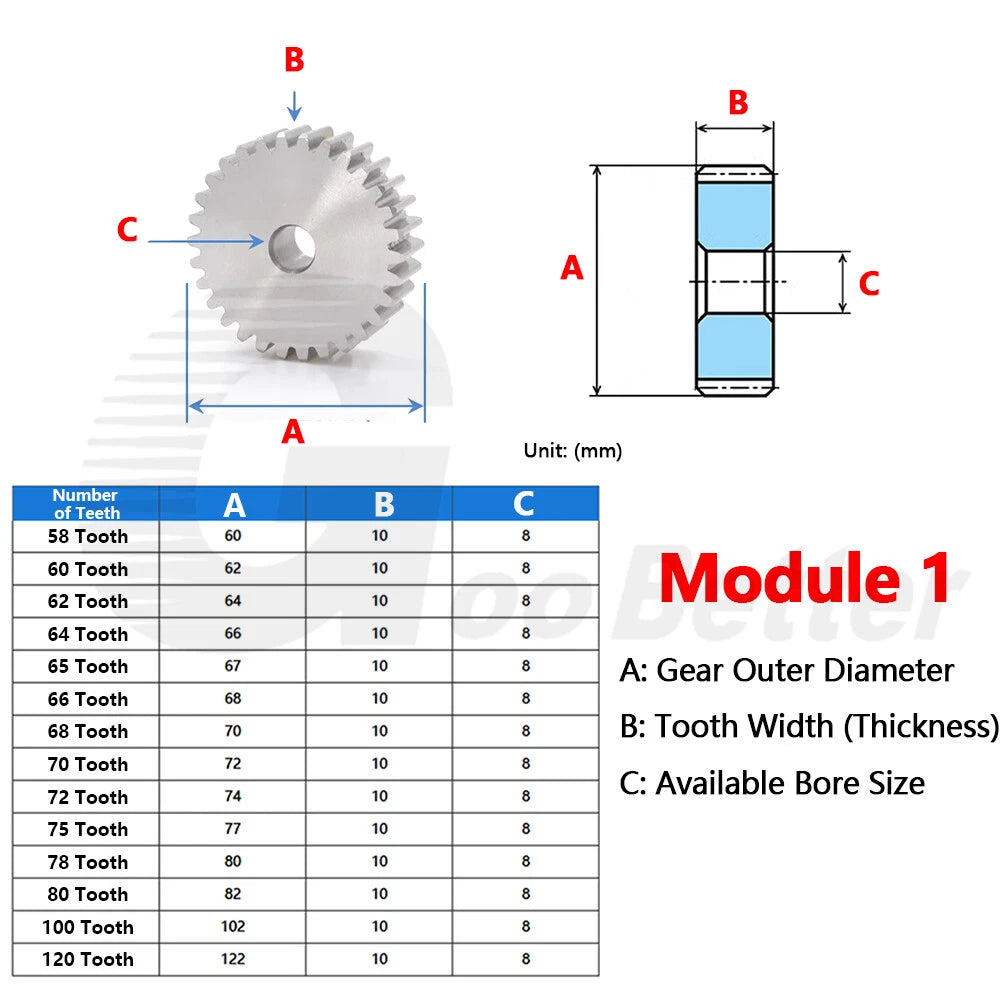
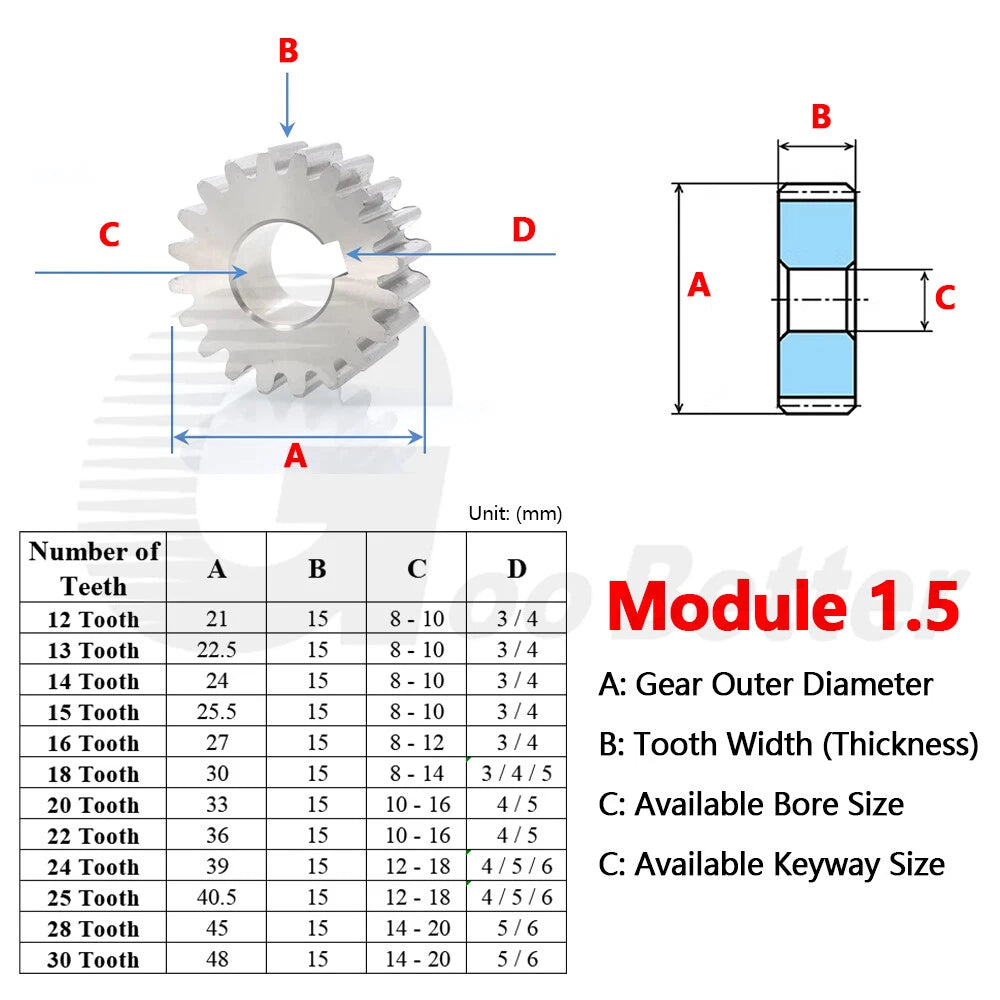
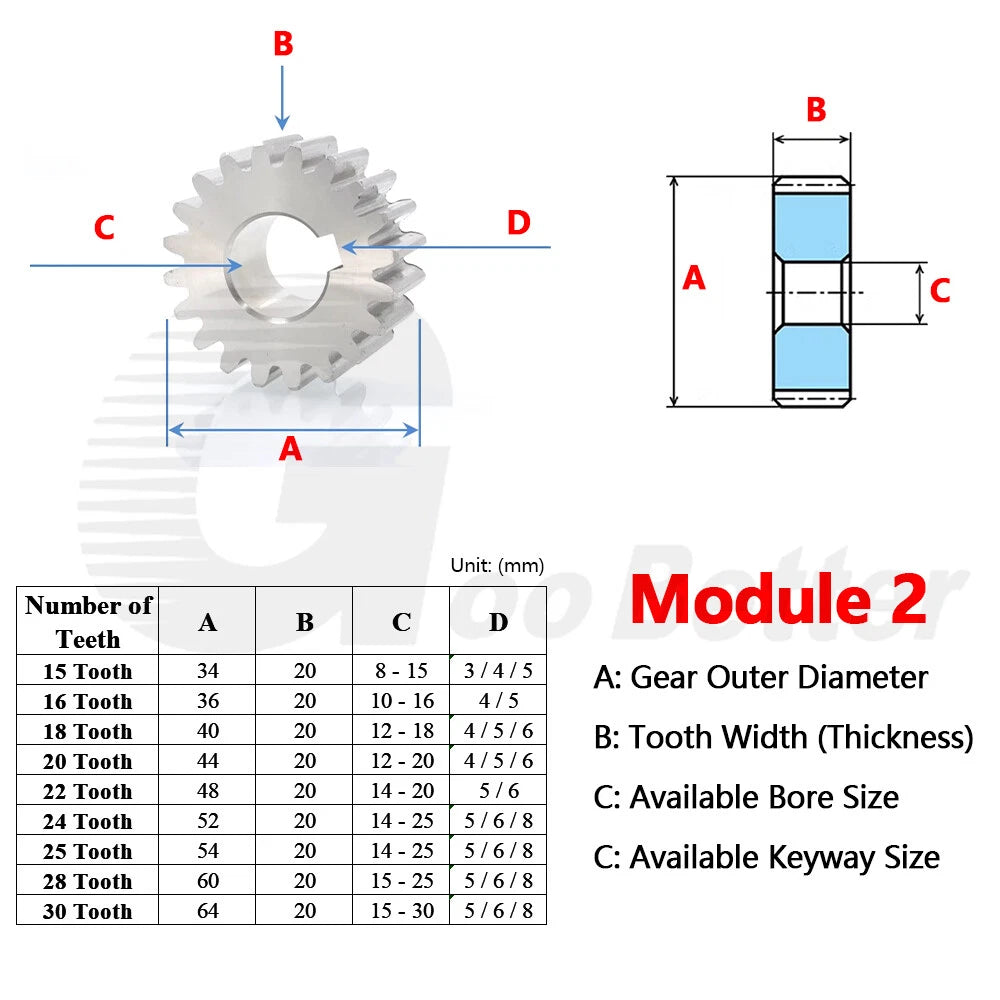
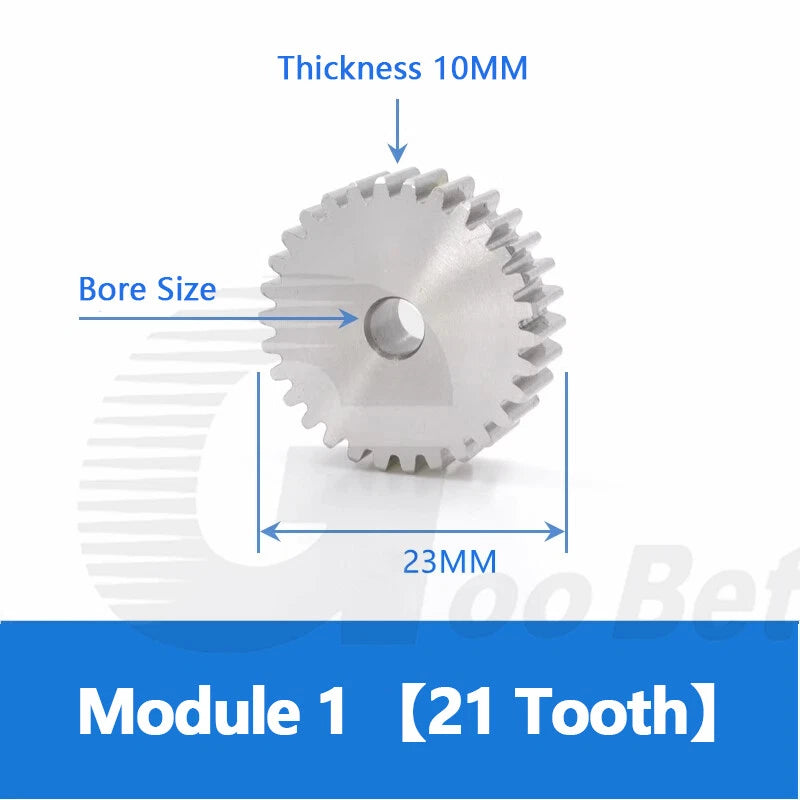
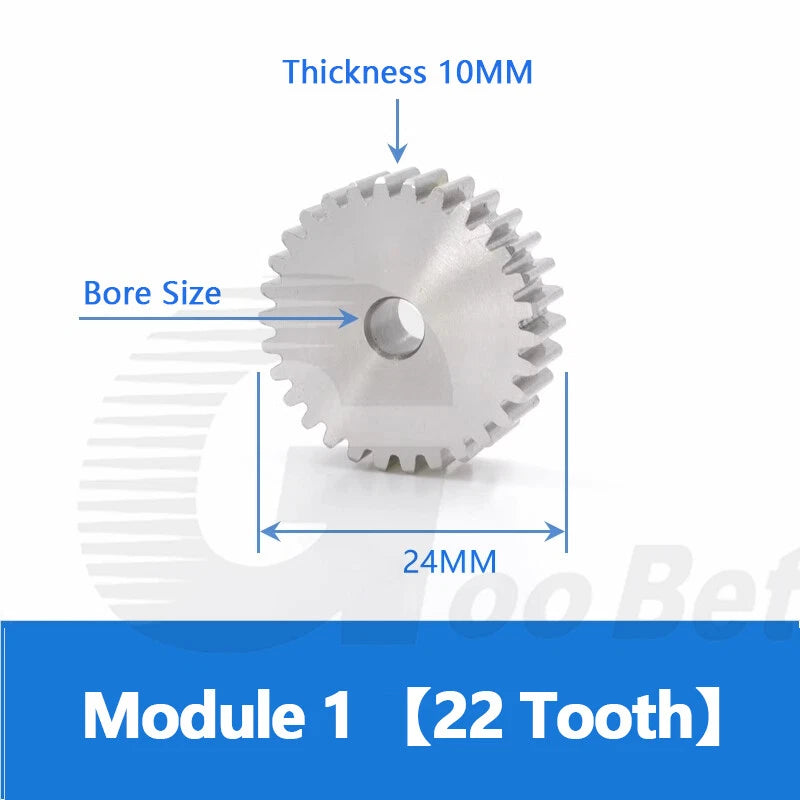
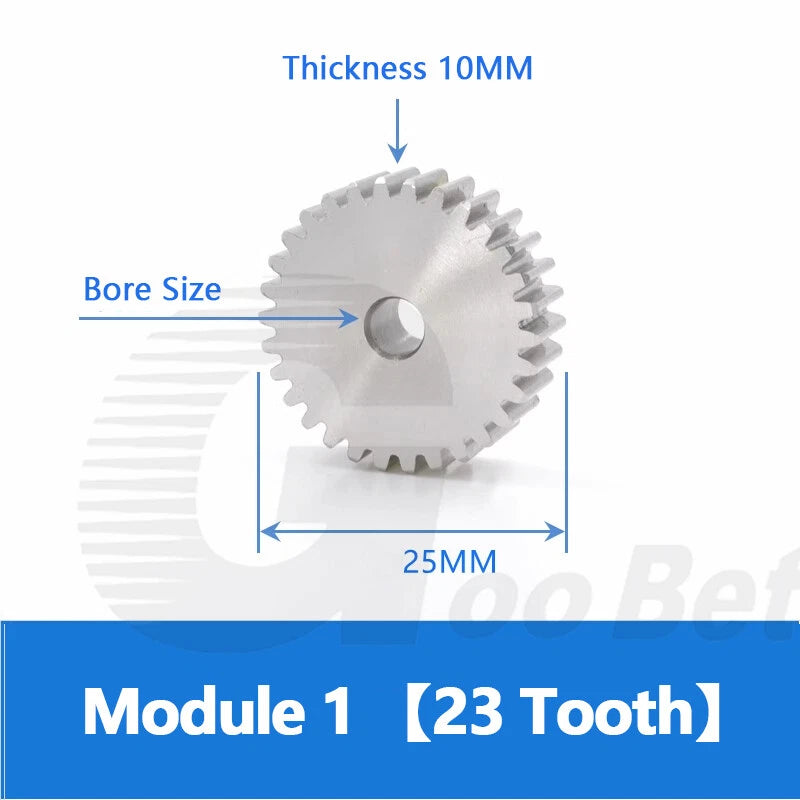
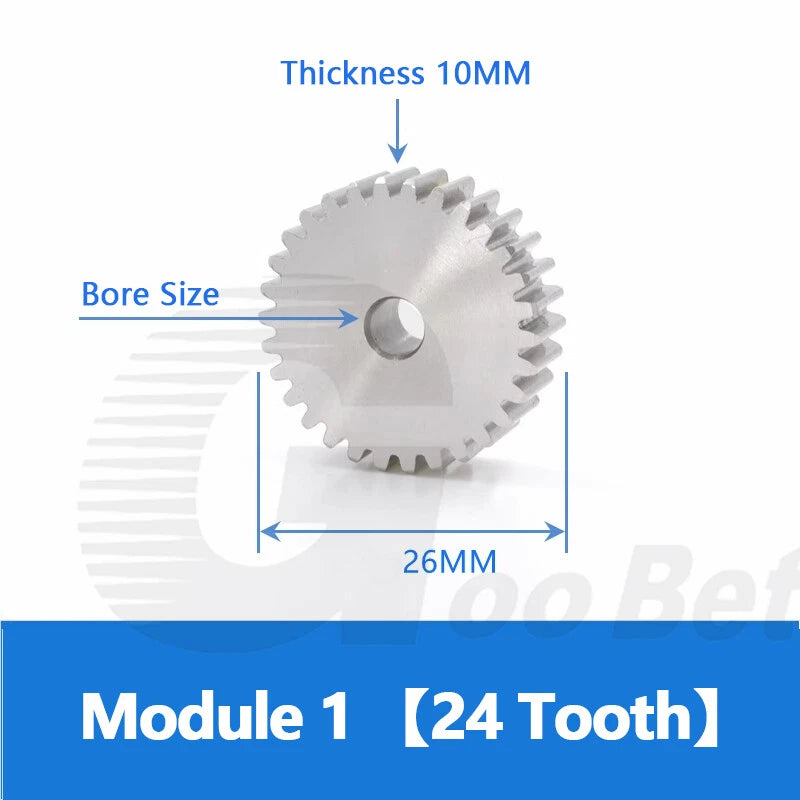
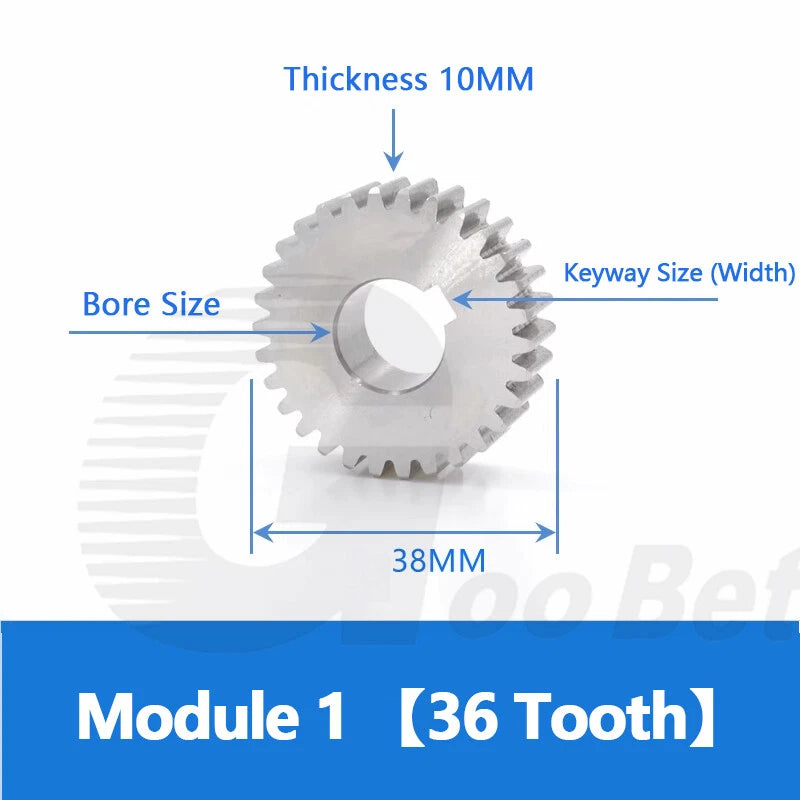
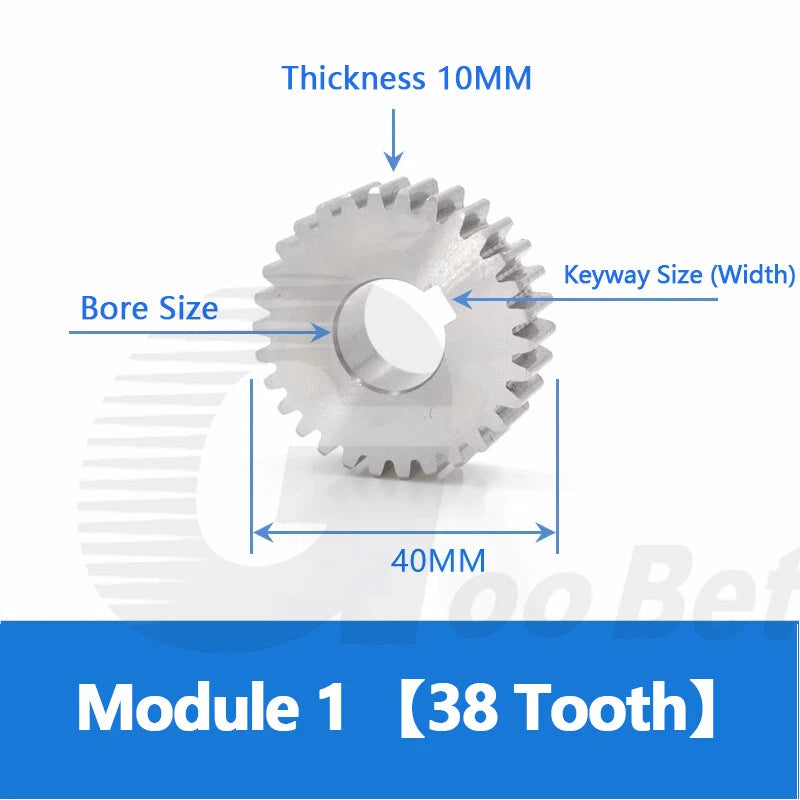
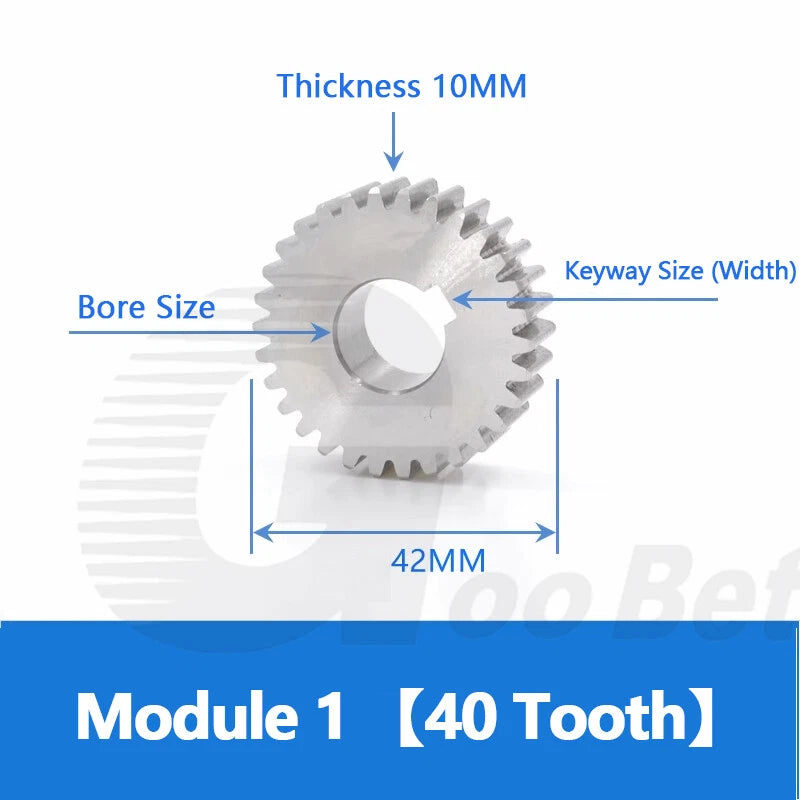
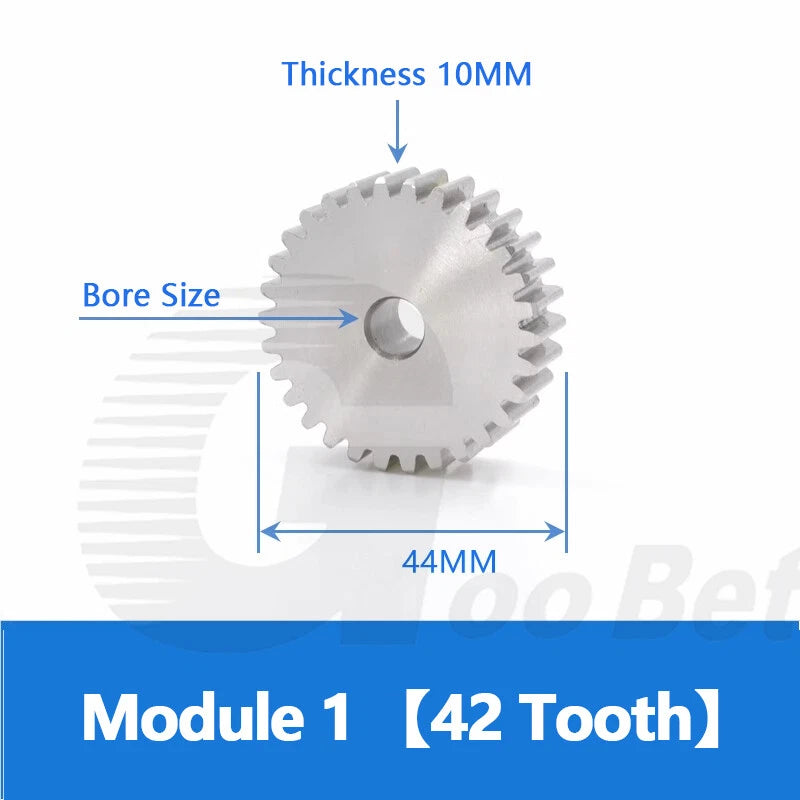
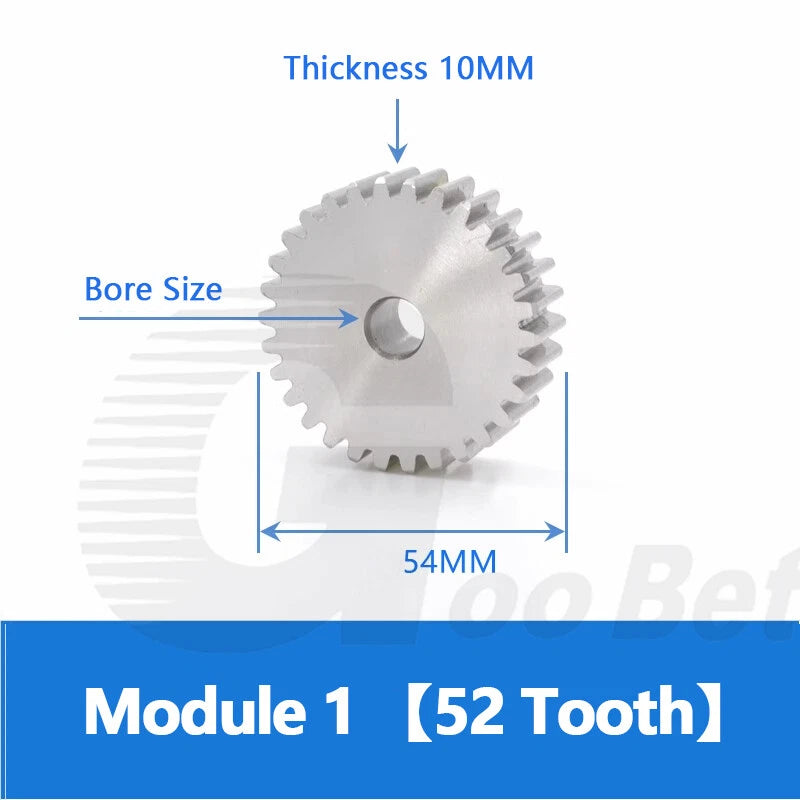
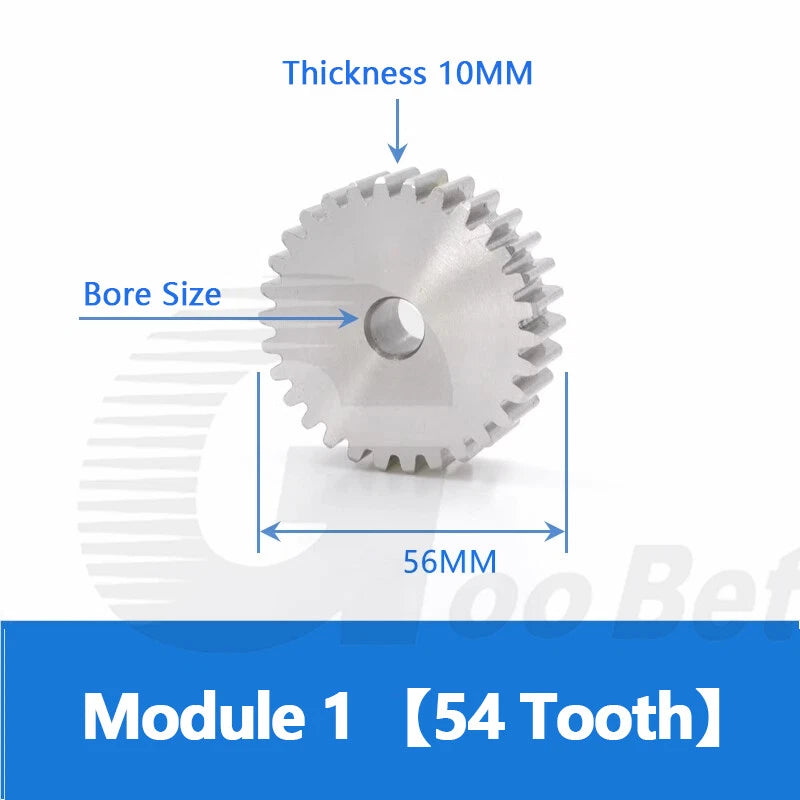
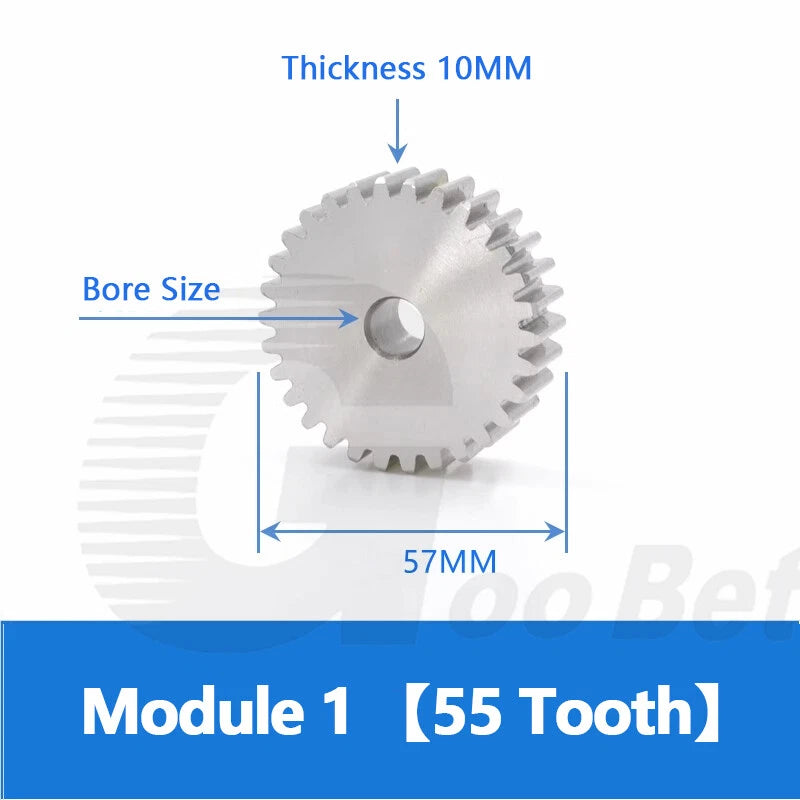
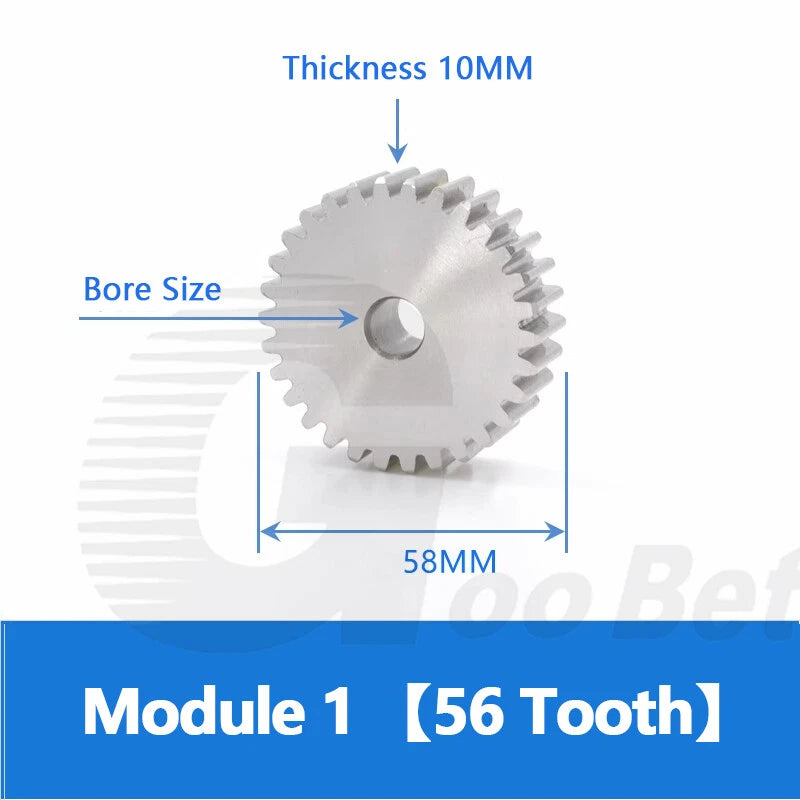
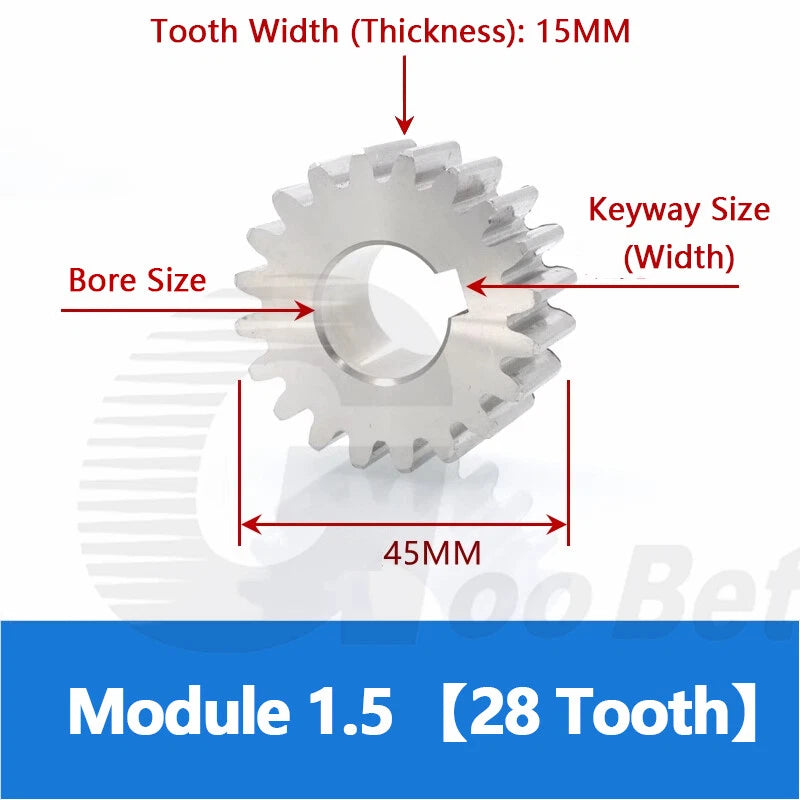
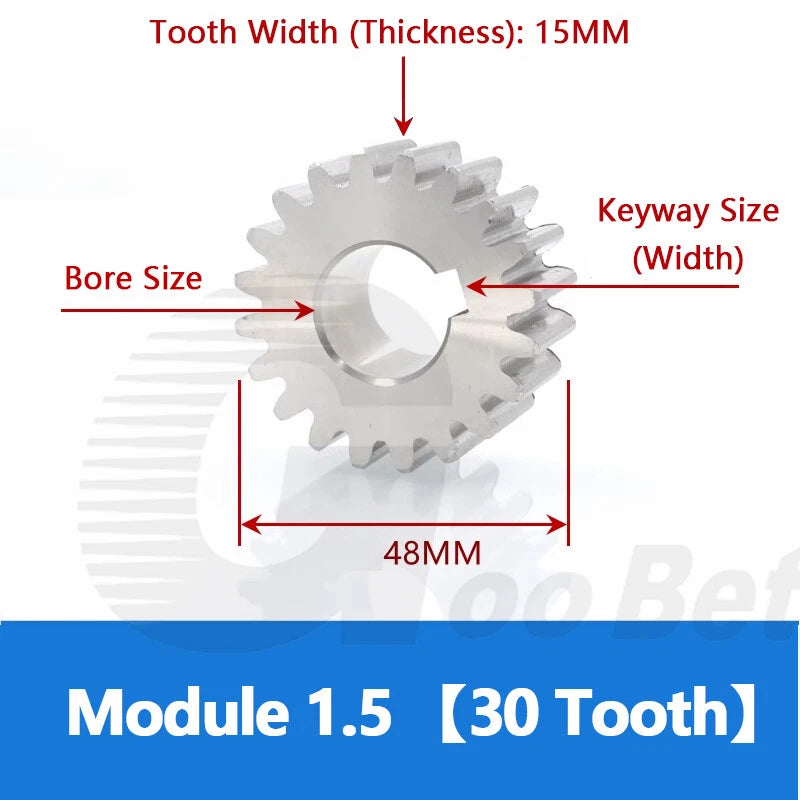
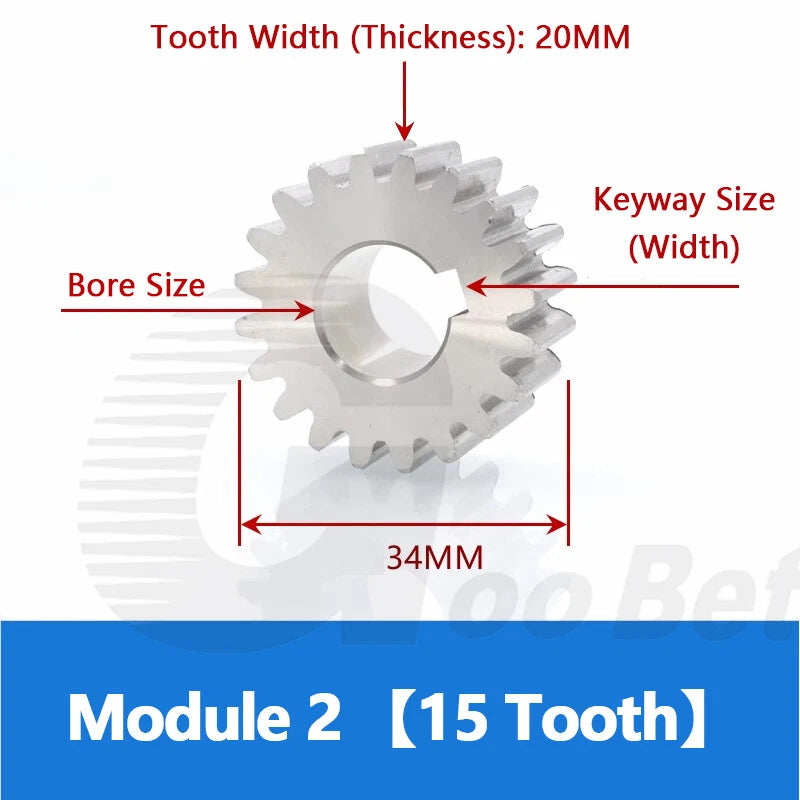
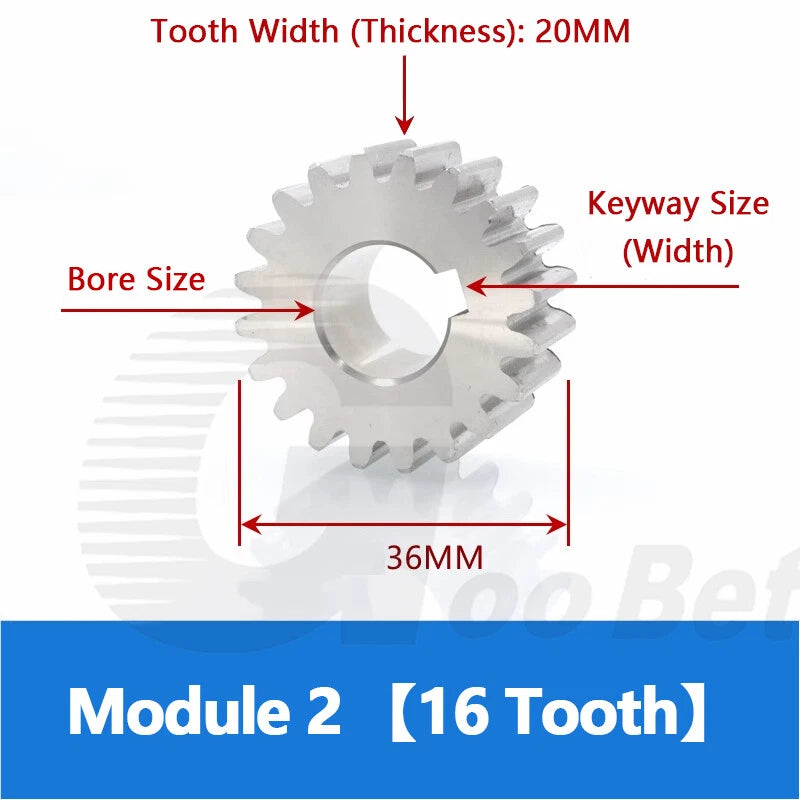
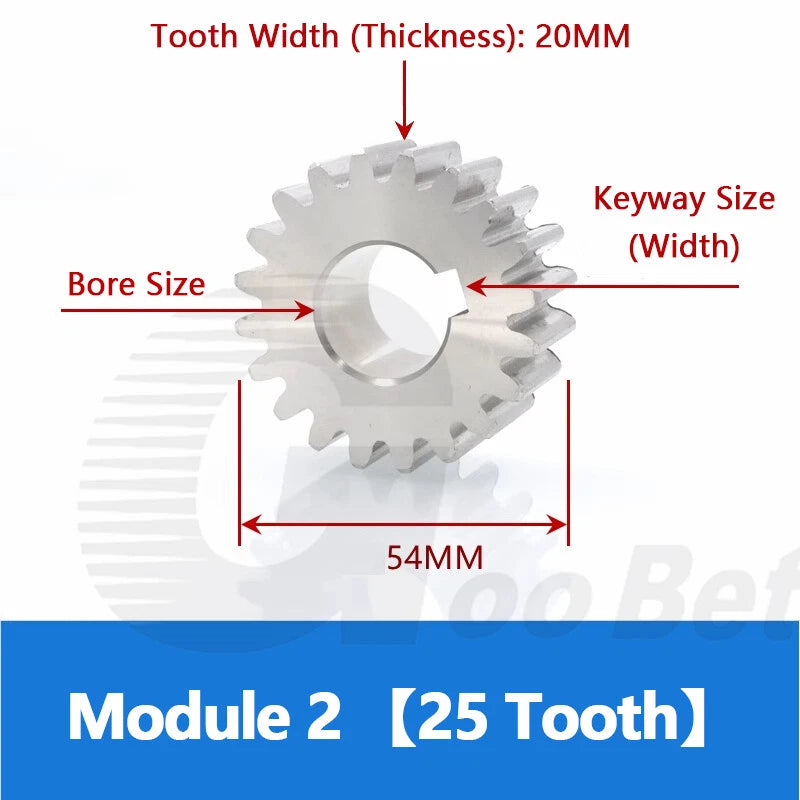
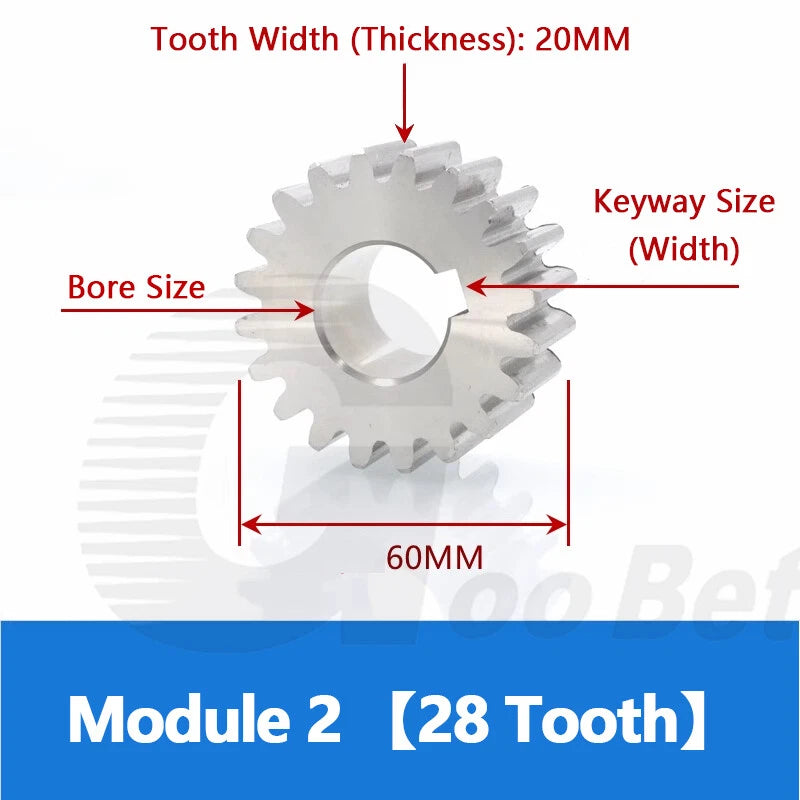
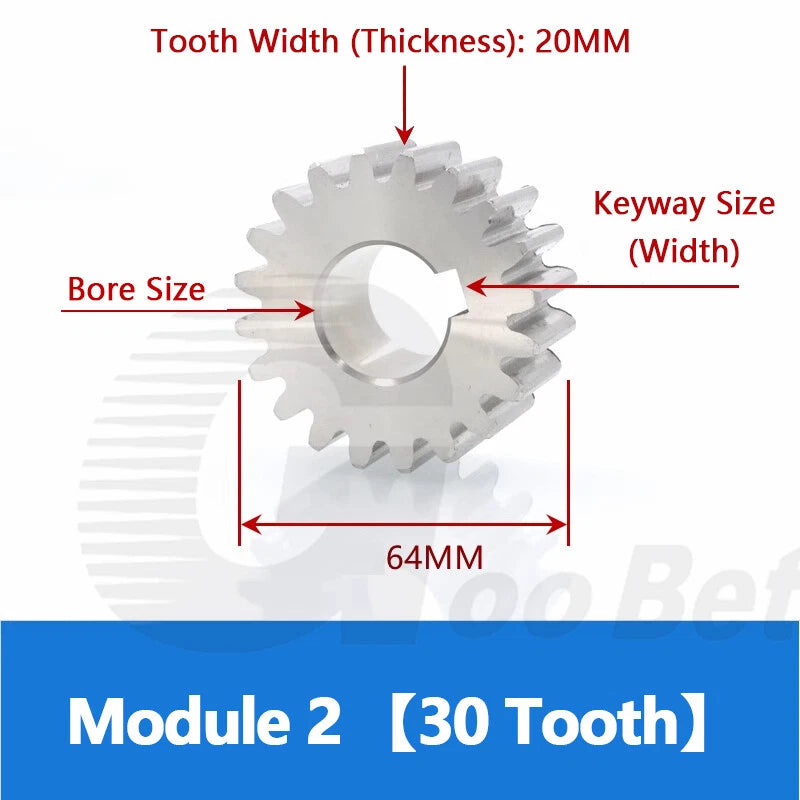
Each gear is machined from stainless steel and offered in three metric module sizes — Module 1, Module 1.5, and Module 2 — spanning tooth counts from 12 to 120 teeth. Bore diameters range from 6 mm (0.24 in) up to 25 mm (0.98 in), with most sizes available in plain-bore or keyway configurations (3 mm, 4 mm, 5 mm, 6 mm, or 8 mm keyways depending on bore size). Gear face width and overall diameter scale proportionally with module and tooth count per standard metric gear geometry.

Typical use cases include motor pinion replacement in DC gearbox drives, stage-reduction geartrains for CNC router Z-axes, open-frame conveyor drives, and educational robotics platforms where a stainless steel spur gear with keyway bore provides secure shaft engagement without set-screw slip.

⚙️ Compatibility: Mates with any standard metric spur or helical gear of the same module (Module 1, 1.5, or 2). Verify shaft diameter and keyway dimensions before ordering. Bore sizes and keyway specs are listed per variant.

✅ Key Features of These Stainless Steel Spur Gears

🔩
Stainless Steel Construction
Machined from stainless steel for corrosion resistance in humid, wet, or chemically exposed environments — outlasting zinc or nylon alternatives in long-run applications.
📐
Three Module Sizes
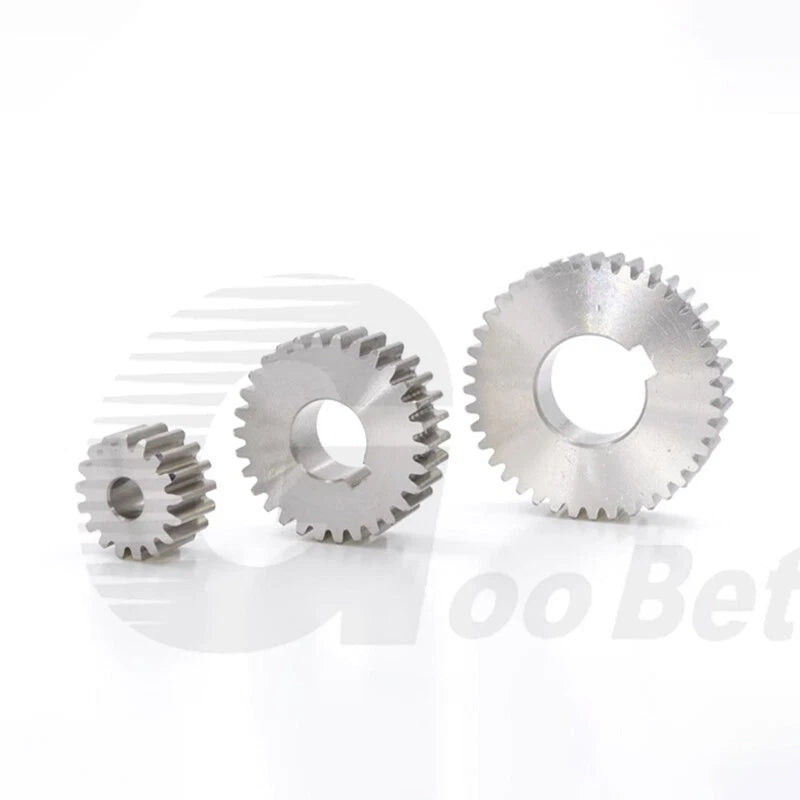
Available in Module 1, Module 1.5, and Module 2 — covering a wide torque and speed range. Larger modules handle higher loads; smaller modules suit compact, high-speed pinion stages.
🎯
Wide Tooth Count Range
Module 1 spans 12–120 teeth; Module 1.5 spans 12–30 teeth; Module 2 spans 15–30 teeth — giving you the gear ratio flexibility to dial in exact output speed and torque.
🔑
Keyway Bore Options
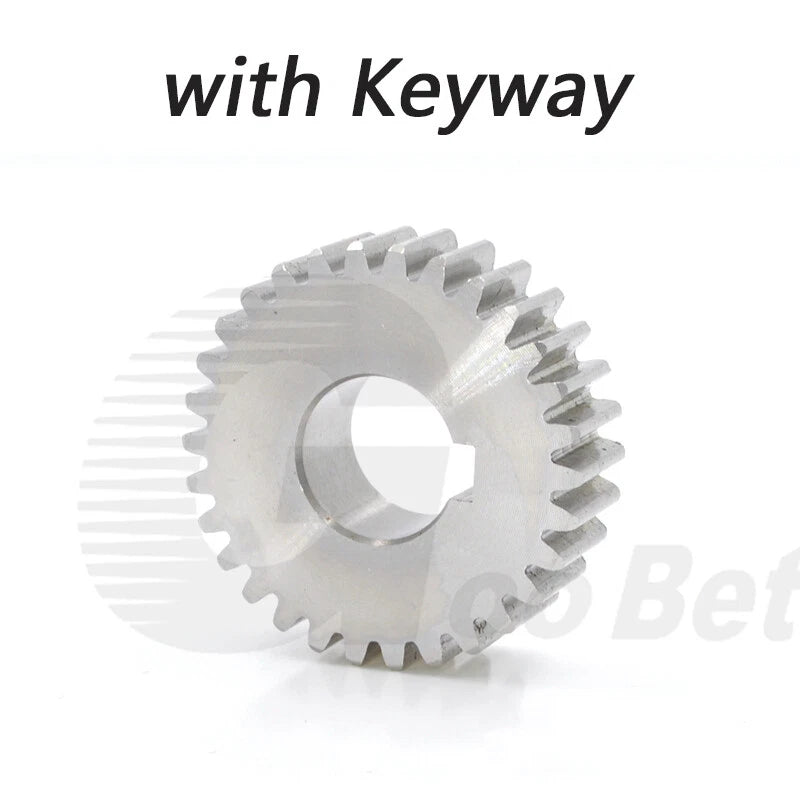
Most variants offer keyway bores (3 mm to 8 mm keyways) for positive shaft locking, eliminating rotational slip under reversing or shock loads — critical for CNC and servo-driven axes.
⚖️
Standard Metric Geometry
Manufactured to standard metric module pitch, ensuring direct interchangeability with off-the-shelf gears, racks, and pinions of the same module from any supplier.
🛠️
Ready to Install
Bores are finished to tolerance — slide onto your shaft, align the keyway, and secure. No additional machining required for standard bore-and-keyway configurations.

📐 Technical Specifications — Stainless Steel Spur Gears

Material Stainless Steel
Module Sizes Available Module 1 / Module 1.5 / Module 2
Tooth Count Range 12–120 T (Module 1); 12–30 T (Module 1.5); 15–30 T (Module 2)
Bore Diameter Range 6 mm – 25 mm (0.24 in – 0.98 in)
Keyway Options 3 mm / 4 mm / 5 mm / 6 mm / 8 mm (bore-size dependent)
Gear Type Spur (straight tooth, external)
Pressure Angle 20° (standard metric)
Face Width See variant options
Pitch Diameter See variant options (= Module × Tooth Count)
Finish Machined, natural stainless
Quantity per Order 1 pc (per variant selection)

❓ Frequently Asked Questions

How do I choose the right module size?

Module size determines tooth size and load capacity. Module 1 suits lightweight, high-speed applications (small robots, hobby CNC). Module 1.5 balances size and strength for mid-range drives. Module 2 handles higher torque in slower, heavier-duty setups. Both mating gears must share the same module to mesh correctly.

Do I need a keyway bore, or will a plain bore work?

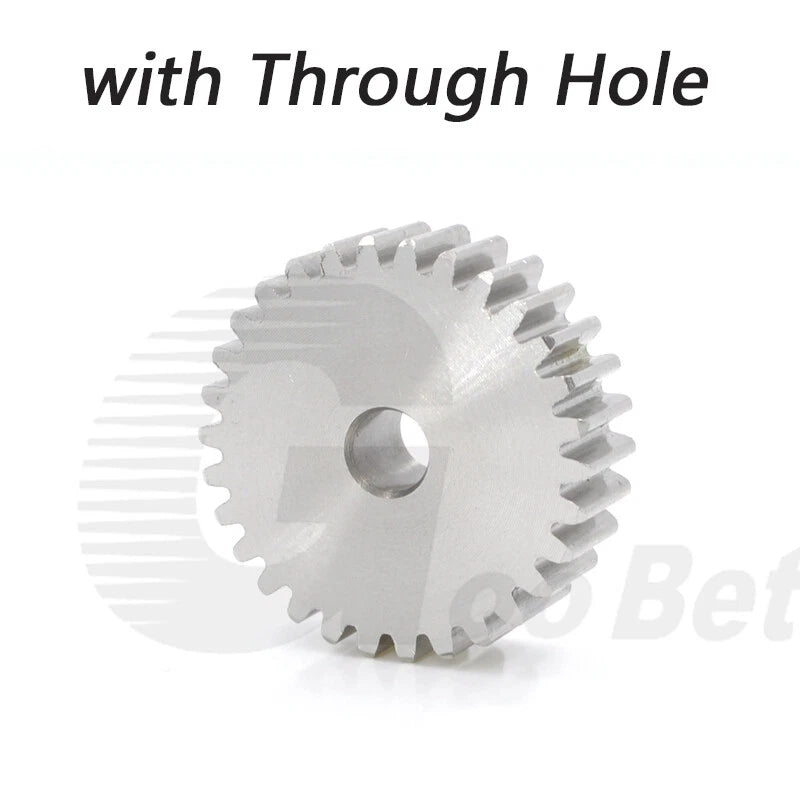
A keyway bore is strongly recommended for any application with reversing loads, shock loads, or high torque — it prevents the gear from spinning on the shaft. Plain bores (e.g., the 6 mm or 8 mm plain options) are suitable for light-duty or set-screw-secured assemblies where torque is low and direction is constant.

What tooth count gives me a specific gear ratio?

Gear ratio = driven gear teeth ÷ driving gear teeth. For example, pairing a 12-tooth pinion with a 60-tooth gear gives a 5:1 reduction. Both gears must be the same module. Use this product's wide tooth range (12–120 T in Module 1) to achieve ratios from roughly 1:1 up to 10:1 in a single stage.

Is stainless steel strong enough for my application?

Stainless steel offers good tensile strength (typically 515–620 MPa for 304-grade) combined with corrosion resistance. It is well-suited for light-to-medium industrial, robotics, and maker applications. For very high-torque or impact-heavy industrial drives, consider whether a hardened alloy steel gear would be more appropriate for your load cycle.

Will these gears corrode or rust?

Stainless steel provides inherent corrosion resistance in most environments, including humid workshops, light outdoor exposure, and mild chemical contact. For prolonged immersion or aggressive chemical environments, verify compatibility with your specific media. Periodic light lubrication extends service life regardless of material.

How do I verify the bore size fits my motor shaft?

Measure your motor or gearbox output shaft diameter with a caliper. Select the variant whose bore matches — for example, a 6 mm shaft needs the "6mm" bore variant, while an 8 mm shaft with a 3 mm keyway slot needs the "8mm + 3mm Keyway" variant. If your shaft has no keyway, choose the closest plain bore and secure with a set screw or adhesive retainer.

Can I use Module 1 and Module 1.5 gears together?

No. Gears of different modules cannot mesh with each other — the tooth profiles and pitches are incompatible. All gears in a meshing pair or gear train must share the same module number. Plan your entire drivetrain around a single module size.

🛒 Select your Module size, Tooth count, and Bore Size above, then add to cart.

You may also like

Recently viewed