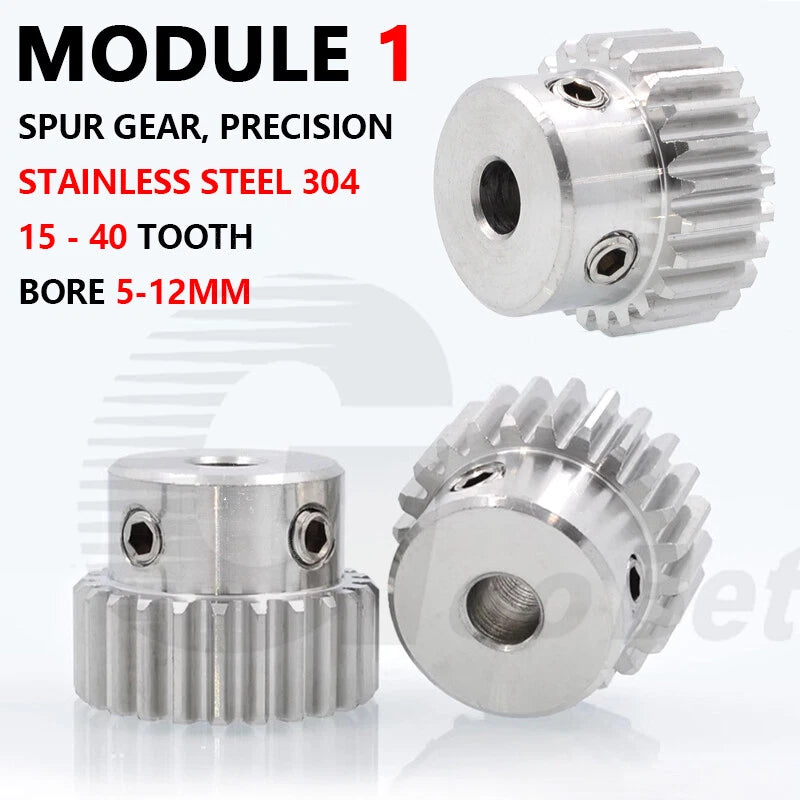
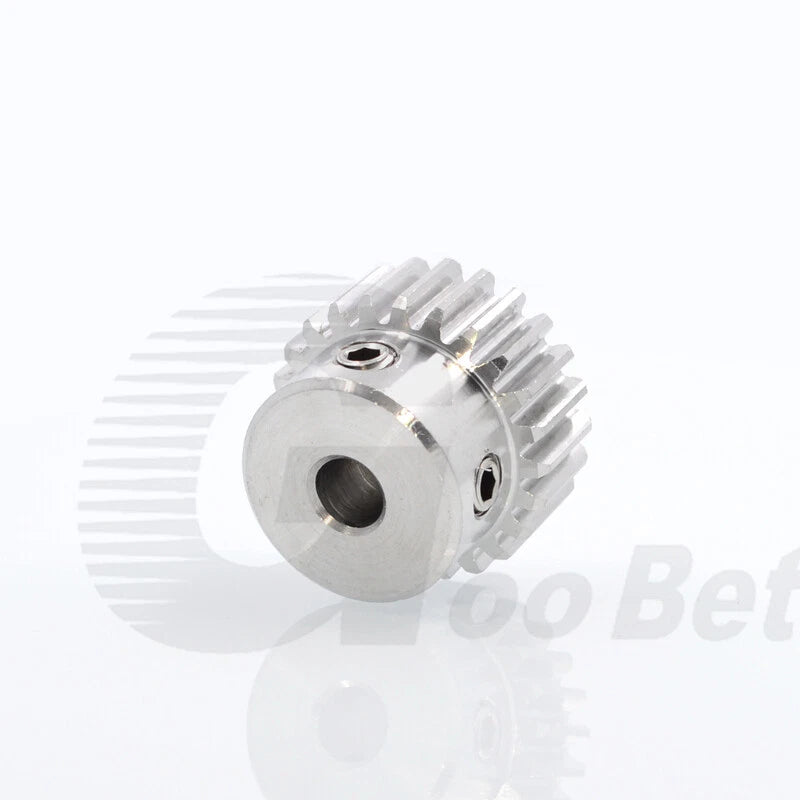
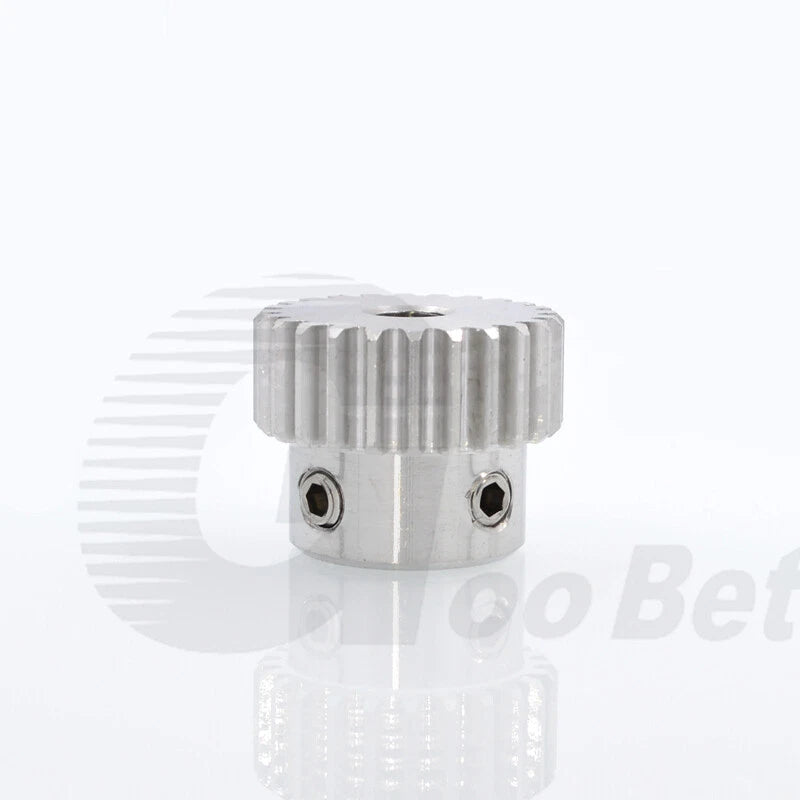
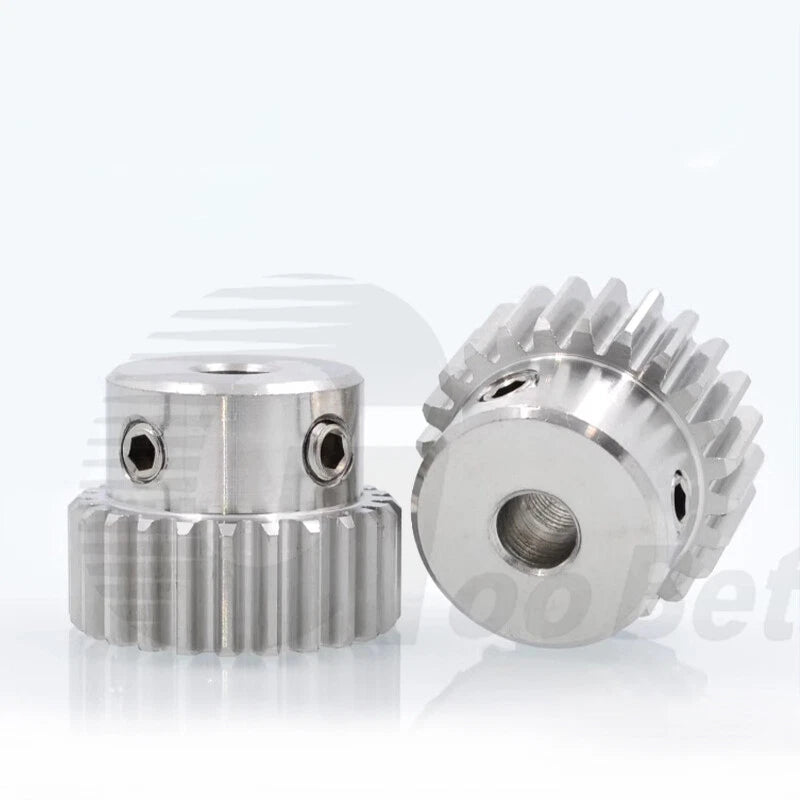
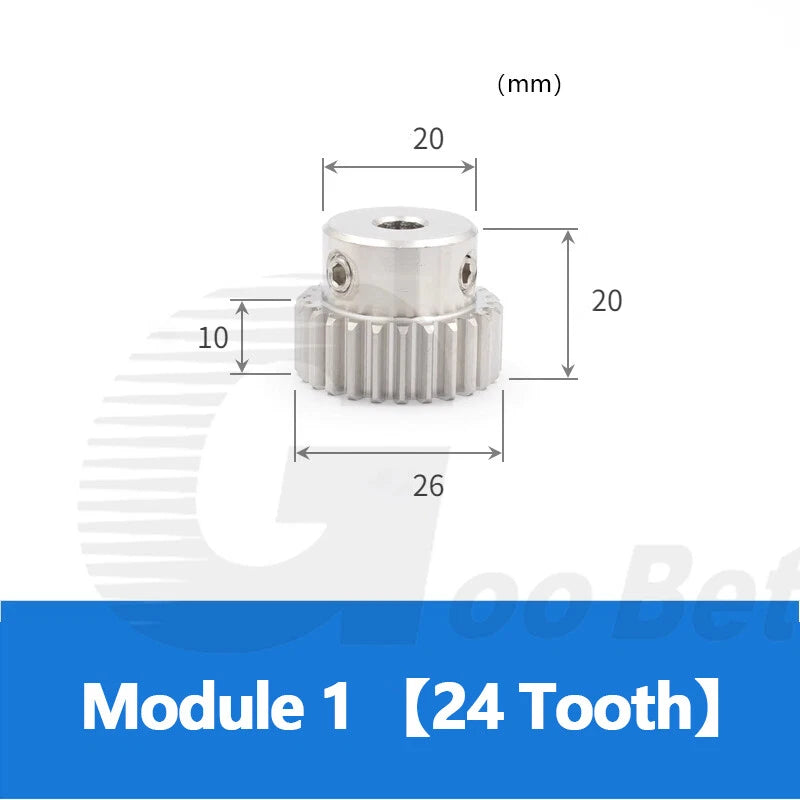
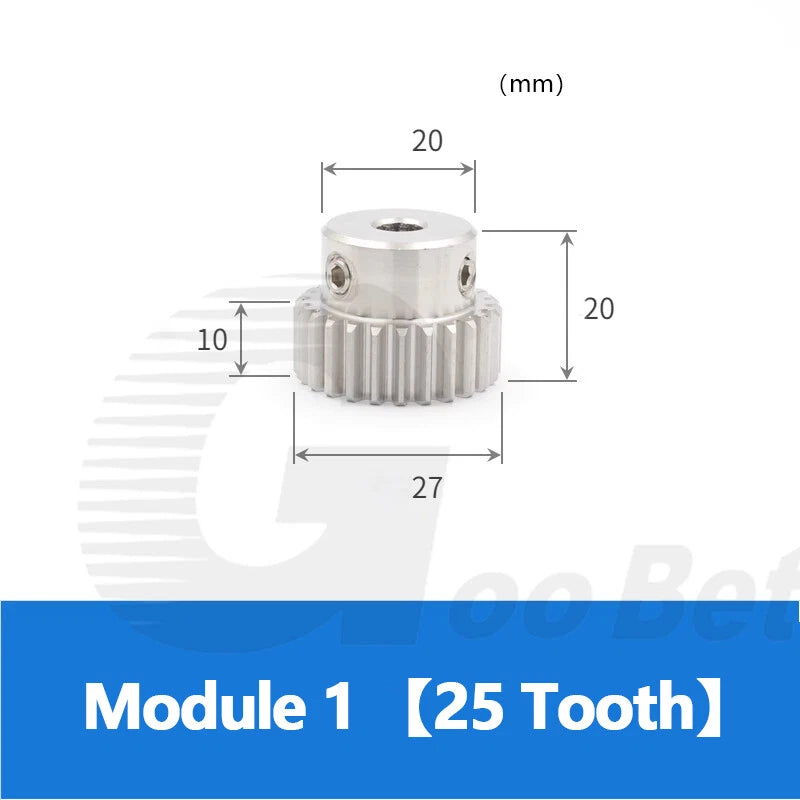
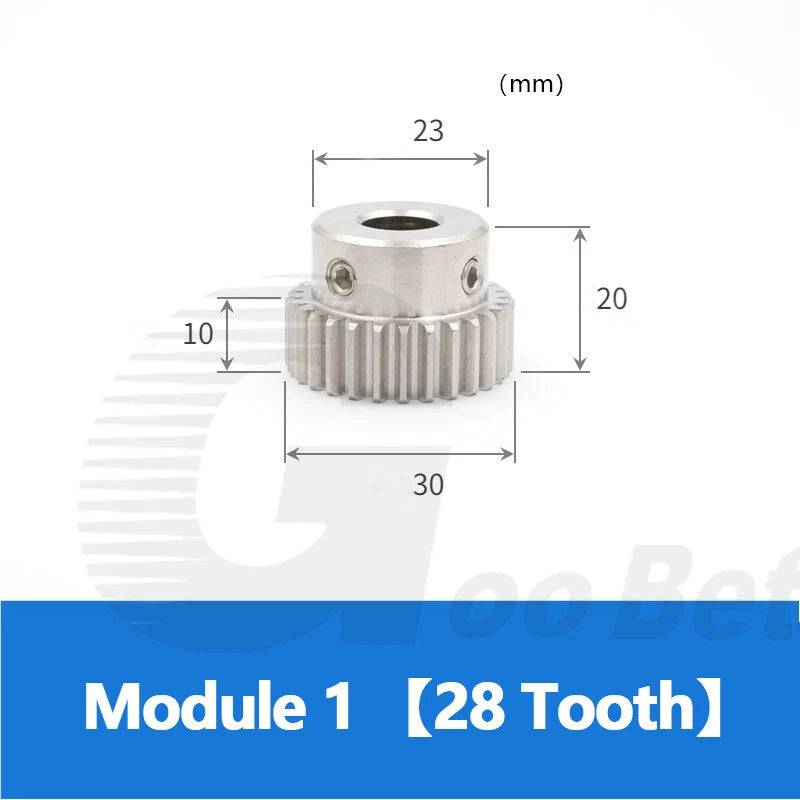
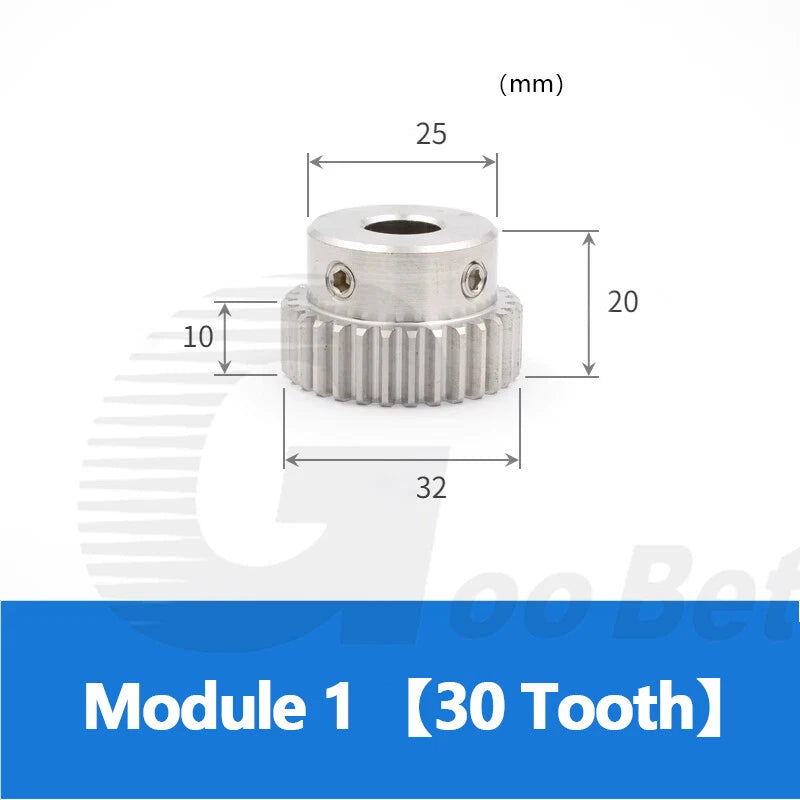
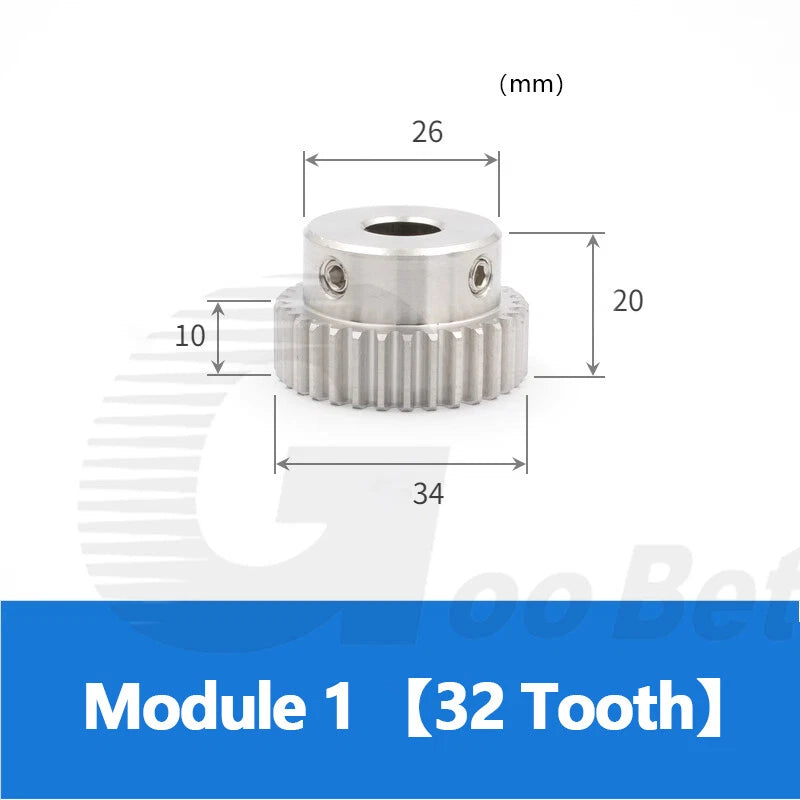
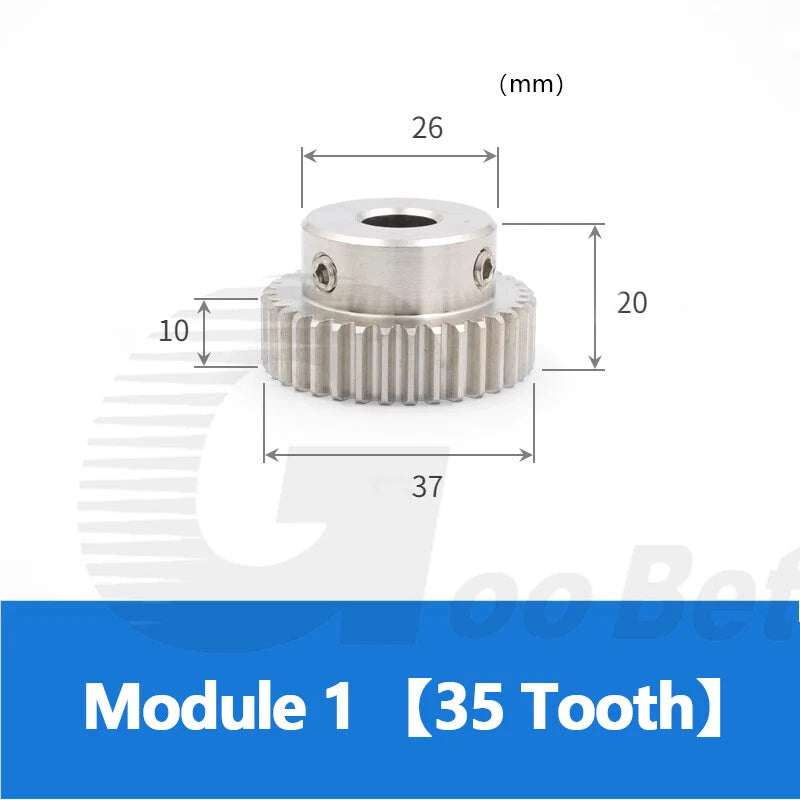
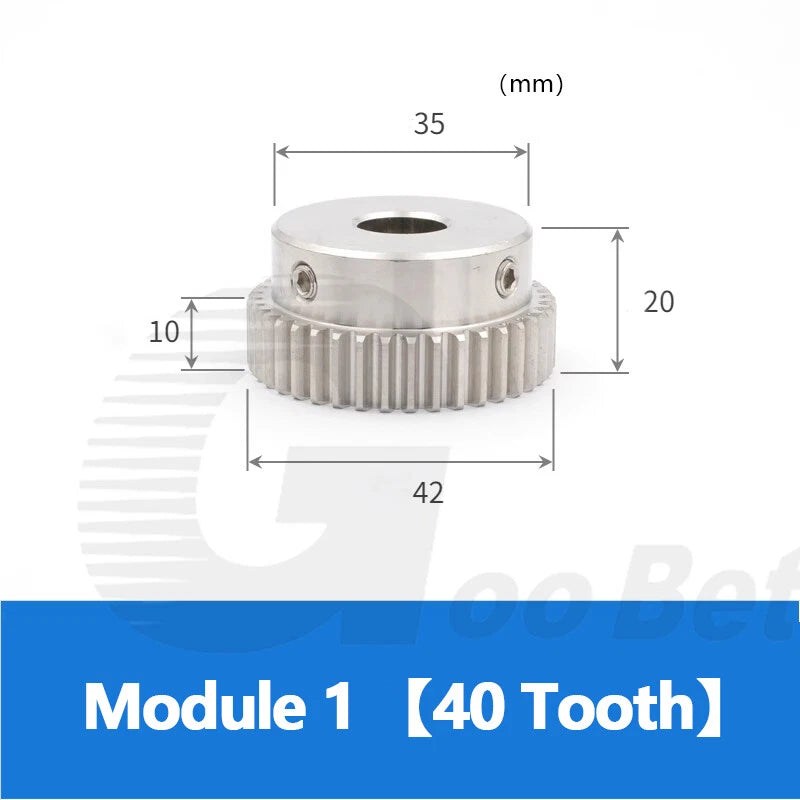
Spur Gear Stainless Steel Module 1 with Hub 15 - 40 Tooth Motor Pinion Precision

No reviews

Price:
Sale price$16.25 USD
Stock:
In stock (500 units), ready to be shipped

Payment & Security

Ach Direct Debit Amazon American Express Apple Pay Bancontact BLIK Diners Club Discover EPS Google Pay iDEAL Wero JCB Maestro Mastercard Multibanco MobilePay PayPal Przelewy24 Shop Pay Twint Union Pay USDC Visa

Your payment information is processed securely. We do not store credit card details nor have access to your credit card information.

Limited Offer — Spend More, Save More
Spend $55+
Save $5
Spend $100+
Save $10
Spend $200+
Save $25
HomeDIYer DIY Expert Support

DIY Expert Support

Get fitment advice & recommendations

Mon–Fri  8:30 AM – 8:00 PM
24-Hour Fast Ship
Arrives in 3–14 Days
Worldwide Shipping
30-Day Returns
1 tree planted with every purchase

Description

Module 1 Stainless Steel Spur Gear with Hub — Precision Motor Pinion for CNC & Automation

When a slipping or undersized pinion gear causes positioning errors in your CNC router, 3D printer, or robotic arm, the entire build suffers. Engineers and makers who demand repeatable, backlash-minimized motion need a spur gear that holds tight tolerances across thousands of cycles. These Module 1 stainless steel spur gears with integrated hub are machined for exactly that workload.

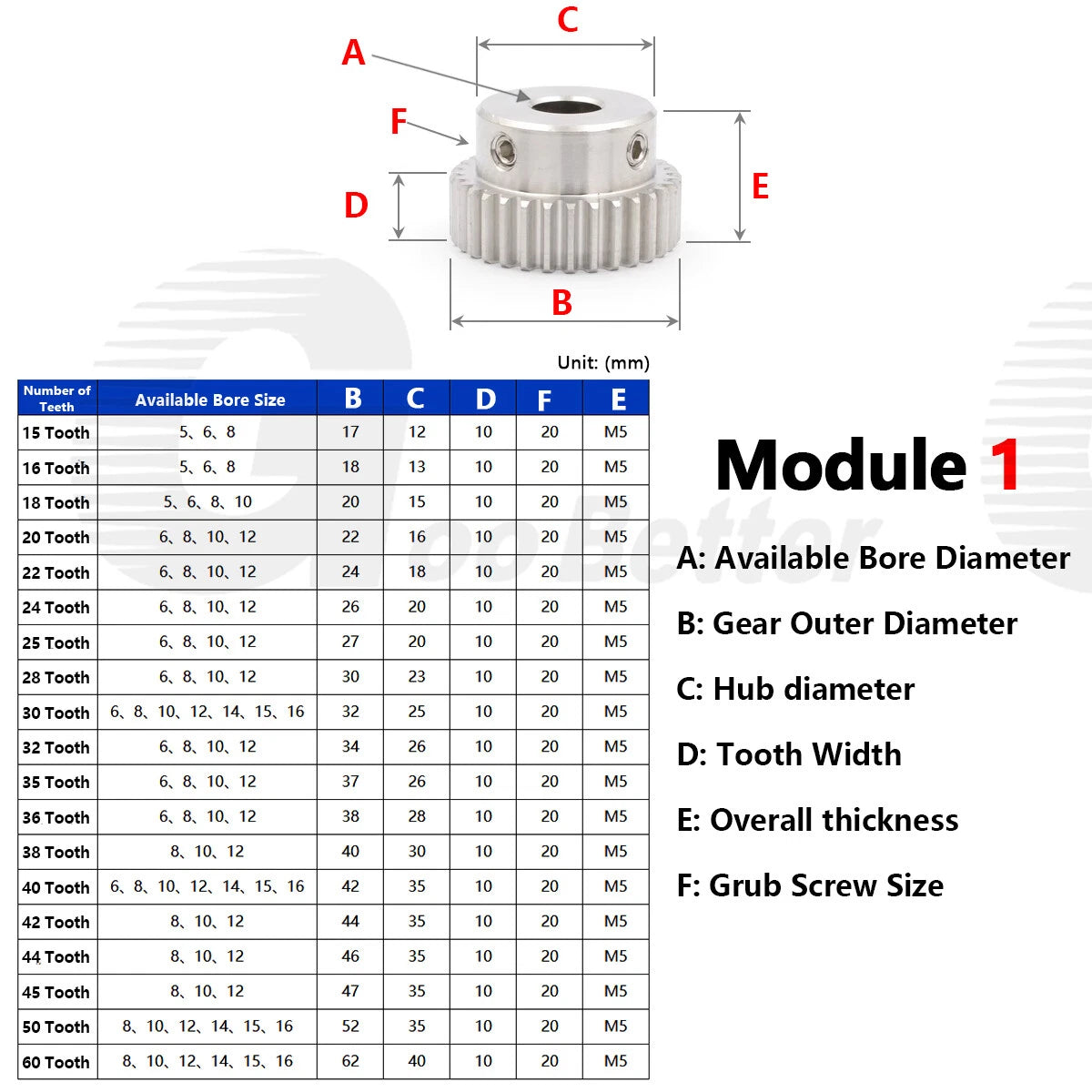
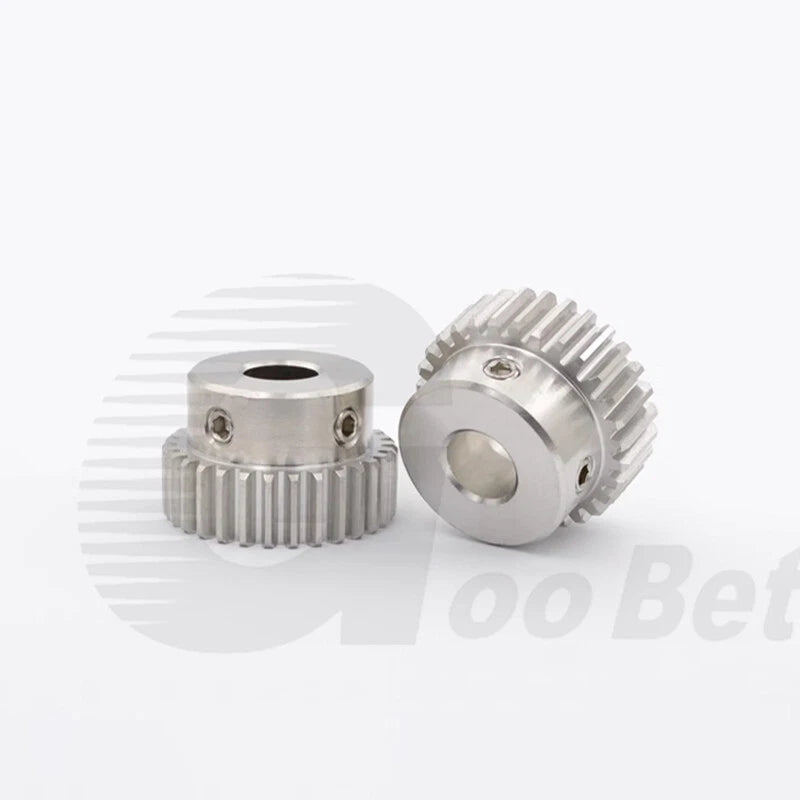
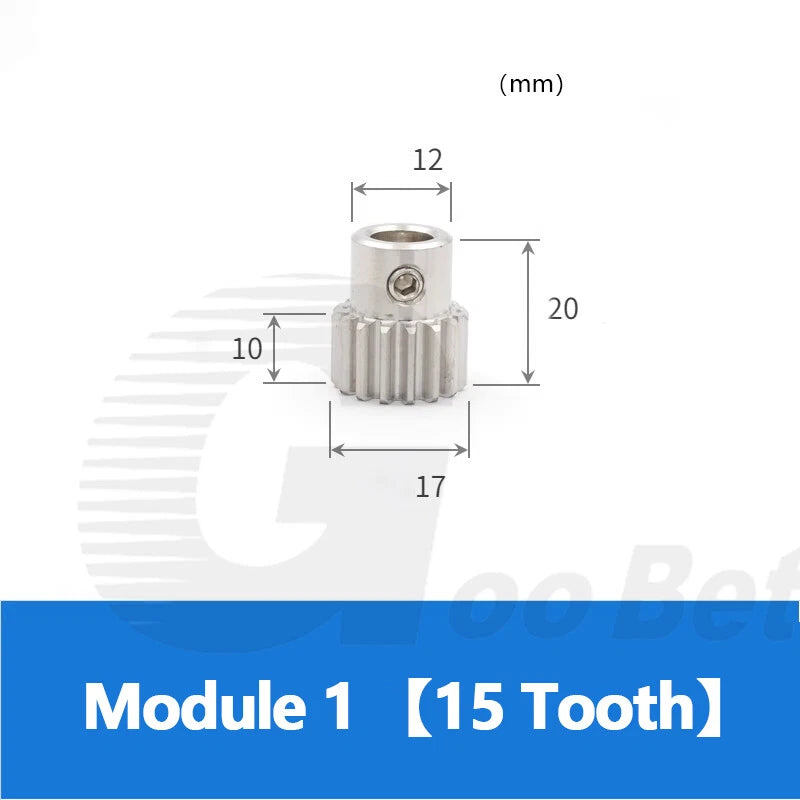
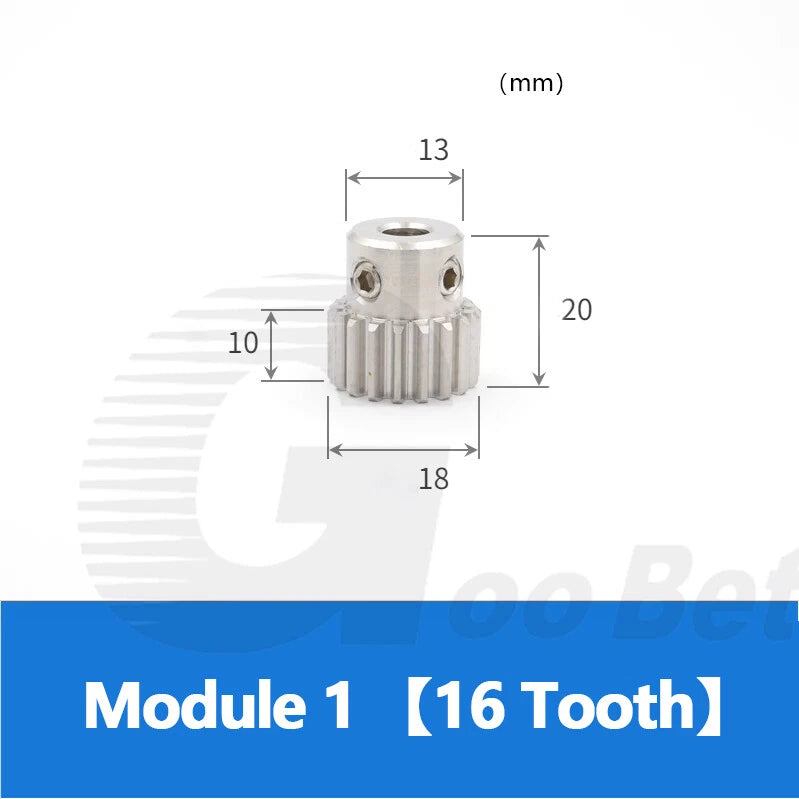
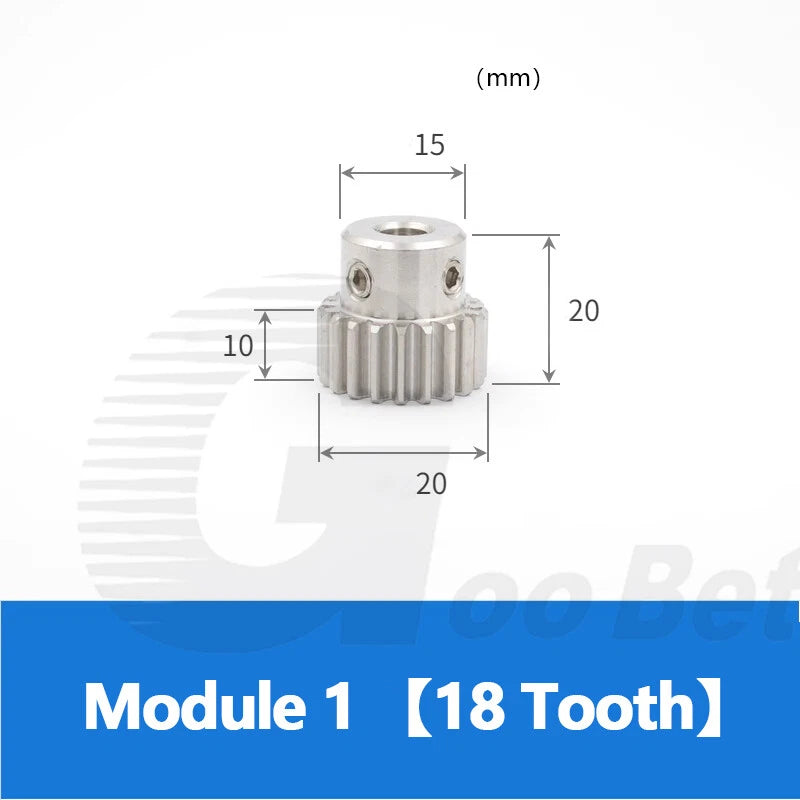
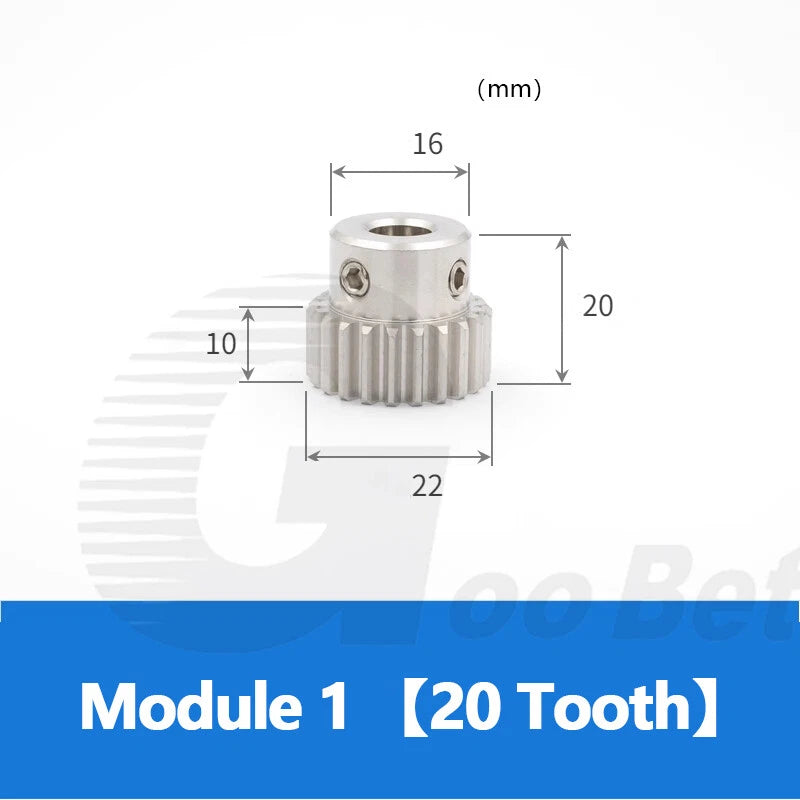
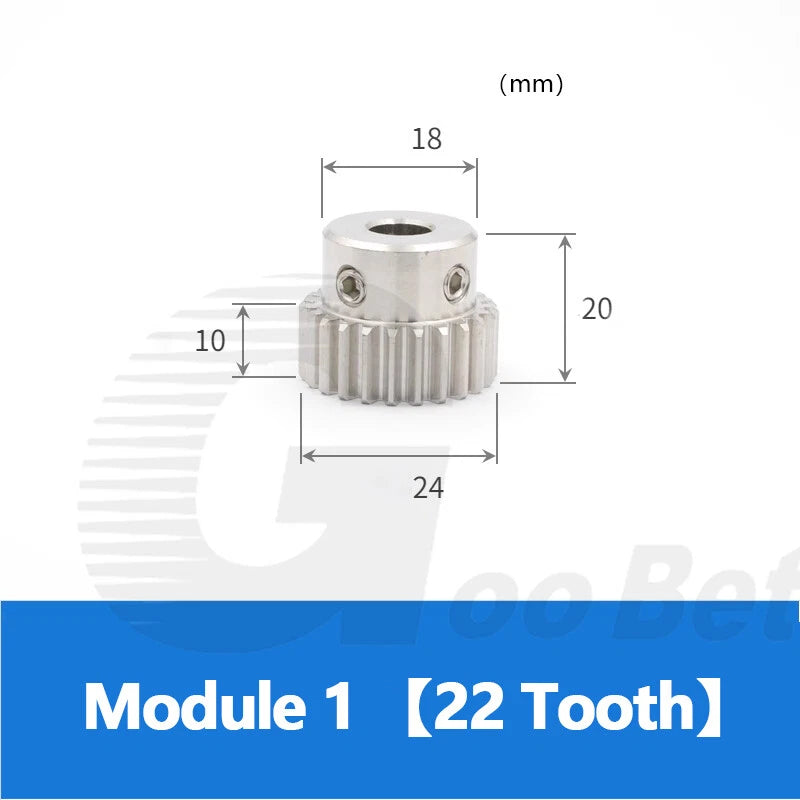
Each gear is machined from stainless steel, offering corrosion resistance and structural rigidity in a compact form factor. The integrated hub provides a secure shaft-clamping surface. Tooth counts range from 15 to 40 teeth (Module 1), with outer diameters scaling accordingly — approximately 17 mm (0.67 in) for 15T up to approximately 42 mm (1.65 in) for 40T. Bore options span 5 mm, 6 mm, 8 mm, 10 mm, 12 mm, 14 mm, 15 mm, and 16 mm to match common motor and shaft standards.

Typical use cases include motor pinion drives on desktop CNC machines, stepper-motor geartrains in robotic joints, and precision indexing mechanisms in automated assembly fixtures — all applications where a reliable module 1 spur gear with hub is the critical link between motor torque and linear or rotary output.

⚙️ Compatible with all Module 1 (1 mm/tooth) gear systems. Pairs with Module 1 racks, idler gears, and timing components. Verify bore size matches your motor or drive shaft diameter before ordering.

✅ Key Features of These Module 1 Stainless Steel Spur Gears

🔩Integrated Hub Design

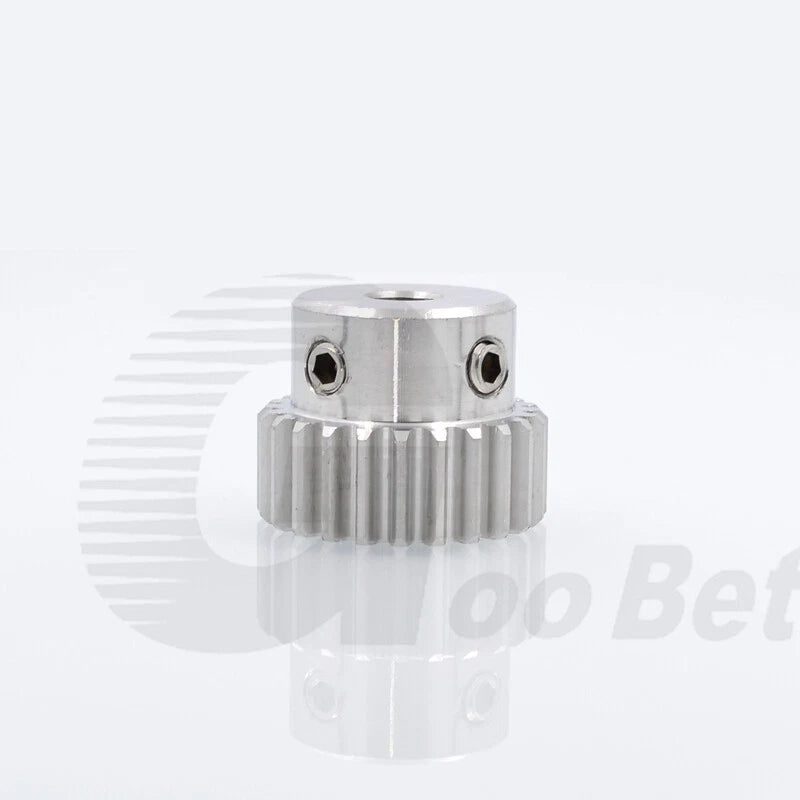
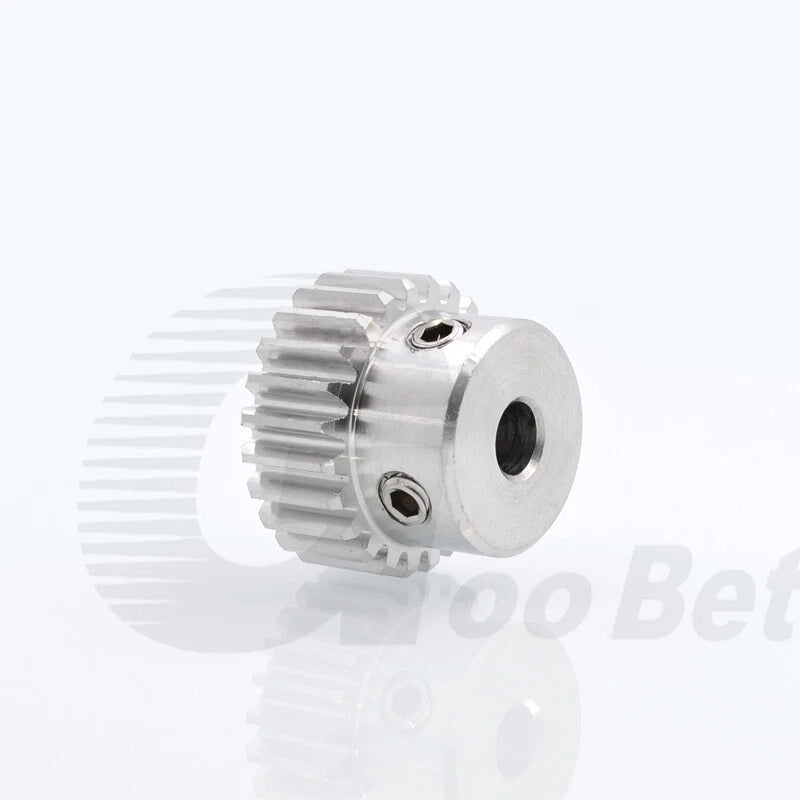
The extended hub provides a wider clamping surface for set screws or keyways, reducing shaft slip under load compared to hubless gears.

🦾Stainless Steel Construction

Machined from stainless steel for corrosion resistance and durability in humid, oily, or outdoor-adjacent environments where carbon steel would oxidize.

📐Module 1 Precision Tooth Profile

Standard Module 1 involute tooth geometry ensures smooth meshing, predictable gear ratios, and interchangeability with any other Module 1 component in your drivetrain.

🎯Wide Tooth Count Selection (15–40T)

Twelve tooth-count options from 15 to 40 teeth let you dial in the exact gear ratio needed for your motor pinion or reduction stage without custom machining.

🔄Multiple Bore Sizes (5–16 mm)

Eight bore options — 5, 6, 8, 10, 12, 14, 15, and 16 mm — cover the most common stepper motor shaft and servo output shaft diameters used in CNC and robotics builds.

Low-Backlash Mesh Performance

Precision-machined tooth flanks and consistent pitch diameter minimize backlash, which is critical for positioning accuracy in CNC routers, laser cutters, and pick-and-place machines.

📐 Technical Specifications — Module 1 Stainless Steel Spur Gear

Module 1 (1 mm per tooth)
Material Stainless Steel
Tooth Count Options 15, 16, 18, 20, 22, 24, 25, 28, 30, 32, 35, 40 Teeth
Bore Size Options 5 mm / 6 mm / 8 mm / 10 mm / 12 mm / 14 mm / 15 mm / 16 mm
Outer Diameter (approx.) See variant options (scales with tooth count: ~17 mm for 15T to ~42 mm for 40T)
Hub Integrated (extended hub with set-screw bore)
Tooth Profile Involute, Module 1
Pressure Angle 20°
Finish Natural stainless (uncoated)
Quantity per Order 1 pc
Weight See variant options

❓ Frequently Asked Questions

How do I choose the right tooth count for my application?

Select the tooth count based on your required gear ratio. Divide the driven gear's tooth count by the driving gear's tooth count to get the ratio. For a motor pinion, a smaller tooth count (15–20T) gives higher torque reduction, while a larger count (30–40T) reduces speed less aggressively. Match the module (Module 1) on both meshing gears.

Which bore size should I choose for my stepper motor shaft?

Measure your motor shaft diameter with calipers before ordering. Common NEMA 17 stepper motors use a 5 mm shaft; NEMA 23 motors typically use an 8 mm shaft; larger servo motors may use 10–16 mm shafts. Choose the bore that matches your shaft exactly — a loose bore will cause runout and positioning errors.

Are these gears strong enough for CNC router or laser cutter use?

Yes. Stainless steel provides significantly higher tensile and shear strength than plastic or aluminum gears, making these suitable for continuous-duty CNC, laser cutter, and robotic applications. For very high-torque or high-speed industrial drives, verify the specific load rating against your application's peak torque requirements.

Will these gears corrode in humid or outdoor environments?

Stainless steel offers good corrosion resistance in humid, lightly wet, and outdoor-adjacent conditions. For direct water immersion or highly corrosive chemical environments, consider adding a light lubricant or grease to the tooth mesh to extend service life.

Are these compatible with Module 1 racks and other Module 1 gears?

Yes. All Module 1 gears share the same tooth pitch (1 mm per tooth), so these spur gears mesh correctly with any other Module 1 component — racks, idler gears, or compound gear stages — regardless of brand, as long as the pressure angle is also 20°.

What is the difference between a hubbed and a hubless spur gear?

A hubbed gear has an extended cylindrical boss (hub) protruding from the gear face, which provides more material for a set screw or keyway to grip the shaft. This reduces the risk of the gear spinning on the shaft under load. Hubless gears are thinner and lighter but rely solely on the gear body thickness for shaft retention, which can be insufficient for high-torque motor pinion applications.

Can I use a set screw to secure the gear to the shaft?

Yes. The integrated hub is designed to accommodate a radial set screw. For best results, use a flat-ground section on your shaft (a flat spot) aligned with the set screw to prevent rotation. Apply thread-locking compound to the set screw for vibration-prone environments.

🛒 Select your tooth count and bore size above, then add to cart.

You may also like

Recently viewed