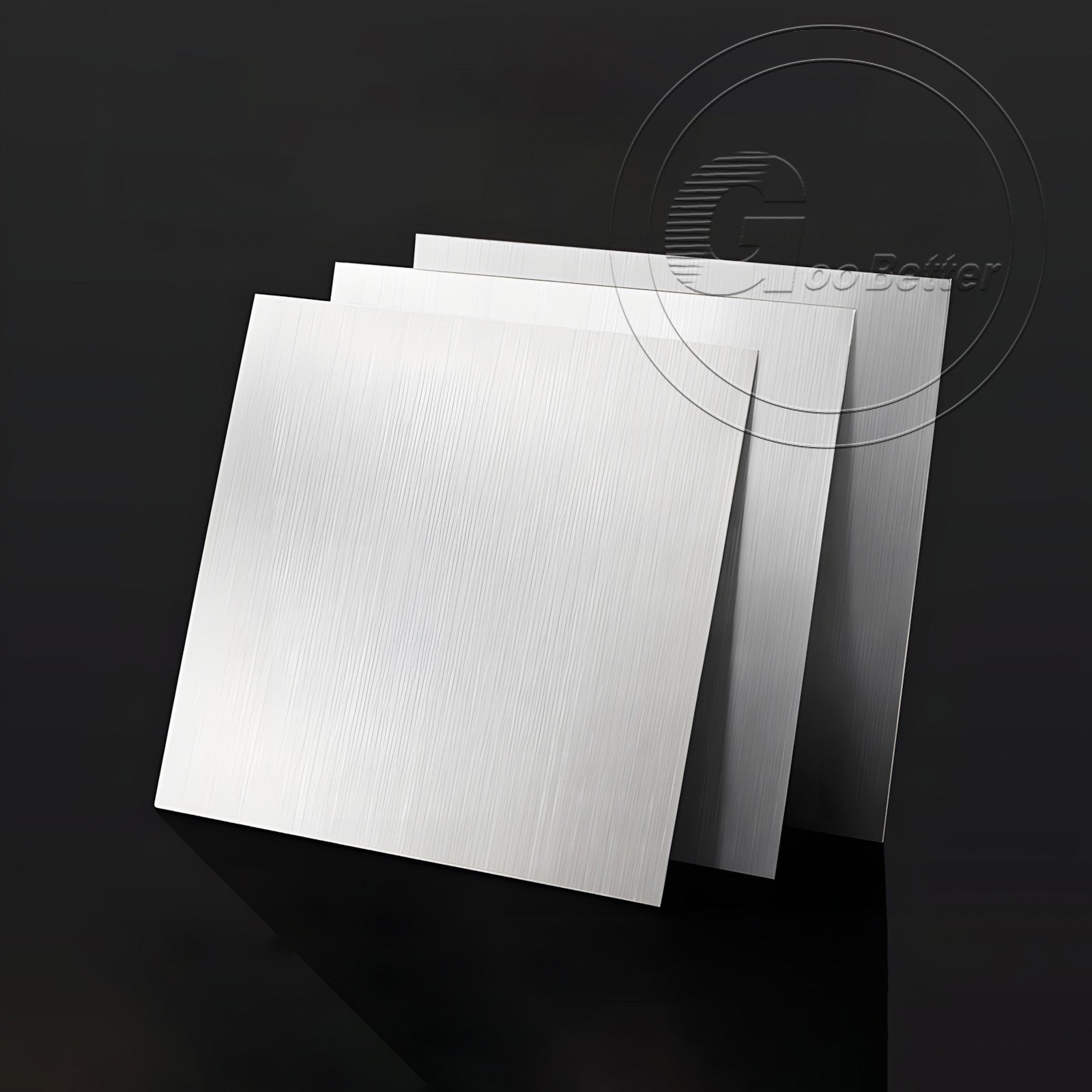
Brushed Stainless Steel Sheet Metal Plate — Precision-Cut, Corrosion-Resistant, Ready to Work
When a repair calls for a material that won't rust, warp, or let you down mid-project, finding the right stainless steel sheet in the exact size you need can be a real obstacle. Fabricators, hobbyists, and home workshop users alike often waste time cutting oversized stock or settling for inferior mild steel. These brushed stainless steel sheet metal plates are stocked in a wide range of pre-cut dimensions so you can order exactly what the job demands.
Each plate is made from 304-grade stainless steel with a brushed (No. 4) finish on one face. Thickness options run from 0.5 mm (≈ 0.020 in) up to 5 mm (≈ 0.197 in), and planar dimensions range from 50 × 50 mm (≈ 2 × 2 in) to 300 × 400 mm (≈ 11.8 × 15.7 in). Quantity options of 1, 2, or 4 pieces per order let you match the pack size to your actual need.
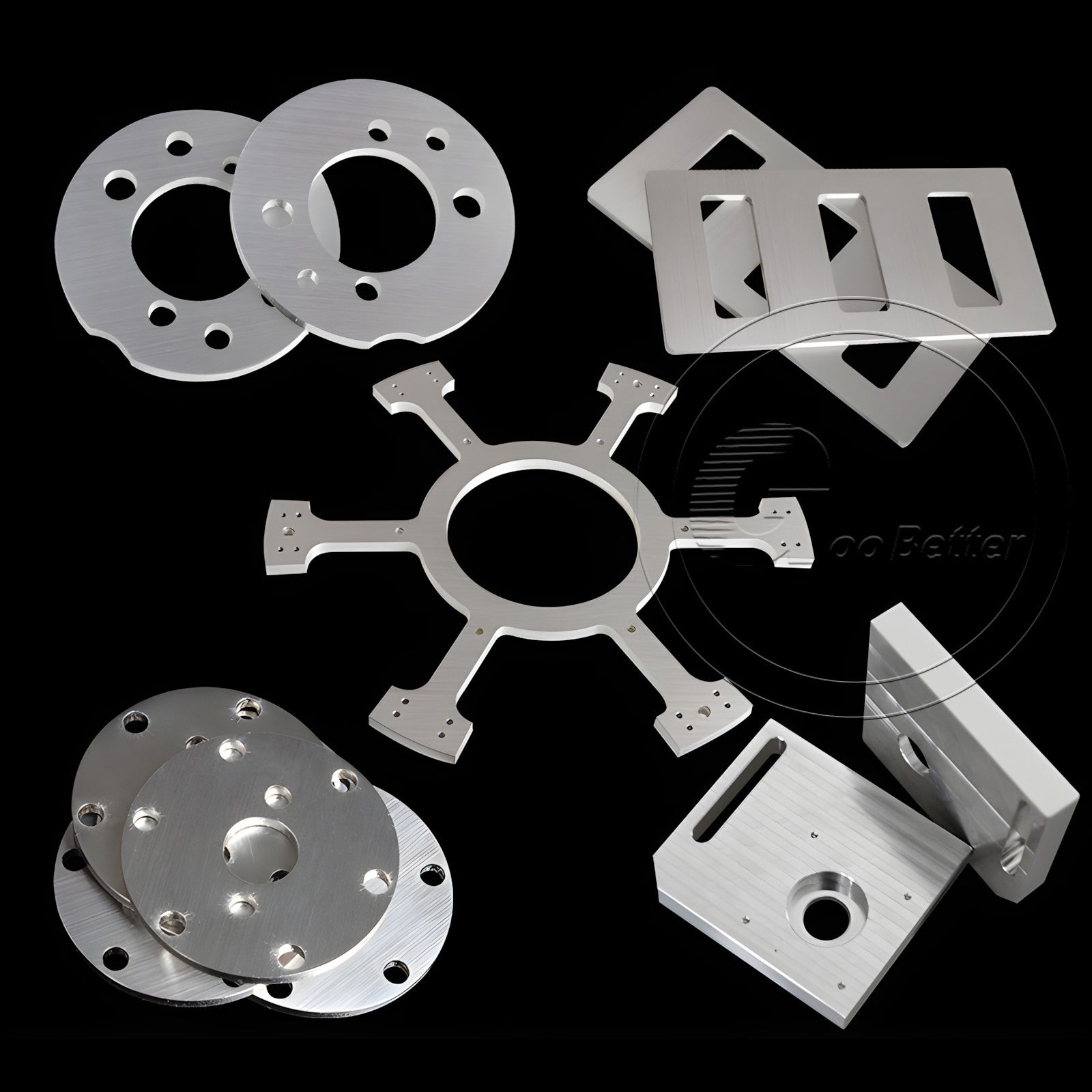
Typical applications include fabricating splash-back panels and kitchen backsplashes, creating structural gusset plates and repair patches for outdoor furniture or gates, building enclosures and chassis panels for electronics or small machinery, and crafting decorative inlays or signage where a clean brushed surface is required.
🔧
Compatible with standard metalworking tools — angle grinders, jigsaws with metal blades, drill presses, and MIG/TIG welders. Thinner gauges (0.5–1 mm) can be scored and snapped with sheet-metal shears.
✅ Key Features of These Brushed Stainless Steel Sheet Metal Plates
-
304-Grade Stainless Steel — Contains 18% chromium and 8% nickel for reliable resistance to oxidation, moisture, and mild chemical exposure in both indoor and outdoor environments.
-
Brushed No. 4 Finish — Uniform linear grain pattern reduces visible fingerprints and surface scratches, making it suitable for exposed decorative applications as well as functional builds.
-
Wide Thickness Range (0.5 mm – 5 mm) — Thin gauges flex for forming and bending; thicker plates provide structural rigidity for load-bearing brackets, gussets, and mounting plates.
-
Pre-Cut to Stated Dimensions — Plates are cut to the Width × Length listed in the variant, reducing material waste and eliminating the need for a full sheet purchase when only a small piece is required.
-
Weldable and Machinable — Compatible with MIG, TIG, and spot-welding processes; can be drilled, tapped, countersunk, and bent using standard workshop equipment.
-
Flexible Pack Quantities — Available in 1, 2, or 4-piece packs depending on the size selected, so you can order a single test piece or a small batch without overstocking.
📐 Technical Specifications — Stainless Steel Sheet Plate
| Material Grade |
304 Stainless Steel (18-8) |
| Surface Finish |
Brushed, No. 4 linear grain |
| Thickness Options |
0.5 mm, 0.8 mm, 1 mm, 1.2 mm, 1.5 mm, 2 mm, 2.5 mm, 3 mm, 4 mm, 5 mm |
| Width × Length Options |
50×50 mm up to 300×400 mm — see variant options |
| Quantity per Pack |
1 Pcs, 2 Pcs, or 4 Pcs — see variant options |
| Tensile Strength (typical) |
515–720 MPa |
| Yield Strength (typical) |
≥ 205 MPa |
| Hardness (typical) |
≤ 200 HB |
| Corrosion Resistance |
Resistant to atmospheric oxidation, moisture, and mild acids |
| Weldability |
MIG, TIG, spot welding — suitable |
| Machinability |
Drillable, tappable, bendable with standard tooling |
| Weight |
See variant options (varies by size and thickness) |
❓ Frequently Asked Questions
How do I choose the right thickness for my project?
For light decorative work, backsplashes, or thin shims, 0.5–1 mm is typically sufficient and easy to cut with sheet-metal shears or a jigsaw. For structural brackets, gusset plates, or parts that will bear mechanical load, 2–5 mm provides the rigidity needed. If you are unsure, a 1–1.5 mm plate covers most general-purpose repair and fabrication tasks.
Is 304 stainless steel strong enough for outdoor use?
304-grade stainless steel performs well in most outdoor environments — it resists rain, humidity, and atmospheric oxidation reliably. It is not recommended for continuous immersion in saltwater or prolonged exposure to chloride-rich environments (such as coastal spray zones), where 316-grade would be a better choice. For garden furniture repairs, gate hardware, and exterior panels in non-coastal areas, 304 is a practical and cost-effective option.
Can I cut these plates at home without industrial equipment?
Yes. Plates up to about 1.5 mm thick can be cut with aviation snips, a jigsaw fitted with a bi-metal blade, or an angle grinder with a thin cutting disc. Thicker plates (2 mm and above) are best cut with an angle grinder or a metal-cutting circular saw blade. Always wear eye protection and gloves, and deburr cut edges with a file or flap disc.
Will the brushed finish show scratches over time?
The No. 4 brushed finish has a directional grain that naturally camouflages light surface marks better than a mirror-polished finish. Minor scratches that run parallel to the grain are nearly invisible. If the plate is used in a high-contact area, occasional light re-brushing with a fine Scotch-Brite pad in the direction of the grain will restore the appearance.
Are these plates compatible with welding?
Yes. 304 stainless steel is routinely welded using TIG (preferred for clean, visible welds), MIG with stainless wire and appropriate shielding gas (typically 98% argon / 2% CO₂ or tri-mix), and spot welding for thin gauges. Post-weld passivation or pickling is recommended for outdoor applications to restore the corrosion-resistant oxide layer in the heat-affected zone.
What is the difference between the size options — how do I read the variant names?
Each variant is labeled as Width × Length × Thickness. For example, "100mm × 200mm × 1.5mm" means the plate is 100 mm wide, 200 mm long, and 1.5 mm thick. All dimensions are in millimetres. To convert to inches, divide by 25.4 — so 100 mm ≈ 3.94 in and 200 mm ≈ 7.87 in. Select the size closest to your required finished dimension, leaving a small allowance if you plan to trim the edges.
Can I drill and tap holes in these plates?
Yes. Use a sharp HSS or cobalt drill bit with cutting fluid (or light machine oil) and a slow-to-moderate drill speed to avoid work-hardening the surface. For tapping, use a spiral-flute tap designed for stainless steel and apply cutting fluid throughout. Plates 1 mm and thinner are generally too thin for tapping and are better suited to riveting or through-bolting with a nut on the reverse side.
🛒 Select your Width × Length × Thickness and Amount (Pcs) above, then add to cart.