The chain is fine...but I ordered the wrong size. Nine links of the chain I ordered equals six of the size I wanted. My error...
How can I straighten out the springs? I can't use them coil uo as is.
Your payment information is processed securely. We do not store credit card details nor have access to your credit card information.
Get fitment advice & recommendations
When your design leaves almost no room for a bearing but still demands reliable radial load capacity, standard-width bearings simply don't fit. Engineers, robotics builders, and equipment repair technicians working with space-constrained assemblies rely on super thin wall deep groove ball bearings to maintain performance without sacrificing envelope dimensions. These bearings are the go-to solution wherever axial depth is the binding constraint.
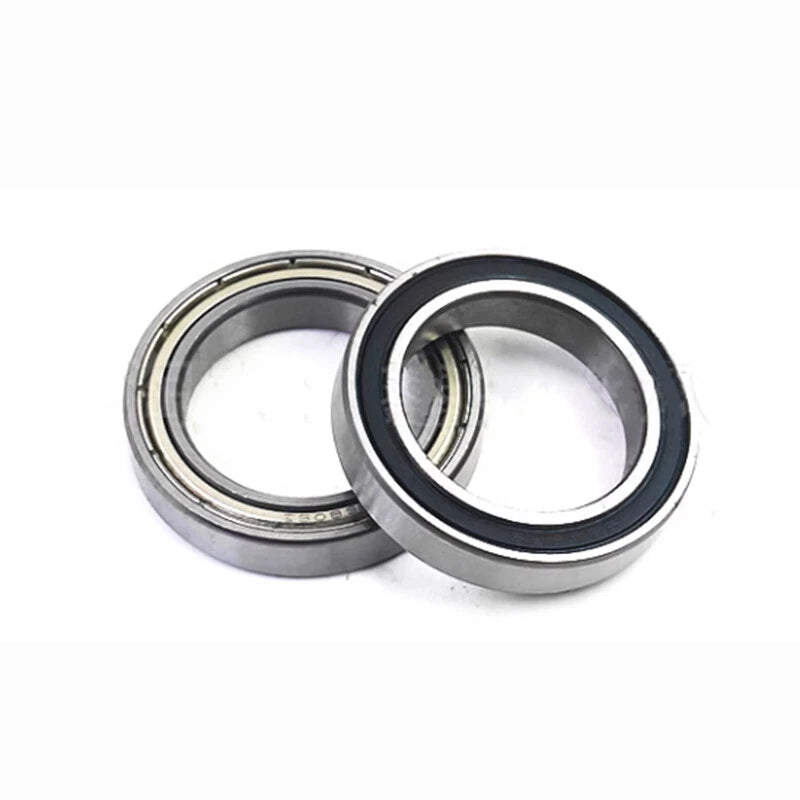
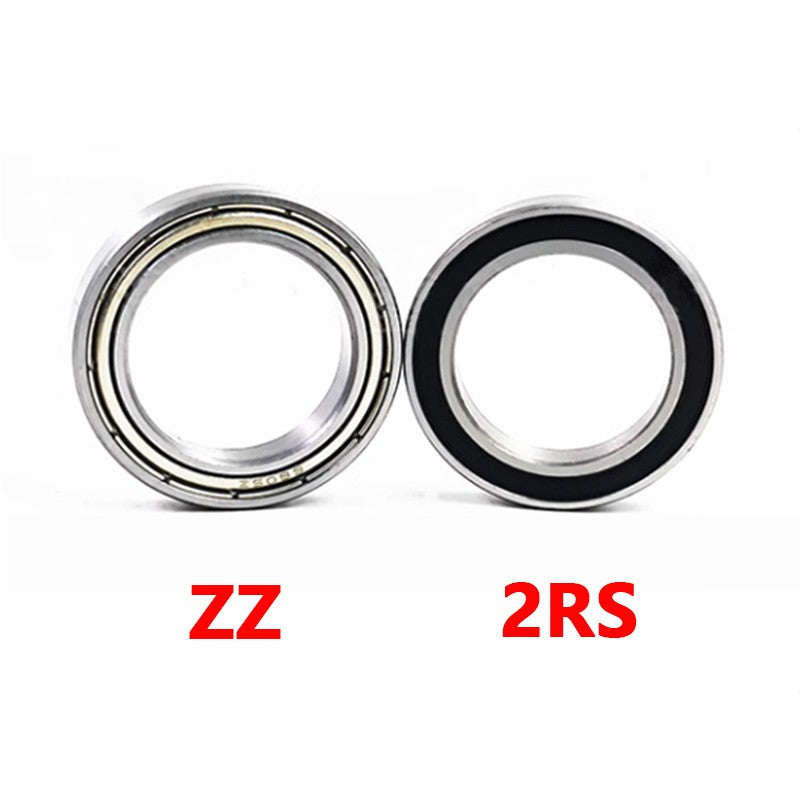
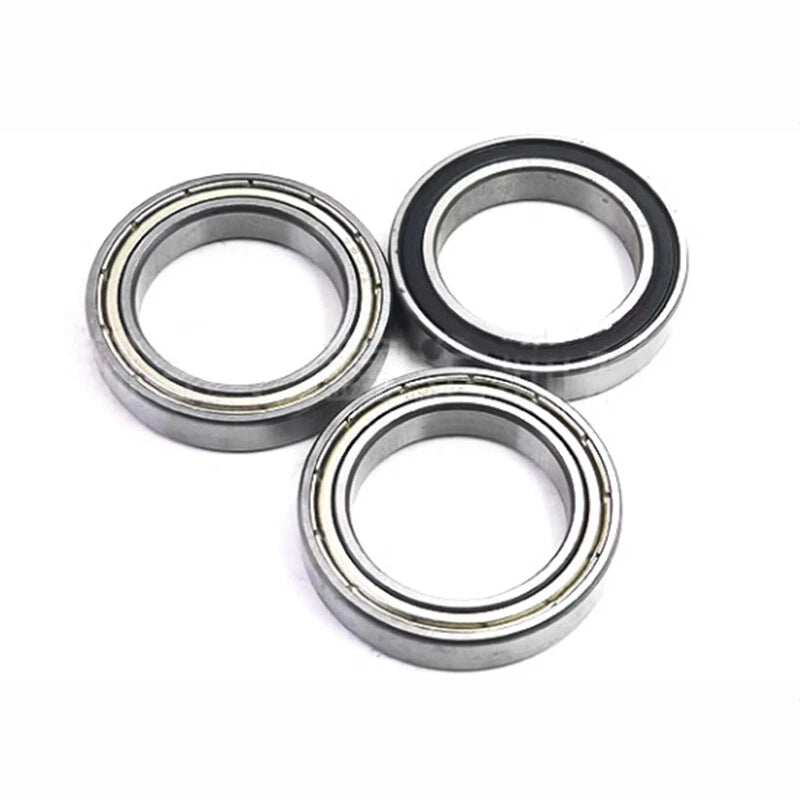
This listing covers multiple series — 6700, 6800, 61900, 16000, and 6900 — all sharing the thin-wall characteristic that defines the category. Rings are manufactured from through-hardened bearing steel with a ground raceway finish. Inner diameters range from 10 mm (0.39 in) to 160 mm (6.30 in), outer diameters from 15 mm (0.59 in) to 200 mm (7.87 in), and widths from 4 mm (0.16 in) to 24 mm (0.94 in). Each variant is available with either a ZZ pressed-steel shield or a 2RS contact rubber seal — select the seal type that matches your contamination and lubrication requirements.
Typical use cases include RC car wheel hubs and steering pivots where thin-wall deep groove ball bearings reduce unsprung weight, 3D printer carriage and extruder assemblies that demand low-profile rotating elements, and light industrial gearboxes or conveyor idlers where bore-to-OD ratio is tightly constrained. The 61900 series in particular is a common replacement bearing for power tool spindles and medical device actuators.
The thin-wall design delivers a smaller OD-to-bore ratio than standard 6000/6200 series bearings, enabling use in assemblies where radial space is the primary constraint.
ZZ pressed-steel shields retain grease and block coarse particles with minimal drag. 2RS contact rubber seals provide a positive lip seal against fine dust, water splash, and light chemical exposure.
Inner and outer rings are produced from through-hardened chrome bearing steel (typically 52100 equivalent), providing consistent hardness throughout the ring cross-section for long fatigue life.
A single listing covers 6700, 6800, 61900, 16000, and 6900 series, letting you source multiple bearing families from one supplier and simplify your procurement workflow.
Raceways are ground to tight tolerances, reducing vibration and noise — critical for applications such as spindles, encoders, and precision motion stages where runout directly affects output quality.
Each bearing ships pre-packed with lithium-based grease suitable for general-purpose operating temperatures. No additional lubrication is required before installation in most standard applications.
| Bearing Type | Deep Groove Ball Bearing (Thin Wall) |
|---|---|
| Series Covered | 6700, 6800, 61900, 16000, 6900 |
| Inner Diameter (ID) | 10 mm – 160 mm (0.39 in – 6.30 in) |
| Outer Diameter (OD) | 15 mm – 200 mm (0.59 in – 7.87 in) |
| Width | 4 mm – 24 mm (0.16 in – 0.94 in) |
| Seal Type | ZZ (pressed-steel shield) or 2RS (contact rubber seal) |
| Ring Material | Through-hardened chrome bearing steel (52100 equivalent) |
| Rolling Elements | Hardened steel balls |
| Cage Material | See variant options |
| Lubrication | Pre-greased (lithium-based, general purpose) |
| Dimensional Standard | ISO 15 / ABEC |
| Load Direction | Radial (primary); light axial loads supported |
| Operating Temperature | See variant options |
| Weight | See variant options |
ZZ bearings use a pressed-steel shield that retains grease and blocks coarse particles while generating very low friction drag — a good choice for high-speed, clean environments or applications where you plan to re-lubricate. 2RS bearings use a contact rubber lip seal that provides a positive barrier against fine dust, water splash, and light chemical exposure, making them the better option for outdoor, workshop, or lightly contaminated environments. If in doubt, 2RS offers broader protection at a marginal speed penalty.
All four series are thin-wall deep groove ball bearings sharing the same bore sizes, but they differ in outer diameter and width. The 6800 series has the smallest OD-to-bore ratio, making it the most compact. The 61900 series is slightly wider, offering higher load capacity for the same bore. The 16000 series sits between 6800 and 6900 in OD, with a very thin width. The 6900 series has a larger OD and width than 6800, providing greater radial load capacity. Select based on your housing OD constraint and required load rating.
Standard variants use through-hardened chrome steel rings and balls, which are not inherently stainless. For occasional moisture exposure, the 2RS rubber seal provides meaningful protection by preventing water ingress. For continuous wet environments, marine applications, or food-grade requirements, consider stainless steel bearings instead. If you need stainless variants, contact us to confirm availability for your specific size.
Measure three dimensions on your existing bearing or housing: bore (inner diameter), outer diameter, and width. These correspond to the three numbers shown in each variant name — for example, 6804(20x32x7mm) means 20 mm bore, 32 mm OD, 7 mm width. Cross-reference these against your shaft diameter and housing bore. If you are replacing an existing bearing, the part number stamped on the ring face is the most reliable reference.
Deep groove ball bearings are primarily designed for radial loads — forces perpendicular to the shaft axis. They can also accommodate moderate axial (thrust) loads in both directions, which is an advantage over purely radial bearing types. However, thin-wall variants have a reduced cross-section compared to standard-width bearings, so their dynamic and static load ratings are lower for the same bore size. Always verify the load rating in the bearing datasheet against your application's calculated equivalent dynamic load.
Yes, with the appropriate seal selection. ZZ-shielded variants generate less friction than 2RS contact seals and are better suited for higher rotational speeds. The limiting speed depends on the specific size and lubrication — smaller bearings generally support higher RPM. For precision spindle or motor applications, confirm the bearing's limiting speed against your operating RPM and consider a light grease or oil-lubricated open variant if speed is the primary constraint.
Yes, all variants are pre-packed with lithium-based general-purpose grease at the factory and are ready to install without additional lubrication in most standard applications. ZZ-shielded bearings can be cleaned and re-greased by carefully removing the shield with a thin tool. 2RS rubber-sealed bearings are typically considered sealed-for-life; the lip seal can be removed for re-lubrication but requires care to avoid damaging the seal lip during reinstallation.