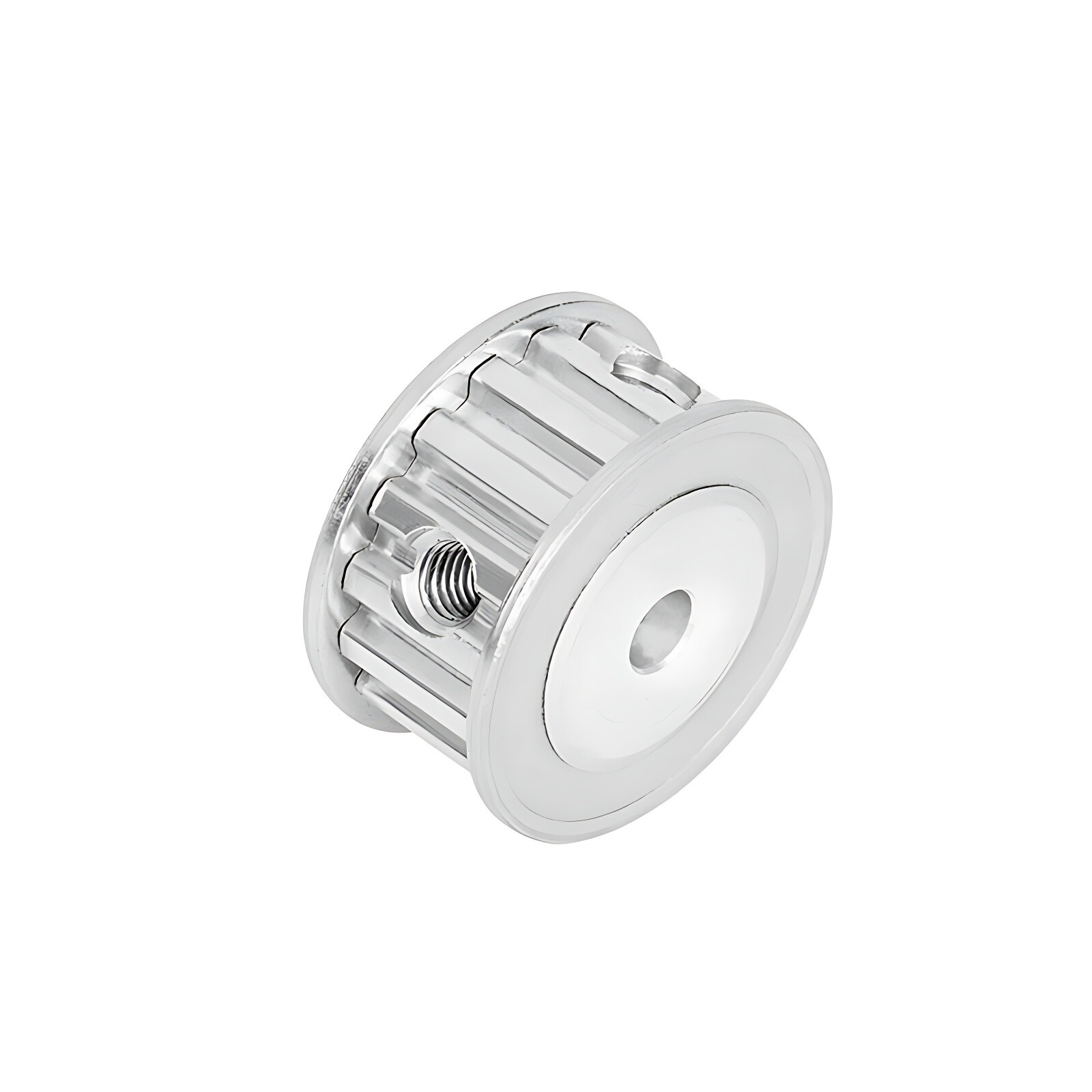
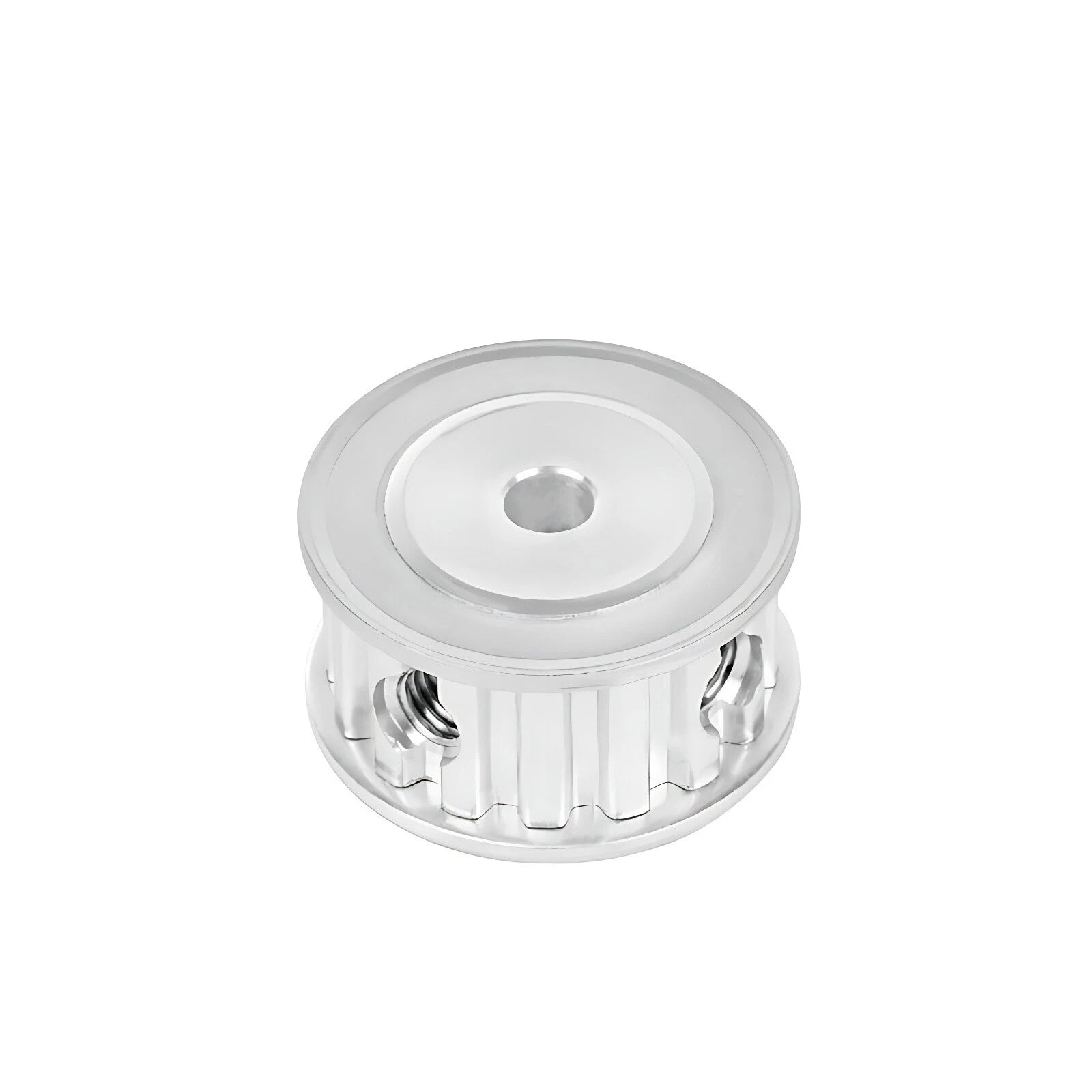
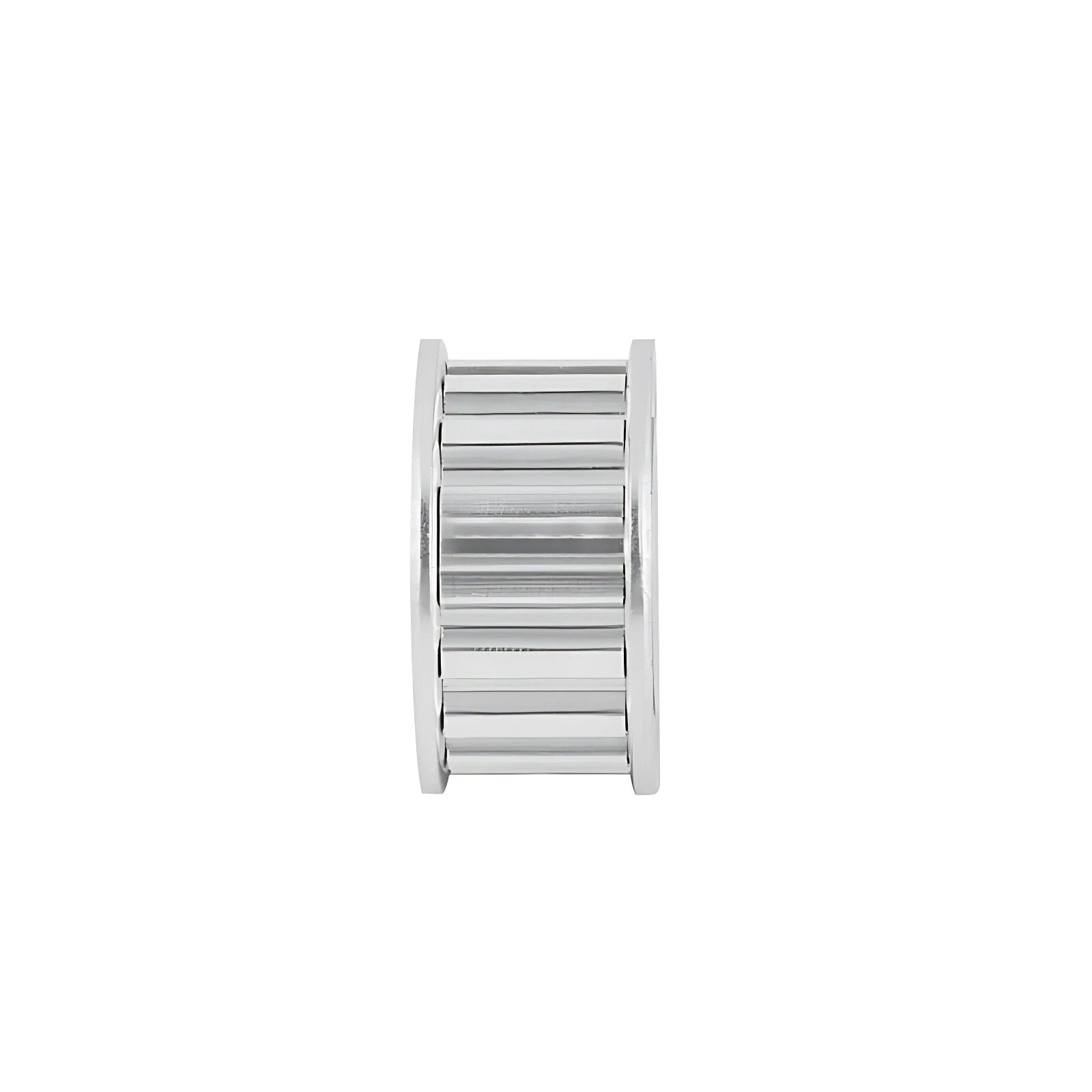
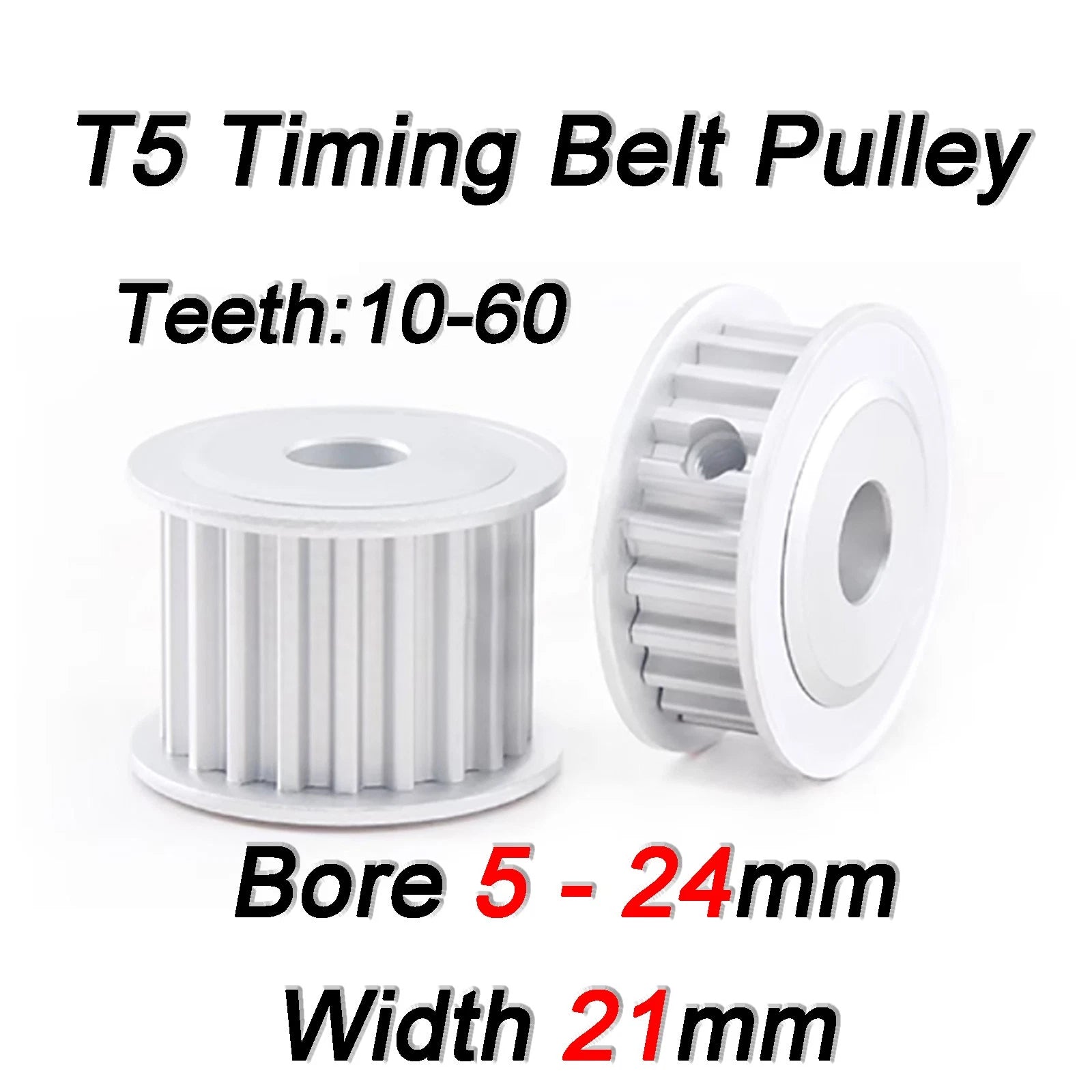
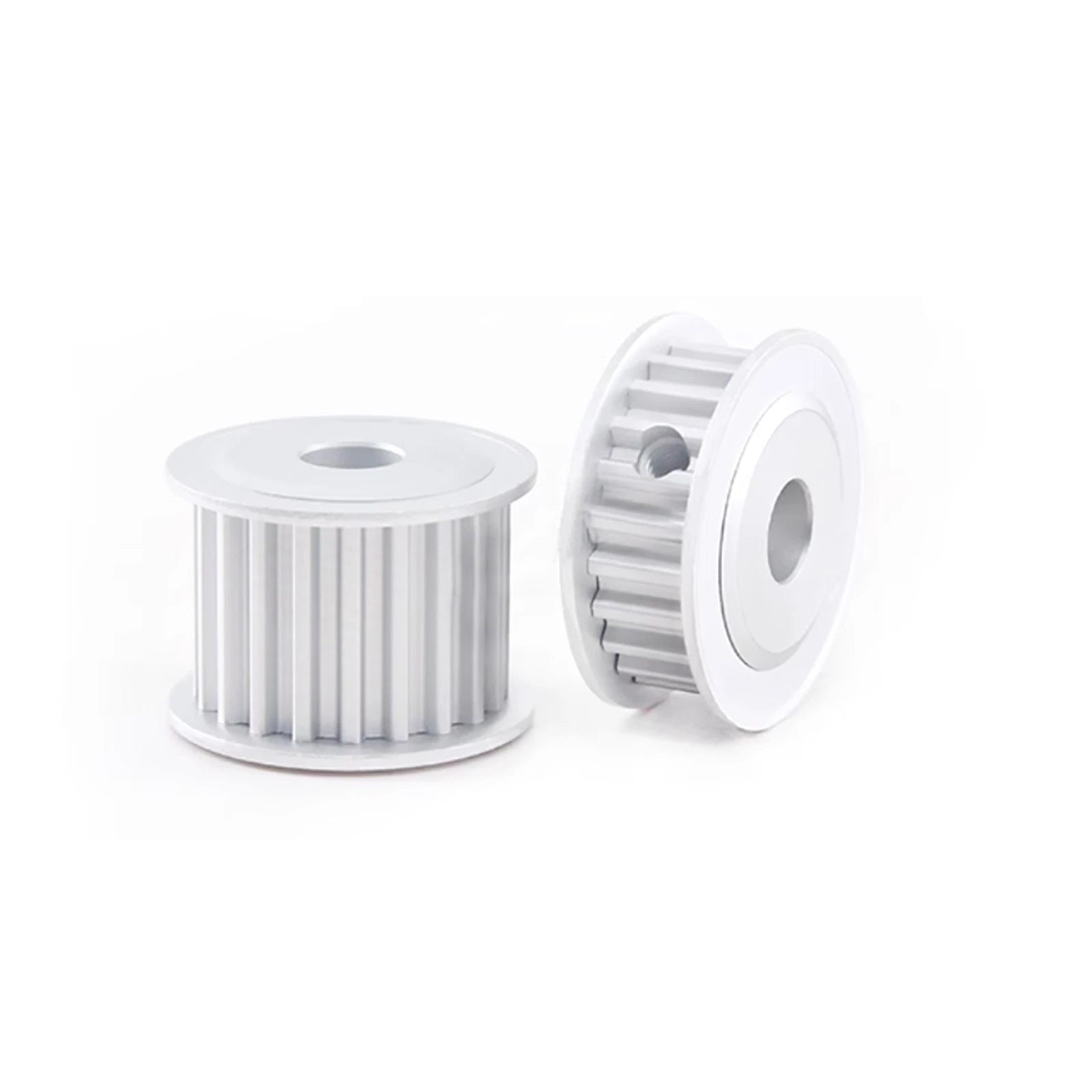
Synchronous Wheel T5 10T-60T Timing Belt Pulleys Pitch 5mm ,Teeth Width 21mm

No reviews

Price:
Sale price$8.77 USD
Stock:
In stock (500 units), ready to be shipped

Payment & Security

Ach Direct Debit Amazon American Express Apple Pay Bancontact BLIK Diners Club Discover EPS Google Pay iDEAL Wero JCB Maestro Mastercard Multibanco MobilePay PayPal Przelewy24 Shop Pay Twint Union Pay USDC Visa

Your payment information is processed securely. We do not store credit card details nor have access to your credit card information.

Limited Offer — Spend More, Save More
Spend $55+
Save $5
Spend $100+
Save $10
Spend $200+
Save $25
HomeDIYer DIY Expert Support

DIY Expert Support

Get fitment advice & recommendations

Mon–Fri  8:30 AM – 8:00 PM
24-Hour Fast Ship
Arrives in 3–14 Days
Worldwide Shipping
30-Day Returns
1 tree planted with every purchase

Description

T5 Timing Belt Pulleys — Precise Synchronous Drive for CNC, Robotics & Automation

When a slipping or misaligned drive pulley causes positioning errors in your CNC router, 3D printer, or robotic arm, the entire build suffers. Engineers and makers who demand repeatable, zero-backlash motion need a T5 timing belt pulley they can trust across long production runs. These synchronous wheel pulleys are designed for exactly that use case, delivering consistent tooth engagement and reliable torque transfer in demanding motion-control environments.

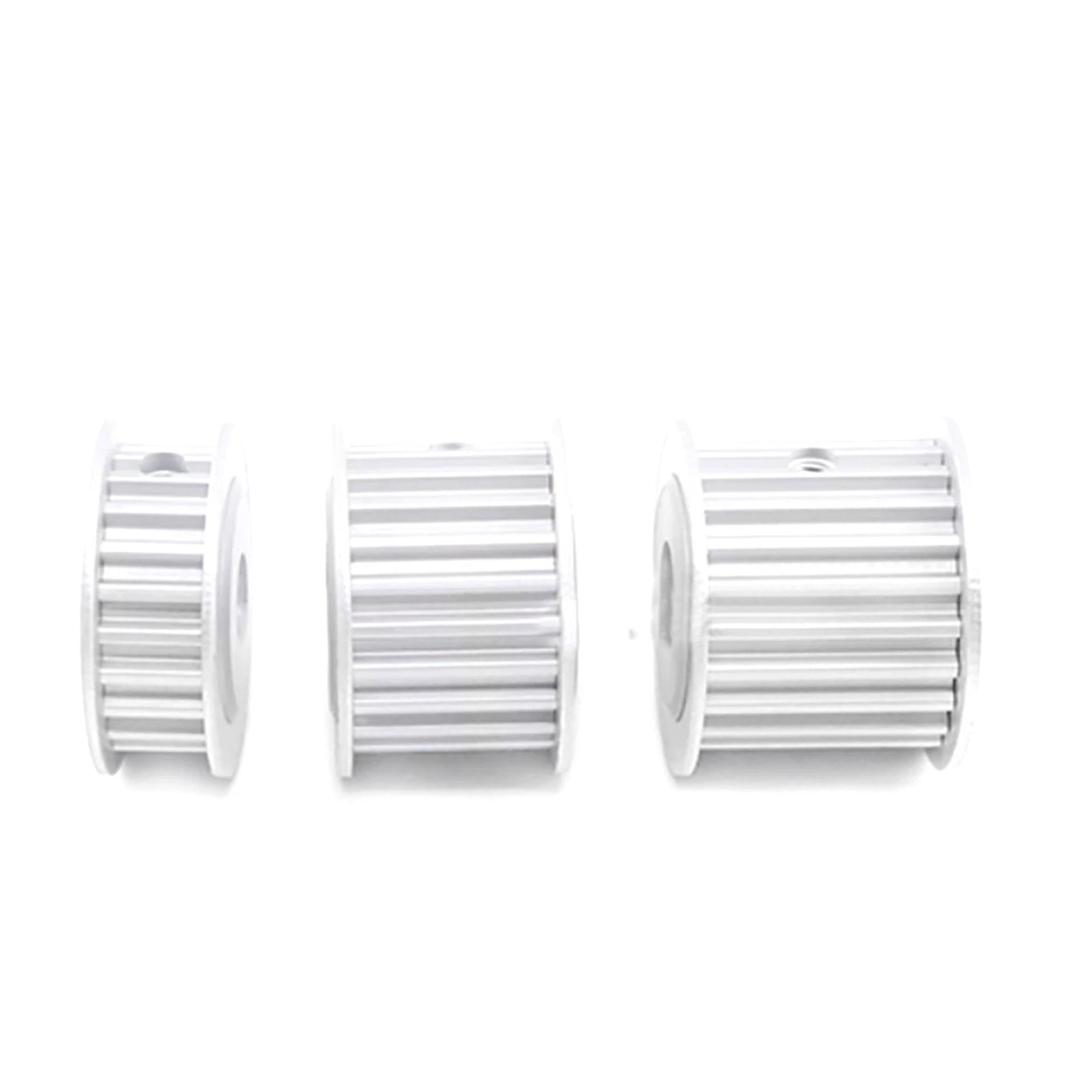
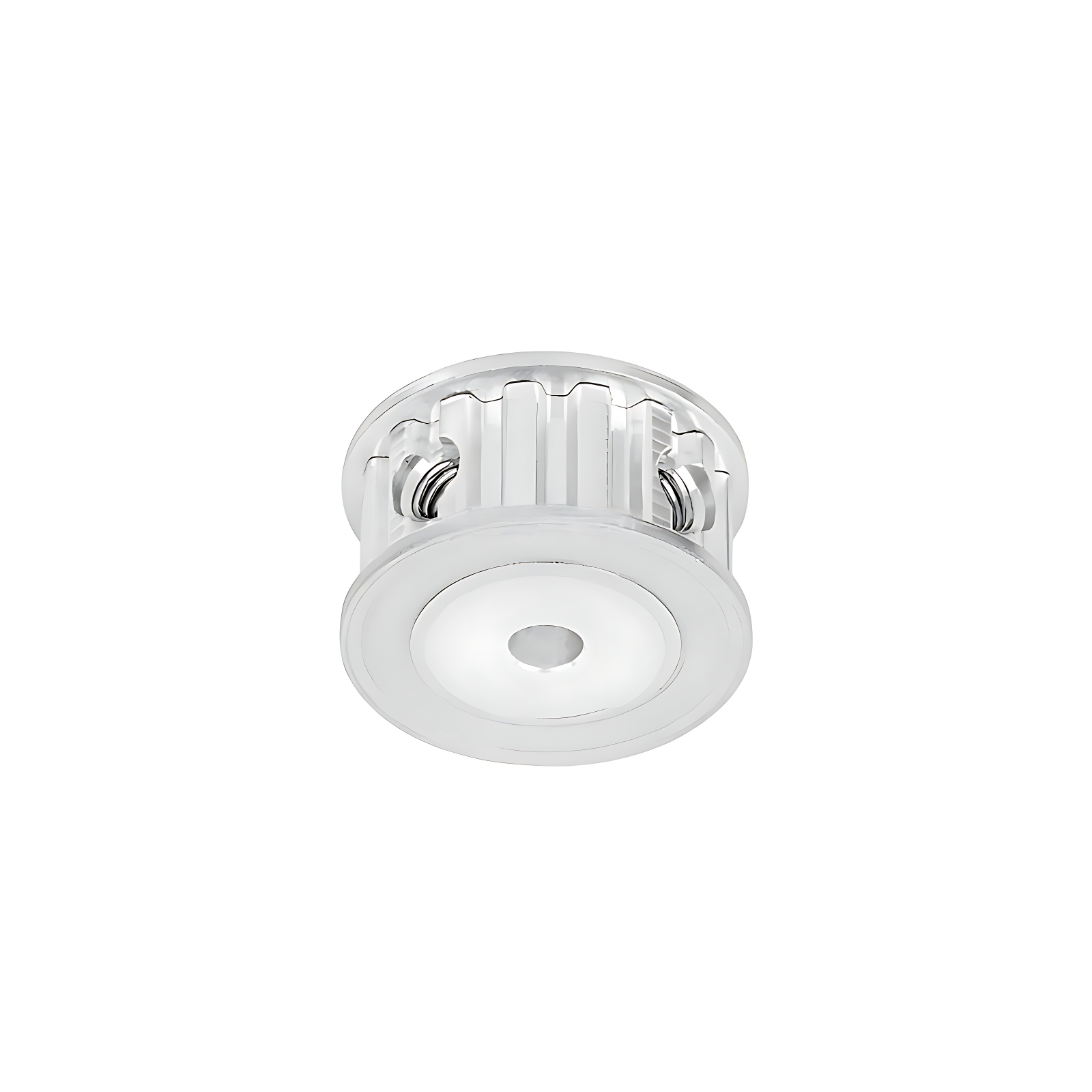
Each pulley features a T5 tooth profile with a 5 mm (0.197 in) pitch and a 21 mm (0.827 in) tooth-contact width. The body is machined from aluminum alloy with an anodized finish for corrosion resistance and reduced rotating mass. Bore options range from 5 mm to 24 mm to suit a wide variety of motor shafts, and tooth counts span 10 T to 60 T to cover a broad range of speed-reduction ratios.

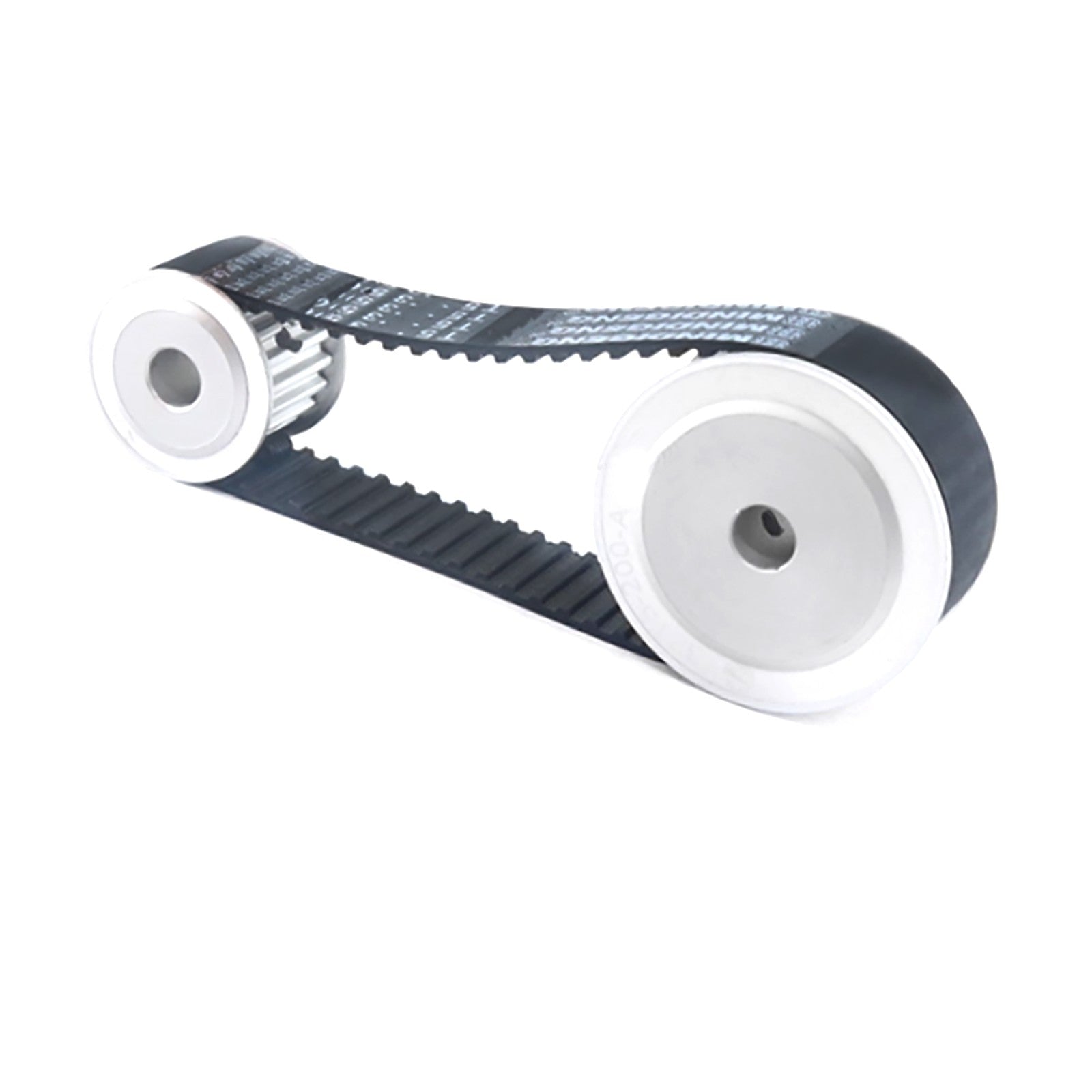
Typical applications include open-loop stepper-driven CNC gantries requiring smooth belt-driven axis motion, closed-loop servo systems in pick-and-place automation, and lightweight robotic joint drives where a compact T5 synchronous pulley minimizes inertia. The standardized T5 tooth form also makes these pulleys interchangeable with off-the-shelf T5 timing belts used in desktop laser cutters and linear actuator assemblies.

⚙️ Compatibility: Fits standard T5 timing belts with 5 mm pitch. Tooth width 21 mm — confirm your belt width before ordering. Bore sizes 5 / 6 / 6.35 / 8 / 10 / 12 / 12.7 / 14 / 15 / 16 / 17 / 18 / 19 / 20 / 24 mm available via variant selection.

✅ Key Features of These T5 Timing Belt Pulleys

📐
5 mm T5 Pitch

Standardized 5 mm tooth pitch ensures direct compatibility with T5 timing belts used across CNC, 3D printing, and linear-motion platforms.

🔢
10 T to 60 T Range

Wide tooth-count selection from 10 to 60 teeth lets you dial in the exact speed ratio your drive system requires without custom machining.

🔩
Multi-Bore Options

Available bore diameters from 5 mm to 24 mm accommodate stepper motor shafts, servo shafts, and common imperial sizes such as 6.35 mm (1/4 in) and 12.7 mm (1/2 in).

🏗️
21 mm Tooth-Contact Width

The 21 mm belt-contact width provides a stable load-bearing surface that reduces belt edge wear and maintains alignment under lateral forces.

🛡️
Aluminum Alloy Body with Anodized Finish

Lightweight aluminum construction keeps rotating inertia low while the anodized surface resists oxidation in workshop and light-industrial environments.

🔄
Zero-Backlash Synchronous Drive

Positive tooth engagement eliminates the slip and backlash inherent in friction-drive systems, making these pulleys suitable for closed-loop position-control applications.

📐 Technical Specifications — T5 Timing Belt Pulleys

Belt Profile T5
Pitch 5 mm (0.197 in)
Tooth Width 21 mm (0.827 in)
Tooth Count 10 T – 60 T (see variant options)
Bore Diameter 5 – 24 mm (see variant options)
Material Aluminum alloy
Surface Finish Anodized
Flange See variant options
Set Screw See variant options
Weight See variant options

❓ Frequently Asked Questions

How do I choose the right tooth count for my application?

The tooth count determines your drive ratio. Divide the driven pulley teeth by the driving pulley teeth to get the speed reduction ratio. For example, a 20 T driving pulley paired with a 40 T driven pulley gives a 2:1 reduction. Select a tooth count that achieves your target speed or torque ratio while keeping the belt wrap angle above 90° on the smaller pulley.

Which bore size should I select for my stepper motor shaft?

Match the bore to your motor shaft diameter. Common NEMA 17 stepper motors use a 5 mm shaft; NEMA 23 motors typically use an 8 mm or 6.35 mm shaft. Servo motors vary — check your motor datasheet. If your shaft has a keyway, confirm the pulley bore accommodates it or plan to use a set screw for fixation.

Is this pulley compatible with standard T5 timing belts?

Yes. These pulleys are machined to the standard T5 tooth profile with a 5 mm pitch, making them directly compatible with any T5 open-ended or closed-loop timing belt of matching width. Confirm your belt width is 21 mm or narrower to ensure proper seating within the pulley flanges.

How corrosion-resistant is the anodized aluminum finish?

The anodized surface provides good resistance to oxidation and mild chemical exposure typical of workshop environments. It is suitable for indoor CNC machines, 3D printers, and light-industrial automation. For outdoor or high-humidity environments, consider applying a light lubricant to the bore and set-screw area to prevent galvanic corrosion where the pulley contacts a steel shaft.

Can I use these pulleys in a closed-loop servo system?

Yes. The positive tooth engagement of the T5 profile eliminates belt slip, which is a requirement for closed-loop position control. Ensure the belt tension is set correctly — too loose causes tooth skipping, while too tight increases bearing load. Follow your servo drive manufacturer's belt-tension guidelines for best results.

What is the difference between the 6 mm and 6.35 mm bore options?

The 6.35 mm bore corresponds to the imperial 1/4-inch shaft size commonly found on North American servo motors and some DC gear motors. The 6 mm bore is the metric equivalent used on most European and Asian motor designs. Measure your shaft with calipers before ordering to avoid a loose or interference fit.

How do I secure the pulley to the shaft?

These pulleys are typically secured with one or two set screws that bear against the motor shaft. For higher torque applications, use a shaft with a flat (D-cut) or keyway to prevent rotational slip. Tighten set screws to the manufacturer's recommended torque and apply thread-locking compound if vibration is present in your application.

🛒 Select your Gears (tooth count) and Bore above, then add to cart.


You may also like

Recently viewed