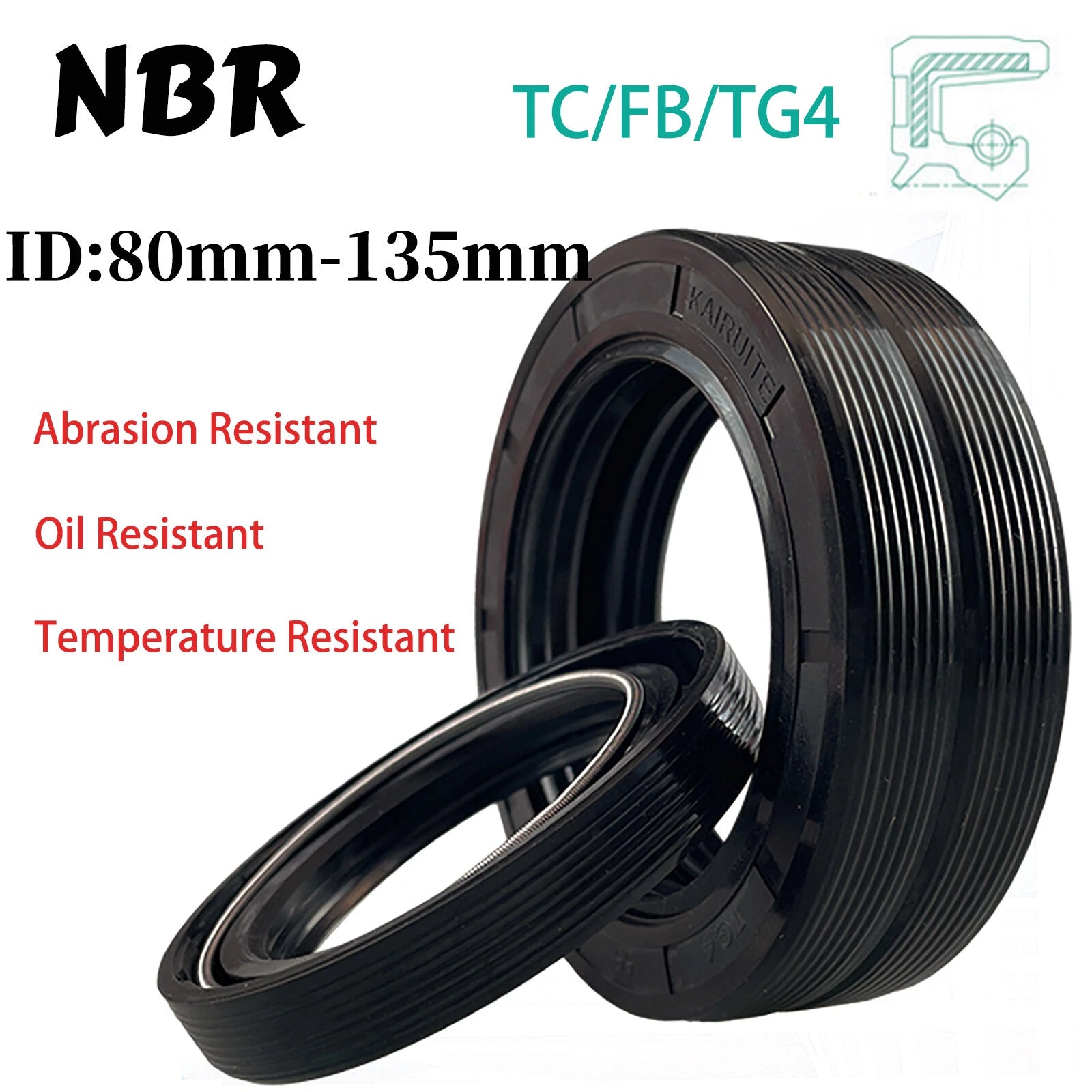
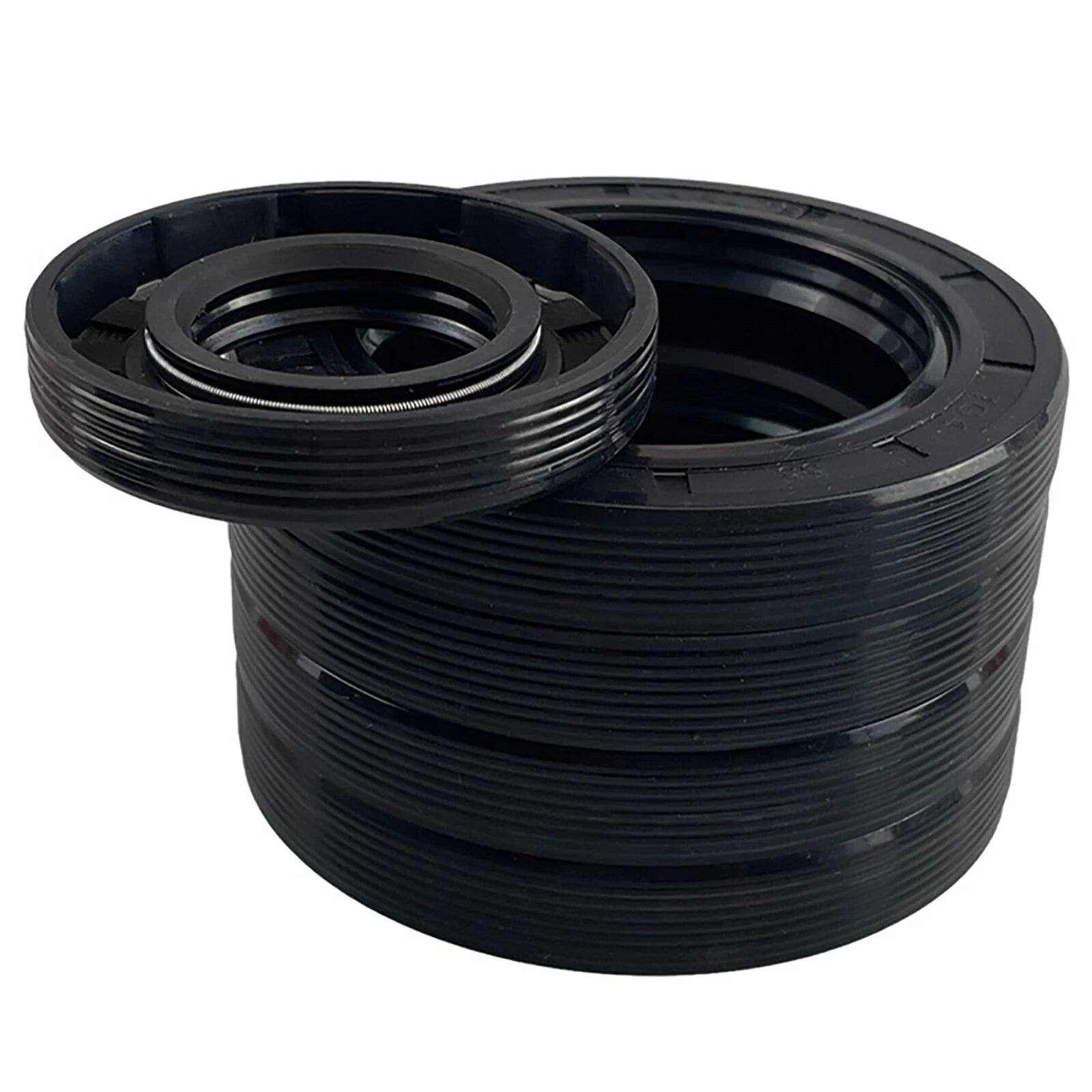
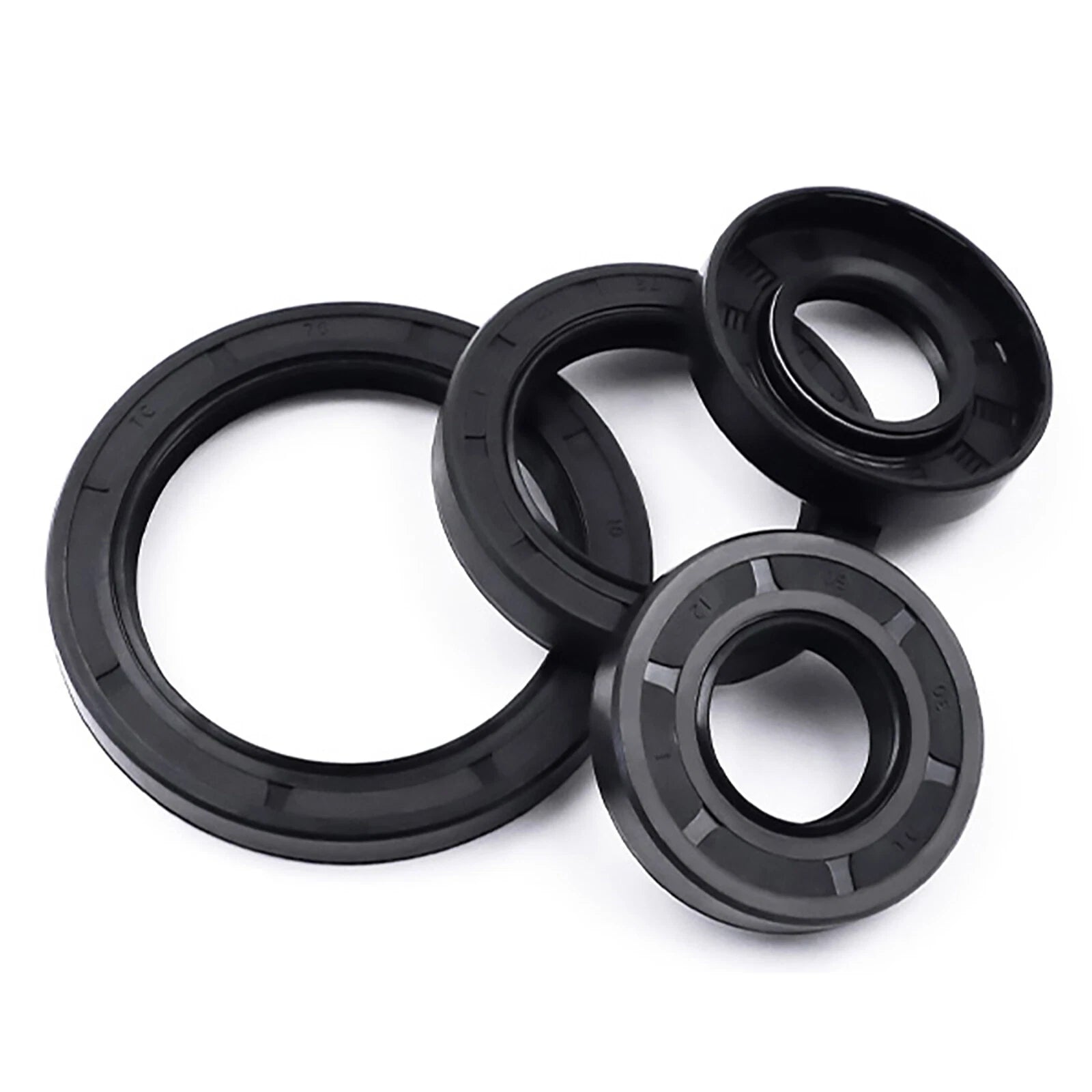
TC Double Lip NBR Rotary Shaft Oil Seal — 80mm to 135mm ID

No reviews

Price:
Sale price$5.54 USD
Stock:
In stock (500 units), ready to be shipped

Payment & Security

Ach Direct Debit Amazon American Express Apple Pay Bancontact Diners Club Discover Google Pay iDEAL Wero Mastercard PayPal Shop Pay USDC Visa

Your payment information is processed securely. We do not store credit card details nor have access to your credit card information.

Quantity Discount Promotion
🎯 BULK DISCOUNT: Buy More, Save More!
Buy 2 Items
5% OFF
Buy 4 Items
10% OFF
Buy 6 Items
15% OFF
Expert

DIY Expert Support

Get fitment advice & recommendations

Mon-Fri, 8:30AM-8PM
24-Hour Fast Ship
🚚
Arrives in 3-14 days
🌍
Global Reach
↩️
30-Day Returns
🌱 1 tree planted with every purchase

Description

TC Double Lip NBR Rotary Shaft Oil Seal — Stop Leaks on Shafts from 80mm to 135mm ID

Gearbox leaking around the output shaft? Axle seal weeping after a rebuild? Finding the right TC double lip NBR rotary shaft oil seal in a large metric size is often the hardest part of the job. Mechanics, equipment technicians, and serious DIYers working on agricultural machinery, industrial gearboxes, and heavy-duty axles need seals that are dimensionally accurate, chemically compatible, and ready to install — not a guessing game with generic substitutes.

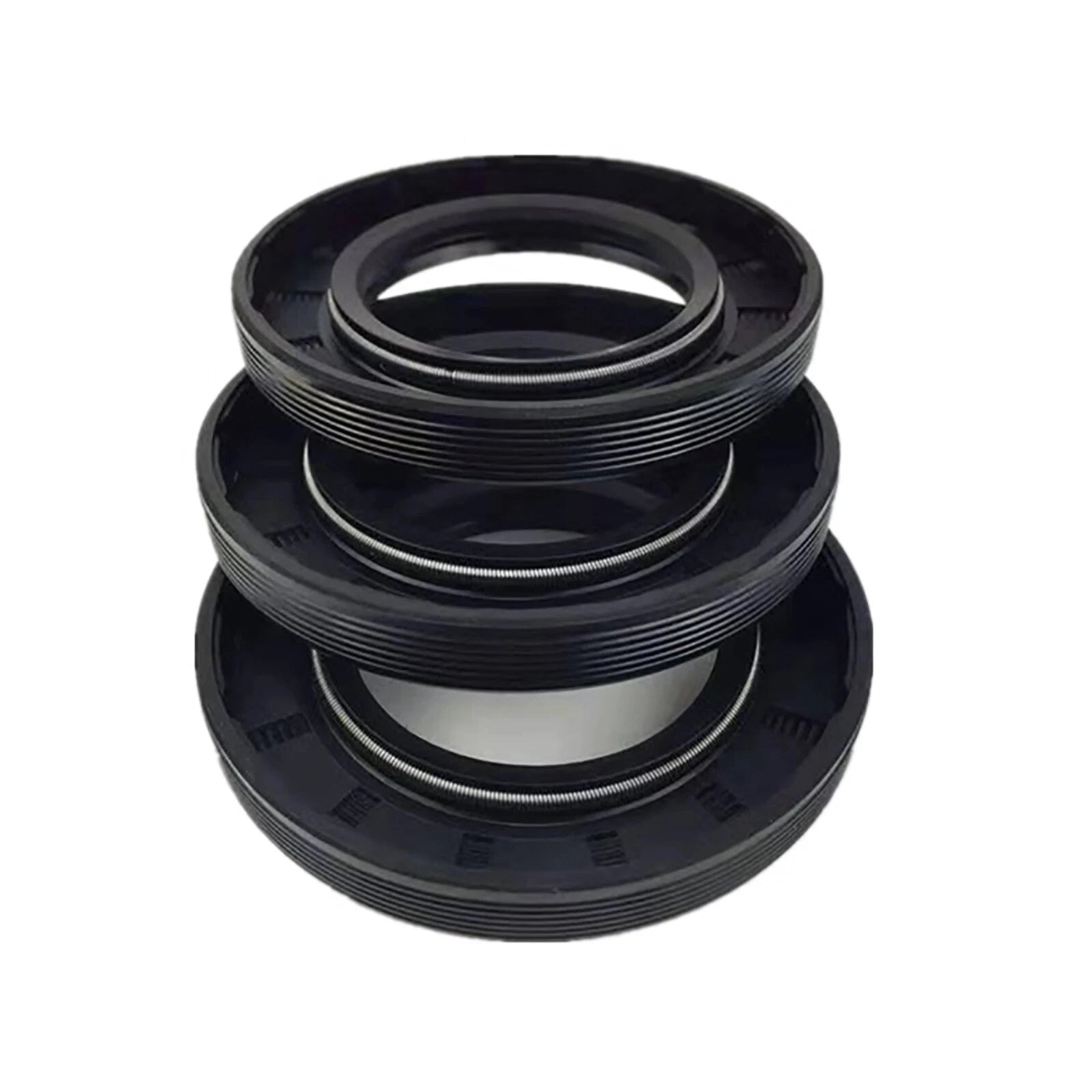
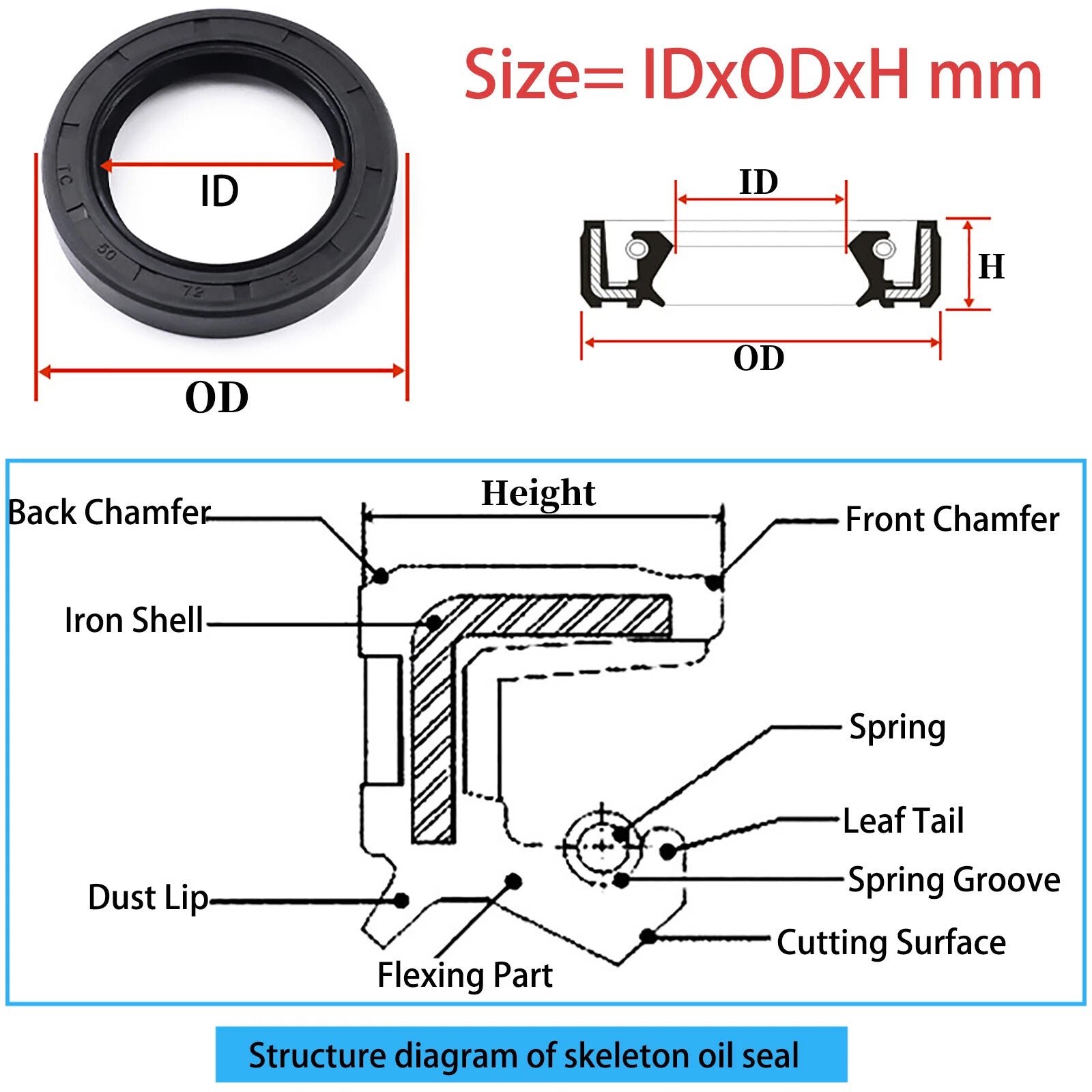
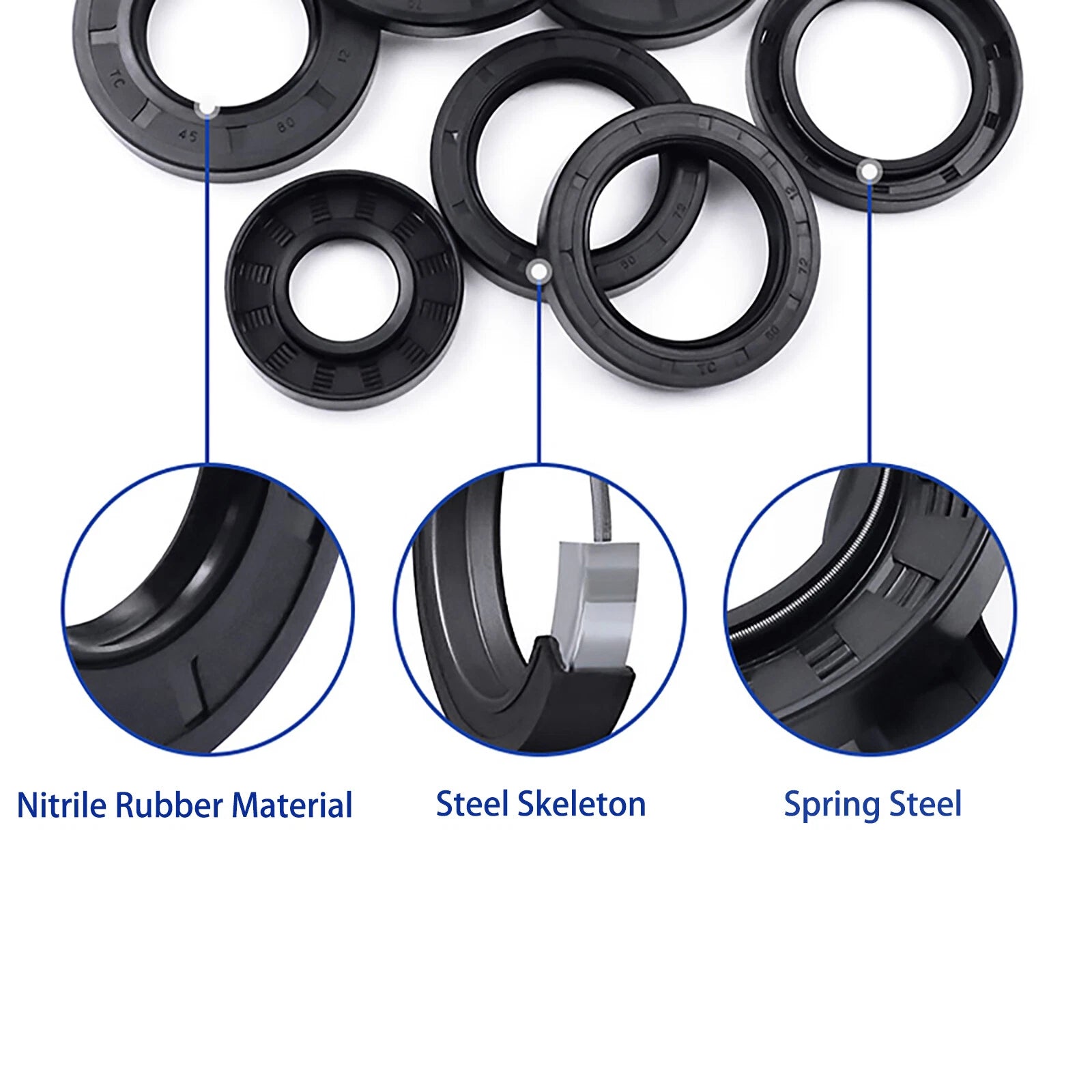
Each seal in this listing is a TC-type (double lip) rotary shaft oil seal made from NBR (Nitrile Butadiene Rubber) with a carbon steel outer case. The size format is Inner Diameter (ID) × Outer Diameter (OD) × Width, all in millimeters. Available sizes span from 80 × 100 × 10mm (≈3.15" × 3.94" × 0.39") up to 135 × 160 × 15mm (≈5.31" × 6.30" × 0.59"), covering a wide range of large-bore shaft applications. Choose from individual seals or value packs of 5 or 10.

These seals are commonly used in agricultural tractor PTO shafts and rear axle housings, industrial gearbox input and output shafts, hydraulic pump and motor shaft seals, and heavy equipment wheel hub and differential seals — anywhere a reliable metric TC oil seal is needed to retain lubricant and exclude contaminants on a rotating shaft.

ℹ️ Compatibility Note: Size format is ID × OD × Width (mm). Measure your shaft diameter, housing bore, and seal depth before ordering. These are metric seals — convert inch dimensions to mm if needed (e.g., 3.5" shaft ≈ 88.9mm → select 90mm ID).

✅ Key Features of These TC Double Lip NBR Rotary Shaft Oil Seals

  • 🔁TC Double Lip Design — Primary sealing lip retains lubricant; secondary dust lip faces outward to block dirt, debris, and moisture from entering the housing.
  • 🧪NBR Elastomer Construction — Nitrile rubber resists petroleum-based oils, greases, hydraulic fluids, and fuels across a typical service range of -40°F to +250°F (-40°C to +120°C).
  • 🔩Carbon Steel Outer Case — Rigid metal shell provides a secure press-fit into the housing bore, maintaining concentricity and preventing seal rotation during operation.
  • 📐Wide Size Range — 80mm to 135mm ID — Covers large-bore shaft applications in agricultural, industrial, and heavy equipment where standard small-bore seals don't apply.
  • 📦Flexible Pack Sizes — Order a single seal for a one-off repair, a 5-pack for a fleet service kit, or a 10-pack for workshop stock — all at per-unit savings on larger quantities.
  • ⚙️Spring-Loaded Sealing Lip — An internal garter spring maintains consistent radial lip pressure against the shaft surface, compensating for minor shaft runout and lip wear over time.

📐 Technical Specifications — TC Type NBR Rotary Shaft Oil Seal

Seal Type TC (Double Lip — primary sealing lip + secondary dust lip)
Material NBR (Nitrile Butadiene Rubber) lip; Carbon steel outer case
Inner Diameter (ID) Range 80mm (≈3.15") to 135mm (≈5.31")
Outer Diameter (OD) Range 100mm (≈3.94") to 170mm (≈6.69") — see variant options
Width Range 10mm (≈0.39") to 16mm (≈0.63") — see variant options
Temperature Range Typically -40°F to +250°F (-40°C to +120°C)
Compatible Fluids Petroleum-based oils, gear oils, greases, hydraulic fluids, fuels
Spring Type Garter spring (internal, maintains lip contact pressure)
Shaft Speed Typically up to 4–6 m/s surface speed (contact us to confirm for high-speed use)
Operating Pressure Low to moderate — see variant options or contact us to confirm
Pack Sizes Available 1, 5, or 10 seals per order
Cross-Reference Codes FB, TG4 (manufacturer reference — confirm fit by dimensions)
Country of Origin Contact us to confirm
⚠️ Installation Note: Always verify ID, OD, and width against your housing and shaft before installation. Lightly lubricate the seal lip with the retained fluid before pressing in. Use a seal driver or flat block — never strike the seal face directly.

❓ Frequently Asked Questions

How do I choose the right size TC oil seal?

Measure three dimensions: the shaft diameter (= Inner Diameter / ID), the housing bore diameter (= Outer Diameter / OD), and the housing depth (= Width). The size format used here is ID × OD × Width in mm. For example, 80 × 100 × 10mm means an 80mm shaft, 100mm bore, and 10mm wide seal. If you're working in inches, convert first — a 3.5" shaft is approximately 88.9mm, so you'd select the 90mm ID option. Always measure the worn seal or housing directly rather than relying on part numbers alone.

What does 'TC' mean on an oil seal?

TC stands for a double-lip seal design. It features a primary sealing lip that contacts the rotating shaft to retain lubricant, and a secondary dust lip that faces outward to block contaminants like dirt and water. This dual-lip configuration is generally more effective than single-lip (SC) seals in environments where both fluid retention and contamination exclusion are needed — such as agricultural equipment, gearboxes, and wheel hubs.

What is NBR and what temperatures does it handle?

NBR (Nitrile Butadiene Rubber) is the most widely used elastomer for rotary shaft oil seals. It typically handles temperatures from approximately -40°F to +250°F (-40°C to +120°C) and offers strong resistance to petroleum-based oils, gear oils, greases, hydraulic fluids, and fuels. It is not recommended for use with brake fluid, phosphate ester hydraulic fluids, or environments with high ozone or UV exposure — for those applications, a Viton (FKM) seal is generally a better choice.

Can these oil seals be used outdoors or in wet environments?

NBR oil seals generally perform well in wet and humid conditions. The secondary dust lip on TC-type seals helps exclude water and debris from the housing. However, for prolonged submersion or saltwater exposure, a Viton (FKM) seal is typically more suitable. If you're unsure whether NBR is right for your environment, contact us to confirm before ordering.

What shaft speed and pressure can these seals handle?

TC-type rotary shaft oil seals are designed for dynamic sealing on rotating shafts. They are generally suitable for shaft surface speeds up to approximately 4–6 m/s and low-to-moderate pressure differentials. For high-speed spindles, turbocharger shafts, or pressurized housings, please contact us to confirm compatibility before ordering.

Are these seals compatible with metric shafts and housings?

Yes. All dimensions listed are metric (mm) and follow standard metric sizing conventions used in automotive, agricultural, and industrial equipment worldwide. If your equipment uses inch-based dimensions, convert to mm before selecting — for example, a 3-inch shaft is approximately 76.2mm (closest available ID would be 80mm; verify OD and width also match). Contact us if you need help cross-referencing inch sizes.

How do I install a rotary shaft oil seal correctly?

Clean the housing bore and shaft thoroughly before installation. Lightly lubricate the seal lip with the fluid it will be sealing. Press the seal squarely into the bore using a seal driver or a flat block — never hammer directly on the seal face, as this can distort the case or damage the lip. The primary lip should face toward the fluid being retained (inward). Protect the lip from sharp edges like keyways or splines during installation by wrapping the shaft end with tape or using an installation sleeve.

What is the difference between FB and TG4 in the seal designation?

FB and TG4 are manufacturer or catalog reference codes that typically indicate the seal's construction style, spring configuration, or material grade variant. In practice, these codes are used to cross-reference equivalent seals across different brands and catalogs. The functional specification — TC type, NBR material, and the listed ID × OD × Width dimensions — is what determines fit and performance. Contact us to confirm cross-reference compatibility for your specific application.

🛒 Select your size and pack size above, then add to cart — ships from our US warehouse.

You may also like

Recently viewed