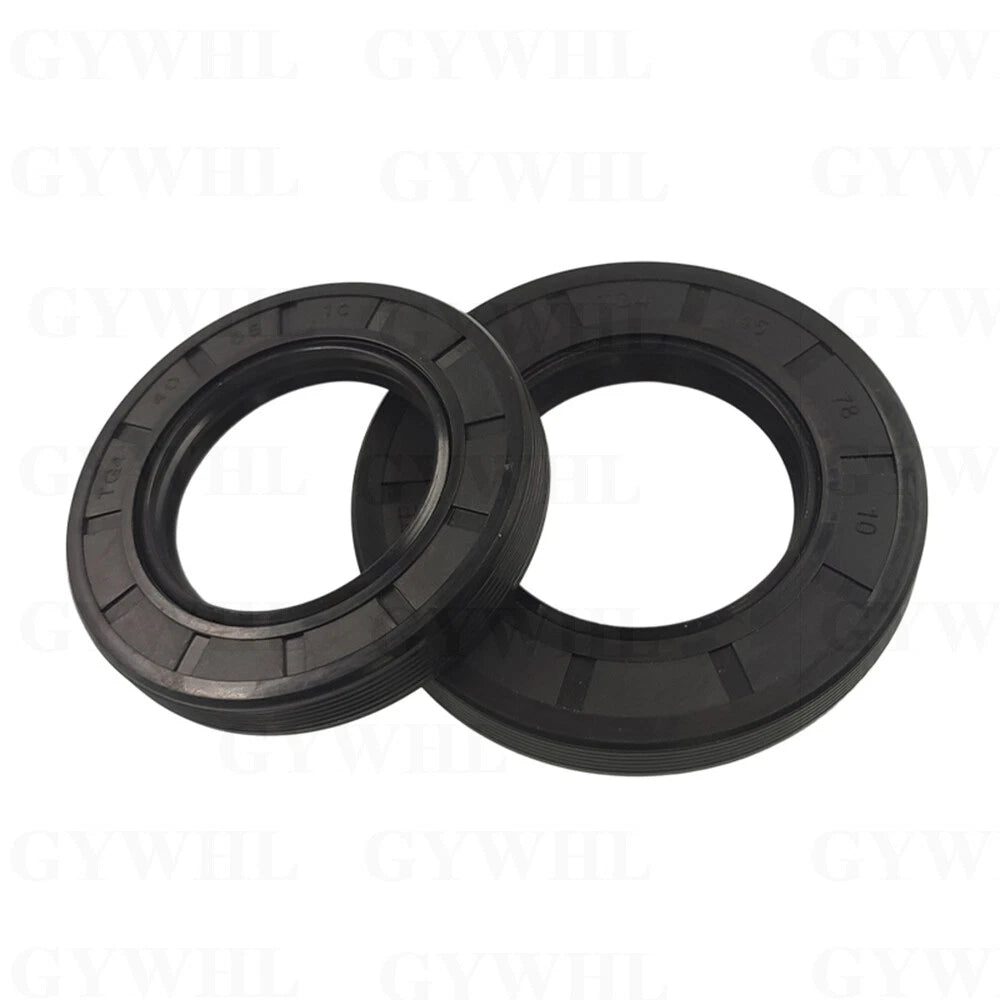
TC Oil Seal — Double Lip NBR Nitrile Rubber Rotary Shaft Seal That Actually Keeps Leaks Out
If you've ever dealt with a weeping gearbox, a leaking axle seal, or a pump shaft that keeps contaminating its own bearing grease, you know how quickly a failed oil seal turns a minor maintenance job into a major teardown. Mechanics, equipment operators, and serious DIYers who work on agricultural machinery, industrial gearboxes, automotive differentials, and hydraulic pumps need a rotary shaft seal they can trust to seat correctly and stay put.
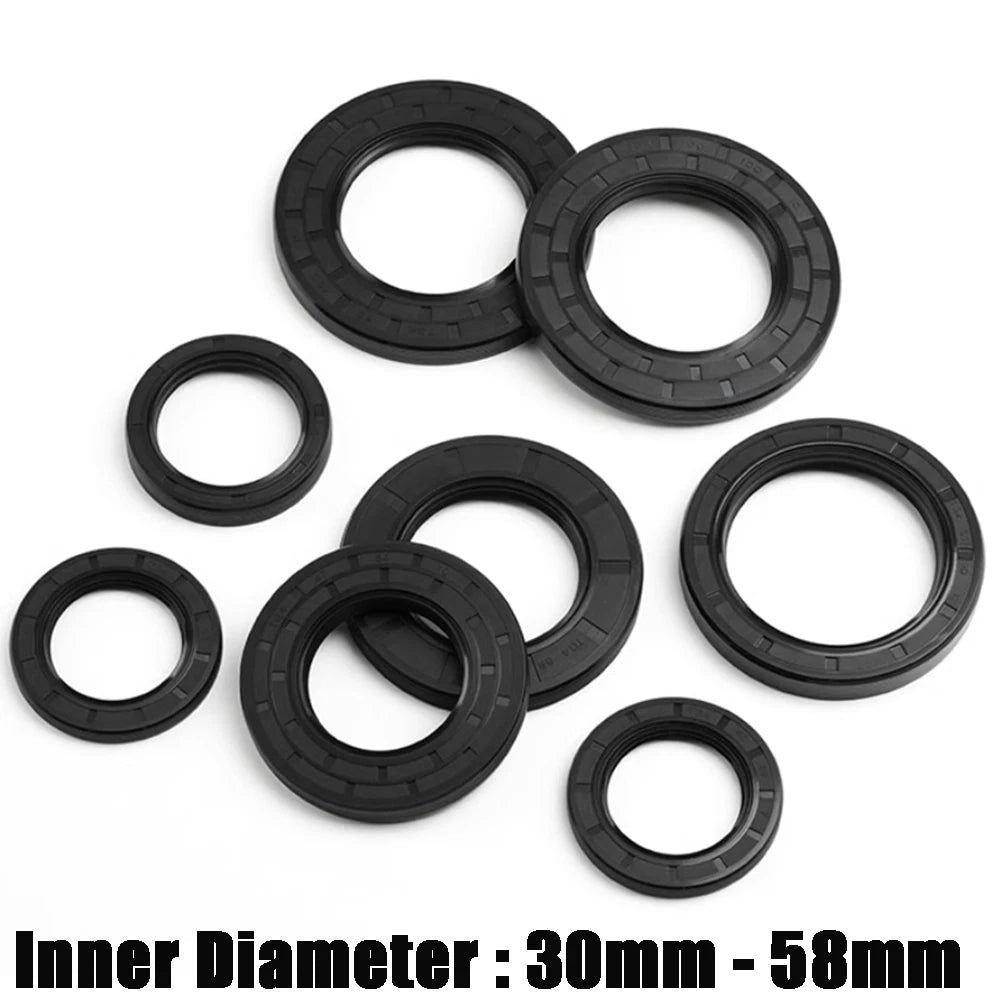
Each seal in this listing is a TC-type double lip oil seal made from NBR (nitrile butadiene rubber) with a steel outer case and an internal garter spring that maintains constant radial lip pressure on the shaft. The primary sealing lip retains lubricant; the secondary dust lip faces outward to block contaminants. Inner diameters range from 60mm (≈2.36") to 90mm (≈3.54"), outer diameters from 70mm (≈2.76") to 150mm (≈5.91"), and thickness from 7mm (≈0.28") to 14mm (≈0.55"). Available in packs of 5 or 10 pieces.
Typical use cases include replacing worn differential pinion seals on trucks and tractors, sealing PTO shaft housings on farm equipment, maintaining gearbox output shafts on industrial conveyors, and servicing pump shaft assemblies in hydraulic systems — anywhere a metric TC-type rotary shaft seal is specified.
ℹ️
Compatibility Note: These are metric-dimensioned TC oil seals. Before ordering, confirm your shaft diameter (inner dia), housing bore (outer dia), and housing depth (thickness) match the variant you select. Dimensions are in millimeters. Not designed as a direct replacement for inch-standard (SAE) seals unless metric dimensions align.
✅ Key Features of These TC Oil Seals
-
🔒Double Lip Design (TC-Type) — The primary lip retains lubricant while the secondary dust lip blocks dirt, debris, and moisture, making these seals suitable for rotary shaft applications in contaminated environments like agricultural and off-road equipment.
-
🌀Garter Spring Loaded — An internal garter spring maintains consistent radial pressure on the shaft lip throughout the seal's service life, compensating for minor shaft runout and lip wear over time.
-
🧪NBR Nitrile Rubber Construction — NBR is the industry-standard elastomer for oil seal lips, offering resistance to petroleum-based oils, greases, and fuels across a generally rated temperature range of -40°F to +250°F (-40°C to +120°C).
-
🔩Steel Outer Case — The rigid steel shell provides a secure press-fit into the housing bore, resisting blowout under normal operating conditions and maintaining concentricity with the shaft.
-
📐Wide Metric Size Range — With inner diameters from 60mm to 90mm and outer diameters up to 150mm, this listing covers a broad range of metric gearbox, axle, and pump shaft seal applications in a single place.
-
📦Flexible Pack Quantities — Available in packs of 5 or 10 pieces, making it practical for both single-machine repairs and workshop stock replenishment without overpaying for seals you don't need.
📐 Technical Specifications — TC Double Lip Rotary Shaft Oil Seal
| Seal Type |
TC (Double Lip with Garter Spring) |
| Material — Lip |
NBR (Nitrile Butadiene Rubber) |
| Material — Case |
Steel (metal outer shell) |
| Spring Type |
Garter spring (internal, radial load) |
| Inner Diameter (Shaft) |
60mm – 90mm (≈2.36" – 3.54"); see variant options |
| Outer Diameter (Bore) |
70mm – 150mm (≈2.76" – 5.91"); see variant options |
| Thickness (Width) |
7mm – 14mm (≈0.28" – 0.55"); see variant options |
| Operating Temperature |
Typically -40°F to +250°F (-40°C to +120°C) for NBR |
| Pressure Rating |
Generally suitable for low-to-medium pressure (typically ≤0.05 MPa / 7 psi); contact us to confirm |
| Color / Finish |
Black rubber lip, metallic steel case |
| Dimension Standard |
Metric (mm) |
| Pack Quantity |
5 pcs or 10 pcs; see variant options |
| Compatibility |
Metric TC-type housings; see variant options |
| Typical Applications |
Gearboxes, axles, differentials, pumps, PTO shafts, agricultural and industrial equipment |
⚠️
Sizing Tip: Always measure your existing seal or housing before ordering. The three critical dimensions are inner diameter (shaft size), outer diameter (housing bore), and thickness (housing depth). A seal that is even 1mm off in any dimension will not seal correctly.
❓ Frequently Asked Questions
How do I choose the right TC oil seal size?
Measure three dimensions from your existing seal or housing: the inner diameter (the shaft diameter the seal rides on), the outer diameter (the bore of the housing the seal presses into), and the thickness (the depth of the housing recess). Match all three to the variant you select. For example, a 70mm shaft in a 100mm bore housing with a 10mm recess depth uses the 70 × 100mm / 10mm variant. When in doubt, measure twice — a seal that is even 1mm off will not seat or seal correctly.
What pressure can these TC oil seals handle?
TC-type lip seals are generally designed for low-to-medium pressure applications. They are typically rated for static pressures up to approximately 0.05 MPa (≈7 psi). For higher-pressure environments, a pressurized lip seal or a different seal type is generally recommended. Contact us to confirm suitability for your specific application before ordering.
Can these seals be used outdoors or in wet environments?
NBR nitrile rubber generally performs well in environments exposed to petroleum-based oils, greases, and mild water splash. However, NBR is not recommended for prolonged outdoor UV exposure or continuous water immersion without additional protection. For fully outdoor or submerged applications, a Viton (FKM) seal is typically a better choice. The secondary dust lip on these TC seals does provide meaningful protection against dirt and moisture ingress in typical outdoor equipment use.
Are these seals compatible with metric shafts and housings?
Yes. All dimensions listed are in millimeters (metric). These seals follow standard metric TC-type sizing and are compatible with metric shafts and housings that match the listed inner diameter, outer diameter, and thickness. They are not designed for inch-standard (SAE) housings unless the metric dimensions happen to align with your application.
What is the difference between a single lip and a double lip (TC) oil seal?
A single lip seal has one sealing contact point and is typically used to retain lubricant on one side. A double lip TC-type seal adds a secondary dust lip that faces outward, providing an extra barrier against contaminants — dirt, dust, and moisture — entering the bearing or housing from the outside. This makes TC seals the preferred choice for most automotive, agricultural, and industrial shaft applications where both lubricant retention and contamination exclusion are required.
What temperature range do NBR oil seals handle?
NBR nitrile rubber is generally rated for operating temperatures from approximately -40°F to +250°F (-40°C to +120°C). Sustained exposure above this range can cause the rubber to harden, crack, and lose its sealing ability. For high-temperature applications (above 250°F), a Viton (FKM) or silicone seal material is typically recommended.
How do I install a TC oil seal without damaging it?
Apply a thin film of clean oil or grease to the seal lip and the shaft before installation. Use a seal driver or a flat block of wood to press the seal in evenly — never hammer directly on the seal face or lip. Press until the seal is flush with or just below the housing surface. Avoid cocking the seal during installation, as this can permanently deform the lip and cause immediate leakage.
🛒 Select your inner/outer diameter, thickness, and pack quantity above, then add to cart — ships from our US warehouse.