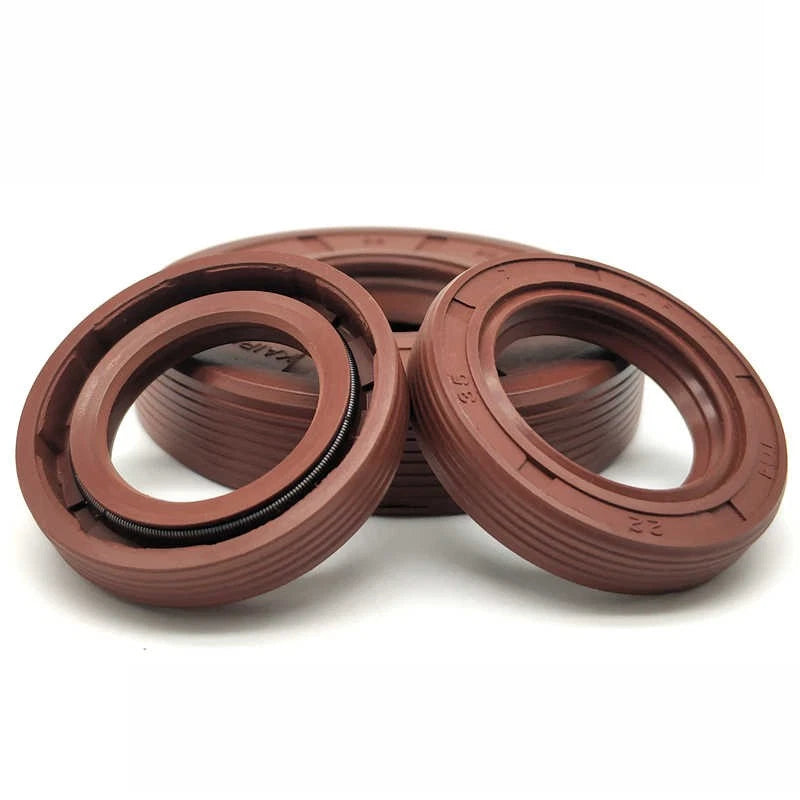
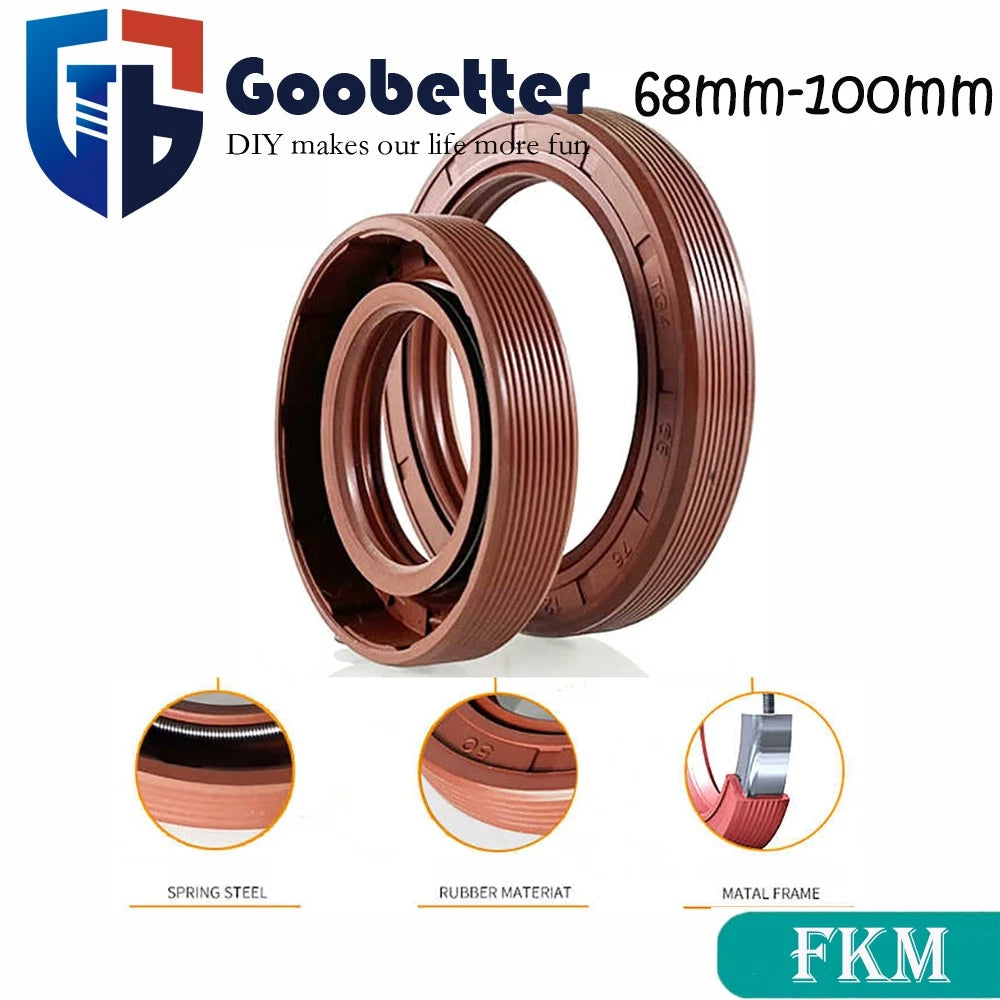
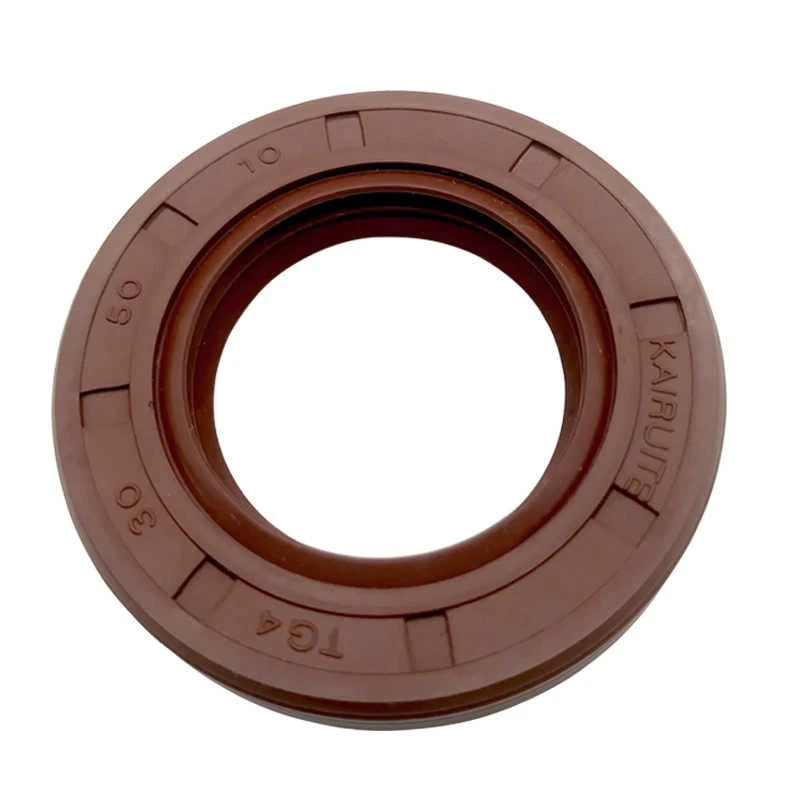
TC TG Oil Seal Skeleton FKM Rubber Framework Double Lip Sealing Ring 68-100mm

No reviews

Price:
Sale price$11.22 USD
Stock:
In stock (500 units), ready to be shipped

Payment & Security

Ach Direct Debit Amazon American Express Apple Pay Bancontact Diners Club Discover Google Pay iDEAL Wero Mastercard PayPal Shop Pay USDC Visa

Your payment information is processed securely. We do not store credit card details nor have access to your credit card information.

Quantity Discount Promotion
🎯 BULK DISCOUNT: Buy More, Save More!
Buy 2 Items
5% OFF
Buy 4 Items
10% OFF
Buy 6 Items
15% OFF
Expert

DIY Expert Support

Get fitment advice & recommendations

Mon-Fri, 8:30AM-8PM
24-Hour Fast Ship
🚚
Arrives in 3-14 days
🌍
Global Reach
↩️
30-Day Returns
🌱 1 tree planted with every purchase

Description

TC TG FKM Oil Seal — Double Lip Sealing Ring for Shafts 68–100mm Inner Diameter

When a worn or leaking shaft seal causes oil contamination, bearing failure, or costly downtime, mechanics and equipment owners need a replacement they can trust to hold. This listing covers TC and TG type skeleton oil seals built for rotating shafts where reliable fluid retention and contaminant exclusion are non-negotiable.

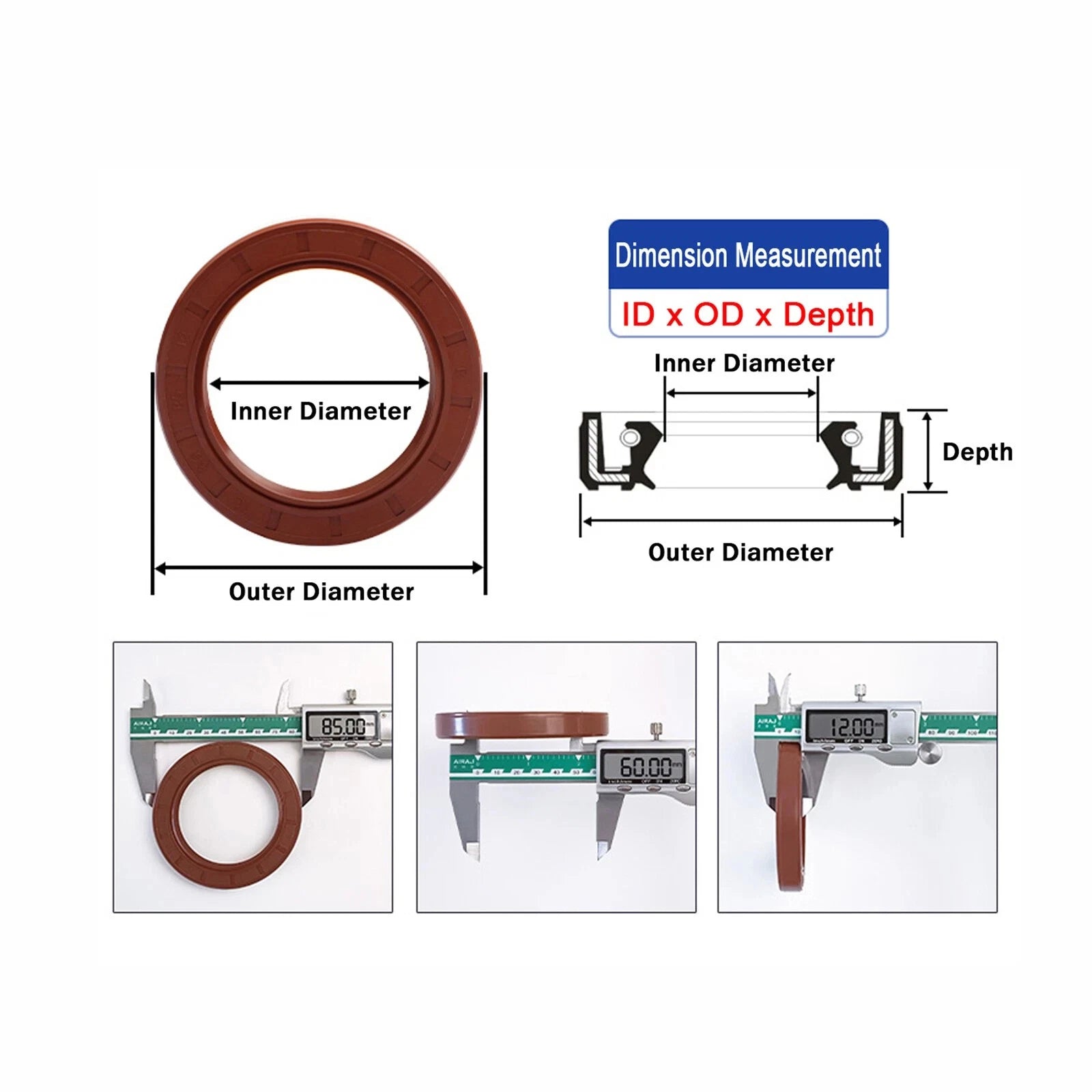
Each TC TG oil seal features a rigid steel skeleton encased in FKM (fluoroelastomer) rubber, with a double-lip design — a primary sealing lip retaining lubricant and a secondary dust lip blocking ingress of dirt and moisture. Inner diameters span 68–100mm (approximately 2.68–3.94 in), outer diameters 80–160mm (approximately 3.15–6.30 in), and depths 7–16mm (approximately 0.28–0.63 in). Select the exact Inner φ × Outer φ × Depth combination from the variant selector above.

Typical applications include gearbox output shafts, differential pinion seals, hydraulic cylinder rod seals, agricultural PTO shafts, and industrial pump shaft seals — anywhere a double lip sealing ring must resist petroleum-based oils, synthetic lubricants, and moderate chemical exposure at continuous temperatures up to approximately 200 °C (392 °F).

⚙️ Compatibility Note: Match all three dimensions — inner diameter, outer diameter, and depth — to your existing seal before ordering. Refer to your equipment service manual or measure the worn seal directly.

✅ Key Features of These TC TG FKM Oil Seals

  • FKM Fluoroelastomer Rubber Body — Withstands petroleum oils, synthetic lubricants, and mild chemical exposure; rated for continuous service up to approximately 200 °C (392 °F), outperforming standard NBR seals in high-temperature environments.
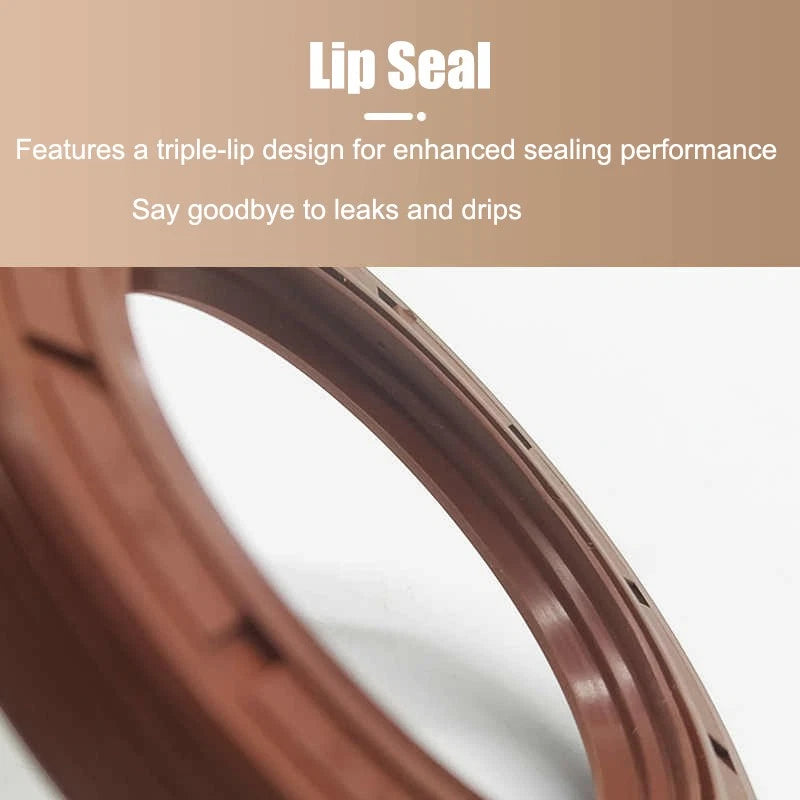
  • Double Lip Design (TC/TG Type) — Primary lip retains lubricant on the inboard side; secondary dust lip on the outboard side blocks dirt, water, and abrasive particles from reaching the bearing.
  • Rigid Steel Skeleton Framework — Internal metal ring maintains dimensional stability under press-fit installation and prevents the seal from distorting under housing bore pressure.
  • Wide Size Range — Inner 68–100mm, Outer 80–160mm — 227 size combinations covering gearboxes, differentials, pumps, and agricultural equipment shafts in a single product family.
  • Precision-Ground Sealing Lip — Consistent lip geometry ensures even contact pressure around the shaft circumference, reducing the risk of spiral leakage paths that develop with uneven lips.
  • Drop-In Replacement Geometry — TC/TG dimensional standards align with ISO 6194 and DIN 3760 envelope dimensions, making these seals direct substitutes for OEM parts sharing the same bore and shaft size.

📐 Technical Specifications — TC TG FKM Oil Seal

Seal Type TC / TG (Double Lip with Dust Lip)
Material FKM (Fluoroelastomer) rubber with steel skeleton
Inner Diameter Range 68–100 mm (approx. 2.68–3.94 in)
Outer Diameter Range 80–160 mm (approx. 3.15–6.30 in)
Depth (Width) Range 7–16 mm (approx. 0.28–0.63 in)
Exact Dimensions See variant options
Max Continuous Temperature Typically up to 200 °C (392 °F)
Media Compatibility Petroleum oils, synthetic lubricants, mild chemicals
Lip Configuration Primary sealing lip + secondary dust exclusion lip
Framework Rigid steel skeleton (fully encased)
Dimensional Standard Consistent with ISO 6194 / DIN 3760 envelope
Quantity per Order 1 piece per variant

❓ Frequently Asked Questions

How do I find the correct seal size for my application?

Remove the old seal and measure three dimensions with calipers: inner diameter (shaft diameter), outer diameter (housing bore), and depth (axial width). All three must match the replacement seal. If the old seal is too damaged to measure, consult your equipment service manual or look up the OEM part number to cross-reference dimensions.

What is the difference between TC type and TG type oil seals?

Both TC and TG are double-lip seal configurations with a primary sealing lip and a secondary dust lip. The distinction relates to the lip geometry and garter spring arrangement used by different standards bodies. In practice, seals listed as TC/TG share the same outer envelope dimensions and are interchangeable in most applications when the bore and shaft diameters match.

Why choose FKM rubber over standard NBR for an oil seal?

FKM (fluoroelastomer, also sold under trade names such as Viton®) tolerates continuous temperatures up to approximately 200 °C (392 °F) and resists a broader range of synthetic lubricants, automatic transmission fluids, and mild chemical media. NBR (nitrile) is adequate for mineral oils at moderate temperatures but degrades faster in high-heat gearboxes, turbo-adjacent applications, or where synthetic fluids are used.

How do I install a skeleton oil seal without damaging the lip?

Clean the housing bore and shaft thoroughly. Lightly lubricate the sealing lip with the same fluid the seal will retain. Use a seal driver or a flat press plate sized to the outer diameter to press the seal in squarely — never hammer directly on the seal face. Press until the seal face is flush with or just below the housing bore face. Avoid dragging the lip over keyways or splines; use a thin sleeve or tape to protect the lip during installation.

Can these seals handle water or outdoor exposure?

The secondary dust lip provides a degree of water and moisture exclusion, making TC/TG seals suitable for equipment exposed to splash, rain, and dusty outdoor environments. However, these seals are not rated for continuous submersion or high-pressure water ingress. For applications with sustained water exposure, verify the specific FKM compound's water resistance rating.

What shaft surface finish is required for reliable sealing?

For optimal lip seal performance, the shaft contact surface should have a finish of Ra 0.2–0.8 µm (approximately 8–32 µin) with a lead-free ground finish. Rough or scored shafts accelerate lip wear and cause early leakage. If the shaft shows grooves from the old seal, use a speedi-sleeve repair sleeve or replace the shaft section before fitting the new seal.

Are these seals compatible with automatic transmission fluid (ATF) or gear oil?

FKM rubber has good compatibility with most ATF formulations and conventional gear oils (GL-4, GL-5). For specific synthetic gear oils or specialty fluids, verify compatibility with the fluid manufacturer's seal compatibility data, as additive packages vary between brands and can affect elastomer swell rates over time.

🛒 Select your Inner φ × Outer φ × Depth above, then add to cart.

You may also like

Recently viewed